EP0525935B1 - Method for melting a photographic composition gel to a sol - Google Patents
Method for melting a photographic composition gel to a sol Download PDFInfo
- Publication number
- EP0525935B1 EP0525935B1 EP92304021A EP92304021A EP0525935B1 EP 0525935 B1 EP0525935 B1 EP 0525935B1 EP 92304021 A EP92304021 A EP 92304021A EP 92304021 A EP92304021 A EP 92304021A EP 0525935 B1 EP0525935 B1 EP 0525935B1
- Authority
- EP
- European Patent Office
- Prior art keywords
- gel
- container
- photographic
- sol
- electrodes
- Prior art date
- Legal status (The legal status is an assumption and is not a legal conclusion. Google has not performed a legal analysis and makes no representation as to the accuracy of the status listed.)
- Expired - Lifetime
Links
Images

Classifications
-
- G—PHYSICS
- G03—PHOTOGRAPHY; CINEMATOGRAPHY; ANALOGOUS TECHNIQUES USING WAVES OTHER THAN OPTICAL WAVES; ELECTROGRAPHY; HOLOGRAPHY
- G03C—PHOTOSENSITIVE MATERIALS FOR PHOTOGRAPHIC PURPOSES; PHOTOGRAPHIC PROCESSES, e.g. CINE, X-RAY, COLOUR, STEREO-PHOTOGRAPHIC PROCESSES; AUXILIARY PROCESSES IN PHOTOGRAPHY
- G03C1/00—Photosensitive materials
- G03C1/74—Applying photosensitive compositions to the base; Drying processes therefor
-
- G—PHYSICS
- G03—PHOTOGRAPHY; CINEMATOGRAPHY; ANALOGOUS TECHNIQUES USING WAVES OTHER THAN OPTICAL WAVES; ELECTROGRAPHY; HOLOGRAPHY
- G03C—PHOTOSENSITIVE MATERIALS FOR PHOTOGRAPHIC PURPOSES; PHOTOGRAPHIC PROCESSES, e.g. CINE, X-RAY, COLOUR, STEREO-PHOTOGRAPHIC PROCESSES; AUXILIARY PROCESSES IN PHOTOGRAPHY
- G03C1/00—Photosensitive materials
- G03C1/005—Silver halide emulsions; Preparation thereof; Physical treatment thereof; Incorporation of additives therein
- G03C1/025—Physical treatment of emulsions, e.g. by ultrasounds, refrigeration or pressure
-
- G—PHYSICS
- G03—PHOTOGRAPHY; CINEMATOGRAPHY; ANALOGOUS TECHNIQUES USING WAVES OTHER THAN OPTICAL WAVES; ELECTROGRAPHY; HOLOGRAPHY
- G03C—PHOTOSENSITIVE MATERIALS FOR PHOTOGRAPHIC PURPOSES; PHOTOGRAPHIC PROCESSES, e.g. CINE, X-RAY, COLOUR, STEREO-PHOTOGRAPHIC PROCESSES; AUXILIARY PROCESSES IN PHOTOGRAPHY
- G03C2200/00—Details
- G03C2200/09—Apparatus
Definitions
- the present invention relates to a method for melting a low-temperature preserved photographic composition gel containing a hydrophilic colloid, particularly gelatin, to a sol and more specifically to a production engineering measure to melt such a gel to a sol.
- Manufacture of a silver halide photographic light-sensitive material usually comprises preparation of photographic compositions and treating processes thereof as described below.
- a hydrophilic colloid used in a light-sensitive material gelatin is mainly used at the present time.
- a photographic emulsion and the above composition related thereto are preserved for a given period of time in the above manufacturing processes for reasons of factory operation and quality control of products.
- Such preservation is generally applied to photographic compositions such as a dispersion, a photographic emulsion after desalting or the 2nd ripening, and a coating solution freshly prepared for use.
- preservation of a coating solution has advantages (1) that it makes possible to examine a coating solution itself in the course of preservation, and thereby the solution's photographic properties can be confirmed before coating, (2) that deterioration in photographic properties of a coating solution due to a prolonged standing can be prevented because only a dissolving process is needed as the preliminary arrangement for coating, this lessens the load in operation and installation, and (3) that a large amount of a uniform coating solution can be prepared at a time only by blending preserved emulsions.
- Similar advantages can also be brought out by preservation of a photographic emulsion or a dispersion, and requirements for an improved productivity and a high functional reliability can be met with the enlargement of manufacturing scale and rise in coating speed of light-sensitive materials.
- Such low-temperature preserved photographic compositions are each dissolved and blended by a necessary amount at the time of adjusting conditions of a coating solution, but these photographic compositions have usually undergone many changes of state up to that time.
- a photographic composition is in a sol state when prepared freshly, and then it undergoes changes of state such as gellation (setting to jelly) by low temperature preservation, dehydration and transformation into coagel (cryohydrate gel) by refrigeration and freezing, gellation through thawing, transformation into a sol by dissolution on heating, gellation by coating and cooling, and transforming into a xerogel by drying.
- state changes in succession as mentioned above the composition is subjected to severe changes such as syneresis and dispersion of the contents and aggregation of the suspended particles due to the approach and contact thereof, as the structure or volume of gelatin micells changes.
- functions possessed by the composition before the preservation cannot be fully recovered in many cases.
- Japanese Pat. O.P.I. Pub. No. 100439/1988 proposes a method which comprises the steps of placing a composition gel in a melting tank, stirring it while continuing conductive heating from the tank wall, and successively taking a melted sol out of a separating outlet which separates the melted sol from the unmelted gel.
- Japanese Pat. O.P.I. Pub. No. 100439/1988 proposes a method which comprises the steps of placing a composition gel in a melting tank, stirring it while continuing conductive heating from the tank wall, and successively taking a melted sol out of a separating outlet which separates the melted sol from the unmelted gel.
- 169743/1982 proposes a method which comprises the steps of tilting a container holding a composition gel, irradiating the surface of the gel with radiowaves from a waveguide to melt the gel to a sol continuously from its surface, and taking the sol out the tilted container by allowing the sol to pass under a microwave shielding plate which advances in accordance with the retrogression of the gel surface.
- the former requires the processes of taking a composition gel out of a preserving container, cutting the composition gel into pieces, feeding thereof, cleaning melting tanks of respective emulsions and the installation of the same number of melting tanks as that of emulsions used.
- the latter requires a tilt-setting apparatus and related work as well as a careful shielding work with a microwave shielding plate, in addition, this has an disadvantage of low efficiency attributable to a low melting speed to a sol.
- US-A-4,004,122 discloses a microwave heating oven having a microwave-shielded loading passage and a first heating zone for containing the material to be melted in solid form. A second heating zone maintains the material in its liquid state. Means are provided for drawing off the liquid as required.
- the oven is alleged to be useful for heating photographic emulsions. The oven cannot accept containerised packages of photographic emulsions and no facilities are available for adjusting the frequency of the radiation in accodance with the requirements of the emulsion to be melted.
- EP-A-0,174,587 discloses a process for melting solid photographic emulsions using microwaves.
- a steel container is top loaded with olid emulsion.
- the lower portion of the container is separated by a grid or perforated plate. Just above the grid the emulsion is radiated with microwaves and flows under gravity through the grid as it melts.
- the liquid emulsion collects in the lower portion of the container and is discharged as required.
- a method of converting a photographic composition gel to a photographic composition sol comprising the steps of keeping the photographic composition gel in a light shielding container and subsequently heating it by means of irradiation with microwave radiation, characterised in that the container is fabricated from a dielectric material and in that the microwave frequency is such that the microwave radiation penetrates the gel in the container to its entire depth
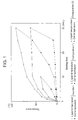
- Fig. 1 is a graph showing temperature histories of gels and sols in the melting process from gel to sol with high-frequency iradiation.
- Fig. 2 is showing the apparatus for the method of the invention.
- the above object of the invention is achieved by a method for preparing a photographic composition gel which comprises the processes of placing a light shielding dielectric preservative container holding lumps of a photographic composition gel in a dielectric heating apparatus which generates high frequencies capable of penetrating to a depth corresponding to the size of the above photographic composition gel lump, and melting the photographic composition gel to a sol by irradiating the above high frequencies from the outside of the container.
- the photographic composition gel means a photographic emulsion, silver halide grains dispersed in a hydrophilic colloid (generally, a gelatin) or, an emulsion secondly ripened and spectrally sensitized.
- a hydrophilic colloid generally, a gelatin
- oil-soluble additives such as couplers etc. being solved in a high boiling solvent and dispersed in a hydrophilic colloidal solution.
- a gelatin-additive-liquid which is an additive for amelioration of photographic characteristics and/or coatability, dispersed in a hydrophilic colloidal solution; and the above mentioned photographic emulsion and the gelatin-additive-liquid mixed with the photographic emulsion.
- the temperature of the critical point at which a gelatin solution changes the state to sol or gel is about 30°C, depends on the concentration of the gelatin and salts in the solution.
- high frequency electrodes of the dielectric heating apparatus be arranged in parallel at an interval wide enough to accommodate the shading dielectric preservative container between them.
- the carrying-in and carrying-out work can be easily performed, and in addition to that, plural containers respectively holding composition gels can be handled continuously. Further, plural pairs of high frequency electrodes may be installed.
- the parallel electrode plates preferably locate perpendicularly standing in the container, rather than upper and lower positions. By setting the electrodes like this, the melting process time can be settled constant, even if the volume of the processing liquid varies.
- the container used in this invention preferably has a flat shape for the purpose of faster melting, i.e. the thickness of the container, as the direction for a spacing for the electrodes is shorter than the lengths of edges of the electrode plates.
- the frequency of the high frequency used is preferably at least 2450 MHz for composition gel lumps whose sizes measured as the thickness between the electrode plates, are 2.5 cm or less; for lumps having sizes more than 2.5 cm, it is preferably 10 to 30 MHz and especially 13.56 MHz in practical use.
- the main point of the invention is to melt a composition gel in a container to a sol together with the container by irradiating high frequencies having high penetrabilities.
- the relation between the penetrability and the frequency of a high frequency is expressed by the following half-power depth D(m), which usually expresses a penetrability of an electromagnetic wave.
- D 3.32 ⁇ 10 7 /(f ⁇ r ⁇ tan ⁇ ) wherein f is frequency (Hz); ⁇ r, dielectric constant; ⁇ , dielectric loss angle.
- ⁇ r and ⁇ are the characteristic values to substances, therefore, the frequency is inversely proportional to the thickness of the gel lumps.
- the high frequency irradiation method of the invention makes it possible for a photographic composition gel to be efficiently melted to a sol in a short time even in the light, and thereby a high productivity is attained.
- a photographic emulsion according to the invention can use conventional silver halides such as silver bromide, silver chloride, silver iodobromide and silver chlorobromoiodide.
- a silver halide emulsion according to the invention formation of silver halide grains, desalting and chemical ripening are not particularly limited in conditions and can be carried out according to methods known in the art.
- a chemically ripened emulsion can be subjected to spectral sensitization by use of a conventional sensitizing dye.
- various conventional photographic additives such as a stabilizer, sensitizer, controlling agent and antistain agent, may be arbitrarily added to prepare a coating solution.
- compositions according to the invention are chilled for low temperature preservation.
- a preserving temperature higher than 0°C is not appropriate to prevent increase in fog, deterioration in photographic properties of an emulsion including change in sensitivity, and propagation of microorganisms, moreover, dispersed oil droplets containing additives become coarse, and thereby pin holes are liable to occur.
- the composition be chilled rapidly.
- This low-temperature preserved composition gel can be melted to a sol according to the method of invention as occasion arises and made up into a coating solution, which is then coated on a support and dried. Conventional supports and coating methods can be used to perform the coating.
- a core/shell type silver iodobromide emulsion comprised of grains having an average grain size of 0.38 ⁇ m was prepared by the double jet method. After desalting in a usual manner, the emulsion was chemically ripened with sodium thiosulfate and chloroauric acid so as to give an optimum sensitivity.
- the above emulsion prepared in a sol state was spectrally sensitized to green-sensitivity with the addition of sensitizing dyes I and II in amounts of 5 ⁇ 10 -4 mol and 1 ⁇ 10 -4 mol, respectively, per mol of silver contained in the emulsion.
- Coupler dispersion M-1 7.5 g CM-1 0.15 g Tricresyl phosphate 6 g 4% gelatin solution 375 ml Dispersing aid Su-1 (10% solution) 25 ml
- the coated sample was exposed in a usual manner, processed in the conditions described later and examined for the specific sensitivity and the specific fog. The results are shown in Table 1.
- the photographic emulsion gel preserved as in Example 1 was taken out of the container in an amount corresponding to 50 l. Then, it was cut into lumps of approximately 20 cm square, placed in a jacketed melting kettle together with 15 l of water, and melted by heat conduction while feeding warm water of 75°C to the jacket. The histories of the internal temperature of the unmelted gel and the melted sol temperature in this melting process are shown in Fig. 1. In addition, the viscosity and the photographic properties after the melting were measured as summarized in Table 1.
- a gel having the same form as in Example 1 was melted to a sol in a similar procedure as above using a microwave heating apparatus which generates a high frequency of approximately 2450 MHz.
- the histories of the internal gel temperature and the melted sol temperature were measured as shown in Fig. 1. Further, the sol was restored to the prescribed liquid volume, then its viscosity and photographic properties were examined. The results are shown in Fig. 1.
- Example 1 Approximately 500 ml of the above photographic emulsion was placed in a 13 cm ⁇ 20 cm ⁇ 2 cm (thickness) polyethylene container and preserved in the same manner as in Example 1. Then, it was melted to a sol together with the container in the microwave heating apparatus used in Comparative example (2). The sol was restored to the prescribed liquid volume, then its viscosity and photographic properties were examined as summarized in Table 1.
- Composition of a processing solution used in each process is as follows: Color developer 4-Amino-3-methyl-N-( ⁇ -hydroxyethyl)aniline sulfate 4.75 g Anhydrous sodium fulfite 4.25 g Hydroxylamine 1/2sulfate 2.0 g Anhydrous potassium carbonate 37.5 g Potassium bromide 1.3 g Trisodium nitrilotriacetate monohydrate 2.5 g Potassium hydroxide 1.0 g Water was added to make 1 liter, and the pH was adjusted to 10.02.
- Example 1 Comp. example (1) Comp. example (2)
- Example 2 Viscosity (cp) 20cp 20cp 15cp 14cp 20cp Specific fog 100 100 118 127 100 Specific sensitivity 100 100 91 86 99
- the sample according to the invention exhibited the same properties as the reference sample which was not preserved. In the comparative samples, however, increase in fog, decrease in viscosity and a tendency to desensitization were observed.
Landscapes
- Chemical & Material Sciences (AREA)
- Engineering & Computer Science (AREA)
- Materials Engineering (AREA)
- Physics & Mathematics (AREA)
- General Physics & Mathematics (AREA)
- Chemical Kinetics & Catalysis (AREA)
- Colloid Chemistry (AREA)
- General Induction Heating (AREA)
- Physical Or Chemical Processes And Apparatus (AREA)
Applications Claiming Priority (2)
| Application Number | Priority Date | Filing Date | Title |
|---|---|---|---|
| JP3104338A JPH04333041A (ja) | 1991-05-09 | 1991-05-09 | 写真用組成物ゲルのゾル化方法 |
| JP104338/91 | 1991-05-09 |
Publications (3)
| Publication Number | Publication Date |
|---|---|
| EP0525935A2 EP0525935A2 (en) | 1993-02-03 |
| EP0525935A3 EP0525935A3 (en) | 1993-03-17 |
| EP0525935B1 true EP0525935B1 (en) | 1998-10-28 |
Family
ID=14378143
Family Applications (1)
| Application Number | Title | Priority Date | Filing Date |
|---|---|---|---|
| EP92304021A Expired - Lifetime EP0525935B1 (en) | 1991-05-09 | 1992-05-05 | Method for melting a photographic composition gel to a sol |
Country Status (4)
| Country | Link |
|---|---|
| US (1) | US5357088A (enExample) |
| EP (1) | EP0525935B1 (enExample) |
| JP (1) | JPH04333041A (enExample) |
| DE (1) | DE69227415T2 (enExample) |
Families Citing this family (3)
| Publication number | Priority date | Publication date | Assignee | Title |
|---|---|---|---|---|
| DE102005030437B4 (de) * | 2005-06-30 | 2007-09-13 | Deutsches Zentrum für Luft- und Raumfahrt e.V. | Antriebsvorrichtung auf Basis gelförmigen Treibstoffs und Verfahren zur Treibstoff-Förderung |
| ITFI20130154A1 (it) | 2013-06-28 | 2014-12-29 | Raoul Cangemi | Stufa illuminante a microonde a recupero energetico |
| WO2016157230A1 (en) | 2015-03-27 | 2016-10-06 | SARTONI, Stefano | Heating and illuminating device with energy recovery |
Family Cites Families (10)
| Publication number | Priority date | Publication date | Assignee | Title |
|---|---|---|---|---|
| DE889260C (de) * | 1935-03-22 | 1953-09-10 | C Schleussner Fotowerke G M B | Verfahren zur Herstellung lichtempfindlicher Emulsionen |
| US2602134A (en) * | 1947-10-03 | 1952-07-01 | Gen Electric | High-frequency dielectric heater |
| FR1569046A (enExample) * | 1968-03-29 | 1969-05-30 | ||
| US4004122A (en) * | 1973-11-06 | 1977-01-18 | International Standard Electric Corporation | Multi-zone microwave heating apparatus |
| US4114011A (en) * | 1976-07-12 | 1978-09-12 | Thermatron, Inc. | Microwave heating method and apparatus |
| US4353890A (en) * | 1979-10-24 | 1982-10-12 | Colgate-Palmolive Company | Stabilization of carrageenan-containing toothpaste |
| JPS6053866B2 (ja) * | 1981-04-10 | 1985-11-27 | 富士写真フイルム株式会社 | 写真用ゲル化物の融解装置 |
| DE3433580A1 (de) * | 1984-09-13 | 1986-03-20 | Agfa-Gevaert Ag, 5090 Leverkusen | Verfahren und vorrichtung zum aufschmelzen von erstarrten gelmassen, insbesondere von fotografischen emulsionen |
| US4567340A (en) * | 1985-01-09 | 1986-01-28 | Phillips Petroleum Company | Apparatus and method for drying solid materials |
| JP2652155B2 (ja) * | 1986-05-02 | 1997-09-10 | 富士写真フイルム株式会社 | ゲル状物質を連続熔融する方法及び装置 |
-
1991
- 1991-05-09 JP JP3104338A patent/JPH04333041A/ja active Pending
-
1992
- 1992-05-04 US US07/878,417 patent/US5357088A/en not_active Expired - Fee Related
- 1992-05-05 DE DE69227415T patent/DE69227415T2/de not_active Expired - Fee Related
- 1992-05-05 EP EP92304021A patent/EP0525935B1/en not_active Expired - Lifetime
Also Published As
| Publication number | Publication date |
|---|---|
| JPH04333041A (ja) | 1992-11-20 |
| DE69227415D1 (de) | 1998-12-03 |
| EP0525935A3 (en) | 1993-03-17 |
| DE69227415T2 (de) | 1999-04-15 |
| EP0525935A2 (en) | 1993-02-03 |
| US5357088A (en) | 1994-10-18 |
Similar Documents
| Publication | Publication Date | Title |
|---|---|---|
| DE68918876T2 (de) | Verfahren zur Herstellung von Silberhalogenidkörnern. | |
| US3897935A (en) | Apparatus for the preparation of a photographic emulsion | |
| CA1115585A (en) | Method and apparatus suitable for the preparation of agx-emulsions | |
| US5035991A (en) | Control process and apparatus for the formation of silver halide grains | |
| US5357088A (en) | Method for melting a photographic composition gel to a sol using microwave energy | |
| EP0145440A2 (en) | Process of preparing a silver halide emulsion | |
| EP0064412B1 (en) | A photosensitive silver halide material | |
| US5145768A (en) | Process of forming silver halide grains | |
| EP0102320B1 (en) | Process for the preparation of a silver halide emulsion | |
| US2728662A (en) | Method of preparing photographic emulsions | |
| CA1334136C (en) | Method for obtaining a photographic coating composition | |
| US2768079A (en) | Method of preparing washed photographic emulsions | |
| JP2995352B2 (ja) | 写真用組成物の保存方法 | |
| US5759762A (en) | High chloride emulsion with dimethylamine silver chloro-iodide and antifoggants | |
| US5523201A (en) | Method for desalting silver halide emulsion and silver halide emulsion prepared thereby | |
| EP0408752A1 (en) | Process for producing silver halide grains | |
| US5604087A (en) | Process for the production of silver halide emulsions | |
| US3359110A (en) | Use of organic amides as anti-coagulants in emulsions prepared by the gelatin derivative coagulation wash procedure | |
| US5593821A (en) | Silver halide emulsion and photographic material having the same | |
| EP0881531A1 (en) | Preparation and use of a dimethylamine silver chloro-iodide complex as a single source precursor for iodide incorporation of silver chloride crystals | |
| US4351898A (en) | Mixed grain single emulsion layer photographic material | |
| US4678744A (en) | Splash-prepared silver halide emulsions with a uniform particle size distribution | |
| EP0652469B1 (en) | A silver halide photographic light sensitive material | |
| JPH03197323A (ja) | ハロゲン化銀粒子成長時のコントロール方法及び装置 | |
| EP0591883A1 (en) | Silver halide color photographic light-sensitive material |
Legal Events
| Date | Code | Title | Description |
|---|---|---|---|
| PUAI | Public reference made under article 153(3) epc to a published international application that has entered the european phase |
Free format text: ORIGINAL CODE: 0009012 |
|
| PUAL | Search report despatched |
Free format text: ORIGINAL CODE: 0009013 |
|
| AK | Designated contracting states |
Kind code of ref document: A2 Designated state(s): DE NL |
|
| AK | Designated contracting states |
Kind code of ref document: A3 Designated state(s): DE NL |
|
| 17P | Request for examination filed |
Effective date: 19930818 |
|
| 17Q | First examination report despatched |
Effective date: 19960315 |
|
| GRAG | Despatch of communication of intention to grant |
Free format text: ORIGINAL CODE: EPIDOS AGRA |
|
| GRAG | Despatch of communication of intention to grant |
Free format text: ORIGINAL CODE: EPIDOS AGRA |
|
| GRAH | Despatch of communication of intention to grant a patent |
Free format text: ORIGINAL CODE: EPIDOS IGRA |
|
| GRAH | Despatch of communication of intention to grant a patent |
Free format text: ORIGINAL CODE: EPIDOS IGRA |
|
| RBV | Designated contracting states (corrected) |
Designated state(s): DE |
|
| GRAA | (expected) grant |
Free format text: ORIGINAL CODE: 0009210 |
|
| AK | Designated contracting states |
Kind code of ref document: B1 Designated state(s): DE |
|
| REF | Corresponds to: |
Ref document number: 69227415 Country of ref document: DE Date of ref document: 19981203 |
|
| PGFP | Annual fee paid to national office [announced via postgrant information from national office to epo] |
Ref country code: DE Payment date: 19990507 Year of fee payment: 8 |
|
| PLBE | No opposition filed within time limit |
Free format text: ORIGINAL CODE: 0009261 |
|
| STAA | Information on the status of an ep patent application or granted ep patent |
Free format text: STATUS: NO OPPOSITION FILED WITHIN TIME LIMIT |
|
| 26N | No opposition filed | ||
| PG25 | Lapsed in a contracting state [announced via postgrant information from national office to epo] |
Ref country code: DE Free format text: LAPSE BECAUSE OF NON-PAYMENT OF DUE FEES Effective date: 20010301 |