EP0505800B1 - Process for reducing hydrolysed protein chlorohydrin content - Google Patents
Process for reducing hydrolysed protein chlorohydrin content Download PDFInfo
- Publication number
- EP0505800B1 EP0505800B1 EP92103947A EP92103947A EP0505800B1 EP 0505800 B1 EP0505800 B1 EP 0505800B1 EP 92103947 A EP92103947 A EP 92103947A EP 92103947 A EP92103947 A EP 92103947A EP 0505800 B1 EP0505800 B1 EP 0505800B1
- Authority
- EP
- European Patent Office
- Prior art keywords
- liquid
- pressure
- flowing
- cooling
- temperature
- Prior art date
- Legal status (The legal status is an assumption and is not a legal conclusion. Google has not performed a legal analysis and makes no representation as to the accuracy of the status listed.)
- Expired - Lifetime
Links
- XENVCRGQTABGKY-ZHACJKMWSA-N chlorohydrin Chemical compound CC#CC#CC#CC#C\C=C\C(Cl)CO XENVCRGQTABGKY-ZHACJKMWSA-N 0.000 title claims abstract description 53
- 239000005905 Hydrolysed protein Substances 0.000 title claims abstract description 31
- 238000000034 method Methods 0.000 title claims description 26
- 239000007788 liquid Substances 0.000 claims abstract description 150
- VEXZGXHMUGYJMC-UHFFFAOYSA-N Hydrochloric acid Chemical compound Cl VEXZGXHMUGYJMC-UHFFFAOYSA-N 0.000 claims abstract description 88
- 239000003513 alkali Substances 0.000 claims abstract description 42
- 230000007065 protein hydrolysis Effects 0.000 claims abstract description 7
- 238000001816 cooling Methods 0.000 claims description 45
- 238000002156 mixing Methods 0.000 claims description 17
- 238000010438 heat treatment Methods 0.000 claims description 15
- 108090000623 proteins and genes Proteins 0.000 claims description 10
- 102000004169 proteins and genes Human genes 0.000 claims description 10
- 238000011144 upstream manufacturing Methods 0.000 claims description 9
- 239000000110 cooling liquid Substances 0.000 claims 1
- 238000006722 reduction reaction Methods 0.000 description 22
- 238000006460 hydrolysis reaction Methods 0.000 description 15
- 239000000047 product Substances 0.000 description 13
- 239000000413 hydrolysate Substances 0.000 description 12
- QGZKDVFQNNGYKY-UHFFFAOYSA-N Ammonia Chemical compound N QGZKDVFQNNGYKY-UHFFFAOYSA-N 0.000 description 11
- 238000006243 chemical reaction Methods 0.000 description 10
- HEMHJVSKTPXQMS-UHFFFAOYSA-M Sodium hydroxide Chemical compound [OH-].[Na+] HEMHJVSKTPXQMS-UHFFFAOYSA-M 0.000 description 9
- 235000018102 proteins Nutrition 0.000 description 9
- 150000003945 chlorohydrins Chemical class 0.000 description 7
- 239000000463 material Substances 0.000 description 7
- 230000000694 effects Effects 0.000 description 6
- 230000007062 hydrolysis Effects 0.000 description 6
- 238000004519 manufacturing process Methods 0.000 description 6
- 230000003068 static effect Effects 0.000 description 5
- 230000001629 suppression Effects 0.000 description 4
- 238000010793 Steam injection (oil industry) Methods 0.000 description 3
- 240000008042 Zea mays Species 0.000 description 3
- 235000005824 Zea mays ssp. parviglumis Nutrition 0.000 description 3
- 235000002017 Zea mays subsp mays Nutrition 0.000 description 3
- 239000002253 acid Substances 0.000 description 3
- 235000005822 corn Nutrition 0.000 description 3
- 238000011067 equilibration Methods 0.000 description 3
- -1 i.e. Chemical compound 0.000 description 3
- 239000012528 membrane Substances 0.000 description 3
- 239000000203 mixture Substances 0.000 description 3
- 235000021118 plant-derived protein Nutrition 0.000 description 3
- 239000011541 reaction mixture Substances 0.000 description 3
- XLYOFNOQVPJJNP-UHFFFAOYSA-N water Substances O XLYOFNOQVPJJNP-UHFFFAOYSA-N 0.000 description 3
- 108010068370 Glutens Proteins 0.000 description 2
- 108010064851 Plant Proteins Proteins 0.000 description 2
- CDBYLPFSWZWCQE-UHFFFAOYSA-L Sodium Carbonate Chemical compound [Na+].[Na+].[O-]C([O-])=O CDBYLPFSWZWCQE-UHFFFAOYSA-L 0.000 description 2
- 230000002378 acidificating effect Effects 0.000 description 2
- 239000007864 aqueous solution Substances 0.000 description 2
- 230000015572 biosynthetic process Effects 0.000 description 2
- 230000001419 dependent effect Effects 0.000 description 2
- 239000012467 final product Substances 0.000 description 2
- 235000011194 food seasoning agent Nutrition 0.000 description 2
- 235000021312 gluten Nutrition 0.000 description 2
- 238000009413 insulation Methods 0.000 description 2
- 238000005086 pumping Methods 0.000 description 2
- 150000003839 salts Chemical class 0.000 description 2
- XEPXTKKIWBPAEG-UHFFFAOYSA-N 1,1-dichloropropan-1-ol Chemical compound CCC(O)(Cl)Cl XEPXTKKIWBPAEG-UHFFFAOYSA-N 0.000 description 1
- DEWLEGDTCGBNGU-UHFFFAOYSA-N 1,3-dichloropropan-2-ol Chemical compound ClCC(O)CCl DEWLEGDTCGBNGU-UHFFFAOYSA-N 0.000 description 1
- HUXDTFZDCPYTCF-UHFFFAOYSA-N 1-chloropropane-1,1-diol Chemical compound CCC(O)(O)Cl HUXDTFZDCPYTCF-UHFFFAOYSA-N 0.000 description 1
- SSZWWUDQMAHNAQ-UHFFFAOYSA-N 3-chloropropane-1,2-diol Chemical compound OCC(O)CCl SSZWWUDQMAHNAQ-UHFFFAOYSA-N 0.000 description 1
- VHUUQVKOLVNVRT-UHFFFAOYSA-N Ammonium hydroxide Chemical compound [NH4+].[OH-] VHUUQVKOLVNVRT-UHFFFAOYSA-N 0.000 description 1
- 235000017060 Arachis glabrata Nutrition 0.000 description 1
- 244000105624 Arachis hypogaea Species 0.000 description 1
- 235000010777 Arachis hypogaea Nutrition 0.000 description 1
- 235000018262 Arachis monticola Nutrition 0.000 description 1
- 241000196324 Embryophyta Species 0.000 description 1
- 235000010469 Glycine max Nutrition 0.000 description 1
- 240000007594 Oryza sativa Species 0.000 description 1
- 235000007164 Oryza sativa Nutrition 0.000 description 1
- 240000004808 Saccharomyces cerevisiae Species 0.000 description 1
- 235000014680 Saccharomyces cerevisiae Nutrition 0.000 description 1
- 241000209140 Triticum Species 0.000 description 1
- 235000021307 Triticum Nutrition 0.000 description 1
- 238000005903 acid hydrolysis reaction Methods 0.000 description 1
- 238000013019 agitation Methods 0.000 description 1
- 235000011114 ammonium hydroxide Nutrition 0.000 description 1
- 235000021120 animal protein Nutrition 0.000 description 1
- 230000009286 beneficial effect Effects 0.000 description 1
- 230000003139 buffering effect Effects 0.000 description 1
- 239000006227 byproduct Substances 0.000 description 1
- 239000005018 casein Substances 0.000 description 1
- BECPQYXYKAMYBN-UHFFFAOYSA-N casein, tech. Chemical compound NCCCCC(C(O)=O)N=C(O)C(CC(O)=O)N=C(O)C(CCC(O)=N)N=C(O)C(CC(C)C)N=C(O)C(CCC(O)=O)N=C(O)C(CC(O)=O)N=C(O)C(CCC(O)=O)N=C(O)C(C(C)O)N=C(O)C(CCC(O)=N)N=C(O)C(CCC(O)=N)N=C(O)C(CCC(O)=N)N=C(O)C(CCC(O)=O)N=C(O)C(CCC(O)=O)N=C(O)C(COP(O)(O)=O)N=C(O)C(CCC(O)=N)N=C(O)C(N)CC1=CC=CC=C1 BECPQYXYKAMYBN-UHFFFAOYSA-N 0.000 description 1
- 235000021240 caseins Nutrition 0.000 description 1
- 235000013339 cereals Nutrition 0.000 description 1
- 150000001875 compounds Chemical class 0.000 description 1
- 238000010276 construction Methods 0.000 description 1
- 238000010924 continuous production Methods 0.000 description 1
- 230000001276 controlling effect Effects 0.000 description 1
- 230000002596 correlated effect Effects 0.000 description 1
- 238000005260 corrosion Methods 0.000 description 1
- 230000007797 corrosion Effects 0.000 description 1
- 239000006185 dispersion Substances 0.000 description 1
- 238000001704 evaporation Methods 0.000 description 1
- 230000008020 evaporation Effects 0.000 description 1
- 239000007789 gas Substances 0.000 description 1
- 230000003301 hydrolyzing effect Effects 0.000 description 1
- 238000002347 injection Methods 0.000 description 1
- 239000007924 injection Substances 0.000 description 1
- 238000003801 milling Methods 0.000 description 1
- 238000010534 nucleophilic substitution reaction Methods 0.000 description 1
- 239000003921 oil Substances 0.000 description 1
- 238000010979 pH adjustment Methods 0.000 description 1
- 235000020232 peanut Nutrition 0.000 description 1
- 239000004033 plastic Substances 0.000 description 1
- 229920003023 plastic Polymers 0.000 description 1
- 239000000843 powder Substances 0.000 description 1
- 238000001556 precipitation Methods 0.000 description 1
- 238000004064 recycling Methods 0.000 description 1
- 238000011946 reduction process Methods 0.000 description 1
- 235000009566 rice Nutrition 0.000 description 1
- 238000000926 separation method Methods 0.000 description 1
- 235000017550 sodium carbonate Nutrition 0.000 description 1
- 229910000029 sodium carbonate Inorganic materials 0.000 description 1
- 239000007787 solid Substances 0.000 description 1
- 238000000638 solvent extraction Methods 0.000 description 1
- 229910001220 stainless steel Inorganic materials 0.000 description 1
- 239000010935 stainless steel Substances 0.000 description 1
- 238000001256 steam distillation Methods 0.000 description 1
- 238000003756 stirring Methods 0.000 description 1
Images

Classifications
-
- A—HUMAN NECESSITIES
- A23—FOODS OR FOODSTUFFS; TREATMENT THEREOF, NOT COVERED BY OTHER CLASSES
- A23J—PROTEIN COMPOSITIONS FOR FOODSTUFFS; WORKING-UP PROTEINS FOR FOODSTUFFS; PHOSPHATIDE COMPOSITIONS FOR FOODSTUFFS
- A23J3/00—Working-up of proteins for foodstuffs
- A23J3/30—Working-up of proteins for foodstuffs by hydrolysis
- A23J3/32—Working-up of proteins for foodstuffs by hydrolysis using chemical agents
Definitions
- the present invention relates to reduction of the chlorohydrin content of a product obtained from protein hydrolysed with hydrochloric acid.
- hydrolysing protein with hydrochloric acid leads to formation of certain undesirable chlorinated by-products which have come to be known generically and commonly as chlorohydrins, or ⁇ -chlorohydrins, which include mono-chloropropandiol, i.e., 3-chloro-propan-1,2-diol, and di-chloropropanol, i.e., 1,3 dichloropropan-2-ol, compositions.
- chlorohydrins or ⁇ -chlorohydrins
- mono-chloropropandiol i.e., 3-chloro-propan-1,2-diol
- di-chloropropanol i.e., 1,3 dichloropropan-2-ol
- chlorohydrin content may be reduced by adjusting the pH of the hydrolysed protein, which is acidic, with an aqueous alkali composition to a pH of from about 8 to about 14 and holding the pH-adjusted hydrolysed protein for a time sufficient to reduce the chlorohydrin content, as described in EP-A-0 363 771.
- the chlorohydrin content of hydrolysed protein obtained by hydrolysis of protein with hydrochloric acid may be reduced by a continuous process which enables suppression and substantial avoidance of ammonia gas from the processed hydrolysed protein and that production capacity of the process and equipment to achieve chlorohydrin content reduction may be made compatible with that of known commercial operations employed for preparing the hydrolysed protein without occupying undue facility workspace.
- the process of the present invention is broadly characterized in that the chlorohydrin content of a liquid comprising hydrolysed protein obtained from the hydrolysis of protein with hydrochloric acid is reduced by introducing and mixing an alkali into the liquid in an amount sufficient to increase the pH of the liquid and then holding the pH-increased liquid under conditions of time and temperature sufficient for the alkali to react with chlorohydrin compositions contained in the liquid to reduce the chlorohydrin content of the hydrolysed protein contained in the liquid.
- the process of the present invention is more particularly characterized in that a quantity of alkali is introduced into and mixed with a flowing liquid under a pressure greater than atmospheric pressure, wherein the liquid comprises hydrolysed protein obtained by hydrolysis of protein with hydrochloric acid, in an amount sufficient to increase the pH of the liquid, in that the flowing pH-increased liquid under pressure is heated to a temperature of from 100°C to 170°C, and then, in that the temperature of the flowing heated liquid is maintained under pressure at the temperature of from 100°C to 170°C for a time sufficient for reducing the chlorohydrin content of the hydrolysed protein contained in the liquid and then, in that the chlorohydrin-reduced liquid under pressure is cooled to a temperature below 100°C and the pressure is released.
- the cooled liquid subsequently may be acidified with hydrochloric acid and equilibrated, and then, if desired, dehydrated, or otherwise collected and be employed for uses conventional in the art.
- the flowing heated liquid is passed to and through a holding piping section means of an apparatus system which maintains the temperature of the heated liquid flow at the temperature of from 100°C to 170°C and which has a volume sufficient, with respect to a rate of flow of the heated liquid, to hold the heated liquid for a residence, or dwell, time sufficient for reducing the chlorohydrin content of the hydrolysed protein contained in the liquid.
- the present invention is characterized further, alternatively, in that a quantity of hydrochloric acid is introduced and mixed into the cooled liquid under pressure to adjust the pH of the cooled liquid and then the pressure is released from pH-adjusted cooled liquid or it may further be cooled, preferably by such as flash-cooling.
- the treated liquid may be equilibrated and, if desired, dehydrated or otherwise collected for use.
- the present invention is characterized still further, alternatively, in that a quantity of hydrochloric acid is introduced into and mixed with the flowing heated liquid passed from the holding piping section of the system to adjust the pH of the liquid after which the pH-adjusted liquid is cooled and the pressure is released, preferably by flash-cooling which simultaneously relieves the pressure.
- the cooled liquid then may be equilibrated, and then if desired, dehydrated, or otherwise collected and subsequently employed in conventional uses in the art.
- the process of the present invention may be employed and practiced with a liquid obtained directly from the hydrolysis reaction and thus may contain residual unhydrolysed material, or the liquid may be filtered or otherwise treated to remove residual material.
- alkali is added to increase the pH of the liquid to a pH of at least about 5 and may be added to increase the pH to a pH as high as about 14.
- hydrochloric acid is added to the chlorohydrin content-reduced liquid such that the liquid is adjusted to a pH of from 4 to 7, and generally, to a pH of from 4 to 5.5, after which the product may be equilibrated which may include adjusting the pH with a buffer to a pH of from 5 to 5.2.
- the present invention also provides an apparatus system for performing the process disclosed herein characterized in that system piping means is provided for containing flowing liquid containing hydrolysed protein under pressure which includes an intermediate positioned holding piping section means having a volume sufficient, with respect to a rate of flow of liquid in the holding piping section means, to contain the flowing liquid for a predetermined residence, or dwell, time in the holding piping section means at a predetermined temperature, and in that positioned upstream of the holding piping section means and connected with the system piping means are means for introducing an alkali into liquid flowing under pressure in the system piping means, means for mixing the alkali with the liquid and means for heating the liquid mixed with the alkali, and in that positioned downstream of the holding piping section means and connected with the system piping means are means for cooling the flowing heated liquid under pressure and means for releasing the pressure. Means are also provided for collecting and/or further treating the cooled product.
- the apparatus system of the present invention is characterized further in that positioned downstream of the holding piping section means and connected to the system piping means are means for introducing and means for mixing hydrochloric acid into the liquid flowing in the system piping means.
- the means for introducing and for mixing the hydrochloric acid may be positioned upstream or downstream of the means for cooling the liquid.
- the means for cooling and releasing the pressure is provided by means for flash-cooling.
- Means again are provided for collecting or further treating the treated product.
- plant or animal protein which may be derived from various origins such as corn, soy, wheat, rice, yeast, peanut, or casein, for example, may be hydrolysed, as is known to those skilled in the art.
- the protein may be obtained, for example, by separation of a protein fraction during milling of grains or may be obtained following solvent extraction of oils from a proteinaceous material or by other methods known in the art.
- the amount of protein material employed in the hydrolysis reaction with hydrochloric acid in the reaction mixture may vary widely, for instance from about 30% to about 50% by weight, but more usually from 38% to 42% by weight, the protein weight being based on the total weight of hydrolysis reaction mixture.
- the hydrochloric acid employed in the hydrolysis reaction mixture may be concentrated, i.e., about 32%, by weight, i.e., about 10M, it preferably is employed in the hydrolysis reaction at a concentration of from about 15% to about 25% by weight, and most preferably is from about 17% to about 19% by weight, the weight being based upon the total weight of an aqueous solution of hydrochloric acid.
- the hydrolysis reaction may be performed at a temperature of from about 70°C to about 140°C and most preferably at a temperature from about 110°C to about 115°C.
- the duration of the hydrolysis reaction may vary from about 2 hours to about 12 hours and most preferably is from about 3 hours to about 5 hours, and generally, for any desired degree of hydrolysis, longer periods of time are required at lower temperatures.
- the hydrolysis reaction may be carried out with stirring or other agitation and, if desired, may be carried out under elevated pressure, for instance up to 0.7 MPa (100 psig), and more usually from 0.07 MPa to 0.35 MPa (10 psig to 50 psig).
- the liquid containing the hydrolysed protein may, if desired, be filtered to filter off residual unhydrolysed material.
- a flow of the liquid containing the hydrolysed protein is introduced into system piping means and passed through the system piping means under pressure.
- the pressure employed to direct the flow downstream through the system piping means which may be effected readily by such as pumps, is generally from about 1 bar to 2 bars higher than a pressure generated by temperatures employed in the apparatus system and method to effect the chlorohydrin reduction reaction.
- various pump means may be employed, volumetric feeding or centrifugal pumps are preferred.
- a food-acceptable alkali such as KOH or NH4OH, but preferably NaOH and/or Na2CO3 is introduced into and mixed with the flow of the liquid in an amount sufficient to increase the pH of the liquid.
- the alkali may be introduced in a solid form, such as a powder, it is introduced most readily as an aqueous solution which is preferably as concentrated as possible.
- the aqueous alkali preferably has a concentration of approximately 50% alkali by weight, i.e., about 19M.
- Pump means such as centrifugal, gear dosing or volumetric, or membrane dosing pumps may be employed to introduce the alkali and generate pressure upon the alkali for efficient introduction of the alkali into the flow of the liquid.
- a gear dosing pump is preferred.
- the aqueous alkali may be heated above ambient temperature prior to introduction.
- the pH-increased liquid contained in the piping system then is heated to a temperature of from 100°C to 170°C such as by means of at least one in-line heat exchanger, as is well known to those skilled in the art, or by introduction of steam into the flow of the pH-increased liquid, or by a combination of steam introduction and at least one in-line heat exchanger.
- the chlorohydrin reduction reaction upon addition of alkali to the liquid, the chlorohydrin reduction reaction is initiated, and upon application of heat, the reaction rate is advanced.
- the reaction rate is advanced.
- the concentration ratio of OH ⁇ to the chlorohydrin content is greater, the reaction will proceed faster and produce a greater reduction in the quantity of the chlorohydrins in a lesser time.
- the time necessary for reduction of the amount of chlorohydrins will decrease.
- the actual processing time and the temperature at any given pH is dictated by the quantity of alkali employed, by the quantity of undesired chlorohydrins present in the hydrolysed product and the overall desired organoleptic properties of the hydrolysed protein.
- the holding piping section means which is provided with insulation and/or heating elements to maintain the temperature of the flow of the heated pH-increased liquid through it at a desired reaction temperature in the range of 100°C to 170°C.
- the residence, or dwell, time in the holding piping section is dependent upon the holding pipe volume, i.e., length times cross-sectional area, and the rate of flow of the heated liquid, and thus, the residence, or dwell, time may be adjusted by adjusting any of those three variables.
- the holding piping section desirably is embodied to carry the flow of the liquid for a period of from 5 seconds to 20 minutes, preferably from 30 seconds to 10 minutes and more preferably from 1 minute to 10 minutes, and most preferably from 3 minutes to 5 minutes, although employment of longer holding times is not precluded in the practice of the present invention.
- the chlorohydrin-reduced heated liquid under pressure is directed from the holding piping section means to means positioned in the system piping means for cooling the liquid such as at least one in-line heat exchanger, and it has been discovered that cooling the liquid under pressure is a result-effective variable which enables suppression of ammonia gas and substantial avoidance of ammonia gas evolution from the liquid.
- the cooling in this and other embodiments is employed so that the cooling is sufficient to effect that result.
- the pressure may be released and the cooled product collected.
- the cooled and/or collected product may be acidified subsequently with aqueous hydrochloric acid which, preferably, is as concentrated as possible, i.e., 32% by weight, and then equilibrated.
- the cooled liquid is maintained under pressure in the system piping means and directed to a point whereat hydrochloric acid is introduced and mixed into the flow of cooled liquid to adjust the pH of the liquid which is also beneficial, in combination with cooling the liquid under pressure, to enable suppression of ammonia gas and substantial avoidance of evolution of ammonia gas from the liquid.
- centrifugal, gear dosing or volumetric, or membrane dosing pumps may be employed for the introduction of the hydrochloric acid, and the hydrochloric acid may be sparged to assist in mixing. Again, however, mixing is most advantageously effected by an in-line mixer such as with a static mixer.
- a membrane dosing pump is preferred.
- the pH-adjusted liquid which is under pressure then is directed downstream in the system piping means and the pressure is released. If desired, since the addition of the hydrochloric acid results in an exothermic reaction, further cooling may be effected prior to pressure release, or the pH adjusted liquid may be flash-cooled to cool it and release pressure. The cooled pH-adjusted hydrolysate may then be equilibrated and or further processed, as desired.
- hydrochloric acid is introduced into and mixed with the heated liquid to adjust the pH as described above. It has been found that the introduction of the hydrochloric acid in this manner also is result-effective to enable suppression of ammonia gas and substantial avoidance of ammonia gas evolution from the liquid.
- the pH-adjusted liquid then is cooled such as by a heat exchanger and the pressure released, or most preferably, the pH-adjusted liquid is flash-cooled. As with the other embodiments described above, the cooled liquid may then be equilibrated prior to further processing or use.
- the temperature of the liquid will increase since the resultant reactions are exothermic.
- the temperature of the liquid has been found to rise on the order of from, generally, about 5°C to about 15°C when the alkali or hydrochloric acid is added.
- flash-cooled and flash-cooling also known as “evaporative cooling” means cooling which occurs with the reduction of pressure upon a liquid below a correlated equilibrium temperature which, in this case, results in evaporation of water from the liquid hydrolysed protein. Flash-cooling thereby provides for removal of at least some of the additional water added by reason of the addition of alkali and hydrochloric acid to the hydrolysed proteins and thereby effects at least some concentration of the hydrolysate.
- Devices employed for flash-cooling may include various devices familiar to those skilled in the art, with vacuum flash-cooling devices being preferred.
- flash-cooling advantageously enables employment of direct injection of steam for heating the pH-increased hydrolysate since it has been found that, generally, at least the amount of moisture added by steam injection may be removed by the flash-cooling.
- Steam injection has been found to be a particularly efficient means of heating and is advantageously employed in combination with flash-cooling to treat unfiltered hydrolysate which provides that even unhydrolysed residual material also will have a reduced chlorohydrin content.
- the apparatus system may include a recycle feature to assist advancing the system to a steady state, and/or to enable treating at least a portion of the hydrolysate more than once.
- the above-referred to equilibration may include a system which includes means not only to buffer the product but means for separating any residual gases produced during the reaction, including any residual ammonia gas, from the product.
- control of the quantities of alkali and hydrochloric acid added may be effected by quantity ratio control or by control as determined by the pH of the liquid.
- Materials employed for construction of the piping system and associated equipment are advisedly resistant to corrosion at the acidic and alkaline pH's employed and may include stainless steel and appropriate plastics known to those skilled in the art. All equipment also is constructed and embodied to withstand and control the temperatures and pressures employed.
- the pH of the liquid containing the hydrolysed protein may be increased with the alkali to a pH of from between about 5 and about 8.
- a chlorohydrin reduction reaction pH of from between about 5 and 8 the other variables of the process such as temperature and holding time generally, because of the amount of chlorohydrin usually contained in the hydrolysed protein, desirably are increased and/or recycling is advantageously employed.
- the amount of chlorohydrin reduction will be related directly to the amount of alkali employed.
- alkali sufficient to increase the pH of the liquid to a pH of about above 8.
- the pH of the liquid containing the hydrolysate is increased to a pH of from about 9 to about 11 and most preferably, to a pH of from about 9 to 10.
- the temperature employed to advance the chlorohydrin reduction reaction is preferably a temperature in the range of from 110°C to 150°C and more preferably from about 115°C to about 125°C.
- flow rates will be dependent primarily upon pumping pressure. Piping sizes should be consistent with desired flow rates and the capacities of the various associated pumping means and heating and cooling means. Generally, the flow rate of the heated liquid through the holding piping section should be at least sufficient to avoid fouling, and flow rates may range from about 0.5 m/sec to about 2 m/sec.
- salts advantageously may be removed by methods such as partial evaporative concentration followed by partial precipitation.
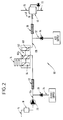
- a combination of apparatus system elements which may be employed to effect the chlorohydrin reduction reaction is generally designated by reference numeral 10 in Figure 1 and by reference numeral 60 in Figure 2. Like elements in Figures 1 and 2 are designated with like reference numerals.
- liquid containing hydrolysed protein is fed via line 16 to feed supply tank 18.
- the liquid is directed from tank 18 to upstream piping system means 12a which includes means, such as pump 20, to place the liquid under pressure.
- the flow of pressurized liquid then is directed to mixer means 22, which may be an in-line static mixer.
- mixer means 22 Prior to mixer 22, a feed line 24, which is connected to a supply of aqueous alkali, intersects piping 12a to enable introduction of alkali into the flow of liquid in upstream piping 12a.
- Pump means 26 is connected to alkali feed line 24 to pressurize the alkali.
- Means 28 for heating the flow of liquid directed from mixer 22 is next provided in piping 12a.
- heating means 28 is embodied to introduce a supply of steam from a steam supply via line 30, although at least one heat exchanger, as known in the art, could be employed in lieu of or in combination with steam for heating.
- holding piping section means 14 Positioned downstream of heating means 28 and intermediate to upstream system piping means 12a and downstream system piping means 12b is holding piping section means 14 which, as described above, has a volume sufficient, with respect to a rate of flow of the heated liquid, to hold the heated liquid for a time sufficient at a temperature of from about 100°C to about 170°C to enable the reaction which reduces the chlorohydrin content of the hydrolysed proteins to proceed.
- holding piping section means 14 includes means for controlling temperature and thus includes means such as heating elements and/or insulation.
- line 32 Positioned downstream of holding piping section means 14 and connected to system piping means 12b is line 32 which is connected to a supply of hydrochloric acid to enable introduction of hydrochloric acid into the flow of heated liquid.
- Line 32 includes pump means 34 for delivery of the acid to the flow of heated liquid under pressure into piping 12b.
- Mixer means 36 which may be an in-line static mixer, is positioned in piping 12b downstream of the connection between piping 12b and line 32.
- the flow of heated liquid is directed from mixer means 36 to means 38 embodied for cooling the liquid, which in the combination of Figure 1, preferably is a flash-cooling means, although other alternative cooling means such as at least one heat exchanger may be employed.
- Back pressure valve 40 is advisedly positioned in piping 12b between mixer 36 and flash-cooling means 38 to assist in pressure control of the apparatus system.
- the chlorohydrin-reduced hydrolysate is directed from cooling means 38 via line 42 containing pump means 44 to means 46 embodied for equilibrating the hydrolysate which may include buffering means, the equilibrated product being delivered out of means 46 via line 48.
- Condensate from the equilibration treatment may be directed via line 50 to cooling means 38, and if desired, treated equilibrated product may be recycled by directing it from means 46 to tank 18 via line 52 for further treatment.
- the apparatus system elements, generally designated 60, from feed tank 18 through and including mixer 22 are the same as those depicted in Figure 1.
- a different combination of heating means and cooling means are employed which is a system of heat exchangers generally designated 62 which, as illustrated, comprise three heat exchangers 64, 66 and 68.
- Heat exchanger 66 is employed for both heating and cooling the liquid, heat exchanger 64 is employed only for heating, and heat exchanger 68 is employed only for cooling.
- piping 12a is connected to heat exchanger 66 and directs the flow of liquid downstream to that heat exchanger and then on to heat exchanger 64 which is connected to holding piping section means 14 which is, in turn, connected to heat exchanger 66 which, in turn, is connected to cooling heat exchanger 68 by piping 12b.
- the heat exchanger cooled liquid then is directed via piping 12b to a connection between piping 12b and line 32 which is connected to a supply of hydrochloric acid and includes pump 34 as in Figure 1.
- Mixer 36 is positioned in piping 12b downstream of the connection between piping 12b and line 32.
- the flow of cooled liquid then is directed from mixer 36 in piping 12b under pressure to preferably means 46 for equilibrating the cooled hydrolysate via, preferably, back-pressure valve 40, and pressure is relieved, and means 46 may be ventilated via line 70.
- Product may be collected via line 72.
- HPP hydrolysed plant protein
- the HPP has a chlorohydrin content of from about 150 ppm to about 300 ppm, and the chlorohydrin content is reduced in an apparatus as shown in Figure 1.
- the HPP is continuously fed under pressure through the system.
- Sodium hydroxide (NaOH 50%) is fed into the flow of HPP in an amount such that the pH of the HPP is increased to a pH of about 9.
- the flow of the pH-increased HPP is heated by steam injection to about 120°C and passed to the holding piping section means which is insulated and which holds the flowing HPP at about 120°C for a residence time of about 5 minutes.
- hydrochloric acid HCL 32%) is introduced and mixed into the heated HPP to acidify the HPP and adjust its pH to a pH of about 5.1.
- the acidified HPP is cooled by vacuum flash cooling means to about 50°C at about 125 mbar vacuum.
- the HPP is equilibrated for about 15 minutes in an equilibration vessel which includes a re-circulation means.
- the final product has a chlorohydrin content of below 1 ppm.
- HPP hydrolysed plant protein
- the HPP is alkalized to obtain a pH of about 9.5 and then is heated in the heat exchangers to about 120°C and flowed through the holding piping section means, which is insulated, for about 5 min. The HPP then is cooled to about 50°C in the heat exchangers.
- the flow of cooled HPP is acidified by mixing it with hydrochloric acid (HC1 32%) with an in-line static mixer to acidify it and adjust its pH to a pH of about 5.2.
- the final product has a chlorohydrin content of below 100 ppb.
Landscapes
- Chemical & Material Sciences (AREA)
- Life Sciences & Earth Sciences (AREA)
- Biochemistry (AREA)
- Health & Medical Sciences (AREA)
- Nutrition Science (AREA)
- General Chemical & Material Sciences (AREA)
- Chemical Kinetics & Catalysis (AREA)
- Engineering & Computer Science (AREA)
- Food Science & Technology (AREA)
- Polymers & Plastics (AREA)
- Peptides Or Proteins (AREA)
- Organic Low-Molecular-Weight Compounds And Preparation Thereof (AREA)
- Preparation Of Compounds By Using Micro-Organisms (AREA)
- Seasonings (AREA)
Applications Claiming Priority (2)
| Application Number | Priority Date | Filing Date | Title |
|---|---|---|---|
| US07/676,899 US5151503A (en) | 1991-03-28 | 1991-03-28 | Process for reducing hydrolysed protein chlorohydrin content |
| US676899 | 1991-03-28 |
Publications (3)
| Publication Number | Publication Date |
|---|---|
| EP0505800A2 EP0505800A2 (en) | 1992-09-30 |
| EP0505800A3 EP0505800A3 (en) | 1993-04-21 |
| EP0505800B1 true EP0505800B1 (en) | 1995-08-02 |
Family
ID=24716481
Family Applications (1)
| Application Number | Title | Priority Date | Filing Date |
|---|---|---|---|
| EP92103947A Expired - Lifetime EP0505800B1 (en) | 1991-03-28 | 1992-03-07 | Process for reducing hydrolysed protein chlorohydrin content |
Country Status (13)
| Country | Link |
|---|---|
| US (1) | US5151503A (pl) |
| EP (1) | EP0505800B1 (pl) |
| JP (1) | JP2608659B2 (pl) |
| KR (1) | KR960008833B1 (pl) |
| AT (1) | ATE125671T1 (pl) |
| BR (1) | BR9201074A (pl) |
| CZ (1) | CZ284253B6 (pl) |
| DE (1) | DE69203764T2 (pl) |
| DK (1) | DK0505800T3 (pl) |
| ES (1) | ES2077266T3 (pl) |
| GR (1) | GR3017553T3 (pl) |
| MX (1) | MX9201304A (pl) |
| PL (1) | PL168337B1 (pl) |
Families Citing this family (7)
| Publication number | Priority date | Publication date | Assignee | Title |
|---|---|---|---|---|
| JP3419035B2 (ja) * | 1993-07-16 | 2003-06-23 | 味の素株式会社 | 蛋白質加水分解物の製法 |
| US5620737A (en) * | 1994-10-31 | 1997-04-15 | Ortech, Inc. | Process for preparing hydrolyzed food product for animal consumption |
| WO1997015353A1 (fr) * | 1995-10-25 | 1997-05-01 | Societe Des Produits Nestle S.A. | Procede de degradation des chlorhydrines |
| WO2001039607A1 (en) * | 1999-12-02 | 2001-06-07 | Dsm N.V. | Process for preparing improved protein hydrolysates |
| KR100665354B1 (ko) * | 2003-12-02 | 2007-01-09 | 전인덕 | 나노클러스터워터의 제조장치 및 제조방법 |
| CN106798294A (zh) * | 2017-01-24 | 2017-06-06 | 保定新味康食品配料有限公司 | 酸水解植物调味液精制除醇生产工艺 |
| KR101951686B1 (ko) * | 2017-10-16 | 2019-02-25 | 주식회사농심 | 식용곤충 산 가수분해물을 제조하는 방법 |
Family Cites Families (9)
| Publication number | Priority date | Publication date | Assignee | Title |
|---|---|---|---|---|
| US2538898A (en) * | 1951-01-23 | Concentrate solids | ||
| US1035591A (en) * | 1909-04-23 | 1912-08-13 | Kikunae Ikeda | Nutritive and flavoring substance and process of making same. |
| US2991309A (en) * | 1957-12-30 | 1961-07-04 | Internat Minerals & Chemicals | Protein hydrolysis |
| US3118815A (en) * | 1959-09-28 | 1964-01-21 | Upjohn Co | Growth hormone and recovery thereof |
| US3391001A (en) * | 1965-02-26 | 1968-07-02 | Griffith Laboratories | Production of flavorful protein hydrolysate |
| GB1383762A (en) * | 1971-02-26 | 1974-02-12 | Liebigs Extract Meat | Hydrolysis of proteins |
| CH668163A5 (fr) * | 1985-11-25 | 1988-12-15 | Nestle Sa | Procede de fabrication d'un condiment. |
| DE68910771T2 (de) * | 1988-09-26 | 1994-03-31 | Unilever Nv | Verfahren zur Herstellung von verbessertem Proteinhydrolysat. |
| US5102987A (en) * | 1988-10-14 | 1992-04-07 | Nestec S.A. | Preparation of hydrolyzed protein having reduced α-chlorohydrin content |
-
1991
- 1991-03-28 US US07/676,899 patent/US5151503A/en not_active Expired - Lifetime
-
1992
- 1992-03-07 ES ES92103947T patent/ES2077266T3/es not_active Expired - Lifetime
- 1992-03-07 AT AT92103947T patent/ATE125671T1/de not_active IP Right Cessation
- 1992-03-07 DK DK92103947.5T patent/DK0505800T3/da active
- 1992-03-07 DE DE69203764T patent/DE69203764T2/de not_active Expired - Fee Related
- 1992-03-07 EP EP92103947A patent/EP0505800B1/en not_active Expired - Lifetime
- 1992-03-12 PL PL92293819A patent/PL168337B1/pl unknown
- 1992-03-24 MX MX9201304A patent/MX9201304A/es not_active IP Right Cessation
- 1992-03-26 JP JP4068646A patent/JP2608659B2/ja not_active Expired - Lifetime
- 1992-03-27 BR BR929201074A patent/BR9201074A/pt not_active Application Discontinuation
- 1992-03-28 KR KR92005196A patent/KR960008833B1/ko not_active Expired - Fee Related
- 1992-03-30 CZ CS92941A patent/CZ284253B6/cs not_active IP Right Cessation
-
1995
- 1995-09-28 GR GR950402666T patent/GR3017553T3/el unknown
Also Published As
| Publication number | Publication date |
|---|---|
| BR9201074A (pt) | 1992-11-24 |
| CZ284253B6 (cs) | 1998-10-14 |
| ATE125671T1 (de) | 1995-08-15 |
| PL293819A1 (en) | 1992-11-30 |
| MX9201304A (es) | 1993-01-29 |
| EP0505800A3 (en) | 1993-04-21 |
| JPH05103594A (ja) | 1993-04-27 |
| US5151503A (en) | 1992-09-29 |
| EP0505800A2 (en) | 1992-09-30 |
| ES2077266T3 (es) | 1995-11-16 |
| DE69203764D1 (de) | 1995-09-07 |
| KR920018072A (ko) | 1992-10-21 |
| JP2608659B2 (ja) | 1997-05-07 |
| GR3017553T3 (en) | 1995-12-31 |
| KR960008833B1 (en) | 1996-07-05 |
| CZ94192A3 (en) | 1994-02-16 |
| DE69203764T2 (de) | 1995-12-07 |
| PL168337B1 (pl) | 1996-02-29 |
| DK0505800T3 (da) | 1995-12-18 |
Similar Documents
| Publication | Publication Date | Title |
|---|---|---|
| US8323512B2 (en) | Method of and apparatus for producing sub-critical water decomposition products | |
| US5151503A (en) | Process for reducing hydrolysed protein chlorohydrin content | |
| NO339944B1 (no) | Fremstilling av natriumdiformiat | |
| RU2382768C2 (ru) | Способ получения метионина | |
| US8628817B2 (en) | Process for producing acidulated 50% concentrated solution and dry powder of peptides from protein products and waste of animal, fish and aquaculture origin | |
| EP0050431A1 (en) | Protein production | |
| CN111377811B (zh) | 一种山梨酸连续制备方法 | |
| CN114149351B (zh) | 基于硫酸直接酸化法的蛋氨酸优化制备方法和硫酸钠洗涤设备 | |
| EP0338615B1 (en) | Method and apparatus for the continuous processing of dead animal material, such as offal | |
| ZA200700041B (en) | Method for producing and purifying gelatin | |
| CN116419917A (zh) | 由尿素生产缩二脲的方法 | |
| CN109134288A (zh) | 一种合成甜菜碱的装置及方法 | |
| CA1152894A (en) | Process for the production of new type of heparin-containing raw material | |
| JP4050864B2 (ja) | 塩化カルシウム水溶液の製造方法 | |
| EP2064958B1 (en) | Method for collecting blood and transforming same into a hydrolyzed protein using slaughter animal blood, such as to obtain hydrolyzed blood protein | |
| JP3550727B2 (ja) | 蛋白質塩酸加水分解物よりの改良されたクロロヒドリン加水分解法 | |
| US3294826A (en) | Process for acid hydrolysis of waste animal material and product | |
| CN218224032U (zh) | 生物安全式氨基酸粉制备设备 | |
| EP0048771A1 (en) | Low temperature rendering process and a plant for rendering animal or vegetable raw material | |
| WO2024228199A1 (en) | Processes for the production of lactic acid with concurrent recovery and reuse of by-products thereof | |
| RU1794084C (ru) | Способ обезжиривани костного сырь | |
| SE501141C2 (sv) | Förfarande för hydrolys av cellulosa- och/eller stärkelsehaltiga material | |
| EP0313166A1 (en) | Process for preparing urea and water starting from ammonia and carbon dioxide | |
| EP2368872A1 (en) | Process for the preparation of Gabapentin | |
| IE20040214U1 (en) | A process for producing purified tallow |
Legal Events
| Date | Code | Title | Description |
|---|---|---|---|
| PUAI | Public reference made under article 153(3) epc to a published international application that has entered the european phase |
Free format text: ORIGINAL CODE: 0009012 |
|
| 17P | Request for examination filed |
Effective date: 19920307 |
|
| AK | Designated contracting states |
Kind code of ref document: A2 Designated state(s): AT BE CH DE DK ES FR GB GR IT LI LU MC NL PT SE |
|
| PUAL | Search report despatched |
Free format text: ORIGINAL CODE: 0009013 |
|
| AK | Designated contracting states |
Kind code of ref document: A3 Designated state(s): AT BE CH DE DK ES FR GB GR IT LI LU MC NL PT SE |
|
| 17Q | First examination report despatched |
Effective date: 19940826 |
|
| RBV | Designated contracting states (corrected) |
Designated state(s): AT BE CH DE DK ES FR GB GR IT LI LU NL PT SE |
|
| GRAA | (expected) grant |
Free format text: ORIGINAL CODE: 0009210 |
|
| AK | Designated contracting states |
Kind code of ref document: B1 Designated state(s): AT BE CH DE DK ES FR GB GR IT LI LU NL PT SE |
|
| REF | Corresponds to: |
Ref document number: 125671 Country of ref document: AT Date of ref document: 19950815 Kind code of ref document: T |
|
| REF | Corresponds to: |
Ref document number: 69203764 Country of ref document: DE Date of ref document: 19950907 |
|
| ET | Fr: translation filed | ||
| ITF | It: translation for a ep patent filed | ||
| REG | Reference to a national code |
Ref country code: ES Ref legal event code: FG2A Ref document number: 2077266 Country of ref document: ES Kind code of ref document: T3 |
|
| REG | Reference to a national code |
Ref country code: GR Ref legal event code: FG4A Free format text: 3017553 |
|
| REG | Reference to a national code |
Ref country code: DK Ref legal event code: T3 |
|
| SC4A | Pt: translation is available |
Free format text: 951023 AVAILABILITY OF NATIONAL TRANSLATION |
|
| PLBE | No opposition filed within time limit |
Free format text: ORIGINAL CODE: 0009261 |
|
| STAA | Information on the status of an ep patent application or granted ep patent |
Free format text: STATUS: NO OPPOSITION FILED WITHIN TIME LIMIT |
|
| 26N | No opposition filed | ||
| PGFP | Annual fee paid to national office [announced via postgrant information from national office to epo] |
Ref country code: PT Payment date: 19990219 Year of fee payment: 8 |
|
| PGFP | Annual fee paid to national office [announced via postgrant information from national office to epo] |
Ref country code: SE Payment date: 19990305 Year of fee payment: 8 |
|
| PGFP | Annual fee paid to national office [announced via postgrant information from national office to epo] |
Ref country code: FR Payment date: 19990309 Year of fee payment: 8 |
|
| PGFP | Annual fee paid to national office [announced via postgrant information from national office to epo] |
Ref country code: GB Payment date: 19990311 Year of fee payment: 8 Ref country code: DK Payment date: 19990311 Year of fee payment: 8 Ref country code: AT Payment date: 19990311 Year of fee payment: 8 |
|
| PGFP | Annual fee paid to national office [announced via postgrant information from national office to epo] |
Ref country code: DE Payment date: 19990315 Year of fee payment: 8 |
|
| PGFP | Annual fee paid to national office [announced via postgrant information from national office to epo] |
Ref country code: ES Payment date: 19990323 Year of fee payment: 8 |
|
| PGFP | Annual fee paid to national office [announced via postgrant information from national office to epo] |
Ref country code: GR Payment date: 19990326 Year of fee payment: 8 |
|
| PGFP | Annual fee paid to national office [announced via postgrant information from national office to epo] |
Ref country code: NL Payment date: 19990329 Year of fee payment: 8 |
|
| PGFP | Annual fee paid to national office [announced via postgrant information from national office to epo] |
Ref country code: LU Payment date: 19990401 Year of fee payment: 8 |
|
| PGFP | Annual fee paid to national office [announced via postgrant information from national office to epo] |
Ref country code: BE Payment date: 19990517 Year of fee payment: 8 |
|
| PG25 | Lapsed in a contracting state [announced via postgrant information from national office to epo] |
Ref country code: LU Free format text: LAPSE BECAUSE OF NON-PAYMENT OF DUE FEES Effective date: 20000307 Ref country code: GB Free format text: LAPSE BECAUSE OF NON-PAYMENT OF DUE FEES Effective date: 20000307 Ref country code: DK Free format text: LAPSE BECAUSE OF NON-PAYMENT OF DUE FEES Effective date: 20000307 Ref country code: AT Free format text: LAPSE BECAUSE OF NON-PAYMENT OF DUE FEES Effective date: 20000307 |
|
| PG25 | Lapsed in a contracting state [announced via postgrant information from national office to epo] |
Ref country code: SE Free format text: LAPSE BECAUSE OF NON-PAYMENT OF DUE FEES Effective date: 20000308 Ref country code: ES Free format text: LAPSE BECAUSE OF NON-PAYMENT OF DUE FEES Effective date: 20000308 |
|
| PG25 | Lapsed in a contracting state [announced via postgrant information from national office to epo] |
Ref country code: GR Free format text: LAPSE BECAUSE OF NON-PAYMENT OF DUE FEES Effective date: 20000331 Ref country code: BE Free format text: LAPSE BECAUSE OF NON-PAYMENT OF DUE FEES Effective date: 20000331 |
|
| BERE | Be: lapsed |
Owner name: SOC. DES PRODUITS NESTLE S.A. Effective date: 20000331 |
|
| PG25 | Lapsed in a contracting state [announced via postgrant information from national office to epo] |
Ref country code: PT Free format text: LAPSE BECAUSE OF NON-PAYMENT OF DUE FEES Effective date: 20000930 |
|
| PG25 | Lapsed in a contracting state [announced via postgrant information from national office to epo] |
Ref country code: NL Free format text: LAPSE BECAUSE OF NON-PAYMENT OF DUE FEES Effective date: 20001001 |
|
| GBPC | Gb: european patent ceased through non-payment of renewal fee |
Effective date: 20000307 |
|
| EUG | Se: european patent has lapsed |
Ref document number: 92103947.5 |
|
| REG | Reference to a national code |
Ref country code: DK Ref legal event code: EBP |
|
| PG25 | Lapsed in a contracting state [announced via postgrant information from national office to epo] |
Ref country code: FR Free format text: LAPSE BECAUSE OF NON-PAYMENT OF DUE FEES Effective date: 20001130 |
|
| NLV4 | Nl: lapsed or anulled due to non-payment of the annual fee |
Effective date: 20001001 |
|
| REG | Reference to a national code |
Ref country code: FR Ref legal event code: ST |
|
| PG25 | Lapsed in a contracting state [announced via postgrant information from national office to epo] |
Ref country code: DE Free format text: LAPSE BECAUSE OF NON-PAYMENT OF DUE FEES Effective date: 20010103 |
|
| REG | Reference to a national code |
Ref country code: PT Ref legal event code: MM4A Free format text: LAPSE DUE TO NON-PAYMENT OF FEES Effective date: 20000930 |
|
| REG | Reference to a national code |
Ref country code: ES Ref legal event code: FD2A Effective date: 20010910 |
|
| PGFP | Annual fee paid to national office [announced via postgrant information from national office to epo] |
Ref country code: CH Payment date: 20030314 Year of fee payment: 12 |
|
| PG25 | Lapsed in a contracting state [announced via postgrant information from national office to epo] |
Ref country code: LI Free format text: LAPSE BECAUSE OF NON-PAYMENT OF DUE FEES Effective date: 20040331 Ref country code: CH Free format text: LAPSE BECAUSE OF NON-PAYMENT OF DUE FEES Effective date: 20040331 |
|
| REG | Reference to a national code |
Ref country code: CH Ref legal event code: PL |
|
| PG25 | Lapsed in a contracting state [announced via postgrant information from national office to epo] |
Ref country code: IT Free format text: LAPSE BECAUSE OF NON-PAYMENT OF DUE FEES;WARNING: LAPSES OF ITALIAN PATENTS WITH EFFECTIVE DATE BEFORE 2007 MAY HAVE OCCURRED AT ANY TIME BEFORE 2007. THE CORRECT EFFECTIVE DATE MAY BE DIFFERENT FROM THE ONE RECORDED. Effective date: 20050307 |