EP0492137B1 - Phosphorous polymers - Google Patents
Phosphorous polymers Download PDFInfo
- Publication number
- EP0492137B1 EP0492137B1 EP91119919A EP91119919A EP0492137B1 EP 0492137 B1 EP0492137 B1 EP 0492137B1 EP 91119919 A EP91119919 A EP 91119919A EP 91119919 A EP91119919 A EP 91119919A EP 0492137 B1 EP0492137 B1 EP 0492137B1
- Authority
- EP
- European Patent Office
- Prior art keywords
- source
- aluminium
- amorphous
- polymeric material
- organic
- Prior art date
- Legal status (The legal status is an assumption and is not a legal conclusion. Google has not performed a legal analysis and makes no representation as to the accuracy of the status listed.)
- Expired - Lifetime
Links
- 229920000642 polymer Polymers 0.000 title description 16
- BHEPBYXIRTUNPN-UHFFFAOYSA-N hydridophosphorus(.) (triplet) Chemical compound [PH] BHEPBYXIRTUNPN-UHFFFAOYSA-N 0.000 title description 11
- NBIIXXVUZAFLBC-UHFFFAOYSA-N Phosphoric acid Chemical compound OP(O)(O)=O NBIIXXVUZAFLBC-UHFFFAOYSA-N 0.000 claims description 57
- 239000000463 material Substances 0.000 claims description 46
- 229910000147 aluminium phosphate Inorganic materials 0.000 claims description 38
- 238000010438 heat treatment Methods 0.000 claims description 19
- WNROFYMDJYEPJX-UHFFFAOYSA-K aluminium hydroxide Chemical compound [OH-].[OH-].[OH-].[Al+3] WNROFYMDJYEPJX-UHFFFAOYSA-K 0.000 claims description 18
- 238000000034 method Methods 0.000 claims description 18
- XAGFODPZIPBFFR-UHFFFAOYSA-N aluminium Chemical compound [Al] XAGFODPZIPBFFR-UHFFFAOYSA-N 0.000 claims description 17
- PNEYBMLMFCGWSK-UHFFFAOYSA-N Alumina Chemical compound [O-2].[O-2].[O-2].[Al+3].[Al+3] PNEYBMLMFCGWSK-UHFFFAOYSA-N 0.000 claims description 16
- 229910019142 PO4 Inorganic materials 0.000 claims description 14
- 229910052782 aluminium Inorganic materials 0.000 claims description 14
- QGZKDVFQNNGYKY-UHFFFAOYSA-N Ammonia Chemical compound N QGZKDVFQNNGYKY-UHFFFAOYSA-N 0.000 claims description 13
- VYPSYNLAJGMNEJ-UHFFFAOYSA-N Silicium dioxide Chemical compound O=[Si]=O VYPSYNLAJGMNEJ-UHFFFAOYSA-N 0.000 claims description 12
- MCMNRKCIXSYSNV-UHFFFAOYSA-N Zirconium dioxide Chemical compound O=[Zr]=O MCMNRKCIXSYSNV-UHFFFAOYSA-N 0.000 claims description 12
- 229910001593 boehmite Inorganic materials 0.000 claims description 12
- FAHBNUUHRFUEAI-UHFFFAOYSA-M hydroxidooxidoaluminium Chemical compound O[Al]=O FAHBNUUHRFUEAI-UHFFFAOYSA-M 0.000 claims description 12
- 239000010452 phosphate Substances 0.000 claims description 11
- GWEVSGVZZGPLCZ-UHFFFAOYSA-N Titan oxide Chemical compound O=[Ti]=O GWEVSGVZZGPLCZ-UHFFFAOYSA-N 0.000 claims description 10
- XSQUKJJJFZCRTK-UHFFFAOYSA-N Urea Chemical compound NC(N)=O XSQUKJJJFZCRTK-UHFFFAOYSA-N 0.000 claims description 10
- 239000007788 liquid Substances 0.000 claims description 10
- NBIIXXVUZAFLBC-UHFFFAOYSA-K phosphate Chemical compound [O-]P([O-])([O-])=O NBIIXXVUZAFLBC-UHFFFAOYSA-K 0.000 claims description 10
- 239000004202 carbamide Substances 0.000 claims description 9
- 229910011255 B2O3 Inorganic materials 0.000 claims description 8
- OAICVXFJPJFONN-UHFFFAOYSA-N Phosphorus Chemical compound [P] OAICVXFJPJFONN-UHFFFAOYSA-N 0.000 claims description 7
- JKWMSGQKBLHBQQ-UHFFFAOYSA-N diboron trioxide Chemical compound O=BOB=O JKWMSGQKBLHBQQ-UHFFFAOYSA-N 0.000 claims description 7
- 229910052698 phosphorus Inorganic materials 0.000 claims description 7
- 239000011574 phosphorus Substances 0.000 claims description 7
- IJGRMHOSHXDMSA-UHFFFAOYSA-N Atomic nitrogen Chemical compound N#N IJGRMHOSHXDMSA-UHFFFAOYSA-N 0.000 claims description 6
- 239000002243 precursor Substances 0.000 claims description 6
- 229910000287 alkaline earth metal oxide Inorganic materials 0.000 claims description 5
- -1 aromatics Chemical class 0.000 claims description 5
- 239000000377 silicon dioxide Substances 0.000 claims description 5
- 229910000272 alkali metal oxide Inorganic materials 0.000 claims description 4
- CETPSERCERDGAM-UHFFFAOYSA-N ceric oxide Chemical compound O=[Ce]=O CETPSERCERDGAM-UHFFFAOYSA-N 0.000 claims description 4
- 229910000422 cerium(IV) oxide Inorganic materials 0.000 claims description 4
- 239000000835 fiber Substances 0.000 claims description 4
- 229910052736 halogen Inorganic materials 0.000 claims description 4
- 150000002367 halogens Chemical class 0.000 claims description 4
- 230000003014 reinforcing effect Effects 0.000 claims description 4
- 229910000314 transition metal oxide Inorganic materials 0.000 claims description 4
- 150000001412 amines Chemical class 0.000 claims description 3
- 125000004432 carbon atom Chemical group C* 0.000 claims description 3
- LVYZJEPLMYTTGH-UHFFFAOYSA-H dialuminum chloride pentahydroxide dihydrate Chemical compound [Cl-].[Al+3].[OH-].[OH-].[Al+3].[OH-].[OH-].[OH-].O.O LVYZJEPLMYTTGH-UHFFFAOYSA-H 0.000 claims description 3
- 229910052757 nitrogen Inorganic materials 0.000 claims description 3
- 125000000962 organic group Chemical group 0.000 claims description 3
- 150000001298 alcohols Chemical class 0.000 claims description 2
- 150000001335 aliphatic alkanes Chemical class 0.000 claims description 2
- 150000001336 alkenes Chemical class 0.000 claims description 2
- 150000001345 alkine derivatives Chemical class 0.000 claims description 2
- 150000001408 amides Chemical class 0.000 claims description 2
- 229910021529 ammonia Inorganic materials 0.000 claims description 2
- 150000001735 carboxylic acids Chemical class 0.000 claims description 2
- 150000001875 compounds Chemical class 0.000 claims description 2
- 150000002148 esters Chemical class 0.000 claims description 2
- 150000002170 ethers Chemical class 0.000 claims description 2
- 230000005693 optoelectronics Effects 0.000 claims description 2
- 239000004411 aluminium Substances 0.000 claims 5
- 229910021502 aluminium hydroxide Inorganic materials 0.000 claims 2
- 229960001422 aluminium chlorohydrate Drugs 0.000 claims 1
- 230000003139 buffering effect Effects 0.000 claims 1
- 125000002915 carbonyl group Chemical group [*:2]C([*:1])=O 0.000 claims 1
- 239000000203 mixture Substances 0.000 description 39
- 235000011007 phosphoric acid Nutrition 0.000 description 26
- LYCAIKOWRPUZTN-UHFFFAOYSA-N Ethylene glycol Chemical compound OCCO LYCAIKOWRPUZTN-UHFFFAOYSA-N 0.000 description 24
- 239000006260 foam Substances 0.000 description 24
- QTBSBXVTEAMEQO-UHFFFAOYSA-N Acetic acid Chemical compound CC(O)=O QTBSBXVTEAMEQO-UHFFFAOYSA-N 0.000 description 17
- 238000006243 chemical reaction Methods 0.000 description 17
- 239000011521 glass Substances 0.000 description 17
- 239000000047 product Substances 0.000 description 16
- 239000013078 crystal Substances 0.000 description 15
- UCMIRNVEIXFBKS-UHFFFAOYSA-N beta-alanine Chemical compound NCCC(O)=O UCMIRNVEIXFBKS-UHFFFAOYSA-N 0.000 description 12
- 235000021317 phosphate Nutrition 0.000 description 11
- XLYOFNOQVPJJNP-UHFFFAOYSA-N water Substances O XLYOFNOQVPJJNP-UHFFFAOYSA-N 0.000 description 9
- 239000000654 additive Substances 0.000 description 8
- 238000003756 stirring Methods 0.000 description 8
- 239000000872 buffer Substances 0.000 description 7
- 239000000499 gel Substances 0.000 description 7
- 229910000069 nitrogen hydride Inorganic materials 0.000 description 7
- 239000000243 solution Substances 0.000 description 7
- 229960000583 acetic acid Drugs 0.000 description 6
- 235000011054 acetic acid Nutrition 0.000 description 6
- 238000007792 addition Methods 0.000 description 6
- 229940000635 beta-alanine Drugs 0.000 description 6
- 238000009472 formulation Methods 0.000 description 6
- 238000002441 X-ray diffraction Methods 0.000 description 5
- ILRRQNADMUWWFW-UHFFFAOYSA-K aluminium phosphate Chemical compound O1[Al]2OP1(=O)O2 ILRRQNADMUWWFW-UHFFFAOYSA-K 0.000 description 5
- FEWJPZIEWOKRBE-JCYAYHJZSA-N Dextrotartaric acid Chemical compound OC(=O)[C@H](O)[C@@H](O)C(O)=O FEWJPZIEWOKRBE-JCYAYHJZSA-N 0.000 description 4
- FEWJPZIEWOKRBE-UHFFFAOYSA-N Tartaric acid Natural products [H+].[H+].[O-]C(=O)C(O)C(O)C([O-])=O FEWJPZIEWOKRBE-UHFFFAOYSA-N 0.000 description 4
- 239000000919 ceramic Substances 0.000 description 4
- 239000007795 chemical reaction product Substances 0.000 description 4
- 238000000576 coating method Methods 0.000 description 4
- 238000005187 foaming Methods 0.000 description 4
- 229910052500 inorganic mineral Inorganic materials 0.000 description 4
- 238000004519 manufacturing process Methods 0.000 description 4
- 239000011159 matrix material Substances 0.000 description 4
- 239000011707 mineral Substances 0.000 description 4
- 235000010755 mineral Nutrition 0.000 description 4
- 238000002156 mixing Methods 0.000 description 4
- 235000002906 tartaric acid Nutrition 0.000 description 4
- 239000011975 tartaric acid Substances 0.000 description 4
- UXVMQQNJUSDDNG-UHFFFAOYSA-L Calcium chloride Chemical compound [Cl-].[Cl-].[Ca+2] UXVMQQNJUSDDNG-UHFFFAOYSA-L 0.000 description 3
- KCXVZYZYPLLWCC-UHFFFAOYSA-N EDTA Chemical compound OC(=O)CN(CC(O)=O)CCN(CC(O)=O)CC(O)=O KCXVZYZYPLLWCC-UHFFFAOYSA-N 0.000 description 3
- 238000005033 Fourier transform infrared spectroscopy Methods 0.000 description 3
- MUBZPKHOEPUJKR-UHFFFAOYSA-N Oxalic acid Chemical compound OC(=O)C(O)=O MUBZPKHOEPUJKR-UHFFFAOYSA-N 0.000 description 3
- 239000002253 acid Substances 0.000 description 3
- 230000015572 biosynthetic process Effects 0.000 description 3
- 239000001110 calcium chloride Substances 0.000 description 3
- 229910001628 calcium chloride Inorganic materials 0.000 description 3
- 229910052799 carbon Inorganic materials 0.000 description 3
- 239000002178 crystalline material Substances 0.000 description 3
- 230000007423 decrease Effects 0.000 description 3
- 238000005755 formation reaction Methods 0.000 description 3
- 239000007789 gas Substances 0.000 description 3
- 150000004820 halides Chemical class 0.000 description 3
- 239000004615 ingredient Substances 0.000 description 3
- KLZUFWVZNOTSEM-UHFFFAOYSA-K Aluminium flouride Chemical compound F[Al](F)F KLZUFWVZNOTSEM-UHFFFAOYSA-K 0.000 description 2
- XKRFYHLGVUSROY-UHFFFAOYSA-N Argon Chemical compound [Ar] XKRFYHLGVUSROY-UHFFFAOYSA-N 0.000 description 2
- OKTJSMMVPCPJKN-UHFFFAOYSA-N Carbon Chemical compound [C] OKTJSMMVPCPJKN-UHFFFAOYSA-N 0.000 description 2
- LFQSCWFLJHTTHZ-UHFFFAOYSA-N Ethanol Chemical compound CCO LFQSCWFLJHTTHZ-UHFFFAOYSA-N 0.000 description 2
- 230000000996 additive effect Effects 0.000 description 2
- VSCWAEJMTAWNJL-UHFFFAOYSA-K aluminium trichloride Chemical compound Cl[Al](Cl)Cl VSCWAEJMTAWNJL-UHFFFAOYSA-K 0.000 description 2
- 229920006125 amorphous polymer Polymers 0.000 description 2
- 238000004458 analytical method Methods 0.000 description 2
- 239000007864 aqueous solution Substances 0.000 description 2
- 239000002585 base Substances 0.000 description 2
- 239000011230 binding agent Substances 0.000 description 2
- 230000005540 biological transmission Effects 0.000 description 2
- KGBXLFKZBHKPEV-UHFFFAOYSA-N boric acid Chemical compound OB(O)O KGBXLFKZBHKPEV-UHFFFAOYSA-N 0.000 description 2
- 239000004327 boric acid Substances 0.000 description 2
- 229910000389 calcium phosphate Inorganic materials 0.000 description 2
- 238000005266 casting Methods 0.000 description 2
- 239000011248 coating agent Substances 0.000 description 2
- 229910000393 dicalcium diphosphate Inorganic materials 0.000 description 2
- 239000000975 dye Substances 0.000 description 2
- 230000000694 effects Effects 0.000 description 2
- 238000002474 experimental method Methods 0.000 description 2
- 239000000945 filler Substances 0.000 description 2
- 229910001679 gibbsite Inorganic materials 0.000 description 2
- XLYOFNOQVPJJNP-UHFFFAOYSA-M hydroxide Chemical compound [OH-] XLYOFNOQVPJJNP-UHFFFAOYSA-M 0.000 description 2
- 229920000592 inorganic polymer Polymers 0.000 description 2
- 238000002844 melting Methods 0.000 description 2
- 230000008018 melting Effects 0.000 description 2
- 229910052751 metal Inorganic materials 0.000 description 2
- 239000002184 metal Substances 0.000 description 2
- 239000011368 organic material Substances 0.000 description 2
- 150000003013 phosphoric acid derivatives Chemical class 0.000 description 2
- 229920002959 polymer blend Polymers 0.000 description 2
- 239000000843 powder Substances 0.000 description 2
- 239000007787 solid Substances 0.000 description 2
- 239000002904 solvent Substances 0.000 description 2
- 238000007669 thermal treatment Methods 0.000 description 2
- QORWJWZARLRLPR-UHFFFAOYSA-H tricalcium bis(phosphate) Chemical compound [Ca+2].[Ca+2].[Ca+2].[O-]P([O-])([O-])=O.[O-]P([O-])([O-])=O QORWJWZARLRLPR-UHFFFAOYSA-H 0.000 description 2
- 230000003245 working effect Effects 0.000 description 2
- QGZKDVFQNNGYKY-UHFFFAOYSA-O Ammonium Chemical compound [NH4+] QGZKDVFQNNGYKY-UHFFFAOYSA-O 0.000 description 1
- 239000004254 Ammonium phosphate Substances 0.000 description 1
- BVKZGUZCCUSVTD-UHFFFAOYSA-L Carbonate Chemical compound [O-]C([O-])=O BVKZGUZCCUSVTD-UHFFFAOYSA-L 0.000 description 1
- 102000002322 Egg Proteins Human genes 0.000 description 1
- 108010000912 Egg Proteins Proteins 0.000 description 1
- UFHFLCQGNIYNRP-UHFFFAOYSA-N Hydrogen Chemical compound [H][H] UFHFLCQGNIYNRP-UHFFFAOYSA-N 0.000 description 1
- FEWJPZIEWOKRBE-XIXRPRMCSA-N Mesotartaric acid Chemical compound OC(=O)[C@@H](O)[C@@H](O)C(O)=O FEWJPZIEWOKRBE-XIXRPRMCSA-N 0.000 description 1
- 229910017971 NH4BF4 Inorganic materials 0.000 description 1
- 229910002651 NO3 Inorganic materials 0.000 description 1
- NHNBFGGVMKEFGY-UHFFFAOYSA-N Nitrate Chemical compound [O-][N+]([O-])=O NHNBFGGVMKEFGY-UHFFFAOYSA-N 0.000 description 1
- GRYLNZFGIOXLOG-UHFFFAOYSA-N Nitric acid Chemical compound O[N+]([O-])=O GRYLNZFGIOXLOG-UHFFFAOYSA-N 0.000 description 1
- 241000282485 Vulpes vulpes Species 0.000 description 1
- 238000010521 absorption reaction Methods 0.000 description 1
- 150000001243 acetic acids Chemical class 0.000 description 1
- NIXOWILDQLNWCW-UHFFFAOYSA-N acrylic acid group Chemical group C(C=C)(=O)O NIXOWILDQLNWCW-UHFFFAOYSA-N 0.000 description 1
- 150000001253 acrylic acids Chemical class 0.000 description 1
- 239000000853 adhesive Substances 0.000 description 1
- 230000001070 adhesive effect Effects 0.000 description 1
- 125000001931 aliphatic group Chemical group 0.000 description 1
- 239000003513 alkali Substances 0.000 description 1
- 229910052783 alkali metal Inorganic materials 0.000 description 1
- 150000001340 alkali metals Chemical class 0.000 description 1
- ZRIUUUJAJJNDSS-UHFFFAOYSA-N ammonium phosphates Chemical class [NH4+].[NH4+].[NH4+].[O-]P([O-])([O-])=O ZRIUUUJAJJNDSS-UHFFFAOYSA-N 0.000 description 1
- 235000019289 ammonium phosphates Nutrition 0.000 description 1
- 238000013459 approach Methods 0.000 description 1
- 229910052786 argon Inorganic materials 0.000 description 1
- QVGXLLKOCUKJST-UHFFFAOYSA-N atomic oxygen Chemical compound [O] QVGXLLKOCUKJST-UHFFFAOYSA-N 0.000 description 1
- 229910001570 bauxite Inorganic materials 0.000 description 1
- 229910001680 bayerite Inorganic materials 0.000 description 1
- 239000000440 bentonite Substances 0.000 description 1
- 229910000278 bentonite Inorganic materials 0.000 description 1
- SVPXDRXYRYOSEX-UHFFFAOYSA-N bentoquatam Chemical compound O.O=[Si]=O.O=[Al]O[Al]=O SVPXDRXYRYOSEX-UHFFFAOYSA-N 0.000 description 1
- 229910052791 calcium Inorganic materials 0.000 description 1
- 239000011575 calcium Substances 0.000 description 1
- VSGNNIFQASZAOI-UHFFFAOYSA-L calcium acetate Chemical compound [Ca+2].CC([O-])=O.CC([O-])=O VSGNNIFQASZAOI-UHFFFAOYSA-L 0.000 description 1
- 239000001639 calcium acetate Substances 0.000 description 1
- 235000011092 calcium acetate Nutrition 0.000 description 1
- 229960005147 calcium acetate Drugs 0.000 description 1
- FUFJGUQYACFECW-UHFFFAOYSA-L calcium hydrogenphosphate Chemical compound [Ca+2].OP([O-])([O-])=O FUFJGUQYACFECW-UHFFFAOYSA-L 0.000 description 1
- 239000001506 calcium phosphate Substances 0.000 description 1
- 235000011010 calcium phosphates Nutrition 0.000 description 1
- 150000001728 carbonyl compounds Chemical class 0.000 description 1
- 210000004027 cell Anatomy 0.000 description 1
- 210000002421 cell wall Anatomy 0.000 description 1
- 239000000470 constituent Substances 0.000 description 1
- 229910052878 cordierite Inorganic materials 0.000 description 1
- 239000006219 crystal-free glass Substances 0.000 description 1
- 238000002425 crystallisation Methods 0.000 description 1
- 230000008025 crystallization Effects 0.000 description 1
- 230000001419 dependent effect Effects 0.000 description 1
- 238000011161 development Methods 0.000 description 1
- 229910001648 diaspore Inorganic materials 0.000 description 1
- JSKIRARMQDRGJZ-UHFFFAOYSA-N dimagnesium dioxido-bis[(1-oxido-3-oxo-2,4,6,8,9-pentaoxa-1,3-disila-5,7-dialuminabicyclo[3.3.1]nonan-7-yl)oxy]silane Chemical group [Mg++].[Mg++].[O-][Si]([O-])(O[Al]1O[Al]2O[Si](=O)O[Si]([O-])(O1)O2)O[Al]1O[Al]2O[Si](=O)O[Si]([O-])(O1)O2 JSKIRARMQDRGJZ-UHFFFAOYSA-N 0.000 description 1
- 210000003278 egg shell Anatomy 0.000 description 1
- XYIBRDXRRQCHLP-UHFFFAOYSA-N ethyl acetoacetate Chemical group CCOC(=O)CC(C)=O XYIBRDXRRQCHLP-UHFFFAOYSA-N 0.000 description 1
- 229940093858 ethyl acetoacetate Drugs 0.000 description 1
- 239000010419 fine particle Substances 0.000 description 1
- 239000012530 fluid Substances 0.000 description 1
- 239000006261 foam material Substances 0.000 description 1
- 235000019253 formic acid Nutrition 0.000 description 1
- 150000004674 formic acids Chemical class 0.000 description 1
- 239000012362 glacial acetic acid Substances 0.000 description 1
- 239000006112 glass ceramic composition Substances 0.000 description 1
- 239000003365 glass fiber Substances 0.000 description 1
- 238000005816 glass manufacturing process Methods 0.000 description 1
- 239000001307 helium Substances 0.000 description 1
- 229910052734 helium Inorganic materials 0.000 description 1
- SWQJXJOGLNCZEY-UHFFFAOYSA-N helium atom Chemical compound [He] SWQJXJOGLNCZEY-UHFFFAOYSA-N 0.000 description 1
- 239000001257 hydrogen Substances 0.000 description 1
- 229910052739 hydrogen Inorganic materials 0.000 description 1
- 229910010272 inorganic material Inorganic materials 0.000 description 1
- 239000011147 inorganic material Substances 0.000 description 1
- 150000002500 ions Chemical class 0.000 description 1
- UEGPKNKPLBYCNK-UHFFFAOYSA-L magnesium acetate Chemical compound [Mg+2].CC([O-])=O.CC([O-])=O UEGPKNKPLBYCNK-UHFFFAOYSA-L 0.000 description 1
- 239000011654 magnesium acetate Substances 0.000 description 1
- 229940069446 magnesium acetate Drugs 0.000 description 1
- 235000011285 magnesium acetate Nutrition 0.000 description 1
- GVALZJMUIHGIMD-UHFFFAOYSA-H magnesium phosphate Chemical compound [Mg+2].[Mg+2].[Mg+2].[O-]P([O-])([O-])=O.[O-]P([O-])([O-])=O GVALZJMUIHGIMD-UHFFFAOYSA-H 0.000 description 1
- 239000004137 magnesium phosphate Substances 0.000 description 1
- 229910000157 magnesium phosphate Inorganic materials 0.000 description 1
- 229960002261 magnesium phosphate Drugs 0.000 description 1
- 235000010994 magnesium phosphates Nutrition 0.000 description 1
- 229910001510 metal chloride Inorganic materials 0.000 description 1
- 229910044991 metal oxide Inorganic materials 0.000 description 1
- 150000004706 metal oxides Chemical class 0.000 description 1
- 229910001463 metal phosphate Inorganic materials 0.000 description 1
- 150000002739 metals Chemical class 0.000 description 1
- 235000019691 monocalcium phosphate Nutrition 0.000 description 1
- 229910000150 monocalcium phosphate Inorganic materials 0.000 description 1
- 229910017604 nitric acid Inorganic materials 0.000 description 1
- QJGQUHMNIGDVPM-UHFFFAOYSA-N nitrogen group Chemical group [N] QJGQUHMNIGDVPM-UHFFFAOYSA-N 0.000 description 1
- 150000002894 organic compounds Chemical class 0.000 description 1
- 125000001477 organic nitrogen group Chemical group 0.000 description 1
- 229920000620 organic polymer Polymers 0.000 description 1
- 239000003960 organic solvent Substances 0.000 description 1
- 235000006408 oxalic acid Nutrition 0.000 description 1
- TWNQGVIAIRXVLR-UHFFFAOYSA-N oxo(oxoalumanyloxy)alumane Chemical compound O=[Al]O[Al]=O TWNQGVIAIRXVLR-UHFFFAOYSA-N 0.000 description 1
- 239000001301 oxygen Substances 0.000 description 1
- 229910052760 oxygen Inorganic materials 0.000 description 1
- 239000005365 phosphate glass Substances 0.000 description 1
- 150000003016 phosphoric acids Chemical class 0.000 description 1
- 229910052615 phyllosilicate Inorganic materials 0.000 description 1
- 238000006116 polymerization reaction Methods 0.000 description 1
- 229920001296 polysiloxane Polymers 0.000 description 1
- 238000000634 powder X-ray diffraction Methods 0.000 description 1
- 238000012545 processing Methods 0.000 description 1
- BDERNNFJNOPAEC-UHFFFAOYSA-N propan-1-ol Chemical compound CCCO BDERNNFJNOPAEC-UHFFFAOYSA-N 0.000 description 1
- 239000011253 protective coating Substances 0.000 description 1
- 230000005855 radiation Effects 0.000 description 1
- 238000009877 rendering Methods 0.000 description 1
- 238000007493 shaping process Methods 0.000 description 1
- 229910052710 silicon Inorganic materials 0.000 description 1
- 239000010703 silicon Substances 0.000 description 1
- HBMJWWWQQXIZIP-UHFFFAOYSA-N silicon carbide Chemical class [Si+]#[C-] HBMJWWWQQXIZIP-UHFFFAOYSA-N 0.000 description 1
- 238000005245 sintering Methods 0.000 description 1
- 239000002002 slurry Substances 0.000 description 1
- AJPJDKMHJJGVTQ-UHFFFAOYSA-M sodium dihydrogen phosphate Chemical compound [Na+].OP(O)([O-])=O AJPJDKMHJJGVTQ-UHFFFAOYSA-M 0.000 description 1
- 238000003980 solgel method Methods 0.000 description 1
- 238000005507 spraying Methods 0.000 description 1
- 239000007858 starting material Substances 0.000 description 1
- 230000003068 static effect Effects 0.000 description 1
- 239000000126 substance Substances 0.000 description 1
- 239000000454 talc Substances 0.000 description 1
- 229910052623 talc Inorganic materials 0.000 description 1
- 150000003568 thioethers Chemical class 0.000 description 1
- 238000011282 treatment Methods 0.000 description 1
- WOZZOSDBXABUFO-UHFFFAOYSA-N tri(butan-2-yloxy)alumane Chemical class [Al+3].CCC(C)[O-].CCC(C)[O-].CCC(C)[O-] WOZZOSDBXABUFO-UHFFFAOYSA-N 0.000 description 1
- 229910052902 vermiculite Inorganic materials 0.000 description 1
- 239000010455 vermiculite Substances 0.000 description 1
- 235000019354 vermiculite Nutrition 0.000 description 1
Images
Classifications
-
- C—CHEMISTRY; METALLURGY
- C08—ORGANIC MACROMOLECULAR COMPOUNDS; THEIR PREPARATION OR CHEMICAL WORKING-UP; COMPOSITIONS BASED THEREON
- C08K—Use of inorganic or non-macromolecular organic substances as compounding ingredients
- C08K5/00—Use of organic ingredients
- C08K5/49—Phosphorus-containing compounds
-
- C—CHEMISTRY; METALLURGY
- C04—CEMENTS; CONCRETE; ARTIFICIAL STONE; CERAMICS; REFRACTORIES
- C04B—LIME, MAGNESIA; SLAG; CEMENTS; COMPOSITIONS THEREOF, e.g. MORTARS, CONCRETE OR LIKE BUILDING MATERIALS; ARTIFICIAL STONE; CERAMICS; REFRACTORIES; TREATMENT OF NATURAL STONE
- C04B38/00—Porous mortars, concrete, artificial stone or ceramic ware; Preparation thereof
- C04B38/0022—Porous mortars, concrete, artificial stone or ceramic ware; Preparation thereof obtained by a chemical conversion or reaction other than those relating to the setting or hardening of cement-like material or to the formation of a sol or a gel, e.g. by carbonising or pyrolysing preformed cellular materials based on polymers, organo-metallic or organo-silicon precursors
-
- C—CHEMISTRY; METALLURGY
- C03—GLASS; MINERAL OR SLAG WOOL
- C03C—CHEMICAL COMPOSITION OF GLASSES, GLAZES OR VITREOUS ENAMELS; SURFACE TREATMENT OF GLASS; SURFACE TREATMENT OF FIBRES OR FILAMENTS MADE FROM GLASS, MINERALS OR SLAGS; JOINING GLASS TO GLASS OR OTHER MATERIALS
- C03C3/00—Glass compositions
- C03C3/12—Silica-free oxide glass compositions
- C03C3/16—Silica-free oxide glass compositions containing phosphorus
- C03C3/17—Silica-free oxide glass compositions containing phosphorus containing aluminium or beryllium
-
- C—CHEMISTRY; METALLURGY
- C04—CEMENTS; CONCRETE; ARTIFICIAL STONE; CERAMICS; REFRACTORIES
- C04B—LIME, MAGNESIA; SLAG; CEMENTS; COMPOSITIONS THEREOF, e.g. MORTARS, CONCRETE OR LIKE BUILDING MATERIALS; ARTIFICIAL STONE; CERAMICS; REFRACTORIES; TREATMENT OF NATURAL STONE
- C04B35/00—Shaped ceramic products characterised by their composition; Ceramics compositions; Processing powders of inorganic compounds preparatory to the manufacturing of ceramic products
- C04B35/01—Shaped ceramic products characterised by their composition; Ceramics compositions; Processing powders of inorganic compounds preparatory to the manufacturing of ceramic products based on oxide ceramics
- C04B35/447—Shaped ceramic products characterised by their composition; Ceramics compositions; Processing powders of inorganic compounds preparatory to the manufacturing of ceramic products based on oxide ceramics based on phosphates, e.g. hydroxyapatite
-
- C—CHEMISTRY; METALLURGY
- C08—ORGANIC MACROMOLECULAR COMPOUNDS; THEIR PREPARATION OR CHEMICAL WORKING-UP; COMPOSITIONS BASED THEREON
- C08G—MACROMOLECULAR COMPOUNDS OBTAINED OTHERWISE THAN BY REACTIONS ONLY INVOLVING UNSATURATED CARBON-TO-CARBON BONDS
- C08G79/00—Macromolecular compounds obtained by reactions forming a linkage containing atoms other than silicon, sulfur, nitrogen, oxygen, and carbon with or without the latter elements in the main chain of the macromolecule
-
- C—CHEMISTRY; METALLURGY
- C04—CEMENTS; CONCRETE; ARTIFICIAL STONE; CERAMICS; REFRACTORIES
- C04B—LIME, MAGNESIA; SLAG; CEMENTS; COMPOSITIONS THEREOF, e.g. MORTARS, CONCRETE OR LIKE BUILDING MATERIALS; ARTIFICIAL STONE; CERAMICS; REFRACTORIES; TREATMENT OF NATURAL STONE
- C04B2111/00—Mortars, concrete or artificial stone or mixtures to prepare them, characterised by specific function, property or use
- C04B2111/00474—Uses not provided for elsewhere in C04B2111/00
- C04B2111/00844—Uses not provided for elsewhere in C04B2111/00 for electronic applications
-
- C—CHEMISTRY; METALLURGY
- C04—CEMENTS; CONCRETE; ARTIFICIAL STONE; CERAMICS; REFRACTORIES
- C04B—LIME, MAGNESIA; SLAG; CEMENTS; COMPOSITIONS THEREOF, e.g. MORTARS, CONCRETE OR LIKE BUILDING MATERIALS; ARTIFICIAL STONE; CERAMICS; REFRACTORIES; TREATMENT OF NATURAL STONE
- C04B2111/00—Mortars, concrete or artificial stone or mixtures to prepare them, characterised by specific function, property or use
- C04B2111/80—Optical properties, e.g. transparency or reflexibility
Definitions
- the invention relates to phosphorous-based polymeric materials and their production.
- Organic polymers are based on carbon atoms linked together in claims of varying length and structure. These materials are widely used, but their use is largely limited to low temperature applications. A great deal of effort has been expended in attempts to enhance their thermal resistance. However, these organic materials still tend to degrade, and ultimately be destroyed, at relatively low temperatures.
- Glasses and ceramics can be tailored to meet most high temperature applications. However, these materials require high melting, or sintering, temperatures, thus rendering them expensive to produce.
- Known inorganic polymers are primarily based on silicon, and are referred to as silicones. These materials have been developed over the past half century, and are widely employed in intermediate temperature applications. They do not, however, provide the high temperature service available with glasses and ceramics.
- the present invention relates to the production of polymeric materials based on phosphorous.
- These polymers are basically inorganic in nature, but also have an associated organic group. They are of particular interest because they can be formed at room temperature, and then thermally converted to a glass or crystalline state. However, the conversion is at a temperature well below that normally required to melt a glass. Further, the phosphorous polymers may have additives that provide a wide range of glasses or crystalline phases.
- the present invention relates to a method of producing a phosphorus based polymeric material characterised in that a compound of aluminum selected from aluminum hydroxide, aluminum oxide and aluminum chlorohydrate is added to a source of phosphorous in an organic liquid buffered system to produce an amorphous, polymeric material containing phosphorous, aluminum, and carbon atoms.
- the system may further contain a variety of modifying additives, including both organic and inorganic materials.
- nitrogen may be incorporated by adding a nitrogen containing material, such as urea.
- halogens may be incorporated as halides.
- a source of an oxide such as silica, boric oxide, ceria, titania, zirconia, alkaline earth and alkali metal oxides, and transition metal oxides, may be incorporated in the system.
- the generally preferred source of phosphorous is 85% phosphoric acid.
- relatively inert fillers and reinforcing media may be included.
- the method according to the invention may further include heating the material to a temperature of at least 150°C to produce a glassy or crystalline material.
- binders and coatings for metal, glass, ceramic, or refractory surfaces.
- the binders and coatings are produced from a mixture of one part by weight (pbw) superphosphoric acid (101 to 108% H 3 PO 4) and 0.02 to 0.10 pbw glassy phosphate with alumina in an amount to provide an Al 2 0 3 :P 2 0 5 mole ratio of about 2:3 to 3:1.
- the mixture is thermally cured on the surface involved, and may optionally contain silica and titania as additives.
- the glassy phosphate is a premelted sodium phosphate glass that may contain Ca0 and Al 2 0 3 . It is described as a critical ingredient to moderate the vigorous exothermic reaction.
- No. 3,736,176 (Francel et al.) describes coating a glass surface by spraying an aqueous solution on a hot glass surface and heat fusing the coating.
- the solution contains water, aluminum phosphate, phosphoric acid and a selected phosphate, oxide, carbonate, nitrate, or halide. There is no indication of a polymer mixture.
- No. 3,223,537 discloses adding 22-27 parts of phosphoric acid to a mixture of 8-14 parts water; 25-31 parts granular alumina, 30-40 parts granular aluminum hydroxide and 0.01-0.1 parts aluminum powder to produce a foamed product.
- No. 3,261,696 (Wiegert et al.) is a c-i-p that discloses adding alumina to a zirconia mixture. This mixture contains 76-80 parts zirconia, 7.5-10 parts alumina and 0.1-0.2 parts aluminum powder to which is added 3.1-5.0 parts water and 8-10 parts phosphoric acid to cause foaming.
- No. 3,382,082 discloses producing a foamed-in-place body by pouring a slurry of a composition into a mold to foam and be cured at 65-100° C.
- the composition includes 39-60 parts phosphoric acid, 10-55 parts aluminum hydroxide, 0.1-0.5 parts aluminum powder, 0.7-4.0 parts bentonite and sufficient aluminum phosphate to make up 100 parts in the mixture.
- No. 3,762,935 (Leach) states that the foams disclosed in the Eubanks et al. patent are subject to collapse. To correct this, 1-20% of glass frit is added, and the foamed body is heated to a temperature in the range of 1000-2000° C. This causes the glass to deposit on the cell walls of the foam and strengthen the walls.
- US-A-3,960,592 (Birchall and Cassidy) relates to complex phosphates of aluminum useful for producing fibers, protective coatings and fine particles.
- the examples specify adding anhydrous aluminum chloride to an alcohol followed by addition of a phosphoric acid, a crystalline material forms and is removed.
- the alcohol is chemically bound in the complex phosphate but remains as an identifiable entity.
- Japanese Patent 60 235797 (Mitsui Toatsu Chem. Ind.) considered as Derwent AN-86-011078 relates to the production of aluminium orthophosphate crystals by reacting aqueous phosphoric acid solution with aluminium oxide in the presence of a water miscible organic solvent.
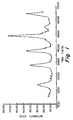
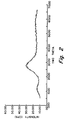
- FIGURES 1 and 2 in the appended drawing are graphical illustrations of crystal structure, and lack thereof, respectively.
- the FIGURES are based on x-ray diffraction (XRD) data and compare a crystalline mineral, boehmite, with an amorphous polymer produced therefrom in accordance with the invention.
- XRD x-ray diffraction
- the present invention is predicated on my discovery that phosphorous, in the form of an oxide or phosphate, can be combined with a source of aluminum and a source of carbon to form a stable, amorphous polymer.
- the source of aluminum may be an oxide, although a hydrated, or hydroxide, form is preferred.
- the hydroxide may be one of the mineral forms, such as, bauxite, boehmite, diaspore, gibbsite, bayerite, or nordstrondite, Aluminum chlorohydrate, Al 2 (0H)3Cl.2.5H 2 0, is another preferred source.
- the aluminum source should be added last, with vigorous stirring, since the reaction is strongly exothermic and usually accompanied by a large increase in viscosity. In fact, when alumina is added to phosphoric acid in the absence of a buffer, the reaction proceeds so vigorously that the mixture almost immediately sets up to form a rigid mass. This precludes any mixing, casting, or other processing.
- any source of phosphorous may be employed.
- a phosphate is normally used. Commercial 85% phosphoric acid is preferred because of its ready availability.
- other phosphates such as aqueous solutions of ammonium mono-, or di-, basic phosphate, or a metal phosphate, such as calcium phosphate, may be employed, providing the additional ions are desired, or may be tolerated.
- the ammonium phosphates may be desirable as a solvent where boric oxide is to be incorporated in the polymeric material.
- An organic liquid buffer is the source of carbon and may be any of the known and commercially available organic compounds. Thus, it may, for example, be selected from one or more of the following organic groups in monomeric or polymeric form: Alkanes, alkenes, alkynes, aromatics, alcohols, ethers, carbonyl compounds, carboxylic acids and esters, amines and amides. Aliphatic acids, such as acetic and tartaric, are particularly effective. However, other organics, such as beta-alanine, ethylene glycol and EDTA may be employed, depending on the particular characteristics desired. For example, beta-alanine is also a good solvent for boric oxide.
- polymers may be produced having viscosities that range from very thin to semisolids that approach a brittle state at ambient temperature.
- viscosity increases with the mole ratio of Al 2 0 3 to P 2 0 5 which, for that reason, should not normally exceed about 1:1.
- the polymers may be opaque, translucent, or transparent.
- FIGURES of the drawing show XRD curves. These are based on data obtained by scanning a material as it is rotated in an automated powder diffraction unit available from North American Philips Corp. and designated Model 3720.
- the scanning angle, in the customary units of Two Theta is plotted along the horizontal axis, while intensity, in terms of counts/seconds (cps), is plotted along the vertical axis.
- FIGURE 1 represents data obtained from scanning a sample of the mineral boehmite (aluminum hydroxide) as received.
- the several intensity peaks are characteristic of the mineral. These peaks occur at values of 6.47, 6.38, 3.181, 2.353, 2.341, 1.857, 1.453 and 1.437.
- FIGURE 2 represents data obtained from scanning a film of a viscous polymer sample dried on a microscope slide.
- the polymer is that obtained from Example 1, infra. Noteworthy is the essential flatness of, and lack of peaks in, the curve. This is typical of an amorphous material free of crystals, such as crystal-free glass or polymer.
- Nitrogen may be introduced into the polymer by addition of organic nitrogen sources, such as urea or amines. This tends to stiffen, or render more viscous, the polymer. However, it may also provide a clear water white, transparent polymer that has excellent light transmission. This may find application as an intermediate between glass sheets in windows, doors, and the like. An application of considerable interest is fire doors, since the polymer also foams when heated.
- organic nitrogen sources such as urea or amines.
- halogens into the polymeric product. This may be accomplished by such additives as metal chlorides. However, a less stable additive, such as an ammonium halide or an organic halide may be more effective.
- any of the known inert fillers and/or reinforcing media may be added. This is particularly important in a foamed product where added strength may be highly significant.
- such known reinforcing forms as whiskers, fibers, and plates may be employed. Materials ranging from glass fibers to silicon carbide whiskers are contemplated.
- the polymeric materials of the invention may provide a host for known organic lasing dyes. These may be added during the formation of the material, or by subsequent addition if the viscosity is sufficient. Thus, a material containing a dye may possess interesting opto-electronic properties.
- phosphate glass and crystalline stoichiometries may be formulated by combining a source of one or more suitable metal oxides in the polymeric mixture.
- suitable metal oxides such oxides as boric oxide, silica, ceria, titania, zirconia, the alkaline earth and alkali metal oxides and transition metal oxides may be incorporated.
- the alkali metal oxides which tend to produce water-soluble glasses, should be employed with care to avoid such instability.
- Phyllosilicates, such as vermiculite may also be added to the mixture.
- the polymer mixture is heated to a temperature well below the normal melting temperature for such a composition.
- a glass or crystalline body may be produced.
- the polymeric material has a composition that tends to crystallize, and is heated gradually, formation of a crystalline material is favored.
- the mole ratio of alumina to phosphate should not exceed about 1:1. As indicated earlier, viscosity decreases as the excess of phosphoric acid increases.
- the basic, three-component system will produce a rigid aluminophosphate matrix for the cells of the foam.
- the matrix may be glassy or crystalline depending on the makeup of the precursor polymer, and the nature of the foaming process.
- the aluminophosphate may be modified by the presence of known glassmaking, or modifying, materials.
- a second crystal phase in addition to the aluminophosphate, may result from the presence of one or more oxides selected from: silica, boric oxide, ceria, titania, zirconia, the transition metal oxides and the alkali and alkaline earth metal oxides.
- a foamed body may be produced by heating the amorphous polymeric product in a confined space to a relatively low temperature, and holding at that temperature to permit a desired degree of gas evolution.
- the temperature may be as low as 150°C, but this normally requires a long hold time with consequent loss of gas. Accordingly, a temperature of about 300°C, and a hold time of one hour, are usually preferred.
- the polymeric product of a buffered system composed of one mole tartaric acid, two moles each of aluminum hydroxide and boric oxide, and four moles of 85% phosphoric acid, was heated to 300°C and held for one hour. This resulted in a hard, foamed body which showed aluminophosphate and borophosphate crystal phases when examined by x-ray diffraction.
- the foamed body may be heated to much higher temperatures, of course, with no structural change. However, in some cases, a change in crystal phase may occur.
- the material may be employed as a container or mold for a material to be heated by microwaves.
- the material may be tailored to function as a susceptor. The presence of alkali metals favor absorption. Conversely, for good microwave transmission, such metals should be avoided.
- a thermal treatment is carried out in air, the atmosphere not affecting the generation of a foamed or solid body.
- the treatment may be in a static or flowing atmosphere of a reactive gas if a special effect is desired.
- an oxygen or hydrogen atmosphere may be employed if, respectively, an oxidized or reduced surface is desired.
- Other reactive atmospheres include ammonia, sulfides and the halogens.
- an inert atmosphere such as argon or helium, may be employed if possible reaction is to be avoided.
- HAC Al00H H 3 P0 4 Six formulations of acetic acid (HAC), aluminum hydroxide (Al00H) and 85% phosphoric acid (H 3 P0 4 ) were prepared by adding the Al00H to a mixture of acetic and phosphoric acids. TABLE 1 shows the mole ratios of the three materials for the six formations. It also shows the nature of the product produced. In each case, a vigorous exothermic reaction took place, and the mixtures were continually stirred. TABLE 1 HAC Al00H H 3 P0 4 Appearance 1. 1 1 3 transparent viscous 2. 1 2 3 Very hard, white, opaque 3. 1 1 1 Very hard , white, opaque 4. 1 2 4 Very hard, white, opaque 5. 1 1 4 Fluid transparent 6. 1 1 2 Viscous, white, opaque
- the polymeric reaction product was subsequently heated at a rate of about 300°C/hour to a predetermined temperature, held at that temperature for one hour, and cooled.
- the atmosphere maintained over the material during the heat treatment was either air or ammonia gas.
- the fired product in each case was a foam material that was analyzed for crystal phases by x-ray diffraction (XRD) techniques.
- the organic buffers utilized included tartaric, oxalic, citric, acrylic and formic acids, as well as ethylene glycol, urea, ⁇ -alanine and EDTA.
- TABLE 2 No. Organic Ratio Temp./Time Atmos. Crystal 7. ⁇ -Alanine 1:1:3 300/1 NH 3 NH 4 AlP 2 0 7 Al(P0 3 ) 3 8. ⁇ -Alanine 1:1:3 900/1 Air Al(P0 3 ) 3 AlP0 4 9. Tartaric 1:1:3 300/1 Air AlH 2 P 3 0 10 xH 2 0 10. Tartaric 1:1:2 300/1 Air AlP0 4 11. Tartaric 1:1:2 300/1 NH 3 AlP0 4 12.
- TABLE Heat Treatment Product 1 Dried at 110°C Amorphous 2. 300°/hr. to 600°C Hold one hour Hard, white foam, Slight crystallization 3. 300°C/hr to 1000°C Hold one hour Hard white foam with Ca 2 P 2 0 7 and Ca0.P 2 0 5 .B 2 0 3 Crystal phases. 4. 300°C/hr to 1200°C Hold one hour Hard white foam with Ca 2 P 2 0 7 Crystal phase.
- a buffered mixture was prepared by mixing tartaric acid, boehmite powder (aluminum hydroxide), anhydrous boric acid B(0H) 3 and 85% phosphoric acid in a mole relation of 1:2:2:4, respectively.
- the mixture was continually stirred with the boehmite added last. When the reaction subsided, a viscous liquid remained. This was placed in an oven at 300°C and held for one hour.
- the foamed body thus produced was about three times the height of the precursor gel. It had a bulk density of about 0.3 grams/cm 3 and a coefficeint of thermal expansion (25-600°C) of about 69x10 -7 /°C.
- the space occupied by the mixture before foaming increased by about three to five times during foaming. This indicated a decrease in density to about 35 to 20% of the original polymeric material.
- Examples 1 and 5 illustrate formulations that provide a transparent polymerized product.
- Several other formulations have provided transparent, or translucent gels. These gels have remained stable over several months exposure to ambient conditions. Particularly effective are gels produced with urea or ethylene glycol as the organic buffer.
- TABLE Mole ratio Organic Appearance 46 1:1:1 Urea Transparent 47. 3:1:1 Ethylene glycol Transparent 48. 1:1:1 Ethylene glycol Transparent 49. 3:1:1 Beta-alanine Transparent 50. 2:1:1:1 Tartaric acid + boric acid Transparent 51. 1:1:1:1 Tartaric acid + 40% Si0 2 sol Translucent 52. 1:1:1:1 Oxalic acid + 40% Si0 2 sol Translucent Translucent
Landscapes
- Chemical & Material Sciences (AREA)
- Engineering & Computer Science (AREA)
- Organic Chemistry (AREA)
- Ceramic Engineering (AREA)
- Chemical Kinetics & Catalysis (AREA)
- Materials Engineering (AREA)
- Structural Engineering (AREA)
- Polymers & Plastics (AREA)
- Medicinal Chemistry (AREA)
- Health & Medical Sciences (AREA)
- Geochemistry & Mineralogy (AREA)
- Dispersion Chemistry (AREA)
- Manufacturing & Machinery (AREA)
- Life Sciences & Earth Sciences (AREA)
- General Chemical & Material Sciences (AREA)
- Glass Compositions (AREA)
- Compositions Of Macromolecular Compounds (AREA)
- Fireproofing Substances (AREA)
- Compounds Of Alkaline-Earth Elements, Aluminum Or Rare-Earth Metals (AREA)
- Polymers With Sulfur, Phosphorus Or Metals In The Main Chain (AREA)
Applications Claiming Priority (2)
| Application Number | Priority Date | Filing Date | Title |
|---|---|---|---|
| US63054490A | 1990-12-20 | 1990-12-20 | |
| US630544 | 1990-12-20 |
Publications (3)
| Publication Number | Publication Date |
|---|---|
| EP0492137A2 EP0492137A2 (en) | 1992-07-01 |
| EP0492137A3 EP0492137A3 (en) | 1992-10-28 |
| EP0492137B1 true EP0492137B1 (en) | 1996-07-31 |
Family
ID=24527599
Family Applications (1)
| Application Number | Title | Priority Date | Filing Date |
|---|---|---|---|
| EP91119919A Expired - Lifetime EP0492137B1 (en) | 1990-12-20 | 1991-11-22 | Phosphorous polymers |
Country Status (7)
| Country | Link |
|---|---|
| US (2) | US5403519A (enExample) |
| EP (1) | EP0492137B1 (enExample) |
| JP (1) | JPH04317403A (enExample) |
| KR (1) | KR920012223A (enExample) |
| CA (1) | CA2055693A1 (enExample) |
| DE (1) | DE69121177T2 (enExample) |
| ES (1) | ES2089094T3 (enExample) |
Cited By (6)
| Publication number | Priority date | Publication date | Assignee | Title |
|---|---|---|---|---|
| US7951309B2 (en) | 2006-08-11 | 2011-05-31 | Bunge Fertilizantes S.A. | Preparation of a coating composition comprising amorphous aluminum phosphate particles |
| US9005355B2 (en) | 2010-10-15 | 2015-04-14 | Bunge Amorphic Solutions Llc | Coating compositions with anticorrosion properties |
| US9023145B2 (en) | 2008-02-12 | 2015-05-05 | Bunge Amorphic Solutions Llc | Aluminum phosphate or polyphosphate compositions |
| US9078445B2 (en) | 2012-04-16 | 2015-07-14 | Bunge Amorphic Solutions Llc | Antimicrobial chemical compositions |
| US9155311B2 (en) | 2013-03-15 | 2015-10-13 | Bunge Amorphic Solutions Llc | Antimicrobial chemical compositions |
| US9371454B2 (en) | 2010-10-15 | 2016-06-21 | Bunge Amorphic Solutions Llc | Coating compositions with anticorrosion properties |
Families Citing this family (12)
| Publication number | Priority date | Publication date | Assignee | Title |
|---|---|---|---|---|
| US5447630A (en) * | 1993-04-28 | 1995-09-05 | Rummler; John M. | Materials treatment process and apparatus |
| FR2718129B1 (fr) * | 1994-04-05 | 1996-06-21 | Europ Propulsion | Procédé pour la protection contre l'oxydation d'un matériau poreux contenant du carbone, et matériau obtenu. |
| US5691257A (en) * | 1995-07-19 | 1997-11-25 | Corning Incorporated | Low density cellulated body and method |
| US6110275A (en) * | 1995-07-20 | 2000-08-29 | Sandvik Ab | Manufacture of titanium carbide, nitride and carbonitride whiskers |
| DE69619312T2 (de) * | 1995-07-20 | 2002-08-14 | Sandvik Ab, Sandviken | Herstellung von Übergangsmetallkarbid-, Übergangsmetallnitrid- und Übergangsmetallkarbonitridwhiskern |
| DE69619313T2 (de) * | 1995-07-20 | 2002-08-14 | Sandvik Ab, Sandviken | Herstellung von Übergangsmetallkarbid-, Übergangsmetallnitrid- und Übergangsmetallkarbonitridwhiskern mit zwei oder mehreren Übergangsmetallen |
| US6354831B1 (en) | 1998-04-20 | 2002-03-12 | R & R Holdings, Inc. | Porous gas burner |
| JP3380858B2 (ja) * | 1999-03-31 | 2003-02-24 | 旭ファイバーグラス株式会社 | 無機質系成形品の製造方法 |
| BRPI0403713B1 (pt) | 2004-08-30 | 2021-01-12 | Universidade Estadual De Campinas - Unicamp | processo de fabricação de um pigmento branco baseado na síntese de partículas ocas de ortofosfato ou polifosfato de alumínio |
| US7763359B2 (en) | 2004-08-30 | 2010-07-27 | Bunge Fertilizantes S.A. | Aluminum phosphate, polyphosphate and metaphosphate particles and their use as pigments in paints and method of making same |
| AR075381A1 (es) * | 2009-02-10 | 2011-03-30 | Unicamp | Uso de particulas de fosfato, polifosfato y metafosfato, de aluminio en aplicaciones de recubrimiento de papeles. |
| US9611147B2 (en) | 2012-04-16 | 2017-04-04 | Bunge Amorphic Solutions Llc | Aluminum phosphates, compositions comprising aluminum phosphate, and methods for making the same |
Family Cites Families (20)
| Publication number | Priority date | Publication date | Assignee | Title |
|---|---|---|---|---|
| US2434281A (en) * | 1942-05-15 | 1948-01-13 | American Optical Corp | Glass and method of making same |
| GB839769A (en) * | 1955-06-03 | 1960-06-29 | Minnesota Mining & Mfg | Improvements in glass articles |
| US3223537A (en) * | 1962-01-15 | 1965-12-14 | Aeronca Mfg Corp | Method for preparing foamed insulating material |
| US3372110A (en) * | 1962-03-27 | 1968-03-05 | Fmc Corp | Process of sequestering metal ions with slowly soluble phosphate glasses |
| US3382082A (en) * | 1964-08-28 | 1968-05-07 | Nasa Usa | Foamed-in-place ceramic refractory insulating material |
| US3261696A (en) * | 1964-10-27 | 1966-07-19 | Aeronca Mfg Corp | Zirconia based foam insulating material and method |
| US3519445A (en) * | 1967-11-06 | 1970-07-07 | Corning Glass Works | Al2o3-p2o5-b2o3 glass-ceramic articles and methods |
| US3547670A (en) * | 1969-05-28 | 1970-12-15 | Fmc Corp | Metal oxide-phosphoric acid coatings |
| GB1322722A (en) * | 1969-06-12 | 1973-07-11 | Ici Ltd | Complex aluminium phosphates |
| US3736176A (en) * | 1971-07-21 | 1973-05-29 | Owens Illinois Inc | Composition articles prepared therefrom and method of preparing such articles |
| US3762935A (en) * | 1971-09-29 | 1973-10-02 | S Leach | Foamed ceramic material |
| US4127415A (en) * | 1977-03-02 | 1978-11-28 | Gte Laboratories Incorporated | Aluminum borophosphate glass compositions |
| US4347325A (en) * | 1980-11-28 | 1982-08-31 | Stauffer Chemical Company | Potassium-aluminum-phosphate compositions |
| US4999383A (en) * | 1989-07-17 | 1991-03-12 | Blount David H | Process for the production of flame-retardant polyurethane products |
| GB8926602D0 (en) * | 1989-11-24 | 1990-01-17 | Shell Int Research | Novel crystalline aluminophosphates and related compounds |
| US5196381A (en) * | 1990-01-16 | 1993-03-23 | E. I. Du Pont De Nemours And Company | Metaphosphate glass composition |
| US5108727A (en) * | 1990-06-26 | 1992-04-28 | Mobil Oil Corporation | Synthesis of crystalline aluminophosphate composition |
| US5022921A (en) * | 1990-10-19 | 1991-06-11 | Corning Incorporated | Phosphate glasses for glass molds |
| FR2671790B1 (fr) * | 1991-01-18 | 1993-04-16 | Inst Francais Du Petrole | Procede de preparation de composes aluminophosphates et derives substitues de type structural vfi invention de : jean-francois joly, herve cauffriez et jean-louis guth. |
| US5252523A (en) * | 1991-10-09 | 1993-10-12 | Corning Incorporated | Bioabsorbable chlorophosphate glasses and bioabsorbable glass-polymer blends made therefrom |
-
1991
- 1991-11-15 CA CA002055693A patent/CA2055693A1/en not_active Abandoned
- 1991-11-22 ES ES91119919T patent/ES2089094T3/es not_active Expired - Lifetime
- 1991-11-22 EP EP91119919A patent/EP0492137B1/en not_active Expired - Lifetime
- 1991-11-22 DE DE69121177T patent/DE69121177T2/de not_active Expired - Fee Related
- 1991-12-18 JP JP3334793A patent/JPH04317403A/ja active Pending
- 1991-12-20 KR KR1019910023706A patent/KR920012223A/ko not_active Withdrawn
-
1993
- 1993-07-01 US US08/086,515 patent/US5403519A/en not_active Expired - Lifetime
-
1994
- 1994-12-13 US US08/355,071 patent/US5488016A/en not_active Expired - Lifetime
Cited By (6)
| Publication number | Priority date | Publication date | Assignee | Title |
|---|---|---|---|---|
| US7951309B2 (en) | 2006-08-11 | 2011-05-31 | Bunge Fertilizantes S.A. | Preparation of a coating composition comprising amorphous aluminum phosphate particles |
| US9023145B2 (en) | 2008-02-12 | 2015-05-05 | Bunge Amorphic Solutions Llc | Aluminum phosphate or polyphosphate compositions |
| US9005355B2 (en) | 2010-10-15 | 2015-04-14 | Bunge Amorphic Solutions Llc | Coating compositions with anticorrosion properties |
| US9371454B2 (en) | 2010-10-15 | 2016-06-21 | Bunge Amorphic Solutions Llc | Coating compositions with anticorrosion properties |
| US9078445B2 (en) | 2012-04-16 | 2015-07-14 | Bunge Amorphic Solutions Llc | Antimicrobial chemical compositions |
| US9155311B2 (en) | 2013-03-15 | 2015-10-13 | Bunge Amorphic Solutions Llc | Antimicrobial chemical compositions |
Also Published As
| Publication number | Publication date |
|---|---|
| ES2089094T3 (es) | 1996-10-01 |
| EP0492137A2 (en) | 1992-07-01 |
| DE69121177T2 (de) | 1997-02-20 |
| DE69121177D1 (de) | 1996-09-05 |
| EP0492137A3 (en) | 1992-10-28 |
| US5403519A (en) | 1995-04-04 |
| US5488016A (en) | 1996-01-30 |
| CA2055693A1 (en) | 1992-06-21 |
| JPH04317403A (ja) | 1992-11-09 |
| KR920012223A (ko) | 1992-07-25 |
Similar Documents
| Publication | Publication Date | Title |
|---|---|---|
| US5403519A (en) | Phosphorous polymers | |
| US3791808A (en) | Method for producing glass ceramics | |
| US5300464A (en) | Nanocrystalline materials | |
| EP0585761B1 (en) | Ceramic material, process of making and use of same | |
| JP3744010B2 (ja) | α−アルミナ粉末の製造方法 | |
| US4506021A (en) | 0'-Phase sialon ceramic product and a method of forming dense ceramic product | |
| US3762935A (en) | Foamed ceramic material | |
| USH626H (en) | Sol-gel ceramic oxides | |
| JP3243278B2 (ja) | 固体レーザ用多結晶透明yagセラミックス | |
| EP0491141B1 (en) | Sol-gel method for making ceramic materials | |
| Bansal | Low temperature synthesis of CaO-SiO2 glasses having stable liquid-liquid immiscibility by the sol-gel process | |
| US5320792A (en) | Process for the preparation of LAS ceramic sintered bodies | |
| US5094677A (en) | Preparation of pollucite ceramics | |
| EP0207591B1 (en) | Glass-ceramic product and method of making the same | |
| JPH0611667B2 (ja) | 高温強度が優れたアルミナ・シリカ系セラミックス焼結体の製造方法 | |
| Wang | The effect of TiO2 addition on the preparation and phase transformation for precursor β-spodumene powders | |
| US3261696A (en) | Zirconia based foam insulating material and method | |
| Mitra et al. | Effect of Cr2O3 on the sintering of aluminosilicate precursor leading to mullite formation | |
| JPS6357383B2 (enExample) | ||
| JPS6217005A (ja) | 高純度ムライト粉末の製造方法 | |
| JPH0692267B2 (ja) | コージェライトの製造方法 | |
| KR102966985B1 (ko) | 불소계 폐수로부터 유래된 실리카 에어로겔을 이용한 내화 코팅제 제조방법 및 그 내화 코팅제 | |
| JPH01275447A (ja) | ゾル−ゲル法によるチタニア−シリカガラスの製造方法 | |
| EP0645203A1 (en) | Soluble, cellulated mold and foamable mixture | |
| JPH05163061A (ja) | MgO−Al2O3−SiO2系酸化物の製造方法 |
Legal Events
| Date | Code | Title | Description |
|---|---|---|---|
| PUAI | Public reference made under article 153(3) epc to a published international application that has entered the european phase |
Free format text: ORIGINAL CODE: 0009012 |
|
| AK | Designated contracting states |
Kind code of ref document: A2 Designated state(s): BE DE ES FR GB IT |
|
| PUAL | Search report despatched |
Free format text: ORIGINAL CODE: 0009013 |
|
| AK | Designated contracting states |
Kind code of ref document: A3 Designated state(s): BE DE ES FR GB IT |
|
| 17P | Request for examination filed |
Effective date: 19930401 |
|
| 17Q | First examination report despatched |
Effective date: 19950120 |
|
| GRAH | Despatch of communication of intention to grant a patent |
Free format text: ORIGINAL CODE: EPIDOS IGRA |
|
| GRAH | Despatch of communication of intention to grant a patent |
Free format text: ORIGINAL CODE: EPIDOS IGRA |
|
| GRAA | (expected) grant |
Free format text: ORIGINAL CODE: 0009210 |
|
| AK | Designated contracting states |
Kind code of ref document: B1 Designated state(s): BE DE ES FR GB IT |
|
| ITF | It: translation for a ep patent filed | ||
| REF | Corresponds to: |
Ref document number: 69121177 Country of ref document: DE Date of ref document: 19960905 |
|
| REG | Reference to a national code |
Ref country code: ES Ref legal event code: FG2A Ref document number: 2089094 Country of ref document: ES Kind code of ref document: T3 |
|
| ET | Fr: translation filed | ||
| REG | Reference to a national code |
Ref country code: ES Ref legal event code: FG2A Ref document number: 2089094 Country of ref document: ES Kind code of ref document: T3 |
|
| PLBE | No opposition filed within time limit |
Free format text: ORIGINAL CODE: 0009261 |
|
| STAA | Information on the status of an ep patent application or granted ep patent |
Free format text: STATUS: NO OPPOSITION FILED WITHIN TIME LIMIT |
|
| 26N | No opposition filed | ||
| PGFP | Annual fee paid to national office [announced via postgrant information from national office to epo] |
Ref country code: GB Payment date: 19981008 Year of fee payment: 8 |
|
| PGFP | Annual fee paid to national office [announced via postgrant information from national office to epo] |
Ref country code: FR Payment date: 19981109 Year of fee payment: 8 |
|
| PGFP | Annual fee paid to national office [announced via postgrant information from national office to epo] |
Ref country code: ES Payment date: 19981118 Year of fee payment: 8 |
|
| PGFP | Annual fee paid to national office [announced via postgrant information from national office to epo] |
Ref country code: DE Payment date: 19981125 Year of fee payment: 8 |
|
| PGFP | Annual fee paid to national office [announced via postgrant information from national office to epo] |
Ref country code: BE Payment date: 19981211 Year of fee payment: 8 |
|
| PG25 | Lapsed in a contracting state [announced via postgrant information from national office to epo] |
Ref country code: GB Free format text: LAPSE BECAUSE OF NON-PAYMENT OF DUE FEES Effective date: 19991122 |
|
| PG25 | Lapsed in a contracting state [announced via postgrant information from national office to epo] |
Ref country code: ES Free format text: LAPSE BECAUSE OF NON-PAYMENT OF DUE FEES Effective date: 19991123 |
|
| PG25 | Lapsed in a contracting state [announced via postgrant information from national office to epo] |
Ref country code: BE Free format text: LAPSE BECAUSE OF NON-PAYMENT OF DUE FEES Effective date: 19991130 |
|
| BERE | Be: lapsed |
Owner name: CORNING INC. Effective date: 19991130 |
|
| GBPC | Gb: european patent ceased through non-payment of renewal fee |
Effective date: 19991122 |
|
| PG25 | Lapsed in a contracting state [announced via postgrant information from national office to epo] |
Ref country code: FR Free format text: LAPSE BECAUSE OF NON-PAYMENT OF DUE FEES Effective date: 20000731 |
|
| PG25 | Lapsed in a contracting state [announced via postgrant information from national office to epo] |
Ref country code: DE Free format text: LAPSE BECAUSE OF NON-PAYMENT OF DUE FEES Effective date: 20000901 |
|
| REG | Reference to a national code |
Ref country code: FR Ref legal event code: ST |
|
| REG | Reference to a national code |
Ref country code: ES Ref legal event code: FD2A Effective date: 20001214 |
|
| PG25 | Lapsed in a contracting state [announced via postgrant information from national office to epo] |
Ref country code: IT Free format text: LAPSE BECAUSE OF NON-PAYMENT OF DUE FEES;WARNING: LAPSES OF ITALIAN PATENTS WITH EFFECTIVE DATE BEFORE 2007 MAY HAVE OCCURRED AT ANY TIME BEFORE 2007. THE CORRECT EFFECTIVE DATE MAY BE DIFFERENT FROM THE ONE RECORDED. Effective date: 20051122 |