EP0465871A2 - Verfahren und Gerät zur Serialisierung von Zugriff auf geteilte Daten - Google Patents
Verfahren und Gerät zur Serialisierung von Zugriff auf geteilte Daten Download PDFInfo
- Publication number
- EP0465871A2 EP0465871A2 EP91109904A EP91109904A EP0465871A2 EP 0465871 A2 EP0465871 A2 EP 0465871A2 EP 91109904 A EP91109904 A EP 91109904A EP 91109904 A EP91109904 A EP 91109904A EP 0465871 A2 EP0465871 A2 EP 0465871A2
- Authority
- EP
- European Patent Office
- Prior art keywords
- data store
- lock
- resource
- data
- alternate
- Prior art date
- Legal status (The legal status is an assumption and is not a legal conclusion. Google has not performed a legal analysis and makes no representation as to the accuracy of the status listed.)
- Withdrawn
Links
Images


















Classifications
-
- G—PHYSICS
- G06—COMPUTING OR CALCULATING; COUNTING
- G06F—ELECTRIC DIGITAL DATA PROCESSING
- G06F9/00—Arrangements for program control, e.g. control units
- G06F9/06—Arrangements for program control, e.g. control units using stored programs, i.e. using an internal store of processing equipment to receive or retain programs
- G06F9/46—Multiprogramming arrangements
- G06F9/52—Program synchronisation; Mutual exclusion, e.g. by means of semaphores
Definitions
- This invention relates to operating systems for computers and computer complexes. More particularly, this invention describes a mechanism and process for sharing data among different users of the computer or computer complex.
- Data sharing in a multiprocessor complex, or sysplex is accomplished in a variety of ways depending on the location of the data to be shared, (e.g. main storage, or DASD) the nature of the access permitted (e.g., read-only; read-write; etc.) and the granularity of sharing (e.g., device level sharing, data set level sharing, or record level sharing).
- DASD main storage
- Common to virtually all sharing mechanisms is a locking mechanism, to insure that data being modified by one user is not referenced by another user until the modification is complete.
- An example of a locking mechanism used in the IBM MVS system is the RESERVE mechanism for serializing access to DASD data sets.
- RESERVE permits the reservation of a device for use by a particular task on a particular system. Using this mechanism, all data sets on a RESERVEd device will be unavailable to other tasks on other systems until the owning task releases the device. While insuring data integrity, the granularity of this mechanism is clearly not fine.
- ENQ/DEQ (described in the same publication), allows a user to define and similarly control a serially reusable resource (i.e., a resource that can be shared among users, though only one can access it at a time). Still another scheme is described in IBM Technical Disclosure Bulletin, Vol. 22, No. 6, Nov. 1979, at pp.
- this mechanism provides for record-level sharing of a data-set across different systems by means of the storing of a user-unique key, along with a time-of-day indicator, in an access record - to serve as a lock indicator to subsequent accessors.
- Another object of this invention is to make shared data, locked by a stopped system, available to other systems in a sysplex.
- Another object of this invention is to allow a temporarily stopped system to resume operation in a nondisruptive fashion, though other systems have accessed data that system had locked prior to its stoppage.
- Another object of this invention is to recover damaged data without the necessity of switching to an alternate, or backup, data store.
- a further object of this invention is to synchronize a new alternate data store without the necessity of temporarily suspending access to the primary data store during the synchronization process.
- shared user data is stored on a primary data store.
- the primary data store contains control information in the form of lock blocks (one associated with each data-sharing system), suffix records, and check records.
- the suffix and check records are used to insure the integrity of the user data, and the lock blocks are used to allow a single sharing system to "lock" the data when necessary.
- the invention further provides for an alternate data store, also containing control information, and initially identical to (duplexed with) the primary data store.
- the alternate data store provides a greater level of data availability by allowing re-creation of damaged data.
- the alternate data store also is used in "lock stealing", wherein a second sharing system, requiring a resource locked by a first system, can "steal” the lock formerly held by the first system, indicate that the lock is "stolen” by manipulation of the control information in the primary and alternate data store, and so permit the first system to later resume processing in a nondisruptive manner.
- FIG. 1 shows a high level view of Shared Data Access Serialization.
- Shared Data Access Serialization provides for serialization of updates to the user data maintained on shared DASD. This serialization is performed at a low level of granularity, a single user record or resource, while insuring fairness of access, and tolerating failures.
- the data store used to maintain the user resources is typically contained on a DASD device.
- Shared Data Access Serialization maintains global control information in the data store ( Figure 3, item 302).
- a primary data store ( Figure 1 at 103) contains user data, which may optionally be duplexed in an alternate data store ( Figure 1 at 104).
- Each data store contains its own control information. Therefore, both the primary and the alternate data store will contain control information used to access the data in that particular data store (see the discussion on data duplexing for more information on primary and alternate data stores).
- This information includes a map of logical resource names to physical location and data attributes, and is used to map the name of the data given on a user request to the physical data behind the resource of interest. This conventional mapping is not relevant to the actual serialization protocols and will not be discussed further.
- Each resource contained in a data store has several types of resource level control information associated with it. This control information is used to control access to the resource, and is used to control recovery and reliability of the user data. (See Figure 3 at 303.)
- the access control information comprises a set of lock blocks.
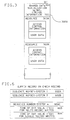
- Figure 4 shows the relationship of the lock blocks, 401, to the resource's user data, 402. This figure also shows that there is one lock block for each system which may share the resource. In this example there are "n" systems which may share the resource.
- Each system is assigned ownership of a lock block and only one system can own any given lock block. Ownership of a lock block is assigned at system initialization time using information contained in the global control information of the data store.
- a system assigned lock block three owns lock block three. Ownership of a lock block position and ownership of a specific resource are not the same. Ownership of a lock block position does not imply ownership of a resource.
- a lock block is a count/key/data record.
- the key portion of the record is the critical part in the serialization process; the data part of the record is not important and not needed in the serialization process.
- the key, 501 comprises a system sequence number, uniquely assigned at system initialization using information contained in the global control information, and a time-of-day (TOD) value, used to order requests to access the resource.
- TOD time-of-day
- the normal state of a lock block is unlocked or all zeros.
- the locked state which shows intent to update the resource, is reflected by a nonzero key field in at least one lock block.
- the resource contains control information which is used to ensure data integrity.
- Suffix records are used to ensure that the user data contained in the associated physical data record is complete and consistent.
- the suffix record is physically part of the user data record, although not visible to the user of the data.
- the single record write time-of-day (TOD) value maintained in the suffix record, Figure 6 at 604, is used to determine the completeness or consistency of a single physical record.
- the check record shown in Figure 4 at 403, in addition to the suffix record, is used to ensure data integrity for a multi-record write operation.
- the suffix record alone is not sufficient to ensure data integrity when more than one physical block is written for a request. All physical records actually written may have been written successfully, but the resource as a whole will be inconsistent if all the intended physical records comprising the multi-record write operation have not been written.
- the multi-record write time-of-day (TOD) value maintained in the check record and each suffix record are used to ensure that all the physical blocks comprising a resource are logically consistent.
- Sequence numbers are maintained in both the suffix and the check records. There is one sequence number field for each system that shares the data store. The sequence number is used by a system to determine if the data that it has written to the primary data store has been propagated to alternate data store during certain error conditions. During recovery from these error conditions, the use of these sequence numbers allows Shared Data Access Serialization to report to its user that either a user change has been successfully written to the data store or that the change was not made and the user must restart the update sequence of read serialized/change data/write serialized.
- the data store used to maintain Shared Data Access Serialization data must have certain properties. Once the data store device (a DASD device) starts a request from one system it must either complete the request from that system or terminate the request with an error prior to initiating a request from another system. That is, requests must not be interlaced by the data store device. The operation of the request may be halted at any point but the interruption must be reported as an exception to the Shared Data Access Serialization. Data written to the data store must be processed in the order presented to the data store. That is, the data presented to the data store may not be transferred from the processor to the record on the data store in random or interleaved order. This is because the suffix record, physically the last part of the data store record, is used for consistency checking.
- the suffix record In order for the consistency checking to work correctly, the suffix record must be written after all user data has been written. If the data transfer to a data store must be terminated prior to completion of the entire data transfer, the data that was not transferred must be set to zeros on the data store. It is this inconsistent data in the check record (a single record write time of day cannot be zero, Figure 6 at 604) that allows for data consistency checking.
- the data store device must allow for conditional requests. That is, the request must be able to test the value of a lock (the value of a record's key) and conditionally execute further request operations (such as writing data to some other record).
- Data duplexing allows Shared Data Access Serialization to provide for error correction and recovery.
- Data duplexing is an option of Shared Data Access Serialization and is not required to provide for serialized access to data. If one elects to not use data duplexing, many of the error recovery features of Shared Data Access Serialization are lost resulting in an exposure to system availability.
- Shared Data Access Serialization uses two data stores to achieve duplexing, a primary ( Figure 1 at 103) and an alternate (104).
- the primary and alternate data stores are synchronized during initialization of the first system to use the data stores. Synchronization ensures that all the data on the primary data store is copied to the alternate data store. The alternate data store is then capable of being used as the primary data store should an uncorrectable error occur on the primary.
- data written to the primary data store is also written to the alternate data store. This maintains the alternate data store as a reliable replacement and backup for the primary.
- An alternate data store may be made available to Shared Data Access Serialization either when Shared Data Access Serialization is first initialized or at any time thereafter. Making an alternate data store available is not disruptive to the normal processing of user requests to serialize a resource. That is, user requests are processed without excessive delay while Shared Data Access Serialization is synchronizing the alternate data store with the primary data store.
- the alternate data store is used to provide for both error correction and recovery of any error encountered on the primary. This recovery is accomplished at either a local or a global level.
- Global error recovery is necessary when an uncorrectable error occurs on the primary data store. This includes errors that prevent the entire data store from being accessed, such as loss of all paths to the data store, or when local recovery of a record or set of records fails, which can occur as the result of a defective storage media (bad data record). Global recovery requires all the systems sharing the damaged primary data store to stop using it. These systems will then discontinue use of the primary to satisfy data requests and begin use of the full functional alternate data store. Provisions are also made for activating another data store as an alternate and synchronizing this new alternate with the primary.
- Local error recovery is attempted when it appears that an error is isolated to a specific record or set of records on the primary data store. For example, a record has been successfully read (that is, data transfer from the data store to the processor was successful) but the suffix record indicates that the user data is not logically consistent. This could occur if another system sharing the data store failed during data transfer to the data store and did not transfer a complete consistent record. The suffix record in this case would not contain the expected values, thus indicating that the data is possibly invalid.
- Another case of local failure is when a multi-record write is started but not completed by a system (a multi-record write is required when user data spans more than one physical record). In this case, each physical record that comprises the logical record is complete.
- the suffix record for any of these physical records would indicate that the physical record is valid. However, the set of physical records is not consistent. This is detected by the fact that some of the multi-write time-of-day values contained in the suffix records will not match the multi-write time-of-day value contained in the check record. (See Figure 4 at 403 and Figure 6 at 603.)
- the above local problems would normally be detected by the system which experienced the problem causing the bad data store information and that system would attempt recovery.
- the suffix records and check records allow any system to detect the error and attempt the recovery. This is an important attribute since the system where the error originated might suffer problems that prevent it from correcting the error and possibly from reporting the error to the other systems sharing the data store. Were it not for the suffix and check record processing, the user data on the data store would not be reliable.
- Shared Data Access Serialization provides the user several services which allow access to a resource: READ, READ SERIALIZED, WRITE SERIALIZED and UNLOCK.
- READ is an unserialized access of a named resource. It does not prevent access of the same resource from other systems.
- the READ service does not alter the lock state of the resource nor does it look at the lock state of the resource. Therefore, READ can be issued for a resource that is currently locked by another system and complete prior to the unlock of the resource by the other system.
- READ SERIALIZED is a controlled access to a named resource and implies an intent to update the resource. Since the resource may be changed, serialization must be obtained prior to accessing the data.
- the resource's lock, Figure 4 at 401, and Figure 5, must first be obtained. The resource may not be read until the lock has been obtained. That is, this system must own the lock, and therefore the resource, prior to reading any data associated with the resource.
- WRITE SERIALIZED is a controlled update of a named resource.
- the resource must have been accessed by a preceding READ SERIALIZED request.
- the resource is updated only if the lock obtained by the preceding READ SERIALIZED request is still held by this system. Once the data is successfully written, this system's lock is released; the resource is unlocked for this system.
- the next system waiting for the lock if there is another system waiting, is informed that it is now the owner of the resource. If the lock is no longer held, the WRITE SERIALIZED request is failed and the requestor is notified of this action.
- the resource is not updated when the lock is no longer held.
- UNLOCK is a way to release the lock obtained for a named resource by this system via a READ SERIALIZED request without altering the contents of the user data.
- the user data portion of the resource maintained by Shared Data Access Serialization is not modified.
- the resource is released or unlocked for this system.
- the next system waiting for the lock if there is another system waiting, is informed that it is now the owner of the resource.
- Shared Data Access Serialization provides, transparent to either the user of the data or the system operator, a mechanism whereby a system waiting for a resource for too long can safely take ownership of that resource away from another system. This is called stealing the lock. Stealing the lock must be accomplished in such a way as to not jeopardize the integrity of the data associated with the lock.
- the system from which the lock is stolen must not be able to continue execution and, thinking it owns the lock, write data to the resource. That is, stealing the lock must work just as well against a temporarily stopped system as one that is no longer running. In addition, the temporarily stopped system must be able to recover from having the lock stolen from it.
- Lock steal uses the access control information associated with the resource to ensure data integrity of a resource while still allowing the resource to be assigned to a new owner. See Figure 4, item 401A, 401B, etc. and Figure 5. The new owner is also selected by using the access control information.
- the ability to steal a lock is dependent on the usage of the access control information by the READ SERIALIZED and WRITE SERIALIZED operation. (See the READ SERIALIZED and WRITE SERIALIZED sections of this document for more information on their particular processing.)
- the READ SERIALIZED operation records information in a lock block associated with the resource and gains ownership of the resource prior to reading in the resource data.
- the data is read in from the data store and is presented to the user.
- the user updates the data, then invokes the WRITE SERIALIZED operation requesting that the data be written.
- WRITE SERIALIZED then writes the data to the data store ensuring that the lock contains the same value as set by the corresponding READ SERIALIZED operation.
- the update attempt is failed if the lock does not contain the correct information.
- the lock will not contain the correct information when a lock steal has occurred since lock steal alters the contents of the lock.
- the READ operation (explained more fully in Figure 7 and the accompanying text below) allows the user to access a resource stored on the data store.
- the user has indicated by using the READ operation that there is no intent to update the information read and therefore no reason to prevent access of the data by any other system.
- Shared Data Access Serialization conventionally uses the resource name or identifier from the read request and the global control information (302) from the data store to locate the specific resource in the data store and to determine the resource's attributes (such as record format and size).
- the data store is referenced at various times during READ processing. While accessing the data store, READ may experience problems which require that error recovery be initiated on the data store. A READ operation may encounter problems accessing the lock block information on the data store or referencing the resource data. See the discussion and the end of the READ SERIALIZED section for information on resource data recovery.
- the READ SERIALIZED operation (outlined in this section and explained more fully in Figure 10 and the accompanying text below) and the WRITE SERIALIZED service (outlined in the next section) allow the user to access and update a shared resource in a controlled serialized manner.
- the user In order for the user to update a shared resource on the data store, the user must first lock the resource and read the resource in from the data store. This is accomplished by requesting Shared Data Access Serialization to perform a READ SERIALIZED request for a specific name resource.
- Shared Data Access Serialization has completed the READ SERIALIZED request, the resource has been locked, preventing updates of this resource by other users of the data store, and read in from the data store.
- the resource is available for processing by the user.
- any changes to the resource can be committed to the data store by requesting via a WRITE SERIALIZED request that Shared Data Access Serialization update the resource. See the next section for more details on the WRITE SERIALIZED service.
- the user may decide that no changes are to be made to the resource on the data store.
- the user may invoke the Shared Data Access Serialization UNLOCK service to release the serialization on the resource without committing any changes to the data store.
- a subsequent section contains details on the UNLOCK service.
- Shared Data Access Serialization conventionally uses the resource name or identifier from the READ SERIALIZED request and the global control information 302 from the data store to locate the specific resource in the data store and to determine the resource's attributes (such as record format and size).
- the resource lock, Figure 4 at 401A, 401B, etc. must be obtained prior to accessing any data.
- Obtaining the lock is a multiple step operation. The first step in obtaining a resource is to generate this system's lock key and to record this lock key into the appropriate lock block in the resource's access control information.
- the appropriate lock block to be used by this system was determined at system initialization time. Each system owns one of the lock blocks associated with a resource (401A, 401B, etc.). Ownership is determined from information contained in the global control information of the data store.
- the same lock block in the set of lock blocks for a resource (401C for example) is owned by a system for all resources.
- the lock key comprises a system sequence number and a time-of-day value.
- the system sequence number is obtained at system initialization time and is unique for each system sharing the data store.
- the global control information contained in the data store is incremented by initializing systems to generate the next unique system sequence number.
- a system will use the same system sequence number throughout its processing.
- the time-of-day value is a time obtained from the processor. A new time value is obtained each time a lock key is to be obtained for a user by Shared Data Access Serialization.
- lock rule processing There are three lock rules that are used to determine ownership. All the lock blocks associated with the resource are read from the data store. By the first lock rule, a system is the resource owner if all but that system's lock blocks are zero. No other system is interested in this resource.
- a system is definitely not the owner if at least one lock block other than the system's lock block is not zero (at least one other system is interested in the resource) and all nonzero lock blocks have time-of-day values that are older than the system's time-of-day value.
- This system must wait for use of the resource. Lock ownership will be passed to this system by another system when the other system resets its lock block lock key to zero and determines which system is the next system in order to use the resource. That is, this system will wait until all systems with older time-of-day values have processed, each in turn.
- the third lock rule deals with the case where at least one other system's time-of-day value is younger than a first system's time-of-day value. This condition can arise because the act of obtaining a time stamp and recording interest in a resource are not atomic. That is, two requests may be interleaved. System A gets a time stamp followed by System B getting a time stamp and recording that time stamp in the data store. Subsequently, System A records its time stamp and finds the time stamp of System B which is younger.
- the ownership state is indeterminate in this case.
- the first system will generate a new time-of-day value, produce an updated lock key using this new time-of-day value and write its lock block with this updated lock key.
- the first system will read the lock blocks for all systems and find the system with the oldest time-of-day value.
- the system with the oldest time-of-day value is informed that it is the owner. Informing a system that it is the owner when it already knows it is the owner is acceptable.
- the first system then waits for notification that is has become the owner.
- lock rule one Once a system has determined (lock rule one) that it is the owner or has been informed by another system that it is the owner (lock rule two or lock rule three), it can read the user data from the data store to complete the user request. The user is informed that the data is available.
- the data store is referenced at various times during READ SERIALIZED processing. While accessing the data store, READ SERIALIZED may experience problems which require that error recovery be initiated on the data store. The error recovery to be taken is dependent on which part of the data store is damaged. A READ SERIALIZED operation may encounter problems accessing the lock block information on the data store or referencing the resource data.
- lock block repair is effectively a steal operation
- lock blocks are reformatted on both the alternate and the primary data stores, regardless of which data store the damage was detected on. This is necessary to safely effect the stopping of the usage of the resource. (See Figure 18 for more detail on steal processing and Figures 11, 12 and 13 for more information on lock block processing and repair.)
- the alternate data store contains a duplexed image of the primary data store.
- the error encountered could either be a permanent error attempting to read the data from the primary data store or information contained in the suffix or check record could indicate that a physical record is not complete or that one of several physical records is not logically consistent with the other physical records comprising the resource. See Figure 8A for more information on the recovery attempted on a READ DATA operation.
- the WRITE SERIALIZED operation allows the user to update a resource stored on the data store in a controlled manner.
- the user must read the data in via the READ SERIALIZED operation, update the data and then invoke the WRITE SERIALIZED operation to copy the changed data back to the data store.
- Shared Data Access Serialization will write the updated data to both the primary and the alternate data store.
- Shared Data Access Serialization maintains data sequence numbers for each resource.
- Data sequence numbers reflect the level of data with respect to a given system. A new data sequence number is generated each time a system writes data to the data store. The data sequence numbers are maintained in the check record. See Figure 4, item 403 and Figure 6, item 602A, 602B, etc. There is one data sequence number for each system sharing the data store. Each system uses its data sequence number to determine the result of the data update during certain error recovery operations.
- a system increments its data sequence number in the local copy of the check records (read in by the READ SERIALIZED operation) in preparation for possible recovery.
- the UPDATE operation is comprised of the following sequence of actions. These actions must be done via a single atomic operation to the data store.
- a system's lock block is checked to determine if the resource is still owned by this system. It must contain the same nonzero value written by the READ SERIALIZED request. Any change in the state of the lock blocks value indicates that another system has stolen the lock and therefore the resource from this system. A stolen lock will prevent the data update portion of this operation from taking place.
- the WRITE SERIALIZED operation is terminated and the user is informed that his UPDATE operation failed because of a stolen lock. The user can redo the operation starting from the READ SERIALIZED operation.
- the check record contains, among other things, the updated data sequence number for this system (the data sequence number for other systems is unaltered).
- the alternate data store can be updated.
- the alternate data store update comprises the following sequence of actions, all accomplished with a single atomic operation against the data store.
- this system's lock block is checked to determine if the resource is still owned by this system.
- the lock block must be all zeros, the normal state of the lock block on the alternate data store. Any nonzero value in the lock block indicates that another system has stolen the lock and therefore the resource from this system. A stolen lock will prevent the data update portion of this operation from taking place.
- this WRITE SERIALIZED operation is terminated. What is reported to the user of the WRITE SERIALIZED operation is dependent on the completion state of the alternate data store update. If the alternate operation was not started when this WRITE SERIALIZED operation was interrupted for the primary data store failure, then the new primary data store (formerly the alternate) does not reflect the user change. This is effectively a stolen lock since the all zero lock block of the alternate is now in the primary.
- the issuer of WRITE SERIALIZED is informed that the lock was stolen and the issuer can retry his operation starting with the READ SERIALIZED (the lock must be reacquired). If the alternate WRITE operation completed successfully prior to the alternate data store becoming the primary data store then the user changes are now reflected in the primary data store. The user is informed that the WRITE SERIALIZED operation was successful. The resource does not have to be unlocked since the primary with its zero lock blocks is effectively an unlocked resource.
- the user data update has been successfully processed.
- the WRITE SERIALIZED operation is completed by releasing the resources' lock for this system. This is accomplished by invoking the unlock operation which unlocks the resource for this system and communicates the success of the WRITE SERIALIZED operation to the user.
- Steal processing running on some system other than the one which owns the lock, will have determined that the lock has been held too long by a single system (our system) and will take ownership of the resource away from this system by altering the content of its lock block on both the primary and alternate data stores.
- the content of the lock block on the alternate data store is modified first, followed by altering the content or value of the lock block on the primary data store.
- the alternate data store lock block value is changed from zero to the value found by steal in the primary data store's lock block (the system sequence number and time-of-day value generated by READ SERIALIZED).
- the primary data store's lock block value is set to zeros.
- the system whose lock is being stolen may possibly complete its operation between the time steal determined who to steal from and the time it actually steals the lock. This is no problem for either lock steal or the target system.
- the next operation against the resource from the target system must determine however whether steal was aimed at it or a previous request.
- WRITE SERIALIZED must determine if steal was aimed at this operation or a previous one. In order to do this, WRITE SERIALIZED must examine the value in its alternate lock block. If the value of the lock (a copy of what the READ SERIALIZED has placed in the primary data store's lock block) does not match what READ SERIALIZED wrote there then the lock steal was aimed at a previous request. WRITE SERIALIZED attempts to write the data again as described earlier, this time checking the alternate lock for this new value rather than the more normal zero value. If the write is successful this time, then the lock block on the alternate data store is reset to all zeros in order to prevent repeated extra processing in the future.
- Shared Data Access Serialization ensures the duplexing, without relying on the system which stolen the lock.
- WRITE SERIALIZED internally invokes READ SERIALIZED. This causes the lock to be reacquired in a normal fashion and the data to be read in again. Note that the data may or may not have changed several times since we started because of activity on other systems. The only goal is to ensure that it is duplexed at whatever level currently exists. After the READ SERIALIZED is complete, the WRITE SERIALIZED is attempted to both primary and alternate data stores again.
- the data store is referenced at various times during WRITE SERIALIZED processing. While accessing the data store, WRITE SERIALIZED may experience problems which require that error recovery be initiated on the data store. The error recovery to be taken is dependent on which part of the data store is damaged. A WRITE SERIALIZED operation may encounter problems accessing the lock block information on the data store or referencing the resource data.
- the UNLOCK operation (explained more fully in Figure 17 and the accompanying text below) allows the user to cancel a previous READ SERIALIZED request without updating any data on the data stores. It is also used by the WRITE SERIALIZED operation to complete its processing.
- UNLOCK alters the access control information for a resource to remove from the information the indication that this system is interested in the resource. (See detail below.) It then looks at the access control information to determine what other system, if any, should own the resource next. If a next owner is found, UNLOCK will notify that system that it is now the owner.
- the data store is referenced at various times during UNLOCK processing. While accessing the data store, UNLOCK may experience problems which requires that error recovery be initiated on the data store. An UNLOCK operation may encounter problems accessing the lock block information on the data store. See the discussion and the end of the READ SERIALIZED section for information on lock block recovery.
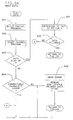
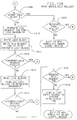
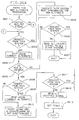
- a test is made whether any data stores exist. (That is, whether there is a primary data store. This is indicated in Figure 25 by the "functional" indicator 2502 in the Primary Store descriptor 2501.) If the test at 701 indicated that no primary existed, return is made to the caller. If the test indicated that a primary existed, the READ DATA routine is invoked 702, to read the resource from either the primary or alternate data store. The details of READ DATA are shown in Figure 8. After return from READ DATA, a test is made 703 whether there was an uncorrectable failure of the primary data store. If there was, the test at 701 is reexecuted as indicated above. If the data was either successfully read from the primary or alternate, then return is made to the caller.
- Figure 8 illustrates the control flow for READ DATA processing.
- a channel program is built to read the resource from the primary data store. Then, 802, the channel program is started and its completion is awaited.
- a test is made whether the data was successfully read by the channel program. If so, 804, a determination is made if the data is reliable by examination of the suffix and check records.
- test at 807 indicates that a synchronized alternate does not exist
- permanent error processing is invoked as indicated above at 808, and return is made to the caller.
- a channel program is built 809 to read the resource from the alternate data store, and this channel program is initiated 810. Its completion is then awaited.
- Figures 9A and 9B illustrate control flow for permanent error processing.
- the identification for the system encountering the permanent error is saved locally.
- serialized requests on the system are stopped by stopping the task that processes serialization requests.
- a test is made at 903 whether the failure was a failure of the alternate data store. If so, 904, an indication that the alternate failed is set 2510, the operator is notified, and the alternate is removed from use by turning off the functional indicator ( Figure 25 at 2505).
- a test is made 905 whether the failure was a primary failure.
- the alternate is subsequently used as the primary (910) (by moving the alternate store descriptor information (2504) into the primary (2501)). If the test at 908 indicated that either the primary did not fail or the alternate does not exist, a test is made 911 whether the alternate exists. If not, the system is terminated 912. If an alternate does exist (and also following the processing described above for step 910), a test is made 913 whether all systems have seen this error (by comparing the locally saved system identifiers with the list of participating systems in the data store's global control information 302). If not, 914, the other systems which have not seen it are signalled of the permanent error and additional signalling from these systems is awaited 915.
- serialized requests for this system are restarted 916 (by restarting the task that processes serialization requests), and the routine is exited.
- the routine is exited.
- an entry for a signal from another system or as a result of a timer expiring the identification of this system is saved in a local area 917, and processing continues as indicated above at 913.
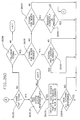
- FIG 10 illustrates the control flow for a READ SERIALIZED Request.
- a test is made whether any data stores exist (2501). If a primary data store does not exist, return is made to the requestor. If a primary does exist, a request TOD for lock ownership is generated 1002 and the request is queued to the lock anchor for that resource ( Figure 25 at 2503).
- write lock block processing is invoked to write the request TOD to this systems lock block in the primary data store. This processing is explained more fully at Figure 13.
- the lock block that is written by write lock block processing will contain the system sequence number associated with this system, and the current TOD value. This lock block is indicated in Figure 5 at 501.
- read lock block processing is invoked 1013 to read all lock blocks from the primary data store to determine ownership. (See Figure 11.) On return from read lock block processing, a test is made whether there was an uncorrectable error of the primary data store. If not, a test is made 1015 whether the redrive TOD is equal to the request TOD for the same reasons as explained above at 1009. If these values are equal, then this system has become the owner of the resource and processing continues at 1019 as will be explained below. If these values are not equal, a lock owner signal is sent to the system with the oldest TOD 1016. The routine is then exited, to await a lock owner signal.
- read data processing is invoked to read the resource from the data store.
- Read Data Processing is outlined in Figure 8.
- a test is made 1020 whether an uncorrectable failure of the primary data store occurred. If not, return is made to the request caller.
- lock owner signal processing Figure 14 - which will be described more fully below
- receives a lock owner signal and determines that the signal is valid for this system it invokes read serialized processing at block 1017.
- a test is made whether any data stores exist. If not, return is made to the request caller. If a primary data store does exist, a test is made 1018 whether there was an uncorrectable failure of the primary data store. If not, processing continues at block 1019 as described above.
- Figure 11 illustrates the control flow for read lock blocks processing.
- a channel program is built to read lock blocks from the primary or alternate data store.
- the channel program is started and its completion is awaited.
- a test is then made, 1103, whether the lock blocks were read successfully. If so, return is made to the caller. If not, a test is made 1104 whether there was a correctable permanent error. If not, permanent error processing is invoked 1105 to remove the nonusable primary or alternate data store. Permanent error processing is described in Figure 9. Return is then made to the caller. If there was a correctable permanent error, fix lock block processing is invoked 1106 to repair the lock blocks. Fix lock block processing is described in Figure 12. Return is then made to the caller.
- Figure 12 illustrates the control flow for fix lock block processing.
- a test is made whether an alternate data store exists (2505). If one does exist, the lock blocks for this resource are reformatted on the alternate data store 1202. The reason the reformatting is done of the lock blocks on the alternate data store before the lock blocks on the primary data store is that fixing lock blocks is logically a mass lock steal operation and as will be shown below in lock steal processing, lock stealing writes first to the alternate data store, then to the primary data store.
- Figure 4 shows the relationship of the lock blocks to the resource. Since the lock blocks are being reformatted, any previous TOD value in the lock blocks is lost.
- the number of lock blocks indicates the number of systems that are capable of sharing the resource - that is, the number of systems that can share this particular data store.
- a test is then made at 1203 whether the reformatting was successful or not. If not, permanent error processing is invoked 1204 to remove the nonusable alternate data store. Permanent error processing is described at Figure 9. Return is then made to the caller. If the reformat was successful, the lock blocks for the resource on the primary data store are reformatted 1205. This processing at 1205 is also executed if the test at 1201 indicated that an alternate data store did not exist. A test is then made 1206 whether this reformatting of lock blocks on the primary data store was successful or not. If not, permanent error processing is invoked 1207 to remove the nonusable primary data store.
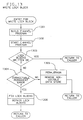
- Figure 13 illustrates the control flow for WRITE LOCK BLOCK processing.
- a channel program is built to write lock block to the primary or alternate data store.
- the channel program is started and its completion is awaited.
- a test is then made, 1303, whether the lock block was written successfully. If so, return is made to the caller. If not, a test is made 1304 whether there was a correctable permanent error. If not, permanent error processing is invoked 1305 to remove the nonusable primary or alternate data store. Permanent error processing is described in Figure 9. Return is then made to the caller. If there was a correctable permanent error, fix lock block processing is invoked 1306 to repair the lock blocks. Fix lock block processing is described in Figure 12. Return is then made to the caller.
- Figure 14 illustrates the control flow for the receipt of a lock owner signal.
- a test is made 1401 whether the data store is the same as when the signal was sent. (An ID for the primary data store is sent with the signal, and is checked against the current primary data store in use on this system.) If not, the routine is exited indicating an invalid lock owner signal and the signal is discarded. If so, a test is made whether there are any requests pending for the given resource 1402. (The lock anchor for the specific resource ( Figure 25 at 2503 is checked.) If the test at 1402 indicated that there are requests for the resource, then a test is made whether this signal is the "newest" signal 1403.
- This test is made by comparing the request TOD of the input signal to the redrive TOD in the request element (2511) (to discard "old" signals). If the request TOD is newer, then the request TOD from the signal is saved 1404 in the redrive TOD field 2511 of the lock request element. (This is done to allow READ SERIALIZED to detect if it has become the owner of the resource - Figure 10 at 1009 and 1015.) If it is not the newest signal, then this saving is bypassed. Next, 1405, a test is made whether READ SERIALIZED processing is expecting a lock owner signal.
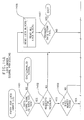
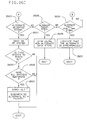
- Figure 15 illustrates the control flow for WRITE SERIALIZED request processing.
- a test is made whether there has been an uncorrectable error of the primary data store. If so, return is made to the requestor with an error indication. No write is issued. If not, write data processing is invoked 1502 to write data to the primary data store. Write data processing is illustrated in detail in Figure 16. (The request TOD is passed to WRITE DATA for lock verification checking.)
- a test is made whether an uncorrectable failure of the primary data store occurred in writing the data. If so, again return is made to the requestor with an error indication that the write was not made. If not, a check is made whether the primary lock was stolen before the data was written to the primary 1504.
- 1512 a test is made for an uncorrectable failure of the primary data store. If no such failure occurred, an indication is set that alternate lock block need resetting 1513.
- 1514 a test for a failure of the alternate data store is made. If no failure occurred, a test is made whether the lock was stolen from this request 1515. If it was not, WRITE DATA processing is invoked 1516 to write data to the alternate data store.
- WRITE DATA processing is described in more detail in Figure 16.
- the test at 1508 is executed and processing continues from that point as indicated above. If the test at 1508 indicated that there was an uncorrectable failure of the primary data store, a test is made 1517 whether the alternate data store was successfully updated. If so, return is made to the requestor indicating a successful write completed. If not, return is made to the requestor with an error indication that the write was not made. This same error return is made if the test at 1512 indicated an uncorrectable failure of the primary data store.
- UNLOCK processing is invoked 1521 to transfer control to unlock to complete the WRITE SERIALIZED request. UNLOCK processing is described in more detail in Figure 17. If the test at 1515 indicated that the lock was stolen from this request, write lock block processing is invoked 1522 to write zero to the alternate lock block. Next, 1523, a test for an uncorrectable failure of the primary data store is made.
- READ SERIALIZED processing is invoked 1524 to reobtain the resource and duplex the user changes. READ SERIALIZED processing is described in more detail in Figure 10. Processing then continues with the test at 1501, as described previously. A yes answer to the test at 1509, or 1514, also results in the invocation of UNLOCK processing as indicated for 1521.
- Figure 16 illustrates the control flow for WRITE DATA processing.
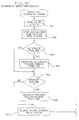
- a channel program is built to write the resource to the primary or alternate data store (the first part of the channel program verifies that this system's lock block still contains the key value provided by the caller. An “equal” compare means that the lock is still owned, and the channel program can still continue).
- the channel program is started and its completion is awaited. A test is then made, 1603, whether the data was successfully written. If so, return is made to the caller. If not, a test is made 1604 whether the lock had been stolen. If so, the "lock stolen" indicator in the lock request element (2513) is set 1605, and return is made to the caller.
- Figure 17 illustrates the control flow for UNLOCK request processing.
- a test is made if there was an uncorrectable failure of the primary data store. If so, return is made to the request caller. If not, write lock block processing is invoked 1702 to zero out this system's lock block on the primary data store. This indicates that the resource is no longer needed by this system. Write lock block processing is illustrated in more detail in Figure 13.
- a test is made 1703 for an uncorrectable failure of the primary data store. If such a failure occurred, return is made to the request caller. If not, read lock block processing is invoked 1704 to read all lock blocks from the primary data store and thus determine resource ownership. Read lock block processing is described in more detail in Figure 11.
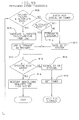
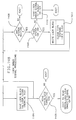
- Figure 18 illustrates the control flow for LOCK steal processing.
- Lock steal processing is initiated as the result of timer driven processing that examines all the lock request elements for this system to determine those that have been waiting for a resource an excessive amount of time. (The frequency of invocation and definition of "excessive" must not be too short to unnecessarily steal, nor too long that failing systems impede performance of systems that are functional. In the preferred embodiment, the invocation interval is 6 seconds, and the "excessive" definition is 12 seconds.)
- read lock block processing is invoked to read all lock blocks from the primary data store. Read lock block processing is described in more detail in Figure 11.
- a test is made whether the current systems lock block is equal to zero.
- System A obtains the lock for resource X; subsequently, System B attempts to access X, sees System A's lock block set, and waits for a lock owner signal - then is stopped for some reason; System C attempts to access X, sees A and B's lock block set, and waits for a lock owner signal; System A then releases X (lock block TOD now zero), and stops for some reason before sending a lock owner signal to B; System C then runs lock steal and, seeing B as "owner" (oldest nonzero TOD), steals the lock from B (B's TOD is now zero).
- B is restarted, and lock steal runs - since B has waited a long time - and finds its TOD zero! If so, READ SERIALIZED is redriven from the beginning, and the routine is exited. If not, the current owner is found 1804. (Oldest TOD from lock blocks.) A test is then made 1805 whether the current owner is this system. If so, a lock owner signal is sent to this system 1806, and the routine is exited. If not, a test is made whether the owner is the same as the last time 1807. (Previous owner was saved at 1808 in 2514.) If the owner is different from the last time, the current owner information is saved 1808 in the request element (2514), and the routine is exited.
- WRITE lock block processing is invoked 1810 to WRITE the current owner's request TOD obtained from the primary data store, to the current owner's lock block on the alternate data store. Then WRITE lock block processing is invoked 1811 to write a zero TOD to the current owner's lock block on the primary data store. The new owner is then found 1812 (by finding the oldest request TOD from the primary lock blocks), and a lock owner is signal is sent to the new owner 1813. The routine is then exited.
- FIG. 26 illustrates the control flow for New Alternate Processing.
- New Alternate Processing is required when a new alternate data store is to be initialized and placed into service.
- the processing is initiated with an operator command, or because of a signal from another system within a system complex which itself has received an operator command.
- a test is made whether this processing request is the initial request signal. If so, 2602, a further test is made whether the operator request came from the system operator of this particular system. If so, 2603, an indication is set that this system is responsible for synchronizing the new alternate data store.
- the test at 2605 indicated that the new alternate is usable, a test is made 2608 whether the request came from this system. If so, 2609, the system must stop using the current alternate. Then, 2610, the system starts using the new alternate, and marks it as not synchronized (indicating that it is not yet ready to be used as a primary data store). The synchronized indicator is illustrated in Figure 25 at 2506. Then, 2611, a test is made whether the request came from this system. If not, an "alternate accepted" signal is sent 2612, and a timer is set 2613. The purpose of setting a timer is to insure that the system does not have to wait for an unreasonable amount of time for another system to synchronize the alternate data store.
- This system will assume responsibility if the system currently responsible is no longer active (the global control information, Figure 3 at 302, contains an array of systems using the data store and indicates if the system is active). If this system is not to assume responsibility to synchronize the new alternate, this routine exits. If it is to assume responsibility, this is indicated at 2633. Next, 2634, a test is made whether all systems have responded. (Note that the global control information, Figure 3 at 302, indicates all participating systems.) An asynchronous task may monitor the condition of all participating systems, to determine whether any one of them is taken out of service - for example, by having each participating system update a "heartbeat" field in a commonly accessible data field at regular intervals. The lack of such a heartbeat would mean that the asynchronous task must update the global control information to remove this system from the list of participating systems.
- 2635 If all participating systems have responded, 2635, synchronize alternate processing is invoked to synchronize the alternate data store with the primary data store, and the routine is exited. If all system have not yet responded, 2636, follow-up signals are sent to all participating system, and a timer is set 2637. (In this embodiment, the timer value is set to expire after 20 seconds.) If the test at 2632 did not indicate a timer pop signal, a test is made 2638 whether this signal was a follow-up signal. (As indicated, for example, at 2636.) If not, the routine is exited. If it was a follow-up signal, 2639, a test is made whether the signal is a signal with a TOD older than the current request.
- an "alternate failed” signal is sent to fail this request (this could occur, for example, because two systems must be trying to bring up different alternate data stores), and the routine is exited. If the request is not currently in progress, this indicates that the current system lost the initial request signal, and "new alternate" processing is reinstituted at 2602. If the test at 2643 did not indicate a newer request, this means that the signal must be for the current request. In this case, an "alternate accepted” signal is sent 2646, the timer is set, and the routine is exited. The reason for sending the "alternate accepted” signal is that it is possible that the previously sent signal may have been lost.
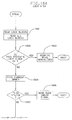
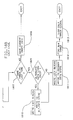
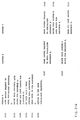
- Figure 19 is an example of READ/WRITE SERIALIZED processing from multiple systems for the same resource. It shows control flow on each of two systems designated as System A and System B.
- a user issues a request to READ SERIALIZED resource X.
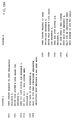
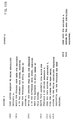
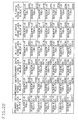
- Figure 20 at 2001, 2002, 2003 and 2004 show the state of the lock blocks at the beginning of this READ SERIALIZED request. All lock block fields are initially zero.
- System A's lock block for resource X is written at 1902.
- Figure 20 at 2005 shows the contents of the lock block for System A after this step is complete.
- the sequence number 10 has been inserted into the block to designate System A, and the time-of-day value for this request, TOD1, is now entered into the time-of-day field.
- FIG. 1907 a user from System B issues a request to READ SERIALIZED resource X.
- a System B lock block for resource X is written to the primary data store 1908.
- Figure 20 at 2010 shows the contents of this lock block.
- the sequence number 15 is associated with System B, and the time-of-day, TOD2, is the time of day value associated with the request to write System B's lock block. All other lock blocks on the primary and alternate data store, 2009, 2011, and 2012, are unchanged.
- System B next reads all lock blocks for resource X, 1909. Applying lock rule 2, 1910, System B must wait for resource X, since all the nonzero lock block values are older than System B's lock block value. That is, TOD1, 2009, is older than TOD2, 2010.
- System B now waits 1911 for an indication that System B is now the owner of resource X. During this period of waiting, requests for other resources or records will not be delayed.
- the System A user issues a request to WRITE SERIALIZED resource X.
- the updated user data for resource X is written to the primary data store. Since lock block A 2009 still contains a sequence number of 10 and a TOD value of TOD1, the resource is still owned, and the data update is successful.
- the updated user data for resource X is written to the alternate data store, checking that the resource is still owned by System A. Ownership implies that lock block A must contain a sequence number of zero, and a TOD value of 0. Since this is the case, Figure 20 at 2011, the resource is still owned, and the data update is successful.
- System A's lock block for resource X is written to the primary data store to unlock resource X. That is, lock block A is set to all zeroes, Figure 20 at 2013.
- all lock blocks for resource X are read 1916. This allows System A to find the next owner 1917. The next owner is the system associated with the oldest time-of-day field. In the example, this is the system whose sequence is 15, Figure 20 at 2014, i.e., System B. System A now informs System B that it is the owner.
- System A returns to be WRITE SERIALIZED requestor, indicating that the resource has been written.
- System B having been notified by System A that it is now the owner of resource X, reads the data for resource X 1919. Having done this, System B returns to be READ SERIALIZED requestor, indicating that the resource X has been read, 1920.
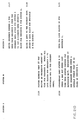
- Figure 21 illustrates an example of lock steal processing where the lock is stolen before the system successfully writes data to the primary data store.
- the example illustrates control flow on three interrelated systems, designated as System A, System B, and System C.
- a user issues a request to READ SERIALIZED resource X.
- Figure 22 at 2201, 2202, 2203, 2204, 2205 and 2206 shows state of the lock blocks at the beginning of this READ SERIALIZED request. All lock block fields are initially zero.
- System A's lock block for resource X is written at 2102.
- Figure 22 at 2207 shows the content of the lock block for System A after this step is complete.
- the sequence number 10 has been inserted into the block to designate System A, and the time-of-day value for this request, TOD1, is now entered into the time-of-day field.
- the other lock blocks associated with resource X, 2208, 2209, 2210, 2211 and 2212, are unchanged.
- System B's lock block for resource X is also written to the primary data store, Figure 21 at 2110.
- Figure 22 at 2220 illustrates the content of this lock block.
- System C then reads all lock blocks for resource X, Figure 21 at 2111, and System B reads all lock blocks for resource X, 2112.
- System B discovers that all the nonzero lock block values are older than its lock block value. That is, it notes that TOD1 ( Figure 22 at 2219), and TOD2 (2221) are older than TOD3 (2220).
- Applying lock rule 2 System B must wait for resource X, until it receives a signal that it is the owner of this resource. During this time, requests for other resources or records will not be delayed.
- System C discovers that at least one system has a younger TOD than its TOD (TOD3 ( Figure 22 at 2220) is younger than TOD2 (2221)) so that, applying lock rule 3, the ownership state of the resource X is indeterminate.
- System C updates its lock block with a new TOD value for resource X, Figure 21 at 2115.
- Figure 22 at 2227 shows the new state of this lock block, with TOD4 the new TOD value.
- System C next reads all lock blocks for resource X, Figure 21 at 2116.
- System C searches 2117 for the system with the oldest TOD among the lock blocks and determines that this is System A (TOD1 ( Figure 22 at 2225) is the oldest of the three TODs at this point).
- System C signals this ownership to System A.
- System A receives this ownership signal at 2118, but, already knowing that it is the owner of resource X, it ignores this signal.
- System A is now placed into stop mode by the system operator, Figure 21 at 2120. This will eventually cause all waiting systems, System C and System B, to note that they have been waiting for resource X for an excessive amount of time.
- System C detects that it has been waiting for resource X for an excessive amount of time, so it reads all lock blocks for resource X to determine the current owner.
- System B detects that it has waited an excessive amount of time for resource X, so it reads all lock blocks for this resource to determine the current owner.
- System C and System B determine that System A is the owner of resource X, (System A has the oldest TOD) and then continue to wait.
- System C detects that it has waited for resource X an excessive amount of time, so reads all lock blocks for this resource to determine the current owner. Determining that System A is the current owner, (System A has the oldest TOD) and noting that System A was recorded as the owner the last time this system checked for excessive wait, System C initiates a steal of the lock for resource X from System A 2126. To accomplish this steal, 2127, the sequence number and TOD read from resource X from the primary data store that was associated with System A, Figure 22 at 2225, is now written by System C to the alternate data store's lock block for resource X for System A. Figure 22 at 2234 illustrates this lock block's value in the alternate data store.
- System B detects that it has waited an excessive amount of time for resource X, and so reads all lock blocks for this resource to determine the current owner, Figure 21 at 2129.
- System B determines that it is the owner of resource X (it has the oldest TOD read from the lock blocks) but was not the owner the last time that System B checked for excessive wait. Recognizing that it has somehow become the owner, it signals itself of this ownership ( Figure 21 at 2130).
- 2131 System C reads all lock blocks for resource X.
- System C determines which system should be the next owner of resource X, Figure 21 at 2132. This next owner will be System B (oldest TOD).
- System C signals System B indicating that it (System B) is now the owner of resource X.
- a signal is received by System B indicating that it (System B) is now the owner of resource X (System B receives a "lock owner" signal - see Figure 14) at 2135 the second lock owner signal is received by System B for resource X which, knowing already that it is the owner, discards this signal. (That is, lock owner signal processing is exited without causing READ SERIALIZED to be invoked at the lock owner's signal entry.)
- System A's operator restarts the system, having accomplished whatever tasks it was stopped for.
- System B the new owner of resource X, reads the data that it wishes in for resource X.
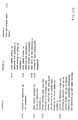
- Figure 23 illustrates an example of lock steal processing with a lock is stolen after the system successfully writes data to the primary data store but before the WRITE to the alternate data store.
- a user issues a request to READ SERIALIZED resource X.
- Figure 24 at 2401, 2402, 2403, and 2404 shows the state of the lock blocks at the beginning of this READ SERIALIZED request. All lock block fields are initially zero.
- System A's lock block for resource X is written at 2302.
- Figure 24 at 2405 shows the content of the lock block for System A after this step is complete.
- the sequence number 10 has been inserted into the block to designate System A, and the time-of-day value for this request, TOD1, is now entered into the time-of-day field.
- the other lock block associated with resource X, 2406, 2407, and 2408 are unchanged.
- all lock blocks for resource X are read 2303.
- System A owns resource X 2304.
- 2305 the data for resource X is read into storage.
- return is made to the READ SERIALIZED requestor, 2306, with an indication that resource X has been successfully read.
- 2307 a user from System B issues a request to READ SERIALIZED resource X.
- System B's lock block for resource X is written to the primary data store, Figure 23 at 2308.
- Figure 24 at 2410 illustrates the content of this lock block.
- System B next reads all lock blocks for resource X, Figure 23 at 2309. System B discovers that all the nonzero lock block values are older than its lock block value.
- System A is now placed into stop mode by the system operator, Figure 23 at 2311. This will eventually cause all waiting systems (in this case System B) to note that they have been waiting for resource X for an excessive amount of time (see the explanation for Figure 18 - Lock Steal Processing).
- System B detects that it has been waiting for resource X for an excessive amount of time, so it reads all lock blocks for resource X to determine the current owner.
- System B determines that System A is the owner of resource X (oldest TOD) and then continues to wait.
- System B detects that it has waited for resource X an excessive amount of time, so reads all lock blocks for this resource to determine the current owner.
- System B initiates a steal of the lock for resource X from System A.
- 2316 the sequence number and TOD read from resource X from the primary data store that was associated with System A, Figure 24 at 2409, is now written by System B to the alternate data store's lock block for resource X for System A.
- Figure 24 at 2415 illustrates this lock block's value in the alternate data store. Note that the primary data store's lock blocks, 2413 and 2414, are unchanged, as is the alternate data store lock block for System B 2416.
- System A's operator restarts the system, having accomplished whatever tasks it was stopped for.
- a System A user issues a request to WRITE SERIALIZED resource X.
- the updated System A user data for resource X is written to the primary data store, checking its lock block to ensure that resource X is still owned by System A, 2319.
- System B has not yet zeroed out System A's lock block for resource X, so that System A believes that it still owns resource X.
- 2320 System B writes a zero to the primary data store's lock block for resource X for System A.
- Figure 24 at 2417 depicts this new lock block.
- System B reads all lock blocks for resource X.
- System A attempts to write the updated user data for resource X to the alternate data store, checking that the resource is still owned by System A (see description of Figure 16, WRITE DATA - for the verification performed by the channel program). This write however is unsuccessful, 2323, because the lock is no longer owned by System A.
- System B is determined to be the owner, and is signalled indicating that it is the owner of resource X.
- System B receives its own signal that it is the owner of resource X.
- READ SERIALIZED is invoked internally as a first step toward backing up the user change on the alternate data store.
- System B reads data in for resource X.
- System A's lock block for resource X is written to the primary data store. The contents of this lock block are illustrated in Figure 24 at 2425, with TOD3 being the time-of-day of the present request.
- All lock blocks for resource X are read at 2337 and the next owner is determined 2338.
- a lock owner signal is sent to System A. Return is then made to the WRITE SERIALIZED requestor at 2339, indicating that resource X has been successfully written.
- System A receives a signal that it is now the owner of resource X. It then reads the data in for resource X.
- This data will consist of the changes it originally made, along with System B's changes.
- return is made to the READ SERIALIZED requestor indicating that the resource has been successfully read. In this case, the requestor was WRITE SERIALIZED processing, since it was an internal READ SERIALIZED request.
- the (just read) data for resource X is written to the primary data store, checking that the resource is still owned by System A. Then, 2343, the data for resource X is written to the alternate data store, again checking that the resource is still owned by this system (channel program verification - see Figure 16). System A's lock block is then written to the primary data store as all zeroes to unlock resource X 2344.
- Figure 24 illustrates this at 2433.
Landscapes
- Engineering & Computer Science (AREA)
- Software Systems (AREA)
- Theoretical Computer Science (AREA)
- Physics & Mathematics (AREA)
- General Engineering & Computer Science (AREA)
- General Physics & Mathematics (AREA)
- Information Retrieval, Db Structures And Fs Structures Therefor (AREA)
- Memory System (AREA)
Applications Claiming Priority (2)
| Application Number | Priority Date | Filing Date | Title |
|---|---|---|---|
| US54851690A | 1990-07-02 | 1990-07-02 | |
| US548516 | 1990-07-02 |
Publications (2)
| Publication Number | Publication Date |
|---|---|
| EP0465871A2 true EP0465871A2 (de) | 1992-01-15 |
| EP0465871A3 EP0465871A3 (en) | 1993-03-31 |
Family
ID=24189178
Family Applications (1)
| Application Number | Title | Priority Date | Filing Date |
|---|---|---|---|
| EP19910109904 Withdrawn EP0465871A3 (en) | 1990-07-02 | 1991-06-17 | Shared data access serialization method and apparatus |
Country Status (3)
| Country | Link |
|---|---|
| US (1) | US5305448A (de) |
| EP (1) | EP0465871A3 (de) |
| JP (1) | JPH06342396A (de) |
Cited By (3)
| Publication number | Priority date | Publication date | Assignee | Title |
|---|---|---|---|---|
| EP0629947A3 (de) * | 1993-06-14 | 1995-06-14 | Ibm | Steuerung geteilter Betriebsmittel in einem verteilten Verarbeitungssystem. |
| RU2209461C2 (ru) * | 2000-09-26 | 2003-07-27 | Гурский Сергей Михайлович | Способ разрешения конфликтов |
| WO2007027153A1 (en) * | 2005-09-01 | 2007-03-08 | Encentuate Pte Ltd | Portable authentication and access control involving multiples identities |
Families Citing this family (52)
| Publication number | Priority date | Publication date | Assignee | Title |
|---|---|---|---|---|
| JP2781092B2 (ja) * | 1991-11-06 | 1998-07-30 | 富士通株式会社 | システム間排他制御方式 |
| US5408653A (en) * | 1992-04-15 | 1995-04-18 | International Business Machines Corporation | Efficient data base access using a shared electronic store in a multi-system environment with shared disks |
| JPH06110846A (ja) * | 1992-09-25 | 1994-04-22 | Fujitsu Ltd | 排他制御方式 |
| US5463754A (en) * | 1992-10-30 | 1995-10-31 | International Business Machines Corporation | Shared direct access storage device for fixed block architecture devices |
| JP2963298B2 (ja) * | 1993-03-26 | 1999-10-18 | 富士通株式会社 | 二重化共有メモリにおける排他制御命令のリカバリ方法および計算機システム |
| JP2703498B2 (ja) * | 1993-04-30 | 1998-01-26 | インターナショナル・ビジネス・マシーンズ・コーポレイション | バージョン化オブジェクトに対するロッキング機構 |
| US5761739A (en) * | 1993-06-08 | 1998-06-02 | International Business Machines Corporation | Methods and systems for creating a storage dump within a coupling facility of a multisystem enviroment |
| US5600821A (en) * | 1993-07-28 | 1997-02-04 | National Semiconductor Corporation | Distributed directory for information stored on audio quality memory devices |
| US5481706A (en) * | 1993-11-01 | 1996-01-02 | International Business Machines Corporation | System and method for creating thread-safe shared libraries |
| US5860137A (en) * | 1995-07-21 | 1999-01-12 | Emc Corporation | Dynamic load balancing |
| US5887167A (en) * | 1995-11-03 | 1999-03-23 | Apple Computer, Inc. | Synchronization mechanism for providing multiple readers and writers access to performance information of an extensible computer system |
| US5920719A (en) * | 1995-11-06 | 1999-07-06 | Apple Computer, Inc. | Extensible performance statistics and tracing registration architecture |
| US6389482B1 (en) | 1997-08-28 | 2002-05-14 | International Business Machines Corp. | Dynamic transitioning from a local pipe to a cross-system pipe |
| US6178429B1 (en) * | 1997-11-26 | 2001-01-23 | Cisco Technology, Inc. | Mechanism for ensuring SCM database consistency on multi-part operation boundaries |
| US7013305B2 (en) | 2001-10-01 | 2006-03-14 | International Business Machines Corporation | Managing the state of coupling facility structures, detecting by one or more systems coupled to the coupling facility, the suspended state of the duplexed command, detecting being independent of message exchange |
| US6301676B1 (en) * | 1999-01-22 | 2001-10-09 | Sun Microsystems, Inc. | Robust and recoverable interprocess locks |
| US6539495B1 (en) | 1999-02-22 | 2003-03-25 | International Business Machines Corporation | Method, system and program products for providing user-managed duplexing of coupling facility cache structures |
| US6438654B1 (en) | 1999-02-22 | 2002-08-20 | International Business Machines Corporation | Castout processing for duplexed cache structures |
| US6449614B1 (en) | 1999-03-25 | 2002-09-10 | International Business Machines Corporation | Interface system and method for asynchronously updating a share resource with locking facility |
| US6546466B1 (en) | 1999-08-23 | 2003-04-08 | International Business Machines Corporation | Method, system and program products for copying coupling facility cache structures |
| US6594667B2 (en) | 1999-08-23 | 2003-07-15 | International Business Machines Corporation | Method, system and program products for modifying coupling facility structures |
| US6542970B1 (en) | 1999-08-23 | 2003-04-01 | International Business Machines Corporation | Method, system and program products for copying coupling facility list structures |
| US6317744B1 (en) | 1999-08-23 | 2001-11-13 | International Business Machines Corporation | Method, system and program products for browsing fully-associative collections of items |
| US6609214B1 (en) | 1999-08-23 | 2003-08-19 | International Business Machines Corporation | Method, system and program products for copying coupling facility structures |
| US6266783B1 (en) | 1999-08-23 | 2001-07-24 | International Business Machines Corporation | System-managed rebuild of coupling facility structures |
| US6546414B1 (en) | 1999-08-23 | 2003-04-08 | International Business Machines Corporation | Method, system and program products for copying coupling facility lock structures |
| US6584554B1 (en) | 1999-08-23 | 2003-06-24 | International Business Machines Corporation | Directed allocation of coupling facility structures |
| US6918044B1 (en) | 1999-10-15 | 2005-07-12 | Cisco Technology, Inc. | Password protection for high reliability computer systems |
| US6467049B1 (en) | 1999-10-15 | 2002-10-15 | Cisco Technology, Inc. | Method and apparatus for configuration in multi processing engine computer systems |
| US6484224B1 (en) | 1999-11-29 | 2002-11-19 | Cisco Technology Inc. | Multi-interface symmetric multiprocessor |
| US7526533B1 (en) | 1999-11-30 | 2009-04-28 | Cisco Technology, Inc. | Active call context reconstruction for primary/backup resource manager servers |
| US6571276B1 (en) | 2000-02-23 | 2003-05-27 | International Business Machines Corporation | System for managing asset access in a distributed storage system |
| US6742135B1 (en) * | 2000-11-07 | 2004-05-25 | At&T Corp. | Fault-tolerant match-and-set locking mechanism for multiprocessor systems |
| US7058629B1 (en) * | 2001-02-28 | 2006-06-06 | Oracle International Corporation | System and method for detecting termination of an application instance using locks |
| US7444335B1 (en) | 2001-02-28 | 2008-10-28 | Oracle International Corporation | System and method for providing cooperative resource groups for high availability applications |
| US6892205B1 (en) * | 2001-02-28 | 2005-05-10 | Oracle International Corporation | System and method for pre-compiling a source cursor into a target library cache |
| US20020133530A1 (en) * | 2001-03-15 | 2002-09-19 | Maarten Koning | Method for resource control including resource stealing |
| US6748470B2 (en) * | 2001-11-13 | 2004-06-08 | Microsoft Corporation | Method and system for locking multiple resources in a distributed environment |
| US7028300B2 (en) * | 2001-11-13 | 2006-04-11 | Microsoft Corporation | Method and system for managing resources in a distributed environment that has an associated object |
| US7406519B2 (en) | 2001-11-13 | 2008-07-29 | Microsoft Corporation | Method and system for locking resources in a distributed environment |
| US20030105871A1 (en) * | 2001-11-13 | 2003-06-05 | Microsoft Corporation, | Method and system for modifying lock properties in a distributed environment |
| US7529844B2 (en) * | 2002-04-26 | 2009-05-05 | Sun Microsystems, Inc. | Multiprocessing systems employing hierarchical spin locks |
| US20040024807A1 (en) * | 2002-07-31 | 2004-02-05 | Microsoft Corporation | Asynchronous updates of weakly consistent distributed state information |
| US7284151B2 (en) * | 2003-07-21 | 2007-10-16 | Oracle International Corporation | Conditional data access after database system failure |
| US7457832B2 (en) * | 2004-08-31 | 2008-11-25 | Microsoft Corporation | Verifying dynamically generated operations on a data store |
| US8266394B2 (en) * | 2008-07-14 | 2012-09-11 | International Business Machines Corporation | Methods for single-owner multi-consumer work queues for repeatable tasks |
| US8490181B2 (en) * | 2009-04-22 | 2013-07-16 | International Business Machines Corporation | Deterministic serialization of access to shared resource in a multi-processor system for code instructions accessing resources in a non-deterministic order |
| US9330148B2 (en) | 2011-06-30 | 2016-05-03 | International Business Machines Corporation | Adapting data quality rules based upon user application requirements |
| US9037901B2 (en) * | 2011-08-19 | 2015-05-19 | International Business Machines Corporation | Data set autorecovery |
| US10095548B2 (en) * | 2012-05-21 | 2018-10-09 | Nvidia Corporation | Mechanism for waking common resource requests within a resource management subsystem |
| US10235069B2 (en) * | 2016-12-22 | 2019-03-19 | Western Digital Technologies, Inc. | Load balancing by dynamically transferring memory range assignments |
| US11249656B2 (en) * | 2019-07-24 | 2022-02-15 | EMC IP Holding Company LLC | Performance optimization for active-active locking using sticking affinity for storage objects |
Family Cites Families (3)
| Publication number | Priority date | Publication date | Assignee | Title |
|---|---|---|---|---|
| JPS62214466A (ja) * | 1986-03-17 | 1987-09-21 | Fujitsu Ltd | 記憶装置ロツク制御方式 |
| US4823261A (en) * | 1986-11-24 | 1989-04-18 | International Business Machines Corp. | Multiprocessor system for updating status information through flip-flopping read version and write version of checkpoint data |
| US4979105A (en) * | 1988-07-19 | 1990-12-18 | International Business Machines | Method and apparatus for automatic recovery from excessive spin loops in an N-way multiprocessing system |
-
1991
- 1991-06-07 JP JP3162417A patent/JPH06342396A/ja active Pending
- 1991-06-17 EP EP19910109904 patent/EP0465871A3/en not_active Withdrawn
-
1993
- 1993-09-16 US US08/122,620 patent/US5305448A/en not_active Expired - Fee Related
Cited By (5)
| Publication number | Priority date | Publication date | Assignee | Title |
|---|---|---|---|---|
| EP0629947A3 (de) * | 1993-06-14 | 1995-06-14 | Ibm | Steuerung geteilter Betriebsmittel in einem verteilten Verarbeitungssystem. |
| US5544353A (en) * | 1993-06-14 | 1996-08-06 | International Business Machines Corporation | Distributed processing object shared resource control apparatus and method |
| RU2209461C2 (ru) * | 2000-09-26 | 2003-07-27 | Гурский Сергей Михайлович | Способ разрешения конфликтов |
| WO2007027153A1 (en) * | 2005-09-01 | 2007-03-08 | Encentuate Pte Ltd | Portable authentication and access control involving multiples identities |
| US7620976B2 (en) | 2005-09-01 | 2009-11-17 | International Business Machines Corporation | Portable authentication and access control involving multiple identities |
Also Published As
| Publication number | Publication date |
|---|---|
| JPH06342396A (ja) | 1994-12-13 |
| EP0465871A3 (en) | 1993-03-31 |
| US5305448A (en) | 1994-04-19 |
Similar Documents
| Publication | Publication Date | Title |
|---|---|---|
| US5305448A (en) | Shared access serialization featuring second process lock steal and subsequent write access denial to first process | |
| US5423044A (en) | Shared, distributed lock manager for loosely coupled processing systems | |
| US5448718A (en) | Method and system for time zero backup session security | |
| US6553392B1 (en) | System and method for purging database update image files after completion of associated transactions | |
| US6584477B1 (en) | High speed system and method for replicating a large database at a remote location | |
| US5875479A (en) | Method and means for making a dual volume level copy in a DASD storage subsystem subject to updating during the copy interval | |
| US5659682A (en) | Scheme to determine completion of directory operations for server recovery | |
| US5504900A (en) | Commitment ordering for guaranteeing serializability across distributed transactions | |
| US8635193B2 (en) | Cluster-wide read-copy update system and method | |
| US5317739A (en) | Method and apparatus for coupling data processing systems | |
| KR100271342B1 (ko) | 데이터 베이스에 있어서의 백업실행장치 | |
| US8464101B1 (en) | CAS command network replication | |
| CN100435101C (zh) | 在软件环境中用于保持资源完整性的装置和方法 | |
| US5440727A (en) | Asynchronous replica management in shared nothing architectures | |
| US7870426B2 (en) | Apparatus, system, and method for transactional peer recovery in a data sharing clustering computer system | |
| US6463532B1 (en) | System and method for effectuating distributed consensus among members of a processor set in a multiprocessor computing system through the use of shared storage resources | |
| EP0566968A2 (de) | Verfahren und System zum gleichzeitigen Zugriff während der Datensicherung | |
| US5544353A (en) | Distributed processing object shared resource control apparatus and method | |
| US5450590A (en) | Authorization method for conditional command execution | |
| CA2310099A1 (en) | Computer system transparent data migration | |
| KR20110086690A (ko) | 저장 장치에 데이터 쓰기를 실행하는 방법 및 시스템 | |
| JPH0227441A (ja) | コンピュータ・システム | |
| JPH05210555A (ja) | ゼロ時間データ・バックアップ・コピーの方法及び装置 | |
| WO1996041263A1 (en) | Management of units of work on a computer system log | |
| US20030159085A1 (en) | Managing processing associated with coupling facility structures |
Legal Events
| Date | Code | Title | Description |
|---|---|---|---|
| PUAI | Public reference made under article 153(3) epc to a published international application that has entered the european phase |
Free format text: ORIGINAL CODE: 0009012 |
|
| AK | Designated contracting states |
Kind code of ref document: A2 Designated state(s): DE FR GB |
|
| 17P | Request for examination filed |
Effective date: 19920521 |
|
| PUAL | Search report despatched |
Free format text: ORIGINAL CODE: 0009013 |
|
| AK | Designated contracting states |
Kind code of ref document: A3 Designated state(s): DE FR GB |
|
| STAA | Information on the status of an ep patent application or granted ep patent |
Free format text: STATUS: THE APPLICATION HAS BEEN WITHDRAWN |
|
| 18W | Application withdrawn |
Withdrawal date: 19960716 |