EP0464830A1 - Organophosphorus compounds, method for preparing same and insecticides, acaricides and nematocides containing same - Google Patents
Organophosphorus compounds, method for preparing same and insecticides, acaricides and nematocides containing same Download PDFInfo
- Publication number
- EP0464830A1 EP0464830A1 EP91111152A EP91111152A EP0464830A1 EP 0464830 A1 EP0464830 A1 EP 0464830A1 EP 91111152 A EP91111152 A EP 91111152A EP 91111152 A EP91111152 A EP 91111152A EP 0464830 A1 EP0464830 A1 EP 0464830A1
- Authority
- EP
- European Patent Office
- Prior art keywords
- group
- substituted
- general formula
- halogen atoms
- alkyl
- Prior art date
- Legal status (The legal status is an assumption and is not a legal conclusion. Google has not performed a legal analysis and makes no representation as to the accuracy of the status listed.)
- Granted
Links
Classifications
-
- C—CHEMISTRY; METALLURGY
- C07—ORGANIC CHEMISTRY
- C07F—ACYCLIC, CARBOCYCLIC OR HETEROCYCLIC COMPOUNDS CONTAINING ELEMENTS OTHER THAN CARBON, HYDROGEN, HALOGEN, OXYGEN, NITROGEN, SULFUR, SELENIUM OR TELLURIUM
- C07F9/00—Compounds containing elements of Groups 5 or 15 of the Periodic Table
- C07F9/02—Phosphorus compounds
- C07F9/547—Heterocyclic compounds, e.g. containing phosphorus as a ring hetero atom
- C07F9/645—Heterocyclic compounds, e.g. containing phosphorus as a ring hetero atom having two nitrogen atoms as the only ring hetero atoms
- C07F9/6503—Five-membered rings
- C07F9/6506—Five-membered rings having the nitrogen atoms in positions 1 and 3
-
- A—HUMAN NECESSITIES
- A01—AGRICULTURE; FORESTRY; ANIMAL HUSBANDRY; HUNTING; TRAPPING; FISHING
- A01N—PRESERVATION OF BODIES OF HUMANS OR ANIMALS OR PLANTS OR PARTS THEREOF; BIOCIDES, e.g. AS DISINFECTANTS, AS PESTICIDES OR AS HERBICIDES; PEST REPELLANTS OR ATTRACTANTS; PLANT GROWTH REGULATORS
- A01N57/00—Biocides, pest repellants or attractants, or plant growth regulators containing organic phosphorus compounds
- A01N57/26—Biocides, pest repellants or attractants, or plant growth regulators containing organic phosphorus compounds having phosphorus-to-nitrogen bonds
- A01N57/32—Biocides, pest repellants or attractants, or plant growth regulators containing organic phosphorus compounds having phosphorus-to-nitrogen bonds containing heterocyclic radicals
-
- C—CHEMISTRY; METALLURGY
- C07—ORGANIC CHEMISTRY
- C07F—ACYCLIC, CARBOCYCLIC OR HETEROCYCLIC COMPOUNDS CONTAINING ELEMENTS OTHER THAN CARBON, HYDROGEN, HALOGEN, OXYGEN, NITROGEN, SULFUR, SELENIUM OR TELLURIUM
- C07F9/00—Compounds containing elements of Groups 5 or 15 of the Periodic Table
- C07F9/02—Phosphorus compounds
- C07F9/547—Heterocyclic compounds, e.g. containing phosphorus as a ring hetero atom
- C07F9/553—Heterocyclic compounds, e.g. containing phosphorus as a ring hetero atom having one nitrogen atom as the only ring hetero atom
- C07F9/572—Five-membered rings
-
- C—CHEMISTRY; METALLURGY
- C07—ORGANIC CHEMISTRY
- C07F—ACYCLIC, CARBOCYCLIC OR HETEROCYCLIC COMPOUNDS CONTAINING ELEMENTS OTHER THAN CARBON, HYDROGEN, HALOGEN, OXYGEN, NITROGEN, SULFUR, SELENIUM OR TELLURIUM
- C07F9/00—Compounds containing elements of Groups 5 or 15 of the Periodic Table
- C07F9/02—Phosphorus compounds
- C07F9/547—Heterocyclic compounds, e.g. containing phosphorus as a ring hetero atom
- C07F9/553—Heterocyclic compounds, e.g. containing phosphorus as a ring hetero atom having one nitrogen atom as the only ring hetero atom
- C07F9/576—Six-membered rings
- C07F9/59—Hydrogenated pyridine rings
-
- C—CHEMISTRY; METALLURGY
- C07—ORGANIC CHEMISTRY
- C07F—ACYCLIC, CARBOCYCLIC OR HETEROCYCLIC COMPOUNDS CONTAINING ELEMENTS OTHER THAN CARBON, HYDROGEN, HALOGEN, OXYGEN, NITROGEN, SULFUR, SELENIUM OR TELLURIUM
- C07F9/00—Compounds containing elements of Groups 5 or 15 of the Periodic Table
- C07F9/02—Phosphorus compounds
- C07F9/547—Heterocyclic compounds, e.g. containing phosphorus as a ring hetero atom
- C07F9/645—Heterocyclic compounds, e.g. containing phosphorus as a ring hetero atom having two nitrogen atoms as the only ring hetero atoms
- C07F9/6509—Six-membered rings
- C07F9/6512—Six-membered rings having the nitrogen atoms in positions 1 and 3
-
- C—CHEMISTRY; METALLURGY
- C07—ORGANIC CHEMISTRY
- C07F—ACYCLIC, CARBOCYCLIC OR HETEROCYCLIC COMPOUNDS CONTAINING ELEMENTS OTHER THAN CARBON, HYDROGEN, HALOGEN, OXYGEN, NITROGEN, SULFUR, SELENIUM OR TELLURIUM
- C07F9/00—Compounds containing elements of Groups 5 or 15 of the Periodic Table
- C07F9/02—Phosphorus compounds
- C07F9/547—Heterocyclic compounds, e.g. containing phosphorus as a ring hetero atom
- C07F9/6515—Heterocyclic compounds, e.g. containing phosphorus as a ring hetero atom having three nitrogen atoms as the only ring hetero atoms
- C07F9/6521—Six-membered rings
-
- C—CHEMISTRY; METALLURGY
- C07—ORGANIC CHEMISTRY
- C07F—ACYCLIC, CARBOCYCLIC OR HETEROCYCLIC COMPOUNDS CONTAINING ELEMENTS OTHER THAN CARBON, HYDROGEN, HALOGEN, OXYGEN, NITROGEN, SULFUR, SELENIUM OR TELLURIUM
- C07F9/00—Compounds containing elements of Groups 5 or 15 of the Periodic Table
- C07F9/02—Phosphorus compounds
- C07F9/547—Heterocyclic compounds, e.g. containing phosphorus as a ring hetero atom
- C07F9/6527—Heterocyclic compounds, e.g. containing phosphorus as a ring hetero atom having nitrogen and oxygen atoms as the only ring hetero atoms
- C07F9/653—Five-membered rings
-
- C—CHEMISTRY; METALLURGY
- C07—ORGANIC CHEMISTRY
- C07F—ACYCLIC, CARBOCYCLIC OR HETEROCYCLIC COMPOUNDS CONTAINING ELEMENTS OTHER THAN CARBON, HYDROGEN, HALOGEN, OXYGEN, NITROGEN, SULFUR, SELENIUM OR TELLURIUM
- C07F9/00—Compounds containing elements of Groups 5 or 15 of the Periodic Table
- C07F9/02—Phosphorus compounds
- C07F9/547—Heterocyclic compounds, e.g. containing phosphorus as a ring hetero atom
- C07F9/6536—Heterocyclic compounds, e.g. containing phosphorus as a ring hetero atom having nitrogen and sulfur atoms with or without oxygen atoms, as the only ring hetero atoms
- C07F9/6539—Five-membered rings
Definitions
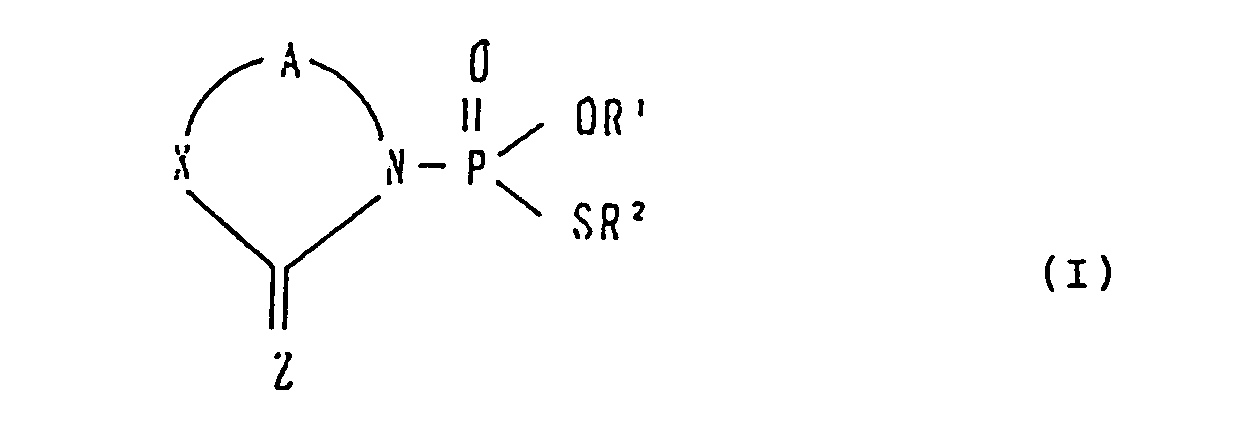
- the present invention relates to organophosphorus compounds represented by the following general formula (I):
- organophosphorus compounds having an imidazolidinyl group have been investigated and developed.
- JP-A- 61-267594 and JP-A- 2-793 disclose that these compounds can be used as insecticides, acaricides, nematocides and agents for killing soil insect pests.
- these patents simply disclose organophosphorus compounds having an imidazolidine skeleton which carries an oxygen or sulfur atom on the 2-position.
- the insecticidal, acaricidal and nematocidal effects of these compounds are insufficient and are not necessarily satisfactory.
- an object of the present invention is to provide novel organophosphorus compounds represented by the foregoing general formula (I).
- Another object of the present invention is to provide a method for preparing novel organophosphorus compounds represented by the foregoing general formula (I).
- a further object of the present invention is to provide an agricultural chemical having insecticidal, acaricidal and nematocidal effects higher than those attained by conventional agricultural chemicals and exhibiting very low toxicity to warm-blooded animals.
- alkyl alkenyl and alkynyl as used herein alone or as part of another group (e.g. alkoxy, alkylthio, alkylamino, alkylsulfonyl, alkylcarbonyl) include residues having 1 to 6, preferably 1 to 4 carbon atoms - as far as they are not defined otherwise.
- organophosphorus compounds do not give off any bad or irritating order and have low toxicity to warm-blooded animals. Therefore, they can widely be used and thus have very high usefulness.
- organophosphorus compounds represented by the foregoing general formula (I) also include stereoisomers such as optical isomers.
- the organophosphorus compounds when X is the group NH, the organophosphorus compounds may exist in the form of a tautomer represented by the following general formula (1'): (wherein R 1 , R 2 , Z and A are the same as those defined above). These compounds (tautomeric isomers) are likewise included in the scope of the compound of the present invention.
- the compounds of the present invention can be prepared in accordance with, for instance, any one of the following three methods.
- the foregoing reactions are in general carried out at a temperature ranging from -100 to +60° C and preferably from -80 to + 30 C. Moreover, these reactions are performed in the presence of a deacidifying agent, examples of which include organic lithium compounds such as n-butyl lithium, t-butyl lithium and phenyl lithium; inorganic bases such as sodium hydride, potassium hydride, metallic sodium, sodium hydroxide and potassium hydroxide; alkoxides such as sodium methoxide, sodium ethoxide and potassium t-butoxide; and organic bases such as triethylamine and pyridine.
- a deacidifying agent examples of which include organic lithium compounds such as n-butyl lithium, t-butyl lithium and phenyl lithium; inorganic bases such as sodium hydride, potassium hydride, metallic sodium, sodium hydroxide and potassium hydroxide; alkoxides such as sodium methoxide, sodium ethoxide and potassium t-but
- these reactions are desirably carried out in the presence of a solvent.
- solvents include aromatic hydrocarbons such as benzene, toluene, xylene and chlorobenzene; cyclic or non-cyclic aliphatic hydrocarbons such as hexane and cyclohexane; ethers such as diethyl ether, methyl ethyl ether, dioxane and tetrahydrofuran; nitriles such as acetonitrile, propionitrile and acrylonitrile; and aprotic polar solvents such as dimethylformamide, dimethylsulfoxide, sulfolane and hexamethyl-phosphoric acid triamide.
- the compounds of the present invention exhibit excellent activity as active ingredients of insecticides, acaricides and nematocides.
- the compounds of the present invention are effective for controlling, for instance, agricultural and horticultural pests such as Coleoptera (for instance, Scarabaeidae, Chrysomelidae, Henosepilachna vigintioctopunctata and Lissorhoptrus oryzophilus), Lepidoptera (for instance, Mamestra brassicae, Pieris rapae, Plutera xylostella, Noctuidae, Adoxophyes orana and Chilo suppressalis), Hemiptera (for instance, Delphacidae, Deltocephalidae, Aleyrodidae, Aphididae and Scales) and Thysanoptera (for instance, Scirtothrips dorsalis and Thrips pulmi); Sanitary pests such as Mosquitoes, Flies
- soil insect pest means, for instance, Gastropoda such as slugs and snails; Isopoda such as Armadillidium vulgare and Sow bugs.
- insect pest such as Dicofol, organophosphorus compound-resistant plant parasitic mites, organophosphorus compound-resistant Aphididae and Musca domestica.
- the compounds of the present invention are used as active ingredients of insecticidal, acaricidal, nematocidal compositions and composition for killing or controlling soil pest insect, they may be used as such, but may in general be formed into a variety of formulations together with adjuvants such as emulsifiable concentrates, dusts, wettable powders, liquid formulations, aerosols and pastes like conventional formulations of agricultural chemicals.
- the formulations in general comprise 0.5 to 90 parts by weight of the active ingredient and 10 to 99.5 parts by weight of an adjuvant. When these formulations are practically used, they can be applied as such or after diluting them with a diluent such as water to a desired concentration.
- adjuvant herein means carriers, emulsifying agents, suspending agents, dispersing agents, spreaders, penetrants, wetting agents, thickeners and stabilisers. These adjuvants may, if necessary, be added in an appropriate amount.
- the carriers can roughly be classified into solid carriers and liquid carriers. Examples of the solid carriers include vegetable and animal powder such as starches, active carbon, soybean flour, wheat flour, wood powder, fish meal and powdered milk; and mineral powders such as talc, kaolin, bentonite, calcium carbonate, zeolite, diatomaceous earth, white carbon, clay, alumina and powdered sulfur.
- liquid carriers examples include water; alcohols such as methyl alcohol and ethylene glycol; ketones such as acetone and methyl ethyl ketone; ethers such as dioxane and tetrahydrofuran; aliphatic hydrocarbons such as kerosine; aromatic hydrocarbons such as xylene, trimethylbenzene, tetramethylbenzene, cyclohexane and solvent naphtha; halogenated hydrocarbons such as chloroform and chlorobenzene; amides such as dimethylformamide; esters such as ethyl acetate and glycerin esters of fatty acids; nitriles such as acetonitrile; and sulfur atom-containing compounds such as dimethylsulfoxide.
- alcohols such as methyl alcohol and ethylene glycol
- ketones such as acetone and methyl ethyl ketone
- ethers such as dioxane and tetrahydrofuran
- the compounds of the present invention may be admixed with or used simultaneously with other agricultural chemicals such as insecticides, acaricides, nematocides, bactericides, antiviral agents, attractants, herbicides and plant growth regulators. In admixtures, greater effectiveness may sometimes be attained.
- insecticides, acaricides or nematocides include organophosphorus acid ester compounds such as DDVP, Diazinon, Malathion, Fenitrothion, Prothiofos, Dioxabenzofos and Acephate; carbamate compounds such as Carbaryl, Propoxur, Oxamyl, Carbofuran and Methomyl; organochlorine compounds such as Dicofol and Tetradifon; organometal compounds such as Cyhexatin and Fenbutatin oxide; pyreth- roid compounds such as Fenvalerate, Permethrin, Deltamethrin and Bifenthrin; urea compounds such as Diflubenzuron, Teflubenzuron and Chlorfluazuron; heterocyclic compounds such as Buprofezin and Hex- ythiazox; and other compounds such as dinitro compounds, organosulfur compounds, amidine compounds and triazine compounds.
- organophosphorus acid ester compounds such
- bactericides are organophosphorus compounds such as Iprobenfos, Edifenphos and Phosethyl-aluminum; organocopper compounds such as oxyquinoline copper, copper terephthalate; organochlorine compounds such as Fthalide and Chlorothalonil; dithiocarbamate compounds such as Maneb, Zineb and Propineb; dicarboximide compounds such as Iprodione, Vinclozolin and Procymidone; azole compounds such as Triadimefon, Bitertanol, Etaconazole, Propiconazole and Penconazole; benzimidazole compounds such as Thiophanate-methyl and Benomyl; carbinol compounds such as Fenarimol and Flutriafol; benzanilide compounds such as Mepronil and Flutolanil; phenylamide compounds such as Metalaxyl and Oxadixyl; and other compounds such as piperazine compounds, quinoxaline compounds, qui
- the insecticides, acaricides and nematocides which comprise, as active ingredient, the compounds of the present invention are effective for controlling a variety of deleterious insects, harmful mites, destructive nematodes and harmful soil insect pests.
- These agricultural chemicals or formulations are applied at a concentration ranging from 1 to 20,000 ppm, desirably 20 to 2,000 ppm expressed in terms of the amount of the active ingredient.
- concentration of these active ingredients can be appropriately adjusted depending on various factors such as shapes of the formulations, methods, purposes, time and places of application as well as the condition of infestation of insect pest.
- the insect pest when aquatic insect pests are to be controlled, the insect pest can be controlled by spraying a solution of the compound having a concentration falling within the range defined above and, therefore, the concentration of the active ingredient required for controlling the aquatic insect pest is lower than that defined above.
- the amount of the agricultural chemicals or formulations to be applied per unit area (per 10 a) ranges from about 0.1 to 5,000 g and preferably 10 to 1,000 g expressed in terms of the amount of the active ingredient, but in a particular case, they may be applied in an amount outside the range defined above.
- formulations or dilute solutions thereof which comprise the compounds of the present invention can be performed according to any manner of application usually adopted, for instance, spraying (such as spraying, dusting, misting, atomizing, granule application and application on water surface); soil applications (such as mixing and drench); surface applications (such as coating, dressing and painting); and poison bait. It is also possible to control the development and growth of harmful insect pests, in particular deletrious insects through the action of excreta obtained by admixing the foregoing active ingredient to feed and giving the feed to domestic animals. Further, they can also be applied in accordance with ultra low volume application. In this method, the chemicals or formulations can comprise 100% active ingredient.
- the dichloromethane phase was washed with water, dried over anhydrous magnesium sulfate, the dichloromethane was distilled off under reduced pressure and the residue obtained was purified by silica gel column chromatography (eluent: ethyl acetate) to give 0.50 g of Compound No. 2 as an oily substance.
- reaction solution was poured into ice water and then extracted with ethyl acetate.
- the ethyl acetate phase was washed with water, dried over anhydrous magnesium sulfate, the ethyl acetate was distilled off under reduced pressure and the residue obtained was purified by silica gel column chromatography (eluent: chloroform) to thus give 1.10 g of Compound No. 29 as an oily substance.
- the emulsifiable concentrate obtained by Formulation Example 2 was diluted with water to 500 ppm and 50 ppm and the resulting diluted emulsions were sprayed on leaves of chinese cabbage. After air-drying, the leaves were introduced into a plastic container having a size of 21 cm (height)X 13 cm (width) x 3 cm (depth), then 10 third instar larvae of common cutworm were put on the leaves. The container was then placed in a thermostated room maintained at 26 C. After 2 days, the number of surviving larvae was recorded to obtain the mortality (%) (repeated two times). The results thus obtained are summarized in the following Table 3.
- the Comparative Compound A as set forth in Table 3 is a compound represented by the following structural formula and disclosed in Japanese Unexamined Patent Publication No. Sho 61-267594:
- the emulsifiable concentrate obtained by Formulation Example 2 was diluted with water to 500 ppm and the seedlings of rice plant were immersed therein for 10 seconds. After air-drying, the seedlings whose roots were wrapped round with absorbent cotton were introduced into a test tube, then 10 second instar larvae of green rice leafhopper were put into the test tube, the opening thereof was closed with gauze. The tube was placed in a thermostated room maintained at 26 C. After 2 days, the number of surviving larvae was recorded to obtain the mortality (%) (repeated two times). The results thus obtained are summarized in the following Table 4.
- a kidney bean leaf was cut into 3 x 5 cm 2. The leaf was put on a filter paper wetted with water for preventing drying of the leaf and 20 female adults of kanzawa spider mite were released on the leaf. After 24 hours, 500 ppm and 50 ppm of concentration of active ingredient prepared by diluting with water the emulsifiable concentrate obtained by Formulation Example 2 were sprayed on the leaf. After air-drying, the mites were held in a thermostated room maintained at 26 C. After 24 hours, the number of surviving adults were recorded to obtain the mortality (%) (repeated two times). The results thus obtained are summarized in the following Table 5.
- the Comparative Compound A is the same as that defined above in connection with Table 3.
- the root-knot index was evaluated on the basis of the following evaluation criteria:
- Comparative Compound A as set forth in Table 6 is the same as that defined above in connection with Table 3 and Comparative Compound B is a compound (oxamyl) represented by the following structural formula:
- the compounds of the present invention represented by the foregoing general formula (I) exhibit effectiveness in controlling harmful insects, mites and nematodes and thus can be used as novel insecticides, acaricides and nematocides which do not give off a bad or irritating odor and have low toxicity to warm-blooded animals.
Landscapes
- Chemical & Material Sciences (AREA)
- Organic Chemistry (AREA)
- Life Sciences & Earth Sciences (AREA)
- Health & Medical Sciences (AREA)
- General Health & Medical Sciences (AREA)
- Biochemistry (AREA)
- Molecular Biology (AREA)
- Pest Control & Pesticides (AREA)
- Agronomy & Crop Science (AREA)
- Plant Pathology (AREA)
- Engineering & Computer Science (AREA)
- Dentistry (AREA)
- Wood Science & Technology (AREA)
- Zoology (AREA)
- Environmental Sciences (AREA)
- Agricultural Chemicals And Associated Chemicals (AREA)
Abstract
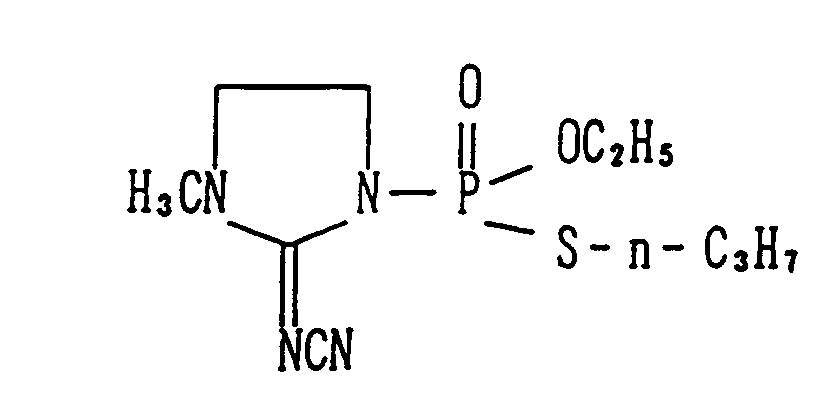
and
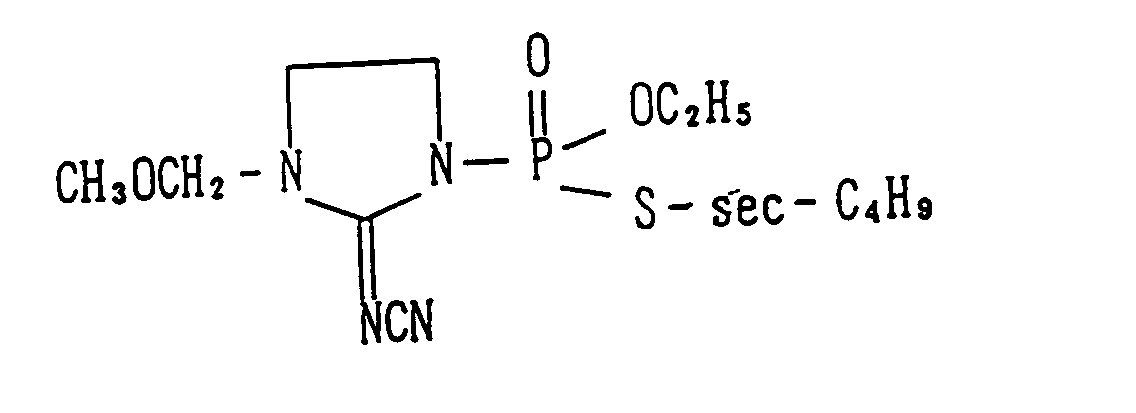
show excellent effect for controlling harmful insects, mites and nematodes, do not give off a bad or irritating odor and exhibit very low toxicity to warm-blooded animals.
Description
- The present invention relates to organophosphorus compounds represented by the following general formula (I):

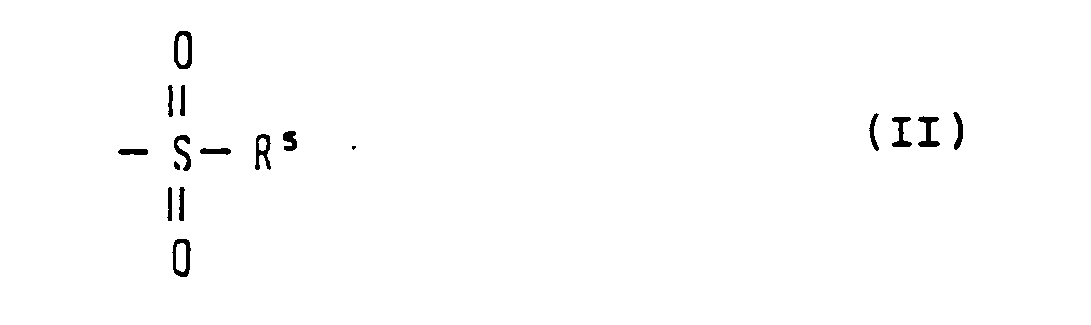
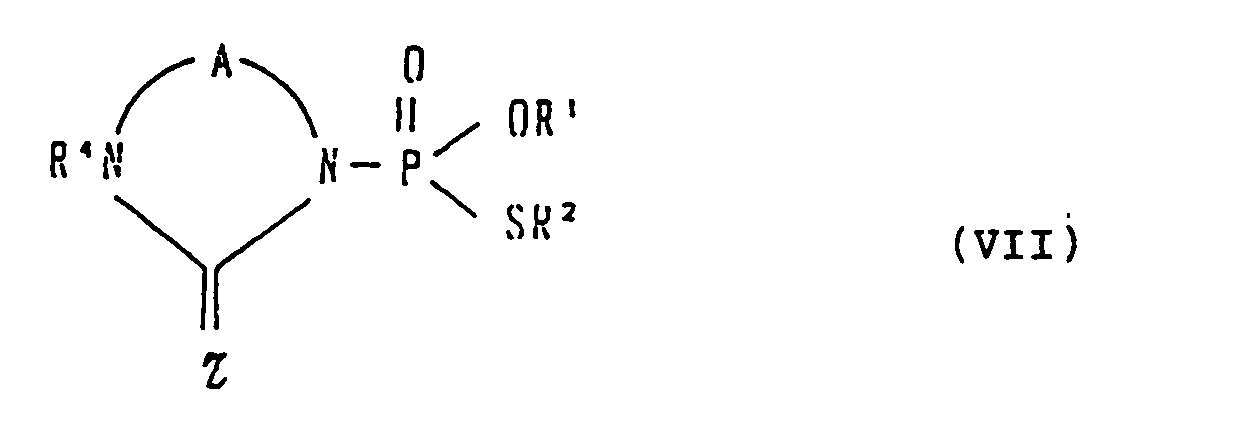
- [ wherein R1 and R2 each represents a C1 to C4 alkyl group; X represents O, S, CH2, CH-R3 ( wherein R3 represents a C1 to C3 alkyl group), NH or N-R4 {wherein R4 represents a C1 to C4 alkyl group (the alkyl group may be substituted with at least one group selected from the group consisting of alkoxy, alkylthio, cyano, alkoxyalkyloxy and alkylamino groups and halogen atoms), an alkenyl group which may be substituted with halogen atoms, an alkynyl group which may be substituted with halogen atoms, a phosphoric acid ester radical, a cyano group, a group of the following general formula (II):
-

- Recently, organophosphorus compounds having an imidazolidinyl group have been investigated and developed. For instance, JP-A- 61-267594 and JP-A- 2-793 disclose that these compounds can be used as insecticides, acaricides, nematocides and agents for killing soil insect pests. However, these patents simply disclose organophosphorus compounds having an imidazolidine skeleton which carries an oxygen or sulfur atom on the 2-position. Moreover, the insecticidal, acaricidal and nematocidal effects of these compounds are insufficient and are not necessarily satisfactory.
- Accordingly, an object of the present invention is to provide novel organophosphorus compounds represented by the foregoing general formula (I).
- Another object of the present invention is to provide a method for preparing novel organophosphorus compounds represented by the foregoing general formula (I).
- A further object of the present invention is to provide an agricultural chemical having insecticidal, acaricidal and nematocidal effects higher than those attained by conventional agricultural chemicals and exhibiting very low toxicity to warm-blooded animals. These objects could be achieved on the basis of the finding that excellent control of harmful insect pests can be achieved by organophosphorus compounds (hereinafter referred to as "the compounds of the present invention") represented by the following general formula (I):

- [ wherein R1 and R2 each represents a C1 to C4 alkyl group; X represents O, S, CH2, CH-R3 (wherein R3 represents a C1 to C3 alkyl group), NH or N-R4 {wherein R4 represents a C1 to C4 alkyl group (the alkyl group may be substituted with at least one group selected from the group consisting of alkoxy, alkylthio, cyano, alkoxyalkyloxy and alkylamino groups and halogen atoms), an alkenyl group which may be substituted with halogen atoms, an alkynyl group which may be substituted with halogen atoms, a phosphoric acid ester radical, a cyano group, a group of the following general formula (II):
-
- The terms "alkyl", "alkenyl" and "alkynyl" as used herein alone or as part of another group (e.g. alkoxy, alkylthio, alkylamino, alkylsulfonyl, alkylcarbonyl) include residues having 1 to 6, preferably 1 to 4 carbon atoms - as far as they are not defined otherwise.
- These organophosphorus compounds do not give off any bad or irritating order and have low toxicity to warm-blooded animals. Therefore, they can widely be used and thus have very high usefulness.
- The organophosphorus compounds represented by the foregoing general formula (I) also include stereoisomers such as optical isomers. In addition, in the general formula (I), when X is the group NH, the organophosphorus compounds may exist in the form of a tautomer represented by the following general formula (1'):

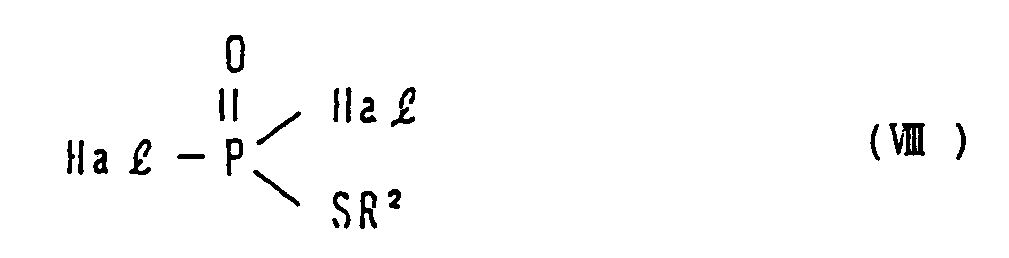
(wherein R1, R2, Z and A are the same as those defined above). These compounds (tautomeric isomers) are likewise included in the scope of the compound of the present invention. - The compounds of the present invention can be prepared in accordance with, for instance, any one of the following three methods.
- Method (i)
-

-

-

- The foregoing reactions are in general carried out at a temperature ranging from -100 to +60° C and preferably from -80 to + 30 C. Moreover, these reactions are performed in the presence of a deacidifying agent, examples of which include organic lithium compounds such as n-butyl lithium, t-butyl lithium and phenyl lithium; inorganic bases such as sodium hydride, potassium hydride, metallic sodium, sodium hydroxide and potassium hydroxide; alkoxides such as sodium methoxide, sodium ethoxide and potassium t-butoxide; and organic bases such as triethylamine and pyridine.
- In addition, these reactions are desirably carried out in the presence of a solvent. Examples of such solvents include aromatic hydrocarbons such as benzene, toluene, xylene and chlorobenzene; cyclic or non-cyclic aliphatic hydrocarbons such as hexane and cyclohexane; ethers such as diethyl ether, methyl ethyl ether, dioxane and tetrahydrofuran; nitriles such as acetonitrile, propionitrile and acrylonitrile; and aprotic polar solvents such as dimethylformamide, dimethylsulfoxide, sulfolane and hexamethyl-phosphoric acid triamide.
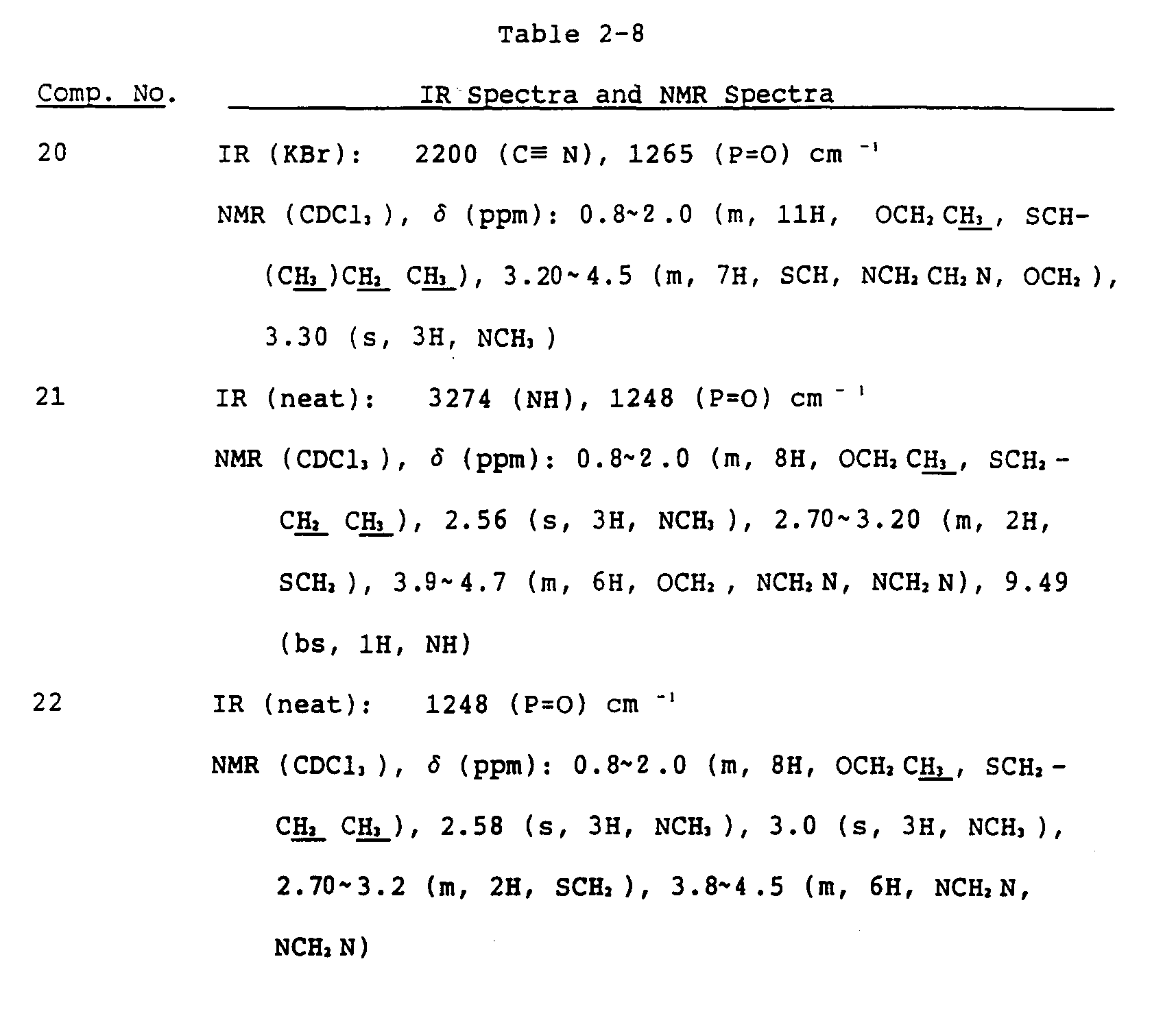
- Typical examples of the compounds of the present invention will now be listed in the following Table 1. Each compound will hereinafter be described by the corresponding number of the compound.

- In the following Table 1, the symbol "-" as set forth in the column "-A-" represents a bond with X and "ph" means a p-phenylene group.
-


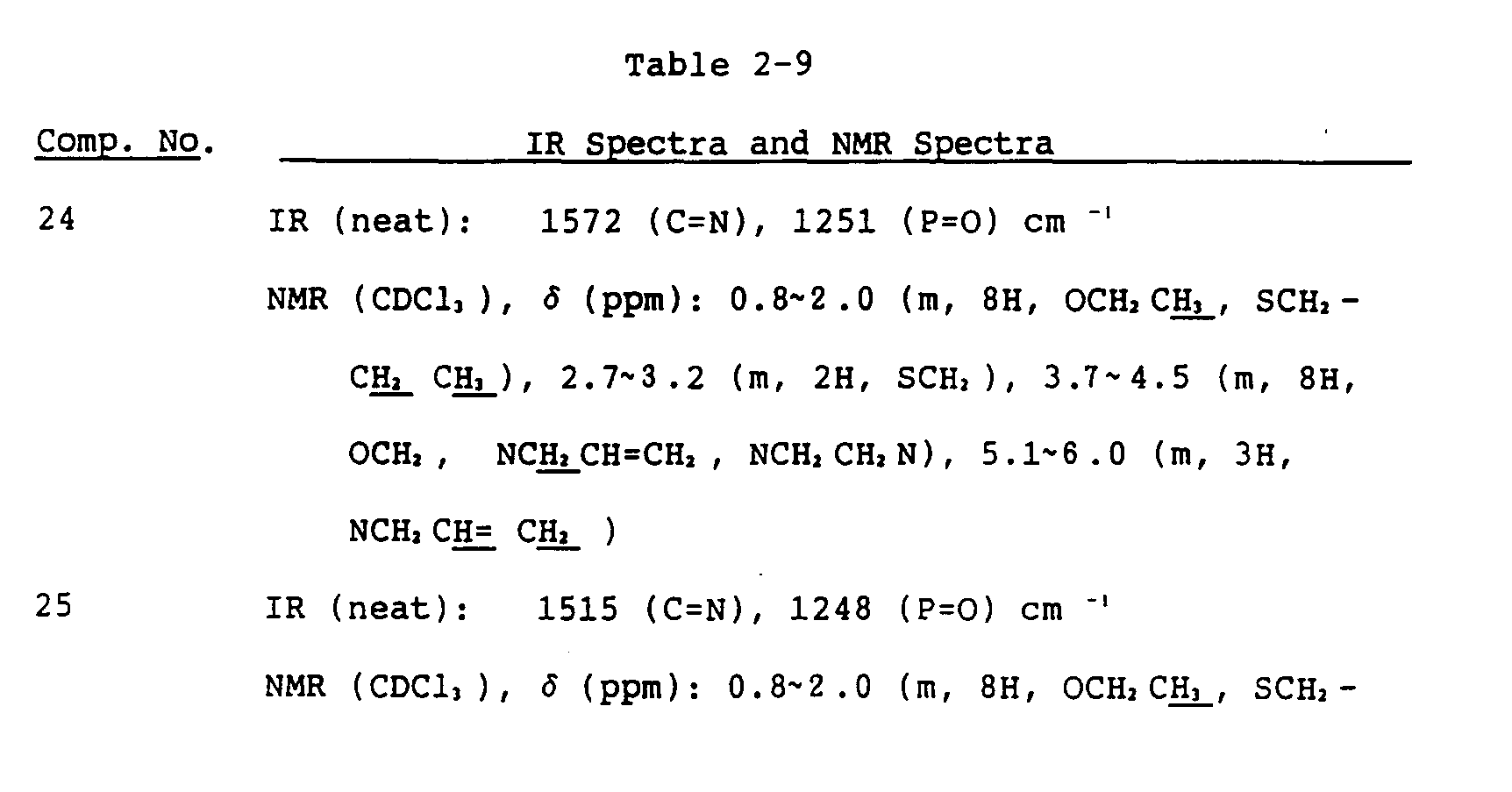


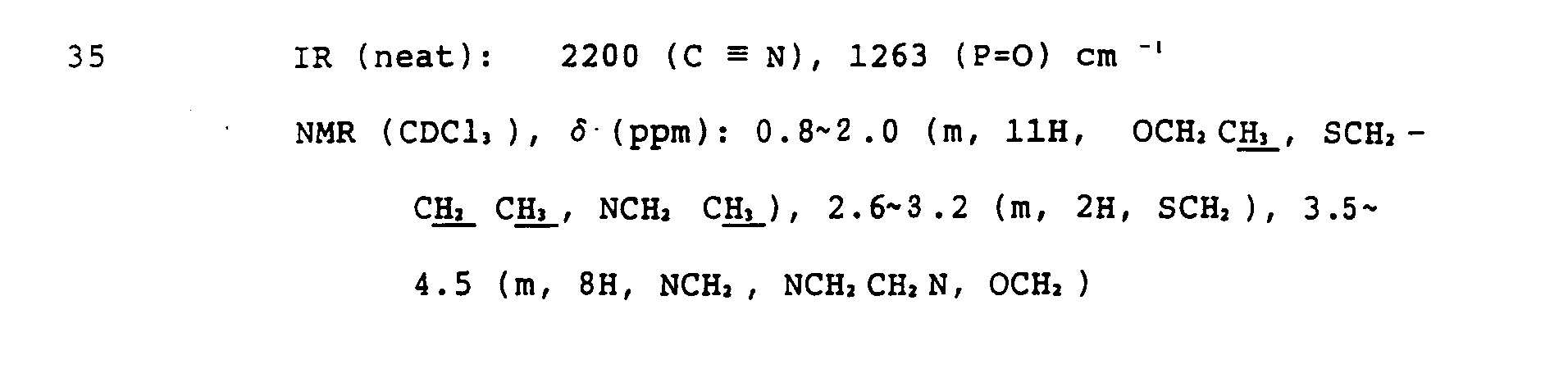


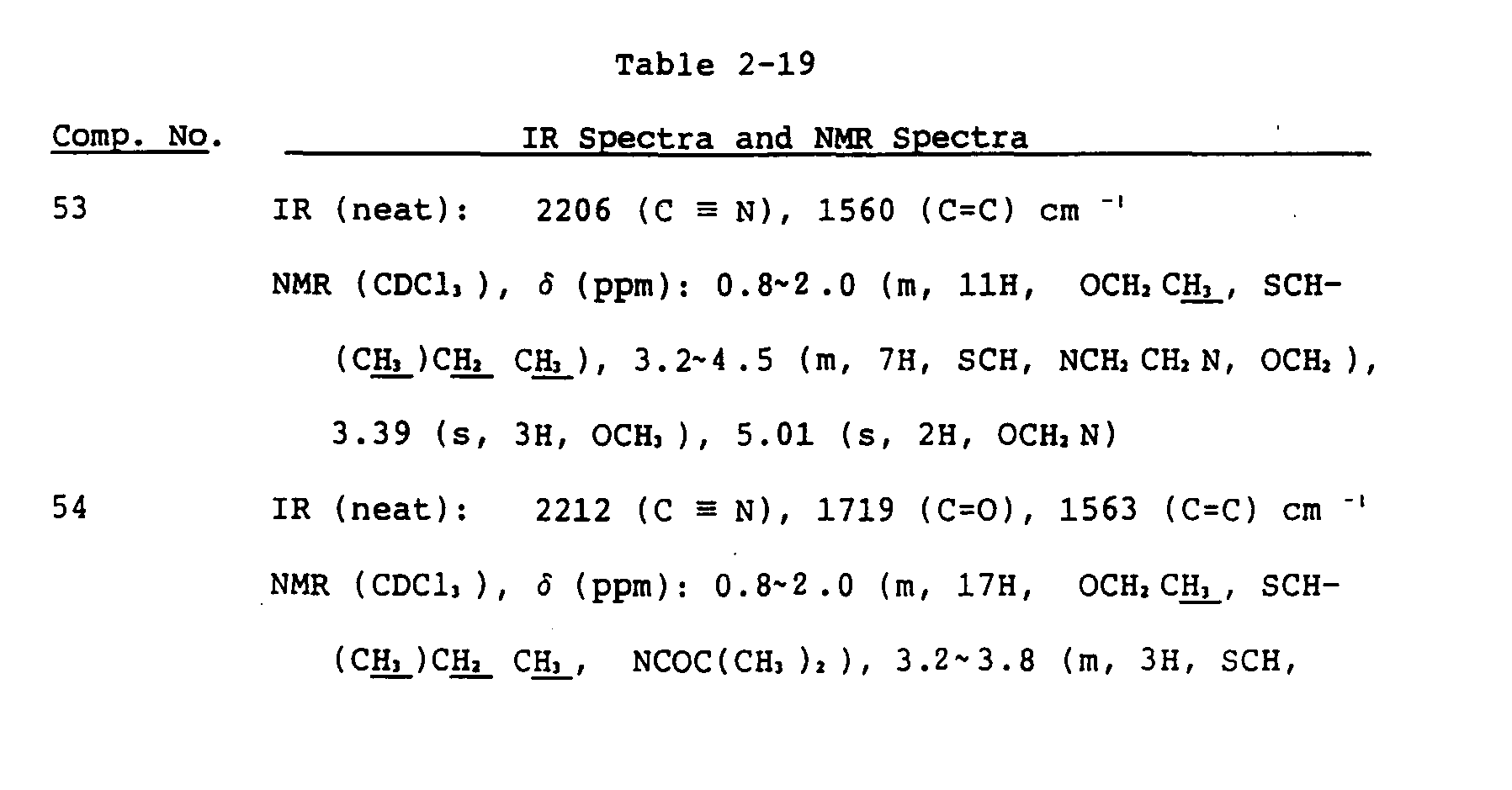
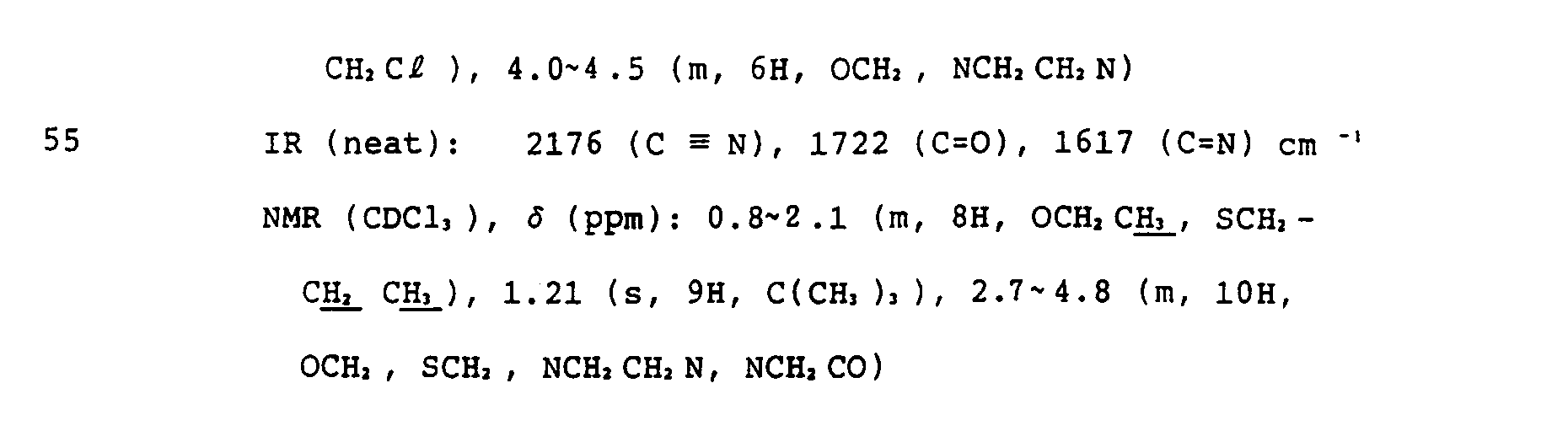


- The compounds of the present invention exhibit excellent activity as active ingredients of insecticides, acaricides and nematocides. The compounds of the present invention are effective for controlling, for instance, agricultural and horticultural pests such as Coleoptera (for instance, Scarabaeidae, Chrysomelidae, Henosepilachna vigintioctopunctata and Lissorhoptrus oryzophilus), Lepidoptera (for instance, Mamestra brassicae, Pieris rapae, Plutera xylostella, Noctuidae, Adoxophyes orana and Chilo suppressalis), Hemiptera (for instance, Delphacidae, Deltocephalidae, Aleyrodidae, Aphididae and Scales) and Thysanoptera (for instance, Scirtothrips dorsalis and Thrips pulmi); Sanitary pests such as Mosquitoes, Flies, Blattidae, Fleas and Lice; Grain pests; cloth and house pests; Plant parasitic nematodes such as root-knot nematodes and root-lesion nematodes; and Plant parasitic mites such as Tetranychus urticae, Tetranychus cinnabarinus, Tetranychus kanzawai and Panonychus citri. They are also effective for controlling soil insect pests. The term "soil insect pest" used herein means, for instance, Gastropoda such as slugs and snails; Isopoda such as Armadillidium vulgare and Sow bugs. In addition, they are likewise effective for controlling insect pest such as Dicofol, organophosphorus compound-resistant plant parasitic mites, organophosphorus compound-resistant Aphididae and Musca domestica.
- When the compounds of the present invention are used as active ingredients of insecticidal, acaricidal, nematocidal compositions and composition for killing or controlling soil pest insect, they may be used as such, but may in general be formed into a variety of formulations together with adjuvants such as emulsifiable concentrates, dusts, wettable powders, liquid formulations, aerosols and pastes like conventional formulations of agricultural chemicals. The formulations in general comprise 0.5 to 90 parts by weight of the active ingredient and 10 to 99.5 parts by weight of an adjuvant. When these formulations are practically used, they can be applied as such or after diluting them with a diluent such as water to a desired concentration.
- The term "adjuvant" herein means carriers, emulsifying agents, suspending agents, dispersing agents, spreaders, penetrants, wetting agents, thickeners and stabilisers. These adjuvants may, if necessary, be added in an appropriate amount. The carriers can roughly be classified into solid carriers and liquid carriers. Examples of the solid carriers include vegetable and animal powder such as starches, active carbon, soybean flour, wheat flour, wood powder, fish meal and powdered milk; and mineral powders such as talc, kaolin, bentonite, calcium carbonate, zeolite, diatomaceous earth, white carbon, clay, alumina and powdered sulfur. On the other hand, examples of the liquid carriers are water; alcohols such as methyl alcohol and ethylene glycol; ketones such as acetone and methyl ethyl ketone; ethers such as dioxane and tetrahydrofuran; aliphatic hydrocarbons such as kerosine; aromatic hydrocarbons such as xylene, trimethylbenzene, tetramethylbenzene, cyclohexane and solvent naphtha; halogenated hydrocarbons such as chloroform and chlorobenzene; amides such as dimethylformamide; esters such as ethyl acetate and glycerin esters of fatty acids; nitriles such as acetonitrile; and sulfur atom-containing compounds such as dimethylsulfoxide. If necessary, the compounds of the present invention may be admixed with or used simultaneously with other agricultural chemicals such as insecticides, acaricides, nematocides, bactericides, antiviral agents, attractants, herbicides and plant growth regulators. In admixtures, greater effectiveness may sometimes be attained.
- Examples of insecticides, acaricides or nematocides include organophosphorus acid ester compounds such as DDVP, Diazinon, Malathion, Fenitrothion, Prothiofos, Dioxabenzofos and Acephate; carbamate compounds such as Carbaryl, Propoxur, Oxamyl, Carbofuran and Methomyl; organochlorine compounds such as Dicofol and Tetradifon; organometal compounds such as Cyhexatin and Fenbutatin oxide; pyreth- roid compounds such as Fenvalerate, Permethrin, Deltamethrin and Bifenthrin; urea compounds such as Diflubenzuron, Teflubenzuron and Chlorfluazuron; heterocyclic compounds such as Buprofezin and Hex- ythiazox; and other compounds such as dinitro compounds, organosulfur compounds, amidine compounds and triazine compounds. In addition to the foregoing compounds, the compound of the present invention can also be admixed with or used simultaneously with microbial pesticides such as BT agents and insect pathogen virus pesticides.
- Examples of the bactericides are organophosphorus compounds such as Iprobenfos, Edifenphos and Phosethyl-aluminum; organocopper compounds such as oxyquinoline copper, copper terephthalate; organochlorine compounds such as Fthalide and Chlorothalonil; dithiocarbamate compounds such as Maneb, Zineb and Propineb; dicarboximide compounds such as Iprodione, Vinclozolin and Procymidone; azole compounds such as Triadimefon, Bitertanol, Etaconazole, Propiconazole and Penconazole; benzimidazole compounds such as Thiophanate-methyl and Benomyl; carbinol compounds such as Fenarimol and Flutriafol; benzanilide compounds such as Mepronil and Flutolanil; phenylamide compounds such as Metalaxyl and Oxadixyl; and other compounds such as piperazine compounds, quinoxaline compounds, morpholine compounds, anthraquinone compounds, sulfenic acid compounds, crotonic acid compounds, urea compounds and antibiotics.
- As has been discussed above, the insecticides, acaricides and nematocides which comprise, as active ingredient, the compounds of the present invention are effective for controlling a variety of deleterious insects, harmful mites, destructive nematodes and harmful soil insect pests. These agricultural chemicals or formulations are applied at a concentration ranging from 1 to 20,000 ppm, desirably 20 to 2,000 ppm expressed in terms of the amount of the active ingredient. The concentration of these active ingredients can be appropriately adjusted depending on various factors such as shapes of the formulations, methods, purposes, time and places of application as well as the condition of infestation of insect pest. For instance, when aquatic insect pests are to be controlled, the insect pest can be controlled by spraying a solution of the compound having a concentration falling within the range defined above and, therefore, the concentration of the active ingredient required for controlling the aquatic insect pest is lower than that defined above. The amount of the agricultural chemicals or formulations to be applied per unit area (per 10 a) ranges from about 0.1 to 5,000 g and preferably 10 to 1,000 g expressed in terms of the amount of the active ingredient, but in a particular case, they may be applied in an amount outside the range defined above.
- The application of a variety of formulations or dilute solutions thereof which comprise the compounds of the present invention can be performed according to any manner of application usually adopted, for instance, spraying (such as spraying, dusting, misting, atomizing, granule application and application on water surface); soil applications (such as mixing and drench); surface applications (such as coating, dressing and painting); and poison bait. It is also possible to control the development and growth of harmful insect pests, in particular deletrious insects through the action of excreta obtained by admixing the foregoing active ingredient to feed and giving the feed to domestic animals. Further, they can also be applied in accordance with ultra low volume application. In this method, the chemicals or formulations can comprise 100% active ingredient.
- The method for preparing the compounds of the present invention will hereinafter be explained in more detail with reference to the following Preparation Examples.
- 2.00 g of O-ethyl-S-n-propyl-(2-nitroimino-1-imidazolidinyl) phosphonothiolate was dissolved in 20 ml of N,N-dimethylformamide and then 0.32 g of a 60% sodium hydride was gradually added to the resulting solution. Thereafter, the solution was cooled down to 0 to 5 ° C and 1.27 g of ethyl iodide was gradually added thereto dropwise. After the completion of the dropwise addition, the temperature of the solution was slowly brought back to room temperature and the solution was further stirred for additional 12 hours to complete the reaction. After the reaction, the solution was poured into ice water and extracted with dichloromethane. The dichloromethane phase was washed with water, dried over anhydrous magnesium sulfate, the dichloromethane was distilled off under reduced pressure and the residue obtained was purified by silica gel column chromatography (eluent: ethyl acetate) to give 0.50 g of Compound No. 2 as an oily substance.
- To a mixture comprising 0.44 g of a 60% sodium hydride and 50 ml of N,N-dimethylformamide, 1.24 g of 1-methyl-2-cyanoiminoimidazolidine was gradually added. After the mixture was allowed to stand for a brief period, 2.76 g of an 88.2% toluene solution of O-ethyl-S-n-propylphosphorochloride thiolate was gradually dropwise added to the mixture. After the completion of the dropwise addition, the reaction solution was poured into ice water and then extracted with chloroform. The chloroform phase was washed with water, dried over anhydrous magnesium sulfate, the chloroform was distilled off under reduced pressure and the residue obtained was purified by silica gel column chromatography (eluent: chloroform/methanol = 97:3) to give 1.50 g of Compound No. 3 as an oily substance.
- 2.0 g of 2-methanesulfonyliminoimidazolidine was dissolved in 20 ml of N,N-dimethylformamide. The resulting solution was cooled down to 0 C and then 1.02 g of a 60% sodium hydride was gradually added. Thereafter, 3.00 g of an 88.2% toluene solution of O-ethyl-S-n-propylphosphorochloride thiolate was gradually dropwise added to the solution. After the completion of the dropwise addition, the temperature of the reaction solution was slowly brought back to room temperature and further the reaction was continued for additional 12 hours. After the reaction, the reaction solution was poured into ice water, neutralized with a 10% hydrochloric acid solution and then extracted with chloroform. The chloroform phase was washed with water, dried over anhydrous magnesium sulfate, the chloroform was distilled off under reduced pressure and the residue obtained was purified by silica gel column chromatography (eluent: chloroform/methanol = 97:3) to give 2.20 g of Compound No. 9 as an oily substance.
- 1.50 g of O-ethyl-S-sec-butyl-(2-cyanoimino-1-imidazolidinyl) phosphonothiolate was dissolved in 20 ml of tetrahydrofuran. The resulting solution was cooled and maintained at a temperature of ranging from 0 to 5 C and 0.25 g of a 60% sodium hydride was gradually added to the solution. After 30 minutes, 0.50 g of chloromethyl methyl ether was dropwise added thereto. After the completion of the dropwise addition, the temperature of the reaction solution was brought back to room temperature and the solution was stirred for additional 3 hours to complete the reaction.
- After the reaction, the reaction solution was poured into ice water and then extracted with ethyl acetate. The ethyl acetate phase was washed with water, dried over anhydrous magnesium sulfate, the ethyl acetate was distilled off under reduced pressure and the residue obtained was purified by silica gel column chromatography (eluent: chloroform) to thus give 1.10 g of Compound No. 29 as an oily substance.
- Specific examples of formulations will be described below, but the adjuvants such as carriers and surfactants are by no means limited to those used in the following examples. In the following specific formulations, the term "part" means "part by weight" unless otherwise specified.
- 20 parts of Compound No. 1, 56 parts of acid clay, 15 parts of white carbon, 4 parts of calcium lignin sulfonate and 5 parts of polyoxyethylene alkylphenyl ether were uniformly mixed and pulverized to give a wettable powder.
- To 20 parts of Compound No. 2, 75 parts of xylene was added. And then, 5 parts of New Calgen ST-20 (available from Takemoto Oil & Fat Co., Ltd.) was added to the resulting solution as an emulsifying agent and then the mixture was mixed and dissolved to give an emulsifiable concentrate.
- 5 parts of Compound No. 1, 3 parts of calcium lignin sulfonate, one part of sodium dodecylbenzenesulfonate, 30 parts of bentonite and 61 parts of clay were sufficiently pulverized and mixed. The mixture was then sufficiently kneaded while adding water, followed by granulation and drying to thus give a granule.
- The insecticidal, acaricidal and nematocidal effects of the compounds of the present invention will hereunder be explained with reference to the following Test Examples.
- The emulsifiable concentrate obtained by Formulation Example 2 was diluted with water to 500 ppm and 50 ppm and the resulting diluted emulsions were sprayed on leaves of chinese cabbage. After air-drying, the leaves were introduced into a plastic container having a size of 21 cm (height)X 13 cm (width) x 3 cm (depth), then 10 third instar larvae of common cutworm were put on the leaves. The container was then placed in a thermostated room maintained at 26 C. After 2 days, the number of surviving larvae was recorded to obtain the mortality (%) (repeated two times). The results thus obtained are summarized in the following Table 3.


- The Comparative Compound A as set forth in Table 3 is a compound represented by the following structural formula and disclosed in Japanese Unexamined Patent Publication No. Sho 61-267594:

- The emulsifiable concentrate obtained by Formulation Example 2 was diluted with water to 500 ppm and the seedlings of rice plant were immersed therein for 10 seconds. After air-drying, the seedlings whose roots were wrapped round with absorbent cotton were introduced into a test tube, then 10 second instar larvae of green rice leafhopper were put into the test tube, the opening thereof was closed with gauze. The tube was placed in a thermostated room maintained at 26 C. After 2 days, the number of surviving larvae was recorded to obtain the mortality (%) (repeated two times). The results thus obtained are summarized in the following Table 4.


- The Comparative Compound A as set forth in Table 4 is the same as that defined above in connection with Table 3.
- A kidney bean leaf was cut into 3 x 5 cm2. The leaf was put on a filter paper wetted with water for preventing drying of the leaf and 20 female adults of kanzawa spider mite were released on the leaf. After 24 hours, 500 ppm and 50 ppm of concentration of active ingredient prepared by diluting with water the emulsifiable concentrate obtained by Formulation Example 2 were sprayed on the leaf. After air-drying, the mites were held in a thermostated room maintained at 26 C. After 24 hours, the number of surviving adults were recorded to obtain the mortality (%) (repeated two times). The results thus obtained are summarized in the following Table 5.


- The Comparative Compound A is the same as that defined above in connection with Table 3.
- To a 1/5,000 are pot, soil contaminated with root-knot nematodes was packed and the soil was admixed with the granules obtained by Formulation Example 3 in an amount of 250 g and 25 glare expressed in terms of the amount of the active ingredient. Two days after the treatment, seedlings of tomato at 3rd to 4th-leaf stage were transplanted in the soil. Twenty-five days after the transplantation, the degree of the invasion of root-knot nematodes (root-knot index) was determined (repeated two times).
- The root-knot index was evaluated on the basis of the following evaluation criteria:
- 0 no invasion of root-knot nematodes
- 1 slight invasion of root-knot nematodes
- 2 medium invasion of root-knot nematodes
- 3 severe invasion of root-knot nematodes
- 4 very severe invasion of root-knot nematodes
- The results thus obtained are summarized in the following Table 6.

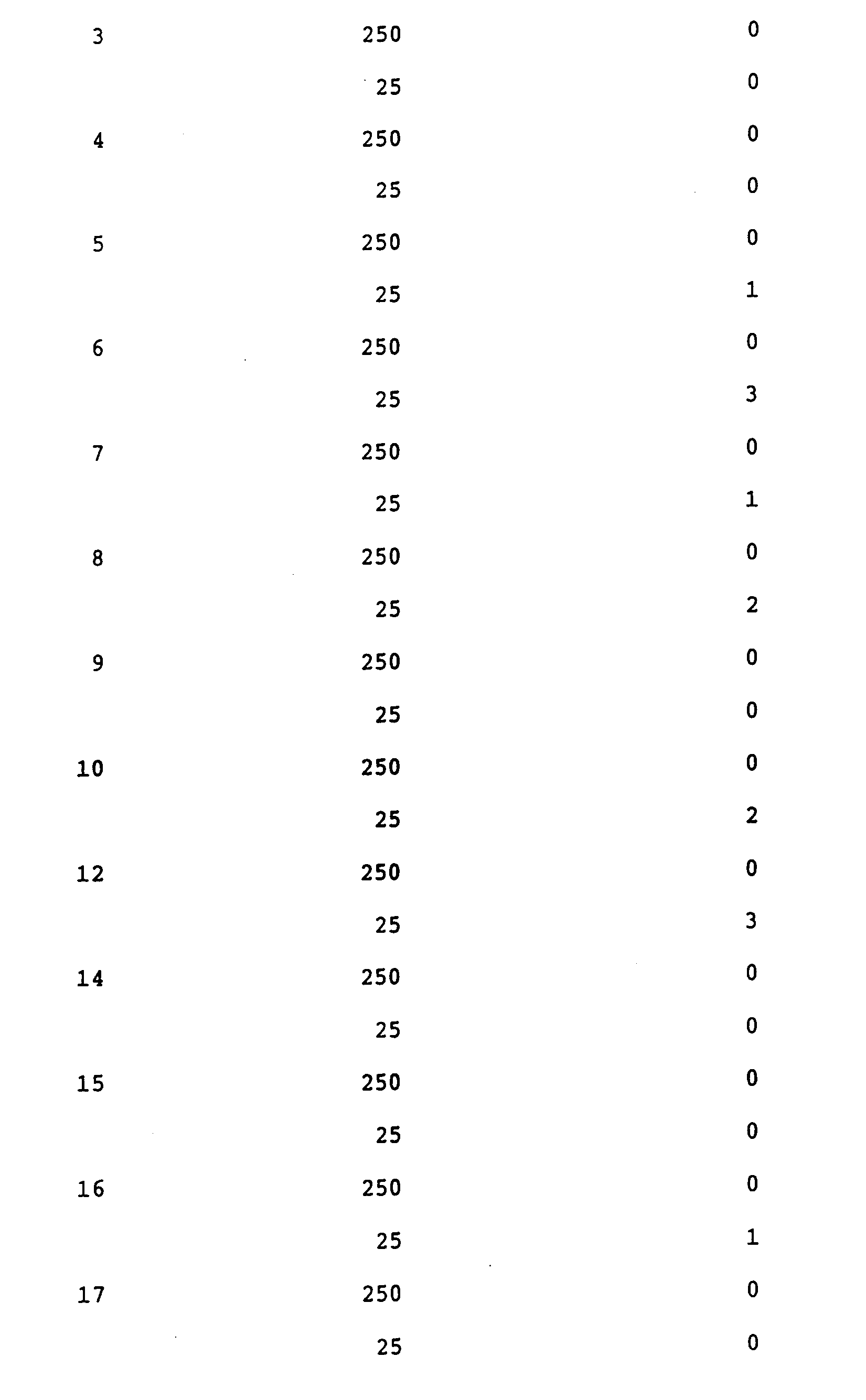


- The Comparative Compound A as set forth in Table 6 is the same as that defined above in connection with Table 3 and Comparative Compound B is a compound (oxamyl) represented by the following structural formula:

- The compounds of the present invention represented by the foregoing general formula (I) exhibit effectiveness in controlling harmful insects, mites and nematodes and thus can be used as novel insecticides, acaricides and nematocides which do not give off a bad or irritating odor and have low toxicity to warm-blooded animals.
Claims (16)




R4-Hal (VI)



Applications Claiming Priority (4)
| Application Number | Priority Date | Filing Date | Title |
|---|---|---|---|
| JP17882590 | 1990-07-06 | ||
| JP178825/90 | 1990-07-06 | ||
| JP75327/91 | 1991-04-08 | ||
| JP3075327A JPH0739430B2 (en) | 1990-07-06 | 1991-04-08 | Organophosphorus compound, method for producing the same and insecticide, acaricide, nematicide containing the compound |
Publications (2)
| Publication Number | Publication Date |
|---|---|
| EP0464830A1 true EP0464830A1 (en) | 1992-01-08 |
| EP0464830B1 EP0464830B1 (en) | 1995-11-29 |
Family
ID=26416469
Family Applications (1)
| Application Number | Title | Priority Date | Filing Date |
|---|---|---|---|
| EP91111152A Expired - Lifetime EP0464830B1 (en) | 1990-07-06 | 1991-07-04 | Organophosphorus compounds, method for preparing same and insecticides, acaricides and nematocides containing same |
Country Status (6)
| Country | Link |
|---|---|
| US (2) | US5280123A (en) |
| EP (1) | EP0464830B1 (en) |
| JP (1) | JPH0739430B2 (en) |
| KR (1) | KR940011223B1 (en) |
| CN (1) | CN1027670C (en) |
| DE (1) | DE69114925T2 (en) |
Cited By (17)
| Publication number | Priority date | Publication date | Assignee | Title |
|---|---|---|---|---|
| US5264426A (en) * | 1991-09-30 | 1993-11-23 | Bayer Aktiengesellschaft | Phosphorylated diazacycloalkanes |
| EP0588319A1 (en) * | 1992-09-16 | 1994-03-23 | Agro-Kanesho Co., Ltd. | Organophosphorus compounds, method for preparing same and insecticides, acaricides and nematocides containing same |
| US5405961A (en) * | 1990-07-06 | 1995-04-11 | Agro-Kanesho Co., Ltd. | Organophosphorus compounds and insecticidal, acaricidal and nematocidal compositions containing same |
| US5504081A (en) * | 1992-09-29 | 1996-04-02 | Bayer Aktiengesellschaft | Combating fish parasites |
| US6114362A (en) * | 1994-07-28 | 2000-09-05 | Bayer Aktiengesellschaft | Compositions for the control of plant pests |
| US6149913A (en) * | 1998-11-16 | 2000-11-21 | Rhone-Poulenc Ag Company, Inc. | Compositions and methods for controlling insects |
| US6156703A (en) * | 1999-05-21 | 2000-12-05 | Ijo Products, Llc | Method of inhibiting fruit set on fruit producing plants using an aqueous emulsion of eicosenyl eicosenoate and docosenyl eicosenoate |
| US6369054B1 (en) | 1998-02-23 | 2002-04-09 | Bayer Ag | Aqueous agents for combating parasitic insects and acarina in human beings |
| WO2002043494A2 (en) | 2000-11-30 | 2002-06-06 | Bayer Healthcare Llc | Compositions for enhanced acaricidal activity |
| WO2006007981A1 (en) | 2004-07-20 | 2006-01-26 | Bayer Cropscience Gmbh | Active substances for increasing pathogenic defence in plants and methods for the detection thereof |
| BG64814B1 (en) * | 1998-02-23 | 2006-05-31 | Bayer Aktiengesellschaft | Dermally applicable aqueous formulations of parasiticidic preparatrions |
| US7728011B2 (en) | 2001-04-09 | 2010-06-01 | Bayer Animal Health Gmbh | Dermally applicable liquid formulations for controlling parasitic insects on animals |
| EP2460407A1 (en) | 2010-12-01 | 2012-06-06 | Bayer CropScience AG | Agent combinations comprising pyridylethyl benzamides and other agents |
| US8268750B2 (en) | 2003-11-14 | 2012-09-18 | Bayer Cropscience Ag | Combination of active substances with insecticidal properties |
| CN103734180A (en) * | 2013-12-30 | 2014-04-23 | 孙蒙蒙 | Bactericidal and insecticidal composite containing sulfur-fluorine oxime ether |
| CN103749529A (en) * | 2013-12-26 | 2014-04-30 | 山东康乔生物科技有限公司 | Insecticidal and bactericidal composition |
| WO2019224143A1 (en) | 2018-05-24 | 2019-11-28 | Bayer Aktiengesellschaft | Active ingredient combinations with insecticidal, nematicidal and acaricidal properties |
Families Citing this family (35)
| Publication number | Priority date | Publication date | Assignee | Title |
|---|---|---|---|---|
| DE4414569A1 (en) * | 1994-04-27 | 1995-11-02 | Bayer Ag | Use of substituted amines for the treatment of brain disorders |
| US6828275B2 (en) * | 1998-06-23 | 2004-12-07 | Bayer Aktiengesellschaft | Synergistic insecticide mixtures |
| DE19548872A1 (en) | 1995-12-27 | 1997-07-03 | Bayer Ag | Synergistic insecticidal mixtures |
| DE19622355A1 (en) | 1996-06-04 | 1997-12-11 | Bayer Ag | Molded bodies that release agrochemicals |
| DE19823396A1 (en) * | 1998-05-26 | 1999-12-02 | Bayer Ag | Synergistic insecticidal mixtures |
| DE19913174A1 (en) | 1999-03-24 | 2000-09-28 | Bayer Ag | Synergistic insecticidal mixtures |
| DE19948129A1 (en) * | 1999-10-07 | 2001-04-12 | Bayer Ag | Active ingredient combinations with insecticidal and acaricidal properties |
| DE10024934A1 (en) * | 2000-05-19 | 2001-11-22 | Bayer Ag | Pesticidal agent contains synergistic mixture of 3-aryl-4-hydroxy-2-oxo-pyrroline derivative and nicotinergic acetylcholine receptor agonist or antagonist |
| US7011837B2 (en) * | 2001-08-29 | 2006-03-14 | Rutgers, The State University Of New Jersey | Isolated species of steinernematid nematode and methods of white grub control therewith |
| JP2003081987A (en) * | 2001-09-06 | 2003-03-19 | Agro Kanesho Co Ltd | Imidazolidine derivative containing optically active organic phosphorus group, method for producing the same, and pest control agent containing the same as active ingredient |
| US8232261B2 (en) | 2003-07-18 | 2012-07-31 | Bayer Cropscience Lp | Method of minimizing herbicidal injury |
| KR20060135717A (en) * | 2004-01-23 | 2006-12-29 | 이시하라 산교 가부시끼가이샤 | Harmful composition and methods of controlling harmful organisms |
| US20060014641A1 (en) * | 2004-07-13 | 2006-01-19 | Zaghmout Ousama M | Pathogen control with an oxalate (oxalic acid) |
| BRPI0514670A (en) * | 2004-08-25 | 2008-06-17 | Bayer Cropscience Lp | termite control process |
| US9919979B2 (en) | 2005-01-21 | 2018-03-20 | Bayer Cropscience Lp | Fertilizer-compatible composition |
| TWI401028B (en) * | 2006-12-27 | 2013-07-11 | Ishihara Sangyo Kaisha | Control the composition of tree parasitic pests |
| JP5818073B2 (en) * | 2011-07-15 | 2015-11-18 | アグロカネショウ株式会社 | Process for producing O-ethyl Sn-propyl (E)-[2- (cyanoimino) -3-ethylimidazolidin-1-yl] phosphonothioate |
| CN103214519B (en) * | 2013-04-02 | 2016-01-06 | 武汉工程大学 | O-ethyl-S-n-propyl-(3-ethyl-2-cyano group imines-1-imidazoles) phosphate synthesis technique |
| CN103704255A (en) * | 2013-12-26 | 2014-04-09 | 山东康乔生物科技有限公司 | Sterilization and insecticide composition containing pyraclostrobin |
| CN103734176B (en) * | 2013-12-26 | 2015-06-10 | 山东康乔生物科技有限公司 | Insecticidal composition containing fipronil |
| CN103719149B (en) * | 2013-12-30 | 2016-08-17 | 青岛青知企业管理咨询有限公司 | A kind of Fungicidal insecticidal composition containing ZEN 90160 |
| CN103651561B (en) * | 2013-12-30 | 2016-08-17 | 青岛青知企业管理咨询有限公司 | A kind of Fungicidal insecticidal composition containing fenhexamid |
| CN103704261A (en) * | 2013-12-30 | 2014-04-09 | 孙蒙蒙 | Insecticidal combination containing flonicamid |
| CN103719148B (en) * | 2013-12-30 | 2015-09-30 | 杨金莲 | A kind of Pesticidal combination containing Rynaxypyr |
| CN103704256A (en) * | 2013-12-30 | 2014-04-09 | 孙蒙蒙 | Sterilization insecticidal combination containing iprodione |
| CN103651563B (en) * | 2013-12-30 | 2016-08-17 | 青岛青知企业管理咨询有限公司 | A kind of Fungicidal insecticidal composition containing brassin lactones |
| CN103704258B (en) * | 2013-12-30 | 2016-04-27 | 济南舜祥医药科技有限公司 | A kind of Fungicidal insecticidal composition containing abietic acid ketone |
| CN103749531B (en) * | 2013-12-30 | 2015-10-14 | 顾祥茂 | A kind of Pesticidal combination containing matrine |
| CN103734182B (en) * | 2013-12-30 | 2015-08-05 | 徐茂航 | A kind of Fungicidal insecticidal composition containing mancozeb |
| CN103688995B (en) * | 2013-12-30 | 2016-08-17 | 青岛青知企业管理咨询有限公司 | A kind of Fungicidal insecticidal composition containing trifloxystrobin |
| CN103704259B (en) * | 2013-12-30 | 2016-08-17 | 青岛青知企业管理咨询有限公司 | A kind of Fungicidal insecticidal composition containing thiophanate-methyl |
| CN103651562B (en) * | 2013-12-30 | 2016-08-17 | 青岛青知企业管理咨询有限公司 | A kind of Fungicidal insecticidal composition containing prothioconazoles |
| EP3254564B1 (en) * | 2015-02-06 | 2020-11-11 | Ishihara Sangyo Kaisha, Ltd. | Pesticidal compositions and methods for controlling pests |
| US12425371B2 (en) * | 2022-09-16 | 2025-09-23 | Cisco Technology, Inc. | System and method for providing SCHC-based edge firewalling |
| CN118786999A (en) * | 2024-06-17 | 2024-10-18 | 广东真格生物科技有限公司 | A composition containing cyanamide, nanoemulsion preparation and application thereof |
Citations (3)
| Publication number | Priority date | Publication date | Assignee | Title |
|---|---|---|---|---|
| EP0175985A1 (en) * | 1984-09-08 | 1986-04-02 | Shionogi & Co., Ltd. | Thiazinephosphonic acid derivatives, production thereof, and pesticides |
| EP0192060A1 (en) * | 1985-02-04 | 1986-08-27 | Nihon Bayer Agrochem K.K. | Heterocyclic compounds |
| EP0277317A1 (en) * | 1986-12-19 | 1988-08-10 | Nihon Tokushu Noyaku Seizo K.K. | Nitro derivatives of 2-iminoimidazolidines and 2-iminotetrahydropyrimidines |
Family Cites Families (9)
| Publication number | Priority date | Publication date | Assignee | Title |
|---|---|---|---|---|
| NL105826C (en) * | 1959-03-03 | 1900-01-01 | ||
| NZ210046A (en) * | 1983-11-11 | 1987-09-30 | Ishihara Sangyo Kaisha | 2-ox(or thi-)azolidinone(or thione) derivatives of thiophosphoric acid and pesticidal compositions |
| DE3564274D1 (en) * | 1984-12-12 | 1988-09-15 | Kanebo Ltd | Novel ethyl benzylphosphinate derivatives, process for production thereof, and their use as calcium antagonist |
| AU583870B2 (en) * | 1984-12-27 | 1989-05-11 | Ishihara Sangyo Kaisha Ltd. | Organophosphorus compounds, process for their preparation and insecticidal, miticidal, nematicidal or soil pesticidal compositions containing them |
| ZA868951B (en) * | 1985-12-07 | 1987-08-26 | Shionogi & Company Limited | Organophosphorus compounds having pesticidal activity |
| JPH02793A (en) * | 1987-12-16 | 1990-01-05 | Ishihara Sangyo Kaisha Ltd | Organophosphorus based compound, production thereof and insecticide, acaricide, nematicide and agent for killing insect pest in soil containing the same compound |
| US4839349A (en) * | 1988-06-03 | 1989-06-13 | Uniroyal Chemical Company, Inc. | Phosphorus substituted tetrazolinones and pesticidal use |
| JPH0739430B2 (en) * | 1990-07-06 | 1995-05-01 | アグロカネショウ株式会社 | Organophosphorus compound, method for producing the same and insecticide, acaricide, nematicide containing the compound |
| DE4132492A1 (en) * | 1991-09-30 | 1993-04-01 | Bayer Ag | PHOSPHORYLATED DIAZACYCLOAL CHANE |
-
1991
- 1991-04-08 JP JP3075327A patent/JPH0739430B2/en not_active Expired - Lifetime
- 1991-07-04 EP EP91111152A patent/EP0464830B1/en not_active Expired - Lifetime
- 1991-07-04 DE DE69114925T patent/DE69114925T2/en not_active Expired - Lifetime
- 1991-07-05 KR KR1019910011398A patent/KR940011223B1/en not_active Expired - Lifetime
- 1991-07-05 US US07/726,211 patent/US5280123A/en not_active Expired - Lifetime
- 1991-07-06 CN CN91104587A patent/CN1027670C/en not_active Expired - Lifetime
-
1993
- 1993-08-12 US US08/104,909 patent/US5405961A/en not_active Expired - Lifetime
Patent Citations (3)
| Publication number | Priority date | Publication date | Assignee | Title |
|---|---|---|---|---|
| EP0175985A1 (en) * | 1984-09-08 | 1986-04-02 | Shionogi & Co., Ltd. | Thiazinephosphonic acid derivatives, production thereof, and pesticides |
| EP0192060A1 (en) * | 1985-02-04 | 1986-08-27 | Nihon Bayer Agrochem K.K. | Heterocyclic compounds |
| EP0277317A1 (en) * | 1986-12-19 | 1988-08-10 | Nihon Tokushu Noyaku Seizo K.K. | Nitro derivatives of 2-iminoimidazolidines and 2-iminotetrahydropyrimidines |
Cited By (31)
| Publication number | Priority date | Publication date | Assignee | Title |
|---|---|---|---|---|
| US5405961A (en) * | 1990-07-06 | 1995-04-11 | Agro-Kanesho Co., Ltd. | Organophosphorus compounds and insecticidal, acaricidal and nematocidal compositions containing same |
| US5264426A (en) * | 1991-09-30 | 1993-11-23 | Bayer Aktiengesellschaft | Phosphorylated diazacycloalkanes |
| EP0588319A1 (en) * | 1992-09-16 | 1994-03-23 | Agro-Kanesho Co., Ltd. | Organophosphorus compounds, method for preparing same and insecticides, acaricides and nematocides containing same |
| US5393754A (en) * | 1992-09-16 | 1995-02-28 | Agro-Kanesho Co., Ltd. | Organophosphorus compounds, and insecticides, acaricides and nematocides containing same |
| US5504081A (en) * | 1992-09-29 | 1996-04-02 | Bayer Aktiengesellschaft | Combating fish parasites |
| CN1061213C (en) * | 1992-09-29 | 2001-01-31 | 拜尔公司 | Combating fish parasites |
| US7884049B2 (en) | 1994-07-28 | 2011-02-08 | Bayer Cropscience Ag | Compositions for the control of plant pests |
| US6114362A (en) * | 1994-07-28 | 2000-09-05 | Bayer Aktiengesellschaft | Compositions for the control of plant pests |
| US7008903B2 (en) | 1994-07-28 | 2006-03-07 | Bayer Aktiengesellschaft | Pesticide |
| US7868025B2 (en) | 1994-07-28 | 2011-01-11 | Bayer Cropscience Ag | Pesticide |
| US6369054B1 (en) | 1998-02-23 | 2002-04-09 | Bayer Ag | Aqueous agents for combating parasitic insects and acarina in human beings |
| BG64814B1 (en) * | 1998-02-23 | 2006-05-31 | Bayer Aktiengesellschaft | Dermally applicable aqueous formulations of parasiticidic preparatrions |
| US6149913A (en) * | 1998-11-16 | 2000-11-21 | Rhone-Poulenc Ag Company, Inc. | Compositions and methods for controlling insects |
| US6156703A (en) * | 1999-05-21 | 2000-12-05 | Ijo Products, Llc | Method of inhibiting fruit set on fruit producing plants using an aqueous emulsion of eicosenyl eicosenoate and docosenyl eicosenoate |
| WO2002043494A2 (en) | 2000-11-30 | 2002-06-06 | Bayer Healthcare Llc | Compositions for enhanced acaricidal activity |
| US7728011B2 (en) | 2001-04-09 | 2010-06-01 | Bayer Animal Health Gmbh | Dermally applicable liquid formulations for controlling parasitic insects on animals |
| US8993483B2 (en) | 2003-11-14 | 2015-03-31 | Bayer Intellectual Property Gmbh | Combination of active substances with insecticidal properties |
| US8268750B2 (en) | 2003-11-14 | 2012-09-18 | Bayer Cropscience Ag | Combination of active substances with insecticidal properties |
| WO2006007981A1 (en) | 2004-07-20 | 2006-01-26 | Bayer Cropscience Gmbh | Active substances for increasing pathogenic defence in plants and methods for the detection thereof |
| EP3103340A1 (en) | 2010-12-01 | 2016-12-14 | Bayer Intellectual Property GmbH | Agent combinations comprising pyridylethyl benzamides and other agents |
| WO2012072696A1 (en) | 2010-12-01 | 2012-06-07 | Bayer Cropscience Ag | Active ingredient combinations comprising pyridylethylbenzamides and other active ingredients |
| EP2460407A1 (en) | 2010-12-01 | 2012-06-06 | Bayer CropScience AG | Agent combinations comprising pyridylethyl benzamides and other agents |
| EP3103334A1 (en) | 2010-12-01 | 2016-12-14 | Bayer Intellectual Property GmbH | Agent combinations comprising pyridylethyl benzamides and other agents |
| EP3092900A1 (en) | 2010-12-01 | 2016-11-16 | Bayer Intellectual Property GmbH | Active ingredient combinations comprising pyridylethylbenzamides and other active ingredients |
| EP3103338A1 (en) | 2010-12-01 | 2016-12-14 | Bayer Intellectual Property GmbH | Agent combinations comprising pyridylethyl benzamides and other agents |
| EP3103339A1 (en) | 2010-12-01 | 2016-12-14 | Bayer Intellectual Property GmbH | Agent combinations comprising pyridylethyl benzamides and other agents |
| CN103749529B (en) * | 2013-12-26 | 2016-04-13 | 山东康乔生物科技有限公司 | A kind of insecticidal and bactericidal composition |
| CN103749529A (en) * | 2013-12-26 | 2014-04-30 | 山东康乔生物科技有限公司 | Insecticidal and bactericidal composition |
| CN103734180A (en) * | 2013-12-30 | 2014-04-23 | 孙蒙蒙 | Bactericidal and insecticidal composite containing sulfur-fluorine oxime ether |
| CN103734180B (en) * | 2013-12-30 | 2015-12-30 | 刘一平 | A kind of Fungicidal insecticidal composition containing sufluoxime |
| WO2019224143A1 (en) | 2018-05-24 | 2019-11-28 | Bayer Aktiengesellschaft | Active ingredient combinations with insecticidal, nematicidal and acaricidal properties |
Also Published As
| Publication number | Publication date |
|---|---|
| KR920002624A (en) | 1992-02-28 |
| DE69114925T2 (en) | 1996-05-30 |
| EP0464830B1 (en) | 1995-11-29 |
| DE69114925D1 (en) | 1996-01-11 |
| JPH04217991A (en) | 1992-08-07 |
| US5405961A (en) | 1995-04-11 |
| KR940011223B1 (en) | 1994-11-29 |
| CN1058407A (en) | 1992-02-05 |
| JPH0739430B2 (en) | 1995-05-01 |
| CN1027670C (en) | 1995-02-22 |
| US5280123A (en) | 1994-01-18 |
Similar Documents
| Publication | Publication Date | Title |
|---|---|---|
| US5280123A (en) | Organophosphorus compounds and its insecticides acaricides and nematocides containing same | |
| JP2610988B2 (en) | New heterocyclic compounds and insecticides | |
| EP0146748B1 (en) | Organophosphorus compound, process for its preparation and insecticidal, miticidal or nematicidal composition containing it | |
| US4424214A (en) | Insecticidal pyrazolyl phosphates | |
| KR920004981B1 (en) | Process for preparing organic phosphorus compound | |
| RU2083562C1 (en) | Pyridine derivatives, process for preparation thereof, insecticidal composition | |
| KR0162086B1 (en) | Imidazolidine derivatives, process for producing the same and pesticides containing the same | |
| EP0684247B1 (en) | Organophosphorus compounds, method for preparing same and insecticides, acaricides and nematocides containing same | |
| US4172080A (en) | Phosphorus esters of 1-cyanoethyl-1,2,4-triazol-3-ols | |
| IL45780A (en) | Urea thiolphosphonates their preparation and their use in pest control | |
| US5393754A (en) | Organophosphorus compounds, and insecticides, acaricides and nematocides containing same | |
| US4462994A (en) | N-Containing heterocyclic ring-substituted O-arylphosphate derivatives, preparation thereof, and insecticides, acaricides and nematocides containing said derivatives | |
| JP2668170B2 (en) | Insecticides, acaricides and nematicides composed of organophosphorus compounds | |
| EP0065039B1 (en) | An o-(n-alkoxy-pyridinecarboximidoyl)phosphate, a process for producing the same, and an insecticidal or acaricidal composition containing the same | |
| EP0206318B1 (en) | Organophosphorus compounds, process for their preparation and insecticidal, miticidal, nematicidal or soil pesticidal compositions containing them | |
| US4535076A (en) | Organophosphate pesticides | |
| KR0159792B1 (en) | Organophosphorus compound, preparation method thereof, and insecticides, mites and nematicides containing the compound | |
| US4599329A (en) | O,S-dialkyl S-[carbamyloxyalkyl] dithiophosphates and their use as pesticides | |
| DE69428109T2 (en) | Organophosphorus compounds, processes for their preparation and insecticides, acaricides and nematocides containing them | |
| US4327089A (en) | O-(N-Alkoxy-pyridinecarboximidoyl) phosphates, process for producing the same, and insecticidal or acaridical compositions containing the same | |
| JPH06329688A (en) | Organophosphorus compound, method for producing the same and insecticide, acaricide, nematicide containing the compound | |
| JPS624295A (en) | Organic phosphorus based compound and insecticide, acaricide and nematocide containing said compound | |
| JPS62495A (en) | Organic phosphorous compound, insecticide, acaricide and nematocide containing same | |
| JPS62106097A (en) | Organic phosphorous compound and controller for harmful organism containing same | |
| JPS6348291A (en) | Organophosphorus compound and insecticidal, miticidal, nematocidal and soil vermicidal agent containing said compound |
Legal Events
| Date | Code | Title | Description |
|---|---|---|---|
| PUAI | Public reference made under article 153(3) epc to a published international application that has entered the european phase |
Free format text: ORIGINAL CODE: 0009012 |
|
| AK | Designated contracting states |
Kind code of ref document: A1 Designated state(s): CH DE FR GB IT LI NL |
|
| 17P | Request for examination filed |
Effective date: 19920615 |
|
| 17Q | First examination report despatched |
Effective date: 19940615 |
|
| GRAA | (expected) grant |
Free format text: ORIGINAL CODE: 0009210 |
|
| AK | Designated contracting states |
Kind code of ref document: B1 Designated state(s): CH DE FR GB IT LI NL |
|
| REF | Corresponds to: |
Ref document number: 69114925 Country of ref document: DE Date of ref document: 19960111 |
|
| ITF | It: translation for a ep patent filed | ||
| REG | Reference to a national code |
Ref country code: CH Ref legal event code: NV Representative=s name: E. BLUM & CO. PATENTANWAELTE |
|
| ET | Fr: translation filed | ||
| PLBE | No opposition filed within time limit |
Free format text: ORIGINAL CODE: 0009261 |
|
| STAA | Information on the status of an ep patent application or granted ep patent |
Free format text: STATUS: NO OPPOSITION FILED WITHIN TIME LIMIT |
|
| 26N | No opposition filed | ||
| REG | Reference to a national code |
Ref country code: GB Ref legal event code: IF02 |
|
| REG | Reference to a national code |
Ref country code: CH Ref legal event code: PFA Owner name: AGRO-KANESHO CO., LTD. Free format text: AGRO-KANESHO CO., LTD.#NO. 1-1, MARUNOUCHI 3-CHOME#CHIYODA-KU TOKYO (JP) -TRANSFER TO- AGRO-KANESHO CO., LTD.#NO. 1-1, MARUNOUCHI 3-CHOME#CHIYODA-KU TOKYO (JP) |
|
| PGFP | Annual fee paid to national office [announced via postgrant information from national office to epo] |
Ref country code: CH Payment date: 20100714 Year of fee payment: 20 Ref country code: NL Payment date: 20100716 Year of fee payment: 20 |
|
| PGFP | Annual fee paid to national office [announced via postgrant information from national office to epo] |
Ref country code: IT Payment date: 20100715 Year of fee payment: 20 Ref country code: DE Payment date: 20100630 Year of fee payment: 20 Ref country code: FR Payment date: 20100805 Year of fee payment: 20 Ref country code: GB Payment date: 20100630 Year of fee payment: 20 |
|
| REG | Reference to a national code |
Ref country code: DE Ref legal event code: R071 Ref document number: 69114925 Country of ref document: DE |
|
| REG | Reference to a national code |
Ref country code: DE Ref legal event code: R071 Ref document number: 69114925 Country of ref document: DE |
|
| REG | Reference to a national code |
Ref country code: NL Ref legal event code: V4 Effective date: 20110704 |
|
| REG | Reference to a national code |
Ref country code: CH Ref legal event code: PL |
|
| REG | Reference to a national code |
Ref country code: GB Ref legal event code: PE20 Expiry date: 20110703 |
|
| PG25 | Lapsed in a contracting state [announced via postgrant information from national office to epo] |
Ref country code: GB Free format text: LAPSE BECAUSE OF EXPIRATION OF PROTECTION Effective date: 20110703 |
|
| PG25 | Lapsed in a contracting state [announced via postgrant information from national office to epo] |
Ref country code: NL Free format text: LAPSE BECAUSE OF EXPIRATION OF PROTECTION Effective date: 20110704 |
|
| PG25 | Lapsed in a contracting state [announced via postgrant information from national office to epo] |
Ref country code: DE Free format text: LAPSE BECAUSE OF EXPIRATION OF PROTECTION Effective date: 20110705 |