EP0459243A2 - Substituierte Azine - Google Patents

Substituierte Azine Download PDF

Info

Publication number
EP0459243A2
EP0459243A2 EP91108010A EP91108010A EP0459243A2 EP 0459243 A2 EP0459243 A2 EP 0459243A2 EP 91108010 A EP91108010 A EP 91108010A EP 91108010 A EP91108010 A EP 91108010A EP 0459243 A2 EP0459243 A2 EP 0459243A2
Authority
EP
European Patent Office
Prior art keywords
carbonyl
alkyl
alkoxy
amino
halogen
Prior art date
Legal status (The legal status is an assumption and is not a legal conclusion. Google has not performed a legal analysis and makes no representation as to the accuracy of the status listed.)
Withdrawn
Application number
EP91108010A
Other languages
English (en)
French (fr)
Other versions
EP0459243A3 (en
Inventor
Mark Wilhelm Dr. Drewes
Rolf Dr. Kirsten
Wolfgang Dr. Krämer
Bernd-Wieland Dr. Krüger
Hans-Joachim Dr. Santel
Klaus Dr. Lürssen
Robert R. Dr. Schmidt
Current Assignee (The listed assignees may be inaccurate. Google has not performed a legal analysis and makes no representation or warranty as to the accuracy of the list.)
Bayer AG
Original Assignee
Bayer AG
Priority date (The priority date is an assumption and is not a legal conclusion. Google has not performed a legal analysis and makes no representation as to the accuracy of the date listed.)
Filing date
Publication date
Application filed by Bayer AG filed Critical Bayer AG
Publication of EP0459243A2 publication Critical patent/EP0459243A2/de
Publication of EP0459243A3 publication Critical patent/EP0459243A3/de
Withdrawn legal-status Critical Current

Links

Classifications

    • CCHEMISTRY; METALLURGY
    • C07ORGANIC CHEMISTRY
    • C07DHETEROCYCLIC COMPOUNDS
    • C07D403/00Heterocyclic compounds containing two or more hetero rings, having nitrogen atoms as the only ring hetero atoms, not provided for by group C07D401/00
    • C07D403/02Heterocyclic compounds containing two or more hetero rings, having nitrogen atoms as the only ring hetero atoms, not provided for by group C07D401/00 containing two hetero rings
    • C07D403/12Heterocyclic compounds containing two or more hetero rings, having nitrogen atoms as the only ring hetero atoms, not provided for by group C07D401/00 containing two hetero rings linked by a chain containing hetero atoms as chain links
    • AHUMAN NECESSITIES
    • A01AGRICULTURE; FORESTRY; ANIMAL HUSBANDRY; HUNTING; TRAPPING; FISHING
    • A01NPRESERVATION OF BODIES OF HUMANS OR ANIMALS OR PLANTS OR PARTS THEREOF; BIOCIDES, e.g. AS DISINFECTANTS, AS PESTICIDES OR AS HERBICIDES; PEST REPELLANTS OR ATTRACTANTS; PLANT GROWTH REGULATORS
    • A01N43/00Biocides, pest repellants or attractants, or plant growth regulators containing heterocyclic compounds
    • A01N43/48Biocides, pest repellants or attractants, or plant growth regulators containing heterocyclic compounds having rings with two nitrogen atoms as the only ring hetero atoms
    • A01N43/541,3-Diazines; Hydrogenated 1,3-diazines
    • AHUMAN NECESSITIES
    • A01AGRICULTURE; FORESTRY; ANIMAL HUSBANDRY; HUNTING; TRAPPING; FISHING
    • A01NPRESERVATION OF BODIES OF HUMANS OR ANIMALS OR PLANTS OR PARTS THEREOF; BIOCIDES, e.g. AS DISINFECTANTS, AS PESTICIDES OR AS HERBICIDES; PEST REPELLANTS OR ATTRACTANTS; PLANT GROWTH REGULATORS
    • A01N43/00Biocides, pest repellants or attractants, or plant growth regulators containing heterocyclic compounds
    • A01N43/64Biocides, pest repellants or attractants, or plant growth regulators containing heterocyclic compounds having rings with three nitrogen atoms as the only ring hetero atoms
    • A01N43/661,3,5-Triazines, not hydrogenated and not substituted at the ring nitrogen atoms
    • CCHEMISTRY; METALLURGY
    • C07ORGANIC CHEMISTRY
    • C07DHETEROCYCLIC COMPOUNDS
    • C07D239/00Heterocyclic compounds containing 1,3-diazine or hydrogenated 1,3-diazine rings
    • C07D239/02Heterocyclic compounds containing 1,3-diazine or hydrogenated 1,3-diazine rings not condensed with other rings
    • C07D239/24Heterocyclic compounds containing 1,3-diazine or hydrogenated 1,3-diazine rings not condensed with other rings having three or more double bonds between ring members or between ring members and non-ring members
    • C07D239/28Heterocyclic compounds containing 1,3-diazine or hydrogenated 1,3-diazine rings not condensed with other rings having three or more double bonds between ring members or between ring members and non-ring members with hetero atoms or with carbon atoms having three bonds to hetero atoms with at the most one bond to halogen, directly attached to ring carbon atoms
    • C07D239/46Two or more oxygen, sulphur or nitrogen atoms
    • C07D239/60Three or more oxygen or sulfur atoms
    • CCHEMISTRY; METALLURGY
    • C07ORGANIC CHEMISTRY
    • C07DHETEROCYCLIC COMPOUNDS
    • C07D251/00Heterocyclic compounds containing 1,3,5-triazine rings
    • C07D251/02Heterocyclic compounds containing 1,3,5-triazine rings not condensed with other rings
    • C07D251/12Heterocyclic compounds containing 1,3,5-triazine rings not condensed with other rings having three double bonds between ring members or between ring members and non-ring members
    • C07D251/26Heterocyclic compounds containing 1,3,5-triazine rings not condensed with other rings having three double bonds between ring members or between ring members and non-ring members with only hetero atoms directly attached to ring carbon atoms
    • C07D251/30Only oxygen atoms
    • CCHEMISTRY; METALLURGY
    • C07ORGANIC CHEMISTRY
    • C07DHETEROCYCLIC COMPOUNDS
    • C07D405/00Heterocyclic compounds containing both one or more hetero rings having oxygen atoms as the only ring hetero atoms, and one or more rings having nitrogen as the only ring hetero atom
    • C07D405/02Heterocyclic compounds containing both one or more hetero rings having oxygen atoms as the only ring hetero atoms, and one or more rings having nitrogen as the only ring hetero atom containing two hetero rings
    • C07D405/12Heterocyclic compounds containing both one or more hetero rings having oxygen atoms as the only ring hetero atoms, and one or more rings having nitrogen as the only ring hetero atom containing two hetero rings linked by a chain containing hetero atoms as chain links
    • CCHEMISTRY; METALLURGY
    • C07ORGANIC CHEMISTRY
    • C07DHETEROCYCLIC COMPOUNDS
    • C07D409/00Heterocyclic compounds containing two or more hetero rings, at least one ring having sulfur atoms as the only ring hetero atoms
    • C07D409/02Heterocyclic compounds containing two or more hetero rings, at least one ring having sulfur atoms as the only ring hetero atoms containing two hetero rings
    • C07D409/12Heterocyclic compounds containing two or more hetero rings, at least one ring having sulfur atoms as the only ring hetero atoms containing two hetero rings linked by a chain containing hetero atoms as chain links

Definitions

  • the invention relates to new substituted azines, a process and new intermediates for their preparation and their use as herbicides.
  • the new substituted azines of the general formula (I) are notable for a strong herbicidal action.
  • aliphatic hydrocarbon radicals e.g. alkyl, alkenyl, alkynyl listed in the definition of the compounds according to the invention, also in combination with heteroatoms (e.g. in alkoxy, alkylthio, alkylamino), are each straight-chain or branched.
  • Halogen generally represents fluorine, chlorine, bromine or iodine, preferably fluorine, chlorine or bromine, in particular fluorine or chlorine.
  • A, Q, R ', R 2 , R 3 and R 4 preferably or in particular have those meanings which are preferred or particularly preferred in connection with the description of the compounds of the formula (I) according to the invention for A, Q, R ', R 2 , R 3 and R 4 .
  • the starting materials of the formula (II) are known and / or can be prepared by processes known per se (cf. EP-A 223 406; EP-A 249 708; JP-A 63258467 - cited in Chem. Abstracts 110, 130532a; JP -A 63258463 - cit. In Chem. Abstracts 110, 192853q; EP-A 287 079).
  • A, Q, R 1 , R 2 and R 4 preferably or in particular have those meanings which, in connection with the description of the compounds of the formula (I) according to the invention, are preferred or particularly preferred for A, Q, R 1 , R 2 and R 4 have been given; m preferably represents the numbers 1 or 2 and R 3-1 preferably represents fluorine.
  • A, Q, R 1 and R 2 preferably or in particular have those meanings which have already been mentioned above in connection with the description of the compounds of the formula (I) according to the invention preferably or as particularly preferred for A, Q, R 1 and R 2 were given; m is preferably the number 1 or 2 and R 3 - 1 is preferably fluorine.
  • halogen compounds of the formula (IV) are not yet known from the literature and are also the subject of the present application.
  • m is preferably the number 1 or 2
  • Q is oxygen and R 3 - 'is fluorine.
  • halogenated (thio) phenols of the formula (VI) are known synthetic chemicals.
  • A, R 'and R 2 preferably or in particular have those meanings which have already been mentioned above in connection with the description of the compounds of the formula (I) according to the invention preferably or as particularly preferred for A, R' and R 2 were specified; G preferably represents chlorine or methylsulfonyl.
  • the reactive azines of the formula (VII) are known and / or can be prepared by processes known per se (cf. J. Chem. Soc. 1957, 1830, 1833; J. Org. Chem. 26 (1961), 792; US -P 3308119; US-P 4711959).
  • R 4 preferably or in particular has the meaning which has already been mentioned above in connection with the description of the compounds of the formula (I) according to the invention preferably or as particularly preferred for R 4 ;
  • R preferably represents C 1 -C 4 alkyl, in particular methyl.
  • the carboxamides of the formula (V) are known synthetic chemicals.
  • Formula (III) provides a general definition of the amino or methylene compounds to be used as starting materials in the process according to the invention for the preparation of compounds of formula (1).
  • Z preferably or in particular has the meaning which has already been mentioned above in connection with the description of the compounds of the formula (I) according to the invention preferably or as being particularly preferred for Z.
  • the starting materials of the formula (III) are known synthetic chemicals.
  • diluents In addition to water, practically all inert organic solvents can be used as diluents. These preferably include aliphatic and aromatic, optionally halogenated hydrocarbons such as pentane, hexane, heptane, cyclohexane, petroleum ether, gasoline, ligroin, benzene, toluene, xylene, methylene chloride, ethylene chloride, chloroform, carbon tetrachloride, chlorobenzene and o-dichlorobenzene, ethers such as diethyl and Dibutyl ether, glycol dimethyl ether and diglycol dimethyl ether, tetrahydrofuran and dioxane, ketones such as acetone, methyl ethyl, methyl isopropyl and methyl isobutyl ket
  • reaction auxiliaries are substances which are usually used to control and / or accelerate condensation reactions between carbonyl compounds and amino or methylene compounds. These include in particular nitrogen compounds, e.g. Ammonium acetate, ⁇ -alanine, pyridine and piperidine.
  • reaction temperatures can be varied within a wide range in the process according to the invention. In general, temperatures between 0 ° C and 150 C, preferably at temperatures between 10 ° C and 120 ° C.
  • the process according to the invention is generally carried out under normal pressure. However, it is also possible to work under increased or reduced pressure.
  • the starting materials required are generally used in approximately equimolar amounts. However, it is also possible to use one of the two components used in each case in a larger excess.
  • the reactions are generally carried out in a suitable diluent, if appropriate in the presence of a reaction auxiliary, and the reaction mixture is stirred for several hours at the temperature required in each case.
  • Working up is carried out in the process according to the invention in each case by customary methods (compare the preparation examples).
  • the active compounds according to the invention can be used as defoliants, desiccants, haulm killers and in particular as weed killers. Weeds in the broadest sense are understood to mean all plants that grow up in places where they are undesirable. Whether the substances according to the invention act as total or selective herbicides depends essentially on the amount used.
  • the active compounds according to the invention can e.g. used in the following plants: dicot weeds of the genera: Sinapis, Lepidium, Galium, Stellaria, Matricaria, Anthemis, Galinsoga, Chenopodium, Urtica, Senecio, Amaranthus, Portulaca, Xanthium, Convolvulus, Ipomoea, Polygonum, Sesbania, Ambrosia, Cirs Carduus, Sonchus, Solanum, Rorippa, Rotala, Lindernia, Lamium, Veronica, Abutilon, Emex, Datura, Viola, Galeopsis, Papaver, Centaurea, Trifolium, Ranunculus, Taraxacum, Mercurialis.
  • the compounds are suitable for total weed control, e.g. on industrial and track systems and on paths and squares with and without tree cover.
  • the compounds for weed control in permanent crops e.g. Forest, ornamental wood, fruit, wine, citrus, nut, banana, coffee, tea, rubber, oil palm, cocoa, berry fruit and hop plants, on ornamental and sports turf and pastures and for selective weed control in annual crops.
  • the compounds of formula (I) according to the invention can be used both in the pre-emergence and in the post-emergence process for controlling monocotyledon and dicotyledon weeds.
  • the compounds of the invention also show fungicidal activity, e.g. against Pyricularia oryzae.
  • the active ingredients can be converted into the customary formulations, such as solutions, emulsions, wettable powders, suspensions, powders, dusts, pastes, soluble powders, granules, suspension emulsion concentrates, active ingredient-impregnated natural and synthetic substances, and very fine encapsulations in polymeric substances.
  • formulations are made in a known manner, e.g. by mixing the active ingredients with extenders, that is to say liquid solvents and / or solid carriers, optionally using surface-active agents, that is to say emulsifiers and / or dispersants and / or foam-generating agents.
  • extenders that is to say liquid solvents and / or solid carriers
  • surface-active agents that is to say emulsifiers and / or dispersants and / or foam-generating agents.
  • organic solvents can also be used as auxiliary solvents.
  • auxiliary solvents e.g. organic solvents
  • aromatics such as xylene, toluene, or alkylnaphthalenes
  • chlorinated aromatics and chlorinated aliphatic hydrocarbons such as chlorobenzenes, chlorethylenes or methylene chloride
  • aliphatic hydrocarbons such as cyclohexane or paraffins, e.g.
  • Petroleum fractions mineral and vegetable oils, alcohols such as butanol or glycol as well as their ethers and esters, ketones such as acetone, methyl ethyl ketone, methyl isobutyl ketone or cyclohexanone, strongly polar solvents such as dimethylformamide and dimethyl sulfoxide, and water.
  • Adhesives such as carboxymethyl cellulose, natural and synthetic powdery, granular or latex-shaped polymers, such as gum arabic, polyvinyl alcohol, polyvinyl acetate, and natural phospholipids such as cephalins and lecithins and synthetic phospholipids can be used in the formulations.
  • Other additives can be mineral and vegetable oils.
  • Dyes such as inorganic pigments, e.g. Iron oxide, titanium oxide, ferrocyan blue and organic dyes such as alizarin, azo and metal phthalocyanine dyes and trace nutrients such as salts of iron, manganese, boron, copper, cobalt, molybdenum and zinc can be used.
  • the formulations generally contain between 0.1 and 95 percent by weight of active compound, preferably between 0.5 and 90%.
  • the active compounds according to the invention can also be used in a mixture with known herbicides for weed control, finished formulations or tank mixes being possible.
  • Known herbicides such as e.g. 1-amino-6-ethylthio-3- (2,2-dimethylpropyl) -1,3,5-triazine-2,4 (1H, 3H) -dione (AMETHYDIONE) or N- (2-benzothiazolyl) -N, N'-dimethyl-urea (METABENZTHIAZURON) for weed control in cereals; 4-Amino-3-methyl-6-phenyl-1,2,4-triazin-5- (4H) -one (METAMITRON) for weed control in sugar beets and 4-amino-6- (1,1-dimethylethyl) -3 -methylthio-1,2,4-triazin-5 (4H) -one (METRIBUZIN) for weed control in soybeans, in question; also 2,4-dichlorophenoxyacetic acid (2,4-D); 4- (2,4-dichlorophenoxy) butyric acid (2,4-
  • a mixture with other known active compounds such as fungicides, insecticides, acaricides, nematicides, bird repellants, plant nutrients and agents which improve soil structure, is also possible.
  • the active compounds can be used as such, in the form of their formulations or in the use forms prepared therefrom by further dilution, such as ready-to-use solutions, suspensions, emulsions, powders, pastes and granules. They are used in the usual way, e.g. by pouring, spraying, spraying, sprinkling.
  • the active compounds according to the invention can be applied both before and after emergence of the plants. They can also be worked into the soil before sowing.
  • the amount of active ingredient used can vary over a wide range. It essentially depends on the type of effect desired. In general, the application rates are between 0.01 and 10 kg of active ingredient per hectare of soil, preferably between 0.05 and 5 kg per ha.
  • Example 72 The compound listed in Table 1 as Example 72 can be produced, for example, as follows:
  • active compound 1 part by weight of active compound is mixed with the stated amount of solvent, the stated amount of emulsifier is added and the concentrate is diluted with water to the desired concentration.
  • active compound 1 part by weight of active compound is mixed with the stated amount of solvent, and the stated amount of emulsifier is added. and dilute the concentrate with water to the desired concentration.
  • Test plants with a height of 5-15 cm are sprayed with the active substance preparation in such a way that the desired amounts of active substance are applied per unit area.
  • the concentration of the spray liquor is chosen so that the desired amounts of active compound are applied in 1000 l of water / ha.
  • the degree of damage to the plants is rated in% damage compared to the development of the untreated control.

Landscapes

  • Chemical & Material Sciences (AREA)
  • Organic Chemistry (AREA)
  • Life Sciences & Earth Sciences (AREA)
  • Agronomy & Crop Science (AREA)
  • Pest Control & Pesticides (AREA)
  • Plant Pathology (AREA)
  • Health & Medical Sciences (AREA)
  • Engineering & Computer Science (AREA)
  • Dentistry (AREA)
  • General Health & Medical Sciences (AREA)
  • Wood Science & Technology (AREA)
  • Zoology (AREA)
  • Environmental Sciences (AREA)
  • Plural Heterocyclic Compounds (AREA)
  • Agricultural Chemicals And Associated Chemicals (AREA)

Abstract

Die Erfindung betrifft neue substituierte Azine der Formel (I)
Figure imga0001
in welcher
  • m für die Zahlen 0, 1, 2 oder 3 steht,
  • A für Stickstoff oder eine C-X-Gruppierung steht, wobei X für Wasserstoff oder Halogen steht,
  • Q für Sauerstoff oder Schwefel steht,
  • Z für eine der nachstehenden Gruppierungen steht: N-R5 oder
    Figure imga0002
und die Reste R1 - R7 die in der Beschreibung angegebene Bedeutung haben, ein Verfahren und neue Zwischenprodukte zu ihrer Herstellung und ihre Verwendung als Herbizide.

Description

  • Die Erfindung betrifft neue substituierte Azine, ein Verfahren und neue Zwischenprodukte zu ihrer Herstellung sowie ihre Verwendung als Herbizide.
  • Eine Reihe von substituierten Azinen mit herbiziden Eigenschaften ist bereits bekannt (vergleiche JP-A 54117486 - Zit. in Chem. Abstracts 93, 150268c; EP-A 223 406; EP-A 249 708; JP-A 63258467 - Zit. in Chem. Abstracts 110, 130532a; JP-A 63258463 - Zit. in Chem. Abstracts 110, 192853q; EP-A 287 079; EP-A 374 839). Verbindungen aus den genannten Publikationen haben jedoch bisher keine größere Bedeutung erlangt.
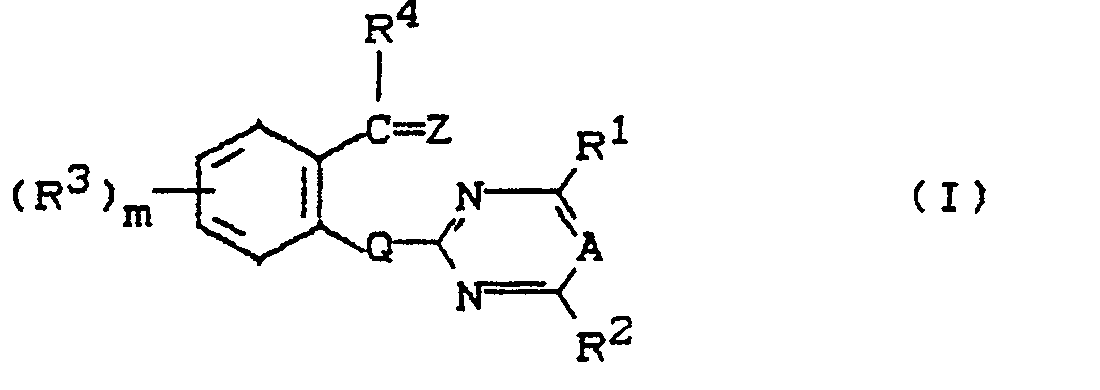
  • Es wurden nun die neuen substituierten Azine der allgemeinen Formel (1) gefunden,
    Figure imgb0001
    in welcher
    • m für die Zahlen 0, 1, 2 oder 3 steht,
    • A für Stickstoff oder eine C-X-Gruppierung steht, wobei X für Wasserstoff oder Halogen steht,
    • Q für Sauerstoff oder Schwefel steht,
    • R1 und R2 gleich oder verschieden sind und für Wasserstoff, Halogen, Alkyl, Halogenalkyl, Alkoxyalkyl, Alkoxy, Halogenalkoxy, Alkylthio, Alkylamino oder Dialkylamino stehen,
    • R3 für Amino, Hydroxy, Halogen, Alkyl, Halogenalkyl, Alkoxy, Halogenalkoxy, Alkylamino, Dialkylamino, Alkylcarbonylamino, Alkoxycarbonylamino oder Alkylsulfonylamino steht,
    • R4 für Wasserstoff oder Alkyl steht und
    • Z für eine der nachstehenden Gruppierungen steht: N-R5 oder
      Figure imgb0002
      wobei
    • R5 für Wasserstoff, Amino oder für jeweils gegebenenfalls substituiertes Alkyl, Alkenyl, Alkinyl, Aralkyl, Aryl, Alkoxycarbonyloxy, Arylaminocarbonyloxy, Carboxyalkoxy, Alkoxycarbonylalkoxy, Alkylamino, Dialkylamino, Aralkylamino, Arylamino, N-Alkyl-N-arylamino, Alkylcarbonylamino, Arylcarbonylamino, Heteroarylamino, Heteroarylcarbonylamino, Alkoxycarbonylamino, Alkylsulfonylamino oder Arylsulfonylamino steht,
    • R6 für Wasserstoff, Halogen, Cyano, Carboxy, Alkoxycarbonyl, Alkylcarbonylamino oder Dialkoxyphosphoryl steht und
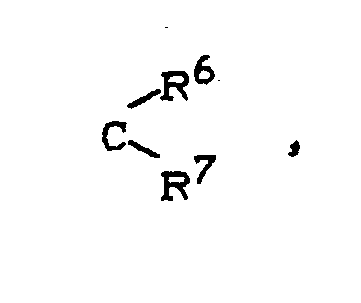
    • R7 für Formyl, Cyano, Carboxy, Hydroxymethyl, Carbamoyl oder für jeweils gegebenenfalls substituiertes Alkoxycarbonyl, Cycloalkyloxycarbonyl, Aralkoxycarbonyl, Aryloxycarbonyl, Heterocyclylalkoxycarbonyl, Alkylthiocarbonyl, Aralkylthiocarbonyl, Arylthiocarbonyl, Alkylaminocarbonyl, Cycloalkylaminocarbonyl, Aralkylaminocarbonyl, Arylaminocarbonyl, Dialkylaminocarbonyl, Alkylhydrazinocarbonyl, Arylhydrazinocarbonyl, Pyrrolidinylcarbonyl, Piperidinylcarbonyl, Morpholinylcarbonyl, Piperazinylcarbonyl, Phthalimidoxycarbonyl, für die Gruppierung
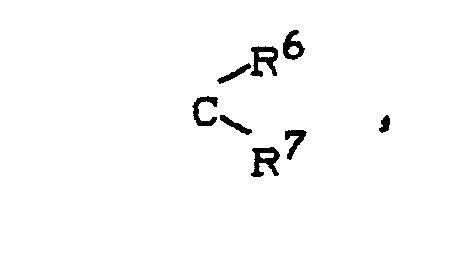
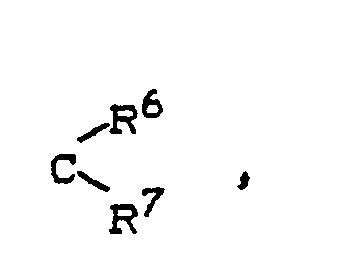
      Figure imgb0003
      in welcher A, Q, R1 und R2 die oben angegebenen Bedeutungen haben, steht oder zusammen mit R6 für die Gruppierung -CO-O-(CH2)n- steht, wobei n für die Zahlen 1 bis 4 steht.
  • Man erhält die neuen substituierten Azine der allgemeinen Formel (I), wenn man entsprechende Carbonylverbindungen der allgemeinen Formel (II)
    Figure imgb0004
    in welcher
    • m, A, Q, R', R2, R3 und R4 die oben angegebene Bedeutung haben, mit Amino- oder Methylen-Verbindungen der allgemeinen Formel (III)
    • H2Z (III)
    • in welcher
  • Z die oben angegebene Bedeutung hat, gegebenenfalls in Gegenwart eines Reaktionshilfsmittels und gegebenenfalls in Gegenwart eines Verdünnungsmittels umsetzt und gegebenenfalls die hierbei erhaltenen Produkte anschließend nach üblichen Methoden in andere Derivate gemäß der Definition der Verbindungen der Formel (I) umwandelt.
  • Die neuen substituierten Azine der allgemeinen Formel (I) zeichnen sich durch starke Herbizidwirkung aus.
  • Die Erfindung betrifft vorzugsweise Verbindungen der Formel (I), in welcher
    • m für die Zahlen 0, 1 oder 2 steht,
    • A für Stickstoff oder eine C-X-Gruppierung steht, wobei X für Wasserstoff oder Halogen steht,
    • Q für Sauerstoff oder Schwefel steht,
    • R1 und R2 gleich oder verschieden sind und für Wasserstoff, Halogen, C1-C4-Alkyl, C1-C4-Halogena-Ikyl, C1-C2-Alkoxy-C1-C2-alkyl, C1-C4-Alkoxy, C1-C4-Halogenalkoxy, C1-C4-Alkylthio, C1-C4-Alkylamino oder Di-(C1-C2-alkyl)-amino stehen,
    • R3 für Amino, Hydroxy, Halogen, C1-C4-Alkyl, Ci-C4-Halogenalkyl, Ci-C4-Alkoxy, C1-C4-Halogenalkoxy, C1-C4-Alkylamino, Di-(Ci-C2-alkyl)-amino, C1-C4-Alkyl-carbonylamino, Ci-C4-Alkoxy-carbonylamino oder C1-C4-Alkylsulfonylamino steht,
    • R 4 für Wasserstoff oder C1-C4-Alkyl steht und
    • Z für eine der nachstehenden Gruppierungen steht: N-R5 oder
      Figure imgb0005
      wobei
    • R5 für Wasserstoff, Amino oder für jeweils gegebenenfalls durch Halogen substituiertes C1-C6-Alkyl, C3-C6-Alkonyl, C3-C6-Alkinyl, Carboxy-Ci-C2-alkoxy, C1-C6-Alkoxycarbonyloxy, C1-C4-Alkoxy-carbonyl-C1-C2-alkoxy, Ci-C6-Alkylamino, Di-(Ci-C2-alkyl)-amino, Ci-C6-Alkyl-carbonylamino, C1-C6-Alkoxy-carbonylamino, C1-C6-Alkyl-sulfonylamino, oder für jeweils gegebenenfalls durch Nitro, Hydroxy, Amino, Cyano, Carboxy, Halogen, Ci-C4-Alkyl, C1-C2-Halogenalkyl, C1-C4-Alkoxy, C1-C2-Halogenalkoxy, C1-C4-Alkylthio, C1-C2-Haloge- nalkylthio, C1-C4-Alkoxy-carbonyl und/oder Di-(C1-C2-alkyl)-amino substituiertes Phenyl, Phenyl-C1-C4-alkyl, Phenylaminocarbonyloxy, Phenylamino, Phenyl-C1-C4-alkylamino, N-(C1-C4-alkyl)-phenylamino, Pyridylamino, Pyrimidylamino, Pyridylcarbonylamino, Phenylcarbonylamino, Furylcarbonylamino, Thienylcarbonylamino oder Phenylsulfonylamino steht,
    • R6 für Wasserstoff, Halogen, Cyano, Carboxy, C1-C6-Alkoxy-carbonyl, C1-C6-Alkylcarbonylamino oder Di-(C1-C4-alkoxy)-phosphoryl steht und
    • R7 für Formyl, Cyano, Carboxy, Hydroxymethyl, Carbamoyl oder für jeweils gegebenenfalls durch Halogen, Carboxy oder C1-C4-Alkoxy-carbonyl substituiertes Ci-C6-Alkoxy-carbonyl, C5-C6-Cycloalkyloxy-carbonyl, Ci-C6-Alkylthio-carbonyl, Ci-C6-Alkylamino-carbonyl oder C5-C6-Cycloalkylamino-carbonyl, für Di-(C1-C2-alkyl)-amino-carbonyl, für C1-C4-Alkylamino-carbonyl-C1-C4-alkoxy-carbonyl, für Di-(C1-C2-alkyl)-amino-carbonyl-C1-C4- alkoxy-carbonyl, für Phenylaminocarbonyl-C1-C4-alkoxy-carbonyl, für N-Methyl-phenylaminocarbonyl-Ci-C4-alkoxy-carbonyl, für jeweils gegebenenfalls durch Methyl und/oder Ethyl substituiertes Pyrrolidinylcarbonyl, Piperidinylcarbonyl, Morpholinylcarbonyl oder Piperazinylcarbonyl, für jeweils gegebenenfalls durch Nitro, Amino, Cyano, Carboxy, Halogen, C1-C4-Alkyl, C1-C2-Halogenalkyl, C1-C4-Alkoxy, Cl-C2-Halogenalkoxy, C1-C4-Alkylthio, C1-C2-Halogenalkylthio, C1-C4-Alkoxy-carbonyl und/oder Di-(C1-C2-alkyl)-amino substituiertes Phenoxycarbonyl, Phenyl-C1-C4-alkoxycarbonyl, Furylmethoxycarbonyl, Thienylmethoxycarbonyl, Phenylthiocarbonyl, Phenyl-C1-C4-alkylthio-carbonyl, Phenylaminocarbonyl, Phenyl-Ci-C4-alkylamino-carbonyl, N-(C1-C4-Alkyl)-phenylamino-carbonyl oder Phenylhydrazinocarbonyl, für Phthalimidoxycarbonyl, für die Gruppierung
      Figure imgb0006
      in welcher A, Q, R1 und R2 die oben als bevorzugt angegebenen Bedeutungen haben, steht oder zusammen mit R6 für die Gruppierung -CO-O-(CH2)n- steht, wobei n für die Zahlen 2 oder 3 steht.
  • Die in der Definition der erfindungsgemäßen Verbindungen aufgeführten aliphatischen Kohlenwasserstoffreste (z.B. Alkyl, Alkenyl, Alkinyl), auch in Kombination mit Heteroatomen (z.B. in Alkoxy, Alkylthio, Alkylamino), sind jeweils geradkettig oder verzweigt.
  • Halogen steht jeweils im allgemeinen für Fluor, Chlor, Brom oder Jod, vorzugsweise für Fluor, Chlor oder Brom, insbesondere für Fluor oder Chlor.
  • Die Erfindung betrifft insbesondere Verbindungen der Formel (I), in welcher
    • m für die Zahlen 0, 1 oder 2 steht,
    • A für Stickstoff oder eine CH-Gruppierung steht, Q für Sauerstoff steht,
    • R1 für Wasserstoff, Chlor, Methyl, Ethyl, Trifluormethyl, Methoxymethyl, Methoxy, Ethoxy, Difluormethoxy, Methylthio, Methylamino, Ethylamino oder Dimethylamino steht,
    • R2 für Wasserstoff, Chlor, Methyl, Ethyl, Trifluormethyl, Methoxy, Ethoxy, Difluormethoxy, Methylthio, Methylamino, Ethylamino oder Dimethylamino steht,
    • R3 für Amino, Hydroxy, Fluor, Chlor, Brom, Methyl, Ethyl, Trifluormethyl, Methoxy, Difluormethoxy, Trifluormethoxy, Methylamino, Dimethylamino, Acetylamino, Methoxycarbonylamino oder Methylsulfonylamino steht,
    • R4 für Wasserstoff oder Methyl steht und
    • Z für eine der nachstehenden Gruppierungen steht: N-R5 oder
      Figure imgb0007
      wobei
    • R5 für Wasserstoff, Amino, für Methyl, Ethyl, Propyl, Isopropyl, Butyl, Isobutyl, sec-Butyl, tert-Butyl, Allyl, Propargyl, Carboxymethoxy, Carboxyethoxy, Methoxycarbonyloxy, Ethoxycarbonyloxy, Propoxycarbonyloxy, Butoxycarbonyloxy, Methoxycarbonylmethoxy, Ethoxycarbonylmethoxy, Methoxycarbonylethoxy, Ethoxycarbonylethoxy, Methylamino, Ethylamino, Propylamino, Isopropylamino, Butylamino, Isobutylamino, sec-Butylamino, tert-Butylamino, Dimethylamino, Acetylamino, Propionylamino, Methoxycarbonylamino, Ethoxycarbonylamino, Methylsulfonylamino, Ethylsulfonylamino, für jeweils gegebenenfalls durch Nitro, Hydroxy, Cyano, Fluor, Chlor, Brom, Methyl, Trifluormethyl, Methoxy, Trifluormethoxy, Methylthio oder Trifluormethylthio substituiertes Phenyl, Benzyl, Phenylaminocarbonyloxy, Phenylamino, Benzylamino, N-Methyl-phenylamino, Pyridylamino, Pyrimidylamino, Pyridylcarbonylamino, Phenylcarbonylamino, Furylcarbonylamino, Thienylcarbonylamino oder Phenylsulfonylamino steht,
    • R6 für Wasserstoff, Fluor, Chlor, Cyano, Carboxy, C1-C4-Alkoxy-carbonyl, C1-C4-Alkyl-carbonylamino, Dimethoxyphosphoryl oder Diethoxyphosphoryl steht und
    • R7 für Formyl, Cyano, Carboxy, Hydroxymethyl, Carbamoyl, für jeweils gegebenenfalls durch Fluor, Chlor, Carboxy oder Cl-C4-Alkoxy-carbonyl substituiertes C,-C4-Alkoxy-carbonyl, Cs-Cs-Cycloalkyloxy-carbonyl, C1-C4-Alkylthiocarbonyl, C,-C4-Alkylamino-carbonyl oder C5-C6-Cycloalkylamino-carbonyl, für Dimethylamino-carbonyl, für C1-C4-Alkylaminocarbonyl-C1-C4- alkoxy-carbonyl, für Dimethylaminocarbonyl-Ci-C4-alkoxy-carbonyl, für N-Methyl-phenylaminocarbonyl-Ci-C4-alkoxy-carbonyl, für jeweils gegebenenfalls durch Methyl und/oder Ethyl substituiertes Pyrrolidinylcarbonyl, Piperidinyl-carbonyl, Morpholinylcarbonyl oder Piperazinyl-carbonyl, für jeweils gegebenenfalls durch Nitro, Cyano, Fluor, Chlor, Brom, Methyl, Trifluormethyl, Methoxy, Trifluormethoxy, Methylthio oder Trifluormethylthio substituiertes Phenoxycarbonyl, Benzyloxycarbonyl, Phenylthiocarbonyl, Benzylthiocarbonyl, Phenylaminocarbonyl, Benzylaminocarbonyl, N-Methyl-phenylaminocarbonyl, Phenylhydrazinocarbonyl, für Phthalimidoxycarbonyl, für die Gruppierung
      Figure imgb0008
      in welcher A, Q, R' und R2 die oben als insbesondere bevorzugt angegebenen Bedeutungen haben, steht oder zusammen mit R6 für die Gruppierung -CO-O-CH2CH2- steht. Ganz besonders bevorzugt werden die Verbindungen der Formel (I), in welcher
    • m für die Zahlen 0, 1 oder 2 steht,
    • A für eine CH-Gruppierung steht,
    • Q für Sauerstoff steht,
    • R' für Methoxy steht,
    • R2 für Methoxy steht,
    • R3 für Fluor, Chlor oder Methyl steht,
    • R4 für Wasserstoff steht und
    • Z die oben als insbesondere bevorzugt angegebene Bedeutung hat.
  • Verwendet man für das erfindungsgemäße Verfahren zur Herstellung der Verbindungen der Formel (I) beispielsweise 2-(4,6-Dimethoxy-pyrimidin-2-yl-oxy)-benzaldehyd und Acethydrazid als Ausgangsstoffe, so kann der Reaktionsablauf durch das folgende Formelschema wiedergegeben werden:
    Figure imgb0009
  • Die beim erfindungsgemäßen Verfahren zur Herstellung von Verbindungen der Formel (I) als Ausgangsstoffe zu verwendenden Carbonylverbindungen sind durch die Formel (II) allgemein definiert,
  • In Formel (II) haben A, Q, R', R2, R3 und R4 vorzugsweise bzw. insbesondere diejenigen Bedeutungen, die bereits oben im Zusammenhang mit der Beschreibung der erfindungsgemäßen Verbindungen der Formel (I) vorzugsweise bzw. als insbesondere bevorzugt für A, Q, R', R2, R3 und R4 angegeben wurden.
  • Als Beispiele für die Ausgangsstoffe der Formel (II) seien genannt:
    • 2-(4,6-Dimethyl-pyrimidin-2-yl-oxy)-,
    • 2-(4-Methoxy-6-methyl-pyrimidin-2-yl-oxy)-,
    • 2-(4,6-Dimethoxy-pyrimidin-2-yl-oxy)-,
    • 2-(4-Methoxy-6-trifluormethyl-pyrimidin-2-yl-oxy)-,
    • 2-(4,6-Dimethyl-s-triazin-2-yl-oxy)-,
    • 2-(4-Methoxy-6-methyl-s-triazin-2-yl-oxy)- und
    • 2-(4,6-Dimethoxy-s-triazin-2-yl-oxy)-benzaldehyd.
  • Die Ausgangsstoffe der Formel (II) sind bekannt und/oder können nach an sich bekannten Verfahren hergestellt werden (vergleiche EP-A 223 406; EP-A 249 708; JP-A 63258467 - Zit. in Chem. Abstracts 110, 130532a; JP-A 63258463 - Zit. in Chem. Abstracts 110, 192853q; EP-A 287 079).
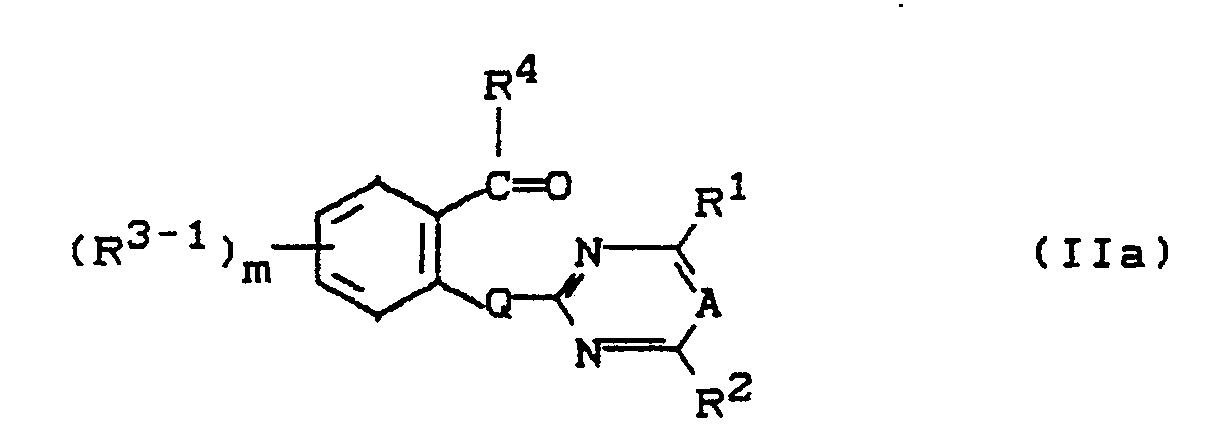
  • Neu und Gegenstand der vorliegenden Anmeldung sind die Ausgangsverbindungen der allgemeinen Formel (Ila)
    Figure imgb0010
    in welcher
    • A, Q, R1, R2 und R4 die oben angegebene Bedeutung haben,
    • m für die Zahlen 1 oder 2 steht und
    • R3-1 für Fluor und gegebenenfalls zusätzlich für Chlor steht.
  • In Formel (IIa) haben A, Q, R1, R2 und R4 vorzugsweise bzw. insbesondere diejenigen Bedeutungen, die bereits oben im Zusammenhang mit der Beschreibung der erfindungsgemäßen Verbindungen der Formel (I) vorzugsweise bzw. als insbesondere bevorzugt für A, Q, R1, R2 und R4 angegeben wurden; m steht vorzugsweise für die Zahlen 1 oder 2 und R3-1 steht vorzugsweise für Fluor.
  • Man erhält die neuen Verbindungen der Formel (Ila), wenn man Halogenverbindungen der allgemeinen Formel (IV)
    Figure imgb0011
    in welcher
  • m, A, Q, R1, R2 und R3-1 die oben bei Formel (Ila) angegebene Bedeutung haben, mit einem Metallierungsmittel, wie z.B. Butyllithium, in Gegenwart eines inerten Verdünnungsmittels, wie z.B. Tetrahydrofuran, bei Temperaturen zwischen -20° C und -120° C, vorzugsweise zwischen -50 °C und -80 C behandelt, anschließend in situ mit Carbonsäureamiden der allgemeinen Formel (V)
    • R4-CO-NR2 (V)
    in welcher
    • R4 die oben angegebene Bedeutung hat und
    • R für Alkyl steht,
  • bei Temperaturen zwischen 0° c und -80° C umsetzt und nach üblichen Methoden aufarbeitet (vgl. die Herstellungsbeispiele).
  • In Formel (IV) haben A, Q, R1 und R2 vorzugsweise bzw. insbesondere diejenigen Bedeutungen, die bereits oben im Zusammenhang mit der Beschreibung der erfindungsgemäßen Verbindungen der Formel (I) vorzugsweise bzw. als insbesondere bevorzugt für A, Q, R1 und R2 angegeben wurden; m steht vorzugsweise für die Zahlen 1 oder 2 und R3-1 steht vorzugsweise für Fluor.
  • Die Halogenverbindungen der Formel (IV) sind noch nicht aus der Literatur bekannt und sind gleichfalls Gegenstand der vorliegenden Anmeldung.
  • Man erhält die neuen Verbindungen der Formel (IV), wenn man halogenierte (Thio)Phenole der Formel (VI)
    Figure imgb0012
    in welcher
    • m, Q und R3-1 die oben angegebene Bedeutung haben, mit reaktionsfähigen Azinen der Formel (VII)
      Figure imgb0013
    in welcher
    • A, R' und R2 die oben angegebene Bedeutung haben und
    • G für eine nucleofuge Abgangsgruppe steht,
    gegebenenfalls in Gegenwart eines Säureakzeptors, wie Kaliumcarbonat, und gegebenenfalls in Gegenwart eines Verdünnungsmittels, wie z.B. Acetonitril, bei Temperaturen zwischen 20 C und 120 °C umsetzt (vgl. die Herstellungsbeispiele).
  • In Formel (VI) stehen vorzugsweise m für die Zahlen 1 oder 2, Q für Sauerstoff und R3-' für Fluor.
  • Die halogenierten (Thio)Phenole der Formel (VI) sind bekannte Synthesechemikalien.
  • In Formel (VII) haben A, R' und R2 vorzugsweise bzw. insbesondere diejenigen Bedeutungen, die bereits oben im Zusammenhang mit der Beschreibung der erfindungsgemäßen Verbindungen der Formel (I) vorzugsweise bzw. als insbesondere bevorzugt für A, R' und R2 angegeben wurden; G steht vorzugsweise für Chlor oder Methylsulfonyl.
  • Die reaktionsfähigen Azine der Formel (VII) sind bekannt und/oder können nach an sich bekannten Verfahren hergestellt werden (vgl. J. Chem. Soc. 1957, 1830, 1833; J. Org. Chem. 26 (1961), 792; US-P 3308119; US-P 4711959).
  • In Formel (V) hat R4 vorzugsweise bzw. insbesondere diejenige Bedeutung, die bereits oben im Zusammenhang mit der Beschreibung der erfindungsgemäßen Verbindungen der Formel (I) vorzugsweise bzw. als insbesondere bevorzugt für R4 angegeben wurde; R steht vorzugsweise für C1-C4-Alkyl, insbesondere für Methyl.
  • Die Carbonsäureamide der Formel (V) sind bekannte Synthesechemikalien.
  • Die beim erfindungsgemäßen Verfahren zur Herstellung von Verbindungen der Formel (1) weiter als Ausgangsstoffe zu verwendenden Amino- oder Methylen-Verbindungen sind durch die Formel (III) allgemein definiert.
  • In Formel (III) hat Z vorzugsweise bzw. insbesondere diejenige Bedeutung, die bereits oben im Zusammenhang mit der Beschreibung der erfindungsgemäßen Verbindungen der Formel (I) vorzugsweise bzw. als insbesondere bevorzugt für Z angegeben wurde.
  • Als Beispiele für die Ausgangsstoffe der Formel (III) seien genannt:
    • Ammoniak, Hydroxylamin, Hydrazin, Methylamin, Ethylamin, Propylamin, Isopropylamin, Butylamin, Isobutylamin, sec-Butylamin, tert-Butylamin, Allylamin, Propargylamin, O-Methyl-, O-Ethyl-, O-Propyl-, O-Isopropyl-, O-Butyl-, O-Isobutyl- und O-sec-Butyl-hydroxylamin, O-Allyl-hydroxylamin, Aminooxyessigsäure-methylester und -ethylester, α-Aminooxy-propionsäuro-methyloster und -ethylester, Methylhydrazin, Ethylhydrazin, Propylhydrazin, Isopropylhydrazin, Butylhydrazin, Isobutylhydrazin, sec-Butyl-hydrazin, tert-Butylhydrazin, N,N-Dimethylhydrazin, Acethydrazid, Propionylhydrazid, Methoxycarbonylhydrazin, Ethoxycarbonylhydrazin, Methylsulfonylhydrazin, Ethylsulfonylhydrazin, Phenylhydrazin, Benzoylhydrazin, Benzolsulfonsäurehydrazid, p-Toluolsulfonsäurehydrazid, Malonsäure, Cyanessigsäure, Malonsäuredinitril, Cyanessigsäure-methylester und -ethylester, Malonsäure-dimethylester und -diethylester, y-Butyrolacton.
  • Die Ausgangsstoffe der Formel (III) sind bekannte Synthesechemikalien.
  • Das erfindungsgemäße Verfahren zur Herstellung der neuen substituierten Azine der Formel (I) wird vorzugsweise unter Verwendung von Verdünnungsmitteln durchgeführt. Als Verdünnungsmittel kommen dabei neben Wasser praktisch alle inerten organischen Lösungsmittel infrage. Hierzu gehören vorzugsweise aliphatische und aromatische, gegebenenfalls halogenierte Kohlenwasserstoffe wie Pentan, Hexan, Heptan, Cyclohexan, Petrolether, Benzin, Ligroin, Benzol, Toluol, Xylol, Methylenchlorid, Ethylenchlorid, Chloroform, Tetrachlorkohlenstoff, Chlorbenzol und o-Dichlorbenzol, Ether wie Diethyl- und Dibutylether, Glykoldimethylether und Diglykoldimethylether, Tetrahydrofuran und Dioxan, Ketone wie Aceton, Methyl-ethyl-, Methylisopropyl- und Methyl-isobutyl-keton, Ester wie Essigsäuremethylester und -ethylester, Nitrile wie z. B. Acetonitril und Propionitril, Amide wie z. B. Dimethylformamid, Dimethylacetamid und N-Methyl-pyrrolidon sowie Dimethylsulfoxid, Tetramethylensulfon und Hexamethylphosphorsäuretriamid.
  • Das erfindungsgemäße Verfahren wird gegebenenfalls in Gegenwart eines Reaktionshilfsmittels durchgeführt. Geeignete Reaktionshilfsmittel sind Stoffe, die üblicherweise zur Steuerung und/oder Beschleunigung von Kondensationsreaktionen zwischen Carbonylverbindungen und Amino- oder Methylen-Verbindungen verwendet werden. Hierzu gehören insbesondere Stickstoffverbindungen, wie z.B. Ammoniumacetat, β-Alanin, Pyridin und Piperidin.
  • Die Reaktionstemperaturen können bei dem erfindungsgemäßen Verfahren in einem größeren Bereich variiert werden. Im allgemeinen arbeitet man bei Temperaturen zwischen 0 °C und 150 C, vorzugsweise bei Temperaturen zwischen 10 °C und 120 °C.
  • Das erfindungsgemäße Verfahren wird im allgemeinen unter Normaldruck durchgeführt. Es ist jedoch auch möglich, unter erhöhtem oder vermindertem Druck zu arbeiten.
  • Zur Durchführung des erfindungsgemäßen Verfahrens werden die jeweils benötigten Ausgangsstoffe im allgemeinen in angenähert äquimolaren Mengen eingesetzt. Es ist jedoch auch möglich, eine der beiden jeweils eingesetzten Komponenten in einem größeren Überschuß zu verwenden. Die Reaktionen werden im allgemeinen in einem geeigneten Verdünnungsmittel, gegebenenfalls in Gegenwart eines Reaktionshilfmittels durchgeführt, und das Reaktionsgemisch wird mehrere Stunden bei der jeweils erforderlichen Temperatur gerührt. Die Aufarbeitung erfolgt bei dem erfindungsgemäßen Verfahren jeweils nach üblichen Methoden (vergleiche die Herstellungsbeispiele).
  • Die erfindungsgemäßen Wirkstoffe können als Defoliants, Desiccants, Krautabtötungsmittel und insbesondere als Unkrautvernichtungsmittel verwendet werden. Unter Unkraut im weitesten Sinne sind alle Pflanzen zu verstehen, die an Orten aufwachsen, wo sie unerwünscht sind. Ob die erfindungsgemäßen Stoffe als totale oder selektive Herbizide wirken, hängt im wesentlichen von der angewendeten Menge ab.
  • Die erfindungsgemäßen Wirkstoffe können z.B. bei den folgenden Pflanzen verwendet werden: Dikotyle Unkräuter der Gattungen: Sinapis, Lepidium, Galium, Stellaria, Matricaria, Anthemis, Galinsoga, Chenopodium, Urtica, Senecio, Amaranthus, Portulaca, Xanthium, Convolvulus, Ipomoea, Polygonum, Sesbania, Ambrosia, Cirsium, Carduus, Sonchus, Solanum, Rorippa, Rotala, Lindernia, Lamium, Veronica, Abutilon, Emex, Datura, Viola, Galeopsis, Papaver, Centaurea, Trifolium, Ranunculus, Taraxacum, Mercurialis.
  • Dikotyle Kulturen der Gattungen: Gossypium, Glycine, Beta, Daucus, Phaseolus, Pisum, Solanum, Linum, Ipomoea, Vicia, Nicotiana, Lycopersicon, Arachis, Brassica, Lactuca, Cucumis, Cucurbita.
  • Monokotyle Unkräuter der Gattungen: Echinochloa, Setaria, Panicum, Digitaria, Phleum, Poa, Festuca, Eleusine, Brachiaria, Lolium, Bromus, Avena, Cyperus, Sorghum, Agropyron, Cynodon, Monochoria, Fimbristylis, Sagittaria, Eleocharis, Scirpus, Paspalum, Ischaemum, Sphenoclea, Dactyloctenium, Agrostis, Alopecurus, Apera.
  • Monokotyle Kulturen der Gattungen: Oryza, Zea, Triticum, Hordeum, Avena, Secale, Sorghum, Panicum, Saccharum, Ananas, Asparagus, Allium.
  • Die Verwendung der erfindungsgemäßen Wirkstoffe ist jedoch keineswegs auf diese Gattungen beschränkt, sondern erstreckt sich in gleicher Weise auch auf andere Pflanzen.
  • Die Verbindungen eignen sich in Abhängigkeit von der Konzentration zur Totalunkrautbekämpfung z.B. auf Industrie- und Gleisanlagen und auf Wegen und Plätzen mit und ohne Baumbewuchs. Ebenso können die Verbindungen zur Unkrautbekämpfung in Dauerkulturen, z.B. Forst, Ziergehölz-, Obst-, Wein-, Citrus-, Nuß-, Bananen-, Kaffee-, Tee-, Gummi-, Ölpalm-, Kakao-, Beerenfrucht- und Hopfen-anlagen, auf Zier- und Sportrasen und Weideflächen und zur selektiven Unkrautbekämpfung in einjährigen Kulturen eingesetzt werden.
  • Die erfindungsgemäßen Verbindungen der Formel (I) können sowohl im Vorauflauf- als auch im Nachauflauf-Verfahren zur Bekämpfung von monokotylen und dikotylen Unkräutern eingesetzt werden.
  • In gewissem Umfang zeigen die erfindungsgemäßen Verbindungen auch fungizide Wirkung, z.B. gegen Pyricularia oryzae.
  • Die Wirkstoffe können in die üblichen Formulierungen überführt werden, wie Lösungen, Emulsionen, Spritzpulver, Suspensionen, Pulver, Stäubemittel, Pasten, lösliche Pulver, Granulate, Suspensions-Emulsions-Konzentrate, Wirkstoff-imprägnierte Natur- und synthetische Stoffe sowie Feinstverkapselungen in polymeren Stoffen.
  • Diese Formulierungen werden in bekannter Weise hergestellt, z.B. durch Vermischen der Wirkstoffe mit Streckmitteln, also flüssigen Lösungsmitteln und/oder festen Trägerstoffen, gegebenenfalls unter Verwendung von oberflächenaktiven Mitteln, also Emulgiermitteln und/oder Dispergiermitteln und/oder schaumerzeugenden Mitteln.
  • Im Falle der Benutzung von Wasser als Streckmittel können z.B. auch organische Lösungsmittel als Hilfslösungsmittel verwendet werden. Als flüssige Lösungsmittel kommen im wesentlichen infrage: Aromaten, wie Xylol, Toluol, oder Alkylnaphthaline, chlorierte Aromaten und chlorierte aliphatische Kohlenwasserstoffe, wie Chlorbenzole, Chlorethylene oder Methylenchlorid, aliphatische Kohlenwasserstoffe, wie Cyclohexan oder Paraffine, z.B. Erdölfraktionen, mineralische und pflanzliche Öle, Alkohole, wie Butanol oder Glykol sowie deren Ether und Ester, Ketone wie Aceton, Methylethylketon, Methylisobutylketon oder Cyclohexanon, stark polare Lösungsmittel, wie Dimethylformamid und Dimethylsulfoxid, sowie Wasser.
  • Als feste Trägerstoffe kommen infrage:
    • z.B. Ammoniumsalze und natürliche Gesteinsmehle, wie Kaoline, Tonerden, Talkum, Kreide, Quarz, Attapulgit, Montmorillonit oder Diatomeenerde und synthetische Gesteinsmehle, wie hochdisperse Kieselsäure, Aluminiumoxid und Silikate, als feste Trägerstoffe für Granulate kommen infrage: z.B. gebrochene und fraktionierte natürliche Gesteine wie Calcit, Marmor, Bims, Sepiolith, Dolomit sowie synthetische Granulate aus anorganischen und organischen Mehlen sowie Granulate aus organischem Material wie Sägemehl, Kokosnußschalen, Maiskolben und Tabakstengeln; als Emulgier- und/oder schaumerzeugende Mittel kommen infrage: z.B. nichtionogene und anionische Emulgatoren, wie Polyoxyethylen-Fettsäure-Ester, Polyoxyethylen-Fettalkohol-Ether, z.B. Alkylaryl-polyglykolether, Alkylsulfonate, Alkylsulfate, Arylsulfonate sowie Eiweißhydrolysate; als Dispergiermittel kommen infrage: z.B. Lignin-Sulfitablaugen und Methylcellulose.
  • Es können in den Formulierungen Haftmittel wie Carboxymethylcellulose, natürliche und synthetische pulvrige, körnige oder latexförmige Polymere verwendet werden, wie Gummiarabicum, Polyvinylalkohol, Polyvinylacetat, sowie natürliche Phospholipide, wie Kephaline und Lecithine und synthetische Phospholipide. Weitere Additive können mineralische und vegetabile Öle sein.
  • Es können Farbstoffe wie anorganische Pigmente, z.B. Eisenoxid, Titanoxid, Ferrocyanblau und organische Farbstoffe, wie Alizarin-, Azo- und Metallphthalocyaninfarbstoffe und Spurennährstoffe wie Salze von Eisen, Mangan, Bor, Kupfer, Kobalt, Molybdän und Zink verwendet werden.
  • Die Formulierungen enthalten im allgemeinen zwischen 0,1 und 95 Gewichtsprozent Wirkstoff, vorzugsweise zwischen 0,5 und 90 %.
  • Die erfindungsgemäßen Wirkstoffe können als solche oder in ihren Formulierungen auch in Mischung mit bekannten Herbiziden zur Unkrautbekämpfung Verwendung finden, wobei Fertigformulierungen oder Tankmischungen möglich sind.
  • Für die Mischungen kommen bekannte Herbizide wie z.B. 1-Amino-6-ethylthio-3-(2,2-dimethylpropyl)-1,3,5-triazin-2,4(1H,3H)-dion (AMETHYDIONE) oder N-(2-Benzthiazolyl)-N,N'-dimethyl-harnstoff (METABENZTHIAZURON) zur Unkrautbekämpfung in Getreide; 4-Amino-3-methyl-6-phenyl-1,2,4-triazin-5-(4H)-on (METAMITRON) zur Unkrautbekämpfung in Zuckerrüben und 4-Amino-6-(1,1-dimethylethyl)-3-methylthio-1,2,4-triazin-5(4H)-on (METRIBUZIN) zur Unkrautbekämpfung in Sojabohnen, infrage; ferner auch 2,4-Dichlorphenoxyessigsäure (2,4-D); 4-(2,4-Dichlorphenoxy)-buttersäure (2,4-DB); 2,4-Dichlorphenoxypropionsäure (2,4-DP); 5-(2-Chlor-4-trifluormethyl-phenoxy)-2-nitrobenzoesäure (ACIFLUORFEN); Chloressigsäure-N-(methoxymethyl)-2,6-diethylanilid (ALACHLOR); 2-Chlor-4-ethylamino-6-isopropylamino-1,3,5-triazin (ATRAZIN); 2-[[[[[(4,6-Dimethoxypyrimidin-2-yl)-amino]-carbonyl]-amino]-sulfonyl]-methyl]-ben- zoesäuremethylester (BENSULFURON); 3-Isopropyl-2,1,3-benzothiadiazin-4-on-2,2-dioxid (BENTAZON); Methyi-5-(2,4-dichiorphenoxy)-2-nitrobenzoat (BIFENOX); 3,5-Dibrom-4-hydroxy-benzonitril (BROMOXYNIL); Ethyl-2-([(4-chlor-6-methoxy-2-pyrimidinyl)-aminocarbonyl]-aminosulfonyl)-benzoat (CHLORIMURON); N,N-Dimethyl-N'-(3-chlor-4-methylphenyl)-harnstoff (CHLORTOLURON); 2-Chlor-4-ethylamino-6-(3-cyanopropyla- mino)-1,3,5-triazin (CYANAZIN); 4-Amino-6-t-butyl-3-ethylthio-1,2,4-triazin-5(4H)-on (ETHIOZIN); 2-{4-[(6-Chlor-2-benzoxazolyl)-oxy]-phenoxy)-propansäure, deren Methyl- oder deren Ethylester (FENOXAPROP); [-(4-Amino-3,5-dichlor-6-fluor-2-pyridinyl)-oxy]-essigsäure bzw. deren 1-Methylheptylester (FLUROXYPYR); 5-(2-Chlor-4-trifluormethyl-phenoxy)-N-methylsulfonyl-2-nitrobenzamid (FOMESAFEN); N-Phosphonomethylglycin (GLYPHOSATE); 2-{4-[(3-Chlor-5-(trifluormethyl)-2-pyridinyl)-oxy]-phenoxy}-propansäure bzw. deren Ethylester (HALOXYFOP); Methyl-2-[4,5-dihydro-4-methyl-4-(1-methylethyl)-5-oxo-1 H-imidazol-2-yl]-4(5)-methylbenzoat (IMAZAMETHABENZ); 2-[5-Methyl-5-(1-methylethyl)-4-oxo-2-imidazolin-2-yl]-3-chinolincarbon- säure (IMAZAQUIN); 2-[4,5-Dihydro-4-methyl-4-isopropyl-5-oxo-(lH)-imidazol-2-yl]-5-ethyl-pyridin-3-carbonsäure (IMAZETHAPYR); 3,5-Diiod-4-hydroxybenzonitril (IOXYNIL); N,N-Dimethyl-N'-(4-isopropylphenyl)-harnstoff (ISOPROTURON); (2-Methyl-4-chlorphenoxy)-essigsäure (MCPA); (4-Chlor-2-methylphenoxy)-propionsäure (MCPP); N-Methyl-2-(1,3-benzthiazol-2-yloxy)-acetanilid (MEFENACET); 2-Ethyl-6-methyl-N-(1-methyl-2-methoxyethyl)-chloracetanilid (METOLACHLOR); 2-{[[((4-Methoxy-6-methyi-1,3,5-triazin-2-yi)-amino)-carbonyl]-amino]-sulfonyll-benzoesäure oder deren Methylester (METSULFURON); N-(1-Ethylpropyl)-3,4-dimethyl-2,6-dinitroanilin (PENDIMETHALIN); 2-[1-(Ethoxamino)-butyliden]-5-(2-ethylthiopropyl)-1,3-cy- clohexadion (SETHOXYDIM); 4-Ethylamino-2-t-butylamino-6-methylthio-s-triazin (TERBUTRYNE); 3-[[[[(4-Methoxy-6-methyl-1,3,5-triazin-2-yl)-amino]-carbonyl]-amino]-sulfonyl]-thiophen-2-carbonsäure-methylester (THIAMETURON) und 2,6-Dinitro-4-trifluormethyl-N,N-dipropylanilin (TRIFLURALIN). Einige Mischungen zeigen überraschenderweise auch synergistische Wirkung.
  • Auch eine Mischung mit anderen bekannten Wirkstoffen, wie Fungiziden, Insektiziden, Akariziden, Nematiziden, Schutzstoffen gegen Vogelfraß, Pflanzennährstoffen und Bodenstrukturverbesserungsmitteln ist möglich.
  • Die Wirkstoffe können als solche, in Form ihrer Formulierungen oder den daraus durch weiteres Verdünnen bereiteten Anwendungsformen, wie gebrauchsfertige Lösungen, Suspensionen, Emulsionen, Pulver, Pasten und Granulate angewandt werden. Die Anwendung geschieht in üblicher Weise, z.B. durch Gießen, Spritzen, Sprühen, Streuen.
  • Die erfindungsgemäßen Wirkstoffe können sowohl vor als auch nach dem Auflaufen der Pflanzen appliziert werden. Sie können auch vor der Saat in den Boden eingearbeitet werden.
  • Die angewandte Wirkstoffmenge kann in einem größeren Bereich schwanken. Sie hängt im wesentlichen von der Art des gewünschten Effektes ab. Im allgemeinen liegen die Aufwandmengen zwischen 0,01 und 10 kg Wirkstoff pro Hektar Bodenfläche, vorzugsweise zwischen 0,05 und 5 kg pro ha.
  • Die Herstellung und die Verwendung der erfindungsgemäßen Wirkstoffe geht aus den nachfolgenden Beispielen hervor.
  • Herstellungsbeispiele: Beispiel 1
  • Figure imgb0014
  • Eine Mischung aus 2,7 g (10 mMol) 2-(4,6-Dimethoxy-pyrimidin-2-yl-oxy)-benzaldehyd, 1,1 g (10 mMol) Phenylhydrazin und 40 ml Toluol wird 2 Stunden bei 20 °C gerührt und anschließend eingeengt. Der Rückstand wird mit Ethanol/ Wasser (1:1) zur Kristallisation gebracht und das kristalline Produkt durch Absaugen isoliert.
  • Man erhält 2,6 g (75 % der Theorie) 2-(4,6-Dimethoxy-pyrimidin-2-yl-oxy)-benzaldehyd-phenylhydrazon vom Schmelzpunkt 112 C.
  • Beispiel 2
  • Figure imgb0015
  • Eine Mischung aus 2,6 g (10 mMol) 2-(4,6-Dimethoxy-pyrimidin-2-yl-oxy)-benzaldehyd, 0,67 g (10 mMol) Malonsäuredinitril, 0,1 g Ammoniumacetat und 80 ml Toluol wird 5 Stunden am Wasserabscheider zum Sieden erhitzt. Anschließend wird eingeengt und der Rückstand mit Diethylether/Petrolether zur Kristallisation gebracht. Das kristalline Produkt wird durch Absaugen isoliert.
  • Man erhält 2,2 g (71 % der Theorie) α-(2-(4,6-Dimethoxypyrimidin-2-yl-oxy)-phenyl)-methylen-malonsäuredinitril vom Schmelzpunkt 123 C.
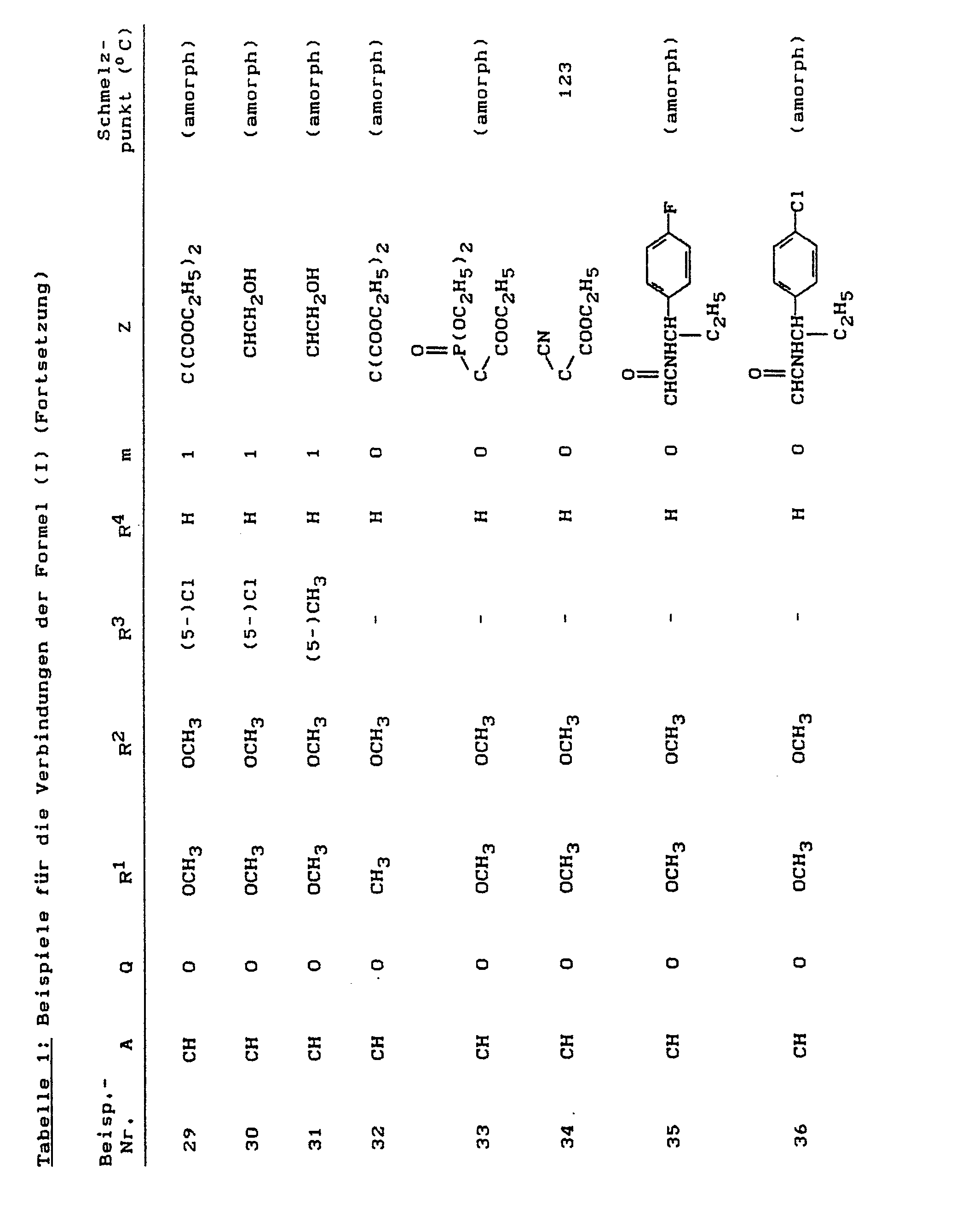
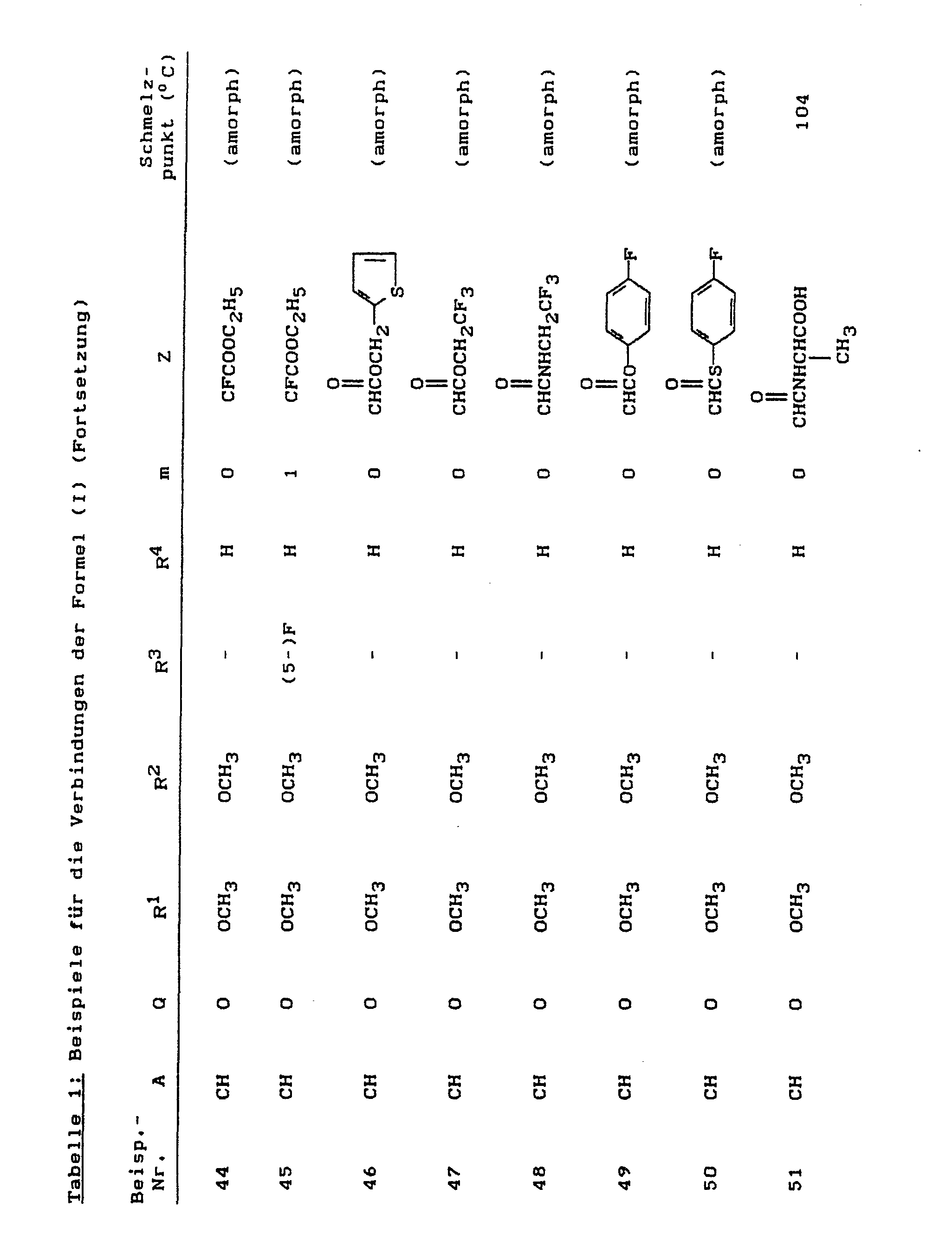
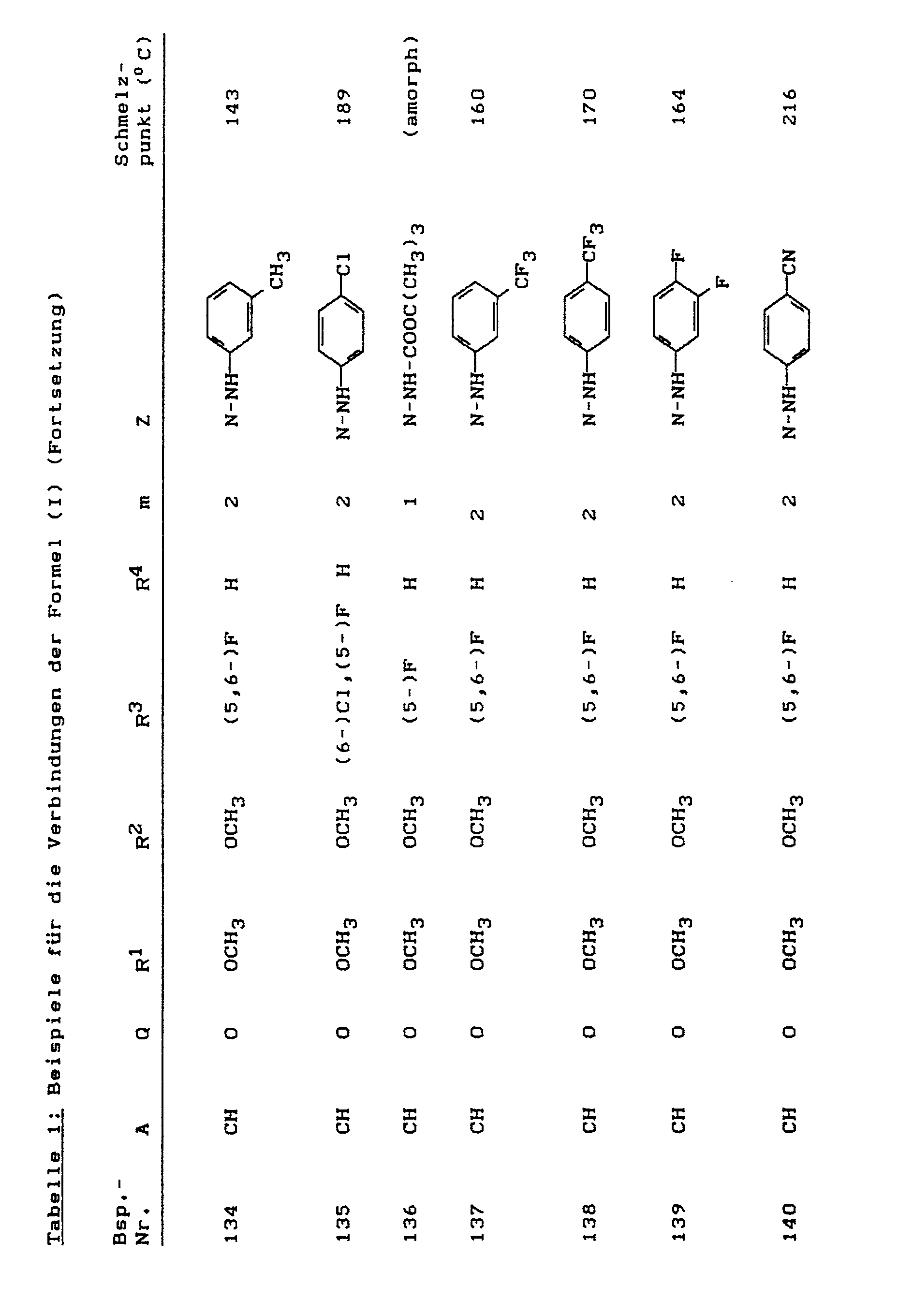
  • Analog zu den Beispielen 1 oder 2 sowie entsprechend der allgemeinen Beschreibung des erfindungsgemäßen Herstellungsverfahrens oder durch Folgereaktionen nach üblichen Methoden können beispielsweise auch die in der nachstehenden Tabelle 1 aufgeführten Verbindungen der Formel (I) hergestellt werden.
  • Figure imgb0016
  • (Q ist stets in 2-Position des Benzolringes gebunden.)
    Figure imgb0017
    Figure imgb0018
    Figure imgb0019
    Figure imgb0020
    Figure imgb0021
    Figure imgb0022
    Figure imgb0023
    Figure imgb0024
    Figure imgb0025
    Figure imgb0026
    Figure imgb0027
    Figure imgb0028
    Figure imgb0029
    Figure imgb0030
    Figure imgb0031
    Figure imgb0032
    Figure imgb0033
    Figure imgb0034
    Figure imgb0035
    Figure imgb0036
    Figure imgb0037
    Figure imgb0038
    Figure imgb0039
    Figure imgb0040
  • Die in Tabelle 1 als Beispiel 72 aufgeführte Verbindung kann beispielsweise wie folgt hergestellt werden:
    Figure imgb0041
  • Eine Mischung aus 6-Fluor-2-(4,6-dimethoxy-pyrimidin-2-yl-oxy)-benzaldehyd (1,0 g, 3,6 mmol), Phenylhydrazin (0,39 g, 3,6 mmol) und Toluol (20 ml) wird 10 Stunden bei 20 °C gerührt und anschließend eingeengt.
  • Man erhält 0,8 g (60% der Theorie) 6-Fluor-2-(4,6-dimethoxy-pyrimidin-2-yl-oxy)-benzaldehyd-phenylh- ydrazon als amorphen Rückstand.
  • Ausgangsstoffe der Formel (11):
  • Beispiel (11-1)
    Figure imgb0042
  • Eine Mischung aus 11,0 g (50 mMol) 4,6-Dimethoxy-2-methylsulfonyl-pyrimidin, 6,1 g (50 mMol) 2-Hydroxy-benzaldehyd, 6,9 g Kaliumcarbonat und 170 ml Acetonitril wird 5 Stunden unter Rückfluß erhitzt und anschließend eingeengt. Der Rückstand wird mit Wasser/Essigsäureethylester geschüttelt, die organische Phase abgetrennt, mit Natriumsulfat getrocknet und filtriert. Vom Filtrat wird das Lösungsmittel im Wasserstrahlvakuum sorgfältig abdestilliert.
  • Man erhält 7,8 g (60 % der Theorie) 2-(4,6-Dimethoxy-pyrimidin-2-yl-oxy)-benzaldehyd als festen Rückstand vom Schmelzpunkt 81 ° C.
  • Beispiel (11-2)
  • Figure imgb0043
    6,0 g (25 mmol) 2-(3-Fluor-phenoxy)-4,6-dimethoxy-pyrimidin werden in 150 ml Tetrahydrofuran vorgelegt, auf -78` C abgekühlt und mit 18 ml einer 15%igen Lösung von Butyllithium in Hexan versetzt. Nach einstündigem Rühren bei -78 °C werden 2,2 g (30 mmol) Dimethylformamid zugetropft und das Reaktionsgemisch wird ohne weitere Außenkühlung noch eine Stunde gerührt. Dann werden 50 ml einer 5%igen wäßrigen Lösung von Natriumdihydrogenphosphat und weitere 200 ml Wasser dazugegeben und die Lösung wird dreimal mit je 150 ml Diethylether geschüttelt. Die vereinigten organischen Phasen werden mit Natriumsulfat getrocknet und filtriert. Das Filtrat wird im Wasserstrahlvakuum eingeengt und der Rückstand durch Chromatographie (Methylenchlorid/Kieselgel) gereinigt.
  • Man erhält 3,9 g (56% der Theorie) 2-(4,6-Dimethoxypyrimidin-2-yl-oxy)-6-fluor-benzaldehyd vom Schmelzpunkt 93 °C.
  • Analog Beispiel (II-2) können beispielsweise auch die folgenden neuen Verbindungen der Formel (Ila) erhalten werden:
  • Beispiel (11-3)
  • Figure imgb0044
  • Schmelzpunkt: 114°C Beispiel (11-4)
  • Figure imgb0045
  • Schmelzpunkt: 113°C Beispiel (11-5)
  • Figure imgb0046
  • Beispiel (11-6)
  • Figure imgb0047
  • Schmelzpunkt: 94 °C Beispiel (11-7)
  • Figure imgb0048
    Schmelzpunkt: 125°C
  • Ausgangsstoffe der Formel (IV): Beispiel (IV-1)
  • Figure imgb0049
  • Zu 4,6-Dimethoxy-2-methylsulfonyl-pyrimidin (21,8 g, 100 mmol) in Acetonitril (300 ml) gibt man 3-Fluorphenol (11,3 g, 100 mmol) sowie Kaliumcarbonat (13,8 g). Es wird 2 Stunden unter Rückfluß zum Sieden erhitzt, in Eiswasser gegossen und mit Diethylether extrahiert. Nach dem Trocknen über Natriumsulfat wird eingeengt.
  • Man erhält so 21,4 g (91% der Theorie) 2-(3-Fluor-phenoxy)-4,6-dimethoxy-pyrimidin vom Schmelzpunkt 45° C.
  • Analog Beispiel (IV-1) können beispielsweise auch die folgenden neuen Verbindungen der Formel (IV) erhalten werden:
  • Beispiel (IV-2)
  • Figure imgb0050
  • Schmelzpunkt: 85 °C
  • Beispiel A
  • Pre-emergence-Test
    • Lösungsmittel: 5 Gewichtsteile Aceton
    • Emulgator: 1 Gewichtsteil Alkylarylpolyglykolether
  • Zur Herstellung einer zweckmäßigen Wirkstoffzubereitung vermischt man 1 Gewichtsteil Wirkstoff mit der angegebenen Menge Lösungsmittel, gibt die angegebene Menge Emulgator zu und verdünnt das Konzentrat mit Wasser auf die gewünschte Konzentration.
  • Samen der Testpflanzen werden in normalen Boden ausgesät und nach 24 Stunden mit der Wirkstoffzubereitung begossen. Dabei hält man die Wassermenge pro Flächeneinheit zweckmäßigerweise konstant. Die Wirkstoffkonzentration in der Zubereitung spielt keine Rolle, entscheidend ist nur die Aufwandmenge des Wirkstoffs pro Flächeneinheit. Nach drei Wochen wird der Schädigungsgrad der Pflanzen bonitiert in % Schädigung im Vergleich zur Entwicklung der unbehandelten Kontrolle. Es bedeuten:
    • 0 % = keine Wirkung (wie unbehandelte Kontrolle)
    • 100 % = totale Vernichtung
  • In diesem Test zeigen beispielsweise die Verbindungen gemäß den Herstellungsbeispielen (1), (2), (11), (23), (42), (50), (56), (57), (72), (73), (74), (76), (77), (78), (79), (80), (81), (82), (83), (84), (85), (86), (87), (88), (89), (92), (121), (122), (123), (124) und (125) starke Wirkung gegen Unkräuter.
  • Beispiel B
  • Post-emergence-Test
    • Lösungsmittel: 5 Gewichtsteile Aceton
    • Emulgator: 1 Gewichtsteil Alkylarylpolyglykolether
  • Zur Herstellung einer zweckmäßigen Wirkstoffzubereitung vermischt man 1 Gewichtsteil Wirkstoff mit der angegebenen Menge Lösungsmittel, gibt die angegebene Menge Emulgator zu. und verdünnt das Konzentrat mit Wasser auf die gewünschte Konzentration.
  • Mit der Wirkstoffzubereitung spritzt man Testpflanzen, welche eine Höhe von 5 - 15 cm haben, so, daß die jeweils gewünschten Wirkstoffmengen pro Flächeneinheit ausgebracht werden. Die Konzentration der Spritzbrühe wird so gewählt, daß in 1000 I Wasser/ha die jeweils gewünschten Wirkstoffmengen ausgebracht werden. Nach drei Wochen wird der Schädigungsgrad der Pflanzen bonitiert in % Schädigung im Vergleich zur Entwicklung der unbehandelten Kontrolle.
  • Es bedeuten:
    • 0 % = keine Wirkung (wie unbehandelte Kontrolle)
    • 100 % = totale Vernichtung
  • In diesem Test zeigen beispielsweise die Verbindungen gemäß den Herstellungsbeispielen (1), (2), (7), (12), (42), (44), (50), (58), (59), (60), (61), (62), (63), (64), (65), (66), (67), (68), (69), (70), (72), (73), (74), (76), (77), (78), (79), (80), (81), (82), (83), (84), (85), (86), (87), (88), (89), (90), (91), (92), (93), (120), (121), (123), (124) und (125) starke Wirkung gegen Unkräuter.
Claims (10)

1. Substituierte Azine der allgemeinen Formel (I)
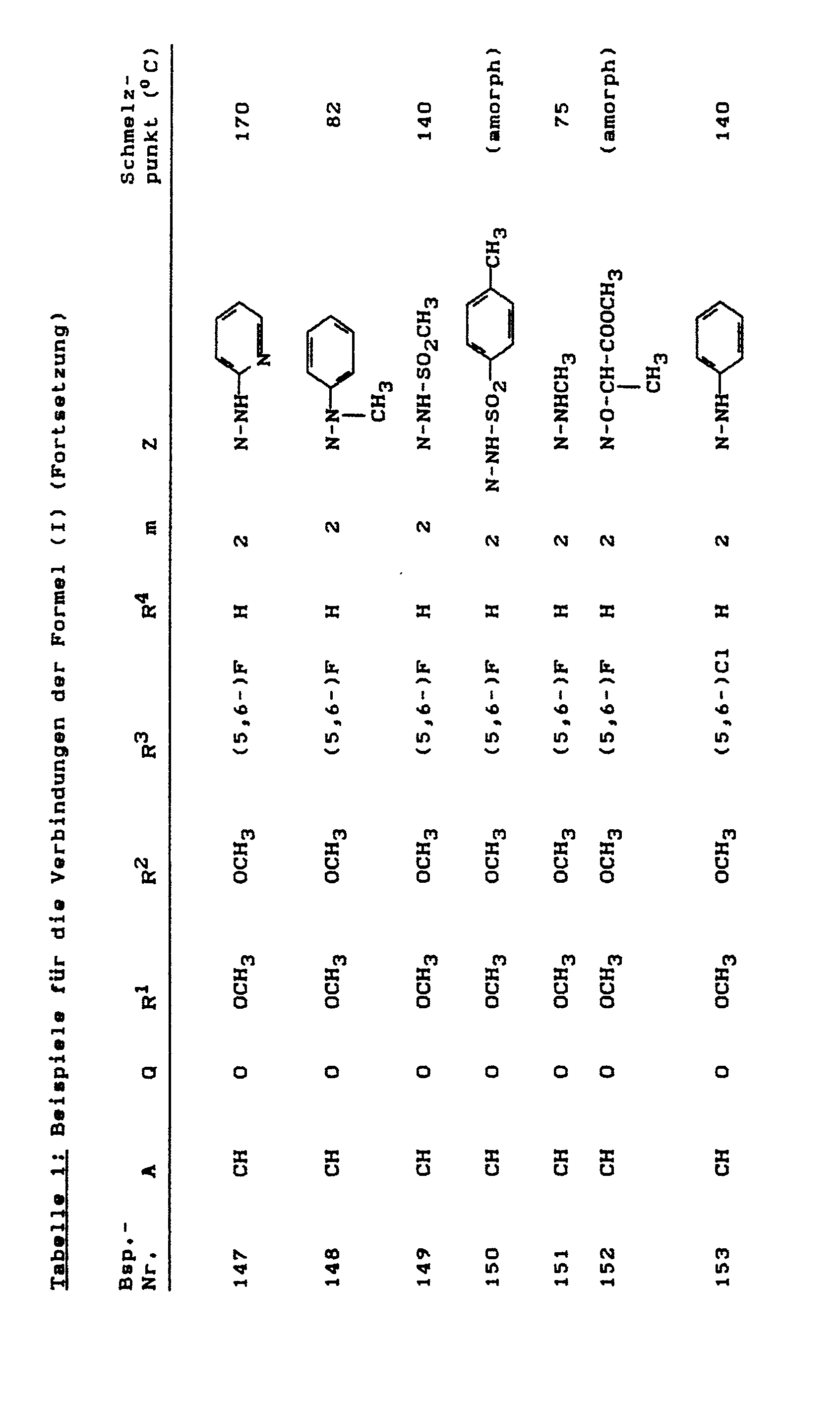
Figure imgb0051
in welcher
m für die Zahlen 0, 1, 2 oder 3 steht,
A für Stickstoff oder eine C-X-Gruppierung steht, wobei X für Wasserstoff oder Halogen steht,
Q für Sauerstoff oder Schwefel steht,
R' und R2 gleich oder verschieden sind und für Wasserstoff, Halogen, Alkyl, Halogenalkyl, Alkoxyalkyl, Alkoxy, Halogenalkoxy, Alkylthio, Alkylamino oder Dialkylamino stehen,
R3 für Amino, Hydroxy, Halogen, Alkyl, Halogenalkyl, Alkoxy, Halogenalkoxy, Alkylamino, Dialkylamino, Alkylcarbonylamino, Alkoxycarbonylamino oder Alkylsulfonylamino steht,
R4 für Wasserstoff oder Alkyl steht und
Z für eine der nachstehenden Gruppierungen steht: N-R5 oder
Figure imgb0052
wobei
R5 für Wasserstoff, Amino oder für jeweils gegebenenfalls substituiertes Alkyl, Alkenyl, Alkinyl, Aralkyl, Aryl, Alkoxycarbonyloxy, Arylaminocarbonyloxy, Carboxyalkoxy, Alkoxycarbonylalkoxy, Alkylamino, Dialkylamino, Aralkylamino, Arylamino, N-Alkyl-N-arylamino, Alkylcarbonylamino, Arylcarbonylamino, Heteroarylamino, Heteroarylcarbonylamino, Alkoxycarbonylamino, Alkylsulfonylamino oder Arylsulfonylamino steht,
R6 für Wasserstoff, Halogen, Cyano, Carboxy, Alkoxycarbonyl, Alkylcarbonylamino oder Dialkoxyphosphoryl steht und
R7 für Formyl, Cyano, Carboxy, Hydroxymethyl, Carbamoyl oder für jeweils gegebenenfalls substituiertes Alkoxycarbonyl, Cycloalkyloxycarbonyl, Aralkoxycarbonyl, Aryloxycarbonyl, Heterocyclylalkoxycarbonyl, Alkylthiocarbonyl, Aralkylthiocarbonyl, Arylthiocarbonyl, Alkylaminocarbonyl, Cycloalkylaminocarbonyl, Aralkylaminocarbonyl, Arylaminocarbonyl, Dialkylaminocarbonyl, Alkylhydrazinocarbonyl, Arylhydrazinocarbonyl, Pyrrolidinylcarbonyl, Piperidinylcarbonyl, Morpholinylcarbonyl, Piperazinylcarbonyl, Phthalimidoxycarbonyl, für die Gruppierung
Figure imgb0053
in welcher A, Q, R' und R2 die oben angegebenen Bedeutungen haben, steht oder zusammen mit R6 für die Gruppierung -CO-O-(CH2)n- steht, wobei n für die Zahlen 1 bis 4 steht,
2. Substituierte Azine der allgemeinen Formel (I) gemäß Anspruch 1, dadurch gekennzeichnet, daß darin m für die Zahlen 0, 1 oder 2 steht,
A für Stickstoff oder eine C-X-Gruppierung steht, wobei X für Wasserstoff oder Halogen steht,
Q für Sauerstoff oder Schwefel steht,
R' und R2 gleich oder verschieden sind und für Wasserstoff, Halogen, C1-C4-Alkyl, C1-C4-Halogenalkyl, C1-C2-Alkoxy-C1-C2-alkyl, Ci-C4-Alkoxy, Ci-C4-Halogenalkoxy, C1-C4-Alkylthio, C1-C4-Alkylamino oder Di-(C1-C2-alkyl)-amino stehen,
R3 für Amino, Hydroxy, Halogen, C1-C4-Alkyl, C1-C4-Halogenalkyl, C1-C4-Alkoxy, C1-C4-Halogenalkoxy, C1-C4-Alkylamino, Di-(C1-C2-alkyl)-amino, C1-C4-Alkyl-carbonylamino, Ci-C4-Alkoxy-carbonylamino oder C1-C4-Alkyisulfonylamino steht,
R 4 für Wasserstoff oder C1-C4-Alkyl steht und
Z für eine der nachstehenden Gruppierungen steht:
N-Rs oder
Figure imgb0054
wobei
R5 für Wasserstoff, Amino oder für jeweils gegebenenfalls durch Halogen substituiertes C1-C6-Alkyl, C3-C6-Alkenyl, C3-C6-Alkinyl, Carboxy-C1-C2-alkoxy, C1-C6-Alkoxycarbonyloxy, C1-C4-Alkoxycarbonyl-C1-C2-alkoxy, C1-C6-Alkylamino, Di-(C1-C2-alkyl)-amino, Ci-C6-Alkylcarbonylamino, C1-C6-Alkoxy-carbonylamino, C1-C6-Alkyl-sulfonylamino, oder für jeweils gegebenenfalls durch Nitro, Hydroxy, Amino, Cyano, Carboxy, Halogen, C1-C4-Alkyl, Cl-C2-Halogenalkyl, Ci-C4-Alkoxy, C1-C2-Halogenalkoxy, Ci-C4-Alkylthio, C1-C2-Halogenalkylthlo, Ci-C4-Alkoxy-carbonyl und/oder Di-(C1-C2-alkyl)-amino substituiertes Phenyl, Phenyl-C1-C4-alkyl, Phenylaminocarbonyloxy, Phenylamino, Phenyl-C1-C4-alkylamino, N-(C1-C4.-alkyl)-phenylamino, Pyridylamino, Pyrimidylamino, Pyridylcarbonylamino, Phenylcarbonylamino, Furylcarbonylamino, Thienylcarbonylamino oder Phenylsulfonylamino steht,
R6 für Wasserstoff, Halogen, Cyano, Carboxy, Ci-C6-Alkoxy-carbonyl, C1-C6-Alkyl-carbo- nylamino oder Di-(C1-C4-alkoxy)-phosphoryl steht und
R7 für Formyl, Cyano, Carboxy, Hydroxymethyl, Carbamoyl oder für jeweils gegebenenfalls durch Halogen, Carboxy oder C1-C4-Alkoxy-carbonyl substituiertes C1-C6-Alkoxycarbonyl, C5-C6-Cycloalkyloxy-carbonyl, Ci-C6-Alkylthio-carbonyl, Ci-C6-Alkylaminocarbonyl oder C5-C6-Cycloalkylamino-carbonyl, für Di-(C1-C2-alkyl)-amino-carbonyl, für C1-C4-Alkyl-amino-carbonyl-C1-C4-alkoxy-carbonyl, für Di-(C1-C2-alkyl)-amino-carbonyl-C1-C4-alkoxy-carbonyl, für Phenylaminocarbonyl-C1-C4-alkoxy-carbonyl, für N-Methyl-phenylaminocarbonyl-C1-C4-alkoxy-carbonyl, für jeweils gegebenenfalls durch Methyl und/oder Ethyl substituiertes Pyrrolidinylcarbonyl, Piperidinylcarbonyl, Morpholinylcarbonyl oder Piperazinylcarbonyl, für jeweils gegebenenfalls durch Nitro, Amino, Cyano, Carboxy, Halogen, C1-C4-Alkyl, Cl-C2-Halogenalkyl, C1-C4-Alkoxy, C1-C2-Halogenalkoxy, C1-C4-Alkylthio, C1-C2-Halogenalkylthlo, C1-C4-Alkoxy-carbonyl und/oder Di-(C1-C2-alkyl)-amino substituiertes Phenoxycarbonyl, Phenyl-C1-C4-alkoxycarbonyl, Furylmethoxycarbonyl, Thienylmethoxycarbonyl, Phenylthiocarbonyl, Phenyl-C1-C4-alkylthiocarbonyl, Phenylaminocarbonyl, Phenyl-C1-C4-alkylamino-carbonyl, N-(C1-C4-Alkyl)-phenylamino-carbonyl oder Phenylhydrazinocarbonyl, für Phthalimidoxycarbonyl, für die Gruppierung
Figure imgb0055
in welcher A, Q, R1 und R2 die oben als bevorzugt angegebenen Bedeutungen haben, steht oder zusammen mit R6 für die Gruppierung -CO-O-(CH2)n- steht, wobei n für die Zahlen 2 oder 3 steht.
3. Substituierte Azine der allgemeinen Formel (I) gemäß Anspruch 1, dadurch gekennzeichnet, daß darin m für die Zahlen 0, 1 oder 2 steht,
A für Stickstoff oder eine CH-Gruppierung steht,
Q für Sauerstoff steht,
R' für Wasserstoff, Chlor, Methyl, Ethyl, Trifluormethyl, Methoxymethyl, Methoxy, Ethoxy, Difluormethoxy, Methylthio, Methylamino, Ethylamino oder Dimethylamino steht,
R2 für Wasserstoff, Chlor, Methyl, Ethyl, Trifluormethyl, Methoxy, Ethoxy, Difluormethoxy, Methylthio, Methylamino, Ethylamino oder Dimethylamino steht,
R3 für Amino, Hydroxy, Fluor, Chlor, Brom, Methyl, Ethyl, Trifluormethyl, Methoxy, Difluormethoxy, Trifluormethoxy, Methylamino, Dimethylamino, Acetylamino, Methoxycarbonylamino oder Methylsulfonylamino steht,
R4 für Wasserstoff oder Methyl steht und
Z für eine der nachstehenden Gruppierungen steht: N-R5 oder
Figure imgb0056
wobei
R5 für Wasserstoff, Amino, für Methyl, Ethyl, Propyl, Isopropyl, Butyl, Isobutyl, sec-Butyl, tert-Butyl, Allyl, Propargyl, Carboxymethoxy, Carboxyethoxy, Methoxycarbonyloxy, Ethoxycarbonyloxy, Propoxycarbonyloxy, Butoxycarbonyloxy, Methoxycarbonylmethoxy, Ethoxycarbonylmethoxy, Methoxycarbonylethoxy, Ethöxycarbonylethoxy, Methylamino, Ethylamino, Propylamino, Isopropylamino, Butylamino, Isobutylamino, sec-Butylamino, tert-Butylamino, Dimethylamino, Acetylamino, Propionylamino, Methoxycarbonylamino, Ethoxycarbonylamino, Methylsulfonylamino, Ethylsulfonylamino, für jeweils gegebenenfalls durch Nitro, Hydroxy, Cyano, Fluor, Chlor, Brom, Methyl, Trifluormethyl, Methoxy, Trifluormethoxy, Methylthio oder Trifluormethylthio substituiertes Phenyl, Benzyl, Phenylaminocarbonyloxy, Phenylamino, Benzylamino, N-Methylphenylamino, Pyridylamino, Pyrimidylamino, Pyridylcarbonylamino, Phenylcarbonylamino, Furylcarbonylamino, Thienylcarbonylamino oder Phenylsulfonylamino steht,
R6 für Wasserstoff, Fluor, Chlor, Cyano, Carboxy, C1-C4-Alkoxy-carbonyl, C,-C4-Alkyl-carbonyla- mino, Dimethoxyphosphoryl oder Diethoxyphosphoryl steht und
R7 für Formyl, Cyano, Carboxy, Hydroxymethyl, Carbamoyl, für jeweils gegebenenfalls durch Fluor, Chlor, Carboxy oder Ci-C4-Alkoxy-carbonyl substituiertes C,-C4-Alkoxy-carbonyl, Cs-C6-Cycloalkyloxy-carbonyl, Cl-C4-Alkylthiocarbonyl, Ci-C4-Alkylamino-carbonyl oder C5-C6-Cycloalkylamino-carbonyl, für Dimethylaminocarbonyl, für C1-C4-Alkylaminocarbonyl-C1-C4- alkoxy-carbonyl, für Dimethylaminocarbonyl-C1-C4-alkoxy-carbonyl, für N-Methyl-phenylaminocarbonyl-C1-C4-alkoxy-carbonyl, für jeweils gegebenenfalls durch Methyl und/oder Ethyl substituiertes Pyrrolidinyl-carbonyl, Piperidinyl-carbonyl, Morpholinyl-carbonyl oder Piperazinyl-carbonyl, für jeweils gegebenenfalls durch Nitro, Cyano, Fluor, Chlor, Brom, Methyl, Trifluormethyl, Methoxy, Trifluormethoxy, Methylthio oder Trifluormethylthio substituiertes Phenoxycarbonyl, Benzyloxycarbonyl, Phenylthiocarbonyl, Benzylthiocarbonyl, Phenylaminocarbonyl, Benzylaminocarbonyl, N-Methyl-phenylaminocarbonyl, Phenylhydrazinocarbonyl, für Phthalimidoxycarbonyl, für die Gruppierung
Figure imgb0057
in welcher A, Q, R' und R2 die oben angegebenen Bedeutungen haben, steht oder zusammen mit R6 für die Gruppierung -CO-O-CH2CH2- steht.
4. Substituierte Azine der allgemeinen Formel (I) gemäß Anspruch 1, dadurch gekennzeichnet, daß darin m für die Zahlen 0, 1 oder 2 steht,
A für eine CH-Gruppierung steht,
Q für Sauerstoff steht,
R' für Methoxy steht,
R 2 für Methoxy steht,
R3 für Fluor, Chlor oder Methyl steht,
R4 für Wasserstoff steht und
Z die in Anspruch 3 angegebene Bedeutung hat.
5. Verfahren zur Herstellung von substituierten Azinen der allgemeinen Formel (I) gemäß Anspruch 1, dadurch gekennzeichnet, daß man entsprechende Carbonylverbindungen der allgemeinen Formel (I)
Figure imgb0058
in welcher
m, A, Q, R', R2, R3 und R4 die in Anspruch 1 angegebene Bedeutung haben,
mit Amino- oder Methylen-Verbindungen der allgemeinen Formel (III)
H2Z (III)
in welcher
Z die in Anspruch 1 angegebene Bedeutung hat, gegebenenfalls in Gegenwart eines Reaktionshilfsmittels und gegebenenfalls in Gegenwart eines Verdünnungsmittels umsetzt und gegebenenfalls die hierbei erhaltenen Produkte anschließend nach üblichen Methoden in andere Derivate gemäß der Definition der Verbindungen der Formel (I) umwandelt.
6. Herbizide Mittel, gekennzeichnet durch einen Gehalt an mindestens einem substituierten Azin der allgemeinen Formel (I) gemäß Anspruch 1.
7. Verwendung von substituierten Azinen der Formel (I) gemäß Anspruch 1 zur Bekämpfung von unerwünschtem Pflanzenwachstum.
8. Verfahren zur Herstellung von herbiziden Mitteln, dadurch gekennzeichnet, daß man substituierte Azine der Formel (I) gemäß Anspruch 1 mit Streckmitteln und/oder oberflächenaktiven Mitteln vermischt.
9. Carbonylverbindungen der Formel (IIa)
Figure imgb0059
in welcher
A für Stickstoff oder eine C-X-Gruppierung steht, wobei X für Wasserstoff oder Halogen steht,
Q für Sauerstoff oder Schwefel steht,
R' und R2 gleich oder verschieden sind und für Wasserstoff, Halogen, Alkyl, Halogenalkyl, Alkoxyalkyl, Alkoxy, Halogenalkoxy, Alkylthio, Alkylamino oder Dialkylamino stehen,
R4 für Wasserstoff oder Alkyl steht,
m für die Zahlen 1 oder 2 steht und
R3-1 für Fluor und gegebenenfalls zusätzlich für Chlor steht.
10. Halogenverbindungen der Formel (IV)
Figure imgb0060
in welcher
A für Stickstoff oder eine C-X-Gruppierung steht, wobei X für Wasserstoff oder Halogen steht,
Q für Sauerstoff oder Schwefel steht,
R' und R2 gleich oder verschieden sind und für Wasserstoff, Halogen, Alkyl, Halogenalkyl, Alkoxyalkyl, Alkoxy, Halogenalkoxy, Alkylthio, Alkylamino oder Dialkylamino stehen,
m für die Zahlen 1 oder 2 steht und
R3-1 für Fluor und gegebenenfalls zusätzlich für Chlor steht.
EP19910108010 1990-05-30 1991-05-17 Substituted azines Withdrawn EP0459243A3 (en)

Applications Claiming Priority (4)

Application Number Priority Date Filing Date Title
DE4017339 1990-05-30
DE4037003 1990-11-21
DE4037003A DE4037003A1 (de) 1990-05-30 1990-11-21 Substituierte azine

Publications (2)

Publication Number Publication Date
EP0459243A2 true EP0459243A2 (de) 1991-12-04
EP0459243A3 EP0459243A3 (en) 1992-03-04

Family

ID=25893662

Family Applications (1)

Application Number Title Priority Date Filing Date
EP19910108010 Withdrawn EP0459243A3 (en) 1990-05-30 1991-05-17 Substituted azines

Country Status (5)

Country Link
US (1) US5167693A (de)
EP (1) EP0459243A3 (de)
JP (1) JPH06345740A (de)
CA (1) CA2043310A1 (de)
DE (1) DE4037003A1 (de)

Cited By (8)

* Cited by examiner, † Cited by third party
Publication number Priority date Publication date Assignee Title
EP0564920A1 (de) * 1992-04-07 1993-10-13 Bayer Ag Substituierte Azine
EP0643048A3 (de) * 1993-08-12 1995-04-26 Bayer Agrochem Kk Cyanidhaltige-Pyrimidinderivate, und ihre Verwendung als Herbizide.
US5541148A (en) * 1992-07-08 1996-07-30 Ciba-Geigy Corporation Selective safened herbicidal composition comprising 2-ethoxycarbonyl-3-(4,6-dimethoxypyrimidine-2-yl) oxy-pyridine and an acylsulfamoylphenyl-urea safener
WO1998001430A1 (de) * 1996-07-08 1998-01-15 Hoechst Schering Agrevo Gmbh Nitroalkyl-substituierte pyrimidinyl- oder triazinyl-(oxy-, thio-, methyl-)phenyl bzw. -pyridinyl derivate, deren herstellung und deren verwendung als herbizide oder pflanzenwachstumsregulatoren
WO1999047497A3 (en) * 1998-03-13 1999-10-28 Merck Frosst Canada Inc Carboxylic acids and acylsulfonamides, compositions containing such compounds and methods of treatment
US6242493B1 (en) 1998-03-13 2001-06-05 Merck Frosst Canada & Co. Carboxylic acids and acylsulfonamides, compositions containing such compounds and methods of treatment
US6867203B2 (en) * 1998-12-29 2005-03-15 Abbott Laboratories Cell adhesion-inhibiting antiinflammatory and immune-suppressive compounds
EP1845083A3 (de) * 2006-04-13 2009-12-30 Univerza V Ljubljani, Fakulteta Za Farmacijo Neue Arylsulfonohydrazidinhibitoren der Enzyme MurC und MurD

Families Citing this family (5)

* Cited by examiner, † Cited by third party
Publication number Priority date Publication date Assignee Title
US5401711A (en) * 1991-07-31 1995-03-28 Kumiai Chemical Industry Co., Ltd. Pyrimidine derivatives and herbicidal composition
GB9814414D0 (en) * 1998-07-03 1998-09-02 Celltech Therapeutics Ltd Chemical compounds
KR100962581B1 (ko) * 2008-06-25 2010-06-11 한국생명공학연구원 물에 대한 용해도가 개선된 신규 신남알데하이드 유도체,이의 제조 방법 및 이를 포함하는 항암제 조성물
EP2147600A1 (de) * 2008-07-21 2010-01-27 Bayer CropScience AG Verfahren zur Kontrolle von Unkraut in Rasen
MA71400A (fr) * 2022-06-10 2025-04-30 Ishihara Sangyo Kaisha, Ltd. Composition herbicide contenant un composé amide d'acide difluorobutène

Family Cites Families (11)

* Cited by examiner, † Cited by third party
Publication number Priority date Publication date Assignee Title
US4808591A (en) * 1988-02-16 1989-02-28 Pfizer Inc. Antiulcer 8-(2-pyrimidylsulfinyl)quinolines
DE3809933A1 (de) * 1988-03-24 1989-10-12 Bayer Ag 2-pyri(mi)dylthio-arylether
ES2063075T3 (es) * 1988-06-16 1995-01-01 Basf Ag Derivados del acido salicilico y sus analogos azufrados.
DE3823991A1 (de) * 1988-07-15 1990-02-15 Basf Ag Heterocyclisch substituierte (alpha)-aryl-acrylsaeureester und fungizide, die diese verbindungen enthalten
US4859679A (en) * 1988-07-19 1989-08-22 Pfizer Inc. Antiulcer (alkyldithio) quinoline derivatives
DE3832237A1 (de) * 1988-09-22 1990-03-29 Basf Ag Aromatische carbonsaeurederivate, verfahren zu ihrer herstellung und ihre verwendung als herbizide
GB8823288D0 (en) * 1988-10-04 1988-11-09 Schering Agrochemicals Ltd Herbicides
DE3835028A1 (de) * 1988-10-14 1990-04-19 Basf Ag Oximether-derivate, verfahren zu ihrer herstellung und diese enthaltende fungizide
JPH02262565A (ja) * 1988-12-19 1990-10-25 Mitsui Toatsu Chem Inc ピリミジン誘導体、その製造法およびこれらを含有する除草剤ならびに除草剤組成物
DE3919435A1 (de) * 1989-06-14 1990-12-20 Basf Ag Salicylaldehyd- und salicylsaeurederivate sowie deren schwefelanaloge, verfahren zu ihrer herstellung als herbizide und bioregulatoren
DE3942476A1 (de) * 1989-12-22 1991-06-27 Basf Ag Salicylsaeurederivate, verfahren zu ihrer herstellung und ihre verwendung als herbizide und bioregulatoren

Cited By (9)

* Cited by examiner, † Cited by third party
Publication number Priority date Publication date Assignee Title
EP0564920A1 (de) * 1992-04-07 1993-10-13 Bayer Ag Substituierte Azine
US5371062A (en) * 1992-04-07 1994-12-06 Bayer Aktiengesellschaft Substituted azines
US5541148A (en) * 1992-07-08 1996-07-30 Ciba-Geigy Corporation Selective safened herbicidal composition comprising 2-ethoxycarbonyl-3-(4,6-dimethoxypyrimidine-2-yl) oxy-pyridine and an acylsulfamoylphenyl-urea safener
EP0643048A3 (de) * 1993-08-12 1995-04-26 Bayer Agrochem Kk Cyanidhaltige-Pyrimidinderivate, und ihre Verwendung als Herbizide.
WO1998001430A1 (de) * 1996-07-08 1998-01-15 Hoechst Schering Agrevo Gmbh Nitroalkyl-substituierte pyrimidinyl- oder triazinyl-(oxy-, thio-, methyl-)phenyl bzw. -pyridinyl derivate, deren herstellung und deren verwendung als herbizide oder pflanzenwachstumsregulatoren
WO1999047497A3 (en) * 1998-03-13 1999-10-28 Merck Frosst Canada Inc Carboxylic acids and acylsulfonamides, compositions containing such compounds and methods of treatment
US6242493B1 (en) 1998-03-13 2001-06-05 Merck Frosst Canada & Co. Carboxylic acids and acylsulfonamides, compositions containing such compounds and methods of treatment
US6867203B2 (en) * 1998-12-29 2005-03-15 Abbott Laboratories Cell adhesion-inhibiting antiinflammatory and immune-suppressive compounds
EP1845083A3 (de) * 2006-04-13 2009-12-30 Univerza V Ljubljani, Fakulteta Za Farmacijo Neue Arylsulfonohydrazidinhibitoren der Enzyme MurC und MurD

Also Published As

Publication number Publication date
EP0459243A3 (en) 1992-03-04
CA2043310A1 (en) 1991-12-01
DE4037003A1 (de) 1991-12-05
JPH06345740A (ja) 1994-12-20
US5167693A (en) 1992-12-01

Similar Documents

Publication Publication Date Title
EP0661262A1 (de) Halogenierte Triazolinone
EP0354329B1 (de) (Hetero)Aryloxynaphthaline mit über Schwefel gebundenen Substituenten
EP0422469A2 (de) Sulfonylaminocarbonyltriazolinone
EP0267412A1 (de) Imidazo-pyrrolo-pyridin-Derivate
EP0419831A2 (de) Substituierte Sulfonylaminoazole
DE3623302A1 (de) Nicotinsaeurederivate
EP0431291A2 (de) Sulfonylaminocarbonyltriazolinone mit über Schwefel gebundenen Substituenten
EP0330959A2 (de) Substituierte Sulfonylaminoazole
EP0459243A2 (de) Substituierte Azine
EP0472925B1 (de) Substituierte Pyridine
EP0451585A2 (de) 2-Aryl-6-hetarylpyridin-Derivate
EP0302328A2 (de) l-Arylpyrazole
EP0355385B1 (de) Substituierte 4-Sulfonylamino-2-azinyl-1,2,4-triazol-3-one, Verfahren sowie Zwischenprodukte zu ihrer Herstellung und ihre Verwendung als Herbizide
EP0484750A1 (de) Substituierte Sulfonylaminotriazolylpyrimidine
EP0477637A1 (de) Bisazinylverbindungen
DE3812350A1 (de) Triazoloazine
EP0343462B1 (de) Aminoguanidinoazine
DE4112329A1 (de) Cyanothiazolderivate
EP0451653A2 (de) Naphthalinderivate
EP0414067A2 (de) Substituierte Arylsulfonylaminoguanidinoazine
EP0302378A2 (de) Sulfonylaminoguanidinoazine
EP0433749A2 (de) Pyrazolin-5-on-Derivate
DE3841086A1 (de) Sulfonylaminoazine, verfahren zu ihrer herstellung und ihre verwendung als herbizide
EP0431270A1 (de) Substituierte Sulfonylamidinohydrazone
EP0457140A2 (de) Phenoxyphenylsulfonylverbindungen

Legal Events

Date Code Title Description
PUAI Public reference made under article 153(3) epc to a published international application that has entered the european phase

Free format text: ORIGINAL CODE: 0009012

AK Designated contracting states

Kind code of ref document: A2

Designated state(s): BE CH DE DK ES FR GB IT LI NL

PUAL Search report despatched

Free format text: ORIGINAL CODE: 0009013

AK Designated contracting states

Kind code of ref document: A3

Designated state(s): BE CH DE DK ES FR GB IT LI NL

17P Request for examination filed

Effective date: 19920717

17Q First examination report despatched

Effective date: 19930716

STAA Information on the status of an ep patent application or granted ep patent

Free format text: STATUS: THE APPLICATION IS DEEMED TO BE WITHDRAWN

18D Application deemed to be withdrawn

Effective date: 19940127