EP0447260A2 - Tl2Ca2Ba2Cu3Ox-supraleitende Filme und deren Herstellung - Google Patents
Tl2Ca2Ba2Cu3Ox-supraleitende Filme und deren Herstellung Download PDFInfo
- Publication number
- EP0447260A2 EP0447260A2 EP91302261A EP91302261A EP0447260A2 EP 0447260 A2 EP0447260 A2 EP 0447260A2 EP 91302261 A EP91302261 A EP 91302261A EP 91302261 A EP91302261 A EP 91302261A EP 0447260 A2 EP0447260 A2 EP 0447260A2
- Authority
- EP
- European Patent Office
- Prior art keywords
- film
- equal
- superconducting
- tl2o3
- substrate
- Prior art date
- Legal status (The legal status is an assumption and is not a legal conclusion. Google has not performed a legal analysis and makes no representation as to the accuracy of the status listed.)
- Withdrawn
Links
Images
Classifications
-
- C—CHEMISTRY; METALLURGY
- C04—CEMENTS; CONCRETE; ARTIFICIAL STONE; CERAMICS; REFRACTORIES
- C04B—LIME, MAGNESIA; SLAG; CEMENTS; COMPOSITIONS THEREOF, e.g. MORTARS, CONCRETE OR LIKE BUILDING MATERIALS; ARTIFICIAL STONE; CERAMICS; REFRACTORIES; TREATMENT OF NATURAL STONE
- C04B35/00—Shaped ceramic products characterised by their composition; Ceramics compositions; Processing powders of inorganic compounds preparatory to the manufacturing of ceramic products
- C04B35/01—Shaped ceramic products characterised by their composition; Ceramics compositions; Processing powders of inorganic compounds preparatory to the manufacturing of ceramic products based on oxide ceramics
- C04B35/45—Shaped ceramic products characterised by their composition; Ceramics compositions; Processing powders of inorganic compounds preparatory to the manufacturing of ceramic products based on oxide ceramics based on copper oxide or solid solutions thereof with other oxides
- C04B35/4512—Shaped ceramic products characterised by their composition; Ceramics compositions; Processing powders of inorganic compounds preparatory to the manufacturing of ceramic products based on oxide ceramics based on copper oxide or solid solutions thereof with other oxides containing thallium oxide
-
- C—CHEMISTRY; METALLURGY
- C01—INORGANIC CHEMISTRY
- C01G—COMPOUNDS CONTAINING METALS NOT COVERED BY SUBCLASSES C01D OR C01F
- C01G15/00—Compounds of gallium, indium or thallium
- C01G15/006—Compounds containing gallium, indium or thallium, with or without oxygen or hydrogen, and containing two or more other elements
-
- C—CHEMISTRY; METALLURGY
- C01—INORGANIC CHEMISTRY
- C01G—COMPOUNDS CONTAINING METALS NOT COVERED BY SUBCLASSES C01D OR C01F
- C01G3/00—Compounds of copper
- C01G3/006—Compounds containing copper, with or without oxygen or hydrogen, and containing two or more other elements
-
- C—CHEMISTRY; METALLURGY
- C04—CEMENTS; CONCRETE; ARTIFICIAL STONE; CERAMICS; REFRACTORIES
- C04B—LIME, MAGNESIA; SLAG; CEMENTS; COMPOSITIONS THEREOF, e.g. MORTARS, CONCRETE OR LIKE BUILDING MATERIALS; ARTIFICIAL STONE; CERAMICS; REFRACTORIES; TREATMENT OF NATURAL STONE
- C04B35/00—Shaped ceramic products characterised by their composition; Ceramics compositions; Processing powders of inorganic compounds preparatory to the manufacturing of ceramic products
- C04B35/01—Shaped ceramic products characterised by their composition; Ceramics compositions; Processing powders of inorganic compounds preparatory to the manufacturing of ceramic products based on oxide ceramics
- C04B35/45—Shaped ceramic products characterised by their composition; Ceramics compositions; Processing powders of inorganic compounds preparatory to the manufacturing of ceramic products based on oxide ceramics based on copper oxide or solid solutions thereof with other oxides
-
- H—ELECTRICITY
- H10—SEMICONDUCTOR DEVICES; ELECTRIC SOLID-STATE DEVICES NOT OTHERWISE PROVIDED FOR
- H10N—ELECTRIC SOLID-STATE DEVICES NOT OTHERWISE PROVIDED FOR
- H10N60/00—Superconducting devices
- H10N60/01—Manufacture or treatment
- H10N60/0268—Manufacture or treatment of devices comprising copper oxide
- H10N60/0296—Processes for depositing or forming copper oxide superconductor layers
- H10N60/0548—Processes for depositing or forming copper oxide superconductor layers by deposition and subsequent treatment, e.g. oxidation of pre-deposited material
-
- C—CHEMISTRY; METALLURGY
- C01—INORGANIC CHEMISTRY
- C01P—INDEXING SCHEME RELATING TO STRUCTURAL AND PHYSICAL ASPECTS OF SOLID INORGANIC COMPOUNDS
- C01P2006/00—Physical properties of inorganic compounds
- C01P2006/40—Electric properties
-
- C—CHEMISTRY; METALLURGY
- C04—CEMENTS; CONCRETE; ARTIFICIAL STONE; CERAMICS; REFRACTORIES
- C04B—LIME, MAGNESIA; SLAG; CEMENTS; COMPOSITIONS THEREOF, e.g. MORTARS, CONCRETE OR LIKE BUILDING MATERIALS; ARTIFICIAL STONE; CERAMICS; REFRACTORIES; TREATMENT OF NATURAL STONE
- C04B2235/00—Aspects relating to ceramic starting mixtures or sintered ceramic products
- C04B2235/02—Composition of constituents of the starting material or of secondary phases of the final product
- C04B2235/30—Constituents and secondary phases not being of a fibrous nature
- C04B2235/32—Metal oxides, mixed metal oxides, or oxide-forming salts thereof, e.g. carbonates, nitrates, (oxy)hydroxides, chlorides
- C04B2235/3205—Alkaline earth oxides or oxide forming salts thereof, e.g. beryllium oxide
- C04B2235/3208—Calcium oxide or oxide-forming salts thereof, e.g. lime
-
- C—CHEMISTRY; METALLURGY
- C04—CEMENTS; CONCRETE; ARTIFICIAL STONE; CERAMICS; REFRACTORIES
- C04B—LIME, MAGNESIA; SLAG; CEMENTS; COMPOSITIONS THEREOF, e.g. MORTARS, CONCRETE OR LIKE BUILDING MATERIALS; ARTIFICIAL STONE; CERAMICS; REFRACTORIES; TREATMENT OF NATURAL STONE
- C04B2235/00—Aspects relating to ceramic starting mixtures or sintered ceramic products
- C04B2235/02—Composition of constituents of the starting material or of secondary phases of the final product
- C04B2235/30—Constituents and secondary phases not being of a fibrous nature
- C04B2235/32—Metal oxides, mixed metal oxides, or oxide-forming salts thereof, e.g. carbonates, nitrates, (oxy)hydroxides, chlorides
- C04B2235/3205—Alkaline earth oxides or oxide forming salts thereof, e.g. beryllium oxide
- C04B2235/3215—Barium oxides or oxide-forming salts thereof
-
- C—CHEMISTRY; METALLURGY
- C04—CEMENTS; CONCRETE; ARTIFICIAL STONE; CERAMICS; REFRACTORIES
- C04B—LIME, MAGNESIA; SLAG; CEMENTS; COMPOSITIONS THEREOF, e.g. MORTARS, CONCRETE OR LIKE BUILDING MATERIALS; ARTIFICIAL STONE; CERAMICS; REFRACTORIES; TREATMENT OF NATURAL STONE
- C04B2235/00—Aspects relating to ceramic starting mixtures or sintered ceramic products
- C04B2235/02—Composition of constituents of the starting material or of secondary phases of the final product
- C04B2235/30—Constituents and secondary phases not being of a fibrous nature
- C04B2235/32—Metal oxides, mixed metal oxides, or oxide-forming salts thereof, e.g. carbonates, nitrates, (oxy)hydroxides, chlorides
- C04B2235/3281—Copper oxides, cuprates or oxide-forming salts thereof, e.g. CuO or Cu2O
- C04B2235/3282—Cuprates
-
- C—CHEMISTRY; METALLURGY
- C04—CEMENTS; CONCRETE; ARTIFICIAL STONE; CERAMICS; REFRACTORIES
- C04B—LIME, MAGNESIA; SLAG; CEMENTS; COMPOSITIONS THEREOF, e.g. MORTARS, CONCRETE OR LIKE BUILDING MATERIALS; ARTIFICIAL STONE; CERAMICS; REFRACTORIES; TREATMENT OF NATURAL STONE
- C04B2235/00—Aspects relating to ceramic starting mixtures or sintered ceramic products
- C04B2235/60—Aspects relating to the preparation, properties or mechanical treatment of green bodies or pre-forms
- C04B2235/614—Gas infiltration of green bodies or pre-forms
-
- Y—GENERAL TAGGING OF NEW TECHNOLOGICAL DEVELOPMENTS; GENERAL TAGGING OF CROSS-SECTIONAL TECHNOLOGIES SPANNING OVER SEVERAL SECTIONS OF THE IPC; TECHNICAL SUBJECTS COVERED BY FORMER USPC CROSS-REFERENCE ART COLLECTIONS [XRACs] AND DIGESTS
- Y10—TECHNICAL SUBJECTS COVERED BY FORMER USPC
- Y10S—TECHNICAL SUBJECTS COVERED BY FORMER USPC CROSS-REFERENCE ART COLLECTIONS [XRACs] AND DIGESTS
- Y10S505/00—Superconductor technology: apparatus, material, process
- Y10S505/725—Process of making or treating high tc, above 30 k, superconducting shaped material, article, or device
- Y10S505/73—Vacuum treating or coating
- Y10S505/732—Evaporative coating with superconducting material
-
- Y—GENERAL TAGGING OF NEW TECHNOLOGICAL DEVELOPMENTS; GENERAL TAGGING OF CROSS-SECTIONAL TECHNOLOGIES SPANNING OVER SEVERAL SECTIONS OF THE IPC; TECHNICAL SUBJECTS COVERED BY FORMER USPC CROSS-REFERENCE ART COLLECTIONS [XRACs] AND DIGESTS
- Y10—TECHNICAL SUBJECTS COVERED BY FORMER USPC
- Y10S—TECHNICAL SUBJECTS COVERED BY FORMER USPC CROSS-REFERENCE ART COLLECTIONS [XRACs] AND DIGESTS
- Y10S505/00—Superconductor technology: apparatus, material, process
- Y10S505/725—Process of making or treating high tc, above 30 k, superconducting shaped material, article, or device
- Y10S505/742—Annealing
Definitions
- the present invention relates to superconductors, such as high temperature superconductors. More specifically, the present invention provides for the fabrication of (for example, high temperature) superconducting films, tapes and wires (such as thick films, tapes and wires).
- superconductors such as high temperature superconductors. More specifically, the present invention provides for the fabrication of (for example, high temperature) superconducting films, tapes and wires (such as thick films, tapes and wires).
- EP-A-0356231 discloses processes for making Tl-Ca-Ba-Cu-O superconductors. This document also discloses a Tl2O3 evaporation process in which Ca-Ba-Cu-O precursors may be formed into Tl-Ca-Ba-Cu-O.
- a process for the preparation of a superconducting film comprising evaporating Tl2O3, either in flowing oxygen at atmospheric pressure, or in a vacuum, on to a Ba-Ca-Cu-O precursor film.
- Both the precursor film and the superconducting film are preferably thick.
- the term "thick" when used in relation to a film (or a layer) means that it has a thickness of at least 10 microns.
- the thickness of either the precursor and/or superconducting film is from 40 to 70 microns.
- the precursor film is suitably prepared from compounds of barium, calcium and copper. At least one compound will usually contain oxygen. These compounds are suitably oxides and/or carbonates. Preferably calcium oxide (CaO) and copper oxide (CuO) are mixed with either barium oxide (BaO) or barium carbonate (BaCO3). Thus it is preferred that a mixture of calcium oxide, barium carbonate and copper oxide, or a mixture of calcium oxide, barium oxide and copper oxide are used. The preferred compounds of calcium barium and copper are suitably ground and mixed to provide a calcium-barium-copper-oxide mixture.
- the precursor film suitably has the general formula: Ca x Ba y Cu u O v wherein:
- the calcium-barium-copper-oxide mixture is suitably first heated at a temperature of from 900 to 950°C, such as about 925°C. This is suitably for at least 24 hours.
- the film may then be prepared from the barium-calcium-copper-oxide mixture. This is suitably achieved by rolling.
- the mixture is suitably rolled to make the (e.g. thick) film which may be achieved by using a plurality (such as two) rollers.
- a substrate may be formed from a plurality (such as two) rollers.
- Preferred substrates are metallic, for example they may comprise copper and/or platinum.
- the precursor film is removed from the substrate before thallium oxide is evaporated on to the film.
- the evaporation of the thallium oxide may be conducted either under atmospheric pressure (for example in a furnace) or in a vacuum. If conducted at atmospheric pressure, this is suitably in the presence of flowing oxygen.
- the temperature is suitably at from 850° to 950°C, such as about 900°C. This may be up to about 5 minutes, such as at about 3 minutes.
- the film is suitably held above the thallium oxide which is evaporated.
- the evaporation of the thallium oxide may take place in a vacuum.
- pressure will be as low as about 5x10 ⁇ 6 Torr.
- the thallium oxide will be suitably contacted with the precursor film for up to about 1 minute, such as about 30 seconds.
- the thallium oxide then is evaporated under atmospheric pressure, such as in a furnace, to contact the film as previously described.
- both vacuum evaporation and (subsequent) atmospheric pressure evaporation of the thallium oxide may be used to prepare the superconducting films of the present invention.
- the superconducting films of the present invention suitably have the general formula: Tl z Ca2Ba2Cu3O 7+1.5z wherein z is greater than or equal to 0.5 and less than or equal to 2.
- the superconducting film may then be used to make a superconducting wire or tape.
- the resultant material may then be annealed. This is suitably in flowing oxygen. Preferably this is at a temperature of from 850° to 950°C, such as about 900°C.
- a preferred process of the present invention comprises: rolling a Ca-Ba-Cu-O powder between rollers to form a film; evaporating Tl2O3 on to the resulting Ca-Ba-Cu-O film; and annealing the resultant Tl2O3-coated film.
- a (e.g. high temperature) superconducting film (which is a thick film) may be prepared by: grinding a mixture of CaO and CuO and either BaO or BaCO3; heating the ground mixture to obtain a Ca x Ba y Cu u O v mixture; forming the Ca x Ba y Cu u O v mixture into a thick film; evaporating Tl2O3 on to the thick film; and annealing the Ca x Ba y Cu u O v thick film coated with Tl2O3.
- the Ca x Ba y Cu u O v mixture is suitably heated at approximately 925°C for about 2 4 hours. This mixture may be rolled to make the thick film whereupon the Tl2O3 is evaporated on to the film in a vacuum.
- the present invention thus provides a process for the manufacture of Tl-Ca-Ba-Cu-O superconducting film.
- the process includes evaporating thallium oxide in a furnace or vacuum evaporator on to a rolled Ca-Ba-Cu-O film.
- the process may thus result in the creation of a superconducting Tl-Ca-Ba-Cu-O film.
- Preferably the process results in the creation of a superconducting Tl-Ca-Ba-Cu-O thick film.
- the Tl-Ca-Ba-Cu-O superconducting films may be produced by a process comprising:
- the process suitably includes annealing the resultant thallium oxide evaporated film.
- the Ca-Ba-Cu-O film may be made by rolling a suitable (e.g. Ca2Ba2Cu3O x ) mixture usually a powder, down between two rollers, on to a substrate, at room temperature. The film may then be taken off the substrate.
- a suitable e.g. Ca2Ba2Cu3O x
- the film may then be taken off the substrate.
- Thallium oxide can then be evaporated on to the film (with or without the substrate) by thermal evaporation in a vacuum.
- the Tl2O3 may be evaporated on to the film by using a vapour process.
- the process of the present invention may thus create a Tl-Ca-Ba-C-O superconducting film or tape.
- the film or tape can then be fabricated into wire.
- the superconductors made by the present invention suitably have the approximate stoichiometry: TlCa x Ba y Cu u O v wherein:
- One advantage of the present invention is that it may provide a relatively easy method for forming superconducting films or tapes. It may also provide a method for creating superconducting thick films or tapes for use in wire making.
- a further advantage of the present invention is that it may provide a Tl-Ca-Ba-Cu-O film that may exhibit extremely low resistivity in the normal state.
- the present invention may provide an improved method for creating materials having superconductive properties.
- a still further advantage of the present invention is that it may provide a more commercially viable superconductive material.
- the present invention thus provides a process for the preparation of Tl-Ca-Ba-Cu-O films and wires, as well as films and wires made therefrom.
- a preferred process for preparing Tl-Ca-Ba-Cu-O superconducting films according to the present comprises:
- the vapour processing is suitably performed in a furnace at a temperature of approximately 900°C, such as in flowing oxygen, at atmospheric pressure.
- Another preferred process for preparing Tl-Ca-Ba-Cu-O superconducting films comprises:
- the annealing is suitably performed in a furnace at a temperature of about 900°C with flowing oxygen.
- the process of the present invention may thus provide high quality Tl-Ca-Ba-Cu-O superconducting film. Moreover, the process may provide a relatively simple and low cost procedure for processing and manufacturing Tl-Ca-Ba-Cu-O superconducting films and tapes that can be processed into wire.
- the resultant films of the present invention may demonstrate extremely low resistivity, for example in the order of 2 x 10 ⁇ 4 ohm-cm at room temperature. Some of the films, with their platinum substrate, may have an even lower resistivity, such as in the order of 4.8 x 10 ⁇ 5 ohm-cm at room temperature.
- a calcium-barium-copper-oxide mixture is suitably prepared.
- This mixture is preferably prepared by grinding and mixing CuO and CaO with either BaCO3 or BaO2.
- the resultant calcium-barium-copper-oxide powder is then heated.
- the resultant powder may be heated in an atmospheric environment at approximately 900°C for approximately 24 hours.
- the calcium-barium-copper-oxide powder may then be placed on to a substrate, for example a platinum or copper substrate and then passed between rollers.
- the calcium-barium-copper-oxide, now in the form of a film may then either be vapour processed with thallium oxide in a furnace with flowing oxygen, or thallium oxide may be evaporated on to the Ca-Ba-Cu-O film in a vacuum evaporator.
- the film has a thickness of from 40 microns to 70 microns.
- a second aspect of the present invention relates to a process for the preparation of a superconducting film, the process comprising rolling a mixture of compounds of barium, calcium and copper, at least one of which is an oxide, into a precursor film, and contacting this precursor film with Tl2O3 vapour.
- a third aspect of the present invention relates to a process for the preparation of a superconducting film, the process comprising forming a Ba-Ca-Cu-O precursor film on a substrate, removing the precursor film from the substrate and contacting the precursor film with Tl2O3 vapour.
- a fourth aspect of the present invention relates to a process for the preparation of a superconducting film, the process comprising forming a Ba-Ca-Cu-O precursor film having a thickness of at least 10 microns (such as from 40 to 70 microns) and contacting the precursor film with Tl2O3 vapour.
- a fifth aspect of the present invention relates to a superconducting film produced by a process of any of the first to fourth aspects of the invention.
- a sixth aspect of the present invention relates to a tape or wire made from a superconducting film of the fifth aspect.
- a mixture of a two molar portion of BaCO3, two molar portion of CaO, and three molar portion of CuO were ground with an agate mortar and pestle.
- the ground mixture was heated in air at approximately 925°C for more than 24 hours (with several intermediate grindings) to obtain a uniform black powder with a nominal composition Ca2Ba2Cu3O7.
- the Ca2Ba2Cu3O7 powder was placed on a platinum substrate. It should be noted, however, that the powder could have been placed on any other suitable substrate such as copper, in powder form or in pellet form.
- the powder was then rolled between two rollers (AMI Center 'C", Applied Mechanics, Inc., Fayetteville, AR) at room temperature until a desired thickness of approximately 40 microns to about 70 microns was achieved.
- the film was then taken off the substrate to produce a free-standing precursor thick film.
- the resultant precursor thick film was subjected to a Tl2O3 vapor process as follows:
- a small platinum boat containing a small amount of Tl2O3 approximately 0.2 to about 0.3 grams was placed in a quartz boat.
- the Ca-Ba-Cu-O precursor thick film was then placed above the platinum boat.
- the quartz boat with its contents was put into a tube furnace, which had been heated to 900°C.
- the quartz boat and contents were heated for about 3 minutes in flowing oxygen. This was followed by a furnace-cooling.
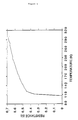
- FIG. 1 illustrates, graphically, the resistance of a Tl-Ca-Ba-Cu-O film made pursuant to this example, as a function of temperature.
- the superconducting film reached zero resistance at 106K.
- the resultant film had the following approximate stoichiometry: Tl z Ca2Ba2Cu3O 7+1.5z wherein z is greater than or equal to 0.5 and less than or equal to 2.
- a mixture of a two molar portion of BaCO3, two molar portion of CaO, and three molar portion of CuO were ground with an agate mortar and pestle.
- the ground mixture was heated in air at approximately 925°C for more than 24 hours (with several intermediate grindings) to obtain a uniform black powder with a nominal composition of Ca2Ba2Cu3O7.
- the Ca2Ba2Cu3O7 powder was placed onto a platinum substrate.
- a platinum substrate such as copper could have been utilized, in powder form or in pellet form.
- the powder and substrate was rolled between two rollers (AMI Center 'C", Applied Mechanics, Inc., Fayetteville, AR) at room temperature until a desired thickness of approximately 70 microns was achieved. The film was then removed from the substrate.
- the precursor thick film was then subjected to a Tl2O3 thermal evaporation in a vacuum (pressure about 5 x 10 ⁇ 6 Torr) with 60 amperes current flowing through the evaporation filament, (the thermal resistance evaporator used was a High Vacuum Equipment Corporation HV-4F vacuum system and C-0018 coater system).
- the procedure that was used was as follows:
- the evaporation filament consisted of a tungsten boat. The thick film was supported on a net which was approximately 6 inches from the boat. There was a shutter between the filament and the film. The Tl2O3 was put in the tungsten boat. The bell jar of the system was lowered and evacuated to 5x10 ⁇ 6 Torr. At this vacuum, the filament was turned on and the current increased slowly to 60 amperes wherein the thallium oxide started to evaporate. At this time, the shutter between the film and filament was removed using a mechanical handle located outside the bell jar. It took almost 30 seconds to complete the evaporation. The filament was then turned off. Air was then leaked into the system to bring the system to atmospheric pressure before the film was taken out of the bell jar.
- the Tl2O3 coated film was then removed from the vacuum system and put above a platinum boat containing Tl2O3.
- the quartz boat with its contents was put into a tube furnace, which had been heated to 900°C.
- the boat and contents was heated for about 3 minutes in flowing oxygen followed by a furnace-cooling.
- the film produced pursuant to this example, formed a superconductive film.
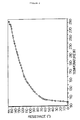
- Figure 2 illustrates, graphically, the resistance of a Tl-Ca-Ba-Cu-O film made pursuant to this example, as a function of temperature. The film reached zero resistance at about 100 K.
- the superconducting film had the following approximate stoichiometry: Tl z Ca2Ba2Cu3O 7+1.5z wherein z is greater than or equal to 0.5 and less than or equal to 2.
Landscapes
- Chemical & Material Sciences (AREA)
- Engineering & Computer Science (AREA)
- Organic Chemistry (AREA)
- Ceramic Engineering (AREA)
- Manufacturing & Machinery (AREA)
- Inorganic Chemistry (AREA)
- Materials Engineering (AREA)
- Structural Engineering (AREA)
- Inorganic Compounds Of Heavy Metals (AREA)
- Superconductors And Manufacturing Methods Therefor (AREA)
- Superconductor Devices And Manufacturing Methods Thereof (AREA)
- Compositions Of Oxide Ceramics (AREA)
Applications Claiming Priority (2)
| Application Number | Priority Date | Filing Date | Title |
|---|---|---|---|
| US07/493,640 US5096881A (en) | 1990-03-15 | 1990-03-15 | Preparation of a superconducting Tl2 Ca2 Ba2 Cu3 O.sub.x2 O3 vapor |
| US493640 | 1990-03-15 |
Publications (2)
| Publication Number | Publication Date |
|---|---|
| EP0447260A2 true EP0447260A2 (de) | 1991-09-18 |
| EP0447260A3 EP0447260A3 (en) | 1992-01-02 |
Family
ID=23961104
Family Applications (1)
| Application Number | Title | Priority Date | Filing Date |
|---|---|---|---|
| EP19910302261 Withdrawn EP0447260A3 (en) | 1990-03-15 | 1991-03-15 | T12ca2ba2cu3ox superconducting films and process for their preparation |
Country Status (5)
| Country | Link |
|---|---|
| US (1) | US5096881A (de) |
| EP (1) | EP0447260A3 (de) |
| JP (1) | JPH05246714A (de) |
| AU (1) | AU650005B2 (de) |
| CA (1) | CA2038357A1 (de) |
Cited By (4)
| Publication number | Priority date | Publication date | Assignee | Title |
|---|---|---|---|---|
| EP0497503A3 (en) * | 1991-01-29 | 1992-12-30 | International Business Machines Corporation | Process for producing single phase, t1cabacuo thin films |
| US5646097A (en) * | 1994-12-27 | 1997-07-08 | General Electric Company | Method of fabricating a (1223) Tl-Ba-Ca-Cu-O superconductor |
| WO1998022409A1 (en) * | 1996-11-18 | 1998-05-28 | University Of Houston - University Park | Ba-Ca-Cu-O COMPOSITIONS SUPERCONDUCTING AT UP TO 126K AND METHODS FOR MAKING SAME |
| US5863336A (en) * | 1996-04-08 | 1999-01-26 | General Electric Company | Apparatus for fabrication of superconductor |
Family Cites Families (13)
| Publication number | Priority date | Publication date | Assignee | Title |
|---|---|---|---|---|
| US4714654A (en) * | 1984-12-20 | 1987-12-22 | Kabushiki Kaisha Toshiba | Magnetic recording medium |
| JPS6287456A (ja) * | 1985-10-11 | 1987-04-21 | 日本碍子株式会社 | 誘電体磁器用セラミツク組成物 |
| GB2228928B (en) * | 1987-01-12 | 1991-09-25 | Univ Houston | Superconductivity in square-planar compound systems |
| EP0292340B1 (de) * | 1987-03-19 | 1994-09-07 | Sumitomo Electric Industries Limited | Verfahren zur Herstellung von supraleitendem Material |
| CA1339978C (en) * | 1987-03-24 | 1998-08-04 | Sumitomo Electric Industries, Ltd. | Ceramic oxide superconductive composite material |
| US5204318A (en) * | 1987-03-27 | 1993-04-20 | Massachusetts Institute Of Technology | Preparation of superconducting oxides and oxide-metal composites |
| DE3852440T2 (de) * | 1987-07-25 | 1995-07-27 | Sumitomo Electric Industries | Supraleitendes Mischoxidmaterial und Methode zu dessen Herstellung. |
| JP2571789B2 (ja) * | 1987-07-26 | 1997-01-16 | 住友電気工業株式会社 | 超電導材料及びその製造方法 |
| JPH01252532A (ja) * | 1987-11-11 | 1989-10-09 | Hitachi Ltd | 酸化物超電導体 |
| US4870052A (en) * | 1988-03-08 | 1989-09-26 | International Business Machines Corporation | Tl-Ca-Ba-Cu-O compositions electrically superconducting above 120 degree K and processes for their preparation |
| JPH02167820A (ja) * | 1988-08-10 | 1990-06-28 | Sumitomo Electric Ind Ltd | T1系複合酸化物超電導体薄膜の成膜方法 |
| US5082825A (en) * | 1988-08-25 | 1992-01-21 | University Of Arkansas | Process for making t1-ba-ca-cu-o superconductors |
| EP0357509A1 (de) * | 1988-08-30 | 1990-03-07 | Sumitomo Electric Industries, Ltd. | Verfahren zum Herstellen eines Mischoxid-Supraleiters vom Thallium-Typ |
-
1990
- 1990-03-15 US US07/493,640 patent/US5096881A/en not_active Expired - Fee Related
-
1991
- 1991-03-12 AU AU72853/91A patent/AU650005B2/en not_active Ceased
- 1991-03-14 JP JP3049352A patent/JPH05246714A/ja active Pending
- 1991-03-15 CA CA002038357A patent/CA2038357A1/en not_active Abandoned
- 1991-03-15 EP EP19910302261 patent/EP0447260A3/en not_active Withdrawn
Cited By (5)
| Publication number | Priority date | Publication date | Assignee | Title |
|---|---|---|---|---|
| EP0497503A3 (en) * | 1991-01-29 | 1992-12-30 | International Business Machines Corporation | Process for producing single phase, t1cabacuo thin films |
| US5646097A (en) * | 1994-12-27 | 1997-07-08 | General Electric Company | Method of fabricating a (1223) Tl-Ba-Ca-Cu-O superconductor |
| US5863336A (en) * | 1996-04-08 | 1999-01-26 | General Electric Company | Apparatus for fabrication of superconductor |
| WO1998022409A1 (en) * | 1996-11-18 | 1998-05-28 | University Of Houston - University Park | Ba-Ca-Cu-O COMPOSITIONS SUPERCONDUCTING AT UP TO 126K AND METHODS FOR MAKING SAME |
| US6239080B1 (en) * | 1996-11-18 | 2001-05-29 | Thr University Of Houston - University Park | Ba-Ca-Cu-O compositions superconducting at up to 126K and methods for making same |
Also Published As
| Publication number | Publication date |
|---|---|
| CA2038357A1 (en) | 1991-09-16 |
| JPH05246714A (ja) | 1993-09-24 |
| AU7285391A (en) | 1991-09-19 |
| US5096881A (en) | 1992-03-17 |
| AU650005B2 (en) | 1994-06-09 |
| EP0447260A3 (en) | 1992-01-02 |
Similar Documents
| Publication | Publication Date | Title |
|---|---|---|
| EP0285030B1 (de) | Verfahren zur Herstellung von dünnen supraleitenden Schichten | |
| RU1831470C (ru) | Способ изготовлени сверхпровод щего керамического провода | |
| JP2711253B2 (ja) | 超伝導膜及びその形成方法 | |
| JP2557486B2 (ja) | 超電導セラミックス長尺体の製造方法および超電導セラミックス長尺体 | |
| EP0382661A2 (de) | Biegbare elektrisch leitende und supraleitende Gegenstände und Verfahren zu ihrer Herstellung | |
| EP0436668A4 (en) | Passivation layers for high temperature superconductors | |
| US4970197A (en) | Oxide superconductor | |
| US5104848A (en) | Device and method of manufacturing a device | |
| EP0446789B1 (de) | Verfahren zur Herstellung einer Schicht aus supraleitendem Oxyd | |
| EP0447260A2 (de) | Tl2Ca2Ba2Cu3Ox-supraleitende Filme und deren Herstellung | |
| EP0328464A2 (de) | Sperrschichtanordnung für leitende Schichten auf Siliziumsubstrat | |
| EP0342038B1 (de) | Josephson-Einrichtung | |
| US5883050A (en) | Hg-based superconducting cuprate films | |
| US5217943A (en) | Process for making composite ceramic superconducting wires | |
| JPH02167820A (ja) | T1系複合酸化物超電導体薄膜の成膜方法 | |
| EP0624910B1 (de) | Verfahren zur Herstellung einer supraleitenden dünnen Schicht vom Hg-Typ | |
| Higuma et al. | Synthesis of superconducting Pb‐doped HgBa2CaCu2O y films by laser ablation and post‐annealing | |
| JPS63301424A (ja) | 酸化物超伝導体薄膜の製造方法 | |
| JP2579311B2 (ja) | 超電導体の劣化防止方法 | |
| EP0344406A2 (de) | Tl-Kupferoxid-Supraleiter | |
| EP0296973A2 (de) | Verfahren zur Herstellung einer supraleitenden Schaltung | |
| JP2564598B2 (ja) | 酸化物超伝導体及びその製造方法 | |
| EP0333513B1 (de) | Oxid-Supraleiter | |
| JPH01221810A (ja) | 酸化物超電導成形体及びその製造方法 | |
| Vernon-Parry et al. | The degradation process in Tl2Ba2Ca1Cu2O10+ x |
Legal Events
| Date | Code | Title | Description |
|---|---|---|---|
| PUAI | Public reference made under article 153(3) epc to a published international application that has entered the european phase |
Free format text: ORIGINAL CODE: 0009012 |
|
| AK | Designated contracting states |
Kind code of ref document: A2 Designated state(s): AT BE CH DE DK ES FR GB GR IT LI LU NL SE |
|
| PUAL | Search report despatched |
Free format text: ORIGINAL CODE: 0009013 |
|
| AK | Designated contracting states |
Kind code of ref document: A3 Designated state(s): AT BE CH DE DK ES FR GB GR IT LI LU NL SE |
|
| 17P | Request for examination filed |
Effective date: 19920121 |
|
| 17Q | First examination report despatched |
Effective date: 19940217 |
|
| STAA | Information on the status of an ep patent application or granted ep patent |
Free format text: STATUS: THE APPLICATION IS DEEMED TO BE WITHDRAWN |
|
| 18D | Application deemed to be withdrawn |
Effective date: 19941116 |