EP0414035A2 - Gibbon Leukemia Virus-Rezeptor - Google Patents
Gibbon Leukemia Virus-Rezeptor Download PDFInfo
- Publication number
- EP0414035A2 EP0414035A2 EP90115136A EP90115136A EP0414035A2 EP 0414035 A2 EP0414035 A2 EP 0414035A2 EP 90115136 A EP90115136 A EP 90115136A EP 90115136 A EP90115136 A EP 90115136A EP 0414035 A2 EP0414035 A2 EP 0414035A2
- Authority
- EP
- European Patent Office
- Prior art keywords
- galv
- receptor protein
- human
- receptor
- cells
- Prior art date
- Legal status (The legal status is an assumption and is not a legal conclusion. Google has not performed a legal analysis and makes no representation as to the accuracy of the status listed.)
- Granted
Links
- 108010084724 gibbon ape leukemia virus receptor Proteins 0.000 title claims description 38
- 241000713813 Gibbon ape leukemia virus Species 0.000 claims abstract description 41
- 108020003175 receptors Proteins 0.000 claims abstract description 29
- 102000005962 receptors Human genes 0.000 claims abstract description 23
- 238000000034 method Methods 0.000 claims abstract description 15
- 230000007502 viral entry Effects 0.000 claims abstract description 6
- 230000001105 regulatory effect Effects 0.000 claims abstract 2
- 108020004414 DNA Proteins 0.000 claims description 34
- 108090000623 proteins and genes Proteins 0.000 claims description 27
- 102000004169 proteins and genes Human genes 0.000 claims description 22
- 108091028043 Nucleic acid sequence Proteins 0.000 claims description 17
- 241000894007 species Species 0.000 claims description 10
- 241001465754 Metazoa Species 0.000 claims description 9
- 125000003275 alpha amino acid group Chemical group 0.000 claims description 9
- 150000001413 amino acids Chemical class 0.000 claims description 5
- 239000003795 chemical substances by application Substances 0.000 claims description 4
- 230000009385 viral infection Effects 0.000 claims description 4
- 208000036142 Viral infection Diseases 0.000 claims description 3
- 108091026890 Coding region Proteins 0.000 claims description 2
- 108020003215 DNA Probes Proteins 0.000 claims description 2
- 239000003298 DNA probe Substances 0.000 claims description 2
- 210000004027 cell Anatomy 0.000 description 41
- 239000012634 fragment Substances 0.000 description 19
- 241000699666 Mus <mouse, genus> Species 0.000 description 16
- 238000004458 analytical method Methods 0.000 description 15
- 241000700605 Viruses Species 0.000 description 13
- 108091032973 (ribonucleotides)n+m Proteins 0.000 description 11
- 239000000523 sample Substances 0.000 description 11
- 239000002299 complementary DNA Substances 0.000 description 10
- 208000015181 infectious disease Diseases 0.000 description 8
- LRFVTYWOQMYALW-UHFFFAOYSA-N 9H-xanthine Chemical compound O=C1NC(=O)NC2=C1NC=N2 LRFVTYWOQMYALW-UHFFFAOYSA-N 0.000 description 6
- 108700026244 Open Reading Frames Proteins 0.000 description 6
- 230000001413 cellular effect Effects 0.000 description 6
- 210000005260 human cell Anatomy 0.000 description 6
- 241001430294 unidentified retrovirus Species 0.000 description 6
- 102000040650 (ribonucleotides)n+m Human genes 0.000 description 5
- HPNSFSBZBAHARI-UHFFFAOYSA-N micophenolic acid Natural products OC1=C(CC=C(C)CCC(O)=O)C(OC)=C(C)C2=C1C(=O)OC2 HPNSFSBZBAHARI-UHFFFAOYSA-N 0.000 description 5
- HPNSFSBZBAHARI-RUDMXATFSA-N mycophenolic acid Chemical compound OC1=C(C\C=C(/C)CCC(O)=O)C(OC)=C(C)C2=C1C(=O)OC2 HPNSFSBZBAHARI-RUDMXATFSA-N 0.000 description 5
- 229960000951 mycophenolic acid Drugs 0.000 description 5
- 239000013612 plasmid Substances 0.000 description 5
- 239000000203 mixture Substances 0.000 description 4
- 230000003252 repetitive effect Effects 0.000 description 4
- 238000001890 transfection Methods 0.000 description 4
- 238000010367 cloning Methods 0.000 description 3
- 230000037361 pathway Effects 0.000 description 3
- 230000008569 process Effects 0.000 description 3
- 229940075420 xanthine Drugs 0.000 description 3
- 241000282326 Felis catus Species 0.000 description 2
- 108010052285 Membrane Proteins Proteins 0.000 description 2
- 102000018697 Membrane Proteins Human genes 0.000 description 2
- 206010028980 Neoplasm Diseases 0.000 description 2
- 241000009328 Perro Species 0.000 description 2
- 108091081062 Repeated sequence (DNA) Proteins 0.000 description 2
- 238000003556 assay Methods 0.000 description 2
- 230000003115 biocidal effect Effects 0.000 description 2
- 230000006870 function Effects 0.000 description 2
- 230000002458 infectious effect Effects 0.000 description 2
- 238000002955 isolation Methods 0.000 description 2
- 238000004519 manufacturing process Methods 0.000 description 2
- 230000001566 pro-viral effect Effects 0.000 description 2
- 238000013519 translation Methods 0.000 description 2
- 239000013598 vector Substances 0.000 description 2
- JKMHFZQWWAIEOD-UHFFFAOYSA-N 2-[4-(2-hydroxyethyl)piperazin-1-yl]ethanesulfonic acid Chemical compound OCC[NH+]1CCN(CCS([O-])(=O)=O)CC1 JKMHFZQWWAIEOD-UHFFFAOYSA-N 0.000 description 1
- 102000007469 Actins Human genes 0.000 description 1
- 108010085238 Actins Proteins 0.000 description 1
- UXVMQQNJUSDDNG-UHFFFAOYSA-L Calcium chloride Chemical compound [Cl-].[Cl-].[Ca+2] UXVMQQNJUSDDNG-UHFFFAOYSA-L 0.000 description 1
- 241000282693 Cercopithecidae Species 0.000 description 1
- 241000282552 Chlorocebus aethiops Species 0.000 description 1
- 108020004635 Complementary DNA Proteins 0.000 description 1
- XZMCDFZZKTWFGF-UHFFFAOYSA-N Cyanamide Chemical compound NC#N XZMCDFZZKTWFGF-UHFFFAOYSA-N 0.000 description 1
- 102000004190 Enzymes Human genes 0.000 description 1
- 108090000790 Enzymes Proteins 0.000 description 1
- 239000007995 HEPES buffer Substances 0.000 description 1
- 241000725303 Human immunodeficiency virus Species 0.000 description 1
- 102000016979 Other receptors Human genes 0.000 description 1
- 229910019142 PO4 Inorganic materials 0.000 description 1
- 108020004518 RNA Probes Proteins 0.000 description 1
- 239000003391 RNA probe Substances 0.000 description 1
- 230000010799 Receptor Interactions Effects 0.000 description 1
- 241001068295 Replication defective viruses Species 0.000 description 1
- 240000004808 Saccharomyces cerevisiae Species 0.000 description 1
- 241000713877 Simian sarcoma-associated virus Species 0.000 description 1
- 206010042566 Superinfection Diseases 0.000 description 1
- 108020005038 Terminator Codon Proteins 0.000 description 1
- 108091036066 Three prime untranslated region Proteins 0.000 description 1
- 108070000030 Viral receptors Proteins 0.000 description 1
- 239000003242 anti bacterial agent Substances 0.000 description 1
- 239000007864 aqueous solution Substances 0.000 description 1
- 230000004071 biological effect Effects 0.000 description 1
- 230000008827 biological function Effects 0.000 description 1
- 239000001110 calcium chloride Substances 0.000 description 1
- 229910001628 calcium chloride Inorganic materials 0.000 description 1
- 235000011148 calcium chloride Nutrition 0.000 description 1
- 238000012790 confirmation Methods 0.000 description 1
- 238000010276 construction Methods 0.000 description 1
- 230000001086 cytosolic effect Effects 0.000 description 1
- 238000002474 experimental method Methods 0.000 description 1
- 239000013604 expression vector Substances 0.000 description 1
- 238000010353 genetic engineering Methods 0.000 description 1
- 230000002209 hydrophobic effect Effects 0.000 description 1
- 230000005965 immune activity Effects 0.000 description 1
- 230000003993 interaction Effects 0.000 description 1
- 238000012423 maintenance Methods 0.000 description 1
- 239000000463 material Substances 0.000 description 1
- 230000007246 mechanism Effects 0.000 description 1
- 108020004999 messenger RNA Proteins 0.000 description 1
- 230000002503 metabolic effect Effects 0.000 description 1
- 244000005700 microbiome Species 0.000 description 1
- 230000004048 modification Effects 0.000 description 1
- 238000012986 modification Methods 0.000 description 1
- 239000002245 particle Substances 0.000 description 1
- NBIIXXVUZAFLBC-UHFFFAOYSA-K phosphate Chemical compound [O-]P([O-])([O-])=O NBIIXXVUZAFLBC-UHFFFAOYSA-K 0.000 description 1
- 239000008363 phosphate buffer Substances 0.000 description 1
- 230000008488 polyadenylation Effects 0.000 description 1
- 239000002244 precipitate Substances 0.000 description 1
- 238000001556 precipitation Methods 0.000 description 1
- 230000002265 prevention Effects 0.000 description 1
- 125000002924 primary amino group Chemical group [H]N([H])* 0.000 description 1
- 238000000746 purification Methods 0.000 description 1
- 230000002285 radioactive effect Effects 0.000 description 1
- 230000010076 replication Effects 0.000 description 1
- 230000001177 retroviral effect Effects 0.000 description 1
- 238000012216 screening Methods 0.000 description 1
- 239000000243 solution Substances 0.000 description 1
- 239000006228 supernatant Substances 0.000 description 1
- 238000003786 synthesis reaction Methods 0.000 description 1
- 238000011144 upstream manufacturing Methods 0.000 description 1
- 210000003501 vero cell Anatomy 0.000 description 1
Images





Classifications
-
- C—CHEMISTRY; METALLURGY
- C12—BIOCHEMISTRY; BEER; SPIRITS; WINE; VINEGAR; MICROBIOLOGY; ENZYMOLOGY; MUTATION OR GENETIC ENGINEERING
- C12N—MICROORGANISMS OR ENZYMES; COMPOSITIONS THEREOF; PROPAGATING, PRESERVING, OR MAINTAINING MICROORGANISMS; MUTATION OR GENETIC ENGINEERING; CULTURE MEDIA
- C12N15/00—Mutation or genetic engineering; DNA or RNA concerning genetic engineering, vectors, e.g. plasmids, or their isolation, preparation or purification; Use of hosts therefor
- C12N15/09—Recombinant DNA-technology
- C12N15/11—DNA or RNA fragments; Modified forms thereof; Non-coding nucleic acids having a biological activity
-
- C—CHEMISTRY; METALLURGY
- C07—ORGANIC CHEMISTRY
- C07K—PEPTIDES
- C07K14/00—Peptides having more than 20 amino acids; Gastrins; Somatostatins; Melanotropins; Derivatives thereof
- C07K14/435—Peptides having more than 20 amino acids; Gastrins; Somatostatins; Melanotropins; Derivatives thereof from animals; from humans
- C07K14/705—Receptors; Cell surface antigens; Cell surface determinants
-
- A—HUMAN NECESSITIES
- A61—MEDICAL OR VETERINARY SCIENCE; HYGIENE
- A61P—SPECIFIC THERAPEUTIC ACTIVITY OF CHEMICAL COMPOUNDS OR MEDICINAL PREPARATIONS
- A61P31/00—Antiinfectives, i.e. antibiotics, antiseptics, chemotherapeutics
- A61P31/12—Antivirals
Definitions
- the present invention relates to the receptor protein for gibbon ape leukemia virus, a retrovirus and to animal genes and their proteins which interact with gibbon ape leukemia virus (GALV). These GALV receptor proteins are required for entry of the virus into cells, and are therefore defined as cellular receptors for GALV.
- GALV gibbon ape leukemia virus
- Retroviruses can be placed into specified groups depending on the pathway used by the viruses to enter cells. It is thought that members of one given group utilize specific cellular receptors for entry into cells and that there is little, if any, cross-utilization of receptors by members of different groups. In general, these receptors have remained virtually unexplored. Of the approximately eight human receptors specific for the retroviruses known to infect human cells, only one has been cloned (CD4 for HIV; Maddon et al., 1986; McDougal et al., 1986). This invention therefore relates to one of the currently known receptors required for infection of animals, specifically human cells, by a retrovirus. Although the presence of a specific receptor protein for GALV (and for other retroviruses utilizing other receptor pathways) has been speculated, no GALV-specific receptor has heretofore been cloned or characterized.
- novel genes and proteins of the present invention are useful in experimental manipulative of the GALV host, in analysis of virus/receptor interactions, and in elucidation and exploitation of the normal role of the receptor, which include functions in immune activity.
- the present invention relates to the GALV protein receptor and its homologs expressed in a wide variety of animal tissues.
- the primary amino acid sequence of the receptor is illustrated in Figure 7, in which the human receptor is shown.
- Figure 7 The primary amino acid sequence of the receptor is shown.
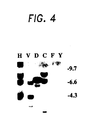
- Figure 4 Southern analysis of species other than human
- Figure 4 closely-related homologs exist in species such as dog, cat, mouse and monkey, and others.
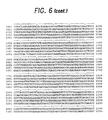
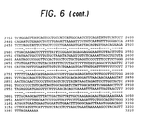
- the invention relates to the purified DNA sequence ( Figure 6) coding for the (human) GALV receptor and to DNAs having substantially the same DNA sequence with substantially the same amino acid coding sequence DNA as in Figure 6. It is appreciated by those of ordinary skill in the art that other such proteins from other species, as well as other alternatives to the protein illustrated in Figure 7, are isolated by the process of the present invention. Various expression systems may be used to produce varieties to these proteins but such varieties still result in a protein with similar biological activities to the present protein. It is also recognized to those skilled in the art that modifications to the DNA sequence presented in Figure 6 results in GALV receptor proteins. The resultant DNA sequences and resulting proteins having substantially the same role in allowing viral entry are included within the scope of the invention.
- the biological function of the receptor is measured by infection studies of cells normally not infectable and transfected with constructs designed to express the protein (as demonstrated in Table 1). Further, antibody binding studies characterize and identify amino acid sequence and structure. Virus infection studies functionally identify a protein's role in allowing viral entry.
- the GALV receptor proteins of the present invention are produced through expression vectors comprising a DNA sequence encoding a human GALV receptor protein (or DNA sequences of the homologs of other species) or mutants (with or without the ability to confer susceptibility to infection on normally uninfectable cells) wherein one or more amino acids have been inserted, deleted, or substituted in or from the amino acid sequence of the human GALV receptor protein or of its homologs from other species.
- the present invention includes a method for identifying GALV receptor homologs of all animal species wherein a DNA probe selected from the DNA in Figure 6 or with substantially the same DNA sequence as that identified in Figure 6 is used to isolate the appropriate DNA from the other species.
- the manipulation of the GALV receptor allows for regulation of viral entry into cells. This allows the prevention of certain viral infections and the ability to control this mechanism for restroviruses utilizing the GALV receptor protein for cellular entry.
- a GALV-receptor protein regulation amount of a GALV-receptor protein-infecting agent is used to manipulate cellular infectivity for retroviruses.
- the plasmids, DNA sequences, and microorganisms deposited in connection with the present invention are deposited in American Cyanamid Company's culture collection maintained in Princeton, New Jersey, and are deposited with American Type Culture Collection in Rockford, Maryland 20952 USA.
- the use of genetic engineering techniques lend themselves to effective methods to produce the GALV receptor proteins of the present invention, it is equally to be noted that the present proteins encompass other methods of production, such as chemical synthesis or purification from animal tissues.
- the present invention relates to the GALV receptor protein.
- the species analyzed in greatest detail is the human, although it is recognized that similar proteins exist in other animal species. Therefore, the invention includes those homologous proteins from other species.
- the present invention discloses the structure of cDNA for the GALV receptor from human HL60 cells. Further, the functionality of the isolated cDNA in allowing viral entry is provided in the following examples but is not limitative thereof.
- Portions of the human receptor gene for gibbon ape leukemia virus are isolated in the following manner. Firstly, DNA from human cells (which are easily infected with GALV and therefore express that viral receptor) are introduced into mouse N1H3T3 cells (which cannot be infected with the virus) in one of a variety of ways, the procedure of CaPO4 precipitation being described below. High molecular weight human DNA is mixed with pSV2gpt in aqueous solution containing CaCl2 and the mixture is added to a second solution containing phosphate and HEPES buffer at pH 7.1. The DNAs precipitate together in aggregates with CaPO4 and this aggregate is applied to cells in culture (mouse N1H3T3 cells). A portion of the cells takes up aggregates of the DNA mixture and incorporates and expresses the transfected DNA.
- GLV gibbon ape leukemia virus
- Such cells are isolated by infection with an antibiotic-resistant virus which requires interaction with the GALV receptor to enter cells.
- This virus is made by rescuing pGV16, a G418-resistant, replication-defective virus (Noda et al., 1986) from cells, using GALV, such that the pGV16 virus is pseudotyped by GALV.
- Supernatant from these infected cells now contains GALV and pGV16 pseudotyped by GALV (i.e., the pGV16 RNA genome is contained in a GALV particle).
- the mixture [termed pGV16(GALV)] can now only infect cells using the pathway regularly used by GALV. This mixture is applied to the transfected mouse cells and these are treated two days later with G418 antibiotic. Only cells infected with pGV16 survive. These are termed primary transfectants and should contain approximately 0.1% of the human genome in each independent isolate.
- the transfected material found in the primary transfectants will contain a large amount of human repetitive sequences and should also include the human GALV receptor gene.
- many transfectants can be expected to have segregated the gene, as is normal for any such experiment.
- a primary transfectant is sought which has been infected with pGV16 but not with the replication competent GALV.
- the continued presence of the receptor, and therefore of the receptor gene can be demonstrated in such a cell because it is not immune to superinfection as are cells which have been infected with GALV. These constitute the majority of isolates because GALV is in excess over pGV16 in the pGV16(GALV) stocks.
- a transfectant infected only with pGV16 is chosen, in this case the cell termed GRT5, DNA is prepared from it, and the DNA used in a second round of transfection to obtain secondary transfectants.
- the process to obtain these is similar to that used to derive primary transfectants. That is, DNA from GRT5 is mixed with pSV2gpt, precipitated with CaPO4, and transfected into NIH3T3 cells. These are then grown in medium containing mycophenolic acid and xanthine and the surviving cells are infected with pGV16(GALV). G418 is then applied and surviving cells are grown up and examined to identify presumptive secondary transfectants for the receptor gene.
- proviral pGV16 Since proviral pGV16 is present in the primary donor DNA, some of the secondary transfectants will have become G418-resistant from transfection of the proviral DNA.
- the bona fide receptor transfectants can, however, be distinguished from these because the majority of the secondary transfectants should be GALV producers.
- the secondary transfectants are therefore screened for GALV production and DNA is prepared from any found. This DNA is analyzed in Southern analysis to determine if any of the producers contain human repetitive sequences. Because the processes of primary and secondary transfection successively reduce the amount of human repetitive DNA to be found in a transfectant, it is expected that any repetitive human DNA found in a secondary transfectant is specifically associated with the receptor gene.
- a genomic library is constructed from any such secondary transfectants found in Example 2(in this case GRT9, the secondary transfectant, and lambda gt10 and EcoRI as the vector and cloning enzyme, respectively) and screened for the presence of clones containing human repetitive DNA using human DNA made radioactive in nick translation as probe.
- One in 500,000 clones is found to hybridize with the probe.
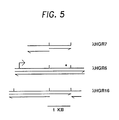
- This clone (lambda R7h) is plaque-purified to homogeneity and its 3.5 kb EcoRI insert is cloned in pGEM2 and pUC118. This 3.5 kb EcoRI fragment is found to consist of 2.2 and 1.3 kb EcoRI-HindIII fragments.
- lambda HGR6 encodes the GALV receptor is derived by demonstrating its potential to confer susceptibility to GALV infection on mouse cells.
- pHGR6-1 containing the three EcoRI insert fragments of lambda HGR6 in the proper orientation, is digested with HindIII, which cuts in the multiple cloning site of the pUC118 vector at the 5′ end of the insert, and with HpaI, which cuts in the 3′ untranslated region of the insert. This fragment is used to replace the region of pSV2gpt between the HindIII and HpaI sites.
- the resulting plasmid, pSV2GR6 ( Figure 8), contains the entire open reading frame encoding the receptor with the SV40 early promoter upstream and an SV40 polyadenylation signal downstream.
- Mouse cells transfected with this plasmid are rendered susceptible to GALV infection, providing final confirmation that the clone does in fact encode the GALV receptor.
- infectious center assay up to 1% of the cells transfected with pSV2gpt and pSV2GR6 and selected for the presence of pSV2gpt are found to be infectedable.
- the plasmid pSV2GR6 is deposited in the American Type Culture Collection as deposit number ATCC 680070 (August 2, 1989). TABLE I Expression of pSV2GR6 renders mouse NIH3T3 cells susceptible to infection by GALV DNA Transfected ICa G418 R colonies b No virus pGV16(GALV) pSV2gpt 0/105 ND 0/106 pSV2gpt + pSV2GR6 739/105 0/107 252/6 x 106 a Number of cells producing virus.number tested. NIH3T3 cells (transfected and then grown in medium containing mycophenolic acid) were exposed to pGV16(GALV) and plated with PG4 cells in an infectious center assay.
Landscapes
- Health & Medical Sciences (AREA)
- Life Sciences & Earth Sciences (AREA)
- Chemical & Material Sciences (AREA)
- Organic Chemistry (AREA)
- Genetics & Genomics (AREA)
- Engineering & Computer Science (AREA)
- Molecular Biology (AREA)
- General Health & Medical Sciences (AREA)
- Zoology (AREA)
- Biophysics (AREA)
- Medicinal Chemistry (AREA)
- Biochemistry (AREA)
- Biomedical Technology (AREA)
- Gastroenterology & Hepatology (AREA)
- Proteomics, Peptides & Aminoacids (AREA)
- Wood Science & Technology (AREA)
- Cell Biology (AREA)
- Immunology (AREA)
- Toxicology (AREA)
- Bioinformatics & Cheminformatics (AREA)
- General Engineering & Computer Science (AREA)
- Biotechnology (AREA)
- Physics & Mathematics (AREA)
- Microbiology (AREA)
- Oncology (AREA)
- General Chemical & Material Sciences (AREA)
- Communicable Diseases (AREA)
- Virology (AREA)
- Public Health (AREA)
- Nuclear Medicine, Radiotherapy & Molecular Imaging (AREA)
- Pharmacology & Pharmacy (AREA)
- Plant Pathology (AREA)
- Animal Behavior & Ethology (AREA)
- Chemical Kinetics & Catalysis (AREA)
- Veterinary Medicine (AREA)
- Micro-Organisms Or Cultivation Processes Thereof (AREA)
- Peptides Or Proteins (AREA)
- Pharmaceuticals Containing Other Organic And Inorganic Compounds (AREA)
- External Artificial Organs (AREA)
- Medicines Containing Material From Animals Or Micro-Organisms (AREA)
Applications Claiming Priority (2)
| Application Number | Priority Date | Filing Date | Title |
|---|---|---|---|
| US39835189A | 1989-08-24 | 1989-08-24 | |
| US398351 | 1989-08-24 |
Publications (3)
| Publication Number | Publication Date |
|---|---|
| EP0414035A2 true EP0414035A2 (de) | 1991-02-27 |
| EP0414035A3 EP0414035A3 (en) | 1992-05-06 |
| EP0414035B1 EP0414035B1 (de) | 1995-05-10 |
Family
ID=23575048
Family Applications (1)
| Application Number | Title | Priority Date | Filing Date |
|---|---|---|---|
| EP90115136A Expired - Lifetime EP0414035B1 (de) | 1989-08-24 | 1990-08-14 | Gibbon Leukemia Virus-Rezeptor |
Country Status (13)
| Country | Link |
|---|---|
| US (2) | US5414076A (de) |
| EP (1) | EP0414035B1 (de) |
| JP (1) | JPH03195490A (de) |
| KR (1) | KR910004802A (de) |
| AT (1) | ATE122396T1 (de) |
| AU (1) | AU635309B2 (de) |
| CA (1) | CA2023819A1 (de) |
| DE (1) | DE69019260T2 (de) |
| DK (1) | DK0414035T3 (de) |
| ES (1) | ES2071714T3 (de) |
| NZ (1) | NZ234951A (de) |
| PT (1) | PT95103B (de) |
| ZA (1) | ZA906724B (de) |
Cited By (3)
| Publication number | Priority date | Publication date | Assignee | Title |
|---|---|---|---|---|
| WO1994023048A3 (en) * | 1993-04-06 | 1994-11-10 | Us Gov Health & Human Serv | Gibbon ape leukemia virus-based retroviral vectors |
| EP0622377A3 (de) * | 1993-04-16 | 1995-01-11 | American Cyanamid Co | Amphotropher Virusrezeptor. |
| US5470726A (en) * | 1991-02-22 | 1995-11-28 | Fred Hutchinson Cancer Research Center | Retrovirus packaging and producer cell lines based on gibbon ape leukemia virus |
Families Citing this family (2)
| Publication number | Priority date | Publication date | Assignee | Title |
|---|---|---|---|---|
| WO1998038203A1 (en) * | 1997-02-27 | 1998-09-03 | Emory University | Sodium-phosphate cotransporter in lithium therapy for the treatment of mental illness |
| US20040002079A1 (en) * | 1998-02-11 | 2004-01-01 | Gunn Robert B. | Sodium-phosphate cotransporter in lithium therapy for the treatment of mental illness |
Family Cites Families (1)
| Publication number | Priority date | Publication date | Assignee | Title |
|---|---|---|---|---|
| US5151361A (en) * | 1989-08-24 | 1992-09-29 | American Cyanamid Company | Host cells expressing gibbon ape leukemia virus receptor |
-
1990
- 1990-08-14 AT AT90115136T patent/ATE122396T1/de active
- 1990-08-14 ES ES90115136T patent/ES2071714T3/es not_active Expired - Lifetime
- 1990-08-14 DK DK90115136.5T patent/DK0414035T3/da active
- 1990-08-14 DE DE69019260T patent/DE69019260T2/de not_active Expired - Fee Related
- 1990-08-14 EP EP90115136A patent/EP0414035B1/de not_active Expired - Lifetime
- 1990-08-17 NZ NZ234951A patent/NZ234951A/en unknown
- 1990-08-22 CA CA002023819A patent/CA2023819A1/en not_active Abandoned
- 1990-08-23 AU AU61262/90A patent/AU635309B2/en not_active Ceased
- 1990-08-23 JP JP2220148A patent/JPH03195490A/ja active Pending
- 1990-08-23 ZA ZA906724A patent/ZA906724B/xx unknown
- 1990-08-23 KR KR1019900013221A patent/KR910004802A/ko not_active Withdrawn
- 1990-08-24 PT PT95103A patent/PT95103B/pt not_active IP Right Cessation
-
1991
- 1991-03-25 US US07/674,287 patent/US5414076A/en not_active Expired - Fee Related
-
1995
- 1995-05-08 US US08/436,900 patent/US5874264A/en not_active Expired - Fee Related
Non-Patent Citations (1)
| Title |
|---|
| CELL GROWTH DIFFERENTIATION, vol. 1, no. 3, March 1990, pages 119-127; B. O'HARA et al.: "Characterization of a human gene conferring sensitivity to infection by gibbon ape leukemia virus" * |
Cited By (3)
| Publication number | Priority date | Publication date | Assignee | Title |
|---|---|---|---|---|
| US5470726A (en) * | 1991-02-22 | 1995-11-28 | Fred Hutchinson Cancer Research Center | Retrovirus packaging and producer cell lines based on gibbon ape leukemia virus |
| WO1994023048A3 (en) * | 1993-04-06 | 1994-11-10 | Us Gov Health & Human Serv | Gibbon ape leukemia virus-based retroviral vectors |
| EP0622377A3 (de) * | 1993-04-16 | 1995-01-11 | American Cyanamid Co | Amphotropher Virusrezeptor. |
Also Published As
| Publication number | Publication date |
|---|---|
| ZA906724B (en) | 1992-01-29 |
| US5414076A (en) | 1995-05-09 |
| DE69019260T2 (de) | 1996-02-01 |
| EP0414035A3 (en) | 1992-05-06 |
| KR910004802A (ko) | 1991-03-29 |
| ATE122396T1 (de) | 1995-05-15 |
| DE69019260D1 (de) | 1995-06-14 |
| CA2023819A1 (en) | 1991-02-25 |
| JPH03195490A (ja) | 1991-08-27 |
| DK0414035T3 (da) | 1995-07-10 |
| ES2071714T3 (es) | 1995-07-01 |
| PT95103A (pt) | 1991-07-05 |
| PT95103B (pt) | 1997-05-28 |
| AU6126290A (en) | 1991-02-28 |
| EP0414035B1 (de) | 1995-05-10 |
| AU635309B2 (en) | 1993-03-18 |
| NZ234951A (en) | 1992-11-25 |
| US5874264A (en) | 1999-02-23 |
Similar Documents
| Publication | Publication Date | Title |
|---|---|---|
| Mavilio et al. | Peripheral blood lymphocytes as target cells of retroviral vector-mediated gene transfer | |
| JP4117904B2 (ja) | C−c ckr−5,cc−ケモカインレセプタ、その誘導体及びこれらの利用 | |
| Birrer et al. | L-myc cooperates with ras to transform primary rat embryo fibroblasts | |
| Quigley et al. | Cloning of the cellular receptor for feline leukemia virus subgroup C (FeLV-C), a retrovirus that induces red cell aplasia | |
| US5763217A (en) | Method of using, process of preparing and composition comprising recombinant herpesvirus vectors | |
| DE68928491T2 (de) | Erzeugnisse und verfahren zur regelung der suppression von neoplastischen phenotypen | |
| JPH10179181A (ja) | 感染および過剰増殖障害の為の組換え療法 | |
| JPH0759579A (ja) | 腫瘍抑制の遺伝機構 | |
| US20090092594A1 (en) | Mammalian genes involved in viral infection and tumor suppression | |
| DE69433342T2 (de) | Methode zur markierung von eukaryotischen zellen mittels verwendung von rezeptoren der zelloberfläche als marker | |
| Salmons et al. | Production of mouse mammary tumor virus upon transfection of a recombinant proviral DNA into cultured cells | |
| Liao et al. | Evi-5, a common site of retroviral integration in AKXD T-cell lymphomas, maps near Gfi-1 on mouse chromosome 5 | |
| US6689877B2 (en) | Methods and compositions for the treatment of human immunodeficiency virus infection | |
| Piwnica-Worms et al. | Retrovirus shuttle vector for study of kinase activities of pp60c-src synthesized in vitro and overproduced in vivo | |
| EP0414035B1 (de) | Gibbon Leukemia Virus-Rezeptor | |
| Hoshide et al. | Molecular cloning, tissue distribution, and chromosomal localization of human cationic amino acid transporter 2 (HCAT2) | |
| Lee et al. | Molecular analysis of the cDNA and genomic DNA encoding mouse RNA helicase A | |
| US5151361A (en) | Host cells expressing gibbon ape leukemia virus receptor | |
| DE69110034T2 (de) | Methoden und zusammensetzungen zur behandlung von bösartigen entartungen, die in zusammenhang mit einer proteinkinase stehen. | |
| Moir et al. | A repetitive DNA sequence in the salmonid fishes similar to a retroviral long terminal repeat | |
| JPH09503655A (ja) | 自己免疫応答の抑制方法 | |
| US5620881A (en) | Gene encoding mutant L3T4 protein which facilitates HIV infection and transgenic mouse expressing such protein | |
| Redolfi et al. | Identification of CXorfl, a novel intronless gene in Xq27. 3, expressed in human hippocampus | |
| US20050112553A1 (en) | Mammalian genes involved in viral infection and tumor suppression | |
| US5159066A (en) | Recombination activating gene (RAG-1) |
Legal Events
| Date | Code | Title | Description |
|---|---|---|---|
| PUAI | Public reference made under article 153(3) epc to a published international application that has entered the european phase |
Free format text: ORIGINAL CODE: 0009012 |
|
| AK | Designated contracting states |
Kind code of ref document: A2 Designated state(s): AT BE CH DE DK ES FR GB GR IT LI LU NL SE |
|
| PUAL | Search report despatched |
Free format text: ORIGINAL CODE: 0009013 |
|
| AK | Designated contracting states |
Kind code of ref document: A3 Designated state(s): AT BE CH DE DK ES FR GB GR IT LI LU NL SE |
|
| 17P | Request for examination filed |
Effective date: 19920709 |
|
| 17Q | First examination report despatched |
Effective date: 19930726 |
|
| RAP1 | Party data changed (applicant data changed or rights of an application transferred) |
Owner name: AMERICAN CYANAMID COMPANY |
|
| GRAA | (expected) grant |
Free format text: ORIGINAL CODE: 0009210 |
|
| AK | Designated contracting states |
Kind code of ref document: B1 Designated state(s): AT BE CH DE DK ES FR GB GR IT LI LU NL SE |
|
| REF | Corresponds to: |
Ref document number: 122396 Country of ref document: AT Date of ref document: 19950515 Kind code of ref document: T |
|
| REF | Corresponds to: |
Ref document number: 69019260 Country of ref document: DE Date of ref document: 19950614 |
|
| ET | Fr: translation filed | ||
| REG | Reference to a national code |
Ref country code: ES Ref legal event code: FG2A Ref document number: 2071714 Country of ref document: ES Kind code of ref document: T3 |
|
| REG | Reference to a national code |
Ref country code: DK Ref legal event code: T3 |
|
| REG | Reference to a national code |
Ref country code: GR Ref legal event code: FG4A Free format text: 3016273 |
|
| ITF | It: translation for a ep patent filed | ||
| PLBE | No opposition filed within time limit |
Free format text: ORIGINAL CODE: 0009261 |
|
| STAA | Information on the status of an ep patent application or granted ep patent |
Free format text: STATUS: NO OPPOSITION FILED WITHIN TIME LIMIT |
|
| 26N | No opposition filed | ||
| PGFP | Annual fee paid to national office [announced via postgrant information from national office to epo] |
Ref country code: DK Payment date: 19970616 Year of fee payment: 8 |
|
| PGFP | Annual fee paid to national office [announced via postgrant information from national office to epo] |
Ref country code: NL Payment date: 19970625 Year of fee payment: 8 |
|
| PGFP | Annual fee paid to national office [announced via postgrant information from national office to epo] |
Ref country code: GB Payment date: 19970702 Year of fee payment: 8 |
|
| PGFP | Annual fee paid to national office [announced via postgrant information from national office to epo] |
Ref country code: SE Payment date: 19970717 Year of fee payment: 8 |
|
| PGFP | Annual fee paid to national office [announced via postgrant information from national office to epo] |
Ref country code: AT Payment date: 19970723 Year of fee payment: 8 |
|
| PGFP | Annual fee paid to national office [announced via postgrant information from national office to epo] |
Ref country code: GR Payment date: 19970725 Year of fee payment: 8 |
|
| PGFP | Annual fee paid to national office [announced via postgrant information from national office to epo] |
Ref country code: FR Payment date: 19970812 Year of fee payment: 8 |
|
| PG25 | Lapsed in a contracting state [announced via postgrant information from national office to epo] |
Ref country code: SE Free format text: LAPSE BECAUSE OF NON-PAYMENT OF DUE FEES Effective date: 19970815 |
|
| PGFP | Annual fee paid to national office [announced via postgrant information from national office to epo] |
Ref country code: ES Payment date: 19970821 Year of fee payment: 8 |
|
| PGFP | Annual fee paid to national office [announced via postgrant information from national office to epo] |
Ref country code: DE Payment date: 19970827 Year of fee payment: 8 |
|
| PGFP | Annual fee paid to national office [announced via postgrant information from national office to epo] |
Ref country code: BE Payment date: 19970908 Year of fee payment: 8 |
|
| PGFP | Annual fee paid to national office [announced via postgrant information from national office to epo] |
Ref country code: LU Payment date: 19970911 Year of fee payment: 8 |
|
| PGFP | Annual fee paid to national office [announced via postgrant information from national office to epo] |
Ref country code: CH Payment date: 19971014 Year of fee payment: 8 |
|
| EUG | Se: european patent has lapsed |
Ref document number: 90115136.5 |
|
| PG25 | Lapsed in a contracting state [announced via postgrant information from national office to epo] |
Ref country code: LU Free format text: LAPSE BECAUSE OF NON-PAYMENT OF DUE FEES Effective date: 19980814 Ref country code: GB Free format text: LAPSE BECAUSE OF NON-PAYMENT OF DUE FEES Effective date: 19980814 Ref country code: AT Free format text: LAPSE BECAUSE OF NON-PAYMENT OF DUE FEES Effective date: 19980814 |
|
| PG25 | Lapsed in a contracting state [announced via postgrant information from national office to epo] |
Ref country code: ES Free format text: THE PATENT HAS BEEN ANNULLED BY A DECISION OF A NATIONAL AUTHORITY Effective date: 19980817 |
|
| PG25 | Lapsed in a contracting state [announced via postgrant information from national office to epo] |
Ref country code: LI Free format text: LAPSE BECAUSE OF NON-PAYMENT OF DUE FEES Effective date: 19980831 Ref country code: GR Free format text: LAPSE BECAUSE OF NON-PAYMENT OF DUE FEES Effective date: 19980831 Ref country code: DK Free format text: LAPSE BECAUSE OF NON-PAYMENT OF DUE FEES Effective date: 19980831 Ref country code: CH Free format text: LAPSE BECAUSE OF NON-PAYMENT OF DUE FEES Effective date: 19980831 Ref country code: BE Free format text: LAPSE BECAUSE OF NON-PAYMENT OF DUE FEES Effective date: 19980831 |
|
| BERE | Be: lapsed |
Owner name: AMERICAN CYANAMID CY Effective date: 19980831 |
|
| PG25 | Lapsed in a contracting state [announced via postgrant information from national office to epo] |
Ref country code: NL Free format text: LAPSE BECAUSE OF NON-PAYMENT OF DUE FEES Effective date: 19990301 |
|
| GBPC | Gb: european patent ceased through non-payment of renewal fee |
Effective date: 19980814 |
|
| REG | Reference to a national code |
Ref country code: CH Ref legal event code: PL |
|
| PG25 | Lapsed in a contracting state [announced via postgrant information from national office to epo] |
Ref country code: FR Free format text: LAPSE BECAUSE OF NON-PAYMENT OF DUE FEES Effective date: 19990430 |
|
| NLV4 | Nl: lapsed or anulled due to non-payment of the annual fee |
Effective date: 19990301 |
|
| PG25 | Lapsed in a contracting state [announced via postgrant information from national office to epo] |
Ref country code: DE Free format text: LAPSE BECAUSE OF NON-PAYMENT OF DUE FEES Effective date: 19990601 |
|
| REG | Reference to a national code |
Ref country code: FR Ref legal event code: ST |
|
| REG | Reference to a national code |
Ref country code: ES Ref legal event code: FD2A Effective date: 20001204 |
|
| REG | Reference to a national code |
Ref country code: DK Ref legal event code: EBP |
|
| PG25 | Lapsed in a contracting state [announced via postgrant information from national office to epo] |
Ref country code: IT Free format text: LAPSE BECAUSE OF NON-PAYMENT OF DUE FEES;WARNING: LAPSES OF ITALIAN PATENTS WITH EFFECTIVE DATE BEFORE 2007 MAY HAVE OCCURRED AT ANY TIME BEFORE 2007. THE CORRECT EFFECTIVE DATE MAY BE DIFFERENT FROM THE ONE RECORDED. Effective date: 20050814 |