EP0408427B1 - Elektrochrome Verglasung - Google Patents
Elektrochrome Verglasung Download PDFInfo
- Publication number
- EP0408427B1 EP0408427B1 EP90401942A EP90401942A EP0408427B1 EP 0408427 B1 EP0408427 B1 EP 0408427B1 EP 90401942 A EP90401942 A EP 90401942A EP 90401942 A EP90401942 A EP 90401942A EP 0408427 B1 EP0408427 B1 EP 0408427B1
- Authority
- EP
- European Patent Office
- Prior art keywords
- electrically conducting
- electrochromic
- potential difference
- point
- strip
- Prior art date
- Legal status (The legal status is an assumption and is not a legal conclusion. Google has not performed a legal analysis and makes no representation as to the accuracy of the status listed.)
- Expired - Lifetime
Links
- 239000000463 material Substances 0.000 claims abstract description 22
- 239000003792 electrolyte Substances 0.000 claims abstract description 13
- 239000011521 glass Substances 0.000 claims abstract description 13
- 238000006243 chemical reaction Methods 0.000 claims abstract description 9
- 238000000034 method Methods 0.000 claims description 15
- NBIIXXVUZAFLBC-UHFFFAOYSA-N Phosphoric acid Chemical compound OP(O)(O)=O NBIIXXVUZAFLBC-UHFFFAOYSA-N 0.000 claims description 13
- ZNOKGRXACCSDPY-UHFFFAOYSA-N tungsten trioxide Chemical compound O=[W](=O)=O ZNOKGRXACCSDPY-UHFFFAOYSA-N 0.000 claims description 7
- 229920003171 Poly (ethylene oxide) Polymers 0.000 claims description 6
- 235000011007 phosphoric acid Nutrition 0.000 claims description 6
- HTXDPTMKBJXEOW-UHFFFAOYSA-N dioxoiridium Chemical compound O=[Ir]=O HTXDPTMKBJXEOW-UHFFFAOYSA-N 0.000 claims description 5
- 229910000457 iridium oxide Inorganic materials 0.000 claims description 5
- RYGMFSIKBFXOCR-UHFFFAOYSA-N Copper Chemical compound [Cu] RYGMFSIKBFXOCR-UHFFFAOYSA-N 0.000 claims description 3
- 229910052802 copper Inorganic materials 0.000 claims description 3
- 239000010949 copper Substances 0.000 claims description 3
- 238000010438 heat treatment Methods 0.000 claims description 3
- 238000012505 colouration Methods 0.000 claims 4
- HBBGRARXTFLTSG-UHFFFAOYSA-N Lithium ion Chemical compound [Li+] HBBGRARXTFLTSG-UHFFFAOYSA-N 0.000 claims 1
- 238000010276 construction Methods 0.000 claims 1
- 229910001416 lithium ion Inorganic materials 0.000 claims 1
- 238000004040 coloring Methods 0.000 abstract description 22
- 238000005562 fading Methods 0.000 abstract 2
- 238000002845 discoloration Methods 0.000 description 9
- 230000005540 biological transmission Effects 0.000 description 7
- 238000003780 insertion Methods 0.000 description 6
- QGLKJKCYBOYXKC-UHFFFAOYSA-N nonaoxidotritungsten Chemical compound O=[W]1(=O)O[W](=O)(=O)O[W](=O)(=O)O1 QGLKJKCYBOYXKC-UHFFFAOYSA-N 0.000 description 6
- 229910001930 tungsten oxide Inorganic materials 0.000 description 6
- 239000010408 film Substances 0.000 description 5
- 230000037431 insertion Effects 0.000 description 5
- 239000000203 mixture Substances 0.000 description 5
- WEVYAHXRMPXWCK-UHFFFAOYSA-N Acetonitrile Chemical compound CC#N WEVYAHXRMPXWCK-UHFFFAOYSA-N 0.000 description 4
- ATJFFYVFTNAWJD-UHFFFAOYSA-N Tin Chemical compound [Sn] ATJFFYVFTNAWJD-UHFFFAOYSA-N 0.000 description 3
- 241001639412 Verres Species 0.000 description 3
- 239000004020 conductor Substances 0.000 description 3
- 238000004519 manufacturing process Methods 0.000 description 3
- 229910052760 oxygen Inorganic materials 0.000 description 3
- 239000000243 solution Substances 0.000 description 3
- 239000002904 solvent Substances 0.000 description 3
- VGGSQFUCUMXWEO-UHFFFAOYSA-N Ethene Chemical compound C=C VGGSQFUCUMXWEO-UHFFFAOYSA-N 0.000 description 2
- UFHFLCQGNIYNRP-UHFFFAOYSA-N Hydrogen Chemical compound [H][H] UFHFLCQGNIYNRP-UHFFFAOYSA-N 0.000 description 2
- ZOKXTWBITQBERF-UHFFFAOYSA-N Molybdenum Chemical compound [Mo] ZOKXTWBITQBERF-UHFFFAOYSA-N 0.000 description 2
- WYURNTSHIVDZCO-UHFFFAOYSA-N Tetrahydrofuran Chemical compound C1CCOC1 WYURNTSHIVDZCO-UHFFFAOYSA-N 0.000 description 2
- 229910000147 aluminium phosphate Inorganic materials 0.000 description 2
- 125000004429 atom Chemical group 0.000 description 2
- QVGXLLKOCUKJST-UHFFFAOYSA-N atomic oxygen Chemical compound [O] QVGXLLKOCUKJST-UHFFFAOYSA-N 0.000 description 2
- 229910052799 carbon Inorganic materials 0.000 description 2
- 238000005266 casting Methods 0.000 description 2
- 238000000151 deposition Methods 0.000 description 2
- 238000003487 electrochemical reaction Methods 0.000 description 2
- 229910003437 indium oxide Inorganic materials 0.000 description 2
- PJXISJQVUVHSOJ-UHFFFAOYSA-N indium(iii) oxide Chemical compound [O-2].[O-2].[O-2].[In+3].[In+3] PJXISJQVUVHSOJ-UHFFFAOYSA-N 0.000 description 2
- 230000003647 oxidation Effects 0.000 description 2
- 238000007254 oxidation reaction Methods 0.000 description 2
- 239000001301 oxygen Substances 0.000 description 2
- 229920000642 polymer Polymers 0.000 description 2
- 239000000758 substrate Substances 0.000 description 2
- 230000001052 transient effect Effects 0.000 description 2
- WHXSMMKQMYFTQS-UHFFFAOYSA-N Lithium Chemical compound [Li] WHXSMMKQMYFTQS-UHFFFAOYSA-N 0.000 description 1
- 239000002253 acid Substances 0.000 description 1
- 239000011324 bead Substances 0.000 description 1
- 239000006229 carbon black Substances 0.000 description 1
- 150000001768 cations Chemical class 0.000 description 1
- 239000003086 colorant Substances 0.000 description 1
- 230000008021 deposition Effects 0.000 description 1
- 230000001627 detrimental effect Effects 0.000 description 1
- 238000010586 diagram Methods 0.000 description 1
- 230000008034 disappearance Effects 0.000 description 1
- 238000004090 dissolution Methods 0.000 description 1
- 230000000694 effects Effects 0.000 description 1
- 239000012789 electroconductive film Substances 0.000 description 1
- 230000008020 evaporation Effects 0.000 description 1
- 238000001704 evaporation Methods 0.000 description 1
- 239000005329 float glass Substances 0.000 description 1
- 238000007496 glass forming Methods 0.000 description 1
- 230000009477 glass transition Effects 0.000 description 1
- 229910052739 hydrogen Inorganic materials 0.000 description 1
- 239000001257 hydrogen Substances 0.000 description 1
- 125000004435 hydrogen atom Chemical group [H]* 0.000 description 1
- 229910052738 indium Inorganic materials 0.000 description 1
- APFVFJFRJDLVQX-UHFFFAOYSA-N indium atom Chemical compound [In] APFVFJFRJDLVQX-UHFFFAOYSA-N 0.000 description 1
- 238000006713 insertion reaction Methods 0.000 description 1
- 150000002500 ions Chemical class 0.000 description 1
- 229910052741 iridium Inorganic materials 0.000 description 1
- GKOZUEZYRPOHIO-UHFFFAOYSA-N iridium atom Chemical compound [Ir] GKOZUEZYRPOHIO-UHFFFAOYSA-N 0.000 description 1
- DCYOBGZUOMKFPA-UHFFFAOYSA-N iron(2+);iron(3+);octadecacyanide Chemical compound [Fe+2].[Fe+2].[Fe+2].[Fe+3].[Fe+3].[Fe+3].[Fe+3].N#[C-].N#[C-].N#[C-].N#[C-].N#[C-].N#[C-].N#[C-].N#[C-].N#[C-].N#[C-].N#[C-].N#[C-].N#[C-].N#[C-].N#[C-].N#[C-].N#[C-].N#[C-] DCYOBGZUOMKFPA-UHFFFAOYSA-N 0.000 description 1
- 239000004973 liquid crystal related substance Substances 0.000 description 1
- 239000011244 liquid electrolyte Substances 0.000 description 1
- 229910052744 lithium Inorganic materials 0.000 description 1
- 230000007774 longterm Effects 0.000 description 1
- 238000001755 magnetron sputter deposition Methods 0.000 description 1
- 238000005259 measurement Methods 0.000 description 1
- 229910052751 metal Inorganic materials 0.000 description 1
- 239000002184 metal Substances 0.000 description 1
- 229910052750 molybdenum Inorganic materials 0.000 description 1
- 239000011733 molybdenum Substances 0.000 description 1
- 229920000620 organic polymer Polymers 0.000 description 1
- 125000004430 oxygen atom Chemical group O* 0.000 description 1
- 244000045947 parasite Species 0.000 description 1
- BASFCYQUMIYNBI-UHFFFAOYSA-N platinum Chemical compound [Pt] BASFCYQUMIYNBI-UHFFFAOYSA-N 0.000 description 1
- 230000010287 polarization Effects 0.000 description 1
- 238000002360 preparation method Methods 0.000 description 1
- 230000000750 progressive effect Effects 0.000 description 1
- 239000012078 proton-conducting electrolyte Substances 0.000 description 1
- 229960003351 prussian blue Drugs 0.000 description 1
- 239000013225 prussian blue Substances 0.000 description 1
- 150000003839 salts Chemical class 0.000 description 1
- 238000007789 sealing Methods 0.000 description 1
- 239000006104 solid solution Substances 0.000 description 1
- 238000004544 sputter deposition Methods 0.000 description 1
- YLQBMQCUIZJEEH-UHFFFAOYSA-N tetrahydrofuran Natural products C=1C=COC=1 YLQBMQCUIZJEEH-UHFFFAOYSA-N 0.000 description 1
- 238000002207 thermal evaporation Methods 0.000 description 1
- XOLBLPGZBRYERU-UHFFFAOYSA-N tin dioxide Chemical compound O=[Sn]=O XOLBLPGZBRYERU-UHFFFAOYSA-N 0.000 description 1
- 229910001887 tin oxide Inorganic materials 0.000 description 1
- 230000007704 transition Effects 0.000 description 1
- XLYOFNOQVPJJNP-UHFFFAOYSA-N water Substances O XLYOFNOQVPJJNP-UHFFFAOYSA-N 0.000 description 1
Images
Classifications
-
- G—PHYSICS
- G02—OPTICS
- G02F—OPTICAL DEVICES OR ARRANGEMENTS FOR THE CONTROL OF LIGHT BY MODIFICATION OF THE OPTICAL PROPERTIES OF THE MEDIA OF THE ELEMENTS INVOLVED THEREIN; NON-LINEAR OPTICS; FREQUENCY-CHANGING OF LIGHT; OPTICAL LOGIC ELEMENTS; OPTICAL ANALOGUE/DIGITAL CONVERTERS
- G02F1/00—Devices or arrangements for the control of the intensity, colour, phase, polarisation or direction of light arriving from an independent light source, e.g. switching, gating or modulating; Non-linear optics
- G02F1/01—Devices or arrangements for the control of the intensity, colour, phase, polarisation or direction of light arriving from an independent light source, e.g. switching, gating or modulating; Non-linear optics for the control of the intensity, phase, polarisation or colour
- G02F1/15—Devices or arrangements for the control of the intensity, colour, phase, polarisation or direction of light arriving from an independent light source, e.g. switching, gating or modulating; Non-linear optics for the control of the intensity, phase, polarisation or colour based on an electrochromic effect
-
- B—PERFORMING OPERATIONS; TRANSPORTING
- B60—VEHICLES IN GENERAL
- B60J—WINDOWS, WINDSCREENS, NON-FIXED ROOFS, DOORS, OR SIMILAR DEVICES FOR VEHICLES; REMOVABLE EXTERNAL PROTECTIVE COVERINGS SPECIALLY ADAPTED FOR VEHICLES
- B60J3/00—Antiglare equipment associated with windows or windscreens; Sun visors for vehicles
- B60J3/04—Antiglare equipment associated with windows or windscreens; Sun visors for vehicles adjustable in transparency
-
- G—PHYSICS
- G02—OPTICS
- G02F—OPTICAL DEVICES OR ARRANGEMENTS FOR THE CONTROL OF LIGHT BY MODIFICATION OF THE OPTICAL PROPERTIES OF THE MEDIA OF THE ELEMENTS INVOLVED THEREIN; NON-LINEAR OPTICS; FREQUENCY-CHANGING OF LIGHT; OPTICAL LOGIC ELEMENTS; OPTICAL ANALOGUE/DIGITAL CONVERTERS
- G02F1/00—Devices or arrangements for the control of the intensity, colour, phase, polarisation or direction of light arriving from an independent light source, e.g. switching, gating or modulating; Non-linear optics
- G02F1/01—Devices or arrangements for the control of the intensity, colour, phase, polarisation or direction of light arriving from an independent light source, e.g. switching, gating or modulating; Non-linear optics for the control of the intensity, phase, polarisation or colour
- G02F1/15—Devices or arrangements for the control of the intensity, colour, phase, polarisation or direction of light arriving from an independent light source, e.g. switching, gating or modulating; Non-linear optics for the control of the intensity, phase, polarisation or colour based on an electrochromic effect
- G02F1/163—Operation of electrochromic cells, e.g. electrodeposition cells; Circuit arrangements therefor
Definitions
- the subject of the invention is an electrochromic system in particular a glazing with transmission of the electrochromic type or more precisely a laminated glazing whose light transmission is modified by application across the glazing of an electrical potential.
- the glazings according to the invention are used to control the solar lighting in a building or in the habitat of a motor vehicle, in particular of a vehicle equipped with a glass roof.
- an electrochromic laminated glazing which consists of two sheets of glass coated with transparent electronic conductive layers - for example layers of indium oxide doped with tin (ITO) - successively separated by a layer of cathodic electrochromic material such as tungsten oxide (WO3), a proton-conducting electrolyte - for example a polymer complex between polyethylene oxide (POE) and l orthophosphoric acid (H3PO4) and a layer of an anodic electrochromic material such as iridium oxide.
- ITO indium oxide doped with tin
- cathodic electrochromic material such as tungsten oxide (WO3)
- a proton-conducting electrolyte - for example a polymer complex between polyethylene oxide (POE) and l orthophosphoric acid (H3PO4)
- an anodic electrochromic material such as iridium oxide.
- the two layers in contact with the electrolyte are capable of reversibly inserting protons if a suitable potential difference is applied to two opposite ends of the glazing, the insertion reaction in the tungsten oxide layer corresponding to a disinsertion reaction in the iridium oxide layer which thus acts as a symmetrical counter electrode of the tungsten oxide electrode.
- Thermodynamic equilibria can be written as follows: WO3 + xH+ + xe ⁇ ⁇ ---> HxW03 and HxIr0y ⁇ ---> Ir0y + xH+ + xe ⁇ .
- the instantaneous measurement of the intensity I of the current which through the glazing is therefore a direct measure of the number of sites of reaction of insertions / disinsertions which occur at this same instant.
- the applied potential difference must be greater, in absolute value, than the thermodynamic potentials of the proton insertion or disinsertion reaction.
- the greater the potential difference applied the faster the coloring - or discoloration - will be.
- parasites may occur, in particular the reduction in molecular hydrogen of the proton or the oxidation of oxygen in the water present in the residual state in certain layers.
- the limits of electrochemical stability characteristic of the system described above are between 0.6 and 1.5 Volts in the coloring phase (insertion of the protons in WO3, disinsertion in HxIr0y) and between -0 , 6 and 0 Volt in the discoloration phase. These limits are subsequently described in this thesis as "the field of electrochemical stability of the coloring and discoloration reaction”.
- the second problem which arises is the time necessary for obtaining a desired coloring or discoloration, that is to say in the hypothesis of maximum coloring / discoloration, the time necessary for the passage of the quantity charge corresponding to all the potential reaction sites, or in other words the time necessary for the intensity I of the current to be reduced to zero - or at least to a value close to zero.
- an electrochromic device operating in transmission comprising two glass substrates, each coated with a conductive film of tin oxide, successively separated by a layer of a material cathode electrochromic, tungsten oxide, a liquid electrolyte and another electrochromic material such as prussian blue, auxiliary electrodes formed from a mixture of materials which are good electrical conductors such as carbon black or platinum powder being arranged along opposite edges of the glazing and connected to a voltage generator.
- electrochromic glazing operating in transmission, is also true of other electrochromic systems of the display or mirror type which necessarily include at least one transparent electroconductive layer whose conductivity is relatively low in comparison, for example, with a layer thick metallic.
- the main object of the invention is a method of using a large electrochromic system whose switching time from a colored state to a discolored state and vice versa is less than 30 seconds even if the width of the glazing is for example of the order of 50 cm, which corresponds to the dimensions of glazing for buildings or motor vehicles.
- This technical problem is solved according to the invention by a method of using a system consisting of two sheets of glass forming a glazing and each coated with an electroconductive layer, these electroconductive layers being successively separated by a layer of a material.
- electrochromic, an electrolyte and a counter electrode said electrically conductive layers each being provided with an electrically conductive strip made of a material whose electrical conductivity is high compared to that of the electrically conductive layers, the electrically conductive strips being arranged along diagonally opposite edges glazing and connected to a voltage generator.
- the invention also relates to the application of such a method to known electrochromic systems and an electrochromic system suitable for the implementation of this method.
- Ohmic drops being directly linked to the distance between the electrodes, it is generally operated with electrically conductive strips parallel to the length of the glazing.
- the potential difference between the two bands A and B is imposed, in other words between) two points of extreme ordinates; according to the invention, the potential is imposed between two points of the same abscissa, arranged on the same side of the glazing but on different electroconductive layers.
- the reference electrode can be indifferently formed by an electrically conductive strip covering the entire length of the glazing (and therefore identical to the strip forming the electrode A) or only part of it.
- the reference electrode R is constituted by an electrically conductive strip the length of the glazing
- one of the two glass sheets is advantageously provided with two electrodes mounted on two parallel edges.
- This arrangement can then be further exploited to remedy another handicap of electrochromic glazing, namely that the kinetics of the reactions can be very low at low temperature and in particular for temperatures below 10 ° C.
- the transparent electroconductive layer located between these two electrodes can be used as a heating layer, thanks to the release of heat. - due to the resistance of said layer - which occurs when a potential difference is applied between these two electrodes.
- the potential difference applied for this preheating is greater than 20 volts and of the order of 24 volts, which more generally corresponds to a voltage of the order of 0.5 volts per centimeter of distance between the electrodes.
- This preheating phase can for example precede any coloring and be of a duration of the order of 2 minutes. Given the proximity of the second glass sheet, it has a tendency to charge during this coloring phase, which in the long term causes a bluing which can advantageously be avoided by using an alternating voltage.
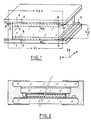
- FIG. 1 is shown schematically an electrochromic cell; for the sake of clarity, the thickness ratios between the various elements of the system have not been respected.
- This cell is constituted by a glass sheet 1 coated with a transparent electrically conductive layer 2, provided with a current supply strip 3.
- This strip 3 is preferably parallel to the length L of the glazing which is moreover of a width 1.
- the glass sheet 1 faces a second glass sheet 4 which is likewise coated with a transparent electrically conductive layer 5 provided with a current supply strip 6.
- anodic electrochromic material preferably iridium oxide
- an electrolytic layer with proton conduction 8 preferably a polymeric complex between polyethylene oxide and orthophosphoric acid rigorously anhydrous
- a layer 9 of a cathodic electrochromic material preferably tungsten trioxide
- the electrolytic layer is deposited on the tungsten oxide layer within a short time after the deposition thereof.
- the glazing is assembled in an autoclave at a temperature of 90 ° C under a pressure of 15 kg / cm2.
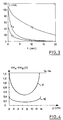
- FIG. 3 shows the variation over time of the intensity of the coloring current.
- the gain in coloring time is 6 seconds, ie a time saving of 30%. For terminals even further apart the gain increases further. So we can make an electrochromic roof whose shortest length exceeds 30 cm and which, however, the switching time is less than 1 minute at 20 ° C, in this case a division by 6 of the switching time which can typically be reduced from 3 minutes to 30 seconds. .
- the assembly according to the invention endows the electrically conductive layer 5 with two current supply strips 6 and 6 ′.
- the electrical resistance of this layer 5 can be used to heat the cell.
- a potential difference U3 of for example 24 Volts is applied between point B and point R, which makes it possible to raise the temperature of the electrolytic layer which is known to have maximum performance. for a temperature between 20 and 80 ° C.
- the potential difference U3 is preferably an alternating voltage in order to avoid the polarization of the layers of electrochromic materials, with in this case for example an effective voltage of 24 Volts. It should be noted that heating can be used regardless of the oxidation state of the electrochromic layers.
- the invention has been described with reference to a cell whose electrolyte is proton-conducting but it should be understood that it applies mutatis mutandis to all electrochromic systems, in particular to cells whose electrolyte is ion-conducting, by lithium example.
- other materials can be used for the production of the electrochromic layer and the counter-electrode, this in particular with a view to obtaining other colors, the values of the applied voltages having to be adjusted as a function new thermodynamic balances.
- a 3-electrode assembly can be used more generally in any system requiring at least one transparent electroconductive layer, whether it be systems operating by insertion / de-insertion of ions such as those mentioned in this specification, display systems for systems with an electrochromic gel or with liquid crystal.
Landscapes
- Physics & Mathematics (AREA)
- Nonlinear Science (AREA)
- General Physics & Mathematics (AREA)
- Optics & Photonics (AREA)
- Engineering & Computer Science (AREA)
- Mechanical Engineering (AREA)
- Electrochromic Elements, Electrophoresis, Or Variable Reflection Or Absorption Elements (AREA)
- Non-Silver Salt Photosensitive Materials And Non-Silver Salt Photography (AREA)
- Joining Of Glass To Other Materials (AREA)
- Liquid Crystal Substances (AREA)
- Cosmetics (AREA)
- Heterocyclic Carbon Compounds Containing A Hetero Ring Having Oxygen Or Sulfur (AREA)
Claims (13)
- Verfahren zur Betätigung eines elektrochromen Systems, das aus zwei eine Verglasung bildenden Glasscheiben (1, 4) besteht, die jeweils mit einer elektrisch leitenden Schicht (2, 5) beschichtet sind, wobei diese elektrisch leitenden Schichten (2, 5) aufeinanderfolgend durch eine Schicht aus einem elektrochromen Material (9), einem Elektrolyten (8) und einer Gegenelektrode (7) getrennt und jeweils mit einem elektrisch leitenden Band (3, 6) ausgerüstet sind, das aus einem Material besteht, dessen elektrische Leitfähigkeit, bezogen auf die der elektrisch leitenden Schichten (2, 5) hoch ist, und die elektrisch leitenden Bänder (3, 6) entlang der einander diagonal gegenüberliegenden Ränder der Verglasung angeordnet und an eine Spannungsquelle angeschlossen sind, dadurch gekennzeichnet, daß mit dieser Spannungsquelle in der Färbungs- bzw. Entfärbungsphase zwischen zwei Punkten A und B, die sich jeweils auf den elektrisch leitenden Schichten (2, 5) in unmittelbarer Nähe der elektrisch leitenden Bänder (3, 6) befinden, eine solche Potentialdifferenz U₁(t) = (VA - VB)(t) erzeugt wird, daß zwischen Punkt A und einem Punkt R, der sich auf der anderen elektrisch leitenden Schicht wie Punkt A und direkt gegenüber diesem befindet, eine Potentialdifferenz U₂ = (VA - VR)(t) = Uo entsteht, wobei Uo konstant und aus dem Stabilitätsbereich der Färbungs- bzw. der Entfärbungs-reaktion ausgewählt ist.
- Verfahren nach Anspruch 1, dadurch gekennzeichnet, daß die zum Zeitpunkt t angelegte Potentialdifferenz U₁ zuvor durch voltamperemetrische Einstellungen festgelegt ist.
- Verfahren nach Anspruch 1, dadurch gekennzeichnet, daß die Potentialdifferenz U₁ = f(t) durch eine Exponential-funktion angenähert ist.
- Verfahren nach einem der Ansprüche 1 bis 3, worin das elektrochrome System ein solches ist, dessen elektrisch leitende Bänder (3, 6) aus Kupfer bestehen.
- Verfahren nach einem der Ansprüche 1 bis 3, worin das elektrochrome System ein solches ist, dessen Schicht aus elektrochromem Material (9) aus einem kathodischen elektrochromen Material wie Wolframtrioxid besteht.
- Verfahren nach einem der Ansprüche 1 bis 3, worin das elektrochrome System ein solches ist, dessen Gegenelektro-de (7) aus einem anodischen elektrochromen Material wie Iridiumoxid besteht.
- Verfahren nach einem der Ansprüche 1 bis 3, worin der Elektrolyt (8) ein protonenleitender Elektrolyt und vorzugsweise ein Polymerkomplex aus Polyethylenoxid und wasserfreier Ortho-Phosphorsäure ist.
- Verfahren nach einem der Ansprüche 1 bis 3, worin der Elektrolyt (8) ein Lithiumionen-leitender Elektrolyt ist.
- Elektrochromes System, das aus zwei eine Verglasung bildenden Glasscheiben (1, 4) besteht, die jeweils mit einer elektrisch leitenden Schicht (2, 5) beschichtet sind, wobei diese elektrisch leitenden Schichten (2, 5) aufeinanderfolgend durch eine Schicht aus einem elektrochromen Material (9), einem Elektrolyten (8) und einer Gegenelektrode (7) getrennt und jeweils mit einem elektrisch leitenden Band (3, 6) ausgerüstet sind, das aus einem Material besteht, dessen elektrische Leitfähigkeit, bezogen auf die der elektrisch leitenden Schichten (2, 5) hoch ist, und die elektrisch leitenden Bänder (3, 6) entlang der einander diagonal gegenüberliegenden Ränder der Verglasung angeordnet und an eine Spannungsquelle angeschlossen sind, die in der Färbungs- bzw. Entfärbungs-phase zwischen zwei Punkten A und B, die sich jeweils auf den elektrisch leitenden Schichten (2, 5) in unmittelbarer Nähe der elektrisch leitenden Bänder (3, 6) befinden, eine Potentialdifferenz U₁ erzeugt, dadurch gekennzeichnet, daß es ein drittes elektrisch leitendes Band (6′) enthält, das dem Band (3), in dessen Nähe sich der Punkt A befindet, gegenüberliegt und auf der anderen elektrisch leitenden Schicht wie derjenigen, auf der sich Punkt A befindet, angeordnet ist, und daß die Spannungsquelle vorgesehen ist, eine solche Potentialdifferenz U₁(t) = (VA - VB)(t) zu erzeugen, daß die Potentialdifferenz U₂ zwischend dem Band (3), in dessen Nähe sich der Punkt A befindet, und dem dritten Band (6′) konstant bleibt.
- Elektrochromes System nach Anspruch 9, dadurch gekennzeichnet, daß das in der Nähe des Punktes B befindliche elektrisch leitende Band (6) und das dritte Band (6′) an eine Spannungsquelle angeschlossen sind, die eine Potentialdifferenz U₃ erzeugen kann, die zur Erwärmung der Zelle verwendet wird, wenn die angelegte Spannung U₂ null ist.
- Elektrochromes System nach Anspruch 10, dadurch gekennzeichnet, daß die Potentialdifferenz U₃ wechselt.
- Elektrochromes System nach Anspruch 11, dadurch gekennzeichnet, daß U3effektiv 0,5 V/cm Abstand zwischen den Elektroden beträgt.
- Anwendung des Verfahrens nach einem der Ansprüche 1 bis 8 zur Herstellung eines elektrochromen Daches, dessen kleinste Länge größer als 30 cm und dessen Wechselzeit vom gefärbten zum entfärbten Zustand bei 20 °C kleiner als eine Minute ist.
Applications Claiming Priority (2)
| Application Number | Priority Date | Filing Date | Title |
|---|---|---|---|
| FR8909283 | 1989-07-11 | ||
| FR8909283A FR2649691B1 (fr) | 1989-07-11 | 1989-07-11 | Vitrage electrochrome |
Publications (2)
| Publication Number | Publication Date |
|---|---|
| EP0408427A1 EP0408427A1 (de) | 1991-01-16 |
| EP0408427B1 true EP0408427B1 (de) | 1994-09-28 |
Family
ID=9383651
Family Applications (1)
| Application Number | Title | Priority Date | Filing Date |
|---|---|---|---|
| EP90401942A Expired - Lifetime EP0408427B1 (de) | 1989-07-11 | 1990-07-05 | Elektrochrome Verglasung |
Country Status (8)
| Country | Link |
|---|---|
| US (1) | US5124833A (de) |
| EP (1) | EP0408427B1 (de) |
| KR (1) | KR100193298B1 (de) |
| AT (1) | ATE112399T1 (de) |
| CA (1) | CA2020719A1 (de) |
| DE (1) | DE69012902T2 (de) |
| ES (1) | ES2065504T3 (de) |
| FR (1) | FR2649691B1 (de) |
Cited By (2)
| Publication number | Priority date | Publication date | Assignee | Title |
|---|---|---|---|---|
| DE102008061403B4 (de) * | 2008-12-10 | 2012-02-09 | Saint-Gobain Sekurit Deutschland Gmbh & Co. Kg | Aufbau und Verfahren zum Anpassen der Polarität einer Leistungsquelle an eine elektrochrome Vorrichtung |
| DE102015015877A1 (de) | 2015-12-09 | 2017-06-14 | Bayerisches Zentrum für angewandte Energieforschung, e.V. (ZAE Bayern) | Optisch schaltendes Element |
Families Citing this family (109)
| Publication number | Priority date | Publication date | Assignee | Title |
|---|---|---|---|---|
| DE4006947A1 (de) * | 1990-03-06 | 1991-09-12 | Bayerische Motoren Werke Ag | Verfahren und anordnung zum anlegen einer elektrischen betriebsspannung an ein elektrooptisches schichtsystem |
| US5473340A (en) * | 1990-09-27 | 1995-12-05 | The United States Of America As Represented By The Secretary Of The Navy | Apparatus for displaying a multi-color pattern |
| FR2681444B1 (fr) * | 1991-09-16 | 1994-09-30 | Corning Inc | Dispositif electrochrome. |
| FR2687229B1 (fr) * | 1992-02-11 | 1994-04-15 | Saint Gobain Vitrage Internal | Systeme electrochrome. |
| FR2690536B1 (fr) * | 1992-04-28 | 1994-06-17 | Saint Gobain Vitrage Int | Vitrage electrochrome. |
| FR2691550B1 (fr) * | 1992-05-21 | 1995-04-21 | Saint Gobain Vitrage Int | Vitrage électrochrome architectural. |
| FR2694820B1 (fr) * | 1992-08-12 | 1994-09-16 | Saint Gobain Vitrage Int | Alimentation d'une cellule électrochrome. |
| IT1272219B (it) * | 1994-04-27 | 1997-06-16 | Siv Soc Italiana Vetro | Apparecchio per il controllo di una finestra elettrocromica |
| IT1272249B (it) * | 1994-05-13 | 1997-06-16 | Siv Soc Italiana Vetro | Procedimento ed apparecchiatura per il deposito di strati sottili elettrocromici formati da materiali a composizione stechiometrica |
| FR2719915B1 (fr) | 1994-05-16 | 1996-06-14 | Saint Gobain Vitrage | Système électrochrome et son procédé d'alimentation. |
| EP0770900A1 (de) | 1995-10-26 | 1997-05-02 | Saint-Gobain Vitrage | Elektrochrome Verglasung |
| DE69721175T2 (de) * | 1996-10-17 | 2004-05-19 | Saint-Gobain Glass France | Verglazung mit einer activen thermische, elektrische und/oder elektrochemische Einheit |
| US6094290A (en) * | 1999-04-22 | 2000-07-25 | Crawford; Christopher L. | Light-reactive thermal window |
| US6980272B1 (en) * | 2000-11-21 | 2005-12-27 | Sarnoff Corporation | Electrode structure which supports self alignment of liquid deposition of materials |
| US7826124B2 (en) * | 2001-06-25 | 2010-11-02 | University Of Washington Through Its Center For Commercialization | Flexible panel based on electrochromic polymers |
| US7450290B2 (en) * | 2001-06-25 | 2008-11-11 | University Of Washington | Electropolymerization of enhanced electrochromic (EC) polymer film |
| EP1501703B1 (de) * | 2002-04-29 | 2016-05-11 | Magna Mirrors Holding GmbH | Abdeckmodul |
| US7808691B2 (en) | 2002-06-25 | 2010-10-05 | University Of Washington | Green electrochromic materials |
| DE10249263B4 (de) | 2002-10-23 | 2004-12-09 | Daimlerchrysler Ag | Verbundglasscheibe mit Wärmekomfortwirkung sowie deren Verwendung |
| DE102004005611B4 (de) | 2004-02-05 | 2006-04-27 | Saint-Gobain Sekurit Deutschland Gmbh & Co. Kg | Transparente Scheibe mit partiell abdunkelbarem Sichtfeld und Verfahren zum Steuern eines elektrochrom verfärbbaren Flächenelements in einer transparenten Scheibe, insbesondere einer Windschutzscheibe |
| WO2005084350A2 (en) * | 2004-03-01 | 2005-09-15 | University Of Washington | Switchable window based on electrochromic polymers |
| WO2008118967A1 (en) * | 2007-03-26 | 2008-10-02 | University Of Washington | Smart sunglasses, helmet faceshields and goggles based on electrochromic polymers |
| DE102008064357A1 (de) | 2008-12-20 | 2010-06-24 | Saint-Gobain Sekurit Deutschland Gmbh & Co. Kg | Optisch aktive Verglasung mit Überspannungsschutz |
| US11599003B2 (en) | 2011-09-30 | 2023-03-07 | View, Inc. | Fabrication of electrochromic devices |
| US9007674B2 (en) | 2011-09-30 | 2015-04-14 | View, Inc. | Defect-mitigation layers in electrochromic devices |
| US11592723B2 (en) | 2009-12-22 | 2023-02-28 | View, Inc. | Automated commissioning of controllers in a window network |
| US11314139B2 (en) | 2009-12-22 | 2022-04-26 | View, Inc. | Self-contained EC IGU |
| US10690540B2 (en) | 2015-10-06 | 2020-06-23 | View, Inc. | Multi-sensor having a light diffusing element around a periphery of a ring of photosensors |
| US8213074B1 (en) | 2011-03-16 | 2012-07-03 | Soladigm, Inc. | Onboard controller for multistate windows |
| US10303035B2 (en) | 2009-12-22 | 2019-05-28 | View, Inc. | Self-contained EC IGU |
| US20130271813A1 (en) | 2012-04-17 | 2013-10-17 | View, Inc. | Controller for optically-switchable windows |
| JP5647696B2 (ja) | 2010-02-19 | 2015-01-07 | サン−ゴバン グラス フランス | 直列接続されたセルを含むエレクトロクロミックグレイジング、およびその製造方法 |
| ES2450520T5 (es) * | 2010-03-05 | 2017-08-07 | Sage Electrochromics, Inc. | Laminado de un dispositivo electrocrómico a sustratos de vidrio |
| FR2961609B1 (fr) | 2010-06-21 | 2012-06-01 | Saint Gobain | Dispositif a proprietes optiques et/ou energetiques electrocommandables |
| FR2962818B1 (fr) | 2010-07-13 | 2013-03-08 | Saint Gobain | Dispositif electrochimique a proprietes de transmission optique et/ou energetique electrocommandables. |
| FR2962682B1 (fr) | 2010-07-16 | 2015-02-27 | Saint Gobain | Vitrage electrochimique a proprietes optiques et/ou energetiques electrocommandables |
| DE102010048097A1 (de) * | 2010-10-09 | 2012-04-12 | Daimler Ag | Scheibe mit optisch aktivem Element und Verfahren zum Betreiben einer solchen Scheibe |
| US8164818B2 (en) | 2010-11-08 | 2012-04-24 | Soladigm, Inc. | Electrochromic window fabrication methods |
| US8643933B2 (en) | 2011-12-14 | 2014-02-04 | View, Inc. | Connectors for smart windows |
| US10180606B2 (en) | 2010-12-08 | 2019-01-15 | View, Inc. | Connectors for smart windows |
| US10935865B2 (en) | 2011-03-16 | 2021-03-02 | View, Inc. | Driving thin film switchable optical devices |
| US9778532B2 (en) | 2011-03-16 | 2017-10-03 | View, Inc. | Controlling transitions in optically switchable devices |
| US11822202B2 (en) | 2011-03-16 | 2023-11-21 | View, Inc. | Controlling transitions in optically switchable devices |
| US10175549B2 (en) | 2011-03-16 | 2019-01-08 | View, Inc. | Connectors for smart windows |
| US9030725B2 (en) | 2012-04-17 | 2015-05-12 | View, Inc. | Driving thin film switchable optical devices |
| US8254013B2 (en) | 2011-03-16 | 2012-08-28 | Soladigm, Inc. | Controlling transitions in optically switchable devices |
| US11630367B2 (en) | 2011-03-16 | 2023-04-18 | View, Inc. | Driving thin film switchable optical devices |
| US9645465B2 (en) | 2011-03-16 | 2017-05-09 | View, Inc. | Controlling transitions in optically switchable devices |
| US8705162B2 (en) | 2012-04-17 | 2014-04-22 | View, Inc. | Controlling transitions in optically switchable devices |
| US9454055B2 (en) | 2011-03-16 | 2016-09-27 | View, Inc. | Multipurpose controller for multistate windows |
| US11054792B2 (en) | 2012-04-13 | 2021-07-06 | View, Inc. | Monitoring sites containing switchable optical devices and controllers |
| US9412290B2 (en) | 2013-06-28 | 2016-08-09 | View, Inc. | Controlling transitions in optically switchable devices |
| EP2769042B1 (de) | 2011-10-21 | 2018-02-21 | View, Inc. | Abschwächung von wärmeschocks in einfärbbaren fenstern |
| US12321075B2 (en) | 2011-12-12 | 2025-06-03 | View Operating Corporation | Electrochromic laminates |
| US11865632B2 (en) | 2011-12-12 | 2024-01-09 | View, Inc. | Thin-film devices and fabrication |
| US12061402B2 (en) | 2011-12-12 | 2024-08-13 | View, Inc. | Narrow pre-deposition laser deletion |
| US10606142B2 (en) | 2011-12-12 | 2020-03-31 | View, Inc. | Thin-film devices and fabrication |
| US10739658B2 (en) | 2011-12-12 | 2020-08-11 | View, Inc. | Electrochromic laminates |
| US12403676B2 (en) | 2011-12-12 | 2025-09-02 | View Operating Corporation | Thin-film devices and fabrication |
| US11048137B2 (en) | 2011-12-12 | 2021-06-29 | View, Inc. | Thin-film devices and fabrication |
| US10802371B2 (en) | 2011-12-12 | 2020-10-13 | View, Inc. | Thin-film devices and fabrication |
| US11719039B2 (en) | 2011-12-14 | 2023-08-08 | View, Inc. | Connectors for smart windows |
| US12578609B2 (en) | 2012-03-13 | 2026-03-17 | View Operating Corporation | Methods of controlling multi-zone tintable windows |
| US11950340B2 (en) | 2012-03-13 | 2024-04-02 | View, Inc. | Adjusting interior lighting based on dynamic glass tinting |
| US11635666B2 (en) | 2012-03-13 | 2023-04-25 | View, Inc | Methods of controlling multi-zone tintable windows |
| CN104661787A (zh) | 2012-04-05 | 2015-05-27 | Sage电致变色显示有限公司 | 用于电变色装置制造的热激光划线切割方法和设备及相应的切割玻璃面板 |
| US9638978B2 (en) | 2013-02-21 | 2017-05-02 | View, Inc. | Control method for tintable windows |
| US11674843B2 (en) | 2015-10-06 | 2023-06-13 | View, Inc. | Infrared cloud detector systems and methods |
| US12400651B2 (en) | 2012-04-13 | 2025-08-26 | View Operating Corporation | Controlling optically-switchable devices |
| CN104335595B (zh) | 2012-04-13 | 2018-09-18 | 唯景公司 | 用于控制可光学切换的装置的应用 |
| US10964320B2 (en) | 2012-04-13 | 2021-03-30 | View, Inc. | Controlling optically-switchable devices |
| US10048561B2 (en) | 2013-02-21 | 2018-08-14 | View, Inc. | Control method for tintable windows |
| US11300848B2 (en) | 2015-10-06 | 2022-04-12 | View, Inc. | Controllers for optically-switchable devices |
| US20150103389A1 (en) * | 2012-05-25 | 2015-04-16 | View, Inc. | Portable power supplies and portable controllers for smart windows |
| US11255120B2 (en) | 2012-05-25 | 2022-02-22 | View, Inc. | Tester and electrical connectors for insulated glass units |
| KR102487954B1 (ko) * | 2012-08-06 | 2023-01-11 | 뷰, 인크. | 박막 스위칭 가능한 광 디바이스들 구동 |
| EP2888427B1 (de) | 2012-08-23 | 2021-02-17 | View, Inc. | Photonisch betriebene elektrochrome (ec) vorrichtungen |
| US12372846B2 (en) | 2013-02-21 | 2025-07-29 | View Operating Corporation | Control methods and systems using external 3D modeling and schedule-based computing |
| US12422725B2 (en) | 2013-02-21 | 2025-09-23 | View Operating Corporation | Control methods and systems using outside temperature as a driver for changing window tint states |
| US11719990B2 (en) | 2013-02-21 | 2023-08-08 | View, Inc. | Control method for tintable windows |
| US11960190B2 (en) | 2013-02-21 | 2024-04-16 | View, Inc. | Control methods and systems using external 3D modeling and schedule-based computing |
| US11966142B2 (en) | 2013-02-21 | 2024-04-23 | View, Inc. | Control methods and systems using outside temperature as a driver for changing window tint states |
| US10503039B2 (en) | 2013-06-28 | 2019-12-10 | View, Inc. | Controlling transitions in optically switchable devices |
| US12353111B2 (en) | 2013-06-28 | 2025-07-08 | View Operating Corporation | Controlling transitions in optically switchable devices |
| US12061404B2 (en) | 2013-06-28 | 2024-08-13 | View, Inc. | Controlling transitions in optically switchable devices |
| US9885935B2 (en) | 2013-06-28 | 2018-02-06 | View, Inc. | Controlling transitions in optically switchable devices |
| US10221612B2 (en) | 2014-02-04 | 2019-03-05 | View, Inc. | Infill electrochromic windows |
| CN112627704A (zh) | 2014-03-05 | 2021-04-09 | 唯景公司 | 监测含有可切换光学装置和控制器的站点 |
| US12235560B2 (en) | 2014-11-25 | 2025-02-25 | View, Inc. | Faster switching electrochromic devices |
| CN107533267A (zh) | 2015-03-20 | 2018-01-02 | 唯景公司 | 更快速地切换低缺陷电致变色窗 |
| TWI746446B (zh) | 2015-07-07 | 2021-11-21 | 美商唯景公司 | 用於可著色窗戶之控制方法 |
| US10809587B2 (en) | 2015-10-06 | 2020-10-20 | View, Inc. | Controllers for optically-switchable devices |
| US11255722B2 (en) | 2015-10-06 | 2022-02-22 | View, Inc. | Infrared cloud detector systems and methods |
| DE102016205402A1 (de) * | 2016-03-31 | 2017-09-28 | Continental Automotive Gmbh | Fahrzeugscheibe |
| US11482147B2 (en) | 2016-04-29 | 2022-10-25 | View, Inc. | Calibration of electrical parameters in optically switchable windows |
| CA3034630A1 (en) | 2016-08-22 | 2018-03-01 | View, Inc. | Electromagnetic-shielding electrochromic windows |
| CN110337716A (zh) | 2017-02-27 | 2019-10-15 | Sage电致变色显示有限公司 | 包括基板和透明导电层的电气设备及形成电气设备的方法 |
| US11467464B2 (en) | 2017-04-26 | 2022-10-11 | View, Inc. | Displays for tintable windows |
| EP3707104B1 (de) | 2017-11-06 | 2024-05-15 | Sage Electrochromics, Inc. | Artikel mit einer nicht lichtemittierenden variablen übertragungsvorrichtung und einer beschichtung |
| WO2019182935A1 (en) * | 2018-03-23 | 2019-09-26 | Gentex Corporation | Thin wire bus bar |
| CN109130808B (zh) * | 2018-08-23 | 2020-12-29 | 奇瑞商用车(安徽)有限公司 | 应用太阳能的汽车天窗辅助续航系统及其充电控制方法 |
| FR3088850B1 (fr) * | 2018-11-28 | 2020-12-11 | Saint Gobain | Procede de fabrication d’un vitrage electrochrome |
| WO2020152075A1 (de) | 2019-01-22 | 2020-07-30 | Saint-Gobain Glass France | Verbundscheibenanordnungen mit elektrooptischem funktionselement |
| CN109827898B (zh) * | 2019-03-29 | 2021-09-17 | 河海大学 | 一种金属腐蚀试验装置 |
| US11631493B2 (en) | 2020-05-27 | 2023-04-18 | View Operating Corporation | Systems and methods for managing building wellness |
| TW202206925A (zh) | 2020-03-26 | 2022-02-16 | 美商視野公司 | 多用戶端網路中之存取及傳訊 |
| US11493817B2 (en) * | 2020-07-01 | 2022-11-08 | Furcifer Inc. | Self-heating electrochromic device and manufacture thereof |
| KR102397829B1 (ko) * | 2020-12-18 | 2022-05-12 | 에스케이씨 주식회사 | 전기 변색소자의 구동제어 방법 및 장치 |
| WO2023191652A1 (ru) * | 2022-03-31 | 2023-10-05 | Сергей Анатольевич ДАВЫДЕНКО | Способ модернизации остекления |
Family Cites Families (9)
| Publication number | Priority date | Publication date | Assignee | Title |
|---|---|---|---|---|
| JPS55157781A (en) * | 1979-05-28 | 1980-12-08 | Seiko Instr & Electronics | Electrochromic display unit |
| GB8422262D0 (en) * | 1984-09-04 | 1984-10-10 | Green M | Variable transmission optical device |
| US4801195A (en) * | 1985-01-29 | 1989-01-31 | Nissan Motor Co., Ltd. | Variable light transmittance glass board functional as electrochromic cell |
| US4807977A (en) * | 1986-06-26 | 1989-02-28 | Eltron Research, Inc. | Multi-color electrochromic cells having solid polymer electrolytes and a distinct electrochromic layer |
| FR2601150B1 (fr) * | 1986-07-04 | 1991-05-31 | Saint Gobain Vitrage | Vitrage a transmission variable du type electrochrome |
| JP2512880B2 (ja) * | 1987-04-03 | 1996-07-03 | 株式会社ニコン | 第3電極層から電極取出しを行なつたec素子 |
| FR2629222B1 (fr) * | 1988-03-25 | 1992-04-30 | Saint Gobain Vitrage | Vitrage a transmission variable du type electrochrome |
| JPS6429627U (de) * | 1987-08-13 | 1989-02-22 | ||
| US4865428A (en) * | 1987-08-21 | 1989-09-12 | Corrigan Dennis A | Electrooptical device |
-
1989
- 1989-07-11 FR FR8909283A patent/FR2649691B1/fr not_active Expired - Fee Related
-
1990
- 1990-07-05 EP EP90401942A patent/EP0408427B1/de not_active Expired - Lifetime
- 1990-07-05 ES ES90401942T patent/ES2065504T3/es not_active Expired - Lifetime
- 1990-07-05 AT AT90401942T patent/ATE112399T1/de not_active IP Right Cessation
- 1990-07-05 DE DE69012902T patent/DE69012902T2/de not_active Expired - Fee Related
- 1990-07-09 CA CA002020719A patent/CA2020719A1/fr not_active Abandoned
- 1990-07-11 US US07/551,224 patent/US5124833A/en not_active Expired - Lifetime
- 1990-07-11 KR KR1019900010519A patent/KR100193298B1/ko not_active Expired - Fee Related
Cited By (2)
| Publication number | Priority date | Publication date | Assignee | Title |
|---|---|---|---|---|
| DE102008061403B4 (de) * | 2008-12-10 | 2012-02-09 | Saint-Gobain Sekurit Deutschland Gmbh & Co. Kg | Aufbau und Verfahren zum Anpassen der Polarität einer Leistungsquelle an eine elektrochrome Vorrichtung |
| DE102015015877A1 (de) | 2015-12-09 | 2017-06-14 | Bayerisches Zentrum für angewandte Energieforschung, e.V. (ZAE Bayern) | Optisch schaltendes Element |
Also Published As
| Publication number | Publication date |
|---|---|
| DE69012902T2 (de) | 1995-05-04 |
| KR100193298B1 (ko) | 1999-06-15 |
| ATE112399T1 (de) | 1994-10-15 |
| CA2020719A1 (fr) | 1991-01-12 |
| ES2065504T3 (es) | 1995-02-16 |
| US5124833A (en) | 1992-06-23 |
| DE69012902D1 (de) | 1994-11-03 |
| EP0408427A1 (de) | 1991-01-16 |
| FR2649691B1 (fr) | 1992-10-30 |
| FR2649691A1 (fr) | 1991-01-18 |
| KR910002595A (ko) | 1991-02-25 |
Similar Documents
| Publication | Publication Date | Title |
|---|---|---|
| EP0408427B1 (de) | Elektrochrome Verglasung | |
| EP0622660B1 (de) | Elektrochrome Verglasung | |
| EP0475847B1 (de) | Elektrochromes Fenster | |
| EP0584003B1 (de) | Stromversorgung einer elektrochromen Zelle | |
| EP0683419B1 (de) | Verfahren zur Stromversorgung eines elektrochromen Systems | |
| Faughnan et al. | Electrochromic displays based on WO3 | |
| EP0486387B1 (de) | Elektrochromes Fenster | |
| EP0253713B1 (de) | Elektrochromes Fensterglas mit variabler Transmission | |
| FR2753545A1 (fr) | Dispositif electrochimique | |
| FR2569872A1 (fr) | Dispositif optique a transmission variable et procede de fabrication d'un tel dispositif | |
| EP1451634A2 (de) | Elektrode für elektrochemische und/oder elektrisch-steuerbare vorrichtungen | |
| EP0373020B1 (de) | Gegen-Elektrode für elektrochrome Vorrichtungen | |
| CA2032473A1 (fr) | Procede de chauffage rapide et uniforme d'un systeme optique multicouche transparent ou/et reflechissant a electrolyte solide polymere | |
| EP2374040A1 (de) | Elektrisch steuerbare einrichtung mit verbessertem routing von elektrischen ladungen aus dem elektroaktiven medium | |
| Rocco et al. | An electrochromic device combining polypyrrole and WO3—I. Liquid electrolyte | |
| EP0338876B1 (de) | Elektrochromes Fensterglas mit variabler Transmission | |
| JP3211036B2 (ja) | リチウムイオンでインターカレーションされた酸化ニッケル電極 | |
| JPH0356943A (ja) | エレクトロクロミック装置および使用方法 | |
| EP0006811A2 (de) | Mit Metallniederschlag arbeitende elektrolytische Anzeigezelle und Verfahren zur Vermeidung einer Verarmung an Metall bestimmter Zonen der Gegenelektrode einer solchen Zelle | |
| EP0557159B1 (de) | Elektrochrome Vorrichtung | |
| FR2633609A1 (fr) | Systeme electrochrome | |
| Meisel et al. | Large-scale electrochromic devices for smart windows and absorbers | |
| Rousselot et al. | Electrochromic thin films deposited onto polyester substrates | |
| Lassegues et al. | Smart window using a proton-conducting polymer as electrolyte | |
| EP0770900A1 (de) | Elektrochrome Verglasung |
Legal Events
| Date | Code | Title | Description |
|---|---|---|---|
| PUAI | Public reference made under article 153(3) epc to a published international application that has entered the european phase |
Free format text: ORIGINAL CODE: 0009012 |
|
| AK | Designated contracting states |
Kind code of ref document: A1 Designated state(s): AT BE CH DE ES FR GB IT LI LU NL SE |
|
| 17P | Request for examination filed |
Effective date: 19910522 |
|
| 17Q | First examination report despatched |
Effective date: 19930624 |
|
| GRAA | (expected) grant |
Free format text: ORIGINAL CODE: 0009210 |
|
| AK | Designated contracting states |
Kind code of ref document: B1 Designated state(s): AT BE CH DE ES FR GB IT LI LU NL SE |
|
| REF | Corresponds to: |
Ref document number: 112399 Country of ref document: AT Date of ref document: 19941015 Kind code of ref document: T |
|
| REF | Corresponds to: |
Ref document number: 69012902 Country of ref document: DE Date of ref document: 19941103 |
|
| ITF | It: translation for a ep patent filed | ||
| EAL | Se: european patent in force in sweden |
Ref document number: 90401942.9 |
|
| GBT | Gb: translation of ep patent filed (gb section 77(6)(a)/1977) |
Effective date: 19950105 |
|
| REG | Reference to a national code |
Ref country code: ES Ref legal event code: FG2A Ref document number: 2065504 Country of ref document: ES Kind code of ref document: T3 |
|
| PLBE | No opposition filed within time limit |
Free format text: ORIGINAL CODE: 0009261 |
|
| STAA | Information on the status of an ep patent application or granted ep patent |
Free format text: STATUS: NO OPPOSITION FILED WITHIN TIME LIMIT |
|
| 26N | No opposition filed | ||
| REG | Reference to a national code |
Ref country code: GB Ref legal event code: IF02 |
|
| PGFP | Annual fee paid to national office [announced via postgrant information from national office to epo] |
Ref country code: AT Payment date: 20050622 Year of fee payment: 16 |
|
| PGFP | Annual fee paid to national office [announced via postgrant information from national office to epo] |
Ref country code: GB Payment date: 20050629 Year of fee payment: 16 |
|
| PGFP | Annual fee paid to national office [announced via postgrant information from national office to epo] |
Ref country code: DE Payment date: 20050630 Year of fee payment: 16 |
|
| PGFP | Annual fee paid to national office [announced via postgrant information from national office to epo] |
Ref country code: NL Payment date: 20050703 Year of fee payment: 16 |
|
| PGFP | Annual fee paid to national office [announced via postgrant information from national office to epo] |
Ref country code: SE Payment date: 20050706 Year of fee payment: 16 |
|
| PGFP | Annual fee paid to national office [announced via postgrant information from national office to epo] |
Ref country code: LU Payment date: 20050713 Year of fee payment: 16 Ref country code: FR Payment date: 20050713 Year of fee payment: 16 Ref country code: CH Payment date: 20050713 Year of fee payment: 16 |
|
| PGFP | Annual fee paid to national office [announced via postgrant information from national office to epo] |
Ref country code: BE Payment date: 20050727 Year of fee payment: 16 |
|
| PGFP | Annual fee paid to national office [announced via postgrant information from national office to epo] |
Ref country code: ES Payment date: 20050818 Year of fee payment: 16 |
|
| PG25 | Lapsed in a contracting state [announced via postgrant information from national office to epo] |
Ref country code: GB Free format text: LAPSE BECAUSE OF NON-PAYMENT OF DUE FEES Effective date: 20060705 Ref country code: AT Free format text: LAPSE BECAUSE OF NON-PAYMENT OF DUE FEES Effective date: 20060705 |
|
| PG25 | Lapsed in a contracting state [announced via postgrant information from national office to epo] |
Ref country code: SE Free format text: LAPSE BECAUSE OF NON-PAYMENT OF DUE FEES Effective date: 20060706 |
|
| PG25 | Lapsed in a contracting state [announced via postgrant information from national office to epo] |
Ref country code: LI Free format text: LAPSE BECAUSE OF NON-PAYMENT OF DUE FEES Effective date: 20060731 Ref country code: CH Free format text: LAPSE BECAUSE OF NON-PAYMENT OF DUE FEES Effective date: 20060731 Ref country code: BE Free format text: LAPSE BECAUSE OF NON-PAYMENT OF DUE FEES Effective date: 20060731 |
|
| PGFP | Annual fee paid to national office [announced via postgrant information from national office to epo] |
Ref country code: IT Payment date: 20060731 Year of fee payment: 17 |
|
| PG25 | Lapsed in a contracting state [announced via postgrant information from national office to epo] |
Ref country code: NL Free format text: LAPSE BECAUSE OF NON-PAYMENT OF DUE FEES Effective date: 20070201 Ref country code: DE Free format text: LAPSE BECAUSE OF NON-PAYMENT OF DUE FEES Effective date: 20070201 |
|
| REG | Reference to a national code |
Ref country code: CH Ref legal event code: PL |
|
| EUG | Se: european patent has lapsed | ||
| GBPC | Gb: european patent ceased through non-payment of renewal fee |
Effective date: 20060705 |
|
| NLV4 | Nl: lapsed or anulled due to non-payment of the annual fee |
Effective date: 20070201 |
|
| REG | Reference to a national code |
Ref country code: FR Ref legal event code: ST Effective date: 20070330 |
|
| REG | Reference to a national code |
Ref country code: ES Ref legal event code: FD2A Effective date: 20060706 |
|
| BERE | Be: lapsed |
Owner name: *SAINT-GOBAIN VITRAGE INTERNATIONAL Effective date: 20060731 |
|
| PG25 | Lapsed in a contracting state [announced via postgrant information from national office to epo] |
Ref country code: ES Free format text: LAPSE BECAUSE OF NON-PAYMENT OF DUE FEES Effective date: 20060706 |
|
| PG25 | Lapsed in a contracting state [announced via postgrant information from national office to epo] |
Ref country code: FR Free format text: LAPSE BECAUSE OF NON-PAYMENT OF DUE FEES Effective date: 20060731 |
|
| PG25 | Lapsed in a contracting state [announced via postgrant information from national office to epo] |
Ref country code: LU Free format text: LAPSE BECAUSE OF NON-PAYMENT OF DUE FEES Effective date: 20060705 |
|
| PG25 | Lapsed in a contracting state [announced via postgrant information from national office to epo] |
Ref country code: IT Free format text: LAPSE BECAUSE OF NON-PAYMENT OF DUE FEES Effective date: 20070705 |