EP0406745A1 - Antibiotikum GE 22270, Faktoren A1,A2,A3 und H - Google Patents
Antibiotikum GE 22270, Faktoren A1,A2,A3 und H Download PDFInfo
- Publication number
- EP0406745A1 EP0406745A1 EP90112547A EP90112547A EP0406745A1 EP 0406745 A1 EP0406745 A1 EP 0406745A1 EP 90112547 A EP90112547 A EP 90112547A EP 90112547 A EP90112547 A EP 90112547A EP 0406745 A1 EP0406745 A1 EP 0406745A1
- Authority
- EP
- European Patent Office
- Prior art keywords
- antibiotic
- factor
- nujol
- shoulder
- eluent
- Prior art date
- Legal status (The legal status is an assumption and is not a legal conclusion. Google has not performed a legal analysis and makes no representation as to the accuracy of the status listed.)
- Granted
Links
Images




Classifications
-
- C—CHEMISTRY; METALLURGY
- C12—BIOCHEMISTRY; BEER; SPIRITS; WINE; VINEGAR; MICROBIOLOGY; ENZYMOLOGY; MUTATION OR GENETIC ENGINEERING
- C12P—FERMENTATION OR ENZYME-USING PROCESSES TO SYNTHESISE A DESIRED CHEMICAL COMPOUND OR COMPOSITION OR TO SEPARATE OPTICAL ISOMERS FROM A RACEMIC MIXTURE
- C12P1/00—Preparation of compounds or compositions, not provided for in groups C12P3/00 - C12P39/00, by using microorganisms or enzymes
- C12P1/02—Preparation of compounds or compositions, not provided for in groups C12P3/00 - C12P39/00, by using microorganisms or enzymes by using fungi
-
- C—CHEMISTRY; METALLURGY
- C07—ORGANIC CHEMISTRY
- C07K—PEPTIDES
- C07K5/00—Peptides containing up to four amino acids in a fully defined sequence; Derivatives thereof
- C07K5/04—Peptides containing up to four amino acids in a fully defined sequence; Derivatives thereof containing only normal peptide links
- C07K5/06—Dipeptides
- C07K5/06139—Dipeptides with the first amino acid being heterocyclic
-
- A—HUMAN NECESSITIES
- A61—MEDICAL OR VETERINARY SCIENCE; HYGIENE
- A61P—SPECIFIC THERAPEUTIC ACTIVITY OF CHEMICAL COMPOUNDS OR MEDICINAL PREPARATIONS
- A61P15/00—Drugs for genital or sexual disorders; Contraceptives
-
- A—HUMAN NECESSITIES
- A61—MEDICAL OR VETERINARY SCIENCE; HYGIENE
- A61P—SPECIFIC THERAPEUTIC ACTIVITY OF CHEMICAL COMPOUNDS OR MEDICINAL PREPARATIONS
- A61P31/00—Antiinfectives, i.e. antibiotics, antiseptics, chemotherapeutics
- A61P31/04—Antibacterial agents
-
- A—HUMAN NECESSITIES
- A61—MEDICAL OR VETERINARY SCIENCE; HYGIENE
- A61K—PREPARATIONS FOR MEDICAL, DENTAL OR TOILETRY PURPOSES
- A61K38/00—Medicinal preparations containing peptides
Definitions
- the present invention is directed to new antibiotic substances denominated antibiotic GE 2270 factors A1, A2, A3 and H, the addition salts thereof, the pharmaceutical compositions thereof and their use as medicaments, particularly in the treatment of infectious diseases involving microorganisms susceptible to them.
- the compounds of the invention are also active as growth promotant agents in animals, such as poultry, swine, ruminants, etc.
- Another object of this invention is a process for preparing antibiotic GE 2270 factors A1, A2, A3 or H by selective transformation of antibiotic GE 2270 factor A.
- This substance is, in turn, prepared by culturing a sample of Planobispora rosea ATCC 53773 or a producing variant or mutant thereof and isolating the desired antibiotic substance from the mycelium and/or the fermentation broth.
- Planobispora rosea ATCC 53773 was isolated from a soil sample and deposited on June 14, 1988 with the American Type Culture Collection (ATCC), 12301 Parklawn Drive, Rockville, MD 20852 Maryland, U.S.A., under the provisions of the Budapest Treaty.
- the strain has been accorded accession number ATCC 53773.
- Antibiotic GE 2270 factor A and Planobispora rosea ATCC 53773 are described in European Patent application Publication No. 359062.
- antibiotic GE 2270 factor A3 can form base addition salts according to the usual procedures.
- bases are: alkali metal of alkaline-earth metal hydroxides such as sodium, potassium, calcium, magnesium, and barium hydroxide; ammonia and aliphatic, alicyclic or aromatic organic amines such as methylamine, dimethylamine, trimethylamine, and picoline. Also the salts with basic aminoacids or derivatives thereof such as arginine, lysine or ornithine are encompassed by the present definition of base addition salts.
- alkali metal of alkaline-earth metal hydroxides such as sodium, potassium, calcium, magnesium, and barium hydroxide
- ammonia and aliphatic, alicyclic or aromatic organic amines such as methylamine, dimethylamine, trimethylamine, and picoline.
- salts with basic aminoacids or derivatives thereof such as arginine, lysine or ornithine are encompassed by the present definition of base addition salts.
- a base addition salt of antibiotic GE 2270 factor A3 can be prepared for instance by dissolving or suspending the non-salt form in an aqueous solvent and adding a slight molar excess of the selected base. The resulting solution or suspension is then lyophilized to recover the desired salt.
- the final salt is unsoluble in a solvent where the non-salt form is soluble, it is recovered by filtration from the organic solution of the non-salt form after addition of the stoichiometric amount of a slight molar excess of the selected base.
- the non-salt form can be prepared from a corresponding base salt dissolved in an aqueous solvent which is then neutralized to free the non-salt form.
- silanized silica gel non-functionalized polystyrene, acrylic and controlled pore polydextrane resins (such as Sephadex® LH 20) or activated carbon may be conveniently used.
- the desired product is eluted by means of a linear gradient or a step-gradient of a mixture of water and a polar or apolar organic solvent, such as acetonitrile/water from 50:50 to about 100% acetonitrile.
- the compounds of the invention are prepared from antibiotic GE 2270 factor A under selective chemical transformation conditions.
- antibiotic GE 2270 factors A1, A2 and A3 are prepared by antibiotic GE 2270 factor A under selective hydrolysis conditions, while by selective cleavage under reducing conditions antibiotic GE 2270 factor H is obtained from antibiotic GE 2270 factor A.
- the above mentioned hydrolytic conditions involve the use of mixtures of buffered or unbuffered aqueous acid media and polar organic solvents.
- the reaction temperature varies depending on such factors as the strength and the concentration of the acid employed, and is generally comprised between -10°C and 90°C.
- the reaction time varies considerably depending on the other parameters such as temperature and acid strength and concentration; generally it may vary from a few minutes to several hours.
- antibiotic GE 2270 factor A1 is normally obtained, while under stronger conditions antibiotic GE 2270 factor A2 is obtained.
- antibiotic GE 2270 factor A3 under acid hydrolytic conditions still more drastic conditions are necessary.
- reaction course can be monitored according to the usual procedures, e.g. TLC or HPLC, by following the disappearance of the starting material and/or appearance of the final products, the skilled technician is capable of deciding when the reaction can be considered as complete and the recovery procedure may be started.
- buffered or unbuffered aqueous acidic media are aqueous solutions or suspensions of mineral or organic acids such as hydrogen halides, e.g. hydrogen chloride, bromide or iodide; phosphoric acids; sulfuric acid; (C1-C6)aliphatic, halogenated(C2-C5)aliphatic or arylic acids; (C2-C6)alkylsulfonic or arylsulfonic acids; cationic exchange resins in the acid form, and the products of partial salification of polyprotonic acids, i.e., salts having acidic reaction in water, e.g. an alkali-metal hydrogen phosphate or dihydrogen phosphate, alkali metal hydrogen sulfate and the like.
- alkali-metals are sodium and potassium.
- Representative examples of the (C1-C6)aliphatic acids mentioned above are formic acid, acetic acid, propionic acid, butyric acid, isobutyric acid, valeric acid, isovaleric acid, trimethylacetic acid, and the like.
- halogenated(C2-C5)aliphatic acids are mono- or poly- chloro, bromo or iodo aliphatic acids such as fluoroacetic acid, chloroacetic acid, difluoroacetic acid, dichloroacetic acid, trifluoroacetic acid, trichloroacetic acid, pentafluoropropionic acid, 2,2,3,4,4,4-hexafluorobutyric acid, heptafluorobutyric acid, and the like.
- arylic acids are benzoic acid and mono- or poly- substituted benzoic acids such as chlorobenzoic acid, methylbenzoic acid, phthalic acid, terphthalic acid, benzylacetic acid and the like.
- sulfonic acids are: methanesulfonic acid, trifluoromethanesulfonic acid, p-toluenesulfonic acid, cyclohexanesulfonic acid, camphorsulfonic acid, alpha- and beta-naphthalenesulfonic acid.
- cationic exchange resins are commonly known and commercially available resins such as sulfonated styrenic and styrene-divinyl benzenic resins in the acid form.
- Suitable organic solvents as mentioned above are such that :
- organic polar solvents examples include cyclic oxygen containing aliphatic solvents such as dioxane (i.e.diethylenedioxide), tetrahydrofuran and the like; lower alkanols; phenyl substituted lower alkanols; lower alkyl carboxamides; lower alkyl sulfoxamides; lower alkyl phosphoramides; lower alkyl sulfoxides and lower alkyl sulfones, and the like, and mixtures thereof.
- the term "lower alkyl” as used above, represents preferably alkyl groups of 1 to 6 carbon atoms.
- lower alkanols are C1-C6 alkanols such as methanol, ethanol, propanol, 1-methylethanol, butanol and 2-methylpropanol.
- phenyl substituted lower alkanols are the following: benzyl alcohol, m-chlorobenzyl alcohol, o-fluorobenzyl alcohol, m-fluorobenzyl alcohol, p-fluorobenzyl alcohol, m-methylbenzyl alcohol, m-methoxybenzyl alcohol, o-ethoxybenzyl alcohol, m-butoxybenzyl alcohol, p-tert.butoxybenzyl alcohol, p-tert.butylbenzyl alcohol, phenethyl alcohol, o-chlorophenethyl alcohol, m-chlorophenetyl alcohol, o-methoxyphenethyl alcohol, m-methoxyphenethyl alcohol, o-propylphenethyl alcohol, o-ethoxyphenethyl alcohol, p-fluorophenethyl alcohol, p-bromophenethyl alcohol, o-propoxypheneth
- lower alkyl carboxamides are dimethylformamide, diethylformamide and the like.
- a preferred lower alkyl sulfoxide is dimethyl sulfoxide
- a preferred lower alkyl sulfone is dimethylsulfone
- a preferred lower alkyl phosphoramide is hexamethyl phosphoramide.
- a preferred embodiment of the invention is represented by a process for preparing antibiotic GE 2270 factor A1 which comprises contacting antibiotic GE 2270 factor A with a buffered or unbuffered acid medium in the presence of a polar organic solvent at a temperature between -10°C and 50°C, and preferably between 4°C and 25°C.
- the reaction time which varies considerably depending on the other specific reaction parameters, is, in this case, generally between 5 min and 16 h.
- Another preferred embodiment of the invention is represented by a process for preparing antibiotic GE 2270 factor A2 which comprises contacting antibiotic GE 2270 factor A or factor A1 with a buffered or unbuffered acid medium in the presence of a polar organic solvent at a temperature between 40°C and 90°C, and preferably between 50°C and 70°C.
- the reaction time which varies considerably depending on the other specific reaction parameters, is, in this case, generally between 12 h and 24 h.
- a further preferred embodiment of the invention is represented by a process for preparing antibiotic GE 2270 factor A3 which comprises contacting antibiotic GE 2270 factor A with a buffered or unbuffered acid medium in the presence of a polar organic solvent at a temperature between 40°C and 90°C, and preferably between 65°C and 80°C.
- the reaction time which varies considerably depending on the other specific reaction parameters, is, in this case, generally between 8 h and 48 h.
- the conversion yields are generally low (5-15% molar yield) even by using strong reaction conditions.
- a preferred method for preparing antibiotic 2270 factor A3 with acceptable yields and purity is represented by the treatment of antibiotic GE 2270 factor A2 under basic hydrolytic conditions in the presence of polar organic solvents.
- polar organic solvents are as reported above, while the basic conditions can be imparted by any aqueous basic solution or suspension.
- base examples include inorganic or organic bases such as alkali-metal or earth-metal hydroxides; salts having basic reaction in water such as alkali-metal carbonates or bicarbonates; ammonia and aliphatic or aromatic amines such as alkyl amines (e.g. dimethylamine, diethylamine, triethylamine, trimethylamine) and picolines.
- alkali-earth metals are calcium and magnesium.
- Specifically preferred reaction conditions for the preparation of antibiotic GE 2270 factor A1 from factor A are the following: Temperature °C Time Acid medium Polar solvent R.T. 5 min 0.2 M HCl EtoH/H2O 9/1 R.T. 15 min TFA/dioxane/H2O 1/4/5 R.T. 15 min 0.5 N H2SO4 Dioxane/H2O/1/1 R.T. 15 min 0.25 M H3PO4 Dioxane/H2O/1/1 50 overnight 0.5 M NH4Cl Dioxane/H2O/1/1
- Specifically preferred reaction conditions for the preparation of antibiotic GE 2270 factor A2 from factor A or A1 or a mixture thereof are the following: Temperature °C Time Acid medium Polar solvent 60°C 24 h AcOH/EtOH (95%) 80°C overnight AcOH/H2O, 1,1 50°C overnight TFA/dioxane/H20, 1/4/5 50°C overnight 0.25 M H3PO4 Dioxane/H2O/1/1 50°C overnight 0.5 M NH4Cl Dioxane/H2O/1/1 50°C overnight Dowex 50Wx2 (H+) Dioxane/H2O/1/1 50°C overnight p.toluene-sulfonic acid Dioxane/H2O/1/1/1
- Specifically preferred reaction conditions for the preparation of antibiotic GE 2270 factor A3 from factor A2 are the following: Temperature °C Time Acid medium Polar solvent R.T. 15 min NaOH Dioxane/H2O 1/1 R.T. 1 h 0.5 M Na2CO3 Dioxane/H2O 1/1 R.T. overnight 0.5 M NaHCO3 Dioxane/H2O 1/1 R.T. overnight 0.5 M TEA Dioxane/H2O 1/1 80°C 1 h 0.5 M NaHCO3 Dioxane/H2O 1/1 80°C 1 h 0.5 M TEA Dioxane/H2O 1/1
- Specifically preferred reaction conditions for the preparation of antibiotic GE 2270 factor A3 from factor A are the following: Temperature °C Time Acid medium Polar solvent 50°C overnight TFA/H2O/dioxane 1/4/5 70°C overnight Dowex 50Wx2 (H+) Dioxane/H2O/1/1 70°C overnight 0.5 N H2SO4 Dioxane/H2O/1/1
- Antibiotic GE 2270 factor H is prepared by antibiotic GE 2270 factor A by controlled cleavage under reducing conditions.
- alkali metal borohydrides such as sodium or potassium borohydride
- a compatible polar organic solvent such as one of those indicated above.
- a preferred solvent is aqueous tetrahydrofuran and a preferred borohydride is sodium borohydride.
- the compounds of the invention are recovered at the end of the preparation process according to known per se techniques which includes extraction with solvents, precipitation by means of precipitating agents, by changing the pH, and/or by concentration, and chromatographic techniques such as partition chromatography, reverse-phase partition chromatography, ion-exchange, molecular exclusion chromatography, preparative HPLC and the like.
- A) ultraviolet absorption spectrum which is shown in Figure 1 of the accompanying drawings, and exhibits the following absorption maxima: Lambda max (nm) 0.1 M HCl about 240 (shoulder) 310 O.1 M KOH about 245 (shoulder) 311 Phosphate buffer pH 7.4 about 245 (shoulder) 310 Methanol about 215 (shoulder) about 240 (shoulder) 309
- B) infrared absorption spectrum in nujol mull which is shown in Figure 2 of the accompanying drawings and exhibits the following absorption maxima (cm ⁇ 1): 3700-3000; 3000-2800 (nujol); 1650; 1535; 1505; 1460 (nujol); 1375 (nujol) ; 1310; 1240; 1190; 1165; 1130-1000; 980; 930; 840; 805; 750; 720 (nujol) ; 700;
- C) 1H-NMR spectrum which is shown in Figure 3 and exhibits the following groups of
- A) ultraviolet absorption spectrum which is shown in Figure 4 of the accompanying drawings, and exhibits the following absorption maxima: Lambda max (nm) 0.1 M HCl about 245 (shoulder) 309 O.1 M KOH about 245 (shoulder) 309 Phosphate buffer pH 7.4 about 245 (shoulder) 309 Methanol about 215 (shoulder) about 242 (shoulder) 306
- B) infrared absorption spectrum in nujol mull which is shown in Figure 5 of the accompanying drawings and exhibits the following absorption maxima (cm ⁇ 1): 3700-3000; 3000-2800 (nujol); 1725; 1655; 1590-1480; 1460 (nujol); 1410; 1375 (nujol); 1335; 1305; 1265-1130; 1090; 1050; 1015; 980; 945; 930; 840; 805; 745; 720 (nujol); 700; C) 1H-NMR spectrum which is shown in Figure 6 and exhibit
- A) ultraviolet absorption spectrum which is shown in Figure 7 of the accompanying drawings, and exhibits the following absorption maxima: Lambda max (nm) O.1 M KOH 240 (shoulder) 309 330 (shoulder) Phosphate buffer pH 7.4 240 (shoulder) 309 330 shoulder Methanol 240 (shoulder) 309 340 (shoulder)
- B) infrared absorption spectrum in nujol mull which is shown in Figure 8 of the accompanying drawings and exhibits the following absorption maxima (cm ⁇ 1): 3700-3140; 3110; 3020-2750 (nujol); 1720; 1655; 1590-1520; 1500; 1460 (nujol); 1375 (nujol) 1270-1200; 1130-1030; 1020; 980; 930; 840; 805; 750; 720 (nujol); 700;
- C) 1H-NMR spectrum which is shown in Figure 9 and exhibits the following groups of signals (in ppm) at 500 MHz
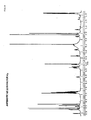
- F FAB-MS analysis showing the low mass isotope of the protonated molecular ion at m/z 1125 mass units; all the other peaks above 800 m/z mass units in the spectrum, not counting isotope peaks, were lower than 20% of the molecular ion, upon analysis with a Kratos MS-50 double focusing mass spectrometer under the following experimental conditions: Xe fast atom bombardment at 6 Kv; 0.6 mA discharge current; glycerol matrix; positive ionization mode G) 13C-NMR spectrum which is reported in Figure 10 of the accompanying drawings exhibiting the following groups of signals (ppm) at 125 MHz in DMSO-d6 TMS as the internal reference (0.00 ppm), 171.2; 169.9; 169.6; 168.5; 167.8; 165.7; 164.8; 162.2; 161.4; 161.3; 160.5; 160.4; 153.5; 150.4; 150.1; 149.5; 149.1; 147.0; 143.8; 142.1;
- A) ultraviolet absorption spectrum which is shown in Figure 11 of the accompanying drawings, and exhibits the following absorption maxima: Lambda max (nm) 0.1 M HCL 248 303 O.1 M KOH about 245 (shoulder) 310 Phosphate buffer pH 7.4 about 240 (shoulder) 312 Methanol about 215 (shoulder) about 240 (shoulder) 309
- B) infrared absorption spectrum in nujol mull which is shown in Figure 12 of the accompanying drawings and exhibits the following absorption maxima (cm ⁇ 1): 3700-3000; 3000-2800 (nujol); 1655; 1590-1480; 1460 (nujol) 1375 (nujol); 1310; 1220; 1190; 1130-1000; 980; 930; 840; 820-680; 720 (nujol); 640; C) 1H-NMR spectrum which is shown in Figure 13 and exhibits the following groups of signals (ppm) at 500 MHz recorded in DMSO-D
- the antimicrobial activity of the compounds of the invention can be demonstrated by a series of standard tests in vitro.
- MIC for Clostridium difficile , Propionibacterium acnes , and Bacteroides fragilis are determined by agar dilution (inocula 104/105 CFU/spot). MIC for other organisms are determined by microbroth dilution (inocula 104 to 105 CFU/ml). Incubation times are 18-24 h, except for Neisseria gonorrhoeae , Branhamella catarrhalis , Haemophilus influenzae , C . difficile , P . acnes , B . fragilis (48h). All organisms are incubated at 37°C. N . gonorrhoeae and H .
- influenzae are incubated in a 5% CO2 atmosphere, anaerobes in an anaerobic gas mixture.
- Media used are: Iso-Sensitest broth (Oxoid) ( Staphylococci , Streptococcus faecalis , Escherichia coli , Pseudomonas aeruginosa , Proteus vulgaris , Klebsiella pneumoniae ); Todd-Hewitt broth (Difco) (other streptococci); Mueller Hinton broth (BBL) ( Branhamella catarrhalis ); GC base broth (Difco) + 1% IsoVitalex (BBL) ( N .
- Oxoid Staphylococci , Streptococcus faecalis , Escherichia coli , Pseudomonas aeruginosa , Proteus vulgaris , Klebsiella pneumoniae
- Chlamydia trachomatis was cultivated in microtiter plates on cycloheximide treated McCoy cell monolayers, in Eagle's MEM medium (Gibco) with 10% fetal calf serum, in a 5% CO2 atmosphere.
- Inocula were prepared so as to give 30 - 60 inclusions per 300X microscope field. After 48 h, chlamydial inclusions were stained with fluorescein-labeled monoclonal antibody to the major outer membrane protein (Syva) and counted by fluorescence microscopy. The MIC was taken as the concentration at which inclusions were no longer seen and cellular morphology was normal.
- the minimal inhibitory concentrations (MIC, microgram/ml) for some microorganisms are reported below in Table I.
- the antimicrobial activity of the compounds of the invention is confirmed also in experimental septicemia in mice.
- mice of both sexes were infected intraperitoneally with Staphylococcus aureus ATCC 19636.
- the bacterial challenge (106 cells/mouse) was given suspended in 0.5 ml of 5% bacteriological mucin (Difco).
- the test compounds were administered intraveneousiy once immediately after infection in a sterile aqueous solution containing 5% dimethylformamide and 10% Chremophor® EL (polyethoxylated castor oil).
- the ED50 was calculated on the seventh day from the percentage of surviving animals at each dose by the Spearman and Kaerber method; its value resulted 15.4 mg/kg for antibiotic GE 2270 factor A3 and 3.2 mg/kg for antibiotic GE 2270 factor A1.
- the ratio survivors/treated at the seventh day was 1/8 in the case of antibiotic GE 2270 factor A2 and 6/8 in the case of antibiotic GE 2270 factor H.
- the test compounds were given i.v. as a milky suspension in 10% dimethylformamide in 5% aqueous glucose.
- the compounds of the invention can be used as active ingredients in the preparation of medicaments for human or animal treatment.
- antibiotic GE 2270 factor A1, A2, A3 and H are antimicrobial agents mainly active against gram positive bacteria and gram positive as well as gram negative anaerobes.
- the main therapeutic indication of the antibiotic substances of the invention is thus in the treatment of infections related to the presence of microorganisms susceptible to them.
- treatment is intended to encompass also prophylaxis, therapy and cure.
- the patient receiving this treatment is any animal in need, including primates, in particular humans, and other mammals such as equines, cattle, swine and sheep; and poultry and pets in general.
- the compounds of the invention can be administered as such or in admixture with pharmaceutically acceptable carriers and can also be administered in conjunction with other antimicrobial agents.
- Conjunctive therapy thus includes sequential, simultaneous and separate administration of the active compounds in a way that the therapeutical effects of the first administered one is not entirely disappeared when the subsequent is administered.
- a preferred pharmaceutical formulation is represented by a formulation suitable for a topical application on an intact or damaged skin or mucous membrane.
- examples of such formulations are powders, ointments, creams and lotions.
- the excipients in these formulations are the usual pharmaceutically acceptable vehicles such oleaginous ointment bases (e.g. cetyl esters wax, oleic acid, olive oil, paraffin, spermaceti, starch glycerite); absorbent ointment bases (e.g. anhydrous lanolin, hydrophilic petrolatum), emulsion ointment bases (e.g.
- cetyl alcohol glyceryl monostearate, lanolin, stearic acid
- water-soluble ointment bases e.g. glycol ethers and their derivatives which include polyethylene glycols, poly(oxy-1,2-ethan ediyl)-alpha-hydro-omega-hydroxy-octadecanoate, polysorbates, and polyethylene glycols mono-stearates.
- formulations may contain other known excipients, such as preservatives and are prepared as known in the art and reported in reference handbooks such as Remington's Pharmaceutical Sciences, Seventeenth edition, 1985, Mack Publishing Co.
- the compounds of the invention can also be formulated into formulation suitable for parenteral administration according to procedures known per se in the art.
- a compound of the invention is formulated with polypropylene glycol or dimethylacetamide and a surface-active agent such as polyoxyethylene sorbitan mono-oleate or polyethoxylated castor oil.
- a preferred formulation for parenteral administration includes the following excipients: Cremophor® EL (polyoxyl 35 castor oil USP/NF) 20%, propylene glycol 5-10%.
- this formulation is used for i.v. administration in the treatment of any infection involving a microorganism susceptible to an antibiotic of the invention.
- an effective dose of the compounds of the invention may be administered orally in suitable pharmaceutical form such as a capsule or an aqueous suspension.
- the dosage of the active ingredient depends on many factors which include type, age and conditions of the patient, specific active ingredient and formulation selected for administration, administration schedule, etc.
- effective antimicrobial dosages are employed per single unit dosage form. Repeated applications of these dosage forms, e.g. from 2 to 6 times a day, are in general preferred.
- An effective dosage may be in general in the range 0.5-50 mg/kg body weight/day.
- a preferred topic preparation is an ointment containing from 1% to 10% of a compound of the present invention.
- the prescribing physician will be able to determine the optimal dosage for a given patient in a given situation.
- the compounds of the invention can also be used as animal growth promoters.
- a compound of the invention is administered orally in a suitable feed.
- concentration employed is that which is required to provide for the active agent in a growth promotant effective amount when normal amounts of feed are consumed.
- the addition of the active compound of the invention to animal feed is preferably accomplished by preparing an appropriate feed premix containing the active compound in an effective amount and incorporating the premix into the complete ration.
- an intermediate concentrate or feed supplement containing the active ingredient can be blended into the feed.
- feed premixes and complete rations are described in reference books (such as "Applied Animal Nutrition", W.E. Freedman and CO., S. Francisco, USA, 1969 or “Livestock Feeds and Feeding” O and B books, Corvallis, Oregon, USA, 1977).
- the solid residue that contains mainly antibiotic GE 2270 factor H, is dissolved in tetrahydrofuran and then precipitated by adding petroleum ether thus yielding 213 mg of a white precipitate which is purified by preparative HPLC as follows: 10 Mg of crude reaction product is solubilized in tetrahydrofuran, diluted to the solubility limit with water and then injected into a HPLC column (250x20 mm) of Nucleosil R C18 (5 micrometer) reverse phase silica gel packed by Stacroma eluting with a linear gradient from 64% to 93% of phase B in phase A, in 20 min, at a flow rate of about 15 ml/min. Then elution is continued for 5 min with phase B alone.
- phase A is a 90:10 (v/v) mixture of 18 mM sodium phosphate pH 7.2 and acetonitrile
- phase B is a 40:60 (v/v) mixture of 18 mM sodium phosphate pH 7.2 and acetonitrile.
- the starting materials are prepared by following the procedures outlined in European Patent Application Publication No. 359062.
Landscapes
- Chemical & Material Sciences (AREA)
- Health & Medical Sciences (AREA)
- Organic Chemistry (AREA)
- Life Sciences & Earth Sciences (AREA)
- General Health & Medical Sciences (AREA)
- Medicinal Chemistry (AREA)
- Genetics & Genomics (AREA)
- Chemical Kinetics & Catalysis (AREA)
- General Chemical & Material Sciences (AREA)
- Biochemistry (AREA)
- Engineering & Computer Science (AREA)
- Wood Science & Technology (AREA)
- Proteomics, Peptides & Aminoacids (AREA)
- Public Health (AREA)
- Veterinary Medicine (AREA)
- Pharmacology & Pharmacy (AREA)
- Bioinformatics & Cheminformatics (AREA)
- Zoology (AREA)
- Animal Behavior & Ethology (AREA)
- Nuclear Medicine, Radiotherapy & Molecular Imaging (AREA)
- Biophysics (AREA)
- Mycology (AREA)
- Molecular Biology (AREA)
- Reproductive Health (AREA)
- Oncology (AREA)
- Biotechnology (AREA)
- Microbiology (AREA)
- Communicable Diseases (AREA)
- Endocrinology (AREA)
- General Engineering & Computer Science (AREA)
- Medicines Containing Material From Animals Or Micro-Organisms (AREA)
- Preparation Of Compounds By Using Micro-Organisms (AREA)
- Compounds Of Unknown Constitution (AREA)
- Pharmaceuticals Containing Other Organic And Inorganic Compounds (AREA)
- Medicines That Contain Protein Lipid Enzymes And Other Medicines (AREA)
- Fodder In General (AREA)
Applications Claiming Priority (2)
| Application Number | Priority Date | Filing Date | Title |
|---|---|---|---|
| EP89112171 | 1989-07-04 | ||
| EP89112171 | 1989-07-04 |
Publications (2)
| Publication Number | Publication Date |
|---|---|
| EP0406745A1 true EP0406745A1 (de) | 1991-01-09 |
| EP0406745B1 EP0406745B1 (de) | 1995-01-25 |
Family
ID=8201585
Family Applications (1)
| Application Number | Title | Priority Date | Filing Date |
|---|---|---|---|
| EP90112547A Expired - Lifetime EP0406745B1 (de) | 1989-07-04 | 1990-07-02 | Antibiotikum GE 22270, Faktoren A1,A2,A3 und H |
Country Status (11)
| Country | Link |
|---|---|
| US (2) | US5139778A (de) |
| EP (1) | EP0406745B1 (de) |
| JP (1) | JP2997510B2 (de) |
| KR (1) | KR0165673B1 (de) |
| AT (1) | ATE117724T1 (de) |
| CA (1) | CA2020346C (de) |
| DE (1) | DE69016284T2 (de) |
| DK (1) | DK0406745T3 (de) |
| ES (1) | ES2066914T3 (de) |
| GR (1) | GR3015052T3 (de) |
| IE (1) | IE67437B1 (de) |
Families Citing this family (12)
| Publication number | Priority date | Publication date | Assignee | Title |
|---|---|---|---|---|
| EP0406745B1 (de) * | 1989-07-04 | 1995-01-25 | GRUPPO LEPETIT S.p.A. | Antibiotikum GE 22270, Faktoren A1,A2,A3 und H |
| DK0451486T3 (da) * | 1990-03-08 | 1995-05-08 | Lepetit Spa | Antibiotikum GE 2270 faktorer B1, B2, C1, C2, D1, D2, E og T |
| IL100572A (en) * | 1991-01-03 | 1997-01-10 | Lepetit Spa | Amides of antibiotic ge 2270 factors their preparation and pharmaceutical compositions containing them |
| EP0529410B1 (de) * | 1991-08-30 | 1998-02-25 | Biosearch Italia S.p.A. | Faktor C2a des Antibiotikums CE 2270 |
| US5882900A (en) * | 1992-09-10 | 1999-03-16 | Gruppo Lepetit S.P.A. | Process for the selective increase of production of antibiotic GE 2270 factor a by adding vitamin B12 to nutrient medium |
| SI0808326T1 (en) | 1995-02-07 | 2001-12-31 | Biosearch Italia Spa | Basic oxazoline-amide derivatives of ge 2270 and ge 2270-like antibiotics |
| ES2115424T3 (es) * | 1995-02-07 | 1998-06-16 | Biosearch Italia Spa | Derivados prolin-amidicos basicos de los antibioticos ge 2270 y similares a ge 2270. |
| IL125107A (en) * | 1996-02-14 | 2002-12-01 | Biosearch Italia Spa | Derivatives of antibiotics GE2270 factors D2, C2a and E, process for their preparation and pharmaceutical compounds containing them |
| JP4723857B2 (ja) * | 2002-06-17 | 2011-07-13 | ヴィキュロン ファーマシューティカルズ インコーポレイテッド | アクネの治療のためのge2270因子a3のアミド誘導体の使用 |
| PE20121011A1 (es) * | 2006-05-31 | 2012-08-25 | Novartis Ag | AMINOTIAZOLES COMO MODULADORES DEL FACTOR DE ELONGACION EF-Tu |
| WO2008082562A2 (en) * | 2006-12-20 | 2008-07-10 | Novartis Ag | Aminothiazole macrocycles, their use as antibacterial compounds and processes for their production |
| WO2009074605A1 (en) | 2007-12-12 | 2009-06-18 | Novartis Ag | Aminothiazoles and their uses |
Citations (1)
| Publication number | Priority date | Publication date | Assignee | Title |
|---|---|---|---|---|
| EP0359062A2 (de) * | 1988-09-09 | 1990-03-21 | GRUPPO LEPETIT S.p.A. | Antibiotikum GE 2270 |
Family Cites Families (4)
| Publication number | Priority date | Publication date | Assignee | Title |
|---|---|---|---|---|
| US4692333A (en) * | 1982-08-26 | 1987-09-08 | Gruppo Lepetit S.P.A. | Antimicrobial and antitumor antibiotic M 9026 and its pure individual factors 1, 2, and 3 and microbial process for production thereof |
| GB8323382D0 (en) * | 1983-08-31 | 1983-10-05 | Lepetit Spa | Antibiotic sb 22484 |
| GB8333624D0 (en) * | 1983-12-16 | 1984-01-25 | Lepetit Spa | Antibiotics l 17054 and l 17392 |
| EP0406745B1 (de) * | 1989-07-04 | 1995-01-25 | GRUPPO LEPETIT S.p.A. | Antibiotikum GE 22270, Faktoren A1,A2,A3 und H |
-
1990
- 1990-07-02 EP EP90112547A patent/EP0406745B1/de not_active Expired - Lifetime
- 1990-07-02 AT AT90112547T patent/ATE117724T1/de not_active IP Right Cessation
- 1990-07-02 DE DE69016284T patent/DE69016284T2/de not_active Expired - Fee Related
- 1990-07-02 US US07/547,647 patent/US5139778A/en not_active Expired - Lifetime
- 1990-07-02 DK DK90112547.6T patent/DK0406745T3/da active
- 1990-07-02 ES ES90112547T patent/ES2066914T3/es not_active Expired - Lifetime
- 1990-07-03 KR KR1019900010007A patent/KR0165673B1/ko not_active Expired - Fee Related
- 1990-07-03 CA CA002020346A patent/CA2020346C/en not_active Expired - Fee Related
- 1990-07-03 JP JP2174621A patent/JP2997510B2/ja not_active Expired - Fee Related
- 1990-07-03 IE IE240590A patent/IE67437B1/en not_active IP Right Cessation
-
1995
- 1995-02-15 GR GR950400291T patent/GR3015052T3/el unknown
- 1995-06-07 US US08/485,678 patent/US5547666A/en not_active Expired - Lifetime
Patent Citations (1)
| Publication number | Priority date | Publication date | Assignee | Title |
|---|---|---|---|---|
| EP0359062A2 (de) * | 1988-09-09 | 1990-03-21 | GRUPPO LEPETIT S.p.A. | Antibiotikum GE 2270 |
Non-Patent Citations (1)
| Title |
|---|
| CHEMICAL ABSTRACTS, vol. 89, 1978, page 224, abstract 210992p, Columbus, Ohio, US; R.J. MEHTA et al.: "Actinomycin D inactivating enzymes from Actinoplanes missouriensis and several other members of the Actinoplanaceae family", & EUR. J. APPL. MICRIBIOL. BIOTECHNOL. 1978, 5(3), 165-70 * |
Also Published As
| Publication number | Publication date |
|---|---|
| JPH0363289A (ja) | 1991-03-19 |
| ES2066914T3 (es) | 1995-03-16 |
| DE69016284D1 (de) | 1995-03-09 |
| CA2020346C (en) | 2000-10-10 |
| KR910003107A (ko) | 1991-02-26 |
| EP0406745B1 (de) | 1995-01-25 |
| DK0406745T3 (da) | 1995-02-27 |
| DE69016284T2 (de) | 1995-05-24 |
| JP2997510B2 (ja) | 2000-01-11 |
| CA2020346A1 (en) | 1991-01-05 |
| US5547666A (en) | 1996-08-20 |
| IE902405A1 (en) | 1991-06-19 |
| US5139778A (en) | 1992-08-18 |
| ATE117724T1 (de) | 1995-02-15 |
| IE67437B1 (en) | 1996-04-03 |
| KR0165673B1 (ko) | 1999-01-15 |
| GR3015052T3 (en) | 1995-05-31 |
Similar Documents
| Publication | Publication Date | Title |
|---|---|---|
| US4699977A (en) | Antibiotic L 17046 and process for preparing it | |
| EP0406745B1 (de) | Antibiotikum GE 22270, Faktoren A1,A2,A3 und H | |
| JPH0819155B2 (ja) | 脱マンノシルテイコプラニン誘導体 | |
| US5322777A (en) | Antibiotic GE 2270 | |
| EP0451486B1 (de) | Antibiotika GE 2270 Faktoren B1, B2, C1, D1, D2, E und T | |
| EP0529410B1 (de) | Faktor C2a des Antibiotikums CE 2270 | |
| EP0675900B1 (de) | Die antibiotika ge 37468 a, b und c | |
| DE3887292T2 (de) | Antibiotische Verbindungen, genannt A/16686-Faktoren A'1,A'2 und A'3. | |
| FI95930C (fi) | Menetelmä antibiootin GE 2270 tekijä A:n valmistamiseksi | |
| JPH089625B2 (ja) | テイコプラニン誘導体 | |
| EP0545955B1 (de) | Antibiotikum ge1655-komplex und seine faktoren a,b und c | |
| US5610143A (en) | Antibiotics GE 37468 A, B and C | |
| IE913058A1 (en) | Antibiotic ge1655 complex and its factors a, b, and c |
Legal Events
| Date | Code | Title | Description |
|---|---|---|---|
| PUAI | Public reference made under article 153(3) epc to a published international application that has entered the european phase |
Free format text: ORIGINAL CODE: 0009012 |
|
| AK | Designated contracting states |
Kind code of ref document: A1 Designated state(s): AT BE CH DE DK ES FR GB GR IT LI LU NL SE |
|
| 17P | Request for examination filed |
Effective date: 19901205 |
|
| RAP1 | Party data changed (applicant data changed or rights of an application transferred) |
Owner name: GRUPPO LEPETIT S.P.A. |
|
| 17Q | First examination report despatched |
Effective date: 19930518 |
|
| RAP1 | Party data changed (applicant data changed or rights of an application transferred) |
Owner name: GRUPPO LEPETIT S.P.A. |
|
| GRAA | (expected) grant |
Free format text: ORIGINAL CODE: 0009210 |
|
| AK | Designated contracting states |
Kind code of ref document: B1 Designated state(s): AT BE CH DE DK ES FR GB GR IT LI LU NL SE |
|
| REF | Corresponds to: |
Ref document number: 117724 Country of ref document: AT Date of ref document: 19950215 Kind code of ref document: T |
|
| ITF | It: translation for a ep patent filed | ||
| ET | Fr: translation filed | ||
| REG | Reference to a national code |
Ref country code: DK Ref legal event code: T3 |
|
| REF | Corresponds to: |
Ref document number: 69016284 Country of ref document: DE Date of ref document: 19950309 |
|
| REG | Reference to a national code |
Ref country code: ES Ref legal event code: FG2A Ref document number: 2066914 Country of ref document: ES Kind code of ref document: T3 |
|
| REG | Reference to a national code |
Ref country code: GR Ref legal event code: FG4A Free format text: 3015052 |
|
| PLBE | No opposition filed within time limit |
Free format text: ORIGINAL CODE: 0009261 |
|
| STAA | Information on the status of an ep patent application or granted ep patent |
Free format text: STATUS: NO OPPOSITION FILED WITHIN TIME LIMIT |
|
| 26N | No opposition filed | ||
| REG | Reference to a national code |
Ref country code: GB Ref legal event code: 732E |
|
| REG | Reference to a national code |
Ref country code: CH Ref legal event code: PUE Owner name: GRUPPO LEPETIT S.P.A. TRANSFER- BIOSEARCH ITALIA S |
|
| NLS | Nl: assignments of ep-patents |
Owner name: BIOSEARCH ITALIA S.P.A. |
|
| REG | Reference to a national code |
Ref country code: FR Ref legal event code: TP |
|
| REG | Reference to a national code |
Ref country code: GB Ref legal event code: IF02 |
|
| BECA | Be: change of holder's address |
Owner name: *VICURON PHARMACEUTICALS INC.1209 ORANGE STREET, W Effective date: 20030619 |
|
| BECH | Be: change of holder |
Owner name: *VICURON PHARMACEUTICALS INC.1209 ORANGE STREET, W Effective date: 20030619 |
|
| NLS | Nl: assignments of ep-patents |
Owner name: VERSICOR INC. |
|
| NLT1 | Nl: modifications of names registered in virtue of documents presented to the patent office pursuant to art. 16 a, paragraph 1 |
Owner name: VICURON PHARMACEUTICALS INC. |
|
| REG | Reference to a national code |
Ref country code: GB Ref legal event code: 732E |
|
| REG | Reference to a national code |
Ref country code: CH Ref legal event code: NV Representative=s name: ARNOLD & SIEDSMA AG Ref country code: CH Ref legal event code: PUE Owner name: VICURON PHARMACEUTICALS INC. Free format text: BIOSEARCH ITALIA S.P.A.#VIA R. LEPETIT, 34#21040 GERENZANO (VA) (IT) -TRANSFER TO- VICURON PHARMACEUTICALS INC.#455 SOUTH GULPH ROAD#KING OF PRUSSIA, PA 19405 (US) |
|
| REG | Reference to a national code |
Ref country code: FR Ref legal event code: TP Ref country code: FR Ref legal event code: CD |
|
| REG | Reference to a national code |
Ref country code: CH Ref legal event code: NV Representative=s name: FIAMMENGHI-FIAMMENGHI |
|
| PG25 | Lapsed in a contracting state [announced via postgrant information from national office to epo] |
Ref country code: IT Free format text: LAPSE BECAUSE OF NON-PAYMENT OF DUE FEES;WARNING: LAPSES OF ITALIAN PATENTS WITH EFFECTIVE DATE BEFORE 2007 MAY HAVE OCCURRED AT ANY TIME BEFORE 2007. THE CORRECT EFFECTIVE DATE MAY BE DIFFERENT FROM THE ONE RECORDED. Effective date: 20050702 |
|
| PGFP | Annual fee paid to national office [announced via postgrant information from national office to epo] |
Ref country code: GB Payment date: 20060614 Year of fee payment: 17 |
|
| PGFP | Annual fee paid to national office [announced via postgrant information from national office to epo] |
Ref country code: DK Payment date: 20060615 Year of fee payment: 17 |
|
| PGFP | Annual fee paid to national office [announced via postgrant information from national office to epo] |
Ref country code: NL Payment date: 20060616 Year of fee payment: 17 |
|
| PGFP | Annual fee paid to national office [announced via postgrant information from national office to epo] |
Ref country code: LU Payment date: 20060628 Year of fee payment: 17 |
|
| PGFP | Annual fee paid to national office [announced via postgrant information from national office to epo] |
Ref country code: GR Payment date: 20060704 Year of fee payment: 17 |
|
| PGFP | Annual fee paid to national office [announced via postgrant information from national office to epo] |
Ref country code: FR Payment date: 20060705 Year of fee payment: 17 |
|
| PGFP | Annual fee paid to national office [announced via postgrant information from national office to epo] |
Ref country code: CH Payment date: 20060707 Year of fee payment: 17 |
|
| PGFP | Annual fee paid to national office [announced via postgrant information from national office to epo] |
Ref country code: BE Payment date: 20060726 Year of fee payment: 17 |
|
| PGFP | Annual fee paid to national office [announced via postgrant information from national office to epo] |
Ref country code: DE Payment date: 20060731 Year of fee payment: 17 |
|
| PGFP | Annual fee paid to national office [announced via postgrant information from national office to epo] |
Ref country code: ES Payment date: 20070511 Year of fee payment: 18 |
|
| PGFP | Annual fee paid to national office [announced via postgrant information from national office to epo] |
Ref country code: AT Payment date: 20070724 Year of fee payment: 18 |
|
| BERE | Be: lapsed |
Owner name: *VICURON PHARMACEUTICALS INC. Effective date: 20070731 |
|
| REG | Reference to a national code |
Ref country code: CH Ref legal event code: PL |
|
| EUG | Se: european patent has lapsed | ||
| REG | Reference to a national code |
Ref country code: DK Ref legal event code: EBP |
|
| GBPC | Gb: european patent ceased through non-payment of renewal fee |
Effective date: 20070702 |
|
| NLV4 | Nl: lapsed or anulled due to non-payment of the annual fee |
Effective date: 20080201 |
|
| PG25 | Lapsed in a contracting state [announced via postgrant information from national office to epo] |
Ref country code: SE Free format text: LAPSE BECAUSE OF NON-PAYMENT OF DUE FEES Effective date: 20070703 Ref country code: NL Free format text: LAPSE BECAUSE OF NON-PAYMENT OF DUE FEES Effective date: 20080201 Ref country code: LI Free format text: LAPSE BECAUSE OF NON-PAYMENT OF DUE FEES Effective date: 20070731 Ref country code: DE Free format text: LAPSE BECAUSE OF NON-PAYMENT OF DUE FEES Effective date: 20080201 Ref country code: CH Free format text: LAPSE BECAUSE OF NON-PAYMENT OF DUE FEES Effective date: 20070731 |
|
| PG25 | Lapsed in a contracting state [announced via postgrant information from national office to epo] |
Ref country code: GB Free format text: LAPSE BECAUSE OF NON-PAYMENT OF DUE FEES Effective date: 20070702 |
|
| REG | Reference to a national code |
Ref country code: FR Ref legal event code: ST Effective date: 20080331 |
|
| PGFP | Annual fee paid to national office [announced via postgrant information from national office to epo] |
Ref country code: SE Payment date: 20060706 Year of fee payment: 17 |
|
| PG25 | Lapsed in a contracting state [announced via postgrant information from national office to epo] |
Ref country code: DK Free format text: LAPSE BECAUSE OF NON-PAYMENT OF DUE FEES Effective date: 20070731 |
|
| PG25 | Lapsed in a contracting state [announced via postgrant information from national office to epo] |
Ref country code: BE Free format text: LAPSE BECAUSE OF NON-PAYMENT OF DUE FEES Effective date: 20070731 |
|
| PG25 | Lapsed in a contracting state [announced via postgrant information from national office to epo] |
Ref country code: FR Free format text: LAPSE BECAUSE OF NON-PAYMENT OF DUE FEES Effective date: 20070731 |
|
| PG25 | Lapsed in a contracting state [announced via postgrant information from national office to epo] |
Ref country code: GR Free format text: LAPSE BECAUSE OF NON-PAYMENT OF DUE FEES Effective date: 20080206 |
|
| PG25 | Lapsed in a contracting state [announced via postgrant information from national office to epo] |
Ref country code: AT Free format text: LAPSE BECAUSE OF NON-PAYMENT OF DUE FEES Effective date: 20080702 |
|
| PG25 | Lapsed in a contracting state [announced via postgrant information from national office to epo] |
Ref country code: LU Free format text: LAPSE BECAUSE OF NON-PAYMENT OF DUE FEES Effective date: 20070702 |
|
| REG | Reference to a national code |
Ref country code: ES Ref legal event code: FD2A Effective date: 20080703 |
|
| PG25 | Lapsed in a contracting state [announced via postgrant information from national office to epo] |
Ref country code: ES Free format text: LAPSE BECAUSE OF NON-PAYMENT OF DUE FEES Effective date: 20080703 |