EP0402402B1 - Hemmung von htlv-iii durch exogene oligonukleotide - Google Patents
Hemmung von htlv-iii durch exogene oligonukleotide Download PDFInfo
- Publication number
- EP0402402B1 EP0402402B1 EP89903415A EP89903415A EP0402402B1 EP 0402402 B1 EP0402402 B1 EP 0402402B1 EP 89903415 A EP89903415 A EP 89903415A EP 89903415 A EP89903415 A EP 89903415A EP 0402402 B1 EP0402402 B1 EP 0402402B1
- Authority
- EP
- European Patent Office
- Prior art keywords
- htlv
- iii
- oligonucleotides
- complementary
- cells
- Prior art date
- Legal status (The legal status is an assumption and is not a legal conclusion. Google has not performed a legal analysis and makes no representation as to the accuracy of the status listed.)
- Expired - Lifetime
Links
- 108091034117 Oligonucleotide Proteins 0.000 title claims abstract description 97
- JLCPHMBAVCMARE-UHFFFAOYSA-N [3-[[3-[[3-[[3-[[3-[[3-[[3-[[3-[[3-[[3-[[3-[[5-(2-amino-6-oxo-1H-purin-9-yl)-3-[[3-[[3-[[3-[[3-[[3-[[5-(2-amino-6-oxo-1H-purin-9-yl)-3-[[5-(2-amino-6-oxo-1H-purin-9-yl)-3-hydroxyoxolan-2-yl]methoxy-hydroxyphosphoryl]oxyoxolan-2-yl]methoxy-hydroxyphosphoryl]oxy-5-(5-methyl-2,4-dioxopyrimidin-1-yl)oxolan-2-yl]methoxy-hydroxyphosphoryl]oxy-5-(6-aminopurin-9-yl)oxolan-2-yl]methoxy-hydroxyphosphoryl]oxy-5-(6-aminopurin-9-yl)oxolan-2-yl]methoxy-hydroxyphosphoryl]oxy-5-(6-aminopurin-9-yl)oxolan-2-yl]methoxy-hydroxyphosphoryl]oxy-5-(6-aminopurin-9-yl)oxolan-2-yl]methoxy-hydroxyphosphoryl]oxyoxolan-2-yl]methoxy-hydroxyphosphoryl]oxy-5-(5-methyl-2,4-dioxopyrimidin-1-yl)oxolan-2-yl]methoxy-hydroxyphosphoryl]oxy-5-(4-amino-2-oxopyrimidin-1-yl)oxolan-2-yl]methoxy-hydroxyphosphoryl]oxy-5-(5-methyl-2,4-dioxopyrimidin-1-yl)oxolan-2-yl]methoxy-hydroxyphosphoryl]oxy-5-(5-methyl-2,4-dioxopyrimidin-1-yl)oxolan-2-yl]methoxy-hydroxyphosphoryl]oxy-5-(6-aminopurin-9-yl)oxolan-2-yl]methoxy-hydroxyphosphoryl]oxy-5-(6-aminopurin-9-yl)oxolan-2-yl]methoxy-hydroxyphosphoryl]oxy-5-(4-amino-2-oxopyrimidin-1-yl)oxolan-2-yl]methoxy-hydroxyphosphoryl]oxy-5-(4-amino-2-oxopyrimidin-1-yl)oxolan-2-yl]methoxy-hydroxyphosphoryl]oxy-5-(4-amino-2-oxopyrimidin-1-yl)oxolan-2-yl]methoxy-hydroxyphosphoryl]oxy-5-(6-aminopurin-9-yl)oxolan-2-yl]methoxy-hydroxyphosphoryl]oxy-5-(4-amino-2-oxopyrimidin-1-yl)oxolan-2-yl]methyl [5-(6-aminopurin-9-yl)-2-(hydroxymethyl)oxolan-3-yl] hydrogen phosphate Polymers Cc1cn(C2CC(OP(O)(=O)OCC3OC(CC3OP(O)(=O)OCC3OC(CC3O)n3cnc4c3nc(N)[nH]c4=O)n3cnc4c3nc(N)[nH]c4=O)C(COP(O)(=O)OC3CC(OC3COP(O)(=O)OC3CC(OC3COP(O)(=O)OC3CC(OC3COP(O)(=O)OC3CC(OC3COP(O)(=O)OC3CC(OC3COP(O)(=O)OC3CC(OC3COP(O)(=O)OC3CC(OC3COP(O)(=O)OC3CC(OC3COP(O)(=O)OC3CC(OC3COP(O)(=O)OC3CC(OC3COP(O)(=O)OC3CC(OC3COP(O)(=O)OC3CC(OC3COP(O)(=O)OC3CC(OC3COP(O)(=O)OC3CC(OC3COP(O)(=O)OC3CC(OC3COP(O)(=O)OC3CC(OC3COP(O)(=O)OC3CC(OC3CO)n3cnc4c(N)ncnc34)n3ccc(N)nc3=O)n3cnc4c(N)ncnc34)n3ccc(N)nc3=O)n3ccc(N)nc3=O)n3ccc(N)nc3=O)n3cnc4c(N)ncnc34)n3cnc4c(N)ncnc34)n3cc(C)c(=O)[nH]c3=O)n3cc(C)c(=O)[nH]c3=O)n3ccc(N)nc3=O)n3cc(C)c(=O)[nH]c3=O)n3cnc4c3nc(N)[nH]c4=O)n3cnc4c(N)ncnc34)n3cnc4c(N)ncnc34)n3cnc4c(N)ncnc34)n3cnc4c(N)ncnc34)O2)c(=O)[nH]c1=O JLCPHMBAVCMARE-UHFFFAOYSA-N 0.000 title claims description 59
- 230000005764 inhibitory process Effects 0.000 title abstract description 47
- 230000000295 complement effect Effects 0.000 claims abstract description 70
- 229940046166 oligodeoxynucleotide Drugs 0.000 claims abstract description 54
- 230000014509 gene expression Effects 0.000 claims abstract description 31
- 238000000034 method Methods 0.000 claims abstract description 28
- 230000010076 replication Effects 0.000 claims abstract description 24
- 230000002401 inhibitory effect Effects 0.000 claims abstract description 23
- 210000004027 cell Anatomy 0.000 claims description 82
- 239000002773 nucleotide Substances 0.000 claims description 48
- 230000000694 effects Effects 0.000 claims description 31
- 108090000623 proteins and genes Proteins 0.000 claims description 25
- 125000003729 nucleotide group Chemical group 0.000 claims description 23
- 108010092799 RNA-directed DNA polymerase Proteins 0.000 claims description 20
- 208000030507 AIDS Diseases 0.000 claims description 18
- 108020004999 messenger RNA Proteins 0.000 claims description 18
- 230000004048 modification Effects 0.000 claims description 18
- 238000012986 modification Methods 0.000 claims description 18
- 210000001744 T-lymphocyte Anatomy 0.000 claims description 15
- 229910019142 PO4 Inorganic materials 0.000 claims description 14
- 235000021317 phosphate Nutrition 0.000 claims description 14
- 108091081024 Start codon Proteins 0.000 claims description 10
- 238000009396 hybridization Methods 0.000 claims description 8
- 150000003013 phosphoric acid derivatives Chemical class 0.000 claims description 8
- RYYWUUFWQRZTIU-UHFFFAOYSA-N Thiophosphoric acid Chemical class OP(O)(S)=O RYYWUUFWQRZTIU-UHFFFAOYSA-N 0.000 claims description 6
- 238000004519 manufacturing process Methods 0.000 claims description 6
- NBIIXXVUZAFLBC-UHFFFAOYSA-K phosphate Chemical compound [O-]P([O-])([O-])=O NBIIXXVUZAFLBC-UHFFFAOYSA-K 0.000 claims description 6
- 239000010452 phosphate Substances 0.000 claims description 6
- 101710192141 Protein Nef Proteins 0.000 claims description 5
- YACKEPLHDIMKIO-UHFFFAOYSA-N methylphosphonic acid Chemical class CP(O)(O)=O YACKEPLHDIMKIO-UHFFFAOYSA-N 0.000 claims description 5
- 238000002360 preparation method Methods 0.000 claims description 5
- 210000000601 blood cell Anatomy 0.000 claims description 4
- 238000002512 chemotherapy Methods 0.000 claims description 4
- 108700004025 env Genes Proteins 0.000 claims description 4
- 101150030339 env gene Proteins 0.000 claims description 4
- 230000037433 frameshift Effects 0.000 claims description 4
- 230000002093 peripheral effect Effects 0.000 claims description 4
- PYCFQPSJBQKPHS-UHFFFAOYSA-N O=P(=O)N1CCNCC1 Chemical compound O=P(=O)N1CCNCC1 PYCFQPSJBQKPHS-UHFFFAOYSA-N 0.000 claims description 3
- 239000003795 chemical substances by application Substances 0.000 claims description 3
- 108700004026 gag Genes Proteins 0.000 claims description 3
- 101150098622 gag gene Proteins 0.000 claims description 3
- 238000000338 in vitro Methods 0.000 claims description 3
- 108700004027 tat Genes Proteins 0.000 claims description 3
- 101150098170 tat gene Proteins 0.000 claims description 3
- 108010039918 Polylysine Proteins 0.000 claims description 2
- 238000004132 cross linking Methods 0.000 claims description 2
- 239000003814 drug Substances 0.000 claims description 2
- 239000000138 intercalating agent Substances 0.000 claims description 2
- 229920000724 poly(L-arginine) polymer Polymers 0.000 claims description 2
- 108010011110 polyarginine Proteins 0.000 claims description 2
- 229920000656 polylysine Polymers 0.000 claims description 2
- 101150055349 sor gene Proteins 0.000 claims description 2
- 238000002560 therapeutic procedure Methods 0.000 claims description 2
- 108700026220 vif Genes Proteins 0.000 claims description 2
- 102100034343 Integrase Human genes 0.000 claims 1
- 241000700605 Viruses Species 0.000 description 41
- 102100034349 Integrase Human genes 0.000 description 22
- 108091032973 (ribonucleotides)n+m Proteins 0.000 description 17
- 230000015572 biosynthetic process Effects 0.000 description 16
- 230000003612 virological effect Effects 0.000 description 16
- 230000029812 viral genome replication Effects 0.000 description 15
- 241000725303 Human immunodeficiency virus Species 0.000 description 14
- 108020005067 RNA Splice Sites Proteins 0.000 description 14
- 102000004169 proteins and genes Human genes 0.000 description 14
- 235000018102 proteins Nutrition 0.000 description 13
- 208000037265 diseases, disorders, signs and symptoms Diseases 0.000 description 12
- 230000001629 suppression Effects 0.000 description 11
- 238000003786 synthesis reaction Methods 0.000 description 11
- 230000014616 translation Effects 0.000 description 11
- 101710147327 Calcineurin B homologous protein 1 Proteins 0.000 description 10
- 101710205625 Capsid protein p24 Proteins 0.000 description 10
- 108020004414 DNA Proteins 0.000 description 10
- 239000006144 Dulbecco’s modified Eagle's medium Substances 0.000 description 10
- 101710177166 Phosphoprotein Proteins 0.000 description 10
- 101710149279 Small delta antigen Proteins 0.000 description 10
- 102100022563 Tubulin polymerization-promoting protein Human genes 0.000 description 10
- 102000004190 Enzymes Human genes 0.000 description 9
- 108090000790 Enzymes Proteins 0.000 description 9
- 238000004520 electroporation Methods 0.000 description 9
- 238000011534 incubation Methods 0.000 description 9
- 241001430294 unidentified retrovirus Species 0.000 description 9
- 101800000504 3C-like protease Proteins 0.000 description 8
- 201000010099 disease Diseases 0.000 description 8
- 230000006870 function Effects 0.000 description 8
- BDAGIHXWWSANSR-UHFFFAOYSA-N methanoic acid Natural products OC=O BDAGIHXWWSANSR-UHFFFAOYSA-N 0.000 description 8
- 101800000607 p15 Proteins 0.000 description 8
- 210000001519 tissue Anatomy 0.000 description 8
- XLYOFNOQVPJJNP-UHFFFAOYSA-N water Substances O XLYOFNOQVPJJNP-UHFFFAOYSA-N 0.000 description 8
- 102100036464 Activated RNA polymerase II transcriptional coactivator p15 Human genes 0.000 description 7
- 108020000999 Viral RNA Proteins 0.000 description 7
- 230000006957 competitive inhibition Effects 0.000 description 7
- 230000000977 initiatory effect Effects 0.000 description 7
- 230000006648 viral gene expression Effects 0.000 description 7
- 208000031886 HIV Infections Diseases 0.000 description 6
- 206010028980 Neoplasm Diseases 0.000 description 6
- 108020005202 Viral DNA Proteins 0.000 description 6
- 108010067390 Viral Proteins Proteins 0.000 description 6
- 238000012360 testing method Methods 0.000 description 6
- 101710104359 F protein Proteins 0.000 description 5
- 241000713340 Human immunodeficiency virus 2 Species 0.000 description 5
- 108091028043 Nucleic acid sequence Proteins 0.000 description 5
- 238000003556 assay Methods 0.000 description 5
- 230000008901 benefit Effects 0.000 description 5
- 210000004369 blood Anatomy 0.000 description 5
- 239000008280 blood Substances 0.000 description 5
- 210000000170 cell membrane Anatomy 0.000 description 5
- 238000002474 experimental method Methods 0.000 description 5
- 239000012678 infectious agent Substances 0.000 description 5
- 239000008188 pellet Substances 0.000 description 5
- PYWVYCXTNDRMGF-UHFFFAOYSA-N rhodamine B Chemical compound [Cl-].C=12C=CC(=[N+](CC)CC)C=C2OC2=CC(N(CC)CC)=CC=C2C=1C1=CC=CC=C1C(O)=O PYWVYCXTNDRMGF-UHFFFAOYSA-N 0.000 description 5
- 239000000523 sample Substances 0.000 description 5
- OSWFIVFLDKOXQC-UHFFFAOYSA-N 4-(3-methoxyphenyl)aniline Chemical compound COC1=CC=CC(C=2C=CC(N)=CC=2)=C1 OSWFIVFLDKOXQC-UHFFFAOYSA-N 0.000 description 4
- 101710163270 Nuclease Proteins 0.000 description 4
- 208000035475 disorder Diseases 0.000 description 4
- 235000019253 formic acid Nutrition 0.000 description 4
- 102000039446 nucleic acids Human genes 0.000 description 4
- 108020004707 nucleic acids Proteins 0.000 description 4
- 150000007523 nucleic acids Chemical class 0.000 description 4
- 230000008488 polyadenylation Effects 0.000 description 4
- 238000010839 reverse transcription Methods 0.000 description 4
- 210000003296 saliva Anatomy 0.000 description 4
- 230000006656 viral protein synthesis Effects 0.000 description 4
- 241000894006 Bacteria Species 0.000 description 3
- 101710091045 Envelope protein Proteins 0.000 description 3
- 241000282412 Homo Species 0.000 description 3
- 108020005350 Initiator Codon Proteins 0.000 description 3
- 101710197985 Probable protein Rev Proteins 0.000 description 3
- 101710149951 Protein Tat Proteins 0.000 description 3
- 101710188315 Protein X Proteins 0.000 description 3
- 241000714474 Rous sarcoma virus Species 0.000 description 3
- 239000002246 antineoplastic agent Substances 0.000 description 3
- 230000009286 beneficial effect Effects 0.000 description 3
- 230000000903 blocking effect Effects 0.000 description 3
- 201000011510 cancer Diseases 0.000 description 3
- 230000015556 catabolic process Effects 0.000 description 3
- 239000006285 cell suspension Substances 0.000 description 3
- 238000005119 centrifugation Methods 0.000 description 3
- 229940124558 contraceptive agent Drugs 0.000 description 3
- 239000003433 contraceptive agent Substances 0.000 description 3
- 238000006731 degradation reaction Methods 0.000 description 3
- 239000012530 fluid Substances 0.000 description 3
- -1 forming a spliced Proteins 0.000 description 3
- 239000003112 inhibitor Substances 0.000 description 3
- XSQUKJJJFZCRTK-UHFFFAOYSA-N isourea group Chemical group NC(O)=N XSQUKJJJFZCRTK-UHFFFAOYSA-N 0.000 description 3
- 210000000633 nuclear envelope Anatomy 0.000 description 3
- PTMHPRAIXMAOOB-UHFFFAOYSA-N phosphoramidic acid Chemical class NP(O)(O)=O PTMHPRAIXMAOOB-UHFFFAOYSA-N 0.000 description 3
- 238000002264 polyacrylamide gel electrophoresis Methods 0.000 description 3
- 238000001243 protein synthesis Methods 0.000 description 3
- 230000001177 retroviral effect Effects 0.000 description 3
- 210000002966 serum Anatomy 0.000 description 3
- 239000006228 supernatant Substances 0.000 description 3
- 210000002700 urine Anatomy 0.000 description 3
- 229960005486 vaccine Drugs 0.000 description 3
- 206010001513 AIDS related complex Diseases 0.000 description 2
- 208000009746 Adult T-Cell Leukemia-Lymphoma Diseases 0.000 description 2
- 206010001413 Adult T-cell lymphoma/leukaemia Diseases 0.000 description 2
- 206010003210 Arteriosclerosis Diseases 0.000 description 2
- 102100029905 DNA polymerase epsilon subunit 3 Human genes 0.000 description 2
- 241000450599 DNA viruses Species 0.000 description 2
- LFQSCWFLJHTTHZ-UHFFFAOYSA-N Ethanol Chemical compound CCO LFQSCWFLJHTTHZ-UHFFFAOYSA-N 0.000 description 2
- 108700024394 Exon Proteins 0.000 description 2
- 108060002716 Exonuclease Proteins 0.000 description 2
- 241000242711 Fasciola hepatica Species 0.000 description 2
- 241000233866 Fungi Species 0.000 description 2
- SIKJAQJRHWYJAI-UHFFFAOYSA-N Indole Chemical compound C1=CC=C2NC=CC2=C1 SIKJAQJRHWYJAI-UHFFFAOYSA-N 0.000 description 2
- 108010021757 Polynucleotide 5'-Hydroxyl-Kinase Proteins 0.000 description 2
- 102000008422 Polynucleotide 5'-hydroxyl-kinase Human genes 0.000 description 2
- 241000712907 Retroviridae Species 0.000 description 2
- 101710172711 Structural protein Proteins 0.000 description 2
- 108091027544 Subgenomic mRNA Proteins 0.000 description 2
- 230000009471 action Effects 0.000 description 2
- 238000013459 approach Methods 0.000 description 2
- YZXBAPSDXZZRGB-DOFZRALJSA-N arachidonic acid Chemical compound CCCCC\C=C/C\C=C/C\C=C/C\C=C/CCCC(O)=O YZXBAPSDXZZRGB-DOFZRALJSA-N 0.000 description 2
- 208000011775 arteriosclerosis disease Diseases 0.000 description 2
- 230000030833 cell death Effects 0.000 description 2
- 230000007541 cellular toxicity Effects 0.000 description 2
- HVYWMOMLDIMFJA-DPAQBDIFSA-N cholesterol Chemical compound C1C=C2C[C@@H](O)CC[C@]2(C)[C@@H]2[C@@H]1[C@@H]1CC[C@H]([C@H](C)CCCC(C)C)[C@@]1(C)CC2 HVYWMOMLDIMFJA-DPAQBDIFSA-N 0.000 description 2
- 229940127089 cytotoxic agent Drugs 0.000 description 2
- 230000006378 damage Effects 0.000 description 2
- 238000011161 development Methods 0.000 description 2
- 239000012153 distilled water Substances 0.000 description 2
- 241001493065 dsRNA viruses Species 0.000 description 2
- 102000013165 exonuclease Human genes 0.000 description 2
- 239000001963 growth medium Substances 0.000 description 2
- 125000002887 hydroxy group Chemical group [H]O* 0.000 description 2
- 230000003834 intracellular effect Effects 0.000 description 2
- 230000000670 limiting effect Effects 0.000 description 2
- 210000004698 lymphocyte Anatomy 0.000 description 2
- 239000002609 medium Substances 0.000 description 2
- 230000001537 neural effect Effects 0.000 description 2
- 229940124276 oligodeoxyribonucleotide Drugs 0.000 description 2
- 229940094443 oxytocics prostaglandins Drugs 0.000 description 2
- 238000004806 packaging method and process Methods 0.000 description 2
- 108700004029 pol Genes Proteins 0.000 description 2
- 101150088264 pol gene Proteins 0.000 description 2
- 230000002265 prevention Effects 0.000 description 2
- 230000001566 pro-viral effect Effects 0.000 description 2
- 239000000047 product Substances 0.000 description 2
- 150000003180 prostaglandins Chemical class 0.000 description 2
- 238000011160 research Methods 0.000 description 2
- 239000000243 solution Substances 0.000 description 2
- 208000010110 spontaneous platelet aggregation Diseases 0.000 description 2
- 239000000725 suspension Substances 0.000 description 2
- 208000024891 symptom Diseases 0.000 description 2
- 208000011580 syndromic disease Diseases 0.000 description 2
- RYYWUUFWQRZTIU-UHFFFAOYSA-K thiophosphate Chemical compound [O-]P([O-])([O-])=S RYYWUUFWQRZTIU-UHFFFAOYSA-K 0.000 description 2
- 238000013518 transcription Methods 0.000 description 2
- 230000035897 transcription Effects 0.000 description 2
- 150000005691 triesters Chemical class 0.000 description 2
- 230000035899 viability Effects 0.000 description 2
- 102000040650 (ribonucleotides)n+m Human genes 0.000 description 1
- XKKCQTLDIPIRQD-JGVFFNPUSA-N 1-[(2r,5s)-5-(hydroxymethyl)oxolan-2-yl]-5-methylpyrimidine-2,4-dione Chemical group O=C1NC(=O)C(C)=CN1[C@@H]1O[C@H](CO)CC1 XKKCQTLDIPIRQD-JGVFFNPUSA-N 0.000 description 1
- UUUHXMGGBIUAPW-UHFFFAOYSA-N 1-[1-[2-[[5-amino-2-[[1-[5-(diaminomethylideneamino)-2-[[1-[3-(1h-indol-3-yl)-2-[(5-oxopyrrolidine-2-carbonyl)amino]propanoyl]pyrrolidine-2-carbonyl]amino]pentanoyl]pyrrolidine-2-carbonyl]amino]-5-oxopentanoyl]amino]-3-methylpentanoyl]pyrrolidine-2-carbon Chemical compound C1CCC(C(=O)N2C(CCC2)C(O)=O)N1C(=O)C(C(C)CC)NC(=O)C(CCC(N)=O)NC(=O)C1CCCN1C(=O)C(CCCN=C(N)N)NC(=O)C1CCCN1C(=O)C(CC=1C2=CC=CC=C2NC=1)NC(=O)C1CCC(=O)N1 UUUHXMGGBIUAPW-UHFFFAOYSA-N 0.000 description 1
- BFSVOASYOCHEOV-UHFFFAOYSA-N 2-diethylaminoethanol Chemical compound CCN(CC)CCO BFSVOASYOCHEOV-UHFFFAOYSA-N 0.000 description 1
- 108091027075 5S-rRNA precursor Proteins 0.000 description 1
- 208000000230 African Trypanosomiasis Diseases 0.000 description 1
- 102000016912 Aldehyde Reductase Human genes 0.000 description 1
- 108010053754 Aldehyde reductase Proteins 0.000 description 1
- VHUUQVKOLVNVRT-UHFFFAOYSA-N Ammonium hydroxide Chemical compound [NH4+].[OH-] VHUUQVKOLVNVRT-UHFFFAOYSA-N 0.000 description 1
- 102000015427 Angiotensins Human genes 0.000 description 1
- 108010064733 Angiotensins Proteins 0.000 description 1
- 108020005544 Antisense RNA Proteins 0.000 description 1
- 102000003846 Carbonic anhydrases Human genes 0.000 description 1
- 108090000209 Carbonic anhydrases Proteins 0.000 description 1
- 208000024172 Cardiovascular disease Diseases 0.000 description 1
- 102000006378 Catechol O-methyltransferase Human genes 0.000 description 1
- 108020002739 Catechol O-methyltransferase Proteins 0.000 description 1
- GUBGYTABKSRVRQ-WFVLMXAXSA-N DEAE-cellulose Chemical compound OC1C(O)C(O)C(CO)O[C@H]1O[C@@H]1C(CO)OC(O)C(O)C1O GUBGYTABKSRVRQ-WFVLMXAXSA-N 0.000 description 1
- 102000053602 DNA Human genes 0.000 description 1
- 102000012410 DNA Ligases Human genes 0.000 description 1
- 108010061982 DNA Ligases Proteins 0.000 description 1
- 102000004163 DNA-directed RNA polymerases Human genes 0.000 description 1
- 108090000626 DNA-directed RNA polymerases Proteins 0.000 description 1
- 102000013444 Diacylglycerol Cholinephosphotransferase Human genes 0.000 description 1
- 108010051225 Diacylglycerol cholinephosphotransferase Proteins 0.000 description 1
- 206010014523 Embolism and thrombosis Diseases 0.000 description 1
- 241000196324 Embryophyta Species 0.000 description 1
- 102100031780 Endonuclease Human genes 0.000 description 1
- 108010042407 Endonucleases Proteins 0.000 description 1
- 101710121417 Envelope glycoprotein Proteins 0.000 description 1
- 241000710198 Foot-and-mouth disease virus Species 0.000 description 1
- 208000010412 Glaucoma Diseases 0.000 description 1
- 102000001554 Hemoglobins Human genes 0.000 description 1
- 108010054147 Hemoglobins Proteins 0.000 description 1
- 241000714192 Human spumaretrovirus Species 0.000 description 1
- 206010020751 Hypersensitivity Diseases 0.000 description 1
- 206010020772 Hypertension Diseases 0.000 description 1
- 206010021024 Hypolipidaemia Diseases 0.000 description 1
- 206010061598 Immunodeficiency Diseases 0.000 description 1
- 208000029462 Immunodeficiency disease Diseases 0.000 description 1
- 206010061216 Infarction Diseases 0.000 description 1
- 206010061218 Inflammation Diseases 0.000 description 1
- 101710203526 Integrase Proteins 0.000 description 1
- KFZMGEQAYNKOFK-UHFFFAOYSA-N Isopropanol Chemical compound CC(C)O KFZMGEQAYNKOFK-UHFFFAOYSA-N 0.000 description 1
- 208000000913 Kidney Calculi Diseases 0.000 description 1
- 241000222730 Leishmania enriettii Species 0.000 description 1
- 208000008771 Lymphadenopathy Diseases 0.000 description 1
- KDXKERNSBIXSRK-UHFFFAOYSA-N Lysine Natural products NCCCCC(N)C(O)=O KDXKERNSBIXSRK-UHFFFAOYSA-N 0.000 description 1
- 239000004472 Lysine Substances 0.000 description 1
- 241001465754 Metazoa Species 0.000 description 1
- 102000010909 Monoamine Oxidase Human genes 0.000 description 1
- 108010062431 Monoamine oxidase Proteins 0.000 description 1
- 108090000143 Mouse Proteins Proteins 0.000 description 1
- 101710167853 N-methyltransferase Proteins 0.000 description 1
- 206010029148 Nephrolithiasis Diseases 0.000 description 1
- 108090001074 Nucleocapsid Proteins Proteins 0.000 description 1
- 108700026244 Open Reading Frames Proteins 0.000 description 1
- 208000001388 Opportunistic Infections Diseases 0.000 description 1
- 208000002193 Pain Diseases 0.000 description 1
- 208000018737 Parkinson disease Diseases 0.000 description 1
- 102000004270 Peptidyl-Dipeptidase A Human genes 0.000 description 1
- 108090000882 Peptidyl-Dipeptidase A Proteins 0.000 description 1
- 108010010677 Phosphodiesterase I Proteins 0.000 description 1
- 108090001050 Phosphoric Diester Hydrolases Proteins 0.000 description 1
- 102000004861 Phosphoric Diester Hydrolases Human genes 0.000 description 1
- 102000004160 Phosphoric Monoester Hydrolases Human genes 0.000 description 1
- 108090000608 Phosphoric Monoester Hydrolases Proteins 0.000 description 1
- 208000004777 Primary Hyperoxaluria Diseases 0.000 description 1
- 241000288906 Primates Species 0.000 description 1
- 102100028255 Renin Human genes 0.000 description 1
- 108090000783 Renin Proteins 0.000 description 1
- DYAHQFWOVKZOOW-UHFFFAOYSA-N Sarin Chemical compound CC(C)OP(C)(F)=O DYAHQFWOVKZOOW-UHFFFAOYSA-N 0.000 description 1
- VYPSYNLAJGMNEJ-UHFFFAOYSA-N Silicium dioxide Chemical compound O=[Si]=O VYPSYNLAJGMNEJ-UHFFFAOYSA-N 0.000 description 1
- 108020004682 Single-Stranded DNA Proteins 0.000 description 1
- 102000001494 Sterol O-Acyltransferase Human genes 0.000 description 1
- 108010054082 Sterol O-acyltransferase Proteins 0.000 description 1
- 208000025317 T-cell and NK-cell neoplasm Diseases 0.000 description 1
- 208000000389 T-cell leukemia Diseases 0.000 description 1
- 208000028530 T-cell lymphoblastic leukemia/lymphoma Diseases 0.000 description 1
- 108091023040 Transcription factor Proteins 0.000 description 1
- 102000040945 Transcription factor Human genes 0.000 description 1
- 102100036764 Transmembrane emp24 domain-containing protein 7 Human genes 0.000 description 1
- 241000869417 Trematodes Species 0.000 description 1
- 241000223105 Trypanosoma brucei Species 0.000 description 1
- 241001442399 Trypanosoma brucei gambiense Species 0.000 description 1
- 108010015780 Viral Core Proteins Proteins 0.000 description 1
- 208000017733 acquired polycythemia vera Diseases 0.000 description 1
- 239000000999 acridine dye Substances 0.000 description 1
- 230000002411 adverse Effects 0.000 description 1
- 208000026935 allergic disease Diseases 0.000 description 1
- 230000007815 allergy Effects 0.000 description 1
- 235000011114 ammonium hydroxide Nutrition 0.000 description 1
- 238000004458 analytical method Methods 0.000 description 1
- 230000000840 anti-viral effect Effects 0.000 description 1
- 230000000890 antigenic effect Effects 0.000 description 1
- 229940041181 antineoplastic drug Drugs 0.000 description 1
- 229940114079 arachidonic acid Drugs 0.000 description 1
- 235000021342 arachidonic acid Nutrition 0.000 description 1
- 208000006673 asthma Diseases 0.000 description 1
- 230000004071 biological effect Effects 0.000 description 1
- QXDMQSPYEZFLGF-UHFFFAOYSA-L calcium oxalate Chemical compound [Ca+2].[O-]C(=O)C([O-])=O QXDMQSPYEZFLGF-UHFFFAOYSA-L 0.000 description 1
- 239000002775 capsule Substances 0.000 description 1
- 230000034303 cell budding Effects 0.000 description 1
- 108091092356 cellular DNA Proteins 0.000 description 1
- 230000001413 cellular effect Effects 0.000 description 1
- 230000004700 cellular uptake Effects 0.000 description 1
- 230000002490 cerebral effect Effects 0.000 description 1
- 238000012512 characterization method Methods 0.000 description 1
- 230000000973 chemotherapeutic effect Effects 0.000 description 1
- 210000003837 chick embryo Anatomy 0.000 description 1
- 235000012000 cholesterol Nutrition 0.000 description 1
- 239000013611 chromosomal DNA Substances 0.000 description 1
- 238000004440 column chromatography Methods 0.000 description 1
- 230000002860 competitive effect Effects 0.000 description 1
- 150000001875 compounds Chemical class 0.000 description 1
- 230000001010 compromised effect Effects 0.000 description 1
- 238000010276 construction Methods 0.000 description 1
- 239000013068 control sample Substances 0.000 description 1
- 238000005859 coupling reaction Methods 0.000 description 1
- 238000002425 crystallisation Methods 0.000 description 1
- 230000008025 crystallization Effects 0.000 description 1
- 210000004748 cultured cell Anatomy 0.000 description 1
- 230000006735 deficit Effects 0.000 description 1
- 230000008021 deposition Effects 0.000 description 1
- 238000001514 detection method Methods 0.000 description 1
- 206010012601 diabetes mellitus Diseases 0.000 description 1
- 239000005546 dideoxynucleotide Substances 0.000 description 1
- 230000029087 digestion Effects 0.000 description 1
- IJKVHSBPTUYDLN-UHFFFAOYSA-N dihydroxy(oxo)silane Chemical compound O[Si](O)=O IJKVHSBPTUYDLN-UHFFFAOYSA-N 0.000 description 1
- 238000010494 dissociation reaction Methods 0.000 description 1
- 230000005593 dissociations Effects 0.000 description 1
- 238000009826 distribution Methods 0.000 description 1
- 230000002900 effect on cell Effects 0.000 description 1
- 230000002255 enzymatic effect Effects 0.000 description 1
- 208000006275 fascioliasis Diseases 0.000 description 1
- 150000002190 fatty acyls Chemical group 0.000 description 1
- 230000004720 fertilization Effects 0.000 description 1
- 210000002950 fibroblast Anatomy 0.000 description 1
- 239000012467 final product Substances 0.000 description 1
- 239000007850 fluorescent dye Substances 0.000 description 1
- 239000012634 fragment Substances 0.000 description 1
- 230000002068 genetic effect Effects 0.000 description 1
- 210000004392 genitalia Anatomy 0.000 description 1
- 108010062584 glycollate oxidase Proteins 0.000 description 1
- 201000009277 hairy cell leukemia Diseases 0.000 description 1
- 210000002443 helper t lymphocyte Anatomy 0.000 description 1
- 238000004128 high performance liquid chromatography Methods 0.000 description 1
- 229920001519 homopolymer Polymers 0.000 description 1
- 239000005556 hormone Substances 0.000 description 1
- 229940088597 hormone Drugs 0.000 description 1
- 208000029080 human African trypanosomiasis Diseases 0.000 description 1
- 229910052739 hydrogen Inorganic materials 0.000 description 1
- 239000001257 hydrogen Substances 0.000 description 1
- AFQIYTIJXGTIEY-UHFFFAOYSA-N hydrogen carbonate;triethylazanium Chemical compound OC(O)=O.CCN(CC)CC AFQIYTIJXGTIEY-UHFFFAOYSA-N 0.000 description 1
- 230000007813 immunodeficiency Effects 0.000 description 1
- 238000010166 immunofluorescence Methods 0.000 description 1
- 238000002513 implantation Methods 0.000 description 1
- 238000001727 in vivo Methods 0.000 description 1
- 230000002779 inactivation Effects 0.000 description 1
- PZOUSPYUWWUPPK-UHFFFAOYSA-N indole Natural products CC1=CC=CC2=C1C=CN2 PZOUSPYUWWUPPK-UHFFFAOYSA-N 0.000 description 1
- RKJUIXBNRJVNHR-UHFFFAOYSA-N indolenine Natural products C1=CC=C2CC=NC2=C1 RKJUIXBNRJVNHR-UHFFFAOYSA-N 0.000 description 1
- 230000007574 infarction Effects 0.000 description 1
- 208000015181 infectious disease Diseases 0.000 description 1
- 230000004054 inflammatory process Effects 0.000 description 1
- 238000001990 intravenous administration Methods 0.000 description 1
- 238000010253 intravenous injection Methods 0.000 description 1
- 208000032839 leukemia Diseases 0.000 description 1
- 150000002617 leukotrienes Chemical class 0.000 description 1
- 238000006138 lithiation reaction Methods 0.000 description 1
- 230000007774 longterm Effects 0.000 description 1
- 208000018555 lymphatic system disease Diseases 0.000 description 1
- 230000036210 malignancy Effects 0.000 description 1
- 210000004962 mammalian cell Anatomy 0.000 description 1
- 238000005259 measurement Methods 0.000 description 1
- 230000007246 mechanism Effects 0.000 description 1
- 230000005012 migration Effects 0.000 description 1
- 238000013508 migration Methods 0.000 description 1
- 230000036457 multidrug resistance Effects 0.000 description 1
- 230000002107 myocardial effect Effects 0.000 description 1
- 230000017066 negative regulation of growth Effects 0.000 description 1
- 239000002777 nucleoside Substances 0.000 description 1
- 229940127073 nucleoside analogue Drugs 0.000 description 1
- 150000003833 nucleoside derivatives Chemical class 0.000 description 1
- 238000002515 oligonucleotide synthesis Methods 0.000 description 1
- 230000016087 ovulation Effects 0.000 description 1
- 230000036407 pain Effects 0.000 description 1
- 230000001717 pathogenic effect Effects 0.000 description 1
- 230000035699 permeability Effects 0.000 description 1
- 125000002467 phosphate group Chemical group [H]OP(=O)(O[H])O[*] 0.000 description 1
- 150000008300 phosphoramidites Chemical class 0.000 description 1
- NQQWFVUVBGSGQN-UHFFFAOYSA-N phosphoric acid;piperazine Chemical class OP(O)(O)=O.C1CNCCN1 NQQWFVUVBGSGQN-UHFFFAOYSA-N 0.000 description 1
- 208000037244 polycythemia vera Diseases 0.000 description 1
- 230000023603 positive regulation of transcription initiation, DNA-dependent Effects 0.000 description 1
- 230000008569 process Effects 0.000 description 1
- 125000006239 protecting group Chemical group 0.000 description 1
- 238000000746 purification Methods 0.000 description 1
- 230000035484 reaction time Effects 0.000 description 1
- 230000009467 reduction Effects 0.000 description 1
- 230000002829 reductive effect Effects 0.000 description 1
- 201000000980 schizophrenia Diseases 0.000 description 1
- 238000003345 scintillation counting Methods 0.000 description 1
- 238000012163 sequencing technique Methods 0.000 description 1
- 239000000741 silica gel Substances 0.000 description 1
- 229910002027 silica gel Inorganic materials 0.000 description 1
- 201000002612 sleeping sickness Diseases 0.000 description 1
- 239000003998 snake venom Substances 0.000 description 1
- 108010062513 snake venom phosphodiesterase I Proteins 0.000 description 1
- 230000019100 sperm motility Effects 0.000 description 1
- 210000000952 spleen Anatomy 0.000 description 1
- 108010068698 spleen exonuclease Proteins 0.000 description 1
- 239000000126 substance Substances 0.000 description 1
- 239000000758 substrate Substances 0.000 description 1
- 239000010414 supernatant solution Substances 0.000 description 1
- 230000004083 survival effect Effects 0.000 description 1
- 238000004114 suspension culture Methods 0.000 description 1
- 210000001138 tear Anatomy 0.000 description 1
- 230000001225 therapeutic effect Effects 0.000 description 1
- DSNBHJFQCNUKMA-SCKDECHMSA-N thromboxane A2 Chemical compound OC(=O)CCC\C=C/C[C@@H]1[C@@H](/C=C/[C@@H](O)CCCCC)O[C@@H]2O[C@H]1C2 DSNBHJFQCNUKMA-SCKDECHMSA-N 0.000 description 1
- 230000002103 transcriptional effect Effects 0.000 description 1
- 230000007484 viral process Effects 0.000 description 1
- 210000002845 virion Anatomy 0.000 description 1
- 230000000007 visual effect Effects 0.000 description 1
- 239000003643 water by type Substances 0.000 description 1
Images
Classifications
-
- C—CHEMISTRY; METALLURGY
- C12—BIOCHEMISTRY; BEER; SPIRITS; WINE; VINEGAR; MICROBIOLOGY; ENZYMOLOGY; MUTATION OR GENETIC ENGINEERING
- C12N—MICROORGANISMS OR ENZYMES; COMPOSITIONS THEREOF; PROPAGATING, PRESERVING, OR MAINTAINING MICROORGANISMS; MUTATION OR GENETIC ENGINEERING; CULTURE MEDIA
- C12N15/00—Mutation or genetic engineering; DNA or RNA concerning genetic engineering, vectors, e.g. plasmids, or their isolation, preparation or purification; Use of hosts therefor
- C12N15/09—Recombinant DNA-technology
- C12N15/11—DNA or RNA fragments; Modified forms thereof; Non-coding nucleic acids having a biological activity
- C12N15/113—Non-coding nucleic acids modulating the expression of genes, e.g. antisense oligonucleotides; Antisense DNA or RNA; Triplex- forming oligonucleotides; Catalytic nucleic acids, e.g. ribozymes; Nucleic acids used in co-suppression or gene silencing
- C12N15/1131—Non-coding nucleic acids modulating the expression of genes, e.g. antisense oligonucleotides; Antisense DNA or RNA; Triplex- forming oligonucleotides; Catalytic nucleic acids, e.g. ribozymes; Nucleic acids used in co-suppression or gene silencing against viruses
-
- A—HUMAN NECESSITIES
- A61—MEDICAL OR VETERINARY SCIENCE; HYGIENE
- A61P—SPECIFIC THERAPEUTIC ACTIVITY OF CHEMICAL COMPOUNDS OR MEDICINAL PREPARATIONS
- A61P31/00—Antiinfectives, i.e. antibiotics, antiseptics, chemotherapeutics
- A61P31/12—Antivirals
-
- C—CHEMISTRY; METALLURGY
- C07—ORGANIC CHEMISTRY
- C07H—SUGARS; DERIVATIVES THEREOF; NUCLEOSIDES; NUCLEOTIDES; NUCLEIC ACIDS
- C07H21/00—Compounds containing two or more mononucleotide units having separate phosphate or polyphosphate groups linked by saccharide radicals of nucleoside groups, e.g. nucleic acids
-
- C—CHEMISTRY; METALLURGY
- C12—BIOCHEMISTRY; BEER; SPIRITS; WINE; VINEGAR; MICROBIOLOGY; ENZYMOLOGY; MUTATION OR GENETIC ENGINEERING
- C12N—MICROORGANISMS OR ENZYMES; COMPOSITIONS THEREOF; PROPAGATING, PRESERVING, OR MAINTAINING MICROORGANISMS; MUTATION OR GENETIC ENGINEERING; CULTURE MEDIA
- C12N15/00—Mutation or genetic engineering; DNA or RNA concerning genetic engineering, vectors, e.g. plasmids, or their isolation, preparation or purification; Use of hosts therefor
- C12N15/09—Recombinant DNA-technology
- C12N15/11—DNA or RNA fragments; Modified forms thereof; Non-coding nucleic acids having a biological activity
- C12N15/113—Non-coding nucleic acids modulating the expression of genes, e.g. antisense oligonucleotides; Antisense DNA or RNA; Triplex- forming oligonucleotides; Catalytic nucleic acids, e.g. ribozymes; Nucleic acids used in co-suppression or gene silencing
- C12N15/1131—Non-coding nucleic acids modulating the expression of genes, e.g. antisense oligonucleotides; Antisense DNA or RNA; Triplex- forming oligonucleotides; Catalytic nucleic acids, e.g. ribozymes; Nucleic acids used in co-suppression or gene silencing against viruses
- C12N15/1132—Non-coding nucleic acids modulating the expression of genes, e.g. antisense oligonucleotides; Antisense DNA or RNA; Triplex- forming oligonucleotides; Catalytic nucleic acids, e.g. ribozymes; Nucleic acids used in co-suppression or gene silencing against viruses against retroviridae, e.g. HIV
-
- C—CHEMISTRY; METALLURGY
- C12—BIOCHEMISTRY; BEER; SPIRITS; WINE; VINEGAR; MICROBIOLOGY; ENZYMOLOGY; MUTATION OR GENETIC ENGINEERING
- C12Q—MEASURING OR TESTING PROCESSES INVOLVING ENZYMES, NUCLEIC ACIDS OR MICROORGANISMS; COMPOSITIONS OR TEST PAPERS THEREFOR; PROCESSES OF PREPARING SUCH COMPOSITIONS; CONDITION-RESPONSIVE CONTROL IN MICROBIOLOGICAL OR ENZYMOLOGICAL PROCESSES
- C12Q1/00—Measuring or testing processes involving enzymes, nucleic acids or microorganisms; Compositions therefor; Processes of preparing such compositions
- C12Q1/70—Measuring or testing processes involving enzymes, nucleic acids or microorganisms; Compositions therefor; Processes of preparing such compositions involving virus or bacteriophage
- C12Q1/701—Specific hybridization probes
-
- C—CHEMISTRY; METALLURGY
- C12—BIOCHEMISTRY; BEER; SPIRITS; WINE; VINEGAR; MICROBIOLOGY; ENZYMOLOGY; MUTATION OR GENETIC ENGINEERING
- C12N—MICROORGANISMS OR ENZYMES; COMPOSITIONS THEREOF; PROPAGATING, PRESERVING, OR MAINTAINING MICROORGANISMS; MUTATION OR GENETIC ENGINEERING; CULTURE MEDIA
- C12N2310/00—Structure or type of the nucleic acid
- C12N2310/30—Chemical structure
- C12N2310/31—Chemical structure of the backbone
- C12N2310/315—Phosphorothioates
Definitions
- Retroviridae virus family includes viruses which contain an RNA genome and an RNA-dependent DNA polymerase activity (reverse transcriptase). During their growth cycle, retroviridae, or retroviruses as they are more commonly called, copy their RNA into proviral DNA. Proviral DNA becomes inserted (integrated) into the chromosomal DNA of the host where it uses the transcriptional and translational machinery of the host to express viral RNA and proteins. Viruses are released from the cell by budding from the cytoplasmic membrane. Most infections do not necessarily kill cells. Rather, infected cells may continue to grow and differentiate while continuously producing virus.
- RNA-dependent DNA polymerase activity reverse transcriptase
- T-cell lymphotropic viruses Three major classes of human retroviruses have been identified: 1) T-cell lymphotropic viruses; 2) endogenous genetic elements related to primate C-type viruses; and 3) foamy viruses.
- HTLV Human T-cell leukemia-lymphotropic virus
- HTLV-I Human T-cell leukemia-lymphotropic virus
- ATLL adult T-cell leukemia-lymphoma
- II HTLV-II
- HTLV-III HTLV-type III
- HTLV-III is also known as lymphadenopathy-associated virus (LAV), AIDS related virus (ARV) and human immunodeficiency virus (HIV-1).
- LAV lymphadenopathy-associated virus
- ARV AIDS related virus
- HIV-1 human immunodeficiency virus
- Popovic, M. et al. Science , 224 :497-500 (1984); Gallo, R.C. et al. , Science 224 :500-503 (1984); Wong-Staal, F. and Gallo, R.C., Nature , 317 :395-403 (1985); and Curran, J.W. et al. , Science , 229 :1352-1357 (1985).
- HIV-2 has been discovered by Montagnier in patients who have AIDS but show no signs of HIV-1 infection. Science , 236 :390-392 (1987).
- RNA Tumor Viruses (2d edition), Volume 2, pp 437-443, Cold Spring Harbor Laboratory (1985).
- AIDS patients with AIDS exhibit clinical manifestations which include severe immunodeficiency which generally involves a depletion of helper T lymphocytes; malignancies; and opportunistic infections. The disease at this time is incurable and the mortality rate among AIDS patients is high.
- HTLV-III HAV-1
- body tissues and fluids e.g., blood, saliva
- vaccines which will protect recipients from HTLV-III.
- envelope proteins which are the principal antigenic determinants of the virus
- This invention relates to a preparation for use in therapy comprising a single stranded modified oligonucleotide of 8-50 nucleotides in length, wherein the modified oligonucleotide is one which is modified at an internucleoside phosphate, being a phosphomorpholidate, phosphopiperazine or phosphoroamidate derivative, the oligonucleotide being capable of selectively hybridizing with a highly conserved region of the HTLV-III genome to induce selective hybridization arrest of HTLV-III replication and/or gene expression, the highly conserved region comprising any of:
- the invention in another aspect, relates to an in vitro method of inhibiting HTLV-III replication, HTLV-III gene expression or both in cells containing HTLV-III, comprising introducing into the cells a modified oligodeoxynucleotide.
- the invention relates to use of a preparation (or modified derivative thereof) for the manufacture of a medicament for use in AIDS chemotherapy, e.g. in inhibiting HTLV-III replication and/or gene expression in peripheral human blood cells (e.g. human T lymphocytes) infected with HTLV-III.
- a preparation or modified derivative thereof for the manufacture of a medicament for use in AIDS chemotherapy, e.g. in inhibiting HTLV-III replication and/or gene expression in peripheral human blood cells (e.g. human T lymphocytes) infected with HTLV-III.
- the oligonucleotides of this invention which can be oligodeoxyribonucleotides or oligoribonucleotides, are complementary to regions on the HTLV-III genome which are highly conserved, and whose function is necessary for normal replication or gene expression by HTLV-III.
- the oligonucleotides can be used to block HTLV-III replication, gene expression or both and thus can be used as chemotherapeutic agents in inhibiting replication and gene expression by the virus.
- they can be used to detect the presence of HTLV-III in samples such as blood, urine and saliva.
- Oligonucleotides of the present invention are complementary to target sites which are highly conserved regions of the HTLV-III genome. These include the cap site; the primer binding site; nucleotide sequences vicinal to the primer binding site in the 5' direction; mRNA donor splice and acceptor splice sites; the HTLV-III initiator codons, including those for the gag , the sor , the tat , the env , and the 3'ORF sequences; the art gene or a portion thereof; polyadenylation signal; and the region of the genome responsible for the frameshift known to occur during transcription.
- oligodeoxynucleotides can be used to inhibit HTLV-III replication and/or gene expression in the HTLV-III infected cells. They can be administered to individuals to block HTLV-III replication and/or gene expression as a means of chemotherapeutic treatment of acquired immune deficiency syndrome (AIDS) and of AIDS related complex (ARC).
- AIDS acquired immune deficiency syndrome
- ARC AIDS related complex
- the method of the present invention is referred to as hybridization arrest.
- the cellular toxicity of the oligonucleotides is also low, in comparison with most nucleoside analogues (e.g., those used in cancer chemotherapy, graft-host immunology and viral inhibition); such analogues are converted into nucleotides, which are subsequently incorporated into cellular DNA.
- nucleoside analogues e.g., those used in cancer chemotherapy, graft-host immunology and viral inhibition
- Oligonucleotides complementary to the same regions of the HTLV-III genome can be used to determine whether HTLV-III is present or absent in a sample such as blood, saliva or urine by determining whether cell death occurs in cells which are normally killed by HTLV-III virus (such as T lymphocytes) when they are cultured with the sample to be tested and whether cell death can be inhibited by the oligonucleotide.
- a sample such as blood, saliva or urine
- This same approach can also be used to inhibit replication of other retroviruses and other viruses (i.e., DNA viruses, RNA viruses) and, thus, gene expression in host cells.
- viruses i.e., DNA viruses, RNA viruses
- the method of the present invention will use oligonucleotides which are complementary to regions of the retroviral genome whose function is necessary for normal replication or gene expression and which are highly conserved will be used.
- oligonucleotides complementary to viral RNA or DNA are used.
- Donor splice (S.D.) and acceptor splice (S.A.) sites are also located on the viral RNA.
- Donor splice sites are sequences at which a 5' portion of the viral genome is joined to a portion of the 3' end of viral RNA, forming a spliced, subgenomic messenger RNA.
- Acceptor splice sites are sequences at which portions of the 3' end of viral RNA join donor splice sites to form subgenomic messenger RNA.
- HTLV-III strains have been reported to have variations in envelope proteins. These variations may compromise the development of a broad spectrum anti-HTLV-III vaccine.
- the primary nucleotide sequence of the primer area and certain other parts of the HTLV-III genome are highly conserved.
- oligonucleotide competitive inhibition targets include: 1) the cap site; 2) sequences of nucleotides 5' to the primer tRNA lys binding site; 3) the primer binding site or a segment thereof; 4) a combination of sequences 5' to the primer tRNA lys binding site and the primer binding site; 5) sequences of the mRNA donor or acceptor splice sites; 6) the initiator codons for the gag , the sor , the tat , the env and the 3'ORF sequences; 7) the art gene or portions thereof; 8) the region of the genome responsible for the frameshift known to occur during transcription; and 9) polyadenylation signal.
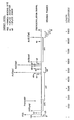
- the location of these regions is indicated in the Figure; the art gene is located close to the tat gene.
- oligodeoxynucleotides complementary to four of the above mentioned highly conserved regions inhibit virus replication or gene expression in cultured HTLV-III-transformed human lymphocytes. That is, oligodeoxynucleotides complementary to 1) sequences 5' to the primary tRNA lys binding site; 2) the primer binding site; 3) sequences of a mRNA donor splice site; or 4) sequences of a mRNA acceptor splice site have been shown to cause inhibition.
- any highly conserved region of the HTLV-III genome which encodes information necessary for viral replication or gene expression (e.g., protein synthesis) is a potential target for complementary oligodeoxynucleotides.
- oligonucleotide sequences complementary to the competitive inhibition targets can be oligoribonucleotide sequences or oligodeoxyribonucleotide sequences. Both types are referred to herein as oligonucleotides and, alternatively, as hybridons. As described here, the oligonucleotides were synthesized on an automated DNA synthesizer. It is possible, however, to produce the desired sequences by using genetically engineered organisms, such as bacteria or viruses.
- Oligodeoxynucleotide sequences of varying lengths were used to assess their inhibitory effect on viral replication and gene expression. For example, several nucleotide sequences complementary either to nucleotide sequences of the HTLV-III genome which are 5' to the primer tRNA lys binding site or to nucleotide sequences which straddle the primer binding site and the adjacent region (in the 5' direction) were synthesized and their inhibitory effects tested. As described in greater detail in Example 3, a 12-nucleotide sequence (mer), a 20-nucleotide sequence and a 26-nucleotide sequence have been made and their inhibitory effects on viral replication and gene expression measured.
- the 12-nucleotide and the 20-nucleotide sequences are complementary to portions of the HTLV-III genome close to the primer binding site, in the 5' direction.
- the 26-nucleotide sequence is complementary to the primer binding site; it has been shown to be particularly effective in hybridizing to viral targets and in inhibiting the virus.
- oligodeoxynucleotide sequences complementary to splice donor or splice acceptor sites of HTLV-III mRNA have been made and their inhibitory effects assessed.
- a 20-nucleotide sequence complementary to a splice donor site from the 3'-open reading frame region (See the Figure) and two 20-nucleotide sequence complementary to the a-1 and a-1' splice acceptor sites, the former necessary for the production of transactivating factor, have been synthesized and their inhibitory effects measured.
- oligomers of the same nucleotide sequence (either 15 mers or 20 mers), which are unmodified oligomers; oligomers with all internucleoside phosphates modified as phosphorothioates, methylphosphonates or phosphoromorpholidates; oligomers with replacement of just 3' and 5' terminal and penultimate internucleoside phosphates by the above-mentioned modifications; or oligomers with blocking groups at 5' and/or 3' terminal hydroxyl groups have been compared for their effects on growth and expression of HIV. As described in Example 4 and as shown in Tables 3-7, a variety of sites within the HIV genome were targeted.
- Results showed inhibition of up to 80-95% of the functions assayed (i.e., viral reverse transcriptase, p17 and p24 viral protein synthesis, syncytial formation and growth of host cells), although considerable variability, as described in Example 4, was observed.
- oligonucleotide sequences which can be used are determined by the competitive inhibition target(s) selected. Oligonucleotide sequences can be complementary to a single competitive inhibition target or can contain sequences complementary to more than one such target. For example, oligomers can be produced which are complementary to the HTLV-III primer binding site and the region of the genome immediately adjacent to that site in the 5' direction; to two splice donor sites; to two splice acceptor sites; or to any combination of competitive inhibition targets.
- oligonucleotides used to inhibit viral processes include their length; their modification and the location of groups used to modify them.
- the length of the oligonucleotides to be used will be determined by factors such as the desired specificity of inhibition, size necessary to block viral function, and effect on transmembrane passage.
- the work described herein has made use of complementary oligodeoxynucleotides ranging in length from 14 to 26 nucleotides.
- oligonucleotides used to inhibit HTLV-III will be 8-50 nucleotides in length.
- Oligonucleotides to be used can be modified at a variety of locations along their length. For example, they can be modified by the addition of groups at the 5' end (i.e., a dideoxy group), the 3' end or both (i.e., an isourea group), as well as on the internal phosphate groups (i.e., thiophosphates, morpholidates, alkylaminophosphates, piperazine phosphates) or on the bases. Some of these modifications are described above and in Example 4 and Tables 3-7.
- oligonucleotides to be used are modified and, if so, the location of the modification(s) will be determined, for example, by the desired effect on viral activity (e.g., inhibition of viral replication, gene expression or both), uptake into infected cells, inhibition of degradation of the oligonucleotides once they are inside cells, and prevention of their use as a primer by reverse transcriptase.
- viral activity e.g., inhibition of viral replication, gene expression or both
- uptake into infected cells e.g., inhibition of viral replication, gene expression or both
- inhibition of degradation of the oligonucleotides once they are inside cells e.g., inhibition of degradation of the oligonucleotides once they are inside cells
- prevention of their use as a primer by reverse transcriptase e.g., in order to inhibit reverse transcriptase activity (and thus viral replication) it may be necessary to block the 3' end of a sequence complementary to the primer binding site and/or sequences vicinal to
- Modification of oligonucleotides can also be carried out by the addition of an intercalating agent (e.g., acridine dye) at 5' or 3' termini, on bases, or on internucleophosphate groups. Modification in this manner may result in stronger binding between the oligonucleotides and the HTLV-III nucleic acids.
- an intercalating agent e.g., acridine dye
- hybridon is defined as an oligonucleotide complementary to single-stranded DNA or RNA, which modulates the function of the DNA or RNA by competitive hybridization. Zamecnik, P. and M.L. Stephenson, Proceedings of the National Academy of Sciences, USA , 75 :280284 (1978).
- Chain terminator(s) to be used in modifying oligonucleotides for use in inhibiting viral replication and gene expression can be, for example, ddT (as described above and in Example 3), the isourea group, the dimethoxytrityl group, or, in fact, any 3' modified function. Selection of the chain terminator is based, for example, on the absence of a 3' OH group (which can act as a substrate for reverse transcriptase); lack of or low cellular toxicity; lipophilicity; and lack of impairment of hydrogen bonding properties of the oligonucleotide.
- 3' or 5' exonucleases such as phosphodiesterases from snake venom or spleen, can progress past a single methylphosphonate internucleoside linkage. It has also been shown that two such linkages in succession constitute a strong block to the enzyme's activity and can increase the half life of an oligomer in the presence of such an enzyme by 100 fold. Good protection from destruction of an oligodeoxynucleotide by exonucleases can be afforded by using methylphosphonate linkages at the last two positions at each end of the molecule. This enhances the survival of the compound in vivo .
- Internucleoside phosphoromorpholidate and phosphoropiperazine derivatives have been shown to be resistant to nucleases and are inhibitory to HIV replication and expression. It is not necessary for an oligonucleotide to be non-ionic in order to enter cells. Therefore, oligonucleotides with a variety of oligonucleotides with mixed ionic and non-ionic internucleoside linkages will hybridize effectively with the genome target and, in addition, have particular advantages over the unmodified oligomer. For example, they have greater resistance to cellular nucleases than do unmodified oligomers and result in different distributions within the cell than the unmodified oligomers. Such properties may enhance to therapeutic efficacy.
- HTLV-III replication and gene expression are inhibited in HTLV-III-infected cells in tissue culture.
- the oligodeoxynucleotides described were added to peripheral human blood cells (PB) infected with HTLV-III and to transformed T-lymphocyte (H9) cells infected with HTLV-III.
- PB peripheral human blood cells
- H9 transformed T-lymphocyte
- the oligodeoxynucleotide was usually added at time zero only and observation of inhibitory effects was made at 96 hours. In one case, the oligonucleotide was added to fresh culture medium daily for 3 days.
- Example 3 reverse transcriptase activity and viral p15 and p24 protein production were used as indicators of inhibition of HTLV-III replication and gene expression, respectively. As shown in Table 1 and described in detail in Example 3, inhibition was greatest when a 20-nucleotide sequence complementary to a splice acceptor site was added to HTLV-III-infected transformed T-lymphocytes. Inhibition was observed under essentially all experimental conditions (see Table 1).
- the concentration at which the complementary oligodeoxynucleotides are applied and the timing (scheduling) of their administration.
- the oligodeoxynucleotides were added at concentrations ranging from 5 to 50 ug/ml. of culture medium. These concentrations were generally effective in producing an inhibitory effect but this range is by no means to be considered limiting.
- the oligodeoxynucleotide was usually added at one time only; it seems, however, that daily addition (or more frequent addition) is more effective than a single dose. H9 cells infected for 4 days with HIV were also treated at that point with hybridons and inhibition of p17 and p24 protein synthesis was observed.
- Example 4 growth and expression of HIV in suspension tissue cultures of H9 cells were monitored by assay of viral reverse transcriptase p17 and p24 viral protein synthesis, syncytial formation and growth of host cells. Inhibition observed with the oligomers described was as high as 80-95% with initial concentrations of 10-100 ug per ml. or all of the classes of oligomers.
- the strategy used in treating a particular individual depends on the status of the individual and the objective of the treatment. That is, an individual who has been found to be carrying the HTLV-III virus but shows no symptoms of AIDS might be treated differently, in terms of both the type of oligonucleotide(s) administered and the dose given, than an individual who does, in fact, have AIDS. In addition, treatment might well differ if its objective is to protect uninfected cells or to have an effect on cells which are already infected.
- an individual known to be harboring the virus but yet manifesting no sign of AIDS could be given a long-term or intermittent dosage schedule of oligonucleotides whose inhibitory effects stop reverse transcription (e.g., oligonucleotides complementary to the primer binding site and/or sequences close to the primer binding site in the 5' direction).
- oligonucleotides complementary to the primer binding site and/or sequences close to the primer binding site in the 5' direction e.g., oligonucleotides complementary to the primer binding site and/or sequences close to the primer binding site in the 5' direction.
- the first step in viral life or replication is inhibited because viral DNA cannot be made and the virus is unable to proliferate.
- cells are already infected and treatment must inhibit expression of genes (viral DNA) already present in the infected cells.
- oligonucleotides complementary to, for example, initiator codons for genes encoding viral proteins are required to prevent viral construction.
- uninfected cells can also be protected by administration of oligonucleotides capable of blocking reverse transcription.
- oligonucleotides In any treatment situation, however, oligonucleotides must be administered to individuals in a manner capable of getting the oligonucleotides initially into the blood stream and subsequently into cells.
- oligonucleotides resistant to nucleases by internucleotide phosphate modifications might be taken orally in capsule form.
- the oligonucleotides can have the desired effects: getting into HTLV-III infected cells to slow down or prevent viral replication and/or into as yet uninfected cells to provide protection.
- the T lymphocytes in the control sample will be killed; if not, the T lymphocytes survive. T lymphocytes in the test sample, however, will continue to be viable because of the protection provided by the complementary oligonucleotides included in the culture. Visual comparison of the two samples makes it possible to determine whether HTLV-III virus is present or absent in each.
- oligonucleotides and methods of the present invention to inhibit replication of retroviruses other than HTLV-III.
- oligonucleotide sequences complementary to regions of the retroviral genome whose function is necessary for normal retroviral replication or gene expression and which are highly conserved will be used.
- retroviruses which cause disease in humans are HTLV-I and HTLV-II (which cause leukemia) and HIV-2 (which causes AIDS).
- Oligomers complementary to regions of HTLV-I RNA have been made and shown to inhibit viral replication through the use of assays similar to those described for HTLV-III (Example 3).
- the sequences used for this work are the following:
- oligonucleotides and methods of the present invention can be used to inhibit the activity of viruses pathogenic to humans, animals or plants.
- oligonucleotides complementary to viral RNA or viral mRNA for both DNA and RNA viruses would be used to inhibit viral replication and gene expression.
- viral DNA will be the target of complementary oligonucleotides.
- Particularly useful target sites on the RNA are those which serve as binding or recognition sites for proteins (e.g., splice sites, protein initiation sites, polyadenylation signals, capped ends of mRNA, packaging signals, primer binding sites).
- any sequence which is present within the viral RNA or mRNA and is not found in host RNA would be an acceptable site. Binding of the oligonucleotide to that site would result in enzymatic destruction of the hybridized RNA and hence inactivation of the virus.
- target sites in other viruses are as follows:
- the hybridization arrest method of the present invention is not limited to viruses. Other infectious agents, including bacteria, fungi, protozoa and worms may be inhibited.
- oligonucleotides which are complementary to RNA of the infectious agent which is essential to the viability of the infectious agent is used.
- the oligonucleotide is directed against the same type of target sites as described above and should not be complementary to host RNA sequences.
- oligonucleotides inhibitory to the trypanosome Trypanosoma brucei gambiense are:
- target enzymes are chitin synthetase for anti-fungals and alanine racemase for antibacterials.
- Hybridons may be of benefit in situations where it is desirable to reduce the level or activity of a given protein or enzyme. This is achieved using oligonucleotides complementary to unique sites on the mRNA for the protein or enzyme and using the same criteria for those sites described previously. Examples where this approach will be beneficial are given below.
- Oligodeoxynucleotides that inhibit the synthesis of structural proteins or enzymes involved largely or exclusively in spermatogenisis, sperm motility, the binding of the sperm to the egg or any other step affecting sperm viability may be used as contraceptives for men.
- contraceptives for women may be oligodeoxynucleotides that inhibit proteins or enzymes involved in ovulation, fertilization, implantation or in the biosynthesis of hormones involved in those processes.
- Hypertension can be controlled by oligodeoxynucleotides that suppress the synthesis of angiotensin converting enzyme or related enzymes in the renin/angiotensin system; platelet aggregation can be controlled by suppression of the synthesis of enzymes necessary for the synthesis of thromboxane A2 for use in myocardial and cerebral circulatory disorders, infarcts, arteriosclerosis, embolism and thrombosis; deposition of cholesterol in arterial wall can be inhibited by suppression of the synthesis of fattyacyl co-enzyme A: cholesterol acyl transferase in arteriosclerosis; inhibition of the synthesis of cholinephosphotransferase may be useful in hypolipidemia.
- hybridization arrest can be used to reduce or eliminate adverse effects of the disorder.
- suppression of the synthesis of monoamine oxidase can be used in Parkinson's disease; suppression of catechol o-methyl transferase can be used to treat depression; and suppression of indole N-methyl transferase can be used in treating schizophrenia.
- Suppression of selected enzymes in the arachidonic acid cascade which leads to prostaglandins and leukotrienes may be useful in the control of platelet aggregation, allergy, inflammation, pain and asthma.
- mdr multidrug resistance
- a sequence complementary to the protein initiation site in the closely-related mouse protein is 5'-CCC AGA ATC ATG CAC AGC TT. Gros, P. et al. , Cell , 47 :371 (1986).
- An oligonucleotide having this sequence or a sequence complementary to the human mdr gene, once elucidated, can be used to inhibit or suppress protein expression.
- Unmodified oligodeoxynucleotides were synthesized on an automated DNA synthesizer (Biosearch SAM I), using either standard triester or phosphoramidite chemistry. Gait, M.J. (Ed.), Oligonucleotide Synthesis , I.R.L. Press (1984). After deblocking, the products were purified first on Merck silica gel 60 thin layer chromatographic plates in i -propanol: concentrated ammonia water (55:35:10) and eluted with ethanol:water (1:3). Where necessary, further purification was performed by high pressure liquid chromatography, using a Waters SAX Radial-PAK catridge or by polyacrylamide gel electrophoresis (PAGE).
- ddT 3'-deoxythymidine
- Oligonucleotides were 5'-end-labeled by T4 polynucleotide kinase, purified by polyacrylamide gel electrophoresis (PAGE) and sequenced by either the Maxam-Gilbert or wandering spot methods Maxam, A.M. and W. Gilbert, In : Methods in Enzymology , L. Grossman and K. Moldave (ed.) pp 499-560, Academic Press (1980); Jay, E. et al. , Nucleic Acids Research , 1 :331-353 (1974). For Maxam-Gilbert sequencing of fragments of this size, it was found necessary to increase reaction times up to 30 minutes at 37°. The presence of ddT at the 3' end of oligodeoxynucleotide did not seem to hinder the action of the exonuclease snake venom phosphodiesterase.
- HeLa cells were grown in suspension culture, concentrated by centrifugation at 600 x g for 5 min. and resuspended at a concentration of 5 x 10⁷ to 5 x 10⁸ cells/ml of Dulbecco's modified Eagle's medium (DME) without serum and kept on ice.
- DME Dulbecco's modified Eagle's medium
- Synthetic oligodeoxynucleotides to be tested (10-30 nucleotides in length), were labeled with 32P at the 5'-end by polynucleotide kinase at 2 x 10⁵ cpm/nmol, dissolved in DME without serum, and added to the HeLa cell suspension (40 ul oligodeoxynucleotide solution to 0.7 ml ice cold HeLa cell suspension.).
- oligodeoxynucleotide (12 nucleotides long) part of which was complementary to the 5' end of one of the decamers and part of which was complementary to the 3' end of the other decamer.
- concentration of labelled oligodeoxynucleotide in the HeLa cell suspension was usually 1 x 10 ⁇ 5 to 1 x 10 ⁇ 7M. Cells were incubated under sterile conditions at 37° for up to 20 hours.
- the primary nucleotide sequence of the HTLV-III/LAV genome has been determined during the past year by several groups of investigators, as indicated above.
- the following regions of the genome were selected as oligonucleotide competitive inhibition targets: a) a sequence of nucleotides 5' to the primer tRNA lys binding (association) site; b) a sequence straddling the primer binding site and the adjacent region, in the 5' direction; c) a sequence at the primer binding site and d) sequences from the splice sites (i.e., splice donor site, splice acceptor site) of the pre-mRNA that expresses the 3'-open reading frame regions. Sodroski, J. et al.
- sequences complementary to regions immediately adjacent, in a 5'-direction, to the tRNA lys primer binding site in HTLV-III, or complementary to the primer binding site were synthesized. These are a 12-nucleotide sequence (5'CTGCTAGAGATddT) a 20-nucleotide sequence (5'-CTGCTAGAGATTTTCCACAC), and a 26-nucleotide sequence with a 3' terminal non-complementary tail of (pA)3 (5'-TTCAAGTCCCTGTTCGGGCGCCAAAA).
- Reverse transcriptase activity was measured by the method described by Sarin and co-workers, which is a modification of an earlier method described by Baltimore and Smoller.
- the modified method is described in Sarin, P.S. et al. , Biochimica Biophysica Acta , 470 :198-206 (1977) and the earlier method in Baltimore, D. and Smoller, D., Proceedings of the National Academy of Sciences, U.S.A. , 68 : 1507-1511 (1971); the teachings of both references are incorporated herein by reference.
- HTLV-III-protein expression was measured by immunofluorescence using monoclonal antibodies to HTLV-III p15 and p24 as described in Sarin et al. , Biochemistry and Pharmacology , 34 :4075-4078 (1985), the teachings of which are incorporated herein by reference.
- a 20-nucleotide sequence complementary to a splice donor site from the 3'-open reading frame region, and a 20-nucleotide sequence complementary to a splice acceptor site were produced. These oligodeoxynucleotides were tested as described in part A (above); their effects were also measured through determintion of reverse transcriptase activity and production of viral-encoded proteins.
- HIV in suspension tissue cutures of H9 cells have been monitored by assay of viral reverse transcriptase, p17 and p24 viral protein synthesis, syncytial formation, and growth of host cells.
- Virus and oligodeoxynucleotide oligomers were added to the cultures at zero time, and incubation was carried out for 96 hours at 37°C.
- oligomers of the same sequence have been compared for inhibitory properties; oligomers compared included unmodified oligomers; oligomers with all internucleoside phosphates modified as phosphorothioates, methylphosphonates, phosphoromorpholidates or phosphoropiperazine derivatives; and oligomers with replacement of just 3' and 5' terminal and penultimate internucleoside phosphates by the above-mentioned modifications.
- Target sites for potential inhibition were also varied, with principal focus on the splice donor and acceptor sitse, plus the initiation and cap sites. Target sites and results are shown in Tables 3-7.
- Comparisons of degrees of inhibition of virus growth by these modified and unmodified oligomers are reproducible. Considerable variability in the degree of inhibition induced by the same oligomer in experiments repeated at different times and with different batches of virus occurred. This variation is unexplained.
Landscapes
- Life Sciences & Earth Sciences (AREA)
- Health & Medical Sciences (AREA)
- Chemical & Material Sciences (AREA)
- Engineering & Computer Science (AREA)
- Organic Chemistry (AREA)
- Genetics & Genomics (AREA)
- Molecular Biology (AREA)
- Wood Science & Technology (AREA)
- Biomedical Technology (AREA)
- Biotechnology (AREA)
- Zoology (AREA)
- General Health & Medical Sciences (AREA)
- Bioinformatics & Cheminformatics (AREA)
- General Engineering & Computer Science (AREA)
- Biochemistry (AREA)
- Virology (AREA)
- Microbiology (AREA)
- Biophysics (AREA)
- Physics & Mathematics (AREA)
- Plant Pathology (AREA)
- Proteomics, Peptides & Aminoacids (AREA)
- Immunology (AREA)
- General Chemical & Material Sciences (AREA)
- Public Health (AREA)
- Oncology (AREA)
- Medicinal Chemistry (AREA)
- Nuclear Medicine, Radiotherapy & Molecular Imaging (AREA)
- Pharmacology & Pharmacy (AREA)
- Animal Behavior & Ethology (AREA)
- Chemical Kinetics & Catalysis (AREA)
- Veterinary Medicine (AREA)
- Communicable Diseases (AREA)
- Analytical Chemistry (AREA)
- AIDS & HIV (AREA)
- Pharmaceuticals Containing Other Organic And Inorganic Compounds (AREA)
- Saccharide Compounds (AREA)
- Medicines That Contain Protein Lipid Enzymes And Other Medicines (AREA)
Claims (4)
- Eine Zubereitung zur therapeutischen Anwendung umfassend ein einzelsträngiges modifiziertes Oligonucleotid von 8-50 Nucleotiden, in dem das modifizierte Oligonucleotid, das an einem Internucleosid-Phosphat modifiziert ist, ein Phosphormorpholidat, Phosphorpiperazin oder Phosphoramidat-Derivat ist, das Oligonucleotid fähig zur selektiven Hybridisierung mit einer hochkonservierten Region des HTLV-III Genoms ist, um die selektive Hybridisierung zu induzieren, die die HTLV-III Replikation und/oder Genexpression aufhält, wobei die hochkonservierte Region irgendeine der folgenden umfaßt:(i) die tRNAlys Primerbindungsstelle,(ii) Regionen des HTLV-III Genoms, benachbart in der 5'-Richtung zur tRNAlys Primerbindungsstelle,(iii) die tRNAlys Primerbindungsstelle und Regionen des HTLV-III Genoms benachbart in der 5'-Richtung zur tRNAlys Primarbindungsstelle,(iv) die mRNA Donor-Spleißstellen,(v) die mRNA Akzeptor-Spleißstellen,(vi) das Initiationskodon für das gag-Gen,(vii) das Initiationskodon für das env-Gen,(viii) das Initiationskodon für das tat-Gen,(ix) das Initiationskodon für das sor-Gen,(x) das Initiationskodon für das 3'-orf-Gen,(xi) das cap-Nucleotid des HTLV-III Genoms,(xii) das art-Gen oder Teile davon,(xiii) die Region des HTLV-III Genoms, die ein Frameshift kodiert.
- Eine Zubereitung nach Anspruch 1, in der das modifizierte Oligonucleotid ausgewählt ist aus der Gruppe bestehend aus:a) Oligonucleotid-Phosphormorpholidate dargestellt in Tabelle 4;b) die Oligonucleotid-Phosphorbutylamidate dargestellt in Tabelle 5;c) Oligonucleotide, in denen alle Internucleosid-Phosphate modifiziert sind als Phosphormorpholidate oder Phosphorpiperazin-Derivate, oder eine Kombination davon;d) Oligonucleotide, in denen zusätzlich zu den Modifikationen, definiert in Anspruch 1, das 3' terminale und vorletzte Internucleosid-Phosphat, das 5' terminale und vorletzte Internucleosid-Phosphat oder beide, das 3' und das 5' terminale und vorletzte Internukleosid-Phosphat modifiziert sind als Phosphorthioate, Methylphosphonate, Phosphormorpholidate, Phosphorpiperazin-Derivate oder eine Kombination davon;e) Oligonucleotide komplementär zu der HTLV-III Primerbindungsstelle, in denen zusätzlich zu den Modifikationen, definiert in Anspruch 1, das 3'-Ende von Sequenzen benachbart zur Primarbindungsstelle in der 5'-Richtung alleine oder in Kombination in der Art blockiert sind, daß die Region unfähig ist, als ein Templat für die Reversetranscriptase-Aktivität von HTLV-III zu dienen;f) Oligonucleotide modifiziert an dem 5'-Ende durch Hinzufügen einer lipophilen Gruppe, Polylysin, Polyarginin oder anderer Mittel, die die Aufnahme der Oligonucleotide erhöhen, zusätzlich zu den Modifikationen, definiert in Anspruch 1;g) Oligonucleotide modifiziert durch Zugabe eines interkalierenden Mittels, zusätzlich zu den Modifikationen, definiert in Anspruch 1;h) Oligonucleotide umfassend eine oder mehrere chemisch reaktive Gruppen, fähig zur Quervernetzung der Region oder Regionen des HTLV-III Genoms, zu dem sie komplementär sind, zusätzlich zu den Modifikationen, definiert in Anspruch 1;i) Oligonucleotide umfassend eine oder mehrere chemisch reaktive Gruppen, fähig zur Spaltung der Region oder Regionen des HTLV-III Genoms, zu dem sie komplementär sind, zusätzlich zu den Modifikationen, definiert in Anspruch 1.
- Ein in vitro Verfahren zur Inhibierung der HTLV-III Replikation der HTLV-III Genexpression oder von beiden in HTLV-III enthaltenden Zellen, umfassend das Einführen eines modifizierten Oligonucleotids nach Anspruch 1 oder 2 in Zellen.
- Die Verwendung einer Zubereitung (oder eines modifizierten Derivats hiervon) nach einem der vorhergehenden Ansprüche zur Herstellung eines Medikaments zur Verwendung in der AIDS-Chemotherapie, z.B. durch Inhibierung der HTLV-III Replikation und/oder Genexpression in peripheren menschlichen Blutzellen (z.B. menschlichen T-Lymphozyten) infiziert mit HTLV-III.
Applications Claiming Priority (3)
| Application Number | Priority Date | Filing Date | Title |
|---|---|---|---|
| US16057488A | 1988-02-26 | 1988-02-26 | |
| US160574 | 1988-02-26 | ||
| PCT/US1989/000752 WO1989008146A1 (en) | 1988-02-26 | 1989-02-24 | Inhibition of htlv-iii by exogenous oligonucleotides |
Publications (2)
| Publication Number | Publication Date |
|---|---|
| EP0402402A1 EP0402402A1 (de) | 1990-12-19 |
| EP0402402B1 true EP0402402B1 (de) | 1995-12-27 |
Family
ID=22577455
Family Applications (1)
| Application Number | Title | Priority Date | Filing Date |
|---|---|---|---|
| EP89903415A Expired - Lifetime EP0402402B1 (de) | 1988-02-26 | 1989-02-24 | Hemmung von htlv-iii durch exogene oligonukleotide |
Country Status (6)
| Country | Link |
|---|---|
| EP (1) | EP0402402B1 (de) |
| JP (1) | JPH04501052A (de) |
| AT (1) | ATE132190T1 (de) |
| AU (1) | AU636573B2 (de) |
| DE (1) | DE68925278T2 (de) |
| WO (1) | WO1989008146A1 (de) |
Families Citing this family (39)
| Publication number | Priority date | Publication date | Assignee | Title |
|---|---|---|---|---|
| CA2029273A1 (en) * | 1989-12-04 | 1991-06-05 | Christine L. Brakel | Modified nucleotide compounds |
| US5166195A (en) * | 1990-05-11 | 1992-11-24 | Isis Pharmaceuticals, Inc. | Antisense inhibitors of the human immunodeficiency virus phosphorothioate oligonucleotides |
| WO1992005284A1 (en) * | 1990-09-21 | 1992-04-02 | University Of Maryland | Compositions and methods for inhibiting growth or replication of viruses |
| AU652006B2 (en) * | 1990-10-09 | 1994-08-11 | Nexstar Pharmaceuticals, Inc. | Inhibition of viral replication |
| HUT64554A (en) * | 1990-11-20 | 1994-01-28 | Sankyo Co | A process for preparing nucleinic acide derivatives of anesthetic effect and pharmaceutical compositions containing them as active ingredient |
| JPH06506599A (ja) * | 1991-04-05 | 1994-07-28 | エディソン アニマル バイオテクノロジー センター,オハイオ ユニバーシティー | パッケージング配列に相補的なアンチセンス核酸によるレトロウイルスの抑制 |
| ES2103918T3 (es) * | 1991-10-17 | 1997-10-01 | Ciba Geigy Ag | Nucleosidos biciclicos, oligonucleotidos, procedimiento para su obtencion y productos intermedios. |
| US5332814A (en) * | 1991-11-12 | 1994-07-26 | Ciba-Geigy Corporation | Process for the preparation of carbacyclic nucleosides, and intermediates |
| IL101600A (en) * | 1992-04-15 | 2000-02-29 | Yissum Res Dev Co | Synthetic partially phosphorothioated antisense oligodeoxynucleotides and pharmaceutical compositions containing them |
| EP0577558A2 (de) * | 1992-07-01 | 1994-01-05 | Ciba-Geigy Ag | Carbocyclische Nukleoside mit bicyclischen Ringen, Oligonukleotide daraus, Verfahren zu deren Herstellung, deren Verwendung und Zwischenproduckte |
| AU678769B2 (en) * | 1992-07-27 | 1997-06-12 | Hybridon, Inc. | Oligonucleotide alkylphosphonothioates |
| WO1994008004A1 (en) * | 1992-10-05 | 1994-04-14 | Hybridon, Inc. | Therapeutic anti-hiv oligonucleotide and pharmaceutical |
| DK0626387T3 (da) * | 1993-05-12 | 1999-09-27 | Novartis Ag | Nukleosider og oligonukleotider med 2'-ethergrupper |
| EP0707653B1 (de) * | 1993-06-11 | 2004-09-01 | Commonwealth Scientific And Industrial Research Organisation | Methode der spezifischen abschaltung von genen durch dna-methylierung |
| AU697234B2 (en) * | 1993-06-23 | 1998-10-01 | Viventia Biotech Inc. | Antisense oligonucleotides and therapeutic use thereof in human immunodeficiency virus infection |
| DE4338704A1 (de) | 1993-11-12 | 1995-05-18 | Hoechst Ag | Stabilisierte Oligonucleotide und deren Verwendung |
| HU220423B (hu) * | 1994-01-26 | 2002-01-28 | Novartis Ag. | Módosított oligonukleotidok |
| DE59510742D1 (de) * | 1994-04-27 | 2003-08-14 | Novartis Ag | Nukleoside und Oligonukleotide mit 2'-Ethergruppen |
| ATE188479T1 (de) | 1994-06-01 | 2000-01-15 | Hybridon Inc | Verzweigte oligonukleotide als pathogenhemmende mittel |
| GB9415129D0 (en) * | 1994-07-27 | 1994-09-14 | Lynxvale Ltd | Oligonucleotides and their use |
| DE4427219A1 (de) * | 1994-08-01 | 1996-02-08 | Max Planck Gesellschaft | Nukleinsäure zur Initiation der Aktivität von RNase H bzw. reverser Transkriptase |
| CA2197788A1 (en) * | 1994-09-02 | 1996-03-14 | Robert Haner | Functional terpyridine metal complexes, methods for their preparation and oligonucleotide conjugates with terpyridine metal complexes |
| GB9604669D0 (en) | 1996-03-05 | 1996-05-01 | Ciba Geigy Ag | Chemical compounds |
| US6776986B1 (en) | 1996-06-06 | 2004-08-17 | Novartis Ag | Inhibition of HIV-1 replication by antisense RNA expression |
| DE19739956C1 (de) * | 1997-09-11 | 1998-07-02 | Horst Prof Dr Domdey | tRNA-Primer, seine Herstellung und Verwendung zur Inhibierung der reversen Transkriptase |
| GB0012497D0 (en) * | 2000-05-23 | 2000-07-12 | Syngenix Ltd | Antiviral therapy |
| EP1627563A1 (de) | 2004-08-10 | 2006-02-22 | Academisch Medisch Centrum bij de Universiteit van Amsterdam | Verfahren und Mittel zur Herstellung einer stabilisierten Zelle |
| EP1647595A1 (de) * | 2004-10-15 | 2006-04-19 | Academisch Medisch Centrum bij de Universiteit van Amsterdam | Nukleinsäuren gegen Viren, insbesondere gegen HIV |
| JP5155176B2 (ja) | 2005-11-17 | 2013-02-27 | ティーイーティー システムズ ゲーエムベーハー ウント ツェーオー. カーゲー | 誘導発現系 |
| USRE49583E1 (en) | 2005-11-17 | 2023-07-18 | Tet Systems Gmbh & Co. Kg | Inducible expression systems |
| DK1974017T4 (da) | 2005-12-09 | 2023-09-25 | Academisch Medisch Centrum Bij De Univ Van Amsterdam | Midler og fremgangsmåder til at påvirke stabiliteten af antistof producerende celler |
| WO2007067032A1 (en) | 2005-12-09 | 2007-06-14 | Academisch Medisch Cemtrum Bij De Universiteit Van Amsterdam | Means and methods for influencing the stability of cells |
| SI2056845T1 (en) | 2006-08-08 | 2018-02-28 | Rheinische Friedrich-Wilhelms-Universitaet Bonn | STRUCTURE AND USE 5 'PHOSPHATE OF OLIGONUCLEOTES |
| EP2297323A1 (de) | 2008-05-21 | 2011-03-23 | Hartmann, Gunther | 5 -triphosphat-oligonukleotid mit stumpfem ende und verwendugen davon |
| DK2454283T3 (en) | 2009-07-15 | 2018-05-07 | Aimm Therapeutics Bv | METHODS AND PROCEDURES FOR MANUFACTURING HIGH EFFICIENCY ANTIBODIES |
| ES2626671T3 (es) | 2010-12-02 | 2017-07-25 | Aimm Therapeutics B.V. | Medios y métodos para producir anticuerpos de alta afinidad |
| EP2508530A1 (de) | 2011-03-28 | 2012-10-10 | Rheinische Friedrich-Wilhelms-Universität Bonn | Reinigung von triphosphorylierten Oligonucleotiden mit Einfang-Tags |
| EP2712870A1 (de) | 2012-09-27 | 2014-04-02 | Rheinische Friedrich-Wilhelms-Universität Bonn | Neuartige RIG-I-Liganden und Herstellungsverfahren dafür |
| WO2015115892A1 (en) | 2014-01-31 | 2015-08-06 | Aimm Therapeutics B.V. | Means and methods for producing stable antibodies |
Family Cites Families (6)
| Publication number | Priority date | Publication date | Assignee | Title |
|---|---|---|---|---|
| EP0477994B1 (de) * | 1985-03-21 | 2001-06-13 | Johnston, Stephen, Ph.D. | Von Parasit gewonnener Widerstand |
| EP0252940A4 (de) * | 1985-12-05 | 1989-07-27 | Hutchinson Fred Cancer Res | Antisense-rna zur behandlung von retroviralen krankheiten. |
| US4806463A (en) * | 1986-05-23 | 1989-02-21 | Worcester Foundation For Experimental Biology | Inhibition of HTLV-III by exogenous oligonucleotides |
| US5276019A (en) * | 1987-03-25 | 1994-01-04 | The United States Of America As Represented By The Department Of Health And Human Services | Inhibitors for replication of retroviruses and for the expression of oncogene products |
| US5110802A (en) * | 1987-07-14 | 1992-05-05 | City Of Hope | Oligonucleotide phosphonates and method of inhibiting a human immunodeficiency virus in vitro utilizing said oligonucleotide phosphonates |
| ZA902912B (en) * | 1989-04-21 | 1991-01-30 | Cornell Res Foundation Inc | Method of inhibiting induction of latent or chronic viral infection |
-
1989
- 1989-02-24 EP EP89903415A patent/EP0402402B1/de not_active Expired - Lifetime
- 1989-02-24 JP JP1503128A patent/JPH04501052A/ja active Pending
- 1989-02-24 AT AT89903415T patent/ATE132190T1/de not_active IP Right Cessation
- 1989-02-24 WO PCT/US1989/000752 patent/WO1989008146A1/en not_active Ceased
- 1989-02-24 AU AU40720/89A patent/AU636573B2/en not_active Ceased
- 1989-02-24 DE DE68925278T patent/DE68925278T2/de not_active Expired - Fee Related
Also Published As
| Publication number | Publication date |
|---|---|
| AU4072089A (en) | 1989-09-22 |
| DE68925278T2 (de) | 1996-09-19 |
| WO1989008146A1 (en) | 1989-09-08 |
| AU636573B2 (en) | 1993-05-06 |
| JPH04501052A (ja) | 1992-02-27 |
| DE68925278D1 (de) | 1996-02-08 |
| ATE132190T1 (de) | 1996-01-15 |
| EP0402402A1 (de) | 1990-12-19 |
Similar Documents
| Publication | Publication Date | Title |
|---|---|---|
| EP0412964B1 (de) | Hemmung von htlv-iii durch exogene oligonukleotide | |
| AU636573B2 (en) | Inhibition of htlv-iii by exogenous oligonucleotides | |
| Zamecnik et al. | Inhibition of replication and expression of human T-cell lymphotropic virus type III in cultured cells by exogenous synthetic oligonucleotides complementary to viral RNA. | |
| US5684147A (en) | Therapeutic anti-HIV anti-viral oligonucleotides and pharmaceutical formulations thereof | |
| Michael et al. | Induction of human immunodeficiency virus type 1 expression in chronically infected cells is associated primarily with a shift in RNA splicing patterns | |
| Zhang et al. | Inhibition of infection of incoming HIV-1 virus by RNA-cleaving DNA enzyme | |
| Kaushik et al. | Anti-TAR polyamide nucleotide analog conjugated with a membrane-permeating peptide inhibits human immunodeficiency virus type 1 production | |
| WO1994008004A9 (en) | Therapeutic anti-hiv oligonucleotide and pharmaceutical | |
| US5874281A (en) | Enhancement of oligonucleotide inhibition of protein production, cell proliferation, and/or multiplication of infectious disease pathogens | |
| Montefiori et al. | Phosphorothioate and cordycepin analogues of 2', 5'-oligoadenylate: inhibition of human immunodeficiency virus type 1 reverse transcriptase and infection in vitro. | |
| CA2154578A1 (en) | Oligonucleotide alkylphosphonates and alkylphosphonothioates | |
| AU4770093A (en) | Self-stabilized oligonucleotides as therapeutic agents | |
| AU699233B2 (en) | Compounds and methods for inhibiting propagation of human immunodeficiency virus | |
| CA2208528A1 (en) | Synthesis of stereospecific oligonucleotide phosphorothioates | |
| US5622854A (en) | Method and reagent for inhibiting T-cell leukemia virus replication | |
| US20030186911A1 (en) | Inhibition of infectious agents by exogenous oligonucleotides | |
| US20030191078A1 (en) | Inhibition of infectious agents by exogenous oligonucleotides | |
| Agrawal et al. | Antisense oligonucleotides: gene regulation and chemotherapy of AIDS | |
| JPH04506074A (ja) | レトロウイルス複製を阻害するαアノマーオリゴヌクレオチド化合物 | |
| Kusunoki et al. | Antisense oligodeoxynucleotide complementary to CXCR4 mRNA block replication of HIV-1 in COS cells | |
| AU678980B2 (en) | Method of inhibiting viral replication | |
| Hatta et al. | Anti-HIV activities and mechanisms of antisense oligonucleotides | |
| Lee | Antisense inhibition of HIV-1 gene expression by phosphorodithioate-modified oligodeoxyribonucleotides | |
| AGRAWAL | Hybridon, Inc., One Innovation Drive, Worcester, MA 01605, USA |
Legal Events
| Date | Code | Title | Description |
|---|---|---|---|
| PUAI | Public reference made under article 153(3) epc to a published international application that has entered the european phase |
Free format text: ORIGINAL CODE: 0009012 |
|
| 17P | Request for examination filed |
Effective date: 19900823 |
|
| AK | Designated contracting states |
Kind code of ref document: A1 Designated state(s): AT BE CH DE FR GB IT LI LU NL SE |
|
| 17Q | First examination report despatched |
Effective date: 19930426 |
|
| GRAA | (expected) grant |
Free format text: ORIGINAL CODE: 0009210 |
|
| AK | Designated contracting states |
Kind code of ref document: B1 Designated state(s): AT BE CH DE FR GB IT LI LU NL SE |
|
| REF | Corresponds to: |
Ref document number: 132190 Country of ref document: AT Date of ref document: 19960115 Kind code of ref document: T |
|
| BECN | Be: change of holder's name |
Effective date: 19951227 |
|
| REF | Corresponds to: |
Ref document number: 68925278 Country of ref document: DE Date of ref document: 19960208 |
|
| REG | Reference to a national code |
Ref country code: CH Ref legal event code: NV Representative=s name: SCHAAD, BALASS & PARTNER AG |
|
| ITF | It: translation for a ep patent filed | ||
| ET | Fr: translation filed | ||
| RAP2 | Party data changed (patent owner data changed or rights of a patent transferred) |
Owner name: WORCESTER FOUNDATION FOR BIOMEDICAL RESEARCH, INC. |
|
| REG | Reference to a national code |
Ref country code: CH Ref legal event code: PUE Owner name: WORCESTER FOUNDATION FOR EXPERIMENTAL BIOLOGY -DAN |
|
| NLT1 | Nl: modifications of names registered in virtue of documents presented to the patent office pursuant to art. 16 a, paragraph 1 |
Owner name: WORCESTER FOUNDATION FOR BIOMEDICAL RESEARCH INC. |
|
| NLT2 | Nl: modifications (of names), taken from the european patent patent bulletin |
Owner name: WORCESTER FOUNDATION FOR BIOMEDICAL RESEARCH, INC. |
|
| ITPR | It: changes in ownership of a european patent |
Owner name: CESSSIONE EPO;WORCESTER FOUNDATION FOR BIOMEDICAL |
|
| PLBE | No opposition filed within time limit |
Free format text: ORIGINAL CODE: 0009261 |
|
| STAA | Information on the status of an ep patent application or granted ep patent |
Free format text: STATUS: NO OPPOSITION FILED WITHIN TIME LIMIT |
|
| 26N | No opposition filed | ||
| PGFP | Annual fee paid to national office [announced via postgrant information from national office to epo] |
Ref country code: NL Payment date: 19971231 Year of fee payment: 10 |
|
| PGFP | Annual fee paid to national office [announced via postgrant information from national office to epo] |
Ref country code: GB Payment date: 19980108 Year of fee payment: 10 |
|
| PGFP | Annual fee paid to national office [announced via postgrant information from national office to epo] |
Ref country code: LU Payment date: 19980123 Year of fee payment: 10 |
|
| PGFP | Annual fee paid to national office [announced via postgrant information from national office to epo] |
Ref country code: SE Payment date: 19980205 Year of fee payment: 10 |
|
| PGFP | Annual fee paid to national office [announced via postgrant information from national office to epo] |
Ref country code: FR Payment date: 19980209 Year of fee payment: 10 |
|
| PGFP | Annual fee paid to national office [announced via postgrant information from national office to epo] |
Ref country code: DE Payment date: 19980227 Year of fee payment: 10 |
|
| PGFP | Annual fee paid to national office [announced via postgrant information from national office to epo] |
Ref country code: BE Payment date: 19980320 Year of fee payment: 10 |
|
| PGFP | Annual fee paid to national office [announced via postgrant information from national office to epo] |
Ref country code: CH Payment date: 19980415 Year of fee payment: 10 |
|
| PGFP | Annual fee paid to national office [announced via postgrant information from national office to epo] |
Ref country code: AT Payment date: 19981216 Year of fee payment: 11 |
|
| PG25 | Lapsed in a contracting state [announced via postgrant information from national office to epo] |
Ref country code: LU Free format text: LAPSE BECAUSE OF NON-PAYMENT OF DUE FEES Effective date: 19990224 Ref country code: GB Free format text: LAPSE BECAUSE OF NON-PAYMENT OF DUE FEES Effective date: 19990224 |
|
| PG25 | Lapsed in a contracting state [announced via postgrant information from national office to epo] |
Ref country code: SE Free format text: LAPSE BECAUSE OF NON-PAYMENT OF DUE FEES Effective date: 19990225 |
|
| PG25 | Lapsed in a contracting state [announced via postgrant information from national office to epo] |
Ref country code: LI Free format text: LAPSE BECAUSE OF NON-PAYMENT OF DUE FEES Effective date: 19990228 Ref country code: CH Free format text: LAPSE BECAUSE OF NON-PAYMENT OF DUE FEES Effective date: 19990228 Ref country code: BE Free format text: LAPSE BECAUSE OF NON-PAYMENT OF DUE FEES Effective date: 19990228 |
|
| BERE | Be: lapsed |
Owner name: WORCESTER FOUNDATION FOR BIOMEDICAL RESEARCH INC. Effective date: 19990228 |
|
| PG25 | Lapsed in a contracting state [announced via postgrant information from national office to epo] |
Ref country code: NL Free format text: LAPSE BECAUSE OF NON-PAYMENT OF DUE FEES Effective date: 19990901 |
|
| GBPC | Gb: european patent ceased through non-payment of renewal fee |
Effective date: 19990224 |
|
| REG | Reference to a national code |
Ref country code: CH Ref legal event code: PL |
|
| PG25 | Lapsed in a contracting state [announced via postgrant information from national office to epo] |
Ref country code: FR Free format text: LAPSE BECAUSE OF NON-PAYMENT OF DUE FEES Effective date: 19991029 |
|
| EUG | Se: european patent has lapsed |
Ref document number: 89903415.1 |
|
| PG25 | Lapsed in a contracting state [announced via postgrant information from national office to epo] |
Ref country code: DE Free format text: LAPSE BECAUSE OF NON-PAYMENT OF DUE FEES Effective date: 19991201 |
|
| REG | Reference to a national code |
Ref country code: FR Ref legal event code: ST |
|
| PG25 | Lapsed in a contracting state [announced via postgrant information from national office to epo] |
Ref country code: AT Free format text: LAPSE BECAUSE OF NON-PAYMENT OF DUE FEES Effective date: 20000224 |
|
| PG25 | Lapsed in a contracting state [announced via postgrant information from national office to epo] |
Ref country code: IT Free format text: LAPSE BECAUSE OF NON-PAYMENT OF DUE FEES;WARNING: LAPSES OF ITALIAN PATENTS WITH EFFECTIVE DATE BEFORE 2007 MAY HAVE OCCURRED AT ANY TIME BEFORE 2007. THE CORRECT EFFECTIVE DATE MAY BE DIFFERENT FROM THE ONE RECORDED. Effective date: 20050224 |