EP0366704B1 - Verfahren zur Verminderung der Reibung zwischen einem Festkörper und einer Flüssigkeit - Google Patents
Verfahren zur Verminderung der Reibung zwischen einem Festkörper und einer Flüssigkeit Download PDFInfo
- Publication number
- EP0366704B1 EP0366704B1 EP88906163A EP88906163A EP0366704B1 EP 0366704 B1 EP0366704 B1 EP 0366704B1 EP 88906163 A EP88906163 A EP 88906163A EP 88906163 A EP88906163 A EP 88906163A EP 0366704 B1 EP0366704 B1 EP 0366704B1
- Authority
- EP
- European Patent Office
- Prior art keywords
- component
- linked
- glucopyranos
- deoxy
- process according
- Prior art date
- Legal status (The legal status is an assumption and is not a legal conclusion. Google has not performed a legal analysis and makes no representation as to the accuracy of the status listed.)
- Expired - Lifetime
Links
- 238000000034 method Methods 0.000 title claims abstract description 25
- 239000007788 liquid Substances 0.000 title claims abstract description 15
- 239000007787 solid Substances 0.000 title claims abstract description 12
- 230000008569 process Effects 0.000 title claims description 13
- 229920001282 polysaccharide Polymers 0.000 claims abstract description 35
- 239000005017 polysaccharide Substances 0.000 claims abstract description 35
- XLYOFNOQVPJJNP-UHFFFAOYSA-N water Substances O XLYOFNOQVPJJNP-UHFFFAOYSA-N 0.000 claims abstract description 25
- 235000010418 carrageenan Nutrition 0.000 claims abstract description 10
- 229920001525 carrageenan Polymers 0.000 claims abstract description 10
- 229920001817 Agar Polymers 0.000 claims abstract description 9
- 239000008272 agar Substances 0.000 claims abstract description 9
- 239000000679 carrageenan Substances 0.000 claims abstract description 9
- 229940113118 carrageenan Drugs 0.000 claims abstract description 9
- UHVMMEOXYDMDKI-JKYCWFKZSA-L zinc;1-(5-cyanopyridin-2-yl)-3-[(1s,2s)-2-(6-fluoro-2-hydroxy-3-propanoylphenyl)cyclopropyl]urea;diacetate Chemical compound [Zn+2].CC([O-])=O.CC([O-])=O.CCC(=O)C1=CC=C(F)C([C@H]2[C@H](C2)NC(=O)NC=2N=CC(=CC=2)C#N)=C1O UHVMMEOXYDMDKI-JKYCWFKZSA-L 0.000 claims abstract description 9
- 150000004676 glycans Chemical class 0.000 claims abstract description 8
- 150000004804 polysaccharides Chemical class 0.000 claims description 33
- 229920001503 Glucan Polymers 0.000 claims description 9
- 229920000057 Mannan Polymers 0.000 claims description 9
- 125000000217 alkyl group Chemical group 0.000 claims description 9
- 125000002768 hydroxyalkyl group Chemical group 0.000 claims description 9
- 229920000926 Galactomannan Polymers 0.000 claims description 8
- LUEWUZLMQUOBSB-FSKGGBMCSA-N (2s,3s,4s,5s,6r)-2-[(2r,3s,4r,5r,6s)-6-[(2r,3s,4r,5s,6s)-4,5-dihydroxy-2-(hydroxymethyl)-6-[(2r,4r,5s,6r)-4,5,6-trihydroxy-2-(hydroxymethyl)oxan-3-yl]oxyoxan-3-yl]oxy-4,5-dihydroxy-2-(hydroxymethyl)oxan-3-yl]oxy-6-(hydroxymethyl)oxane-3,4,5-triol Chemical compound O[C@H]1[C@@H](O)[C@H](O)[C@@H](CO)O[C@H]1O[C@@H]1[C@@H](CO)O[C@@H](O[C@@H]2[C@H](O[C@@H](OC3[C@H](O[C@@H](O)[C@@H](O)[C@H]3O)CO)[C@@H](O)[C@H]2O)CO)[C@H](O)[C@H]1O LUEWUZLMQUOBSB-FSKGGBMCSA-N 0.000 claims description 7
- MSWZFWKMSRAUBD-IVMDWMLBSA-N 2-amino-2-deoxy-D-glucopyranose Chemical compound N[C@H]1C(O)O[C@H](CO)[C@@H](O)[C@@H]1O MSWZFWKMSRAUBD-IVMDWMLBSA-N 0.000 claims description 7
- 229920002581 Glucomannan Polymers 0.000 claims description 7
- 229940046240 glucomannan Drugs 0.000 claims description 7
- 229920001221 xylan Polymers 0.000 claims description 7
- 150000004823 xylans Chemical class 0.000 claims description 7
- 125000002252 acyl group Chemical group 0.000 claims description 5
- 125000004181 carboxyalkyl group Chemical group 0.000 claims description 5
- 150000002772 monosaccharides Chemical class 0.000 claims description 5
- 150000002482 oligosaccharides Polymers 0.000 claims description 5
- 229920002101 Chitin Polymers 0.000 claims description 4
- 229920001661 Chitosan Polymers 0.000 claims description 4
- OVRNDRQMDRJTHS-RTRLPJTCSA-N N-acetyl-D-glucosamine Chemical compound CC(=O)N[C@H]1C(O)O[C@H](CO)[C@@H](O)[C@@H]1O OVRNDRQMDRJTHS-RTRLPJTCSA-N 0.000 claims description 4
- 125000004103 aminoalkyl group Chemical group 0.000 claims description 4
- 235000013912 Ceratonia siliqua Nutrition 0.000 claims description 3
- 240000008886 Ceratonia siliqua Species 0.000 claims description 3
- 239000001913 cellulose Substances 0.000 claims description 3
- 229920002678 cellulose Polymers 0.000 claims description 3
- 235000010980 cellulose Nutrition 0.000 claims description 3
- 229920002134 Carboxymethyl cellulose Polymers 0.000 claims description 2
- 244000303965 Cyamopsis psoralioides Species 0.000 claims description 2
- 229920000663 Hydroxyethyl cellulose Polymers 0.000 claims description 2
- 235000010948 carboxy methyl cellulose Nutrition 0.000 claims description 2
- 235000019447 hydroxyethyl cellulose Nutrition 0.000 claims description 2
- 125000001424 substituent group Chemical group 0.000 claims 2
- 239000008199 coating composition Substances 0.000 claims 1
- 239000000203 mixture Substances 0.000 abstract description 46
- 238000000576 coating method Methods 0.000 abstract description 11
- 239000011248 coating agent Substances 0.000 abstract description 10
- 239000007790 solid phase Substances 0.000 abstract description 4
- 239000011159 matrix material Substances 0.000 abstract description 2
- 238000011109 contamination Methods 0.000 abstract 2
- 239000003814 drug Substances 0.000 abstract 1
- 229940079593 drug Drugs 0.000 abstract 1
- 239000005022 packaging material Substances 0.000 abstract 1
- 230000001681 protective effect Effects 0.000 abstract 1
- 239000004071 soot Substances 0.000 abstract 1
- 230000009467 reduction Effects 0.000 description 31
- 238000002474 experimental method Methods 0.000 description 14
- 229920000642 polymer Polymers 0.000 description 11
- OKTJSMMVPCPJKN-UHFFFAOYSA-N Carbon Chemical compound [C] OKTJSMMVPCPJKN-UHFFFAOYSA-N 0.000 description 7
- 229920002907 Guar gum Polymers 0.000 description 6
- 239000000665 guar gum Substances 0.000 description 6
- 235000010417 guar gum Nutrition 0.000 description 6
- 229960002154 guar gum Drugs 0.000 description 6
- 229920000161 Locust bean gum Polymers 0.000 description 5
- 238000001035 drying Methods 0.000 description 5
- 230000000694 effects Effects 0.000 description 5
- 239000000711 locust bean gum Substances 0.000 description 5
- 235000010420 locust bean gum Nutrition 0.000 description 5
- 238000006467 substitution reaction Methods 0.000 description 5
- 229910001369 Brass Inorganic materials 0.000 description 4
- 241000196324 Embryophyta Species 0.000 description 4
- 239000010951 brass Substances 0.000 description 4
- 239000000243 solution Substances 0.000 description 4
- 238000012345 traction test Methods 0.000 description 4
- 239000007864 aqueous solution Substances 0.000 description 3
- 230000008859 change Effects 0.000 description 3
- 238000009792 diffusion process Methods 0.000 description 3
- 239000012530 fluid Substances 0.000 description 3
- 239000007791 liquid phase Substances 0.000 description 3
- 239000000463 material Substances 0.000 description 3
- 238000005259 measurement Methods 0.000 description 3
- 239000002245 particle Substances 0.000 description 3
- 241000870659 Crassula perfoliata var. minor Species 0.000 description 2
- 239000008346 aqueous phase Substances 0.000 description 2
- 238000006073 displacement reaction Methods 0.000 description 2
- 238000004090 dissolution Methods 0.000 description 2
- 239000000284 extract Substances 0.000 description 2
- -1 hydroxymethyl(methyloxy)methyl Chemical group 0.000 description 2
- 239000004033 plastic Substances 0.000 description 2
- 238000003756 stirring Methods 0.000 description 2
- OMDQUFIYNPYJFM-XKDAHURESA-N (2r,3r,4s,5r,6s)-2-(hydroxymethyl)-6-[[(2r,3s,4r,5s,6r)-4,5,6-trihydroxy-3-[(2s,3s,4s,5s,6r)-3,4,5-trihydroxy-6-(hydroxymethyl)oxan-2-yl]oxyoxan-2-yl]methoxy]oxane-3,4,5-triol Chemical compound O[C@@H]1[C@@H](O)[C@@H](O)[C@@H](CO)O[C@@H]1OC[C@@H]1[C@@H](O[C@H]2[C@H]([C@@H](O)[C@H](O)[C@@H](CO)O2)O)[C@H](O)[C@H](O)[C@H](O)O1 OMDQUFIYNPYJFM-XKDAHURESA-N 0.000 description 1
- 102000009027 Albumins Human genes 0.000 description 1
- 108010088751 Albumins Proteins 0.000 description 1
- BSYNRYMUTXBXSQ-UHFFFAOYSA-N Aspirin Chemical compound CC(=O)OC1=CC=CC=C1C(O)=O BSYNRYMUTXBXSQ-UHFFFAOYSA-N 0.000 description 1
- 235000013913 Ceratonia Nutrition 0.000 description 1
- 241001060815 Ceratonia Species 0.000 description 1
- 235000017367 Guainella Nutrition 0.000 description 1
- 241001465754 Metazoa Species 0.000 description 1
- 229920002472 Starch Polymers 0.000 description 1
- 239000004809 Teflon Substances 0.000 description 1
- 229920006362 Teflon® Polymers 0.000 description 1
- 241000589634 Xanthomonas Species 0.000 description 1
- 229960001138 acetylsalicylic acid Drugs 0.000 description 1
- 238000004026 adhesive bonding Methods 0.000 description 1
- AEMOLEFTQBMNLQ-BKBMJHBISA-N alpha-D-galacturonic acid Chemical class O[C@H]1O[C@H](C(O)=O)[C@H](O)[C@H](O)[C@H]1O AEMOLEFTQBMNLQ-BKBMJHBISA-N 0.000 description 1
- 239000011324 bead Substances 0.000 description 1
- 230000008901 benefit Effects 0.000 description 1
- 230000015572 biosynthetic process Effects 0.000 description 1
- 150000001720 carbohydrates Chemical class 0.000 description 1
- 229940043431 ceratonia Drugs 0.000 description 1
- 239000000470 constituent Substances 0.000 description 1
- 238000010586 diagram Methods 0.000 description 1
- 238000007598 dipping method Methods 0.000 description 1
- 238000005516 engineering process Methods 0.000 description 1
- 238000011065 in-situ storage Methods 0.000 description 1
- 238000007689 inspection Methods 0.000 description 1
- 231100000252 nontoxic Toxicity 0.000 description 1
- 230000003000 nontoxic effect Effects 0.000 description 1
- 231100000956 nontoxicity Toxicity 0.000 description 1
- 239000003973 paint Substances 0.000 description 1
- 229920001277 pectin Polymers 0.000 description 1
- 235000010987 pectin Nutrition 0.000 description 1
- 238000005498 polishing Methods 0.000 description 1
- 239000000843 powder Substances 0.000 description 1
- 238000001556 precipitation Methods 0.000 description 1
- 238000010079 rubber tapping Methods 0.000 description 1
- 238000005201 scrubbing Methods 0.000 description 1
- 235000019698 starch Nutrition 0.000 description 1
- 239000008107 starch Substances 0.000 description 1
- 239000000126 substance Substances 0.000 description 1
- 239000000725 suspension Substances 0.000 description 1
- 230000009747 swallowing Effects 0.000 description 1
- 239000002562 thickening agent Substances 0.000 description 1
- 210000001635 urinary tract Anatomy 0.000 description 1
Images
Classifications
-
- B—PERFORMING OPERATIONS; TRANSPORTING
- B05—SPRAYING OR ATOMISING IN GENERAL; APPLYING FLUENT MATERIALS TO SURFACES, IN GENERAL
- B05D—PROCESSES FOR APPLYING FLUENT MATERIALS TO SURFACES, IN GENERAL
- B05D5/00—Processes for applying liquids or other fluent materials to surfaces to obtain special surface effects, finishes or structures
-
- C—CHEMISTRY; METALLURGY
- C09—DYES; PAINTS; POLISHES; NATURAL RESINS; ADHESIVES; COMPOSITIONS NOT OTHERWISE PROVIDED FOR; APPLICATIONS OF MATERIALS NOT OTHERWISE PROVIDED FOR
- C09D—COATING COMPOSITIONS, e.g. PAINTS, VARNISHES OR LACQUERS; FILLING PASTES; CHEMICAL PAINT OR INK REMOVERS; INKS; CORRECTING FLUIDS; WOODSTAINS; PASTES OR SOLIDS FOR COLOURING OR PRINTING; USE OF MATERIALS THEREFOR
- C09D5/00—Coating compositions, e.g. paints, varnishes or lacquers, characterised by their physical nature or the effects produced; Filling pastes
- C09D5/008—Temporary coatings
-
- B—PERFORMING OPERATIONS; TRANSPORTING
- B05—SPRAYING OR ATOMISING IN GENERAL; APPLYING FLUENT MATERIALS TO SURFACES, IN GENERAL
- B05D—PROCESSES FOR APPLYING FLUENT MATERIALS TO SURFACES, IN GENERAL
- B05D1/00—Processes for applying liquids or other fluent materials
- B05D1/32—Processes for applying liquids or other fluent materials using means for protecting parts of a surface not to be coated, e.g. using stencils, resists
- B05D1/322—Removable films used as masks
- B05D1/327—Masking layer made of washable film
-
- Y—GENERAL TAGGING OF NEW TECHNOLOGICAL DEVELOPMENTS; GENERAL TAGGING OF CROSS-SECTIONAL TECHNOLOGIES SPANNING OVER SEVERAL SECTIONS OF THE IPC; TECHNICAL SUBJECTS COVERED BY FORMER USPC CROSS-REFERENCE ART COLLECTIONS [XRACs] AND DIGESTS
- Y10—TECHNICAL SUBJECTS COVERED BY FORMER USPC
- Y10T—TECHNICAL SUBJECTS COVERED BY FORMER US CLASSIFICATION
- Y10T428/00—Stock material or miscellaneous articles
- Y10T428/31504—Composite [nonstructural laminate]
-
- Y—GENERAL TAGGING OF NEW TECHNOLOGICAL DEVELOPMENTS; GENERAL TAGGING OF CROSS-SECTIONAL TECHNOLOGIES SPANNING OVER SEVERAL SECTIONS OF THE IPC; TECHNICAL SUBJECTS COVERED BY FORMER USPC CROSS-REFERENCE ART COLLECTIONS [XRACs] AND DIGESTS
- Y10—TECHNICAL SUBJECTS COVERED BY FORMER USPC
- Y10T—TECHNICAL SUBJECTS COVERED BY FORMER US CLASSIFICATION
- Y10T428/00—Stock material or miscellaneous articles
- Y10T428/31504—Composite [nonstructural laminate]
- Y10T428/31971—Of carbohydrate
Definitions
- the present invention relates to a process for reducing friction using a polysaccharide-based composition.
- a layer of the liquid adheres to the solid body.
- This layer the viscous boundary layer
- the relative movement speed increases from zero to the actual speed.
- the surface friction develops and acts in the viscous boundary layer.
- compositions based on polysaccharides and blends of polysaccharides are known, and examples of blends of polysaccharides are found in Japanese Abstract No. 60-55039 and US patent 3,765,918.
- Said abstract describes edible polysaccharide films comprising carrageenan and one galactomannan, such as guar gum or Locust bean gum.
- US patent 3,765,918 is concerned with high viscosity compositions composed of xanthomonas gum and guar gum. Such compositions are intended for use as thickeners.
- One object of the present invention is to provide a technique for reducing the friction between a solid body and a liquid whereby the disadvantages of the known techniques are eliminated and a substantial reduction of the friction will be obtained.
- the invention aims at substantial reduction of the quantity of polymer that has to be added and, on the other hand, while using a substantially reduced quantity of the polymer the invention provides for substantial reduction of the friction.
- a polysaccharide-based composition comprising at least two components, one of which has a higher dissolvability in water at a certain temperature than the other one at the same temperature.
- the present invention provides for a process for reducing friction using polysaccharide-based composition, said composition comprising: at least a second component b), also excluding galactans, constituted by a substituted ⁇ -1,4-linked glycan which is more difficult to dissolve than said first component at said temperature, or is agar or a carrageenan.
- component a) is a substituted ⁇ -1,4-linked glucan, glucomannan, xylan, mannan or a ⁇ -1,4-linked polysaccharide consisting of 2-acetamido-2-deoxy-D-glucopyranos- or 2-amino-2-deoxy-D-glucopyranos entities.
- the substitution of the glycan of component a) is preferably constituted by mono- or oligosaccharide groups or hydroxyalkyl, carboxyalkyl, aminoalkyl, alkyl, acyl or hydroxyalkyl(alkyloxy)alkyl.
- Component b) in the composition of the present invention is preferably a substituted ⁇ -1,4-linked glucan, glucomannan, xylan, mannan or a ⁇ -1,4-linked polysaccharide consisting of 2-acetamido-2-deoxy-D-glucopyranos- or 2-amino-2-deoxy-D-glucopyranos entities, or agar or carrageenan.
- the substitution of the glycan of component b) may be the same as that of component a).
- component b) is a substituted ⁇ -1,4-linked glucan, glucomannan, xylan, mannan or a ⁇ -1,4-linked polysaccharide consisting of 2-acetamido-2-deoxy-D-glucopyranos or 2-amino-2-deoxy-D-glucopyranos entities, or agar or carrageenan, the substitution consisting of mono- or oligosaccharide groups or hydroxyalkyl, carboxyalkyl, aminoalkyl, alkyl, acyl or hydroxyalkyl(alkyloxy)alkyl.
- component a) is a substituted ⁇ -1,4-linked glucan or mannan, chitin or chitosan, component b) also being a polysaccharide selected from these or from agar and carrageenan.
- the substitution is preferably mono- or oligosaccharide groups, hydroxyalkyl, carboxyalkyl, alkyl, acyl or hydroxymethyl(methyloxy)methyl.
- components a) and b) are selected from galactomannans, cellulose derivatives, chitin derivatives and chitosan derivatives.
- components a) and b) are suitably selected from galactomannans, hydroxyethyl celluloses and carboxymethyl celluloses.
- Components a) and b) are particularly selected from galactomannans, such as Guar gums and Locust bean gums.
- such temperature constitutes a demarcation line between the two components in regard to dissolvability in water.
- the temperature range is from 30 to 50°C.
- a practical demarcation temperature would be 40°C.
- composition when practically utilized is arranged in the form of a solid film, wherein the polysaccharides are present in an essentially amorphous state.
- a body in solid phase as used herein is to be broadly interpreted to define definite shape and volume, but it should not be construed to exclude bodies which are hollowed out.
- solid merely defines a physical state as being neither liquid, nor gaseous.
- Such body in solid phase is preferably constituted by a watercraft.
- the polysaccharides contained in the film applied on to the body in question are released to the viscous boundary layer by dissolution in combination with diffusion from the film.
- the dissolved polysaccharides are primarily dissolved from the film and then diffused through the adhering viscous boundary layer out into the mobile aqueous phase. Since, however, the diffusion rate of the polysaccharides through the liquid is slow a relative high concentration thereof can be maintained in a viscous boundary layer thereby providing thereat a friction- or drag-reducing effect.
- this proportion is not critical as long as there are at least one component of each of the types a) and b) present in the composition.
- the proportional ratio between same is not critical it is preferred that it lies within the range 1:99 to 99:1, preferably from 1:10 to 10:1.
- polysaccharides used in accord with the invention may be of a synthetic or natural character. Particularly preferred polysaccharides are those originating from the plant kingdom.
- polysaccharides there may be mentioned saccharides derived from plant materials, such as cellulosee, pectines, starch. Certain polysaccharides may be used in a more or less native form, whereas others, such as cellulose, may be used in more or less far-reaching substitutions for reaching suitable solubility properties.
- plant polysaccharides are so called “gums” that may be constituted by algyl constituents, carrageenans or extracts from plant seeds, such as Guar gum and Locust bean gum which is an extract of beads from Ceratonia silique .
- the film of polysaccharides can be applied to the body in any manner, for example by application of a liquid composition containing the polysaccharide.
- the film formation can then take place after the application by for example drying, precipitation, polymerisation or the like. It is also conceivable to apply to the solid body the film in a pre-fabricated form, the film being attached by gluing or the like.
- primer When the film is formed in situ on the body it is suitable to apply to the body in advance a suitable primer.
- Such primer can contain matrix-bound particles having affinity to the polymer, and as examples of materials there may be mentioned activated carbon and albumin materials.
- the respective polysaccharides in the form of dry powders are separately transferred to cold water ( ⁇ about 20°C) under intense stirring and are dispersed to a fine suspension for about 10 minutes.
- the respective mixtures are then heated to about 40°C (component a)) and about 90°C (component b)), respectively, for a period of time of 30-45 minutes to obtain dissolution.
- the solutions are then allowed to cool down to room temperature under continued stirring and are then mixed to form the desired polysaccharide-based composition ready for use.
- the gums were Locust bean gum sold by Sigma Chemical Corporation, St. Louis, USA. This gum is a galactomannan polysaccharide originating from seeds from Ceratonia siliqua .
- the other gum used was Guar gum from the same company.
- composition The mixtures used are designated in the examples as "Composition” followed by a figure, where for example 20 means that 20% by weight of Guar gum and 80% by weight of Locust bean gum are contained in the mixture.
- figure 30 means that 30% by weight of Guar gum are used in the mixture, the rest being Locust bean gum.
- a sailboat hull of the boat type R-8 (1935) was used in the experiments.
- the data of this type of boat are waterline length 9.30 m, displacement 8.5 tons and a wetted surface of about 20 m2.
- the wetted area of the hull was initially coated with a primer consisting of carbon powder in the form of activated carbon having a particle size of 20-50 microns and in a quantity of about 10% by weight in an epoxybase. After drying the coated surface was carefully polished with fine sandpaper (No. 180) until an even and non-glossy surface was obtained. The surface was washed with water for the removal of polishing particles.
- aqueous solution was prepared containing 1% by weight of Composition 30.
- the surface prepared in advance with primer activated carbon suspended in an expoxy paint, about 10% w/w
- the surface was coated with 12 l of aqueous solution. After concluded coating the surface was then allowed to dry at 20°C for 30 hours, and the boat was then launched.
- the boat was towed using a motor-driven towboat in a protected harbour area while using a 25 m towline.
- the traction force in the towing was measured with a tensile tester coupled to an electronic recorder.
- Speed, wind velocity and wind direction were measured using modern electronic equipment (Danasystem 7000). Each measurement was repeated twice with 180° change of towing direction.
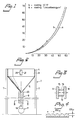
- the friction test rig generally designated 1 comprises a header tank or funnel 3 having an upper cylindrical part 4 and a lower conical part 5.
- the conical part 5 is at its lower end attached to a flow section 9, which is built up from test plates 11 of brass and side plates 13 to form a flow passage 15.
- the rig is furthermore provided with an outlet 16,17 containing a control valve 19 for controlling liquid flow through passage 15.
- Viewing windows 21,23 are provided in the upper part of funnel 3 and the upper part of flow section 9, respectively. These viewing windows have for their purpose to enable checking liquid levels in the test rig.
- the friction test rig as described above is designed so that the turbulent friction qualities of various surface coatings can be conveniently assessed.
- the experimental results presented below demonstrate the fact that the test rig used gives reproduceable results with water as a test fluid with and without approximately 10 ppm of Polyox added to the water, the brass surfaces of test plates 11 being untreated. When Polyox is added to the water a marked increase of flow speed occurs.
- the test rig described functions briefly as follows.
- the apparatus is filled with the outlet valve 19 closed.
- the pressure tappings are connected to manometer tubes (not shown) and water sucked through to remove air bubbles.
- the flow is then started by a partial or complete opening of valve 19, and when the level passes the upper of the two marks 25 in the viewing upper window 21 a stopwatch is started. Marks 25 are 100 mm apart and when the level is approximately half way between them the manometer levels are read. The stopwatch is stopped when the level in the header tank passes the lower mark.
- a flow time of 100 secs represents a flow speed through the duct of 2.5 m/s, similar to the speeds at which the 1/ 3 scale 12m yacht models are run, with similar values of turbulent skin friction stress.
- the test rig described above has been used, the inside of brass plates 11 facing flow passage 15 being covered with the gum mixtures used in the experiments. It is to be noted that the coating thickness of the applied mixtures is not significant for the reduction of the friction as long as it lasts through the whole experiment. However, the approximate thickness of a layer swollen by contact with water is of the order of a fraction of a millimeter, but it must be noted that the thickness per se is insignificant, as long as the coating covers the surface contacting the liquid phase. (All percentages refer to weight.)
- Test plates 11 were coated with 9 layers of 0.5% Composition 20 with paint brush. After each 3 layers of coat the plates were sanded (500/1200 paper).
- test surface showed a drag reduction of ⁇ 3%.
- the surface was eliminated after 20 hrs and measurements at 20 hrs and 30 hrs showed normal values for uncoated surface.
- the plates were removed at 30 hrs and inspection showed absence of coating.
- Test Plates 11 were coated with 9 layers of 0.5% Composition 30 with paint brush. After each 3 layers of coat the plates were sanded (500/1200 paper).
- Tests were conducted at British Maritime Technology in the U.K. using their No. 3 towing tank. A model yacht of approximately 6.4 m long was used to assess its hydrodynamic resistance in the water with four different surface finishes on the hull - smooth painted surface, composition-coated surface, riblet-film surface and composition-coated riblet surface.
- composition used in these experiments was the same as that used in Example 1 above.
- the resistance was measured using a dynamometer attached to the yacht as it was being towed through the calm water of the tank. The tests were carried out at five different towing speeds ranging from 1.00 m/s to 2.38 m/s.
- the riblet film had a semicircular cross section with a height and rib spacing of about 125 ⁇ m and about 250 ⁇ m, respectively.
- Fig. 4 shows a cross-section through such profiled film.
- This example is an illustration of the use of the inventive techniques for reducing friction in regard to plastic catheters for introduction into a living animal body, such as the urinary tract.
- An ordinary plastic catheter is used in the experiment and the surface thereof is introductorily matted using wet-and-dry sanding (No. 1200 sanding paper).
- the matted catheter is then dipped into a 1% by weight solution of Composition 30, the procedure being repeated four times with drying in between each dipping step.
- the treated catheter Before use the treated catheter is soaked in water for one minute and is then easily inserted due to its slippery surface. Again, in this use, the advantage of using the technique of the invention resides in the fact that the coating applied is non-toxic and can be reformed several times.
- This example illustrates the use of the invention for facilitating oral administration of tablets.
Landscapes
- Chemical & Material Sciences (AREA)
- Life Sciences & Earth Sciences (AREA)
- Engineering & Computer Science (AREA)
- Materials Engineering (AREA)
- Wood Science & Technology (AREA)
- Organic Chemistry (AREA)
- Medicinal Preparation (AREA)
- Paints Or Removers (AREA)
- Compositions Of Macromolecular Compounds (AREA)
- Mechanical Treatment Of Semiconductor (AREA)
- Lubricants (AREA)
- Manufacture Of Macromolecular Shaped Articles (AREA)
- Polysaccharides And Polysaccharide Derivatives (AREA)
Claims (10)
- Verfahren zur Verringerung der Reibung zwischen einem festen Körper und einer Flüssigkeit unter Verwendung einer Überzugszusammensetzung auf Polysaccharid-Basis, umfassend:
wenigstens eine erste Komponente a) ausschließlich von Galactanen, bestehend aus einem substituierten β-1,4-verknüpften Glycan, wobei die Substituenten ausgewählt werden aus Mono- oder Oligosaccharid Gruppen oder Hydroxyalkyl, Carboxyalkyl, Aminoalkyl, Alkyl, Acyl oder Hydroxyalkyl-(alkyloxy)-alkyl, die in Wasser einer Temperatur im Bereich von 30 bis 50 °C auflösbar ist und ein Molekulargewicht (Mw) von ≧ 5 x 10⁴ Dalton, vorzugsweise von ≧ 10⁵ Dalton, insbesondere von ≧ 10⁶ Dalton aufweist, und
wenigstens eine zweite Komponente b), ebenfalls ausschließlich von Galactanen, bestehend aus einem substituierten β-1,4-verknüpften Glycan, wobei die Substituenten ausgewählt werden aus Mono- oder Oligosaccharid-Gruppen oder Hydroxyalkyl, Carboxyalkyl, Aminoalkyl, Alkyl, Acyl oder Hydroxyalkyl-(alkyloxy)-alkyl, die bei der Temperatur schwerer als die erste Komponente aufzulösen ist, oder Agar oder Carrageenan ist. - Verfahren nach Anspruch 1, bei dem Komponente a) ein substituiertes β-1,4-verknüpftes Glucan, Glucomannan, Xylan, Mannan oder ein β-1,4-verknüpftes Polysaccharid ist, bestehend aus 2-Acetamido-2-deoxy-D-glucopyran- oder 2-Amino-2-deoxy-D-glucopyran-Einheiten.
- Verfahren nach Anspruch 1, bei dem Kompenente b) ein substituiertes β-1,4-verknüpftes Glucan, Glucomannan, Xylan, Mannan oder ein β-1,4-verknüpftes Polysaccharid, bestehend aus 2-Acetamido-2-deoxy-D-glucopyran- oder 2-Amino-2-deoxy-D-glucopyran-Einheiten, oder Agar ist.
- Verfahren nach Anspruch 2, bei dem Komponente b) ein substituiertes β-1,4-verknüpftes Glucan, Glucomannan, Xylan, Mannan oder ein β-1,4-verknüpftes Polysaccharid, bestehend aus 2-Acetamido-2-deoxy-D-glucopyran- oder 2-Amino-2-deoxy-D-glucopyran-Einheiten, ist.
- Verfahren nach einem vorhergehenden Anspruch, bei dem Komponente b) ein substituiertes β-1,4-verknüpftes Glucan, Glucomannan, Xylan, Mannan oder ein β-1,4-verknüpftes Polysaccharid, bestehend aus 2-Acetamido-2-deoxy-D-glucopyran- oder 2-Amino-2-deoxy-D-glucopyran-Einheiten, oder Agar oder ein Carrageenan ist.
- Verfahren nach Anspruch 1, bei dem Komponente a) ein substituiertes β-1,4-verknüpftes Glucan oder Mannan, Chitin oder Chitosan ist und bei dem Komponente b) ebenfalls ein Polysaccharid ist, ausgewählt aus diesen oder aus Agar oder einem Carrageenan.
- Verfahren nach Anspruch 1, bei dem Komponenten a) und b) ausgewählt werden aus Galactomannanen, Cellulose-Derivaten, Chitin-Derivaten und Chitosan-Derivaten.
- Verfahren nach Anspruch 7, bei dem Komponenten a) und b) ausgewählt werden aus Galactomannen, Hydroxyethylcellulosen oder Carboxymethylcellulosen.
- Verfahren nach Anspruch 7, bei dem Komponenten a) und b) ausgewählt werden aus Galactomannanen.
- Verfahren nach Anspruch 9, bei dem Komponenten a) und b) ausgewählt werden aus Guargummen und Johannisbrotgummen.
Applications Claiming Priority (3)
| Application Number | Priority Date | Filing Date | Title |
|---|---|---|---|
| SE8702535 | 1987-06-17 | ||
| SE8702535A SE8702535D0 (sv) | 1987-06-17 | 1987-06-17 | A polysaccharide-based composition and its use |
| PCT/SE1988/000321 WO1988010284A1 (en) | 1987-06-17 | 1988-06-14 | A polysaccharide-based composition and its use |
Publications (2)
| Publication Number | Publication Date |
|---|---|
| EP0366704A1 EP0366704A1 (de) | 1990-05-09 |
| EP0366704B1 true EP0366704B1 (de) | 1995-09-06 |
Family
ID=20368895
Family Applications (1)
| Application Number | Title | Priority Date | Filing Date |
|---|---|---|---|
| EP88906163A Expired - Lifetime EP0366704B1 (de) | 1987-06-17 | 1988-06-14 | Verfahren zur Verminderung der Reibung zwischen einem Festkörper und einer Flüssigkeit |
Country Status (9)
| Country | Link |
|---|---|
| US (1) | US5093485A (de) |
| EP (1) | EP0366704B1 (de) |
| JP (1) | JP2766653B2 (de) |
| AT (1) | ATE127500T1 (de) |
| AU (1) | AU615662B2 (de) |
| CA (1) | CA1318988C (de) |
| DE (1) | DE3854432T2 (de) |
| SE (2) | SE8702535D0 (de) |
| WO (1) | WO1988010284A1 (de) |
Families Citing this family (16)
| Publication number | Priority date | Publication date | Assignee | Title |
|---|---|---|---|---|
| SE8704588D0 (sv) * | 1987-06-17 | 1987-11-20 | Bioboat Ab | Contamination removal process |
| ATE167488T1 (de) * | 1990-07-02 | 1998-07-15 | Aqualon Co | Niedrigviskose-polysaccharidzusammensetzung mit hohem festkörpergehalt |
| US5376173A (en) * | 1992-09-17 | 1994-12-27 | Takeda Chemical Industries, Ltd. | Segregation reducing agent for hydraulic composition and hydraulic composition |
| SE502595C2 (sv) * | 1994-03-23 | 1995-11-20 | Polysaccharide Ind Ab | Polysackaridskyddsfilm samt sätt för dess applicering |
| SE513661C2 (sv) * | 1994-03-23 | 2000-10-16 | Polysaccharide Ind Ab | Förfarande för att skydda ytor mot kontaminationer |
| DE19738898C2 (de) * | 1997-08-01 | 2002-05-08 | Wella Ag | Kosmetisches Mittel mit einem Gehalt an Hydroxyalkylderivaten von Xylanen |
| DE19736452C2 (de) * | 1997-08-21 | 2003-08-28 | Fraunhofer Ges Forschung | Polymerer Schutzfilm, Verfahren zu seiner Herstellung, dessen Verwendung sowie Verfahren zum Schützen von Oberflächen |
| DE19745624A1 (de) | 1997-10-16 | 1999-04-22 | 4 P Folie Forchheim Gmbh | Kunststoff-Schicht |
| SE0101096D0 (sv) * | 2001-03-28 | 2001-03-28 | Polysaccharide Ind Ab | Protective coating |
| US6884884B2 (en) | 2001-06-11 | 2005-04-26 | Rhodia, Inc. | Galactomannan compositions and methods for making and using same |
| DK2370511T3 (en) * | 2008-12-03 | 2016-12-05 | Beardow And Adams (Adhesives) Ltd | Use of a polysaccharide containing composition for forming the protective film on the surface selected from concrete, metal, stone, glass, wood, cloth, woven fabric, weaving and paper. |
| CN103228720B (zh) * | 2010-09-14 | 2016-05-04 | 贝尔多和亚当斯(粘合剂)有限公司 | 具有凝胶颗粒的多糖涂层 |
| US20140272237A1 (en) * | 2013-03-15 | 2014-09-18 | Prc-Desoto International, Inc. | Strippable film assembly and coating for drag reduction |
| FR3047172B1 (fr) * | 2016-01-29 | 2020-05-08 | Societe Industrielle Limousine D'application Biologique | Agent cosmetique tenseur et/ou filmogene constitue par des galactomannanes et/ou des galactanes sulfates |
| WO2019189412A1 (ja) * | 2018-03-28 | 2019-10-03 | 中国塗料株式会社 | 防汚塗膜及びその製造方法、防汚塗膜付き接水構造物、並びに防汚テープ及びその製造方法 |
| CN119403896A (zh) * | 2022-06-22 | 2025-02-07 | 日东电工株式会社 | 粘合剂组合物、粘合片、层叠体、及β-1,3-葡聚糖衍生物的制造方法 |
Family Cites Families (11)
| Publication number | Priority date | Publication date | Assignee | Title |
|---|---|---|---|---|
| CA465313A (en) * | 1950-05-23 | C. Lum John | Protective composition | |
| CA471748A (en) * | 1951-02-27 | W. White Robert | Strippable protective coatings | |
| GB344453A (en) * | 1928-12-08 | 1931-03-06 | R Schneider Ets | Process for protecting leathers, skins, fabrics and the like during their manipulation or making up into manufactured goods |
| US2877131A (en) * | 1946-05-06 | 1959-03-10 | Donald C Overholt | Method and coating composition for protecting and decontaminating surfaces |
| US2811456A (en) * | 1955-02-28 | 1957-10-29 | Victor Chemical Works | Protective film for ferrous metals |
| US3765918A (en) * | 1972-07-17 | 1973-10-16 | Gen Mills Chem Inc | Blends of xanthomonas and guar gum |
| JPS59186668A (ja) * | 1983-04-07 | 1984-10-23 | Furointo Sangyo Kk | 物体表面を一時的に保護する方法 |
| JPS6055039A (ja) * | 1983-09-07 | 1985-03-29 | Mitsubishi Acetate Co Ltd | 水溶性多糖類フイルム |
| US4692169A (en) * | 1984-12-27 | 1987-09-08 | Henkel Corp. | Use of etherified polygalactomannan gums as carbonaceous slurry stabilizers |
| US4802924A (en) * | 1986-06-19 | 1989-02-07 | Colorcon, Inc. | Coatings based on polydextrose for aqueous film coating of pharmaceutical food and confectionary products |
| SE8704588D0 (sv) * | 1987-06-17 | 1987-11-20 | Bioboat Ab | Contamination removal process |
-
1987
- 1987-06-17 SE SE8702535A patent/SE8702535D0/xx unknown
- 1987-11-20 SE SE8704589A patent/SE466639B/sv not_active IP Right Cessation
-
1988
- 1988-06-14 AU AU19588/88A patent/AU615662B2/en not_active Ceased
- 1988-06-14 EP EP88906163A patent/EP0366704B1/de not_active Expired - Lifetime
- 1988-06-14 JP JP63505264A patent/JP2766653B2/ja not_active Expired - Fee Related
- 1988-06-14 DE DE3854432T patent/DE3854432T2/de not_active Expired - Fee Related
- 1988-06-14 AT AT88906163T patent/ATE127500T1/de not_active IP Right Cessation
- 1988-06-14 US US07/438,446 patent/US5093485A/en not_active Expired - Fee Related
- 1988-06-14 WO PCT/SE1988/000321 patent/WO1988010284A1/en not_active Ceased
- 1988-06-16 CA CA000569607A patent/CA1318988C/en not_active Expired - Fee Related
Also Published As
| Publication number | Publication date |
|---|---|
| ATE127500T1 (de) | 1995-09-15 |
| SE466639B (sv) | 1992-03-16 |
| DE3854432T2 (de) | 1996-05-02 |
| WO1988010284A1 (en) | 1988-12-29 |
| AU1958888A (en) | 1989-01-19 |
| US5093485A (en) | 1992-03-03 |
| AU615662B2 (en) | 1991-10-10 |
| CA1318988C (en) | 1993-06-15 |
| SE8702535D0 (sv) | 1987-06-17 |
| DE3854432D1 (de) | 1995-10-12 |
| SE8704589D0 (sv) | 1987-11-20 |
| SE8704589L (sv) | 1988-12-18 |
| EP0366704A1 (de) | 1990-05-09 |
| JPH02503927A (ja) | 1990-11-15 |
| JP2766653B2 (ja) | 1998-06-18 |
Similar Documents
| Publication | Publication Date | Title |
|---|---|---|
| EP0366704B1 (de) | Verfahren zur Verminderung der Reibung zwischen einem Festkörper und einer Flüssigkeit | |
| Funke | Problems and progress in organic coatings science and technology | |
| Grigson | Drag losses of new ships caused by hull finish | |
| DE69533751T2 (de) | Medizinische vorrichtung mit geschmierter beschichtung | |
| ATE255887T1 (de) | Enterische filmüberzüge, verfahren zur beschichtung damit sowie überzogene arzneiformen | |
| KR850700009A (ko) | 장용성 피복 조성물 | |
| LANG et al. | Determination of the yield stress of hydrocolloid dispersions | |
| JPS58172313A (ja) | 腸溶性軟カプセル | |
| AU682594B2 (en) | Process for protecting a surface from non-desired contamination | |
| Johnson et al. | Adhesion of hydroxypropyl cellulose films to low energy solid substrates | |
| DE69924359T2 (de) | Kaltversiegeltabziehbarer biaxial gestreckter polypropylenfilm mit stabilen abzieheigenschaften für verpackung | |
| US4088623A (en) | Coatings that reduce flow resistance and turbulent drag at their interface with liquids | |
| JP6188114B2 (ja) | 摩擦抵抗低減塗料、摩擦抵抗低減塗膜および船舶 | |
| JP6291691B2 (ja) | 摩擦抵抗低減塗料、摩擦抵抗低減塗膜および船舶 | |
| US5935655A (en) | Thermally releasable barrier coating, composition therefor, and use thereof | |
| Schwiderke et al. | A mathematical basis for calculating the water permeability of organic films supported by metal substrates | |
| De Wit et al. | On the effects of a liquefied mud bed on wave and flow characteristics | |
| CA1120166A (en) | Coating composition for organic polymeric films | |
| Shchukin et al. | Self‐healing coatings | |
| JPH11343427A (ja) | 塗 料 | |
| DE1908699B2 (de) | Verwendung eines wäßrig dispergieren Beschichtungsmittel zur Erzeugung von Überzügen auf Flächengebilden aus Kunststoff und/oder Metall | |
| US2119729A (en) | Printing natural sausage casings | |
| CA1073790A (en) | Coating composition for leak detection in air test | |
| Musker et al. | Wall-friction and profilometry aspects of coating an irregularly rough surface | |
| GB2204047A (en) | Drag reducing coating compositions |
Legal Events
| Date | Code | Title | Description |
|---|---|---|---|
| PUAI | Public reference made under article 153(3) epc to a published international application that has entered the european phase |
Free format text: ORIGINAL CODE: 0009012 |
|
| 17P | Request for examination filed |
Effective date: 19891206 |
|
| AK | Designated contracting states |
Kind code of ref document: A1 Designated state(s): AT BE CH DE FR GB IT LI LU NL SE |
|
| 17Q | First examination report despatched |
Effective date: 19920219 |
|
| GRAA | (expected) grant |
Free format text: ORIGINAL CODE: 0009210 |
|
| RAP1 | Party data changed (applicant data changed or rights of an application transferred) |
Owner name: POLYSACCHARIDE INDUSTRIES AKTIEBOLAG PSI |
|
| AK | Designated contracting states |
Kind code of ref document: B1 Designated state(s): AT BE CH DE FR GB IT LI LU NL SE |
|
| REF | Corresponds to: |
Ref document number: 127500 Country of ref document: AT Date of ref document: 19950915 Kind code of ref document: T |
|
| REF | Corresponds to: |
Ref document number: 3854432 Country of ref document: DE Date of ref document: 19951012 |
|
| ET | Fr: translation filed | ||
| ITF | It: translation for a ep patent filed | ||
| PLBE | No opposition filed within time limit |
Free format text: ORIGINAL CODE: 0009261 |
|
| STAA | Information on the status of an ep patent application or granted ep patent |
Free format text: STATUS: NO OPPOSITION FILED WITHIN TIME LIMIT |
|
| 26N | No opposition filed | ||
| PGFP | Annual fee paid to national office [announced via postgrant information from national office to epo] |
Ref country code: GB Payment date: 20010613 Year of fee payment: 14 |
|
| PGFP | Annual fee paid to national office [announced via postgrant information from national office to epo] |
Ref country code: SE Payment date: 20010615 Year of fee payment: 14 |
|
| PGFP | Annual fee paid to national office [announced via postgrant information from national office to epo] |
Ref country code: DE Payment date: 20010618 Year of fee payment: 14 |
|
| PGFP | Annual fee paid to national office [announced via postgrant information from national office to epo] |
Ref country code: AT Payment date: 20010619 Year of fee payment: 14 |
|
| PGFP | Annual fee paid to national office [announced via postgrant information from national office to epo] |
Ref country code: LU Payment date: 20010621 Year of fee payment: 14 |
|
| PGFP | Annual fee paid to national office [announced via postgrant information from national office to epo] |
Ref country code: CH Payment date: 20010625 Year of fee payment: 14 |
|
| PGFP | Annual fee paid to national office [announced via postgrant information from national office to epo] |
Ref country code: FR Payment date: 20010627 Year of fee payment: 14 |
|
| PGFP | Annual fee paid to national office [announced via postgrant information from national office to epo] |
Ref country code: NL Payment date: 20010630 Year of fee payment: 14 |
|
| PGFP | Annual fee paid to national office [announced via postgrant information from national office to epo] |
Ref country code: BE Payment date: 20010702 Year of fee payment: 14 |
|
| REG | Reference to a national code |
Ref country code: GB Ref legal event code: IF02 |
|
| PG25 | Lapsed in a contracting state [announced via postgrant information from national office to epo] |
Ref country code: LU Free format text: LAPSE BECAUSE OF NON-PAYMENT OF DUE FEES Effective date: 20020614 Ref country code: GB Free format text: LAPSE BECAUSE OF NON-PAYMENT OF DUE FEES Effective date: 20020614 Ref country code: AT Free format text: LAPSE BECAUSE OF NON-PAYMENT OF DUE FEES Effective date: 20020614 |
|
| PG25 | Lapsed in a contracting state [announced via postgrant information from national office to epo] |
Ref country code: SE Free format text: LAPSE BECAUSE OF NON-PAYMENT OF DUE FEES Effective date: 20020615 |
|
| PG25 | Lapsed in a contracting state [announced via postgrant information from national office to epo] |
Ref country code: LI Free format text: LAPSE BECAUSE OF NON-PAYMENT OF DUE FEES Effective date: 20020630 Ref country code: CH Free format text: LAPSE BECAUSE OF NON-PAYMENT OF DUE FEES Effective date: 20020630 Ref country code: BE Free format text: LAPSE BECAUSE OF NON-PAYMENT OF DUE FEES Effective date: 20020630 |
|
| BERE | Be: lapsed |
Owner name: POLYSACCHARIDE INDUSTRIES A.B. *PSI Effective date: 20020630 |
|
| PG25 | Lapsed in a contracting state [announced via postgrant information from national office to epo] |
Ref country code: NL Free format text: LAPSE BECAUSE OF NON-PAYMENT OF DUE FEES Effective date: 20030101 Ref country code: DE Free format text: LAPSE BECAUSE OF NON-PAYMENT OF DUE FEES Effective date: 20030101 |
|
| EUG | Se: european patent has lapsed | ||
| GBPC | Gb: european patent ceased through non-payment of renewal fee |
Effective date: 20020614 |
|
| REG | Reference to a national code |
Ref country code: CH Ref legal event code: PL |
|
| PG25 | Lapsed in a contracting state [announced via postgrant information from national office to epo] |
Ref country code: FR Free format text: LAPSE BECAUSE OF NON-PAYMENT OF DUE FEES Effective date: 20030228 |
|
| NLV4 | Nl: lapsed or anulled due to non-payment of the annual fee |
Effective date: 20030101 |
|
| REG | Reference to a national code |
Ref country code: FR Ref legal event code: ST |
|
| PG25 | Lapsed in a contracting state [announced via postgrant information from national office to epo] |
Ref country code: IT Free format text: LAPSE BECAUSE OF NON-PAYMENT OF DUE FEES;WARNING: LAPSES OF ITALIAN PATENTS WITH EFFECTIVE DATE BEFORE 2007 MAY HAVE OCCURRED AT ANY TIME BEFORE 2007. THE CORRECT EFFECTIVE DATE MAY BE DIFFERENT FROM THE ONE RECORDED. Effective date: 20050614 |