EP0366344B1 - Multiprozessor-Belastungsteilungsanordnung - Google Patents
Multiprozessor-Belastungsteilungsanordnung Download PDFInfo
- Publication number
- EP0366344B1 EP0366344B1 EP19890310698 EP89310698A EP0366344B1 EP 0366344 B1 EP0366344 B1 EP 0366344B1 EP 19890310698 EP19890310698 EP 19890310698 EP 89310698 A EP89310698 A EP 89310698A EP 0366344 B1 EP0366344 B1 EP 0366344B1
- Authority
- EP
- European Patent Office
- Prior art keywords
- work request
- processor
- work
- destination address
- request destination
- Prior art date
- Legal status (The legal status is an assumption and is not a legal conclusion. Google has not performed a legal analysis and makes no representation as to the accuracy of the status listed.)
- Expired - Lifetime
Links
Images



Classifications
-
- G—PHYSICS
- G06—COMPUTING OR CALCULATING; COUNTING
- G06F—ELECTRIC DIGITAL DATA PROCESSING
- G06F9/00—Arrangements for program control, e.g. control units
- G06F9/06—Arrangements for program control, e.g. control units using stored programs, i.e. using an internal store of processing equipment to receive or retain programs
- G06F9/46—Multiprogramming arrangements
- G06F9/50—Allocation of resources, e.g. of the central processing unit [CPU]
- G06F9/5005—Allocation of resources, e.g. of the central processing unit [CPU] to service a request
- G06F9/5027—Allocation of resources, e.g. of the central processing unit [CPU] to service a request the resource being a machine, e.g. CPUs, Servers, Terminals
- G06F9/505—Allocation of resources, e.g. of the central processing unit [CPU] to service a request the resource being a machine, e.g. CPUs, Servers, Terminals considering the load
-
- G—PHYSICS
- G06—COMPUTING OR CALCULATING; COUNTING
- G06F—ELECTRIC DIGITAL DATA PROCESSING
- G06F15/00—Digital computers in general; Data processing equipment in general
- G06F15/16—Combinations of two or more digital computers each having at least an arithmetic unit, a program unit and a register, e.g. for a simultaneous processing of several programs
- G06F15/163—Interprocessor communication
- G06F15/173—Interprocessor communication using an interconnection network, e.g. matrix, shuffle, pyramid, star, snowflake
- G06F15/17337—Direct connection machines, e.g. completely connected computers, point to point communication networks
Definitions
- This invention relates to methods of assigning work requests transmitted over a closed sequentially accessed network comprising a plurality of nodes each comprising a processor, and to multiprocessor systems.
- Distributed multiprocessing systems frequently have the characteristic that any of a plurality of processors may execute a particular task.
- the plurality of processors is provided to handle a peak processing load. In order to handle this load efficiently, all processors must carry their share of the load which requires that no processor be overloaded when another processor is not yet fully loaded.
- a common arrangement for exchanging messages among processors of a multiprocessor system is to connect each of these processors, via an interface, to a data ring.
- the various processors connected to the ring are called “nodes” on the ring.
- processors upon reception of messages from the data ring, directs any message having an address identifying its own processor to that processor, and forwards all other messages to the next processor interface on the ring.
- each processor interface is prepared to recognize messages originated by its associated processor, which when received from the ring by the interface indicate that a message has passed completely around the ring without finding a recipient and should generally be deleted.
- the allocating processor may become a system bottleneck and limit system capacity.
- a problem of the prior art therefore is that there are no efficient arrangements for allocating work to each of a plurality of processors while guaranteeing that if any processor is able to accept this work request, that processor will be the one allocated to carry out the task.
- An additional problem is, in the case of failure of one or more of the process servers, the lack of an efficient mechanism for automatically assigning the tasks only to the remaining in-service process servers.
- each processor node on a ring is provided with the capability of accepting work request messages having one of a plurality of addresses stored by the processor node, and each such processor node is provided with the capability of adding and deleting addresses from that list.
- a processor that generates a work request message prefixes such a message with an address.
- the first processor node on the ring that has that address in its list will accept that message, carry out the work requested therein, and prevent the propagation of the work request message to subsequent processor nodes.
- processor nodes delete addresses from their list when they have accumulated a threshold number of requests for work, and add that address back in their list when the number of accumulated requests goes below the threshold.
- processor nodes shields an overloaded processor node from accepting additional work and allows another processor to accept the message and process the request.
- each of a plurality of processor nodes acting as process servers attached to a data ring has an interface comprising a memory for storing addresses for work request messages which the processor is prepared to receive. For each received message, the processor stores the work request in a queue and records the number of work requests accumulated in the queue. If this number exceeds one threshold then the processor deletes an address (defined as the Low Priority address) from the interface memory so that only work requests having an address of higher priority will be accepted henceforth.
- the memory is a bit map.
- a bit map can store one bit of data for each of a large number of addresses within a limited size memory; these addresses would include a set of addresses and the interface may be initialized to respond to any subset of this set.
- a subset of these addresses corresponds to multiple levels of priority for a given type of task, and interfaces are typically initialized to respond to a plurality of such subsets.
- the processors which transmit work request messages recognize when a request has not been accepted by any of the serving processors because that work request message returns via the ring to the transmitting processor.
- the transmitting processor tests whether the work request can be sent at a priority higher than the previous attempt, and if so, retransmits the request. If the priority cannot be increased, then the transmitting processor arranges to retransmit the message after a delay. Subsequent retransmissions are delayed by longer intervals until a decision is made that the attempt to process the work request should be abandoned.
- each process server is a program-controlled processor containing in its memory a queue of work requests to be processed, an indication of the number of entries in the work queue for adjusting the list of addresses in order to accept only high priority or all priority requests and, in an associated ring interface, the current one of the dynamically changing list of addresses which controls the priority level of request messages that will be accepted by that processor.
- the combination of the above-described priority addressing arrangement (which assures that all process servers are maximally utilized) and the rescheduling algorithm (which covers a wide range of re-attempt times) provides a highly effective strategy for managing peaks of work request traffic over a wide range of peak severity and duration.
- FIG. 1 is a block diagram of a data ring 1 showing a processor 3 for generating work requests and transmitting such requests to data ring 1 and three processors 2 for accepting work requests from data ring 1.
- Each of these processors has an associated ring interface 8 for transmitting data received from the ring to the processor, for transmitting data from the processor to the ring, and for transmitting data received from the ring to the next interface.
- the details of block 8 are shown in FIG. 6.
- each processor 3 generates only one type of work request, albeit a type of work request for which work request messages can be sent on different priority levels.
- Each priority level for that type of work request represents one class of work request.
- each processor 2 accepts only one type of work request and has a list of destination addresses for different priorities of that type. When the processor is prepared to accept any priority of this task, all of these addresses are in the address list of the associated memory of interface 8 of that processor. When one or more priority levels are no longer accepted, then one or more of these addresses are removed from the list stored in the associative memory of interface 8. Each member of the list corresponds to one class of work request.
- Each of the processors comprises a central processing unit 6 controlled by a program 4.
- Processor 3 also has a queue of delayed requests comprising requests which were not accepted initially by any of the processors 2 and are being delayed prior to retransmission.
- Each of the processors 2 contains a work queue 12 for storing requests to perform a task and an indication 10 of the number of entries in that work queue. As the number of entries in the work queue changes, reflecting a greater or lesser accepted future load, the processor adjusts the priority of work requests to be accepted by adding or deleting addresses from the list of addresses of work requests to be accepted. That list is stored in interface 8 and is used to steer work request packets to the associated processor or to send the work request packets on to the next processor interface.
- the interface 8 associated with processor 3 serves to recognize when a work request message has completely circled the ring without being accepted by any processor 2. When this happens, processor 3 recognizes that the work request has not been accepted and, as discussed with respect to FIG. 3, thereupon retransmits the request with a different address, specifically the one having the next higher priority than that of the previous request. If the previous request had been at the highest priority, processor 3 queues that work request in queue 13 for subsequent retransmission.
- FIG. 2 is a layout of a work request packet 20.
- This packet comprises a transmitting processor address 22 used by ring interface 8 of processor 3 to recognize packets that have been transmitted over the entire ring without having been accepted by any of the processors 2.
- the packet also includes a destination address 24 used by any of the interfaces 8 of the processors 2 to determine whether that packet is destined for its associated processor.
- the packet includes the details of the work request 26 which provide data so that a processor 2 may execute the tasks requested by processor 3.
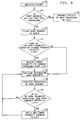
- FIG. 3 is a flow diagram of the processing performed by processor 3.
- Processor 3 first transmits a work request to the next processor on the ring (action block 126) using the lowest priority address for that class of packets. For any packet received in the interface of processor 3 (action block 127), a check is made in the interface 8 of processor 3 whether the transmitter (source) address is the source address or identification of this processor (action block 128). If not, then the packet is transmitted to the next processor on the ring (action block 129). If the source address does match the processor identification, i.e., if there is a source match, then a test is made (decision block 130) whether the priority of the work request packet can be raised.
- Work request packets which have a naturally high priority may be transmitted with a higher priority than initially provided if, for example, such a task was not accepted in its initial attempts, and is to be re-attempted after a delay. If the priority can be raised, then the priority of the packet is increased by changing the destination address to reflect the next higher priority and the packet is retransmitted (action block 140). If the priority of the packet cannot be raised, i.e., it was already sent at the highest allowed priority for that request, then a check is made whether the packet has been transmitted four times (test 132) at the highest priority allowed for that packet. The highest allowed priority for a particular packet may be low priority if the request is an inherently low priority work request, for example, a request from a low priority client.
- the task is deleted (action block 136) since such a situation represents a massive overload in which tasks must be discarded because there are too many to process.
- the delay before the next transmission of that packet is a binary multiple of a basic delay so that the delays for retransmissions after the first are doubled from the previous delay (action block 133).
- that packet is retransmitted (action block 135) at the highest priority for that packet so that delayed job will have priority over new jobs that have not been delayed.
- a packet is received in the interface 8 associated with a processor 2 (action block 100). There, the destination address is matched (test 104) with the list of addresses for which this processor will accept the associated work request. If there is no match, then the packet is transmitted by the interface to the next interface in the ring (action block 106). If there is a match, the packet is transmitted to the associated processor 2 and is placed in that processor's work request queue (action block 110). A test 112 is made to see whether the number of work requests accepted in the work request queue now exceeds the limit or upper threshold for the presently lowest priority level.
- action block 114 If so, then the address or lower threshold associated with that lowest priority level is deleted from the list of addresses for which work request packets are accepted (action block 114). After the packet has been accepted, processing of work requests continues in processor 2 (action block 116). When the processing of a work request has been completed (action block 118) a test is made of whether the number of work requests remaining in the queue is less than the limit or lower threshold associated with the presently lowest priority (test 120). If so, a new, lower priority request address is added to the list of addresses in the interface 8 of processor 2. Subsequently, the processing of work requests is continued (action block 116). Each process server is initially assigned a list of destination addresses for which it will accept work requests, as shown in action block 90, FIG.7. Members of this list are deleted and reinserted in accordance with the steps described above.
- More than one address may be assigned to a given type of task at one priority level. If this is done, each of two or more processors 3 may assign different addresses to the same type of task. Then processors 2 may add or delete individual addresses or all of the addresses for a specific type of task and priority as required to fine tune the balancing of the load. Alternatively and additionally, different addresses may be assigned for long and short work requests of the same general task types, thus dividing one general task type into two subtypes, which are effectively treated as two different task types.
- Processors may serve more than one type of task.
- One way of distributing tasks to serving processors is to initialize each interface by assigning one or more different lists of addresses; each such list of addresses is associated with a different task type, and would be administered in essentially the same way discussed previously for the single task. For example, short tasks might be accepted under moderate load conditions whereas lengthy ones would not, or tasks that free up memory would be accepted while ones that use up memory would not.
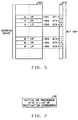
- FIG. 5 illustrates a bit map used by each processor to decide whether or not to accept a work request received from the ring.
- Work functions are divided into groups such as A, B, etc., each representing one type of task. Requests may be accepted for each group as appropriate: high priority, medium, and low priority; high and medium priority only; high priority only; or none.
- For each group of tasks and each priority one address is reserved.
- one bit of storage in a bit map 270 is dedicated. If the bit in the bit map is set to one, then the corresponding task and priority may be accepted by the processor. If it is set to zero, then the corresponding task and priority will be rejected.
- FIG. 1 illustrates a bit map used by each processor to decide whether or not to accept a work request received from the ring.
- Work functions are divided into groups such as A, B, etc., each representing one type of task. Requests may be accepted for each group as appropriate: high priority, medium, and low priority; high and medium priority only; high priority only; or none.
- FIG. 5 shows a layout of virtual address space including addresses 251, 252, and 253 for function A, high priority, medium priority, and low priority, respectively, and addresses 254, 255, 256 for functions B, high priority, medium priority, and low priority, respectively.
- the bits corresponding to the A functions are 271, 272, and 273 and are illustrated in bit map 270 as being in the state 1, 1, and 0, respectively. This indicates that the associated processor will accept high and medium priority requests for function group A, but will not accept low priority requests.
- bits 274, 275, and 276 correspond to the B function, high priority, medium priority, and low priority requests and are marked 1, 0, 0, indicating that only B high priority tasks will be accepted.
- FIG. 6 is an expansion of the ring interface, block 8 of this exemplary embodiment.
- the interface is connected to ring 1 at an input connected to an input store 201 and at an output connected to a switch 225.
- the interface is connected to node processor 2 via the node processor bus 9.
- the interface is controlled by ring interface control 210 which receives Token Present information from the Token Detect 217, Address Recognized information from the bit map 215, and various control signals from the node processor 2.
- the token detector 217 is connected to the input store 201 in order to recognize the presence of a token in that store. There is only one token in the ring, and the ring interface which has the token is the only one allowed to write onto the ring.
- the input store 201 holds the token while the write takes place, and then passes it on.
- Switch 221 under control of the ring interface control 210 connects either the input store 201 or the write store 229 to the input of the header store 223.
- the write store 229 holds a queue of messages from the node processor to be written to the ring.
- the header store 223 stores each message while the ring interface control determines what to do with the message.
- Output switch 225 under control of the ring interface control directs messages stored in the header store to either the read store 227, to ring 1, to both, or to neither.
- Switch 211 under control of ring interface control 210, selects either the source address of the message, the destination address of the message, or an address selected by the node processor for being updated as the address to be inserted into address register 231 for accessing the bit map.
- this arrangement may be used in any network wherein the nodes of the network receive messages sequentially and wherein messages not accepted by any node are returned to the sender.
- Such networks are referred to as closed sequentially accessed networks.
- An example of such a network is the dual bus network of the IEEE 802.6 Metropolitan Area Network Standard.
- the ring interface circuits implement an asynchronous ring with all storage elements and data interfaces passing information via handshake signals.
- a node When a node has data to transmit, it generates a Data-Present handshake signal.
- a node When a node is ready to accept presented data, it generates a Data-Taken handshake signal.
- the various stores shown in FIG. 6 provide the functions described in the above paragraph and also provide the elastic storage required to make asynchronous operation efficient. Each store receives information at a rate determined by the input handshake until full and transmits information at a rate determined by the output handshake until empty. Receiving and sending are asynchronous with respect to each other.
- Messages from the previous node 1 on the ring are received into the input store 201. If no writes are pending, switch 221 will connect the input store to the header store 223.
- the ring interface control 210 will cause the header store to store the message until it can determine the disposition of the message. To determine the disposition of the message, interface control 210 will cause first the source and then the destination addresses of the message to be copied from the header store to the virtual address bit map address register. If the bit in the bit map at the address specified by the source address of the message is set, the message came from this node and has traversed completely around the ring without being removed by any destination; it must be removed by the source and other appropriate action taken.
- the message is addressed to this node and must be either taken from the ring or at least a copy taken depending upon the message type.
- the content of the two selected bits in the bit map and the message type from the type field of the message in the header store are analyzed by interface control 210 to determine the disposition.
- the disposition specifies the setting of switch 225 which sends the message either to the next node on the ring or to the read store 227. Other possible switch settings can cause a broadcast message to be copied into the read store at the same time it is transferred to the next node, or can cause the message to be eliminated.
- the ring interface control informs the node processor. The node processor can then read the message from the read store.
- the source address can be matched against an address wired into the ring interface 8, or supplied from wires to the backplane to which a given interface board is connected.
- the node processor When the node processor has a message to send on the ring, the message is transferred into the write store. The node processor then informs the ring interface control that a message is ready to be sent.
- the token is a special message that circulates on the ring to give the node with possession of the token message permission to write messages.
- the token detector 217 which is monitoring messages passing through the input store, detects a token, the ring interface control causes switch 221 to disconnect from the input store, holding the token in the input store, and connect to the write store.
- the message passes through the header store 223 where various validity tests including a test of the source address are performed. If the message format is correct, the ring interface control allows it to pass through switch 225 to the next node. Once the message is transmitted, switch 221 returns to the input store which allows the token and any messages that have backed up behind the token to flow.
- the node processor When the node processor wishes to add or delete a message address to be recognized by the ring interface, the bit in the bit map at that address must be changed.
- the node processor has the ring interface control halt message flow on the ring and connect the bit map address register to the node processor bus 9 via switch 211. The bit in the map is changed and message flow is restarted.
- bit map 215 An alternative to the use of a bit map is the use of a content addressable memory for recognizing addresses, as described, for example in US-A-4,654,654. Such a content addressable memory would replace bit map 215, and would be addressed via address register 231, written into via write register 233, and have a recognition signal read out via read register 235.
- An overall monitor for processor 2 contained as part of program 4 of that processor may be used to periodically examine the status of all the work queue entry counters and make a global decision as to the level of priority of requests of each kind that may be accepted by the processor.
- processors While in this description, the processors have been divided into processor 3 for generating work requests and processors 2 for processing such work requests, in other applications, processors may do both and, specifically, may generate a work request as part of the process of executing another work request.
- the functions of processors 3 and 2 are not incompatible provided that any processor which generates work requests must be prepared to recognize work request packets which have traversed the ring without being picked up.
Landscapes
- Engineering & Computer Science (AREA)
- Theoretical Computer Science (AREA)
- Computer Hardware Design (AREA)
- Physics & Mathematics (AREA)
- Software Systems (AREA)
- General Engineering & Computer Science (AREA)
- General Physics & Mathematics (AREA)
- Mathematical Physics (AREA)
- Multi Processors (AREA)
Claims (17)
- Verfahren zum Zuweisen von Arbeitsanforderungen, die über ein geschlossenes Netz (1, 8), auf das sequentiell zugegriffen wird, übertragen werden, mit einer Mehrzahl von Knoten (2, 8), die jeweils einen Prozessor (2) umfassen, wobei jede Anforderung durch eine Arbeitsanforderungszieladresse (24) gekennzeichnet wird, die eine Klasse von Arbeitsanforderungen darstellt, wobei jeweiligen der besagten Mehrzahl von Prozessoren mindestens eine der besagten Arbeitsanforderungszieladressen zugewiesen worden ist, mit folgendem Schritt:Annehmen der Arbeitsanforderungen in einem beliebigen der besagten Prozessoren, wenn die Belastung des besagten einen Prozessors unter einem ersten Schwellwert liegt; und gekennzeichnet durch folgende Schritte:Zuweisen von Listen (215) von aktiven Arbeitsanforderungszieladressen, eine Liste für jeden von jeweiligen der besagten Prozessoren, wobei jede Arbeitsanforderungszieladresse eine Klasse von Arbeitsanforderungen darstellt, wobei mindestens zwei der besagten Prozessoren eine erste Arbeitsanforderungszieladresse in ihren Listen enthalten;Löschen (114), aus der besagten Liste von Arbeitsanforderungszieladressen, eines Mitgliedes einer Liste eines beliebigen der besagten jeweiligen der besagten Prozessoren, wenn die Belastung des besagten beliebigen Prozessors einen ersten Schwellwert überschreitet, und danach Wiedereinfügen (122), in die besagte Liste von besagtem beliebigen Prozessor, des besagten Mitgliedes, wenn die Belastung des besagten beliebigen der besagten jeweiligen der besagten Prozessoren unter einem zweiten Schwellwert liegt;in einem beliebigen der besagten jeweiligen der besagten Prozessoren, Annehmen (110) einer Arbeitsanforderung zur Angabe einer Aufgabe für einen Prozessor, der die besagte Arbeitsanforderung, die über das besagte Netz empfangen und durch die besagte erste Arbeitsanforderungszieladresse gekennzeichnet worden ist, empfängt, wenn die besagte erste Arbeitsanforderungszieladresse in der besagten Liste des besagten beliebigen Prozessors, der die besagte Arbeitsanforderung empfängt, enthalten ist;Ausführen (116, 118) der besagten durch die besagte Arbeitsanforderung angegebenen Aufgabe, wenn die besagte Arbeitsanforderung angenommen wird; undÜbertragen (106) einer Arbeitsanforderung, die über das besagte Netz empfangen und durch die besagte erste Arbeitsanforderungszieladresse gekennzeichnet worden ist, zu einem nächsten Knoten des besagten geschlossenen Netzes, auf das sequentiell zugegriffen wird, wenn die besagte erste Arbeitsanforderungszieladresse nicht in der besagten Liste des besagten beliebigen Prozessors, der die besagte Arbeitsanforderung empfängt, enthalten ist.
- Verfahren nach Anspruch 1, wobei der besagte Annahmeschritt den Schritt des Vergleichens der besagten ersten Arbeitsanforderungszieladresse mit Mitgliedern der besagten Liste von Adressen des besagten beliebigen Prozessors umfaßt.
- Verfahren nach Anspruch 1, wobei der besagte beliebige Prozessor eine Warteschlange zum Speichern von Arbeitsanforderungen umfaßt und besagtes Löschen und Wiedereinfügen weiterhin folgende Schritte umfassen:
Bestimmen, ob die Belastung des besagten beliebigen Prozessors den besagten ersten Schwellwert überschreitet und Bestimmen, ob die besagte Belastung unter dem besagten zweiten Schwellwert liegt, durch Feststellen der Länge der besagten Warteschlange. - Verfahren nach Anspruch 1, wobei das besagte geschlossene Netz, auf das sequentiell zugegriffen wird, einen Datenring (1) umfaßt und wobei der besagte Schritt des Annehmens einer Arbeitsanforderung den Schritt des Empfangens der besagten Arbeitsanforderung vom besagten Datenring umfaßt.
- Verfahren nach Anspruch 1, weiterhin mit folgenden Schritten:Vergleichen einer Ursprungsadresse einer vom besagten Ring empfangenen Arbeitsanforderung mit einer Kennzeichnung eines Prozessors, der die besagte Arbeitsanforderung empfängt; undwenn der besagte Vergleich eine Paarigkeit ergibt, Übertragen der besagten Arbeitsanforderung zu einem nächsten Prozessor am besagten geschlossenen Netz nach einer vorgegebenen Verzögerung.
- Verfahren nach Anspruch 5, weiterhin mit dem Schritt des Verlängerns der besagten vorgegebenen Verzögerung für eine nachfolgende Wiederübertragung der besagten Arbeitsanforderung.
- Verfahren nach Anspruch 1, wobei Mitglieder einer Art von Arbeitsanforderung mit unterschiedlichen Prioritäten übertragen werden, wobei jede Priorität mit einer anderen Arbeitsanforderungszieladresse verbunden ist, und wobei der besagte Annahmeschritt den Schritt des Annehmens einer Arbeitsanforderung einer gegebenen Art und einer gegebenen Priorität umfaßt, wenn die Adresse dieser Art und Priorität in der Liste enthalten ist.
- Verfahren nach Anspruch 1, wobei unterschiedliche der besagten Mehrzahl von Prozessoren, die Arbeitsanforderungen derselben Klasse übertragen, diese Arbeitsanforderungen mit unterschiedlichen Arbeitsanforderungszieladressen kennzeichnen, weiterhin mit dem Schritt des Übertragens einer Arbeitsanforderung einer ersten Klasse von einem ersten Prozessor, wobei die besagte Arbeitsanforderung durch die mit der besagten ersten Klasse und dem besagten ersten Prozessor verbundene Arbeitsanforderungszieladresse gekennzeichnet ist.
- Verfahren nach Anspruch 1, wobei eine Art von Arbeitsanforderung eine Mehrzahl von Prioritäten umfaßt und wobei jede der besagten Prioritäten der besagten Art von Arbeitsanforderung durch eine andere Arbeitsanforderungszieladresse gekennzeichnet ist, wobei der besagte Zuweisungsschritt den Schritt des Zuweisens von Listen von Adressen umfaßt, eine Liste für jeden von jeweiligen der besagten Prozessoren, wobei jede Liste eine Mehrzahl von Prioritäten von Arten von Arbeitsanforderungen darstellt.
- Verfahren nach Anspruch 1, weiterhin mit folgendem Schritt:
bei einem beliebigen der besagten jeweiligen der besagten Prozessoren Übertragen, zu einem nächsten Prozessor am besagten geschlossenen Netz, einer Arbeitsanforderung, die über das besagte geschlossene Netz empfangen und durch eine erste Arbeitsanforderungszieladresse gekennzeichnet worden ist, wenn die besagte erste Arbeitsanforderungszieladresse nicht in der besagten Liste des besagten beliebigen Prozessors enthalten ist. - Verfahren nach Anspruch 1, wobei der besagte Zuweisungsschritt den folgenden Schritt umfaßt:Zuweisen einer Arbeitsanforderungszieladresse für jede Klasse von Arbeitsanforderung zu jedem von mindestens zwei Prozessoren, weiterhin mit dem Schritt des Übertragens der besagten Arbeitsanforderung zu einem nächsten Prozessor, wenn die besagte erste Arbeitsanforderungszieladresse nicht in der besagten Liste des besagten beliebigen Prozessors enthalten ist;wodurch mindestens ein Prozessor des besagten geschlossenen Netzes, auf das sequentiell zugegriffen wird, zum Bearbeiten jeder Klasse von Arbeitsanforderung zur Verfügung steht, selbst wenn ein Prozessor nicht mehr zur Bedienung von Arbeitsanforderungen verfügbar ist.
- Verfahren nach Anspruch 1, wobei der besagte Annahmeschritt den Schritt des Vergleichens der besagten ersten Arbeitsanforderungszieladresse mit Mitgliedern der besagten Liste von Adressen des besagten beliebigen Prozessors umfaßt;
wobei der besagte Zuweisungsschritt den Schritt des Initialisierens einer Bitmap umfaßt, bei der jedes ihrer Bits einen Zustand für den zugewiesenen Status und einen anderen Zustand für den nichtzugewiesenen Status aufweist, für Adressen, die dem besagten beliebigen Prozessor zuweisbar sind, und wobei die besagten Lösch- und Wiedereinfügungsschritte jeweils das Ändern des Zustandes eines dem besagten Mitglied zugewiesenen Bits in den nichtzugewiesenen bzw. zugewiesenen Status umfassen. - Verfahren nach Anspruch 1, wobei der besagte Annahmeschritt den Schritt des Vergleichens der besagten ersten Arbeitsanforderungszieladresse mit Mitgliedern der besagten Liste von Adressen des besagten beliebigen Prozessors umfaßt,
wobei der besagte Zuweisungsschritt den Schritt des Initialisierens der besagten Liste von Adressen, die dem besagten beliebigen Prozessor zugewiesen ist, in einem inhaltsadressierbaren Speicher umfaßt, und die besagten Lösch- und Wiedereinfügungsschritte jeweils das Löschen bzw. Wiedereinfügen des besagten Mitgliedes umfassen. - Verfahren nach Anspruch 1, wobei eine Art von Arbeitsanforderung eine Mehrzahl von Prioritäten umfaßt und wobei jede der besagten Prioritäten der besagten Art von Arbeitsanforderung durch eine andere Arbeitsanforderungszieladresse gekennzeichnet ist, weiterhin mit folgenden Schritten:Vergleichen einer Ursprungsadresse einer vom besagten geschlossenen Netz empfangenen Arbeitsanforderung mit einer Kennzeichnung eines Prozessors, der die besagte Arbeitsanforderung empfängt; undwenn der besagte Vergleich eine Paarigkeit ergibt, Erhöhen der Priorität der besagten empfangenen Arbeitsanforderung und Übertragen der besagten Arbeitsanforderung zu einem nächsten Prozessor am besagten geschlossenen Netz.
- Verfahren nach Anspruch 14, wobei jede der besagten Mehrzahl von Prioritäten der besagten Art von Arbeitsanforderung durch eine andere Arbeitsanforderungszieladresse gekennzeichnet ist, wobei der besagte Schritt des Erhöhens von Priorität den Schritt des Änderns einer Arbeitsanforderungszieladresse der besagten empfangenen Arbeitsanforderung in eine Arbeitsanforderungszieladresse für eine höhere Priorität derselben Art von Arbeitsanforderungen umfaßt.
- Verfahren nach Anspruch 1, wobei das Übertragen über das besagte geschlossene Netz, auf das sequentiell zugegriffen wird, im wesentlichen aus dem Übertragen über einen zusammengeschalteten Datenring besteht;wobei der Schritt des Zuweisens von Listen das Initialisieren einer Bitmap umfaßt, bei der jedes ihrer Bit einen Zustand für einen zugewiesenen Status und einen anderen Zustand für einen nichtzugewiesenen Status aufweist, für Arbeitsanforderungszieladressen, die dem besagten beliebigen Prozeß zuweisbar sind, und wobei die besagten Lösch- und Wiedereinfügungsschritte jeweils das Ändern eines Bits der besagten Bitmap, das dem besagten Mitglied zugewiesen ist, in den nicht zugewiesenen bzw. zugewiesenen Status umfassen;wobei der besagte beliebige Prozessor eine Warteschlange zum Speichern von Arbeitsanforderungen umfaßt, und wobei die besagten Lösch- und Wiedereinfügungsschritte jeweils folgendes umfassen: Bestimmen, ob die Belastung des besagten beliebigen Prozessors einen ersten Schwellwert überschreitet bzw. Bestimmen, ob die besagte Belastung unter einem zweiten Schwellwert liegt, durch Feststellen der Länge der besagten Warteschlange;weiterhin mit folgenden Schritten:Vergleichen einer Ursprungsadresse einer vom besagten geschlossenen Netz empfangenen Arbeitsanforderung mit einer Kennzeichnung eines Prozessors, der die besagte Arbeitsanforderung empfängt;wenn der besagte Vergleich einer Ursprungsadresse eine Paarigkeit ergibt, Erhöhen einer Priorität der besagten empfangenen Arbeitsanforderung und Übertragen der besagten empfangenen Arbeitsanforderung zu einem nächsten Prozessor am besagten geschlossenen Netz, wobei das besagte Erhöhen von Priorität das Ändern einer Arbeitsanforderungszieladresse der besagten empfangenen Arbeitsanforderung in eine Arbeitsanforderungszieladresse für eine höhere Priorität derselben Art von Arbeitsanforderung umfaßt;wenn der besagte Vergleich einer Ursprungsadresse eine Paarigkeit ergibt und die besagte Priorität der besagten Arbeitsanforderung nicht erhöht werden kann, Übertragen der besagten Arbeitsanforderung zu einem nächsten Prozessor am besagten geschlossenen Netz nach einer vorgegebenen Verzögerung; undVerlängern der besagten vorgegebenen Verzögerung für eine nachfolgende Wiederübertragung der besagten Arbeitsanforderung.
- Multiprozessorsystem mit einem Prozessor-Prozessor-Kommunikationsnetz (1) und einer Mehrzahl von Knoten (2, 8), wobei jeder Knoten einen programmgesteuerten Prozessor (2) umfaßt, mit folgendem:einem Schnittstellenmittel einem (8) in jedem Knoten zum Zusammenschalten des besagten Netzes mit dem Prozessor des besagten jeweiligen Knotens zur Annahme von Arbeit von einem anderen Prozessor in einem der besagten Prozessoren, wenn eine Belastung des besagten Prozessors unter einem ersten Schwellwert liegt;dadurch gekennzeichnet, daß das besagte Netz einen die besagte Mehrzahl von Knoten zusammenschaltenden Datenring (1) umfaßt;das besagte Schnittstellenmittel (8) zum Zusammenschalten jedes der besagten Mehrzahl von Knoten mit dem besagten Datenring und zum Erkennen von Arbeitsanforderungsnachrichten auf dem besagten Datenring bestimmt ist, wobei das besagte Schnittstellenmittel weiterhin folgendes umfaßt: Mittel zum Erkennen von Arbeitsanforderungsnachrichten (210, 215, 223), wobei jede Nachricht eine von einer Mehrzahl von Arbeitsanforderungszieladressen (22) für vom angeschlossenen Prozessor angenommene Arbeitsanforderungen umfaßt; Mittel zum Annehmen dieser Arbeitsanforderungsnachrichten; Mittel zum Sperren weiterer Übertragung zu anderen Schnittstellenmitteln von angenommenen Arbeitsanforderungsnachrichten (225); und Mittel zum Übertragen abgewiesener Arbeitsanforderungsnachrichten zu einem nächsten Schnittstellenmittel (225); wobei eine Mehrzahl der besagten Schnittstellenmittel jeweilige der besagten Arbeitsanforderungszieladressen annimmt;jedes der besagten Schnittstellenmittel unter Programmsteuerung (210) betreibbar ist und auf Anzeigen einer Last von vom angeschlossenen Prozessor angenommenen Arbeitsanforderungen reagiert, um jeweilige der besagten Arbeitsanforderungszieladressen (8) aus dem besagten Mittel zum Erkennen (215) zu löschen oder hinzuzufügen (9), wenn eine Last einen ersten Schwellwert überschreitet bzw. einen zweiten Schwellwert unterschreitet;wobei eine Mehrzahl von Arbeitsanforderungszieladressen einer Art von Arbeitsanforderung zugewiesen ist, wobei jeweilige der besagten Mehrzahl von Arbeitsanforderungszieladressen unterschiedlichen Prioritäten entsprechen und wobei mindestens einer der besagten Knoten weiterhin folgendes umfaßt:Ein Mittel zum Erkennen (128) einer Paarigkeit zwischen einer Ursprungsadresse einer Arbeitsanforderungsnachricht und einer Kennzeichnung eines Prozessors des besagten mindestens einen Knotens; undauf besagtes Mittel zum Erkennen reagierende Mittel zum Wiederübertragen (130, 140) der besagten Nachricht mit einer Arbeitsanforderungszieladresse entsprechend einer höheren Priorität für eine Art von Arbeitsanforderung der besagten Arbeitsanforderungsnachricht.
Applications Claiming Priority (2)
| Application Number | Priority Date | Filing Date | Title |
|---|---|---|---|
| US26358088A | 1988-10-27 | 1988-10-27 | |
| US263580 | 1994-06-22 |
Publications (3)
| Publication Number | Publication Date |
|---|---|
| EP0366344A2 EP0366344A2 (de) | 1990-05-02 |
| EP0366344A3 EP0366344A3 (de) | 1992-05-13 |
| EP0366344B1 true EP0366344B1 (de) | 1996-05-29 |
Family
ID=23002370
Family Applications (1)
| Application Number | Title | Priority Date | Filing Date |
|---|---|---|---|
| EP19890310698 Expired - Lifetime EP0366344B1 (de) | 1988-10-27 | 1989-10-18 | Multiprozessor-Belastungsteilungsanordnung |
Country Status (5)
| Country | Link |
|---|---|
| EP (1) | EP0366344B1 (de) |
| JP (1) | JP2530918B2 (de) |
| CA (1) | CA1318409C (de) |
| DE (1) | DE68926564T2 (de) |
| ES (1) | ES2087081T3 (de) |
Cited By (1)
| Publication number | Priority date | Publication date | Assignee | Title |
|---|---|---|---|---|
| WO2002003743A1 (en) | 2000-07-05 | 2002-01-10 | Telefonaktiebolaget Lm Ericsson (Publ) | Method and device in a coupling node for a tele system |
Families Citing this family (15)
| Publication number | Priority date | Publication date | Assignee | Title |
|---|---|---|---|---|
| JP2618135B2 (ja) * | 1991-10-21 | 1997-06-11 | 日本電信電話株式会社 | 分散形処理システムにおける負荷分散制御方式 |
| JPH05265975A (ja) * | 1992-03-16 | 1993-10-15 | Hitachi Ltd | 並列計算処理装置 |
| JPH0756868A (ja) * | 1993-08-10 | 1995-03-03 | Nec Corp | 分散型データ処理方式 |
| JP3658420B2 (ja) | 1994-04-14 | 2005-06-08 | 株式会社日立製作所 | 分散処理システム |
| SE9404295D0 (sv) * | 1994-12-09 | 1994-12-09 | Ellemtel Utvecklings Ab | Sätt och anordning vid telekommunikation |
| US6026425A (en) * | 1996-07-30 | 2000-02-15 | Nippon Telegraph And Telephone Corporation | Non-uniform system load balance method and apparatus for updating threshold of tasks according to estimated load fluctuation |
| JPH10105205A (ja) * | 1996-09-27 | 1998-04-24 | Hitachi Ltd | 資材所要量計算方法およびシステム |
| FR2766592B1 (fr) | 1997-07-23 | 1999-08-27 | Bull Sa | Dispositif et procede de regulation dynamique de l'attribution des ressources sur un systeme informatique |
| US6148324A (en) * | 1998-01-05 | 2000-11-14 | Lucent Technologies, Inc. | Prioritized load balancing among non-communicating processes in a time-sharing system |
| WO2000045263A2 (en) * | 1999-02-01 | 2000-08-03 | Mpath Interactive, Inc. | Adaptive thread manager |
| WO2003010907A1 (en) * | 2001-07-25 | 2003-02-06 | Atitania Ltd. | Load balancing a distributed processing system |
| US7986625B2 (en) * | 2002-12-10 | 2011-07-26 | International Business Machines Corporation | Resource-aware system, method and program product for managing request traffic based on a management policy |
| JP5460143B2 (ja) * | 2009-06-29 | 2014-04-02 | キヤノン株式会社 | データ処理装置、データ処理方法およびプログラム |
| JP5414506B2 (ja) * | 2009-12-18 | 2014-02-12 | キヤノン株式会社 | データ処理装置、データ処理方法、及びプログラム |
| US11176065B2 (en) * | 2019-08-12 | 2021-11-16 | Micron Technology, Inc. | Extended memory interface |
Family Cites Families (1)
| Publication number | Priority date | Publication date | Assignee | Title |
|---|---|---|---|---|
| US4654654A (en) * | 1983-02-07 | 1987-03-31 | At&T Bell Laboratories | Data network acknowledgement arrangement |
-
1989
- 1989-03-30 CA CA000595186A patent/CA1318409C/en not_active Expired - Fee Related
- 1989-10-18 DE DE1989626564 patent/DE68926564T2/de not_active Expired - Fee Related
- 1989-10-18 ES ES89310698T patent/ES2087081T3/es not_active Expired - Lifetime
- 1989-10-18 EP EP19890310698 patent/EP0366344B1/de not_active Expired - Lifetime
- 1989-10-27 JP JP1278816A patent/JP2530918B2/ja not_active Expired - Lifetime
Cited By (2)
| Publication number | Priority date | Publication date | Assignee | Title |
|---|---|---|---|---|
| WO2002003743A1 (en) | 2000-07-05 | 2002-01-10 | Telefonaktiebolaget Lm Ericsson (Publ) | Method and device in a coupling node for a tele system |
| US7065094B2 (en) | 2000-07-05 | 2006-06-20 | Telefonaktiebolaget Lm Ericsson (Publ) | Method and device in a coupling node for a telecommunication system |
Also Published As
| Publication number | Publication date |
|---|---|
| DE68926564T2 (de) | 1996-11-07 |
| EP0366344A3 (de) | 1992-05-13 |
| DE68926564D1 (de) | 1996-07-04 |
| EP0366344A2 (de) | 1990-05-02 |
| ES2087081T3 (es) | 1996-07-16 |
| JP2530918B2 (ja) | 1996-09-04 |
| CA1318409C (en) | 1993-05-25 |
| JPH02178755A (ja) | 1990-07-11 |
Similar Documents
| Publication | Publication Date | Title |
|---|---|---|
| US5155858A (en) | Twin-threshold load-sharing system with each processor in a multiprocessor ring adjusting its own assigned task list based on workload threshold | |
| EP0366344B1 (de) | Multiprozessor-Belastungsteilungsanordnung | |
| US5448698A (en) | Inter-processor communication system in which messages are stored at locations specified by the sender | |
| EP0317466B1 (de) | Mechanismus und Verfahren zur entgegengesetzten Flussteuerung | |
| US4630196A (en) | Store and forward facility for use in multiprocessing environment | |
| US5257374A (en) | Bus flow control mechanism | |
| US5253342A (en) | Intermachine communication services | |
| EP0889623B1 (de) | System und Verfahren zur wirksamen Fernplatte Ein-/Ausgabe | |
| US6181705B1 (en) | System and method for management a communications buffer | |
| US4744023A (en) | Processor access control arrangement in a multiprocessor system | |
| US20050117562A1 (en) | Method and apparatus for distributing traffic over multiple switched fibre channel routes | |
| US5781741A (en) | Message communications system in a parallel computer | |
| EP0381645A2 (de) | Übertragungssystem und -verfahren zwischen einer Vielzahl von Prozessoren | |
| EP0427250A2 (de) | Verfahren und Vorrichtung zur Ausnutzung der Kommunikationsbandbreite und Zurverfügungstellung eines gemeinsamen Speichers | |
| US7240135B2 (en) | Method of balancing work load with prioritized tasks across a multitude of communication ports | |
| CA2229399A1 (en) | Systems and method for managing the processing of relatively large data objects in a communications stack | |
| WO2007146343A2 (en) | Sharing data between partitions in a partitionable system | |
| EP0317481B1 (de) | Mechanismus und Verfahren zur Fernverwaltung von Speichern | |
| US6886031B2 (en) | Efficient connection and memory management for message passing on a single SMP or a cluster of SMPs | |
| RU2138127C1 (ru) | Способ передачи сообщений между абонентскими устройствами, объединенными в сеть | |
| EP0317468A2 (de) | Flusssteuerungssystem für Bus | |
| US5835779A (en) | Message transmission among processing units using interrupt control technique | |
| JPH07262151A (ja) | 並列プロセッサシステムおよびそれに適したパケット廃棄方法 | |
| JP3168254B2 (ja) | 分散処理におけるメッセージ処理方式 | |
| EP0517808A1 (de) | Verfahren und gerät zur datenübertragung durch einen zwischenspeicher |
Legal Events
| Date | Code | Title | Description |
|---|---|---|---|
| PUAI | Public reference made under article 153(3) epc to a published international application that has entered the european phase |
Free format text: ORIGINAL CODE: 0009012 |
|
| AK | Designated contracting states |
Kind code of ref document: A2 Designated state(s): DE ES FR GB IT NL SE |
|
| PUAL | Search report despatched |
Free format text: ORIGINAL CODE: 0009013 |
|
| AK | Designated contracting states |
Kind code of ref document: A3 Designated state(s): DE ES FR GB IT NL SE |
|
| 17P | Request for examination filed |
Effective date: 19921023 |
|
| RAP3 | Party data changed (applicant data changed or rights of an application transferred) |
Owner name: AT&T CORP. |
|
| 17Q | First examination report despatched |
Effective date: 19940520 |
|
| GRAH | Despatch of communication of intention to grant a patent |
Free format text: ORIGINAL CODE: EPIDOS IGRA |
|
| GRAA | (expected) grant |
Free format text: ORIGINAL CODE: 0009210 |
|
| AK | Designated contracting states |
Kind code of ref document: B1 Designated state(s): DE ES FR GB IT NL SE |
|
| ITF | It: translation for a ep patent filed | ||
| ET | Fr: translation filed | ||
| REG | Reference to a national code |
Ref country code: ES Ref legal event code: BA2A Ref document number: 2087081 Country of ref document: ES Kind code of ref document: T3 |
|
| REF | Corresponds to: |
Ref document number: 68926564 Country of ref document: DE Date of ref document: 19960704 |
|
| REG | Reference to a national code |
Ref country code: ES Ref legal event code: FG2A Ref document number: 2087081 Country of ref document: ES Kind code of ref document: T3 |
|
| PLBE | No opposition filed within time limit |
Free format text: ORIGINAL CODE: 0009261 |
|
| STAA | Information on the status of an ep patent application or granted ep patent |
Free format text: STATUS: NO OPPOSITION FILED WITHIN TIME LIMIT |
|
| 26N | No opposition filed | ||
| PGFP | Annual fee paid to national office [announced via postgrant information from national office to epo] |
Ref country code: FR Payment date: 19990923 Year of fee payment: 11 |
|
| PGFP | Annual fee paid to national office [announced via postgrant information from national office to epo] |
Ref country code: SE Payment date: 19990927 Year of fee payment: 11 |
|
| PGFP | Annual fee paid to national office [announced via postgrant information from national office to epo] |
Ref country code: GB Payment date: 19990928 Year of fee payment: 11 |
|
| PGFP | Annual fee paid to national office [announced via postgrant information from national office to epo] |
Ref country code: NL Payment date: 19991007 Year of fee payment: 11 |
|
| PGFP | Annual fee paid to national office [announced via postgrant information from national office to epo] |
Ref country code: ES Payment date: 19991018 Year of fee payment: 11 |
|
| PGFP | Annual fee paid to national office [announced via postgrant information from national office to epo] |
Ref country code: DE Payment date: 19991231 Year of fee payment: 11 |
|
| PG25 | Lapsed in a contracting state [announced via postgrant information from national office to epo] |
Ref country code: GB Free format text: LAPSE BECAUSE OF NON-PAYMENT OF DUE FEES Effective date: 20001018 |
|
| PG25 | Lapsed in a contracting state [announced via postgrant information from national office to epo] |
Ref country code: ES Free format text: LAPSE BECAUSE OF NON-PAYMENT OF DUE FEES Effective date: 20001019 |
|
| PG25 | Lapsed in a contracting state [announced via postgrant information from national office to epo] |
Ref country code: SE Free format text: THE PATENT HAS BEEN ANNULLED BY A DECISION OF A NATIONAL AUTHORITY Effective date: 20001030 |
|
| PG25 | Lapsed in a contracting state [announced via postgrant information from national office to epo] |
Ref country code: NL Free format text: LAPSE BECAUSE OF NON-PAYMENT OF DUE FEES Effective date: 20010501 |
|
| GBPC | Gb: european patent ceased through non-payment of renewal fee |
Effective date: 20001018 |
|
| EUG | Se: european patent has lapsed |
Ref document number: 89310698.9 |
|
| PG25 | Lapsed in a contracting state [announced via postgrant information from national office to epo] |
Ref country code: FR Free format text: LAPSE BECAUSE OF NON-PAYMENT OF DUE FEES Effective date: 20010629 |
|
| NLV4 | Nl: lapsed or anulled due to non-payment of the annual fee |
Effective date: 20010501 |
|
| PG25 | Lapsed in a contracting state [announced via postgrant information from national office to epo] |
Ref country code: DE Free format text: LAPSE BECAUSE OF NON-PAYMENT OF DUE FEES Effective date: 20010703 |
|
| REG | Reference to a national code |
Ref country code: FR Ref legal event code: ST |
|
| REG | Reference to a national code |
Ref country code: ES Ref legal event code: FD2A Effective date: 20011113 |
|
| PG25 | Lapsed in a contracting state [announced via postgrant information from national office to epo] |
Ref country code: IT Free format text: LAPSE BECAUSE OF NON-PAYMENT OF DUE FEES;WARNING: LAPSES OF ITALIAN PATENTS WITH EFFECTIVE DATE BEFORE 2007 MAY HAVE OCCURRED AT ANY TIME BEFORE 2007. THE CORRECT EFFECTIVE DATE MAY BE DIFFERENT FROM THE ONE RECORDED. Effective date: 20051018 |