EP0354835A1 - N-(mercaptoalkyl)oméga-hydroxyalkylamides et leur utilisation en tant qu'agents réducteurs dans un procédé de déformation permanente des cheveux - Google Patents
N-(mercaptoalkyl)oméga-hydroxyalkylamides et leur utilisation en tant qu'agents réducteurs dans un procédé de déformation permanente des cheveux Download PDFInfo
- Publication number
- EP0354835A1 EP0354835A1 EP89402209A EP89402209A EP0354835A1 EP 0354835 A1 EP0354835 A1 EP 0354835A1 EP 89402209 A EP89402209 A EP 89402209A EP 89402209 A EP89402209 A EP 89402209A EP 0354835 A1 EP0354835 A1 EP 0354835A1
- Authority
- EP
- European Patent Office
- Prior art keywords
- hydroxy
- mercapto
- ethyl
- disulfide
- composition
- Prior art date
- Legal status (The legal status is an assumption and is not a legal conclusion. Google has not performed a legal analysis and makes no representation as to the accuracy of the status listed.)
- Granted
Links
Classifications
-
- A—HUMAN NECESSITIES
- A61—MEDICAL OR VETERINARY SCIENCE; HYGIENE
- A61Q—SPECIFIC USE OF COSMETICS OR SIMILAR TOILETRY PREPARATIONS
- A61Q5/00—Preparations for care of the hair
- A61Q5/04—Preparations for permanent waving or straightening the hair
-
- A—HUMAN NECESSITIES
- A61—MEDICAL OR VETERINARY SCIENCE; HYGIENE
- A61K—PREPARATIONS FOR MEDICAL, DENTAL OR TOILETRY PURPOSES
- A61K8/00—Cosmetics or similar toiletry preparations
- A61K8/18—Cosmetics or similar toiletry preparations characterised by the composition
- A61K8/30—Cosmetics or similar toiletry preparations characterised by the composition containing organic compounds
- A61K8/46—Cosmetics or similar toiletry preparations characterised by the composition containing organic compounds containing sulfur
-
- C—CHEMISTRY; METALLURGY
- C07—ORGANIC CHEMISTRY
- C07C—ACYCLIC OR CARBOCYCLIC COMPOUNDS
- C07C323/00—Thiols, sulfides, hydropolysulfides or polysulfides substituted by halogen, oxygen or nitrogen atoms, or by sulfur atoms not being part of thio groups
- C07C323/23—Thiols, sulfides, hydropolysulfides or polysulfides substituted by halogen, oxygen or nitrogen atoms, or by sulfur atoms not being part of thio groups containing thio groups and nitrogen atoms, not being part of nitro or nitroso groups, bound to the same carbon skeleton
- C07C323/39—Thiols, sulfides, hydropolysulfides or polysulfides substituted by halogen, oxygen or nitrogen atoms, or by sulfur atoms not being part of thio groups containing thio groups and nitrogen atoms, not being part of nitro or nitroso groups, bound to the same carbon skeleton at least one of the nitrogen atoms being part of any of the groups, X being a hetero atom, Y being any atom
- C07C323/40—Y being a hydrogen or a carbon atom
- C07C323/41—Y being a hydrogen or an acyclic carbon atom
Definitions
- the present invention relates to new N- (mercaptoalkyl) ⁇ -hydroxyalkylamides and their use, as reducing agents, in a process for permanent deformation of the hair.
- the technique for carrying out permanent deformation of the hair consists, firstly, in opening the disulphide bonds of the keratin (cystine) using a composition containing a reducing agent (reduction step), then, after having preferably rinsed the hair, to reconstitute in a second time said disulfide bonds by applying, to the hair under tension, an oxidizing composition, (oxidation step, also called fixing) so as to give the hair the desired shape .
- This technique makes it possible indifferently to carry out either the waving of the hair, or their straightening or cutting.
- compositions for carrying out the first stage of a perming operation are generally in the form of lotions, creams, gels or powders to be diluted in a liquid support and contain, as reducing agent, preferably a mercaptan.
- thioglycolic acid and thiolactic acid or a mixture of these acids are commonly used as well as their esters, for example glycerol or glycol monothioglycolate.
- reducing agents are particularly effective in reducing the disulfide bonds of keratin, in particular thioglycolic acid which can be considered as the reference product in permanent form, and which leads to a reduction rate of approximately 50%.
- N-mercaptoalkylgluconamides are obtained by reaction of glucono- ⁇ -lactone with an aminoalkanethiol.
- N- (mercaptoalkyl) ⁇ -hydroxyalkylamides according to the invention indeed exhibit excellent reducing properties quite comparable to those of thioglycolic acid but are devoid of odor.
- the subject of the present invention is, as new industrial products, N- (mercaptoalkyl) ⁇ -hydroxyalkylamides, soluble in water, corresponding to the following general formula: in which: n is 2 or 3, and m is 2 to 5 inclusive.
- n 2 and m is 3 or 4.
- N- (mercaptoalkyl) ⁇ -hydroxyalkylamides of formula (I) above the following may be mentioned in particular: hydroxy-4 N- (2-mercapto ethyl) butyramide, hydroxy-3 N- (2-mercapto ethyl) propionamide, hydroxy-5 N- (2-mercapto-ethyl) valeramide, hydroxy-4 N- (3-mercapto-propyl) butyramide, hydroxy-6 N- (2-mercapto-ethyl) caproamide, and hydroxy-6 N- (mercapto-3 propyl) caproamide.
- the subject of the present invention is also the process for preparing the mercaptoalkylamides according to the invention, this process consisting in reacting a mercaptoalkylamine ( 1 ) with a lactone ( 2 ) according to the following reaction scheme:
- the lactone opening reaction is generally carried out under an inert atmosphere in an alcohol such as methanol, ethanol, isopropanol or butanol, and depending on the boiling point of the latter, at a temperature between 20 and 110 ° C.
- an alcohol such as methanol, ethanol, isopropanol or butanol, and depending on the boiling point of the latter, at a temperature between 20 and 110 ° C.
- the reaction time is generally long and can take several days so that it can be advantageous not to use a solvent and to mix mercapto-alkylamine and lactone in stoichiometric proportions and to bring the mixture to a temperature of between 20 and 80 ° C.
- the progress of the reaction is monitored by assaying the unprocessed mercaptoalkylamine.
- the reaction time is too long, it may be advantageous to use an excess of mercaptoalkylamine which is eliminated at the end of the reaction by filtration of the mixture on an acid sulphonic resin.
- reaction mixture is then diluted by twice its volume of water and stirred in the presence of a mixture of sulfonic resin and zinc powder for 3 to 10 hours.
- the mercaptoalkylamines can be used in the form of the hydrochloride as a raw material, the free amine being released by triethanolamine.
- the expected compound is obtained with an equivalent of triethanolamine hydrochloride, the presence of which does not modify the properties of the N- (mercaptoalkyl) ⁇ -hydroxyalkylamides according to the invention.
- the subject of the present invention is also, as new industrial products, the disulphides of the compounds of formula (I), which can be represented by the following general formula: in which : n and m have the same meanings as those given above for formula (I).
- Disulfides find application in so-called “self-neutralizing" compositions, that is to say when they are combined with a thiol, such as for example an N- (mercaptoalkyl) ⁇ -hydroxyalkylamide of formula (I) below. above, in molar proportions ranging from 0.5 to 2.5 and preferably from 1 to 2 (see US Patent 3,768,490).
- a thiol such as for example an N- (mercaptoalkyl) ⁇ -hydroxyalkylamide of formula (I) below. above, in molar proportions ranging from 0.5 to 2.5 and preferably from 1 to 2 (see US Patent 3,768,490).
- the disulphides of formulas (II) according to the invention are obtained by oxidation of the compounds of formula (I) either in air, or by using for example hydrogen peroxide in the presence optionally of ferrous ions.
- disulfides of formula (II) above the following may be mentioned in particular: bis (N-ethyl-hydroxy-4-butyramide) disulfide, bis (N-ethyl-hydroxy-5-valeramide) disulfide bis (N-ethyl hydroxy-6 caproamide) disulfide bis (N-ethyl hydroxy-3-propionamide) disulfide, bis (N-propyl hydroxy-4 butyramide) disulfide, and bis (N-propyl hydroxy-6 caproamide) disulfide.
- the present invention also relates to a reducing composition, for the first time of a permanent hair deformation operation, containing in an appropriate cosmetic vehicle, at least one N- (mercaptoalkyl) ⁇ -hydroxyalkylamide of formula (I) such as defined above, as a reducing agent.
- the reducing agent is present in the composition according to the invention at a concentration of between 2 and 20% by weight and preferably between 5 and 10% by weight relative to the total weight of the reducing composition.
- the pH of the composition is generally between 6.5 and 10, and obtained using alkaline agents such as, for example, ammonia, monoethanolamine, diethanolamine, triethanolamine, a carbonate or an alkali or bicarbonate. 'ammonium.
- the reducing composition can also contain various ingredients such as for example cationic polymers such as those used in the compositions of French patents no. 79.32078 and 80.26421 or also cationic polymers of the ionene type such as those used in the compositions of French patent no. 82.17364, softening agents and in particular quaternary ammoniums derived from lanolin, protein hydrolysates, waxes, opacifying agents, perfumes, dyes, nonionic or cationic surfactants, treating agents or agents such as urea, pyrrolidone or thiamorpholinone.
- cationic polymers such as those used in the compositions of French patents no. 79.32078 and 80.26421
- cationic polymers of the ionene type such as those used in the compositions of French patent no. 82.17364
- softening agents and in particular quaternary ammoniums derived from lanolin protein hydrolysates, waxes, opacifying agents, perfumes
- the reducing composition according to the invention can also be of the exothermic type, that is to say causing a certain heating during application to the hair, which brings pleasure to the person who undergoes the first time of the perm. or straightening.
- the vehicle for the compositions according to the invention is preferably water or an aqueous-alcoholic solution of a lower alcohol such as ethanol, isopropanol or butanol.
- the reducing composition is preferably in the form of a cream so as to keep the hair as straight as possible.
- creams are produced in the form of "heavy" emulsions, for example based on glyceryl stearate, glycol stearate, self-emulsifying waxes, fatty alcohols, etc.
- the present invention also relates to a hair waving process in which a reducing composition as defined above is applied to wet hair previously rolled on rollers having from 4 to 20mm in diameter, the composition possibly being able to be applied as the hair is rolled up; the reducing composition is then left to act for a time of 5 to 60 min, preferably from 5 to 30 min, then it is rinsed thoroughly after which an oxidizing composition is applied to the coiled hair to reform the disulfide bonds of the keratin for a time from 2 to 10min. After removing the rollers, rinse the hair thoroughly.
- the oxidation or oxidizing composition is of the commonly used type and contains, as oxidizing agent, hydrogen peroxide, an alkali bromate, a parsley or a mixture of alkaline bromate and a parsley.
- concentration of hydrogen peroxide can vary from 3 to 10 volumes, the concentration of alkaline bromate from 2 to 12% and that of parsley from 0.1 to 15% by weight relative to the total weight of the oxidizing composition.
- the present invention also relates to a process for straightening or cutting the hair in which a reducing composition according to the invention is applied to the hair and then the hair is subjected to mechanical deformation which makes it possible to fix them in their new shape, by a hair straightening operation with a wide tooth comb, with the back of a comb or by hand. After an exposure time of 5 to 60 min, in particular 5 to 30 min, we then proceed to a new smoothing, then rinse carefully and apply the oxidizing or fixing composition which is left to act for approximately 2 to 10 min and then rinsed abundantly hair.
- the dosage of thiols in an acid medium is 95% and the elementary analysis corresponding to a partially hydrated product: C6H13NO2S, 1 / 2H2O Calc: C: 41.84 H: 8.19 N: 8.13 O: 23.22 S: 18.62 Tr: 41.59 7.83 8.56 22.84 18.85
- the dosages correspond to the expected mixture.
- the mixture is then cooled to around 15 ° C. and the triethanolamine hydrochloride is drained.
- the filtrate is concentrated under reduced pressure to remove the ethanol.
- a mixture, stirred under an inert atmosphere, of 5 g of cysteamine and 6.05 cm3 of ⁇ -valerolactone is brought to a temperature of about 60-70 ° C for 15 hours.
- the disappearance of ⁇ -valerolactone is monitored by C.P.V.
- the reaction mixture is then poured into 100 cm3 of water and 10g of Dowex 50 acid resin and 3g of powdered zinc are added thereto.
- the mixture obtained is placed under stirring for 4 hours at room temperature, then left overnight. The next day it is filtered and the water is evaporated under reduced pressure.
- a mixture, under an inert atmosphere, of 5 g of cysteamine and 7.2 cm3 of ⁇ -caprolactone is stirred for 6 hours at room temperature. It is left overnight and then the mixture is brought for 4 hours at a temperature of approximately 60 ° C., time after which all the ⁇ -caprolactone is transformed.
- the mixture is then poured into 100 cc of water to which 10 g of Dowex 50 acid resin are added, then 3 g of powdered zinc and the whole is stirred for 4 hours at room temperature.
- a solution of 20 g of 4 N-hydroxy (2-mercapto-ethyl) butyramide in 300 cc of anhydrous ethanol is stirred in air in the presence of 20 cc of triethylamine for 48 hours, after which time the thiol is transformed into the corresponding disulfide.
- the solvent and triethylamine are removed by evaporation under vacuum.
- the pasty product obtained is divided by stirring in methylene chloride, drained, then recrystallized from 200 cm3 of acetanitrile.
- reaction medium is drained on sintered glass.
- the solid and the filtrate are treated separately.
- the solid is taken up with 75 cc of acetonitrile at the boil.
- the insoluble material is removed by filtration and the filtrate leads, by cooling, to 8.3 g of a white solid.
- the filtrate is evaporated to dryness and then taken up with 30 cc of acetonitrile at the boil.
- the insoluble material is removed on sintered glass and the filtrate gives, on cooling, 2.4 g of a white solid.
- the 80 MHz NMR spectrum H conforms to the expected structure.
- the 80 MHz NMR spectrum H conforms to the expected structure.
- the 80 MHz NMR spectrum H conforms to the expected structure.
- a reducing composition for permanent hair deformation is prepared according to the invention by mixing the following ingredients: - Hydroxy-4 N- (2-mercapto ethyl) butyramide ... 9 g - Ammonia qs ... pH 9 - Perfume ... 0.1g - Conservative... 0.5g - Demineralized water qs ... 100g
- This composition is applied to wet hair previously wound on styling rollers. After having left the composition to act for approximately 15 minutes, rinse thoroughly with water and then apply the following oxidizing composition: - Oxygenated water qs .. 8 volumes - Stabilizing ... 0.3g - Perfume ... 0.1g - Lactic acid qs ... pH 3 - Demineralized water qs ... 100g
- the oxidizing composition is left to act for approximately 10 min, then the rollers are removed and the hair is thoroughly rinsed with water.
- the reducing composition can be advantageously replaced by one of the following reducing compositions: A) - Hydroxy-4 N- (2-mercapto ethyl butyramide) ... 12g - Monoethanolamine qs ... pH 9 - Perfume ... 0.1g - Conservative ... 0.5g - Demineralized water qs ... 100g B) - Hydroxy-5 N- (2-mercapto-ethyl) valeramide ... 10g - Monoethanolamine qs ... pH 8.5 - Perfume ... 0.1g - Conservative ... 0.5g - Demineralized water qs ...
- composition is prepared according to the invention for effecting a so-called "self-neutralizing" perm by mixing the following compounds: - Hydroxy-4 N- (2-mercapto ethyl) butyramide ... 6.3g - Bis- (N-ethyl hydroxy-4 butyramide) disulfide ... 17.5g - Urea ... 8 g - Perfume ... 0.1g - Conservative ... 0.5g - Ammonia qs ... pH 9.5 - Water qs ... 100g
- This solution is applied to wet hair previously wound on styling rollers. A pause time of about 20 minutes is observed, then the rollers are removed and the hair is thoroughly rinsed with water.
Landscapes
- Health & Medical Sciences (AREA)
- Life Sciences & Earth Sciences (AREA)
- Chemical & Material Sciences (AREA)
- Organic Chemistry (AREA)
- Animal Behavior & Ethology (AREA)
- General Health & Medical Sciences (AREA)
- Public Health (AREA)
- Veterinary Medicine (AREA)
- Birds (AREA)
- Epidemiology (AREA)
- Cosmetics (AREA)
- Organic Low-Molecular-Weight Compounds And Preparation Thereof (AREA)
Abstract

n est 2 ou 3, et
m est 2 à 5 inclus.
et leurs disulfures correspondants.
Description
- La présente invention a pour objet de nouveaux N-(mercaptoalkyl)ω-hydroxyalkylamides et leur utilisation, en tant qu'agents réducteurs, dans un procédé de déformation permanente des cheveux.
- La technique pour réaliser la déformation permanente des cheveux consiste, dans un premier temps, à réaliser l'ouverture des liaisons disulfures de la kératine (cystine) à l'aide d'une composition contenant un agent réducteur (étape de réduction), puis, après avoir de préférence rincé la chevelure, à reconstituer dans un second temps lesdites liaisons disulfures en appliquant, sur les cheveux sous tension, une composition oxydante, (étape d'oxydation, dite aussi de fixation) de façon à donner aux cheveux la forme recherchée. Cette technique permet indifféremment de réaliser soit l'ondulation des cheveux, soit leur défrisage ou décrépage.
- Les compositions pour réaliser le premier temps d'une opération de permanente se présentent généralement sous forme de lotions, de crèmes, de gels ou de poudres à diluer dans un support liquide et contiennent, en tant qu'agent réducteur, de préférence un mercaptan.
- Parmi ces derniers, ceux couramment utilisés sont l'acide thioglycolique et l'acide thiolactique ou un mélange de ces acides ainsi que leurs esters par exemple le monothioglycolate de glycérol ou de glycol.
- Ces agents réducteurs sont particulièrement efficaces pour réduire les liaisons disulfures de la kératine notamment l'acide thioglycolique qui peut être considéré comme le produit de référence en permanente, et qui conduit à un taux de réduction d'environ 50%.
- Ces agents réducteurs présentent cependant un inconvénient majeur dans la mesure où ils dégagent de mauvaises odeurs, d'ailleurs propres aux composés soufrés qui rendent les opérations de permanente parfois pénibles non seulement pour les personnes qui les subissent mais également pour les personnes qui les effectuent.
- En vue de pallier à cet inconvénient, il est généralement fait usage d'un parfum permettant de masquer les odeurs.
- Des études ont par ailleurs été conduites en vue de mettre au point de nouveaux agents réducteurs sans odeur. Ainsi, dans la demande de brevet japonais (KOKAI) n°260.058/86, il a été proposé l'utilisation de N-mercaptoalkylgluconamides qui sont des composés solubles dans l'eau, de faible volatilité et pratiquement dénués d'odeur.
- Ces N-mercaptoalkylgluconamides sont obtenus par réaction de la glucono- δ -lactone avec un aminoalcanethiol.
- Ces nouveaux agents réducteurs, s'ils permettent de remédier aux inconvénients des agents réducteurs connus, ne possèdent pas toutefois d'excellentes propriétés réductrices par rapport notamment à l'acide thioglycolique.
- On a maintenant constaté, de façon tout à fait surprenante, qu'en utilisant une nouvelle classe de mercaptoalkylamides, notamment des N-(mercaptoalkyl) ω-hydroxyalkylamides, il était possible de remédier aux inconvénients de ces différents agents réducteurs.
- Les N-(mercaptoalkyl) ω-hydroxyalkylamides selon l'invention présentent en effet d'excellentes propriétés réductrices tout à fait comparables à celles de l'acide thioglycolique mais sont dépourvus d'odeur.
- La présente invention a pour objet, à titre de produits industriels nouveaux, des N-(mercaptoalkyl)ω-hydroxyalkylamides, solubles dans l'eau, correspondant à la formule générale suivante:

n est 2 ou 3, et
m est 2 à 5 inclus. - Selon une forme de réalisation préférée de l'invention n est 2 et m est 3 ou 4.
- Parmi les N-(mercaptoalkyl) ω-hydroxyalkylamides de formule (I) ci-dessus on peut notamment citer les suivants:
l'hydroxy-4 N-(mercapto-2 éthyl) butyramide,
l'hydroxy-3 N-(mercapto-2 éthyl) propionamide,
l'hydroxy-5 N-(mercapto-2 éthyl) valéramide,
l'hydroxy-4 N-(mercapto-3 propyl) butyramide,
l'hydroxy-6 N-(mercapto-2 éthyl) caproamide, et
l'hydroxy-6 N-(mercapto-3 propyl) caproamide. - Parmi ceux-ci l'hydroxy-4 N-(mercapto-2 éthyl) butyramide est particulièrement préféré.
- La présente invention a également pour objet le procédé de préparation des mercaptoalkylamides selon l'invention, ce procédé consistant à faire réagir une mercaptoalkylamine (1) sur une lactone (2) selon le schéma réactionnel suivant:

- Les mercaptoalkylamines (1) utilisées sont soit la mercapto-2 éthylamine ou cystéamine (n = 2) soit la mercapto-3 propylamine (n = 3).
- Les lactones (2) sont la β-propionolactone (m = 2), la γ -butyrolactone (m = 3), la valérolactone (m = 4) ou la caprolactone (m = 5).
- La réaction d'ouverture de la lactone est généralement conduite sous atmosphère inerte dans un alcool tel que le méthanol, l'éthanol, l'isopropanol ou le butanol, et suivant le point d'ébullition de ce dernier, à une température comprise entre 20 et 110°C.
- Le temps réactionnel est généralement long et peut demander plusieurs jours de telle sorte qu'il peut être avantageux de ne pas utiliser de solvant et de mélanger dans des proportions stoechiométriques la mercapto-alkylamine et la lactone et de porter le mélange à une température comprise entre 20 et 80°C.
- L'évolution de la réaction est suivie par dosage de la mercapto-alkylamine non transformée. Lorsque le temps réactionnel est trop long, il peut être avantageux d'utiliser un excès de mercaptoalkylamine qui est éliminée en fin de réaction par filtration du mélange sur une résine sulfonique acide.
- Si au cours de la réaction une certaine quantité de thiol est oxydée en disulfure correspondant, le mélange réactionnel est alors dilué par deux fois son volume d'eau et agité en présence d'un mélange de résine sulfonique et de poudre de zinc pendant 3 à 10 heures.
- La majorité du disulfure étant réduite, le mélange est alors filtré et on obtient une solution du composé attendu qui peut être utilisée directement.
- Selon une forme préférée du procédé selon l'invention, les mercaptoalkylamines peuvent être utilisées sous forme de chlorhydrate en tant que matière première,l'amine libre étant libérée par de la triéthanolamine. Dans ce cas, après la fin de la réaction on obtient le composé attendu avec un équivalent de chlorhydrate de triéthanolamine dont la présence ne modifie pas les propriétés des N-(mercaptoalkyl) ω-hydroxyalkylamides selon l'invention.
- Il peut être avantageux d'opérer dans un autoclave ce qui élimine les problèmes de sublimation de la cystéamine.
- La présente invention a également pour objet à titre de produits industriels nouveaux les disulfures des composés de formule (I) ceux-ci pouvant être représentés par la formule générale suivante :

n et m ont les mêmes significations que celles données ci-dessus pour la formule (I). - Les disulfures trouvent une application dans les compositions dites "auto-neutralisantes" c'est-à-dire lorsqu'ils sont associés à un thiol, tel que par exemple un N-(mercaptoalkyl)ω-hydroxyalkylamide de formule (I) ci-dessus, dans des proportions molaires allant de 0,5 à 2,5 et de préférence de 1 à 2 (voir Brevet US 3.768.490).
- Les disulfures de formules (II) selon l'invention sont obtenus par oxydation des composés de formule (I) soit à l'air, soit en utilisant par exemple de l'eau oxygénée en présence éventuellement d'ions ferreux.
- Ceux-ci peuvent également être obtenus par réaction d'un disulfure de formule (3) sur une lactone (2) selon le schéma réactionnel suivant :

- Parmi les disulfures de formule (II) ci-dessus on peut notamment citer les suivants :
le bis (N-éthyl hydroxy-4 butyramide) disulfure,
le bis (N-éthyl hydroxy-5 valéramide) disulfure
le bis (N-éthyl hydroxy-6 caproamide) disulfure
le bis (N-éthyl hydroxy-3 propionamide) disulfure,
le bis (N-propyl hydroxy-4 butyramide) disulfure, et
le bis (N-propyl hydroxy-6 caproamide) disulfure. - La présente invention a également pour objet une composition réductrice, pour le premier temps d'une opération de déformation permanente des cheveux, contenant dans un véhicule cosmétique approprié, au moins un N-(mercaptoalkyl) ω-hydroxyalkylamide de formule (I) telle que définie ci-dessus, en tant qu'agent réducteur.
- De préférence, l'agent réducteur est présent dans la composition selon l'invention à une concentration comprise entre 2 et 20% en poids et de préférence entre 5 et 10% en poids par rapport au poids total de la composition réductrice.
- Le pH de la composition est généralement compris entre 6,5 et 10, et obtenu à l'aide d'agents alcalins tels que par exemple l'ammoniaque, la monoéthanolamine, la diéthanolamine, la triéthanolamine, un carbonate ou un bicarbonate alcalin ou d'ammonium.
- La composition réductrice peut également contenir divers ingrédients tels que par exemple des polymères cationiques tels que ceux utilisés dans les compositions des brevets français n°79.32078 et 80.26421 ou encore des polymères cationiques du type ionène tels que ceux utilisés dans les compositions du brevet français n°82.17364, des agents adoucissants et notamment des ammoniums quaternaires dérivés de la lanoline, des hydrolysats de protéines, des cires, des agents opacifiants, des parfums, des colorants, des tensio-actifs non-ioniques ou cationiques, des agents traitants ou encore des agents de pénétration tels que l'urée, la pyrrolidone ou la thiamorpholinone.
- La composition réductrice selon l'invention peut être également du type exothermique, c'est-à-dire provoquant un certain échauffement lors de l'application sur les cheveux, ce qui apporte un agrément à la personne qui subit le premier temps de la permanente ou du défrisage.
- Le véhicule des compositions selon l'invention est de préférence de l'eau ou une solution hydroalcoolique d'un alcool inférieur tel que l'éthanol, l'isopropanol ou le butanol.
- Lorsque les compositions sont destinées à une opération de défrisage ou de décrépage des cheveux, la composition réductrice est de préférence sous forme d'une crème de façon à maintenir les cheveux aussi raides que possible. On réalise ces crèmes, sous forme d'émulsions "lourdes", par exemple à base de stéarate de glycéryle, de stéarate de glycol, de cires auto-émulsionnables, d'alcools gras etc... On peut également utiliser des liquides ou des gels contenant des agents épaississants tels que des polymères ou copolymères carboxyvinyliques qui "collent" les cheveux et les maintiennent dans la position lisse pendant le temps de pose.
- La présente invention a également pour objet un procédé d'ondulation des cheveux dans lequel on applique une composition réductrice telle que définie ci-dessus sur des cheveux mouillés préalablement roulés sur des rouleaux ayant de 4 à 20mm de diamètre, la composition pouvant éventuellement être appliquée au fur et à mesure de l'enroulage des cheveux; on laisse ensuite agir la composition réductrice pendant un temps de 5 à 60min, de préférence de 5 à 30min puis on rince abondamment après quoi on applique, sur les cheveux enroulés, une composition oxydante permettant de reformer les liaisons disulfures de la kératine pendant un temps de pose de 2 à 10min. Après avoir enlevé les rouleaux, on rince abondamment la chevelure.
- La composition d'oxydation ou oxydante est du type courament utilisé et contient comme agent oxydant de l'eau oxygénée, un bromate alcalin, un persel ou un mélange de bromate alcalin et d'un persel. La concentration en eau oxygénée peut varier de 3 à 10 volumes, la concentration en bromate alcalin de 2 à 12% et celle en persel de 0,1 à 15% en poids par rapport au poids total de la composition oxydante.
- La présente invention a également pour objet un procédé de défrisage ou de décrépage des cheveux dans lequel on applique sur les cheveux une composition réductrice selon l'invention puis l'on soumet les cheveux à une déformation mécanique permettant de les fixer dans leur nouvelle forme, par une opération de lissage des cheveux avec un peigne à larges dents, avec le dos d'un peigne ou à la main. Après un temps de pose de 5 à 60min, en particulier de 5 à 30min, on procède alors à un nouveau lissage puis on rince soigneusement et on applique la composition oxydante ou fixatrice que l'on laisse agir pendant 2 à 10min environ puis on rince abondamment les cheveux.
- On va maintenant donner à titre d'illustration et sans aucun caractère limitatif plusieurs exemples de préparation des N-(mercaptoalkyl) ω-hydroxyalkylamides et leurs disulfures, ainsi que plusieurs exemples de compositions les contenant.
- Dans un réacteur, un mélange de 15,2g de cystéamine et de 15cm³ de γ -butyrolactone est agité sous atmosphère inerte pendant 5 heures à une température d'environ 80°C. La disparition de la γ -butyrolactone est suivie par chromatographie en phase vapeur (C.P.V).
- Lorsque la γ -butyrolactone n'est plus détectée dans le mélange réactionnel, ce dernier est versé dans 100cm³ d'eau auquel on ajoute 10g de résine sulfonique "Dowex 50" (partiellement hydratée à 45%) et 5g de poudre de zinc pour réduire la petite quantité de disulfure s'étant formée au cours de la réaction. L'ensemble est agité deux heures à température ambiante puis filtré sous atmosphère inerte. On obtient une solution aqueuse parfaitement incolore. Celle-ci est évaporée sous pression réduite et on obtient 25g d'hydroxy-4 N-(mercapto-2 éthyl) butyramide.
- C'est un liquide incolore à température ordinaire.
- Le spectre ¹H RMN 80 MHz est conforme à la structure attendue.
- Le dosage des thiols en milieu acide est à 95% et l'analyse élémentaire correspondant à un produit partiellement hydraté: C₆H₁₃NO₂S, 1/2H₂O
Calc: C: 41,84 H: 8,19 N: 8,13 O: 23,22 S: 18,62 Tr: 41,59 7,83 8,56 22,84 18,85 - Dans un ballon on mélange 7,72g de cystéamine et 8,61g de γ-butyrolactone sous atmosphère inerte. Le mélange ainsi obtenu est agité pendant 10 jours à température ambiante. Le milieu initialement pâteux devient progressivement homogène pour donner un liquide limpide et relativement mobile. On vérifie à ce stade la transformation totale de la γ -butyrolactone en C.P.V et de la cystéamine par dosage à l'acide perchlorique. Le dosage du thiol est à 100%.
- On obtient ainsi 15g d'hyroxy-4 N-(mercapto-2 éthyl) butyramide.
- Dans un réacteur on introduit à température ambiante, sous atmosphère inerte, 11,4g de chlorhydrate de cystéamine et goutte à goutte sous agitation 13,5cm³ de triéthanolamine. Au mélange obtenu, porté à une température d'environ 60°C, on ajoute lentement 7,7cm³ de γ -butyrolactone. A la fin de l'introduction l'ensemble est amené à une température de 90°C pendant trois heures, temps au bout duquel toute la γ -butyrolactone est transformée (vérification par C.P.V). On obtient ainsi 32g d'hydroxy-4 N-(mercapto-2 éthyl) butyramide contenant un équivalent de chlorhydrate de triéthanolamine sous forme d'un solide blanc pâteux que l'on conditionne sous atmosphère inerte.
- Les dosages correspondent au mélange attendu.
- Dans un réacteur, muni d'une agitation mécanique on introduit 228g de chlorhydrate de cystéamine que l'on place sous atmosphère d'argon puis on ajoute, sous agitation, goutte à goutte, 270cm³ de triéthanolamine en 1h30 environ. Le milieu réactionnel pâteux est alors porté à 60°C et à cette température on introduit goutte à goutte 155cm³ de γ -butyrolactone. A la fin de l'addition, l'ensemble est alors porté pendant 8 heures à 80°C temps au bout duquel toute la γ - butyrolactone est transformée. On introduit alors 350cm³ d'éthanol absolu et l'agitation est maintenue à 60°C pendant une demi-heure.
- Le mélange est alors refroidi vers 15°C et le chlorhydrate de triéthanolamine est essoré. Le filtrat est concentré sous pression réduite pour éliminer l'éthanol.
- On obtient 250g d'hydroxy-4 N-(mercapto-2 éthyl) butyramide.
- Un mélange, agité sous atmosphère inerte, de 5g de cystéamine et de 6,05cm³ de δ -valérolactone est porté à une température d'environ 60-70°C pendant 15 heures. La disparition de la δ-valérolactone est suivie en C.P.V. Le mélange réactionnel est alors versé dans 100cm³ d'eau et on y ajoute 10g de résine acide Dowex 50 et 3g de zinc en poudre. Le mélange obtenu est placé sous agitation pendant 4 heures à température ambiante, puis abandonné une nuit. Le lendemain on filtre et l'eau est évaporée sous pression réduite.
- On obtient 8g d'hydroxy-5 N-(mercapto-2 éthyl) valéramide sous forme d'un liquide incolore dont le spectre ¹H R.M.N ainsi que les dosages de thiol et d'amine résiduelle sont conformes à la structure attendue.
- Un mélange, sous atmosphère inerte, de 5g de cystéamine et de 7,2cm³ de ε-caprolactone est agité pendant 6 heures à température ambiante. On abandonne une nuit puis on porte le mélange pendant 4 heures à une température d'environ 60°C, temps au bout duquel toute la ε-caprolactone est transformée. Le mélange est alors versé dans 100cm³ d'eau auquel on ajoute 10g de résine acide Dowex 50 puis 3g de zinc en poudre et l'ensemble est agité pendant 4 heures à température ambiante. L'eau est alors éliminée sous pression réduite et on obtient 10g d'hydroxy-6 N-(mercapto-2 éthyl) caproamide sous forme d'un liquide visqueux à température ambiante dont le spectre ¹H R.M.N et les dosages de thiol et d'amine résiduelle correspondant à la structure attendue.
- Une solution de 20 g d'hydroxy-4 N-(mercapto-2 éthyl) butyramide dans 300 cm³ d'éthanol anhydre est agitée à l'air en présence de 20 cm³ de triéthylamine pendant 48 heures, temps au bout duquel le thiol est transformé en disulfure correspondant. Le solvant et la triéthylamine sont éliminés par évaporation sous vide.
- Le produit pâteux obtenu est divisé par agitation dans le chlorure de méthylène, essoré, puis recristallisé dans 200 cm³ d'acétanitrile.
- On obtient 15 g de bis (N-éthyl hydroxy-4 butyramide) disulfure sous forme de cristaux blancs de point de fusion : 102°C.
Analysé élémentaire : C₁₂H₂₄N₂O₄S₂ Calc. C: 44,42 H: 7,47 N: 8,64 O: 19,72 S: 19,76 Tr. 44,55 7,51 8,47 20,02 19,67 - Dans un réacteur on introduit, successivement et à température ambiante, 11,26 g (0,05 mole) de chlorhydrate de cystamine, 14,92 g (0,1 mole) de triéthanolamine, 8,61 g (0,1 mole) de γ-butyrolactone et enfin 20 cm³ d'éthanol absolu. Le mélange ainsi obtenu est porté 4 heures à 80°C.
- Le milieu réactionnel est essoré sur verre fritté. On traite séparément le solide et le filtrat.
- Le solide est repris avec 75 cm³ d'acétonitrile à ébullition. L'insoluble est éliminé par filtration et le filtrat conduit par refroidissement à 8,3 g d'un solide blanc.
- Le filtrat est évaporé à sec puis repris avec 30 cm³ d'acétonitrile à ébullition. L'insoluble est éliminé sur verre fritté et le filtrat donne par refroidissement 2,4 g d'un solide blanc.
- On obtient au total 10,7 g de bis (N-éthyl hydroxy-4 butyramide) disulfure de point de fusion : 99-100°C.
- Le spectre RMN'H 80 MHz est conforme à la structure attendue.
- Selon le même mode opératoire que décrit ci-dessus, on a également obtenu les autres disulfures mentionnés à la page 5.
- A une solution de 1,77 g (0,1 mole) d'hydroxy-5 N-(mercapto-2 éthyl) valéramide dans 20 cm³ d'alcool absolu, refroidie à + 5° C, on ajoute goutte à goutte 4,6 cm³ (0,045 mole) d'eau oxygénée à 30 %.
- L'agitation est ensuite maintenue 1 heure en laissant revenir à température ambiante. Le dosage des thiols est négatif. Le milieu réactionnel est alors évaporé à sec sous pression réduite. Après séchage prolongé sous vide à température ambiante, on obtient 1,5 g de bis (N-éthyl hydroxy-5 valéramide) disulfure qui cristallise lentement sous la forme d'un solide cireux blanc.
- Le spectre RMN'H 80 MHz est conforme à la structure attendue.
- A une solution de 1,92 g (0,1 mole) d'hydroxy-6 N-(mercapto-2 éthyl) caproamide dans 20 cm³ d'éthanol, refroidie à + 5° C, on ajoute goutte à goutte sous agitation 5,0 cm³ (0,049 mole) d'eau oxygénée à 30 %. Après 2 heures d'agitation à température ambiante (test des thiols négatif) la solution est clarifiée par filtration sur papier puis évaporée à sec sous pression réduite. Après séchage prolongé sous vide à température ambiante, on obtient 1,7g de bis (N-éthyl hyroxy-6 caproamide) disulfure sous la forme d'un gel épais jaune pâle.
- Le spectre RMN'H 80 MHz est conforme à la structure attendue.
- I - On prépare, selon l'invention, une composition réductrice de déformation permanente des cheveux en procédant au mélange des ingrédients suivants:
- Hydroxy-4 N-(mercapto-2 éthyl) butyramide... 9 g - Ammoniaque qsp... pH 9 - Parfum... 0,1g - Conservateur... 0,5g - Eau déminéralisée qsp... 100g - Cette composition est appliquée sur des cheveux mouillés préalablement enroulés sur des rouleaux de mise en plis. Après avoir laissé agir la composition pendant environ 15min on rince abondamment à l'eau puis on applique la composition oxydante suivante:
- Eau oxygénée q.s.p... 8 volumes - Stabilisant... 0,3g - Parfum... 0,1g - Acide lactique qsp... pH 3 - Eau déminéralisée qsp... 100g - On laisse agir la composition oxydante pendant environ 10 min puis on enlève les rouleaux et rince abondamment la chevelure à l'eau.
- Après séchage sous casque les cheveux présentent de belles boucles.
- Dans cet exemple la composition réductrice peut être avantageusement remplacée par l'une des compositions réductrices suivantes :
A) - Hydroxy-4 N-(mercapto-2 éthyl butyramide) ... 12g - Monoéthanolamine qsp ... pH 9 - Parfum ... 0,1g - Conservateur ... 0,5g - Eau déminéralisée qsp ... 100g B) - Hydroxy-5 N-(mercapto-2 éthyl) valéramide ... 10g - Monoéthanolamine qsp ... pH 8,5 - Parfum ... 0,1g - Conservateur ... 0,5g - Eau déminéralisée qsp ... 100g C) - Hydroxy-6 N-(mercapto-2 éthyl) caproamide ... 7g - Ammoniaque qsp ... pH 8,5 - Parfum ... 0,1g - Conservateur ... 0,5g - Eau déminéralisée qsp ... 100g - II- On prépare, selon l'invention, une composition pour effectuer une permanente dite "auto-neutralisante" en mélangeant les composés suivants :
- Hydroxy-4 N-(mercapto-2 éthyl)butyramide ... 6,3g - Bis-(N-éthyl hydroxy-4 butyramide) disulfure ... 17,5g - Urée ... 8 g - Parfum ... 0,1g - Conservateur ... 0,5g - Ammoniaque qsp ... pH 9,5 - Eau qsp ... 100g - On applique cette solution sur des cheveux mouillés préalablement enroulés sur des rouleaux de mise en plis. On observe un temps de pause d'environ 20 minutes puis on enlève les rouleaux et on rince abondamment les cheveux à l'eau.
- Après séchage sous casque la chevelure présente de belles ondulations.
Claims (15)

n est 2 ou 3, et
m est 2 à 5 inclus.
et leurs disulfures correspondants.
l'hydroxy-4 N-(mercapto-2 éthyl) butyramide,
l'hydroxy-3 N-(mercapto-2 éthyl) propionamide,
l'hydroxy-5 N-(mercapto-2 éthyl) valéramide,
l'hydroxy-4 N-(mercapto-3 propyl) butyramide,
l'hydroxy-4 N-(mercapto-3 propyl) butyramide,
l'hydroxy-6 N-(mercapto-2 éthyl) caproamide, et
l'hydroxy-6 N-(mercapto-3 propyl) caproamide.
sur une lactone de formule :
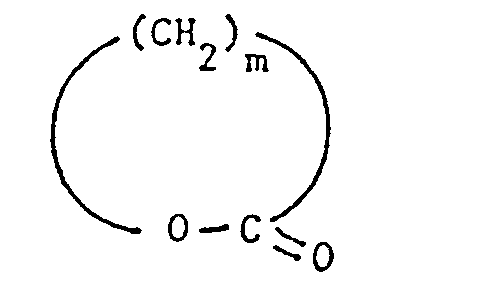

n et m sont tels que définis à la revendication 1.
le bis (N-éthyl hydroxy-4 butyramide) disulfure,
le bis (N-éthyl hydroxy-5 valéramide) disulfure,
le bis (N-éthyl hydroxy-6 caproamide) disulfure,
le bis (N-éthyl hydroxy-3 propionamide) disulfure,
le bis (N-propyl hydroxy-4 butyramide) disulfure, et
le bis (N-propyl hydroxy-6 caproamide) disulfure.
Priority Applications (1)
| Application Number | Priority Date | Filing Date | Title |
|---|---|---|---|
| AT89402209T ATE81503T1 (de) | 1988-08-04 | 1989-08-03 | N-(mercaptoalkyl)-omega-hydroxyalkylamide und ihre verwendung als reduktionsmittel in einem verfahren zur bleibenden gestaltung von haaren. |
Applications Claiming Priority (2)
| Application Number | Priority Date | Filing Date | Title |
|---|---|---|---|
| LU87310 | 1988-08-04 | ||
| LU87310A LU87310A1 (fr) | 1988-08-04 | 1988-08-04 | N-(mercaptoalkyl)omega-hydroxyalkylamides et leur utilisation en tant qu'agents reducteurs,dans un procede de deformation permanente des cheveux |
Publications (2)
| Publication Number | Publication Date |
|---|---|
| EP0354835A1 true EP0354835A1 (fr) | 1990-02-14 |
| EP0354835B1 EP0354835B1 (fr) | 1992-10-14 |
Family
ID=19731084
Family Applications (1)
| Application Number | Title | Priority Date | Filing Date |
|---|---|---|---|
| EP89402209A Expired - Lifetime EP0354835B1 (fr) | 1988-08-04 | 1989-08-03 | N-(mercaptoalkyl)oméga-hydroxyalkylamides et leur utilisation en tant qu'agents réducteurs dans un procédé de déformation permanente des cheveux |
Country Status (7)
| Country | Link |
|---|---|
| US (3) | US4956175A (fr) |
| EP (1) | EP0354835B1 (fr) |
| JP (1) | JP2825859B2 (fr) |
| AT (1) | ATE81503T1 (fr) |
| CA (1) | CA1312092C (fr) |
| DE (1) | DE68903206T2 (fr) |
| LU (1) | LU87310A1 (fr) |
Cited By (65)
| Publication number | Priority date | Publication date | Assignee | Title |
|---|---|---|---|---|
| EP0432000A1 (fr) * | 1989-11-20 | 1991-06-12 | L'oreal | Composition rÀ©ductrice, pour déformation permanente des cheveux, contenant en tant qu'agent réducteur un amino mercaptoalkylamide ou l'un de ses sels, et son utilisation dans un procédé de déformation permanente des cheveux |
| FR2663845A1 (fr) * | 1990-07-02 | 1992-01-03 | Oreal | Composition cosmetique reductrice pour permanente contenant un derive d'acide n-(mercapto alkyl) succinamique ou de n-(mercapto alkyl) succinimide, et son utilisation dans un procede de deformation permanente des cheveux. |
| FR2668929A1 (fr) * | 1990-11-09 | 1992-05-15 | Oreal | Composition cosmetique reductrice pour la deformation permanente des cheveux a base d'un amino-mercaptoalkylamide et procede de deformation permanente des cheveux. |
| EP0689827A1 (fr) | 1994-06-30 | 1996-01-03 | L'oreal | Procédé pour la déformation permanente des matières kératiniques |
| EP0723772A1 (fr) | 1995-01-30 | 1996-07-31 | L'oreal | Composition réductrice comprenant un acide aminé basique et un polymère cationique |
| US5565192A (en) * | 1993-05-25 | 1996-10-15 | L'oreal | Process for the permanent-reshaping of hair and composition for carrying it out containing, in combination, an amino- or amidothiol and at least one inorganic bromide |
| US5833966A (en) * | 1993-07-28 | 1998-11-10 | L'oreal | Hydrogen peroxide-based compositions used as fixers for permanent-waving/straightening |
| WO2002085317A1 (fr) * | 2001-04-20 | 2002-10-31 | L'oreal S.A. | Composition et procede de lanthionisation de fibres de keratine utilisant au moins un nucleophile organique et au moins un generateur d'ions hydroxydes |
| US6916467B2 (en) | 2001-11-08 | 2005-07-12 | L'oreal S.A. | Process for permanently reshaping the hair using particular aminosilicones |
| EP1671622A1 (fr) | 2004-12-14 | 2006-06-21 | L'oreal | Dosage des protéines du cheveu |
| EP1685825A1 (fr) | 2005-01-28 | 2006-08-02 | L'oreal | Procédé de traitement capillaire et utilisation dudit procédé |
| EP1705187A1 (fr) | 2005-03-18 | 2006-09-27 | L'oreal | Compositions cosmetiques de soin, renforcement et/ou réparation des substrats kératiniques comprenant des polpeptides KAP |
| US7195755B2 (en) | 2001-08-20 | 2007-03-27 | L'oreal S.A. | Compositions comprising at least one hydroxide compound and at least one reducing agent, and methods for relaxing hair |
| EP1935396A1 (fr) | 2006-12-22 | 2008-06-25 | L'Oreal | Procédé de déformation permanente des fibres kératiniques comprenant une étape d'application d'une composition reéuctrice faiblement concentrée et une étape intermédiaire de séchage |
| US7468180B2 (en) | 2001-08-20 | 2008-12-23 | L'oreal, S.A. | Compositions comprising at least one hydroxide compound and at least one oxidizing agent, and methods to straighten curly hair |
| US7608116B2 (en) | 2002-12-24 | 2009-10-27 | L'oreal S.A. | Oxidation dye composition comprising at least one mesomorphic phase, process for preparing it and ready-to-use composition for dyeing keratin materials |
| EP2196191A1 (fr) | 2008-12-11 | 2010-06-16 | L'oreal | Composition cosmetique comprenant un compose heterocyclique disulfure et un agent reducteur et procede pour la deformation permanente des fibres keratiniques |
| EP2246040A2 (fr) | 2009-04-15 | 2010-11-03 | L'Oréal | Procédé de mise en forme des cheveux au moyen d'une composition réductrice et d'un chauffage |
| US7875268B2 (en) | 2004-04-06 | 2011-01-25 | L'oreal S.A. | Dimercaptoamides, compositions comprising them as reducing agents, and processes for permanently reshaping keratin fibers therewith |
| WO2011089985A1 (fr) | 2010-01-19 | 2011-07-28 | L'oreal | Composition cosmétique pour les fibres de kératine |
| WO2012049145A1 (fr) | 2010-10-12 | 2012-04-19 | L'oreal | Composition cosmétique comprenant un dérivé de silicium particulier et un ou plusieurs polymères épaississants acryliques |
| US8163273B2 (en) | 2001-04-06 | 2012-04-24 | L'oreal S.A. | Process for permanently reshaping the hair using aminosilicones |
| FR2968300A1 (fr) * | 2010-12-07 | 2012-06-08 | Oreal | Composition cosmetique, composes, kit et procedes de traitement cosmetique |
| WO2012113725A2 (fr) | 2011-02-25 | 2012-08-30 | L'oreal | Composition pour la coloration de fibres kératiniques comprenant un colorant direct portant une fonction disulfure/thiol, une substance grasse, un agent alcalin et un réducteur |
| WO2012113720A2 (fr) | 2011-02-25 | 2012-08-30 | L'oreal | Composition de coloration de fibres kératiniques comprenant un colorant direct présentant un groupe fonctionnel disulfure/thiol, un polymère épaississant, un alcool gras éthoxylé et/ou un tensioactif non ionique, un agent alcalin et un agent réducteur |
| WO2012113724A2 (fr) | 2011-02-25 | 2012-08-30 | L'oreal | Composition pour la coloration de fibres kératiniques comprenant un colorant direct portant une fonction disulfure/thiol, un alcool gras peu ou pas éthoxylé, un tensioactif cationique, un agent alcalin et un réducteur |
| WO2012113722A2 (fr) | 2011-02-25 | 2012-08-30 | L'oreal | Composition pour coloration de fibres kératiniques comprenant un colorant direct portant une fonction disulfure/thiol, un tensioactif non ionique, un tensioactif amphotère, un alcool gras éthoxylé, un agent alcalin et un agent réducteur |
| WO2012113723A2 (fr) | 2011-02-25 | 2012-08-30 | L'oreal | Composition pour colorer des fibres kératiniques comprenant un colorant direct portant une fonction disulfure/thiol, un polymère épaississant non à base de cellulose, un agent alcalin et un agent réducteur |
| WO2012137165A2 (fr) | 2011-04-08 | 2012-10-11 | L'oreal | Procédé de traitement capillaire |
| US8313737B2 (en) | 2003-04-16 | 2012-11-20 | L'oreal S.A. | Hair treatment process for smoothing the hair |
| WO2013004982A2 (fr) | 2011-07-07 | 2013-01-10 | L'oreal | Procédés de traitement cosmétique et kit |
| WO2013111346A1 (fr) | 2012-01-26 | 2013-08-01 | L'oreal | Processus de traitement de fibres de kératine |
| WO2013145330A1 (fr) | 2012-03-27 | 2013-10-03 | L'oreal | Procédé de traitement de fibres kératiniques |
| WO2015059368A1 (fr) | 2013-09-02 | 2015-04-30 | L'oreal | Procede de coloration des fibres keratiniques a partir de colorants cationiques styryles disulfures, et composition comprenant lesdits colorants |
| WO2016076437A1 (fr) | 2014-11-11 | 2016-05-19 | L'oreal | Composition pour fibres de kératine |
| WO2016182087A1 (fr) | 2015-05-12 | 2016-11-17 | L'oreal | Composition pour fibres de kératine |
| WO2016182086A1 (fr) | 2015-05-12 | 2016-11-17 | L'oreal | Procédé de remodelage à chaud |
| US9522106B2 (en) | 2011-02-25 | 2016-12-20 | L'oreal | Composition for dyeing keratinous fibres comprising a direct dye having a disulphide/thiol functional group, a thickening polymer, an ethoxylated fatty alcohol and/or a nonionic surfactant, an alkaline agent and a reducing agent |
| WO2017018498A1 (fr) | 2015-07-28 | 2017-02-02 | L'oreal | Composition, processus, procédé et utilisation destinés à des fibres de kératine |
| US9675822B2 (en) | 2004-04-02 | 2017-06-13 | L'oreal | Method for treating hair fibers |
| WO2018197509A1 (fr) | 2017-04-24 | 2018-11-01 | Bicyclerd Limited | Modification de polypeptides |
| WO2020122221A1 (fr) | 2018-12-14 | 2020-06-18 | L'oreal | Procédé de lissage de fibres de kératine |
| WO2020189793A1 (fr) | 2019-03-20 | 2020-09-24 | L'oreal | Procédé et kit pour la coloration de fibres de kératine |
| WO2021064219A1 (fr) | 2019-10-02 | 2021-04-08 | Bicyclerd Limited | Dosage de cyclisation de phages |
| FR3111814A1 (fr) | 2020-06-30 | 2021-12-31 | L'oreal | Procédé de coloration des fibres kératiniques à partir de poudre et/ou extrait colorant de plantes indigofères et de composés comportant au moins un groupement carbonyle |
| FR3112078A1 (fr) | 2020-07-02 | 2022-01-07 | L'oreal | Composition de coloration des fibres kératiniques à partir de composés à motif indole |
| WO2024122096A1 (fr) | 2022-12-09 | 2024-06-13 | L'oreal | Composition convenant aux fibres de kératine |
| WO2024122393A1 (fr) | 2022-12-09 | 2024-06-13 | L'oreal | Composition pour le défrisage amélioré de fibres de kératine |
| FR3142891A1 (fr) | 2022-12-13 | 2024-06-14 | L'oreal | Processus de remodelage à chaud amélioré |
| FR3144918A1 (fr) | 2023-01-18 | 2024-07-19 | L'oreal | Procédé de lissage amélioré des fibres kératineuses |
| FR3144917A1 (fr) | 2023-01-16 | 2024-07-19 | L'oreal | Composition pour lissage amélioré des fibres kératineuses |
| FR3148718A1 (fr) | 2023-05-19 | 2024-11-22 | L'oreal | Composition et processus de remise en forme de fibres kératineuses |
| WO2025018430A1 (fr) | 2023-07-20 | 2025-01-23 | L'oreal | Composition convenant aux fibres de kératine |
| WO2025018433A1 (fr) | 2023-07-20 | 2025-01-23 | L'oreal | Procédé de traitement de fibres kératiniques |
| WO2025018431A1 (fr) | 2023-07-20 | 2025-01-23 | L'oreal | Composition convenant aux fibres de kératine |
| WO2025018432A1 (fr) | 2023-07-20 | 2025-01-23 | L'oreal | Méthode de traitement de fibres de kératine |
| FR3152401A3 (fr) | 2023-08-28 | 2025-03-07 | L'oreal | Procédé de traitement de fibres kératineuses |
| FR3152385A3 (fr) | 2023-08-28 | 2025-03-07 | L'oreal | Composition adaptée aux fibres kératiniques |
| FR3152384A3 (fr) | 2023-08-28 | 2025-03-07 | L'oreal | Processus de traitement de fibres kératineuses |
| FR3152383A3 (fr) | 2023-08-28 | 2025-03-07 | L'oreal | Processus de traitement de fibres kératineuses |
| FR3152386A3 (fr) | 2023-08-30 | 2025-03-07 | L'oreal | Composition de traitement des fibres kératineuses |
| FR3152387A3 (fr) | 2023-08-28 | 2025-03-07 | L'oreal | Composition adaptée aux fibres kératineuses |
| FR3152391A3 (fr) | 2023-08-28 | 2025-03-07 | L'oreal | Processus de traitement des fibres kératineuses |
| FR3152382A3 (fr) | 2023-08-28 | 2025-03-07 | L'oreal | Procédé de traitement des fibres kératiniques |
| FR3158229A3 (fr) | 2024-01-11 | 2025-07-18 | L'oreal | Composition convenant aux fibres kératineuses |
Families Citing this family (47)
| Publication number | Priority date | Publication date | Assignee | Title |
|---|---|---|---|---|
| LU87310A1 (fr) * | 1988-08-04 | 1990-03-13 | Oreal | N-(mercaptoalkyl)omega-hydroxyalkylamides et leur utilisation en tant qu'agents reducteurs,dans un procede de deformation permanente des cheveux |
| DE4336838A1 (de) * | 1993-10-28 | 1995-05-04 | Wella Ag | Mittel zur dauerhaften Haarverformung sowie neue haarkeratinreduzierende Cysteinglycerinester |
| FR2712286B1 (fr) * | 1993-11-12 | 1995-12-22 | Oreal | Nouveaux N-mercaptoalkyl alcanediamines et leur utilisation. |
| FR2772770B1 (fr) * | 1997-12-19 | 2000-01-28 | Oreal | Nouveaux composes choisis parmi les polymeres hyperbranches et les dendrimeres ayant un groupement particulier, procede de preparation, utilisation et compositions les comprenant |
| FR2772771B1 (fr) * | 1997-12-19 | 2000-01-28 | Oreal | Utilisation de polymeres hyperbranches et de dendrimeres comportant un groupement particulier, en tant qu'agent filmogene, les compositions filmogenes les comprenant et leur utilisation notamment en cosmetique ou en pharmacie |
| US6110588A (en) | 1999-02-05 | 2000-08-29 | 3M Innovative Properties Company | Microfibers and method of making |
| US6630231B2 (en) * | 1999-02-05 | 2003-10-07 | 3M Innovative Properties Company | Composite articles reinforced with highly oriented microfibers |
| US6420024B1 (en) * | 2000-12-21 | 2002-07-16 | 3M Innovative Properties Company | Charged microfibers, microfibrillated articles and use thereof |
| US7118736B2 (en) * | 2001-02-22 | 2006-10-10 | L'oreal | Hair relaxer compositions comprising at least one hydroxide compound and at least one activating agent, and methods of using the same |
| FR2831804B1 (fr) * | 2001-11-08 | 2004-07-30 | Oreal | Procede de deformation permanente des cheveux mettant en oeuvre des silicones aminees particulieres |
| FR2831817B1 (fr) * | 2001-11-08 | 2003-12-19 | Oreal | Composition reductrice pour le traitement des fibres keratiniques comprenant une silicone aminee particuliere |
| AU2002301801B2 (en) * | 2001-11-08 | 2004-09-30 | L'oreal | Cosmetic compositions containing an aminosilicone and a conditioner, and uses thereof |
| AU2002301803B2 (en) * | 2001-11-08 | 2004-09-09 | L'oreal | Cosmetic compositions containing an aminosilicone and a conditioner, and uses thereof |
| FR2831802B1 (fr) * | 2001-11-08 | 2004-10-15 | Oreal | Compositions cosmetiques contenant une silicone aminee et un agent epaississant et leurs utilisations |
| FR2831818B1 (fr) * | 2001-11-08 | 2004-07-16 | Oreal | Composition oxydante pour le traitement des fibres keratiniques comprenant une silicone aminee particuliere |
| FR2831815B1 (fr) * | 2001-11-08 | 2004-08-06 | Oreal | Composition reductrice pour le traitement des fibres keratiniques comprenant une silicone aminee particuliere |
| FR2831808B1 (fr) * | 2001-11-08 | 2003-12-19 | Oreal | Composition de teinture pour fibres keratiniques comprenant une silicone aminee particuliere |
| FR2831813B1 (fr) * | 2001-11-08 | 2004-10-01 | Oreal | Utilisation de silicones aminees particulieres en pre-traitement de colorations directes ou d'oxydation de fibres keratiniques |
| FR2831809B1 (fr) * | 2001-11-08 | 2004-07-23 | Oreal | Composition oxydante pour le traitement des fibres keratiniques comprenant une silicone aminee particuliere |
| FR2831803B1 (fr) * | 2001-11-08 | 2004-07-30 | Oreal | Compositions cosmetiques contenant une silicone aminee et un agent epaississant et leurs utilisations |
| FR2831814B1 (fr) * | 2001-11-08 | 2004-09-10 | Oreal | Utilisations de silicones aminees particulieres en pre- ou post-traitement de decolorations de fibres keratiniques |
| US7867478B2 (en) | 2002-12-24 | 2011-01-11 | L'oreal S.A. | Reducing composition for permanently reshaping or straightening the hair, containing a certain amount of mesomorphic phase, process for preparing it and process for permanently reshaping or straightening the hair |
| US20050002886A1 (en) * | 2003-05-06 | 2005-01-06 | Michel Philippe | Dithiols comprising at least one amide functional group and their use in transforming the shape of the hair |
| US20050125914A1 (en) * | 2003-11-18 | 2005-06-16 | Gerard Malle | Hair shaping composition comprising at least one- non-hydroxide base |
| US20050186232A1 (en) * | 2003-11-18 | 2005-08-25 | Gerard Malle | Hair-relaxing composition comprising tetramethylguanidine |
| US20060134042A1 (en) * | 2003-11-18 | 2006-06-22 | Gerard Malle | Hair shaping composition comprising at least one tetramethylguanidine |
| US20050136017A1 (en) * | 2003-11-18 | 2005-06-23 | Gerard Malle | Hair relaxing composition comprising at least one non-hydroxide imine |
| US20050136019A1 (en) * | 2003-11-18 | 2005-06-23 | Gerard Malle | Hair shaping composition comprising at least one amine chosen from secondary and tertiary amines |
| US20050129645A1 (en) * | 2003-11-18 | 2005-06-16 | L'oreal | Hair shaping composition comprising at least one non-hydroxide imine |
| US20050136018A1 (en) * | 2003-11-18 | 2005-06-23 | Gerard Malle | Hair relaxing composition comprising at least one secondary or tertiary amine |
| US20050208007A1 (en) * | 2004-03-02 | 2005-09-22 | Christian Blaise | Composition to permanently reshape the hair containing at least one carboxydithiol |
| US20070009462A9 (en) * | 2004-03-02 | 2007-01-11 | Gerard Malle | Composition to permanently reshape the hair containing at least one dicarboxydithiol |
| US20060083702A1 (en) * | 2004-04-02 | 2006-04-20 | Thomas Fondin | Hair fiber treating method |
| US7976831B2 (en) * | 2004-04-02 | 2011-07-12 | L'oreal S.A. | Method for treating hair fibers |
| US20050241075A1 (en) * | 2004-04-22 | 2005-11-03 | Aude Livoreil | Composition for permanently reshaping the hair comprising at least one reducing agent and at least one photo-oxidizing agent complexed with at least one metal |
| US20060005325A1 (en) * | 2004-07-01 | 2006-01-12 | Henri Samain | Leave-in cosmetic composition comprising at least one elastomeric film-forming polymer and use thereof for conditioning keratin materials |
| US20060002877A1 (en) * | 2004-07-01 | 2006-01-05 | Isabelle Rollat-Corvol | Compositions and methods for permanently reshaping hair using elastomeric film-forming polymers |
| US20060000485A1 (en) * | 2004-07-01 | 2006-01-05 | Henri Samain | Pressurized hair composition comprising at least one elastomeric film-forming polymer |
| US20060005326A1 (en) * | 2004-07-01 | 2006-01-12 | Isabelle Rollat-Corvol | Dyeing composition comprising at least one elastomeric film-forming polymer and at least one dyestuff |
| US20060002882A1 (en) * | 2004-07-01 | 2006-01-05 | Isabelle Rollat-Corvol | Rinse-out cosmetic composition comprising elastomeric film-forming polymers, use thereof for conditioning keratin materials |
| SG158073A1 (en) * | 2004-11-26 | 2010-01-29 | Ucl Business Plc | Compositions comprising ornithine and phenylacetate or phenylbutyrate for treating hepatic encephalopathy |
| US7815901B2 (en) * | 2005-01-28 | 2010-10-19 | L'ORéAL S.A. | Hair treatment method |
| US20060269498A1 (en) * | 2005-05-17 | 2006-11-30 | Gerard Malle | Hair shaping composition comprising at least one polyguanidine other than hydroxide |
| US20060272107A1 (en) * | 2005-05-17 | 2006-12-07 | Gerard Malle | Hair relaxing composition comprising at least one non-hydroxide polyguanidine |
| US8110604B2 (en) * | 2006-07-14 | 2012-02-07 | Urthtech, Llc | Methods and composition for treating a material |
| US8143309B2 (en) * | 2006-07-14 | 2012-03-27 | Urthtech, Llc | Methods and composition for treating a material |
| CN107569518A (zh) | 2010-08-31 | 2018-01-12 | 天野酶制品株式会社 | 使用了酶的蛋壳膜的溶解方法 |
Citations (2)
| Publication number | Priority date | Publication date | Assignee | Title |
|---|---|---|---|---|
| US3768490A (en) * | 1972-01-31 | 1973-10-30 | Oreal | Permanently having and permanently setting of hair |
| FR2587030A1 (fr) * | 1985-09-11 | 1987-03-13 | Kao Corp | Bis(2-gluconamidoalkyl)disulfures |
Family Cites Families (15)
| Publication number | Priority date | Publication date | Assignee | Title |
|---|---|---|---|---|
| US2170845A (en) * | 1937-03-17 | 1939-08-29 | Du Pont | Cellulosic structure and method for preparing same |
| US2368073A (en) * | 1943-04-12 | 1945-01-23 | Commercial Solvents Corp | Process for preparing hydroxy amides |
| US2470945A (en) * | 1945-01-26 | 1949-05-24 | Us Rubber Co | Di (orthoacylaminoaryl) disulfide softeners for rubbers |
| US2520293A (en) * | 1947-01-30 | 1950-08-29 | Endo Products Inc | Mercaptoacetanilide derivatives |
| US2813123A (en) * | 1956-05-14 | 1957-11-12 | American Cyanamid Co | Stable dry powder compositions containing pantothenyl alcohol and methods of preparing same |
| US2923738A (en) * | 1958-05-08 | 1960-02-02 | Gen Aniline & Film Corp | Addition products of n-alkyl-gamma-hydroxycarboxylic acid amides and alkanolamines |
| BE612484A (fr) * | 1961-03-30 | 1900-01-01 | ||
| US3300508A (en) * | 1962-09-08 | 1967-01-24 | Daiichi Seiyaku Co | 2-[nu'-(pantoyl)-2'-aminoethyl]-2-thiazoline |
| US3849576A (en) * | 1964-01-29 | 1974-11-19 | Oreal | Process and cosmetic compositions for the treatment of skin and scalp |
| LU49584A1 (fr) * | 1965-10-05 | 1967-04-05 | ||
| US3927091A (en) * | 1967-06-23 | 1975-12-16 | Ciba Geigy Corp | Carboxylic acid amides |
| US4009208A (en) * | 1970-08-07 | 1977-02-22 | Sterling Drug Inc. | N,n'-heptamethylenebis(4-methoxybenzamide) |
| US4448905A (en) * | 1982-09-30 | 1984-05-15 | Gaf Corporation | Alcohol substituted amides as chain extenders for polyurethanes |
| LU87310A1 (fr) * | 1988-08-04 | 1990-03-13 | Oreal | N-(mercaptoalkyl)omega-hydroxyalkylamides et leur utilisation en tant qu'agents reducteurs,dans un procede de deformation permanente des cheveux |
| JPH0658A (ja) * | 1992-06-19 | 1994-01-11 | Matsushita Refrig Co Ltd | 食品保存装置 |
-
1988
- 1988-08-04 LU LU87310A patent/LU87310A1/fr unknown
-
1989
- 1989-08-02 US US07/388,050 patent/US4956175A/en not_active Expired - Lifetime
- 1989-08-03 DE DE8989402209T patent/DE68903206T2/de not_active Expired - Fee Related
- 1989-08-03 JP JP1202284A patent/JP2825859B2/ja not_active Expired - Fee Related
- 1989-08-03 EP EP89402209A patent/EP0354835B1/fr not_active Expired - Lifetime
- 1989-08-03 AT AT89402209T patent/ATE81503T1/de not_active IP Right Cessation
- 1989-08-03 CA CA000607460A patent/CA1312092C/fr not_active Expired - Lifetime
-
1990
- 1990-05-25 US US07/528,757 patent/US5015767A/en not_active Expired - Fee Related
-
1991
- 1991-03-05 US US07/664,785 patent/US5106612A/en not_active Expired - Lifetime
Patent Citations (2)
| Publication number | Priority date | Publication date | Assignee | Title |
|---|---|---|---|---|
| US3768490A (en) * | 1972-01-31 | 1973-10-30 | Oreal | Permanently having and permanently setting of hair |
| FR2587030A1 (fr) * | 1985-09-11 | 1987-03-13 | Kao Corp | Bis(2-gluconamidoalkyl)disulfures |
Cited By (73)
| Publication number | Priority date | Publication date | Assignee | Title |
|---|---|---|---|---|
| EP0432000A1 (fr) * | 1989-11-20 | 1991-06-12 | L'oreal | Composition rÀ©ductrice, pour déformation permanente des cheveux, contenant en tant qu'agent réducteur un amino mercaptoalkylamide ou l'un de ses sels, et son utilisation dans un procédé de déformation permanente des cheveux |
| FR2663845A1 (fr) * | 1990-07-02 | 1992-01-03 | Oreal | Composition cosmetique reductrice pour permanente contenant un derive d'acide n-(mercapto alkyl) succinamique ou de n-(mercapto alkyl) succinimide, et son utilisation dans un procede de deformation permanente des cheveux. |
| EP0465342A1 (fr) * | 1990-07-02 | 1992-01-08 | L'oreal | Composition cosmétique réductrice pour permanente contenant un dérivé d'acide N-(mercapto alkyl) succinamique ou de N-(mercapto alkyl) succinimide, et son utilisation dans un procédé de déformation permanente des cheveux |
| US5154918A (en) * | 1990-07-02 | 1992-10-13 | L'oreal | Cosmetic composition for use in permanent deformation of hair contains as a reducing agent a derivative of n-(mercapto alkyl) succinamic acid or of n-(mercapto alkyl) succinimide |
| FR2668929A1 (fr) * | 1990-11-09 | 1992-05-15 | Oreal | Composition cosmetique reductrice pour la deformation permanente des cheveux a base d'un amino-mercaptoalkylamide et procede de deformation permanente des cheveux. |
| US5565192A (en) * | 1993-05-25 | 1996-10-15 | L'oreal | Process for the permanent-reshaping of hair and composition for carrying it out containing, in combination, an amino- or amidothiol and at least one inorganic bromide |
| US5833966A (en) * | 1993-07-28 | 1998-11-10 | L'oreal | Hydrogen peroxide-based compositions used as fixers for permanent-waving/straightening |
| EP0689827A1 (fr) | 1994-06-30 | 1996-01-03 | L'oreal | Procédé pour la déformation permanente des matières kératiniques |
| EP0723772A1 (fr) | 1995-01-30 | 1996-07-31 | L'oreal | Composition réductrice comprenant un acide aminé basique et un polymère cationique |
| US8163273B2 (en) | 2001-04-06 | 2012-04-24 | L'oreal S.A. | Process for permanently reshaping the hair using aminosilicones |
| WO2002085317A1 (fr) * | 2001-04-20 | 2002-10-31 | L'oreal S.A. | Composition et procede de lanthionisation de fibres de keratine utilisant au moins un nucleophile organique et au moins un generateur d'ions hydroxydes |
| US7195755B2 (en) | 2001-08-20 | 2007-03-27 | L'oreal S.A. | Compositions comprising at least one hydroxide compound and at least one reducing agent, and methods for relaxing hair |
| US7468180B2 (en) | 2001-08-20 | 2008-12-23 | L'oreal, S.A. | Compositions comprising at least one hydroxide compound and at least one oxidizing agent, and methods to straighten curly hair |
| US6916467B2 (en) | 2001-11-08 | 2005-07-12 | L'oreal S.A. | Process for permanently reshaping the hair using particular aminosilicones |
| US7608116B2 (en) | 2002-12-24 | 2009-10-27 | L'oreal S.A. | Oxidation dye composition comprising at least one mesomorphic phase, process for preparing it and ready-to-use composition for dyeing keratin materials |
| US8313737B2 (en) | 2003-04-16 | 2012-11-20 | L'oreal S.A. | Hair treatment process for smoothing the hair |
| US10702464B2 (en) | 2004-04-02 | 2020-07-07 | L'oreal | Method for treating hair fibers |
| US9675822B2 (en) | 2004-04-02 | 2017-06-13 | L'oreal | Method for treating hair fibers |
| US7875268B2 (en) | 2004-04-06 | 2011-01-25 | L'oreal S.A. | Dimercaptoamides, compositions comprising them as reducing agents, and processes for permanently reshaping keratin fibers therewith |
| EP1671622A1 (fr) | 2004-12-14 | 2006-06-21 | L'oreal | Dosage des protéines du cheveu |
| EP1685825A1 (fr) | 2005-01-28 | 2006-08-02 | L'oreal | Procédé de traitement capillaire et utilisation dudit procédé |
| EP1705187A1 (fr) | 2005-03-18 | 2006-09-27 | L'oreal | Compositions cosmetiques de soin, renforcement et/ou réparation des substrats kératiniques comprenant des polpeptides KAP |
| EP1935396A1 (fr) | 2006-12-22 | 2008-06-25 | L'Oreal | Procédé de déformation permanente des fibres kératiniques comprenant une étape d'application d'une composition reéuctrice faiblement concentrée et une étape intermédiaire de séchage |
| EP2196191A1 (fr) | 2008-12-11 | 2010-06-16 | L'oreal | Composition cosmetique comprenant un compose heterocyclique disulfure et un agent reducteur et procede pour la deformation permanente des fibres keratiniques |
| EP2246040A2 (fr) | 2009-04-15 | 2010-11-03 | L'Oréal | Procédé de mise en forme des cheveux au moyen d'une composition réductrice et d'un chauffage |
| WO2011089985A1 (fr) | 2010-01-19 | 2011-07-28 | L'oreal | Composition cosmétique pour les fibres de kératine |
| WO2012049145A1 (fr) | 2010-10-12 | 2012-04-19 | L'oreal | Composition cosmétique comprenant un dérivé de silicium particulier et un ou plusieurs polymères épaississants acryliques |
| FR2968300A1 (fr) * | 2010-12-07 | 2012-06-08 | Oreal | Composition cosmetique, composes, kit et procedes de traitement cosmetique |
| US9271915B2 (en) | 2011-02-25 | 2016-03-01 | L'oreal | Composition for dyeing keratin fibres comprising a direct dye bearing a disulphide/thiol function, a non-cellulose-based thickening polymer, an alkaline agent and a reducing agent |
| WO2012113720A2 (fr) | 2011-02-25 | 2012-08-30 | L'oreal | Composition de coloration de fibres kératiniques comprenant un colorant direct présentant un groupe fonctionnel disulfure/thiol, un polymère épaississant, un alcool gras éthoxylé et/ou un tensioactif non ionique, un agent alcalin et un agent réducteur |
| WO2012113725A2 (fr) | 2011-02-25 | 2012-08-30 | L'oreal | Composition pour la coloration de fibres kératiniques comprenant un colorant direct portant une fonction disulfure/thiol, une substance grasse, un agent alcalin et un réducteur |
| WO2012113722A2 (fr) | 2011-02-25 | 2012-08-30 | L'oreal | Composition pour coloration de fibres kératiniques comprenant un colorant direct portant une fonction disulfure/thiol, un tensioactif non ionique, un tensioactif amphotère, un alcool gras éthoxylé, un agent alcalin et un agent réducteur |
| WO2012113723A2 (fr) | 2011-02-25 | 2012-08-30 | L'oreal | Composition pour colorer des fibres kératiniques comprenant un colorant direct portant une fonction disulfure/thiol, un polymère épaississant non à base de cellulose, un agent alcalin et un agent réducteur |
| US9522106B2 (en) | 2011-02-25 | 2016-12-20 | L'oreal | Composition for dyeing keratinous fibres comprising a direct dye having a disulphide/thiol functional group, a thickening polymer, an ethoxylated fatty alcohol and/or a nonionic surfactant, an alkaline agent and a reducing agent |
| US9345652B2 (en) | 2011-02-25 | 2016-05-24 | L'oreal | Composition for dyeing keratin fibres comprising a direct dye bearing a disulphide/thiol function, a sparingly or non-ethoxylated fatty alcohol, a cationic surfactant, an alkaline agent and a reducing agent |
| WO2012113724A2 (fr) | 2011-02-25 | 2012-08-30 | L'oreal | Composition pour la coloration de fibres kératiniques comprenant un colorant direct portant une fonction disulfure/thiol, un alcool gras peu ou pas éthoxylé, un tensioactif cationique, un agent alcalin et un réducteur |
| US9265705B2 (en) | 2011-02-25 | 2016-02-23 | L'oreal | Composition for dyeing keratin fibres comprising a direct dye bearing a disulphide/thiol function, a nonionic surfactant, an amphoteric surfactant, an ethoxylated fatty alcohol, an alkaline agent and a reducing agent |
| WO2012137165A2 (fr) | 2011-04-08 | 2012-10-11 | L'oreal | Procédé de traitement capillaire |
| WO2013004982A2 (fr) | 2011-07-07 | 2013-01-10 | L'oreal | Procédés de traitement cosmétique et kit |
| WO2013111346A1 (fr) | 2012-01-26 | 2013-08-01 | L'oreal | Processus de traitement de fibres de kératine |
| WO2013145330A1 (fr) | 2012-03-27 | 2013-10-03 | L'oreal | Procédé de traitement de fibres kératiniques |
| WO2015059368A1 (fr) | 2013-09-02 | 2015-04-30 | L'oreal | Procede de coloration des fibres keratiniques a partir de colorants cationiques styryles disulfures, et composition comprenant lesdits colorants |
| WO2016076437A1 (fr) | 2014-11-11 | 2016-05-19 | L'oreal | Composition pour fibres de kératine |
| WO2016182087A1 (fr) | 2015-05-12 | 2016-11-17 | L'oreal | Composition pour fibres de kératine |
| WO2016182086A1 (fr) | 2015-05-12 | 2016-11-17 | L'oreal | Procédé de remodelage à chaud |
| WO2017018498A1 (fr) | 2015-07-28 | 2017-02-02 | L'oreal | Composition, processus, procédé et utilisation destinés à des fibres de kératine |
| WO2018197509A1 (fr) | 2017-04-24 | 2018-11-01 | Bicyclerd Limited | Modification de polypeptides |
| WO2020122221A1 (fr) | 2018-12-14 | 2020-06-18 | L'oreal | Procédé de lissage de fibres de kératine |
| WO2020189793A1 (fr) | 2019-03-20 | 2020-09-24 | L'oreal | Procédé et kit pour la coloration de fibres de kératine |
| WO2021064219A1 (fr) | 2019-10-02 | 2021-04-08 | Bicyclerd Limited | Dosage de cyclisation de phages |
| FR3111814A1 (fr) | 2020-06-30 | 2021-12-31 | L'oreal | Procédé de coloration des fibres kératiniques à partir de poudre et/ou extrait colorant de plantes indigofères et de composés comportant au moins un groupement carbonyle |
| FR3112078A1 (fr) | 2020-07-02 | 2022-01-07 | L'oreal | Composition de coloration des fibres kératiniques à partir de composés à motif indole |
| WO2024122096A1 (fr) | 2022-12-09 | 2024-06-13 | L'oreal | Composition convenant aux fibres de kératine |
| WO2024122393A1 (fr) | 2022-12-09 | 2024-06-13 | L'oreal | Composition pour le défrisage amélioré de fibres de kératine |
| WO2024122370A1 (fr) | 2022-12-09 | 2024-06-13 | L'oreal | Procédé de défrisage amélioré pour fibres de kératine |
| FR3151206A3 (fr) | 2022-12-09 | 2025-01-24 | L'oreal | Composition adaptée aux fibres kératiniques |
| FR3142891A1 (fr) | 2022-12-13 | 2024-06-14 | L'oreal | Processus de remodelage à chaud amélioré |
| FR3144917A1 (fr) | 2023-01-16 | 2024-07-19 | L'oreal | Composition pour lissage amélioré des fibres kératineuses |
| FR3144918A1 (fr) | 2023-01-18 | 2024-07-19 | L'oreal | Procédé de lissage amélioré des fibres kératineuses |
| FR3148718A1 (fr) | 2023-05-19 | 2024-11-22 | L'oreal | Composition et processus de remise en forme de fibres kératineuses |
| WO2025018432A1 (fr) | 2023-07-20 | 2025-01-23 | L'oreal | Méthode de traitement de fibres de kératine |
| WO2025018431A1 (fr) | 2023-07-20 | 2025-01-23 | L'oreal | Composition convenant aux fibres de kératine |
| WO2025018433A1 (fr) | 2023-07-20 | 2025-01-23 | L'oreal | Procédé de traitement de fibres kératiniques |
| WO2025018430A1 (fr) | 2023-07-20 | 2025-01-23 | L'oreal | Composition convenant aux fibres de kératine |
| FR3152401A3 (fr) | 2023-08-28 | 2025-03-07 | L'oreal | Procédé de traitement de fibres kératineuses |
| FR3152385A3 (fr) | 2023-08-28 | 2025-03-07 | L'oreal | Composition adaptée aux fibres kératiniques |
| FR3152384A3 (fr) | 2023-08-28 | 2025-03-07 | L'oreal | Processus de traitement de fibres kératineuses |
| FR3152383A3 (fr) | 2023-08-28 | 2025-03-07 | L'oreal | Processus de traitement de fibres kératineuses |
| FR3152387A3 (fr) | 2023-08-28 | 2025-03-07 | L'oreal | Composition adaptée aux fibres kératineuses |
| FR3152391A3 (fr) | 2023-08-28 | 2025-03-07 | L'oreal | Processus de traitement des fibres kératineuses |
| FR3152382A3 (fr) | 2023-08-28 | 2025-03-07 | L'oreal | Procédé de traitement des fibres kératiniques |
| FR3152386A3 (fr) | 2023-08-30 | 2025-03-07 | L'oreal | Composition de traitement des fibres kératineuses |
| FR3158229A3 (fr) | 2024-01-11 | 2025-07-18 | L'oreal | Composition convenant aux fibres kératineuses |
Also Published As
| Publication number | Publication date |
|---|---|
| LU87310A1 (fr) | 1990-03-13 |
| US4956175A (en) | 1990-09-11 |
| DE68903206T2 (de) | 1993-02-25 |
| JP2825859B2 (ja) | 1998-11-18 |
| US5106612A (en) | 1992-04-21 |
| EP0354835B1 (fr) | 1992-10-14 |
| US5015767A (en) | 1991-05-14 |
| CA1312092C (fr) | 1992-12-29 |
| DE68903206D1 (de) | 1992-11-19 |
| ATE81503T1 (de) | 1992-10-15 |
| JPH02104515A (ja) | 1990-04-17 |
Similar Documents
| Publication | Publication Date | Title |
|---|---|---|
| EP0354835B1 (fr) | N-(mercaptoalkyl)oméga-hydroxyalkylamides et leur utilisation en tant qu'agents réducteurs dans un procédé de déformation permanente des cheveux | |
| EP0368763B1 (fr) | Mercapto-4 butyramides N-mono ou N,N-disubstitués par un radical mono ou polyhydroxyalkyle, et leur utilisation en tant qu'agents réducteurs dans un procédé de déformation permanente des cheveux | |
| EP0653202B1 (fr) | Composition cosmétique contenant en tant qu'agent réducteur un N-mercapto-alkyl alcanediamide ou l'un de ses sels cosmétiquement acceptable | |
| EP0514282B1 (fr) | Nouveaux alkylamino mercaptoalkylamides ou l'un de leurs sels cosmétiquement acceptables, et leur utilisation en tant qu'agents réducteurs, dans un procédé de déformation permanente des cheveux | |
| EP0465342B1 (fr) | Composition cosmétique réductrice pour permanente contenant un dérivé d'acide N-(mercapto alkyl) succinamique ou de N-(mercapto alkyl) succinimide, et son utilisation dans un procédé de déformation permanente des cheveux | |
| EP0432000B1 (fr) | Composition réductrice, pour déformation permanente des cheveux, contenant en tant qu'agent réducteur un amino mercaptoalkylamide ou l'un de ses sels, et son utilisation dans un procédé de déformation permanente des cheveux | |
| FR2679448A1 (fr) | Melange azetrope de thioglycolate d'hydroxy-2 propyle et de thioglycolate d'hydroxy-2 methyl-1 ethyle, son procede d'obtention et son utilisation dans un procede de deformation permanente des cheveux. | |
| EP0577473B1 (fr) | Composition cosmétique réductrice pour la déformation permanente des cheveux à base d'un mercaptoalkylamino-amide et procédé de déformation permanente des cheveux | |
| EP0626166B1 (fr) | Nouveau procédé de déformation permanente des cheveux et composition pour sa mise en oeuvre contenant en association un amino ou amidothiol et au moins un bromure minéral | |
| CA1138336A (fr) | Compositions cosmetiques pour le traitement des cheveux et de la peau contenant en tant que composes actifs des alkylene-dithiothers | |
| CA1246599A (fr) | Polyethers ioniques, leur procede de preparation et compositions les contenant | |
| EP0568695B1 (fr) | Composition cosmetique pour une permanente des cheveux contenant en tant que reducteur du bromhydrate de cysteine et/ou du bromhydrate de mercapto-2 ethylamine | |
| CH639556A5 (fr) | Compositions cosmetiques pour le traitement de l'etat gras des cheveux et de la peau, composes et leur procede de preparation. | |
| CA1279262C (fr) | Composition cosmetique contenant un condensat du type amide-amine, et procede de traitement cosmetique a l'aide d'un tel condensat | |
| FR2867068A1 (fr) | Composition de deformation permanente des cheveux contenant au moins un dicarboxydithiol. | |
| EP1570835B1 (fr) | Composition de déformation permanente des cheveux contenant au moins un carboxydithiol | |
| CA2222361C (fr) | Derives ammoniums quaternaires hydroxypropyles a fonction ester, compositions cosmetiques et dermatologiques les contenant | |
| FR2668929A1 (fr) | Composition cosmetique reductrice pour la deformation permanente des cheveux a base d'un amino-mercaptoalkylamide et procede de deformation permanente des cheveux. | |
| FR2669329A1 (fr) | Amino-mercapto-alkylamides, leur procede de preparation et leur utilisation dans une composition cosmetique reductrice dans la deformation permanente des cheveux. | |
| FR2669332A1 (fr) | Nouveaux thioesters, leur procede de preparation et leur utilisation dans la synthese d'amino-mercapto-alkylamides. |
Legal Events
| Date | Code | Title | Description |
|---|---|---|---|
| PUAI | Public reference made under article 153(3) epc to a published international application that has entered the european phase |
Free format text: ORIGINAL CODE: 0009012 |
|
| AK | Designated contracting states |
Kind code of ref document: A1 Designated state(s): AT BE CH DE ES FR GB GR IT LI NL SE |
|
| 17P | Request for examination filed |
Effective date: 19900404 |
|
| 17Q | First examination report despatched |
Effective date: 19920205 |
|
| GRAA | (expected) grant |
Free format text: ORIGINAL CODE: 0009210 |
|
| AK | Designated contracting states |
Kind code of ref document: B1 Designated state(s): AT BE CH DE ES FR GB GR IT LI NL SE |
|
| PG25 | Lapsed in a contracting state [announced via postgrant information from national office to epo] |
Ref country code: SE Effective date: 19921014 Ref country code: NL Effective date: 19921014 Ref country code: GR Free format text: LAPSE BECAUSE OF FAILURE TO SUBMIT A TRANSLATION OF THE DESCRIPTION OR TO PAY THE FEE WITHIN THE PRESCRIBED TIME-LIMIT Effective date: 19921014 Ref country code: ES Free format text: THE PATENT HAS BEEN ANNULLED BY A DECISION OF A NATIONAL AUTHORITY Effective date: 19921014 Ref country code: AT Effective date: 19921014 |
|
| REF | Corresponds to: |
Ref document number: 81503 Country of ref document: AT Date of ref document: 19921015 Kind code of ref document: T |
|
| GBT | Gb: translation of ep patent filed (gb section 77(6)(a)/1977) | ||
| REF | Corresponds to: |
Ref document number: 68903206 Country of ref document: DE Date of ref document: 19921119 |
|
| ITF | It: translation for a ep patent filed | ||
| NLV1 | Nl: lapsed or annulled due to failure to fulfill the requirements of art. 29p and 29m of the patents act | ||
| PLBE | No opposition filed within time limit |
Free format text: ORIGINAL CODE: 0009261 |
|
| STAA | Information on the status of an ep patent application or granted ep patent |
Free format text: STATUS: NO OPPOSITION FILED WITHIN TIME LIMIT |
|
| 26N | No opposition filed | ||
| PGFP | Annual fee paid to national office [announced via postgrant information from national office to epo] |
Ref country code: BE Payment date: 19960904 Year of fee payment: 8 |
|
| PGFP | Annual fee paid to national office [announced via postgrant information from national office to epo] |
Ref country code: CH Payment date: 19961016 Year of fee payment: 8 |
|
| PG25 | Lapsed in a contracting state [announced via postgrant information from national office to epo] |
Ref country code: LI Free format text: LAPSE BECAUSE OF NON-PAYMENT OF DUE FEES Effective date: 19970831 Ref country code: CH Free format text: LAPSE BECAUSE OF NON-PAYMENT OF DUE FEES Effective date: 19970831 Ref country code: BE Free format text: LAPSE BECAUSE OF NON-PAYMENT OF DUE FEES Effective date: 19970831 |
|
| BERE | Be: lapsed |
Owner name: L' OREAL Effective date: 19970831 |
|
| REG | Reference to a national code |
Ref country code: CH Ref legal event code: PL |
|
| REG | Reference to a national code |
Ref country code: GB Ref legal event code: IF02 |
|
| PGFP | Annual fee paid to national office [announced via postgrant information from national office to epo] |
Ref country code: GB Payment date: 20030730 Year of fee payment: 15 |
|
| PGFP | Annual fee paid to national office [announced via postgrant information from national office to epo] |
Ref country code: FR Payment date: 20030808 Year of fee payment: 15 |
|
| PGFP | Annual fee paid to national office [announced via postgrant information from national office to epo] |
Ref country code: DE Payment date: 20030814 Year of fee payment: 15 |
|
| PG25 | Lapsed in a contracting state [announced via postgrant information from national office to epo] |
Ref country code: GB Free format text: LAPSE BECAUSE OF NON-PAYMENT OF DUE FEES Effective date: 20040803 |
|
| PG25 | Lapsed in a contracting state [announced via postgrant information from national office to epo] |
Ref country code: DE Free format text: LAPSE BECAUSE OF NON-PAYMENT OF DUE FEES Effective date: 20050301 |
|
| GBPC | Gb: european patent ceased through non-payment of renewal fee |
Effective date: 20040803 |
|
| PG25 | Lapsed in a contracting state [announced via postgrant information from national office to epo] |
Ref country code: FR Free format text: LAPSE BECAUSE OF NON-PAYMENT OF DUE FEES Effective date: 20050429 |
|
| REG | Reference to a national code |
Ref country code: FR Ref legal event code: ST |
|
| PG25 | Lapsed in a contracting state [announced via postgrant information from national office to epo] |
Ref country code: IT Free format text: LAPSE BECAUSE OF NON-PAYMENT OF DUE FEES Effective date: 20050803 |