EP0346841A2 - 1-Aryl-naphthoesäureamide und diese enthaltende mikrobizide Mittel - Google Patents
1-Aryl-naphthoesäureamide und diese enthaltende mikrobizide Mittel Download PDFInfo
- Publication number
- EP0346841A2 EP0346841A2 EP89110707A EP89110707A EP0346841A2 EP 0346841 A2 EP0346841 A2 EP 0346841A2 EP 89110707 A EP89110707 A EP 89110707A EP 89110707 A EP89110707 A EP 89110707A EP 0346841 A2 EP0346841 A2 EP 0346841A2
- Authority
- EP
- European Patent Office
- Prior art keywords
- oder
- alkyl
- formula
- halogen
- unsubstituted
- Prior art date
- Legal status (The legal status is an assumption and is not a legal conclusion. Google has not performed a legal analysis and makes no representation as to the accuracy of the status listed.)
- Withdrawn
Links
- 230000003641 microbiacidal effect Effects 0.000 title claims abstract description 12
- 229940124561 microbicide Drugs 0.000 title description 5
- 150000001875 compounds Chemical class 0.000 claims abstract description 76
- -1 methylenedioxy Chemical class 0.000 claims abstract description 42
- 229910052736 halogen Inorganic materials 0.000 claims abstract description 34
- 150000002367 halogens Chemical class 0.000 claims abstract description 34
- 229910052739 hydrogen Inorganic materials 0.000 claims abstract description 17
- UFHFLCQGNIYNRP-UHFFFAOYSA-N Hydrogen Chemical compound [H][H] UFHFLCQGNIYNRP-UHFFFAOYSA-N 0.000 claims abstract description 13
- 229910052757 nitrogen Inorganic materials 0.000 claims abstract description 13
- 125000004093 cyano group Chemical group *C#N 0.000 claims abstract description 12
- 239000001257 hydrogen Substances 0.000 claims abstract description 11
- 229910052717 sulfur Inorganic materials 0.000 claims abstract description 11
- 125000000449 nitro group Chemical group [O-][N+](*)=O 0.000 claims abstract description 10
- 125000005913 (C3-C6) cycloalkyl group Chemical group 0.000 claims abstract description 9
- 125000004433 nitrogen atom Chemical group N* 0.000 claims abstract description 9
- 125000001570 methylene group Chemical group [H]C([H])([*:1])[*:2] 0.000 claims abstract description 8
- 125000000623 heterocyclic group Chemical group 0.000 claims abstract description 7
- 229910052799 carbon Inorganic materials 0.000 claims abstract description 6
- 125000003342 alkenyl group Chemical group 0.000 claims abstract description 5
- 125000002947 alkylene group Chemical group 0.000 claims abstract description 5
- 125000000753 cycloalkyl group Chemical group 0.000 claims abstract description 4
- 125000001494 2-propynyl group Chemical group [H]C#CC([H])([H])* 0.000 claims abstract description 3
- 239000000203 mixture Substances 0.000 claims description 27
- 238000002360 preparation method Methods 0.000 claims description 20
- 238000000034 method Methods 0.000 claims description 11
- 125000000956 methoxy group Chemical group [H]C([H])([H])O* 0.000 claims description 10
- ZAMOUSCENKQFHK-UHFFFAOYSA-N Chlorine atom Chemical compound [Cl] ZAMOUSCENKQFHK-UHFFFAOYSA-N 0.000 claims description 7
- 239000000654 additive Substances 0.000 claims description 7
- 239000000460 chlorine Substances 0.000 claims description 7
- 229910052801 chlorine Inorganic materials 0.000 claims description 7
- 239000000126 substance Substances 0.000 claims description 7
- 229910052731 fluorine Inorganic materials 0.000 claims description 6
- 239000011737 fluorine Substances 0.000 claims description 6
- 125000001997 phenyl group Chemical group [H]C1=C([H])C([H])=C(*)C([H])=C1[H] 0.000 claims description 6
- NINIDFKCEFEMDL-UHFFFAOYSA-N Sulfur Chemical group [S] NINIDFKCEFEMDL-UHFFFAOYSA-N 0.000 claims description 5
- 150000001412 amines Chemical class 0.000 claims description 5
- 125000002496 methyl group Chemical group [H]C([H])([H])* 0.000 claims description 5
- 241000221787 Erysiphe Species 0.000 claims description 4
- 125000003854 p-chlorophenyl group Chemical group [H]C1=C([H])C(*)=C([H])C([H])=C1Cl 0.000 claims description 4
- 239000011593 sulfur Substances 0.000 claims description 4
- 241001157813 Cercospora Species 0.000 claims description 3
- 150000002431 hydrogen Chemical class 0.000 claims description 3
- CYQAYERJWZKYML-UHFFFAOYSA-N phosphorus pentasulfide Chemical compound S1P(S2)(=S)SP3(=S)SP1(=S)SP2(=S)S3 CYQAYERJWZKYML-UHFFFAOYSA-N 0.000 claims description 3
- 241000233626 Plasmopara Species 0.000 claims description 2
- BQIKRTGTPBOIMK-UHFFFAOYSA-N [O]C[O] Chemical compound [O]C[O] BQIKRTGTPBOIMK-UHFFFAOYSA-N 0.000 claims description 2
- 125000002147 dimethylamino group Chemical group [H]C([H])([H])N(*)C([H])([H])[H] 0.000 claims description 2
- GRVDJDISBSALJP-UHFFFAOYSA-N methyloxidanyl Chemical compound [O]C GRVDJDISBSALJP-UHFFFAOYSA-N 0.000 claims description 2
- 150000005209 naphthoic acids Chemical class 0.000 claims description 2
- 150000003839 salts Chemical class 0.000 claims description 2
- CWKVFRNCODQPDB-UHFFFAOYSA-N 1-(2-aminoethylamino)propan-2-ol Chemical compound CC(O)CNCCN CWKVFRNCODQPDB-UHFFFAOYSA-N 0.000 claims 1
- PXGOKWXKJXAPGV-UHFFFAOYSA-N Fluorine Chemical compound FF PXGOKWXKJXAPGV-UHFFFAOYSA-N 0.000 claims 1
- 241000317942 Venturia <ichneumonid wasp> Species 0.000 claims 1
- 125000001153 fluoro group Chemical group F* 0.000 claims 1
- 235000021190 leftovers Nutrition 0.000 claims 1
- 229910052760 oxygen Inorganic materials 0.000 abstract description 9
- 125000004178 (C1-C4) alkyl group Chemical group 0.000 abstract description 8
- 125000004169 (C1-C6) alkyl group Chemical group 0.000 abstract description 5
- 125000000229 (C1-C4)alkoxy group Chemical group 0.000 abstract description 4
- 125000006274 (C1-C3)alkoxy group Chemical group 0.000 abstract description 3
- JCXJVPUVTGWSNB-UHFFFAOYSA-N Nitrogen dioxide Chemical class O=[N]=O JCXJVPUVTGWSNB-UHFFFAOYSA-N 0.000 abstract 1
- 241000196324 Embryophyta Species 0.000 description 32
- 239000004480 active ingredient Substances 0.000 description 24
- XEKOWRVHYACXOJ-UHFFFAOYSA-N Ethyl acetate Chemical compound CCOC(C)=O XEKOWRVHYACXOJ-UHFFFAOYSA-N 0.000 description 18
- YXFVVABEGXRONW-UHFFFAOYSA-N Toluene Chemical compound CC1=CC=CC=C1 YXFVVABEGXRONW-UHFFFAOYSA-N 0.000 description 18
- 241000233866 Fungi Species 0.000 description 17
- 239000013543 active substance Substances 0.000 description 16
- XLYOFNOQVPJJNP-UHFFFAOYSA-N water Substances O XLYOFNOQVPJJNP-UHFFFAOYSA-N 0.000 description 15
- RTZKZFJDLAIYFH-UHFFFAOYSA-N Diethyl ether Chemical compound CCOCC RTZKZFJDLAIYFH-UHFFFAOYSA-N 0.000 description 14
- WYURNTSHIVDZCO-UHFFFAOYSA-N Tetrahydrofuran Chemical compound C1CCOC1 WYURNTSHIVDZCO-UHFFFAOYSA-N 0.000 description 12
- VLKZOEOYAKHREP-UHFFFAOYSA-N n-Hexane Chemical compound CCCCCC VLKZOEOYAKHREP-UHFFFAOYSA-N 0.000 description 12
- VEXZGXHMUGYJMC-UHFFFAOYSA-N Hydrochloric acid Chemical compound Cl VEXZGXHMUGYJMC-UHFFFAOYSA-N 0.000 description 11
- 239000011541 reaction mixture Substances 0.000 description 11
- 239000000243 solution Substances 0.000 description 11
- 239000002904 solvent Substances 0.000 description 11
- 238000006243 chemical reaction Methods 0.000 description 10
- YMWUJEATGCHHMB-UHFFFAOYSA-N Dichloromethane Chemical compound ClCCl YMWUJEATGCHHMB-UHFFFAOYSA-N 0.000 description 9
- OKKJLVBELUTLKV-UHFFFAOYSA-N Methanol Chemical compound OC OKKJLVBELUTLKV-UHFFFAOYSA-N 0.000 description 9
- 239000003795 chemical substances by application Substances 0.000 description 9
- 238000010992 reflux Methods 0.000 description 9
- 239000007921 spray Substances 0.000 description 9
- 206010061217 Infestation Diseases 0.000 description 8
- 239000007787 solid Substances 0.000 description 8
- 239000004094 surface-active agent Substances 0.000 description 8
- 239000004563 wettable powder Substances 0.000 description 8
- UHOVQNZJYSORNB-UHFFFAOYSA-N Benzene Chemical compound C1=CC=CC=C1 UHOVQNZJYSORNB-UHFFFAOYSA-N 0.000 description 6
- 240000005979 Hordeum vulgare Species 0.000 description 6
- ZMXDDKWLCZADIW-UHFFFAOYSA-N N,N-Dimethylformamide Chemical compound CN(C)C=O ZMXDDKWLCZADIW-UHFFFAOYSA-N 0.000 description 6
- VYPSYNLAJGMNEJ-UHFFFAOYSA-N Silicium dioxide Chemical compound O=[Si]=O VYPSYNLAJGMNEJ-UHFFFAOYSA-N 0.000 description 6
- HEMHJVSKTPXQMS-UHFFFAOYSA-M Sodium hydroxide Chemical compound [OH-].[Na+] HEMHJVSKTPXQMS-UHFFFAOYSA-M 0.000 description 6
- 238000009835 boiling Methods 0.000 description 6
- 239000000969 carrier Substances 0.000 description 6
- 238000009472 formulation Methods 0.000 description 6
- 208000015181 infectious disease Diseases 0.000 description 6
- 239000000725 suspension Substances 0.000 description 6
- YLQBMQCUIZJEEH-UHFFFAOYSA-N tetrahydrofuran Natural products C=1C=COC=1 YLQBMQCUIZJEEH-UHFFFAOYSA-N 0.000 description 6
- YCKRFDGAMUMZLT-UHFFFAOYSA-N Fluorine atom Chemical compound [F] YCKRFDGAMUMZLT-UHFFFAOYSA-N 0.000 description 5
- PMZURENOXWZQFD-UHFFFAOYSA-L Sodium Sulfate Chemical compound [Na+].[Na+].[O-]S([O-])(=O)=O PMZURENOXWZQFD-UHFFFAOYSA-L 0.000 description 5
- 230000002538 fungal effect Effects 0.000 description 5
- 239000007788 liquid Substances 0.000 description 5
- 244000005700 microbiome Species 0.000 description 5
- 239000003921 oil Substances 0.000 description 5
- 235000019198 oils Nutrition 0.000 description 5
- 239000012074 organic phase Substances 0.000 description 5
- 230000003032 phytopathogenic effect Effects 0.000 description 5
- 239000000843 powder Substances 0.000 description 5
- 230000001681 protective effect Effects 0.000 description 5
- 229910052938 sodium sulfate Inorganic materials 0.000 description 5
- 235000011152 sodium sulphate Nutrition 0.000 description 5
- 244000105624 Arachis hypogaea Species 0.000 description 4
- YNAVUWVOSKDBBP-UHFFFAOYSA-N Morpholine Chemical compound C1COCCN1 YNAVUWVOSKDBBP-UHFFFAOYSA-N 0.000 description 4
- 150000001735 carboxylic acids Chemical class 0.000 description 4
- 235000013339 cereals Nutrition 0.000 description 4
- 230000000694 effects Effects 0.000 description 4
- 239000000839 emulsion Substances 0.000 description 4
- 238000005516 engineering process Methods 0.000 description 4
- 239000008187 granular material Substances 0.000 description 4
- 239000012071 phase Substances 0.000 description 4
- 238000000746 purification Methods 0.000 description 4
- 239000000741 silica gel Substances 0.000 description 4
- 229910002027 silica gel Inorganic materials 0.000 description 4
- FYSNRJHAOHDILO-UHFFFAOYSA-N thionyl chloride Chemical compound ClS(Cl)=O FYSNRJHAOHDILO-UHFFFAOYSA-N 0.000 description 4
- UHPMCKVQTMMPCG-UHFFFAOYSA-N 5,8-dihydroxy-2-methoxy-6-methyl-7-(2-oxopropyl)naphthalene-1,4-dione Chemical compound CC1=C(CC(C)=O)C(O)=C2C(=O)C(OC)=CC(=O)C2=C1O UHPMCKVQTMMPCG-UHFFFAOYSA-N 0.000 description 3
- WEVYAHXRMPXWCK-UHFFFAOYSA-N Acetonitrile Chemical compound CC#N WEVYAHXRMPXWCK-UHFFFAOYSA-N 0.000 description 3
- 241000894006 Bacteria Species 0.000 description 3
- WKBOTKDWSSQWDR-UHFFFAOYSA-N Bromine atom Chemical compound [Br] WKBOTKDWSSQWDR-UHFFFAOYSA-N 0.000 description 3
- CURLTUGMZLYLDI-UHFFFAOYSA-N Carbon dioxide Chemical compound O=C=O CURLTUGMZLYLDI-UHFFFAOYSA-N 0.000 description 3
- 241000371644 Curvularia ravenelii Species 0.000 description 3
- 206010017533 Fungal infection Diseases 0.000 description 3
- 241000223218 Fusarium Species 0.000 description 3
- FYYHWMGAXLPEAU-UHFFFAOYSA-N Magnesium Chemical compound [Mg] FYYHWMGAXLPEAU-UHFFFAOYSA-N 0.000 description 3
- 241001465754 Metazoa Species 0.000 description 3
- 208000031888 Mycoses Diseases 0.000 description 3
- 240000003768 Solanum lycopersicum Species 0.000 description 3
- ZMANZCXQSJIPKH-UHFFFAOYSA-N Triethylamine Chemical compound CCN(CC)CC ZMANZCXQSJIPKH-UHFFFAOYSA-N 0.000 description 3
- 239000012141 concentrate Substances 0.000 description 3
- 235000008504 concentrate Nutrition 0.000 description 3
- 235000013399 edible fruits Nutrition 0.000 description 3
- 230000000855 fungicidal effect Effects 0.000 description 3
- 239000011777 magnesium Substances 0.000 description 3
- 229910052749 magnesium Inorganic materials 0.000 description 3
- 239000001301 oxygen Substances 0.000 description 3
- 239000002689 soil Substances 0.000 description 3
- 230000009885 systemic effect Effects 0.000 description 3
- SCYULBFZEHDVBN-UHFFFAOYSA-N 1,1-Dichloroethane Chemical compound CC(Cl)Cl SCYULBFZEHDVBN-UHFFFAOYSA-N 0.000 description 2
- WUWMDFSNXMVGEM-UHFFFAOYSA-N 1-(3,4-dimethoxyphenyl)naphthalene-2-carboxylic acid Chemical compound C1=C(OC)C(OC)=CC=C1C1=C(C(O)=O)C=CC2=CC=CC=C12 WUWMDFSNXMVGEM-UHFFFAOYSA-N 0.000 description 2
- HZNVUJQVZSTENZ-UHFFFAOYSA-N 2,3-dichloro-5,6-dicyano-1,4-benzoquinone Chemical compound ClC1=C(Cl)C(=O)C(C#N)=C(C#N)C1=O HZNVUJQVZSTENZ-UHFFFAOYSA-N 0.000 description 2
- DXFYUTREKQDVTJ-UHFFFAOYSA-N 2-[1-(3,4-dimethoxyphenyl)naphthalen-2-yl]-4,4-dimethyl-5h-1,3-oxazole Chemical compound C1=C(OC)C(OC)=CC=C1C1=C(C=2OCC(C)(C)N=2)C=CC2=CC=CC=C12 DXFYUTREKQDVTJ-UHFFFAOYSA-N 0.000 description 2
- XJXBAUBISHJIKC-UHFFFAOYSA-N 2-bromo-6-chloro-1-(3,4-dimethoxyphenyl)naphthalene Chemical compound C1=C(OC)C(OC)=CC=C1C1=C(Br)C=CC2=CC(Cl)=CC=C12 XJXBAUBISHJIKC-UHFFFAOYSA-N 0.000 description 2
- 125000003762 3,4-dimethoxyphenyl group Chemical group [H]C1=C([H])C(OC([H])([H])[H])=C(OC([H])([H])[H])C([H])=C1* 0.000 description 2
- KBTMGSMZIKLAHN-UHFFFAOYSA-N 4-bromo-1,2-dimethoxybenzene Chemical compound COC1=CC=C(Br)C=C1OC KBTMGSMZIKLAHN-UHFFFAOYSA-N 0.000 description 2
- HGGZWVNIAYNVGW-UHFFFAOYSA-N 6-chloro-1-(3,4-dimethoxyphenyl)naphthalene-2-carboxylic acid Chemical compound C1=C(OC)C(OC)=CC=C1C1=C(C(O)=O)C=CC2=CC(Cl)=CC=C12 HGGZWVNIAYNVGW-UHFFFAOYSA-N 0.000 description 2
- FZXWQEJJJVZHPJ-UHFFFAOYSA-N 7-chloro-4-(3,4-dimethoxyphenyl)-1,2-dihydronaphthalene Chemical compound C1=C(OC)C(OC)=CC=C1C1=CCCC2=CC(Cl)=CC=C12 FZXWQEJJJVZHPJ-UHFFFAOYSA-N 0.000 description 2
- 235000016068 Berberis vulgaris Nutrition 0.000 description 2
- 241000335053 Beta vulgaris Species 0.000 description 2
- FERIUCNNQQJTOY-UHFFFAOYSA-N Butyric acid Chemical compound CCCC(O)=O FERIUCNNQQJTOY-UHFFFAOYSA-N 0.000 description 2
- 229910021532 Calcite Inorganic materials 0.000 description 2
- HEDRZPFGACZZDS-UHFFFAOYSA-N Chloroform Chemical compound ClC(Cl)Cl HEDRZPFGACZZDS-UHFFFAOYSA-N 0.000 description 2
- XDTMQSROBMDMFD-UHFFFAOYSA-N Cyclohexane Chemical compound C1CCCCC1 XDTMQSROBMDMFD-UHFFFAOYSA-N 0.000 description 2
- IAZDPXIOMUYVGZ-UHFFFAOYSA-N Dimethylsulphoxide Chemical compound CS(C)=O IAZDPXIOMUYVGZ-UHFFFAOYSA-N 0.000 description 2
- 235000007340 Hordeum vulgare Nutrition 0.000 description 2
- 244000070406 Malus silvestris Species 0.000 description 2
- MZRVEZGGRBJDDB-UHFFFAOYSA-N N-Butyllithium Chemical compound [Li]CCCC MZRVEZGGRBJDDB-UHFFFAOYSA-N 0.000 description 2
- SECXISVLQFMRJM-UHFFFAOYSA-N N-Methylpyrrolidone Chemical compound CN1CCCC1=O SECXISVLQFMRJM-UHFFFAOYSA-N 0.000 description 2
- UFWIBTONFRDIAS-UHFFFAOYSA-N Naphthalene Chemical compound C1=CC=CC2=CC=CC=C21 UFWIBTONFRDIAS-UHFFFAOYSA-N 0.000 description 2
- CTQNGGLPUBDAKN-UHFFFAOYSA-N O-Xylene Chemical compound CC1=CC=CC=C1C CTQNGGLPUBDAKN-UHFFFAOYSA-N 0.000 description 2
- 241000233614 Phytophthora Species 0.000 description 2
- 241001281803 Plasmopara viticola Species 0.000 description 2
- JUJWROOIHBZHMG-UHFFFAOYSA-N Pyridine Chemical compound C1=CC=NC=C1 JUJWROOIHBZHMG-UHFFFAOYSA-N 0.000 description 2
- CDBYLPFSWZWCQE-UHFFFAOYSA-L Sodium Carbonate Chemical compound [Na+].[Na+].[O-]C([O-])=O CDBYLPFSWZWCQE-UHFFFAOYSA-L 0.000 description 2
- UIIMBOGNXHQVGW-UHFFFAOYSA-M Sodium bicarbonate Chemical compound [Na+].OC([O-])=O UIIMBOGNXHQVGW-UHFFFAOYSA-M 0.000 description 2
- QAOWNCQODCNURD-UHFFFAOYSA-N Sulfuric acid Chemical compound OS(O)(=O)=O QAOWNCQODCNURD-UHFFFAOYSA-N 0.000 description 2
- 241000722133 Tilletia Species 0.000 description 2
- 230000000996 additive effect Effects 0.000 description 2
- 239000008346 aqueous phase Substances 0.000 description 2
- QVGXLLKOCUKJST-UHFFFAOYSA-N atomic oxygen Chemical group [O] QVGXLLKOCUKJST-UHFFFAOYSA-N 0.000 description 2
- 230000015572 biosynthetic process Effects 0.000 description 2
- 229910002092 carbon dioxide Inorganic materials 0.000 description 2
- PFKFTWBEEFSNDU-UHFFFAOYSA-N carbonyldiimidazole Chemical compound C1=CN=CN1C(=O)N1C=CN=C1 PFKFTWBEEFSNDU-UHFFFAOYSA-N 0.000 description 2
- 150000001732 carboxylic acid derivatives Chemical class 0.000 description 2
- 239000013043 chemical agent Substances 0.000 description 2
- 239000011248 coating agent Substances 0.000 description 2
- 238000000576 coating method Methods 0.000 description 2
- 238000001816 cooling Methods 0.000 description 2
- 239000013078 crystal Substances 0.000 description 2
- 238000005520 cutting process Methods 0.000 description 2
- JHIVVAPYMSGYDF-UHFFFAOYSA-N cyclohexanone Chemical compound O=C1CCCCC1 JHIVVAPYMSGYDF-UHFFFAOYSA-N 0.000 description 2
- 238000006356 dehydrogenation reaction Methods 0.000 description 2
- 239000003599 detergent Substances 0.000 description 2
- 239000003995 emulsifying agent Substances 0.000 description 2
- 150000002148 esters Chemical class 0.000 description 2
- 239000003337 fertilizer Substances 0.000 description 2
- 238000011534 incubation Methods 0.000 description 2
- 239000012442 inert solvent Substances 0.000 description 2
- 238000004519 manufacturing process Methods 0.000 description 2
- 150000002736 metal compounds Chemical class 0.000 description 2
- 238000002156 mixing Methods 0.000 description 2
- 150000002902 organometallic compounds Chemical class 0.000 description 2
- 230000003449 preventive effect Effects 0.000 description 2
- 239000000047 product Substances 0.000 description 2
- 150000003254 radicals Chemical group 0.000 description 2
- 238000005507 spraying Methods 0.000 description 2
- 239000004575 stone Substances 0.000 description 2
- 238000003786 synthesis reaction Methods 0.000 description 2
- VZGDMQKNWNREIO-UHFFFAOYSA-N tetrachloromethane Chemical compound ClC(Cl)(Cl)Cl VZGDMQKNWNREIO-UHFFFAOYSA-N 0.000 description 2
- 238000001291 vacuum drying Methods 0.000 description 2
- 235000013311 vegetables Nutrition 0.000 description 2
- 239000002023 wood Substances 0.000 description 2
- 239000008096 xylene Substances 0.000 description 2
- ASWBNKHCZGQVJV-UHFFFAOYSA-N (3-hexadecanoyloxy-2-hydroxypropyl) 2-(trimethylazaniumyl)ethyl phosphate Chemical compound CCCCCCCCCCCCCCCC(=O)OCC(O)COP([O-])(=O)OCC[N+](C)(C)C ASWBNKHCZGQVJV-UHFFFAOYSA-N 0.000 description 1
- YFZJMGKZMKUWLF-UHFFFAOYSA-N (4-hydroxy-1-phenylnaphthalen-2-yl)-morpholin-4-ylmethanone Chemical compound C=1C=CC=CC=1C=1C2=CC=CC=C2C(O)=CC=1C(=O)N1CCOCC1 YFZJMGKZMKUWLF-UHFFFAOYSA-N 0.000 description 1
- DSSYKIVIOFKYAU-XCBNKYQSSA-N (R)-camphor Chemical compound C1C[C@@]2(C)C(=O)C[C@@H]1C2(C)C DSSYKIVIOFKYAU-XCBNKYQSSA-N 0.000 description 1
- TZCPCKNHXULUIY-RGULYWFUSA-N 1,2-distearoyl-sn-glycero-3-phosphoserine Chemical compound CCCCCCCCCCCCCCCCCC(=O)OC[C@H](COP(O)(=O)OC[C@H](N)C(O)=O)OC(=O)CCCCCCCCCCCCCCCCC TZCPCKNHXULUIY-RGULYWFUSA-N 0.000 description 1
- RYHBNJHYFVUHQT-UHFFFAOYSA-N 1,4-Dioxane Chemical compound C1COCCO1 RYHBNJHYFVUHQT-UHFFFAOYSA-N 0.000 description 1
- LNETULKMXZVUST-UHFFFAOYSA-N 1-naphthoic acid Chemical class C1=CC=C2C(C(=O)O)=CC=CC2=C1 LNETULKMXZVUST-UHFFFAOYSA-N 0.000 description 1
- RMVAJCRMDZWXQG-UHFFFAOYSA-N 2-(1-methoxynaphthalen-2-yl)-4,4-dimethyl-5h-1,3-oxazole Chemical compound C1=CC2=CC=CC=C2C(OC)=C1C1=NC(C)(C)CO1 RMVAJCRMDZWXQG-UHFFFAOYSA-N 0.000 description 1
- XNWFRZJHXBZDAG-UHFFFAOYSA-N 2-METHOXYETHANOL Chemical compound COCCO XNWFRZJHXBZDAG-UHFFFAOYSA-N 0.000 description 1
- JNPFDSPGHQBUPF-UHFFFAOYSA-N 3,4-dihydronaphthalene-1-carboxylic acid Chemical class C1=CC=C2C(C(=O)O)=CCCC2=C1 JNPFDSPGHQBUPF-UHFFFAOYSA-N 0.000 description 1
- WWYBUCKVUXCFOF-UHFFFAOYSA-N 3-bromo-7-chloro-4-(3,4-dimethoxyphenyl)-1,2-dihydronaphthalene Chemical compound C1=C(OC)C(OC)=CC=C1C1=C(Br)CCC2=CC(Cl)=CC=C12 WWYBUCKVUXCFOF-UHFFFAOYSA-N 0.000 description 1
- ZXDDSSNVVANCDO-UHFFFAOYSA-N 4-bromo-1,2-dihydronaphthalene Chemical class C1=CC=C2C(Br)=CCCC2=C1 ZXDDSSNVVANCDO-UHFFFAOYSA-N 0.000 description 1
- RQNLMFYNTJNGMD-UHFFFAOYSA-N 4-hydroxy-1-phenylnaphthalene-2-carboxamide Chemical compound NC(=O)C1=CC(O)=C2C=CC=CC2=C1C1=CC=CC=C1 RQNLMFYNTJNGMD-UHFFFAOYSA-N 0.000 description 1
- WQKHERPPDYPMNX-UHFFFAOYSA-N 6-chloro-3,4-dihydro-2h-naphthalen-1-one Chemical compound O=C1CCCC2=CC(Cl)=CC=C21 WQKHERPPDYPMNX-UHFFFAOYSA-N 0.000 description 1
- WDYVUKGVKRZQNM-UHFFFAOYSA-N 6-phosphonohexylphosphonic acid Chemical compound OP(O)(=O)CCCCCCP(O)(O)=O WDYVUKGVKRZQNM-UHFFFAOYSA-N 0.000 description 1
- 244000291564 Allium cepa Species 0.000 description 1
- 235000002732 Allium cepa var. cepa Nutrition 0.000 description 1
- 241000223600 Alternaria Species 0.000 description 1
- 239000005995 Aluminium silicate Substances 0.000 description 1
- NLXLAEXVIDQMFP-UHFFFAOYSA-N Ammonia chloride Chemical class [NH4+].[Cl-] NLXLAEXVIDQMFP-UHFFFAOYSA-N 0.000 description 1
- 244000144725 Amygdalus communis Species 0.000 description 1
- 241000235349 Ascomycota Species 0.000 description 1
- 244000003416 Asparagus officinalis Species 0.000 description 1
- 235000005340 Asparagus officinalis Nutrition 0.000 description 1
- 241000228212 Aspergillus Species 0.000 description 1
- 235000007319 Avena orientalis Nutrition 0.000 description 1
- 244000075850 Avena orientalis Species 0.000 description 1
- 235000000832 Ayote Nutrition 0.000 description 1
- 241000221198 Basidiomycota Species 0.000 description 1
- 241001480061 Blumeria graminis Species 0.000 description 1
- 241001465180 Botrytis Species 0.000 description 1
- 241000167854 Bourreria succulenta Species 0.000 description 1
- 244000056139 Brassica cretica Species 0.000 description 1
- 235000003351 Brassica cretica Nutrition 0.000 description 1
- 240000002791 Brassica napus Species 0.000 description 1
- 240000007124 Brassica oleracea Species 0.000 description 1
- 235000003899 Brassica oleracea var acephala Nutrition 0.000 description 1
- 235000011301 Brassica oleracea var capitata Nutrition 0.000 description 1
- 235000001169 Brassica oleracea var oleracea Nutrition 0.000 description 1
- 235000003343 Brassica rupestris Nutrition 0.000 description 1
- 235000004977 Brassica sinapistrum Nutrition 0.000 description 1
- 0 C*=*(C)N(*)* Chemical compound C*=*(C)N(*)* 0.000 description 1
- 241000222120 Candida <Saccharomycetales> Species 0.000 description 1
- 244000025254 Cannabis sativa Species 0.000 description 1
- 235000012766 Cannabis sativa ssp. sativa var. sativa Nutrition 0.000 description 1
- 235000012765 Cannabis sativa ssp. sativa var. spontanea Nutrition 0.000 description 1
- 235000002566 Capsicum Nutrition 0.000 description 1
- 241000723346 Cinnamomum camphora Species 0.000 description 1
- 235000005979 Citrus limon Nutrition 0.000 description 1
- 244000131522 Citrus pyriformis Species 0.000 description 1
- 241001672694 Citrus reticulata Species 0.000 description 1
- 240000000560 Citrus x paradisi Species 0.000 description 1
- 235000013162 Cocos nucifera Nutrition 0.000 description 1
- 244000060011 Cocos nucifera Species 0.000 description 1
- 240000007154 Coffea arabica Species 0.000 description 1
- 240000000491 Corchorus aestuans Species 0.000 description 1
- 235000011777 Corchorus aestuans Nutrition 0.000 description 1
- 235000010862 Corchorus capsularis Nutrition 0.000 description 1
- 229920000742 Cotton Polymers 0.000 description 1
- 241000219112 Cucumis Species 0.000 description 1
- 235000015510 Cucumis melo subsp melo Nutrition 0.000 description 1
- 240000008067 Cucumis sativus Species 0.000 description 1
- 235000010799 Cucumis sativus var sativus Nutrition 0.000 description 1
- 235000009854 Cucurbita moschata Nutrition 0.000 description 1
- 240000001980 Cucurbita pepo Species 0.000 description 1
- 235000009804 Cucurbita pepo subsp pepo Nutrition 0.000 description 1
- 241000219104 Cucurbitaceae Species 0.000 description 1
- 235000002767 Daucus carota Nutrition 0.000 description 1
- 244000000626 Daucus carota Species 0.000 description 1
- MQIUGAXCHLFZKX-UHFFFAOYSA-N Di-n-octyl phthalate Natural products CCCCCCCCOC(=O)C1=CC=CC=C1C(=O)OCCCCCCCC MQIUGAXCHLFZKX-UHFFFAOYSA-N 0.000 description 1
- MYMOFIZGZYHOMD-UHFFFAOYSA-N Dioxygen Chemical compound O=O MYMOFIZGZYHOMD-UHFFFAOYSA-N 0.000 description 1
- 239000004606 Fillers/Extenders Substances 0.000 description 1
- 240000009088 Fragaria x ananassa Species 0.000 description 1
- JZNWSCPGTDBMEW-UHFFFAOYSA-N Glycerophosphorylethanolamin Natural products NCCOP(O)(=O)OCC(O)CO JZNWSCPGTDBMEW-UHFFFAOYSA-N 0.000 description 1
- ZWZWYGMENQVNFU-UHFFFAOYSA-N Glycerophosphorylserin Natural products OC(=O)C(N)COP(O)(=O)OCC(O)CO ZWZWYGMENQVNFU-UHFFFAOYSA-N 0.000 description 1
- 235000010469 Glycine max Nutrition 0.000 description 1
- 244000299507 Gossypium hirsutum Species 0.000 description 1
- 239000007818 Grignard reagent Substances 0.000 description 1
- 241000208818 Helianthus Species 0.000 description 1
- 235000003222 Helianthus annuus Nutrition 0.000 description 1
- 244000043261 Hevea brasiliensis Species 0.000 description 1
- 235000008694 Humulus lupulus Nutrition 0.000 description 1
- 244000025221 Humulus lupulus Species 0.000 description 1
- 235000003228 Lactuca sativa Nutrition 0.000 description 1
- 240000008415 Lactuca sativa Species 0.000 description 1
- 240000004322 Lens culinaris Species 0.000 description 1
- 235000014647 Lens culinaris subsp culinaris Nutrition 0.000 description 1
- 235000004431 Linum usitatissimum Nutrition 0.000 description 1
- 240000006240 Linum usitatissimum Species 0.000 description 1
- 235000007688 Lycopersicon esculentum Nutrition 0.000 description 1
- 244000081841 Malus domestica Species 0.000 description 1
- 241001518729 Monilinia Species 0.000 description 1
- 240000005561 Musa balbisiana Species 0.000 description 1
- 235000018290 Musa x paradisiaca Nutrition 0.000 description 1
- 235000002637 Nicotiana tabacum Nutrition 0.000 description 1
- 244000061176 Nicotiana tabacum Species 0.000 description 1
- 241000189150 Nigrospora Species 0.000 description 1
- 241000207836 Olea <angiosperm> Species 0.000 description 1
- 241000233654 Oomycetes Species 0.000 description 1
- 240000007594 Oryza sativa Species 0.000 description 1
- 235000007164 Oryza sativa Nutrition 0.000 description 1
- 235000008753 Papaver somniferum Nutrition 0.000 description 1
- 241000315044 Passalora arachidicola Species 0.000 description 1
- 241000228143 Penicillium Species 0.000 description 1
- 241001223281 Peronospora Species 0.000 description 1
- 244000025272 Persea americana Species 0.000 description 1
- 235000008673 Persea americana Nutrition 0.000 description 1
- 235000010627 Phaseolus vulgaris Nutrition 0.000 description 1
- 244000046052 Phaseolus vulgaris Species 0.000 description 1
- 241000758706 Piperaceae Species 0.000 description 1
- 235000010582 Pisum sativum Nutrition 0.000 description 1
- 240000004713 Pisum sativum Species 0.000 description 1
- 240000005809 Prunus persica Species 0.000 description 1
- 235000006040 Prunus persica var persica Nutrition 0.000 description 1
- 241000221300 Puccinia Species 0.000 description 1
- 241000231139 Pyricularia Species 0.000 description 1
- 241000220324 Pyrus Species 0.000 description 1
- 241000233639 Pythium Species 0.000 description 1
- 241001361634 Rhizoctonia Species 0.000 description 1
- 241000235527 Rhizopus Species 0.000 description 1
- 240000000528 Ricinus communis Species 0.000 description 1
- 235000004443 Ricinus communis Nutrition 0.000 description 1
- 240000004808 Saccharomyces cerevisiae Species 0.000 description 1
- 240000000111 Saccharum officinarum Species 0.000 description 1
- 235000007201 Saccharum officinarum Nutrition 0.000 description 1
- 238000000297 Sandmeyer reaction Methods 0.000 description 1
- 206010039509 Scab Diseases 0.000 description 1
- 241000221662 Sclerotinia Species 0.000 description 1
- 244000082988 Secale cereale Species 0.000 description 1
- 235000007238 Secale cereale Nutrition 0.000 description 1
- 239000004113 Sepiolite Substances 0.000 description 1
- 235000002595 Solanum tuberosum Nutrition 0.000 description 1
- 244000061456 Solanum tuberosum Species 0.000 description 1
- 240000003829 Sorghum propinquum Species 0.000 description 1
- 235000011684 Sorghum saccharatum Nutrition 0.000 description 1
- 235000009337 Spinacia oleracea Nutrition 0.000 description 1
- 244000300264 Spinacia oleracea Species 0.000 description 1
- 244000125380 Terminalia tomentosa Species 0.000 description 1
- 244000269722 Thea sinensis Species 0.000 description 1
- 244000299461 Theobroma cacao Species 0.000 description 1
- 235000009470 Theobroma cacao Nutrition 0.000 description 1
- 235000021307 Triticum Nutrition 0.000 description 1
- 244000098338 Triticum aestivum Species 0.000 description 1
- 244000078534 Vaccinium myrtillus Species 0.000 description 1
- 241000228452 Venturia inaequalis Species 0.000 description 1
- 235000014787 Vitis vinifera Nutrition 0.000 description 1
- 240000006365 Vitis vinifera Species 0.000 description 1
- 241000607479 Yersinia pestis Species 0.000 description 1
- 240000008042 Zea mays Species 0.000 description 1
- 235000005824 Zea mays ssp. parviglumis Nutrition 0.000 description 1
- 235000002017 Zea mays subsp mays Nutrition 0.000 description 1
- IUJAHYLFMRVKRY-UHFFFAOYSA-N [1-(3,4-dimethoxyphenyl)naphthalen-2-yl]-morpholin-4-ylmethanone Chemical compound C1=C(OC)C(OC)=CC=C1C1=C(C(=O)N2CCOCC2)C=CC2=CC=CC=C12 IUJAHYLFMRVKRY-UHFFFAOYSA-N 0.000 description 1
- FJJCIZWZNKZHII-UHFFFAOYSA-N [4,6-bis(cyanoamino)-1,3,5-triazin-2-yl]cyanamide Chemical compound N#CNC1=NC(NC#N)=NC(NC#N)=N1 FJJCIZWZNKZHII-UHFFFAOYSA-N 0.000 description 1
- FAURRFPDNZQXGJ-UHFFFAOYSA-N [6-chloro-1-(3,4-dimethoxyphenyl)naphthalen-2-yl]-morpholin-4-ylmethanone Chemical compound C1=C(OC)C(OC)=CC=C1C1=C(C(=O)N2CCOCC2)C=CC2=CC(Cl)=CC=C12 FAURRFPDNZQXGJ-UHFFFAOYSA-N 0.000 description 1
- 239000002250 absorbent Substances 0.000 description 1
- 230000002745 absorbent Effects 0.000 description 1
- 239000002253 acid Substances 0.000 description 1
- 230000002378 acidificating effect Effects 0.000 description 1
- 230000010933 acylation Effects 0.000 description 1
- 238000005917 acylation reaction Methods 0.000 description 1
- 239000000853 adhesive Substances 0.000 description 1
- 230000001070 adhesive effect Effects 0.000 description 1
- 230000000274 adsorptive effect Effects 0.000 description 1
- 239000003905 agrochemical Substances 0.000 description 1
- 150000001298 alcohols Chemical class 0.000 description 1
- 150000001338 aliphatic hydrocarbons Chemical class 0.000 description 1
- 150000001336 alkenes Chemical class 0.000 description 1
- 125000000217 alkyl group Chemical group 0.000 description 1
- 235000020224 almond Nutrition 0.000 description 1
- 235000012211 aluminium silicate Nutrition 0.000 description 1
- 150000001408 amides Chemical class 0.000 description 1
- 150000001409 amidines Chemical class 0.000 description 1
- 239000003945 anionic surfactant Substances 0.000 description 1
- 230000000844 anti-bacterial effect Effects 0.000 description 1
- 230000003110 anti-inflammatory effect Effects 0.000 description 1
- 235000021016 apples Nutrition 0.000 description 1
- 150000004945 aromatic hydrocarbons Chemical class 0.000 description 1
- 229960000892 attapulgite Drugs 0.000 description 1
- 239000003899 bactericide agent Substances 0.000 description 1
- 239000000440 bentonite Substances 0.000 description 1
- 229910000278 bentonite Inorganic materials 0.000 description 1
- SVPXDRXYRYOSEX-UHFFFAOYSA-N bentoquatam Chemical compound O.O=[Si]=O.O=[Al]O[Al]=O SVPXDRXYRYOSEX-UHFFFAOYSA-N 0.000 description 1
- 125000000440 benzylamino group Chemical group [H]N(*)C([H])([H])C1=C([H])C([H])=C([H])C([H])=C1[H] 0.000 description 1
- 235000021028 berry Nutrition 0.000 description 1
- 239000011230 binding agent Substances 0.000 description 1
- 230000003115 biocidal effect Effects 0.000 description 1
- QKSKPIVNLNLAAV-UHFFFAOYSA-N bis(2-chloroethyl) sulfide Chemical compound ClCCSCCCl QKSKPIVNLNLAAV-UHFFFAOYSA-N 0.000 description 1
- BJQHLKABXJIVAM-UHFFFAOYSA-N bis(2-ethylhexyl) phthalate Chemical compound CCCCC(CC)COC(=O)C1=CC=CC=C1C(=O)OCC(CC)CCCC BJQHLKABXJIVAM-UHFFFAOYSA-N 0.000 description 1
- 235000021029 blackberry Nutrition 0.000 description 1
- 210000004556 brain Anatomy 0.000 description 1
- 239000011449 brick Substances 0.000 description 1
- GDTBXPJZTBHREO-UHFFFAOYSA-N bromine Substances BrBr GDTBXPJZTBHREO-UHFFFAOYSA-N 0.000 description 1
- 229910052794 bromium Inorganic materials 0.000 description 1
- 230000001680 brushing effect Effects 0.000 description 1
- 125000000484 butyl group Chemical group [H]C([*])([H])C([H])([H])C([H])([H])C([H])([H])[H] 0.000 description 1
- 235000009120 camo Nutrition 0.000 description 1
- 229960000846 camphor Drugs 0.000 description 1
- 229930008380 camphor Natural products 0.000 description 1
- 125000004432 carbon atom Chemical group C* 0.000 description 1
- 239000001569 carbon dioxide Substances 0.000 description 1
- 125000002091 cationic group Chemical group 0.000 description 1
- 239000003093 cationic surfactant Substances 0.000 description 1
- 235000005607 chanvre indien Nutrition 0.000 description 1
- 235000019693 cherries Nutrition 0.000 description 1
- FZFAMSAMCHXGEF-UHFFFAOYSA-N chloro formate Chemical compound ClOC=O FZFAMSAMCHXGEF-UHFFFAOYSA-N 0.000 description 1
- 235000020971 citrus fruits Nutrition 0.000 description 1
- 235000016213 coffee Nutrition 0.000 description 1
- 235000013353 coffee beverage Nutrition 0.000 description 1
- 238000004440 column chromatography Methods 0.000 description 1
- 239000002131 composite material Substances 0.000 description 1
- 235000005822 corn Nutrition 0.000 description 1
- 244000038559 crop plants Species 0.000 description 1
- 125000000113 cyclohexyl group Chemical group [H]C1([H])C([H])([H])C([H])([H])C([H])(*)C([H])([H])C1([H])[H] 0.000 description 1
- 125000001511 cyclopentyl group Chemical group [H]C1([H])C([H])([H])C([H])([H])C([H])(*)C1([H])[H] 0.000 description 1
- 125000001559 cyclopropyl group Chemical group [H]C1([H])C([H])([H])C1([H])* 0.000 description 1
- 239000012024 dehydrating agents Substances 0.000 description 1
- GUJOJGAPFQRJSV-UHFFFAOYSA-N dialuminum;dioxosilane;oxygen(2-);hydrate Chemical compound O.[O-2].[O-2].[O-2].[Al+3].[Al+3].O=[Si]=O.O=[Si]=O.O=[Si]=O.O=[Si]=O GUJOJGAPFQRJSV-UHFFFAOYSA-N 0.000 description 1
- 238000006193 diazotization reaction Methods 0.000 description 1
- DOIRQSBPFJWKBE-UHFFFAOYSA-N dibutyl phthalate Chemical group CCCCOC(=O)C1=CC=CC=C1C(=O)OCCCC DOIRQSBPFJWKBE-UHFFFAOYSA-N 0.000 description 1
- 238000010790 dilution Methods 0.000 description 1
- 239000012895 dilution Substances 0.000 description 1
- YWEUIGNSBFLMFL-UHFFFAOYSA-N diphosphonate Chemical compound O=P(=O)OP(=O)=O YWEUIGNSBFLMFL-UHFFFAOYSA-N 0.000 description 1
- 201000010099 disease Diseases 0.000 description 1
- 208000037265 diseases, disorders, signs and symptoms Diseases 0.000 description 1
- 239000002270 dispersing agent Substances 0.000 description 1
- 239000010459 dolomite Substances 0.000 description 1
- 229910000514 dolomite Inorganic materials 0.000 description 1
- 239000003814 drug Substances 0.000 description 1
- 238000010410 dusting Methods 0.000 description 1
- 230000001804 emulsifying effect Effects 0.000 description 1
- 238000005538 encapsulation Methods 0.000 description 1
- 150000002170 ethers Chemical class 0.000 description 1
- RIFGWPKJUGCATF-UHFFFAOYSA-N ethyl chloroformate Chemical compound CCOC(Cl)=O RIFGWPKJUGCATF-UHFFFAOYSA-N 0.000 description 1
- 125000001495 ethyl group Chemical group [H]C([H])([H])C([H])([H])* 0.000 description 1
- 230000002349 favourable effect Effects 0.000 description 1
- 239000000835 fiber Substances 0.000 description 1
- 239000000706 filtrate Substances 0.000 description 1
- 239000000417 fungicide Substances 0.000 description 1
- 150000002334 glycols Chemical class 0.000 description 1
- 150000004795 grignard reagents Chemical class 0.000 description 1
- 238000000227 grinding Methods 0.000 description 1
- 125000001188 haloalkyl group Chemical group 0.000 description 1
- 239000011487 hemp Substances 0.000 description 1
- 239000004009 herbicide Substances 0.000 description 1
- 125000004051 hexyl group Chemical group [H]C([H])([H])C([H])([H])C([H])([H])C([H])([H])C([H])([H])C([H])([H])* 0.000 description 1
- 125000001841 imino group Chemical group [H]N=* 0.000 description 1
- 150000007529 inorganic bases Chemical class 0.000 description 1
- 229910052500 inorganic mineral Inorganic materials 0.000 description 1
- 239000002917 insecticide Substances 0.000 description 1
- PNDPGZBMCMUPRI-UHFFFAOYSA-N iodine Chemical compound II PNDPGZBMCMUPRI-UHFFFAOYSA-N 0.000 description 1
- 229910052740 iodine Inorganic materials 0.000 description 1
- 125000000959 isobutyl group Chemical group [H]C([H])([H])C([H])(C([H])([H])[H])C([H])([H])* 0.000 description 1
- 125000001972 isopentyl group Chemical group [H]C([H])([H])C([H])(C([H])([H])[H])C([H])([H])C([H])([H])* 0.000 description 1
- 125000001449 isopropyl group Chemical group [H]C([H])([H])C([H])(*)C([H])([H])[H] 0.000 description 1
- NLYAJNPCOHFWQQ-UHFFFAOYSA-N kaolin Chemical compound O.O.O=[Al]O[Si](=O)O[Si](=O)O[Al]=O NLYAJNPCOHFWQQ-UHFFFAOYSA-N 0.000 description 1
- 150000002576 ketones Chemical class 0.000 description 1
- 230000002045 lasting effect Effects 0.000 description 1
- 239000000787 lecithin Substances 0.000 description 1
- 235000010445 lecithin Nutrition 0.000 description 1
- 235000021374 legumes Nutrition 0.000 description 1
- 150000002642 lithium compounds Chemical class 0.000 description 1
- 150000002680 magnesium Chemical class 0.000 description 1
- 239000000463 material Substances 0.000 description 1
- 229910052751 metal Inorganic materials 0.000 description 1
- 239000002184 metal Substances 0.000 description 1
- 238000006263 metalation reaction Methods 0.000 description 1
- 239000002855 microbicide agent Substances 0.000 description 1
- 239000011707 mineral Substances 0.000 description 1
- 235000010755 mineral Nutrition 0.000 description 1
- 239000003750 molluscacide Substances 0.000 description 1
- 230000002013 molluscicidal effect Effects 0.000 description 1
- NSBNSZAXNUGWDJ-UHFFFAOYSA-O monopyridin-1-ium tribromide Chemical compound Br[Br-]Br.C1=CC=[NH+]C=C1 NSBNSZAXNUGWDJ-UHFFFAOYSA-O 0.000 description 1
- 229910052901 montmorillonite Inorganic materials 0.000 description 1
- 235000010460 mustard Nutrition 0.000 description 1
- 150000002790 naphthalenes Chemical class 0.000 description 1
- 239000005645 nematicide Substances 0.000 description 1
- 150000002825 nitriles Chemical class 0.000 description 1
- 239000002736 nonionic surfactant Substances 0.000 description 1
- 235000014571 nuts Nutrition 0.000 description 1
- JRZJOMJEPLMPRA-UHFFFAOYSA-N olefin Natural products CCCCCCCC=C JRZJOMJEPLMPRA-UHFFFAOYSA-N 0.000 description 1
- 150000007530 organic bases Chemical group 0.000 description 1
- 229910052625 palygorskite Inorganic materials 0.000 description 1
- 244000052769 pathogen Species 0.000 description 1
- 230000001717 pathogenic effect Effects 0.000 description 1
- 235000020232 peanut Nutrition 0.000 description 1
- 235000021017 pears Nutrition 0.000 description 1
- 125000001147 pentyl group Chemical group C(CCCC)* 0.000 description 1
- 239000000575 pesticide Substances 0.000 description 1
- 150000008104 phosphatidylethanolamines Chemical class 0.000 description 1
- 150000003904 phospholipids Chemical class 0.000 description 1
- DLYUQMMRRRQYAE-UHFFFAOYSA-N phosphorus pentoxide Inorganic materials O1P(O2)(=O)OP3(=O)OP1(=O)OP2(=O)O3 DLYUQMMRRRQYAE-UHFFFAOYSA-N 0.000 description 1
- 230000008635 plant growth Effects 0.000 description 1
- 235000021018 plums Nutrition 0.000 description 1
- 239000002798 polar solvent Substances 0.000 description 1
- 229920000642 polymer Polymers 0.000 description 1
- 235000012015 potatoes Nutrition 0.000 description 1
- 230000002265 prevention Effects 0.000 description 1
- 125000001436 propyl group Chemical group [H]C([*])([H])C([H])([H])C([H])([H])[H] 0.000 description 1
- 239000008262 pumice Substances 0.000 description 1
- 235000015136 pumpkin Nutrition 0.000 description 1
- BBFCIBZLAVOLCF-UHFFFAOYSA-N pyridin-1-ium;bromide Chemical compound Br.C1=CC=NC=C1 BBFCIBZLAVOLCF-UHFFFAOYSA-N 0.000 description 1
- UMJSCPRVCHMLSP-UHFFFAOYSA-N pyridine Natural products COC1=CC=CN=C1 UMJSCPRVCHMLSP-UHFFFAOYSA-N 0.000 description 1
- 150000004053 quinones Chemical class 0.000 description 1
- 238000006722 reduction reaction Methods 0.000 description 1
- 239000011347 resin Substances 0.000 description 1
- 229920005989 resin Polymers 0.000 description 1
- 235000009566 rice Nutrition 0.000 description 1
- 229910052624 sepiolite Inorganic materials 0.000 description 1
- 235000019355 sepiolite Nutrition 0.000 description 1
- 239000000377 silicon dioxide Substances 0.000 description 1
- 238000002791 soaking Methods 0.000 description 1
- 239000011734 sodium Substances 0.000 description 1
- 229910000030 sodium bicarbonate Inorganic materials 0.000 description 1
- 235000017557 sodium bicarbonate Nutrition 0.000 description 1
- 229910000029 sodium carbonate Inorganic materials 0.000 description 1
- 239000011877 solvent mixture Substances 0.000 description 1
- 235000012424 soybean oil Nutrition 0.000 description 1
- 239000003549 soybean oil Substances 0.000 description 1
- 238000001228 spectrum Methods 0.000 description 1
- 235000020354 squash Nutrition 0.000 description 1
- 235000021012 strawberries Nutrition 0.000 description 1
- 125000001424 substituent group Chemical group 0.000 description 1
- 230000001629 suppression Effects 0.000 description 1
- 239000000454 talc Substances 0.000 description 1
- 229910052623 talc Inorganic materials 0.000 description 1
- 235000013616 tea Nutrition 0.000 description 1
- 239000002562 thickening agent Substances 0.000 description 1
- 150000003556 thioamides Chemical class 0.000 description 1
- 239000011573 trace mineral Substances 0.000 description 1
- 235000013619 trace mineral Nutrition 0.000 description 1
- 235000015112 vegetable and seed oil Nutrition 0.000 description 1
- 239000008158 vegetable oil Substances 0.000 description 1
- ABDKAPXRBAPSQN-UHFFFAOYSA-N veratrole Chemical compound COC1=CC=CC=C1OC ABDKAPXRBAPSQN-UHFFFAOYSA-N 0.000 description 1
- 238000009736 wetting Methods 0.000 description 1
- 239000000080 wetting agent Substances 0.000 description 1
Classifications
-
- C—CHEMISTRY; METALLURGY
- C07—ORGANIC CHEMISTRY
- C07D—HETEROCYCLIC COMPOUNDS
- C07D295/00—Heterocyclic compounds containing polymethylene-imine rings with at least five ring members, 3-azabicyclo [3.2.2] nonane, piperazine, morpholine or thiomorpholine rings, having only hydrogen atoms directly attached to the ring carbon atoms
- C07D295/04—Heterocyclic compounds containing polymethylene-imine rings with at least five ring members, 3-azabicyclo [3.2.2] nonane, piperazine, morpholine or thiomorpholine rings, having only hydrogen atoms directly attached to the ring carbon atoms with substituted hydrocarbon radicals attached to ring nitrogen atoms
- C07D295/10—Heterocyclic compounds containing polymethylene-imine rings with at least five ring members, 3-azabicyclo [3.2.2] nonane, piperazine, morpholine or thiomorpholine rings, having only hydrogen atoms directly attached to the ring carbon atoms with substituted hydrocarbon radicals attached to ring nitrogen atoms substituted by doubly bound oxygen or sulphur atoms
-
- C—CHEMISTRY; METALLURGY
- C07—ORGANIC CHEMISTRY
- C07D—HETEROCYCLIC COMPOUNDS
- C07D295/00—Heterocyclic compounds containing polymethylene-imine rings with at least five ring members, 3-azabicyclo [3.2.2] nonane, piperazine, morpholine or thiomorpholine rings, having only hydrogen atoms directly attached to the ring carbon atoms
- C07D295/16—Heterocyclic compounds containing polymethylene-imine rings with at least five ring members, 3-azabicyclo [3.2.2] nonane, piperazine, morpholine or thiomorpholine rings, having only hydrogen atoms directly attached to the ring carbon atoms acylated on ring nitrogen atoms
- C07D295/18—Heterocyclic compounds containing polymethylene-imine rings with at least five ring members, 3-azabicyclo [3.2.2] nonane, piperazine, morpholine or thiomorpholine rings, having only hydrogen atoms directly attached to the ring carbon atoms acylated on ring nitrogen atoms by radicals derived from carboxylic acids, or sulfur or nitrogen analogues thereof
- C07D295/182—Radicals derived from carboxylic acids
- C07D295/192—Radicals derived from carboxylic acids from aromatic carboxylic acids
-
- A—HUMAN NECESSITIES
- A01—AGRICULTURE; FORESTRY; ANIMAL HUSBANDRY; HUNTING; TRAPPING; FISHING
- A01N—PRESERVATION OF BODIES OF HUMANS OR ANIMALS OR PLANTS OR PARTS THEREOF; BIOCIDES, e.g. AS DISINFECTANTS, AS PESTICIDES OR AS HERBICIDES; PEST REPELLANTS OR ATTRACTANTS; PLANT GROWTH REGULATORS
- A01N37/00—Biocides, pest repellants or attractants, or plant growth regulators containing organic compounds containing a carbon atom having three bonds to hetero atoms with at the most two bonds to halogen, e.g. carboxylic acids
- A01N37/36—Biocides, pest repellants or attractants, or plant growth regulators containing organic compounds containing a carbon atom having three bonds to hetero atoms with at the most two bonds to halogen, e.g. carboxylic acids containing at least one carboxylic group or a thio analogue, or a derivative thereof, and a singly bound oxygen or sulfur atom attached to the same carbon skeleton, this oxygen or sulfur atom not being a member of a carboxylic group or of a thio analogue, or of a derivative thereof, e.g. hydroxy-carboxylic acids
- A01N37/38—Biocides, pest repellants or attractants, or plant growth regulators containing organic compounds containing a carbon atom having three bonds to hetero atoms with at the most two bonds to halogen, e.g. carboxylic acids containing at least one carboxylic group or a thio analogue, or a derivative thereof, and a singly bound oxygen or sulfur atom attached to the same carbon skeleton, this oxygen or sulfur atom not being a member of a carboxylic group or of a thio analogue, or of a derivative thereof, e.g. hydroxy-carboxylic acids having at least one oxygen or sulfur atom attached to an aromatic ring system
-
- A—HUMAN NECESSITIES
- A01—AGRICULTURE; FORESTRY; ANIMAL HUSBANDRY; HUNTING; TRAPPING; FISHING
- A01N—PRESERVATION OF BODIES OF HUMANS OR ANIMALS OR PLANTS OR PARTS THEREOF; BIOCIDES, e.g. AS DISINFECTANTS, AS PESTICIDES OR AS HERBICIDES; PEST REPELLANTS OR ATTRACTANTS; PLANT GROWTH REGULATORS
- A01N43/00—Biocides, pest repellants or attractants, or plant growth regulators containing heterocyclic compounds
- A01N43/02—Biocides, pest repellants or attractants, or plant growth regulators containing heterocyclic compounds having rings with one or more oxygen or sulfur atoms as the only ring hetero atoms
- A01N43/24—Biocides, pest repellants or attractants, or plant growth regulators containing heterocyclic compounds having rings with one or more oxygen or sulfur atoms as the only ring hetero atoms with two or more hetero atoms
- A01N43/26—Biocides, pest repellants or attractants, or plant growth regulators containing heterocyclic compounds having rings with one or more oxygen or sulfur atoms as the only ring hetero atoms with two or more hetero atoms five-membered rings
- A01N43/28—Biocides, pest repellants or attractants, or plant growth regulators containing heterocyclic compounds having rings with one or more oxygen or sulfur atoms as the only ring hetero atoms with two or more hetero atoms five-membered rings with two hetero atoms in positions 1,3
- A01N43/30—Biocides, pest repellants or attractants, or plant growth regulators containing heterocyclic compounds having rings with one or more oxygen or sulfur atoms as the only ring hetero atoms with two or more hetero atoms five-membered rings with two hetero atoms in positions 1,3 with two oxygen atoms in positions 1,3, condensed with a carbocyclic ring
-
- A—HUMAN NECESSITIES
- A01—AGRICULTURE; FORESTRY; ANIMAL HUSBANDRY; HUNTING; TRAPPING; FISHING
- A01N—PRESERVATION OF BODIES OF HUMANS OR ANIMALS OR PLANTS OR PARTS THEREOF; BIOCIDES, e.g. AS DISINFECTANTS, AS PESTICIDES OR AS HERBICIDES; PEST REPELLANTS OR ATTRACTANTS; PLANT GROWTH REGULATORS
- A01N43/00—Biocides, pest repellants or attractants, or plant growth regulators containing heterocyclic compounds
- A01N43/02—Biocides, pest repellants or attractants, or plant growth regulators containing heterocyclic compounds having rings with one or more oxygen or sulfur atoms as the only ring hetero atoms
- A01N43/24—Biocides, pest repellants or attractants, or plant growth regulators containing heterocyclic compounds having rings with one or more oxygen or sulfur atoms as the only ring hetero atoms with two or more hetero atoms
- A01N43/32—Biocides, pest repellants or attractants, or plant growth regulators containing heterocyclic compounds having rings with one or more oxygen or sulfur atoms as the only ring hetero atoms with two or more hetero atoms six-membered rings
-
- C—CHEMISTRY; METALLURGY
- C07—ORGANIC CHEMISTRY
- C07C—ACYCLIC OR CARBOCYCLIC COMPOUNDS
- C07C235/00—Carboxylic acid amides, the carbon skeleton of the acid part being further substituted by oxygen atoms
- C07C235/42—Carboxylic acid amides, the carbon skeleton of the acid part being further substituted by oxygen atoms having carbon atoms of carboxamide groups bound to carbon atoms of six-membered aromatic rings and singly-bound oxygen atoms bound to the same carbon skeleton
- C07C235/66—Carboxylic acid amides, the carbon skeleton of the acid part being further substituted by oxygen atoms having carbon atoms of carboxamide groups bound to carbon atoms of six-membered aromatic rings and singly-bound oxygen atoms bound to the same carbon skeleton with carbon atoms of carboxamide groups bound to carbon atoms of six-membered aromatic rings being part of condensed ring systems and singly-bound oxygen atoms, bound to the same carbon skeleton
-
- C—CHEMISTRY; METALLURGY
- C07—ORGANIC CHEMISTRY
- C07C—ACYCLIC OR CARBOCYCLIC COMPOUNDS
- C07C65/00—Compounds having carboxyl groups bound to carbon atoms of six—membered aromatic rings and containing any of the groups OH, O—metal, —CHO, keto, ether, groups, groups, or groups
- C07C65/21—Compounds having carboxyl groups bound to carbon atoms of six—membered aromatic rings and containing any of the groups OH, O—metal, —CHO, keto, ether, groups, groups, or groups containing ether groups, groups, groups, or groups
- C07C65/24—Compounds having carboxyl groups bound to carbon atoms of six—membered aromatic rings and containing any of the groups OH, O—metal, —CHO, keto, ether, groups, groups, or groups containing ether groups, groups, groups, or groups polycyclic
Definitions
- the present invention relates to substituted 1-aryl-2-naphthoylamines, their preparation, and microbicidal compositions which contain at least one of these compounds as active ingredient.
- the invention further relates to the production of the agents mentioned and the use of the new active ingredients and agents for controlling harmful microorganisms, in particular fungi which damage plants.
- alkyl itself or as part of another substituent means, depending on the number of carbon atoms given, for example the following groups: methyl, ethyl, propyl, butyl, pentyl, hexyl, etc., and their isomers, such as isopropyl, isobutyl, tert .-Butyl, isopentyl, etc.
- Cycloalkyl can mean, for example, cyclopropyl, cyclopentyl or cyclohexyl.
- Haloalkyl stands for a single to perhalogenated alkyl substituent, such as CH 2 CI, CHCI 2 , CCl 3 , CH 2 Br, CHBr 2 , CBr 3 , CH 2 F, CHF 2 , CF 3 , CCl 2 F, CCI 2 -CHCI 2 , CH 2 CH 2 F, CJ 3, etc.
- Halogen here and below is to be understood as fluorine, chlorine, bromine or iodine, preferably fluorine or chlorine.
- the compounds of the formula I are oils, resins or predominantly crystalline solids which are stable under normal conditions and are distinguished by extremely valuable microbicidal properties. For example, they can be used preventively and curatively in the agricultural sector or related fields to combat plant-damaging microorganisms.
- the active compounds of the formula I according to the invention are distinguished, in wide use concentrations, by high fungicidal activity and problem-free use. No damage to the treated plants is observed.
- the aim of the present invention is to provide novel microbicidal active ingredients. It has surprisingly been found that the compounds of the formula I have strong microbicidal activity.
- R 1 is methyl, chlorine, methoxy, ethoxy, difluoromethoxy, methylenedioxy, difluoromethylenedioxy, ethylenedioxy, nitro, mono- or dimethylamino and R 2 and R 3 together with the common nitrogen atom are the radicals form.
- the compound of the formulas Ia should be mentioned as a particularly effective individual compound:
- R 1 is methoxy or methyl and a is the number 2 or 3 and b is O
- the microbicides to be emphasized are those compounds in which X is sulfur.
- the preparation of the compounds of the formula I ' is the acylation of an amine of the formula II with a carboxylic acid derivative or with a carboxylic acid of the formula III, the latter preferably being used in the presence of an acid-activating or a dehydrating agent.
- Suitable acid-activating and / or dehydrating agents are a chloroformate such as ethyl chloroformate, or phosphorus pentoxide, N, N'-dicydohexylcarbodiimide, N, N'-carbonyldiimidazole or N, N'-thionyldümidazole.
- the reaction is conveniently carried out in a solvent or solvent mixture such as methylene chloride, chloroform, carbon tetrachloride, ether, tetrahydrofuran, dioxane, benzene, toluene, acetonitrile or dimethylformamide, optionally in the presence of an inorganic base such as sodium carbonate or a tertiary organic base such as triethylamine or pyridine, which simultaneously can serve as a solvent, and optionally in the presence of an acid-activating agent at temperatures between -25 ° C and 150 ° C, but preferably at temperatures between -10 ° C and the boiling point of the reaction mixture.
- a reactive derivative of a compound of the general formula III which may have formed in the reaction mixture does not need to be isolated, and the reaction can also be carried out in an excess of the compound of the general formula II used as solvent.
- Suitable solvents are e.g. Toluene, xylene, benzene.
- the reaction temperature is between 0 ° C and the boiling point of the reaction mixture, although in general a temperature of 120 ° C should not be exceeded.
- reaction takes place in an inert solvent such as ether or tetrahydrofuran at temperatures between about 0 and 100 C.
- inert solvent such as ether or tetrahydrofuran
- carboxylic acids of the formula III are known or can be prepared by customary processes (J. Org. Chem. 1981 46 3881-3886; J. Org. Chem. 1964 29 1757-1762; Synthesis 1983 105-107); getting produced.
- Iminoesters of the formula IV can be obtained from the corresponding nitriles by addition of a C 1 -C 4 alkanol in the presence of HCl.
- the amines of the formula II are generally known.
- the carboxylic acids of the formula Illa wherein R, 2 is fluorine, chlorine or C 1 -C 3 -alkoxy or OR 4 , where R 1 , R4 and also a and b are as defined under formula I, can by reaction of suitable organometallic compounds, such as Grignard compounds or Lithium compounds are produced with carbon dioxide.
- suitable organometallic compounds such as Grignard compounds or Lithium compounds are produced with carbon dioxide.
- the organometallic compounds themselves can be prepared by metalation of the corresponding bromine compounds of the formula VIII with a suitable metal, such as activated magnesium, or with a metal compound, such as butyllithium, by known methods:
- the bromine compounds of the formula VIII can in turn be prepared by dehydrogenation of the corresponding 3,4-dihydronaphhtalines of the formula VI.
- the dehydrogenation can be carried out by known methods, for example by reaction with dehydrogenating agents such as sulfur or quinones, preferably 2,3-dichloro-5,6-dicyan-1,4-benzoquinone (Chem. Rev. 78 317 1978).
- the compounds of the formula VI themselves can be prepared by reacting dihydronaphthalenes of the formula V with suitable brominating agents, such as, for example, pyridinium hydrobromide perbromide (J. Med. Chem. 29 2053-2059, 1986)
- the 3,4-dihydro-bromonaphthalene compounds of the formula VI can first be converted via the metal compounds with carbonic acid into the 3,4-dihydronaphthalenecarboxylic acids of the formula VII, which are then dehydrogenated to the compounds of the formula IIla:
- the bromnaphthalene carboxylic acids of the formula Illc wherein a and R 1 are as defined under formula I can be prepared starting from the corresponding nitrated naphthalene carboxylic acids of the formula 111 b by a known reaction sequence (reduction, diazotization, Sandmeyer reaction).
- the compounds of the formula I according to the invention have a very advantageous spectrum of biocidal activity against harmful microorganisms, in particular against phytopathogenic fungi and bacteria, which satisfies the practical needs well. They have very advantageous curative, systemic and, in particular, preventive properties and can be used to protect numerous crop plants.
- the active ingredient of formula I the pests occurring on plants or parts of plants (fruits, flowers, foliage, stems, tubers, roots) of different crops can be contained or destroyed, with parts of the plant that grow later being spared by phytopathogenic microorganisms.
- the active compounds according to the invention are active, for example, against the phytopathogenic fungi belonging to the following classes: Ascomycetes, for example Erysiphe, Sclerotinia, Fusarium, Monilinia, Helminthosporium; Basidiomycetes such as Puccinia, Tilletia, Rhizoctonia; and in particular those of the class of the Phycomycetes Oomycetes such as Phytophthora, Plasmopara, Peronospora, Pythium.
- the compounds of the formula I can also be used against important harmful fungi from the family of Fungi imperfecti can be used, for example against Cercospora, Pyricularia and Botrytis.
- connections act systemically.
- compounds of the formula I can be successfully used to protect perishable goods of plant or animal origin. They fight molds like Penicillium, Aspergillus, Rhizopus, Fusarium, Helminthosporium, Nigrospora and Alternaria as well as bacteria like butyric acid bacteria and yeasts like Candida. These active substances also show excellent activity against soil and seed-borne fungi.
- the active compounds of the formula I can also be used as dressings for the treatment of seeds (fruits, tubers, grains) and plant cuttings for protection against fungal infections and against phytopathogenic fungi occurring in the soil, they being particularly useful as grain dressings in the control of fungal organisms, such as for example, Fusarium, Helminthosporium and Tilletia species.
- the invention thus also relates to microbicidal agents and to the use of the compounds of the formula I for combating phytopathogenic microorganisms, in particular fungi which damage plants and the preventive prevention of infestation on plants and on stocks of plant or animal origin.
- target crops for crop protection include, for example, the following types of plants: cereals: (wheat, barley, rye, oats, rice, sorghum and relatives); Beets: (Sugar and fodder beets): Pome, stone and berry fruits: (apples, pears, plums, peaches, almonds, cherries, strawberries, brain and blackberries); Legumes: (beans, lentils, peas, soy): Oil crops: (rapeseed, mustard, poppy seeds, olives, sunflowers, coconut, castor bean, cocoa, peanuts); Cucumber Family: (Pumpkin, Cucumber, Melon); Fiber plants: (cotton, flax, hemp, jute); Citrus fruits: (oranges, lemons, grapefruit, mandarins); Vegetables: (spinach, lettuce, asparagus, cabbage, carrots, onions, tomatoes, potatoes, peppers); Laurel plants: (avocado, cinnamonum, camphor
- Active substances of the formula 1 are usually used in the form of compositions and can be applied simultaneously or in succession with further active substances to the area or plant to be treated.
- These other active ingredients can be both fertilizers, trace element mediators or other preparations which influence plant growth.
- it can also be selective herbicides, insecticides, fungicides, bactericides, nematicides, molluscicides or mixtures of several of these preparations, together with any other carriers, surfactants or other application-promoting additives which are customary in formulation technology.
- Suitable carriers and additives can be solid or liquid and correspond to the substances useful in formulation technology, e.g. natural or regenerated mineral substances, solvents, dispersants, wetting agents, adhesives, thickeners, binders or fertilizers.
- Particularly advantageous, application-promoting additives that can lead to a large reduction in the application rate are also natural (animal or vegetable) or synthetic phospholipids from the range of the cephalins and lecithins, such as Phosphatidylethanolamine, Phosphatidylserine, Phosphatidylglycerin or Lysolecithin.
- a preferred method for applying an active ingredient of the formula I or an (agro) chemical agent which contains at least one of these active ingredients is application to the foliage (leaf application).
- the number of applications and the application rate depend on the infestation pressure for the corresponding pathogen (type of fungus).
- the active ingredients of formula I can also get into the plant through the roots through the roots (systemic effect) by soaking the location of the plant with a liquid preparation or introducing the substances into the soil in solid form, e.g. in the form of granules (floor application).
- the compounds of the formula I can also be applied to seeds (coating) by either impregnating the grains with a liquid preparation of the active ingredient or coating them with a solid preparation.
- other types of application are possible in special cases, e.g. the targeted treatment of plant stems or buds.
- the compounds of the formula I are used in unchanged form or preferably together with the auxiliaries customary in formulation technology and are therefore, for example to emulsion concentrates, spreadable pastes, directly sprayable or dilutable solutions, diluted emulsions, wettable powders, soluble powders, dusts, granules, by encapsulation in e.g. polymeric materials processed in a known manner.
- the application methods such as spraying, atomizing,
- Dusting, scattering, brushing or pouring are chosen in accordance with the intended goals and the prevailing conditions.
- Favorable application rates are generally 50 g to 5 kg of active substance (AS) per ha; preferably 100 g to 2 kg ai / ha, in particular at 200 g to 600 g ai / ha.
- formulations i.e. the agents, preparations or compositions containing the active ingredient of formula I and optionally a solid or liquid additive are prepared in a known manner, e.g. by intimately mixing and / or grinding the active ingredients with extenders, e.g. with solvents, solid carriers, and optionally surface-active compounds (surfactants).
- extenders e.g. with solvents, solid carriers, and optionally surface-active compounds (surfactants).
- Aromatic hydrocarbons preferably the fractions Cs to C 12 , such as xylene mixtures or substituted naphthalenes, phthalic esters such as dibutyl or dioctyl phthalate, aliphatic hydrocarbons such as cyclohexane or paraffins, alcohols and glycols and their ethers and esters, such as ethylene glycol monomethyl ether , Ketones such as cyclohexanone, strongly polar solvents such as N-methyl-2-pyrrolidone, dimethyl sulfoxide or dimethylformamide, and optionally epoxidized vegetable oils or soybean oil, or water.
- Aromatic hydrocarbons preferably the fractions Cs to C 12 , such as xylene mixtures or substituted naphthalenes, phthalic esters such as dibutyl or dioctyl phthalate, aliphatic hydrocarbons such as cyclohexane or paraffins, alcohols and glycols
- solid carriers e.g. for dusts and dispersible powders, calcite, talc, kaolin, montmorillonite or attapulgite, highly disperse silica or absorbent polymers can be used.
- Pumice stone, broken brick, sepiolite or bentonite come as granular, adsorptive granulate carriers, as non-sorptive carriers e.g. Calcite or dolomite in question. Shredded plant residues can also be used.
- suitable surface-active compounds are nonionic, cationic and / or anionic surfactants with good emulsifying, dispersing and wetting properties.
- surfactants are also to be understood as mixtures of surfactants.
- the agrochemical preparations contained in the. Rule 0.1 to 99%, in particular 0.1 to 95% of active ingredient of the formula I, 99.9 to 1%, in particular 99.9 to 5% of a solid or liquid additive and 0 to 25%, in particular 0.1 to 25% of a surfactant.
- Such (agro) chemical agents are part of the present invention.
- the aqueous phase is concentrated with conc. Hydrochloric acid adjusted to pH 1.
- the crystals which have precipitated out are filtered off with suction and washed twice with 100 ml of water each time and dried in a vacuum drying cabinet at 60.degree. M.p.> 215 ⁇ C.
- the reaction mixture is extracted 3 times with 250 ml of ether each time, the organic phases are combined, washed with 2 times 150 ml of water, dried over sodium sulfate, filtered and evaporated.
- the oily residue is boiled in 150 ml of methanol / sulfuric acid (1: 1) under reflux for 2 hours to completely eliminate water.
- the olefin is then extracted with 3 ⁇ 250 ml of ether from the cooled reaction solution.
- the organic phases are combined, washed with water, dried over Na 2 S0 4 , filtered and evaporated.
- the oily residue is purified by column chromatography using ethyl acetate / hexane 1: 2. The title compound is obtained as a yellow oil.
- Emulsions of any desired concentration can be prepared from such concentrates by dilution with water.
- the active ingredient is dissolved in methylene chloride, sprayed onto the carrier and the solvent is then evaporated off in vacuo.
- Ready-to-use dusts are obtained by intimately mixing carrier substances with the active ingredient.
- the active ingredient is mixed well with the additives and ground in a suitable mill.
- Spray powder is obtained which can be diluted with water to form suspensions of any desired concentration.
- vine seedlings were sprayed with a spray mixture (0.02% active substance) made from wettable powder of the active ingredient. After 24 hours, the treated plants were infected with a sporangia suspension of the fungus. After incubation for 6 days at 95-100% relative humidity and 20 . C the fungal attack was assessed.
- vine seedlings were infected with a sporangia suspension of the fungus.After incubation for 24 hours in a humid chamber at 95-100% relative humidity and 20 C, the infected plants were dried and sprayed with a spray mixture prepared from wettable powder of the active ingredient (0.02 % Active substance) sprayed. After the spray coating had dried on, the treated plants were brought back into the moist chamber. The fungal infection was assessed 6 days after the infection.
- 10-15 cm high peanut plants are sprayed with a spray mixture (0.02% active substance) made from wettable powder of the active substance and infected 48 hours later with a conidia suspension of the fungus.
- the infected plants are incubated for 72 hours at approx. 21 ° C and high atmospheric humidity and then placed in a greenhouse until the typical leaf spots appear.
- the fungicidal activity is assessed 12 days after infection based on the number and size of the spots that appear.
- Apple cuttings with 10-20 cm long fresh shoots are sprayed with a spray mixture (0.02% active substance) made from wettable powder of the active ingredient. After 24 hours, the treated plants are infected with a conidia suspension of the fungus. The plants are then incubated for 5 days at 90-100% relative atmospheric humidity and further 10 days in a greenhouse at 20-24 * C. Scab infestation is assessed 15 days after infection. Compound No. 1.24 of Table 1 inhibits the disease infestation to less than 10%. In contrast, untreated but infected control instincts are 100% infected.
- Barley plants 8 cm high are sprayed with a spray mixture (0.02% active substance) made from wettable powder of the active ingredient. After 3-4 hours, the treated plants are dusted with conodoes of the fungus. The infected barley plants are placed in a greenhouse at about 22 * C and the fungal infection after 10 days.
- a spray mixture made from wettable powder of the active ingredient is poured into barley plants about 8 cm high (0.02% active substance based on the volume of the earth). Care was taken to ensure that the spray mixture did not come into contact with the parts of the plants above ground. After 48 hours, the treated plants are dusted with conidia of the fungus. The infected barley plants are placed in a greenhouse at approx. 22 C and the fungal attack is assessed after 10 days.
- Example 3.5 Action against Phytophthora on tomato plants Residual protective action
- tomato plants are sprayed with a spray mixture (0.02% active substance) prepared from wettable powder of the active ingredient. After 24 hours, the treated plants are infected with a sporangia suspension of the fungus. Fungus infestation is assessed after incubating the infected plants for 5 days at 90-100% relative humidity and 20 C.
Landscapes
- Chemical & Material Sciences (AREA)
- Organic Chemistry (AREA)
- Life Sciences & Earth Sciences (AREA)
- Dentistry (AREA)
- Wood Science & Technology (AREA)
- Plant Pathology (AREA)
- Health & Medical Sciences (AREA)
- Engineering & Computer Science (AREA)
- Agronomy & Crop Science (AREA)
- General Health & Medical Sciences (AREA)
- Pest Control & Pesticides (AREA)
- Zoology (AREA)
- Environmental Sciences (AREA)
- Agricultural Chemicals And Associated Chemicals (AREA)
- Organic Low-Molecular-Weight Compounds And Preparation Thereof (AREA)
- Heterocyclic Carbon Compounds Containing A Hetero Ring Having Nitrogen And Oxygen As The Only Ring Hetero Atoms (AREA)
- Pharmaceuticals Containing Other Organic And Inorganic Compounds (AREA)
- Heterocyclic Compounds Containing Sulfur Atoms (AREA)
- Heterocyclic Compounds That Contain Two Or More Ring Oxygen Atoms (AREA)
Abstract
1-Aryl-2-naphthoylamine der Formel I werden beschrieben,
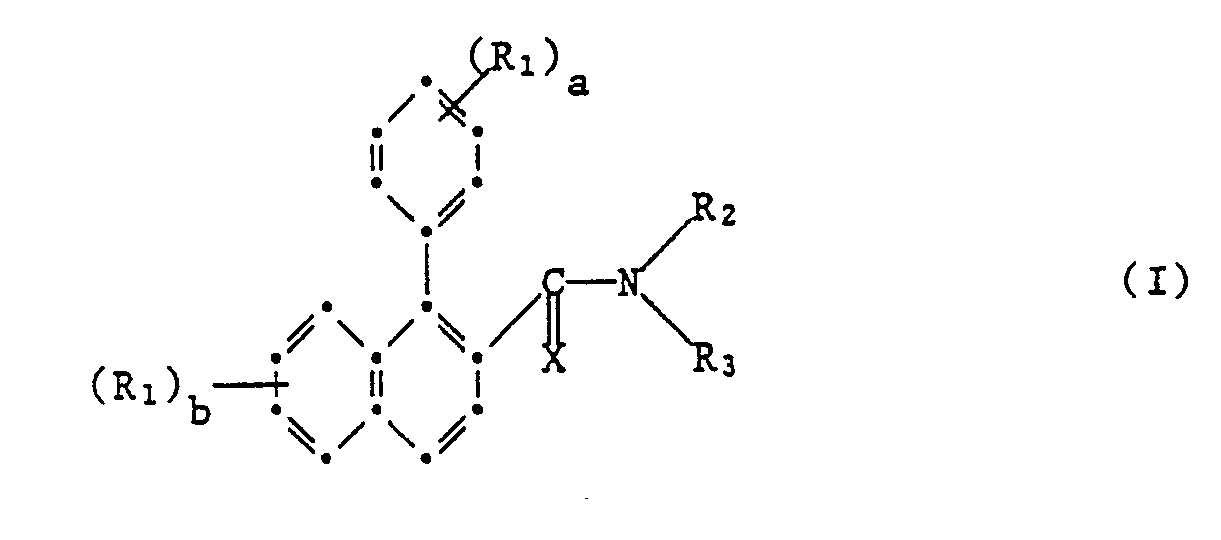
- worin R1, Halogen, Nitro, Cyano, unsubstituiertes oder durch Halogen und/oder Ci-C3-Alkoxy ein- oder mehrfach substituiertes Ci-C6-Alkyl, C3-C6-Cycloalkyl, OR4, NR5R6,] CO2R5, CONRsR6 oder NHCOR7 bedeutet, oder worin zwei benachbarte Positionen im Kern durch eine unsubstituierte oder durch Fluor einoder mehrfach substituierte Methylendioxy- oder Aethylendioxy-Gruppe überbrückt wird, worin ferner R4 Wasserstoff oder C1-C6-Alkyl bedeutet, das unsubstituiert oder durch C1-C3-Alkoxy oder ein- oder mehrfach durch Halogen substituiert ist, oder aber für C3-C4-Alkenyl, 2-Propinyl, 3-Halogen-2-propinyl,
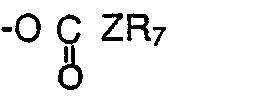
- oder COR7 steht,
- Rs und R6 unabhängig voneinander H oder C1-C4-Alkyl ist,
- R7 für C1-C4-Alkyl und
- Z für O oder NH steht,
- a und b die Zahl der besetzten Positionen im jeweiligen Ring darstellen und
- a für die Zahlen 1-3, b für die Zahlen 0-3 stehen, wobei die einzelnen Gruppen R1 gleich oder verschieden sind, wenn die Summe von a und b grösser als 1 ist,
- X für 0, S oder NH stehen,
- R2 und R3 unabhängig voneinander unsubstituiertes oder durch C1-C4-Alkoxy, Halogen, Cyano substituiertes C1-C6-Alkyl oder aber C3-C7-Cycloalkyl, C3-C7-Alkenyl oder den Rest

- n = 0 oder 1 ist, ferner
- R2 und R3 auch gemeinsam eine C4-C7-Alkylenkette, welche mit dem sie verbindenden Stickstoffatom einen unsubstituierten oder durch C1-C4-Alkyl mono- oder disubstituierten Heterocyclus bilden kann, wobei eine Methylengruppe aus dieser Kette durch 0, S oder NR7 ersetzt sein kann.
Die Verbindungen der Formel I haben mikrobizide Wirkung und lassen sich vorteilhaft für den Pflanzenschutz einsetzen.
Description
- Die vorliegende Erfindung betrifft substituierte 1-Aryl-2-naphthoylamine, deren Herstellung, sowie mikrobizide Mittel, die als Wirkstoff mindestens eine dieser Verbindungen enthalten. Die Erfindung betrifft ferner die Herstellung der genannten Mittel und die Verwendung der neuen Wirkstoffe und Mittel zur Bekämpfung schädlicher Mikroorganismen, insbesondere pflanzenschädigender Pilze.
- Die erfindungsgemässen Verbindungen haben die allgemeine Formel I

- worin R1 Halogen, Nitro, Cyano, unsubstituiertes oder durch Halogen und/oder C1-C3-Alkoxy ein- oder mehrfach substituiertes C1-C6-Alkyl, C3-C6-Cycloalkyl, OR4, NR5R6, CO2R5, CONR5R6 oder NHCOR7 bedeutet, oder worin zwei benachbarte Positionen im Kern durch eine unsubstituierte oder durch Fluor einoder mehrfach substituierte Methylendioxy- oder Aethylendioxy-Gruppe überbrückt sind, worin ferner R4 Wasserstoff oder C1-C6-Alkyl bedeutet, das unsubstituiert oder durch C1-C3-Alkoxy oder ein- oder mehrfach durch Halogen substituiert ist, oder aber für C3-C4-Alkenyl, 2-Propinyl, 3-Halogen-2-propinyl,
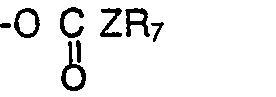
- Rs und R6 unabhängig voneinander oder C1 -C4-Alkyl ist,
- R7 für C1-C4-Alkyl und
- Z für O oder NH steht,
- a und b die Zahl der besetzten Positionen im jeweiligen Sechsring darstellen, und
- a für die Zahlen 1-3 und b für die Zahlen 0-3 steht, wobei die einzelnen Gruppen R1 gleich oder verschieden sind, wenn die Summe von a und b grösser als 1 ist,
- X für Sauerstoff, Schwefel oder NH steht,
- R2 und R3 unabhängig voneinander unsubstituiertes oder durch C1-C4-Alkoxy, Halogen, Cyano substituiertes Ci-C6-Alkyl oder aber C3-C7-Cycloalkyl, C3-C7-Alkenyl oder den Rest

- n = 0 oder 1 ist, ferner
- R2 und R3 auch gemeinsam eine C4-C7-Alkylenkette, welche mit dem sie verbindenden Stickstoffatom einen unsubstituierten oder durch C1-C4-Alkyl mono- oder disubstituierten Heterocyclus bilden kann, wobei eine der Methylengruppen aus dieser Kette durch 0, S oder NR7 ersetzt sein kann, sowie R2 auch Wasserstoff bedeuten kann; einschliesslich der Additionssalze der Verbindungen der Formel I.
- Unter dem Begriff Alkyl selbst oder als Bestandteil eines anderen Substituenten sind je nach der Zahl der angegebenen Kohlenstoffatome beispielsweise folgende Gruppen zu verstehen: Methyl, Ethyl, Propyl, Butyl, Pentyl, Hexyl usw., sowie ihre Isomeren, wie z.B. Isopropyl, Isobutyl, tert.-Butyl, Isopentyl usw.. Cycloalkyl kann beispielsweise Cyclopropyl, Cyclopentyl oder Cyclohexyl bedeuten. Haloalkyl steht für einen einfach bis perhalogenierten Alkylsubstituenten, wie z.B. CH2CI, CHCI2, CCl3, CH2Br, CHBr2, CBr3, CH2F, CHF2, CF3, CCl2F, CCI2-CHCI2, CH2CH2F, CJ3 usw.. Unter Halogen soll hier und im folgenden Fluor, Chlor, Brom oder Jod, vorzugsweise Fluor oder Chlor verstanden werden.
- Bei Anwesenheit einer Methylendioxygruppe oder Ethylendioxygruppe in einem der Ringe sind damit zwei benachbarte Positionen besetzt.
- Die Verbindungen der Formel I sind unter Normalbedingungen stabile Oele, Harze oder überwiegend kristalline Feststoffe, die sich durch äusserst wertvolle mikrobizide Eigenschaften auszeichnen. Sie lassen sich beispielsweise auf dem Agrarsektor oder verwandten Gebieten präventiv und kurativ zur Bekämpfung pflanzenschädigender Mikroorganismen einsetzen. Die erfindungsgemässen Wirkstoffe der Formel I zeichnen sich in weiten Anwendungskonzentrationen durch eine hohe fungizide Aktivität und problemlose Anwendung aus. Es wird keine Schädigung der behandelten Pflanzen beobachtet.
- 1-Phenyl-4-hydroxy-2-naphthoylamine der Formel

- 1-Acetoxy- und 1-Hydroxy-3-morpholinocarbonyl-4-phenylnaphthalin der Formel

- Aus der Literatur sind keine 1-Aryl-2-naphthoylamine mit mikrobizider Wirkung bekannt.
- Ziel der vorliegenden Erfindung ist es, neuartige mikrobizide Wirkstoffe bereitzustellen. Es wurde überraschenderweise gefunden, dass die Verbindungen der Formel I starke mikrobizide Aktivität aufweisen.
- Es sind diejenigen Verbindungen der Formel 1 bevorzugt, bei welchen R1 Halogen, Nitro, C1-C6-Alkyl, C3-C6-Cycloalkyl, Methylendioxy, Mono- oder Difluormethylendioxy, unsubstituiertes oder durch Fluor einoder mehrfach substituiertes Aethylendioxy, OR4 oder NRsRs bedeuten, worin R4 Wasserstoff oder C1-C3-Alkyl darstellt, das unsubstituiert oder durch C1-C3-Alkoxy monosubstituiert oder durch Halogen ein- bis fünffach substituiert ist,
- Rs und Rs unabhängig voneinander für H oder C1-C4-Alkyl,
- a für die Zahlen 2 oder 3, b für 0 oder 1, und
- X für O oder S stehen, während
- R2 und R3 unabhängig voneinander Phenyl, 4-Chlorphenyl, ferner R2 und R3 auch gemeinsam eine C4-C7-Alkylenkette bedeuten, welche zusammen mit dem Stickstoffatom einen unsubstituierten oder durch C1C4-Alkyl mono- oder disubstituierten Heterocyclus bilden können, wobei eine der Methylengruppen aus der Kette durch O, S oder NR7 ersetzt sein kann.
- Von dieser Gruppe von Verbindungen sind jene hervorzuheben, bei welchen R1 Methyl, Chlor, Methoxy, Aethoxy, Difluormethoxy, Methylendioxy, Difluormethylendioxy, Aethylendioxy, Nitro, Mono- oder Dimethylamino bedeutet und R2 und R3 mit dem gemeinsamen Stickstoffatom zusammen die Reste

- Aus dieser Gruppe sind jene Verbindungen von Interesse, bei welchen R1 Methoxy oder Methylendioxy bedeutet und a für die Zahl 2 steht.
- Aus der letztgenannten Gruppe stechen jene Verbindungen als Mikrobizide hervor, bei welchen X für Sauerstoff steht.
- Als besonders wirksame Einzelverbindung ist aus dieser Gruppe die Verbindung der Formeln la anzuführen:
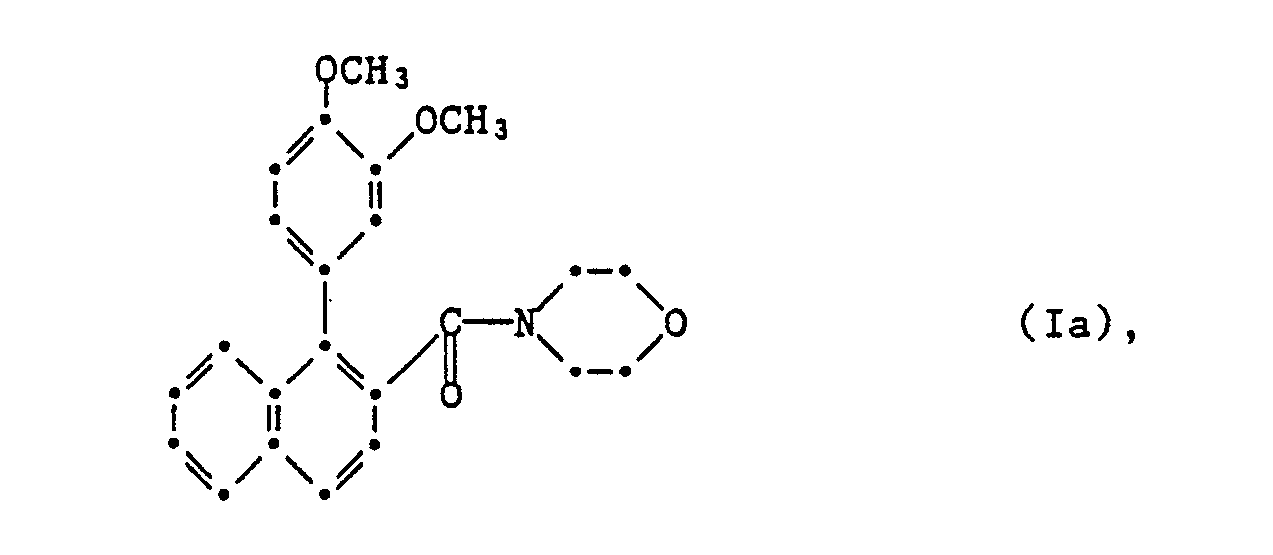
- Als Einzelvertreter ist aus dieser Gruppe die Verbindung der Formel lb zu nennen:

- Rs und R6 unabhängig voneinander für H oder C1-C4-Alkyl,
- a für die Zahlen 2 oder 3 und b für 0 oder 1, und
- X für 0 oder S stehen, und
- R2 und R3 unabhängig voneinander für Wasserstoff, unsubstituiertes oder durch C,-C4-Alkoxy, Halogen oder Cyano substituiertes C1-C6-Alkyl, oder oder C3-C7-Alkenyl, sowie Phenyl oder 4-Chlorphenyl stehen, ferner R2 und R3 auch gemeinsam eine C4-C7-Alkylenkette darstellt, welche mit dem Stickstoffatom einen unsubstituierten oder durch C1-C4-Alkyl mono- oder disubstituierten Heterocyclus bilden können, wobei eine der Methylengruppen aus der Kette durch 0, S oder NR7 ersetzt sein kann, sind als Mikrobizide jene der Formel Ic bevorzugt,

- worin R8 und Rs entweder jeweils den Methoxyrest oder zusammen den Methylendioxyrest und Q die folgenden Reste bedeuten:



- Als Einzelvertreter ist aus dieser Gruppe unter anderen die Verbindung der Formel Id zu nennen:

- Von den Verbindungen der Formel I sind als wertvolle Mikrobizide ausserdem jene der Formel le hervorzuheben,
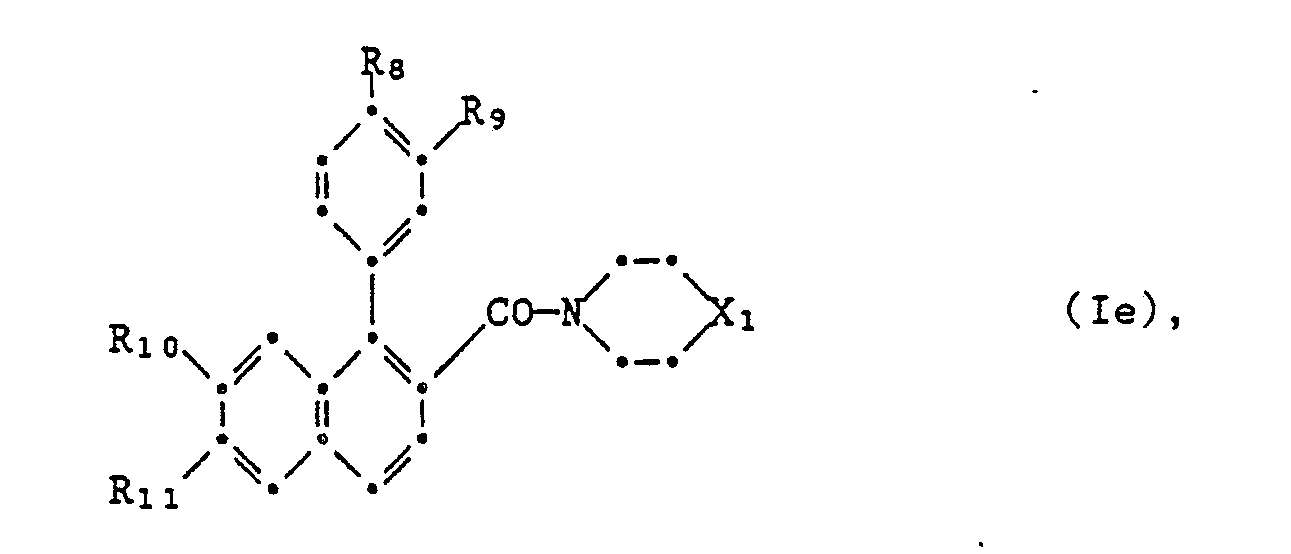
- worin R8 und R9 beide entweder Methoxy oder zusammen Methylendioxy bedeuten, und
- R10 und R11 Methoxy oder zusammen Methylendioxy bedeuten und R11 ausserdem auch Chlor, Nitro, Amino, Acetylamino sein kann, während
- R1 o Wasserstoff ist, und
- X1 O oder S bedeuten.
- Bei der erfindungsgemässen Herstellung der Verbindungen der Formel I verfährt man so, dass man ein Amin der Formel II

- a) mit einem Naphthoesäurederivat der Formel III


die Verbindung mit Phosphorpentasulfid in ein Thiocarbonamid der Formel I"
- b) mit einem Iminoester der Formel IV


- Bei der Herstellung der Verbindungen der Formel I' handelt es sich um die Acylierung eines Amins der Formel II mit einem Carbonsäurederivat oder mit einer Carbonsäure der Formel III, wobei letztere vorzugsweise in Gegenwart eines die Säure aktivierenden oder eines wasserentziehenden Mittels eingesetzt wird.
- Als säureaktivierende und/oder wasserentziehende Mittel kommen beispielsweise ein Chlorameisensäureester wie Chlorameisensäureäthylester, oder Phosphorpentoxid, N,N'-Dicydohexylcarbodiimid, N,N'-Carbonyldiimidazol oder N,N'-Thionyldümidazol in Betracht.
- Die Umsetzung wird zweckmässigerweise in einem Lösungsmittel oder Lösungsmittelgemisch wie Methylenchlorid, Chloroform, Tetrachlorkohlenstoff, Aether, Tetrahydrofuran, Dioxan, Benzol, Toluol, Acetonitril oder Dimethylformamid, gegebenenfalls in Gegenwart einer anorganischen Base wie Natriumcarbonat oder einer tertiären organischen Base wie Triethylamin oder Pyridin, welche gleichzeitig als Lösungsmittel dienen kann, und gegebenenfalls in Gegenwart eines säureaktivierenden Mittels bei Temperaturen zwischen -25 C und 150°C, vorzugsweise jedoch bei Temperaturen zwischen -10°C und der Siedetemperatur des Reaktionsgemisches, durchgeführt. Hierbei braucht ein gegebenenfalls im Reaktionsgemisch entstandenes reaktionsfähiges Derivat einer Verbindung der allgemeinen Formeln III nicht-isoliert zu werden, ferner kann die Umsetzung auch in einem Ueberschuss der eingesetzten Verbindung der allgemeinen Formel II als Lösungsmittel durchgeführt werden.
- Zur Herstellung solcher Verbindungen der Formel I" (Thioamide), werden die entsprechenden Amide in einem inerten Lösungsmittel mit Phosphorpentasulfid umgesetzt. In einigen Fällen lässt sich P2S5 vorteilhaft in Gegenwart von K2S oder K2(Sx) einsetzen.
- Als Lösungsmittel eignen sich z.B. Toluol, Xylol, Benzol. Die Reaktionstemperatur liegt zwischen 0°C und der Siedetemperatur des Reaktionsgemischs, wobei jedoch im allgemeinen eine Temperatur von 120° C nicht überschritten werden sollte.
- Zur Herstellung solcher Verbindungen der Formel I'" (Amidine), werden entsprechende Iminoester mit Aminen der Formel II umgesetzt.
- Die Umsetzung erfolgt in einem inerten Lösungsmittel wie Ether oder Tetrahydrofuran bei Temperaturen zwischen etwa 0 und 100 C.
- Carbonsäuren der Formel III sind zum Teil bekannt oder können nach üblichen Verfahren (J. Org. Chem. 1981 46 3881-3886; J. Org. Chem. 1964 29 1757-1762; Synthesis 1983 105-107); hergestellt werden. Iminoester der Formel IV lassen .sich aus den entsprechenden Nitrilen durch Anlagerung eines C1-C4-Alkanols in Gegenwart von HCI gewinnen.
- Die Amine der Formel II sind allgemein bekannt.
- Die Herstellung von Verbindungen der Formel III, worin Y Halogen oder C1-C4-Alkoxy bedeutet kann aus den entsprechenden Carbonsäuren erfolgen.
- Die Carbonsäuren der Formel Illa,


- Die Bromverbindungen der Formel VIII lassen sich ihrerseits durch Dehydrogenierung der entsprechenden 3,4-Dihydronaphhtaline der Formel VI herstellen. Die Dehydrogenierung kann nach bekannten Methoden, wie z.B. durch Umsetzung mit Dehydrogenierungsmitteln, wie Schwefel oder Chinonen, bevorzugt 2,3-Dichlor-5,6-dicyan-1,4-benzochinon, erfolgen (Chem. Rev. 78 317 1978). Die Verbindungen der Formel VI selbst lassen sich durch Umsetzung von Dihydronaphthalinen der Formel V mit geeigneten Bromierungsmitteln, wie z.B. Pyridiniumhydrobromid-perbromid herstellen (J. Med. Chem. 29 2053-2059, 1986)

- Durch Variierung der analogen Synthesestufen können die 3,4-Dihydro-Bromnaphthalinverbindungen der Formel VI zunächst über die Metallverbindungen mit Kohlensäure in die 3,4-Dihydronaphthalincarbonsäuren der Formel VII überführt werden, welche dann zum Schluss zu den Verbindungen der Formel Illa dehydrogeniert werden:

- Die Verbindungen der Formel V sind zum Teil bekannt oder können nach bekannten Verfahren [Tetrahedron 38 2403-2410, (1982), Aust. J. Chem. aus 34, 115-129 (1981)] hergestellt werden.
- Die Bromnaphthalin-Carbonsäuren der Formel Illc

können ausgehend aus den entsprechenden nitrierten Naphthalincarbonsäuren der Formel 111 b nach bekannter Reaktionsfolge (Reduktion, Diazotierung, Sandmeyer-Reaktion) hergestellt werden.
- Es wurde nun überraschend festgestellt, dass die erfindungsgemässen Verbindungen der Formel I ein sehr vorteilhaftes, die praktischen Bedürfnisse gut befriedigendes biozides Wirkungsspektrum gegen schädliche Microorganismen, insbesondere gegen phytopathogene Pilze und Bakterien, aufweisen. Sie besitzen sehr vorteilhafte kurative, systemische und insbesondere präventive Eigenschaften und lassen sich zum Schutz von zahlreichen Kulturpflanzen einsetzen. Mit dem Wirkstoff der Formel I können an Pflanzen oder an Pflanzenteilen (Früchte, Blüten, Laubwerk, Stengel, Knollen, Wurzeln) von unterschiedlichen Nutzkulturen die auftretenden Schädlinge eingedämmt oder vernichtet werden, wobei auch später zuwachsende Pflanzenteile von phytopathogenen Mikroorganismen verschont bleiben.
- Die erfindungsgemässen Wirkstoffe sind beispielsweise gegen die den folgenden Klassen angehörenden phytopathogenen Pilze wirksam: Ascomycetes z.B. Erysiphe, Sclerotinia, Fusarium, Monilinia, Helminthosporium; Basidiomycetes wie z.B. Puccinia, Tilletia, Rhizoctonia; sowie insbesondere die der Klasse der Phycomycetes angehörenden Oomycetes wie Phytophthora, Plasmopara, Peronospora, Pythium. Als Pflanzenschutzmittel können die Verbindungen der Formel I auch gegen wichtige Schadpilze aus der Familie der Fungi imperfecti eingesetzt werden, so z.B. gegen Cercospora, Pyricularia und Botrytis. Ueberdies wirken die Verbindungen systemisch. Darüber hinaus lassen sich Verbindungen der Formel I erfolgreich zum Schutz verderblicher Waren pflanzlicher oder tierischer Herkunft einsetzen. Sie bekämpfen Schimmelpilze wie Penicillium, Aspergillus, Rhizopus, Fusarium, Helminthosporium, Nigrospora und Alternaria sowie Bakterien wie Buttersäurebakterien und Hefen wie Candida. Diese Wirksubstanzen zeigen ferner hervorragende Wirkung gegen Boden- und Samen-bürtige Pilze.
- Die Wirkstoffe der Formel I können ferner auch als Beizmittel zur Behandlung von Saatgut (Früchte, Knollen, Körner) und Pflanzenstecklingen zum Schutz vor Pilzinfektionen sowie gegen im Erdboden auftretende phytopathogene Pilze eingesetzt werden, wobei sie sich insbesondere als Getreidebeizmittel in der Bekämpfung von Pilzorganismen, wie beispielsweise Fusarium-, Helminthosporium und Tilletia-Arten, auszeichnen.
- Die Erfindung betrifft somit auch mikrobizide Mittel sowie die Verwendung der Verbindungen der Formel I zur Bekämpfung phytopathogener Mikroorganismen, insbesondere pflanzenschädigender Pilze bzw. die präventive Verhütung eines Befalls an Pflanzen und an Vorräten pflanzlicher oder tierischer Herkunft.
- Als Zielkulturen für den Pflanzenschutz gelten im Rahmen dieser Erfindung beispielsweise folgende Pflanzenarten: Getreide: (Weizen, Gerste, Roggen, Hafer, Reis, Sorghum und Verwandte); Rüben: (Zucker-und Futterrüben): Kern-, Stein- und Beerenobst: (Aepfel, Birnen, Pflaumen, Pfirsiche, Mandeln, Kirschen, Erd-, Hirn- und Brombeeren); Hülsenfrüchte: (Bohnen, Linsen, Erbsen, Soja): Oelkulturen: (Raps, Senf, Mohn, Oliven, Sonnenblumen, Kokos, Rizinus, Kakao, Erdnüssen); Gurkengewächse: (Kürbis, Gurken, Melonen); Fasergewächse: (Baumwolle, Flachs, Hanf, Jute); Citrusfrüchte: (Orangen, Zitronen, Pampelmusen, Mandarinen); Gemüsesorten: (Spinat, Kopfsalat, Spargel, Kohlarten, Möhren, Zwiebeln, Tomaten, Kartoffeln, Paprika); Lorbeergewächse: (Avocado, Cinnamonum, Kampfer) oder Pflanzen wie Mais, Tabak, Nüsse, Kaffee, Zuckerrohr, Tee, Weinreben, Hopfen, Bananen-und Naturkautschukgewächse sowie Zierpflanzen (Compositen).
- Wirkstoffe der Formel 1 werden üblicherweise in Form von Zusammensetzungen verwendet und können gleichzeitig oder nacheinander mit weiteren Wirkstoffen auf die zu behandelnde Fläche oder Pflanze gegeben werden. Diese weiteren Wirkstoffe können sowohl Düngemittel, Spurenelement-Vermittler oder andere das Pflanzenwachstum beeinflussende Präparate sein. Es können aber auch selektive Herbizide, Insektizide, Fungizide, Bakterizide, Nematizide, Molluskizide oder Gemische mehrerer dieser Präparate sein, zusammen mit gegebenenfalls weiteren in der Formulierungstechnik üblichen Trägerstoffen, Tensiden oder anderen applikationsfördernden Zusätzen.
- Geeignete Träger und Zusätze können fest oder flüssig sein und entsprechen den in der Formulierungstechnik zweckdienlichen Stoffen, wie z.B. natürlichen oder regenerierten mineralischen Stoffen, Lösungs-, Dispergier-, Netz-, Haft-, Verdickungs-, Binde- oder Düngemitteln. Besonders vorteilhafte, applikationsfördernde Zuschlagstoffe, die zu einer starken Reduktion der Aufwandmenge führen können, sind ferner natürliche (tierische oder pflanzliche) oder synthetische Phospholipide aus der Reihe der Kephaline und Lecithine, wie z.B. Phosphatidylethanolamin, Phosphatidylserin, Phosphatidylglycerin oder Lysolecithin.
- Ein bevorzugtes Verfahren zum Aufbringen eines Wirkstoffes der Formel I bzw. eines (agro)chemischen Mittels, das mindestens einen dieser Wirkstoffe enthält, ist das Aufbringen auf das Blattwerk (Blattapplikation). Anzahl der Applikationen und Aufwandmenge richten sich dabei nach dem Befallsdruck für den entsprechenden Erreger (Pilzsorte). Die Wirkstoffe der Formel I können aber auch über den Erdboden durch das Wurzelwerk in die Pflanze gelangen (systemische Wirkung), indem man den Standort der Pflanze mit einer flüssigen Zubereitung tränkt oder die Substanzen in fester Form in den Boden einbringt, z.B. in Form von Granulat (Bodenapplikation). Die Verbindungen der Formel I können aber auch auf Samenkörner aufgebracht werden (Coating), indem man die Körner entweder mit einer flüssigen Zubereitung des Wirkstoffs tränkt oder sie mit einer festen Zubereitung beschichtet. Darüber hinaus sind in besonderen Fällen weitere Applikationsarten möglich, so z.B. die gezielte Behandlung der Pflanzenstengel oder der Knospen.
- Die Verbindungen der Formel I werden dabei in unveränderter Form oder vorzugsweise zusammen mit den in der Formulierungstechnik üblichen Hilfsmittel eingesetzt und werden daher z.B. zu Emulsionskonzentraten, streichfähigen Pasten, direkt versprühbaren oder verdünnbaren Lösungen, verdünnten Emulsionen, Spritzpulvern, löslichen Pulvern, Stäubemitteln, Granulaten, durch Verkapselungen in z.B. polymeren Stoffen in bekannter Weise verarbeitet. Die Anwendungsverfahren wie Versprühen, Vernebeln,
- Verstäuben, Verstreuen, Bestreichen oder Giessen werden gleich wie die Art der Mittel den angestrebten Zielen und den gegebenen Verhältnissen entsprechend gewählt. Günstige Aufwandmengen liegen im allgemeinen bei 50 g bis 5 kg Aktivsubstanz (AS) je ha; bevorzugt 100 g bis 2 kg AS/ha, insbesondere bei 200 g bis 600 g AS/ha.
- Die Formulierungen d.h. die den Wirkstoff der Formel I und gegebenenfalls einen festen oder flüssigen Zusatzstoff enthaltenden Mittel, Zubereitungen oder Zusammensetzungen werden in bekannter Weise hergestellt, z.B. durch inniges Vermischen und/oder Vermahlen der Wirkstoffe mit Streckmitteln, wie z.B. mit Lösungsmitteln, festen Trägerstoffen, und gegebenenfalls oberflächenaktiven Verbindungen (Tensiden).
- Als Lösungsmittel können in Frage kommen: Aromatische Kohlenwasserstoffe, bevorzugt die Fraktionen Cs bis C12, wie z.B. Xylolgemische oder substituierte Naphthaline, Phthalsäureester wie Dibutyl- oder Dioctylphthalat, aliphatische Kohlenwasserstoffe wie Cyclohexan oder Paraffine, Alkohole und Glykole sowie deren Ether und Ester, wie Ethylenglykolmonomethylether, Ketone wie Cyclohexanon, stark polare Lösungsmittel wie N-Methyl-2-pyrrolidon, Dimethylsulfoxid oder Dimethylformamid, sowie gegebenenfalls epoxydierte Pflanzenöle oder Sojaöl, oder Wasser.
- Als feste Trägerstoffe, z.B. für Stäubemittel und dispergierbare Pulver, lassen sich Calcit, Talkum, Kaolin, Montmorillonit oder Attapulgit, hochdisperse Kieselsäure oder saugfähige Polymerisate verwenden. Als gekörnte, adsorptive Granulatträger kommen Bimsstein, Ziegelbruch, Sepiolit oder Bentonit, als nicht als nicht-sorptive Träger z.B. Calcit oder Dolomit in Frage. Es können auch zerkleinerte Pflanzenrückstände verwendet werden.
- Als oberflächenaktive Verbindungen kommen je nach Art des zu formulierenden Wirkstoffes der Formel I nichtionogene, kation-und/oder anionaktive Tenside mit guten Emulgier-, Dispergier- und Netzeigenschaften in Betracht. Unter Tensiden sind auch Tensidgemische zu verstehen.
- Die in der Formuliertungstechnik gebräuchlichen Tenside sind u.a. in folgenden Publikationen beschrieben:
- "Mc Cutcheon's Detergents and Emulsifiers Annual" MC
- Publishing Corp., Ridgewood New Jersey, 1980
- Sisley and Wood, "Encyclopedia of Surface Active Agents",
- Chemical Publishing Co., lnc. New York, 1980.
- Die agrochemische Zubereitungen enthalten in der. Regel 0,1 bis 99 %, insbesondere 0,1 bis 95 % Wirkstoff der Formel I, 99,9 bis 1 %, insbesondere 99,9 bis 5 % eines festen oder flüssigen Zusatzstoffes und 0 bis 25 %, insbesondere 0,1 bis 25 % eines Tensides.
- Während als Handelsware eher konzentrierte Mittel bevorzugt werden, verwendet der Endverbraucher in der Regel verdünnte Mittel.
- Derartige (agro)chemische Mittel sind ein Bestandteil der vorliegenden Erfindung.
- Die nachfolgenden Beispiele dienen der Illustration der Erfindung, ohne dieselbe einzuschränken (Prozente und Teile beziehen sich auf Gewicht; Temperaturen sind in Celsiusgraden angegeben).
- H.1: Herstellung von 1-(3,4-Dimethoxyphenyl)-2-naphthoesäure-morpholid (Wirksubstanz, Verb. Nr. 1.1, Tabelle 1).

- 12,3g 1-(3,4-Dimethoxyphenyl)-2-naphthoesäure werden in 70 ml Toluol vorgelegt und mit 4,8 g Thionylchlorid versetzt. Die Reaktionsmischung wird zum Sieden erhitzt und 16 h unter Rückfluss gerührt. Anschliessend werden bei 50° 7,0 g Morpholin zugetropft, das Reaktionsgemisch wird weitere 4h bei Rückfluss gerührt, dann in der Kälte mit 100 ml Toluol verdünnt und 3 x mit je 200 ml Wasser gewaschen. Die organische Phase wird über Natriumsulfat getrocknet, filtriert und das Lösungsmittel unter Vakuum verdampft. Zur Reinigung wird der ölige Rückstand mittels Ethylacetat über eine Kieselgelsäule chromatographiert. Die Titelverbindung wird als gelbes Oel erhalten, welches beim Stehenlassen erstarrt. Smp. 161-163*.
- H.2: Herstellung von 2-(4,4-Dimethyl-4,5-dihydro-1,3-oxazol-2-yl)-1-(3,4-dimethoxyphenyl)-naphthalin (Zwischenprodukt).
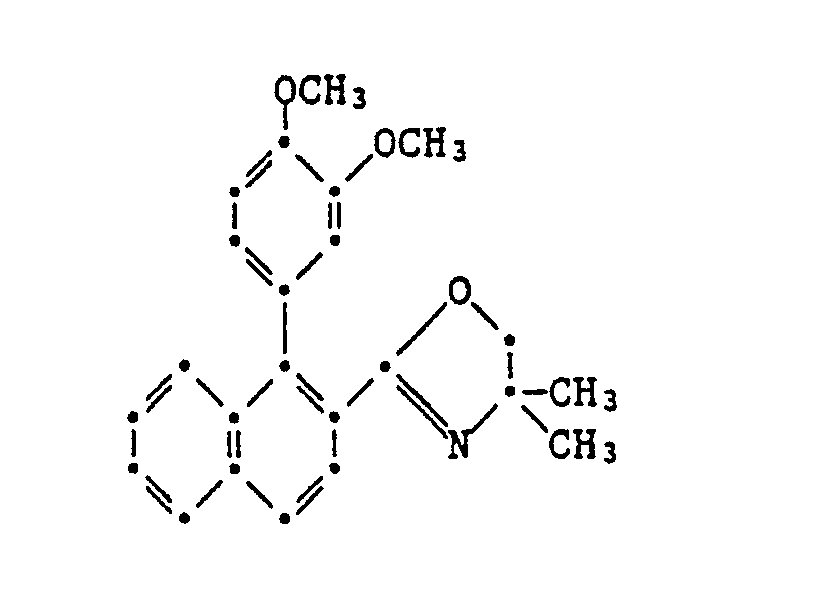
- Zu 25,5 g aus 23,2 g 4-Brom-veratrol und 2,5 g Magesium in 50 ml Tetrahydrofuran hergestelltem Grignard-Reagens werden bei 50° 21,3 g 2-(4,4-Dimethyl-4,5-dihydro-1,3-oxazol-2-yl)-1-methoxy-naphthalin zugetropft, die rote Reaktionsmischung zum Sieden erhitzt, 4 h bei Rückfluss gerührt, dann in der Kälte mit -200 ml gesättigter Ammoniumchlorid-Lösung versetzt und 3 x mit je 100 ml Ether extrahiert. Die Etherphasen werden vereinigt, 2 x mit je 200 ml Wasser gewaschen, über Natriumsulfat getrocknet und das Lösungsmittel unter Vakuum verdampft. Der ölige Rückstand wird zur Reinigung mittels Hexan/Ethylacetat 1:1 über eine Kieselgelsäule chromatographiert. Die Verbindung wird als gelbes Oel erhalten

- H.3: Herstellung von 1-(3,4-Dimethoxyphenyl)-2-naphthoesäure (Zwischenprodukt).

- 16,0 g des unter H 2 hergestellten 2-(4,4-Dimethyl-4,5-dihydro-1,3-oxazol-2-yl)-1-(3,4-dimethoxyphenyl)-naphthalins werden 8 h in 40 ml 3 N Salzsäure gekocht. Anschliessend wird das zweiphasige Gemisch auf Raumtemperatur abgekühlt und die Phasen werden getrennt. Die schwere Phase wird mit 40 ml 20 %iger methanolischer (Methanol/H20 1:1) Natronlauge während 40 Stunden bei Rückfluss gerührt, das Methanol wird abdestilliert, der wässerige Rückstand wird mit 100 ml Wasser verdünnt und 3 x mit je 100 ml Ethylacetat extrahiert. Die wässerige Phase wird mit conc. Salzsäure auf pH 1 gestellt. Die dabei ausgefallenen Kristalle werden abgenutscht, und 2 x mit je 100 ml Wasser gewaschen und im Vakuumtrokkenschrank bei 60 C getrocknet. Smp. >215` C.
- H.4: Herstellung von 1-(3,4-Dimethoxyphenyl)-6-chlor-2-naphthoesäure morpholid (Verb. Nr. 3.1, Tabelle 3).

- 6,9 g 1-(3,4-Dimethoxyphenyl)-6-chlor-2-naphthoesäure werden in 50 ml Toluol vorgelegt und mit 2,4 g Thionylchlorid versetzt. Die Reaktionsmischung wird zum Sieden erhitzt und 5 Stunden unter Rückfluss nachgerührt. Anschliessend wird bei -50° 4,0 g Morpholin zugetropft, wieder zum Sieden erhitzt und weitere 3 Stunden bei Rückfluss gerührt. Nach dem Abkühlen auf Raumtemperatur wird das Reaktionsgut mit 100 ml Toluol verdünnt, die organische Phase 3 x mit je 250 ml Wasser gewaschen, über Natriumsulfat getrocknet, filtriert und am Vakuum das Lösungsmittel abgedampft. Der ölige Rückstand wird zur Reinigung mittels Ethylacetat über eine Kieselgelsäule chromatographiert. Die Titelverbindung wird in Form beiger Kristalle erhalten. Smp. 157-159°.
- H.5: Herstellung von 1-(3,4-Dimethoxyphenyl)-6-chlor-2-naphthoesäure (Zwischenprodukt)

- Zu einer Lösung von 20,0 g 1-(3,4-Dimethoxyphenyl)-6-chlor-2-brommagnesiumnaphthalin in 110 ml Tetrahydrofuran, hergestellt aus 18,8 g 1-(3,4-Dimethoxyphenyl)-6-chlor-2-bromnaphthalin und 1,2 g Magnesium werden bei -5 bis 0 trockenes C02 eingeleitet. Nach Abklingen der exothermen Reaktion wird eine weitere Stunde C02 eingeleitet. Anschliessend wird unter Kühlen 30 ml -10 %ige Salzsäure, dann noch 200 ml Wasser zugtropft, die saure Reaktionslösung wird mit konz. Natronlauge alkalisch gestellt und 2 x mit je 150 ml Ether extrahiert. Die wässrige Phase wird mit 20 %iger Salzsäure auf pH 1 gestellt. Die dabei ausgefallene Säure wird abfiltriert, mit wenig Wasser gewaschen und im Vakuumtrockenschrank bei 80° getrocknet. Smp. der beigen Titelverbindung >200°.
- H.6: Herstellung von 1-(3,4-Dimethoxyphenyl)-6-chlor-2-bromnaphthalin (Zwischenprodukt).

- Zu 13,6 g 2,3-Dichlor-5,6-dicyan-1,4-benzochinon in 300 ml Dichlorethan werden 19,0 g 1-(3,4-Dimethoxyphenyl)-6-chlor-2-brom-3,4-dihydronaph thalin, gelöst in 100 ml Dichlorethan, zugetropft, erhitzt und 16 Stunden lang unter Rückfluss gehalten. Das erkaltete Reaktionsgemisch wird anschliessend mit 300 ml Hexan versetzt, filtriert und das Filtrat eingedampft. Der Rückstand wird zur Reinigung mittels Ethylacetat/Hexan 2:1 über eine Kieselgelsäule chromatographiert. Das Produkt wird als weisses Pulver erhalten. Smp. 117-119°.
- H.7: Herstellung von 1-(3,4-Dimethoxyphenyl)-6-chlor-2-brom-3,4-dihydronaphthalin (Zwischenprodukt).
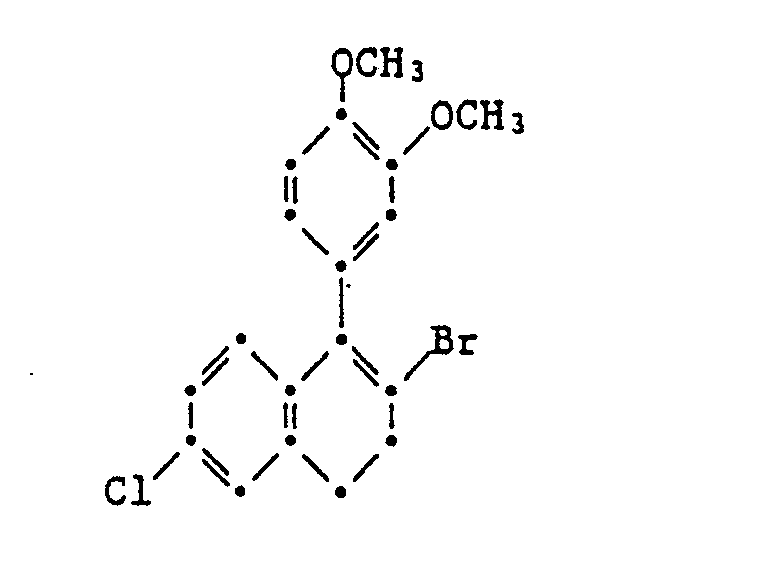
- 30,0 g 1-(3,4-Dimethoxyphenyl)-6-chlor-3,4-dihydronaphthalin werden in 200 ml Methylenchlorid gelöst und auf 0° abgekühlt. Dazu wird bei 0* bis 5' während 1 1/2 Stunden portionenweise 31,2 g Pyridinhydrobromid-perbromid zugegeben. Nach beendigter Zugabe wird die violette Lösung 2 Stunden bei 0 gerührt, dann mit 300 ml 10 %iger Natriumbicarbonatlösung versetzt, die organische Phase abgetrennt und mit Wasser gewaschen, über Natriumsulfat getrocknet, filtiert und eingedampft. Das so erhaltene, halbkristalline Produkt kann direkt weiter umgesetzt werden. Beim längeren Stehenlassen kristallisiert die Titelverbindung vollständig aus und kann in Hexan digeriert werden. Smp. 92-95°.
- H.8: Herstellung von 1-(3,4-Dimethoxyphenyl)-6-chlor-3,4-dihydronaphthalin (Zwischenprodukt).
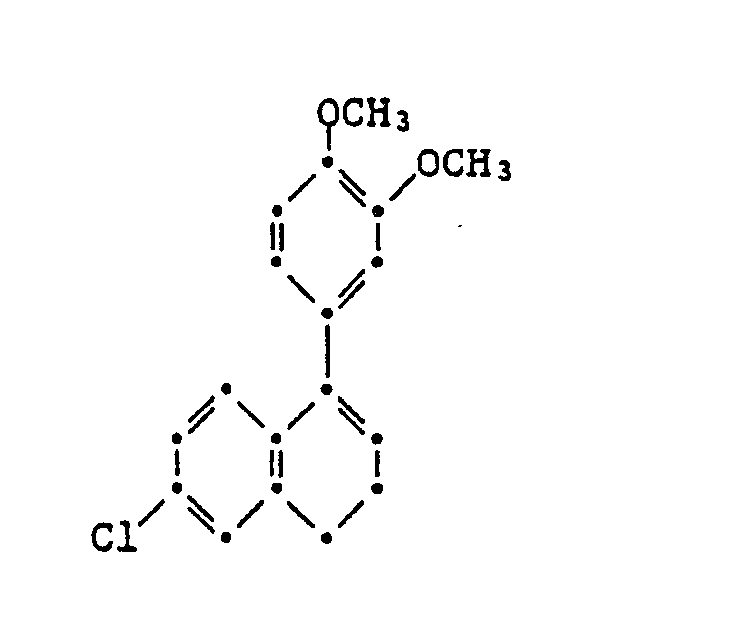
- Zu 96,4 g 4-Brommagnesiumveratrol, hergestellt aus 9,6 g Magnesium und 86,8 g 4-Bromveratrol, in 500 ml Tetrahydrofuran werden bei 0 bis max. 5° 43,0 g 6-Chlor-1-tetralon, gelöst in 300 ml Tetrahydrofuran, während 1 Stunde zugetropft. Anschliessed wird das Reaktionsgut eine Stunde lang bei Raumtemperatur und dann 5 Stunden lang bei Rückfluss gerührt, dann auf Raumtemperatur abgekühlt und in der Kälte mit 150 mi 10 %-iger Salzsäure und 500 ml Wasser versetzt. Das Reaktionsgemisch wird 3 x mit je 250 ml Ether extrahiert, die organischen Phasen vereinigt, mit 2 x je 150 ml Wasser gewaschen, über Natriumsulfat getrocknet, filtriert und eingedampft. Der ölige Rückstand wird zur vollständigen Wasserabspaltung während 2 Stunden in 150 ml Methanol/Schwefelsäure (1:1) unter Rückfluss gekocht. Anschliessend wird das Olefin mit 3 x je 250 ml Ether aus der erkalteten Reaktionslösung extrahiert. Die organischen Phasen werden vereinigt, mit Wasser gewaschen, über Na2S04 getrocknet, filtriert und eingedampft. Der olige Rückstand wird zur Reinigung mittels Ethylacetet/Hexan 1:2 säulenchromatographiert. Die Titelverbindung wird als gelbes Oel erhalten.
- In Analogie zu den Beispielen H.1 und H.4 oder nach einer der weiter oben angegebenen Methoden lassen sich die in den Tabellen 1-3 aufgeführten Verbindungen herstellen.


-

- Aus solchen Konzentraten können durch Verdünnen mit Wasser Emulsionen jeder gewünschten Konzentration hergestellt werden.
-

- Diese Lösungen eignen sich für die Applikation als Mikrodispersionen.
-
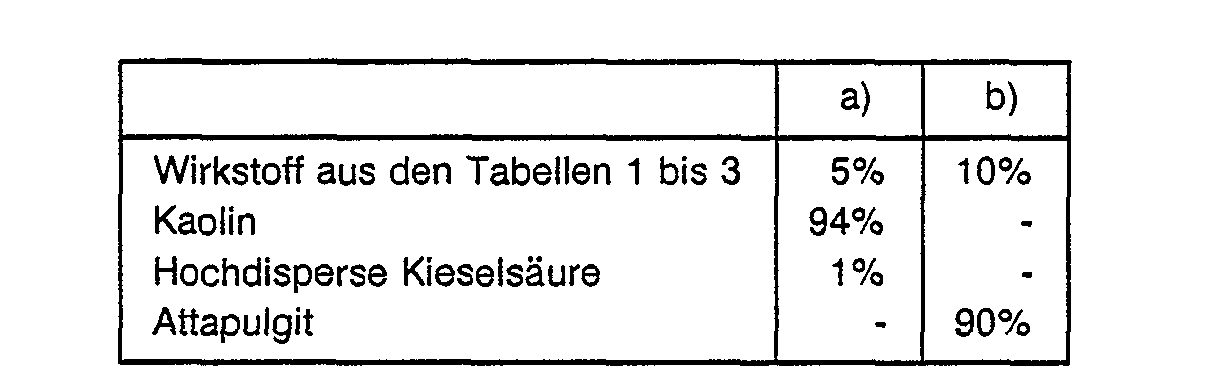
- Der Wirkstoff wird in Methylenchlorid gelöst, auf den Träger aufgesprüht und das Lösungsmittel anschliessend im Vakuum abgedampft.
-

- Durch inniges Vermischen auf Trägerstoffe mit dem Wirkstoff erhält man gebrauchsfertige Stäubemittel.
-
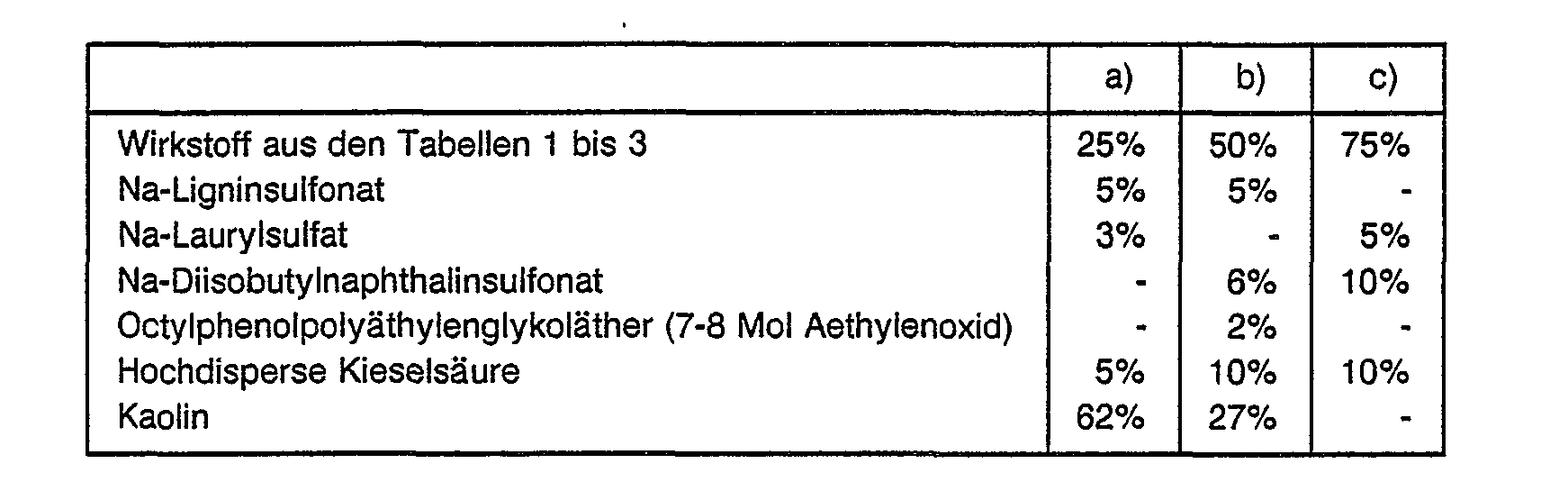
- Der Wirkstoff wird mit den Zusatzstoffen gut vermischt und in einer geeigneten Mühle vermahlen. Man erhält Spritzpulver, die sich mit Wasser zu Suspensionen jeder gewünschten Konzentration verdünnen lassen.
- Im 4-5 Blattstadium wurden Rebensämlinge mit einer aus Spritzpulver des Wirkstoffes hergestellten Spritzbrühe (0,02 % Aktivsubstanz) besprüht. Nach 24 Stunden wurden die behandelten Pflanzen mit einer Sporangiensuspension des Pilzes infiziert. Nach einer Inkubation während 6 Tagen bei 95-100 % relativer Luftfeuchtigkeit und 20. C wurde der Pilzbefall beurteilt.
- Im 4-5 Blattstadium wurden Rebensämlinge mit einer Sporangiensuspension des Pilzes infiziert Nach einer Inkubation während 24 Stunden in einer Feuchtkammer bei 95-100 % relativer Luftfeuchtigkeit und 20 C wurden die infizierten Pflanzen getrocknet und mit einer aus Spritzpulver des Wirkstoffes hergestellten Spritzbrühe (0,02 % Aktivsubstanz) besprüht. Nach dem Antrocknen des Spritzbelages wurden die behandelten Pflanzen wieder in die Feuchtkammer gebracht. Die Beurteilung des Pilzbefalls erfolgte 6 Tage nach der Infektion.
- Verbindungen aus Tabelle 1 bis 3 zeigten gegen Plasmopara viticola auf Reben eine sehr gute fungizide Wirkung, insbesondere die Wirkstoffe Nr. 1.1, 1.2, 1.6, 1.8, 1.24, 1.46 und 3.1 bewirkten eine vollständige Unterdrückung des Pilzbefalls (Restbefall 0 bis 5 %).
- 10-15 cm hohe Erdnusspflanzen werden mit einer aus Spritzpulver der Wirksubstanz hergestellten Spritzbrühe (0,02 % Aktivsubstanz) besprüht und 48 Stunden später mit einer Konidiensuspension des Pilzes infiziert. Die infizierten Pflanzen werden während 72 Stunden bei ca. 21 ° C und hoher Luftfeuchtigkeit inkubiert und anschliessend bis zum Auftreten der typischen Blattflecken in einem Gewächshaus aufgestellt. Die Beurteilung der fungiziden Wirkung erfolgt 12 Tage nach der Infektion basierend auf Anzahl und Grösse der auftretenden Flecken.
- Im Vergleich zu unbehandelten, aber infizierten Kontrollpflanzen (Anzahl und Grösse der Flecken = 100 %) zeigen Erdnusspflanzen, die mit Wirkstoffen aus den Tabellen behandelte werden, einen stark reduzierten Cercospora-Befall. Die Verbindungen 1.24 und 1.26 und andere der Tabellen 1 bis 3 verhinderten das Auftreten von Flecken fast vollständig (0-10 %).
- Apfelstecklinge mit 10-20 cm langen Frischtrieben werden mit einer aus Spritzpulver des Wirkstoffes hergestellten Spritzbrühe (0,02 % Aktivsubstanz) besprüht. Nach 24 Stunden werden die behandelten Pflanzen mit einer Konidiensuspension des Pilzes infiziert. Die Pflanzen werden dann während 5 Tagen bei 90-100 % relativer Luftfeuchtigkeit inkubiert und während 10 weiteren Tagen in einem Gewächshaus bei 20-24* C aufgestellt. Der Schorfbefall wird 15 Tage nach der Infektion beurteilt. Die Verbindung Nr. 1.24 der Tabelle 1 hemmt den Krankheitsbefall auf weniger als 10 %. Unbehandelte aber infizierte Kontrolltriebe werden dagegen 100%ig befallen.
- Ca. 8 cm hohe Gerstenpflanzen werden mit einer aus Spritzpulver des Wirkstoffes hergestellten Spritzbrühe (0,02 % Aktivsubstanz) besprüht. Nach 3-4 Stunden werden die behandelten Pflanzen mit Konodoen des Pilzes bestäubt. Die infizierten Gerstenpflanzen werden in einem Gewächshaus bei ca. 22 * C aufgestellt und der Pilzbefall nach 10 Tagen beurteilt.
- Zu ca. 8 cm hohen Gerstenpflanzen wird eine aus Spritzpulver des Wirkstoffes hergestellte Spritzbrühe gegossen (0,02 % Aktivsubstanz bezogen auf das Erdvolumen). Es wurde dabei darauf geachtet, dass die Spritzbrühe nicht mit den oberirdischen Pflanzenteilen in Berührung kam. Nach 48 Stunden werden die behandelten Pflanzen mit Konidien des Pilzes bestäubt. Die infizierten Gerstenpflanzen werden in einem Gewächshaus bei ca. 22 C aufgestellt und der Pilzbefall nach 10 Tagen beurteilt.
- Verbindungen aus den Tabellen 1 bis 3 zeigten gegen Erysiphe gute Wirksamkeit. So reduzieren z.B. die Verbindungen Nr. 1.1, 1.2, 1.10, 1.24, 1.26, 1.31, 1.32, 1.40, 2.1 und 3.1 den Erysiphae-Befall auf 0 bis 5 %. Unbehandelte aber infizierte Kontrollpflanzen weisen dagegen einen Erysiphe-Befall von 100 % auf.
- Tomatenpflanzen werden nach 3-wöchiger Anzucht mit einer aus Spritzpulver des Wirkstoffes hergestellten Spritzbrühe (0,02 % Aktivsubstanz) besprüht. Nach 24 Stunden werden die behandelten Pflanzen mit einer Sporangiensuspension des Pilzes infiziert. Die Beurteilung des Pilzbefalls erfolgt nach einer Inkubation der infizierten Pflanzen während 5 Tagen bei 90-100 % relativer Luftfeuchtigkeit und 20 C.
- Verbindungen aus den Tabellen 1 bis 3 zeigten eine nachhaltige Wirkung (weniger als 20 % Pilzbefall). Mit den Verbindungen Nr. 1.1, 1.6, 1.46 sowie 3.1, 3.4 und anderen Präparaten der Tabelle 3 wurde ein Befall praktisch vollständig verhindert (0 bis 5 % Befall).
Claims (18)
1. 1-Aryl-2-naphthoylamine der Formel I

worin R1, Halogen, Nitro, Cyano, unsubstituiertes oder durch Halogen und/oder Ci-C3-Alkoxy ein- oder mehrfach substituiertes Ci-C6-Alkyl, C3-C6-Cycloalkyl, OR4, NRsRs, C02Rs, CONR5R6 oder NHCOR7 bedeutet, oder worin zwei benachbarte Positionen im Kern durch eine unsubstituierte oder durch Fluor einoder mehrfach substituierte Methylendioxy- oder Aethylendioxy-Gruppe überbrückt wird, worin ferner R4 Wasserstoff oder C1-C6-Alkyl bedeutet, das unsubstituiert oder durch C1-C3-Alkoxy oder ein- oder mehrfach durch Halogen substituiert ist, oder aber für C3-C4-Alkenyl, 2-Propinyl, 3-Halogen-2-propinyl,

oder COR7 steht,
Rs und R6 unabhängig voneinander H oder C1-C4-Alkyl ist,
R7 für C1-C4-Alkyf und
Z für 0 oder NH steht,
a und b die Zahl der besetzten Positionen im jeweiligen Ring darstellen und
a für die Zahlen 1-3, b für die Zahlen 0-3 stehen, wobei die einzelnen Gruppen R1 gleich oder verschieden sind, wenn die Summe von a und b grösser als 1 ist,
X für 0, S oder NH stehen,
R2 und R3 unabhängig voneinander unsubstituiertes oder durch C1-C4-Alkoxy, Halogen, Cyano substituiertes C1-C6-Alkyl oder aber C3-C7-Cycloalkyl, C3-C7-Alkenyl oder den Rest
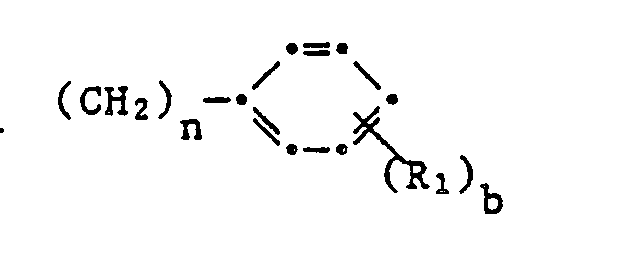
darstellt, worin
n = 0 oder 1 ist, ferner
R2 und R3 auch gemeinsam eine C4-C7-Aikylenkette, welche mit dem sie verbindenden Stickstoffatom einen unsubstituierten oder durch C1-C4-Alkyl mono- oder disubstituierten Heterocyclus bilden kann, wobei eine Methylengruppe aus dieser Kette durch 0, S oder NR7 ersetzt sein kann, sowie R2 auch Wasserstoff bedeuten kann; einschliesslich der Additionssalze der Verbindungen der Formel I.
2. 1-Aryl-2-naphthoylamine gemäss Anspruch 1, worin R1 Halogen, Nitro, Ci-C6-Alkyl, C3-C6-Cycloalkyl, Methylendioxy, Mono- oder Difluormethylendioxy, unsubstituiertes oder durch Fluor ein- oder mehrfach substituiertes Aethylendioxy, OR4 oder NR5R6 bedeuten, worin
R4 Wasserstoff oder C1-C3-Alkyl darstellt, das unsubstituiert oder durch C1-C3-Alkoxy monosubstituiert oder durch Halogen ein- bis fünffach substituiert ist,
R5 und R6 unabhängig voneinander für H oder C1-C4-Alkyl,
a für die Zahlen 2 oder 3, b für 0 oder 1, und
X für 0 oder S stehen, während
R2 und R3 unabhängig voneinander Phenyl oder 4-Chlorphenyl sind, ferner
R2 und R3 auch gemeinsam eine C4-C7-Alkylenkette, welche zusammen mit dem Stickstoffatom einen unsubstituierten oder durch C1-C4-Alkyl mono- oder disubstituierten Heterocyclus bilden können, wobei eine der Methylengruppen aus der Kette durch 0, S oder NR7 ersetzt sein kann.
3. 1-Aryl-2-naphthoylamine gemäss Anspruch 2 worin R1 Methyl, Chlor, Methoxy, Aethoxy, Difluormethoxy, Methylendioxy, Difluormethylendioxy, Aethylendioxy, Nitro, Mono- oder Dimethylamino bedeutet und R2 und R3 mit dem gemeinsamen Stickstoffatom zusammen die Reste

bilden.
4. 1-Aryl-2-naphthoylamine gemäss Anspruch 3, worin R1 Methoxy oder Methylendioxy bedeutet und a für die Zahl 2 steht.
5. 1-Aryl-2-naphthoylamine gemäss Anspruch 4, worin X für 0 steht.
6. Die Verbindung der Formel la

gemäss Anspruch 5.
7. 1-Aryl-2-naphthoylamine gemäss Anspruch 1, worin R1 Methoxy oder Methyl bedeuten, a für die Zahlen 2 oder 3 und b für die Zahl 0 steht, während X Schwefel bedeutet.
8. Die Verbindung der Formel Ib

gemäss Anspruch 7.
9. 1-Aryl-2-naphthoylamine gemäss Anspruch 1, bei welchen R1 Halogen, Nitro, C1-C6-Alkyl, C1-C3-Alkoxy, C3-C6-Cycloalkyl, Methylendioxy, Monooder Difluormethylendioxy, unsubstituiertes oder durch Fluor ein- oder mehrfach substituiertes Aethylendioxy oder NRsR6 bedeuten, worin
Rs und R6 unabhängig voneinander für H oder C1-C4-Alkyl,
a für die Zahlen 2 oder 3 und b für 0 oder 1, und
X für 0 oder S stehen, und
R2 und R3 unabhängig voneinander für Wasserstoff, unsubstituiertes oder durch Ci-C4-Alkoxy, Halogen oder Cyano substituiertes C1-C6-Alkyl, oder oder C3-C7-Alkenyl, sowie Phenyl oder 4-Chlorphenyl stehen, ferner R2 und R3 auch gemeinsam eine C4-C7-Alkylenkette darstellt, welche mit dem Stickstoffatom einen unsubstituierten oder durch C1-C4-Alkyl mono-.oder disubstituierten Heterocyclus bilden können, wobei eine der Methylengruppen aus der Kette durch 0, S oder NR7 ersetzt sein kann, und die der Formel Ic gehorchen

worin R8 und Rs entweder jeweils den Methoxyrest oder zusammen den Methylendioxyrest und Q die folgenden Reste bedeuten:



10. Die Verbindung der Formel Id

gemäss Anspruch 9.
11. 1-Aryl-2-naphthoylamine gemäss Anspruch 1 der Formel le

worin Rs und Rs beide entweder Methoxy oder zusammen Methylendioxy bedeuten,
R1 o und R1 Methoxy oder zusammen Methylendioxy bedeuten und
R11 ausserdem Chlor, Nitro, Amino, Acetylamino sein kann, während
R1 o Wasserstoff ist und
X1 0 oder S bedeuten.
12. Verfahren zur Herstellung der Verbindungen der Formel I gemäss Anspruch 1, dadurch gekennzeichnet, dass man ein Amin der Formel II

worin R2 und R3 die im Anspruch 1 angegebenen Bedeutungen haben,
a) mit einem Naphthoesäurederivat der Formel III

worin R1, a und b die im Anspruch 1 angegebenen Bedeutungen haben und Y OH, Halogen oder C1-C4-Alkoxy bedeutet, in eine Verbindung der Formel
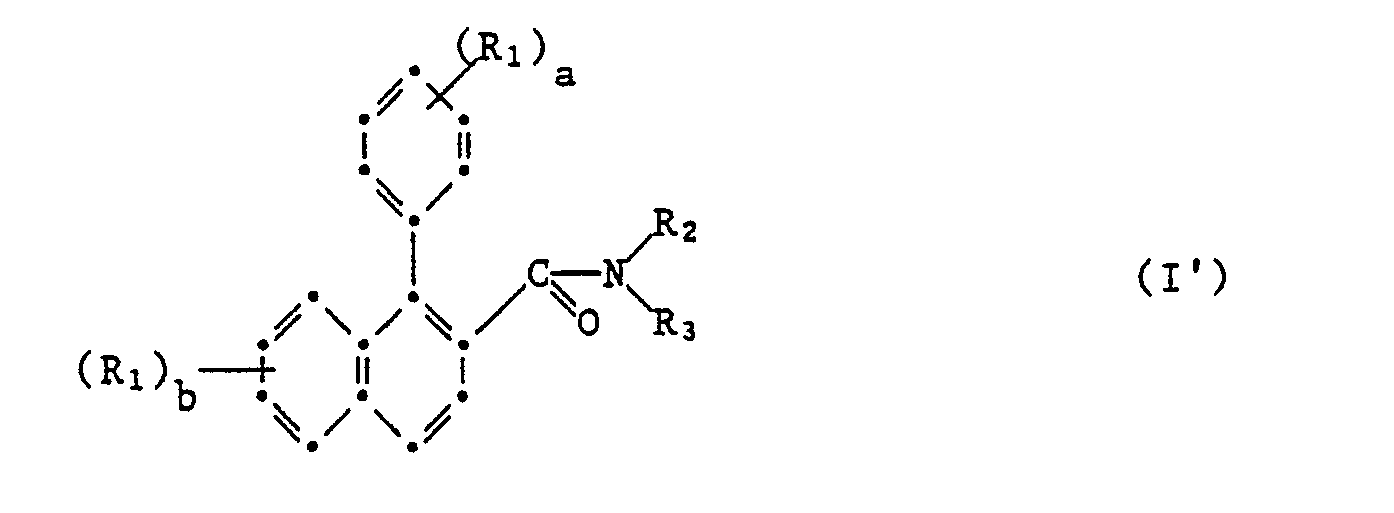
überführt;und, sofern gewünscht
die Verbindung I' mit Phosphorpentasulfid in ein Thiocarbonamid der Formel I" 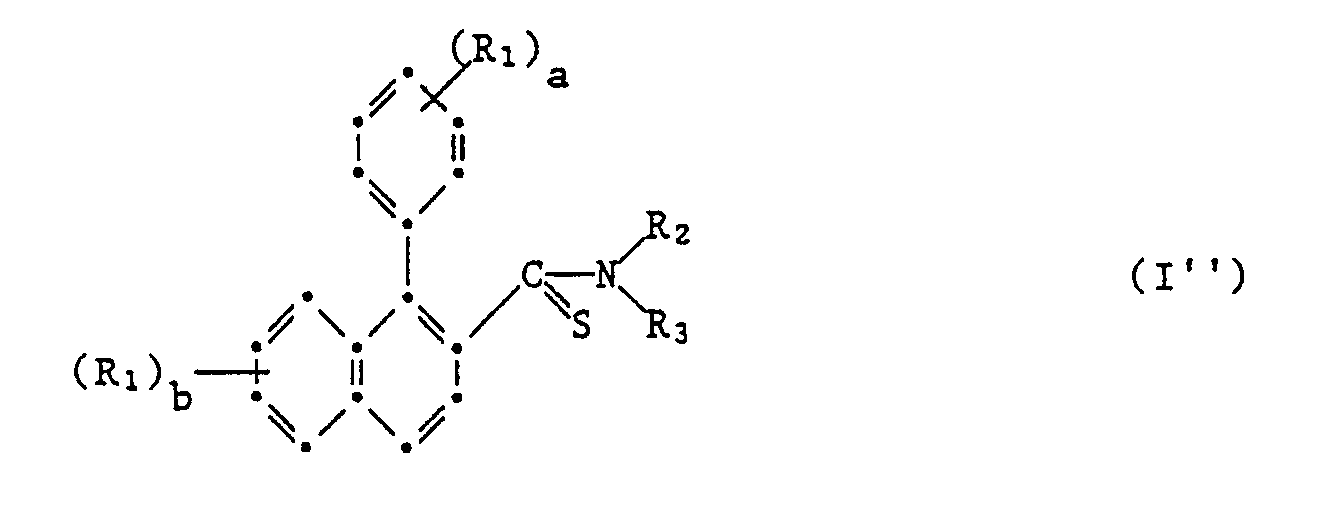
verwandelt;
oder zur Erzielung von Verbindungen der Formel I mit X = NH,
die Verbindung I' mit Phosphorpentasulfid in ein Thiocarbonamid der Formel I"
oder zur Erzielung von Verbindungen der Formel I mit X = NH,
b) mit einem Iminoester der Formel IV

worin Ri, a und b die im Anspruch 1 angegebenen Bedeutungen haben und R1 3 C1-C4-Alkyl bedeutet, in eine Verbindung der Formel I'"

überführt.
13. Mikrobizides Mittel enthaltend neben den üblichen Trägersubstanzen und Zuschlagstoffen mindestens eine der Verbindungen der Formel I gemäss Anspruch 1 als aktive Komponente.
14. Mittel nach Anspruch 13, dadurch gekennzeichnet, dass es als aktive Komponente die Verbindung der Formel la gemäss Anspruch 6 enthält.
15. Mittel nach Anspruch 13, dadurch gekennzeichnet, dass es als aktive Komponente die Verbindung der Formel Ib gemäss Anspruch 8 enthält.
16. Mittel nach Anspruch 13, dadurch gekennzeichnet, dass es als aktive Komponente die Verbindung der Formel ld-gemäss Anspruch 10 enthält.
17. Verfahren zur Bekämpfung pflanzenschädigender Mikroben, dadurch gekennzeichnet, dass man auf die Pflanze oder deren Standort eine mikrobizid wirksame Menge einer Verbindung der Formel I gemäss Anspruch 1 appliziert.
18. Verfahren nach Anspruch 17, dadurch gekennzeichnet, dass die Mikroben Plasmopara, Phytophtora Venturia, Cercospora oder Erysiphe sind.
Applications Claiming Priority (2)
| Application Number | Priority Date | Filing Date | Title |
|---|---|---|---|
| CH232188 | 1988-06-16 | ||
| CH2321/88 | 1988-06-16 |
Publications (2)
| Publication Number | Publication Date |
|---|---|
| EP0346841A2 true EP0346841A2 (de) | 1989-12-20 |
| EP0346841A3 EP0346841A3 (de) | 1991-01-09 |
Family
ID=4231074
Family Applications (1)
| Application Number | Title | Priority Date | Filing Date |
|---|---|---|---|
| EP19890110707 Withdrawn EP0346841A3 (de) | 1988-06-16 | 1989-06-13 | 1-Aryl-naphthoesäureamide und diese enthaltende mikrobizide Mittel |
Country Status (11)
| Country | Link |
|---|---|
| US (1) | US4968677A (de) |
| EP (1) | EP0346841A3 (de) |
| JP (1) | JPH0242046A (de) |
| KR (1) | KR900000351A (de) |
| AU (1) | AU3642589A (de) |
| BR (1) | BR8902915A (de) |
| DE (1) | DE3919348A1 (de) |
| DK (1) | DK296589A (de) |
| PT (1) | PT90854A (de) |
| ZA (1) | ZA894555B (de) |
| ZW (1) | ZW7689A1 (de) |
Cited By (15)
| Publication number | Priority date | Publication date | Assignee | Title |
|---|---|---|---|---|
| WO2002032856A3 (en) * | 2000-10-17 | 2002-07-04 | Du Pont | Insecticidal 1,8-naphthalenedicarboxamides |
| US7125898B2 (en) | 2002-02-12 | 2006-10-24 | Smithkline Beecham Corporation | Nicotinamide derivatives useful as p38 inhibitors. |
| US7166623B2 (en) | 2001-10-17 | 2007-01-23 | Glaxo Group Limited | 2′-Methyl-5′-(1,3,4-oxadiazol-2-yl)-1,1′-biphenyl-4-carboxamide derivatives and their use as p38 kinase inhibitors |
| US7166597B2 (en) | 2000-08-22 | 2007-01-23 | Glaxo Group Limited | Fused pyrazole derivatives being protein kinase inhibitors |
| US7183297B2 (en) | 2001-10-17 | 2007-02-27 | Glaxo Group Limited | Biphenyl-derivatives as p38-kinase inhibitors |
| US7208629B2 (en) | 2001-10-17 | 2007-04-24 | Glaxo Group Limited | 5′-Carbamoyl-1,1-biphenyl-4-carboxamide derivatives and their use as p38 kinase inhibitors |
| US7271289B2 (en) | 2003-04-09 | 2007-09-18 | Smithkline Beecham Corporation | Biphenylcarboxylic amide derivatives as p38 kinase inhibitors |
| US7309800B2 (en) | 2001-10-17 | 2007-12-18 | Glaxo Group Limited | Biphenylcarboxylic amide derivatives as p38 kinase inhibitors |
| US7384963B2 (en) | 2001-10-17 | 2008-06-10 | Glaxo Group Limited | 2′-Methyl-5-(1,3,4-oxadiazol-2-yl)1, 1′-biphenyl-4-carboxaide derivatives and their use as p38 kinase |
| US7396843B2 (en) | 2001-10-17 | 2008-07-08 | Glaxo Group Limited | 5′-carbamoyl-1,1′-biphenyl-4-carboxamide derivatives and their use as p38 kinase inhibitors |
| US7432289B2 (en) | 2001-10-17 | 2008-10-07 | Glaxo Group Limited | 5-Acylamino-1,1′-biphenyl-4-carboxamide derivatives and their use as P38 kinase inhibitors |
| US7572790B2 (en) | 2003-04-09 | 2009-08-11 | Smithkline Beecham Corporation | Biphenyl carboxylic amide p38 kinase inhibitors |
| US7626055B2 (en) | 2003-04-09 | 2009-12-01 | Smithkline Beecham Corporation | Biphenyl-carboxamide derivatives and their use as p38 kinase inhibitors |
| US7642276B2 (en) | 2002-07-31 | 2010-01-05 | Smithkline Beecham Corporation | Fused heteroaryl derivatives for use as P38 kinase inhibitors |
| US7838540B2 (en) | 2003-08-11 | 2010-11-23 | Glaxosmithkline Llc | 3-aminocarbonyl, 6-phenyl substituted pyridine-1-oxides as p38 kinase inhibitors |
Families Citing this family (2)
| Publication number | Priority date | Publication date | Assignee | Title |
|---|---|---|---|---|
| AU3040102A (en) * | 2000-10-17 | 2002-04-29 | Du Pont | Insecticidal 1,8-naphthalenedicarboxamides |
| CA2743391A1 (en) * | 2011-05-27 | 2012-11-27 | Queen's University At Kingston | Compounds and methods for catalytic directed ortho substitution of aromatic amides and esters |
Family Cites Families (2)
| Publication number | Priority date | Publication date | Assignee | Title |
|---|---|---|---|---|
| FR2525595A1 (fr) * | 1982-04-27 | 1983-10-28 | Pharmuka Lab | Nouveaux derives d'arene et d'heteroarenecarboxamides et leur utilisation comme medicaments |
| DE3710717A1 (de) * | 1987-03-31 | 1988-10-20 | Celamerck Gmbh & Co Kg | Bicyclische amide, ihre herstellung und verwendung |
-
1989
- 1989-06-13 DE DE3919348A patent/DE3919348A1/de not_active Withdrawn
- 1989-06-13 EP EP19890110707 patent/EP0346841A3/de not_active Withdrawn
- 1989-06-14 PT PT90854A patent/PT90854A/pt not_active Application Discontinuation
- 1989-06-14 US US07/366,972 patent/US4968677A/en not_active Expired - Fee Related
- 1989-06-15 ZA ZA894555A patent/ZA894555B/xx unknown
- 1989-06-15 ZW ZW76/89A patent/ZW7689A1/xx unknown
- 1989-06-15 AU AU36425/89A patent/AU3642589A/en not_active Abandoned
- 1989-06-15 DK DK296589A patent/DK296589A/da not_active Application Discontinuation
- 1989-06-16 KR KR1019890008415A patent/KR900000351A/ko not_active Withdrawn
- 1989-06-16 BR BR898902915A patent/BR8902915A/pt unknown
- 1989-06-16 JP JP1154370A patent/JPH0242046A/ja active Pending
Cited By (19)
| Publication number | Priority date | Publication date | Assignee | Title |
|---|---|---|---|---|
| US7166597B2 (en) | 2000-08-22 | 2007-01-23 | Glaxo Group Limited | Fused pyrazole derivatives being protein kinase inhibitors |
| WO2002032856A3 (en) * | 2000-10-17 | 2002-07-04 | Du Pont | Insecticidal 1,8-naphthalenedicarboxamides |
| US7384963B2 (en) | 2001-10-17 | 2008-06-10 | Glaxo Group Limited | 2′-Methyl-5-(1,3,4-oxadiazol-2-yl)1, 1′-biphenyl-4-carboxaide derivatives and their use as p38 kinase |
| US7396843B2 (en) | 2001-10-17 | 2008-07-08 | Glaxo Group Limited | 5′-carbamoyl-1,1′-biphenyl-4-carboxamide derivatives and their use as p38 kinase inhibitors |
| US7183297B2 (en) | 2001-10-17 | 2007-02-27 | Glaxo Group Limited | Biphenyl-derivatives as p38-kinase inhibitors |
| US7208629B2 (en) | 2001-10-17 | 2007-04-24 | Glaxo Group Limited | 5′-Carbamoyl-1,1-biphenyl-4-carboxamide derivatives and their use as p38 kinase inhibitors |
| US7166623B2 (en) | 2001-10-17 | 2007-01-23 | Glaxo Group Limited | 2′-Methyl-5′-(1,3,4-oxadiazol-2-yl)-1,1′-biphenyl-4-carboxamide derivatives and their use as p38 kinase inhibitors |
| US7309800B2 (en) | 2001-10-17 | 2007-12-18 | Glaxo Group Limited | Biphenylcarboxylic amide derivatives as p38 kinase inhibitors |
| US7432289B2 (en) | 2001-10-17 | 2008-10-07 | Glaxo Group Limited | 5-Acylamino-1,1′-biphenyl-4-carboxamide derivatives and their use as P38 kinase inhibitors |
| US7514456B2 (en) | 2002-02-12 | 2009-04-07 | Smithkline Beecham Corporation | Nicotinamide derivatives useful as p38 inhibitors |
| US7125898B2 (en) | 2002-02-12 | 2006-10-24 | Smithkline Beecham Corporation | Nicotinamide derivatives useful as p38 inhibitors. |
| US7709506B2 (en) | 2002-02-12 | 2010-05-04 | Glaxosmithkline Llc | Nicotinamide derivatives useful as p38 inhibitors |
| US8252818B2 (en) | 2002-02-12 | 2012-08-28 | Glaxosmithkline Llc | Nicotinamide derivatives useful as P38 inhibitors |
| US8575204B2 (en) | 2002-02-12 | 2013-11-05 | Glaxosmithkline Llc | Nicotinamide derivates useful as P38 inhibitors |
| US7642276B2 (en) | 2002-07-31 | 2010-01-05 | Smithkline Beecham Corporation | Fused heteroaryl derivatives for use as P38 kinase inhibitors |
| US7271289B2 (en) | 2003-04-09 | 2007-09-18 | Smithkline Beecham Corporation | Biphenylcarboxylic amide derivatives as p38 kinase inhibitors |
| US7572790B2 (en) | 2003-04-09 | 2009-08-11 | Smithkline Beecham Corporation | Biphenyl carboxylic amide p38 kinase inhibitors |
| US7626055B2 (en) | 2003-04-09 | 2009-12-01 | Smithkline Beecham Corporation | Biphenyl-carboxamide derivatives and their use as p38 kinase inhibitors |
| US7838540B2 (en) | 2003-08-11 | 2010-11-23 | Glaxosmithkline Llc | 3-aminocarbonyl, 6-phenyl substituted pyridine-1-oxides as p38 kinase inhibitors |
Also Published As
| Publication number | Publication date |
|---|---|
| KR900000351A (ko) | 1990-01-30 |
| AU3642589A (en) | 1989-12-21 |
| PT90854A (pt) | 1989-12-29 |
| DE3919348A1 (de) | 1989-12-21 |
| ZW7689A1 (en) | 1990-01-24 |
| BR8902915A (pt) | 1990-02-01 |
| EP0346841A3 (de) | 1991-01-09 |
| US4968677A (en) | 1990-11-06 |
| ZA894555B (en) | 1990-02-28 |
| JPH0242046A (ja) | 1990-02-13 |
| DK296589D0 (da) | 1989-06-15 |
| DK296589A (da) | 1989-12-17 |
Similar Documents
| Publication | Publication Date | Title |
|---|---|---|
| EP0206999B1 (de) | Mikrobizide Mittel | |
| EP0126254B1 (de) | N-(2-Nitrophenyl)-4-aminopyrimidin-Derivate als Mikrobizide | |
| EP0172786B1 (de) | Pyrimidinderivate wirksam als Schädlingsbekämpfungsmittel | |
| EP0276432A2 (de) | Schädlingsbekämpfungsmittel | |
| EP0135472A2 (de) | N-(2-Nitrophenyl)-2-aminopyrimidin-Derivate, deren Herstellung und Verwendung | |
| EP0139613A1 (de) | N-(2-Nitrophenyl)-4-aminopyrimidin-Derivate, deren Herstellung und Verwendung | |
| DE3801233A1 (de) | Mikrobizides mittel | |
| EP0182738A2 (de) | Verfahren zur Herstellung fungizid aktiver 4-Phenyl-pyrrol-Derivate | |
| EP0470600B1 (de) | Naphthylalkylaminopyrimidin-Derivate, Verfahren zu ihrer Herstellung und diese enthaltende Schädlingsbekämpfungsmittel | |
| EP0279239B1 (de) | Mikrobizide Mittel | |
| EP0198797B1 (de) | Schädlingsbekämpfungsmittel | |
| DE3919348A1 (de) | Mikrobizide mittel | |
| EP0133247B1 (de) | N-Aminomethyl-3-phenyl-4-cyanopyrrol-Derivate, deren Herstellung und Verwendung als Mikrobizide | |
| EP0430033A2 (de) | Mikrobizide Mittel | |
| EP0310558A2 (de) | Mikrobizide Mittel | |
| EP0182737A2 (de) | 3-Phenylpyrrolderivate, Verfahren zu ihrer Herstellung und ihre Verwendung als Schädlingsbekämpfungsmittel | |
| EP0130149B1 (de) | 3-Phenyl-4-cyanopyrrol-Derivate, Verfahren zu deren Herstellung und deren Verwendung als Mikrobizide | |
| EP0183217B1 (de) | Mikrobizide Mittel | |
| EP0334813B1 (de) | Mittel zum Schutz von Pflanzen gegen Krankheiten | |
| EP0288976B1 (de) | Mittel zum Schutz gegen Pflanzenkrankheiten | |
| EP0386681A1 (de) | 3-Aryl-4-cyano-pyrrol-Derivate, Verfahren zu ihrer Herstellung und diese enthaltende mikrobiozide Mittel | |
| EP0065483B1 (de) | Mikrobizide Acylanilin- und Acylnaphthylamin-Derivate, Verfahren zu deren Herstellung und ihre Verwendung | |
| DD295160A5 (de) | Mikrobizide mittel | |
| EP0207000B1 (de) | Mikrobizide | |
| EP0462931B1 (de) | Benzotriazol-1-sulfonylderivate mit mikrobiziden Eigenschaften |
Legal Events
| Date | Code | Title | Description |
|---|---|---|---|
| PUAI | Public reference made under article 153(3) epc to a published international application that has entered the european phase |
Free format text: ORIGINAL CODE: 0009012 |
|
| 17P | Request for examination filed |
Effective date: 19890613 |
|
| AK | Designated contracting states |
Kind code of ref document: A2 Designated state(s): AT BE CH ES FR GB GR IT LI LU NL |
|
| PUAL | Search report despatched |
Free format text: ORIGINAL CODE: 0009013 |
|
| AK | Designated contracting states |
Kind code of ref document: A3 Designated state(s): AT BE CH ES FR GB GR IT LI LU NL |
|
| STAA | Information on the status of an ep patent application or granted ep patent |
Free format text: STATUS: THE APPLICATION IS DEEMED TO BE WITHDRAWN |
|
| 18D | Application deemed to be withdrawn |
Effective date: 19910710 |