EP0342999A2 - Méthode pour le maintien de l'activité des catalyseurs de zéolite - Google Patents
Méthode pour le maintien de l'activité des catalyseurs de zéolite Download PDFInfo
- Publication number
- EP0342999A2 EP0342999A2 EP89305085A EP89305085A EP0342999A2 EP 0342999 A2 EP0342999 A2 EP 0342999A2 EP 89305085 A EP89305085 A EP 89305085A EP 89305085 A EP89305085 A EP 89305085A EP 0342999 A2 EP0342999 A2 EP 0342999A2
- Authority
- EP
- European Patent Office
- Prior art keywords
- catalyst
- methanol
- zeolite
- reaction
- zeolite catalyst
- Prior art date
- Legal status (The legal status is an assumption and is not a legal conclusion. Google has not performed a legal analysis and makes no representation as to the accuracy of the status listed.)
- Granted
Links
Images
Classifications
-
- B—PERFORMING OPERATIONS; TRANSPORTING
- B01—PHYSICAL OR CHEMICAL PROCESSES OR APPARATUS IN GENERAL
- B01J—CHEMICAL OR PHYSICAL PROCESSES, e.g. CATALYSIS OR COLLOID CHEMISTRY; THEIR RELEVANT APPARATUS
- B01J29/00—Catalysts comprising molecular sieves
- B01J29/90—Regeneration or reactivation
-
- C—CHEMISTRY; METALLURGY
- C07—ORGANIC CHEMISTRY
- C07C—ACYCLIC OR CARBOCYCLIC COMPOUNDS
- C07C209/00—Preparation of compounds containing amino groups bound to a carbon skeleton
- C07C209/04—Preparation of compounds containing amino groups bound to a carbon skeleton by substitution of functional groups by amino groups
- C07C209/14—Preparation of compounds containing amino groups bound to a carbon skeleton by substitution of functional groups by amino groups by substitution of hydroxy groups or of etherified or esterified hydroxy groups
- C07C209/16—Preparation of compounds containing amino groups bound to a carbon skeleton by substitution of functional groups by amino groups by substitution of hydroxy groups or of etherified or esterified hydroxy groups with formation of amino groups bound to acyclic carbon atoms or to carbon atoms of rings other than six-membered aromatic rings
-
- B—PERFORMING OPERATIONS; TRANSPORTING
- B01—PHYSICAL OR CHEMICAL PROCESSES OR APPARATUS IN GENERAL
- B01J—CHEMICAL OR PHYSICAL PROCESSES, e.g. CATALYSIS OR COLLOID CHEMISTRY; THEIR RELEVANT APPARATUS
- B01J29/00—Catalysts comprising molecular sieves
- B01J29/04—Catalysts comprising molecular sieves having base-exchange properties, e.g. crystalline zeolites
- B01J29/06—Crystalline aluminosilicate zeolites; Isomorphous compounds thereof
-
- Y—GENERAL TAGGING OF NEW TECHNOLOGICAL DEVELOPMENTS; GENERAL TAGGING OF CROSS-SECTIONAL TECHNOLOGIES SPANNING OVER SEVERAL SECTIONS OF THE IPC; TECHNICAL SUBJECTS COVERED BY FORMER USPC CROSS-REFERENCE ART COLLECTIONS [XRACs] AND DIGESTS
- Y02—TECHNOLOGIES OR APPLICATIONS FOR MITIGATION OR ADAPTATION AGAINST CLIMATE CHANGE
- Y02P—CLIMATE CHANGE MITIGATION TECHNOLOGIES IN THE PRODUCTION OR PROCESSING OF GOODS
- Y02P20/00—Technologies relating to chemical industry
- Y02P20/50—Improvements relating to the production of bulk chemicals
- Y02P20/582—Recycling of unreacted starting or intermediate materials
Definitions
- This invention relates to a method for maintaining the activity of zeolite catalysts in the process for producing methylamines from methanol and ammonia with the use of such catalysts. More particularly, this invention relates to a method for maintaining the activity of zeolite catalysts by suppressing contamination of the reaction system with impurities of a specific kind, which is unavoidable under ordinary conditions.
- methylamines are prepared from methanol and ammonia under the conditions of a pressure of 5 to 40 atm and a reaction temperature of 350 to 450°C, using a solid acid catalyst such as silica-alumina.
- a solid acid catalyst such as silica-alumina.
- Three types of methylamines, i.e., mono-, di- and tri-methylamine (hereinafter abbreviated as MMA, DMA and TMA) are formed depending upon the number of methyl groups bonded to the nitrogen atom of ammonia.
- MMA mono-, di- and tri-methylamine
- TMA tri-methylamine
- DMA may be selectively produced independently of thermodynamic equilibrium, providing various merits such as considerable decrease in the amounts of MMA and TMA to be recycled and excessive ammonia, reduction in process scale, and energy saving.
- Specific processes proposed thus far utilizing such zeolite catalysts include a process for predominantly obtaining MMA with the use of ZSM-5 or ZSM-21 (U.S. Patent No. 4,082,805), a process for predominantly obtaining MMA with the use of mordenite, ferrierite, erionite or clinoputilolite (Japanese Patent Laid-OPen Publication No. 56-113747) and a process for predominantly obtaining MMA with the use of levynite (EP107457).
- Specific processes proposed for predominantly obtaining DMA include those using low-binder A zeolite (Japanese Patent Laid-Open Publication No. 58-69846), Fu-1 (Japanese Patent Laid-Open Publication No. 54-148708), mordenite (Japanese Patent Laid-Open Publication No. 58-49340), mordenite or clinoputilolite (Japanese Patent Laid-Open Publication Nos. 57-4169444 and 59-21005) and Rho, ZK-5, chabasite or erionite (Japanese Patent Laid-Open Publication No. 61-254256).
- One of the characteristic features of processes for producing methylamines using zeolite catalysts is that the reaction is carried out at a temperature lower than that applied in the prior art. This is because the effect of molecular shape selectivity increases at a low temperature, and the amount of the by-product coke formed decreases with a decrease in the reaction temperature, thus leading to an increase in the service life of the catalyst.
- Another feature is that methanol is not rendered to be reacted completely, unlike the conventional processes, with the conversion of methanol being usually limited to 80 to 98 %. This is because the effect of molecular shape selectivity drops drastically at a conversion exceeding 98 %. In most cases, therefore, the unreacted methanol is separated, recovered and recycled to the reaction system for reuse.
- coke is formed over a zeolite catalyst in a relatively large amount and tends to have a sharp influence on the catalytic activity of zeolite.
- a zeolite having an one-dimensional pore structure such as mordenite is apt to be deactivated by coke.
- the service life of the catalyst is in general shorter than about two or three months even when a critical low temperature of 300°C or lower is applied to restraint the formation of coke. This makes the efficient use of zeolite catalysts extremely difficult.
- An object of the present invention is to provide a method which can increase the service life of zeolite catalysts in the process and avoid the regeneration of zeolite catalysts or reduce the cycle of regeneration in the course of operation.
- a method for maintaining the activity of a zeolite catalyst in the catalytic production of methylamines from methanol and ammonia using a zeolite catalyst as at least one of the catalysts applied which comprises controlling the amount of aldehyde compounds as impurities flowing into a zeolite catalyst layer to about 0.15 g/hr ⁇ kg-cat. or lower, as calculated in terms of formaldehyde.
- methylamines In the production of methylamines, a small amount of compounds such as lower hydrocarbons, e.g. methane or ethane, hydrogen, carbon monoxide, carbon dioxide, dimethyl ether, aldehydes, especially formaldehyde, higher amines and aromatic hydrocarbons, e.g. BTX, are formed as by-products.
- lower hydrocarbons e.g. methane or ethane
- aldehydes especially formaldehyde, higher amines and aromatic hydrocarbons, e.g. BTX
- the amounts of such impurities produced are limited to about 1/2 to 1/10 in comparison with those obtained in the presence of the conventional amorphous solid acid catalysts, presumably due to its shape selectivity and a lowering of the reaction temperature applied.
- Formaldehyde which contaminates a catalyst layer is primarily formed as by-products in the synthesis reaction of methylamines.
- Formaldehyde or its compounds are contained in a gaseous reaction product in an amount of about 200 to 300 ppm or higher at a reaction temperatue of about 300°C in the presence of a zeolite catalyst such as mordenite.
- a zeolite catalyst such as mordenite.
- a reactor heretofore available with the conventional equilibrium type of catalyst is often used in combination with a reactor for zeolite catalyst.
- the conventional catalyst amorphous solid acid catalyst
- the conventional catalyst is generally found to give formaldehyde in a larger amount in comparison with the zeolite catalyst (at a reaction temperature of 400°C, it yields formaldehyde more than 10 times as much as the zeolite catalyst at 300°C). It is thus likely that the reaction system may be contaminated with aldehyde compounds contained in the effluent leaving the conventional catalyst reaction column.
- the service life of the zeolite catalyst is significantly extended by limiting the amount of such aldehyde compounds flowing into the catalyst bed up to a specific level.
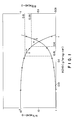
- Fig. 1 in the accompanying drawings is a graphical view showing the results of an experimentation carried out to study the influence of formaldehyde on the life of the zeolite catalyst. It depicts the relation of the deactivation constant and activity half-life (the period in which the rate constant of a methanol-consuming reaction decreases to half) of a zeolite catalyst to the amount of formaldehyde inflowing into a reactor. From this figure, it is apparent that there is a sharp increase in the rate of deactivation, when the amount of inflow of formaldehyde exceeds about 0.2 g/hr ⁇ kg-cat.
- the half-life of reaction activity (the period in which the reaction rate constant k decreases to half, with the proviso that the methanol-consuming reaction is a first order reaction with respect to methanol) was 25 % of that obtained with a raw material containing no aldehyde compounds.
- the half-life was increased to 60 % by controlling the amount of inflow to about 0.15 g/hr ⁇ kg-cat.
- the service life of the zeolite catalyst was increased by twice or more and 4 times or more by controlling the amount of inflow of formaldehyde to 0.15 g/hr ⁇ kg-cat., and 0,01 g/hr ⁇ kg-cat., respectively.
- a method for maintaining the activity of a zeolite catalyst in the process for the production of methylamines using a zeolite catalyst as at least one of catalysts applied has been established by controlling the amount of aldehydes esp., formaldehyde compounds, among a number of compounds which may possibly contaminate the reaction system involved, that flow into a catalyst layer to 0.15 g/hr ⁇ kg-cat. or lower, preferably 0.1 g/hr ⁇ kg-cat. or lower, more preferably 0.05 g/hr ⁇ kg-cat. or lower, most preferably 0.01 g/hr ⁇ kg-cat. or lower, as calculated in terms of HCHO.
- the present invention is applicable to methylamine production processes where a zeolite catalyst is used or an equilibrium-controlled catalyst such as silica-alumina is used in combination with a zeolite catalyst.
- the zeolite catalysts used in the present invention should show activity with respect to the synthesis of methylamines, as is the case with Y-type zeolite and mordenite.
- zeolites exhibiting molecular shape selectivity to the synthesis reaction of methylamines, viz., mordenite, Fu-1, chabasite, erionite, Rho, ZK-1, zeolite A and levynite.
- the reaction involved occurs at a lower temperature in comparison with conventional methods, say, 230 to 350°C, preferably 250 to 320°C, and the reaction conditions applied include a pressure of 1 to 50 atm, preferably 5 to 30 atm, an N/C ratio of 1 to 3 (a number ratio of nitrogen atoms to carbon atoms in the reaction system), a space velocity of 600 to 2000/hr and a methanol conversion of 80 to 98 %.
- the removal of aldehyde compounds may rely upon precise and elaborate rectification or chemical treatments by an alkali, sodium bisulfite, etc.
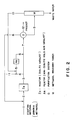
- the process of the present invention may be applied, for example, in the manner as shown in Fig. 2, to a process wherein a zeolite catalyst and a non-zeolitic solid acid catalyst are used in combination.
- non-zeolitic solid acid catalyst reactor (A R ) are also fed through line 11 the remainder of the recycled amines and unreacted ammonia (which have been fed through line 8) and/or through line 4 part of the product obtained in the zeolite catalyst reactor (Z R ), both via line 5.
- This process requires no elaborate separation of aldehyde compounds in the methanol recovery tower.
- the aldehyde compounds flowed into the non-zeolitic solid acid catalyst reactor together with the recovered methanol are decomposed therein without affecting the activity and stability of that catalyst in any way.
- non-zeolitic solid acid catalysts for use herein are porous solid acid catalysts predominantly comprising silica and/or alumina such as, ⁇ -alumina and silica-alumina.
- the reaction conditions to be employed include a temperature of from 350 to 450°C, preferably from 370 to 420°C, and a pressure of from atmospheric pressure to 50 atm, preferably from 5 to 30 atm. If desired, fresh methanol or ammonia may be fed in this reaction.
- Example 1 Similar experiments were performed with the amount of inflow of formaldehyde smaller than actual case.
- ⁇ / ⁇ 0 0.25 when the amount of inflow of formaldehyde is about 0.4 g/hr ⁇ kg-cat. (the catalyst has a service life of about 2.5 months at this time), and the rate of deactivation sharply increases at a larger amount.
- ⁇ / ⁇ 0 0.25 when the amount of inflow of formaldehyde is about 0.4 g/hr ⁇ kg-cat. (the catalyst has a service life of about 2.5 months at this time), and the rate of deactivation sharply increases at a larger amount.
Landscapes
- Chemical & Material Sciences (AREA)
- Organic Chemistry (AREA)
- Engineering & Computer Science (AREA)
- Materials Engineering (AREA)
- Chemical Kinetics & Catalysis (AREA)
- Crystallography & Structural Chemistry (AREA)
- Organic Low-Molecular-Weight Compounds And Preparation Thereof (AREA)
- Catalysts (AREA)
- Low-Molecular Organic Synthesis Reactions Using Catalysts (AREA)
Applications Claiming Priority (2)
| Application Number | Priority Date | Filing Date | Title |
|---|---|---|---|
| JP121966/88 | 1988-05-20 | ||
| JP12196688 | 1988-05-20 |
Publications (3)
| Publication Number | Publication Date |
|---|---|
| EP0342999A2 true EP0342999A2 (fr) | 1989-11-23 |
| EP0342999A3 EP0342999A3 (en) | 1990-12-27 |
| EP0342999B1 EP0342999B1 (fr) | 1993-08-04 |
Family
ID=14824291
Family Applications (1)
| Application Number | Title | Priority Date | Filing Date |
|---|---|---|---|
| EP89305085A Expired - Lifetime EP0342999B1 (fr) | 1988-05-20 | 1989-05-19 | Méthode pour le maintien de l'activité des catalyseurs de zéolite |
Country Status (8)
| Country | Link |
|---|---|
| US (1) | US5068442A (fr) |
| EP (1) | EP0342999B1 (fr) |
| JP (1) | JP2896787B2 (fr) |
| KR (1) | KR920003076B1 (fr) |
| CN (1) | CN1023477C (fr) |
| BR (1) | BR8902341A (fr) |
| CA (1) | CA1332933C (fr) |
| DE (1) | DE68908010T2 (fr) |
Cited By (2)
| Publication number | Priority date | Publication date | Assignee | Title |
|---|---|---|---|---|
| EP0763519A3 (fr) * | 1995-09-14 | 1998-05-13 | Nitto Kagaku Kogyo Kabushiki Kaisha | Préparation de méthylamines |
| US7714169B2 (en) | 2002-11-26 | 2010-05-11 | Basf Se | Continuous preparation of alkylamines |
Families Citing this family (4)
| Publication number | Priority date | Publication date | Assignee | Title |
|---|---|---|---|---|
| CN1299986C (zh) * | 2004-12-02 | 2007-02-14 | 复旦大学 | 一种全硅有机无机碳杂化沸石固体酸微孔材料及其制备方法 |
| CN102096328B (zh) * | 2010-12-03 | 2012-11-21 | 深圳市华星光电技术有限公司 | 液晶面板的曝光工序及其掩膜 |
| JP2017519745A (ja) * | 2014-06-20 | 2017-07-20 | ビーピー ケミカルズ リミテッドBp Chemicals Limited | 酢酸の製造方法における改善された触媒性能 |
| CN114713270B (zh) * | 2021-01-06 | 2024-07-30 | 中国石油天然气股份有限公司 | 一种轻油型加氢裂化催化剂及其制备方法、硫化型加氢裂化催化剂 |
Family Cites Families (6)
| Publication number | Priority date | Publication date | Assignee | Title |
|---|---|---|---|---|
| US4254061A (en) * | 1979-09-11 | 1981-03-03 | E. I. Du Pont De Nemours And Company | Preparation of monomethylamine |
| US4370503A (en) * | 1981-03-24 | 1983-01-25 | E. I. Du Pont De Nemours And Company | Catalyst for methylamines production |
| EP0076034B1 (fr) * | 1981-09-18 | 1985-05-15 | Imperial Chemical Industries Plc | Fabrication de méthylamines |
| US4418214A (en) * | 1982-10-18 | 1983-11-29 | Air Products And Chemicals, Inc. | Hydrogen recovery by alcohol scrubbing in alcohol amination |
| JPS59227841A (ja) * | 1983-06-08 | 1984-12-21 | Nitto Chem Ind Co Ltd | ジメチルアミンの選択的製造法 |
| US4683334A (en) * | 1985-04-30 | 1987-07-28 | E. I. Du Pont De Nemours & Company | Modified 8-ring zeolites as catalysts for conversion of methanol and ammonia to dimethylamine |
-
1989
- 1989-05-16 JP JP1120470A patent/JP2896787B2/ja not_active Expired - Lifetime
- 1989-05-17 US US07/353,446 patent/US5068442A/en not_active Expired - Lifetime
- 1989-05-18 CA CA000600045A patent/CA1332933C/fr not_active Expired - Lifetime
- 1989-05-19 BR BR898902341A patent/BR8902341A/pt not_active IP Right Cessation
- 1989-05-19 DE DE89305085T patent/DE68908010T2/de not_active Expired - Lifetime
- 1989-05-19 EP EP89305085A patent/EP0342999B1/fr not_active Expired - Lifetime
- 1989-05-20 KR KR1019890006769A patent/KR920003076B1/ko not_active Expired
- 1989-10-31 CN CN89108263A patent/CN1023477C/zh not_active Expired - Lifetime
Cited By (4)
| Publication number | Priority date | Publication date | Assignee | Title |
|---|---|---|---|---|
| EP0763519A3 (fr) * | 1995-09-14 | 1998-05-13 | Nitto Kagaku Kogyo Kabushiki Kaisha | Préparation de méthylamines |
| CN1068580C (zh) * | 1995-09-14 | 2001-07-18 | 三菱丽阳株式会社 | 甲胺类的生产 |
| US7714169B2 (en) | 2002-11-26 | 2010-05-11 | Basf Se | Continuous preparation of alkylamines |
| US7951974B2 (en) | 2002-11-26 | 2011-05-31 | Basf Aktiengesellschaft | Continuous methods and reacator used for the production of alkylamines |
Also Published As
| Publication number | Publication date |
|---|---|
| JP2896787B2 (ja) | 1999-05-31 |
| EP0342999A3 (en) | 1990-12-27 |
| CA1332933C (fr) | 1994-11-08 |
| CN1023477C (zh) | 1994-01-12 |
| KR920003076B1 (ko) | 1992-04-13 |
| EP0342999B1 (fr) | 1993-08-04 |
| BR8902341A (pt) | 1990-01-09 |
| JPH0263554A (ja) | 1990-03-02 |
| DE68908010D1 (de) | 1993-09-09 |
| US5068442A (en) | 1991-11-26 |
| DE68908010T2 (de) | 1993-11-18 |
| CN1051310A (zh) | 1991-05-15 |
| KR900017661A (ko) | 1990-12-19 |
Similar Documents
| Publication | Publication Date | Title |
|---|---|---|
| US5367100A (en) | Process for the conversion of methanol to light olefins and catalyst used for such process | |
| EP0148626B1 (fr) | Procédé de préparation d'un catalyseur pour la synthèse d'un éther | |
| EP0754649B1 (fr) | Procédé de production d'un gaz riche en hydrogène | |
| US6559342B1 (en) | Method of producing alkanolamines and apparatus for producing same | |
| EP1104752B1 (fr) | Procédé pour la préparation d'alkanolamines et appareil pour les produire | |
| US5068442A (en) | Method for maintaining the activity of zeolite catalysts | |
| JPH07506095A (ja) | 第三級ブチルアミンの製造法 | |
| US5648546A (en) | Method for manufacturing tert-butylamine | |
| US4605766A (en) | Alkylation process | |
| EA014243B1 (ru) | Способ непрерывного производства гидроксиламмония | |
| EP0321275B1 (fr) | Préparation d'anilines | |
| EP0402207A2 (fr) | Procédé pour la production de nitrobenzènes | |
| JPS5984848A (ja) | アニリンとジフエニルアミンとを同時製造する方法 | |
| US4593124A (en) | Process for preparing a mixture of methyl- or ethyl-substituted primary anilines | |
| EP0698009B1 (fr) | Procede d'hydrogenation selective de dinitriles | |
| JP3511666B2 (ja) | エチレンジアミンの製造方法 | |
| EP0994845A1 (fr) | Procede de fabrication de methylamines au moyen de catalyseurs a base de chabasite | |
| KR100765156B1 (ko) | 알칸 가암모니아산화 공정에서의 암모니아 파과의 개량 | |
| KR970015563A (ko) | 메틸아민류의 제조방법 | |
| JPH0517461A (ja) | トリエチレンジアミン類及びピペラジン類の製造方法 | |
| US5703268A (en) | Acrylonitrile recovery process | |
| RU2095342C1 (ru) | Способ нитрования бензола на цеолитных катализаторах | |
| US4914237A (en) | Alkylation of toluenediamine and para-phenylenediamine with isobutylene in the presence of acidic, crystalline molecular sieves | |
| US20100160671A1 (en) | Processes for Producing an Oxalate by Coupling of CO | |
| EP0118193A2 (fr) | Régénération de catalyseurs désactivés |
Legal Events
| Date | Code | Title | Description |
|---|---|---|---|
| PUAI | Public reference made under article 153(3) epc to a published international application that has entered the european phase |
Free format text: ORIGINAL CODE: 0009012 |
|
| AK | Designated contracting states |
Kind code of ref document: A2 Designated state(s): BE DE FR GB IT NL |
|
| PUAL | Search report despatched |
Free format text: ORIGINAL CODE: 0009013 |
|
| AK | Designated contracting states |
Kind code of ref document: A3 Designated state(s): BE DE FR GB IT NL |
|
| 17P | Request for examination filed |
Effective date: 19910228 |
|
| 17Q | First examination report despatched |
Effective date: 19921117 |
|
| GRAA | (expected) grant |
Free format text: ORIGINAL CODE: 0009210 |
|
| AK | Designated contracting states |
Kind code of ref document: B1 Designated state(s): BE DE FR GB IT NL |
|
| REF | Corresponds to: |
Ref document number: 68908010 Country of ref document: DE Date of ref document: 19930909 |
|
| ITF | It: translation for a ep patent filed | ||
| ET | Fr: translation filed | ||
| PLBE | No opposition filed within time limit |
Free format text: ORIGINAL CODE: 0009261 |
|
| STAA | Information on the status of an ep patent application or granted ep patent |
Free format text: STATUS: NO OPPOSITION FILED WITHIN TIME LIMIT |
|
| 26N | No opposition filed | ||
| NLS | Nl: assignments of ep-patents |
Owner name: MITSUBISHI RAYON CO., LTD. |
|
| REG | Reference to a national code |
Ref country code: FR Ref legal event code: TP |
|
| REG | Reference to a national code |
Ref country code: GB Ref legal event code: 732E |
|
| BECA | Be: change of holder's address |
Free format text: 19990312 *MITSUBISHI RAYON CO. LTD:6-41 KONAN 1-CHOME, J - MINATO-KU TOKYO |
|
| PGFP | Annual fee paid to national office [announced via postgrant information from national office to epo] |
Ref country code: FR Payment date: 20010518 Year of fee payment: 13 |
|
| REG | Reference to a national code |
Ref country code: GB Ref legal event code: IF02 |
|
| PG25 | Lapsed in a contracting state [announced via postgrant information from national office to epo] |
Ref country code: FR Free format text: LAPSE BECAUSE OF NON-PAYMENT OF DUE FEES Effective date: 20030131 |
|
| REG | Reference to a national code |
Ref country code: FR Ref legal event code: ST |
|
| PG25 | Lapsed in a contracting state [announced via postgrant information from national office to epo] |
Ref country code: IT Free format text: LAPSE BECAUSE OF NON-PAYMENT OF DUE FEES;WARNING: LAPSES OF ITALIAN PATENTS WITH EFFECTIVE DATE BEFORE 2007 MAY HAVE OCCURRED AT ANY TIME BEFORE 2007. THE CORRECT EFFECTIVE DATE MAY BE DIFFERENT FROM THE ONE RECORDED. Effective date: 20050519 |
|
| PGFP | Annual fee paid to national office [announced via postgrant information from national office to epo] |
Ref country code: DE Payment date: 20080522 Year of fee payment: 20 |
|
| PGFP | Annual fee paid to national office [announced via postgrant information from national office to epo] |
Ref country code: NL Payment date: 20080501 Year of fee payment: 20 |
|
| PGFP | Annual fee paid to national office [announced via postgrant information from national office to epo] |
Ref country code: GB Payment date: 20080521 Year of fee payment: 20 |
|
| PGFP | Annual fee paid to national office [announced via postgrant information from national office to epo] |
Ref country code: BE Payment date: 20080709 Year of fee payment: 20 |
|
| BE20 | Be: patent expired |
Owner name: *MITSUBISHI RAYON CO. LTD Effective date: 20090519 |
|
| REG | Reference to a national code |
Ref country code: GB Ref legal event code: PE20 Expiry date: 20090518 |
|
| PG25 | Lapsed in a contracting state [announced via postgrant information from national office to epo] |
Ref country code: NL Free format text: LAPSE BECAUSE OF EXPIRATION OF PROTECTION Effective date: 20090519 |
|
| NLV7 | Nl: ceased due to reaching the maximum lifetime of a patent |
Effective date: 20090519 |
|
| PG25 | Lapsed in a contracting state [announced via postgrant information from national office to epo] |
Ref country code: GB Free format text: LAPSE BECAUSE OF EXPIRATION OF PROTECTION Effective date: 20090518 |