EP0339427A2 - Verwendung von nichtionischen Celluloseethern in Fugendicht- bzw. Beschichtungsmassen - Google Patents
Verwendung von nichtionischen Celluloseethern in Fugendicht- bzw. Beschichtungsmassen Download PDFInfo
- Publication number
- EP0339427A2 EP0339427A2 EP89106842A EP89106842A EP0339427A2 EP 0339427 A2 EP0339427 A2 EP 0339427A2 EP 89106842 A EP89106842 A EP 89106842A EP 89106842 A EP89106842 A EP 89106842A EP 0339427 A2 EP0339427 A2 EP 0339427A2
- Authority
- EP
- European Patent Office
- Prior art keywords
- coating compositions
- hydroxyethyl
- joint sealing
- methyl
- cellulose ethers
- Prior art date
- Legal status (The legal status is an assumption and is not a legal conclusion. Google has not performed a legal analysis and makes no representation as to the accuracy of the status listed.)
- Granted
Links
Images
Classifications
-
- C—CHEMISTRY; METALLURGY
- C09—DYES; PAINTS; POLISHES; NATURAL RESINS; ADHESIVES; COMPOSITIONS NOT OTHERWISE PROVIDED FOR; APPLICATIONS OF MATERIALS NOT OTHERWISE PROVIDED FOR
- C09K—MATERIALS FOR MISCELLANEOUS APPLICATIONS, NOT PROVIDED FOR ELSEWHERE
- C09K3/00—Materials not provided for elsewhere
- C09K3/10—Materials in mouldable or extrudable form for sealing or packing joints or covers
-
- C—CHEMISTRY; METALLURGY
- C09—DYES; PAINTS; POLISHES; NATURAL RESINS; ADHESIVES; COMPOSITIONS NOT OTHERWISE PROVIDED FOR; APPLICATIONS OF MATERIALS NOT OTHERWISE PROVIDED FOR
- C09K—MATERIALS FOR MISCELLANEOUS APPLICATIONS, NOT PROVIDED FOR ELSEWHERE
- C09K3/00—Materials not provided for elsewhere
- C09K3/10—Materials in mouldable or extrudable form for sealing or packing joints or covers
- C09K3/1006—Materials in mouldable or extrudable form for sealing or packing joints or covers characterised by the chemical nature of one of its constituents
- C09K3/1015—Polysaccharides or derivatives thereof
-
- C—CHEMISTRY; METALLURGY
- C09—DYES; PAINTS; POLISHES; NATURAL RESINS; ADHESIVES; COMPOSITIONS NOT OTHERWISE PROVIDED FOR; APPLICATIONS OF MATERIALS NOT OTHERWISE PROVIDED FOR
- C09D—COATING COMPOSITIONS, e.g. PAINTS, VARNISHES OR LACQUERS; FILLING PASTES; CHEMICAL PAINT OR INK REMOVERS; INKS; CORRECTING FLUIDS; WOODSTAINS; PASTES OR SOLIDS FOR COLOURING OR PRINTING; USE OF MATERIALS THEREFOR
- C09D133/00—Coating compositions based on homopolymers or copolymers of compounds having one or more unsaturated aliphatic radicals, each having only one carbon-to-carbon double bond, and at least one being terminated by only one carboxyl radical, or of salts, anhydrides, esters, amides, imides, or nitriles thereof; Coating compositions based on derivatives of such polymers
- C09D133/04—Homopolymers or copolymers of esters
- C09D133/06—Homopolymers or copolymers of esters of esters containing only carbon, hydrogen and oxygen, the oxygen atom being present only as part of the carboxyl radical
-
- C—CHEMISTRY; METALLURGY
- C09—DYES; PAINTS; POLISHES; NATURAL RESINS; ADHESIVES; COMPOSITIONS NOT OTHERWISE PROVIDED FOR; APPLICATIONS OF MATERIALS NOT OTHERWISE PROVIDED FOR
- C09D—COATING COMPOSITIONS, e.g. PAINTS, VARNISHES OR LACQUERS; FILLING PASTES; CHEMICAL PAINT OR INK REMOVERS; INKS; CORRECTING FLUIDS; WOODSTAINS; PASTES OR SOLIDS FOR COLOURING OR PRINTING; USE OF MATERIALS THEREFOR
- C09D5/00—Coating compositions, e.g. paints, varnishes or lacquers, characterised by their physical nature or the effects produced; Filling pastes
- C09D5/34—Filling pastes
-
- C—CHEMISTRY; METALLURGY
- C08—ORGANIC MACROMOLECULAR COMPOUNDS; THEIR PREPARATION OR CHEMICAL WORKING-UP; COMPOSITIONS BASED THEREON
- C08L—COMPOSITIONS OF MACROMOLECULAR COMPOUNDS
- C08L1/00—Compositions of cellulose, modified cellulose or cellulose derivatives
- C08L1/08—Cellulose derivatives
- C08L1/26—Cellulose ethers
- C08L1/28—Alkyl ethers
- C08L1/284—Alkyl ethers with hydroxylated hydrocarbon radicals
-
- C—CHEMISTRY; METALLURGY
- C09—DYES; PAINTS; POLISHES; NATURAL RESINS; ADHESIVES; COMPOSITIONS NOT OTHERWISE PROVIDED FOR; APPLICATIONS OF MATERIALS NOT OTHERWISE PROVIDED FOR
- C09K—MATERIALS FOR MISCELLANEOUS APPLICATIONS, NOT PROVIDED FOR ELSEWHERE
- C09K2200/00—Chemical nature of materials in mouldable or extrudable form for sealing or packing joints or covers
- C09K2200/02—Inorganic compounds
- C09K2200/0217—Salts
- C09K2200/023—Sulfur-containing compounds
-
- C—CHEMISTRY; METALLURGY
- C09—DYES; PAINTS; POLISHES; NATURAL RESINS; ADHESIVES; COMPOSITIONS NOT OTHERWISE PROVIDED FOR; APPLICATIONS OF MATERIALS NOT OTHERWISE PROVIDED FOR
- C09K—MATERIALS FOR MISCELLANEOUS APPLICATIONS, NOT PROVIDED FOR ELSEWHERE
- C09K2200/00—Chemical nature of materials in mouldable or extrudable form for sealing or packing joints or covers
- C09K2200/02—Inorganic compounds
- C09K2200/0239—Oxides, hydroxides, carbonates
-
- C—CHEMISTRY; METALLURGY
- C09—DYES; PAINTS; POLISHES; NATURAL RESINS; ADHESIVES; COMPOSITIONS NOT OTHERWISE PROVIDED FOR; APPLICATIONS OF MATERIALS NOT OTHERWISE PROVIDED FOR
- C09K—MATERIALS FOR MISCELLANEOUS APPLICATIONS, NOT PROVIDED FOR ELSEWHERE
- C09K2200/00—Chemical nature of materials in mouldable or extrudable form for sealing or packing joints or covers
- C09K2200/04—Non-macromolecular organic compounds
- C09K2200/0411—Halogen-containing compounds
-
- C—CHEMISTRY; METALLURGY
- C09—DYES; PAINTS; POLISHES; NATURAL RESINS; ADHESIVES; COMPOSITIONS NOT OTHERWISE PROVIDED FOR; APPLICATIONS OF MATERIALS NOT OTHERWISE PROVIDED FOR
- C09K—MATERIALS FOR MISCELLANEOUS APPLICATIONS, NOT PROVIDED FOR ELSEWHERE
- C09K2200/00—Chemical nature of materials in mouldable or extrudable form for sealing or packing joints or covers
- C09K2200/06—Macromolecular organic compounds, e.g. prepolymers
- C09K2200/0615—Macromolecular organic compounds, e.g. prepolymers obtained by reactions only involving carbon-to-carbon unsaturated bonds
- C09K2200/0625—Polyacrylic esters or derivatives thereof
Definitions
- the invention relates to the use of nonionic cellulose ethers from the group formed by hydroxyethyl, hydroxyethyl methyl, hydroxypropyl methyl and hydroxypropyl cellulose with Brookfield viscosities in 2% aqueous solution at 20 ° C. of at least 3000, in particular at least 5000 mPa .s, as additives to joint sealing and coating compositions based on aqueous dispersions of polyacrylates or acrylate copolymers to improve the spreadability and smoothing behavior of surfaces of these compositions which have not yet hardened.
- nonionic cellulose ether derivatives such as hydroxyethyl cellulose (HEC), hydroxyethyl methyl cellulose (HEMC) and hydroxypropyl methyl cellulose (HPMC) in plastic plasters to improve the water retention capacity Open time, wet grip and thickening and setting behavior are used.
- DE-C 36 19 142 mentions the use of water-soluble cellulose derivatives as aids in the mechanical smoothing of surfaces of pasty materials, in particular joint sealants, for example based on polyacrylates, which have not yet hardened.
- the invention is directed to joint sealing or coating compositions which, with excellent properties such as modulus of elasticity, elongation at break and resilience, have improved overall smoothing behavior and, at the same time, significantly improved migration resistance of formulation components into the surface of the compositions compared to the known formulations.
- This object is achieved by using nonionic cellulose ethers from the group formed by hydroxyethyl, hydroxyethyl methyl, hydroxypropyl methyl and hydroxypropyl cellulose with Brookfield viscosities in 2% aqueous solution at 20 ° C.
- a significant and unexpected advantage of the joint sealing or coating compositions of the invention is also in the So-called washout behavior can be seen, ie the applied and not yet dried mass remains stable for a longer period even when exposed to water, eg rainwater.
- the nonionic cellulose ether s from the group formed by hydroxyethyl, hydroxyethyl methyl, hydroxypropyl methyl and hydroxypropyl cellulose with Brookfield viscosities in 2% aqueous solution at 20 ° C. of at least 3000, in particular at least 5000 mPa.s, in an amount of 0.4 to 6.0, in particular 0.6 to 5.0 wt .-%, based on the solids content of the dispersion.
- Coating compositions of the invention containing aqueous dispersions of polyacrylates or acrylate copolymers preferably have solids contents of 40 to 70, in particular 45 to 65% by weight. Your pH should be be at least 7, in particular 8 to 9, and is adjusted to these values if necessary.
- fillers can be contained in the joint sealants or coating compositions of the invention in an amount of 0 to 60, in particular 2 to 60% by weight, based on the total mass of the joint sealants or coating compositions.
- Such compositions have a high degree of transparency if they contain little or no fillers.
- the joint sealing or coating compositions contain chlorinated hydrocarbons, in particular chlorinated paraffins, as plasticizers, and nonionic surfactants as wetting agents.
- chlorinated paraffins with a chain length of about 10 to 18 carbon atoms and a chlorine content of about 40 to 70% by weight are preferred.
- aqueous dispersions of polyacrylates or acrylate copolymers contained in the joint sealant or coating compositions as well as any pigments, plasticizers, wetting agents, defoamers, dispersing aids and preservatives and anti-aging agents are commercially available products that are known to those skilled in the field of joint sealants and Coating compounds for construction purposes are known.
- nonionic cellulose ethers of the above specification to be used according to the invention are also commercially available products.
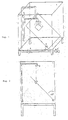
- the irrigation equipment consisted of a housing made of transparent plastic with the dimensions: height 70 cm, width 60 cm and depth 60 cm. It comprised a housing 1, a shower head 2, a sample pan 3, a pump 4, a floor drain 5 and a shut-off valve 6 for the drain.
- the sample pan consisted of a vessel measuring 7 x 7 cm and had a depth of 2.5 cm.
- the shower head was a conventional hand shower as used for body care and was set so that the sample was irrigated evenly. The distance between sample 3 and shower head 2 was 30 cm.
- the apparatus was operated with demineralized water, the pump producing an excess pressure of about 0.4 bar.
- the water flow rate was 300 l / h.
- the spraying with water was carried out 5 minutes, in each case 1 minute after filling and smoothing the surface of the masses to be tested.
- the washout (in% by weight) was determined by differential weighing before and after irrigation.
- Example 1 The constituents listed in Example 1 were mixed intensively in a planetary mixer for about 45 minutes, but instead of the hydroxyethyl cellulose at 4000 mPa.s: 20 g of a hydroxypropyl cellulose with a viscosity of about 5000 mPa.s a 2% aqueous solution at 20 ° C and a hydroxypropyl group content of 70%, trade name Klucel M were used.
- Example 1 In a planetary mixer, the constituents listed in Example 1 were mixed intensively for about 45 minutes, but instead of the 37 g of a methyl hydroxypropyl cellulose with a viscosity of about 20,000 mPa.s of a 2% strength aqueous solution at 20 ° C. and a hydroxypropyl group content of 3.2% by weight, trade name: Culminal MHPC 20000 PR were used.
Landscapes
- Chemical & Material Sciences (AREA)
- Engineering & Computer Science (AREA)
- Materials Engineering (AREA)
- Organic Chemistry (AREA)
- Life Sciences & Earth Sciences (AREA)
- Wood Science & Technology (AREA)
- Sealing Material Composition (AREA)
- Compositions Of Macromolecular Compounds (AREA)
- Paints Or Removers (AREA)
- Adhesives Or Adhesive Processes (AREA)
Abstract
Description
- Die Erfindung betrifft die Verwendung von nichtionischen Celluloseethern aus der von Hydroxyethyl-, Hydroxyethyl-methyl-, Hydroxypropyl-methyl- und Hydroxypropylcellulose gebildeten Gruppe mit Viskositäten nach Brookfield in 2 %-iger wäßriger Lösung bei 20°C von mindestens 3000, insbesondere mindestens 5000 mPa.s, als Zusätze zu Fugendicht- und Beschichtungsmassen auf Basis von wäßrigen Dispersionen von Polyacrylaten bzw. Acrylat-Copolymeren zur Verbesserung der Streichfähigkeit und des Glättverhaltens von noch nicht erhärteten Oberflächen dieser Massen.
- Aus Ullmann, Enzyklopädie der technischen Chemie, 4. Auflage, Seite 208 - 209, ist bekannt, daß nichtionische Celluloseetherderivate wie Hydroxyethylcellulose (HEC), Hydroxyethyl-methylcellulose (HEMC) und Hydroxypropyl-methylcellulose (HPMC) in Kunststoffputzen zur Verbesserung des Wasserrückhaltevermögens, der Offenzeit, der Naßhaftung sowie des Andick- und Abbindeverhaltens eingesetzt werden. Weiterhin erwähnt die DE-C 36 19 142 den Einsatz von wasserlöslichen Cellulosederivaten als Hilfsmittel beim mechanischen Glätten von noch nicht erhärteten Oberflächen von pastösen Materialien, insbesondere Fugendichtmassen, z.B. auf Basis von Polyacrylaten.
- Übliche bekannte Formulierungen von Fugendicht- und Beschichtungsmassen werden üblicherweise nach der Applikation mit Glättwasser oder Wasser/Netzmittelgemischen, z.B. gemäß DE-C 36 19 142, geglättet. Die Anwendung von Glättmitteln ermöglicht die Ausbildung sowohl technisch als auch optisch einwandfreier Anschlüsse zu angrenzeden Baukörpern sowie die Egalisierung von Fehlstellen in den Oberflächen dieser Massen. Durch Anreicherung von den im Glättmittel enthaltenden Netzmitteln wird der Gleitwiderstand an der Oberfläche der Dichtmittel herabgesetzt und der Glättvorgang als solcher ermöglicht. Durch die Anreicherung von Netzmitteln können unter bestimmten Voraussetzungen Rezepturbestandteile an der Oberfläche der Massen emulgiert werden; da dadurch die Zusammensetzung der Masse an der Oberfläche verändert wird, können die technischen Eigenschaften der Dichtmittel beeinträchtigt werden. Ebenfalls nachteilig kann sich die Verarmung von Bestandteilen der Masse an der Oberfläche auswirken.
- Die Erfindung ist auf Fugendicht- bzw. Beschichtungsmassen gerichtet, die bei ausgezeichneten Eigenschaften wie Elastizitätsmodul, Bruchdehnung und Rückstellvermögen ein verbessertes Gesamtglättverhalten und gleichzeitig eine erheblich verbesserte Migrationsbeständigkeit von Rezepturbestandteilen in die Oberfläche der Massen gegenüber den bekannten Formulierungen aufweist. Diese Aufgabe wird durch die Verwendung von nichtionischen Celluloseethern aus der von Hydroxyethyl-, Hydroxyethyl-methyl-, Hydroxypropyl-methyl- und Hydroxypropylcellulose gebildeten Gruppe mit Viskositäten nach Brookfield in 2 %-iger wäßriger Lösung bei 20°C von mindestens 3000, insbesondere mindestens 5000 mPa.s, als Zusätze zu Fugendicht- und Beschichtungsmassen auf Basis von wäßrigen Dispersionen von Polyacrylaten bzw. Acrylat-Copolymeren zur Verbesserung der Streichfähigkeit und des Glättverhaltens von noch nicht erhärteten Oberflächen dieser Massen gelöst.
- Ein wesentlicher und unerwarteter Vorteil der Fugendicht- bzw. Beschichtungsmassen der Erfindung ist weiterhin in dem sogenannten Auswaschverhalten zu sehen, d.h. die aufgetragene und noch nicht getrocknete Masse bleibt auch bei der Einwirkung von Wasser, z.B. Regenwasser, für einen längeren Zeitraum beständig.
- Die Erfindung betrifft weiterhin Fugendicht- bzw. Beschichtungsmassen, enthalten.
- a) wäßrige Dispersionen von Polyacrylaten bzw. Acrylat-Copolymeren,
- b) nichtionische Celluloseether aus der von Hydroxyethyl-, Hydroxyethyl-methyl-, Hydroxypropyl-methyl- und Hydroxypropylcellulose gebildeten Gruppe mit Viskositäten nach Brookfield in 2 %-iger wäßriger Lösung bei 20°C von mindestens 3000, insbesondere mindestens 5000 mPa.s,
sowie gegebenenfalls - c) übliche Zusätze wie Pigmente, Netzmittel, Weichmacher (Extender), Entschäumer, Dispergierhilfsmittel sowie Konservierungs- und Alterungsschutzmittel.
- Gemäß einer bevorzugten Ausführungsform der Erfindung sind die nichtionischen Celluloseether aus der von Hydroxyethyl-, Hydroxyethyl-methyl-, Hydroxypropyl-methyl- und Hydroxypropylcellulose gebildeten Gruppe mit Viskositäten nach Brookfield in 2 %-iger wäßriger Lösung bei 20°C von mindestens 3000, insbesondere mindestens 5000 mPa.s, in einer Menge von 0,4 bis 6,0 insbesondere 0,6 bis 5,0 Gew.-%, bezogen auf den Feststoffgehalt der Dispersion, enthalten.
- Die in den Fugendicht-bzw. Beschichtungsmassen der Erfindung enthaltenen wäßrigen Dispersionen von Polyacrylaten bzw. Acrylat-Copolymeren weisen bevorzugt Feststoffgehalte von 40 bis 70, insbesondere 45 bis 65 Gew.-%, auf. Ihr pH-Wert sollte mindestens 7, insbesondere 8 bis 9 betragen und wird, falls erforderlich, auf diese Werte eingestellt.
- Weiterhin können in den Fugendicht- bzw. Beschichtungsmassen der Erfindung Füllstoffe in einer Menge von 0 bis 60, insbesondere 2 bis 60 Gew.-%, bezogen auf die Gesamtmasse der Fugendicht- bzw. Beschichtungsmassen, enthalten sein. Derartige Massen weisen, wenn sie keine oder nur sehr wenig Füllstoffe enthalten, eine hohe Transparenz auf.
- Gemäß einer weiteren vorteilhaften Ausführungsform der Erfindung enthalten die Fugendicht- bzw. Beschichtungsmassen als Weichmacher chlorierte Kohlenwasserstoffe, insbesondere chlorierte Paraffine, und als Netzmittel nichtionische Tenside. Bevorzugt sind handelsübliche chlorierte Paraffine mit einer Kettenlänge von etwa 10 bis 18 Kohlenstoffatomen und einem Chlorgehalt von etwa 40 bis 70 Gew.-%.
- Die in den Fugendicht- bzw. Beschichtungsmassen enthaltenen wäßrigen Dispersionen von Polyacrylaten bzw. Acrylat-Copolymeren sowie die gegebenenfalls vorhandenen Pigmente, Weichmacher, Netzmittel, Entschäumer, Dispergierhilfsmittel sowie Konservierungs- und Alterungsschutzmittel sind handelsübliche Produkte, die dem Fachmann auf dem Gebiet der Fugendicht- bzw. Beschichtungsmassen für Bauzwecke bekannt sind.
- Auch die erfindungsgemäß einzusetzenden nichtionischen Celluloseether der obengenannten Spezifikation sind handelsübliche Produkte.
- Die Erfindung wird im folgenden anhand bevorzugter Ausführungsbeispiele näher erläutert.
- Die in den Beispielen beschriebenen Massen sowie weitere, zu Vergleichszwecken hergestellte Massen wurden einem Auswaschungstest unterworfen, wobei eine Beregnungsapparatur gemäß Fig. 1 verwendet wurde; die gleiche Apparatur ist in Fig. 2 in Seitenansicht gezeigt.
- Die Beregnungsapparatur bestand aus einem Gehäuse aus durchsichtigem Kunststoff mit den Abmessungen: Höhe 70 cm, Breite 60 cm und Tiefe 60 cm. Sie umfaßte ein Gehäuse 1, einen Brausenkopf 2, eine Probenschale 3, eine Pumpe 4, einen Bodenablauf 5 und einen Absperrhahn 6 für den Ablauf. Die Probenschale bestand aus einem Gefäß der Abmessung 7 x 7 cm und wies eine Tiefe von 2,5 cm auf. Bei dem Brausenkopf handelte es sich um eine übliche Handbrause, wie sie zur Körperpflege verwendet wird und die so eingestellt war, daß eine gleichmäßige Beregnung der Probe erfolgte. Der Abstand zwischen Probe 3 und Brausenkopf 2 betrug 30 cm.
- Die Apparatur wurde mit demineralisiertem Wasser betrieben, wobei durch die Pumpe ein Überdruck von etwa 0,4 bar erzeugt wurde. Der Wasserdurchsatz betrug 300 l/h. Das Besprühen mit Wasser wurde 5 Minuten, jeweils 1 min nach dem Einfüllen und Glattstreichen der Oberfläche der zu prüfenden Massen, vorgenommen. Die Auswaschung (in Gew.-%) wurden durch Differenzwägung vor und nach dem Beregnen bestimmt.
- Die in den Beispielen beschriebenen Massen wurden weiterhin einem Test hinsichtlich ihres Glätteverhaltens unterzogen. Dieser Test wurde von 7 unabhängig arbeitenden Personen so durchgeführt, daß nach Auftragen eines 30 cm langen Massenstrangs auf eine glatte, ebene, dunkle Unterlage die Masse mit Spatel und Fingern geglättet wurde. Das Glätteverhalten wurde nach einer Notenskala von 1 (= sehr gut) bis 6 (= ungenügend) beurteilt.
- In einem Planetenmischer wurden die folgenden Bestandteile während etwa 45 Minuten intensiv gemischt:
1750 g wäßrige, handelsübliche Polybutylacrylesterdispersion (ungefähr 62 % Feststoff), einem pH-Wert von 8,8 - 8,5, einer Glasübergangstemperatur Tg -50°C, einer Viskosität von etwa 250 mPa.s bei 23°C und einer mittleren Teilchengröße von 0,4 µm,
250 g Chlorparaffin (C₁₂-C₁₄, 49 % Chlor),
2800 g Bariumsulfat (Handelsprodukt: Schwerspat EWO),
100 g Titandioxid (Handelsprodukt KRONOS RN 56),
25 g Natriumcarbonat (techn. reine Handelsware),
25 g Ethylenoxidaddukt (ungefähr 9,5 EO) an Nonylphenol,
5 g handelsübliches halogeniertes Konservierungsmittel,
37 g Hydroxyethylcellulose mit einer Viskosität von etwa 4000 mPa.s einer 1 %-igen, wäßrigen Lösung bei 20°C und einem Hydroxyethylgruppengehalt von 55 Gew.-%, Handelsname: Natrosol 250 HHR. - Diese Mischung wurde in 310 ml Kunststoffkartuschen abgefüllt und war wenigstens ein Jahr bei Temperaturen bis 35°C lagerstabil.
Verarbeitbarkeit nach DIN 52456 (Bohrung 4 mm, 2 bar Druck, Prüfvolumen 200 ml): 2260 g/min Glättverhalten: gut Auswaschung: 1 % Verlust - Bei einem Zusatz von insgesamt 50 g derselben Hydroxyethylcellulose wurden folgende Ergebnisse gefunden:
Verarbeitbarkeit nach DIN 52456: 1300 g/min Glättverhalten: sehr gut Auswaschung: 0,3 % Verlust - In einem Planetenmischer wurden die wie in Beispiel 1 aufgeführten Bestandteile während etwa 45 Minuten intensiv gemischt, wobei jedoch anstelle der Hydroxyethylcellulose mit 4000 mPa.s:
20 g einer Hydroxypropylcellulose mit einer Viskosität von etwa 5000 mPa.s einer 2 %-igen, wäßrigen Lösung bei 20°C und einem Hydroxypropylgruppengehalt von 70 %, Handelsname Klucel M
eingesetzt wurden. - Diese Mischung wurde in 310 ml Kunststoffkartuschen abgefüllt und war wenigstens bei Temperaturen bis 35°C lagerstabil.
Verarbeitbarkeit nach DIN 52456, gemessen wie im Beispiel 1: 2100 g /min Glättverhalten: gut Auswaschung: 5 % Verlust - In einem Planetenmischer wurden die wie in Beispiel 1 aufgeführten Bestandteile während etwa 45 Minuten intensiv gemischt, wobei jedoch anstelle der Hydroxyethylcellulose mit auf 4000 mPa.s:
37 g einer Methylhydroxypropylcellulose mit einer Viskosität von etwa 20 000 mPa.s einer 2 %-igen, wäßrigen Lösung bei 20°C und einem Hydroxypropylgruppengehalt von 3,2 Gew.-%, Handelsname: Culminal MHPC 20000 PR
eingesetzt wurden. - Diese Mischung wurde in 310 ml Kunststoffkartuschen abgefüllt und war wenigstens ein Jahr bei Temperaturen bis 35°C lagerstabil.
Verarbeitbarkeit nach DIN 52456, gemessen wie im Beispiel 1: 2870 g/min Glättverhalten: gut Auswaschung: 3.5 % Verlust - In einem Planetenmischer wurden die folgenden Bestandteile während etwa 45 Minuten intensiv gemischt.
4700 g wäßrige Dispersion eines Polyacrylsäurebutylesters mit geringen Mengen einpolymerisierten Acrylnitrils (60 % Feststoffgehalt), pH-Wert etwa 5 - 6,
52 g Ethylenoxidaddukt (ungefähr 9,5) an Nonylphenol
25 g handelsübliches Silikon-KW-Entschäumergemisch
13 g handelsübliches phenolisches Konservierungsmittel (Parmetol, Schülke-Mayr, Hamburg)
102 g disperse Kieselsäure (Handelsprodukt HDK V 15, Wacker-Chemie)
36 g Ammoniaklösung (25 %-ig)
52 g Chlorparaffin (C₁₀-C₁₄, 49 % Chlor)
18 g einer Hydroxyethylcellulose mit einer Viskosität von etwa 4000 mPa.s einer 1 %-igen, wäßrigen Lösung und einem Hydroxyethylgruppengehalt von 55 Gew.-%, Handelsname: Natrosol 250 HHR. - Diese Mischung wurde in 310 ml Kunststoffkartuschen abgefüllt und war wenigstens ein Jahr bei Temperaturen bis 35°C lagerstabil.
Verarbeitbarkeit nach DIN 52456, gemessen wie in Beispiel 1: 3700 g/min Glättverhalten: gut Auswaschung: 4,5 % Verlust - In einem Planetenmischer wurden die folgenden Bestandteile während etwa 45 Minuten intensiv gemischt:
2795 g wäßrige, handelsübliche Dispersion eines Acrylsäureester-Styrol-Copolymeren (ungefähr 50 % Feststoff) mit einem pH-Wert von etwa 8, einer Viskosität von 1200 mPa.s bei 23°C und einer mittleren Teilchengröße von ca. 0,1 µm (anionischer Dispersionstyp)
180 g Chlorparaffin ((C₁₀-C₁₂)-Kettenlänge, 40 % Chlor)
1600 g Bariumsulfat (Schwerspat C 11, Sachtleben)
150 g Titandioxid (KRONOS RN 56)
5 g Natriumsalz von Polyacrylsäure (Dispex N 40)
100 g Formalin (30 % Formaldehydlösung)
120 g Phthalsäure(bis-methylcyclohexanyl)ester
50 g Hydroxyethylcellulose mit einer Viskosität von etwa 400 mPa.s einer 1 %-igen, wäßrigen Lösung bei 20°C und einem Hydroxyethylgruppengehalt von 55 Gew.-%, Handelsname: Natrosol 250 HHR. - Diese Mischung wurde in 310 ml Kunststoffkartuschen abgefüllt und war wenigstens ein Jahr bei Temperaturen bis 35°C lagerstabil.
Verarbeitbarkeit nach DIN 52456, gemessen wie im Beispiel 1: 1500 g/min Glättverhalten: sehr gut Auswaschung: 0,5 % Verlust -
- a) Beispiel 1 wurde unter Weglassung der Hydroxyethylcellulose wiederholt:
23 % Auswaschung - b) Beispiel 1 wurde wiederholt, wobei anstelle der Hydroxyethylcellulose Carboxylmethylcellulose (DS 0,8, Viskosität 400 mPa.s in 2 %-iger, wäßriger Lösung bei 20 °C eingesetzt wurden:
27 % Auswaschung - c) Beispiel 4 wurde unter Weglassung von Hydroxyethylcellulose wiederholt:
20 % Auswaschung.
Claims (8)
sowie gegebenenfalls
sowie gegebenenfalls
Applications Claiming Priority (2)
| Application Number | Priority Date | Filing Date | Title |
|---|---|---|---|
| DE3814078 | 1988-04-26 | ||
| DE3814078A DE3814078A1 (de) | 1988-04-26 | 1988-04-26 | Verwendung von nichtionischen celluloseethern in fugendicht- bzw. beschichtungsmassen |
Publications (4)
| Publication Number | Publication Date |
|---|---|
| EP0339427A2 true EP0339427A2 (de) | 1989-11-02 |
| EP0339427A3 EP0339427A3 (de) | 1991-03-06 |
| EP0339427B1 EP0339427B1 (de) | 1994-02-16 |
| EP0339427B2 EP0339427B2 (de) | 2010-10-27 |
Family
ID=6352916
Family Applications (1)
| Application Number | Title | Priority Date | Filing Date |
|---|---|---|---|
| EP89106842A Expired - Lifetime EP0339427B2 (de) | 1988-04-26 | 1989-04-17 | Verwendung von nichtionischen Celluloseethern in Fugendicht- bzw. Beschichtungsmassen |
Country Status (16)
| Country | Link |
|---|---|
| US (1) | US5004769A (de) |
| EP (1) | EP0339427B2 (de) |
| JP (1) | JP2818798B2 (de) |
| KR (1) | KR0139533B1 (de) |
| CN (1) | CN1032475C (de) |
| AT (1) | ATE101633T1 (de) |
| BR (1) | BR8901947A (de) |
| CA (1) | CA1339385C (de) |
| DE (2) | DE3814078A1 (de) |
| DK (1) | DK174819B1 (de) |
| ES (1) | ES2061763T3 (de) |
| FI (1) | FI100721B (de) |
| MX (1) | MX172386B (de) |
| NO (1) | NO306820B1 (de) |
| PT (1) | PT90358B (de) |
| ZA (1) | ZA893048B (de) |
Cited By (8)
| Publication number | Priority date | Publication date | Assignee | Title |
|---|---|---|---|---|
| EP0423612A1 (de) * | 1989-10-19 | 1991-04-24 | Henkel Kommanditgesellschaft auf Aktien | Früh regenfeste Fugendichtungsmassen |
| EP0423611A1 (de) * | 1989-10-19 | 1991-04-24 | Henkel Kommanditgesellschaft auf Aktien | Früh regenfeste Fugendichtungsmassen |
| EP0423613A1 (de) * | 1989-10-19 | 1991-04-24 | Henkel Kommanditgesellschaft auf Aktien | Früh regenfeste Fugendichtungsmassen |
| US5134180A (en) * | 1988-04-26 | 1992-07-28 | Henkel Kommanditgesellschaft Auf Aktien | Use of nonionic cellulose ethers in jointing and coating compounds based on aqueous polymer dispersions |
| WO1994002556A1 (en) * | 1992-07-21 | 1994-02-03 | Bostik S.A. | Early-rain-resistant sealing compositions and a process for their preparation |
| EP0857772A1 (de) * | 1997-02-06 | 1998-08-12 | Wacker-Chemie GmbH | Fugendichtungsmassen mit Verbessertem Rückstellvermögen |
| FR2790754A1 (fr) * | 1999-03-09 | 2000-09-15 | Gerard Noale | Composition destinee a former un enduit ou une colle, a usage dans l'industrie du batiment |
| EP3739008A1 (de) * | 2019-05-13 | 2020-11-18 | Daw Se | Wässrige beschichtungsmasse, insbesondere pastöse wässrige beschichtungsmasse, beschichtung erhältlich aus der beschichtungsmasse und deren verwendung |
Families Citing this family (4)
| Publication number | Priority date | Publication date | Assignee | Title |
|---|---|---|---|---|
| DE4431344A1 (de) * | 1994-09-02 | 1996-03-07 | Hoechst Ag | Wäßrige Dispersionen für Klebstoffe |
| EP0921162B1 (de) * | 1997-12-03 | 2006-11-08 | Regina Trutzl | Verwendung von Massen zum Giessen, Modellieren und Formen |
| US20080227892A1 (en) * | 2007-03-13 | 2008-09-18 | Van Der Wielen Maarten | Paint formulations comprising cellulose ether/network building polymer fluid gel thickeners |
| DE102009007911A1 (de) * | 2009-02-06 | 2010-08-19 | Sto Ag | Viskose, kornhaltige aushärtende Beschichtungsmasse |
Family Cites Families (7)
| Publication number | Priority date | Publication date | Assignee | Title |
|---|---|---|---|---|
| NL276712A (de) * | ||||
| US3554942A (en) * | 1969-06-10 | 1971-01-12 | Richard E Zdanowski | Sealant or spackling composition containing unsaturated carboxylic acid copolymer salts |
| US3859233A (en) * | 1970-06-24 | 1975-01-07 | American Olean Tile Co Inc | Grout composition |
| GB2129823B (en) † | 1982-11-05 | 1987-04-08 | Building Adhesives Ltd | Water-based sealers for protecting decorative building surfacing components |
| US4454267A (en) * | 1982-12-20 | 1984-06-12 | United States Gypsum Company | Lightweight joint compound |
| US4571415A (en) * | 1984-10-01 | 1986-02-18 | Rohm And Haas Company | Washout resistant coatings |
| DE3619142C1 (de) * | 1986-06-06 | 1987-10-08 | Henkel Kgaa | Glaettmittel fuer Fugendichtungsmassen |
-
1988
- 1988-04-26 DE DE3814078A patent/DE3814078A1/de not_active Withdrawn
-
1989
- 1989-04-17 ES ES89106842T patent/ES2061763T3/es not_active Expired - Lifetime
- 1989-04-17 DE DE89106842T patent/DE58906961D1/de not_active Expired - Lifetime
- 1989-04-17 EP EP89106842A patent/EP0339427B2/de not_active Expired - Lifetime
- 1989-04-17 AT AT89106842T patent/ATE101633T1/de not_active IP Right Cessation
- 1989-04-20 MX MX015735A patent/MX172386B/es unknown
- 1989-04-24 PT PT90358A patent/PT90358B/pt not_active IP Right Cessation
- 1989-04-24 US US07/342,408 patent/US5004769A/en not_active Expired - Lifetime
- 1989-04-24 DK DK198901974A patent/DK174819B1/da not_active IP Right Cessation
- 1989-04-25 CN CN89102657A patent/CN1032475C/zh not_active Expired - Fee Related
- 1989-04-25 BR BR898901947A patent/BR8901947A/pt not_active IP Right Cessation
- 1989-04-25 ZA ZA893048A patent/ZA893048B/xx unknown
- 1989-04-25 CA CA000597693A patent/CA1339385C/en not_active Expired - Fee Related
- 1989-04-25 FI FI891961A patent/FI100721B/fi active IP Right Grant
- 1989-04-25 NO NO891702A patent/NO306820B1/no unknown
- 1989-04-25 JP JP1103598A patent/JP2818798B2/ja not_active Expired - Fee Related
- 1989-04-26 KR KR1019890005524A patent/KR0139533B1/ko not_active Expired - Fee Related
Cited By (12)
| Publication number | Priority date | Publication date | Assignee | Title |
|---|---|---|---|---|
| US5134180A (en) * | 1988-04-26 | 1992-07-28 | Henkel Kommanditgesellschaft Auf Aktien | Use of nonionic cellulose ethers in jointing and coating compounds based on aqueous polymer dispersions |
| EP0423612A1 (de) * | 1989-10-19 | 1991-04-24 | Henkel Kommanditgesellschaft auf Aktien | Früh regenfeste Fugendichtungsmassen |
| EP0423611A1 (de) * | 1989-10-19 | 1991-04-24 | Henkel Kommanditgesellschaft auf Aktien | Früh regenfeste Fugendichtungsmassen |
| EP0423613A1 (de) * | 1989-10-19 | 1991-04-24 | Henkel Kommanditgesellschaft auf Aktien | Früh regenfeste Fugendichtungsmassen |
| WO1991005827A1 (de) * | 1989-10-19 | 1991-05-02 | Henkel Kommanditgesellschaft Auf Aktien | Frühregenfeste fugendichtungsmassen |
| WO1991005826A1 (de) * | 1989-10-19 | 1991-05-02 | Henkel Kommanditgesellschaft Auf Aktien | Frühregenfeste fugendichtungsmassen |
| WO1991005825A1 (de) * | 1989-10-19 | 1991-05-02 | Henkel Kommanditgesellschaft Auf Aktien | Frühregenfeste fugendichtungsmassen |
| WO1994002556A1 (en) * | 1992-07-21 | 1994-02-03 | Bostik S.A. | Early-rain-resistant sealing compositions and a process for their preparation |
| EP0857772A1 (de) * | 1997-02-06 | 1998-08-12 | Wacker-Chemie GmbH | Fugendichtungsmassen mit Verbessertem Rückstellvermögen |
| US6184274B1 (en) | 1997-02-06 | 2001-02-06 | Wacker - Chemie Gmbh | Jointing compounds with improved resilience |
| FR2790754A1 (fr) * | 1999-03-09 | 2000-09-15 | Gerard Noale | Composition destinee a former un enduit ou une colle, a usage dans l'industrie du batiment |
| EP3739008A1 (de) * | 2019-05-13 | 2020-11-18 | Daw Se | Wässrige beschichtungsmasse, insbesondere pastöse wässrige beschichtungsmasse, beschichtung erhältlich aus der beschichtungsmasse und deren verwendung |
Also Published As
| Publication number | Publication date |
|---|---|
| MX172386B (es) | 1993-12-15 |
| ES2061763T3 (es) | 1994-12-16 |
| DK197489D0 (da) | 1989-04-24 |
| CA1339385C (en) | 1997-08-26 |
| ZA893048B (en) | 1989-12-27 |
| PT90358A (pt) | 1989-11-10 |
| NO306820B1 (no) | 1999-12-27 |
| NO891702D0 (no) | 1989-04-25 |
| FI891961A0 (fi) | 1989-04-25 |
| NO891702L (no) | 1989-10-27 |
| DK197489A (da) | 1989-10-27 |
| DK174819B1 (da) | 2003-12-01 |
| JP2818798B2 (ja) | 1998-10-30 |
| KR890016114A (ko) | 1989-11-28 |
| US5004769A (en) | 1991-04-02 |
| EP0339427B1 (de) | 1994-02-16 |
| DE3814078A1 (de) | 1989-11-09 |
| CN1037912A (zh) | 1989-12-13 |
| KR0139533B1 (ko) | 1998-06-15 |
| EP0339427A3 (de) | 1991-03-06 |
| ATE101633T1 (de) | 1994-03-15 |
| BR8901947A (pt) | 1989-11-28 |
| CN1032475C (zh) | 1996-08-07 |
| JPH01315450A (ja) | 1989-12-20 |
| PT90358B (pt) | 1994-09-30 |
| DE58906961D1 (de) | 1994-03-24 |
| FI891961L (fi) | 1989-10-27 |
| EP0339427B2 (de) | 2010-10-27 |
| FI100721B (fi) | 1998-02-13 |
Similar Documents
| Publication | Publication Date | Title |
|---|---|---|
| DE69427828T2 (de) | Mit aluminiumoxid verdickte latexzusammensetzungen | |
| DE60002918T3 (de) | Herstellung von betonbeschleuniger | |
| DE69510725T3 (de) | Wässrige, fliessfähige Verdickungszusammensetzung für wässrige Systeme und ein Verfahren zur Verdickung dieser wässrigen Systeme | |
| EP0339427B1 (de) | Verwendung von nichtionischen Celluloseethern in Fugendicht- bzw. Beschichtungsmassen | |
| DE69219196T2 (de) | Rheologiekontrollierende Zusatzmittel | |
| DE69324953T2 (de) | Fluidisierte Polymer-Suspension für die kontinuierliche Herstellung eines Überzugsmittels | |
| EP0616989B1 (de) | Imprägnierungsemulsion für mineralische Baustoffe | |
| DE69522162T2 (de) | Wässrige Ton-enthaltende Emulsionsfarbe mit verbesserten Beschichtungseigenschaften | |
| EP3712216B1 (de) | Stabilisatoren für dispersionssilikatfarben | |
| DE69622502T2 (de) | Superdispergierbare Verdickungszusammensetzung für wässrige Systeme und Verfahren zur Verdickung derselben | |
| EP0423613A1 (de) | Früh regenfeste Fugendichtungsmassen | |
| DE2422774A1 (de) | Rissfreie, trocknende fugenmasse ohne glimmergehalt mit als nebenprodukt anfallendem gips als fuellstoff | |
| EP0441924B1 (de) | Haftvermittler und moertel-zusatz stabilisierter viskosität sowie verfahren zu dessen herstellung | |
| DE60109681T2 (de) | Verfahren zur Verminderung der Synärese in wässrigen Zusammensetzungen | |
| DE69909630T2 (de) | Additive für besondere gips- und mörtelsorten, zusammensetzungen diese enthaltend und verwendung derselben in speziellen gips- und mörtelsorten | |
| DE3934870C2 (de) | Fugendicht- bzw. Beschichtungsmassen auf Basis wäßriger Polymerdispersionen sowie Verwendung von nichtionischen Celluloseethern als Zusätze zu diesen Massen | |
| DE2820389B2 (de) | Verfahren zur Herstellung von wäßrigen Polyvinylalkohol-Dispersionen und deren Verwendung als Zementzusätze | |
| EP0423612A1 (de) | Früh regenfeste Fugendichtungsmassen | |
| EP0423611A1 (de) | Früh regenfeste Fugendichtungsmassen | |
| DE4024553A1 (de) | Fruehregenfeste fugendichtungsmasse | |
| DE4024550A1 (de) | Fruehregenfeste fugendichtungsmassen | |
| DE4024551A1 (de) | Fruehregenfeste fugendichtungsmassen | |
| DE69313288T3 (de) | Dispersionen von flüssigen Haftmitteln | |
| DE4224044A1 (de) | Frühregenfeste Dichtmasse auf Basis wäßriger Acrylatdispersionen und Verfahren zu ihrer Herstellung | |
| DE19549441A1 (de) | Verdickerzusammensetzung für Fliesenkleber |
Legal Events
| Date | Code | Title | Description |
|---|---|---|---|
| PUAI | Public reference made under article 153(3) epc to a published international application that has entered the european phase |
Free format text: ORIGINAL CODE: 0009012 |
|
| AK | Designated contracting states |
Kind code of ref document: A2 Designated state(s): AT BE CH DE ES FR GB GR IT LI LU NL SE |
|
| PUAL | Search report despatched |
Free format text: ORIGINAL CODE: 0009013 |
|
| AK | Designated contracting states |
Kind code of ref document: A3 Designated state(s): AT BE CH DE ES FR GB GR IT LI LU NL SE |
|
| RHK1 | Main classification (correction) |
Ipc: C09D 5/34 |
|
| 17P | Request for examination filed |
Effective date: 19910529 |
|
| 17Q | First examination report despatched |
Effective date: 19920414 |
|
| GRAA | (expected) grant |
Free format text: ORIGINAL CODE: 0009210 |
|
| AK | Designated contracting states |
Kind code of ref document: B1 Designated state(s): AT BE CH DE ES FR GB GR IT LI LU NL SE |
|
| REF | Corresponds to: |
Ref document number: 101633 Country of ref document: AT Date of ref document: 19940315 Kind code of ref document: T |
|
| ET | Fr: translation filed | ||
| REF | Corresponds to: |
Ref document number: 58906961 Country of ref document: DE Date of ref document: 19940324 |
|
| REG | Reference to a national code |
Ref country code: GR Ref legal event code: FG4A Free format text: 3010783 |
|
| ITF | It: translation for a ep patent filed | ||
| GBT | Gb: translation of ep patent filed (gb section 77(6)(a)/1977) |
Effective date: 19940517 |
|
| EPTA | Lu: last paid annual fee | ||
| PLBI | Opposition filed |
Free format text: ORIGINAL CODE: 0009260 |
|
| REG | Reference to a national code |
Ref country code: ES Ref legal event code: FG2A Ref document number: 2061763 Country of ref document: ES Kind code of ref document: T3 |
|
| 26 | Opposition filed |
Opponent name: AKZO NOBEL DECORATIVE COATINGS AB Effective date: 19941117 |
|
| EAL | Se: european patent in force in sweden |
Ref document number: 89106842.1 |
|
| NLR1 | Nl: opposition has been filed with the epo |
Opponent name: AKZO NOBEL DECORATIVE COATINGS AB |
|
| NLT2 | Nl: modifications (of names), taken from the european patent patent bulletin |
Owner name: HENKEL KOMMANDITGESELLSCHAFT AUF AKTIEN |
|
| RDAH | Patent revoked |
Free format text: ORIGINAL CODE: EPIDOS REVO |
|
| APAC | Appeal dossier modified |
Free format text: ORIGINAL CODE: EPIDOS NOAPO |
|
| APAE | Appeal reference modified |
Free format text: ORIGINAL CODE: EPIDOS REFNO |
|
| APAC | Appeal dossier modified |
Free format text: ORIGINAL CODE: EPIDOS NOAPO |
|
| APAC | Appeal dossier modified |
Free format text: ORIGINAL CODE: EPIDOS NOAPO |
|
| REG | Reference to a national code |
Ref country code: GB Ref legal event code: IF02 |
|
| APBP | Date of receipt of notice of appeal recorded |
Free format text: ORIGINAL CODE: EPIDOSNNOA2O |
|
| APBQ | Date of receipt of statement of grounds of appeal recorded |
Free format text: ORIGINAL CODE: EPIDOSNNOA3O |
|
| APBY | Invitation to file observations in appeal sent |
Free format text: ORIGINAL CODE: EPIDOSNOBA2O |
|
| PLAQ | Examination of admissibility of opposition: information related to despatch of communication + time limit deleted |
Free format text: ORIGINAL CODE: EPIDOSDOPE2 |
|
| PLAR | Examination of admissibility of opposition: information related to receipt of reply deleted |
Free format text: ORIGINAL CODE: EPIDOSDOPE4 |
|
| PLBQ | Unpublished change to opponent data |
Free format text: ORIGINAL CODE: EPIDOS OPPO |
|
| PLAB | Opposition data, opponent's data or that of the opponent's representative modified |
Free format text: ORIGINAL CODE: 0009299OPPO |
|
| APCA | Receipt of observations in appeal recorded |
Free format text: ORIGINAL CODE: EPIDOSNOBA4O |
|
| R26 | Opposition filed (corrected) |
Opponent name: AKZO NOBEL DECO INTERNATIONAL AB Effective date: 19941117 |
|
| APBU | Appeal procedure closed |
Free format text: ORIGINAL CODE: EPIDOSNNOA9O |
|
| NLR1 | Nl: opposition has been filed with the epo |
Opponent name: AKZO NOBEL DECO INTERNATIONAL AB |
|
| APAH | Appeal reference modified |
Free format text: ORIGINAL CODE: EPIDOSCREFNO |
|
| PGFP | Annual fee paid to national office [announced via postgrant information from national office to epo] |
Ref country code: GR Payment date: 20060314 Year of fee payment: 18 |
|
| PGFP | Annual fee paid to national office [announced via postgrant information from national office to epo] |
Ref country code: SE Payment date: 20060406 Year of fee payment: 18 |
|
| PGFP | Annual fee paid to national office [announced via postgrant information from national office to epo] |
Ref country code: AT Payment date: 20060412 Year of fee payment: 18 |
|
| PGFP | Annual fee paid to national office [announced via postgrant information from national office to epo] |
Ref country code: CH Payment date: 20060413 Year of fee payment: 18 |
|
| PGFP | Annual fee paid to national office [announced via postgrant information from national office to epo] |
Ref country code: LU Payment date: 20060420 Year of fee payment: 18 |
|
| PGFP | Annual fee paid to national office [announced via postgrant information from national office to epo] |
Ref country code: IT Payment date: 20060430 Year of fee payment: 18 |
|
| PGFP | Annual fee paid to national office [announced via postgrant information from national office to epo] |
Ref country code: ES Payment date: 20060523 Year of fee payment: 18 |
|
| REG | Reference to a national code |
Ref country code: CH Ref legal event code: PL |
|
| PG25 | Lapsed in a contracting state [announced via postgrant information from national office to epo] |
Ref country code: AT Free format text: LAPSE BECAUSE OF NON-PAYMENT OF DUE FEES Effective date: 20070417 Ref country code: LI Free format text: LAPSE BECAUSE OF NON-PAYMENT OF DUE FEES Effective date: 20070430 Ref country code: CH Free format text: LAPSE BECAUSE OF NON-PAYMENT OF DUE FEES Effective date: 20070430 |
|
| APBP | Date of receipt of notice of appeal recorded |
Free format text: ORIGINAL CODE: EPIDOSNNOA2O |
|
| APAH | Appeal reference modified |
Free format text: ORIGINAL CODE: EPIDOSCREFNO |
|
| PLAB | Opposition data, opponent's data or that of the opponent's representative modified |
Free format text: ORIGINAL CODE: 0009299OPPO |
|
| R26 | Opposition filed (corrected) |
Opponent name: AKZO NOBEL DECO INTERNATIONAL AB Effective date: 19941117 |
|
| RAP2 | Party data changed (patent owner data changed or rights of a patent transferred) |
Owner name: HENKEL AG & CO. KGAA |
|
| APBQ | Date of receipt of statement of grounds of appeal recorded |
Free format text: ORIGINAL CODE: EPIDOSNNOA3O |
|
| PG25 | Lapsed in a contracting state [announced via postgrant information from national office to epo] |
Ref country code: SE Free format text: LAPSE BECAUSE OF NON-PAYMENT OF DUE FEES Effective date: 20070418 |
|
| REG | Reference to a national code |
Ref country code: ES Ref legal event code: FD2A Effective date: 20070418 |
|
| PGFP | Annual fee paid to national office [announced via postgrant information from national office to epo] |
Ref country code: FR Payment date: 20080312 Year of fee payment: 20 Ref country code: DE Payment date: 20080424 Year of fee payment: 20 |
|
| NLR1 | Nl: opposition has been filed with the epo |
Opponent name: AKZO NOBEL DECO INTERNATIONAL AB |
|
| NLT2 | Nl: modifications (of names), taken from the european patent patent bulletin |
Owner name: HENKEL AG & CO. KGAA Effective date: 20080611 |
|
| PGFP | Annual fee paid to national office [announced via postgrant information from national office to epo] |
Ref country code: BE Payment date: 20080616 Year of fee payment: 20 |
|
| PG25 | Lapsed in a contracting state [announced via postgrant information from national office to epo] |
Ref country code: GR Free format text: LAPSE BECAUSE OF NON-PAYMENT OF DUE FEES Effective date: 20071102 Ref country code: ES Free format text: LAPSE BECAUSE OF NON-PAYMENT OF DUE FEES Effective date: 20070418 |
|
| PGFP | Annual fee paid to national office [announced via postgrant information from national office to epo] |
Ref country code: NL Payment date: 20080303 Year of fee payment: 20 |
|
| PGFP | Annual fee paid to national office [announced via postgrant information from national office to epo] |
Ref country code: GB Payment date: 20080423 Year of fee payment: 20 |
|
| BE20 | Be: patent expired |
Owner name: *HENKEL K.G.A.A. Effective date: 20090417 |
|
| REG | Reference to a national code |
Ref country code: GB Ref legal event code: PE20 Expiry date: 20090416 |
|
| PG25 | Lapsed in a contracting state [announced via postgrant information from national office to epo] |
Ref country code: NL Free format text: LAPSE BECAUSE OF EXPIRATION OF PROTECTION Effective date: 20090417 |
|
| NLV7 | Nl: ceased due to reaching the maximum lifetime of a patent |
Effective date: 20090417 |
|
| PG25 | Lapsed in a contracting state [announced via postgrant information from national office to epo] |
Ref country code: LU Free format text: LAPSE BECAUSE OF NON-PAYMENT OF DUE FEES Effective date: 20070417 |
|
| PG25 | Lapsed in a contracting state [announced via postgrant information from national office to epo] |
Ref country code: IT Free format text: LAPSE BECAUSE OF NON-PAYMENT OF DUE FEES Effective date: 20070417 |
|
| PG25 | Lapsed in a contracting state [announced via postgrant information from national office to epo] |
Ref country code: GB Free format text: LAPSE BECAUSE OF EXPIRATION OF PROTECTION Effective date: 20090416 |
|
| APBU | Appeal procedure closed |
Free format text: ORIGINAL CODE: EPIDOSNNOA9O |
|
| PUAH | Patent maintained in amended form |
Free format text: ORIGINAL CODE: 0009272 |
|
| STAA | Information on the status of an ep patent application or granted ep patent |
Free format text: STATUS: PATENT MAINTAINED AS AMENDED |
|
| 27A | Patent maintained in amended form |
Effective date: 20101027 |
|
| AK | Designated contracting states |
Kind code of ref document: B2 Designated state(s): AT BE CH DE ES FR GB GR IT LI LU NL SE |