EP0334617B1 - Sweetener compositions - Google Patents
Sweetener compositions Download PDFInfo
- Publication number
- EP0334617B1 EP0334617B1 EP89302813A EP89302813A EP0334617B1 EP 0334617 B1 EP0334617 B1 EP 0334617B1 EP 89302813 A EP89302813 A EP 89302813A EP 89302813 A EP89302813 A EP 89302813A EP 0334617 B1 EP0334617 B1 EP 0334617B1
- Authority
- EP
- European Patent Office
- Prior art keywords
- sucrose
- sweetener
- crystals
- spheroids
- product
- Prior art date
- Legal status (The legal status is an assumption and is not a legal conclusion. Google has not performed a legal analysis and makes no representation as to the accuracy of the status listed.)
- Expired - Lifetime
Links
- 235000003599 food sweetener Nutrition 0.000 title claims description 33
- 239000003765 sweetening agent Substances 0.000 title claims description 33
- 239000000203 mixture Substances 0.000 title description 19
- CZMRCDWAGMRECN-UGDNZRGBSA-N Sucrose Chemical compound O[C@H]1[C@H](O)[C@@H](CO)O[C@@]1(CO)O[C@@H]1[C@H](O)[C@@H](O)[C@H](O)[C@@H](CO)O1 CZMRCDWAGMRECN-UGDNZRGBSA-N 0.000 claims description 58
- 229930006000 Sucrose Natural products 0.000 claims description 58
- 229960004793 sucrose Drugs 0.000 claims description 57
- 239000005720 sucrose Substances 0.000 claims description 57
- 239000013078 crystal Substances 0.000 claims description 31
- 239000008123 high-intensity sweetener Substances 0.000 claims description 25
- 238000000034 method Methods 0.000 claims description 25
- 235000013615 non-nutritive sweetener Nutrition 0.000 claims description 25
- 238000001694 spray drying Methods 0.000 claims description 20
- 235000020357 syrup Nutrition 0.000 claims description 18
- 239000006188 syrup Substances 0.000 claims description 18
- 239000007921 spray Substances 0.000 claims description 11
- IAOZJIPTCAWIRG-QWRGUYRKSA-N aspartame Chemical compound OC(=O)C[C@H](N)C(=O)N[C@H](C(=O)OC)CC1=CC=CC=C1 IAOZJIPTCAWIRG-QWRGUYRKSA-N 0.000 claims description 9
- 239000004376 Sucralose Substances 0.000 claims description 8
- 235000019408 sucralose Nutrition 0.000 claims description 8
- BAQAVOSOZGMPRM-QBMZZYIRSA-N sucralose Chemical compound O[C@@H]1[C@@H](O)[C@@H](Cl)[C@@H](CO)O[C@@H]1O[C@@]1(CCl)[C@@H](O)[C@H](O)[C@@H](CCl)O1 BAQAVOSOZGMPRM-QBMZZYIRSA-N 0.000 claims description 8
- 229960004016 sucrose syrup Drugs 0.000 claims description 8
- 235000010358 acesulfame potassium Nutrition 0.000 claims description 6
- 239000000619 acesulfame-K Substances 0.000 claims description 6
- 238000005054 agglomeration Methods 0.000 claims description 6
- 230000002776 aggregation Effects 0.000 claims description 6
- WBZFUFAFFUEMEI-UHFFFAOYSA-M Acesulfame k Chemical compound [K+].CC1=CC(=O)[N-]S(=O)(=O)O1 WBZFUFAFFUEMEI-UHFFFAOYSA-M 0.000 claims description 5
- CVHZOJJKTDOEJC-UHFFFAOYSA-N saccharin Chemical compound C1=CC=C2C(=O)NS(=O)(=O)C2=C1 CVHZOJJKTDOEJC-UHFFFAOYSA-N 0.000 claims description 4
- 235000019204 saccharin Nutrition 0.000 claims description 4
- 229940081974 saccharin Drugs 0.000 claims description 4
- 239000000901 saccharin and its Na,K and Ca salt Substances 0.000 claims description 4
- 229940109275 cyclamate Drugs 0.000 claims description 3
- 238000002347 injection Methods 0.000 claims description 3
- 239000007924 injection Substances 0.000 claims description 3
- 229940013618 stevioside Drugs 0.000 claims description 3
- OHHNJQXIOPOJSC-UHFFFAOYSA-N stevioside Natural products CC1(CCCC2(C)C3(C)CCC4(CC3(CCC12C)CC4=C)OC5OC(CO)C(O)C(O)C5OC6OC(CO)C(O)C(O)C6O)C(=O)OC7OC(CO)C(O)C(O)C7O OHHNJQXIOPOJSC-UHFFFAOYSA-N 0.000 claims description 3
- 235000019202 steviosides Nutrition 0.000 claims description 3
- UEDUENGHJMELGK-HYDKPPNVSA-N Stevioside Chemical compound O([C@@H]1[C@@H](O)[C@H](O)[C@@H](CO)O[C@H]1O[C@]12C(=C)C[C@@]3(C1)CC[C@@H]1[C@@](C)(CCC[C@]1([C@@H]3CC2)C)C(=O)O[C@H]1[C@@H]([C@@H](O)[C@H](O)[C@@H](CO)O1)O)[C@@H]1O[C@H](CO)[C@@H](O)[C@H](O)[C@H]1O UEDUENGHJMELGK-HYDKPPNVSA-N 0.000 claims description 2
- HCAJEUSONLESMK-UHFFFAOYSA-N cyclohexylsulfamic acid Chemical compound OS(=O)(=O)NC1CCCCC1 HCAJEUSONLESMK-UHFFFAOYSA-N 0.000 claims description 2
- 238000002360 preparation method Methods 0.000 claims description 2
- 235000000346 sugar Nutrition 0.000 description 34
- CURLTUGMZLYLDI-UHFFFAOYSA-N Carbon dioxide Chemical compound O=C=O CURLTUGMZLYLDI-UHFFFAOYSA-N 0.000 description 22
- 235000021552 granulated sugar Nutrition 0.000 description 12
- 229910002092 carbon dioxide Inorganic materials 0.000 description 11
- 239000002245 particle Substances 0.000 description 8
- 108010011485 Aspartame Proteins 0.000 description 7
- 239000000605 aspartame Substances 0.000 description 7
- 235000010357 aspartame Nutrition 0.000 description 7
- 229960003438 aspartame Drugs 0.000 description 7
- 239000001569 carbon dioxide Substances 0.000 description 7
- 239000007787 solid Substances 0.000 description 7
- 150000001720 carbohydrates Chemical class 0.000 description 6
- 239000004615 ingredient Substances 0.000 description 6
- XLYOFNOQVPJJNP-UHFFFAOYSA-N water Substances O XLYOFNOQVPJJNP-UHFFFAOYSA-N 0.000 description 6
- 235000005979 Citrus limon Nutrition 0.000 description 5
- 244000131522 Citrus pyriformis Species 0.000 description 5
- 235000014633 carbohydrates Nutrition 0.000 description 5
- 238000009826 distribution Methods 0.000 description 5
- 239000000843 powder Substances 0.000 description 5
- 238000010411 cooking Methods 0.000 description 4
- 239000007789 gas Substances 0.000 description 4
- 150000008163 sugars Chemical class 0.000 description 4
- GUBGYTABKSRVRQ-QKKXKWKRSA-N Lactose Natural products OC[C@H]1O[C@@H](O[C@H]2[C@H](O)[C@@H](O)C(O)O[C@@H]2CO)[C@H](O)[C@@H](O)[C@H]1O GUBGYTABKSRVRQ-QKKXKWKRSA-N 0.000 description 3
- 229920002774 Maltodextrin Polymers 0.000 description 3
- 235000009508 confectionery Nutrition 0.000 description 3
- 235000014510 cooky Nutrition 0.000 description 3
- 235000013305 food Nutrition 0.000 description 3
- 239000008101 lactose Substances 0.000 description 3
- 239000000126 substance Substances 0.000 description 3
- 244000075850 Avena orientalis Species 0.000 description 2
- 235000007319 Avena orientalis Nutrition 0.000 description 2
- 241000283690 Bos taurus Species 0.000 description 2
- 239000001828 Gelatine Substances 0.000 description 2
- 239000005913 Maltodextrin Substances 0.000 description 2
- UIIMBOGNXHQVGW-UHFFFAOYSA-M Sodium bicarbonate Chemical compound [Na+].OC([O-])=O UIIMBOGNXHQVGW-UHFFFAOYSA-M 0.000 description 2
- 235000015895 biscuits Nutrition 0.000 description 2
- 235000013339 cereals Nutrition 0.000 description 2
- 238000001816 cooling Methods 0.000 description 2
- 235000014103 egg white Nutrition 0.000 description 2
- 210000000969 egg white Anatomy 0.000 description 2
- 235000013601 eggs Nutrition 0.000 description 2
- 230000003628 erosive effect Effects 0.000 description 2
- 239000010419 fine particle Substances 0.000 description 2
- 235000011389 fruit/vegetable juice Nutrition 0.000 description 2
- 229920000159 gelatin Polymers 0.000 description 2
- 235000019322 gelatine Nutrition 0.000 description 2
- 150000004676 glycans Chemical class 0.000 description 2
- 229940035034 maltodextrin Drugs 0.000 description 2
- 235000013310 margarine Nutrition 0.000 description 2
- 239000003264 margarine Substances 0.000 description 2
- 239000000463 material Substances 0.000 description 2
- 229920001282 polysaccharide Polymers 0.000 description 2
- 239000005017 polysaccharide Substances 0.000 description 2
- 238000007873 sieving Methods 0.000 description 2
- 235000013618 yogurt Nutrition 0.000 description 2
- GUBGYTABKSRVRQ-XLOQQCSPSA-N Alpha-Lactose Chemical compound O[C@@H]1[C@@H](O)[C@@H](O)[C@@H](CO)O[C@H]1O[C@@H]1[C@@H](CO)O[C@H](O)[C@H](O)[C@H]1O GUBGYTABKSRVRQ-XLOQQCSPSA-N 0.000 description 1
- OKTJSMMVPCPJKN-UHFFFAOYSA-N Carbon Chemical compound [C] OKTJSMMVPCPJKN-UHFFFAOYSA-N 0.000 description 1
- 241000272194 Ciconiiformes Species 0.000 description 1
- 229920001353 Dextrin Polymers 0.000 description 1
- 239000004375 Dextrin Substances 0.000 description 1
- 108010016626 Dipeptides Proteins 0.000 description 1
- 229930091371 Fructose Natural products 0.000 description 1
- 239000005715 Fructose Substances 0.000 description 1
- RFSUNEUAIZKAJO-ARQDHWQXSA-N Fructose Chemical compound OC[C@H]1O[C@](O)(CO)[C@@H](O)[C@@H]1O RFSUNEUAIZKAJO-ARQDHWQXSA-N 0.000 description 1
- WQZGKKKJIJFFOK-GASJEMHNSA-N Glucose Natural products OC[C@H]1OC(O)[C@H](O)[C@@H](O)[C@@H]1O WQZGKKKJIJFFOK-GASJEMHNSA-N 0.000 description 1
- 240000007594 Oryza sativa Species 0.000 description 1
- 235000007164 Oryza sativa Nutrition 0.000 description 1
- 239000000654 additive Substances 0.000 description 1
- 230000002411 adverse Effects 0.000 description 1
- 230000004075 alteration Effects 0.000 description 1
- 235000015173 baked goods and baking mixes Nutrition 0.000 description 1
- 235000013361 beverage Nutrition 0.000 description 1
- 229910052799 carbon Inorganic materials 0.000 description 1
- 239000000969 carrier Substances 0.000 description 1
- 230000015556 catabolic process Effects 0.000 description 1
- 238000002425 crystallisation Methods 0.000 description 1
- 238000006731 degradation reaction Methods 0.000 description 1
- 235000019425 dextrin Nutrition 0.000 description 1
- 239000008121 dextrose Substances 0.000 description 1
- 235000013681 dietary sucrose Nutrition 0.000 description 1
- 235000021186 dishes Nutrition 0.000 description 1
- 238000004090 dissolution Methods 0.000 description 1
- 238000007580 dry-mixing Methods 0.000 description 1
- 238000001035 drying Methods 0.000 description 1
- 239000000428 dust Substances 0.000 description 1
- 230000000694 effects Effects 0.000 description 1
- 235000013345 egg yolk Nutrition 0.000 description 1
- 210000002969 egg yolk Anatomy 0.000 description 1
- 238000000635 electron micrograph Methods 0.000 description 1
- 238000001125 extrusion Methods 0.000 description 1
- 235000013312 flour Nutrition 0.000 description 1
- 239000006260 foam Substances 0.000 description 1
- 235000011852 gelatine desserts Nutrition 0.000 description 1
- 238000010438 heat treatment Methods 0.000 description 1
- 239000011261 inert gas Substances 0.000 description 1
- 238000004519 manufacturing process Methods 0.000 description 1
- 238000002844 melting Methods 0.000 description 1
- 230000008018 melting Effects 0.000 description 1
- 239000000047 product Substances 0.000 description 1
- 235000009566 rice Nutrition 0.000 description 1
- 239000012047 saturated solution Substances 0.000 description 1
- 235000020374 simple syrup Nutrition 0.000 description 1
- 235000017557 sodium bicarbonate Nutrition 0.000 description 1
- 239000000243 solution Substances 0.000 description 1
- 238000005507 spraying Methods 0.000 description 1
- 238000003756 stirring Methods 0.000 description 1
- 230000000007 visual effect Effects 0.000 description 1
Images
Classifications
-
- C—CHEMISTRY; METALLURGY
- C13—SUGAR INDUSTRY
- C13B—PRODUCTION OF SUCROSE; APPARATUS SPECIALLY ADAPTED THEREFOR
- C13B50/00—Sugar products, e.g. powdered, lump or liquid sugar; Working-up of sugar
-
- C—CHEMISTRY; METALLURGY
- C13—SUGAR INDUSTRY
- C13B—PRODUCTION OF SUCROSE; APPARATUS SPECIALLY ADAPTED THEREFOR
- C13B40/00—Drying sugar
- C13B40/002—Drying sugar or syrup in bulk
Definitions
- This invention relates to low bulk density crystalline sucrose and its use as a carrier in high intensity sweetener compositions and in particular to such compositions which can replace ordinary granulated sucrose on a spoon-for-spoon basis.
- Low density sweetener compositions comprise a high intensity sweetener formulated with a low-density carrier so that the product provides the same degree of sweetness volume for volume as sucrose, but with a reduced calorific value.
- the high intensity sweeteners of particular interest are sucralose and other halo-sucrose derivatives; aspartame and other dipeptide sweeteners; saccharin and acesulphame-K.
- Carriers for such compositions include polysaccharides such as maltodextrins and sugars such as lactose and sucrose itself. Ordinary granulated sucrose has a poured bulk density of about 0.84g/ml.
- the carrier assuming it has a similar calorific value to sucrose, must accordingly have a lower bulk density, so that a saving in calorific value can be made.
- a maltodextrin product is described in U.S. Patent 3,320,074 having a bulk density of 0.08 to 0.15g/ml.
- a disadvantage of this product is that it does not have the appearance of granulated sucrose (i.e. crystalline table sugar).
- a further disadvantage of very low density material is that it contains so little sugar or polysaccharide that it cannot replace sucrose in food applications where functional properties other than sweetness are required. For cooking purposes, it is important that the low density sweetener contains a significant amount of a saccharide.
- US-A-3,011,897 and US-A-3,795,746 describe processes for the production of high intensity sweetener compositions in which powdered sucrose is agglomerated in association with the high intensity sweetener. Bulk densities as low as 0.3g/ml are described. The agglomerated type of product, however, has a very dull appearance and a lack of coherence causing it to undergo erosion to give a dusty product and a variable bulk density.
- the problem is therefore to provide a carbohydrate carrier of a suitable bulk density, which is free from dust and which is not easily eroded, which has functional properties necessary for food applications and which has at least some of the visual characteristics of crystalline sugar, in particular the bright appearance or "sparkle".
- GB-A-1,240,691 A number of processes for spray drying of sucrose have been described, for example in GB-A-1,240,691, US-A-3,674,557 and US-A-3,615,723.
- the process of GB-A-1,240,691 provides powdered crystalline sucrose as a seed substance at the head of the spray drying tower.
- the product of such processes tends to be a relatively fine powder, typically with a particle size of about 300 ⁇ .
- GB-A-1,191,908 discloses a spray crystallisation method for sucrose in which a massecuite is spray dried together with a saturated solution to provide grains containing about 3-5% of internal residual foam.
- spray dried combinations of high intensity sweeteners and sugars are known, for example a high intensity sweetener/dextrose combination described in U.S. Patent 3,930,048 having a bulk density of 0.4g/ml.
- the problem with spray dried sugars in general is that the small particle size and the dull appearance of the product make it a poor substitute for granulated sucrose.
- the control of bulk density to a predetermined value is also restricted.
- EP-A-0 218 570 describes an extrusion process in which baking powder is used to give an expanded mass of crystalline sucrose which can be milled to the desired particle size.
- the problem with this type of product, however, is that it contains the residues from the baking powder.
- US-A-3,320,074 is typical of a different technique for expanding the carbohydrate using carbon dioxide. Hollow spheres are formed by injecting pressurised carbon dioxide into the maltodextrin syrup being sprayed.
- US-A-3,746,554 provides a carbon dioxide-blown lactose product, again consisting of hollow spheres, with an overall bulk density of 0.2g/ml.
- a further example of this type of product is given in US-A-4,303,684 where a combination of fructose and dextrins with sucrose can be spray dried with pressurized carbon dioxide addition to give a similar product. The product tends, however, to be amorphous and has no sparkle.
- sucrose-based high intensity sweetener composition which not only has the same bulk sweetening power as sucrose, but also has sufficient carbohydrate present to provide the structural requirements for cooking purposes, while providing a bright appearance with some degree of "sparkle", yet is calorie reduced.
- a sweetener comprising hollow spheroids or part spheroids of microcrystalline sucrose in which the size of the hollow spheroids is within the range from about 0.05 mm to about 1.0 mm diameter, the sweetener having a bulk density of from 0.15 to 0.77g/ml.
- the sweetener may comprise sucrose alone or sucrose in intimate association with a high intensity sweetener.
- at least some of the crystals are actually located inside hollow spheroids of microcrystalline sucrose, while in an alternative embodiment at least some of the crystals are bound to the outside of the spheroids and, in particular, are agglomerated with spheroids. In both of these embodiments there is also a degree of spheroid - spheroid agglomeration.
- the spheroids of microcrystalline sucrose are at least 90% crystalline, e.g. at least 95% crystalline.
- the bulk density of the product can be adjusted as required. Indeed, with the inclusion of high intensity sweetener a range of products can be obtained in which the calorie reduction is adjustable from about 8% (hollow spheroids: granulated sugar; 1:10 by volume) to 82% (hollow spheroids only), preferably from 30 to 65%, corresponding to bulk densities in the range 0.77 to 0.15g/ml.
- a bulk density equivalent to a calorie reduction of about 50% products can be obtained which can be used on a spoon-for-spoon basis interchangeably with sucrose, both as a sprinkled sweetener and also as an ingredient in baked goods and other confectionery.
- the product contains no additives (other than high intensity sweetener), is not prone to erosion, the particle size distribution can be made similar to that of granulated sucrose, and the product does not have a powdery appearance. In embodiments where at least a proportion of the crystals are external to the spheroids, the product also has a distinct sparkle.
- a process for the preparation of a sweetener comprising hollow spheroids or part spheroids of microcrystalline sucrose bound to crystals of sucrose comprising spray drying of a sucrose syrup with simultaneous injection of an inert pressurised gas, and contacting the sprayed sucrose, during the spray drying step, and/or after completion of said step, with crystals of sucrose.
- the spray dried product is sieved to remove most of the particles with mean aperture below 0.25mm ("fines") and the fines are recycled. If fines are not recycled during the spray drying of the syrup to produce hollow spheroids without introduction of crystals, the product tends to collect on the walls of spray drying chamber and can cause the apparatus to become clogged.
- the process may be effected in any suitable spray drying apparatus provided with an inlet for syrup and pressurised gas, provision for the recycle of fines, and where required, an inlet for crystals of sucrose.
- a particularly preferred apparatus is described and claimed in Dutch Patent Application No. 8900598 of Stork Friesland B.V. filed 13 March 1989.
- High intensity sweetener can conveniently be incorporated in the microcrystalline sucrose spheroids, by including it in the syrup which is spray-dried.
- some sweeteners are prone to degradation under the spray-drying conditions, and for these it may be preferable to coat the spheroids and crystals with the high intensity sweetener, for example by spraying them with a solution of the sweetener, or by dry mixing with the powdered sweetener so that it lodges in crevices in the surfaces of the spheroids.
- a sugar syrup can be spray-dried with injection of pressurized gas, while introducing into a spray-drying tower particulate crystalline sucrose of the required size. It is found that hollow spheres are formed, many of which surround the crystals.
- Externally bound crystals of sucrose can be added to empty hollow spheroids, or to hollow spheroids containing sugar crystals, by a simple moist agglomeration process, for example using a fluidized bed.
- the agglomeration step is also a convenient stage at which to introduce the high intensity sweetener, especially if, as described above, it is sensitive to heat.
- the size of the hollow spheres is typically within the range of from about 0.05mm to about 1.0mm diameter, the most common size being in the range of 0.1 to 0.5mm.
- the thickness of the shell of the spheroid is approximately 10% of the radius.
- the product size distribution can be varied depending on the size of agglomerates which are formed and the removal of fine particles by sieving. A mean aperture of about 0.6mm, with at least 80% product within 0.25 to 1.0mm is typical for a product with a particle size distribution similar to that of granulated sugar.
- the bulk density, and therefore the calorie reduction, of the product can readily be controlled by changing the ratio of crystals to hollow spheroids.
- the crystalline sucrose which is incorporated in the product can conveniently comprise granulated sugar with a mean aperture value of 0.6mm, or extra fine or caster sugar, for example with a mean aperture value of about 0.2 to 0.5mm, typically about 0.29 to 0.34mm for caster sugar and 0.34 to 0.42mm for extra fine sugar.
- the ratio of crystals to hollow spheres, by weight, should preferably be from 1:5 to 2:1 and is most preferably about 1:2.
- the bulk density is affected to a lesser degree by the agglomerate size, although larger agglomerates tend to give a lower bulk density.
- Bulk density can also be affected by alteration of the thickness of the sphere wall, and the size distribution and the degree of breakage of the spheroids and by sieving to remove fine particles (which can be recycled) before or after agglomeration.
- the high intensity sweetener is conveniently selected from sucralose, saccharin, a dipeptide sweetener such as aspartame, acesulfame-K, cyclamate or stevioside or a combination of two or more thereof.
- the amount incorporated will, of course, vary with the sweetener chosen, more intensely sweet substances being added in smaller quantities than less intensely sweet ones. In general, the intention would be to achieve a product having a bulk sweetness similar to that of crystalline sucrose, ie. a product having the same sweetening power per unit volume as, say, granulated (table) sugar.
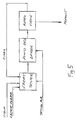
- Spray drying apparatus was arranged in the manner shown in Figure 5. Carbon dioxide was mixed with the sucrose syrup, in line, under pressure. The mixture was atomised through a nozzle at the top of the spray drying tower and, concurrently, caster sugar and fines were fed in. The product was collected at the bottom of the tower in a fluidised bed for drying at between 110-120°C and cooling, then sieved (the fines, less than 280 microns, being recycled).
- Syrup brix (% solids): 69 % Syrup flow rate 360 kg/h (dry solids)
- Dry sugar caster 150 kg/h Sieve: 280 micron
- Fines recycle rate 174 kg/h
- composition consisting of caster sugar and hollow spheres in the ratio 150:360, with a poured bulk density of 0.40 g/ml and a particle size range as follows: ⁇ 0.25mm 5%; 0.25-1.0mm 94.5%; >1.0mm 0.5%.
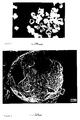
- Figure 1 is an electron micrograph showing the typical appearance of a single hollow sphere.
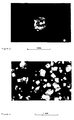
- Figure 3 shows a hollow sphere under polarized light, with an inclusion crystal of caster sugar.
- Figure 4 shows the residue of crystals of caster sugar obtained on partial dissolution of the product. The degree of crystallinity of the product was obtained by determining the heat of melting. A figure of about 95% of the value for granulated sugar was obtained, thus showing that the hollow spheres were substantially crystalline.
- Example 2 Spray drying with extra fine sugar entrainment,using a sucrose syrup containing sucralose
- the bulk density was 0.38 g/ml.
- the composition contained extra fine sugar and hollow spheres in the ratio 110:380 by weight. Sucralose at 0.12% of the total product weight was included within the walls of the hollow spheres.
- Syrup brix (% solids): 66% Syrup flow rate 410 kg/h (dry solids) Nozzle pressure: 170 bar g CO2 3.6 kg/h Dry sugar: none Rotex sieve: 500 micron Fines recycle rate: 78 kg/h
- the product from the spray drying stage had a poured bulk density of 0.2 g/ml. It was agglomerated with caster sugar in a fluidized bed, using water as the agglomerating medium. The ratio of materials was 1:1 by weight. A composition consisting of caster sugar and hollow spheres in a ratio 1:1 was obtained where the bulk of the caster sugar has been agglomerated with the spheres. The facets of the caster sugar crystals were thus clearly visible and this gave a sparkling appearance to the product. The poured bulk density was 0. 38g/ml.
- Example 2 The process of Example 2 was operated with other high intensity sweeteners under conditions predicted to give a bulk density of 0.36 g/ml for sucrose alone. It was found that aspartame plus acesulfame-K apparently affected both the bulk density and the agglomerate size distribution substantially resulting in a lower bulk density than expected. The low bulk density is consistent with the larger size of the agglomerates, but the primary cause is not known.
- a product prepared by the method of Example 1 was compared with an agglomerated powder sugar composition as follows. Both products were sieved to 0.25 - 0.50 mm and then 200g of each product were shaken in a 1 litre plastic container with vertical reciprocation at about one cycle per second (4mm throw) for 30 minutes and the percentages of particles of less than 0.25 mm after the test, and the bulk densities (BD), were measured: Before test After test BD g/ml BD g/ml % ⁇ 0.25mm Present Invention 0.43 0.43 2 Agglomerated powder 0.39 0.44 18
- Lemon souffles were made using the following ingredients and method: Grated rind of 3 lemons 90 ml lemon juice 50g product of Example 2 or 100g granulated sugar 4 eggs 1 x 125 ml gelatine 150 ml natural set yoghurt
- the resulting souffles were identical to each other in volume, appearance and texture. This indicates that the product is ideal for use in gelatine desserts.
- the resulting meringues were indistinguishable from each other, both having a crisp, light open texture.
- the major difference was that the meringues according to the invention have about half the calories of the sugar standard without losing any of the meringue characteristics.
- the following oat and nut cookies represent a unique product that cannot be reproduced using granulated sugar because if the sweetness level is correct the texture will be too heavy, and if the texture is correct the cookie will be undersweetened.
- biscuits are a light crisp product that cannot be exactly re-created using ordinary granulated sugar.
- a product made with 100g of granulated sugar in place of 50g of the product of Example 2 was heavy and hard.
- sucrose syrup was spray dried as in Example 3 to provide a product with a bulk density of 0.2 g/ml (500 g).
- This product was agglomerated with a mixture of caster sugar (500 g) and aspartame (5 g) in a fluidised bed, using water as the agglomerating medium, The dried agglomerated product had a poured bulk density of 0.36 g/cm3.
- sucrose syrup was spray dried as described in Example 3 to provide a product comprising hollow spheroids of microcrystalline sucrose, with a bulk density of 0.2 g/ml.
- This product was agglomerated with granulated sugar and various high intensity sweeteners in the following proportions, in fluidised bed, using water as the agglomerating medium.
- Each of the products (a) to (g) had approximately the same sweetness as the same volume of granulated sugar, half of the sweetness being provided by the sugar and half by the high intensity sweetener. All of the products had a distinct sparkle.
- Example 3 The procedures of Example 3 were followed, varying the syrup Brix from 64% to 69%, the syrup flow rate from 350 to 420 Kg/h; carbon dioxide from 2.2 to 3.6 kg/h; and nozzle pressure from 120 to 180g.
Landscapes
- Chemical & Material Sciences (AREA)
- Life Sciences & Earth Sciences (AREA)
- Biochemistry (AREA)
- Organic Chemistry (AREA)
- Engineering & Computer Science (AREA)
- Food Science & Technology (AREA)
- Seasonings (AREA)
- Confectionery (AREA)
- Treatments For Attaching Organic Compounds To Fibrous Goods (AREA)
- Respiratory Apparatuses And Protective Means (AREA)
- Vehicle Step Arrangements And Article Storage (AREA)
- Medicinal Preparation (AREA)
Applications Claiming Priority (2)
| Application Number | Priority Date | Filing Date | Title |
|---|---|---|---|
| GB8807135 | 1988-03-25 | ||
| GB888807135A GB8807135D0 (en) | 1988-03-25 | 1988-03-25 | Sweetener composition |
Publications (3)
| Publication Number | Publication Date |
|---|---|
| EP0334617A2 EP0334617A2 (en) | 1989-09-27 |
| EP0334617A3 EP0334617A3 (en) | 1990-06-20 |
| EP0334617B1 true EP0334617B1 (en) | 1994-09-21 |
Family
ID=10634104
Family Applications (1)
| Application Number | Title | Priority Date | Filing Date |
|---|---|---|---|
| EP89302813A Expired - Lifetime EP0334617B1 (en) | 1988-03-25 | 1989-03-21 | Sweetener compositions |
Country Status (20)
| Country | Link |
|---|---|
| US (1) | US5061320A (pt) |
| EP (1) | EP0334617B1 (pt) |
| JP (1) | JP2842610B2 (pt) |
| AR (1) | AR243333A1 (pt) |
| AT (1) | ATE111962T1 (pt) |
| AU (1) | AU618993B2 (pt) |
| CA (1) | CA1328194C (pt) |
| DE (2) | DE334617T1 (pt) |
| DK (1) | DK149889A (pt) |
| ES (1) | ES2012429T3 (pt) |
| FI (1) | FI95932C (pt) |
| GB (2) | GB8807135D0 (pt) |
| GR (1) | GR900300007T1 (pt) |
| IE (1) | IE62427B1 (pt) |
| IL (1) | IL89735A (pt) |
| MX (1) | MX172792B (pt) |
| NO (1) | NO173914C (pt) |
| NZ (1) | NZ228519A (pt) |
| PT (1) | PT90119B (pt) |
| TR (1) | TR24906A (pt) |
Cited By (5)
| Publication number | Priority date | Publication date | Assignee | Title |
|---|---|---|---|---|
| RU2150508C1 (ru) * | 1999-02-01 | 2000-06-10 | Суслов Михаил Алексеевич | Способ производства сахаросодержащего продукта |
| WO2006027796A2 (en) | 2004-07-30 | 2006-03-16 | Pharmed Medicare Pty. Ltd. | Reduced calorie sweetener composition |
| US8017168B2 (en) | 2006-11-02 | 2011-09-13 | The Coca-Cola Company | High-potency sweetener composition with rubisco protein, rubiscolin, rubiscolin derivatives, ace inhibitory peptides, and combinations thereof, and compositions sweetened therewith |
| EP2564708A1 (fr) | 2011-08-30 | 2013-03-06 | Tereos France | Composition pulvérulente comprenant un glucide et un extrait de stevia, son procédé de fabrication et son application dans le domaine alimentaire et pharmaceutique |
| US9101160B2 (en) | 2005-11-23 | 2015-08-11 | The Coca-Cola Company | Condiments with high-potency sweetener |
Families Citing this family (33)
| Publication number | Priority date | Publication date | Assignee | Title |
|---|---|---|---|---|
| BE1001556A4 (fr) * | 1988-03-30 | 1989-12-05 | Raffinerie Tirlemontoise Sa | Produits a base de saccharose contenant des edulcorants a haut pouvoir sucrant et procedes pour leur obtention. |
| US5518551A (en) * | 1993-09-10 | 1996-05-21 | Fuisz Technologies Ltd. | Spheroidal crystal sugar and method of making |
| GB9614759D0 (en) * | 1996-07-13 | 1996-09-04 | Agglomeration Technology Ltd | Granulated sugar product |
| EP0861852A1 (en) * | 1997-02-27 | 1998-09-02 | Tiense Suikerraffinaderij N.V. (Raffinerie Tirlemontoise S.A.) | Low density fructan composition |
| DK0963379T3 (da) | 1997-02-27 | 2001-09-10 | Tiense Suikerraffinaderij Nv | Fructan med lav densitet og sammensætning indeholdende dette |
| JP3646497B2 (ja) | 1997-12-22 | 2005-05-11 | 味の素株式会社 | 顆粒状甘味料 |
| JP3648959B2 (ja) | 1997-12-22 | 2005-05-18 | 味の素株式会社 | 甘味料組成物 |
| GB2364714A (en) * | 2000-07-17 | 2002-02-06 | British Sugar Plc | Spray-drying a material in the presence of a particulate solid |
| US20040258822A1 (en) * | 2003-06-16 | 2004-12-23 | Shyhyuan Liao | Chilsonated sucralose product |
| RU2270255C2 (ru) * | 2003-07-24 | 2006-02-20 | Общество с ограниченной ответственностью "Научно-производственное объединение "ВолгаДиетПродукт" | Способ получения подслащивающей композиции |
| ITRM20040136A1 (it) * | 2004-03-17 | 2004-06-17 | Orsogna Dolciaria Soc Uniperso | Procedimento per la produzione di meringa per estrusione e relativi prodotti. |
| US20050214425A1 (en) * | 2004-03-23 | 2005-09-29 | Roma Vazirani | Sugar substitute prepared with nutritive and high-intensity sweeteners |
| US20050226983A1 (en) * | 2004-04-13 | 2005-10-13 | Abraham Bakal | Method of preparing sweetener agglomerates and agglomerates prepared by the method |
| BRPI0519887B1 (pt) * | 2005-01-31 | 2014-10-29 | Nestec Sa | Processo para preparação de um pó nutricional à base de leite contendo carboidrato |
| US7750146B2 (en) * | 2005-03-18 | 2010-07-06 | Tate & Lyle Plc | Granular sucralose |
| FR2892731B1 (fr) * | 2005-10-28 | 2007-12-28 | Tereos | Procde de preparation d'une composition de saccharose, produit tel qu'obtenu et son utilisaion |
| US20070264403A1 (en) * | 2006-05-11 | 2007-11-15 | Nehmer Warren L | Sparkling agglomerated sweetener, and method of making it |
| US20080069935A1 (en) * | 2006-09-18 | 2008-03-20 | ISON Renny | Cohesive non-free flowing sweetener compositions including low-density ingredients |
| GB0807919D0 (pt) * | 2008-05-01 | 2008-06-04 | Moorlodge Biotech Ventures Ltd | |
| CA2723814A1 (en) * | 2008-05-09 | 2009-11-12 | Cargill, Incorporated | Sweetener, methods of preparing sweetener and applications thereof |
| EP2326760B1 (en) | 2008-08-18 | 2012-05-16 | Arçelik Anonim Sirketi | A washing machine |
| US20110027445A1 (en) * | 2009-07-28 | 2011-02-03 | Heartland Sweeteners, LLC | No-calorie sweetener compositions |
| US20110027446A1 (en) * | 2009-07-28 | 2011-02-03 | Heartland Sweeteners, LLC | No-calorie sweetener compositions |
| US20110027444A1 (en) * | 2009-07-28 | 2011-02-03 | Heartland Sweeteners, LLC | No-calorie sweetener compositions |
| BR112012012656A2 (pt) * | 2009-11-25 | 2015-09-15 | Cargill Inc | composicoes adocantes e seu processo de fabricacao |
| US8357417B2 (en) | 2010-03-31 | 2013-01-22 | Purecircle Sdn Bhd | Low calorie composite sweetener as sugar alternative and methods for producing the same |
| WO2012007961A2 (en) * | 2010-07-11 | 2012-01-19 | Alkem Laboratories Ltd. | Sweetener composition and a process for its production |
| CN103314000B (zh) | 2010-11-19 | 2018-07-27 | 嘉吉公司 | 使用具有大孔中性吸附树脂的吸附-脱附色谱用于富集衍生自甜叶菊的糖苷组合物中的新蛇菊苷b和/或新蛇菊苷d的方法 |
| US10327465B2 (en) * | 2013-07-17 | 2019-06-25 | General Mills, Inc. | Sweetener particles, sweetener particle compositions, and related methods of preparation and use |
| RU2551064C1 (ru) * | 2014-04-30 | 2015-05-20 | Надежда Михайловна Подгорнова | Способ производства сахарсодержащего продукта |
| US9833015B2 (en) | 2014-06-13 | 2017-12-05 | NutraEx Food Inc. | Sweetener with imbedded high potency ingredients and process and apparatus for making the sweetener |
| EP3297455A4 (en) | 2015-05-20 | 2019-02-20 | Cargill, Incorporated | GLYCOSIDZUSAMMENSETZUNGEN |
| US20180116265A1 (en) * | 2016-10-31 | 2018-05-03 | Morris IP Holdings LLC | Blended high-intensity sweetener composition |
Family Cites Families (13)
| Publication number | Priority date | Publication date | Assignee | Title |
|---|---|---|---|---|
| US3011897A (en) * | 1959-10-21 | 1961-12-05 | American Sugar Retining Compan | Sweetening composition and method of producing the same |
| US3320074A (en) * | 1964-12-01 | 1967-05-16 | Afico Sa | Process for producing of low-calorie sweetening composition |
| GB1191908A (en) * | 1967-06-27 | 1970-05-13 | Nippon Shiryo Kogyo Kk | A Process for Spray-Crystallization of Sugar |
| GB1240691A (en) * | 1968-09-26 | 1971-07-28 | Tate & Lyle Refineries Ltd | Improvements in the production of sugar |
| GB1282878A (en) * | 1968-11-26 | 1972-07-26 | Grace W R & Co | Improvements in sugar and in processes for its production |
| US3674557A (en) * | 1971-05-03 | 1972-07-04 | Grace W R & Co | Method for drying sugar solutions |
| US3704169A (en) * | 1971-05-03 | 1972-11-28 | Grace W R & Co | Drying of sugar solutions |
| US3706599A (en) * | 1971-05-03 | 1972-12-19 | Grace W R & Co | Sugar drying method |
| US3746554A (en) * | 1971-07-23 | 1973-07-17 | Abbott Lab | Process for preparing a spray dried lactose and saccharin sweetener |
| GB1430452A (en) * | 1973-01-17 | 1976-03-31 | Rank Hovis Mcdougall Ltd | Sweetening material and method for manufacutring the same |
| US4303684A (en) * | 1980-03-17 | 1981-12-01 | General Foods Corporation | Rapidly-soluble sweetener, process for its preparation and beverage mix employing it |
| BE902356A (fr) * | 1985-05-06 | 1985-09-02 | Raffinerie Tirlemontoise Sa | Produit sucrant, procede pour la fabrication de ce produit et installation pour le mise en oeuvre de ce procede. |
| US4676991A (en) * | 1986-04-23 | 1987-06-30 | A. E. Staley Manufacturing Company | Sweetener composition |
-
1988
- 1988-03-25 GB GB888807135A patent/GB8807135D0/en active Pending
-
1989
- 1989-03-21 AT AT89302813T patent/ATE111962T1/de not_active IP Right Cessation
- 1989-03-21 DE DE198989302813T patent/DE334617T1/de active Pending
- 1989-03-21 ES ES89302813T patent/ES2012429T3/es not_active Expired - Lifetime
- 1989-03-21 GB GB8906444A patent/GB2216387B/en not_active Expired - Lifetime
- 1989-03-21 DE DE68918314T patent/DE68918314T2/de not_active Expired - Lifetime
- 1989-03-21 EP EP89302813A patent/EP0334617B1/en not_active Expired - Lifetime
- 1989-03-23 IE IE92789A patent/IE62427B1/en not_active IP Right Cessation
- 1989-03-23 CA CA000594642A patent/CA1328194C/en not_active Expired - Lifetime
- 1989-03-23 US US07/327,760 patent/US5061320A/en not_active Expired - Lifetime
- 1989-03-23 AU AU31638/89A patent/AU618993B2/en not_active Expired
- 1989-03-23 FI FI891389A patent/FI95932C/fi not_active IP Right Cessation
- 1989-03-24 JP JP1073733A patent/JP2842610B2/ja not_active Expired - Lifetime
- 1989-03-24 IL IL89735A patent/IL89735A/xx unknown
- 1989-03-27 MX MX015403A patent/MX172792B/es unknown
- 1989-03-27 PT PT90119A patent/PT90119B/pt not_active IP Right Cessation
- 1989-03-27 TR TR89/0262A patent/TR24906A/xx unknown
- 1989-03-27 AR AR89313505A patent/AR243333A1/es active
- 1989-03-28 DK DK149889A patent/DK149889A/da not_active Application Discontinuation
- 1989-03-28 NO NO891283A patent/NO173914C/no not_active IP Right Cessation
- 1989-03-29 NZ NZ228519A patent/NZ228519A/en unknown
-
1991
- 1991-06-07 GR GR90300007T patent/GR900300007T1/el unknown
Cited By (6)
| Publication number | Priority date | Publication date | Assignee | Title |
|---|---|---|---|---|
| RU2150508C1 (ru) * | 1999-02-01 | 2000-06-10 | Суслов Михаил Алексеевич | Способ производства сахаросодержащего продукта |
| WO2006027796A2 (en) | 2004-07-30 | 2006-03-16 | Pharmed Medicare Pty. Ltd. | Reduced calorie sweetener composition |
| WO2006027796A3 (en) * | 2004-07-30 | 2006-08-17 | Pharmed Medicare Pty Ltd | Reduced calorie sweetener composition |
| US9101160B2 (en) | 2005-11-23 | 2015-08-11 | The Coca-Cola Company | Condiments with high-potency sweetener |
| US8017168B2 (en) | 2006-11-02 | 2011-09-13 | The Coca-Cola Company | High-potency sweetener composition with rubisco protein, rubiscolin, rubiscolin derivatives, ace inhibitory peptides, and combinations thereof, and compositions sweetened therewith |
| EP2564708A1 (fr) | 2011-08-30 | 2013-03-06 | Tereos France | Composition pulvérulente comprenant un glucide et un extrait de stevia, son procédé de fabrication et son application dans le domaine alimentaire et pharmaceutique |
Also Published As
Similar Documents
| Publication | Publication Date | Title |
|---|---|---|
| EP0334617B1 (en) | Sweetener compositions | |
| US5973212A (en) | Erythritol compositions | |
| EP0511761B1 (en) | Sweetening composition | |
| EP0225684B1 (en) | An improved process for producing a rapidly water-soluble, free-flowing, sugar-free dry beverage mix | |
| FI95147B (fi) | Menetelmä sokerituotteen valmistamiseksi ja menetelmällä valmistetun tuotteen käyttö | |
| EP0036738B1 (en) | Rapidly-soluble sweetener, process for its preparation and beverage mix employing it | |
| JP3156921B2 (ja) | 糖衣物 | |
| KR102760951B1 (ko) | 감미료 분말 조성물 및 이의 제조 방법 | |
| AU2005294653A1 (en) | Non-hygroscopic, low- or no-calorie sugar substitute | |
| EP1675865B1 (en) | Process for preparing solidified maltitol and its use in food and pharma products | |
| US3704138A (en) | Low-calorie sweetening composition and method of producing the same | |
| EP0134322B1 (en) | Process for incorporating aspartame into extruded products | |
| EP0452262B1 (en) | Reduced calorie pressed tablet with improved mouthfeel | |
| EP0197822B1 (en) | Compositions and processes for sweetening cereal | |
| US3170801A (en) | Low-calorie sweetening agent | |
| KR890002200B1 (ko) | 속용성 감미제의 제조방법 | |
| EP0533681B1 (en) | Fast dissolving sweetening agent including caramel | |
| KR100520438B1 (ko) | 저장안정성과 감미질이 개선된 설탕대체용 감미료 조성물및 그 제조방법 | |
| JPS6359670B2 (pt) |
Legal Events
| Date | Code | Title | Description |
|---|---|---|---|
| PUAI | Public reference made under article 153(3) epc to a published international application that has entered the european phase |
Free format text: ORIGINAL CODE: 0009012 |
|
| AK | Designated contracting states |
Kind code of ref document: A2 Designated state(s): AT BE CH DE ES FR GB GR IT LI LU NL SE |
|
| ITCL | It: translation for ep claims filed |
Representative=s name: STUDIO BIANCHETTI |
|
| EL | Fr: translation of claims filed | ||
| TCAT | At: translation of patent claims filed | ||
| TCNL | Nl: translation of patent claims filed | ||
| DET | De: translation of patent claims | ||
| PUAL | Search report despatched |
Free format text: ORIGINAL CODE: 0009013 |
|
| AK | Designated contracting states |
Kind code of ref document: A3 Designated state(s): AT BE CH DE ES FR GB GR IT LI LU NL SE |
|
| 17P | Request for examination filed |
Effective date: 19900620 |
|
| 17Q | First examination report despatched |
Effective date: 19930329 |
|
| RBV | Designated contracting states (corrected) |
Designated state(s): AT BE CH DE ES FR GR IT LI LU NL SE |
|
| GRAA | (expected) grant |
Free format text: ORIGINAL CODE: 0009210 |
|
| AK | Designated contracting states |
Kind code of ref document: B1 Designated state(s): AT BE CH DE ES FR GR IT LI LU NL SE |
|
| REF | Corresponds to: |
Ref document number: 111962 Country of ref document: AT Date of ref document: 19941015 Kind code of ref document: T |
|
| REF | Corresponds to: |
Ref document number: 68918314 Country of ref document: DE Date of ref document: 19941027 |
|
| ET | Fr: translation filed | ||
| ITF | It: translation for a ep patent filed | ||
| EAL | Se: european patent in force in sweden |
Ref document number: 89302813.4 |
|
| REG | Reference to a national code |
Ref country code: ES Ref legal event code: FG2A Ref document number: 2012429 Country of ref document: ES Kind code of ref document: T3 |
|
| REG | Reference to a national code |
Ref country code: GR Ref legal event code: FG4A Free format text: 3014387 |
|
| PLBE | No opposition filed within time limit |
Free format text: ORIGINAL CODE: 0009261 |
|
| STAA | Information on the status of an ep patent application or granted ep patent |
Free format text: STATUS: NO OPPOSITION FILED WITHIN TIME LIMIT |
|
| 26N | No opposition filed | ||
| PGFP | Annual fee paid to national office [announced via postgrant information from national office to epo] |
Ref country code: SE Payment date: 20020306 Year of fee payment: 14 |
|
| PGFP | Annual fee paid to national office [announced via postgrant information from national office to epo] |
Ref country code: AT Payment date: 20020313 Year of fee payment: 14 |
|
| PGFP | Annual fee paid to national office [announced via postgrant information from national office to epo] |
Ref country code: NL Payment date: 20020328 Year of fee payment: 14 Ref country code: CH Payment date: 20020328 Year of fee payment: 14 |
|
| PGFP | Annual fee paid to national office [announced via postgrant information from national office to epo] |
Ref country code: GR Payment date: 20020329 Year of fee payment: 14 |
|
| PGFP | Annual fee paid to national office [announced via postgrant information from national office to epo] |
Ref country code: LU Payment date: 20020404 Year of fee payment: 14 |
|
| PGFP | Annual fee paid to national office [announced via postgrant information from national office to epo] |
Ref country code: BE Payment date: 20020527 Year of fee payment: 14 |
|
| PG25 | Lapsed in a contracting state [announced via postgrant information from national office to epo] |
Ref country code: LU Free format text: LAPSE BECAUSE OF NON-PAYMENT OF DUE FEES Effective date: 20030321 Ref country code: AT Free format text: LAPSE BECAUSE OF NON-PAYMENT OF DUE FEES Effective date: 20030321 |
|
| PG25 | Lapsed in a contracting state [announced via postgrant information from national office to epo] |
Ref country code: SE Free format text: LAPSE BECAUSE OF NON-PAYMENT OF DUE FEES Effective date: 20030322 |
|
| PG25 | Lapsed in a contracting state [announced via postgrant information from national office to epo] |
Ref country code: LI Free format text: LAPSE BECAUSE OF NON-PAYMENT OF DUE FEES Effective date: 20030331 Ref country code: BE Free format text: LAPSE BECAUSE OF NON-PAYMENT OF DUE FEES Effective date: 20030331 Ref country code: CH Free format text: LAPSE BECAUSE OF NON-PAYMENT OF DUE FEES Effective date: 20030331 |
|
| BERE | Be: lapsed |
Owner name: *TATE & LYLE P.L.C. Effective date: 20030331 |
|
| PG25 | Lapsed in a contracting state [announced via postgrant information from national office to epo] |
Ref country code: NL Free format text: LAPSE BECAUSE OF NON-PAYMENT OF DUE FEES Effective date: 20031001 |
|
| PG25 | Lapsed in a contracting state [announced via postgrant information from national office to epo] |
Ref country code: GR Free format text: LAPSE BECAUSE OF NON-PAYMENT OF DUE FEES Effective date: 20031002 |
|
| EUG | Se: european patent has lapsed | ||
| REG | Reference to a national code |
Ref country code: CH Ref legal event code: PL |
|
| NLV4 | Nl: lapsed or anulled due to non-payment of the annual fee |
Effective date: 20031001 |
|
| PGFP | Annual fee paid to national office [announced via postgrant information from national office to epo] |
Ref country code: IT Payment date: 20080327 Year of fee payment: 20 |
|
| PGFP | Annual fee paid to national office [announced via postgrant information from national office to epo] |
Ref country code: FR Payment date: 20080311 Year of fee payment: 20 Ref country code: ES Payment date: 20080418 Year of fee payment: 20 Ref country code: DE Payment date: 20080313 Year of fee payment: 20 |
|
| REG | Reference to a national code |
Ref country code: ES Ref legal event code: FD2A Effective date: 20090323 |
|
| PG25 | Lapsed in a contracting state [announced via postgrant information from national office to epo] |
Ref country code: ES Free format text: LAPSE BECAUSE OF EXPIRATION OF PROTECTION Effective date: 20090323 |