EP0332368A2 - Verfahren zur Herstellung von Tabaksträngen mit erhöhter Festigkeit - Google Patents
Verfahren zur Herstellung von Tabaksträngen mit erhöhter Festigkeit Download PDFInfo
- Publication number
- EP0332368A2 EP0332368A2 EP89302208A EP89302208A EP0332368A2 EP 0332368 A2 EP0332368 A2 EP 0332368A2 EP 89302208 A EP89302208 A EP 89302208A EP 89302208 A EP89302208 A EP 89302208A EP 0332368 A2 EP0332368 A2 EP 0332368A2
- Authority
- EP
- European Patent Office
- Prior art keywords
- tobacco
- rod
- filler
- binder
- shreds
- Prior art date
- Legal status (The legal status is an assumption and is not a legal conclusion. Google has not performed a legal analysis and makes no representation as to the accuracy of the status listed.)
- Granted
Links
Images

Classifications
-
- A—HUMAN NECESSITIES
- A24—TOBACCO; CIGARS; CIGARETTES; SIMULATED SMOKING DEVICES; SMOKERS' REQUISITES
- A24C—MACHINES FOR MAKING CIGARS OR CIGARETTES
- A24C5/00—Making cigarettes; Making tipping materials for, or attaching filters or mouthpieces to, cigars or cigarettes
- A24C5/14—Machines of the continuous-rod type
- A24C5/18—Forming the rod
-
- A—HUMAN NECESSITIES
- A24—TOBACCO; CIGARS; CIGARETTES; SIMULATED SMOKING DEVICES; SMOKERS' REQUISITES
- A24D—CIGARS; CIGARETTES; TOBACCO SMOKE FILTERS; MOUTHPIECES OF CIGARS OR CIGARETTES; MANUFACTURE OF TOBACCO SMOKE FILTERS OR MOUTHPIECES
- A24D1/00—Cigars; Cigarettes
Definitions
- the present invention relates to a method of making a tobacco rod with enhanced firmness which allows the production of cigarettes with a high proportion of voids but with a firmness comparable with or greater than that of present commercial cigarettes having a lower proportion of voids and to the tobacco rod produced by this method.
- Densities of the sample cigarettes are determined by weighing each individual equilibrated cigarette (equilibrated at a temperature of 75° F and 60% relative humidity) and then measuring the circumference of each cigarette using a laser micrometer. This allows density to be calculated by dividing the amount of filler in the cigarette (total weight minus the weight of the paper and seam adhesive) by the volume of the cigarette (length x (circumference/2 ⁇ )2 x ⁇ ).
- “Firmness” Resistance to compression. Firmness is determined by placing 15 cigarettes in 3 levels of 6, 5 and 4 in a holder having a fixed area trapezoidal shaped shoe. The filled cigarette holder is placed under a compression device in such a way that the compression plate is properly placed to make contact with the center 40 mm section of the four cigarettes directly in contact with the plate. The cigarettes are initially compressed with a 100 g plate weight until they stabilize in place. At this time, an additional weight of 1400 g is applied by an electromagnet. At the end of 30 seconds, the compression value measured in mm, which is indicative of cigarette firmness, is automatically recorded. "Increased,” “enhanced,” or “better” firmness corresponds to less compression and hence lower firmness numbers.
- VV Volt volume: Percentage of the total volume of a tobaco rod occupied by space between the shreds. Void volume is determined according to the following formula: where TW, tobacco weight, is the weight of the filler in grams, SV is the specific volume of the filler in cubic centimeters per gram (cc/g) and RV is the rod volume of the tobacco rod in cubic centimeters. VV is the void volume expressed as the percentage of the rod volume occupied by empty space.
- Specific volume The volume of a predetermined amount of tobacco divided by the weight of the tobacco. The SV value is expressed as cc/g.
- Specific volume of the filler is measured using a mercury specific volume test which involves placing a known weight of a tobacco sample in a sealed chamber of known volume and then evacuating the air in the chamber to a pressure of 1 torr. An amount of mercury is then admitted to the sample chamber in a manner such that the interfacial pressure between the mercury and the tobacco limits the intrusion of mercury into the porous structure.
- the volume of mercury displaced by the tobacco sample of known weight at an interfacial pressure of 1 to 2 psi absolute is expressed as SV in cc/g.
- the resulting specific volume value is a measurement of the volume occupied by each gram of tobacco shreds.
- Rod volume The volume of the tobacco rod, which equals ⁇ multiplied by the radius (cm) squared multiplied by the length (cm).
- Interstitial void spaces and "void spaces”: The spaces between the shreds, rather than the spaces that might exist within each shred.
- tobacco May include tobacco, expanded tobacco or other materials such as tobacco substitutes, stems or reconstituted tobacco.
- Filler May include tobacco or other filler material such as tobacco substitutes, stems or reconstituted tobacco which has been cut, shredded, extruded or otherwise prepared for incorporation in a tobacco product.
- “Shred” A piece of any cut filler.
- “Tobacco rod” and “rod” A rod comprised primarily of tobacco filler as herein defined.
- "Cigarette”, “tobacco product” and “smoking article” A tobacco rod -- which may or may not be intended to be burned -- wrapped with a wrapping material such as paper and optionally tipped with a filter.
- Low density rod A tobacco rod which when wrapped is characterized by a greater firmness for any given void volume level when compared to a conventional cigarette made from the same type of filler.
- RTD is determined as follows. A vacuum system is set to pull an air flow of 1050 cc/minute by inserting a standard capillary tube through the dental dam of a cigarette holder and adjusting the air flow through the capillary tube until the correct reading of the pressure drop across the capillary tube in inches of water, as measured on an inclined water manometer, is obtained. Then the butt end of a tobacco rod, which is wrapped with a paper that is impervious to air, is inserted to a depth of 5 mm in the dental dam of the tobacco rod holder.
- TRD resistance to draw
- Binder May comprise virtually any binding material such as, for example, film forming or cross-linking agents, adhesives, burn additives, casing or flavors effective for the purpose of holding shreds together.
- Ring shred orientation Orientation of the tobacco shreds within the cigarette such that the longer dimension of the shred is roughly perpendicular to the axis of the cigarette.
- OV "Oven-Volatiles Content”
- OV A unit indicating the moisture content (or percentage of moisture) in tobacco filler. It is determined by weighing a sample of tobacco filler before and after exposure in a circulating air oven for three hours at 100° C. The weight loss as a percentage of initial weight is the oven-volatiles content. The weight loss is attributable to volatiles in addition to water but OV is used interchangeably with moisture content and may be considered equivalent thereto since, at the test conditions, not more than about 1% of the tobacco filler weight is volatiles other than water.
- the tobacco filler is introduced into a tobacco chimney and then blown into a perforated vacuum belt.
- the tobacco filler is then conveyed to an ecreteur or trimmer knife assembly which trims off the excess tobacco filler so that the desired quantity of tobacco filler enters the garniture portion of the machine.
- the tobacco filler is formed into a tobacco rod and wrapped in cigarette paper. The wrapped tobacco rod passes through a density gauge and is then cut to length by a rod cut-off mechanism which may be a laser device.
- tobacco dust may be formed.
- Keritsis et al. U.S. patent 4,341,228 discloses a method for admixing such dust with a bonding material to form agglomerated particles, admixing the agglomerated particles with a tobacco paste slurry and forming the slurry into a sheet using a paper-making process. The resulting reconstituted tobacco sheet is dried and shredded to form tobacco filler.
- Keritsis discloses, as bonding materials, film-forming materials, cross-linking agents and calcium-sequestering agents.
- the tobacco filler formed from the reconstituted tobacco sheets may be blended with natural tobacco filler and fed into the cigarette maker.
- Such particulate matter may include flavorings.
- An advantage of the process of the Nichols patent is that volatile flavorants such as menthol are recovered more completely in the packaged cigarette since less opportunity for vaporization is presented.
- liquid additives are incorporated into the tobacco filler within the garniture portion of the cigarette maker, for example, at the short tongue, the disposition of the additive may be uniform along the length of the tobacco rod but not uniform from side to side of the rod thereby causing streaking of the cigarette wrapper. Also, if the liquid additive is in dilute form, the excess liquid may result in streaking of the cigarette wrapper even when the distribution of the liquid is substantially uniform throughout the tobacco rod. Finally, the use of liquid additives may result in liquid particles adhering to the cigarette maker which may cause it to become gummed up necessitating a shutdown for cleaning.
- Albertson et al. U.S. patent 4,619,276 discloses a method of applying foamed materials to the tobacco filler.
- the foamed material improves the uniformity of the dispersion of the additive throughout the tobacco and permits the material additions late in the cigarette manufacturing process without causing gumming of the cigarette maker or loss of volatiles.
- the material which may be foamed includes adhesives, film-forming or cross-linking agents, binders, burn additives, casings or flavors.
- the present invention comprises a method for producing a high void volume/enhanced firmness tobacco rod which may be wrapped to form a cylindrical tobacco product such as a cigarette.
- This cigarette compares favorably with conventional cigarettes on all of the characteristics mentioned above.
- the cigarette is characterized by a relatively high firmness despite having a relatively high proportion of its internal volume void of smoking material. It is comprised of shreds of tobacco filler which are adhered to one another by a binder, preferably of a type commonly used as a casing or burn control agent. Suitable binders includes pectins, licorice, starches, gums, sugars or honey.
- the method includes a first step of applying a solid, liquid or foamed binder to tobacco filler, treating the filler shreds to the extent necessary to cause the binder to become sufficiently non-tacky for storage or processing (such as by drying or dehumidifying) and then activating the binder within the cigarette maker by the use of steam, heat, water, conditioned air or an organic solvent.
- the binder may also be activated by electromagnetic energy such as microwave, ultrasonic or infra red radiation or by a polymerization process. Where the binder applied to the tobacco filler is dry, the cut tobacco filler should be at a moisture content of about 20% OV to provide enough moisture for the dry material to adhere to the shreds.
- An advantage of the product of the present invention is reduced rod density which results in less tobacco being burned. Similarly, at comparable linear burn rates less sidestream smoke will be generated during static burning. These advantages can be achieved without significant decrease in firmness.
- An additional advantage of reduced tobacco density is that a longer cigarette can be made with the same amount of tobacco as a shorter, denser cigarette.
- a still further advantage is derived from the open lattice of tobacco, in that the tobacco lattice intercepts and holds less smoke than does the more densely packed tobacco of a conventional cigarette, thus minimizing recombustion of materials retained by the tobacco filler.
- a filter such as cellulose acetate plugs and tobacco plugs, are suitable for this purpose.
- the binder has the advantage of tending to prevent loose ends by tending to retain tobacco particles which would otherwise fall from the cigarette ends.
- Another advantage of the binder is that it may be a material which is already desirably used as a casing or burn control agent.
- the additional step of applying the binder may obviate a flavoring step.
- a high void volume cigarette characterized by an enhanced firmness may be formed by binding the filler shreds at points of shred-to-shred contact and by bridges of binder between shreds in close proximity to each other.
- the processes of the present invention make possible a practical high void volume/enhanced firmness cigarette.
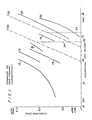
- FIG. 1 shows empirical measurements of void volume and firmness for cigarettes made from a number of different types of tobacco fillers over a range of densities.
- the circumference of the cigarettes tested was 24.8 mm, which is the typical cigarette circumference in the cigarette industry. (Empirical results will vary somewhat with the diameter of the cigarette tested.)
- Line 10 shows the firmness and void volume measurements of cigarettes made from expanded Bright tobacco;
- Line 12 corresponds to cigarettes made from unexpanded Bright tobacco;
- Line 14 corresponds to a typical commercial blended cigarette:
- Line 16 corresponds to a cigarette made from a typical commercial tobacco blend using the foamed binder process disclosed in commonly assigned United States Patent No.
- Line 18 corresponds to a cigarette made from unexpanded Burley tobacco
- Line 20 shows the firmness-void volume relationship for the high void volume/enhanced firmness cigarettes of the present invention (using a typical commercial blend) having a 2% binder solids add-on level
- Line 22 corresponds to a high void volume/enhanced firmness cigarette (same blend) with a 6% binder solids add-on level.
- binder solids add-on level is the percent by weight of binder solids in the final filler product based on filler at a moisture level of 12.5% to 13.2%.
- FIG. 1 shows that for each cigarette type, including the high void volume/enhanced firmness cigarettes of the present invention, as void volume increases (and therefore density decreases), the cigarettes become less firm.
- Line 14 conventional filter cigarette
- Lines 20 and 22 high void volume/enhanced firmness
- the void volume of a cigarette according to the present invention is significantly higher, i.e., Lines 20 and 22 are to the right of Line 14.
- the cigarettes of the present invention attain a better firmness for a specified void volume.
- the high void volume/enhanced firmness cigarette also compares favorably with each of the conventional cigarettes, including the cigarette comprised of 100% Burley (Line 18) -- a tobacco known for desirable firmness traits but also known for a harsh and unpalatable taste when smoked in cigarettes having high concentrations of Burley.
- FIG. 1 demonstrates that with the exception of a commercially unacceptable 100% Burley cigarette (Line 18), the high void volume/enhanced firmness cigarettes achieve void volume and firmness measurements to the right of Line 30.
- This high void volume/enhanced firmness region of FIG. 1, derived from empirical data, is represented as follows: where VV corresponds to percent void volume and F corresponds to measured firmness.
- FIG. 1 also demonstrates that with the exception of a commercially unacceptable Burley cigarette (Line 18), the high void volume/enhanced firmness cigarettes achieve void volume measurements exceeding 68% (Line 34) and the amount determined by Line 30. And, only the present invention has void volumes exceeding 72% (Line 36) and the amount determined by Line 32.
- the method of the present invention involves applying binder material in dry, foamed or liquid form to tobacco filler for use in manufacturing cigarettes having increased firmness and reduced loose ends and which permits the quantity of tobacco incorporated into the cigarette to be reduced.
- the step of applying the binder material to the tobacco filler is performed in advance of the cigarette-making process.
- the applying or precoating step is performed while the tobacco filler is in motion in order to provide a uniform distribution of the adhesive or binder material and adequate moisture control of the tobacco filler.
- the precoating step may be performed in a tumbling drum or a fluidized bed or on a moving conveyor, all of which are hereafter referred to as providing a moving bed of tobacco filler.
- the tobacco shreds are uniformly mixed or coated with a bonding material which, as the term implies, causes bonding of the tobacco shreds under certain conditions.
- the bonding materials that may be employed in the process of the present invention include those materials which by themselves cause bonding of the tobacco shreds and also include those materials which indirectly cause such bonding by having the effect of releasing naturally occurring bonding agents contained within the tobacco itself which agents subsequently cause the actual bonding of the tobacco shreds.
- Bonding materials which by themselves cause bonding of the tobacco shreds include, for example, film-forming materials, cross-linking agents, lipids, waxes and resins.
- film-forming materials cross-linking agents, lipids, waxes and resins.
- the types of film-forming materials which may be employed in the present invention include, inter alia, polymers and resins selected from the classes of saccharides, polysaccharides and their derivatives, and synthetic thermoplastic film formers.
- saccharides and polysaccharides are: sucrose; dextrose; polydextrose; natural gums such as arabic, guar and locust bean; gums of fermentation such as dextran, xanthan and curdlan; starches; algins, pectins, xanthomonas and their water soluble salts (e.g., sodium, potassium and ammonium salts); chitin,; and chitosan and its salts (e.g., acetate and chloride salts).
- Suitable polysaccharide derivatives include: the cellulose, starch and gum ethers and esters, such as carboxymethyl cellulose, carboxymethyl starch, carboxymethyl guar, carboxymethyl chitin, methyl cellulose, ethyl cellulose, ethyl hydroxyethyl cellulose, hydroxyethyl cellulose, hydroxypropyl cellulose, methyl hydroxypropyl cellulose, hydroxypropyl guar, cellulose acetate and oxycellulose; and other derivatives of starch and gums, such as hydrolyzed starches and dextrins.
- Typical synthetic film-forming resins include: polyvinyl alcohol; polyvinyl acetate; polyvinyl pyrrolidone; polyacrylic acid; copolymers combining methyl vinyl ether and maleic anhydride and salts of such copolymers; and polyvinyl pyridines.
- Typical lipids, waxes, resins and similar materials suitable for bonding and generally having a melting point in the range of about 40-120 C° include: the saturated fatty acids having at least 14 carbon atoms and the glycerin and sugar esters of such acids, the fatty alcohols and ketones containing at least 14 carbon atoms, paraffins, beeswax, carbowax, tobacco waxes, tobacco resins and other waxy-type and resin materials.
- Bonding materials which cause indirect bonding of the tobacco shreds include: calcium sequestering agents such as diammonium phosphate; lower polyfunctional carboxylic acids such as oxalic, citric, malic, malonic, succinic, and tartaric and their sodium, potassium and ammonium salts; and carbonate, bicarbonate and phosphate salts of sodium and potassium.
- calcium sequestering agents such as diammonium phosphate
- lower polyfunctional carboxylic acids such as oxalic, citric, malic, malonic, succinic, and tartaric and their sodium, potassium and ammonium salts
- carbonate, bicarbonate and phosphate salts of sodium and potassium One or more sequestering agents may be employed at one time either to the entire tobacco filler blend or to a portion therein.
- a base such as hydroxides of ammonium or potassium or sodium
- the released pectin which is a film-forming material, may then be used as the bonding agent in a manner described in this process or by cross-linking with a polyvalent metal ion or by gelling and drying.
- the employment of tobacco derived pectins as bonding agents is disclosed, for example, in U.S. Pat. Nos. 3,499,454; 3,420,241; 4,674,519 and 4,341,228.
- Suitable cross-linking agents for bonding tobacco shreds in this process are those that were previously disclosed in U.S. Pat. 4,341,228.
- the binder material is dissolved in water or an organic solvent and pumped through a spray nozzle directed at the moving bed.
- the binder material may be formed into a liquid foam and delivered to the moving bed through a nozzle or orifice. As the foam material will contain less moisture than a spray solution of equivalent volume, the subsequent drying procedure may be simplified.
- a treating or drying step is preferably conducted simultaneously with the spraying step by blowing hot air through the tobacco filler in a tumbling drum.
- agglomeration of the coated particles or filaments of the filler material is prevented.
- the adhesive or binder solids are maintained on the surface of the tobacco and do not have an opportunity to soak excessively into the interior of the tobacco and thus be unavailable for subsequent use as an adhesive or bonding agent.
- the combustion products of a gas or oil burner or superheated steam may also be utilized separately, or in conjunction with air.
- the drying rate increases with the temperature of the drying media.
- the upper limit of the temperature of the drying media is determined by the requirement of not degrading the tobacco while the lower limit is determined by such practical considerations as not excessively extending the time required to complete the drying step.
- the moisture content of the coated tobacco filler should be in the range of 12-14% OV which is about the same moisture content as exists in the filler prior to coating. During the coating process, the moisture content should be kept below about 20% OV and this is facilitated by performing the drying step simultaneously with the coating step as indicated above.
- the coating and treating or drying steps are preferably performed in a continuous operation, a batch operation is possible if the coating is applied in a tumbling drum such as a commercial clothes dryer which permits simultaneous drying.
- a tumbling drum such as a commercial clothes dryer which permits simultaneous drying.
- pectin as a binder in the form of a 2% water solution to attain a level of about 6% in a 30 pound batch of the coated filler in a period of about 95 minutes. During this period, about 97 pounds of the binder solution are sprayed in the tumpling batch of filler.
- a dry powdered binder such as fine powdered dextran may be dusted on the tobacco filler after the moisture content has been raised to a level of about 20% OV.
- the filler tobacco containing the binder in powder form should immediately be passed through the cigarette maker as the dry binder will become activated by the excess moisture in the tobacco filler.
- thermally gelled sheets from a material such as methocel (Dow Chemical Company's Methocel A4C), shred the gelled sheets while they are still warm, blend the shredded thermally gelled sheets with hot tobacco filler and form the resulting blend into a tobacco rod.
- a material such as methocel (Dow Chemical Company's Methocel A4C)
- shred the gelled sheets while they are still warm, blend the shredded thermally gelled sheets with hot tobacco filler and form the resulting blend into a tobacco rod.
- the thermally gelled shreds liquify and, upon drying, a bond is formed where the liquid material contacts adjacent tobacco particles.
- the coated filler may be stored for subsequent use or directed to the hopper of the cigarette maker.
- a tobacco carpet is formed on a conventional suction tape and then trimmed to the desired height in the ecreteur.
- the tobacco carpet is thereafter formed into a tobacco rod of roughly circular cross-section in the garniture portion of the maker in preparation for the activation step of the present process.
- the tobacco rod is formed in the garniture of the maker on a non-porous belt which also carries the cigarette paper.
- the cylindrical tobacco rod, while still contained by the porous belt, may be exposed to a stream of wet steam or moisturized air, a water spray or a solvent which activates the preapplied binder coating contained on the surface of the tobacco filler.
- the binder may, in appropriate cases, be activated by electromagnetic energy such as microwave, ultrasonic or infrared radiation or by a process of polymerization. The activated binder thereupon bonds the shreds or particles of tobacco at points within the tobacco rod.
- the bonded tobacco rod may sequentially be passed through a drying step and a vapor removal and cooling step.
- the drying step preferably is performed in a microwave dryer and the vapor removal and cooling step may use a stream of air or a vacuum operation.
- the moisture content and temperature of the tobacco rod should be compatible with the requirements for wrapping and sealing the tobacco rod with cigarette paper, cutting the rod to form cut rods and collecing the cut rods.
- the precise nature of the activation step will depend upon the nature of the binder which has been preapplied to the filler tobacco. If the binder is water soluble, water or wet steam may be used as the activating agent. If the binder is a low melting point substance such as tobacco wax and resins, myristic acid, myristic alcohol, etc., steam or heat may be used to activate the binder. In some cases an organic solvent may be required for a binder soluble in such a solvent.
- the tobacco rod and the resulting finished cigarette are firmer than the rod or cigarette would be without the adhesive bonding.
- the high void volume/enhanced firmness cigarette of the present invention may also be formed using other methods and apparatus, including, but not limited to, the pneumatic and steam/pneumatic methods described below.
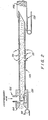
- the pneumatic method illustrated in FIG. 2, is as follows: The binder is applied to tobacco filler as in the method described above. The treated tobacco shreds are metered onto a moving tape 98 which leads into an orifice 100 which entrains the shreds in an air stream in tube 105 causing the shreds to gain momentum. The air stream is then exhausted through vents 110 in tube 105 causing the shreds to continue traveling on their own momentum until the shreds are collected into a loosely packed rod 115 within a continuously moving circular porous garniture tape 120.
- the driving force for the air stream may be obtained by using a vacuum unit around the vents 110, or by using an aspirating unit 125 at the inlet 130 of the tube, or by a combination of these methods. Control of the feed rate and the air stream velocity allow the density of the exiting tobacco rod to be regulated.
- the binder is activated as in the method described above. Likewise the tobacco rod is dried, and wrapped as in the method described above.
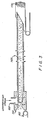
- FIG. 3 shows an alternative method of forming the tobacco rod using a steam/pneumatic method as follows: a water or heat activated binder is applied to tobacco filler as in the methods described above.
- the tobacco shreds coated with binder are metered onto a moving tape 150 which leads into an orifice 155 which entrains the shreds in a steam stream.
- the shreds are then accelerated by an aspirator 160 to the garniture 165 of an otherwise conventional cigarette maker where the steam stream is removed causing the shreds to continue traveling on their own momentum.
- the shreds may then be collected to form a tobacco rod 170.
- the binder is activated by steam condensate which quickly and uniformly deposits moisture on the surfaces of the shreds while the tobacco shreeds are entrained in the steam stream.
- the increased temperature of the steam condensate reduces the amount of water needed for activation where a water soluble binder is used; as a result, the binder is activated quickly and the moisture content gain of the filler during activation is minimized.
- the binder in the formed tobacco rod is dried as in the methods described above, causing the binder to set at contact points forming the high void volume/enhanced firmness tobacco rod. Control of the feed rate and steam stream pressure allows control of the density of the resulting tobacco rod.
- the tobacco rod is then wrapped, preferably by cigarette paper, and is dried to form the cigarette of the present invention.
- the tobacco rod with activated binder formed by either the preferred, pneumatic or steam/pneumatic method may alternatively be dried and cooled by passing through a garniture section where air is introduced as a means of cooling and partially drying the bound rod. Microwave or other methods of drying may also be used. The amount of air applied varies depending upon the density of the tobacco rod being produced. The tobacco rod is then allowed to dry in ambient air with or without the application of heat. When dried, the shreds are locked into place forming a rigid cylindrical structure.
- These methods alternatively may incorporate application of suction to the tobacco rod in the garniture section where air is introduced to cool and dry the rod.
- the suction produces a drier and cooler tobacco rod by removing vaporized water.
- the pneumatic or steam/pneumatic method also may alternatively incorporate a dual tube belt within the steaming/drying garniture (FIGS. 4 and 5). This has the advantage of allowing shred orientation in the tobacco rod to be varied by varying the speed differential of the two tube belts 201, 205.
- the pneumatic or steam/pneumatic methods may alternatively provide for the tobacco rod to be formed within a tapered section 410 of the garniture going from a wide section 430 to a narrow section 460. (FIG. 6). This has the advantage of increasing the amount of feed rate variation that can be accommodated, while maintaining constant rod density.
- the pneumatic and steam/pneumatic methods have the advantage of orienting the individual shreds of the tobacco rod in a generally radial direction. This increased radial shred orientation causes greater resistance to radial compression which is an indicator of increased firmness.
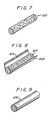
- a tobacco rod 601 as shown in FIG. 7 results.
- This rod 601 may be wrapped by paper 605, as shown in FIG. 8. Paper 605 is secured around the rod 601 by a glue strip 610 to form a cigarette 615 as shown in FIG. 9.
- the rod can be wrapped during formation provided that the paper used will not become discolored or otherwise marred or damaged as moisture is driven off in the drying process.
- Tobacco filler so treated may be used to produce cigarettes having a higher void volume for a given firmness.
- One pound (DWB) samples of tobacco filler blend having OVs of 14, 18,23 and 30% were placed into a revolving bowl-shaped tumbler, having an 18-inch center diameter and three one-inch deep flights located 60° apart in the inside surface along the rotating axis of the bowl.
- the bowl-shaped tumbler was rotated at 33 rpm. While the tobacco filler was being tumbled and mixed 10, 20 and 40 g of finer than 60 mesh citrus pectin powder for each pound sample was sprayed onto the tumbled tobacco filler and mixed therein.
- Each coated sample was divided into three equal parts. One of the samples wa taken off the tumbler and was put in sealed glass jars and allowed to equilibrate for 24 hours and then allowed to air dry.
- the second sample was spread on aluminum foil and allowed to air dry at laboratory conditions to 12% OV.
- the third sample was left in the tumbler and while it was being tumbled, the coated tobacco filler was steamed for 30 seconds and then it was divided into two equal parts.
- One of these samples was spread on aluminum foil and air dried at laboratory conditions to 12% OV and the second sample was put in sealed glass jars for 24 hours and then it was air dried as above to 12% OV.
- the tobacco filler samples of 14, 18, 23 and 30% OV coated with 10, 20 and 40 g of powdered pectin and then air dried at laboratory conditions to 12% OV were found to contain a whitish coating on their surface which was more pronounced in the lower OV samples coated with the higher amounts of pectin powder.
- the samples that were allowed to equilibrate in sealed jars for 24 hours prior to air drying at laboratory conditions to 12% OV appeared to have a much lesser amount of visible coating on the tobacco filler surface and retained the coating better than the previous samples when treated in the shaker under similar conditions.
- Example 1 The conditions of Example 1 were repeated with the use of finer than 60 mesh powders of gum arabic, sodium CMC, sodium alginate, dextran, pre-gelatinized starch, amylo pectin and hydroxypropyl methyl cellulose in place of the powdered pectin. In these cases, similar results as those with pectin in Example 1 were obtained.
- Portions of the tobacco filler samples of Examples 1 and 2 were humidified with steam or with a fine water mist spray or with liquid foam water (water with 1% foraming agent) to 24 and 35% OV. Samples of these treated tobacco fillers were then made into cigarettes with the use of RYO Filtermatic cigarette maker (U.S. patent No. 3,515,147) and dried in an air circulating oven at 100°C.
- the tobacco filler in all the hand-rolled cigarettes was well adhered in an open mesh structure.
- the produced cigarettes were found to be strong and self-supported (i.e., did not come apart when holding from one end). However, the more weakly bound cigarettes were those that contained the lowest amount of adhesive.
- Example 3 The conditions of Examples 1 and 3 were repeated with the use of methyl cellulose and dextran.
- the binders in this case were activated with ethanol to produce well-adhered and self-supported hand-rolled cigarettes as in Example 3.
- One pound (DWB) samples of tobacco filler blend at 16% OV were coated with (40 g each) finer than 60 mesh paraffin wax or myristic acid or myristic alcohol or tripalmitin or polyox powders having melting points in the range of 38° C.-66° C.
- the coating operation was carried out in a hot air atmosphere (70° C.) with the use of the previously described tumbler.
- the coated tobacco filler samples were then equilibrated to 12% OV and were formed either into hand-rolled cigarettes (paper wrapped tobacco rods) or into 1/2-inch thick mats. Activation of these bonding agents was then achieved with heat (steam or hot air).
- Example 1 The conditions of Example 1 were repeated with 23% OV tobacco filler and 30 g sodium pectate or sodium alginate powders per pound of tobacco filler blend (DWB).
- the powder coated tobacco filler samples were then steam conditioned and allowed to dry at room conditions in a dispersed (loose) state to 12% OV. Portions of these tobacco filler samples were formed into 1/2-inch thick mats in a pan having a metallic screen bottom (10 mesh), and placed over a vacuum chamber where vacuum was applied from below to facilitate the activation of the binders (adhesives) with various impregnants.
- the binder in some of the samples was activated by wetting the tobacco filler to 30% OV, and in others with a foamed 10% CaCl2 water solution to 30% OV.
- portions of the mats were dried with hot air (60° C.) and others were made into hand-rolled tobacco rods and then dried at 100° C. in an air circulated oven.
- the binders were activated and caused the tobacco shreds to adhere to each other to form cohesive, self-supported structures.
- the formed mats and tobacco rods were found to be firmer and less sensitive to moisture.
- the polyvalent metal ion or calcium in this case cross-linked with carboxylic acid groups of these polysaccharides to form a water insoluble binder.
- portions of the coated tobacco filler were allowed to dry with hot air to 12% OV and then formed into similar structures as above. Portions of the mats made with the 12% OV precoated tobacco filler were humidified to 30% OV with steam or with foamed water and then rolled into cigarettes at ambient conditions and then dried in an 100° C. forced air oven.
- the tobacco mats and hand-rolled cigarettes made with the coated, hot tobacco filler samples that were still wet, and then allowed to cool were found to be adhered, and maintain their integrity when they were dried in an 100° C. forced air oven.
- the adhesion of the two structures was enhanced by the application of pressure (weight) prior to drying, whereas the samples made with the precoated and dried tobacco to 12% OV did not form an adhered structure even when the tobacco filler was compressed.
- the samples that contained the rehumidified precoated/ dried tobacco filler behaved similarly to the first set of samples.
- the following sheets were made by coating 8% solutions of pectin, CMC, dextran, dextrin and gum arabic and then drying on stainless steel plates. The sheets were 4 mils thick. These were then shredded into 32 cpi and blended with a cut tobacco filler blend at 5 and 10% w/w levels in the blend at 12% OV.
- the blended fillers were then humidified to about 30% OV with water (spray) or with steam, and were made into handrolled cigarettes with the use of a RYO Filtermatic cigarette maker. Portions of the humidified blended filllers were made into 1/2-inch thick webs and dried under a small amount of pressure (weight).
- Example 7 The conditions of Example 7 were repeated with the addition of 10% (DWB) tobacco water soluble solids in the binder solution prior to coating.
- Example 9 the tobacco filler shreds were well adhered to each other forming a self-supported open structure.
- the greater degree of adhesion was achieved with the 10% binder filler solids in the blend but indications were that the samples containing the 5% binder filler solids would be sufficient for this purpose by shredding the sheets into finer shreds (>60 cuts/inch) to cover a wider area in the blend.
- the binder containing the tobacco solubles appeared to be tackier and more hydrophilic than the formulations that did not contain such additives.
- a 4% solids methocel solution in water was made and foamed with air. It was then cast onto stainless steel plates and thermally set by heating the foamed cast sheet to a temperature above the methocel gelation point. The thermally gelled sheets were removed from the plates, shredded while still warm and gelled, and then blended with hot tobacco filler. The amount of methocel gelled solution added was calculated to yield 5% and 10% methocel solids (DWB) on the weight of tobacco filler (DWB). The produced blends were used to fabricate hand-rolled tobacco rods and 1/2-inch thick mats on a 10 mesh screen placed over a vacuum box. The samples were then allowed to cool and then dried in an air circulating oven at 100° C.
- the gelled methocel solution strands liquified upon cooling causing the tobacco shreds to be wetted and adhered to each other in a strongly bound self-supported structure when dried.
- Example 12 The conditions of Example 12 were repeated at 3200 rpm and 20 g of liquid foam per 100 g portions of 12% OV tobacco filler blend samples.
- the liquid foam in each case contained 10%, 30%, and 50% solids and foam densities of 0.08, 0.12, and 0.22 g/cc, respectively.
- the rate of adding foam was maintained at 2 g/second.
- the coated samples with liquid foam binder were compared to each other and to the controls treated with steam and with foamed (1% foaming agent) or unfoamed (zero solids) liquids.
- Treatment A was repeated but at the end and while the treated tobacco filler samples were centrifuged, the samples were dried to 8-12% OV with hot air (140-180°F).
- Treatment A The samples 4, 5, and 6 of Treatment A were repeated. Each of these samples at the end of Treatment A was dispersed into a hot (350°F.) air stream and dried to 8-12% OV. The samples were conditioned to 12% OV and reinserted into the spinning basket centrifuge at 3200 rpm. These were then treated with steam or liquid (foamed/unfoamed) as per steps 1, 2, and 3 of Treatment A and finally dried as per Treatment B.
- the upper surface of this mat was uniformly coated with a liquid foam binder having 10% solids and a foam density of 0.08 g/cc.
- the amount of liquid foam binder used was equivalent to 20 g foam/100 g 12% OV tobacco filler.
- the rectangular pan containing the tobacco filler mat with the liquid foam binder on its upper surface was then placed over a vacuum box where 26 inches of vacuum was applied from below. The vacuum forced the liquid foam to be sucked (penetrated) into the tobacco filler mat and coat the tobacco filler.
- Half of the mat was dispersed with a wire brush into a hot air stream (350° F.) and dried to 8-12% OV and the remaining portion of the undisturbed coated mat was dried in place with 140° F. air.
- the dispersed/dried precoated tobacco filler was reformed into a mat, steamed to 30-35% OV and then dried with 140°F air under a 10-inch vacuum.
- the dried in place mat that was coated with the liquid foam binder was found to be well adhered and self-supported.
- the reformed mat with the precoated binder which was steamed and then dried was also adhered together and was self-supported.
- Example 14 The experiment was repeated by applying 1/2 of the liquid foam in the manner previously described in Example 14 and the other 1/2 of the liquid foam binder was applied in a second step without vacuum but with the use of a squeegeeing apparatus.
- Example 15 was repeated but without the use of vacuum for the impregnation of the tobacco filler mat with the liquid foam binder. Instead, the applied liquid foam binder was added to the top surface of the tobacco filler mat and then was squeezed into the mat.
- a cigarette is provided having higher void volume for a given firmness. Also, a method is provided for treating tobacco filler so as to produce such cigarettes.
Landscapes
- Manufacture Of Tobacco Products (AREA)
- Manufacturing Of Cigar And Cigarette Tobacco (AREA)
- Cigarettes, Filters, And Manufacturing Of Filters (AREA)
Applications Claiming Priority (2)
| Application Number | Priority Date | Filing Date | Title |
|---|---|---|---|
| US166005 | 1988-03-09 | ||
| US07/166,005 US4936920A (en) | 1988-03-09 | 1988-03-09 | High void volume/enhanced firmness tobacco rod and method of processing tobacco |
Publications (3)
| Publication Number | Publication Date |
|---|---|
| EP0332368A2 true EP0332368A2 (de) | 1989-09-13 |
| EP0332368A3 EP0332368A3 (de) | 1991-05-02 |
| EP0332368B1 EP0332368B1 (de) | 1994-06-08 |
Family
ID=22601391
Family Applications (1)
| Application Number | Title | Priority Date | Filing Date |
|---|---|---|---|
| EP89302208A Expired - Lifetime EP0332368B1 (de) | 1988-03-09 | 1989-03-06 | Verfahren zur Herstellung von Tabaksträngen mit erhöhter Festigkeit |
Country Status (11)
| Country | Link |
|---|---|
| US (1) | US4936920A (de) |
| EP (1) | EP0332368B1 (de) |
| JP (1) | JPH029364A (de) |
| CN (1) | CN1020667C (de) |
| AT (1) | ATE106680T1 (de) |
| AU (1) | AU619809B2 (de) |
| BR (1) | BR8901105A (de) |
| CA (1) | CA1331945C (de) |
| DE (1) | DE68915823T2 (de) |
| ES (1) | ES2055787T3 (de) |
| PH (1) | PH25412A (de) |
Cited By (3)
| Publication number | Priority date | Publication date | Assignee | Title |
|---|---|---|---|---|
| WO2005044026A1 (en) * | 2003-10-21 | 2005-05-19 | British American Tobacco (Investments) Limited | Smoking articles and smokable filler material therefor |
| EP1625797A3 (de) * | 2004-08-12 | 2007-01-03 | Hauni Maschinenbau AG | Abgabe von Strangmaterial |
| EP1905317A1 (de) * | 2006-09-28 | 2008-04-02 | Hauni Maschinenbau Aktiengesellschaft | Verfahren und Vorrichtung zum Erwärmen und Aushärten von Filterstäben |
Families Citing this family (42)
| Publication number | Priority date | Publication date | Assignee | Title |
|---|---|---|---|---|
| DE3838255A1 (de) * | 1988-11-11 | 1990-05-17 | Henkel Kgaa | Verwendung von gummi arabicum enthaltenden klebstoffgemischen zur laengsnahtverleimung von zigarettenhuellen |
| US5396911A (en) * | 1990-08-15 | 1995-03-14 | R. J. Reynolds Tobacco Company | Substrate material for smoking articles |
| US5415186A (en) * | 1990-08-15 | 1995-05-16 | R. J. Reynolds Tobacco Company | Substrates material for smoking articles |
| US5490875A (en) * | 1993-07-13 | 1996-02-13 | American Maize Technology, Inc. | Adhesive composition for cigarette seams |
| US6537616B2 (en) * | 1998-11-12 | 2003-03-25 | Paper Technology Foundation Inc. | Stam-assisted paper impregnation |
| US6537615B2 (en) * | 1998-11-12 | 2003-03-25 | Paper Technology Foundation Inc. | Steam-assisted paper impregnation |
| US6194057B1 (en) | 1998-11-12 | 2001-02-27 | Paper Technology Foundation Inc. | Partially impregnated lignocellulosic materials |
| US6211357B1 (en) | 1999-12-09 | 2001-04-03 | Paper Technology Foundation, Inc. | Strengthening compositions and treatments for lignocellulosic materials |
| US6281350B1 (en) | 1999-12-17 | 2001-08-28 | Paper Technology Foundation Inc. | Methods for the reduction of bleeding of lignosulfonates from lignosulfonate-treated substrates |
| DE10157760A1 (de) * | 2001-11-27 | 2003-06-05 | Hauni Maschinenbau Ag | Vorrichtung zur Herstellung von stabförmigen Gegenständen |
| US7308898B2 (en) * | 2002-11-19 | 2007-12-18 | R.J. Reynolds Tobacco Company | Process for making a bandcast tobacco sheet and smoking article therefrom |
| US20050039767A1 (en) * | 2002-11-19 | 2005-02-24 | John-Paul Mua | Reconstituted tobacco sheet and smoking article therefrom |
| DE502004003664D1 (de) * | 2003-09-03 | 2007-06-14 | Hauni Maschinenbau Ag | Verfahren und Vorrichtung zur Herstellung eines Filterstrangs |
| US8627828B2 (en) * | 2003-11-07 | 2014-01-14 | U.S. Smokeless Tobacco Company Llc | Tobacco compositions |
| CN104397869B (zh) * | 2003-11-07 | 2016-06-08 | 美国无烟烟草有限责任公司 | 烟草组合物 |
| DE102005013053A1 (de) * | 2005-05-23 | 2006-11-30 | BSH Bosch und Siemens Hausgeräte GmbH | Kondensations-Wäschetrockner |
| US8157918B2 (en) | 2005-09-30 | 2012-04-17 | Philip Morris Usa Inc. | Menthol cigarette |
| DE102007007354B4 (de) | 2006-02-20 | 2013-10-10 | Lg Electronics Inc. | Wäschetrockner und Verfahren zur Steuerung |
| KR100830514B1 (ko) | 2006-06-12 | 2008-05-21 | 엘지전자 주식회사 | 건조기 및 그 제어방법 |
| US7997006B2 (en) * | 2007-01-12 | 2011-08-16 | Lg Electronics Inc. | Laundry machine and control method thereof |
| JP5095240B2 (ja) * | 2007-03-07 | 2012-12-12 | ハイアール グループ コーポレーション | 乾燥機 |
| US8275516B2 (en) * | 2009-07-21 | 2012-09-25 | Trimble Navigation Limited | Agricultural vehicle autopilot rollover risk assessment system |
| JP4924740B2 (ja) * | 2010-05-31 | 2012-04-25 | 日産自動車株式会社 | シフトレバー装置のコネクタ構造 |
| US9204667B2 (en) * | 2010-12-01 | 2015-12-08 | R.J. Reynolds Tobacco Company | Smokeless tobacco pastille and injection molding process for forming smokeless tobacco products |
| MX364209B (es) * | 2012-04-30 | 2019-04-16 | Philip Morris Products Sa | Substrato de tabaco. |
| WO2014031670A1 (en) | 2012-08-20 | 2014-02-27 | Altria Client Services Inc. | Rod forming apparatus |
| GB201312501D0 (en) | 2013-07-12 | 2013-08-28 | British American Tobacco Co | Material for inclusion in a smoking article |
| RU2682770C2 (ru) * | 2014-12-16 | 2019-03-21 | Филип Моррис Продактс С.А. | Установка для производства литого полотна из гомогенизированного табачного материала |
| CN104705785B (zh) * | 2015-01-23 | 2019-01-01 | 南通醋酸纤维有限公司 | 一种醋酸纤维素微粒聚集体及其制备方法与应用 |
| WO2016159013A1 (ja) * | 2015-04-02 | 2016-10-06 | 日本たばこ産業株式会社 | 香味吸引器 |
| KR102388942B1 (ko) * | 2016-05-27 | 2022-04-20 | 니뽄 다바코 산교 가부시키가이샤 | 비연소형 가열 흡연 물품용의 담배 충전물 |
| JP6649476B2 (ja) | 2016-05-27 | 2020-02-19 | 日本たばこ産業株式会社 | 非燃焼型加熱喫煙物品用のたばこ充填物 |
| US10709165B2 (en) | 2016-09-27 | 2020-07-14 | Bond Street Manufacturing Llc | Vaporizable tobacco wax compositions |
| US10918127B2 (en) | 2016-09-27 | 2021-02-16 | Bond Street Manufacturing Llc | Vaporizable tobacco wax compositions and container thereof |
| US20180084823A1 (en) | 2016-09-27 | 2018-03-29 | BOND STREET MANUFACTURING LLC (a Florida LLC) | Vaporizable Tobacco Wax Compositions and Container thereof |
| JP6966652B2 (ja) * | 2018-08-16 | 2021-11-17 | ユンナン シークェア サイエンス アンド テクノロジー カンパニー リミティドYunnan Xike Science & Technology Co., Ltd. | 一体成形加熱式非燃焼発煙製品およびその製造方法 |
| US11311048B2 (en) | 2018-09-07 | 2022-04-26 | Altria Client Services Llc | E-vaping device with an insert |
| US11432581B2 (en) | 2018-09-07 | 2022-09-06 | Altria Client Services Llc | Capsule containing a matrix, device with the matrix, and method of forming the matrix |
| US11395507B2 (en) | 2018-09-07 | 2022-07-26 | Altria Client Services Llc | Filter for an e-vaping device, e-vaping device with the filter, and method of forming the filter |
| CN111631424B (zh) * | 2020-05-26 | 2024-05-10 | 红云红河烟草(集团)有限责任公司 | 一种烟沫清理装置及系统 |
| EP4676244A1 (de) * | 2023-03-08 | 2026-01-14 | Philip Morris Products S.A. | Verfahren zur verbesserung der füllleistung von geschnittenem tabakfüllmaterial durch bereitstellung eines bindemittels |
| CN116879105B (zh) * | 2023-09-08 | 2023-11-14 | 云南绅博源生物科技有限公司 | 一种用于卷烟过滤材料制备的持水性检测方法及装置 |
Family Cites Families (71)
| Publication number | Priority date | Publication date | Assignee | Title |
|---|---|---|---|---|
| US64591A (en) * | 1867-05-07 | stayman | ||
| US2734509A (en) * | 1956-02-14 | Wetting | ||
| US61275A (en) * | 1867-01-15 | stayman | ||
| US236510A (en) * | 1881-01-11 | Morris pacholdeb | ||
| US2185293A (en) * | 1930-07-24 | 1940-01-02 | Copeman Lab Co | Cigarette and process of treating same |
| US1961866A (en) * | 1931-06-26 | 1934-06-05 | William A Rooker | Method of treating tobacco |
| US2190107A (en) * | 1931-07-23 | 1940-02-13 | Tobacco Retention Corp | Cigarette and method of making the same |
| US2217527A (en) * | 1936-01-22 | 1940-10-08 | Roxalin Flexible Lacquer Compa | Cigarette |
| US2114281A (en) * | 1936-05-15 | 1938-04-19 | Raymond P Allen | Tobacco and process of treating same |
| US2149869A (en) * | 1937-07-16 | 1939-03-07 | Ringel Herman | Method and apparatus for tearing corrugated paper |
| US2307088A (en) * | 1939-03-10 | 1943-01-05 | Whiteley Edward Oldroyd | Cigarette |
| US2349551A (en) * | 1943-10-29 | 1944-05-23 | Fmerson B Helm | Smoker's draft tube |
| US2592554A (en) * | 1946-08-24 | 1952-04-15 | Gen Cigar Co | Resilient tobacco product and method of making the same |
| CH275420A (de) * | 1949-09-23 | 1951-05-31 | Soehne Burger | Verfahren zur Herstellung von Tabakprodukten wie Stumpen und Cigarillos, und Vorrichtung zur Durchführung des Verfahrens. |
| US2845933A (en) * | 1954-05-28 | 1958-08-05 | Liggett & Myers Tobacco Co | Process of converting fragmented tobacco into coherent sheets |
| US2769734A (en) * | 1955-07-14 | 1956-11-06 | Int Cigar Mach Co | Tobacco sheet material and method of forming |
| US2739600A (en) * | 1955-07-01 | 1956-03-27 | American Mach & Foundry | Tobacco treatment |
| BE550409A (de) * | 1955-08-18 | |||
| US3046996A (en) * | 1957-09-24 | 1962-07-31 | Minerals & Chem Philipp Corp | Process for affixing particulated mineral-type material to tobacco |
| US3012915A (en) * | 1957-11-21 | 1961-12-12 | Minerals & Chem Philipp Corp | Tobacco composition including comminuted solid material affixed thereto |
| DE1167717B (de) * | 1958-03-10 | 1964-04-09 | Dr Franz Muth | Verfahren und Vorrichtung zur Herstellung von kuenstlichen Tabakfasern als Zigarettenfuellung |
| US3053259A (en) * | 1958-04-22 | 1962-09-11 | Lorillard Co P | Processing tobacco |
| DE1164907B (de) * | 1959-08-31 | 1964-03-05 | Dr Kurt Koerber | Strangzigarettenmaschine mit einem Foerderer, der den Tabakstrom in die Strangrichtung ablenkt |
| US3209763A (en) * | 1961-04-05 | 1965-10-05 | Lorillard Co P | Method for making tobacco products |
| US3364935A (en) * | 1961-08-11 | 1968-01-23 | American Mach & Foundry | Tobacco product and process for making same |
| GB1055445A (en) * | 1962-09-12 | 1967-01-18 | American Mach & Foundry | Smoking articles and method for producing same |
| US3353543A (en) * | 1964-12-02 | 1967-11-21 | American Filtrona Corp | Smoke filter |
| US3318317A (en) * | 1964-05-21 | 1967-05-09 | American Filtrona Corp | Activated carbon smoke filter |
| US3407080A (en) * | 1965-10-13 | 1968-10-22 | American Potato Co | Low density dried agglomerated foods including potatoes and process for their production |
| GB1115357A (en) * | 1964-12-01 | 1968-05-29 | Kurt Koerber | Method of producing a tobacco filler stream |
| GB1157574A (en) * | 1965-10-27 | 1969-07-09 | Rothmans Of Pall Mall | Method of incorporating Fine Powders into a Polymeric Mass |
| US3386540A (en) * | 1966-01-18 | 1968-06-04 | Caterpillar Tractor Co | Transmission and control system therefor |
| US3420241A (en) * | 1967-04-28 | 1969-01-07 | Philip Morris Inc | Method of preparing a reconstituted tobacco sheet employing a pectin adhesive |
| US3472237A (en) * | 1967-05-24 | 1969-10-14 | Steber Corp | Irradiated tobacco process and product |
| GB1194572A (en) * | 1967-07-24 | 1970-06-10 | British American Tobacco Co | Improvements in Cigarettes |
| US3404691A (en) * | 1967-10-11 | 1968-10-08 | American Mach & Foundry | Tobacco product and process for making same |
| US3410279A (en) * | 1967-10-11 | 1968-11-12 | American Mach & Foundry | Tobacco product and process for making same |
| US3404690A (en) * | 1967-10-11 | 1968-10-08 | American Mach & Foundry | Tobacco product and process for making same |
| US3499454A (en) * | 1967-12-07 | 1970-03-10 | Philip Morris Inc | Method of making tobacco sheet material |
| US3528434A (en) * | 1968-04-12 | 1970-09-15 | American Mach & Foundry | Method of making reconstituted tobacco |
| GB1171878A (en) * | 1968-05-02 | 1969-11-26 | Kimberly Clark Co | Low Tar-Producing Tobacco Product and Method of Making it. |
| US3515147A (en) * | 1968-06-25 | 1970-06-02 | Sutliff Tobacco Co | Machine and method for making cigarettes |
| US3584631A (en) * | 1969-08-25 | 1971-06-15 | Amf Inc | Reconstituted tobacco composition |
| US3732872A (en) * | 1971-08-31 | 1973-05-15 | Us Agriculture | Apparatus for the uniform addition of soluble materials to cigarettes |
| BE790017A (fr) * | 1971-10-22 | 1973-02-01 | Amf Inc | Composition du type tabac et procede pour la |
| SE347863B (de) * | 1971-11-11 | 1972-08-21 | Svenska Tobaks Ab | |
| US3773055A (en) * | 1972-04-17 | 1973-11-20 | Brown & Williamson Tobacco Corp | Microwave treatment of cigarettes on a making machine |
| US3847162A (en) * | 1973-10-29 | 1974-11-12 | Liberty Tool & Die Co | Apparatus for injecting a fluid into a package of cigarettes |
| US4009723A (en) * | 1975-01-13 | 1977-03-01 | Brown & Williamson Tobacco Corporation | Method for cutting a tobacco product rod and increasing the end strength thereof |
| US4034764A (en) * | 1975-08-15 | 1977-07-12 | Philip Morris Incorporated | Smoking material and method for its preparation |
| US4210157A (en) * | 1976-09-07 | 1980-07-01 | Brown & Williamson Tobacco Corporation | Smokable tobacco products |
| GB1512352A (en) * | 1977-02-07 | 1978-06-01 | Imp Group Ltd | Additive for tobacco |
| US4144894A (en) * | 1977-06-29 | 1979-03-20 | Amf Incorporated | Reconstituted tobacco composition and process for manufacturing same |
| GB1593729A (en) * | 1978-02-20 | 1981-07-22 | Imp Group Ltd | Method of making a cigarette having relative filling power and a cigarette made thereby |
| US4233993A (en) * | 1978-03-17 | 1980-11-18 | Celanese Corporation | Smoking material |
| ZA804947B (en) * | 1979-08-28 | 1981-06-24 | British American Tobacco Co | Smoke filtration |
| US4409995A (en) * | 1980-06-23 | 1983-10-18 | Philip Morris, Inc. | Method for applying particulate matter to tobacco |
| US4347855A (en) * | 1980-07-23 | 1982-09-07 | Philip Morris Incorporated | Method of making smoking articles |
| US4341228A (en) * | 1981-01-07 | 1982-07-27 | Philip Morris Incorporated | Method for employing tobacco dust in a paper-making type preparation of reconstituted tobacco and the smoking material produced thereby |
| US4449541A (en) * | 1981-06-02 | 1984-05-22 | R. J. Reynolds Tobacco Company | Tobacco treatment process |
| US4452260A (en) * | 1982-04-05 | 1984-06-05 | Brown & Williamson Tobacco Corporation | Tobacco paste cigarette additive and cigarette having same |
| US4497331A (en) * | 1982-08-11 | 1985-02-05 | Tmci, Inc. | Tobacco product with high filling power and process of making same |
| GB2128873B (en) * | 1982-10-25 | 1986-04-16 | British American Tobacco Co | Improvements relating to smoking material rod |
| US4625737A (en) * | 1982-12-30 | 1986-12-02 | Philip Morris Incorporated | Foamed, extruded, tobacco-containing smoking article and method of making the same |
| US4485829A (en) * | 1983-02-07 | 1984-12-04 | Philip Morris Incorporated | Process for increasing the filling power of tobacco |
| US4574819A (en) * | 1984-03-26 | 1986-03-11 | Philip Morris Incorporated | Process for increasing the filling power of tobacco |
| US4674519A (en) * | 1984-05-25 | 1987-06-23 | Philip Morris Incorporated | Cohesive tobacco composition |
| US4542755A (en) * | 1984-05-25 | 1985-09-24 | Kimberly-Clark Corporation | Dry-forming of reconstituted tobacco and resulting product |
| US4619276A (en) * | 1984-08-03 | 1986-10-28 | Philip Morris Incorporated | Tobacco processing |
| US4715388A (en) * | 1985-06-20 | 1987-12-29 | Philip Morris Incorporated | Cigarettes having minimized loose ends and a process for preparing same |
| US4924887A (en) * | 1986-02-03 | 1990-05-15 | R. J. Reynolds Tobacco Company | Tobacco rods and filters |
-
1988
- 1988-03-09 US US07/166,005 patent/US4936920A/en not_active Expired - Lifetime
-
1989
- 1989-03-06 ES ES89302208T patent/ES2055787T3/es not_active Expired - Lifetime
- 1989-03-06 AT AT89302208T patent/ATE106680T1/de active
- 1989-03-06 DE DE68915823T patent/DE68915823T2/de not_active Expired - Fee Related
- 1989-03-06 EP EP89302208A patent/EP0332368B1/de not_active Expired - Lifetime
- 1989-03-08 JP JP1056002A patent/JPH029364A/ja active Pending
- 1989-03-08 CA CA000593133A patent/CA1331945C/en not_active Expired - Fee Related
- 1989-03-09 CN CN89101250A patent/CN1020667C/zh not_active Expired - Fee Related
- 1989-03-09 AU AU31159/89A patent/AU619809B2/en not_active Ceased
- 1989-03-09 PH PH38305A patent/PH25412A/en unknown
- 1989-03-09 BR BR898901105A patent/BR8901105A/pt not_active Application Discontinuation
Cited By (7)
| Publication number | Priority date | Publication date | Assignee | Title |
|---|---|---|---|---|
| WO2005044026A1 (en) * | 2003-10-21 | 2005-05-19 | British American Tobacco (Investments) Limited | Smoking articles and smokable filler material therefor |
| AU2004287251B2 (en) * | 2003-10-21 | 2010-03-04 | British American Tobacco (Investments) Limited | Smoking articles and smokable filler material therefor |
| US7938125B2 (en) | 2003-10-21 | 2011-05-10 | British American Tobacco (Investments) Limited | Smoking articles and smokable filler material therefor |
| EA015460B1 (ru) * | 2003-10-21 | 2011-08-30 | Бритиш Америкэн Тобэкко (Инвестментс) Лимитед | Выкуриваемый наполнитель (варианты), способ его получения и курительные изделия (варианты) |
| EP1776878A3 (de) * | 2003-10-21 | 2014-01-08 | British American Tobacco (Investments) Limited | Rauchartikel und rauchbares Füllmaterial dafür |
| EP1625797A3 (de) * | 2004-08-12 | 2007-01-03 | Hauni Maschinenbau AG | Abgabe von Strangmaterial |
| EP1905317A1 (de) * | 2006-09-28 | 2008-04-02 | Hauni Maschinenbau Aktiengesellschaft | Verfahren und Vorrichtung zum Erwärmen und Aushärten von Filterstäben |
Also Published As
| Publication number | Publication date |
|---|---|
| DE68915823T2 (de) | 1994-12-08 |
| ES2055787T3 (es) | 1994-09-01 |
| US4936920A (en) | 1990-06-26 |
| CA1331945C (en) | 1994-09-13 |
| CN1020667C (zh) | 1993-05-19 |
| EP0332368B1 (de) | 1994-06-08 |
| DE68915823D1 (de) | 1994-07-14 |
| PH25412A (en) | 1991-07-01 |
| ATE106680T1 (de) | 1994-06-15 |
| JPH029364A (ja) | 1990-01-12 |
| BR8901105A (pt) | 1989-10-31 |
| CN1037074A (zh) | 1989-11-15 |
| AU3115989A (en) | 1989-09-14 |
| EP0332368A3 (de) | 1991-05-02 |
| AU619809B2 (en) | 1992-02-06 |
Similar Documents
| Publication | Publication Date | Title |
|---|---|---|
| US4936920A (en) | High void volume/enhanced firmness tobacco rod and method of processing tobacco | |
| US4874000A (en) | Method and apparatus for drying and cooling extruded tobacco-containing material | |
| US4989620A (en) | Method and apparatus for coating extruded tobacco-containing material | |
| EP0482587B1 (de) | Aroma freisetzendes Material und Verfahren zu seiner Herstellung | |
| US5012823A (en) | Tobacco processing | |
| US8297288B2 (en) | Reconstituted tobacco with bonded flavorant, smoking article and methods | |
| CN108135249B (zh) | 具有可熔脂质的均质化烟草材料 | |
| JP2018531590A (ja) | 引張強さが高い均質化したたばこ材料の製造方法 | |
| RU2672639C1 (ru) | Гомогенизированный табачный материал с улучшенным переносом летучих компонентов | |
| EP2631285B1 (de) | Verfahren zur herstellung von geschmacksfreisetzendem granulat, geschmacksfreisetzendes granulat und zigarettenfilter mit geschmacksfreisetzendem granulat | |
| CN87100457A (zh) | 烟丝条和过滤嘴 | |
| US2734513A (en) | hungerford etal | |
| JP2026032266A (ja) | エアロゾル生成材料ロッドを製造するための装置、エアロゾル生成材料ロッドを製造する方法、及びエアロゾル供給システム用の物品を製造する方法 | |
| US3900037A (en) | Tobacco-smoke filters | |
| US20240277027A1 (en) | Flavored sheet with improved surface roughness, smoking article including the same and method of manufacturing the same | |
| JPS6028267B2 (ja) | タバコ葉充填物の充填能力を増大せしめる方法 | |
| EP4205566A1 (de) | Tabakextraktfolie, verfahren zur herstellung davon und rauchartikel damit | |
| US20250009011A1 (en) | Flavor sheet for use in non-combustion-heating-type flavor inhalation article | |
| US20250009013A1 (en) | Flavor rod for use in non-combustion-heating-type flavor inhalation article | |
| CA1252013A (en) | Processing continuously-extruded tobacco-containing material | |
| HK1172216B (en) | Control of puff profile | |
| HK1165234A (en) | Aerosol generating material for a smoking article |
Legal Events
| Date | Code | Title | Description |
|---|---|---|---|
| PUAI | Public reference made under article 153(3) epc to a published international application that has entered the european phase |
Free format text: ORIGINAL CODE: 0009012 |
|
| AK | Designated contracting states |
Kind code of ref document: A2 Designated state(s): AT BE CH DE ES FR GB IT LI NL SE |
|
| PUAL | Search report despatched |
Free format text: ORIGINAL CODE: 0009013 |
|
| AK | Designated contracting states |
Kind code of ref document: A3 Designated state(s): AT BE CH DE ES FR GB IT LI NL SE |
|
| 17P | Request for examination filed |
Effective date: 19911007 |
|
| 17Q | First examination report despatched |
Effective date: 19920918 |
|
| GRAA | (expected) grant |
Free format text: ORIGINAL CODE: 0009210 |
|
| AK | Designated contracting states |
Kind code of ref document: B1 Designated state(s): AT BE CH DE ES FR GB IT LI NL SE |
|
| PG25 | Lapsed in a contracting state [announced via postgrant information from national office to epo] |
Ref country code: FR Free format text: THE PATENT HAS BEEN ANNULLED BY A DECISION OF A NATIONAL AUTHORITY Effective date: 19940608 |
|
| REF | Corresponds to: |
Ref document number: 106680 Country of ref document: AT Date of ref document: 19940615 Kind code of ref document: T |
|
| REF | Corresponds to: |
Ref document number: 68915823 Country of ref document: DE Date of ref document: 19940714 |
|
| ET | Fr: translation filed | ||
| ITF | It: translation for a ep patent filed | ||
| REG | Reference to a national code |
Ref country code: ES Ref legal event code: FG2A Ref document number: 2055787 Country of ref document: ES Kind code of ref document: T3 |
|
| EAL | Se: european patent in force in sweden |
Ref document number: 89302208.7 |
|
| PG25 | Lapsed in a contracting state [announced via postgrant information from national office to epo] |
Ref country code: GB Effective date: 19950306 Ref country code: AT Effective date: 19950306 |
|
| PG25 | Lapsed in a contracting state [announced via postgrant information from national office to epo] |
Ref country code: SE Effective date: 19950307 Ref country code: ES Free format text: LAPSE BECAUSE OF NON-PAYMENT OF DUE FEES Effective date: 19950307 |
|
| PG25 | Lapsed in a contracting state [announced via postgrant information from national office to epo] |
Ref country code: LI Effective date: 19950331 Ref country code: CH Effective date: 19950331 Ref country code: BE Effective date: 19950331 |
|
| PLBE | No opposition filed within time limit |
Free format text: ORIGINAL CODE: 0009261 |
|
| STAA | Information on the status of an ep patent application or granted ep patent |
Free format text: STATUS: NO OPPOSITION FILED WITHIN TIME LIMIT |
|
| 26N | No opposition filed | ||
| BERE | Be: lapsed |
Owner name: PHILIP MORRIS PRODUCTS INC. Effective date: 19950331 |
|
| PG25 | Lapsed in a contracting state [announced via postgrant information from national office to epo] |
Ref country code: NL Effective date: 19951001 |
|
| GBPC | Gb: european patent ceased through non-payment of renewal fee |
Effective date: 19950306 |
|
| REG | Reference to a national code |
Ref country code: CH Ref legal event code: PL |
|
| NLV4 | Nl: lapsed or anulled due to non-payment of the annual fee |
Effective date: 19951001 |
|
| PG25 | Lapsed in a contracting state [announced via postgrant information from national office to epo] |
Ref country code: DE Effective date: 19951201 |
|
| EUG | Se: european patent has lapsed |
Ref document number: 89302208.7 |
|
| REG | Reference to a national code |
Ref country code: FR Ref legal event code: ST |
|
| REG | Reference to a national code |
Ref country code: ES Ref legal event code: FD2A Effective date: 19990301 |
|
| PG25 | Lapsed in a contracting state [announced via postgrant information from national office to epo] |
Ref country code: IT Free format text: LAPSE BECAUSE OF NON-PAYMENT OF DUE FEES;WARNING: LAPSES OF ITALIAN PATENTS WITH EFFECTIVE DATE BEFORE 2007 MAY HAVE OCCURRED AT ANY TIME BEFORE 2007. THE CORRECT EFFECTIVE DATE MAY BE DIFFERENT FROM THE ONE RECORDED. Effective date: 20050306 |