EP0332064A2 - Neue Benzocycloheptenderivate, diese Verbindungen enthaltende Arzneimittel und Verfahren zu deren Herstellung - Google Patents
Neue Benzocycloheptenderivate, diese Verbindungen enthaltende Arzneimittel und Verfahren zu deren Herstellung Download PDFInfo
- Publication number
- EP0332064A2 EP0332064A2 EP89103721A EP89103721A EP0332064A2 EP 0332064 A2 EP0332064 A2 EP 0332064A2 EP 89103721 A EP89103721 A EP 89103721A EP 89103721 A EP89103721 A EP 89103721A EP 0332064 A2 EP0332064 A2 EP 0332064A2
- Authority
- EP
- European Patent Office
- Prior art keywords
- group
- amino
- tetrahydro
- dimethoxy
- hydroxy
- Prior art date
- Legal status (The legal status is an assumption and is not a legal conclusion. Google has not performed a legal analysis and makes no representation as to the accuracy of the status listed.)
- Ceased
Links
Classifications
-
- C—CHEMISTRY; METALLURGY
- C07—ORGANIC CHEMISTRY
- C07C—ACYCLIC OR CARBOCYCLIC COMPOUNDS
- C07C255/00—Carboxylic acid nitriles
- C07C255/49—Carboxylic acid nitriles having cyano groups bound to carbon atoms of six-membered aromatic rings of a carbon skeleton
- C07C255/58—Carboxylic acid nitriles having cyano groups bound to carbon atoms of six-membered aromatic rings of a carbon skeleton containing cyano groups and singly-bound nitrogen atoms, not being further bound to other hetero atoms, bound to the carbon skeleton
-
- A—HUMAN NECESSITIES
- A61—MEDICAL OR VETERINARY SCIENCE; HYGIENE
- A61P—SPECIFIC THERAPEUTIC ACTIVITY OF CHEMICAL COMPOUNDS OR MEDICINAL PREPARATIONS
- A61P3/00—Drugs for disorders of the metabolism
-
- A—HUMAN NECESSITIES
- A61—MEDICAL OR VETERINARY SCIENCE; HYGIENE
- A61P—SPECIFIC THERAPEUTIC ACTIVITY OF CHEMICAL COMPOUNDS OR MEDICINAL PREPARATIONS
- A61P9/00—Drugs for disorders of the cardiovascular system
-
- A—HUMAN NECESSITIES
- A61—MEDICAL OR VETERINARY SCIENCE; HYGIENE
- A61P—SPECIFIC THERAPEUTIC ACTIVITY OF CHEMICAL COMPOUNDS OR MEDICINAL PREPARATIONS
- A61P9/00—Drugs for disorders of the cardiovascular system
- A61P9/06—Antiarrhythmics
-
- A—HUMAN NECESSITIES
- A61—MEDICAL OR VETERINARY SCIENCE; HYGIENE
- A61P—SPECIFIC THERAPEUTIC ACTIVITY OF CHEMICAL COMPOUNDS OR MEDICINAL PREPARATIONS
- A61P9/00—Drugs for disorders of the cardiovascular system
- A61P9/08—Vasodilators for multiple indications
-
- A—HUMAN NECESSITIES
- A61—MEDICAL OR VETERINARY SCIENCE; HYGIENE
- A61P—SPECIFIC THERAPEUTIC ACTIVITY OF CHEMICAL COMPOUNDS OR MEDICINAL PREPARATIONS
- A61P9/00—Drugs for disorders of the cardiovascular system
- A61P9/10—Drugs for disorders of the cardiovascular system for treating ischaemic or atherosclerotic diseases, e.g. antianginal drugs, coronary vasodilators, drugs for myocardial infarction, retinopathy, cerebrovascula insufficiency, renal arteriosclerosis
-
- A—HUMAN NECESSITIES
- A61—MEDICAL OR VETERINARY SCIENCE; HYGIENE
- A61P—SPECIFIC THERAPEUTIC ACTIVITY OF CHEMICAL COMPOUNDS OR MEDICINAL PREPARATIONS
- A61P9/00—Drugs for disorders of the cardiovascular system
- A61P9/12—Antihypertensives
-
- C—CHEMISTRY; METALLURGY
- C07—ORGANIC CHEMISTRY
- C07C—ACYCLIC OR CARBOCYCLIC COMPOUNDS
- C07C217/00—Compounds containing amino and etherified hydroxy groups bound to the same carbon skeleton
- C07C217/54—Compounds containing amino and etherified hydroxy groups bound to the same carbon skeleton having etherified hydroxy groups bound to carbon atoms of at least one six-membered aromatic ring and amino groups bound to acyclic carbon atoms or to carbon atoms of rings other than six-membered aromatic rings of the same carbon skeleton
- C07C217/56—Compounds containing amino and etherified hydroxy groups bound to the same carbon skeleton having etherified hydroxy groups bound to carbon atoms of at least one six-membered aromatic ring and amino groups bound to acyclic carbon atoms or to carbon atoms of rings other than six-membered aromatic rings of the same carbon skeleton with amino groups linked to the six-membered aromatic ring, or to the condensed ring system containing that ring, by carbon chains not further substituted by singly-bound oxygen atoms
- C07C217/60—Compounds containing amino and etherified hydroxy groups bound to the same carbon skeleton having etherified hydroxy groups bound to carbon atoms of at least one six-membered aromatic ring and amino groups bound to acyclic carbon atoms or to carbon atoms of rings other than six-membered aromatic rings of the same carbon skeleton with amino groups linked to the six-membered aromatic ring, or to the condensed ring system containing that ring, by carbon chains not further substituted by singly-bound oxygen atoms linked by carbon chains having two carbon atoms between the amino groups and the six-membered aromatic ring or the condensed ring system containing that ring
-
- C—CHEMISTRY; METALLURGY
- C07—ORGANIC CHEMISTRY
- C07C—ACYCLIC OR CARBOCYCLIC COMPOUNDS
- C07C217/00—Compounds containing amino and etherified hydroxy groups bound to the same carbon skeleton
- C07C217/54—Compounds containing amino and etherified hydroxy groups bound to the same carbon skeleton having etherified hydroxy groups bound to carbon atoms of at least one six-membered aromatic ring and amino groups bound to acyclic carbon atoms or to carbon atoms of rings other than six-membered aromatic rings of the same carbon skeleton
- C07C217/74—Compounds containing amino and etherified hydroxy groups bound to the same carbon skeleton having etherified hydroxy groups bound to carbon atoms of at least one six-membered aromatic ring and amino groups bound to acyclic carbon atoms or to carbon atoms of rings other than six-membered aromatic rings of the same carbon skeleton with rings other than six-membered aromatic rings being part of the carbon skeleton
-
- C—CHEMISTRY; METALLURGY
- C07—ORGANIC CHEMISTRY
- C07C—ACYCLIC OR CARBOCYCLIC COMPOUNDS
- C07C217/00—Compounds containing amino and etherified hydroxy groups bound to the same carbon skeleton
- C07C217/78—Compounds containing amino and etherified hydroxy groups bound to the same carbon skeleton having amino groups and etherified hydroxy groups bound to carbon atoms of six-membered aromatic rings of the same carbon skeleton
- C07C217/80—Compounds containing amino and etherified hydroxy groups bound to the same carbon skeleton having amino groups and etherified hydroxy groups bound to carbon atoms of six-membered aromatic rings of the same carbon skeleton having amino groups and etherified hydroxy groups bound to carbon atoms of non-condensed six-membered aromatic rings
- C07C217/82—Compounds containing amino and etherified hydroxy groups bound to the same carbon skeleton having amino groups and etherified hydroxy groups bound to carbon atoms of six-membered aromatic rings of the same carbon skeleton having amino groups and etherified hydroxy groups bound to carbon atoms of non-condensed six-membered aromatic rings of the same non-condensed six-membered aromatic ring
- C07C217/84—Compounds containing amino and etherified hydroxy groups bound to the same carbon skeleton having amino groups and etherified hydroxy groups bound to carbon atoms of six-membered aromatic rings of the same carbon skeleton having amino groups and etherified hydroxy groups bound to carbon atoms of non-condensed six-membered aromatic rings of the same non-condensed six-membered aromatic ring the oxygen atom of at least one of the etherified hydroxy groups being further bound to an acyclic carbon atom
-
- C—CHEMISTRY; METALLURGY
- C07—ORGANIC CHEMISTRY
- C07C—ACYCLIC OR CARBOCYCLIC COMPOUNDS
- C07C309/00—Sulfonic acids; Halides, esters, or anhydrides thereof
- C07C309/63—Esters of sulfonic acids
- C07C309/64—Esters of sulfonic acids having sulfur atoms of esterified sulfo groups bound to acyclic carbon atoms
- C07C309/65—Esters of sulfonic acids having sulfur atoms of esterified sulfo groups bound to acyclic carbon atoms of a saturated carbon skeleton
- C07C309/66—Methanesulfonates
-
- C—CHEMISTRY; METALLURGY
- C07—ORGANIC CHEMISTRY
- C07D—HETEROCYCLIC COMPOUNDS
- C07D317/00—Heterocyclic compounds containing five-membered rings having two oxygen atoms as the only ring hetero atoms
- C07D317/08—Heterocyclic compounds containing five-membered rings having two oxygen atoms as the only ring hetero atoms having the hetero atoms in positions 1 and 3
- C07D317/44—Heterocyclic compounds containing five-membered rings having two oxygen atoms as the only ring hetero atoms having the hetero atoms in positions 1 and 3 ortho- or peri-condensed with carbocyclic rings or ring systems
- C07D317/46—Heterocyclic compounds containing five-membered rings having two oxygen atoms as the only ring hetero atoms having the hetero atoms in positions 1 and 3 ortho- or peri-condensed with carbocyclic rings or ring systems condensed with one six-membered ring
- C07D317/48—Methylenedioxybenzenes or hydrogenated methylenedioxybenzenes, unsubstituted on the hetero ring
- C07D317/62—Methylenedioxybenzenes or hydrogenated methylenedioxybenzenes, unsubstituted on the hetero ring with hetero atoms or with carbon atoms having three bonds to hetero atoms with at the most one bond to halogen, e.g. ester or nitrile radicals, directly attached to atoms of the carbocyclic ring
- C07D317/64—Oxygen atoms
-
- C—CHEMISTRY; METALLURGY
- C07—ORGANIC CHEMISTRY
- C07C—ACYCLIC OR CARBOCYCLIC COMPOUNDS
- C07C2602/00—Systems containing two condensed rings
- C07C2602/02—Systems containing two condensed rings the rings having only two atoms in common
- C07C2602/04—One of the condensed rings being a six-membered aromatic ring
- C07C2602/12—One of the condensed rings being a six-membered aromatic ring the other ring being at least seven-membered
Definitions
- EP-A-0.177.960 already describes tetrahydronaphthalenes which are substituted in the 2-position by a hydroxyl group which is optionally substituted by an acyl radical. These compounds have a pronounced calcium-antagonistic effect and can therefore be used as medicaments, in particular for the control or prevention of angina pectoris, ischemia, arrhythmias and high blood pressure.
- the present invention thus relates to the new benzocycloheptene derivatives of the above formula I, their enantiomers, their diastereomers, their acid addition salts, in particular for pharmaceutical use, their physiologically tolerable acid addition salts with inorganic or organic acids, processes for their preparation and medicaments containing these compounds.
- the unsaturated compounds of the formula I also represent intermediates for the preparation of the saturated compounds of the formula I.
- X1 is a hydrogen atom
- X2 is a hydrogen atom
- X3 is a hydrogen atom, a hydroxyl or alkoxy group having 1 to 3 carbon atoms or X1 and X3 together another carbon-carbon bond
- X2 is a hydrogen atom or X1 and X2 together with the carbon atom in between represents a carbonyl group
- X3 represents a hydrogen atom
- A1 is a straight-chain alkylene group with 3 or 4 carbon atoms, optionally substituted by an alkyl group with 1 to 3 carbon atoms, in which an ethylene group contained in the radical A1 and linked to the benzocycloheptene ring can be replaced by an ethenylene or ethynylene group
- A2 is an optionally substituted by an alkyl group with 1 to 3 carbon atoms straight-chain alkylene group with 2 to 5 carbon atoms, in which, if n represents the number 0, an ethylene group contained in
- R1 the hydrogen, fluorine, chlorine or bromine atom, the methyl, ethyl, n-propyl, isopropyl, trifluoromethyl, hydroxy, methoxy, ethoxy, n-propoxy, isopropoxy
- X1 is a hydrogen atom
- X2 is a hydrogen atom
- X3 is a hydrogen atom, a hydroxyl or methoxy group or X1 and X3 together another carbon-carbon bond
- X2 is a hydrogen atom or X1 and X2 together with the carbon atom in between represents a carbonyl group and X3 represents a hydrogen atom
- A1 is an n-propylene group in which the ethylene group linked to the cycloheptene ring can be replaced by an ethenylene or ethynylene group
- A2 is an ethylene or n-propylene group or an n-propylene group in which, if n represents the number 0, an ethylene group contained in the radical A2 and which is linked to the radical R4 is replaced by an ethenylene group
- R1 is a hydrogen atom, a methyl or methoxy group
- R2 is a hydrogen atom, a hydrogen atom,
- Particularly preferred compounds of the formula I are those in which X1 is a hydrogen atom, X2 is a hydrogen atom and X3 is a hydrogen atom or a hydroxy group or X1 and X3 together another carbon-carbon bond and X2 is a hydrogen atom or X1 and X2 together with the carbon atom in between represents a carbonyl group and X3 represents a hydrogen atom, R1 is a methoxy group, R2 is a methoxy group, R3 is a methyl group, A1 is an n-propylene group, A2 is an ethylene or n-propylene group, R5 is a methoxy or methylsulfonyloxy group, R6 is a hydrogen atom or a methoxy group, R7 is a hydrogen atom and n denotes the number 0 or 1, their enantiomers, their diastereomers and their acid addition salts.
- any reactive groups present such as hydroxyl, amino or imino groups, can be protected during the reaction by customary protective groups, which are split off again after the reaction.
- the trimethylsilyl, acetyl, benzoyl, benzyl or tetrahydropyranyl group comes as a protective radical for a hydroxyl group
- the protective radical for an imino or amino group is the acetyl, benzoyl, ethoxycarbonyl or benzyl group.
- the optional subsequent removal of a protective radical used is preferably carried out hydrolytically in an aqueous solvent, for example in water, isopropanol / water, tetrahydrofuran / water or dioxane / water, in the presence of an acid such as hydrochloric acid or sulfuric acid or in the presence of an alkali base such as sodium hydroxide or potassium hydroxide at temperatures between 0 and 100 ° C, preferably at the boiling point of the reaction mixture.
- an aqueous solvent for example in water, isopropanol / water, tetrahydrofuran / water or dioxane / water, in the presence of an acid such as hydrochloric acid or sulfuric acid or in the presence of an alkali base such as sodium hydroxide or potassium hydroxide at temperatures between 0 and 100 ° C, preferably at the boiling point of the reaction mixture.
- a benzyl radical is preferably cleaved off by hydrogenolysis, for example using hydrogen in the presence of a catalyst such as palladium / carbon in a solvent such as metha nol, ethanol, ethyl acetate or glacial acetic acid, optionally with the addition of an acid such as hydrochloric acid at temperatures between 0 and 50 ° C, but preferably at room temperature, and a hydrogen pressure of 1 to 7 bar, but preferably from 3 to 5 bar.
- a catalyst such as palladium / carbon
- a solvent such as metha nol, ethanol, ethyl acetate or glacial acetic acid
- an acid such as hydrochloric acid
- the subsequent debenzylation is preferably carried out in a solvent such as water, water / ethanol, methanol, glacial acetic acid, ethyl acetate or dimethylformamide, advantageously with hydrogen in the presence of a hydrogenation catalyst such as Raney nickel, platinum or palladium / carbon at temperatures between 0 and 50 ° C., but preferably at room temperature.
- a hydrogenation catalyst such as Raney nickel, platinum or palladium / carbon at temperatures between 0 and 50 ° C., but preferably at room temperature.
- the compounds of formula I obtained can be separated into their diastereomers, for example by column chromatography, and into their enantiomers, for example by column chromatography on a chiral phase or by crystallization with optically active acids, e.g. with D- or L-monomethyltartaric acid, D- or L-diacetyltartaric acid, D- or L-tartaric acid, D- or L-lactic acid, D- or L-camphoric acid, D- or L-dibenzoyltartaric acid, D- or L-camphor sulfonic acid or D- or L-camphanic acid.
- optically active acids e.g. with D- or L-monomethyltartaric acid, D- or L-diacetyltartaric acid, D- or L-tartaric acid, D- or L-lactic acid, D- or L-camphoric acid, D- or L-dibenzoyltartaric acid, D- or L-camphor
- the compounds of the formula I obtained can also be converted into their acid addition salts, in particular for their pharmaceutical use, into their physiologically compatible acid addition salts with inorganic or organic acids.
- acids here are hydrochloric acid, hydrobromic acid, sulfuric acid, phosphoric acid, Acetic acid, lactic acid, citric acid, tartaric acid, succinic acid, maleic acid, fumaric acid or oxalic acid.
- a starting compound of the formula II is obtained by reacting a corresponding benzocyclohepten-7-one with a corresponding organometallic compound and, if appropriate, subsequent dehydration and / or hydrogenation.
- An optionally obtained pyranyl-2-oxy compound can then be converted into a compound of formula II in which Z 1 represents a halogen atom.
- a compound of formula IV, V, VIII, X or XI used as a starting material is obtained by reacting a corresponding benzocycloheptene derivative with a corresponding alkyl halide or alkyl amine.
- the new compounds of the formula I and their physiologically tolerable acid addition salts with inorganic or organic acids have valuable pharmacological properties, in particular with minor central side effects, a heart rate-lowering, blood pressure-lowering, Ca, -antagonistic and / or antithrombotic action and an anti-ischemic Effect on the heart and an effect reducing the heart's need for oxygen.
- the effect of the substances to be examined on the heart rate was examined per dose in 2 rats with an average weight of 250-300 g.
- the rats were anesthetized with pentobarbital (50 mg / kg i.p. and 10 mg / kg s.c.).
- pentobarbital 50 mg / kg i.p. and 10 mg / kg s.c.
- the substances to be examined were injected into the jugular vein in aqueous solution (0.1 ml / 100 g).
- the blood pressure was measured via a cannula embedded in a carotid artery and the heart rate was recorded from an EKG (II or III lead) derived with needle electrodes.
- the heart rate of the animals in the control period was between 350 and 400 beats / minutes (bpm).
- the compounds produced according to the invention have no toxic side effects in therapeutic doses. For example, with intravenous application of substances A to F, no toxic side effects were observed even in a high dose of 10 mg / kg in mice, except for a slight sedation.
- the compounds prepared according to the invention are suitable for the treatment and prophylaxis of ischemic heart diseases, e.g. B. for the treatment and prophylaxis of heart attack, and for the treatment of sinus tachycardia.
- the dosage required to achieve a corresponding effect is expediently once or twice a day 0.03 to 0.4 mg / kg body weight, preferably 0.07 to 0.25 mg / kg body weight.
- 170 ml of tetrahydrofuran are added dropwise at 15 ° C. to a solution of ethylmagnesium bromide in 80 ml of diethyl ether which has been freshly prepared from 11.4 g (0.467 mol) of magnesium in 40 ml of diethyl ether and 34.3 ml (0.467 mol) of ethyl bromide.
- a solution of 74.2 g (0.467 mol) of N-benzyl-N-methyl-propargylamine in 80 ml of tetrahydrofuran is then added dropwise at 20-37 ° C.
- the crude product obtained is purified over 3 kg of aluminum oxide (neutral, activity II-III) with methylene chloride and then with increasing proportions of ethanol (up to 1%). Yield: 127 g (90% of theory), R F value: 0.2 (aluminum oxide, eluent: 2% ethanol in methylene chloride).
- the cooled mixture is mixed with 2 molar Na tron lye and extracted several times with ethyl acetate.
- the organic phases are dried over magnesium sulfate and evaporated in vacuo.
- the crude product is cleaned over 380 g of aluminum oxide (neutral, activity II-III) with methylene chloride. Yield: 1.3 g (45% of theory), Melting point: 145-146 ° C, R F value: 0.6 (aluminum oxide, eluent: 5% ethanol in methylene chloride).
- Composition 1 tablet contains: Active substance 10.0 mg Cornstarch 57.0 mg Milk sugar 48.0 mg Polyvinyl pyrrolidone 4.0 mg Magnesium stearate 1.0 mg 120.0 mg
- the active ingredient, corn starch, milk sugar and polyvinyl pyrrolidone are mixed and moistened with water.
- the moist mixture is pressed through a sieve with a mesh size of 1.5 mm and dried at approx. 45 ° C.
- the dry granules are passed through a sieve with a mesh size of 1.0 mm and mixed with magnesium stearate.
- the finished mixture is pressed into tablets on a tablet press with stamps of 7 mm in diameter, which are provided with a partial notch. Tablet weight: 120 mg
- 1 tablet core contains: Active substance 5.0 mg Cornstarch 41.5 mg Milk sugar 30.0 mg Polyvinyl pyrrolidone 3.0 mg Magnesium stearate 0.5 mg 80.0 mg
- the active ingredient, corn starch, milk sugar and polyvinylpyrrolidone are mixed well and moistened with water.
- the moist mass is pressed through a sieve with a 1 mm mesh size, dried at approx. 45 ° C and then the granules are passed through the same sieve.
- curved tablet cores with a diameter of 6 mm are pressed on a tabletting machine.
- the dragee cores thus produced are coated in a known manner with a layer consisting essentially of sugar and talc.
- the finished dragées are polished with wax. Dragé weight: 130 mg
- 1 ampoule contains: Active substance 5.0 mg Sorbitol 50.0 mg Water for injections ad 2.0 ml
- the active ingredient is dissolved in water for injection purposes in a suitable preparation vessel and the solution is made isotonic with sorbitol. After filtration through a membrane filter, the solution is filled with N2 gassing into cleaned and sterilized ampoules and autoclaved in flowing steam for 20 minutes.
- 1 suppository contains: Active substance 0.015 g Hard fat (e.g. Witepsol H 19 and W 45) 1.685 g 1,700 g
- the hard fat is melted.
- the ground active substance is homogeneously dispersed in the melt at 38 ° C. It is cooled to 35 ° C and poured into weakly pre-cooled suppository molds.
- 100 ml solutions contain: Active substance 0.2 g Hydroxyethyl cellulose 0.15 g Tartaric acid 0.1 g Sorbitol solution 70% dry matter 30.0 g Glycerin 10.0 g Benzoic acid 0.15 g Dest. Water ad 100 ml
- Dest. Water is heated to 70 ° C. Hydroxyethyl cellulose, benzoic acid and tartaric acid are dissolved therein with stirring. It is cooled to room temperature and the glycerin and the sorbitol solution are added with stirring. The active ingredient is added at room temperature and stirred until completely dissolved. Subsequently, the juice is evacuated with stirring.
Landscapes
- Chemical & Material Sciences (AREA)
- Organic Chemistry (AREA)
- Health & Medical Sciences (AREA)
- Engineering & Computer Science (AREA)
- Bioinformatics & Cheminformatics (AREA)
- Life Sciences & Earth Sciences (AREA)
- Veterinary Medicine (AREA)
- General Chemical & Material Sciences (AREA)
- Medicinal Chemistry (AREA)
- Nuclear Medicine, Radiotherapy & Molecular Imaging (AREA)
- Chemical Kinetics & Catalysis (AREA)
- Pharmacology & Pharmacy (AREA)
- Public Health (AREA)
- Animal Behavior & Ethology (AREA)
- General Health & Medical Sciences (AREA)
- Cardiology (AREA)
- Heart & Thoracic Surgery (AREA)
- Diabetes (AREA)
- Hematology (AREA)
- Obesity (AREA)
- Urology & Nephrology (AREA)
- Vascular Medicine (AREA)
- Organic Low-Molecular-Weight Compounds And Preparation Thereof (AREA)
- Acyclic And Carbocyclic Compounds In Medicinal Compositions (AREA)
- Pharmaceuticals Containing Other Organic And Inorganic Compounds (AREA)
- Heterocyclic Compounds That Contain Two Or More Ring Oxygen Atoms (AREA)
Abstract
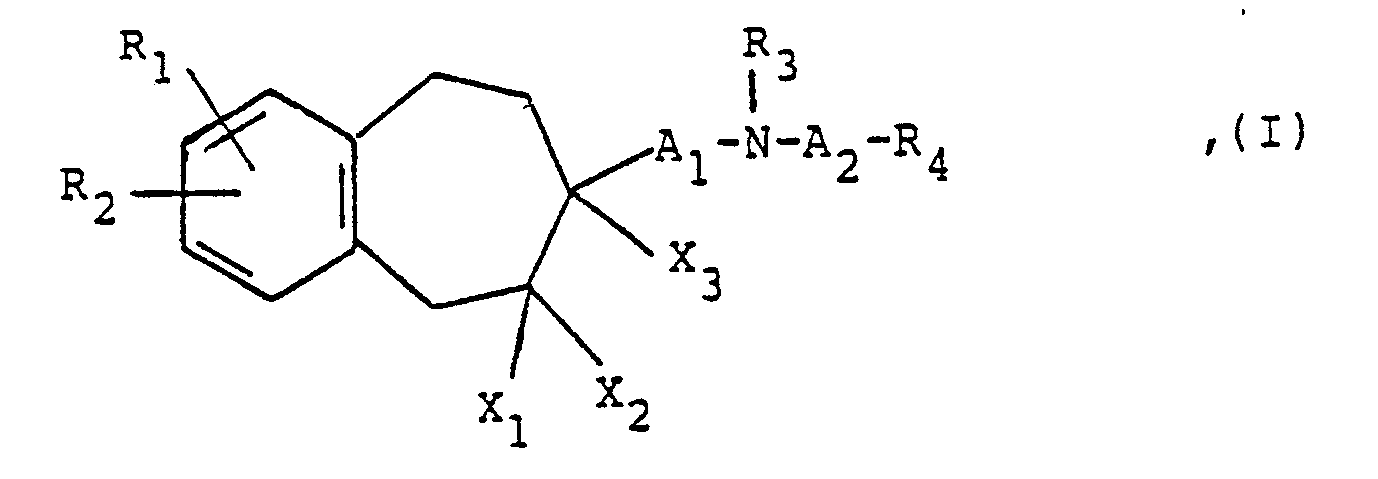
X₁ ein Wasserstoffatom, X₂ ein Wasserstoffatom und X₃ ein Wasserstoffatom, eine Hydroxy- oder Alkoxygruppe oder
X₁ und X₃ zusammen eine weitere Kohlenstoff-Kohlenstoff-Bindung und X₂ ein Wasserstoffatom oder
X₁ und X₂ zusammen mit dem dazwischenliegenden Kohlenstoffatom eine Carbonylgruppe und X₃ ein Wasserstoffatom,
A₁ eine gegebenenfalls durch eine Alkylgruppe substituierte geradkettige Alkylengruppe, in welcher eine im Rest A₁ enthaltene mit dem Benzocycloheptenring verknüpfte Ethylengruppe durch eine Ethenylen- oder Ethinylengruppe ersetzt sein kann,
A₂ eine gegebenenfalls durch eine Alkylgruppe substituierte geradkettige Alkylengruppe, in welcher, falls n die Zahl 0 darstellt, eine in dem Rest A₂ enthaltene Ethylen gruppe, welche mit dem Rest R₄ verknüpft ist, durch eine Ethenylengruppe ersetzt sein kann,
R₁ ein Wasserstoff- oder Halogenatom, eine Trifluormethyl-, Nitro-, Amino-, Alkylamino-, Dialkylamino-, Alkyl-, Hydroxy-, Alkoxy- oder Phenylalkoxygruppe,
R₂ ein Wasserstoffatom oder Halogenatom, eine Hydroxy-, Alkoxy-, Phenylalkoxy- oder Alkylgruppe, oder
R₁ und R₂ zusammen eine Alkylendioxygruppe,
R₃ ein Wasserstoffatom, eine Alkylgruppe oder eine Alkenylgruppe und
R₄ eine Gruppe der Formel
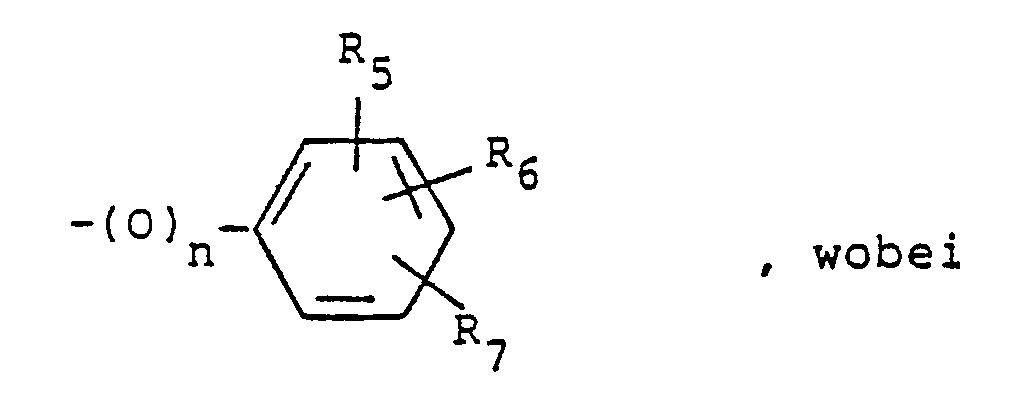
R₅ ein Wasserstoff- oder Halogenatom, eine Alkyl-, Nitro-, Amino-, Alkylamino-, Dialkylamino-, Alkanoylamino-, Alkoxycarbonylamino-, Alkylsulfonylamino-, Bis(alkylsulfonyl) amino-, N-Alkyl-alkylsulfonylamino-, Cyano-, Alkylmercapto-, Alkylsulfinyl- oder Alkylsulfonylgruppe oder eine gegebenenfalls durch eine Alkyl-, Phenylalkyl, 2-Hydroxyäthyl-, 3-Hydroxy-n-propyl, 2-Hydroxy-n-propyl, Alkylsulfonyl-, Cyanoalkyl-, Alkoxycarbonyl, Hydroxycarbonylalkyl, Alkoxycarbonylalkyl-, Trifluormethyl, Difluormethyl- oder Trifluormethylsulfonylgruppe substituierte Hydroxygruppe,
R₆ ein Wasserstoff- oder Halogenatom, eine Alkyl-, Hydroxy-, Alkoxy-, Cyano- oder Trifluormethylgruppe oder
R₅ und R₆ zusammen eine Alkylendioxygruppe und
R₇ ein Wasserstoff- oder Halogenatom, eine Alkyl- oder Alkoxygruppe bedeuten, deren Enantiomeren, deren Diastereomeren und deren Säureadditionssalze mit anorganischen oder organischen Säuren, welche wertvolle pharmakologische Eigenschaften aufweisen, insbesondere herzfrequenzsenkende, blutdrucksenkende, Ca⁺⁺-antagonistische und/oder antithrombotische Wirkung sowie eine antiischämische Wirkung am Herzen und eine den 0₂-Bedarf des Herzens vermindernde Wirkung.
Description
- In der EP-A-0.177.960 werden bereits Tetrahydronaphthaline, welche in 2-Stellung durch eine gegebenenfalls durch einen Acylrest substituierte Hydroxygruppe substituiert sind, beschrieben. Diese Verbindungen besitzen eine ausgeprägte Calcium-antagonistische Wirkung und können deshalb als Arzneimittel verwendet werden, insbesondere für die Bekämpfung bzw. Verhütung von Angina pectoris, Ischämie, Arrhythmien und Bluthochdruck.
- Überraschenderweise wurde nun gefunden, daß die neuen Benzocycloheptenderivate der Formel

- Gegenstand der vorliegenden Erfindung sind somit die neuen Benzocycloheptenderivate der obigen Formel I, deren Enantiomeren, deren Diastereomeren, deren Säureadditionssalze, insbesondere für die pharmazeutische Verwendung deren physiologisch verträgliche Säureadditionssalze mit anorganischen oder organischen Säuren, Verfahren zu ihrer Herstellung und diese Verbindungen enthaltende Arzneimittel.
- Die ungesättigten Verbindungen der Formel I stellen auch Zwischenprodukte zur Herstellung der gesättigten Verbindungen der Formel I dar.
- In der obigen allgemeinen Formel I bedeuten
X₁ ein Wasserstoffatom, X₂ ein Wasserstoffatom und X₃ ein Wasserstoffatom, eine Hydroxy- oder Alkoxygruppe mit 1 bis 3 Kohlenstoffatomen oder
X₁ und X₃ zusammen eine weitere Kohlenstoff-Kohlenstoff-Bindung und X₂ ein Wasserstoffatom oder
X₁ und X₂ zusammen mit dem dazwischenliegenden Kohlenstoffatom eine Carbonylgruppe und X₃ ein Wasserstoffatom,
A₁ eine gegebenenfalls durch eine Alkylgruppe mit 1 bis 3 Kohlenstoffatomen substituierte geradkettige Alkylengruppe mit 3 oder 4 Kohlenstoffatomen, in welcher eine im Rest A₁ enthaltene mit dem Benzocycloheptenring verknüpfte Ethylengruppe durch eine Ethenylen- oder Ethinylengruppe ersetzt sein kann,
A₂ eine gegebenenfalls durch eine Alkylgruppe mit 1 bis 3 Kohlenstoffatomen substituierte geradkettige Alkylengruppe mit 2 bis 5 Kohlenstoffatomen, in welcher, falls n die Zahl 0 darstellt, eine in dem Rest A₂ enthaltene Ethylengruppe, welche mit dem Rest R₄ verknüpft ist, durch eine Ethenylengruppe ersetzt sein kann,
R₁ ein Wasserstoff- oder Halogenatom, eine Trifluormethyl-, Nitro-, Amino-, Alkylamino-, Dialkylamino-, Alkyl-, Hydroxy-, Alkoxy- oder Phenylalkoxygruppe,
R₂ ein Wasserstoffatom oder Halogenatom, eine Hydroxy-, Alkoxy-, Phenylalkoxy- oder Alkylgruppe, oder
R₁ und R₂ zusammen eine Alkylendioxygruppe mit 1 oder 2 Kohlenstoffatomen,
R₃ ein Wasserstoffatom, eine Alkylgruppe oder eine Alkenylgruppe mit 3 bis 5 Kohlenstoffatomen und
R₄ eine Gruppe der Formel
R₅ ein Wasserstoff- oder Halogenatom, eine Alkyl-, Nitro-, Amino-, Alkylamino-, Dialkylamino-, Alkanoylamino-, Alkoxycarbonylamino-, Alkylsulfonylamino-, Bis(alkylsulfonyl)-amino-, N-Alkyl-alkylsulfonylamino-, Cyano-, Alkylmercapto-, Alkylsulfinyl- oder Alkylsulfonylgruppe oder eine gegebenenfalls durch eine Alkyl-, Phenylalkyl-, 2-Hydroxyäthyl-, 3-Hydroxy-n-propyl-, 2-Hydroxy-n-propyl-, Alkylsulfonyl-, Cyanoalkyl-, Alkoxycarbonyl-, Hydroxycarbonylalkyl-, Alkoxycar bonylalkyl, Trifluormethyl-, Difluormethyl- oder Trifluormethylsulfonylgruppe substituierte Hydroxygruppe,
R₆ ein Wasserstoff- oder Halogenatom, eine Alkyl-, Hydroxy-, Alkoxy-, Cyano- oder Trifluormethylgruppe oder
R₅ und R₆ zusammen eine Alkylendioxygruppe mit 1 oder 2 Kohlenstoffatomen und
R₇ ein Wasserstoff- oder Halogenatom, eine Alkyl- oder Alkoxygruppe bedeuten, wobei alle vorstehend erwähnten Alkyl- oder Alkoxygruppen jeweils 1 bis 3 Kohlenstoffatome und die vorstehend erwähnten Alkanoylgruppen jeweils 2 oder 3 Kohlenstoffatome enthalten können. - Fur die bei der Definition der Reste eingangs erwähnten Bedeutungen kommt beispielsweise
für R₁ die des Wasserstoff-, Fluor-, Chlor- oder Bromatoms, der Methyl-, Ethyl-, n-Propyl-, Isopropyl-, Trifluormethyl-, Hydroxy-, Methoxy-, Ethoxy-, n-Propoxy-, Isopropoxy-, Nitro-, Amino-, Methylamino-, Ethylamino-, n-Propylamino-, Isopropylamino-, Dimethylamino-, Diethylamino-, Di-n-propylamino-, Diisopropylamino-, Methyl-ethylamino-, Methyl-n-propylamino-, Methyl-isopropylamino-, Ethyl-n-propylamino-, Benzyloxy-, 1-Phenylethoxy-, 1-Phenylpropoxy-, 2-Phenylethoxy- oder 3-Phenylpropoxygruppe,
für R₂ die des Wasserstoff-, Chlor- oder Bromatoms, der Methyl-, Ethyl-, n-Propyl-, Isopropyl-, Hydroxy-, Methoxy-, Ethoxy-, n-Propoxy-, Isopropoxy-, Benzyloxy-, 1-Phenylethoxy-, 2-Phenylethoxy-, 2-Phenylpropoxy- oder 3-Phenylpropoxygruppe oder zusammen mit R₁ die der Methylendioxy- oder Ethylendioxygruppe,
für R₃ die des Wasserstoffatoms, der Methyl-, Ethyl-, n-Propyl-, Isopropyl-, Allyl-, Crotyl- oder n-Penten-2-yl-gruppe,
für R₅ die des Wasserstoff-, Fluor-, Chlor-, Brom- oder Jodatoms, der Methyl-, Ethyl-, n-Propyl-, Isopropyl-, Hydroxy-, Methoxy-, Ethoxy-, n-Propoxy-, Isopropoxy-, Amino-, Methylamino-, Ethylamino-, n-Propylamino-, Isopropylamino-, Dimethylamino-, Diethylamino-, Di-n-propylamino-, Diisopropylamino-, Methyl-ethylamino-, Methyl-n-propylamino-, Methyl-isopropylamino-, Ethyl-n-propylamino-, Acetylamino-, Propionylamino-, Methoxycarbonylamino-, Ethoxycarbonylamino-, n-Propoxycarbonylamino-, Methylsulfonylamino-, Ethylsulfonylamino-, n-Propylsulfonylamino-, Bis(methylsulfonyl)-amino-, Bis(ethylsulfonyl)-amino-, N-Methyl-methylsulfonylamino-, Cyano-, Methylmercapto-, Ethylmercapto-, n-Propylmercapto-, Methylsulfinyl-, Ethylsulfinyl-, Isopropylsulfinyl-, Methylsulfonyl-, Ethylsulfonyl-, n-Propylsulfonyl-, Benzyloxy-, 1-Phenylethoxy-, 2-Phenylethoxy-, 2-Phenyl-propoxy-, 3-Phenylpropoxy-, 2-Hydroxy-ethoxy-, 2-Hydroxy-n-propoxy-, 3-Hydroxy-n-propoxy-, Methylsulfonyloxy-, Ethylsulfonyloxy-, Isopropylsulfonyloxy-, Methoxycarbonyloxy-, Ethoxycarbonyloxy-, Isopropoxycarbonyloxy-, Hydroxycarbonylmethoxy-, 2-(Hydroxycarbonyl)-ethoxy-, Methoxycarbonylmethoxy-, Ethoxycarbonylmethoxy-, Isopropoxycarbonylmethoxy-, 2-(Methoxycarbonyl)-ethoxy-, 2-(n-Propoxycarbonyl)-ethoxy-, Cyanomethoxy-, 2-Cyanoethoxy-, 3-Cyano-n-propoxy-, Difluormethoxy-, Trifluormethoxy- oder Nitrogruppe,
für R₆ die des Wasserstoff-, Chlor- oder Bromatoms, der Methyl-, Ethyl-, n-Propyl-, Isopropyl-, Hydroxy-, Methoxy-, Ethoxy-, n-Propoxy-, Isopropoxy-, Cyano- oder Trifluormethylgruppe oder R₅ und R₆ zusammen die der Methylendioxy- oder Ethylendioxygruppe,
für R₇ die des Wasserstoffatoms, der Hydroxy-, Methoxy-, Ethoxy-, n-Propoxy- oder Isopropoxygruppe,
für A₁ die der n-Propylen-, 1-Methyl-n-propylen, 2-Methyl-n-propylen-, 3-Methyl-n-propylen-, 1-Ethyl-n-propylen-, 2-n-Propyl-n-propylen-, 3-Ethyl-n-propylen-, n-Butylen-, 1-Methyl-n-butylen-, 1-Ethyl-n-butylen-, Prop-1-enylen-, n-But-1-enylen-, 1-Methyl-prop-1-enylen-, 2-Methyl-prop-1-enylen-, 3-Methyl-prop-1-enylen-, Prop-1-inylen-, 3-Methyl-prop-1-inylen- oder n-But-1-inylengruppe und
für A₂ die der Ethylen-, 1-Methyl-ethylen-, 1-Ethyl-ethylen-, 1-Propyl-ethylen-, 2-Methyl-ethylen-, 2-Ethyl-ethylen-, n-Propylen-, n-Butylen-, n-Pentylen-, 1-Methyl-n-propylen-, 1-Methyl-n-butylen-, 1-Ethyl-n-propylen-, 2-Ethyl-n-propylen-, 1-Ethyl-n-butylen-, Prop-1-enylen-, n-But-1-enylen-, n-Pent-1-enylen-, 1-Methyl-prop-1-enylen, 2-Methyl-prop-1-enylen-, 3-Methyl-prop-1-enylen-, 4-Methyl-n-but-1-enylen- oder 5-Methyl-n-pent-1-enylengruppe in Betracht. - Beispielsweise seien zusätzlich zu den in den Beispielen genannten Verbindungen noch folgende Verbindungen genannt, die unter die vorstehend erwähnte Formel I fallen:
2,3-Dimethoxy-7-hydroxy-7-[3-(N-(2-(3, 4-dimethoxy-phenyl)-ethyl)-amino)-propin-1-yl]-6,7,8,9-tetrahydro-5H-benzocyclohepten,
2,3-Dimethoxy-7-hydroxy-7-[(3-(N-cinnamyl-N-methyl)-amino)-propin-1-yl]-6,7,8,9-tetrahydro-5H-benzocyclohepten,
2,3-Dimethoxy-7-hydroxy-7-[3-(N-(2-(4-benzyloxy-phenyl)-ethyl)-amino)-propin-1-yl]-6,7,8,9-tetrahydro-5H-benzocyclohepten,
2,3-Dimethoxy-7-hydroxy-7-[3-(N-(2-(4-methoxy-phenyl)-ethyl)-amino)-propin-1-yl]-6,7,8,9-tetrahydro-5H-benzocyclohepten,
2,3-Dimethoxy-7-hydroxy-7-[3-(N-(2-(3-methoxy-phenyl)-ethyl)-amino)-propin-1-yl]-6,7,8,9-tetrahydro-5H-benzocyclohepten,
2,3-Dimethoxy-7-hydroxy-7-[3-(N-(3-(3,4-dimethyl-phenoxy)-propyl)-amino)-propin-1-yl]-6,7,8,9-tetrahydro-5H-benzocyclohepten,
2,3-Dimethoxy-7-hydroxy-7-[3-(N-(3-(3-methoxy-phenoxy)-propyl)-amino)-propin-1-yl]-6,7,8,9-tetrahydro-5H-benzocyclohepten,
2,3-Dimethoxy-7-hydroxy-7-[3-(N-(2-(3-benzyloxy-phenyl)-ethyl)-amino)-propin-1-yl]-6,7,8,9-tetrahydro-5H-benzocyclohepten,
2,3-Dimethoxy-7-hydroxy-7-[3-(N-(2-(3-benzyloxy-phenyl)-ethyl)-amino)-propen-1-yl]-6,7,8,9-tetrahydro-5H-benzocyclohepten,
2,3-Dimethoxy-7-hydroxy-7-[3-(N-(2-phenylethyl)-amino)-propin-1-yl]-6,7,8,9-tetrahydro-5H-benzocyclohepten,
2,3-Dimethoxy-7-hydroxy-7-[3-(N-(3-phenylpropyl)-amino)-propin-1-yl]-6,7,8,9-tetrahydro-5H-benzocyclohepten,
2,3-Dimethoxy-7-hydroxy-7-[3-(N-(2-(3-methyl-phenyl)-ethyl)-amino)-propin-1-yl]-6,7,8,9-tetrahydro-5H-benzocyclohepten,
2,3-Dimethoxy-7-methoxy-7-[3-(N-methyl-N- (2-(3,4-dimethoxy-phenyl)-ethyl)-amino)-propin-1-yl] -6,7,8,9-tetrahydro-5H-benzocyclohepten,
2,3-Dimethoxy-7-hydroxy-7-[3-(N-methyl-N-(2-(3,4-dimethoxy-phenyl)-ethyl)-amino)-propin-1-yl]-6,7,8,9-tetrahydro-5H-benzocyclohepten,
2,3-Dimethoxy-7-hydroxy-7-[(3-(N-cinnamyl-N-methyl)-amino)-propin-1-yl] -6,7,8,9-tetrahydro-5H-benzocyclohepten,
2,3-Dimethoxy-7-hydroxy-7-[3-(N-methyl-N-(2-(3,5-dimethoxy-phenyl)-ethyl)-amino)-propin-1-yl]-6,7,8,9-tetrahydro-5H-benzocyclohepten,
2,3-Dimethoxy-7-hydroxy-7-[3-(N-methyl-N-(2-(4-benzyloxy-phenyl)-ethyl)-amino)-propin-1-yl]-6,7,8,9-tetrahydro-5H-benzocyclohepten,
2,3-Dimethoxy-7-hydroxy-7-[3-(N-methyl-N-(2-(4-methoxy-phenyl)-ethyl)-amino)-propin-1-yl]-6,7,8,9-tetrahydro-5H-benzocyclohepten,
2,3-Dimethoxy-7-hydroxy-7-[3-(N-methyl-N-(2-(3-methoxy-phenyl)-ethyl)-amino)-propin-1-yl]-6,7,8,9-tetrahydro-5H-benzocyclohepten,
2,3-Dimethoxy-7-hydroxy-7-[3-(N-methyl-N-(3-(3,4-dimethyl-phenoxy)-propyl)-amino)-propin-1-yl]-6,7,8,9-tetrahydro-5H-benzocyclohepten,
2,3-Dimethoxy-7-hydroxy-7-[3-(N-methyl-N-(3-(3-methoxy-phenoxy)-propyl)-amino)-propin-1-yl]-6,7,8,9-tetrahydro-5H-benzocyclohepten,
2,3-Dimethoxy-7-hydroxy-7-[3-(N-methyl-N-(2-(3-benzyloxy-phenyl)-ethyl)-amino)-propin-1-yl]-6,7,8,9-tetrahydro-5H-benzocyclohepten,
2,3-Dimethoxy-7-hydroxy-7-[3-(N-methyl-N-(2-(3-benzyloxy-phenyl)-ethyl)-amino)-propen-1-yl]-6,7,8,9-tetrahydro-5H-benzocyclohepten,
2,3-Dimethoxy-7-hydroxy-7-[3-(N-methyl-N-(2-phenylethyl)-amino)-propin-1-yl]-6,7,8,9-tetrahydro-5H-benzocyclohepten,
2,3-Dimethoxy-7-hydroxy-7-[3-(N-methyl-N-(3-phenylpropyl)-amino)-propin-1-yl]-6,7,8,9-tetrahydro-5H-benzocyclohepten,
2,3-Dimethoxy-7-hydroxy-7-[3-(N-methyl-N-(2-(3-methyl-phenyl)-ethyl)-amino)-propin-1-yl]-6,7,8,9-tetrahydro-5H-benzocyclohepten,
2,3-Dimethoxy-7-methoxy-7-[3-(N-ethyl-N-(2-(3,4-dimethoxy-phenyl)-ethyl)-amino)-propin-1-yl]-6,7,8,9-tetrahydro-5H-benzocyclohepten,
2,3-Dimethoxy-7-hydroxy-7-[3-(N-ethyl-N-(2-(3,4-dimethoxy-phenyl)-ethyl)-amino)-propin-1-yl]-6,7,8,9-tetrahydro-5H-benzocyclohepten,
7-Methoxy-7-[3-(N-(2-(3,4-dimethoxy-phenyl)-ethyl)-amino)-propin-1-yl]-6,7,8,9-tetrahydro-5H-benzocyclohepten,
7-Hydroxy-7-[3-(N-(2-(3,4-dimethoxy-phenyl)-ethyl)-amino)-propin-1-yl]-6,7,8,9-tetrahydro-5H-benzocyclohepten,
7-Hydroxy-7-[3-(N-(2-(4-benzyloxy-phenyl)-ethyl)-amino)-propin-1-yl]-6,7,8,9-tetrahydro-5H-benzocyclohepten,
7-Hydroxy-7-[3-(N-(2-(4-methoxy-phenyl)-ethyl)-amino)-propin-1-yl]-6,7,8,9-tetrahydro-5H-benzocyclohepten,
7-Hydroxy-7-[3-(N-(2-(3-methoxy-phenyl)-ethyl)-amino)-propin-1-yl]-6,7,8,9-tetrahydro-5H-benzocyclohepten,
7-Hydroxy-7-[3-(N-(3-(3,4-dimethyl-phenoxy)-propyl)-amino)-propin-1-yl]-6,7,8,9-tetrahydro-5H-benzocyclohepten,
7-Hydroxy-7-[3-(N-(3-(3-methoxy-phenoxy)-propyl)-amino)-propin-1-yl]-6,7,8,9-tetrahydro-5H-benzocyclohepten,
7-Hydroxy-7-[3-(N-(2-(3-benzyloxy-phenyl)-ethyl)-amino)-propin-1-yl]-6,7,8,9-tetrahydro-5H-benzocyclohepten,
7-Hydroxy-7-[3-(N-(2-(3-benzyloxy-phenyl)-ethyl)-amino)-propen-1-yl]-6,7,8,9-tetrahydro-5H-benzocyclohepten,
7-Hydroxy-7-[3-(N-(2-phenylethyl)-amino)-propin-1-yl]-6,7,8,9-tetrahydro-5H-benzocyclohepten,
7-Hydroxy-7-[3-(N-(3-phenylpropyl)-amino)-propin-1-yl]-6,7,8,9-tetrahydro-5H-benzocyclohepten,
7-Hydroxy-7-[3-(N-(2-(3-methyl-phenyl)-ethyl)-amino)-propin-1-yl]-6,7,8,9-tetrahydro-5H-benzocyclohepten,
7-Methoxy-7-[3-(N-methyl-N-(2-(3,4-dimethoxy-phenyl)-ethyl)-amino)-propin-1-yl]-6,7,8,9-tetrahydro-5H-benzocyclohepten,
7-Hydroxy-7-[3-(N-methyl-N-(2-(3,4-dimethoxy-phenyl)-ethyl)-amino)-propin-1-yl]-6,7,8,9-tetrahydro-5H-benzocyclohepten,
7-Hydroxy-7-[(3-(N-cinnamyl-N-methyl)-amino)-propin-1-yl]-6,7,8,9-tetrahydro-5H-benzocyclohepten,
7-Hydroxy-7-[3-(N-methyl-N-(2-(3,5-dimethoxy-phenyl)-ethyl)-amino)-propin-1-yl]-6,7,8,9-tetrahydro-5H-benzocyclohepten,
7-Hydroxy-7-[3-(N-methyl-N-(2-(4-benzyloxy-phenyl)-ethyl)-amino)-propin-1-yl]-6,7,8,9-tetrahydro-5H-benzocyclohepten,
7-Hydroxy-7-[3-(N-methyl-N-(2-(4-methoxy-phenyl)-ethyl)-amino)-propin-1-yl]-6,7,8,9-tetrahydro-5H-benzocyclohepten,
7-Hydroxy-7-[3-(N-methyl-N-(2-(3-methoxy-phenyl)-ethyl)-amino)-propin-1-yl]-6,7,8,9-tetrahydro-5H-benzocyclohepten,
7-Hydroxy-7-[3-(N-methyl-N-(3-(3,4-dimethyl-phenoxy)-propyl)-amino)-propin-1-yl]-6,7,8,9-tetrahydro-5H-benzocyclohepten,
7-Hydroxy-7-[3-(N-methyl-N-(3-(3-methoxy-phenoxy)-propyl)-amino)-propin-1-yl]-6,7,8,9-tetrahydro-5H-benzocyclohepten,
7-Hydroxy-7-[3-(N-methyl-N-(2-(3-benzyloxy-phenyl)-ethyl)-amino)-propin-1-yl]-6,7,8,9-tetrahydro-5H-benzocyclohepten,
7-Hydroxy-7-[3-(N-methyl-N-(2-(3-benzyloxy-phenyl)-ethyl)-amino)-propen-1-yl]-6,7,8,9-tetrahydro-5H-benzocyclohepten,
7-Hydroxy-7-[3-(N-methyl-N-(2-phenylethyl)-amino)-propin-1-yl]-6,7,8,9-tetrahydro-5H-benzocyclohepten,
7-Hydroxy-7-[3-(N-methyl-N-(3-phenylpropyl)-amino)-propin-1-yl]-6,7,8,9-tetrahydro-5H-benzocyclohepten,
7-Hydroxy-7-[3-(N-methyl-N-(2-(3-methyl-phenyl)-ethyl)-amino)-propin-1-yl]-6,7,8,9-tetrahydro-5H-benzocyclohepten,
7-Hydroxy-7-[3-(N-methyl-N-(2-(3-methoxy-phenyl)-ethyl)-amino)-propin-1-yl]-6,7,8,9-tetrahydro-5H-benzocyclohepten,
7-Methoxy-7-[3-(N-allyl-N-(2-(3,4-dimethoxy-phenyl)-ethyl)-amino)-propin-1-yl]-6,7,8,9-tetrahydro-5H-benzocyclohepten,
7-Hydroxy-7-[3-(N-allyl-N-(2-(3,4-dimethoxy-phenyl)-ethyl)-amino)-propin-1-yl]-6,7,8,9-tetrahydro-5H-benzocyclohepten,
2,3-Dimethoxy-7-hydroxy-7-[3-(N-(3-(3,4-methylendioxy-phenoxy)-propyl)-amino)-propyl]-6,7,8,9-tetrahydro-5H-benzocyclohepten,
2,3-Dimethoxy-7-hydroxy-7-[3-(N-(2-(4-fluor-phenyl)-ethyl)-amino)-propyl]-6,7,8,9-tetrahydro-5H-benzocyclohepten,
2,3-Dimethoxy-7-hydroxy-7-[3-(N-(2-(3-methoxy-phenyl)-ethyl)-amino)-propyl]-6,7,8,9-tetrahydro-5H-benzocyclohepten,
2,3-Dimethoxy-7-hydroxy-7-[3-(N-(3-(3,4-dimethyl-phenoxy)-propyl)-amino)-propyl]-6,7,8,9-tetrahydro-5H-benzocyclohepten,
2,3-Dimethoxy-7-hydroxy-7-[3-(N-(3-(3-methoxy-phenoxy)-propyl)-amino)-propyl]-6,7,8,9-tetrahydro-5H-benzocyclohepten,
2,3-Dimethoxy-7-hydroxy-7-[3-(N-(2-(3-hydroxy-phenyl)-ethyl)-amino)-propyl]-6,7,8,9-tetrahydro-5H-benzocyclohepten,
2,3-Dimethoxy-7-hydroxy-7-[3-(N-(2-(3-methansulfonyl-oxy-phenyl)-ethyl)-amino)-propyl]-6,7,8,9-tetrahydro-5H-benzocyclohepten,
2,3-Dimethoxy-7-hydroxy-7-[3-(N-(2-phenylethyl)-amino)-propyl]-6,7,8,9-tetrahydro-5H-benzocyclohepten,
2,3-Dimethoxy-7-hydroxy-7-[3-(N-(3-phenylpropyl)-amino)-propyl]-6,7,8,9-tetrahydro-5H-benzocyclohepten,
2,3-Dimethoxy-7-hydroxy-7-[3-(N-(2-(3-methyl-phenyl)-ethyl)-amino)-propyl]-6,7,8,9-tetrahydro-5H-benzocyclohepten,
2,3-Dimethoxy-7-hydroxy-7-[3-(N-(2-(3-methansulfonylaminophenyl)-ethyl)-amino)-propyl]-6,7,8,9-tetrahydro-5H-benzocyclohepten,
2,3-Dimethoxy-7-hydroxy-7-[3-(N-(2-phenylethyl)-amino)-propyl]-6,7,8,9-tetrahydro-5H-benzocyclohepten,
2,3-Dimethoxy-7-hydroxy-7-[3-(N-(3-phenylpropyl)-amino)-propyl]-6,7,8,9-tetrahydro-5H-benzocyclohepten,
2,3-Dimethoxy-7-hydroxy-7-[3-(N-(2-(3-chlor-phenyl)-ethyl)-amino)-propyl]-6,7,8,9-tetrahydro-5H-benzocyclohepten,
2,3-Dimethoxy-7-hydroxy-7-[3-(N-(2-(3-acetylamino-phenyl)-ethyl)-amino)-propyl]-6,7,8,9-tetrahydro-5H-benzocyclohepten,
2,3-Dimethoxy-7-hydroxy-7-[3-(N-(2-(3-amino-phenyl)-ethyl)-amino)-propyl]-6,7,8,9-tetrahydro-5H-benzocyclohepten,
2,3-Dimethoxy-7-hydroxy-7-[3-(N-methyl-N-(3-(3,4-methylendioxy-phenoxy)-propyl)-amino)-propyl]-6,7,8,9-tetrahydro-5H-benzocyclohepten,
2,3-Dimethoxy-7-hydroxy-7-[3-(N-methyl-N-(2-(4-fluor-phenyl)-ethyl)-amino)-propyl]-6,7,8,9-tetrahydro-5H-benzocyclohepten,
2,3-Dimethoxy-7-hydroxy-7-[3-(N-methyl-N-(2-(3-methoxy-phenyl)-ethyl)-amino)-propyl]-6,7,8,9-tetrahydro-5H-benzocyclohepten,
2,3-Dimethoxy-7-hydroxy-7-[3-(N-methyl-N-(3-(3,4-dimethyl-phenoxy)-propyl)-amino)-propyl]-6,7,8,9-tetrahydro-5H-benzocyclohepten,
2,3-Dimethoxy-7-hydroxy-7-[3-(N-methyl-N-(3-(3-methoxy-phenoxy)-propyl)-amino)-propyl]-6,7,8,9-tetrahydro-5H-benzocyclohepten,
2,3-Dimethoxy-7-hydroxy-7-[3-(N-methyl-N-(2-(3-hydroxy-phenyl)-ethyl)-amino)-propyl]-6,7,8,9-tetrahydro-5H-benzocyclohepten,
2,3-Dimethoxy-7-hydroxy-7-[3-(N-methyl-N-(2-(3-methansulfonyl-oxy-phenyl)-ethyl)-amino)-propyl]-6,7,8,9-tetrahydro-5H-benzocyclohepten,
2,3-Dimethoxy-7-hydroxy-7-[3-(N-methyl-N-(2-phenylethyl)-amino)-propyl]-6,7,8,9-tetrahydro-5H-benzocyclohepten,
2,3-Dimethoxy-7-hydroxy-7-[3-(N-methyl-N-(3-phenylpropyl)-amino)-propyl]-6,7,8,9-tetrahydro-5H-benzocyclohepten,
2,3-Dimethoxy-7-hydroxy-7-[3-(N-methyl-N-(2-(3-methyl-phenyl)-ethyl)-amino)-propyl]-6,7,8,9-tetrahydro-5H-benzocyclohepten,
2,3-Dimethoxy-7-hydroxy-7-[3-(N-methyl-N-(2-(3-methansulfonylamino-phenyl)-ethyl)-amino)-propyl]-6,7,8,9-tetrahydro-5H-benzocyclohepten,
2,3-Dimethoxy-7-hydroxy-7-[3-(N-methyl-N-(2-phenylethyl)-amino)-propyl]-6,7,8,9-tetrahydro-5H-benzocyclohepten,
2,3-Dimethoxy-7-hydroxy-7-[3-(N-methyl-N-(3-phenylpropyl)-amino)-propyl]-6,7,8,9-tetrahydro-5H-benzocyclohepten,
2,3-Dimethoxy-7-hydroxy-7-[3-(N-methyl-N-(2-(3-chlor-phenyl)-ethyl)-amino)-propyl]-6,7,8,9-tetrahydro-5H-benzocyclohepten,
2,3-Dimethoxy-7-hydroxy-7-[3-(N-methyl-N-(2-(3-acetylamino-phenyl)-ethyl)-amino)-propyl]-6,7,8,9-tetrahydro-5H-benzocyclohepten,
2,3-Dimethoxy-7-hydroxy-7-[3-(N-methyl-N-(2-(3-amino-phenyl)-ethyl)-amino)-propyl]-6,7,8,9-tetrahydro-5H-benzocyclohepten,
2,3-Dimethoxy-7-hydroxy-7-[3-(N-ethyl-N-(3-(3,4-methylendioxy-phenoxy)-propyl)-amino)-propyl]-6,7,8,9-tetrahydro-5H-benzocyclohepten,
2,3-Dimethoxy-7-hydroxy-7-[3-(N-ethyl-N-(2-(3-methoxy-phenyl)-ethyl)-amino)-propyl]-6,7,8,9-tetrahydro-5H-benzocyclohepten,
2,3-Dimethoxy-7-hydroxy-7-[3-(N-allyl-N-(2-(3-methoxy-phenyl)-ethyl)-amino)-propyl]-6,7,8,9-tetrahydro-5H-benzocyclohepten,
2,3-Dimethoxy-7-hydroxy-7-[3-(N-allyl-N-(3-(3,4-dimethyl-phenoxy-propyl)-amino)-propyl]-6,7,8,9-tetrahydro-5H-benzocyclohepten,
2,3-Dimethoxy-7-hydroxy-7-[3-(N-allyl-N-(3-(3-methoxy-phenoxy)-propyl)-amino)-propyl]-6,7,8,9-tetrahydro-5H-benzocyclohepten,
7-Hydroxy-7-[3-(N-(3-(3,4-methoxy-phenoxy)-propyl)-amino)-propyl]-6,7,8,9-tetrahydro-5H-benzocyclohepten,
7-Hydroxy-7-[3-(N-(2-(4-fluor-phenyl)-ethyl)-amino)-propyl]-6,7,8,9-tetrahydro-5H-benzocyclohepten,
7-Hydroxy-7-[3-(N-(2-(3-methoxy-phenyl)-ethyl)-amino)-propyl]-6,7,8,9-tetrahydro-5H-benzocyclohepten,
2,3-Dimethoxy-7-hydroxy-7-[4-(N-(3-(3,4-methylendioxy-phenoxy)-propyl)-amino)-butyl]-6,7,8,9-tetrahydro-5H-benzocyclohepten,
2,3-Dimethoxy-7-hydroxy-7-[4-(N-(3-phenylpropyl)-amino)-butyl]-6,7,8,9-tetrahydro-5H-benzocyclohepten,
2,3-Dimethoxy-7-hydroxy-7-[5-(N-(2-(3-methoxy-phenyl)-ethyl)-amino)-pentyl]-6,7,8,9-tetrahydro-5H-benzocyclohepten,
2,3-Dimethoxy-7-hydroxy-7-[5-(N-(3-phenylpropyl)-amino)-pentyl]-6,7,8,9-tetrahydro-5H-benzocyclohepten,
2,3-Dimethoxy-7-hydroxy-7-[5-(N-methyl-N-(3-(3-methoxy-phenoxy)-propyl)-amino)-pentyl]-6,7,8,9-tetrahydro-5H-benzocyclohepten,
2,3-Dimethoxy-7-[4-(N-(3-(3,4-dimethoxy-phenyl)-propyl)-amino)-butyl]-6,7,8,9-tetrahydro-5-H-benzocyclohepten,
2,3-Dimethoxy-7-[3-(N-(3-(3,4-methylendioxy-phenoxy)-propyl)-amino)-propyl]-6,7,8,9-tetrahydro-5H-benzocyclohepten-6-on,
2,3-Dimethoxy-7-[3-(N-(2-(4-fluor-phenyl)-ethyl)-amino)-propyl]-6,7,8,9-tetrahydro-5H-benzocyclohepten-6-on,
2,3-Dimethoxy-7-[3-(N-(2-(3-methoxy-phenyl)-ethyl)-amino)-propyl]-6,7,8,9-tetrahydro-5H-benzocyclohepten-6-on,
2,3-Dimethoxy-7-[3-(N-(3-(3,4-dimethyl-phenoxy)-propyl)-amino)-propyl]-6,7,8,9-tetrahydro-5H-benzocyclohepten-6-on,
2,3-Dimethoxy-7-[3-(N-(3-(3-methoxy-phenoxy)-propyl)-amino)-propyl]-6,7,8,9-tetrahydro-5H-benzocyclohepten-6-on,
2,3-Dimethoxy-7-[3-(N-(2-(3-hydroxy-phenyl)-ethyl)-amino)-propyl]-6,7,8,9-tetrahydro-5H-benzocyclohepten-6-on,
2,3-Dimethoxy-7-[3-(N-(2-(3-methansulfonyl-oxy-phenyl)-ethyl)-amino)-propyl]-6,7,8,9-tetrahydro-5H-benzocyclohepten-6-on,
2,3-Dimethoxy-7-[3-(N-(2-phenylethyl)-amino)-propyl]-6,7,8,9-tetrahydro-5H-benzocyclohepten-6-on,
2,3-Dimethoxy-7-[3-(N-(3-phenylpropyl)-amino)-propyl]-6,7,8,9-tetrahydro-5H-benzocyclohepten-6-on,
2,3-Dimethoxy-7-[3-(N-(2-(3-methyl-phenyl)-ethyl)-amino)-propyl]-6,7,8,9-tetrahydro-5H-benzocyclohepten-6-on,
2,3-Dimethoxy-7-[3-(N-(2-(3-methansulfonylamino-phenyl)-ethyl)-amino)-propyl]-6,7,8,9-tetrahydro-5H-benzocyclohepten-6-on,
2,3-Dimethoxy-7-[3-(N-(2-phenylethyl)-amino)-propyl]-6,7,8,9-tetrahydro-5H-benzocyclohepten-6-on,
2,3-Dimethoxy-7-[3-(N-(3-phenylpropyl)-amino)-propyl]-6,7,8,9-tetrahydro-5H-benzocyclohepten-6-on,
2,3-Dimethoxy-7-[3-(N-(2-(3-chlor-phenyl)-ethyl)-amino)-propyl]-6,7,8,9-tetrahydro-5H-benzocyclohepten-6-on,
2,3-Dimethoxy-7-[3-(N-(2-(3-acetylamino-phenyl)-ethyl)-amino)-propyl]-6,7,8,9-tetrahydro-5H-benzocyclohepten-6-on,
2,3-Dimethoxy-7-[3-(N-(2-(3-amino-phenyl)-ethyl)-amino)-propyl]-6,7,8,9-tetrahydro-5H-benzocyclohepten-6-on,
2,3-Dimethoxy-7-[3-(N-methyl-N-(3-(3,4-methylendioxy-phenoxy)-propyl)-amino)-propyl]-6,7,8,9-tetrahydro-5H-benzocyclohepten-6-on,
2,3-Dimethoxy-7-[3-(N-methyl-N-(2-(4-fluor-phenyl)-ethyl)-amino)-propyl]-6,7,8,9-tetrahydro-5H-benzocyclohepten-6-on,
2,3-Dimethoxy-7-[3-(N-methyl-N-(2-(3-methoxy-phenyl)-ethyl)-amino)-propyl]-6,7,8,9-tetrahydro-5H-benzocyclohepten-6-on,
2,3-Dimethoxy-7-[3-(N-methyl-N-(3-(3,4-dimethyl-phenoxy)-propyl)-amino)-propyl]-6,7,8,9-tetrahydro-5H-benzocyclohepten-6-on,
2,3-Dimethoxy-7-[3-(N-methyl-N-(3-(3-methoxy-phenoxy)-propyl)-amino)-propyl]-6,7,8,9-tetrahydro-5H-benzocyclohepten-6-on,
2,3-Dimethoxy-7-[3-(N-methyl-N-(2-(3-hydroxy-phenyl)-ethyl)-amino)-propyl]-6,7,8,9-tetrahydro-5H-benzocyclohepten-6-on,
2,3-Dimethoxy-7-[3-(N-methyl-N-(2-(3-methansulfonyl-oxy-phenyl)-ethyl)-amino)-propyl]-6,7,8,9-tetrahydro-5H-benzocyclohepten-6-on,
2,3-Dimethoxy-7-[3-(N-methyl-N-(2-phenylethyl)-amino)-propyl]-6,7,8,9-tetrahydro-5H-benzocyclohepten-6-on,
2,3-Dimethoxy-7-[3-(N-methyl-N-(3-phenylpropyl)-amino)-propyl]-6,7,8,9-tetrahydro-5H-benzocyclohepten-6-on,
2,3-Dimethoxy-7-[3-(N-methyl-N-(2-(3-methyl-phenyl)-ethyl)-amino)-propyl]-6,7,8,9-tetrahydro-5H-benzocyclohepten-6-on,
2,3-Dimethoxy-7-[3-(N-methyl-N-(2-(3-methansulfonylamino-phenyl)-ethyl)-amino)-propyl]-6,7,8,9-tetrahydro-5H-benzocyclohepten-6-on,
2,3-Dimethoxy-7-[3-(N-methyl-N-(2-phenylethyl)-amino)-propyl]-6,7,8,9-tetrahydro-5H-benzocyclohepten-6-on,
2,3-Dimethoxy-7-[3-(N-methyl-N-(3-phenylpropyl)-amino)-propyl]-6,7,8,9-tetrahydro-5H-benzocyclohepten-6-on,
2,3-Dimethoxy-7-[3-(N-methyl-N-(2-(3-chlor-phenyl)-ethyl)-amino)-propyl]-6,7,8,9-tetrahydro-5H-benzocyclohepten-6-on,
2,3-Dimethoxy-7-[3-(N-methyl-N-(2-(3-acetylamino-phenyl)-ethyl)-amino)-propyl]-6,7,8,9-tetrahydro-5H-benzocyclohepten-6-on,
2,3-Dimethoxy-7-[3-(N-methyl-N-(2-(3-amino-phenyl)-ethyl)-amino)-propyl]-6,7,8,9-tetrahydro-5H-benzocyclohepten-6-on,
2,3-Dimethoxy-7-[3-(N-ethyl-N-(3-(3,4-methylendioxy-phenoxy)-propyl)-amino)-propyl]-6,7,8,9-tetrahydro-5H-benzocyclohepten-6-on,
2,3-Dimethoxy-7-[3-(N-ethyl-N-(2-(3-methoxy-phenyl)-ethyl)-amino)-propyl]-6,7,8,9-tetrahydro-5H-benzocyclohepten-6-on,
2,3-Dimethoxy-7-[3-(N-allyl-N-(2-(3-methoxy-phenyl)-ethyl)-amino)-propyl]-6,7,8,9-tetrahydro-5H-benzocyclohepten-6-on,
2,3-Dimethoxy-7-[3-(N-allyl-N-(3-(3,4-dimethyl-phenoxy)-propyl)-amino)-propyl]-6,7,8,9-tetrahydro-5H-benzocyclohepten-6-on,
2,3-Dimethoxy-7-[3-(N-allyl-N-(3-(3-methoxy-phenoxy)-propyl)-amino)-propyl]-6,7,8,9-tetrahydro-5H-benzocyclohepten-6-on,
7-Hydroxy-7-[3-(N-(3-(3,4-methylendioxy-phenoxy)-propyl)-amino)-propyl]-6,7,8,9-tetrahydro-5H-benzocyclohepten-6-on,
7-Hydroxy-7-[3-(N-(2-(4-fluor-phenyl)-ethyl)-amino)-propyl]-6,7,8,9-tetrahydro-5H-benzocyclohepten-6-on,
7-Hydroxy-7-[3-(N-(2-(3-methoxy-phenyl)-ethyl)-amino)-propyl]-6,7,8,9-tetrahydro-5H-benzocyclohepten-6-on und
2,3-Dimethoxy-7-[4-(N-(3-(3,4-methylendioxy-phenoxy)-propyl)-amino)-butyl]-6,7,8,9-tetrahydro-5H-benzocyclohepten-6-on,
deren Enantiomere, deren Diastereomere und deren Säureadditionssalze. - Bevorzugte Verbindungen der obigen Formel I sind jedoch diejenigen, in denen
X₁ ein Wasserstoffatom, X₂ ein Wasserstoffatom und X₃ ein Wasserstoffatom, eine Hydroxy- oder Methoxygruppe oder
X₁ und X₃ zusammen eine weitere Kohlenstoff-Kohlenstoff-Bindung und X₂ ein Wasserstoffatom oder
X₁ und X₂ zusammen mit dem dazwischenliegenden Kohlenstoffatom eine Carbonylgruppe und X₃ ein Wasserstoffatom,
A₁ eine n-Propylengruppe, in welche die mit dem Cycloheptenring verknüpfte Ethylengruppe durch eine Ethenylen- oder Ethinylengruppe ersetzt sein kann,
A₂ eine Ethylen- oder n-Propylengruppe oder eine n-Propylengruppe, in der, falls n die Zahl 0 darstellt, eine im Rest A₂ enthaltene Ethylengruppe, welche mit dem Rest R₄ verknüpft ist, durch eine Ethenylengruppe ersetzt ist,
R₁ ein Wasserstoffatom, eine Methyl- oder Methoxygruppe,
R₂ ein Wasserstoffatom, eine Methyl- oder eine Methoxygruppe,
R₃ die Methylgruppe,
n die Zahl 0 oder 1,
R₅ ein Wasserstoff-, Fluor-, Chlor- oder Bromatom, eine Hydroxy-, Methoxy-, Cyano-, Methyl-, Nitro-, Amino-, Methylsulfonyloxy-, Trifluormethylsulfonyloxy- oder Benzyloxygruppe,
R₆ ein Wasserstoff-, Chlor- oder Bromatom oder eine Methoxygruppe und
R₇ ein Wasserstoff-, Chlor- oder Bromatom bedeuten, deren Enantiomere, deren Diastereomere und deren Säureadditionssalze. - Besonders bevorzugte Verbindungen der Formel I sind diejenigen, in denen
X₁ ein Wasserstoffatom, X₂ ein Wasserstoffatom und X₃ ein Wasserstoffatom oder eine Hydroxygruppe oder
X₁ und X₃ zusammen eine weitere Kohlenstoff-Kohlenstoff-Bindung und X₂ ein Wasserstoffatom oder
X₁ und X₂ zusammen mit dem dazwischenliegenden Kohlenstoffatom eine Carbonylgruppe und X₃ ein Wasserstoffatom,
R₁ eine Methoxygruppe,
R₂ eine Methoxygruppe,
R₃ eine Methylgruppe,
A₁ eine n-Propylengruppe,
A₂ eine Ethylen- oder n-Propylengruppe,
R₅ eine Methoxy- oder Methylsulfonyloxygruppe,
R₆ ein Wasserstoffatom oder eine Methoxygruppe,
R₇ ein Wasserstoffatom und
n die Zahl 0 oder 1 bedeuten, deren Enantiomere, deren Diastereomere und deren Säureadditionssalze. - Erfindungsgemäß erhält man die neuen Verbindungen nach folgenden Verfahren:
- a) Umsetzung einer Verbindung der Formel

Z₂ - A₂ - R₄ ,(III)
in denen
R₁, R₂, R₄, A₁, A₂ und X₁ bis X₃ wie eingangs definiert sind,
einer der Reste Z₁ oder Z₂ eine R₃-NH-Gruppe, wobei R₃ wie eingangs definiert ist, und
der andere der Reste Z₁ oder Z₂ eine nukleophile Austrittsgruppe wie ein Halogenatom oder eine Sulfonyloxygruppe darstellt, z.B. ein Chlor-, Brom- oder Jodatom, die Methansulfonyloxy-, p-Toluolsulfonyloxy- oder Ethoxysulfonyloxygruppe.
Die Umsetzung wird zweckmäßigerweise in einem Lösungsmittel oder Lösungsmittelgemisch wie Aceton, Diethylether, Methylformamid, Dimethylformamid, Dimethylsulfoxid, Benzol, Chlorbenzol, Tetrahydrofuran, Benzol/Tetrahydrofuran, Dioxan oder in einem Überschuß der eingesetzten Verbindungen der Formeln II und/oder III und gegebenenfalls in Gegenwart eines säurebindenden Mittels, z.B. eines Alkoholats wie Kalium-tert.butylat, eines Alkalihydroxids wie Natrium- oder Kaliumhydroxid, eines Alkalicarbonats wie Kaliumcarbonat, eines Alkaliamids wie Natriumamid, eines Alkalihydrids wie Natriumhydrid, einer tertiären organischen Base wie Triethylamin oder Pyridin, wobei die letzteren gleichzeitig auch als Lösungsmittel dienen können, oder eines Reaktionsbeschleunigers wie Kaliumjodid je nach der Reaktionsfähigkeit des nukleophil austauschbaren Restes zweckmäßigerweise bei Temperaturen zwischen 0 und 150°C, vorzugsweise bei Temperaturen zwischen 50 und 120°C, z.B. bei der Siedetemperatur des verwendeten Lösungsmittels, durchgeführt. Die Umsetzung kann jedoch auch ohne Lösungsmittel durchgeführt werden. Besonders vorteilhaft wird die Umsetzung jedoch in Gegenwart einer tertiären organischen Base oder eines Überschusses eines eingesetzten Amins der Formel II oder III durchgeführt. - b) Zur Herstellung von Verbindungen der Formel I, in der X₃ ein Wasserstoffatom darstellt:
Katalytische Hydrierung einer Verbindung der Formel
R₁ bis R₄, X₁, X₂, A₁ und A₂ wie eingangs definiert sind, wobei jedoch
X₄ eine Hydroxygruppe oder
X₁ und X₄ zusammen eine weitere Kohlenstoff-Kohlenstoff-Bindung oder
X₄ zusammen mit einem Wasserstoffatom des benachbarten gesättigten Kohlenstoffatoms des Restes A₁ eine Kohlenstoff-Kohlenstoff-Bindung darstellen muß.
Die katalytische Hydrierung wird vorzugsweise in einem Lösungsmittel wie Methanol, Ethanol, Eisessig, Essigsäurethylester oder Dimethylformamid mit Wasserstoff bei einem Wasserstoffdruck von 1 bis 5 bar, vorzugsweise von 1 bis 4 bar, in Gegenwart eines Hydrierungskatalysators wie Platin, Palladium/Kohle oder Raney-Nickel, gegebenenfalls in Gegenwart einer Säure wie Perchlorsäure bei Temperaturen zwischen 0 und 80°C, vorzugsweise jedoch bei Temperaturen zwischen Raumtemperatur und 60°C, durchgeführt.
Bedeutet X₄ eine Hydroxygruppe so wird die katalytische Hydrierung in Gegenwart einer Säure durchgeführt.
Bei der katalytischen Hydrierung können vorhandene Doppel- oder Dreifachbindungen gleichzeitig aufhydriert oder gegebenenfalls vorhandene Benzylgruppen abgespalten werden. - c) Zur Herstellung von Verbindungen der Formel I, in der X₁ und X₃ eine weitere Kohlenstoff-Kohlenstoff-Bindung darstellen:
Abspaltung eines Restes HZ₃ von einer Verbindung der Formel
R₁ bis R₄, A₁ und A₂ wie eingangs definiert sind und
Z₃ eine abspaltbare Gruppe wie eine Hydroxy-, Alkoxy-, Acyloxy- oder Alkylsulfonyloxygruppe darstellt.
Die Umsetzung wird vorzugsweise in einem Lösungsmittel wie Ethanol, Isopropanol, Tetrahydrofuran, Dioxan oder Pyridin gegebenfalls in Gegenwart eines säurebindenden Mittels wie Natriumcarbonat oder Pyridin oder in Gegenwart einer Säure wie Salzsäure oder Schwefelsäure bei Temperaturen zwischen 0 und 100°C, vorzugsweise bei Temperaturen zwischen 20 und 80°C, durchgeführt.
Ein gegebenenfalls so erhaltenes Isomerengemisch bestehend aus einer Verbindung der Formel I, in der X₁ und X₃ zusammen eine weitere Kohlenstoff-Kohlenstoff-Bindung darstellen, und einer Verbindung der Formel I, in der X₃ zusammen mit einem Wasserstoffatom des benachbarten gesättigten Kohlenstoffatoms des Restes A₁ eine Kohlenstoff-Kohlenstoff-Bindung darstellt, wird anschließend mittels Chromatographie, z. B. über Aluminiumoxid (neutral), aufgetrennt. - d) Zur Herstellung von Verbindungen der Formel I, in der X₃ die Hydroxygruppe darstellt:
Umsetzung einer Verbindung der Formel
R₁ und R₂ wie eingangs definiert sind, mit einer Verbindung der Formel
R₃, R₄, A₁ und A₂ wie eingangs definiert sind und
Me ein Alkaliatom oder eine MgHal-Gruppe darstellt, wobei Hal ein Chlor-, Brom- oder Jodatom bedeutet.
Die Umsetzung wird vorzugsweise in einem Lösungsmittel wie Diethylether, Methyl-tert.butylether, Tetrahydrofuran, Dioxan, n-Hexan oder Benzol gegebenenfalls unter Schutzgas wie Stickstoff oder Argon bei Temperaturen zwischen 0 und 50°C, vorzugsweise jedoch bei Raumtemperatur, durchgeführt. - e) Zur Herstellung von Verbindungen der Formel I, in der R₅ eine Alkylamino-, Dialkylamino-, Alkanoylamino-, Alkoxycarbonylamino-, Alkylsulfonylamino-, Bis(alkylsulfonyl)-amino, N-Alkyl-alkylsulfonylamino-, Alkylmercapto-, Alkoxy-, Alkoxycarbonyloxy-, Hydroxycarbonylalkoxy, Alkoxycarbonylalkoxy-, Phenylalkoxy-, Trifluormethoxy-, Difluormethoxy-, Cyanoalkoxy-, Alkylsulfonyloxy- oder Trifluormethylsulfonyloxygruppe darstellt:
Umsetzung einer Verbindung der Formel
R₁ bis R₃, A₁, A₂ und X₁ bis X₃ wie eingangs definiert sind und
R₄′ eine Gruppe der Formel
R₈ eine Hydroxy-, Amino- oder Alkylaminogruppe mit 1 bis 3 Kohlenstoffatomen darstellt, mit einer Verbindung der Formel
Z₄ - R₉ ,(IX)
in der
Z₄ eine nukleophile Austrittsgruppe wie ein Halogenatom, z.B. ein Chlor-, Brom- oder Jodatom, und
R₉ eine Alkyl-, Alkanoyl-, Alkoxycarbonyl-, Hydroxycarbonylalkyl-, Alkoxycarbonylalkyl-, Alkylsulfonyl-, Phenylalkyl-, Trifluormethyl-, Difluormethyl- oder Cyanoalkylgruppe bedeuten, wobei die vorstehend erwähnten Alkyl- und Alkoxyteile jeweils 1 bis 3 Kohlenstoffatome bzw. der Alkanoylteil 2 oder 3 Kohlenstoffatome enthalten kann.
Die Umsetzung wird zweckmäßigerweise in einem Lösungsmittel oder Lösungsmittelgemisch wie Methylenchlorid, Chloroform, Tetrachlorkohlenstoff, Ether, Tetrahydrofuran, Dioxan, Benzol, Toluol, Acetonitril oder Dimethylformamid, gegebenenfalls auch in Gegenwart eines die Säure aktivierenden Mittels oder eines wasserentziehenden Mittels, z. B. in Gegenwart von Chlorameisensäureethylester, Thionylchlorid, Phosphortrichlorid, Phosphorpentoxid, N,N′-Dicyclohexylcarbodiimid, N,N′-Dicyclohexylcarbodiimid/N-Hydroxysuccinimid, N,N′-Carbonyldiimidazol oder N,N′-Thionyldiimidazol, und gegebenenfalls in Gegenwart einer anorganischen Base wie Natriumcarbonat oder einer tertiären organischen Base wie Triethylamin oder Pyridin, wobei die beiden letzteren auch gleichzeitig als Lösungsmittel dienen können, bei Temperaturen zwischen -25 und 250°C, vorzugsweise jedoch bei Temperaturen zwischen -10°C und der Siedetemperatur des verwendeten Lösungsmittels, durchgeführt werden.
Bedeutet R₃ in einer Verbindung der Formel VIII ein Wasserstoffatom, so wird dieses, falls es nicht während der Umsetzung durch einen üblichen Schutzrest geschützt ist, gleichzeitig durch einen entsprechenden R₉ ersetzt. - f) Reduktion einer Verbindung der Formel

R₁ bis R₄, A₁, X₁ und X₃ wie eingangs definiert sind und
A₂, eine gegebenenfalls durch eine Alkylgruppe mit 1 bis 3 Kohlenstoffatomen substituierte geradkettige Alkylengruppe mit 2 bis 4 Kohlenstoffatomen darstellt, in welcher eine mit dem Stickstoffatom der R₃-NGruppe verknüpfte Methylengruppe durch eine Carbonylgruppe ersetzt ist.
Die Reduktion wird vorzugsweise mit einem Metallhydrid wie Lithiumaluminiumhydrid oder Diboran oder mit einem Komplex aus Boran und einem Thioäther, z.B. mit Boran-Dimethylsulfid-Komplex, in einem geeigneten Lösungsmittel wie Diäthyläther oder Tetrahydrofuran bei Temperaturen zwischen 0 und 80°C, vorzugsweise jedoch bei Temperaturen zwischen 10 und 45°C, durchgeführt. - g) Zur Herstellung von Verbindungen der Formel I, in der A₁ eine gegebenenfalls durch eine Alkylgruppe mit 1 bis 3 Kohlenstoffatomen substituierte geradkettige Alkylengruppe mit 3 oder 4 Kohlenstoffatomen darstellt, in welcher eine mit dem Benzocycloheptenring verknüpfte Ethylengruppe durch eine Ethenylengruppe ersetzt sein kann:
Katalytische Hydrierung einer Verbindung der Formel
R₁ bis R₄, A₂ und X₁ bis X₃ wie eingangs definiert sind und
A₁′ eine gegebenenfalls durch eine Alkylgruppe mit 1 bis 3 Kohlenstoffatomen substituierte geradkettige Alkylengruppe mit 3 oder 4 Kohlenstoffatomen darstellt, in welcher eine im Rest A₁′ enthaltene mit dem Benzocycloheptenring verknüpfte Ethylengruppe durch eine Ethenylen- oder Ethinylengruppe ersetzt ist.
Die katalytische Hydrierung wird vorzugsweise in einem Lösungsmittel wie Methanol, Ethanol, Eisessig, Essigsäurethylester oder Dimethylformamid mit Wasserstoff bei einem Wasserstoffdruck von 1 bis 5 bar, vorzugsweise von 1 bis 4 bar, in Gegenwart eines Hydrierungskatalysators wie Platin, Palladium/Kohle oder Raney-Nickel, gegebenenfalls in Gegenwart einer Säure wie Perchlorsäure bei Temperaturen zwischen 0 und 80°C, vorzugsweise jedoch bei Temperaturen zwischen Raumtemperatur und 60°C, durchgeführt.
Zur Herstellung von Verbindungen der Formel I, in der A₁ eine Doppelbindung enthält, wird die katalytische Hydrierung einer Verbindung der Formel XI, in der A₁′ eine Dreifachbindung enthält, vorzugsweise in Gegenwart von Raney-Nickel oder Lindlar-Katalysator durchgeführt.
Bei der katalytischen Hydrierung kann desweiteren eine im Rest A₂ vorhandene Doppelbindung gleichzeitig aufhydriert werden. - Bei den vorstehend beschriebenen Umsetzungen können gegebenenfalls vorhandene reaktive Gruppen wie Hydroxy-, Amino- oder Iminogruppen während der Umsetzung durch übliche Schutzgruppen geschützt werden, welche nach der Umsetzung wieder abgespalten werden.
- Beispielsweise kommt als Schutzrest für eine Hydroxygruppe die Trimethylsilyl-, Acetyl-, Benzoyl-, Benzyl- oder Tetrahydropyranylgruppe und
als Schutzrest für eine Imino- oder Aminogruppe die Acetyl-, Benzoyl-, Ethoxycarbonyl- oder Benzylgruppe in Betracht. - Die gegebenenfalls anschließende Abspaltung eines verwendeten Schutzrestes erfolgt vorzugsweise hydrolytisch in einem wässrigen Lösungsmittel, z.B. in Wasser, Isopropanol/Wasser, Tetrahydrofuran/Wasser oder Dioxan/Wasser, in Gegenwart einer Säure wie Salzsäure oder Schwefelsäure oder in Gegenwart einer Alkalibase wie Natriumhydroxid oder Kaliumhydroxid bei Temperaturen zwischen 0 und 100°C, vorzugsweise bei der Siedetemperatur des Reaktionsgemisches. Die Abspaltung eines Benzylrestes erfolgt jedoch vorzugsweise hydrogenolytisch, z.B. mit Wasserstoff in Gegenwart eines Katalysators wie Palladium/Kohle in einem Lösungsmittel wie Metha nol, Ethanol, Essigsäureethylester oder Eisessig gegebenenfalls unter Zusatz einer Säure wie Salzsäure bei Temperaturen zwischen 0 und 50°C, vorzugsweise jedoch bei Raumtemperatur, und einem Wasserstoffdruck von 1 bis 7 bar, vorzugsweise jedoch von 3 bis 5 bar.
- Erhält man erfindungsgemäß eine Verbindung der Formel I, in der R₅ eine Benzyloxygruppe darstellt, so kann diese mittels Entbenzylierung in die entsprechende Hydroxyverbindung übergeführt werden.
- Die nachträgliche Entbenzylierung wird vorzugsweise in einem Lösungsmittel wie Wasser, Wasser/Ethanol, Methanol, Eisessig, Essigsäureethylester oder Dimethylformamid zweckmäßigerweise mit Wasserstoff in Gegenwart eines Hydrierungskatalysators wie Raney-Nickel, Platin oder Palladium/Kohle bei Temperaturen zwischen 0 und 50°C, vorzugsweise jedoch bei Raumtemperatur, durchgeführt.
- Die erhaltenen Verbindungen der Formel I lassen sich, sofern diese mindestens ein chirales Zentrum besitzen, mittels üblichen Methoden in ihre Diastereomeren, beispielsweise durch Säulenchromatographie, und in ihre Enantiomeren auftrennen, beispielsweise durch Säulenchromatographie an einer chiralen Phase oder durch Kristallisation mit optisch aktiven Säuren, z.B. mit D- oder L-Monomethylweinsäure, D- oder L-Diacetylweinsäure, D- oder L-Weinsäure, D- oder L-Milchsäure, D- oder L-Camphersäure, D- oder L-Dibenzoylweinsäure, D- oder L-Camphersulfonsäure oder D- oder L-Camphansäure.
- Die erhaltenen Verbindungen der Formel I lassen sich ferner in ihre Säureadditionssalze, insbesondere für ihre pharmazeutische Anwendung in ihre physiologisch verträglichen Säureadditionssalze mit anorganischen oder organischen Säuren überführen. Als Säuren kommen hierbei beispielsweise Salzsäure, Bromwasserstoffsäure, Schwefelsäure, Phosphorsäure, Essigsäure, Milchsäure, Zitronensäure, Weinsäure, Bernsteinsäure, Maleinsäure, Fumarsäure oder Oxalsäure in Betracht.
- Die als Ausgangsstoffe verwendeten Verbindungen der Formeln II bis XI sind teilweise literaturbekannt bzw. man erhält sie nach an sich bekannten Verfahren.
- Beispielsweise erhält man eine Ausgangsverbindung der Formel II durch Umsetzung eines entsprechenden Benzocyclohepten-7-ons mit einer entsprechenden metallorganischen Verbindung und gegebenenfalls anschließende Dehydratisierung und/oder Hydrierung. Eine gegebenenfalls so erhaltene Pyranyl-2-oxy-Verbindung kann anschließend in eine Verbindung der Formel II, in der Z₁ ein Halogenatom darstellt, übergeführt werden.
- Eine als Ausgangsstoff verwendete Verbindung der Formel IV, V, VIII, X oder XI erhält man durch Umsetzung eines entsprechenden Benzocycloheptenderivates mit einem entsprechenden Alkylhalogenid oder Alkylamin.
- Wie bereits eingangs erwähnt, weisen die neuen Verbindungen der Formel I und deren physiologisch verträgliche Säureadditionssalze mit anorganischen oder organischen Säuren wertvolle pharmakologische Eigenschaften auf, insbesondere bei geringen zentralen Nebenwirkungen eine herzfreguenzsenkende, blutdrucksenkende, Ca⁺⁺ -antagonistische und/oder antithrombotische Wirkung sowie eine antiischämische Wirkung am Herzen und eine den 0₂-Bedarf des Herzens vermindernde Wirkung.
- Beispielsweise wurden die Verbindungen
- A = 2,3-Dimethoxy-7-[3-(N-methyl-N-(2-(3,4-dimethoxy-phenyl)-ethyl)-amino)-propyl]-6,7,8,9-tetrahydro-5H-benzocyclohepten,
- B = 2,3-Dimethoxy-[3-(N-methyl-N-(2-(4-methoxy-phenyl)-ethyl)-amino)-propyl]-6,7,8,9-tetrahydro-5H-benzocyclohepten,
- C = 2,3-Dimethoxy-7-[3-(N-methyl-N-(2-(3-methoxy-phenyl)ethyl)-amino)-propyl]-6,7,8,9-tetrahydro-5H-benzocyclohepten,
- D = 2,3-Dimethoxy-7-hydroxy-7-[3-(N-methyl-N-(2-(3-methoxy-phenyl)-ethyl)-amino)-propyl]-6,7,8,9-tetrahydro-5H-benzocyclohepten,
- E = 2,3-Dimethoxy-7-hydroxy-7-[3-(N-methyl-N-(3-(3-methoxy-phenoxy)-propyl)-amino)-propyl]-6,7,8,9-tetrahydro-5H-benzocyclohepten und
- F = 2,3-Dimethoxy-7-hydroxy-7-[3-(N-methyl-N-(2-(3-methansulfonyloxy-phenyl)-ethyl)-amino)-propyl]-6,7,8,9- tetrahydro-5H-benzo-cyclohepten
- Die Wirkung der zu untersuchenden Substanzen auf die Herzfrequenz wurde pro Dosis an je 2 Ratten mit einem durchschnittlichen Gewicht von 250-300 g untersucht. Hierzu wurden die Ratten mit Pentobarbital (50 mg/kg i.p. und 10 mg/kg s.c.) narkotisiert. Die zu untersuchenden Substanzen wurden in wäßriger Lösung in die Vena jugularis injiziert (0,1 ml/100 g).
- Der Blutdruck wurde über in eine A. carotis eingebundene Kanüle gemessen und die Herzfrequenz wurde aus einem mit Nadelelektroden abgeleiteten EKG (II. oder III. Ableitung) registriert. Die Herzfrequenz der Tiere in der Kontrollperiode lagen zwischen 350 und 400 Schlägen/Minuten (S/min).
- Die nachfolgende Tabelle enthält die gefundenen Werte:
Substanz Dosis [mg/kg] Herzfrequenzsenkung, gemessen 5 Minuten nach Substanzapplikation [S/min] A 5,0 -173 B 5,0 -170 C 5,0 -180 D 5,0 -155 E 5,0 -167 F 5,0 -130 - Die erfindungsgemäß hergestellten Verbindungen weisen in therapeutischen Dosen keinerlei toxische Nebenwirkungen auf. So konnten beipielsweise bei einer intravenösen Applikation der Substanz A bis F auch in einer hohen Dosis von 10 mg/kg an Mäusen, außer einer geringen Sedation keine toxischen Nebenwirkungen beobachtet werden.
- Aufgrund ihrer pharmakologischen Eigenschaften eignen sich die erfindungsgemäß hergestellen Verbindungen zur Behandlung und Prophylaxe ischämischer Herzerkrankungen, z. B. zur Behandlung und Prophylaxe des Herzinfarktes, und zur Behandlung von Sinustachycardien.
- Die zur Erzielung einer entsprechenden Wirkung erforderlichen Dosierung beträgt zweckmäßigerweise ein- bis zweimal täglich 0,03 bis 0,4 mg/kg Körpergewicht, vorzugsweise 0,07 bis 0,25 mg/kg Körpergewicht. Hierzu lassen sich die erfindungsgemäß hergestellten Verbindungen der Formel I sowie ihre physiologisch verträglichen Säureadditionssalze mit anorganischen oder organischen Säuren, gegebenenfalls in Kombination mit anderen Wirksubstanzen, zusammen mit einem oder mehreren inerten üblichen Trägerstoffen und/oder Verdün nungsmitteln, z.B. mit Maisstärke, Milchzucker, Rohrzucker, mikrokristalliner Zellulose, Magnesiumstearat, Polyvinylpyrrolidon, Zitronensäure, Weinsäure, Wasser, Wasser/ Äthanol, Wasser/Glycerin, Wasser/Sorbit, Wasser/Polyäthylenglykol, Propylenglykol, Carboxymethylcellulose oder fetthaltige Substanzen wie Hartfett oder deren geeignete Gemische, in übliche galenische Zubereitungen wie Tabletten, Dragees, Kapseln, Pulver, Suspensionen, Tropfen, Ampullen, Säfte oder Zäpfchen einarbeiten.
- Die nachfolgenden Beispiele sollen die Erfindung näher erläutern:
- Eine Lösung von 78,9 ml (0,6 Mol) N-Methyl-benzylamin und 83,6 ml (0,6 Mol) Triethylamin wird in 500 ml Diethylether bei 22°C unter Eiskühlung während 45 Minuten mit 45,4 ml (0,6 Mol) Propargylbromid versetzt. Nach 2 Stunden bei Raumtemperatur wird mit 500 ml Wasser extrahiert, die organische Phase über Magnesiumsulfat getrocknet, im Vakuum eingedampft und destilliert.
Ausbeute: 74,4 g (78 % der Theorie),
Kp15-20 mm: 108-115°C. - Zu einer aus 11,4 g (0,467 Mol) Magnesium in 40 ml Diethylether und 34,3 ml (0,467 Mol) Ethylbromid frisch hergestellten Lösung von Ethylmagnesiumbromid in 80 ml Diethylether werden bei 15°C 170 ml Tetrahydrofuran zugetropft. Anschliessend wird bei 20-37°C eine Lösung von 74,2 g (0,467 Mol) N-Benzyl-N-methyl-propargylamin in 80 ml Tetrahydrofuran zugetropft. Nach beendeter Ethanentwicklung tropft man 82,2 g (0,373 Mol) 2,3-Dimethoxy-6,7,8,9-tetrahydro-5H-benzocyclohepten-7-on in 160 ml Tetrahydrofuran zu. Nach 30 Minuten bei ca. 30°C wird mit 100 ml 10%iger Ammoniumchlorid-Lösung versetzt, mit Diethylether extrahiert, mit halbgesättigter Kaliumcarbonat-Lösung und mit Wasser gewaschen. Die organische Phase wird abgetrennt, über Magnesiumsulfat getrocknet und im Vakuum eingedampft. Das erhaltene Rohprodukt wird über 3 kg Aluminiumoxid (neutral, Aktivität II-III) mit Methylenchlorid und anschließend mit ansteigenden Anteilen von Ethanol (bis 1 %) gereinigt.
Ausbeute: 127 g (90 % der Theorie),
RF-Wert: 0,2 (Aluminiumoxid, Laufmittel: 2 % Ethanol in Methylenchlorid). - 24,2 g (0,064 Mol) 2,3-Dimethoxy-7-hydroxy-7-(3-(N-benzyl-N-methyl-amino)-propin-1-yl)-6,7,8,9-tetrahydro-5H-benzocyclohepten werden in 300 ml Methanol in Anwesenheit von 4 g Raney-Nickel 20 Stunden bei Raumtemperatur und 5 bar Wasserstoff hydriert. Nach Filtration und Eindampfen im Vakuum wird das Rohprodukt über 1600 g Aluminiumoxid (neutral, Aktivität II-III) mit Methylenchlorid und ansteigenden Anteilen von Ethanol (bis 3 %) gereinigt.
Ausbeute: 24 g (98 % der Theorie),
RF-Wert: 0,65 (Aluminiumoxid, Laufmittel: 3 % Ethanol in Methylenchlorid). - 23,8 g (0,062 Mol) 2,3-Dimethoxy-7-hydroxy-7-(3-(N-benzyl-N-methyl-amino)-propyl)-6,7,8,9-tetrahydro-5H-benzocyclohepten und 5,5 g (0,029 Mol) p-Toluolsulfonsäurehydrat werden in 600 ml Toluol 6 Stunden am Wasserabscheider gekocht. Es wird mit gesättigter Natriumhydrogencarbonat-Lösung extra hiert, die organische Phase über Magnesiumsulfat getrocknet, im Vakuum eingedampft und das Rohprodukt über 1600 g Aluminiumoxid (neutral, Aktivität II-III) mit Methylenchlorid gereinigt.
Ausbeute: 18,3 g (80 % der Theorie),
RF-Wert: 0,87-0,92 (Aluminiumoxid, Laufmittel: Cyclohexan + 50 % Essigester). - 8,3 g (0,0227 Mol) eines Isomerengemisches von 2,3-Dimethoxy-7-(3-(N-benzyl-N-methyl-amino)-propyl)-8,9-dihydro-5H-benzocyclohepten und 2,3-Dimethoxy-7-(3-(N-benzyl-N-methyl-amino)-propyliden)-6,7,8,9-tetrahydro-5H-benzocyclohepten werden in 150 ml Eisessig in Anwesenheit von 1 g 10%igem Palladium auf Aktivkohle 4 Stunden bei 50°C und 2 bar Wasserstoff hydriert. Das im Vakuum eingedampfte Filtrat wird in Methylenchlorid gelöst und mit gesättigter Natriumhydrogencarbonat-Lösung gewaschen. Die organische Phase wird über Magnesiumsulfät getrocknet, im Vakuum eingedampft und das erhaltene Rohprodukt über Aluminiumoxid (neutral, Aktivität II-III) mit Methylenchlorid und ansteigenden Anteilen von Ethanol (bis 15 %) gereinigt.
Ausbeute: 2,27 g (36,0 % der Theorie),
RF-Wert: 0,25 (Aluminiumoxid, Laufmittel: 10 % Ethanol in Methylenchlorid). - 8,15 g (0,0215 Mol) 2,3-Dimethoxy-7-hydroxy-7-(3-(N-benzyl- N-methyl-amino)-propin-1-yl)-6,7,8,9-tetrahydro-5H-benzocyclohepten werden in 120 ml Ethanol in Anwesenheit von 2 g 10%igem Palladium auf Aktivkohle 7 Stunden bei Raumtemperatur und 5 bar Wasserstoff hydriert. Das im Vakuum eingedampfte Filtrat wird über 500 g Aluminiumoxid (neutral, Aktivität II-III) mit Methylenchlorid und ansteigenden Anteilen von Ethanol (bis 10 %) gereinigt.
Ausbeute: 4,55 g (72,1 % der Theorie),
Schmelzpunkt: 94-96°C. - Hergestellt aus 2,3-Dimethoxy-6,7,8,9-tetrahydro-5H-benzocyclohepten-7-on und 3-(Pyranyl-2-oxy)-propin analog Beispiel B.
Ausbeute: 96,5 % der Theorie,
RF-Wert: 0,67 (Aluminiumoxid, Laufmittel: Essigsäureethylester). - Zu einer Lösung von 8,7 ml (13,9 mMol) n-Butyllithium in n-Hexan (ca. 15%ig) und 9,6 ml Tetrahydrofuran werden bei -30°C 4,7 g (13 mMol) 2,3-Dimethoxy-7-hydroxy-7-(3-(pyranyl-2-oxy)-propin-1-yl)-6,7,8,9-tetrahydro-5H-benzocyclohepten, gelöst in 80 ml Tetrahydrofuran, zugetropft. 10 Minuten später tropft man 41,4 ml Dimethylsulfoxid bei -25°C zu und weitere 8 Minuten später 1,22 ml (19,6 mMol) Methyljodid. Es wird eine Stunde bei 0-15°C und eine Stunde bei 50°C nachgeführt. Der Ansatz wird auf gesättigte Natriumchlorid-Lösung gegossen und mit Diethyleter extrahiert. Die organische Phase wird mit Wasser gewaschen, über Magnesiumsulfat getrocknet und im Vakuum eingedampft. Das erhaltene Rohprodukt wird über 400 g Aluminiumoxid (neutral, Aktivität II-III) mit Methylenchlorid und ansteigenden Anteilen von Ethanol (bis 3 %) gereinigt.
Ausbeute: 3,5 g (72,0 % der Theorie),
Schmelzpunkt: 67-72°C. - Eine Lösung von 3,25 g (8,68 mMol) 2,3-Dimethoxy-7-methoxy-7-(3-(pyranyl-2-oxy)-propin-1-yl)-6,7,8,9-tetrahydro-5H-benzocyclohepten und 6 ml (82 mMol) Thionylchlorid in 30 ml Chloroform wird eine Stunde unter Rückfluß erhitzt. Das im Vakuum eingedampfte Rohprodukt wird über 350 g Aluminiumoxid (neutral, Aktivität II-III) mit Methylenchlorid und 50 % Cyclohexan gereinigt.
Ausbeute: 2,0 g (74,6 % der Theorie),
Schmelzpunkt: 66-70°C. - Hergestellt aus 2,3-Dimethoxy-7-hydroxy-7-(3-(pyranyl-2-oxy)-propin-1-yl)-6,7,8,9-tetrahydro-5H-benzocyclohepten und Methansulfonsäurechlorid in Pyridin bei 45°C.
Ausbeute: 68,2 % der Theorie
Rf-Wert 0,62 (Aluminiumoxid, Laufmittel: Methylenchlorid) - 27 g (0,078 Mol) 2,3-Dimethoxy-7-(3-(pyranyl-2-oxy)-propin-1-yl)-8,9-dihydro-5H-benzocyclohepten, gelöst in 800 ml Chloroform, werden mit 36,6 g (0,2 Mol) m-Chlorperoxybenzoesäure, gelöst in 1000 ml Chloroform, versetzt, und 14 Stunden bei Raumtemperatur gerührt. Das restliche Peroxid wird mit 400 ml 10 %iger Natriumhydrogensulfitlösung zersetzt. Die organische Phase wird mit gesättigter Natriumhydrogencarbonat-Lösung und mit Wasser gewaschen, über Magnesiumsulfat getrocknet und im Vakuum eingedampft. Das Rohprodukt reinigt man über 1600 g Aluminiumoxid (neutral, Aktivität II-III) mit Methylenchlorid.
Ausbeute: 9,3 g (33 % der Theorie),
Rf-Wert 0,48 (Aluminiumoxid, Laufmittel: Methylenchlorid) - 9,25 g (25,8 mMol) 2,3-Dimethoxy-6,7-epoxy-7-(3-(pyranyl-2-oxy)-propin-1-yl)-6,7,8,9-tetrahydro-5H-benzocyclohepten werden in 700 ml Toluol gelöst und mit 2 g (10,5 mMol) p-Toluolsulfonsäurehydrat 13 Stunden bei Raumtemperatur gerührt. Nach Extraktion mit gesättigter Natriumhydrogencarbonat-Lösung wird über Magnesiumsulfat getrocknet, im Vakuum einge dampft und das Rohprodukt über 1000 g Aluminiumoxid (neutral, Aktivität II-III) mit Cyclohexan und Methylenchlorid (50/50) gereinigt.
Ausbeute: 1,9 g (20,5% der Theorie),
Rf-Wert: 0,64 (Aluminiumoxid, Laufmittel: Methylenchlorid und 3 % Ethanol) - Hergestellt aus 2,3-Dimethoxy-7-(3-(pyranyl-2-oxy)-propin-1-yl)-6,7,8,9-tetrahydro-5H-benzocyclohepten-6-on und Methansulfonsäurechlorid in Pyridin bei 45°C.
Ausbeute: 12,7 % der Theorie. - Hergestellt aus 2,3-Dimethoxy-7-(3-methansulfonyloxy-propin-1-yl)-6,7,8,9-tetrahydro-5H-benzocyclohepten-6-on und 2 Äquivalenten N-Methyl-N-(2-(3,4-dimethoxy-phenyl)-ethyl)-amin bei 80°C.
Ausbeute: 7,0 % der Theorie. - 3,2 g (0,0079 Mol) 2,3-Dimethoxy-7-hydroxy-7-(3-(N-cinnamyl-N-methyl-amino)-propin-1-yl)-6,7,8,9-tetrahydro-5H-benzocyclohepten werden in 40 ml Eisessig und 2 ml Perchlorsäure in Anwesenheit von 0,5 g 10%igem Palladium auf Aktivkohle 2 Stunden bei 60°C und 3,5 bar Wasserstoff hydriert. Das im Vakuum eingedampfte Filtrat wird in Methylenchlorid gelöst und mit gesättigter Natriumhydrogencarbonat-Lösung gewaschen. Die organische Phase wird über Magnesiumsulfat getrocknet und das im Vakuum eingedampfte Rohprodukt über 280 g Aluminiumoxid (neutral, Aktivität II-III) mit Methylenchlorid gereinigt. Mit Essigester/etherischer Salzsäure wird anschließend das Hydrochlorid gefällt.
Ausbeute: 1,77 g (51,9 % der Theorie),
Schmelzpunkt: 159-160,5°CBer.: C 72,28 H 8,87 N 3,24 Cl 8,21 Gef.: 72,40 8,82 3,19 8,36 - Eine Lösung von 1,1 g (0,0025 Mol) 2,3-Dimethoxy-7-hydroxy-7-[3-(N-methyl-N-(2-(3,4-dimethoxy-phenyl)-ethyl)-amino)-propin-1-yl]-6,7,8,9-tetrahydro-5H-benzocyclohepten in 15 ml Pyridin wird bei Raumtemperatur mit 0,2 ml Methansulfonsäurechlorid versetzt und 2 Stunden bei 45°C nachgerührt. Das im Vakuum eingedampfte Rohprodukt wird in Methylenchlorid/Wasser gelöst, die organische Phase über Magnesiumsulfat ge trocknet, im Vakuum eingedampft und über 100 g Aluminiumoxid (neutral, Aktivität II-III) mit Methylenchlorid und ansteigenden Anteilen von Ethanol (bis 1 %) gereinigt.
Ausbeute: 0,66 g (60,6 % der Theorie),Ber.: C 74,45 H 7,64 N 3,22 Gef.: 74,30 7,49 3,02 - 1,0 g (0,003 Mol) 2,3-Dimethoxy-7-hydroxy-7-[3-(N-methyl-amino)-propyl]-6,7,8,9-tetrahydro-5H-benzocyclohepten, 0,5 g (0,003 Mol) Cinnamylchlorid und 0,34 g (0,003 Mol) Triethylamin werden eine Stunde auf 80°C erhitzt. Der abgekühlte Ansatz wird mit 2 molarer Natronlauge versetzt und mit Methylenchlorid extrahiert. Die organische Phase wird über Magnesiumsulfat getrocknet und im Vakuum eingedampft. Das erhaltene Rohprodukt wird über 160 g Aluminiumoxid (neutral, Aktivität II-III) mit Methylenchlorid gereinigt, und mit etherischer Salzsäure in Aceton das Hydrochlorid gefällt.
Ausbeute: 300 mg (24 % der Theorie),
Schmelzpunkt: 234°CBer.: C 70,01 H 8,14 N 3,14 Cl 7,95 Gef.: 69,86 8,25 3,16 8,00 - Hergestellt aus 3-(4-Brom-phenyl)-1-brom-propan und 2,3-Dimethoxy-7-hydroxy-7-[3-(N-methyl-amino)-propyl]-6,7,8,9-tetrahydro-5H-benzocyclohepten analog Beispiel 3.
Ausbeute: 25 % der Theorie,
Schmelzpunkt: 174°C,Ber.: C 59,26 H 7,08 N 2,66 Cl 6,73 Br 15,17 Gef.: 60,04 7,18 2,78 6,43 14,94 - 1,75 g (5,67 Mol) 2,3-Dimethoxy-7-methoxy-7-(3-chlor-propin-1-yl)-6,7,8,9-tetrahydro-5H-benzocyclohepten und 2,21 g (11,3 mMol) N-Methyl-2-(3,4-dimethoxy-phenyl)-ethylamin werden 1,5 Stunden auf 95°C erhitzt. Das abgekühlte Rohprodukt wird über 400 g Aluminiumoxid (neutral, Aktivität II-III) mit Methylenchlorid und ansteigenden Anteilen von Ethanol (bis 1 %) gereinigt.
Ausbeute: 2,4 g (90,6 % der Theorie),
Schmelzpunkt: 67-70°C,Ber.: C 71,92 H 7,98 N 3,00 Gef.: 71,80 7,88 3,00 - 1,0 g (0,0024 Mol) 2,3-Dimethoxy-7-hydroxy-7-[3(-N-methyl-N-(2-(3-hydroxy-phenyl)-ethyl)-amino)-propyl]-6,7,8,9-tetrahydro-5H-benzocyclohepten, 0,5 g (0,0048 Mol) Triethylamin werden in 20 ml Methylenchlorid gelöst und 0,59 g (0,0035 Mol) Trifluormethansulfonsäurechlorid zugetropft. Nach 16 Stunden wird die Lösung im Vakuum eingedampft, das Rohprodukt über 160 g Aluminiumoxid (neutral, Aktivität II-III) mit Methylenchlorid gereinigt, und das Hydrochlorid mit etherischer Salzsäure in Aceton gelöst.
Ausbeute: 490 mg (97 % der Theorie),
Schmelzpunkt: 160°C,Ber.: C 53,65 H 6,06 N 2,41 Cl 6,09 S 5,51 Gef.: 53,53 6,08 2,55 6,28 5,80 - 1,2 g (0,006 Mol) 3,4-Dimethoxy-zimtsäure werden in 60 ml Essigester suspendiert, mit 1,0 g (0,006 Mol) N,N′-Carbonyldiimidazol versetzt und 15 Minuten bei 40°C gerührt. Zu dieser Suspension werden 2,0 g (0,006 Mol) 2,3-Dimethoxy-7-hydroxy-7-[3-(N-methyl-amino)-propyl]-6,7,8,9-tetrahydro-5H-benzocyclohepten getropft und 28 Stunden unter Rückfluß gekocht. Den abgekühlten Ansatz versetzt man mit 2 molarer Na tronlauge und extrahiert mehrmals mit Essigester. Die organischen Phasen trocknet man über Magnesiumsulfat und dampft im Vakuum ein. Das Rohprodukt wird über 380 g Aluminiumoxid (neutral, Aktivität II-III) mit Methylenchlorid gereinigt.
Ausbeute: 1.3 g (45 % der Theorie),
Schmelzpunkt: 145-146°C,
RF-Wert: 0,6 (Aluminiumoxid, Laufmittel: 5 % Ethanol in Methylenchlorid). - Zu 0,11 g (0,003 Mol) Lithiumaluminiumhydrid in 15 ml trockenem Tetrahydrofuran werden bei 5°C 1,3 g (0,0027 Mol) N-(3-(2,3-Dimethoxy-7-hydroxy-6,7,8,9-tetrahydro-5H-benzocyclohepten-7-yl)-propyl)-N-methyl-3,4-dimethoxy-zimtsäureamid, gelöst in 10 ml trockenem Tetrahydrofuran, getropft. Nach 19 Stunden Rühren bei Raumtemperatur werden unter Eiskühlung nacheinander 0,1 ml Wasser, 0,1 ml 15%ige Natronlauge und 0,3 ml Wasser zugetropft. Der Niederschlag wird abgesaugt, mit Tetrahydrofuran gewaschen und das Filtrat im Vakuum eingedampft. Das Rohprodukt wird über 160 g Aluminiumoxid (neutral, Aktivität II-III) mit Methylenchlorid gereinigt, dann mit etherischer Salzsäure in Aceton das Hydrochlorid gefällt.
Ausbeute: 80 mg (6 % der Theorie),
Schmelzpunkt: 199°C,Ber.: C 66,45 H 7,97 N 2,77 Cl 7,01 Gef.: 66,30 8,81 2,89 7,05 - Zu einer aus 0,26 g (10,6 mMol) Magnesium in 2 ml Diethylether und 0,85 ml (10,6 mMol) Ethylbromid in 1 ml Diethylether frisch hergestellten Lösung von Ethylmagnesiumbromid werden bei 15°C 3,8 ml Tetrahydrofuran zugetropft. Anschliessend wird bei 20-27°C eine Lösung von 2,47 g (10,6 mMol) 3-(N-Methyl-N-(2-(3,4-dimethoxy-phenyl)-ethyl)-amino)-propin in 2 ml Tetrahydrofuran zugetropft. Nach beeendeter Ethanentwicklung tropft man 1,87 g (8,5 mMol) 2,3-Dimethoxy-6,7,8,9-tetrahydro-5H-benzocyclohepten-7-on in 4 ml Tetrahydrofuran zu. Nach 30 Minuten bei ca. 30°C wird mit 15 ml 10%iger Ammoniumchlorid-Lösung versetzt, mit Diethylether extrahiert, mit halb gesättigter Kaliumcarbonat-Lösung und mit Wasser gewaschen. Die organische Phase wird über Magnesiumsulfat getrocknet und im Vakuum eingedampft. Das erhaltene Rohprodukt wird über 400 g Aluminiumoxid (neutral, Aktivität II-III) mit Methylenchlorid und anschließend ansteigenden Anteilen von Ethanol (bis 3 %) gereinigt.
Ausbeute: 2,27 g (59,0 % der Theorie),
Schmelzpunkt: 114-117°C,Ber.: C 71,50 H 7,78 N 3,09 Gef.: 71,40 7,55 2,86 - Hergestellt aus 3-[(N-Cinnamyl-N-methyl-amino)-prop-1-in und 2,3-Dimethoxy-6,7,8,9-tetrahydro-5H-benzocyclohepten-7-on analog Beispiel 8.
Ausbeute: 39 % der Theorie,
Schmelzpunkt: 214°C,Ber.: C 70,65 H 7,29 N 3,16 Cl 8,02 Gef.: 70,53 7,43 2,98 8,28 - Hergestellt aus 2,3-Dimethoxy-6,7,8,9-tetrahydro-5H-benzocyclohepten-7-on und 3-(N-Methyl-N-(2-(3,5-dimethoxy-phenyl)-ethyl)-amino)-propin analog Beispiel 8.
Ausbeute: 42,7 % der Theorie,
Schmelzpunkt: 112-113°C,Ber.: C 71,50 H 7,78 N 3,09 Gef.: 71,30 7,80 2,88 - Hergestellt aus 2,3-Dimethoxy-6,7,8,9-tetrahydro-5H-benzocyclohepten-7-on und 3-(N-Methyl-N-(2-(4-benzyloxy-phenyl)-ethyl)-amino)-propin analog Beispiel 8.
Ausbeute: 81,8 % der Theorie,
Schmelzpunkt: 86-88°C,Ber.: C 76,92 H 7,46 N 2,80 Gef.: 76,76 7,46 2,81 - Hergestellt aus 2,3-Dimethoxy-6,7,8,9-tetrahydro-5H-benzocyclohepten-7-on und 3-(N-Methyl-N-(2-(4-methoxy-phenyl)-ethyl)-amino)-propin analog Beispiel 8.
Ausbeute: 64,4 % der Theorie,
Schmelzpunkt: 101-104°C,Ber.: C 73,73 H 7,85 N 3,31 Gef.: 73,69 8,02 3,55 - 3,3 g (0,008 ml) 2,3-Dimethoxy-7-hydroxy-7-[3-(N-methyl-N-(2-(4-methoxy-phenyl)-ethyl)-amino)-propin-1-yl]-6,7,8,9-tetrahydro-5H-benzocyclohepten werden in 40 ml Eisessig in Anwesenheit von 0,3 g 10%igem Palladium auf Aktivkohle 0,5 Stunden bei Raumtemperatur und 1 bar Wasserstoff hydriert. Das im Vakuum eingedampfte Filtrat wird in Methylenchlorid gelöst und mit gesättigter Natriumhydrogencarbonatlösung extrahiert. Die organische Phase wird über Magnesiumsulfat getrocknet, im Vakuum eingedampft und das erhaltene Rohprodukt über 300 g Aluminiumoxid (neutral, Aktivität II-III) mit Methylenchlorid und ansteigenden Anteilen von Ethanol (bis 15 %) gereinigt. Anschließend wird in Essigester/Diethylether mit Oxalsäure das Oxalat gefällt.
Ausbeute: 1,64 g (73,9 % der Theorie),
Schmelzpunkt: > 40°C (Sinterung),Ber.: C 64,97 H 7,59 N 2,71 Gef.: 65,00 7,72 2,52 - Hergestellt aus 2,3-Dimethoxy-7-hydroxy-7-[3-(N-methyl-N-(2-(4-benzyloxy-phenyl)-ethyl)-amino)-propin-1-yl]-6,7,8,9-tetrahydro-5H-benzocyclohepten analog Beispiel 13.
Ausbeute: 81,3 % der Theorie,Ber.: C 72,61 H 8,53 N 3,99 Gef.: 72,49 8,79 3,74 - Hergestellt aus dem Isomerengemisch von 2,3-Dimethoxy-7-[3-(N-methyl-N-(2-(4-methoxy-phenyl)-ethyl)-amino)-propyl]-8,9-dihydro-5H-benzocyclohepten und 2,3-Dimethoxy-7-[3-(N-methyl-N-(2-(4-methoxy-phenyl)-ethyl)-amino)-propyliden]-5,6,8,9-tetrahydro-benzocyclohepten analog Beispiel 16.
Ausbeute: 55,6 % der Theorie,
Schmelzpunkt: 158-160°C,Ber.: C 69,70 H 8,55 N 3,13 Cl 7,91 Gef.: 68,95 8,60 3,17 7,40 - 1,65 mg (3,75 mMol) eines Isomerengemisches aus 2,3-Dimethoxy-7-[3-(N-methyl-N-(2-(3,4-dimethoxy-phenyl)-ethyl)-amino)-propyl]-8,9-dihydro-5H-benzocyclohepten und 2,3-Dimethoxy-7-[3-(N-methyl-N-(2-(3,4-dimethoxy-phenyl)-ethyl)-amino)-propyliden]-5,6,8,9-tetrahydro-benzocyclohepten werden in 20 ml Ethanol in Anwesenheit von 0,2 g 10%igem Palladium auf Aktivkohle 7 Stunden bei Raumtemperatur und 5 bar Wasserstoff hydriert. Das Filtrat wird im Vakuum eingedampft und mit Aceton/etherischer Salzsäure das Hydrochlorid gefällt. Ausbeute: 0,85 g (47,5 % der Theorie),
Schmelzpunkt: 155-156°C,Ber.: C 67,83 H 8,43 N 2,93 Cl 7,42 Gef.: 67,85 8,33 2,97 7,76 - Hergestellt aus 2,3-Dimethoxy-7-hydroxy-7-[3-(N-methyl-N-(2-(3,4-dimethoxy-phenyl)-ethyl)-amino)-propin-1-yl]-6,7,8,9-tetrahydro-5H-benzocyclohepten analog Beispiel 13.
Ausbeute: 60,6 % der Theorie,
Schmelzpunkt: 91°C,Ber.: C 70,87 H 8,59 N 3,06 Gef.: 70,87 8,46 2,92 - Hergestellt aus dem Isomerengemisch von 2,3-Dimethoxy-7-[3-(N-methyl-N-(2-(3-methoxy-phenyl)-ethyl)-amino)-propyl]-8,9-dihydro-5H-benzocyclohepten und 2,3-Dimethoxy-7-[3-(N-methyl-N-(2-(3-methoxy-phenyl)-ethyl)-amino)-propyliden]-5,6,8,9-tetrahydro-benzocyclohepten analog Beispiel 16.
Ausbeute: 76,9 % der Theorie,
Schmelzpunkt: 164-165°C,Ber.: C 69,70 H 8,55 N 3,13 Cl 7,91 Gef.: 69,63 8,53 3,11 8,02 - Hergestellt aus dem Isomerengemisch von 2,3-Dimethoxy-7-[3-(N-methyl-N-(2-(4-hydroxy-phenyl)-ethyl)-amino)-propyl]-8,9-dihydro-5H-benzocyclohepten und 2,3-Dimethoxy-7-[3-(N-methyl-N-(2-(4-hydroxy-phenyl)-ethyl)-amino)-propyliden]-5,6,8,9-tetrahydro-benzocyclohepten analog Beispiel 16.
Ausbeute: 55,8 % der Theorie,
Schmelzpunkt: 204-206°C,Ber.: C 69,18 H 8,36 N 3,23 Cl 8,17 Gef.: 68,98 8,57 3,03 8,28 - Hergestellt aus 2,3,7-Trimethoxy-7-[3-(N-methyl-N-(2-(3,4-dimethoxy-phenyl)-ethyl)-amino)-propin-1-yl]-6,7,8,9-tetrahydro-5H-benzocyclohepten-hydrochlorid analog Beispiel 13.
Ausbeute: 83,1 % der Theorie,
Schmelzpunkt: 135-137°C,Ber.: C 66,18 H 8,33 N 2,76 Cl 6,98 Gef.: 66,36 8,18 2,81 6,92 - Hergestellt aus 2,3-Dimethoxy-7-(3-(N-methyl-amino)-propyl)-6,7,8,9-tetrahydro-5H-benzocyclohepten und Methansulfonsäure-2-(4-fluor-phenyl)-ethylester analog Beispiel 3.
Ausbeute: 30,3 % der Theorie,
Schmelzpunkt: 122-124°C,Ber.: C 68,87 H 8,09 N 3,21 Cl 8,13 Gef.: 68,75 8,18 3,12 8,15 - Hergestellt aus 2,3-Dimethoxy-7-hydroxy-7-(3-(N-methyl-amino)-propyl)-6,7,8,9-tetrahydro-5H-benzocyclohepten und Methansulfonsäure-2-(4-benzyloxy-phenyl)-ethylester analog Beispiel 3.
Ausbeute: 30,1 % der Theorie,
Schmelzpunkt: 170-171°C,Ber.: C 71,18 H 7,84 N 2,59 Cl 6,57 Gef.: 70,93 7,91 2,57 6,67 - Hergestellt aus 2,3-Dimethoxy-7-hydroxy-7-(3-(N-methyl-amino)-propyl)-6,7,8,9-tetrahydro-5H-benzocyclohepten und 2-(4-Amino-3,5-dichlor-phenyl)-ethylbromid analog Beispiel 3.
Ausbeute: 36,8 % der Theorie,
Schmelzpunkt: >75°C (Zers.),Ber.: C 56,74 H 6,35 N 4,90 Cl 12,41 Gef.: 56,57 6,58 4,74 12,59 - Hergestellt aus 2,3-Dimethoxy-7-hydroxy-7-(3-(N-methyl-amino)-propyl)-6,7,8,9-tetrahydro-5H-benzocyclohepten und 3-(4-Amino-3,5-dibrom-phenoxy)-propylchlorid analog Beispiel 3.
Ausbeute: 44,9 % der Theorie,
Schmelzpunkt: >80°C (Zers.),Ber.: C 48,71 H 5,55 N 4,06 Br 23,15 Gef.: 48,59 5,70 3,91 23,42 - Hergestellt aus 2,3-Dimethoxy-7-hydroxy-7-(3-(N-methyl-amino)-propyl)-6,7,8,9-tetrahydro-5H-benzocyclohepten und 3-(4-Cyano-phenyl)-propylbromid analog Beispiel 3.
Ausbeute: 86,2 % der Theorie,
Schmelzpunkt: 79-81°C,Ber.: C 74,28 H 8,31 N 6,42 Gef.: 74,23 8,19 6,52 - Hergestellt aus 2,3-Dimethoxy-7-hydroxy-7-(3-(N-methyl-amino)-propyl)-6,7,8,9-tetrahydro-5H-benzocyclohepten und 2-(4-Nitro-phenyl)-ethylbromid analog Beispiel 3.
Ausbeute: 46,3 % der Theorie,Ber.: C 67,85 H 7,74 N 6,33 Gef.: 67,75 7,98 6,55 - Hergestellt aus 2,3-Dimethoxy-7-(3-(N-methyl-amino)-propyl)-6,7,8,9-tetrahydro-5H-benzocyclohepten und 3-(4-Amino-3,5-dibrom-phenoxy)-1-chlorpropan analog Beispiel 3.
Ausbeute: 21,8 % der Theorie,
Schmelzpunkt: 80°C (Zers.),Ber.: C 50,30 H 6,01 N 4,51 Cl 5,71 Br 25,74 Gef.: 50,21 6,00 4,49 5,65 25,48 - Hergestellt aus 2,3-Dimethoxy-7-(3-(N-methyl-amino)-propyl)-6,7,8,9-tetrahydro-5H-benzocyclohepten und 3-(3,4-Methylendioxy-phenoxy)-1-chlorpropan analog Beispiel 3.
Ausbeute: 21,1 % der Theorie,
Schmelzpunkt: 146-147°C,Ber.: C 65,90 H 7,78 N 2,85 Cl 7,21 Gef.: 65,90 7,91 2,70 7,39 - Hergestellt aus 2,3-Dimethoxy-7-(3-(N-methyl-amino)-propyl)-6,7,8,9-tetrahydro-5H-benzocyclohepten und 3-(3-Methyl-phenoxy)-1-chlorpropan analog Beispiel 3.
Ausbeute: 9,7 % der Theorie,
Schmelzpunkt: 126-127°C,Ber.: C 70,18 H 8,73 N 3,03 Cl 7,67 Gef.: 69,97 8,81 2,93 7,54 - Hergestellt aus 2,3-Dimethoxy-7-[3-(N-methyl-N-(2-(4-hydroxy-phenyl)-ethyl)-amino)-propyl]-6,7,8,9-tetrahydro-5H-benzocyclohepten und Trifluormethansulfonsäurechlorid analog Beispiel 6.
Ausbeute: 76,4 % der Theorie,
Schmelzpunkt: 144-146°C,Ber.: C 55,16 H 6,23 N 2,47 Cl 6,26 Gef.: 55,16 6,39 2,32 6,15 - Hergestellt aus 2,3-Dimethoxy-7-[3-(N-methyl-N-(2-(4-hydroxy-phenyl)-ethyl)-amino)-propyl]-6,7,8,9-tetrahydro-5H-benzocyclohepten und Methansulfonsäurechlorid analog Beispiel 6.
Ausbeute: 73,2 % der Theorie,
Schmelzpunkt: 162-164°C,Ber.: C 60,98 H 7,48 N 2,74 Cl 6,92 Gef.: 60,83 7,47 2,63 6,96 - Hergestellt aus 2,3-Dimethoxy-7-hydroxy-7-[3-(N-methyl-N-(2-(4-benzyloxy-3-methoxy-phenyl)-ethyl)-amino)-propin-1-yl]-6,7,8,9-tetrahydro-5H-benzocyclohepten analog Beispiel 1.
Ausbeute: 67,2 % der Theorie,
Schmelzpunkt: 47°C,Ber.: C 73,04 H 8,72 N 3,28 Gef.: 73,10 8,68 3,51 - Hergestellt aus 3-(N-Methyl-N-(3-(3,4-methylendioxy-phenoxy-propyl)-amino)-propin und 2,3-Dimethoxy-6,7,8,9-tetrahydro-5H-benzocyclohepten-7-on analog Beispiel 8.
Ausbeute: 30 % der Theorie,
Ber.: C 64,34 H 6,80 N 2,78 Cl 7,03 Gef.: 64,25 6,79 2,57 7,04 - Hergestellt aus 2,3-Dimethoxy-7-hydroxy-7-[3-(N-methyl-N-(3-(3,4-methylendioxy-phenoxy)-propyl)-amino-propin-1-yl)-6,7,8,9-tetrahydro-5H-benzocyclohepten analog Beispiel 13.
Ausbeute: 18 % der Theorie,
Schmelzpunkt: 167°C,Ber.: C 63,83 H 7,54 N 2,76 Cl 6,98 Gef.: 63,72 7,66 2,79 7,02 - Hergestellt aus 3-(N-Methyl-N-(2-(4-fluor-phenyl)-ethyl)-amino)-propin und 2,3-Dimethoxy-6,7,8,9-tetrahydro-5H-benzocyclohepten-7-on analog Beispiel 8.
Ausbeute: 42 % der Theorie,
Schmelzpunkt: 231°C,Ber.: C 67,03 H 6,98 N 3,13 Cl 7,91 Gef.: 66,88 7,17 2,98 8,17 - Hergestellt aus 2,3-Dimethoxy-7-hydroxy-[3-(N-methyl-N-(2-(4-fluor-phenyl)-ethyl)-amino)-propin-1-yl]-6,7,8,9-tetrahydro-5H-benzocyclohepten analog Beispiel 13.
Ausbeute: 28 % der Theorie,
Schmelzpunkt: 178°C,Ber.: C 66,43 H 7,58 N 3,10 Cl 7,84 Gef.: 66,30 7,74 2,94 8,01 - Hergestellt aus 3-(N-methyl-N-(2-(3-methoxy-phenyl)-ethyl)-amino)-propin und 2,3-Dimethoxy-6,7,8,9-tetrahydro-5H-benzocyclohepten-7-on analog Beispiel 8.
Ausbeute: 40 % der Theorie,
Schmelzpunkt: 187°C,Ber.: C 67,89 H 7,45 N 3,04 Cl 7,71 Gef.: 67,92 7,61 3,03 7,97 - Hergestellt aus 2,3-Dimethoxy-7-hydroxy-7-[3-(N-methyl-N-(2-(3-methoxy-phenyl)-ethyl)-amino)-propin-1-yl]-6,7,8,9-tetrahydro-5H-benzocyclohepten analog Beispiel 13.
Ausbeute: 65 % der Theorie,
Schmelzpunkt: 149-150°C,Ber.: C 67,29 H 8,25 N 3,02 Cl 7,64 Gef.: 67,44 8,39 3,04 7,76 - Hergestellt aus 3-(N-Methyl-N-(3-(3,4-dimethyl-phenoxy)-propyl)-amino)-propin und 2,3-Dimethoxy-6,7,8,9-tetrahydro-5H-benzocyclohepten-7-on analog Beispiel 8.
Ausbeute: 58 % der Theorie,
Schmelzpunkt: 99-100°C,Ber.: C 74,47 H 8,26 N 3,10 Gef.: 74,70 8,23 3,10 - Hergestellt aus 2,3-Dimethoxy-7-hydroxy-7-[3-(N-methyl-N-(3-(3,4-dimethyl-phenoxy)-propyl)-amino)-propin-1-yl]-6,7,8,9-tetrahydro-5H-benzocyclohepten analog Beispiel 13.
Ausbeute: 63 % der Theorie,
Schmelzpunkt: 179°C,Ber.: C 68,34 H 8,60 N 2,85 Cl 7,21 Gef.: 68,21 8,70 2,85 7,42 - Hergestellt aus 3-(N-Methyl-N-(3-(3-methoxy-phenoxy)-propyl)-amino)-propin und 2,3-Dimethoxy-6,7,8,9-tetrahydro-5H-benzocyclohepten-7-on analog Beispiel 8.
Ausbeute: 28 % der Theorie,
Schmelzpunkt: 168°C,Ber.: C 66,18 H 2,86 N 7,40 Cl 7,24 Gef.: 66,01 2,76 7,37 7,31 - Hergestellt aus 2,3-Dimethoxy-7-hydroxy-7-[3-(N-methyl-N-(3-3-methoxy-phenoxy)-propyl)-amino)-propin-1-yl]-6,7,8,9-tetrahydro-5H-benzocyclohepten-hydrochlorid analog Beispiel 13.
Ausbeute: 41 % der Theorie,
Schmelzpunkt: 168°C,Ber.: C 65,64 H 8,16 N 2,83 Cl 7,18 Gef.: 65,55 8,02 2,69 7,25 - Hergestellt aus 3-(N-Methyl-N-(2-(3-benzyloxy-phenyl)-ethyl)-amino)-propin und 2,3-Dimethoxy-6,7,8,9-tetrahydro-5H-benzocyclohepten-7-on analog Beispiel 8.
Ausbeute: 36 % der Theorie,
Schmelzpunkt: 188-189°C,Ber.: C 71,69 H 7,14 N 2,61 Cl 6,61 Gef.: 71,58 7,28 2,61 6,67 - 1,0 g (0,002 Mol) 2,3-Dimethoxy-7-hydroxy-7-[3-(N-methyl-N-(2-(3-benzyloxy-phenyl)-ethyl)-amino)-propin-1-yl]-6,7,8,9-tetrahydro-5H-benzocyclohepten werden in 15 ml Ethanol in Anwesenheit von 0,15 g Raney-Nickel 3,5 Stunden bei Raumtemperatur und 1 bar Wasserstoff hydriert. Nach Filtration und Eindampfen im Vakuum wird das Rohprodukt über 360 g Aluminiumoxid (neutral, Aktivität II-III) mit Methylenchlorid und ansteigenden Anteilen von Ethanol (bis 2 %) gereinigt. Anschließend wird in Aceton mit etherischer Salzsäure das Hydrochlorid gefällt.
Ausbeute: 180 mg (19 % der Theorie),
Schmelzpunkt: 165-166°C,Ber.: C 71,44 H 7,31 N 2,60 Cl 6,59 Gef.: 71,36 7,49 2,70 6,77 - Hergestellt aus 2,3-Dimethoxy-7-hydroxy-7-[3-(N-methyl-N-(2-(3-benzyloxy-phenyl)-ethyl)-amino)-propin-1-yl]-6,7,8,9-tetrahydro-5H-benzocyclohepten analog Beispiel 13.
Ausbeute: 50 % der Theorie,Ber.: C 72,61 H 8,53 N 3,39 Gef.: 72,44 8,51 3,29 - Hergestellt aus 2,3-Dimethoxy-7-hydroxy-7-[3-(N-methyl-N-(2-(3-hydroxy-phenyl)-ethyl)-amino)-propyl]-6,7,8,9-tetrahydro-5H-benzocyclohepten und Methansulfonsäurechlorid analog Beispiel 6.
-Ausbeute: 20 % der Theorie,
Schmelzpunkt: 146-148°C,Ber.: C 59,13 H 7,25 N 2,65 Cl 6,71 S 6,07 Gef.: 58,97 7,38 2,64 6,63 6,09 - Hergestellt aus 3-[N-methyl-N-(2-phenylethyl)-amino]-propin und 2,3-Dimethoxy-6,7,8,9-tetrahydro-5H-benzocyclohepten-7-on analog Beispiel 8.
Ausbeute: 97 % der Theorie,
Schmelzpunkt: 217°C,Ber.: C 69,83 H 7,50 N 3,26 Cl 8,25 Gef.: 69,79 7,68 3,17 8,20 - Hergestellt aus 2,3-Dimethoxy-7-hydroxy-7-[3-(N-methyl-N-(2-phenylethyl)-amino)-propin-1-yl]-6,7,8,9-tetrahydro-5H-benzocyclohepten analog Beispiel 13.
Ausbeute: 47 % der Theorie,
Schmelzpunkt: 194-195°C,Ber.: C 69,18 H 8,36 N 3,23 Cl 8,17 Gef.: 69,00 8,29 3,21 8,25 - Hergestellt aus 3-(N-methyl-N-(3-phenylpropyl)-amino)-propin und 2,3-Dimethoxy-6,7,8,9-tetrahydro-5H-benzocyclohepten-7-on analog Beispiel 8.
Ausbeute: 76 % der Theorie,
Schmelzpunkt: 184-185°C,Ber.: C 70,33 H 7,72 N 3,15 Cl 7,99 Gef.: 70,26 7,84 3,04 8,08 - Hergestellt aus 2,3-Dimethoxy-7-hydroxy-7-[3-(N-methyl-N-(3-phenylpropyl)-amino)-propin-1-yl]-6,7,8,9-tetrahydro-5H-benzocyclohepten analog Beispiel 13.
Ausbeute: 40 % der Theorie,
Schmelzpunkt: 187°C,Ber.: C 69,70 H 8,55 N 3,13 Cl 7,91 Gef.: 69,65 8,68 2,97 8,06 - Hergestellt aus 3-(N-methyl-N-(2-(3-methyl-phenyl)-ethyl)-amino)-propin und 2,3-Dimethoxy-6,7,8,9-tetrahydro-5H-benzocyclohepten-7-on analog Beispiel 8.
Ausbeute: 57 % der Theorie,
Schmelzpunkt: 185-186°C,Ber.: C 70,33 H 7,72 N 3,15 Cl 7,99 Gef.: 70,18 7,66 3,07 8,05 - Hergestellt aus 2,3-Dimethoxy-7-hydroxy-7-[3-(N-methyl-N-(2-(3-methyl-phenyl)-ethyl)-amino)-propin-1-yl]-6,7,8,9-tetrahydro-5H-benzocyclohepten analog Beispiel 13.
Ausbeute: 42 % der Theorie,
Schmelzpunkt: 169°C,Ber.: C 69,70 H 8,55 N 3,13 Cl 7,91 Gef.: 69,56 8,58 3,22 7,94 - Hergestellt aus 2,3-Dimethoxy-7-[3-(N-methyl-N-(2-(3,4-dimethoxy-phenyl)-ethyl)-amino)-propin-1-yl]-6,7,8,9-tetrahydro-5H-benzocyclohepten-6-on und Wasserstoff analog Beispiel 13.
Ausbeute: 22,4 % der Theorie
IR-Spektrum (KBr) : CO 1725 cm⁻¹
M⁺: 455 - Hergestellt aus 2,3-Dimethoxy-7-[3-(N-methyl-amino)-propyl]-6,7,8,9-tetrahydro-5H-benzocyclohepten und Methansulfonsäure-2-(4-benzyloxy-phenyl)-ethylester analog Beispiel 3.
Ausbeute: 47,4 % der Theorie,
Schmelzpunkt: 160-161°C. - Hergestellt aus 3-(N-Methyl-N-(2-(3,4-dimethoxy-phenyl)- ethyl)-amino)-propin und 6,7,8,9-Tetrahydro-5H-benzocyclohepten-7-on analog Beispiel 8.
Ausbeute: 56,2 % der Theorie,
Schmelzpunkt: 85-89°C. - Hergestellt aus 7-Hydroxy-7-[3-(N-methyl-N-(2-(3,4-dimethoxy-phenyl)-ethyl)-amino)-propin-1-yl]-6,7,8,9-tetrahydro-5H-benzocyclohepten analog Beispiel 13.
Ausbeute: 64,6 % der Theorie,
Schmelzpunkt: 147-148°C. - Hergestellt aus dem Isomerengemisch von 7-[3-(N-Methyl-N-(2-(3,4-dimethoxy-phenyl)-ethyl)-amino)-propyl]-8,9-dihydro-5H-benzocyclohepten und 7-[3-(N-Methyl-N-(2-(3,4-dimethoxy-phenyl)-ethyl)-amino)-propyliden]-5,6,8,9-tetrahydro-benzocyclohepten analog Beispiel 16.
Ausbeute: 52,8 % der Theorie,
Schmelzpunkt: 141-142°C. -
Zusammensetzung: 1 Tablette enthält: Wirksubstanz 10,0 mg Maisstärke 57,0 mg Milchzucker 48,0 mg Polyvinylpyrrolidon 4,0 mg Magnesiumstearat 1,0 mg 120,0 mg - Der Wirkstoff, Maisstärke, Milchzucker und Polyvinylpyrrolidon werden gemischt und mit Wasser befeuchtet. Die feuchte Mischung wird durch ein Sieb mit 1,5 mm-Maschenweite gedrückt und bei ca. 45°C getrocknet. Das trockene Granulat wird durch ein Sieb mit 1,0 mm-Maschenweite geschlagen und mit Magnesiumstearat vermischt. Die fertige Mischung preßt man auf einer Tablettenpresse mit Stempeln von 7 mm Durchmesser, die mit einer Teilkerbe versehen sind, zu Tabletten. Tablettengewicht: 120 mg
-
1 Dragéekern enthält: Wirksubstanz 5,0 mg Maisstärke 41,5 mg Milchzucker 30,0 mg Polyvinylpyrrolidon 3,0 mg Magnesiumstearat 0,5 mg 80,0 mg - Der Wirkstoff, Maisstärke, Milchzucker und Polyvinylpyrrolidon werden gut gemischt und mit Wasser befeuchtet. Die feuchte Masse drückt man durch ein Sieb mit 1 mm-Maschenweite, trocknet bei ca. 45°C und schlägt das Granulat anschließend durch dasselbe Sieb. Nach dem Zumischen von Magnesiumstearat werden auf einer Tablettiermaschine gewölbte Dragéekerne mit einem Durchmesser von 6 mm gepreßt. Die so hergestellten Dragéekerne werden auf bekannte Weise mit einer Schicht überzogen, die im wesentlichen aus Zucker und Talkum besteht. Die fertigen Dragées werden mit Wachs poliert.
Dragéegewicht: 130 mg -
1 Ampulle enthält: Wirksubstanz 5,0 mg Sorbit 50,0 mg Wasser für Injektionszwecke ad 2,0 ml - In einem geeigneten Ansatzgefäß wird der Wirkstoff in Wasser für Injektionszwecke gelöst und die Lösung mit Sorbit isotonisch gestellt.
Nach Filtration über einem Membranfilter wird die Lösung unter N₂-Begasung in gereinigte und sterilisierte Ampullen abgefüllt und 20 Minuten im strömenden Wasserdampf autoklaviert. -
1 Zäpfchen enthält: Wirksubstanz 0,015 g Hartfett (z.B. Witepsol H 19 und W 45) 1,685 g 1,700 g - Das Hartfett wird geschmolzen. Bei 38°C wird die gemahlene Wirksubstanz in der Schmelze homogen dispergiert. Es wird auf 35°C abgekühlt und in schwach vorgekühlte Suppositorienformen ausgegossen.
-
100 ml Lösungen enthalten: Wirksubstanz 0,2 g Hydroxyäthylcellulose 0,15 g Weinsäure 0,1 g Sorbitlösung 70 % Trockensubstanz 30,0 g Glycerin 10,0 g Benzoesäure 0,15 g Dest.Wasser ad 100 ml - Dest.Wasser wird auf 70°C erhitzt. Hierin wird unter Rühren Hydroxyäthylcellulose, Benzoesäure und Weinsäure gelöst. Es wird auf Raumtemperatur abgekühlt und hierbei das Glycerin und die Sorbitlösung unter Rühren zugegeben. Bei Raumtemperatur wird der Wirkstoff zugegeben und bis zur völligen Auflösung gerührt. Anschließend wird zur Entlüftung des Saftes unter Rühren evakuiert.
Claims (10)

X₁ ein Wasserstoffatom, X₂ ein Wasserstoffatom und X₃ ein Wasserstoffatom, eine Hydroxy- oder Alkoxygruppe mit 1 bis 3 Kohlenstoffatomen oder
X₁ und X₃ zusammen eine weitere Kohlenstoff-Kohlenstoff-Bindung und X₂ ein Wasserstoffatom oder
X₁ und X₂ zusammen mit dem dazwischenliegenden Kohlenstoffatom eine Carbonylgruppe und X₃ ein Wasserstoffatom,
A₁ eine gegebenenfalls durch eine Alkylgruppe mit 1 bis 3 Kohlenstoffatomen substituierte geradkettige Alkylengruppe mit 3 oder 4 Kohlenstoffatomen, in welcher eine im Rest A₁ enthaltene mit dem Benzocycloheptenring verknüpfte Ethylengruppe durch eine Ethenylen- oder Ethinylengruppe ersetzt sein kann,
A₂ eine gegebenenfalls durch eine Alkylgruppe mit 1 bis 3 Kohlenstoffatomen substituierte geradkettige Alkylengruppe mit 2 bis 5 Kohlenstoffatomen, in welcher, falls n die Zahl 0 darstellt, eine in dem Rest A₂ enthaltene Ethylengruppe,
welche mit dem Rest R₄ verknüpft ist, durch eine Ethenylengruppe ersetzt sein kann,
R₁ ein Wasserstoff- oder Halogenatom, eine Trifluormethyl-, Nitro-, Amino-, Alkylamino-, Dialkylamino-, Alkyl-, Hydroxy-, Alkoxy- oder Phenylalkoxygruppe,
R₂ ein Wasserstoffatom oder Halogenatom, eine Hydroxy-, Alkoxy-, Phenylalkoxy- oder Alkylgruppe, oder
R₁ und R₂ zusammen eine Alkylendioxygruppe mit 1 oder 2 Kohlenstoffatomen,
R₃ ein Wasserstoffatom, eine Alkylgruppe oder eine Alkenylgruppe mit 3 bis 5 Kohlenstoffatomen und
R₄ eine Gruppe der Formel

R₅ ein Wasserstoff- oder Halogenatom, eine Alkyl-, Nitro-, Amino-, Alkylamino-, Dialkylamino-, Alkanoylamino-, Alkoxycarbonylamino-, Alkylsulfonylamino, Bis(alkylsulfonyl)-amino-, N-Alkyl-alkylsulfonylamino, Cyano-, Alkylmercapto-, Alkylsulfinyl- oder Alkylsulfonylgruppe oder eine gegebenenfalls durch eine Alkyl-, Phenylalkyl-, 2-Hydroxyäthyl-, 3-Hydroxy-n-propyl, 2-Hydroxy-n-propyl-, Alkylsulfonyl, Cyanoalkyl-, Alkoxycarbonyl-, Hydroxycarbonylalkyl-, Alkoxycarbonylalkyl-, Trifluormethyl-, Difluormethyl oder Trifluor-methylsulfonylgruppe substituierte Hydroxygruppe,
R₆ ein Wasserstoff- oder Halogenatom, eine Alkyl-, Hydroxy-, Alkoxy-, Cyano- oder Trifluormethylgruppe oder
R₅ und R₆ zusammen eine Alkylendioxygruppe mit 1 oder 2 Kohlenstoffatomen und
R₇ ein Wasserstoff- oder Halogenatom, eine Alkyl- oder Alkoxygruppe bedeuten, wobei alle vorstehend erwähnten Alkyl- oder Alkoxygruppen jeweils 1 bis 3 Kohlenstoffatome und die vorstehend erwähnten Alkanoylgruppen jeweils 2 oder 3 Kohlenstoffatome enthalten können, deren Enantiomeren, deren Diastereomeren und deren Säureadditionssalze, insbesondere deren physiologisch verträgliche Säureadditionssalze mit anorganischen oder organischen Säuren.
X₁ ein Wasserstoffatom, X₂ ein Wasserstoffatom und X₃ ein Wasserstoffatom, eine Hydroxy- oder Methoxygruppe oder
X₁ und X₃ zusammen eine weitere Kohlenstoff-Kohlenstoff-Bindung und X₂ ein Wasserstoffatom oder
X₁ und X₂ zusammen mit dem dazwischenliegenden Kohlenstoffatom eine Carbonylgruppe und X₃ ein Wasserstoffatom,
A₁ eine n-Propylengruppe, in welcher die mit dem Cycloheptenring verknüpfte Ethylengruppe durch eine Ethenylen- oder Ethinylengruppe ersetzt sein kann,
A₂ eine Ethylen- oder n-Propylengruppe oder eine n-Propylengruppe, in der, falls n die Zahl 0 darstellt, eine im Rest A₂ enthaltene Ethylengruppe, welche mit dem Rest R₄ verknüpft ist, durch eine Ethenylengruppe ersetzt ist,
R₁ ein Wasserstoffatom, eine Methyl- oder Methoxygruppe,
R₂ ein Wasserstoffatom, eine Methyl- oder eine Methoxygruppe,
R₃ die Methylgruppe,
n die Zahl 0 oder 1,
R₅ ein Wasserstoff-, Fluor-, Chlor- oder Bromatom, eine Hydroxy-, Methoxy-, Cyano-, Methyl-, Nitro-, Amino-, Methylsulfonyloxy-, Trifluormethylsulfonyloxy- oder Benzyloxygruppe,
R₆ ein Wasserstoff-, Chlor oder Bromatom oder eine Methoxygruppe und
R₇ ein Wasserstoff-, Chlor- oder Bromatom bedeuten, deren Enantiomere, deren Diastereomere und deren Säureadditionssalze.
X₁ ein Wasserstoffatom, X₂ ein Wasserstoffatom und X₃ ein Wasserstoffatom oder eine Hydroxygruppe oder
X₁ und X₃ zusammen eine weitere Kohlenstoff-Kohlenstoff-Bindung und X₂ ein Wasserstoffatom oder
X₁ und X₂ zusammen mit dem dazwischenliegenden Kohlenstoffatom eine Carbonylgruppe und X₃ ein Wasserstoffatom,
R₁ eine Methoxygruppe,
R₂ eine Methoxygruppe,
R₃ eine Methylgruppe,
A₁ eine n-Propylengruppe,
A₂ eine Ethylen- oder n-Propylengruppe,
R₅ eine Methoxy- oder Methylsulfonyloxygruppe,
R₆ ein Wasserstoffatom oder eine Methoxygruppe,
R₇ ein Wasserstoffatom und
n die Zahl 0 oder 1 bedeuten, deren Enantiomere, deren Diastereomere und deren Säureadditionssalze.
2,3-Dimethoxy-7-[3-(N-methyl-N-(2-(3,4-dimethoxy-phenyl)-ethyl)-amino)-propyl]-6,7,8,9-tetrahydro-5H-benzocyclohepten,
2,3-Dimethoxy-7-[3-(N-methyl-N-(2-(4-methoxy-phenyl)-ethyl)-amino)-propyl]-6,7,8,9-tetrahydro-5H-benzocyclohepten,
2,3-Dimethoxy-7- [3-(N-methyl-N-(2-(3-methoxy-phenyl)-ethyl)-amino)-propyl]-6,7,8,9-tetrahydro-5H-benzocyclohepten,
2,3-Dimethoxy-7-hydroxy-7-[3-(N-methyl-N-(2-(3-methoxy-phenyl)-ethyl)-amino)-propyl]-6,7,8,9-tetrahydro-5H-benzocyclohepten,
2,3-Dimethoxy-7-hydroxy-7-[3-(N-methyl-N-(3-(3-methoxy-phenoxy)-propyl)-amino)-propyl]-6,7,8,9-tetrahydro-5H-benzocyclohepten und
2,3-Dimethoxy-7-hydroxy-7-[3-(N-methyl-N-(2-(3-methansulfonyloxy-phenyl)-ethyl)-amino)-propyl]-6,7,8,9-tetrahydro-5H-benzocyclohepten,
sowie deren Enantiomere, deren Diastereomere und deren Säureadditionssalze.
a) eine Verbindung der Formel

Z₂ - A₂ - R₄ (III)
in denen
R₁, R₂, R₄, A₁, A₂ und X₁ bis X₃ wie mindestens in einem der Ansprüche 1 bis 5 definiert sind,
einer der Reste Z₁ oder Z₂ eine R₃-NH-Gruppe, wobei R₃ wie mindestens in einem der Ansprüche 1 bis 5 definiert ist, und
der andere der Reste Z₁ oder Z₂ eine nukleophile Austrittsgruppe darstellt, umgesetzt wird oder
b) zur Herstellung von Verbindungen der Formel I, in der X₃ ein Wasserstoffatom darstellt, eine Verbindung der Formel

R₁ bis R₄, X₁, X₂, A₁ und A₂ wie mindestens in einem der Ansprüche 1 bis 5 definiert sind,
wobei jedoch
X₄ eine Hydroxygruppe oder
X₁ und X₄ zusammen eine weitere Kohlenstoff-Kohlenstoff-Bindung oder
X₄ zusammen mit einem Wasserstoffatom des benachbarten gesättigten Kohlenstoffatoms des Restes A₁ eine Kohlenstoff-Kohlenstoff-Bindung darstellen muß, katalytisch hydriert wird oder
c) zur Herstellung von Verbindungen der Formel I, in der X₁ und eine weitere Kohlenstoff-Kohlenstoff-Bindung darstellen, ein Rest HZ₃ von einer Verbindung der Formel

R₁ bis R₄, A₁ und A₂ wie mindestens in einem der Ansprüche 1 bis 5 definiert sind und
Z₃ eine abspaltbare Gruppe darstellt, abgespalten wird oder
d) zur Herstellung von Verbindungen der Formel I, in der X₃ die Hydroxygruppe darstellt, eine Verbindung der Formel

R₁ und R₂ wie mindestens in einem der Ansprüche 1 bis 5 definiert sind, mit einer Verbindung der Formel

R₃, R₄, A₁ und A₂ wie mindestens in einem der Ansprüche 1 bis 5 definiert sind und
Me ein Alkaliatom oder eine MgHal-Gruppe darstellt, wobei Hal ein Chlor-, Brom- oder Jodatom bedeutet, umgesetzt wird oder
e) zur Herstellung von Verbindungen der Formel I, in der R₅ eine Alkylamino-, Dialkylamino-, Alkanoylamino-, Alkoxycarbonylamino-, Alkylsulfonylamino-, Bis(alkylsulfonyl-amino-, N-Alkyl-alkylsulfonylamino-, Alkylmercapto-, Alkoxy-, Alkoxycarbonyloxy-, Hydroxycarbonylalkoxy-, Alkoxycarbonylalkoxy-, Phenylalkoxy-, Trifluormethoxy-, Difluormethoxy-, Cyanoalkoxy-, Alkylsulfonyloxy- oder Trifluormethylsulfonyloxygruppe darstellt, eine Verbindung der Formel

R₁ bis R₃, A₁, A₂ und X₁ bis X₃ wie mindestens in einem der Ansprüche 1 bis 5 definiert sind und
R₄′ eine Gruppe der Formel

R₈ eine Hydroxy-, Amino- oder Alkylaminogruppe mit 1 bis 3 Kohlenstoffatomen darstellt, mit einer Verbindung der Formel
Z₄ - R₉ ,(IX)
in der
Z₄ eine nukleophile Austrittsgruppe und
R₉ eine Alkyl-, Alkanoyl-, Alkoxycarbonyl, Hydroxycarbonylalkyl-, Alkoxycarbonylalkyl, Alkylsulfonyl, Phenylalkyl-, Trifluormethyl-, Difluormethyl oder Cyanoalkylgruppe bedeuten, wobei die vorstehend erwähnten Alkyl- und Alkoxyteile jeweils 1 bis 3 Kohlenstoffatome bzw. der Alkanoylteil 2 oder 3 Kohlenstoffatome enthalten kann, umgesetzt wird oder
f) eine Verbindung der Formel

R₁ bis R₄, A₁, X₁ und wie mindestens in einem der Ansprüche 1 bis 5 definiert sind und
A₂′ eine gegebenenfalls durch eine Alkylgruppe mit 1 bis 3 Kohlenstoffatomen substituierte geradkettige Alkylengruppe mit 2 bis 4 Kohlenstoffatomen darstellt, in welcher eine mit dem Stickstoffatom der R₃-N

g) zur Herstellung von Verbindungen der Formel I, in der A₁ eine gegebenenfalls durch eine Alkylgruppe mit 1 bis 3 Kohlenstoffatomen substituierte geradkettige Alkylengruppe mit 3 oder 4 Kohlenstoffatomen darstellt, in welcher eine mit dem Benzocycloheptenring verknüpfte Ethylengruppe durch eine Ethenylengruppe ersetzt sein kann, eine Verbindung der Formel

R₁ bis R₄, A₂ und X₁ bis X₃ wie mindestens in einem der Ansprüche 1 bis 5 definiert sind und
A₁′ eine gegebenenfalls durch eine Alkylgruppe mit 1 bis 3 Kohlenstoffatomen substituierte geradkettige Alkylengruppe mit 3 oder 4 Kohlenstoffatomen darstellt, in welcher eine im Rest A₁′ enthaltene mit dem Benzocycloheptenring verknüpfte Ethylengruppe durch eine Ethenylen- oder Ethinylengruppe ersetzt ist, katalytisch hydriert wird,
wobei erforderlichenfalls eine bei den Umsetzungen a) bis g) zum Schutze von reaktiven Gruppen verwendete Schutzgruppe anschließend abgespalten wird
und gewünschtenfalls anschließend eine so erhaltene Verbindung der Formel I, in der R₅ eine Benzyloxygruppe darstellt, mittels Entbenzylierung in die entsprechende Hydroxyverbindung übergeführt wird und/oder
eine so erhaltene Verbindung der Formel I, welche mindestens ein chirales Zentrum enthält, in ihre Diastereomeren oder in ihre Enantiomeren aufgetrennt wird und/oder
eine so erhaltene Verbindung der Formel I in ihre Säureadditionssalze, insbesondere in ihre physiologisch verträglichen Säureadditionssalze mit anorganischen oder organischen Säuren übergeführt wird.
Applications Claiming Priority (2)
| Application Number | Priority Date | Filing Date | Title |
|---|---|---|---|
| DE3807813 | 1988-03-10 | ||
| DE3807813A DE3807813A1 (de) | 1988-03-10 | 1988-03-10 | Neue benzocycloheptenderivate, diese verbindungen enthaltende arzneimittel und verfahren zu deren herstellung |
Publications (2)
| Publication Number | Publication Date |
|---|---|
| EP0332064A2 true EP0332064A2 (de) | 1989-09-13 |
| EP0332064A3 EP0332064A3 (de) | 1990-12-05 |
Family
ID=6349282
Family Applications (1)
| Application Number | Title | Priority Date | Filing Date |
|---|---|---|---|
| EP19890103721 Ceased EP0332064A3 (de) | 1988-03-10 | 1989-03-03 | Neue Benzocycloheptenderivate, diese Verbindungen enthaltende Arzneimittel und Verfahren zu deren Herstellung |
Country Status (14)
| Country | Link |
|---|---|
| EP (1) | EP0332064A3 (de) |
| JP (1) | JPH024739A (de) |
| KR (1) | KR890014446A (de) |
| AU (1) | AU612471B2 (de) |
| DD (1) | DD279238A5 (de) |
| DE (1) | DE3807813A1 (de) |
| DK (1) | DK114189A (de) |
| FI (1) | FI891115A7 (de) |
| HU (1) | HUT54616A (de) |
| IL (1) | IL89533A0 (de) |
| NO (1) | NO891009L (de) |
| NZ (1) | NZ228277A (de) |
| PH (1) | PH26473A (de) |
| ZA (1) | ZA891797B (de) |
Cited By (6)
| Publication number | Priority date | Publication date | Assignee | Title |
|---|---|---|---|---|
| WO1993011761A1 (en) * | 1991-12-18 | 1993-06-24 | H. Lundbeck A/S | Aryl-triflates and related compounds |
| EP0403454B1 (de) * | 1989-06-16 | 1995-06-28 | Gunnar Martin Natanael Stalmarck | Verfahren und Vorrichtung zum Prüfen von Aussagelogiktheoremen in der Systemanalyse |
| WO1998038156A1 (en) * | 1997-02-27 | 1998-09-03 | Takeda Chemical Industries, Ltd. | Amine compounds, their production and use as amyloid-beta production inhibitors |
| US6281212B1 (en) | 1996-07-12 | 2001-08-28 | Millennium Pharmaceuticals, Inc. | Chemokine receptor antagonists and methods of use therefor |
| RU2490266C2 (ru) * | 2008-12-05 | 2013-08-20 | Астеллас Фарма Инк. | Соединение 2н-хромена и его производное |
| CN104892431A (zh) * | 2003-08-29 | 2015-09-09 | 三井化学株式会社 | 农园艺用杀虫剂的制备中间体 |
Families Citing this family (3)
| Publication number | Priority date | Publication date | Assignee | Title |
|---|---|---|---|---|
| CN100349872C (zh) | 2000-04-03 | 2007-11-21 | 武田药品工业株式会社 | 制备胺衍生物的方法 |
| AR035431A1 (es) | 2001-02-13 | 2004-05-26 | Aventis Pharma Gmbh | 6,7,8,9-tetrahidro-5h-benzocicloheptenil aminas aciladas, un metodo para su sintesis, composiciones farmaceuticas y el uso de dichos compuestos para la fabricacion de medicamentos |
| JP6088595B2 (ja) | 2015-07-24 | 2017-03-01 | ファナック株式会社 | カバーの開口部の一部を遮蔽する仕切り部材を備える工作機械、仕切り装置、およびロボットシステム |
Family Cites Families (1)
| Publication number | Priority date | Publication date | Assignee | Title |
|---|---|---|---|---|
| NZ213651A (en) * | 1984-10-11 | 1989-07-27 | Hoffmann La Roche | Tetrahydronapthalene derivatives and medicaments |
-
1988
- 1988-03-10 DE DE3807813A patent/DE3807813A1/de not_active Withdrawn
-
1989
- 1989-03-03 EP EP19890103721 patent/EP0332064A3/de not_active Ceased
- 1989-03-08 NZ NZ228277A patent/NZ228277A/en unknown
- 1989-03-08 IL IL89533A patent/IL89533A0/xx unknown
- 1989-03-08 DD DD89326371A patent/DD279238A5/de not_active IP Right Cessation
- 1989-03-09 ZA ZA891797A patent/ZA891797B/xx unknown
- 1989-03-09 DK DK114189A patent/DK114189A/da not_active Application Discontinuation
- 1989-03-09 NO NO89891009A patent/NO891009L/no unknown
- 1989-03-09 JP JP1057681A patent/JPH024739A/ja active Pending
- 1989-03-09 KR KR1019890002880A patent/KR890014446A/ko not_active Withdrawn
- 1989-03-09 HU HU891160A patent/HUT54616A/hu unknown
- 1989-03-09 FI FI891115A patent/FI891115A7/fi not_active IP Right Cessation
- 1989-03-10 AU AU31189/89A patent/AU612471B2/en not_active Ceased
- 1989-03-10 PH PH38311A patent/PH26473A/en unknown
Cited By (9)
| Publication number | Priority date | Publication date | Assignee | Title |
|---|---|---|---|---|
| EP0403454B1 (de) * | 1989-06-16 | 1995-06-28 | Gunnar Martin Natanael Stalmarck | Verfahren und Vorrichtung zum Prüfen von Aussagelogiktheoremen in der Systemanalyse |
| WO1993011761A1 (en) * | 1991-12-18 | 1993-06-24 | H. Lundbeck A/S | Aryl-triflates and related compounds |
| US6281212B1 (en) | 1996-07-12 | 2001-08-28 | Millennium Pharmaceuticals, Inc. | Chemokine receptor antagonists and methods of use therefor |
| WO1998038156A1 (en) * | 1997-02-27 | 1998-09-03 | Takeda Chemical Industries, Ltd. | Amine compounds, their production and use as amyloid-beta production inhibitors |
| US6310107B1 (en) | 1997-02-27 | 2001-10-30 | Takeda Chemical Industries, Ltd. | Amine compounds, their production and use as amyloid-β production inhibitors |
| US6613805B2 (en) | 1997-02-27 | 2003-09-02 | Takeda Chemical Industries, Ltd. | Amine compounds, their production and use |
| US7256204B2 (en) | 1997-02-27 | 2007-08-14 | Takeda Pharmaceutical Company Limited | Amine compounds, their production and use |
| CN104892431A (zh) * | 2003-08-29 | 2015-09-09 | 三井化学株式会社 | 农园艺用杀虫剂的制备中间体 |
| RU2490266C2 (ru) * | 2008-12-05 | 2013-08-20 | Астеллас Фарма Инк. | Соединение 2н-хромена и его производное |
Also Published As
| Publication number | Publication date |
|---|---|
| IL89533A0 (en) | 1989-09-10 |
| DD279238A5 (de) | 1990-05-30 |
| ZA891797B (en) | 1990-11-28 |
| EP0332064A3 (de) | 1990-12-05 |
| DK114189D0 (da) | 1989-03-09 |
| JPH024739A (ja) | 1990-01-09 |
| NZ228277A (en) | 1991-06-25 |
| DE3807813A1 (de) | 1989-09-21 |
| FI891115A0 (fi) | 1989-03-09 |
| AU612471B2 (en) | 1991-07-11 |
| HUT54616A (en) | 1991-03-28 |
| NO891009D0 (no) | 1989-03-09 |
| DK114189A (da) | 1989-09-11 |
| NO891009L (no) | 1989-09-11 |
| AU3118989A (en) | 1989-09-14 |
| FI891115A7 (fi) | 1989-09-11 |
| KR890014446A (ko) | 1989-10-23 |
| PH26473A (en) | 1992-07-23 |
Similar Documents
| Publication | Publication Date | Title |
|---|---|---|
| EP0292840B1 (de) | Neue cyclische Aminderivate, diese Verbindungen enthaltende Arzneimittel und Verfahren zu ihrer Herstellung | |
| EP0270947B1 (de) | Substituierte basische 2-Aminotetraline | |
| EP0161604A2 (de) | Neue Aminotetralinderivate, diese Verbindungen enthaltende Arzneimittel und Verfahren zu ihrer Herstellung | |
| EP0204349A2 (de) | Neue heteroaromatische Aminderivate, diese Verbindungen enthaltende Arzneimittel und Verfahren zu ihrer Herstellung | |
| DE2411382A1 (de) | Neue 2-tetrahydrofurfuryl-6,7-benzomorphane, deren saeureadditionssalze, ihre verwendung als arzneimittel und verfahren zu deren herstellung | |
| DE69015322T2 (de) | Substituierte Zyklobutendion-Verbindungen. | |
| WO2000045799A2 (de) | Verwendung von substituierten isoxazolcarbonsäuren und derivaten und neue stoffe | |
| DE2437610A1 (de) | Neue 5,9-beta-disubstituierte 2-tetrahydrofurfuryl-6,7-benzomorphane, deren saeureadditionssalze, ihre verwendung als arzneimittel und verfahren zu deren herstellung | |
| EP0064158A1 (de) | Omega-Cyan-1, omega-diphenyl-azaalkan-derivate, ihre Herstellung und diese enthaltende Arzneimittel | |
| EP0114270B1 (de) | Acylderivate von 1,4:3,6-Dianhydro-hexiten, Verfahren zu ihrer Herstellung und ihre Verwendung als Arzneimittel | |
| EP0259782B1 (de) | Neue Naphtalin- und Indanderivate, diese Verbindungen enthaltende Arzneimittel und Verfahren zu deren Herstellung | |
| DE69606165T2 (de) | Bizyclische isothioharnstoff-derivate mit therapeutischer wirkung | |
| EP0161599A2 (de) | Neue Benzazepinderivate, diese Verbindungen enthaltende Arzneimittel und Verfahren zu ihrer Herstellung | |
| EP1259492A1 (de) | Substituierte piperazinderivate als inhibitoren des mtp | |
| DE3807813A1 (de) | Neue benzocycloheptenderivate, diese verbindungen enthaltende arzneimittel und verfahren zu deren herstellung | |
| EP0224794B1 (de) | Neue cyclische Aminderivate, diese Verbindungen enthaltende Arzneimittel und Verfahren zu ihrer Herstellung | |
| EP0082461B1 (de) | Substituierte Phenoxyalkanolamine und Phenoxyalkanol-cycloalkylamine, Verfahren zu ihrer Herstellung, diese Verbindungen enthaltende pharmazeutische Zubereitungen und Zwischenprodukte | |
| EP0749970A1 (de) | Benzisothiazolyl-substituierte Aminomethylchromane | |
| DE2748466A1 (de) | 4a-aryloctahydro-1h-2-pyrindine | |
| EP0146787B1 (de) | Indolderivate, diese Verbindungen enthaltende Arzneimittel und Verfahren zu ihrer Herstellung | |
| DD299429A5 (de) | Neue 1-oxa-2-oxo-8-aza-spiro[4,5]dekan-derivate und verfahren zur herstellung dieser verbindungen | |
| EP0109636A2 (de) | Benzazepinderivate, ihre Herstellung und ihre Verwendung als Arzneimittel | |
| DE69602248T2 (de) | 4a-aryldecahydroisochinolin-verbindungen und ihre medizinische verwendungen | |
| EP0305845B1 (de) | Pyridylethanolamine, diese Verbindungen enthaltende Arzneimittel und Verfahren zu ihrer Herstellung | |
| EP0575361B1 (de) | Neue 1-aryl-4-piperazinyl-cyclohexancarbonsäurenitrile, ihre herstellung und verwendung |
Legal Events
| Date | Code | Title | Description |
|---|---|---|---|
| PUAI | Public reference made under article 153(3) epc to a published international application that has entered the european phase |
Free format text: ORIGINAL CODE: 0009012 |
|
| AK | Designated contracting states |
Kind code of ref document: A2 Designated state(s): AT BE CH DE ES FR GB GR IT LI LU NL SE |
|
| PUAL | Search report despatched |
Free format text: ORIGINAL CODE: 0009013 |
|
| AK | Designated contracting states |
Kind code of ref document: A3 Designated state(s): AT BE CH DE ES FR GB GR IT LI LU NL SE |
|
| 17P | Request for examination filed |
Effective date: 19901218 |
|
| 17Q | First examination report despatched |
Effective date: 19920714 |
|
| STAA | Information on the status of an ep patent application or granted ep patent |
Free format text: STATUS: THE APPLICATION HAS BEEN REFUSED |
|
| 18R | Application refused |
Effective date: 19930123 |