EP0318205B1 - Verfahren zur Herstellung von Nitrilen und Anhydriden - Google Patents
Verfahren zur Herstellung von Nitrilen und Anhydriden Download PDFInfo
- Publication number
- EP0318205B1 EP0318205B1 EP88310847A EP88310847A EP0318205B1 EP 0318205 B1 EP0318205 B1 EP 0318205B1 EP 88310847 A EP88310847 A EP 88310847A EP 88310847 A EP88310847 A EP 88310847A EP 0318205 B1 EP0318205 B1 EP 0318205B1
- Authority
- EP
- European Patent Office
- Prior art keywords
- oxygen
- hydrocarbon
- gaseous
- process according
- carbon dioxide
- Prior art date
- Legal status (The legal status is an assumption and is not a legal conclusion. Google has not performed a legal analysis and makes no representation as to the accuracy of the status listed.)
- Expired - Lifetime
Links
Images


Classifications
-
- C—CHEMISTRY; METALLURGY
- C07—ORGANIC CHEMISTRY
- C07C—ACYCLIC OR CARBOCYCLIC COMPOUNDS
- C07C255/00—Carboxylic acid nitriles
- C07C255/01—Carboxylic acid nitriles having cyano groups bound to acyclic carbon atoms
- C07C255/06—Carboxylic acid nitriles having cyano groups bound to acyclic carbon atoms of an acyclic and unsaturated carbon skeleton
- C07C255/07—Mononitriles
- C07C255/08—Acrylonitrile; Methacrylonitrile
-
- B—PERFORMING OPERATIONS; TRANSPORTING
- B01—PHYSICAL OR CHEMICAL PROCESSES OR APPARATUS IN GENERAL
- B01J—CHEMICAL OR PHYSICAL PROCESSES, e.g. CATALYSIS OR COLLOID CHEMISTRY; THEIR RELEVANT APPARATUS
- B01J19/00—Chemical, physical or physico-chemical processes in general; Their relevant apparatus
- B01J19/0006—Controlling or regulating processes
- B01J19/002—Avoiding undesirable reactions or side-effects, e.g. avoiding explosions, or improving the yield by suppressing side-reactions
-
- C—CHEMISTRY; METALLURGY
- C07—ORGANIC CHEMISTRY
- C07C—ACYCLIC OR CARBOCYCLIC COMPOUNDS
- C07C253/00—Preparation of carboxylic acid nitriles
- C07C253/24—Preparation of carboxylic acid nitriles by ammoxidation of hydrocarbons or substituted hydrocarbons
-
- C—CHEMISTRY; METALLURGY
- C07—ORGANIC CHEMISTRY
- C07C—ACYCLIC OR CARBOCYCLIC COMPOUNDS
- C07C253/00—Preparation of carboxylic acid nitriles
- C07C253/24—Preparation of carboxylic acid nitriles by ammoxidation of hydrocarbons or substituted hydrocarbons
- C07C253/26—Preparation of carboxylic acid nitriles by ammoxidation of hydrocarbons or substituted hydrocarbons containing carbon-to-carbon multiple bonds, e.g. unsaturated aldehydes
-
- C—CHEMISTRY; METALLURGY
- C07—ORGANIC CHEMISTRY
- C07C—ACYCLIC OR CARBOCYCLIC COMPOUNDS
- C07C51/00—Preparation of carboxylic acids or their salts, halides or anhydrides
- C07C51/16—Preparation of carboxylic acids or their salts, halides or anhydrides by oxidation
- C07C51/21—Preparation of carboxylic acids or their salts, halides or anhydrides by oxidation with molecular oxygen
- C07C51/215—Preparation of carboxylic acids or their salts, halides or anhydrides by oxidation with molecular oxygen of saturated hydrocarbyl groups
-
- C—CHEMISTRY; METALLURGY
- C07—ORGANIC CHEMISTRY
- C07C—ACYCLIC OR CARBOCYCLIC COMPOUNDS
- C07C51/00—Preparation of carboxylic acids or their salts, halides or anhydrides
- C07C51/16—Preparation of carboxylic acids or their salts, halides or anhydrides by oxidation
- C07C51/21—Preparation of carboxylic acids or their salts, halides or anhydrides by oxidation with molecular oxygen
- C07C51/255—Preparation of carboxylic acids or their salts, halides or anhydrides by oxidation with molecular oxygen of compounds containing six-membered aromatic rings without ring-splitting
- C07C51/265—Preparation of carboxylic acids or their salts, halides or anhydrides by oxidation with molecular oxygen of compounds containing six-membered aromatic rings without ring-splitting having alkyl side chains which are oxidised to carboxyl groups
-
- C—CHEMISTRY; METALLURGY
- C07—ORGANIC CHEMISTRY
- C07C—ACYCLIC OR CARBOCYCLIC COMPOUNDS
- C07C57/00—Unsaturated compounds having carboxyl groups bound to acyclic carbon atoms
- C07C57/02—Unsaturated compounds having carboxyl groups bound to acyclic carbon atoms with only carbon-to-carbon double bonds as unsaturation
- C07C57/13—Dicarboxylic acids
- C07C57/145—Maleic acid
-
- Y—GENERAL TAGGING OF NEW TECHNOLOGICAL DEVELOPMENTS; GENERAL TAGGING OF CROSS-SECTIONAL TECHNOLOGIES SPANNING OVER SEVERAL SECTIONS OF THE IPC; TECHNICAL SUBJECTS COVERED BY FORMER USPC CROSS-REFERENCE ART COLLECTIONS [XRACs] AND DIGESTS
- Y02—TECHNOLOGIES OR APPLICATIONS FOR MITIGATION OR ADAPTATION AGAINST CLIMATE CHANGE
- Y02P—CLIMATE CHANGE MITIGATION TECHNOLOGIES IN THE PRODUCTION OR PROCESSING OF GOODS
- Y02P20/00—Technologies relating to chemical industry
- Y02P20/50—Improvements relating to the production of bulk chemicals
- Y02P20/52—Improvements relating to the production of bulk chemicals using catalysts, e.g. selective catalysts
-
- Y—GENERAL TAGGING OF NEW TECHNOLOGICAL DEVELOPMENTS; GENERAL TAGGING OF CROSS-SECTIONAL TECHNOLOGIES SPANNING OVER SEVERAL SECTIONS OF THE IPC; TECHNICAL SUBJECTS COVERED BY FORMER USPC CROSS-REFERENCE ART COLLECTIONS [XRACs] AND DIGESTS
- Y02—TECHNOLOGIES OR APPLICATIONS FOR MITIGATION OR ADAPTATION AGAINST CLIMATE CHANGE
- Y02P—CLIMATE CHANGE MITIGATION TECHNOLOGIES IN THE PRODUCTION OR PROCESSING OF GOODS
- Y02P20/00—Technologies relating to chemical industry
- Y02P20/50—Improvements relating to the production of bulk chemicals
- Y02P20/582—Recycling of unreacted starting or intermediate materials
Definitions
- the present invention is directed to a process for producing anhydrides or nitriles from hydrocarbons, an oxygen-containing gas and ammonia in the presence of a suitable catalyst under conditions which achieve high efficiency and selectivity toward the desired product.
- the feed is sent to an ammoxidation reactor where, in the presence of a suitable catalyst, acrylonitrle is produced along with lesser amounts of other nitrogen-containing compounds.
- the effluent from the ammoxidation reaction is quenched with water and the desired products are obtained in the liquid phase.
- the gas phase by-products typically oxygen, carbon dioxide, carbon monoxide and unreacted hydrocarbon, are combined with natural gas and sent to a boiler for combustion as disclosed, for example, in US-A-3 591 620 and US-A-4 335 056.
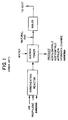
- a typical ammoxidation process is illustrated in Figure 1 of the accompanying drawings.
- US-A-4 609 502 discloses a cyclic process for producing acrylonitrile using propane as a starting material which is initially dehydrogenated catalytically in the presence of steam to form propylene.
- a process according to US-A-4 609 502 is shown in Figure 2 of the accompanying drawings.
- the use of steam is in contrast to most conventional dehydrogenation processes which avoid steam primarily due to the costs involved.
- the effluent is quenched, the desired product removed, and the off-gases, including propylene and propane, are sent to an oxidation reactor to remove oxygen by selective reaction with hydrogen to form water vapour.
- the gas mixture exiting the selective oxidation reactor includes substantial amounts of methane, ethane and ethylene, which are by-products of dehydrogenation, and unreacted propylene in addition to carbon oxides.
- this gas mixture is split and a portion is sent to a separator which removes only carbon dioxide.
- a portion of the effluent from the separation is purged to remove light hydrocarbons.
- the nonpurged stream is mixed with the remainder of the oxidator effluent, fresh propane and steam, if necessary, and sent to the dehydrogenator where the propane is converted to propylene.
- Another option is to cool and liquefy the C3 hydrocarbons therefrom and then vaporise them prior to recycle.
- the aforementioned process suffers from several disadvantages.
- the amount of propane which is converted to propylene is only in the range of about 20 percent to 60 percent per pass, typically about 40 percent, and therefore, about 60 percent of the propane feed is recycled throughout the system.
- propane along with hydrogen and other gases can produce higher pressures in the ammoxidation reaction zone which can, in turn, result in decreased yields of acrylonitrile.
- This problem could be overcome by using a more efficient dehydrogenation catalyst, if such were commercially available.
- there is no practical way in this scheme to selectively remove by-products of propane dehydrogenation, such as methane, ethane, ethylene and the like, thereby preventing their accumulation in the system.
- the oxidation reactor in the process shown in Figure 2 is operated with oxidation catalysts such as noble metals (e.g., platinum). Olefins and carbon monoxide, which are generated in the dehydrogenation reactor, are known to poison these catalysts, as disclosed in Catalytic Processes and Proven Catalysts , Charles L. Thomas, Academic Press (1970) pp. 118-119. Accordingly, multiple oxidation reactors must be used to allow for frequent regeneration of the catalyst which represents yet another addition to production costs (US-4 609 502, column 4, lines 51-56).
- oxidation catalysts such as noble metals (e.g., platinum).
- Olefins and carbon monoxide which are generated in the dehydrogenation reactor, are known to poison these catalysts, as disclosed in Catalytic Processes and Proven Catalysts , Charles L. Thomas, Academic Press (1970) pp. 118-119. Accordingly, multiple oxidation reactors must be used to allow for frequent regeneration of the catalyst which represents
- Illustrative of products, and their respective starting materials, which can be advantageously produced by the method of this invention are acrylonitrile from propylene, methacrylonitrile from isobutylene, phthalonitrile or phthalic anhydride from o-xylene, maleic anhydride from n-butane and the like.
- the process according to the present invention utilises a selective separator, preferably a pressure swing adsorption unit, which effectively removes a substantial portion of the reactant hydrocarbon so that it can be recycled to the ammoxidation/oxidation reactor, thus providing a high overall yield and economy of operation.
- a substantial portion as it pertains to recycle of the reactant hydrocarbon, means at least 80 percent by volume where the oxygen-containing gas in the feed to the ammoxidation/oxidation reactor is air, at least 90 percent by volume where a mixture of equal parts of pure oxygen and air is utilised as the oxygen-containing gas and at least 95 percent by volume where the oxygen-containing gas is pure oxygen. In each instance, these are minimum percents.
- the amount of reactant hydrocarbon recycled is typically 97-99 percent by volume.
- the process of the present invention provides an effective amount of a gaseous flame suppressor to minimise the flammability potential at the introduction of the gaseous effluent from the quench tower into the means to raise the pressure thereof, e.g. a compressor.
- the gaseous flame suppressor of the present invention comprises a substantially unreactive hydrocarbon having from 1 to 5 carbon atoms, carbon dioxide and, where air or enriched air is utilised as the oxygen-containing gas in the feed to the ammoxidation/oxidation reactor, nitrogen.
- substantially unreactive is meant that at least 95 percent by volume of the hydrocarbon component of the gaseous flame suppressor will pass through the ammoxidation/oxidation reactor unchanged.
- the substantially unreactive hydrocarbon can be a saturated or unsaturated hydrocarbon with saturated being preferred.
- the amount of the gaseous flame suppressor mixture in the subject cyclic process is controlled so that it will be maximised at the point or points in the system where it is of greatest advantage, i.e. the feed to the pressure raising means. It will be appreciated that, when pure oxygen is utilised as the oxygen-containing gas in the feed to the ammoxidation/oxidation reactor, nitrogen will not be a component in the gaseous flame suppressor.
- each of the components of the gaseous flame suppressor mixture of the present invention will comprise a major portion thereof.
- Examples of specific substantially unreactive hydrocarbons utilised as a component of the subject gaseous flame suppressor and the reaction in which they are utilised include: isobutane for the production of maleic anhydride from n-butane; n-butane for the production of methacrylonitrile from iso-butylene; n-butane for the production of maleic anhydride from butylene and the like.
- Onreacted hydrocarbon reactant e.g. propylene, butylene and the like, while not a major portion of the gaseous flame suppressor, appears to enhance the flame suppressant capacity thereof.
- the amount of unreacted reactant hydrocarbon present in the gaseous flame suppressor mixture will depend on the percent per-pass conversion of the reactant hydrocarbon entering the oxidation/ammoxidation reactor which is converted to products. Those skilled in the art will appreciate that factors such as choice of catalyst, operating pressures and the like can be adjusted to have the ammoxidation/oxidation reactor operate at a desired conversion of the reactant hydrocarbon in the feed thereto. At lower operating conversions, e.g. 60 percent conversion, there will be a greater amount of unreacted reactant hydrocarbon circulating in the system.
- the process of this invention is advantageous in that it provides the efficiency of recycle afforded by the process illustrated in FIG. 2, yet is free of the disadvantages inherent therein while, at the same time, being less complex.
- the advantages of the present invention are, in large measure, provided by the incorporation into the process of a selective separator which retains a substantial portion of the unreacted reactant hydrocarbon in the system.
- the gaseous flame suppressor of the subject process may be partially or totally recycled, depending on the operating conditions and feed to the system.
- the separator is a pressure swing adsorption unit.
- PSA Pressure swing adsorption
- adsorption step of a PSA cycle is a well known process for separating the components of a mixture of gases by virtue of the difference in the degree of adsorption among them on a particulate adsorbent retained in a stationary bed.
- two or more such beds are operated in a cyclic process comprising adsorption under relatively high pressure and desorption or bed regeneration under relatively low pressure or vacuum.
- the desired component or components may be obtained during either of these stages.
- the cycle may contain other steps in addition to the fundamental steps of adsorption and regeneration, and it is commonplace to have two or more adsorbent beds cycled 180° out of phase to assure a pseudo continuous flow of desired product. While it is conventional for the adsorption step of a PSA cycle to be carried out under pressure, it can run at ambient pressure with desorption under vacuum. It is the difference in pressure between the adsorption and desorption stages which is essential for operation of the system.
- a feed into a conventional ammoxidation reactor comprises propylene, ammonia and air or oxygen-enriched air.
- the oxygen-enriched air preferably contains from about 30 to about 80, most preferably from about 55 to 65, percent by volume of oxygen.
- Such mixtures may be produced by adjusting the capacity of a conventional oxygen-producing unit, e.g. a conventional PSA unit, or by mixing pure oxygen with air in the proper proportions.
- the use of oxygen-enriched air will produce a minimum concentration of nitrogen in the feed to the ammoxidation/oxidation reactor of from about 10 to 20 percent by volume of the feed into the reactor depending on the operating conversion of the reactor as discussed above. The minimum concentration of nitrogen in the reactor feed will result in the desired level of nitrogen in the feed to the compressor for the PSA unit separator as discussed hereafter.
- the ammoxidation reactor utilised in the present process is conventional and may employ either a fixed or fluidised catalyst bed.
- a typical example of an ammoxidation reactor is disclosed in US-A-4 070 393 or in Gates et al., ibid, pp. 381-383.
- the reactor contains a conventional ammoxidation catalyst, such as bismuth-molybdenum oxide, iron-antimony oxide, uranium-antimony oxide precipitated on silica and the like.
- suitable catalysts are disclosed, for example, in Chemistry of Catalytic Processes , Gates et al, McGraw Hill (1979) pp 349-350, and US-A-3 591 620.
- Other suitable catalysts are known to those skilled in the art.
- the ammoxidation reaction is conducted at a temperature of from about 375° to 550°C, preferably from about 400° to 500°C, at low pressures, typically in the range of from about 108 to 308 kPa (about 2 to 30 psig), preferably from about 122 to 239 kPa (about 3 to 20 psig).
- the reactants are passed through the reactor at a relatively low velocity, typically in the range of from about 0.53 to 0.67 m/s (about 1.75 to 2.2 ft./sec).
- the ratio of oxygen to propylene in the feed is suitably in the range of 1.6:1 to 2.4:1 by volume.
- the ratio of ammonia to propylene in the feed is suitably in the range of 0.7 to 1.2:1 by volume.
- the ammoxidation reaction results in the production of a major amount of acrylonitrile and minor amounts of acrolein, hydrogen cyanide, acetonitrile, and carbon oxides as well as unreacted oxygen, propylene and nitrogen.
- Commercially available propylene typically contains a small amount of propane unless additional costly processing is undertaken to remove it. This is advantageous since propane exerts a positive effect on the gaseous flame suppressor of the present process.
- the propane is substantially recycled from the PSA unit. This gaseous mixture is quenched or scrubbed with a liquid, such as water, to dissolve the water soluble compounds for subsequent separation and recovery of acrylonitrile, acetonitrile and hydrogen cyanide.
- the gas phase effluent from the quench tower is introduced into a PSA unit separator wherein unreacted propylene is separated from the other gases in the mixture.
- a PSA unit separator wherein unreacted propylene is separated from the other gases in the mixture.
- the adsorption stage of the PSA unit can be at ambient pressure, it is preferred to pass the quench tower gaseous effluent through a compressor or other suitable means to increase the pressure thereof prior to introduction into the PSA unit.
- a compressor or other suitable means to increase the pressure thereof prior to introduction into the PSA unit.
- the flammability potential in the system is greatest in the compressor. Therefore, the volume percent of gaseous flame suppressor is at its maximum in the quench tower gaseous phase, i.e. the feed into the compressor, to minimise the flammability potential.
- the operation conditions of the system are adjusted to provide for this.
- the gas phase effluent from the quench tower preferably contains, on a volume basis from about 1 to 3 percent of carbon monoxide, from about 3 to 5 percent of propylene, from about 6 to 8 percent of oxygen, from about 10 to 15 percent of carbon dioxide, and from about 50 to 70 percent of nitrogen and from about 10 to 20 percent of propane, the latter three comprising the gaseous flame suppressor.
- this example is given relative to the synthesis of acrylonitrile from propylene utilising oxygen-enriched air containing approximately 60 percent by volume of oxygen as the oxygen-containing feed to the ammoxidation reactor which is operating at 60 percent conversion of the propylene.
- the volume percent of propylene, nitrogen and carbon monoxide in the quench tower effluent is from about 35 to 70 percent by volume.
- the preferred selective separator is a PSA unit operating under pressure provided by a compressor.
- the compressor increases the pressure of the quench tower gaseous phase to the preferred operating pressure of a PSA unit, typically in the range of from about 122 to 446 kPa (about 3 to 50 psig), preferably from about 239 to 377 kPa (about 20 to 40 psig).
- the range of preferred operating pressure may vary to an extent depending on the adsorbent utilised.
- the adsorbent in the PSA unit may be any material known in the art to adsorb propylene to a substantially greater degree than propane or carbon dioxide.
- Silica gel is a preferred adsorbent material.
- the operation thereof can readily be controlled utilising art-recognised manipulations so that the recycle stream formed therein contains a substantial portion of the propylene and lesser percentages of propane and carbon dioxide.
- the nitrogen, oxygen and the remainder of the carbon oxides and propane are withdrawn from the system, preferably combusted, and vented. It is contemplated herein to recover oxygen from the vent stream and recycle it to the reactor feed to enhance the operation of the system.
- Table I The data expressed in Table I represents operation of the system under conditions such that 60 percent and 80 percent, respectively, of the propylene feed to the ammoxidation reactor is converted to products for each feed.
- Point A is the feed into the ammoxidation reactor
- Point B is effluent therefrom
- Point C is the feed to the compressor
- Point D is the recycle stream from the PSA separator
- Point E is the vent stream from the PSA separator.
- Table I represents a typical commercial propylene source which comprised about 95 percent propylene with the remainder being propane.
- FIG. 4 there is illustrated a system utilising a pure oxygen feed to the reactor wherein the gaseous flame suppressor comprises propane and carbon dioxide.
- propane is the most effective component of the subject gaseous flame suppressor mixtures.
- the gas phase effluent from the quench tower is introduced into a separator, preferably a PSA unit, to separate the propylene and at least a portion of the propane for recycle to the combined reactor feed.
- the volume percent of propane in the reactor feed is determined so as to produce a concentration in the gaseous feed from the quench tower to the compressor which, in combination with the carbon dioxide present, will minimise flammability potential.
- the gas phase effluent from the quench tower preferably contains, on a volume basis, from about 10 to 40 percent of propylene, from about 10 to 25 percent of oxygen, from about 10 to 45 percent of carbon dioxide, from about 2 to 5 percent of carbon monoxide and from about 10 to 50, preferably about 40 percent, of propane. More preferably, the combined volume percent of propylene, propane and carbon monoxide in the quench tower effluent is from about 35 to 70 percent by volume.
- the amount of propane in the recycle stream can be the predetermined minimum amount previously given, but typically will be lower to compensate for the amount of propane present in the propylene supply as an impurity.
- the selective separation capacity of the PSA unit provides not only recycle of a substantial portion of the unreacted propylene to the reactor, but for a relatively constant level of propane in the system.
- Table II represents a typical commercial propylene source which comprised about 95 percent propylene with the remainder being propane. The run was repeated utilising high purity propylene which is about 98 percent pure. The results are reported in Table III.
- a pure oxygen feed to the ammoxidation reactor is utilised with a gaseous flame suppressor mixture containing carbon dioxide as the major component.
- the percent of carbon dioxide in the feed to the selective separator is from about 25 to 70, preferably from about 35 to 65, percent by volume.
- the selective separator may be a PSA unit or a conventional liquid separator operating on the well-known Benfield process wherein carbon dioxide is removed from the effluent by dissolution in an absorbent solution, such as potassium carbonate. In either instance, however, although the separator may be run at ambient pressure, it is preferred that the feed to the separator be introduced under pressure utilising, e.g. a compressor, as shown in FIG. 5.
- the separator is a PSA unit
- the adsorbent is suitably a zeolite molecular sieve such as 4A molecular sieve or a silica gel, preferably the latter.
- the feed to the oxidation or ammoxidation reactor comprises propylene, oxygen, ammonia and about 5 percent by volume or less of carbon dioxide.
- carbon dioxide separated in the separator is at least partially recycled upstream of the compressor to assure that the concentration entering the compressor is from about 25 to 70 percent by volume. Since it is not necessary to have a high initial concentration of carbon dioxide in the reactor, the recycle thereof is within the system to achieve the desired concentration thereof in the gaseous flame suppressor. The recycle may re-enter the system either upstream or downstream of the quench tower or at both locations as shown in FIG. 5. In the event that the concentration of carbon dioxide in the stream entering the compressor becomes too great, a portion of the recycle stream is vented from the system as shown in FIG. 5.
- the operating pressure of the selective separator is typically from about 10 to 50, preferably from about 20 to 40, psig.
- the recycle of carbon dioxide as shown in FIG. 5 is carried out even in those instances where the selective separator is operated at close to ambient pressure and there is no compressor in the system since it provides better control over the amount of carbon dioxide in the system.
- the gas mixture exiting the selective separator comprises carbon dioxide, carbon monoxide, oxygen and unreacted propylene.
- a Benfield process selective separator will generally reduce the carbon dioxide content of the effluent gas mixture to about 5 percent by volume.
- a PSA unit selective separator will generally reduce the carbon dioxide content of the effluent to about 10 percent by volume.
- Unreacted reactant hydrocarbon is also present in the system to a degree varying with the reactor conversion as disclosed above and is substantially all recycled from the selective separator. Fresh reactant hydrocarbon is added to this mixture to increase the pressure thereof, if necessary, and it is recycled to the ammoxidation reactor where it is combined with incoming oxygen, ammonia and additional reactant hydrocarbon, e.g. propylene, to produce a final carbon dioxide concentration of about 1 percent or less by volume.
- Table IV gives an indication of the operating parameters of a system for the synthesis of acrylonitrile as shown in FIG. 5 wherein carbon dioxide is a major component of the gaseous flame suppressor and the selective separator is a conventional liquid separator. As in the previous Tables, the data in Table IV are expressed in mole percent based on 100 moles of acrylonitrile produced.
- the data in Table IV are also for 60 and 80 percent propylene conversion and are for the following points in the process: A is feed into the ammoxidation reactor; B is effluent therefrom; C is effluent from the quench tower prior to the addition of recycled carbon dioxide thereto; D is the feed to the compressor; E is the recycle stream from the separator to the reactor; and F is the carbon dioxide recycle from the selective separator.
- Table V the system is as shown in FIG. 5, but utilising a PSA unit as a separator.
- points A through D are as in Table IV
- Point E is the recycle gaseous stream from the PSA unit
- point F is the CO2 recycle stream from the PSA unit.
- the process of this invention is advantageous in its simplicity, ease of operation, low capital and operating costs as well as providing a substantially reduced flammability potential.
- the use of air or oxygen-enriched air as a starting material wherein nitrogen is the major component of the gaseous flame suppressor provides further economic savings.
- the subject process can be run at a relatively low conversion of the feed hydrocarbon to the desired product. To achieve substantially improved selectivity for the subject process. Selectivity is the amount of desired product divided by the total of all products. It will be appreciated that a system that runs at comparatively low conversion and achieves enhanced selectivity to a desired product utilising a less expensive grade of feed materials is highly advantageous.
Landscapes
- Chemical & Material Sciences (AREA)
- Organic Chemistry (AREA)
- Engineering & Computer Science (AREA)
- Oil, Petroleum & Natural Gas (AREA)
- Chemical Kinetics & Catalysis (AREA)
- Organic Low-Molecular-Weight Compounds And Preparation Thereof (AREA)
- Low-Molecular Organic Synthesis Reactions Using Catalysts (AREA)
- Furan Compounds (AREA)
- Catalysts (AREA)
Claims (14)
- Verfahren zur Herstellung von Nitrilen und Anhydriden, umfassend:(a) Umsetzen in einem Reaktionsbehälter unter Bedingungen, welche eine das Nitril oder Anhydrid enthaltendene Austrittsströmung bei niedriger Einspeisungsumwandlung und hoher Selektivität ergeben:
entweder (i), falls ein Anhydrid erzeugt werden soll, eines Kohlenwasserstoffes und eines sauerstoffhaltigen Gases in Anwesenheit eines Oxidationskatalysators;
oder (ii), fall ein Nitril erzeugt werden soll, eines Kohlenwasserstoffes, eines sauerstoffhaltigen Gases und Ammoniak in Anwesenheit eines Ammonoxidationskatalysators;(b) Abschrecken der Austrittsströmung mit einer Flüssigkeit zur Bildung einer abgeschreckten, flüssigen Phase, die dieses Nitril oder Anhydrid enthält, und einer gasförmigen Phase, die gasförmige Produkte einschließlich nichtumgesetztem Kohlenwasserstoff enthält;(c) Gewinnung dieses Nitrils oder Anhydrids aus der flüssigen Phase;(d) Einführen der gasförmigen Phase in einen selektiven Separator, um hierdurch einen wesentlichen Teil des nichtumgesetzten Reaktionskohlenwasserstoffes zu entfernen; und(e) Rückführen dieses nichtumgesetzten Reaktionskohlenwasserstoffes zu diesem Reaktionsbehälter,worin die in Stufe (b) gebildete, gasförmige Phase von 30 bis 95 Vol.-% Flammenunterdrückungsmittel enthält. - Verfahren nach Anspruch 1, worin die in Stufe (b) gebildete, gasförmige Mischung von 30 bis 75 Vol.-% Flammenunterdrückungsmittel enthält.
- Verfahren nach Anspruch 1 oder Anspruch 2, worin das sauerstoffhaltige Gas zu dem Reaktor in Form von Luft oder einem relativ zu Luft mit Sauerstoff angereichertem Gas angeliefert wird, und dieses gasförmige Flammenunterdrückungsmittel einen im wesentlichen nicht-reaktionsfähigen Kohlenwasserstoff mit 1 bis 5 Kohlenstoffatomen, Kohlendioxid und Stickstoff umfaßt.
- Verfahren nach Anspruch 3, worin dieser im wesentlichen nichtumgesetzte Kohlenwasserstoff ein gesättigter Kohlenwasserstoff ist.
- Verfahren nach Anspruch 1 oder Anspruch 2, in welchem reiner Sauerstoff die Quelle des sauerstoffhaltigen Gases ist, und das gasförmige Flammenunterdrückungsmittel einen im wesentlichen nicht-reaktionsfähigen Kohlenwasserstoff mit 1 bis 5 Kohlenstoffatomen und Kohlendioxid umfaßt.
- Verfahren nach Anspruch 5, in welchem der im wesentlichen nicht-reaktionsfähige Kohlenwasserstoff ein gesättigter Kohlenwasserstoff ist.
- Verfahren nach einem der vorhergehenden Ansprüche, worin die Trennung durch Druckwechseladsorption erfolgt.
- Verfahren nach Anspruch 7, worin ein aus einem Kieselgel oder einem Zeolith-Molekularsieb bestehendes Adsorptionsmittel bei der Druckwechseladsorption eingesetzt wird.
- Verfahren nach einem der Ansprüche 1 bis 8, worin Kohlendioxid eine Hauptkomponente dieses Flammenunterdrückungsmittels ist, und dieser separator ein Flüssigkeitsseparator ist, worin Kohlendioxid aus der gasförmigen Phase durch Auflösen in einer Absorptionsmittellösung entfernt wird.
- Verfahren nach Anspruch 9, worin die Absorptionsmittellösung eine wässrige Kaliumkarbonatlösung ist.
- Verfahren nach Anspruch 5 oder Anspruch 6, worin wenigstens ein Teil des in diesem Separator erhaltenen Kohlendioxids zu der in Stufe (a) gebildeten Austrittsströmung, der in Stufe (b) gebildeten Gasphase oder zu beiden von dieser Austrittsströmung und dieser Gasphase rückgeführt wird.
- Verfahren nach einem der vorhergehenden Ansprüche, worin das Nitril Acrylnitril ist, der Reaktionskohlenwasserstoff Propylen ist, und das gasförmige Flammenunterdrückungsmittel Propan einschließt.
- Verfahren nach einem der Ansprüche 1 bis 11, worin das Anhydrid Maleinanhydrid ist, der Reaktionskohlenwasserstoff n-Butan ist, und das gasförmige Flammenunterdrückungsmittel Kohlendioxid, Isobutan und, falls das sauerstoffhaltige Gas Luft oder ein relativ zu Luft mit Sauerstoff angereichertes Gas ist, Sickstoff umfaßt.
- Verfahren nach einem der Ansprüche 1 und 2 und 5 und 6, worin das Nitril Acrylnitril ist, der Reaktionskohlenwasserstoff Propylen ist, und das Flammenunterdrückungsmittel Kohlendioxid und Propan ist, wobei die in Stufe (b) gebildete Phase nichtumgesetztes Propylen, Sauerstoff, Kohlendioxid, Kohlenmonoxid und von 10 bis 5o Vol.-% Propan umfaßt, dieser selektive Separator eine Druckwechseladsorptionseinheit ist und die hierin gebildete, gasförmige Fraktion Propan und einen wesentlichen Anteil des nichtumgesetzten Propylens enthält.
Priority Applications (1)
| Application Number | Priority Date | Filing Date | Title |
|---|---|---|---|
| AT88310847T ATE99289T1 (de) | 1987-11-24 | 1988-11-17 | Verfahren zur herstellung von nitrilen und anhydriden. |
Applications Claiming Priority (6)
| Application Number | Priority Date | Filing Date | Title |
|---|---|---|---|
| US12473187A | 1987-11-24 | 1987-11-24 | |
| US124731 | 1987-11-24 | ||
| US17811788A | 1988-04-06 | 1988-04-06 | |
| US178117 | 1988-04-06 | ||
| US216037 | 1988-07-07 | ||
| US07/216,037 US4868330A (en) | 1988-04-06 | 1988-07-07 | Process for the production of nitriles |
Publications (2)
| Publication Number | Publication Date |
|---|---|
| EP0318205A1 EP0318205A1 (de) | 1989-05-31 |
| EP0318205B1 true EP0318205B1 (de) | 1993-12-29 |
Family
ID=27383147
Family Applications (1)
| Application Number | Title | Priority Date | Filing Date |
|---|---|---|---|
| EP88310847A Expired - Lifetime EP0318205B1 (de) | 1987-11-24 | 1988-11-17 | Verfahren zur Herstellung von Nitrilen und Anhydriden |
Country Status (10)
| Country | Link |
|---|---|
| US (1) | US5015756A (de) |
| EP (1) | EP0318205B1 (de) |
| JP (1) | JPH0637451B2 (de) |
| KR (1) | KR0138536B1 (de) |
| AT (1) | ATE99289T1 (de) |
| AU (1) | AU613412B2 (de) |
| CA (1) | CA1320735C (de) |
| DE (1) | DE3886708T2 (de) |
| ES (1) | ES2047562T3 (de) |
| HK (1) | HK73696A (de) |
Cited By (4)
| Publication number | Priority date | Publication date | Assignee | Title |
|---|---|---|---|---|
| US6649773B2 (en) | 2002-03-22 | 2003-11-18 | General Electric Company | Method for the manufacture of halophthalic acids and anhydrides |
| US6657067B2 (en) | 2002-03-22 | 2003-12-02 | General Electric Company | Method for the manufacture of chlorophthalic anhydride |
| US6657068B2 (en) | 2002-03-22 | 2003-12-02 | General Electric Company | Liquid phase oxidation of halogenated ortho-xylenes |
| US7541489B2 (en) | 2004-06-30 | 2009-06-02 | Sabic Innovative Plastics Ip B.V. | Method of making halophthalic acids and halophthalic anhydrides |
Families Citing this family (24)
| Publication number | Priority date | Publication date | Assignee | Title |
|---|---|---|---|---|
| CA1320735C (en) * | 1987-11-24 | 1993-07-27 | Ramakrishnan Ramachandran | Process for the production of nitriles and anhydrides |
| US4849537A (en) * | 1988-02-09 | 1989-07-18 | The Boc Group, Inc. | Process for the production of nitriles |
| US4849538A (en) * | 1988-03-23 | 1989-07-18 | The Boc Group, Inc. | Process for the production of nitriles |
| US5008414A (en) * | 1988-12-08 | 1991-04-16 | The Boc Group, Inc. | Process for the production of oxides |
| US4943650A (en) * | 1989-01-30 | 1990-07-24 | The Boc Group, Inc. | Process for the production of nitriles |
| US5262547A (en) * | 1990-10-31 | 1993-11-16 | The Boc Group, Inc. | Process for the production of petrochemicals |
| HUT58680A (en) * | 1990-11-14 | 1992-03-30 | Boc Group Inc | Process for producing anhydrides and nitriles |
| US5179215A (en) * | 1991-02-27 | 1993-01-12 | The Boc Group, Inc. | Process for the production of petrochemicals |
| TR25520A (tr) * | 1991-11-29 | 1993-05-01 | Boc Group Inc | ANHIDRITLERIN VE NITRILLERIN üRETILMESI ICIN BIR ISLEM |
| US5256810A (en) * | 1992-10-14 | 1993-10-26 | The Standard Oil Company | Method for eliminating nitriding during acrylonitrile production |
| NZ264365A (en) * | 1993-09-30 | 1996-10-28 | Boc Group Inc | Catalytic production of ethanol/propan-2-ol from ethene/propene including separation by adsorbing alkenes and regenerating the adsorbent to provide alkene-enriched gas |
| US5466837A (en) * | 1993-09-30 | 1995-11-14 | The Boc Group, Inc. | Process for the production of hydrocarbon partial oxidation products |
| CA2130686C (en) * | 1993-09-30 | 1998-07-14 | Ramakrishnan Ramachandran | Process for the production of hydrocarbon partial oxidation products |
| US5801265A (en) * | 1995-08-24 | 1998-09-01 | Praxair Technology, Inc. | Method and apparatus for direct oxygen injection with a reactant stream into a fluidized bed reactor |
| US5895817A (en) * | 1997-06-19 | 1999-04-20 | Praxair Technology, Inc. | Method and apparatus for direct oxygen injection with a reactant stream into a fluidized bed reactor |
| US5883281A (en) * | 1997-07-25 | 1999-03-16 | Praxair Technology, Inc. | Oxygen addition to reduce inerts in an acrylonitrile reactor |
| US6413485B2 (en) * | 1999-05-27 | 2002-07-02 | The Standard Oil Company | Ammoxidation of a mixture of ketones to acetonitrile and HCN |
| US7161021B2 (en) * | 2001-12-13 | 2007-01-09 | Mitsubishi Gas Chemical Company, Inc. | Process for producing a polynitrile compound |
| CN111268695A (zh) * | 2012-12-18 | 2020-06-12 | 英威达纺织(英国)有限公司 | 来自氧安德卢梭法的hcn中有机腈杂质水平的减少 |
| CN107250086B (zh) * | 2014-10-14 | 2021-07-16 | 吉沃公司 | 将乙醇转化为官能化的低级烃和下游烃的方法 |
| ES2948301T3 (es) | 2018-01-04 | 2023-09-08 | Gevo Inc | Revalorización de mezclas de aceite de fusel sobre catalizadores heterogéneos para dar productos químicos renovables de mayor valor |
| CN113429318A (zh) * | 2021-06-22 | 2021-09-24 | 四川金象赛瑞化工股份有限公司 | 气相淬冷法生产苯二甲腈的方法 |
| CN114181114B (zh) * | 2021-12-17 | 2023-09-29 | 中国五环工程有限公司 | 分步法氨氧化反应生产甲基丙烯腈的工艺及系统 |
| CN119059932A (zh) * | 2024-08-22 | 2024-12-03 | 上海华谊新材料有限公司 | 一种制备不饱和腈的方法 |
Family Cites Families (14)
| Publication number | Priority date | Publication date | Assignee | Title |
|---|---|---|---|---|
| NL297067A (de) * | 1962-09-04 | 1900-01-01 | ||
| US3591620A (en) * | 1967-11-28 | 1971-07-06 | Nitto Chemical Industry Co Ltd | Process for producing acrylonitrile |
| BE759432A (fr) * | 1969-11-25 | 1971-04-30 | Power Gas Ltd | Procede d'oxydation catalytique |
| GB1377735A (en) * | 1971-03-19 | 1974-12-18 | Davy Powergas Ltd | Hydrocarbon recovery process |
| US3904652A (en) * | 1972-11-16 | 1975-09-09 | Standard Oil Co Indiana | Recycle process for oxidation of n-butane to maleic anhydride |
| IL48991A (en) * | 1975-03-18 | 1978-04-30 | Sun Ventures Inc | Ammoxidation process |
| DE2544972A1 (de) * | 1975-10-08 | 1977-04-21 | Hoechst Ag | Verfahren zur herstellung von maleinsaeureanhydrid |
| US4231943A (en) * | 1979-05-31 | 1980-11-04 | Chevron Research Company | Maleic anhydride production |
| US4335056A (en) * | 1981-01-05 | 1982-06-15 | Standard Oil Company | Processing acrylonitrile waste gas |
| DE3150137A1 (de) * | 1981-12-18 | 1983-06-30 | Linde Ag, 6200 Wiesbaden | Adsorptionsverfahren zur trennung von kohlenwasserstoffen |
| EP0099431B1 (de) * | 1982-07-20 | 1987-10-28 | Amoco Corporation | Verfahren zur Herstellung von Maleinsäureanhydrid |
| US4609502A (en) * | 1985-02-14 | 1986-09-02 | The Halcon Sd Group, Inc. | Process for preparing unsaturated nitriles from alkanes |
| US4863330A (en) * | 1987-07-15 | 1989-09-05 | Northrop Corporation | Composite fastener and method of manufacture |
| CA1320735C (en) * | 1987-11-24 | 1993-07-27 | Ramakrishnan Ramachandran | Process for the production of nitriles and anhydrides |
-
1988
- 1988-10-07 CA CA000579550A patent/CA1320735C/en not_active Expired - Fee Related
- 1988-10-14 AU AU23758/88A patent/AU613412B2/en not_active Ceased
- 1988-11-17 DE DE3886708T patent/DE3886708T2/de not_active Expired - Fee Related
- 1988-11-17 EP EP88310847A patent/EP0318205B1/de not_active Expired - Lifetime
- 1988-11-17 ES ES88310847T patent/ES2047562T3/es not_active Expired - Lifetime
- 1988-11-17 AT AT88310847T patent/ATE99289T1/de not_active IP Right Cessation
- 1988-11-23 KR KR1019880015449A patent/KR0138536B1/ko not_active Expired - Fee Related
- 1988-11-24 JP JP63297164A patent/JPH0637451B2/ja not_active Expired - Fee Related
-
1989
- 1989-05-01 US US07/345,916 patent/US5015756A/en not_active Expired - Lifetime
-
1996
- 1996-04-25 HK HK73696A patent/HK73696A/en not_active IP Right Cessation
Cited By (5)
| Publication number | Priority date | Publication date | Assignee | Title |
|---|---|---|---|---|
| US6649773B2 (en) | 2002-03-22 | 2003-11-18 | General Electric Company | Method for the manufacture of halophthalic acids and anhydrides |
| US6657067B2 (en) | 2002-03-22 | 2003-12-02 | General Electric Company | Method for the manufacture of chlorophthalic anhydride |
| US6657068B2 (en) | 2002-03-22 | 2003-12-02 | General Electric Company | Liquid phase oxidation of halogenated ortho-xylenes |
| US7541489B2 (en) | 2004-06-30 | 2009-06-02 | Sabic Innovative Plastics Ip B.V. | Method of making halophthalic acids and halophthalic anhydrides |
| US7732559B2 (en) | 2004-06-30 | 2010-06-08 | Sabic Innovative Plastics Ip B.V. | Method of making halophthalic acids and halophthalic anhydrides |
Also Published As
| Publication number | Publication date |
|---|---|
| ES2047562T3 (es) | 1994-03-01 |
| DE3886708T2 (de) | 1994-06-30 |
| AU2375888A (en) | 1989-05-25 |
| DE3886708D1 (de) | 1994-02-10 |
| ATE99289T1 (de) | 1994-01-15 |
| JPH0637451B2 (ja) | 1994-05-18 |
| US5015756A (en) | 1991-05-14 |
| EP0318205A1 (de) | 1989-05-31 |
| CA1320735C (en) | 1993-07-27 |
| JPH01165564A (ja) | 1989-06-29 |
| KR0138536B1 (ko) | 1998-05-01 |
| HK73696A (en) | 1996-05-03 |
| KR890008085A (ko) | 1989-07-08 |
| AU613412B2 (en) | 1991-08-01 |
Similar Documents
| Publication | Publication Date | Title |
|---|---|---|
| EP0318205B1 (de) | Verfahren zur Herstellung von Nitrilen und Anhydriden | |
| EP0372972B1 (de) | Verfahren zur Herstellung von Nitrilen und Oxiden | |
| US4868330A (en) | Process for the production of nitriles | |
| EP1007499B1 (de) | Hochleistungsverfahren zur herstellung von maleinsäureanhydrid aus n-butan | |
| US4870201A (en) | Process for the production of nitriles | |
| US4849538A (en) | Process for the production of nitriles | |
| JPH04368351A (ja) | 炭化水素誘導体の製造方法 | |
| EP0501757A2 (de) | Herstellung von Kohlenwasserstoffderivaten | |
| AU618309B2 (en) | Process for the production of nitriles and oxides | |
| KR20040096644A (ko) | 알켄 분리 방법 | |
| US4987239A (en) | Process for the production of anhydrides | |
| US5278319A (en) | Process for the production of hydrocarbon partial oxidation products | |
| US4943650A (en) | Process for the production of nitriles | |
| US5268497A (en) | Process for the production of nitriles | |
| US5043461A (en) | Process for the production of oxides | |
| CA2640677C (en) | Butane absorption system for vent control and ethylene purification | |
| JP2918285B2 (ja) | ニトリル類の製造法 | |
| US5264608A (en) | Process for the production of nitriles from alkenes | |
| US6262290B1 (en) | Amelioration of ammonia breakthrough in an alkane ammoxidation process |
Legal Events
| Date | Code | Title | Description |
|---|---|---|---|
| PUAI | Public reference made under article 153(3) epc to a published international application that has entered the european phase |
Free format text: ORIGINAL CODE: 0009012 |
|
| AK | Designated contracting states |
Kind code of ref document: A1 Designated state(s): AT BE DE ES FR GB IT NL |
|
| 17P | Request for examination filed |
Effective date: 19891123 |
|
| 17Q | First examination report despatched |
Effective date: 19910612 |
|
| GRAA | (expected) grant |
Free format text: ORIGINAL CODE: 0009210 |
|
| ITF | It: translation for a ep patent filed | ||
| AK | Designated contracting states |
Kind code of ref document: B1 Designated state(s): AT BE DE ES FR GB IT NL |
|
| REF | Corresponds to: |
Ref document number: 99289 Country of ref document: AT Date of ref document: 19940115 Kind code of ref document: T |
|
| REF | Corresponds to: |
Ref document number: 3886708 Country of ref document: DE Date of ref document: 19940210 |
|
| ET | Fr: translation filed | ||
| REG | Reference to a national code |
Ref country code: ES Ref legal event code: FG2A Ref document number: 2047562 Country of ref document: ES Kind code of ref document: T3 |
|
| PLBE | No opposition filed within time limit |
Free format text: ORIGINAL CODE: 0009261 |
|
| STAA | Information on the status of an ep patent application or granted ep patent |
Free format text: STATUS: NO OPPOSITION FILED WITHIN TIME LIMIT |
|
| 26N | No opposition filed | ||
| REG | Reference to a national code |
Ref country code: GB Ref legal event code: IF02 |
|
| PGFP | Annual fee paid to national office [announced via postgrant information from national office to epo] |
Ref country code: NL Payment date: 20031031 Year of fee payment: 16 |
|
| PGFP | Annual fee paid to national office [announced via postgrant information from national office to epo] |
Ref country code: AT Payment date: 20031103 Year of fee payment: 16 |
|
| PGFP | Annual fee paid to national office [announced via postgrant information from national office to epo] |
Ref country code: GB Payment date: 20031112 Year of fee payment: 16 |
|
| PGFP | Annual fee paid to national office [announced via postgrant information from national office to epo] |
Ref country code: FR Payment date: 20031119 Year of fee payment: 16 |
|
| PGFP | Annual fee paid to national office [announced via postgrant information from national office to epo] |
Ref country code: ES Payment date: 20031209 Year of fee payment: 16 |
|
| PGFP | Annual fee paid to national office [announced via postgrant information from national office to epo] |
Ref country code: DE Payment date: 20031231 Year of fee payment: 16 |
|
| PGFP | Annual fee paid to national office [announced via postgrant information from national office to epo] |
Ref country code: BE Payment date: 20040115 Year of fee payment: 16 |
|
| PG25 | Lapsed in a contracting state [announced via postgrant information from national office to epo] |
Ref country code: GB Free format text: LAPSE BECAUSE OF NON-PAYMENT OF DUE FEES Effective date: 20041117 Ref country code: AT Free format text: LAPSE BECAUSE OF NON-PAYMENT OF DUE FEES Effective date: 20041117 |
|
| PG25 | Lapsed in a contracting state [announced via postgrant information from national office to epo] |
Ref country code: ES Free format text: LAPSE BECAUSE OF NON-PAYMENT OF DUE FEES Effective date: 20041118 |
|
| PG25 | Lapsed in a contracting state [announced via postgrant information from national office to epo] |
Ref country code: BE Free format text: LAPSE BECAUSE OF NON-PAYMENT OF DUE FEES Effective date: 20041130 |
|
| BERE | Be: lapsed |
Owner name: THE *BOC GROUP INC. Effective date: 20041130 |
|
| PG25 | Lapsed in a contracting state [announced via postgrant information from national office to epo] |
Ref country code: NL Free format text: LAPSE BECAUSE OF NON-PAYMENT OF DUE FEES Effective date: 20050601 Ref country code: DE Free format text: LAPSE BECAUSE OF NON-PAYMENT OF DUE FEES Effective date: 20050601 |
|
| GBPC | Gb: european patent ceased through non-payment of renewal fee |
Effective date: 20041117 |
|
| PG25 | Lapsed in a contracting state [announced via postgrant information from national office to epo] |
Ref country code: FR Free format text: LAPSE BECAUSE OF NON-PAYMENT OF DUE FEES Effective date: 20050729 |
|
| NLV4 | Nl: lapsed or anulled due to non-payment of the annual fee |
Effective date: 20050601 |
|
| REG | Reference to a national code |
Ref country code: FR Ref legal event code: ST |
|
| PG25 | Lapsed in a contracting state [announced via postgrant information from national office to epo] |
Ref country code: IT Free format text: LAPSE BECAUSE OF NON-PAYMENT OF DUE FEES;WARNING: LAPSES OF ITALIAN PATENTS WITH EFFECTIVE DATE BEFORE 2007 MAY HAVE OCCURRED AT ANY TIME BEFORE 2007. THE CORRECT EFFECTIVE DATE MAY BE DIFFERENT FROM THE ONE RECORDED. Effective date: 20051117 |
|
| REG | Reference to a national code |
Ref country code: ES Ref legal event code: FD2A Effective date: 20041118 |
|
| BERE | Be: lapsed |
Owner name: THE *BOC GROUP INC. Effective date: 20041130 |