EP0293651B1 - Dicyanvinylsubstituierte Furanderivate, Verfahren zu ihrer Herstellung und deren Verwendung - Google Patents
Dicyanvinylsubstituierte Furanderivate, Verfahren zu ihrer Herstellung und deren Verwendung Download PDFInfo
- Publication number
- EP0293651B1 EP0293651B1 EP88107614A EP88107614A EP0293651B1 EP 0293651 B1 EP0293651 B1 EP 0293651B1 EP 88107614 A EP88107614 A EP 88107614A EP 88107614 A EP88107614 A EP 88107614A EP 0293651 B1 EP0293651 B1 EP 0293651B1
- Authority
- EP
- European Patent Office
- Prior art keywords
- compounds according
- ppm
- substituted
- hydroxymethylfurfural
- phenyl
- Prior art date
- Legal status (The legal status is an assumption and is not a legal conclusion. Google has not performed a legal analysis and makes no representation as to the accuracy of the status listed.)
- Expired - Lifetime
Links
- -1 Dicyanovinyl-substituted furan Chemical class 0.000 title claims description 56
- 238000000034 method Methods 0.000 title claims description 7
- 230000008569 process Effects 0.000 title claims description 6
- 238000002360 preparation method Methods 0.000 title description 3
- NOEGNKMFWQHSLB-UHFFFAOYSA-N 5-hydroxymethylfurfural Chemical compound OCC1=CC=C(C=O)O1 NOEGNKMFWQHSLB-UHFFFAOYSA-N 0.000 claims abstract description 24
- 150000001875 compounds Chemical class 0.000 claims abstract description 24
- 238000006243 chemical reaction Methods 0.000 claims abstract description 17
- 239000000126 substance Substances 0.000 claims abstract description 16
- 125000004029 hydroxymethyl group Chemical group [H]OC([H])([H])* 0.000 claims abstract description 15
- RJGBSYZFOCAGQY-UHFFFAOYSA-N hydroxymethylfurfural Natural products COC1=CC=C(C=O)O1 RJGBSYZFOCAGQY-UHFFFAOYSA-N 0.000 claims abstract description 10
- ISAOCJYIOMOJEB-UHFFFAOYSA-N benzoin Chemical compound C=1C=CC=CC=1C(O)C(=O)C1=CC=CC=C1 ISAOCJYIOMOJEB-UHFFFAOYSA-N 0.000 claims abstract description 8
- YLQBMQCUIZJEEH-UHFFFAOYSA-N Furan Chemical group C=1C=COC=1 YLQBMQCUIZJEEH-UHFFFAOYSA-N 0.000 claims abstract description 7
- 238000004519 manufacturing process Methods 0.000 claims abstract description 7
- XLYOFNOQVPJJNP-UHFFFAOYSA-N water Substances O XLYOFNOQVPJJNP-UHFFFAOYSA-N 0.000 claims abstract description 7
- 150000002240 furans Chemical class 0.000 claims abstract description 6
- 229910001868 water Inorganic materials 0.000 claims abstract description 6
- 239000003054 catalyst Substances 0.000 claims abstract description 5
- 238000006352 cycloaddition reaction Methods 0.000 claims abstract description 5
- 230000003287 optical effect Effects 0.000 claims abstract description 5
- 244000028419 Styrax benzoin Species 0.000 claims abstract description 4
- 235000000126 Styrax benzoin Nutrition 0.000 claims abstract description 4
- 235000008411 Sumatra benzointree Nutrition 0.000 claims abstract description 4
- 229960002130 benzoin Drugs 0.000 claims abstract description 4
- 235000019382 gum benzoic Nutrition 0.000 claims abstract description 4
- 230000027756 respiratory electron transport chain Effects 0.000 claims abstract description 3
- 125000000217 alkyl group Chemical group 0.000 claims abstract 5
- 125000003172 aldehyde group Chemical group 0.000 claims abstract 4
- CETXOEGRUBXUAL-UHFFFAOYSA-N 3-(hydroxymethyl)furan-2-carbaldehyde Chemical class OCC=1C=COC=1C=O CETXOEGRUBXUAL-UHFFFAOYSA-N 0.000 claims abstract 2
- JCXJVPUVTGWSNB-UHFFFAOYSA-N Nitrogen dioxide Chemical compound O=[N]=O JCXJVPUVTGWSNB-UHFFFAOYSA-N 0.000 claims abstract 2
- 230000008030 elimination Effects 0.000 claims abstract 2
- 238000003379 elimination reaction Methods 0.000 claims abstract 2
- 229910052736 halogen Inorganic materials 0.000 claims abstract 2
- 150000002367 halogens Chemical class 0.000 claims abstract 2
- YXFVVABEGXRONW-UHFFFAOYSA-N Toluene Chemical compound CC1=CC=CC=C1 YXFVVABEGXRONW-UHFFFAOYSA-N 0.000 claims description 13
- CUONGYYJJVDODC-UHFFFAOYSA-N malononitrile Chemical compound N#CCC#N CUONGYYJJVDODC-UHFFFAOYSA-N 0.000 claims description 12
- 125000001997 phenyl group Chemical group [H]C1=C([H])C([H])=C(*)C([H])=C1[H] 0.000 claims description 9
- OKKJLVBELUTLKV-UHFFFAOYSA-N Methanol Chemical compound OC OKKJLVBELUTLKV-UHFFFAOYSA-N 0.000 claims description 6
- 230000002441 reversible effect Effects 0.000 claims description 6
- 150000001299 aldehydes Chemical group 0.000 claims description 4
- 125000004200 2-methoxyethyl group Chemical group [H]C([H])([H])OC([H])([H])C([H])([H])* 0.000 claims description 3
- 125000004105 2-pyridyl group Chemical group N1=C([*])C([H])=C([H])C([H])=C1[H] 0.000 claims description 3
- GGKMDDDYCSVHMU-UHFFFAOYSA-N 7-methylidenecyclohepta-1,3,5-triene Chemical group C=C1C=CC=CC=C1 GGKMDDDYCSVHMU-UHFFFAOYSA-N 0.000 claims description 3
- 125000002777 acetyl group Chemical group [H]C([H])([H])C(*)=O 0.000 claims description 3
- 125000003236 benzoyl group Chemical group [H]C1=C([H])C([H])=C(C([H])=C1[H])C(*)=O 0.000 claims description 3
- 125000003232 p-nitrobenzoyl group Chemical group [N+](=O)([O-])C1=CC=C(C(=O)*)C=C1 0.000 claims description 3
- 125000001312 palmitoyl group Chemical group O=C([*])C([H])([H])C([H])([H])C([H])([H])C([H])([H])C([H])([H])C([H])([H])C([H])([H])C([H])([H])C([H])([H])C([H])([H])C([H])([H])C([H])([H])C([H])([H])C([H])([H])C([H])([H])[H] 0.000 claims description 3
- 125000005499 phosphonyl group Chemical group 0.000 claims description 3
- 125000000026 trimethylsilyl group Chemical group [H]C([H])([H])[Si]([*])(C([H])([H])[H])C([H])([H])[H] 0.000 claims description 3
- 150000007854 aminals Chemical class 0.000 claims description 2
- 125000004170 methylsulfonyl group Chemical group [H]C([H])([H])S(*)(=O)=O 0.000 claims description 2
- 229910052760 oxygen Inorganic materials 0.000 claims description 2
- 229910052717 sulfur Inorganic materials 0.000 claims description 2
- 125000004432 carbon atom Chemical group C* 0.000 claims 3
- 150000004696 coordination complex Chemical class 0.000 claims 2
- 125000002147 dimethylamino group Chemical group [H]C([H])([H])N(*)C([H])([H])[H] 0.000 claims 2
- 125000001624 naphthyl group Chemical group 0.000 claims 2
- 125000003903 2-propenyl group Chemical group [H]C([*])([H])C([H])=C([H])[H] 0.000 claims 1
- 239000012992 electron transfer agent Substances 0.000 claims 1
- 230000005294 ferromagnetic effect Effects 0.000 claims 1
- 125000002541 furyl group Chemical group 0.000 claims 1
- 230000005291 magnetic effect Effects 0.000 claims 1
- 125000004076 pyridyl group Chemical group 0.000 claims 1
- 229920006395 saturated elastomer Polymers 0.000 claims 1
- 125000001544 thienyl group Chemical group 0.000 claims 1
- 230000000007 visual effect Effects 0.000 claims 1
- 230000003647 oxidation Effects 0.000 abstract description 11
- 238000007254 oxidation reaction Methods 0.000 abstract description 11
- 125000003118 aryl group Chemical group 0.000 abstract description 3
- JXPDNDHCMMOJPC-UHFFFAOYSA-N 2-hydroxybutanedinitrile Chemical compound N#CC(O)CC#N JXPDNDHCMMOJPC-UHFFFAOYSA-N 0.000 abstract 5
- 238000007259 addition reaction Methods 0.000 abstract 1
- 125000003342 alkenyl group Chemical group 0.000 abstract 1
- 229910052799 carbon Inorganic materials 0.000 abstract 1
- YMWUJEATGCHHMB-UHFFFAOYSA-N Dichloromethane Chemical compound ClCCl YMWUJEATGCHHMB-UHFFFAOYSA-N 0.000 description 27
- IAZDPXIOMUYVGZ-UHFFFAOYSA-N Dimethylsulphoxide Chemical compound CS(C)=O IAZDPXIOMUYVGZ-UHFFFAOYSA-N 0.000 description 24
- HEDRZPFGACZZDS-MICDWDOJSA-N Trichloro(2H)methane Chemical compound [2H]C(Cl)(Cl)Cl HEDRZPFGACZZDS-MICDWDOJSA-N 0.000 description 12
- QTBSBXVTEAMEQO-UHFFFAOYSA-N Acetic acid Chemical compound CC(O)=O QTBSBXVTEAMEQO-UHFFFAOYSA-N 0.000 description 11
- WEVYAHXRMPXWCK-UHFFFAOYSA-N Acetonitrile Chemical compound CC#N WEVYAHXRMPXWCK-UHFFFAOYSA-N 0.000 description 11
- 238000005160 1H NMR spectroscopy Methods 0.000 description 10
- RTZKZFJDLAIYFH-UHFFFAOYSA-N Diethyl ether Chemical compound CCOCC RTZKZFJDLAIYFH-UHFFFAOYSA-N 0.000 description 10
- ZRSNZINYAWTAHE-UHFFFAOYSA-N p-methoxybenzaldehyde Chemical compound COC1=CC=C(C=O)C=C1 ZRSNZINYAWTAHE-UHFFFAOYSA-N 0.000 description 9
- 239000000243 solution Substances 0.000 description 8
- UCMIRNVEIXFBKS-UHFFFAOYSA-N beta-alanine Chemical compound NCCC(O)=O UCMIRNVEIXFBKS-UHFFFAOYSA-N 0.000 description 7
- 238000005516 engineering process Methods 0.000 description 7
- 238000002844 melting Methods 0.000 description 7
- 230000008018 melting Effects 0.000 description 7
- 239000002904 solvent Substances 0.000 description 7
- PCCVSPMFGIFTHU-UHFFFAOYSA-N tetracyanoquinodimethane Chemical compound N#CC(C#N)=C1C=CC(=C(C#N)C#N)C=C1 PCCVSPMFGIFTHU-UHFFFAOYSA-N 0.000 description 7
- UHOVQNZJYSORNB-UHFFFAOYSA-N Benzene Chemical compound C1=CC=CC=C1 UHOVQNZJYSORNB-UHFFFAOYSA-N 0.000 description 6
- 230000008901 benefit Effects 0.000 description 6
- 230000015572 biosynthetic process Effects 0.000 description 6
- HYBBIBNJHNGZAN-UHFFFAOYSA-N furfural Chemical compound O=CC1=CC=CO1 HYBBIBNJHNGZAN-UHFFFAOYSA-N 0.000 description 6
- NUJOXMJBOLGQSY-UHFFFAOYSA-N manganese dioxide Chemical compound O=[Mn]=O NUJOXMJBOLGQSY-UHFFFAOYSA-N 0.000 description 6
- 239000007787 solid Substances 0.000 description 6
- 150000005838 radical anions Chemical class 0.000 description 5
- 238000003860 storage Methods 0.000 description 5
- QIGBRXMKCJKVMJ-UHFFFAOYSA-N Hydroquinone Chemical compound OC1=CC=C(O)C=C1 QIGBRXMKCJKVMJ-UHFFFAOYSA-N 0.000 description 4
- VYPSYNLAJGMNEJ-UHFFFAOYSA-N Silicium dioxide Chemical compound O=[Si]=O VYPSYNLAJGMNEJ-UHFFFAOYSA-N 0.000 description 4
- 238000010521 absorption reaction Methods 0.000 description 4
- 239000013078 crystal Substances 0.000 description 4
- 239000000463 material Substances 0.000 description 4
- 125000000956 methoxy group Chemical group [H]C([H])([H])O* 0.000 description 4
- 125000002496 methyl group Chemical group [H]C([H])([H])* 0.000 description 4
- 125000000636 p-nitrophenyl group Chemical group [H]C1=C([H])C(=C([H])C([H])=C1*)[N+]([O-])=O 0.000 description 4
- 229920000642 polymer Polymers 0.000 description 4
- 239000002244 precipitate Substances 0.000 description 4
- 238000010992 reflux Methods 0.000 description 4
- UIBRZOTWRMHYFJ-UHFFFAOYSA-N 1,2-dihydroazulene Chemical class C1=CC=C[C]2[CH]CCC2=C1 UIBRZOTWRMHYFJ-UHFFFAOYSA-N 0.000 description 3
- WFDIJRYMOXRFFG-UHFFFAOYSA-N Acetic anhydride Chemical compound CC(=O)OC(C)=O WFDIJRYMOXRFFG-UHFFFAOYSA-N 0.000 description 3
- 238000006000 Knoevenagel condensation reaction Methods 0.000 description 3
- ZZCNKSMCIZCVDR-UHFFFAOYSA-N barium(2+);dioxido(dioxo)manganese Chemical compound [Ba+2].[O-][Mn]([O-])(=O)=O ZZCNKSMCIZCVDR-UHFFFAOYSA-N 0.000 description 3
- 229940000635 beta-alanine Drugs 0.000 description 3
- 239000000741 silica gel Substances 0.000 description 3
- 229910002027 silica gel Inorganic materials 0.000 description 3
- 125000001424 substituent group Chemical group 0.000 description 3
- UBOXGVDOUJQMTN-UHFFFAOYSA-N 1,1,2-trichloroethane Chemical compound ClCC(Cl)Cl UBOXGVDOUJQMTN-UHFFFAOYSA-N 0.000 description 2
- FJIPMVPOTCVXRR-UHFFFAOYSA-N 1,2,3,3a-tetrahydroazulene Chemical compound C1=CC=CC=C2CCCC21 FJIPMVPOTCVXRR-UHFFFAOYSA-N 0.000 description 2
- 238000001644 13C nuclear magnetic resonance spectroscopy Methods 0.000 description 2
- TZTWOBUHCLWLNK-UHFFFAOYSA-N 5-[(5-formylfuran-2-yl)methoxymethyl]furan-2-carbaldehyde Chemical compound O1C(C=O)=CC=C1COCC1=CC=C(C=O)O1 TZTWOBUHCLWLNK-UHFFFAOYSA-N 0.000 description 2
- 238000005481 NMR spectroscopy Methods 0.000 description 2
- 239000002262 Schiff base Substances 0.000 description 2
- 150000004753 Schiff bases Chemical class 0.000 description 2
- CZMRCDWAGMRECN-UGDNZRGBSA-N Sucrose Chemical compound O[C@H]1[C@H](O)[C@@H](CO)O[C@@]1(CO)O[C@@H]1[C@H](O)[C@@H](O)[C@H](O)[C@@H](CO)O1 CZMRCDWAGMRECN-UGDNZRGBSA-N 0.000 description 2
- 229930006000 Sucrose Natural products 0.000 description 2
- 239000000370 acceptor Substances 0.000 description 2
- 150000001450 anions Chemical class 0.000 description 2
- 230000008033 biological extinction Effects 0.000 description 2
- 125000000484 butyl group Chemical group [H]C([*])([H])C([H])([H])C([H])([H])C([H])([H])[H] 0.000 description 2
- 150000001720 carbohydrates Chemical class 0.000 description 2
- 235000014633 carbohydrates Nutrition 0.000 description 2
- 230000005494 condensation Effects 0.000 description 2
- 238000001816 cooling Methods 0.000 description 2
- 238000012217 deletion Methods 0.000 description 2
- 230000037430 deletion Effects 0.000 description 2
- 230000005518 electrochemistry Effects 0.000 description 2
- 125000001495 ethyl group Chemical group [H]C([H])([H])C([H])([H])* 0.000 description 2
- 230000007717 exclusion Effects 0.000 description 2
- 125000002485 formyl group Chemical group [H]C(*)=O 0.000 description 2
- 125000000524 functional group Chemical group 0.000 description 2
- 125000001449 isopropyl group Chemical group [H]C([H])([H])C([H])(*)C([H])([H])[H] 0.000 description 2
- 230000031700 light absorption Effects 0.000 description 2
- QSHDDOUJBYECFT-UHFFFAOYSA-N mercury Chemical compound [Hg] QSHDDOUJBYECFT-UHFFFAOYSA-N 0.000 description 2
- 229910052753 mercury Inorganic materials 0.000 description 2
- 125000004108 n-butyl group Chemical group [H]C([H])([H])C([H])([H])C([H])([H])C([H])([H])* 0.000 description 2
- 125000004123 n-propyl group Chemical group [H]C([H])([H])C([H])([H])C([H])([H])* 0.000 description 2
- 125000002347 octyl group Chemical group [H]C([*])([H])C([H])([H])C([H])([H])C([H])([H])C([H])([H])C([H])([H])C([H])([H])C([H])([H])[H] 0.000 description 2
- 239000003208 petroleum Substances 0.000 description 2
- BWHMMNNQKKPAPP-UHFFFAOYSA-L potassium carbonate Chemical compound [K+].[K+].[O-]C([O-])=O BWHMMNNQKKPAPP-UHFFFAOYSA-L 0.000 description 2
- 238000012545 processing Methods 0.000 description 2
- 230000009467 reduction Effects 0.000 description 2
- 230000002829 reductive effect Effects 0.000 description 2
- 150000003839 salts Chemical class 0.000 description 2
- 239000012047 saturated solution Substances 0.000 description 2
- 230000003595 spectral effect Effects 0.000 description 2
- 229960004793 sucrose Drugs 0.000 description 2
- 125000000999 tert-butyl group Chemical group [H]C([H])([H])C(*)(C([H])([H])[H])C([H])([H])[H] 0.000 description 2
- QAVITTVTXPZTSE-UHFFFAOYSA-N (5-formylfuran-2-yl)methyl acetate Chemical compound CC(=O)OCC1=CC=C(C=O)O1 QAVITTVTXPZTSE-UHFFFAOYSA-N 0.000 description 1
- UOCLXMDMGBRAIB-UHFFFAOYSA-N 1,1,1-trichloroethane Chemical compound CC(Cl)(Cl)Cl UOCLXMDMGBRAIB-UHFFFAOYSA-N 0.000 description 1
- OMIVCRYZSXDGAB-UHFFFAOYSA-N 1,4-butanediyl Chemical group [CH2]CC[CH2] OMIVCRYZSXDGAB-UHFFFAOYSA-N 0.000 description 1
- CBCKQZAAMUWICA-UHFFFAOYSA-N 1,4-phenylenediamine Chemical compound NC1=CC=C(N)C=C1 CBCKQZAAMUWICA-UHFFFAOYSA-N 0.000 description 1
- 125000001637 1-naphthyl group Chemical group [H]C1=C([H])C([H])=C2C(*)=C([H])C([H])=C([H])C2=C1[H] 0.000 description 1
- HYZJCKYKOHLVJF-UHFFFAOYSA-N 1H-benzimidazole Chemical compound C1=CC=C2NC=NC2=C1 HYZJCKYKOHLVJF-UHFFFAOYSA-N 0.000 description 1
- 125000001622 2-naphthyl group Chemical group [H]C1=C([H])C([H])=C2C([H])=C(*)C([H])=C([H])C2=C1[H] 0.000 description 1
- RXELBMYKBFKHSM-UHFFFAOYSA-N 2-phenyl-1,3,5-triazine Chemical compound C1=CC=CC=C1C1=NC=NC=N1 RXELBMYKBFKHSM-UHFFFAOYSA-N 0.000 description 1
- KSXHZOTTWSNEHY-UHFFFAOYSA-N 3-[3-(2-cyanoethoxy)-2,2-bis(2-cyanoethoxymethyl)propoxy]propanenitrile Chemical group N#CCCOCC(COCCC#N)(COCCC#N)COCCC#N KSXHZOTTWSNEHY-UHFFFAOYSA-N 0.000 description 1
- MCSXGCZMEPXKIW-UHFFFAOYSA-N 3-hydroxy-4-[(4-methyl-2-nitrophenyl)diazenyl]-N-(3-nitrophenyl)naphthalene-2-carboxamide Chemical compound Cc1ccc(N=Nc2c(O)c(cc3ccccc23)C(=O)Nc2cccc(c2)[N+]([O-])=O)c(c1)[N+]([O-])=O MCSXGCZMEPXKIW-UHFFFAOYSA-N 0.000 description 1
- NSPMIYGKQJPBQR-UHFFFAOYSA-N 4H-1,2,4-triazole Chemical compound C=1N=CNN=1 NSPMIYGKQJPBQR-UHFFFAOYSA-N 0.000 description 1
- CPELXLSAUQHCOX-UHFFFAOYSA-M Bromide Chemical compound [Br-] CPELXLSAUQHCOX-UHFFFAOYSA-M 0.000 description 1
- 0 CC1(C)c(cc(*)cc2)c2N(C)C1(C=Cc1c2)Oc1c(*)cc2N=O Chemical compound CC1(C)c(cc(*)cc2)c2N(C)C1(C=Cc1c2)Oc1c(*)cc2N=O 0.000 description 1
- JGLMVXWAHNTPRF-CMDGGOBGSA-N CCN1N=C(C)C=C1C(=O)NC1=NC2=CC(=CC(OC)=C2N1C\C=C\CN1C(NC(=O)C2=CC(C)=NN2CC)=NC2=CC(=CC(OCCCN3CCOCC3)=C12)C(N)=O)C(N)=O Chemical compound CCN1N=C(C)C=C1C(=O)NC1=NC2=CC(=CC(OC)=C2N1C\C=C\CN1C(NC(=O)C2=CC(C)=NN2CC)=NC2=CC(=CC(OCCCN3CCOCC3)=C12)C(N)=O)C(N)=O JGLMVXWAHNTPRF-CMDGGOBGSA-N 0.000 description 1
- VEXZGXHMUGYJMC-UHFFFAOYSA-M Chloride anion Chemical compound [Cl-] VEXZGXHMUGYJMC-UHFFFAOYSA-M 0.000 description 1
- ZNZYKNKBJPZETN-WELNAUFTSA-N Dialdehyde 11678 Chemical compound N1C2=CC=CC=C2C2=C1[C@H](C[C@H](/C(=C/O)C(=O)OC)[C@@H](C=C)C=O)NCC2 ZNZYKNKBJPZETN-WELNAUFTSA-N 0.000 description 1
- PIICEJLVQHRZGT-UHFFFAOYSA-N Ethylenediamine Chemical compound NCCN PIICEJLVQHRZGT-UHFFFAOYSA-N 0.000 description 1
- 229930091371 Fructose Natural products 0.000 description 1
- 239000005715 Fructose Substances 0.000 description 1
- RFSUNEUAIZKAJO-ARQDHWQXSA-N Fructose Chemical compound OC[C@H]1O[C@](O)(CO)[C@@H](O)[C@@H]1O RFSUNEUAIZKAJO-ARQDHWQXSA-N 0.000 description 1
- 238000003747 Grignard reaction Methods 0.000 description 1
- VEXZGXHMUGYJMC-UHFFFAOYSA-N Hydrochloric acid Chemical compound Cl VEXZGXHMUGYJMC-UHFFFAOYSA-N 0.000 description 1
- GFHNYZLHHUFONA-UHFFFAOYSA-N N#CC(C#N)=Cc1ccc(C=C(C#N)C#N)cc1 Chemical compound N#CC(C#N)=Cc1ccc(C=C(C#N)C#N)cc1 GFHNYZLHHUFONA-UHFFFAOYSA-N 0.000 description 1
- JUJWROOIHBZHMG-UHFFFAOYSA-N Pyridine Chemical compound C1=CC=NC=C1 JUJWROOIHBZHMG-UHFFFAOYSA-N 0.000 description 1
- 229910003074 TiCl4 Inorganic materials 0.000 description 1
- GQPSAGCJYQZPPH-UHFFFAOYSA-N [5-(2,2-dicyanoethenyl)furan-2-yl]methyl acetate Chemical compound CC(=O)OCC1=CC=C(C=C(C#N)C#N)O1 GQPSAGCJYQZPPH-UHFFFAOYSA-N 0.000 description 1
- 238000002835 absorbance Methods 0.000 description 1
- 125000001118 alkylidene group Chemical group 0.000 description 1
- 150000001412 amines Chemical class 0.000 description 1
- BIVUUOPIAYRCAP-UHFFFAOYSA-N aminoazanium;chloride Chemical compound Cl.NN BIVUUOPIAYRCAP-UHFFFAOYSA-N 0.000 description 1
- 239000000010 aprotic solvent Substances 0.000 description 1
- 238000010533 azeotropic distillation Methods 0.000 description 1
- 125000002915 carbonyl group Chemical group [*:2]C([*:1])=O 0.000 description 1
- 238000006555 catalytic reaction Methods 0.000 description 1
- 230000008859 change Effects 0.000 description 1
- 239000003795 chemical substances by application Substances 0.000 description 1
- 238000004587 chromatography analysis Methods 0.000 description 1
- 238000003776 cleavage reaction Methods 0.000 description 1
- 238000004440 column chromatography Methods 0.000 description 1
- 238000009833 condensation Methods 0.000 description 1
- 239000007859 condensation product Substances 0.000 description 1
- 239000004020 conductor Substances 0.000 description 1
- 238000007334 copolymerization reaction Methods 0.000 description 1
- 238000002484 cyclic voltammetry Methods 0.000 description 1
- KDUIUFJBNGTBMD-VXMYFEMYSA-N cyclooctatetraene Chemical compound C1=C\C=C/C=C\C=C1 KDUIUFJBNGTBMD-VXMYFEMYSA-N 0.000 description 1
- 238000006731 degradation reaction Methods 0.000 description 1
- 230000018044 dehydration Effects 0.000 description 1
- 238000006297 dehydration reaction Methods 0.000 description 1
- 238000001212 derivatisation Methods 0.000 description 1
- 238000011161 development Methods 0.000 description 1
- 235000013681 dietary sucrose Nutrition 0.000 description 1
- QFTYSVGGYOXFRQ-UHFFFAOYSA-N dodecane-1,12-diamine Chemical compound NCCCCCCCCCCCCN QFTYSVGGYOXFRQ-UHFFFAOYSA-N 0.000 description 1
- 230000000694 effects Effects 0.000 description 1
- 230000032050 esterification Effects 0.000 description 1
- 238000005886 esterification reaction Methods 0.000 description 1
- 238000006266 etherification reaction Methods 0.000 description 1
- 125000000816 ethylene group Chemical group [H]C([H])([*:1])C([H])([H])[*:2] 0.000 description 1
- 239000000706 filtrate Substances 0.000 description 1
- 238000010438 heat treatment Methods 0.000 description 1
- QAOWNCQODCNURD-UHFFFAOYSA-M hydrogensulfate Chemical compound OS([O-])(=O)=O QAOWNCQODCNURD-UHFFFAOYSA-M 0.000 description 1
- 230000002427 irreversible effect Effects 0.000 description 1
- 150000002697 manganese compounds Chemical class 0.000 description 1
- 229910052751 metal Inorganic materials 0.000 description 1
- 239000002184 metal Substances 0.000 description 1
- 150000002739 metals Chemical class 0.000 description 1
- 239000000203 mixture Substances 0.000 description 1
- 239000000178 monomer Substances 0.000 description 1
- 239000007800 oxidant agent Substances 0.000 description 1
- 230000001590 oxidative effect Effects 0.000 description 1
- LTOOVISGEYEBFR-UHFFFAOYSA-N phenothiazin-5-ium Chemical compound C1=CC=CC2=NC3=CC=CC=C3[S+]=C21 LTOOVISGEYEBFR-UHFFFAOYSA-N 0.000 description 1
- DLYUQMMRRRQYAE-UHFFFAOYSA-N phosphorus pentoxide Inorganic materials O1P(O2)(=O)OP3(=O)OP1(=O)OP2(=O)O3 DLYUQMMRRRQYAE-UHFFFAOYSA-N 0.000 description 1
- 229910000027 potassium carbonate Inorganic materials 0.000 description 1
- 239000000047 product Substances 0.000 description 1
- 239000002994 raw material Substances 0.000 description 1
- 238000001953 recrystallisation Methods 0.000 description 1
- 230000002468 redox effect Effects 0.000 description 1
- 239000002824 redox indicator Substances 0.000 description 1
- 239000004576 sand Substances 0.000 description 1
- 230000007017 scission Effects 0.000 description 1
- 239000007858 starting material Substances 0.000 description 1
- 239000005720 sucrose Substances 0.000 description 1
- 235000000346 sugar Nutrition 0.000 description 1
- 238000003786 synthesis reaction Methods 0.000 description 1
- 238000003419 tautomerization reaction Methods 0.000 description 1
- NLDYACGHTUPAQU-UHFFFAOYSA-N tetracyanoethylene Chemical group N#CC(C#N)=C(C#N)C#N NLDYACGHTUPAQU-UHFFFAOYSA-N 0.000 description 1
- 238000004809 thin layer chromatography Methods 0.000 description 1
- XJDNKRIXUMDJCW-UHFFFAOYSA-J titanium tetrachloride Chemical compound Cl[Ti](Cl)(Cl)Cl XJDNKRIXUMDJCW-UHFFFAOYSA-J 0.000 description 1
- 238000005406 washing Methods 0.000 description 1
Images
Classifications
-
- B—PERFORMING OPERATIONS; TRANSPORTING
- B01—PHYSICAL OR CHEMICAL PROCESSES OR APPARATUS IN GENERAL
- B01J—CHEMICAL OR PHYSICAL PROCESSES, e.g. CATALYSIS OR COLLOID CHEMISTRY; THEIR RELEVANT APPARATUS
- B01J31/00—Catalysts comprising hydrides, coordination complexes or organic compounds
- B01J31/02—Catalysts comprising hydrides, coordination complexes or organic compounds containing organic compounds or metal hydrides
- B01J31/0234—Nitrogen-, phosphorus-, arsenic- or antimony-containing compounds
- B01J31/0235—Nitrogen containing compounds
-
- C—CHEMISTRY; METALLURGY
- C07—ORGANIC CHEMISTRY
- C07D—HETEROCYCLIC COMPOUNDS
- C07D307/00—Heterocyclic compounds containing five-membered rings having one oxygen atom as the only ring hetero atom
- C07D307/02—Heterocyclic compounds containing five-membered rings having one oxygen atom as the only ring hetero atom not condensed with other rings
- C07D307/34—Heterocyclic compounds containing five-membered rings having one oxygen atom as the only ring hetero atom not condensed with other rings having two or three double bonds between ring members or between ring members and non-ring members
- C07D307/38—Heterocyclic compounds containing five-membered rings having one oxygen atom as the only ring hetero atom not condensed with other rings having two or three double bonds between ring members or between ring members and non-ring members with substituted hydrocarbon radicals attached to ring carbon atoms
- C07D307/54—Radicals substituted by carbon atoms having three bonds to hetero atoms with at the most one bond to halogen, e.g. ester or nitrile radicals
-
- C—CHEMISTRY; METALLURGY
- C09—DYES; PAINTS; POLISHES; NATURAL RESINS; ADHESIVES; COMPOSITIONS NOT OTHERWISE PROVIDED FOR; APPLICATIONS OF MATERIALS NOT OTHERWISE PROVIDED FOR
- C09K—MATERIALS FOR MISCELLANEOUS APPLICATIONS, NOT PROVIDED FOR ELSEWHERE
- C09K9/00—Tenebrescent materials, i.e. materials for which the range of wavelengths for energy absorption is changed as a result of excitation by some form of energy
- C09K9/02—Organic tenebrescent materials
-
- G—PHYSICS
- G03—PHOTOGRAPHY; CINEMATOGRAPHY; ANALOGOUS TECHNIQUES USING WAVES OTHER THAN OPTICAL WAVES; ELECTROGRAPHY; HOLOGRAPHY
- G03C—PHOTOSENSITIVE MATERIALS FOR PHOTOGRAPHIC PURPOSES; PHOTOGRAPHIC PROCESSES, e.g. CINE, X-RAY, COLOUR, STEREO-PHOTOGRAPHIC PROCESSES; AUXILIARY PROCESSES IN PHOTOGRAPHY
- G03C1/00—Photosensitive materials
- G03C1/72—Photosensitive compositions not covered by the groups G03C1/005 - G03C1/705
- G03C1/73—Photosensitive compositions not covered by the groups G03C1/005 - G03C1/705 containing organic compounds
-
- G—PHYSICS
- G11—INFORMATION STORAGE
- G11B—INFORMATION STORAGE BASED ON RELATIVE MOVEMENT BETWEEN RECORD CARRIER AND TRANSDUCER
- G11B7/00—Recording or reproducing by optical means, e.g. recording using a thermal beam of optical radiation by modifying optical properties or the physical structure, reproducing using an optical beam at lower power by sensing optical properties; Record carriers therefor
- G11B7/24—Record carriers characterised by shape, structure or physical properties, or by the selection of the material
- G11B7/241—Record carriers characterised by shape, structure or physical properties, or by the selection of the material characterised by the selection of the material
- G11B7/242—Record carriers characterised by shape, structure or physical properties, or by the selection of the material characterised by the selection of the material of recording layers
- G11B7/244—Record carriers characterised by shape, structure or physical properties, or by the selection of the material characterised by the selection of the material of recording layers comprising organic materials only
-
- H—ELECTRICITY
- H01—ELECTRIC ELEMENTS
- H01B—CABLES; CONDUCTORS; INSULATORS; SELECTION OF MATERIALS FOR THEIR CONDUCTIVE, INSULATING OR DIELECTRIC PROPERTIES
- H01B1/00—Conductors or conductive bodies characterised by the conductive materials; Selection of materials as conductors
- H01B1/06—Conductors or conductive bodies characterised by the conductive materials; Selection of materials as conductors mainly consisting of other non-metallic substances
- H01B1/12—Conductors or conductive bodies characterised by the conductive materials; Selection of materials as conductors mainly consisting of other non-metallic substances organic substances
- H01B1/121—Charge-transfer complexes
Definitions
- the present invention relates to novel furan derivatives corresponding to the general formula I reproduced in claim 1, which, owing to their properties, are particularly advantageous, inter alia. suitable for electro-optical applications.
- Spiropyrans such as those of Formula 1 (cf. JP 61 18 782 (86 18 782); CA. 105 , 78 849 q (1986)) are a class of substances which can be converted into colored compounds by UV exposure and can be decolorized by the application of heat.
- Spiropyrans and fulgides are mentioned as substance classes in which valence tautomerism is responsible for the chromogenic behavior.
- the former can be partially incorporated into a polymer by copolymerization with a suitable monomer.
- Fulgides also belong to the better investigated photochromic systems (cf., for example, CA 102 , 229 304z (1985), GB 2 142 011 cit. In CA 103 , 79 543 f (1985) with compounds of the formula 2 ).
- the photochromic system shown above is synthesized according to the following reaction sequence: 8-Methoxyheptafulvene can be obtained from cyclooctatetraene in two stages and in good yield.
- A1 one starts from HMF and a suitable ortho-disubstituted phenyl derivative and first produces the aminal or O, N- or S, N-acetal, which is then in one step, for example with BaMnO4, for aromatics, for example benzimidazole, and simultaneously for the aldehyde stage (from the Hydroxymethyl group) is oxidized.
- the diamino compound is initially introduced in a suitable solvent, if appropriate also as the hydrochloride or similar salt, for example hydrazine hydrochloride or bisulfate in water, or ethylenediamine, 1,12-diaminododecane or p-phenylenediamine in methylene chloride.
- the oxidation of the two hydroxymethyl groups in the amine-Hmf condensation products can be carried out, for example, with active manganese dioxide or with barium manganate. Contrary to statements in the literature, Synthesis 1976 , 133, according to which azines would be unstable in the presence of manganese dioxide, the oxidation of the HMF azine is possible, for example, with manganese dioxide.
- other oxidizing agents which are capable of oxidizing hydroxymethyl groups to the aldehyde stage should not be excluded in the process according to the invention.
- the course of the oxidation can be followed by thin layer chromatography.
- the oxidation can be carried out in benzene, toluene or trichloroethane, possibly with simultaneous azeotropic distillation of the water of reaction.
- dialdehydes obtained are then reacted using the usual methods, if appropriate with TiCl4 catalysis with malononitrile, and the dicyanvinyl-substituted furan derivatives are isolated as well crystallizing solids.
Landscapes
- Chemical & Material Sciences (AREA)
- Organic Chemistry (AREA)
- Engineering & Computer Science (AREA)
- Materials Engineering (AREA)
- Physics & Mathematics (AREA)
- Chemical Kinetics & Catalysis (AREA)
- Spectroscopy & Molecular Physics (AREA)
- General Physics & Mathematics (AREA)
- Plural Heterocyclic Compounds (AREA)
- Heterocyclic Carbon Compounds Containing A Hetero Ring Having Oxygen Or Sulfur (AREA)
- Pharmaceuticals Containing Other Organic And Inorganic Compounds (AREA)
- Furan Compounds (AREA)
Description
- Die vorliegende Erfindung betrifft neuartige Furanderivate entsprechend der im Anspruch 1 wiedergegebenen allgemeinen Formel I, die sich aufgrund ihrer Eigenschaften in besonders günstiger Weise u.a. für elektro-optische Anwendungen eignen.
- Stoffe, die durch Lichtabsorption unmittelbar zu einer Farbstoffbildung und damit einer Bilderzeugung fähig sind, also keine Entwicklungs- oder Waschprozesse benötigen, können in optischen Informationsspeicher- bzw. -verarbeitungssystemen verwendet werden. Da mit derartigen Substanzen kornlose Schichten herstellbar sind, sind sehr hohe Speicherdichten möglich (Chemiker-Zeitung 96, 535 (1972)).
- Spiropyrane wie solche der Formel 1

(vgl. JP 61 18 782 (86 18 782); CA. 105, 78 849 q (1986)) sind eine Substanzklasse, die durch UV-Belichtung in gefärbte Verbindungen übergehen und durch Wärmezufuhr wieder entfärbt werden können. - Die Anwendungen und Vorteile von reversiblen photochromen Stoffen sind in "Chemie in unserer Zeit" 9, 85 (1975) beschrieben, nämlich die hohe optische Auflösung (hohe Speicherdichte), die Kontrolle der Belichtung während des Schreibens, sowie die Möglichkeit der Löschung bzw. des Austauschens von Bildteilen.
- In Kirk-Othmer, Encyclopedia of chemical technology 3. Ed. Vol. 6, 122 (1979) werden als Nachteile von organischen photochromen Materialien genannt: geringe Spektralverschiebung, langsame Rückreaktion, "Materialermüdung" sowie Kombinationen dieser Eigenschaften.
- Als Substanzklassen, bei denen eine Valenztautomerie für das chromogene Verhalten verantwortlich ist, sind Spiropyrane sowie Fulgide erwähnt. Erstere können teilweise durch eine Copolymerisation mit einem geeigneten Monomer in ein Polymer eingebaut werden. Fulgide gehören ebenso zu den besser untersuchten photochromen Systemen (vgl. z.B. CA 102, 229 304z (1985), GB 2 142 011 zit. in CA 103, 79 543 f (1985) mit Verbindungen der Formel 2).

In Angew. Chem. 96, 980 (1984) wird ein System beschrieben, in dem ein Dihydroazulenderivat durch Lichtabsorption in ein gefärbtes Heptafulvenderivat überführt wird, das durch Zufuhr von Wärme wieder zum Dihydroazulen cyclisiert. Im Gegensatz zu R = NO₂ ist das System 3 A ≷ 3 B
für R = OCH₃ chemisch stabil, d.h. bei mindestens 15-facher Hin- und Rückreaktion ändern sich die Extinktionswerte nicht, es finden also keine Neben- bzw. irreversiblen Abbaureaktionen statt. - Das oben dargestellte photochrome System wird synthetisiert nach folgender Reaktionsfolge:

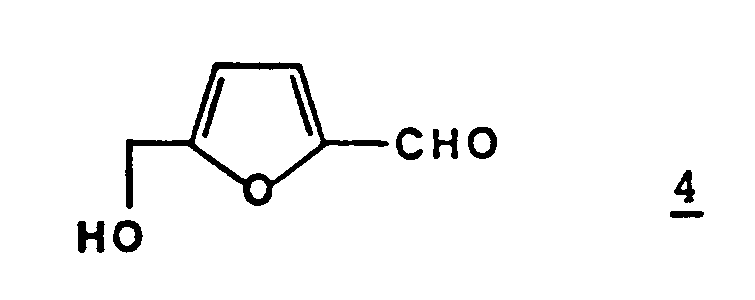
8-Methoxyheptafulven ist in zwei Stufen und guter Ausbeute aus Cyclooctatetraen zugänglich. Ein Nachteil des eingesetzten Anisaldehyds (R= OCH₃) ist das Fehlen einer funktionellen Gruppe, die es ermöglichen würde, das photochrome Produkt in geeigneter Weise z.B. kovalent mit Polymeren zu verknüpfen. - Überraschend vorteilhaft dagegen ist der Einsatz von 5-Hydroxymethylfurfural (im folgenden HMF genannt) der Formel 4
anstelle von Anisaldehyd aus folgenden Gründen: - 1. Der elektronische EinfluB eines Furanringes auf gebundene Gruppen ist vergleichbar mit dem eines O-Alkyl-Benzolrings, das bedeutet, daß Furfural ähnlich reagiert wie Anisaldehyd (p-Methoxybenzaldehyd).
- 2. Die Hydroxymethylgruppe in HMF ermöglicht, als zusätzliche funktionelle Gruppe, eine Verknüpfung z.B. mit einem Oligo- oder Polymer. Eine derartige Verknüpfung wird in Kirk-Othmer, Encyclopedia of chemical technology 3. Ed. Vol. 6, 122 (1979) im Falle der Spiropyrane ausdrücklich als Vorteil erwähnt. Eine Derivatisierung an der Hydroxymethylgruppe erlaubt auch eine gezielte Beeinflussung der Löslichkeit.
- 3. Typische Carbonylreaktionen erlauben auch, durch eine Kondensation mit Aminen mit einer anschließenden Oxidation der Hydroxymethylgruppe zur Aldehydstufe, z.B. Verbindungen der Formel 5

- 4. Durch die Möglichkeit, verschiedene "Brücken" zwischen 2 Furane einzubauen, ist eine Beeinflussung der Dicyanvinylgruppen gegeben und somit eine Variation der Elektronenakzeptoreigenschaften bzw. der di-oder polyenophilen Eigenschaften.
- 5. 5-Hydroxymethylfurfural hat als Ausgangsstoff noch den groBen Vorteil, in einem einzigen Reaktionsschritt aus nachwachsenden Rohstoffen (Kohlenhydraten) hergestellt werden zu können, und dies im großtechnischen Maßstab mit Wasser als einzigem Lösungsmittel. Insbesondere die Verwendung von landwirtschaftlichen, (zeitweise) im Überschuß produzierten Kohlenhydraten, wie z.B. Zucker (Saccharose) in technischen Gebieten über die Zwischenverbindung HMF zeigt den Vorteil von diesen erfindungsgemäßen dicyanvinylsubstituierten Furanen.
- 6. Ein weiterer überraschender Vorteil von Furylidenmalononitrilen gegenüber Phenylanalogen ist beispielsweise die volle Reversibilität der Reduktion der Verbindung gemäß der Formel 6, während die Verbindung gemäß der Formel 7 nicht reversibel reduzierbar ist. Dies ist auch im Zusammenhang zu sehen mit den in 1. aufgeführten Substituenteneffekten.


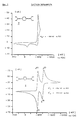
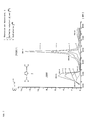
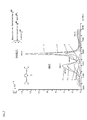
Einzelheiten zu dem Verlauf der Reduktion von der Verbindung 6, bestimmt durch cyclische Voltametrie unter aprotischen Bedingungen und Leitsalzzusatz, unter Bildung des Radikalanions 6¹⁻ bzw. des Dianions 6²⁻ sowie bezüglich des Absorptionsverhaltens unter spektroelektrochemischen Gesichtspunkten bei Anwendung von optisch transparenten Elektroden und eines aprotischen Lösungsmittels ergeben sich aus den später folgenden Abbildungen 1 bis 3. Dem Radikalanion 6¹⁻ kommt danach eine außergewöhnlich schmale Absorptionsbande bei λ = 599 nm (dunkelblaue Lösung) mit hohem Extinktionskoeffizient zu. Im Gegensatz zu dem Radikalanion von dem vorgenannten TCNQ, also 8¹⁻ mit einer Absorption bei ca λ= 840 nm, absorbiert das Anion 6¹⁻ im Sichtbaren.
Die reversible Reduzierbarkeit von Alkylidenmalononitrilen ist erwähnt in Angew. Chem. 88, 311 (1976). Die Bildung von Radikalanionen von Tetracyanoethylen oder TCNQ wird auch beschrieben in Kirk-Othmer, Encyclopedia of chemical technology 3. Ed. Vol. 7, 359, 362 (1979).
Eine Korrelation zwischen reversiblen Redox-Eigenschaften (Elektrochemie) und chromogenen Eigenschaften (Photochemie) zeigt sich auch bei der länger bekannten Klasse der Fulgide. So ist in J. Amer.Chem.Soc. 106, 7626 (1984) beschrieben, daß das reversibel erzeugte Radikalanion von Formel 9 eine elektrocyklische Reaktion eingeht zu einer Struktur ähnlich der ringgeschlossenen, photochemisch erzeugten, von chromogenen Fulgiden.
Die in dieser Erfindung beschriebenen Furylidenmalononitrile können deshalb als wichtige neue Substanzklasse für elektro-optische Anwendungen bezeichnet werden. - 7. Ein Vorteil von Furansubstituenten am Dihydroazulenrest ist auch die schnelle Rückreaktion der gefärbten Heptafulvenform nach Belichtung, die durch ziehende Substituenten für A, wie z.B. A = A¹ = CH=C(CN)₂, NO₂ zusätzlich begünstigt wird. Eine langsame Rückreaktion wird in Kirk-Othmer, Encyclopedia of chemical technology 3. Ed. Vol. 6, 124 (1979) ausdrücklich als Nachteil von organischen photochromen Materialien erwähnt. Für eine schnelle optische Informationsspeicherung bzw. -verarbeitung erfüllen somit Furylidenmalononitril-Derivate analog 5 ideale Voraussetzungen.
- 8. Ein weiterer Vorteil des Dihydroazulen-Heptafulven-Systems 3A ≷ 3B (R = OCH₃) ist auch seine relativ große Spektralverschiebung von etwa 380 nm auf etwa 470 nm mit einer gleichzeitigen Erhöhung des Extinktionskoeffizienten.
- Verfahren zur Herstellung von 3- und/oder 4-substituierter HMF-Derivat sind z.B. beschrieben in Carbohydr. Res. 155, 99 (1986), wo über die Oxidation von 1,2; 4,5-Diisopropylidenfructose mit anschließender Grignard-Reaktion und Dehydratisierung verschiedene 3-substituierte HMF-Derivate z.B. der Formel 10 hergestellt werden.

Andere Substituenten können nach den Regeln der Aromatenchemie in den Furanring eingeführt werden. Die 3- bzw. 4-substituierten HMF-Derivate werden wie das unsubstituierte HMF weiter umgesetzt. - Die Herstellung der Verbindungen mit n = 0 und
A = A₁ = CH₂OR¹
erfolgt durch eine Veretherung bzw. Veresterung z.B. mit Acetanhydrid von HMF mit anschließender Knoevenagel-Kondensation. - Für A = A₁ =

geht man von HMF und einem geeigneten ortho-disubstituierten Phenylderivat aus und stellt zuerst das Aminal bzw. O,N- oder S,N-Acetal her, das dann in einem Schritt z.B. mit BaMnO₄ zum Aromaten z.B. Benzimidazol und gleichzeitig zur Aldehydstufe (aus der Hydroxymethylgruppe) oxidiert wird. - Die gekreuzte Benzoinaddition mit HMF bzw. Derivaten wie z.B. 5-Acetoxymethylfurfural mit anschließender Oxidation führt zu Verbindungen z.B. der Formel

Die Oxidation der entacetylierten Verbindung und Knoevenagel-Kondensation mit Malonsäuredinitril führt zu Verbindungen gemäß der Formel
Allgemeine Herstellungsvorschrift für n = 1 und
A = A₂ = -CH=N--Z--N=CH-:
In einem geeigneten Lösungsmittel wird die Diaminoverbindung vorgelegt ggf. auch als Hydrochlorid oder ähnliches Salz, z.B. Hydrazin-Hydrochlorid oder -hydrogensulfat in Wasser, oder Ethylendiamin, 1,12-Diaminododecan oder p-Phenylendiamin in Methylenchlorid. Zu der gerührten Lösung wird bei Raumtemperatur die zweifache Molmenge HMF, gelöst in einem geeigneten Lösungsmittel, z.B. Wasser oder Methylenchlorid, langsam zugetropft. Entweder fällt nach kurzer Zeit ein Feststoff aus, der ggf. umkristallisiert wird, häufig jedoch direkt in der folgenden Oxidation eingesetzt werden kann, oder es muß zur Bildung der Schiffschen Base erhitzt und/oder wasserentziehende Mittel zugegeben werden. Die Bedingungen für die Bildung der Schiffscher Basen werden z.B. beschrieben in J. March, Advanced Organic Chemistry 3. Ed. 1985 J. Wiley & Sons, Inc., New York, S. 796 - 798. - Die Oxidation der beiden Hydroxymethylgruppen in den Amin-Hmf-Kondensationsprodukten kann beispielsweise mit aktivem Braunstein oder mit Bariummanganat durchgeführt werden. Im Gegensatz zu Aussagen der Literatur, Synthesis 1976, 133, wonach Azine in Gegenwart von Mangandioxid instabil wären, ist die Oxidation des HMF-Azins z.B. mit Braunstein möglich. Im erfindungsgemäßen Verfahren sollen aber neben den genannten Manganverbindungen andere Oxidationsmittel, die in der Lage sind, Hydroxymethylgruppen zur Aldehydstufe zu oxidieren, nicht ausgeschlossen werden. Dünnschichtchromatographisch kann der Oxidationsverlauf verfolgt werden. Die Oxidation kann in Benzol, Toluol oder auch Trichlorethan eventuell unter gleichzeitiger azeotroper Abdestillation des Reaktionswassers durchgeführt werden.
- Die erhaltenen Dialdehyde werden dann nach den üblichen Verfahren ggf. mit TiCl₄-Katalyse mit Malonsäuredinitril umgesetzt und die dicyanvinylsubstituierten Furanderivate als gut kristallisierende Feststoffe isoliert.
- Beispiele für Verbindungen mit n = 0
A = A₁ = CH₂OR¹: - R¹ =
- H, Methyl, Ethyl, n-Propyl, i-Propyl, n-Butyl, t-Butyl, Octyl, Phenyl, p-Hydroxyphenyl, p-Nitrophenyl, p-Dimethylaminophenyl, 2-Pyridyl, 1-Naphtyl, 2-Naphtyl, Trimethylsilyl, Triphenylsilyl, Acetyl, Palmitoyl, Benzoyl, p-Nitrobenzoyl, p-Dimethylaminobenzoyl, Methansulfonyl, p-Toluolsulfonyl, Phosphonyl (Dinatriumsalz), 2-Methoxyethyl, 4-Methoxybutyl,
- R³ =
- Methyl, Butyl, Phenyl, p-Nitrophenyl, p-Dimethylaminophenyl
- Beispiele für Verbindungen mit n = 1 und
A = A₂ = -CH=N-Z-N=CH-: - Z =
- Einfachbindung, 1,2-Ethandiyl, 1,4-Butandiyl, 1,12-Dodecandiyl, 1,4-Phenyldiyl, 1,3-Phenyldiyl, 1,4-Naphthalindiyl, 1,5-Naphthalindiyl, 1,8-Naphthalindiyl, 1,4-(2-Nitrophenyl)diyl, 3,5-(1,2,4-Triazol)diyl, 2,7-Fluorendiyl, 1,4-Anthrachinondiyl, 1,5-Antrachinondiyl, 2,6-Antrachinondiyl, 2,6-(4-Phenyl-1,3,5-triazin)diyl, 3,6-Acridindiyl, 2,6-Pyridindiyl, 3,7-(5-Phenothiazinium)diylchlorid, 3,8-(5-Ethyl-6-phenyl-phenanthridium)diylbromid,
- 1,68 g (10 mmol) 5-Acetoxymethylfurfural und 0,66 g (10 mmol) Malonsäuredinitril werden in 50 ml Acetonitril gelöst und mit 40 mg β-Alanin und 10 Tropfen Essigsäure 10 Stunden zum Rückfluß erhitzt. Beim Abkühlen fällt der Katalysator aus und wird abfiltriert. Nach dem Einengen kristallisieren 2,2 g lila gefärbte Kristalle mit dem Schmelzpunkt 79°C; Umkristallisieren aus Methylenchlorid ergibt farblose Kristalle mit einem Schmelzpunkt von 80-82°C.
- IR (KBr):
- 3130, 3100, 3040, 2990, 2940, 2230, 1750, 1610, 1565, 1225, 1195, 1005, 830 cm⁻¹
- ¹H-NMR(CDCl₃):
- 7.48 ppm (s), 7.34 ppm (d, 3.7Hz), 6.67 ppm (d, 3.7Hz), 5.15 ppm (s), 2.13 ppm (s)
- 12,4 g (50 mmol) HMF-azin werden unter Erwärmen in 500 ml 1,1,2-Trichlorethan gelöst und nach Zugabe von 115,3 g Bariummanganat 7 Stunden zum Rückfluß erhitzt. Danach wird heiß filtriert und die Lösung langsam abgekühlt. Es entstehen gelb gefärbte nadelförmige Kristalle mit einem Schmelzpunkt von 214°C.
- IR (KBr):
- 3140, 3115, 2850, 1670, 1630, 1490, 1410, 1250, 1175, 980, 955, 825, 795 cm⁻¹
- ¹H-NMR(DMSO):
- 9.74 ppm (s,CHO), 8.71 ppm (s), 7.68 ppm (d, 3.7Hz), 7.38 ppm (d, 3.7Hz)
- IR (KBr):
- 3120, 3030, 2220, 1595, 1535, 1380, 1285, 1205, 1197, 1135, 1023, 935, 810, 787, 770 cm⁻¹
- ¹H-NMR(DMSO):
- 8.62 ppm, 8.55 ppm, 8.35 ppm, 7.65-7.25 ppm
- ¹³C-NMR(DMSO):
- Signale des in größter Menge vorhandenen Rotameren:
154.0 ppm, 150.8 ppm, 150.0 ppm, 143.7 ppm, 125.7 ppm, 120.4 ppm, 114.2 ppm, 112.9 ppm, 77.9 ppm. - 4,70 g (20 mmol) Bis (5-formyl-furfuryl)-ether werden in 150 ml Toluol gelöst und mit 2,64 g (40 mmol) Malonsäuredinitril versetzt. Mit 50 mg β-Alanin und 200 mg Essigsäure wird 4 Stunden zum Rückfluß erhitzt und die Lösung langsam abgekühlt. Der Niederschlag wird abfiltriert und mit Toluol gewaschen (5,40 g Ausbeute). Schmelzpunkt 148°C (aus Toluol)
- IR (KBr):
- 3130, 3045, 2920, 2224, 2212, 1608, 1548, 1494, 1340, 1211, 1194, 1140, 1123, 1029, 974, 798 cm⁻¹
- NMR (DMSO):
- 8.26 ppm (s), 7.42 ppm (d, 3.65 Hz), 6.87 ppm (d, 3.65 Hz), 4.71 ppm (s)
- Zu einer frisch hergestellten, stickstoffgesättigten Lösung von 650 mg (4.45 mmol) 8-Methoxyheptafulven in 30 ml absolutem Dichlormethan werden 980 mg (4.80 mmol) 2,2′-(2,5-furandiyldimethylidyne)bis-propandinitril und eine Spatelspitze Hydrochinon gegeben und bei Raumtemperatur mit aufgesetztem Quecksilberventil unter Luftausschluß 18 h gerührt. Der Fortgang der Reaktion wird mittels Dünnschichtchromatogramm verfolgt. Nach beendeter Cycloaddition ist die ursprünglich tiefdunkelrote Lösung durchsichtig braun. Das Lösungsmittel wird abgezogen, das verbleibende braune Öl in Ether aufgenommen, filtriert, das Lösungsmittel im Vakuum abgezogen und der Rückstand im Hochvakuum getrocknet. Man erhält einen bräunlichen Feststoff.
Durch Säulenchromatographie über Kieselgel mit Dichlormethan/Petrolether 2:1 erhält man einen orangen Feststoff mit dem Schmelzpunkt 172-173°C in 52 %iger Ausbeute. - MS(70 eV):
- m/e = 322(100 %, M⁺, 295 (31 %, M-HCN)
- IR(KBr):
- 3120, 3050, 2240, 1605, 1573, 1475, 1280, 1045, 820, 710 cm⁻¹
- UV/VIS(CH₃CN):
- λmax(1g ) = 250 (4.4), 327 (3.7), 443nm (4.6)
- ¹H-NMR(250MHz,CDCl₃):
- δ = 3.81 (m;1H,H-8a),5.81 (dd,J= 10.4Hz,3.8Hz;1H,H-8), 6.32-6.38 (m;1H,- H-7), 6.52-6.65 (m;3H,H-4,H-5 H-6), 7.09 (d,J=4,0Hz;1H,Furan-H), 7.12 (s;1H,H-3), 7.30 (d,J=4.0Hz; 1H,-Furan-H), 7.46ppm(s;1H,Propandinitril-H)
- Zu einer frisch hergestellten, stickstoffgesättigten Lösung von 1.80 g (13 mmol) 8-Methoxyheptafulven in 100 ml absolutem Dichlormethan werden 850 mg (3.86 mmol) 2,2′(2,5-furandiyldimethylidyne)bis-propandinitril und eine Spatelspitze Hydrochinon gegeben und bei Raumtemperatur mit aufgesetztem Quecksilberventil unter Luftausschluß 1 d gerührt. Der Fortgang der Reaktion wird mittels Dünnschichtchromatogramm verfolgt. Nach beendeter Cycloaddition ist die ursprünglich tiefrote Lösung durchsichtig braun. Das Lösungsmittel wird abgezogen, das verbleibende braune Öl in Ether aufgenommen, filtriert, das Lösungsmittel im Vakuum abgezogen und der Rückstand im Hochvakuum getrocknet. Man erhält einen bräunlichen Feststoff.
- Eine kräftig gerührte Lösung des entstandenen Tetrahydroazulens in 150 ml absolutem Benzol wird mit 20 g di-Phosphorpentoxid und 2.8 g Kaliumcarbonat versetzt und 6 h unter Rückfluß erhitzt. Nach Beendigung der Reaktion wird durch eine mit wenig Seesand und Kieselgel gefüllte Fritte filtriert. Das Filtrat wird im Vakuum eingeengt, man erhält ein gelb-braunes Öl.
Durch Chromatographie über Kieselgel mit Dichlormethan/Petrolether 1:1 erhält man einen orangen Feststoff mit dem Schmelzpunkt 182-184°C in 44 %iger Ausbeute. - MS(70eV):
- m/e = 424(100%,M⁺), 397(11%,M-HCN), 370(11%, M-2HCN)
- IR(KBr):
- 1040, 780, 760, 698 cm⁻¹
- UV/VIS(CH₃CN):
- λ max(1gε) = 218(4.2), 245(4.2), 294(3.8), 354(4.0,s), 433,6(4.5), 456nm(4.4)
- ¹H-NMR(250MHz,CDCl₃):
- δ = 3.78(m,2H,H-8a,H-8a′), 5.83(dd, J=10.2Hz,3.8Hz,2H,H-8,H-8′), 6.29-6.37 (m;2H,H-7,H-7′), 6.40(d, J=6.0Hz;2H,H-4,H-4′), 6.46-6.83(m, 4H,H-6,H-6′, H-5,H-5′), 6.86(s;2H, H-3,H-3′), 7.02 (s,2H,Furan-H)

A = A₁ = CH=N-R³
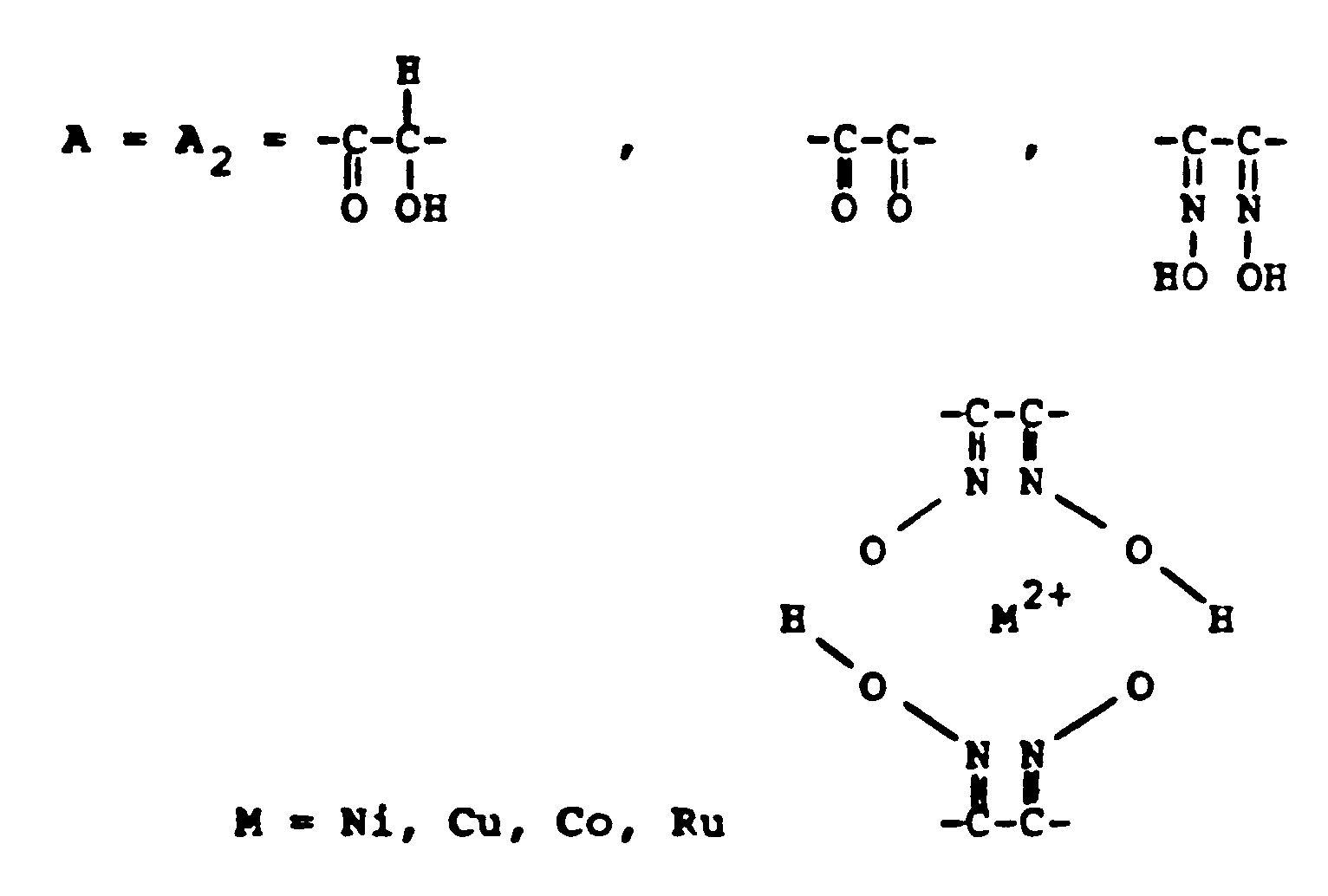
Die hier aufgeführten Beispiele sollen für diese Erfindung nur verdeutlichend und nicht beschränkend sein.
Schmelzpunkt 238-242°C
Claims (10)
- Dicyanvinylsubstituierte Furanderivate der allgemeinen Formel

A ist A₁ und CH₂OR¹ mit R¹ ista) H; Alkyl 1-8 C; Phenyl; ggf. in p-Stellung substituiert durch OH; NO₂ oder N(CH₃)₂; 2-Pyridyl; Naphtyl; Trimetylsilyl; Triphenylsilyl; Acetyl; Palmitoyl; Benzoyl; p-Nitropbenzoyl; p-Dimethylaminobenzoyl; Methansulfonyl; p-Toluolsulfonyl; Phosphonyl (Dinatriumsalz); 2-Methoxyethyl; 4-Methoxybutylb) [(CH₂)m-O]p-R², wobei
m = 1 bis 4
p = 1 bis 8 und
R² = R₁c)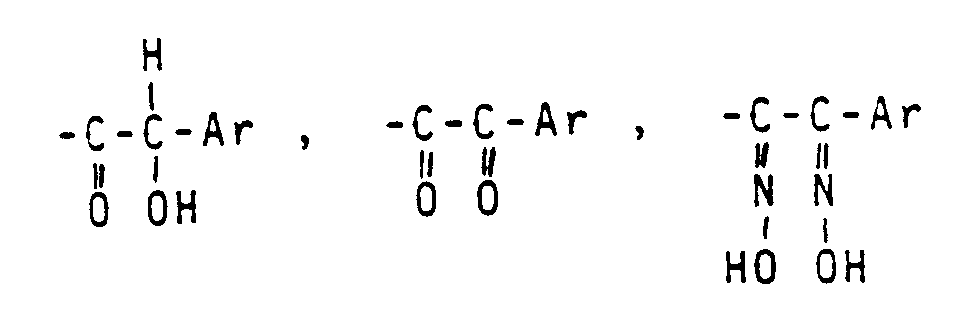 Ar = Phenyl, Naphthyl, Furyl, Thienyl, Pyrryl, Pyridyloder ein Metallkomplex davon,d) CH=N-R³ mit R³ = Alkyl mit 1-4 C-Atomen, Phenyl, ggf. in p-Stellung substituiert durch NO₂, N(CH₃)₂,odere)bedeutet,
und im Falle von n=1:
A ist A₂ und - CH=N-Z-N=CH- bedeutet, wobei
Za) eine Bindung,b) ein geradkettig oder verzweigter, gesättigter oder ein- oder mehrfach ungesättigter Alkylrest mit 1-12 C-Atomen, 1,4-Phenyldiyl, 1,3-Phenyldiyl, 1,4-Naphthalindiyl, 1,5-Naphthalindiyl, 1,8-Naphthalindiyl, 1,4-(2-Nitrophenyl)diyl, 3,5-(1,2,4-Triazol)diyl, 2,7-Fluorendiyl, 1,4-Anthrachinondiyl, 1,5-Antrachinondiyl, 2,6-Antrachinondiyl, 2,6-(4-Phenyl-1,3,5-triazin)diyl, 3,6-Acridindiyl, 2,6-Pyridindiyl, 3,7-(5-Phenothiazinium)diylchlorid, 3,8-(5-Ethyl-6-phenyl-phenanthridium)diylbromid,c)oder d) -CH=CH- , -C≡C- ,ist.
- Verfahren zur Herstellung der Verbindungen nach Anspruch 1, dadurch gekennzeichnet, daß im Falle von n = 0 die Hydroxymethylgruppe in einem ggf. substituierten 5-Hydroxymethylfurfural derivatisiert, z.B. verethert oder verestert wird und dann die Aldehydgruppe nach Knoevenagel mit Malonsäuredinitril umgesetzt wird oder die Aldehydgruppe zuerst derivatisiert wird, z.B. Schiffsche Base, Aminal, gekreuzte Benzoinaddition, anschließend die Hydroxymethylgruppe oxidiert und dann nach Knoevenagel mit Malonsäuredinitril umgesetzt wird.
- Verfahren zur Herstellung der Verbindungen nach Anspruch 1, dadurch gekennzeichnet, daß im Falle von n = 1 zwei ggf. substituierte 5-Hydroxymethylfurfural-Moleküle zuerst mit einem, mindestens zwei NH₂-Gruppen enthaltenden, Molekül kondensiert werden und die beiden Hydroxymethylgruppen am Furanring oxidiert und nach Knoevenagel mit Malonsäuredinitril umgesetzt werden oder durch intermolekulare Wasserabspaltung an den Hydroxymethylgruppen zwei Hydroxymethylfurfuralmoleküle verknüpft werden und die beiden Aldehydfunktionen nach Knoevenagel mit Malonsäurediitril umgesetzt werden oder in einer Benzoinaddition zwei ggf. substituierte Hydroxymethylfurfurale über eine zwei Kohlenstoffatome umfassende Kette verknüpft werden, die Hydroxymethylgruppen am Furanring oxidiert und nach Knoevenagel mit Malonsäuredinitril umgesetzt werden.
- Verwendung der Verbindungen nach den Ansprüchen 1 bis 3 sowie derjenigen mit n = 0, und A₁ = NO₂, -CH=C(CN)₂ als 2π-Komponenten für Cycloadditionsreaktionen.
- Verwendung der Verbindungen nach den Ansprüchen 1 bis 4 als Reaktionspartner für (8+2)-Cycloadditionen mit 8-Methoxyheptafulven.
- Verwendung der Cycloaddukte nach den Ansprüchen 1 bis 5, die nach Methanoleliminierung als lichtsensitive Dihydroazulene, die reversibel mit Heptafulvenstrukturen im Gleichgewicht stehen, vorliegen, als chromogene Stoffe.
- Verwendung der Verbindungen nach den Ansprüchen 1 bis 6 zur Herstellung von optischen Datenaufzeichnungssystemen, wie Displays, Projektionsbildschirme, Datensichtgeräte und Datenanzeigegeräte.
- Verwendung der Verbindungen nach den Ansprüchen 1 bis 6 zur reversiblen Elektronenaufnahme.
- Verwendung der Verbindungen nach den Ansprüchen 1 bis 6 zur Herstellung von organischen, elektrischleitenden und magnetischen bzw. ferromagnetischen Stoffen.
- Verwendung der Verbindungen nach den Ansprüchen 1 bis 6 zur Herstellung von Elektronen-Transfer-Katalysatoren bzw. Elektronen-Transfer-Vermittlern.
Priority Applications (1)
| Application Number | Priority Date | Filing Date | Title |
|---|---|---|---|
| AT88107614T ATE101142T1 (de) | 1987-06-05 | 1988-05-11 | Dicyanvinylsubstituierte furanderivate, verfahren zu ihrer herstellung und deren verwendung. |
Applications Claiming Priority (2)
| Application Number | Priority Date | Filing Date | Title |
|---|---|---|---|
| DE19873718917 DE3718917A1 (de) | 1987-06-05 | 1987-06-05 | Dicyanvinylsubstituierte furanderivate, verfahren zu ihrer herstellung und deren verwendung |
| DE3718917 | 1987-06-05 |
Publications (3)
| Publication Number | Publication Date |
|---|---|
| EP0293651A2 EP0293651A2 (de) | 1988-12-07 |
| EP0293651A3 EP0293651A3 (de) | 1991-03-20 |
| EP0293651B1 true EP0293651B1 (de) | 1994-02-02 |
Family
ID=6329165
Family Applications (1)
| Application Number | Title | Priority Date | Filing Date |
|---|---|---|---|
| EP88107614A Expired - Lifetime EP0293651B1 (de) | 1987-06-05 | 1988-05-11 | Dicyanvinylsubstituierte Furanderivate, Verfahren zu ihrer Herstellung und deren Verwendung |
Country Status (4)
| Country | Link |
|---|---|
| US (1) | US5091538A (de) |
| EP (1) | EP0293651B1 (de) |
| AT (1) | ATE101142T1 (de) |
| DE (2) | DE3718917A1 (de) |
Families Citing this family (4)
| Publication number | Priority date | Publication date | Assignee | Title |
|---|---|---|---|---|
| DE3718917A1 (de) * | 1987-06-05 | 1988-12-15 | Sueddeutsche Zucker Ag | Dicyanvinylsubstituierte furanderivate, verfahren zu ihrer herstellung und deren verwendung |
| CN1513173A (zh) * | 2001-03-28 | 2004-07-14 | 在信息层中含有可环化的化合物的光学数据载体 | |
| TWI223807B (en) * | 2001-03-28 | 2004-11-11 | Bayer Ag | Optical data carrier comprising a merocyanine dye as light-absorbent compound in the information layer |
| CN103788682B (zh) * | 2014-02-21 | 2015-08-12 | 太原理工大学 | 固/液状态下荧光颜色不同的有机荧光染料及其制备方法 |
Family Cites Families (5)
| Publication number | Priority date | Publication date | Assignee | Title |
|---|---|---|---|---|
| NL250327A (de) * | 1959-04-08 | |||
| BE788688A (nl) * | 1971-09-17 | 1973-03-12 | Agfa Gevaert Nv | Ontwikkeling van fotografisch materiaal bij verhoogde temperatuur |
| US4184871A (en) * | 1974-04-18 | 1980-01-22 | Mitsubishi Chemical Industries Ltd. | Photosensitive composition for electrophotography |
| GB2142011A (en) * | 1983-06-24 | 1985-01-09 | English Clays Lovering Pochin | Stablising photochromic compounds |
| DE3718917A1 (de) * | 1987-06-05 | 1988-12-15 | Sueddeutsche Zucker Ag | Dicyanvinylsubstituierte furanderivate, verfahren zu ihrer herstellung und deren verwendung |
-
1987
- 1987-06-05 DE DE19873718917 patent/DE3718917A1/de not_active Withdrawn
-
1988
- 1988-05-11 DE DE88107614T patent/DE3887568D1/de not_active Expired - Fee Related
- 1988-05-11 AT AT88107614T patent/ATE101142T1/de not_active IP Right Cessation
- 1988-05-11 EP EP88107614A patent/EP0293651B1/de not_active Expired - Lifetime
-
1989
- 1989-12-05 US US07/445,092 patent/US5091538A/en not_active Expired - Fee Related
Also Published As
| Publication number | Publication date |
|---|---|
| EP0293651A2 (de) | 1988-12-07 |
| DE3887568D1 (de) | 1994-03-17 |
| ATE101142T1 (de) | 1994-02-15 |
| DE3718917A1 (de) | 1988-12-15 |
| US5091538A (en) | 1992-02-25 |
| EP0293651A3 (de) | 1991-03-20 |
Similar Documents
| Publication | Publication Date | Title |
|---|---|---|
| DE69800953T2 (de) | Chromenverbindungen | |
| EP0041675B1 (de) | 4-Halogen-5-(trichlormethyl-phenyl)-oxazol-Derivate, ein Verfahren zu ihrer Herstellung und sie enthaltende strahlungsempfindliche Massen | |
| EP0041674B1 (de) | 2-(Trichlormethyl-phenyl)-4-halogen-oxazol-Derivate, ein Verfahren zu ihrer Herstellung und sie enthaltende strahlungsempfindliche Massen | |
| EP0885251B1 (de) | Substituierte polythiophene, verfahren zu deren herstellung, und deren verwendung | |
| DE69505708T2 (de) | Bipyridyl-Oligothiophenderivate als elektronenleitende Materialien | |
| DE68918514T2 (de) | Photochromische Verbindung, Verfahren zu ihrer Herstellung, ihre Verwendung und diese enthaltende photochromische Zubereitung. | |
| DE69524006T2 (de) | Thiophenderivate und Polymere davon | |
| EP0430881A2 (de) | Photochrome Verbindungen, Verfahren zu deren Herstellung und deren Verwendung | |
| US5608065A (en) | Photochromatic substances | |
| EP0567622B1 (de) | Neue pentacyclische verbindungen und ihre verwendung als absorptions- oder fluoreszenzfarbstoffe | |
| US4003943A (en) | Substituted trimethylene cyclopropanes, salts thereof, intermediates and methods of making the same | |
| EP3617214B1 (de) | Organisches halbleitendes material und dessen synthese und organisches halbleitendes bauelement mit dem material | |
| EP0293651A2 (de) | Dicyanvinylsubstituierte Furanderivate, Verfahren zu ihrer Herstellung und deren Verwendung | |
| US4133821A (en) | Alkylidenediquinocyclopropanes and Diarylcyclopropenes and method for preparation | |
| EP0281829B1 (de) | Addukte aus Ketoverbindungen und Anionen von Oxasäuren, Verfahren zu deren Herstellung, deren Verwendung sowie Azoketoverbindungen. | |
| DE69814203T2 (de) | Flüssigkristallverbindungen und Verfahren zur Herstellung | |
| EP0592366A1 (de) | Photochrome Verbindungen, deren Herstellung und deren Verwendung | |
| US5252757A (en) | Dicyanoazulenyl and dicyanovinyl substituted furan | |
| US4758381A (en) | 7,7,8,8-tetracyanoquinodimethane and method for preparing the same | |
| Detty et al. | CONDUCTING SALTS OF (TELLUROPYWL) TELLUROPYRANS | |
| JPH02226141A (ja) | フォトクロミック材料 | |
| DE69117429T2 (de) | Photochromes Material und optisches Speichermedium, das dieses verwendet | |
| US5241075A (en) | Photochromic spiropyran compounds | |
| Matsumoto et al. | Hexakis (2-pyridyl)-and hexakis (3-pyridyl)[3] radialene: novel, water-soluble [3] radialenes with potential utility for supramolecular chemistry | |
| JPH05117218A (ja) | シクロブテン誘導体、その製造法及びその用途 |
Legal Events
| Date | Code | Title | Description |
|---|---|---|---|
| PUAI | Public reference made under article 153(3) epc to a published international application that has entered the european phase |
Free format text: ORIGINAL CODE: 0009012 |
|
| AK | Designated contracting states |
Kind code of ref document: A2 Designated state(s): AT BE CH DE FR GB IT LI NL SE |
|
| PUAL | Search report despatched |
Free format text: ORIGINAL CODE: 0009013 |
|
| AK | Designated contracting states |
Kind code of ref document: A3 Designated state(s): AT BE CH DE FR GB IT LI NL SE |
|
| 17P | Request for examination filed |
Effective date: 19910313 |
|
| 17Q | First examination report despatched |
Effective date: 19920312 |
|
| RAP1 | Party data changed (applicant data changed or rights of an application transferred) |
Owner name: SUEDZUCKER AKTIENGESELLSCHAFT MANNHEIM/OCHSENFURT |
|
| RAP1 | Party data changed (applicant data changed or rights of an application transferred) |
Owner name: SUEDZUCKER AKTIENGESELLSCHAFT MANNHEIM/OCHSENFURT |
|
| GRAA | (expected) grant |
Free format text: ORIGINAL CODE: 0009210 |
|
| AK | Designated contracting states |
Kind code of ref document: B1 Designated state(s): AT BE CH DE FR GB IT LI NL SE |
|
| REF | Corresponds to: |
Ref document number: 101142 Country of ref document: AT Date of ref document: 19940215 Kind code of ref document: T |
|
| REF | Corresponds to: |
Ref document number: 3887568 Country of ref document: DE Date of ref document: 19940317 |
|
| ET | Fr: translation filed | ||
| ITF | It: translation for a ep patent filed | ||
| PGFP | Annual fee paid to national office [announced via postgrant information from national office to epo] |
Ref country code: GB Payment date: 19940419 Year of fee payment: 7 |
|
| PGFP | Annual fee paid to national office [announced via postgrant information from national office to epo] |
Ref country code: BE Payment date: 19940428 Year of fee payment: 7 |
|
| PGFP | Annual fee paid to national office [announced via postgrant information from national office to epo] |
Ref country code: SE Payment date: 19940509 Year of fee payment: 7 |
|
| GBT | Gb: translation of ep patent filed (gb section 77(6)(a)/1977) |
Effective date: 19940412 |
|
| PGFP | Annual fee paid to national office [announced via postgrant information from national office to epo] |
Ref country code: CH Payment date: 19940511 Year of fee payment: 7 |
|
| PGFP | Annual fee paid to national office [announced via postgrant information from national office to epo] |
Ref country code: AT Payment date: 19940520 Year of fee payment: 7 |
|
| PGFP | Annual fee paid to national office [announced via postgrant information from national office to epo] |
Ref country code: DE Payment date: 19940521 Year of fee payment: 7 |
|
| PGFP | Annual fee paid to national office [announced via postgrant information from national office to epo] |
Ref country code: FR Payment date: 19940527 Year of fee payment: 7 |
|
| PGFP | Annual fee paid to national office [announced via postgrant information from national office to epo] |
Ref country code: NL Payment date: 19940531 Year of fee payment: 7 |
|
| PLBE | No opposition filed within time limit |
Free format text: ORIGINAL CODE: 0009261 |
|
| STAA | Information on the status of an ep patent application or granted ep patent |
Free format text: STATUS: NO OPPOSITION FILED WITHIN TIME LIMIT |
|
| 26N | No opposition filed | ||
| EAL | Se: european patent in force in sweden |
Ref document number: 88107614.5 |
|
| PG25 | Lapsed in a contracting state [announced via postgrant information from national office to epo] |
Ref country code: GB Effective date: 19950511 Ref country code: AT Effective date: 19950511 |
|
| PG25 | Lapsed in a contracting state [announced via postgrant information from national office to epo] |
Ref country code: SE Effective date: 19950512 |
|
| PG25 | Lapsed in a contracting state [announced via postgrant information from national office to epo] |
Ref country code: LI Effective date: 19950531 Ref country code: CH Effective date: 19950531 Ref country code: BE Effective date: 19950531 |
|
| BERE | Be: lapsed |
Owner name: SUDZUCKER A.G. MANNHEIM/OCHSENFURT Effective date: 19950531 |
|
| PG25 | Lapsed in a contracting state [announced via postgrant information from national office to epo] |
Ref country code: NL Effective date: 19951201 |
|
| GBPC | Gb: european patent ceased through non-payment of renewal fee |
Effective date: 19950511 |
|
| REG | Reference to a national code |
Ref country code: CH Ref legal event code: PL |
|
| NLV4 | Nl: lapsed or anulled due to non-payment of the annual fee |
Effective date: 19951201 |
|
| PG25 | Lapsed in a contracting state [announced via postgrant information from national office to epo] |
Ref country code: DE Effective date: 19960201 |
|
| EUG | Se: european patent has lapsed |
Ref document number: 88107614.5 |
|
| PG25 | Lapsed in a contracting state [announced via postgrant information from national office to epo] |
Ref country code: FR Effective date: 19960229 |
|
| REG | Reference to a national code |
Ref country code: FR Ref legal event code: ST |
|
| REG | Reference to a national code |
Ref country code: FR Ref legal event code: ST |
|
| PG25 | Lapsed in a contracting state [announced via postgrant information from national office to epo] |
Ref country code: IT Free format text: LAPSE BECAUSE OF NON-PAYMENT OF DUE FEES;WARNING: LAPSES OF ITALIAN PATENTS WITH EFFECTIVE DATE BEFORE 2007 MAY HAVE OCCURRED AT ANY TIME BEFORE 2007. THE CORRECT EFFECTIVE DATE MAY BE DIFFERENT FROM THE ONE RECORDED. Effective date: 20050511 |