EP0244326A2 - Verfahren zum Feststellen und/oder zum Identifizieren einer biologischen Substanz durch elektrische Messungen und Vorrichtung zum Durchführen dieses Verfahrens - Google Patents
Verfahren zum Feststellen und/oder zum Identifizieren einer biologischen Substanz durch elektrische Messungen und Vorrichtung zum Durchführen dieses Verfahrens Download PDFInfo
- Publication number
- EP0244326A2 EP0244326A2 EP87401000A EP87401000A EP0244326A2 EP 0244326 A2 EP0244326 A2 EP 0244326A2 EP 87401000 A EP87401000 A EP 87401000A EP 87401000 A EP87401000 A EP 87401000A EP 0244326 A2 EP0244326 A2 EP 0244326A2
- Authority
- EP
- European Patent Office
- Prior art keywords
- ligand
- liquid medium
- reagent
- insulating layer
- biological substance
- Prior art date
- Legal status (The legal status is an assumption and is not a legal conclusion. Google has not performed a legal analysis and makes no representation as to the accuracy of the status listed.)
- Granted
Links
Images


Classifications
-
- G—PHYSICS
- G01—MEASURING; TESTING
- G01N—INVESTIGATING OR ANALYSING MATERIALS BY DETERMINING THEIR CHEMICAL OR PHYSICAL PROPERTIES
- G01N33/00—Investigating or analysing materials by specific methods not covered by groups G01N1/00 - G01N31/00
- G01N33/48—Biological material, e.g. blood, urine; Haemocytometers
- G01N33/50—Chemical analysis of biological material, e.g. blood, urine; Testing involving biospecific ligand binding methods; Immunological testing
- G01N33/53—Immunoassay; Biospecific binding assay; Materials therefor
- G01N33/543—Immunoassay; Biospecific binding assay; Materials therefor with an insoluble carrier for immobilising immunochemicals
- G01N33/54366—Apparatus specially adapted for solid-phase testing
- G01N33/54373—Apparatus specially adapted for solid-phase testing involving physiochemical end-point determination, e.g. wave-guides, FETS, gratings
- G01N33/5438—Electrodes
-
- G—PHYSICS
- G01—MEASURING; TESTING
- G01N—INVESTIGATING OR ANALYSING MATERIALS BY DETERMINING THEIR CHEMICAL OR PHYSICAL PROPERTIES
- G01N27/00—Investigating or analysing materials by the use of electric, electrochemical, or magnetic means
- G01N27/26—Investigating or analysing materials by the use of electric, electrochemical, or magnetic means by investigating electrochemical variables; by using electrolysis or electrophoresis
- G01N27/28—Electrolytic cell components
- G01N27/30—Electrodes, e.g. test electrodes; Half-cells
- G01N27/327—Biochemical electrodes, e.g. electrical or mechanical details for in vitro measurements
- G01N27/3275—Sensing specific biomolecules, e.g. nucleic acid strands, based on an electrode surface reaction
- G01N27/3276—Sensing specific biomolecules, e.g. nucleic acid strands, based on an electrode surface reaction being a hybridisation with immobilised receptors
-
- G—PHYSICS
- G01—MEASURING; TESTING
- G01N—INVESTIGATING OR ANALYSING MATERIALS BY DETERMINING THEIR CHEMICAL OR PHYSICAL PROPERTIES
- G01N33/00—Investigating or analysing materials by specific methods not covered by groups G01N1/00 - G01N31/00
- G01N33/48—Biological material, e.g. blood, urine; Haemocytometers
- G01N33/50—Chemical analysis of biological material, e.g. blood, urine; Testing involving biospecific ligand binding methods; Immunological testing
- G01N33/53—Immunoassay; Biospecific binding assay; Materials therefor
- G01N33/543—Immunoassay; Biospecific binding assay; Materials therefor with an insoluble carrier for immobilising immunochemicals
- G01N33/54366—Apparatus specially adapted for solid-phase testing
- G01N33/54373—Apparatus specially adapted for solid-phase testing involving physiochemical end-point determination, e.g. wave-guides, FETS, gratings
Definitions
- the subject of the present invention is a method for detecting and / or identifying a biological substance in a liquid medium using electrical measurements, as well as a device intended for implementing this method.
- the subject of the invention is therefore a method for detecting a biological substance in an electrically conductive liquid medium capable of containing it, characterized in that the said medium is brought into contact in a measurement cell liquid with a reagent-carrying plate comprising a specific ligand fixed directly on one side of a thin layer of insulating material, the other side of which is fixed on a support capable of conducting electricity, that the C components are measured and / or R of the electrical impedance of the liquid medium / insulating layer / support system for a given voltage, and that said components are compared to those of a reference system similar to the preceding one but free of specific ligand, a possible reduction of the capacity or a variation of the resistance, with respect to the reference system, signifying the presence of said biological substance in the liquid medium studied.
- the method of the invention applies to any biological substance capable of being recognized by a ligand endowed with affinity for said substance.
- ligand-biological substance pairs mention may be made, for example, of the antibody-antigen, hapten-antibody, DNA e- DNA, DNA c -RNA, poly dT-RNA m eukaryotic, enzyme-substrate, enzyme-inhibitor pairs, lectin-glycoconjugate, marker for cells (or microorganisms) -cells (or microorganism), HcG-tissue receptor, and T 3 -TBG (thyroxin binding globulin) and, in general, the corresponding biological receptor-ligand pairs ( or agonist or antagonist).
- one or the other element of the couple may be fixed on the insulating layer.
- the ligand can also be a marker for cells or microorganisms, for example a marker for cell typing, the biological substance then being constituted by the cells or microorganisms which it is desired to identify or of which the type is sought.
- the capacity or resistance measured will depend on the thickness (fixed) of the insulating layer and the thickness and density (variable) of the attached ligand and biological substance layer.
- the sensitivity of the system is of course a function of the relative dimensions of the insulating layer (thickness) and of the biological substance studied. It is also clear that the ligand fixed on the insulating layer must have the smallest possible dimensions.
- the substances intended to be fixed on the isolating-ligand system must have the largest possible dimensions, and it is possible in certain cases to increase the sensitivity of detection using various devices based on this principle.
- the biological substance studied has several affinity sites, it is possible to add to the liquid studied, after bringing said liquid into contact with the reagent-holding plate, a second ligand which will in turn be fixed on the sites of still -free affinity of said biological substance, if present, thereby increasing the thickness of the layers deposited on the insulation.
- the second ligand may or may not be identical to the ligand attached to the insulator.
- the sensitivity can be further increased by fixing the second ligand on a macromolecule such as a protein or on small individual particles capable of remaining in suspension in the liquid medium.
- a macromolecule such as a protein
- small individual particles capable of remaining in suspension in the liquid medium.
- particles are for example solid particles (latex, polystyrene, etc.) or microglobules such as liposomes.
- the conductive liquid can be any buffer solution compatible with the biological system used.
- This liquid medium can have a conductivity equivalent to that of an aqueous solution of sodium chloride having a concentration ranging from 0.015M to 3M.
- the pH of the liquid medium can be between 2 and 11. Non-specific interactions by ion exchange or by hydrophobic interactions can be combated by buffers of appropriate ionic strength possibly containing detergents conventionally used for this purpose.
- an unassailable electrode is brought into contact with the liquid studied and an alternating voltage is established between said electrode and said conductive support.
- the capacity and / or resistance of the system at a given voltage is determined according to known methods. We then compare with the corresponding quantity measured with the reference system.
- a bias voltage of the order of a few volts maximum, is applied to the conductive support of the reagent plate, with respect to a reference electrode, for example a calomel electrode.
- the polarization voltage is generally varied (positive or negative) and the polarization voltage is thus easily determined, which makes it possible to observe the optimal variations of the R or C components.
- the optimum bias voltages for determining the C component vary from 1.5 to 5 volts, most often from 3 to 5 volts. There is always a decrease in capacity.
- the optimal bias voltages are close to the zero voltage, generally between - 1 volt and + 1 volt.
- the variations in resistance depend on the reagent-antigen system used. With certain systems, an increase in resistance is observed, and a decrease with other systems.
- the measurement can be carried out, for the detection of proteins, by direct fixation on the specific antibody itself fixed on the solid phase, with or without amplification. It is advantageous to use Fab fragments instead of whole antibodies, the Fab fragments being prepared for example according to a method analogous to that described by E. Ishikawa, J. Immunoassays, 4, 209 (1983).
- the competitive method may be preferable, in particular by fixing the hapten on the solid phase via a chemical coupling agent and by measuring the binding of the specific antibody. , all the more important as the sample is poorer in the molecule to be assayed.
- the reverse method with a fixed antibody and a hapten linked to a large molecule or particle can also be used.
- the methodology presented is particularly attractive because of the large size of the cells which, by settling, will cause a very sharp drop in the measured capacity.
- the fields of application therefore cover in particular all of the immunological determinations on cells, proteins or haptens.
- the active surface can be recovered for a new measurement after washing with an agent dissociating from the complex formed, for example by acid washing and then balancing.
- the system lends itself well to multiple determinations on a single sample, whether for antibody, antigen or hapten or cell typing. All these determinations can be carried out simultaneously in a few minutes with a surface carrying as many grafted platelets as desired determinations, one or more control platelets fixing the level of background noise.
- the device can be flat or cylindrical with a possibly very limited sample volume.
- An example of such a device can be provided by a system for searching for pathogenic microorganisms whose presence is possibly expected on a sample resulting from a stool sample or a swab.
- the capacitive measurement system can also be used at very high temperatures, which makes it possible to optimize the reaction temperature.
- a very important example of application is constituted by the hybridization of nucleic probes. Due to the size of DNA and RNA, which is larger than that of the corresponding proteins, a large capacitive drop will be measured after hybridization between an oligonucleotide fixed on a silica wafer and the nucleic acid carrying the complementary sequence.
- the entire measurement system withstands high temperatures close to 95 ° C, the entire process of finding specific nucleic sequences can be carried out in the same tank. Heating is carried out first to dehybridize; then the specific reaction can be followed by regular lowering of the temperature.
- the tank After raising the temperature of the tank, above the critical hybridization temperature, and washing with low ionic strength, the tank can be used again for a new determination.
- the signal obtained can be amplified by a second nucleic probe used in the liquid phase, alone or linked to a macromolecule or a large particle.
- the method of the invention makes it possible to carry out not only qualitative determinations, but also quantitative determinations. For this, it suffices to calibrate the measuring tank, provided with standardized reagent-carrying plates, with increasing known quantities of the biological substance which it is desired to detect or identify.
- the subject of the invention is also a reagent holder plate intended for the implementation of the method described above.
- This reagent carrier plate is characterized in that it comprises a support made of a material capable of conducting electricity, covered on one of its faces by a thin insulating layer on which a ligand for a biological substance is directly attached.
- a reagent-carrying plate it is possible, for example, to surface oxidize it in an oxygen atmosphere at a suitable temperature.
- the thickness of the insulating oxide layer can be easily adjusted, for example by varying the reaction time for a given reaction temperature.
- plates are used whose insulating layer has a thickness of less than 0.1 ⁇ m.
- the ligand can be fixed by adsorption on the insulating layer; we know for example the adsorbent properties of alumina or silica which are widely used in chromatography.
- the ligand can also be grafted covalently using a bifunctional coupling reagent capable of reacting both with the insulating layer and with the ligand.
- a bifunctional coupling reagent capable of reacting both with the insulating layer and with the ligand.
- the use of such reagents is well known.
- This compound reacts with silica to give a substituted silica, for example of the type:
- R represents NH 23
- R represents NH 23
- the carbonyl group reacts with the NH 2 group to form an imine which can be reduced, if desired, to the corresponding amino group, for example using a borohydride.
- grafting methods on silica which can be used are those described in particular by M.K. WEIBEL et al., Biotechnology and Bioengineering, Vol.XVII, 85-98 (1975); Y. HAMAGUCHI et al., Eur. J. Biochem. 71, 459-467 (1976); H.H. WEETALL et al., Biotechnology and Bioengineering, Vol. XVIII, 105-118 (1976); & H.D. CRONE et al., Journal of Chromatography, 129, 91-96 (1976).
- the invention also relates to a measuring tank intended to implement the method defined above.
- This measurement tank is mainly characterized by the fact that it comprises an enclosure comprising an internal space for the liquid sample, a receptacle for a removable reagent-carrying plate, making it possible to put the internal face in communication, carrying the insulating layer provided of the ligand, of said plate, with the interior of the enclosure, and possibly a second receptacle for a reference plate without specific ligand, means for sealing between the enclosure and said plates, an electrode capable of be in touch with said liquid sample, and means for ensuring external electrical contacts for the electrode and for the external face of the plates.
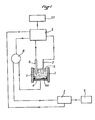
- the complete device includes a measuring tank 1, an adjustable voltage supply module 2 (potentiostat) controlled by a computer 3.
- the reagent-carrying plate 4 serving as the working electrode is for example a silicon wafer.
- the thickened line 4a represents the layer of silica on which antibodies have been grafted, for example.
- the liquid sample 5 present in the measurement tank is in contact with this layer of silica provided with the ligand.
- the ohmic contact of the underside of the wafer 4 is produced by a layer of gold, not shown, obtained by evaporation under vacuum.
- An electrode 6 (calomel electrode for example) which serves as a reference electrode, is connected to the potentiostat 2, ensuring its enslavement and therefore a well-defined polarization of the silicon wafer relative to the liquid sample.
- Such a system is necessary in the case of a semiconductor wafer in order to impose on the latter a sufficient bias voltage, greater than the output work, making it possible to conduct this material.
- the potentiostat 2 is also connected to a platinum counter-electrode 7 and allows an alternating voltage to be applied to this electrode, the frequency of which can vary, for example, from 1 kHz to 1 megaherz.
- the potentiostat is supplied by the generator 2A.
- the analysis of the signal involves a mathematical model of RC circuit. It is therefore possible to carry out both a resistance measurement and a capacitance measurement for the same applied voltage. Analysis of the return signal by the current measurement module 8 makes it possible to know the R and C components of the system impedance which are transmitted to the computer 3. The results are transcribed by the printer 9.
- the alternating voltage applied (which is superimposed on the bias voltage possibly applied to the reagent holder plate) can have an amplitude ranging from 1 millivolt to a few volts. This tension must be compatible with the stability of the liquid medium and of the biological substances present.
- the measurement tank in FIG. 2 consists for example of a polycarbonate insulating block, the lower part 10 of which has two housings respectively for the reagent holder plate 11 and the reference plate 12. The devices for fixing the plates 11 and 12 were not represented.
- the upper part 13 can be thermostatically controlled.
- a hollow space 14 for the liquid sample Between the lower and upper parts is formed a hollow space 14 for the liquid sample, with an inlet orifice 15 and an outlet orifice 16.
- a platinum electrode 17 In the hollow internal space 14 is disposed a platinum electrode 17.
- the upper face of the wafer 11, intended to be in contact with the liquid sample to be studied, is constituted by a thin layer of silica on which the specific ligand is grafted and the upper face of the reference plate 12 is constituted by a thin layer of silica without specific ligand.
- the reference plate carries a monomolecular layer of the same nature (for example a non-specific immunoglobulin) as the ligand of the wafer 11.
- the device of FIG. 3 schematically represents, in enlargement, a miniaturized measurement cell.
- the reagent-carrying plate 18 with the insulating layer 18a provided with reagent (specific ligand) and the reference plate provided with the silica layer 19a, possibly coated with a non-specific molecule of the same nature as the specific ligand are arranged opposite one another; they are separated by a narrow space 20, in which a fraction 24 of the drop of liquid sample 25 deposited on the bottom of the tank 26 can be inserted and be retained by capillarity.
- the relative dimensions of the space 20 have been enlarged for the clarity of the drawing.
- the base of the liquid drop is in contact with a platinum electrode represented by a thickened line 21.
- the external face of the plates 18 and 19 is in this case coated with an insulating varnish 22, 23. can thus make measurements on samples of a few microliters.
- p-type doped silicon wafers having a diameter of 6 cm and a thickness of 0.2 mm, sold by the company CSEM (Neufchatel, Switzerland).
- a layer of silica is obtained having a thickness of 700 Angstroms.
- the other side is made conductive by metallization by evaporation of gold under vacuum.
- the platelets After hydration of the silica layer for 48 hours in a steam atmosphere at 100 ° C., the platelets are immersed in a solution of 2% 3-aminopropyltriethoxysilane in acetone for 24 hours at 45 ° C.
- the platelets are washed with acetone and dried.
- the platelets are then immersed in a 1% glutaraldehyde solution in distilled water for 1 hour at 22 ° C, then washed with 0.25 M phosphate buffer, pH 7.5.
- Tween 20 is a trademark for a non-ionic detergent.
- the platelets are stored in a PBS-Tween 20 buffer solution.
- the platelets were grafted, according to this method, either polyclonal or monoclonal anti-alphafoetoprotein immunoglobulins, or anti-IgE polyclonal immunoglobulins.
- FIG. 1 A device similar to that of FIG. 1 is used.
- the signal frequency is 10 kHz with an amplitude of 5 mV.
- the liquid studied consists of buffer solutions containing increasing concentrations of antigen (alphafoetoprotein).
- FIG. 1 A device similar to that of FIG. 1 is used.
- the plate carries an anti-alphafoetoprotein antibody covalently coupled.
- Antigen concentration 400ng / ml.
- the same measurements can be carried out successively, after acid washing, on the same activated wafer.
- the antibody was a monoclonal antibody.
- the antigen here is human IgE tested at various concentrations (0; 0.2; 2; 20; 200ng / ml).
- the specific signal is amplified by the subsequent addition of anti-IgE antibodies in the liquid phase.
- the resulting increase in thickness of the deposited layer results in a greater decrease in capacity.
- the silicon bias voltage was + 3 volts relative to the calomel electrode.
- the system of amplification by the antibody added in liquid medium can be used for low concentrations of antigens (2ng / ml) with a measurable effect as shown in Table 1.
- the sensitivity obtained without compensation for non-specific fixation is therefore of the order of 2 ng.
- a differential measurement between a surface carrying a non-specific protein such as albumin and a surface carrying a specific antibody one can reach a much higher sensitivity and detect concentrations lower than Ing / ml.
- EXAMPLE 5 Capacity and resistance measurement test.
- Example 4 0n operates analogously to that described in Example 4 (antigen: human IgE).
- the buffers used are PBS buffers containing 0.05% Tween 20.
- the capacitance measurements were carried out for a bias voltage of the plate, relative to the calomel electrode, of + 4 Volt.
- the resistance measurements were carried out for a bias voltage of the plate, relative to the calomel electrode, of + 0.2 Volt.
- the frequency of the superimposed AC signal is 10 kHz, with an amplitude of 5mV.
Landscapes
- Health & Medical Sciences (AREA)
- Life Sciences & Earth Sciences (AREA)
- Immunology (AREA)
- Molecular Biology (AREA)
- Engineering & Computer Science (AREA)
- Chemical & Material Sciences (AREA)
- Hematology (AREA)
- Biomedical Technology (AREA)
- Urology & Nephrology (AREA)
- Physics & Mathematics (AREA)
- Analytical Chemistry (AREA)
- Biochemistry (AREA)
- General Health & Medical Sciences (AREA)
- General Physics & Mathematics (AREA)
- Pathology (AREA)
- Medicinal Chemistry (AREA)
- Biotechnology (AREA)
- Cell Biology (AREA)
- Microbiology (AREA)
- Food Science & Technology (AREA)
- Spectroscopy & Molecular Physics (AREA)
- Chemical Kinetics & Catalysis (AREA)
- Electrochemistry (AREA)
- Investigating Or Analysing Biological Materials (AREA)
- Measuring Or Testing Involving Enzymes Or Micro-Organisms (AREA)
- Investigating Or Analyzing Materials By The Use Of Electric Means (AREA)
- Apparatus Associated With Microorganisms And Enzymes (AREA)
Applications Claiming Priority (2)
| Application Number | Priority Date | Filing Date | Title |
|---|---|---|---|
| FR8606315A FR2598227B1 (fr) | 1986-04-30 | 1986-04-30 | Procede de detection et/ou d'identification d'une substance biologique dans un milieu liquide a l'aide de mesures electriques, et dispositif destine a la mise en oeuvre de ce procede |
| FR8606315 | 1986-04-30 |
Publications (3)
| Publication Number | Publication Date |
|---|---|
| EP0244326A2 true EP0244326A2 (de) | 1987-11-04 |
| EP0244326A3 EP0244326A3 (en) | 1990-02-07 |
| EP0244326B1 EP0244326B1 (de) | 1993-08-18 |
Family
ID=9334813
Family Applications (1)
| Application Number | Title | Priority Date | Filing Date |
|---|---|---|---|
| EP87401000A Expired - Lifetime EP0244326B1 (de) | 1986-04-30 | 1987-04-30 | Verfahren zum Feststellen und/oder zum Identifizieren einer biologischen Substanz durch elektrische Messungen und Vorrichtung zum Durchführen dieses Verfahrens |
Country Status (7)
| Country | Link |
|---|---|
| EP (1) | EP0244326B1 (de) |
| AT (1) | ATE93320T1 (de) |
| DE (2) | DE244326T1 (de) |
| ES (1) | ES2002695T3 (de) |
| FR (1) | FR2598227B1 (de) |
| GR (1) | GR880300142T1 (de) |
| PT (1) | PT84810B (de) |
Cited By (10)
| Publication number | Priority date | Publication date | Assignee | Title |
|---|---|---|---|---|
| FR2722294A1 (fr) * | 1994-07-07 | 1996-01-12 | Lyon Ecole Centrale | Procede d'analyse qualitative et/ou quantitative de substances biologiques presentes dans un milieu liquide conducteur et capteurs biochimiques d'affinite utilises pour la mise en oeuvre de ce procede |
| WO1997021094A1 (en) * | 1995-12-01 | 1997-06-12 | Innogenetics N.V. | Impedimetric detection system and method of production thereof |
| WO1997032039A1 (en) * | 1996-02-29 | 1997-09-04 | Molecular Sensors Limited | Method for quantitative determination of a nucleic acid in solution by measurement of the electrical conductivity and apparatus therefor |
| FR2757949A1 (fr) * | 1996-12-30 | 1998-07-03 | Commissariat Energie Atomique | Microsysteme pour analyses biologiques et son procede de fabrication |
| FR2757948A1 (fr) * | 1996-12-30 | 1998-07-03 | Commissariat Energie Atomique | Microsystemes pour analyses biologiques, leur utilisation pour la detection d'analytes et leur procede de realisation |
| WO1999008106A1 (en) * | 1997-08-08 | 1999-02-18 | Nika S.R.L. | A method of determining the concentration of an analyte with the use of a bioelement and a device operating in accordance with the method |
| WO1999010530A1 (en) * | 1997-08-22 | 1999-03-04 | Molecular Sensors Limited | Estimation of nucleic acid |
| WO2001013115A3 (de) * | 1999-08-16 | 2001-08-23 | Wolf Bertling | Identifikation einer biopolymersequenz auf festkörperoberflächen |
| EP1426756A1 (de) * | 2002-12-03 | 2004-06-09 | Hewlett-Packard Development Company, L.P. | Sensor mit freistehende Nanodrahtanordnung und Verfahren zur Bestimmung eines Analyts in einer Flüssigkeit |
| US6803229B2 (en) | 1996-05-17 | 2004-10-12 | L'ecole Centrale De Lyon | Procedure for the analysis of biological substances in a conductive liquid medium |
Families Citing this family (22)
| Publication number | Priority date | Publication date | Assignee | Title |
|---|---|---|---|---|
| US4920047A (en) * | 1988-05-20 | 1990-04-24 | General Electric Company | Electrical detection of the immune reaction |
| DE3916432A1 (de) * | 1989-05-20 | 1990-11-22 | Cammann Karl | Verfahren und vorrichtung zur konzentrationsbestimmung eines antikoerper-antigenpaares |
| EP0478319B1 (de) * | 1990-09-28 | 1997-04-02 | Kabushiki Kaisha Toshiba | Verfahren zum Gennachweis |
| US5776672A (en) * | 1990-09-28 | 1998-07-07 | Kabushiki Kaisha Toshiba | Gene detection method |
| DE4126177A1 (de) * | 1991-08-07 | 1993-02-11 | Biotechnolog Forschung Gmbh | Durchflusskondensatorzelle zur verwendung als biosensor zur kontinuierlichen, qualitativen und quantitativen bestimmung von analyten |
| US8071384B2 (en) | 1997-12-22 | 2011-12-06 | Roche Diagnostics Operations, Inc. | Control and calibration solutions and methods for their use |
| US7390667B2 (en) | 1997-12-22 | 2008-06-24 | Roche Diagnostics Operations, Inc. | System and method for analyte measurement using AC phase angle measurements |
| US7494816B2 (en) | 1997-12-22 | 2009-02-24 | Roche Diagnostic Operations, Inc. | System and method for determining a temperature during analyte measurement |
| US7407811B2 (en) | 1997-12-22 | 2008-08-05 | Roche Diagnostics Operations, Inc. | System and method for analyte measurement using AC excitation |
| GB2347746A (en) * | 1999-03-05 | 2000-09-13 | Azur Env Ltd | Detecting analytes, particularly nucleic acids, in a sample |
| US7718439B2 (en) | 2003-06-20 | 2010-05-18 | Roche Diagnostics Operations, Inc. | System and method for coding information on a biosensor test strip |
| US7488601B2 (en) | 2003-06-20 | 2009-02-10 | Roche Diagnostic Operations, Inc. | System and method for determining an abused sensor during analyte measurement |
| US8206565B2 (en) | 2003-06-20 | 2012-06-26 | Roche Diagnostics Operation, Inc. | System and method for coding information on a biosensor test strip |
| US7645373B2 (en) | 2003-06-20 | 2010-01-12 | Roche Diagnostic Operations, Inc. | System and method for coding information on a biosensor test strip |
| US7645421B2 (en) | 2003-06-20 | 2010-01-12 | Roche Diagnostics Operations, Inc. | System and method for coding information on a biosensor test strip |
| US7452457B2 (en) | 2003-06-20 | 2008-11-18 | Roche Diagnostics Operations, Inc. | System and method for analyte measurement using dose sufficiency electrodes |
| US7597793B2 (en) | 2003-06-20 | 2009-10-06 | Roche Operations Ltd. | System and method for analyte measurement employing maximum dosing time delay |
| US8148164B2 (en) | 2003-06-20 | 2012-04-03 | Roche Diagnostics Operations, Inc. | System and method for determining the concentration of an analyte in a sample fluid |
| US8058077B2 (en) | 2003-06-20 | 2011-11-15 | Roche Diagnostics Operations, Inc. | Method for coding information on a biosensor test strip |
| US7569126B2 (en) | 2004-06-18 | 2009-08-04 | Roche Diagnostics Operations, Inc. | System and method for quality assurance of a biosensor test strip |
| US7556723B2 (en) | 2004-06-18 | 2009-07-07 | Roche Diagnostics Operations, Inc. | Electrode design for biosensor |
| KR101321296B1 (ko) | 2005-07-20 | 2013-10-28 | 바이엘 헬스케어 엘엘씨 | 게이트형 전류 측정법 온도 결정 방법 |
Family Cites Families (3)
| Publication number | Priority date | Publication date | Assignee | Title |
|---|---|---|---|---|
| US4490216A (en) * | 1983-02-03 | 1984-12-25 | Molecular Devices Corporation | Lipid membrane electroanalytical elements and method of analysis therewith |
| GB2136130B (en) * | 1983-02-28 | 1987-02-11 | Theodore Henry Krueger | Chemical assay systems and methods |
| GB8308389D0 (en) * | 1983-03-26 | 1983-05-05 | Cambridge Life Sciences | Assay technique |
-
1986
- 1986-04-30 FR FR8606315A patent/FR2598227B1/fr not_active Expired
-
1987
- 1987-04-30 ES ES87401000T patent/ES2002695T3/es not_active Expired - Lifetime
- 1987-04-30 EP EP87401000A patent/EP0244326B1/de not_active Expired - Lifetime
- 1987-04-30 AT AT87401000T patent/ATE93320T1/de not_active IP Right Cessation
- 1987-04-30 PT PT84810A patent/PT84810B/pt not_active IP Right Cessation
- 1987-04-30 DE DE198787401000T patent/DE244326T1/de active Pending
- 1987-04-30 DE DE87401000T patent/DE3787041T2/de not_active Expired - Lifetime
-
1988
- 1988-12-16 GR GR88300142T patent/GR880300142T1/el unknown
Cited By (14)
| Publication number | Priority date | Publication date | Assignee | Title |
|---|---|---|---|---|
| FR2722294A1 (fr) * | 1994-07-07 | 1996-01-12 | Lyon Ecole Centrale | Procede d'analyse qualitative et/ou quantitative de substances biologiques presentes dans un milieu liquide conducteur et capteurs biochimiques d'affinite utilises pour la mise en oeuvre de ce procede |
| WO1997021094A1 (en) * | 1995-12-01 | 1997-06-12 | Innogenetics N.V. | Impedimetric detection system and method of production thereof |
| WO1997032039A1 (en) * | 1996-02-29 | 1997-09-04 | Molecular Sensors Limited | Method for quantitative determination of a nucleic acid in solution by measurement of the electrical conductivity and apparatus therefor |
| US6803229B2 (en) | 1996-05-17 | 2004-10-12 | L'ecole Centrale De Lyon | Procedure for the analysis of biological substances in a conductive liquid medium |
| WO1998029739A1 (fr) * | 1996-12-30 | 1998-07-09 | Commissariat A L'energie Atomique | Microsystemes pour analyses biologiques, leur utilisation pour la detection d'analytes et leur procede de realisation |
| WO1998029740A1 (fr) * | 1996-12-30 | 1998-07-09 | Commissariat A L'energie Atomique | Microsysteme pour analyses biologiques et son procede de fabrication |
| FR2757948A1 (fr) * | 1996-12-30 | 1998-07-03 | Commissariat Energie Atomique | Microsystemes pour analyses biologiques, leur utilisation pour la detection d'analytes et leur procede de realisation |
| FR2757949A1 (fr) * | 1996-12-30 | 1998-07-03 | Commissariat Energie Atomique | Microsysteme pour analyses biologiques et son procede de fabrication |
| WO1999008106A1 (en) * | 1997-08-08 | 1999-02-18 | Nika S.R.L. | A method of determining the concentration of an analyte with the use of a bioelement and a device operating in accordance with the method |
| WO1999010530A1 (en) * | 1997-08-22 | 1999-03-04 | Molecular Sensors Limited | Estimation of nucleic acid |
| WO2001013115A3 (de) * | 1999-08-16 | 2001-08-23 | Wolf Bertling | Identifikation einer biopolymersequenz auf festkörperoberflächen |
| EP1426756A1 (de) * | 2002-12-03 | 2004-06-09 | Hewlett-Packard Development Company, L.P. | Sensor mit freistehende Nanodrahtanordnung und Verfahren zur Bestimmung eines Analyts in einer Flüssigkeit |
| US7163659B2 (en) | 2002-12-03 | 2007-01-16 | Hewlett-Packard Development Company, L.P. | Free-standing nanowire sensor and method for detecting an analyte in a fluid |
| US7833801B2 (en) | 2002-12-03 | 2010-11-16 | Hewlett-Packard Development Company, L.P. | Free-standing nanowire method for detecting an analyte in a fluid |
Also Published As
| Publication number | Publication date |
|---|---|
| PT84810A (fr) | 1987-05-01 |
| EP0244326B1 (de) | 1993-08-18 |
| DE3787041D1 (de) | 1993-09-23 |
| GR880300142T1 (en) | 1988-12-16 |
| DE244326T1 (de) | 1988-11-03 |
| ES2002695A4 (es) | 1988-10-01 |
| PT84810B (pt) | 1989-12-29 |
| ES2002695T3 (es) | 1994-01-01 |
| FR2598227B1 (fr) | 1989-07-28 |
| DE3787041T2 (de) | 1994-03-24 |
| FR2598227A1 (fr) | 1987-11-06 |
| ATE93320T1 (de) | 1993-09-15 |
| EP0244326A3 (en) | 1990-02-07 |
Similar Documents
| Publication | Publication Date | Title |
|---|---|---|
| EP0244326B1 (de) | Verfahren zum Feststellen und/oder zum Identifizieren einer biologischen Substanz durch elektrische Messungen und Vorrichtung zum Durchführen dieses Verfahrens | |
| EP0744028B1 (de) | Festphasen, spezifisch für biologische reaktionen, ihre herstellung und anwendung | |
| FR2722294A1 (fr) | Procede d'analyse qualitative et/ou quantitative de substances biologiques presentes dans un milieu liquide conducteur et capteurs biochimiques d'affinite utilises pour la mise en oeuvre de ce procede | |
| Skládal | Advances in electrochemical immunosensors | |
| US5567301A (en) | Antibody covalently bound film immunobiosensor | |
| Stelzle et al. | On the application of supported bilayers as receptive layers for biosensors with electrical detection | |
| Florin et al. | Painted supported lipid membranes | |
| Corso et al. | An investigation of antibody immobilization methods employing organosilanes on planar ZnO surfaces for biosensor applications | |
| US4072576A (en) | Method for studying enzymatic and other biochemical reactions | |
| US4490216A (en) | Lipid membrane electroanalytical elements and method of analysis therewith | |
| US20030073071A1 (en) | Solid state sensing system and method for measuring the binding or hybridization of biomolecules | |
| WO1998057157A1 (fr) | Procede d'identification et/ou de dosage de substances biologiques, presentes dans un liquide conducteur, dispositif et capteur d'affinite utiles pour la mise en oeuvre de ce procede | |
| Maupas et al. | Impedance analysis of Si/SiO2 heterostructures grafted with antibodies: an approach for immunosensor development | |
| WO1998029739A1 (fr) | Microsystemes pour analyses biologiques, leur utilisation pour la detection d'analytes et leur procede de realisation | |
| EP1570091B1 (de) | Methode zur elektronischen detektion wenigstens einer spezifischen interaktion zwischen einem proben- und einem zielmolekül | |
| FR2541771A1 (fr) | Appareils et procedes de titrages chimiques | |
| US5057430A (en) | Biochemical sensor responsive to bubbles | |
| Ameur et al. | Impedimetric measurements on polarized functionalized platinum electrodes: application to direct immunosensing | |
| Gotoh et al. | Micro-FET biosensors using polyvinylbutyral membrane | |
| Sanguino et al. | Interdigitated capacitive immunosensors with PVDF immobilization layers | |
| Tvarožek et al. | Thin-film microsystem applicable in (bio) chemical sensors | |
| Schyberg et al. | Impedance analysis of Si/SiO2 structures grafted with biomolecules for the elaboration of an immunosensor | |
| Abdelmalek et al. | Ellipsometry measurements and impedance spectroscopy on Langmuir–Blodgett membranes on Si/SiO2 for ion sensitive sensor | |
| Jaffrezic-Renault et al. | Semiconductor-based micro-biosensors | |
| US20070166700A1 (en) | Sensing biological analytes on a ferroelectric transducer |
Legal Events
| Date | Code | Title | Description |
|---|---|---|---|
| PUAI | Public reference made under article 153(3) epc to a published international application that has entered the european phase |
Free format text: ORIGINAL CODE: 0009012 |
|
| AK | Designated contracting states |
Kind code of ref document: A2 Designated state(s): AT BE CH DE ES GB GR IT LI LU NL SE |
|
| ITCL | It: translation for ep claims filed |
Representative=s name: MODIANO & ASSOCIATI S.R.L. |
|
| TCNL | Nl: translation of patent claims filed | ||
| TCAT | At: translation of patent claims filed | ||
| GBC | Gb: translation of claims filed (gb section 78(7)/1977) | ||
| DET | De: translation of patent claims | ||
| PUAL | Search report despatched |
Free format text: ORIGINAL CODE: 0009013 |
|
| AK | Designated contracting states |
Kind code of ref document: A3 Designated state(s): AT BE CH DE ES GB GR IT LI LU NL SE |
|
| 17P | Request for examination filed |
Effective date: 19900403 |
|
| 17Q | First examination report despatched |
Effective date: 19911212 |
|
| GRAA | (expected) grant |
Free format text: ORIGINAL CODE: 0009210 |
|
| AK | Designated contracting states |
Kind code of ref document: B1 Designated state(s): AT BE CH DE ES GB GR IT LI LU NL SE |
|
| PG25 | Lapsed in a contracting state [announced via postgrant information from national office to epo] |
Ref country code: GR Free format text: LAPSE BECAUSE OF FAILURE TO SUBMIT A TRANSLATION OF THE DESCRIPTION OR TO PAY THE FEE WITHIN THE PRESCRIBED TIME-LIMIT Effective date: 19930818 Ref country code: AT Effective date: 19930818 |
|
| REF | Corresponds to: |
Ref document number: 93320 Country of ref document: AT Date of ref document: 19930915 Kind code of ref document: T |
|
| REF | Corresponds to: |
Ref document number: 3787041 Country of ref document: DE Date of ref document: 19930923 |
|
| GBT | Gb: translation of ep patent filed (gb section 77(6)(a)/1977) |
Effective date: 19930902 |
|
| ITF | It: translation for a ep patent filed | ||
| REG | Reference to a national code |
Ref country code: ES Ref legal event code: FG2A Ref document number: 2002695 Country of ref document: ES Kind code of ref document: T3 |
|
| EPTA | Lu: last paid annual fee | ||
| PLBE | No opposition filed within time limit |
Free format text: ORIGINAL CODE: 0009261 |
|
| STAA | Information on the status of an ep patent application or granted ep patent |
Free format text: STATUS: NO OPPOSITION FILED WITHIN TIME LIMIT |
|
| 26N | No opposition filed | ||
| EAL | Se: european patent in force in sweden |
Ref document number: 87401000.2 |
|
| PGFP | Annual fee paid to national office [announced via postgrant information from national office to epo] |
Ref country code: ES Payment date: 20000413 Year of fee payment: 14 |
|
| PGFP | Annual fee paid to national office [announced via postgrant information from national office to epo] |
Ref country code: LU Payment date: 20000425 Year of fee payment: 14 |
|
| PG25 | Lapsed in a contracting state [announced via postgrant information from national office to epo] |
Ref country code: LU Free format text: LAPSE BECAUSE OF NON-PAYMENT OF DUE FEES Effective date: 20010430 |
|
| PG25 | Lapsed in a contracting state [announced via postgrant information from national office to epo] |
Ref country code: ES Free format text: LAPSE BECAUSE OF NON-PAYMENT OF DUE FEES Effective date: 20010503 |
|
| REG | Reference to a national code |
Ref country code: GB Ref legal event code: IF02 |
|
| REG | Reference to a national code |
Ref country code: ES Ref legal event code: FD2A Effective date: 20030203 |
|
| PGFP | Annual fee paid to national office [announced via postgrant information from national office to epo] |
Ref country code: NL Payment date: 20060316 Year of fee payment: 20 |
|
| PGFP | Annual fee paid to national office [announced via postgrant information from national office to epo] |
Ref country code: DE Payment date: 20060407 Year of fee payment: 20 |
|
| PGFP | Annual fee paid to national office [announced via postgrant information from national office to epo] |
Ref country code: CH Payment date: 20060411 Year of fee payment: 20 Ref country code: GB Payment date: 20060411 Year of fee payment: 20 |
|
| PGFP | Annual fee paid to national office [announced via postgrant information from national office to epo] |
Ref country code: IT Payment date: 20060430 Year of fee payment: 20 |
|
| PGFP | Annual fee paid to national office [announced via postgrant information from national office to epo] |
Ref country code: BE Payment date: 20060504 Year of fee payment: 20 |
|
| PG25 | Lapsed in a contracting state [announced via postgrant information from national office to epo] |
Ref country code: NL Free format text: LAPSE BECAUSE OF EXPIRATION OF PROTECTION Effective date: 20070430 |
|
| REG | Reference to a national code |
Ref country code: GB Ref legal event code: PE20 |
|
| REG | Reference to a national code |
Ref country code: CH Ref legal event code: PL |
|
| NLV7 | Nl: ceased due to reaching the maximum lifetime of a patent |
Effective date: 20070430 |
|
| EUG | Se: european patent has lapsed | ||
| PG25 | Lapsed in a contracting state [announced via postgrant information from national office to epo] |
Ref country code: GB Free format text: LAPSE BECAUSE OF EXPIRATION OF PROTECTION Effective date: 20070429 |
|
| BE20 | Be: patent expired |
Owner name: *BIO MERIEUX Effective date: 20070430 |
|
| PGFP | Annual fee paid to national office [announced via postgrant information from national office to epo] |
Ref country code: SE Payment date: 20060317 Year of fee payment: 20 |