EP0244298A2 - Oligosaccharide von Heparin mit einer Affinität für Faktoren von Zellwachstum - Google Patents
Oligosaccharide von Heparin mit einer Affinität für Faktoren von Zellwachstum Download PDFInfo
- Publication number
- EP0244298A2 EP0244298A2 EP87400884A EP87400884A EP0244298A2 EP 0244298 A2 EP0244298 A2 EP 0244298A2 EP 87400884 A EP87400884 A EP 87400884A EP 87400884 A EP87400884 A EP 87400884A EP 0244298 A2 EP0244298 A2 EP 0244298A2
- Authority
- EP
- European Patent Office
- Prior art keywords
- heparin
- oligosaccharides
- chains
- buffer
- anionic
- Prior art date
- Legal status (The legal status is an assumption and is not a legal conclusion. Google has not performed a legal analysis and makes no representation as to the accuracy of the status listed.)
- Granted
Links
- 0 COC1C2*(CC*)=*CC12 Chemical compound COC1C2*(CC*)=*CC12 0.000 description 1
Images





Classifications
-
- C—CHEMISTRY; METALLURGY
- C08—ORGANIC MACROMOLECULAR COMPOUNDS; THEIR PREPARATION OR CHEMICAL WORKING-UP; COMPOSITIONS BASED THEREON
- C08B—POLYSACCHARIDES; DERIVATIVES THEREOF
- C08B37/00—Preparation of polysaccharides not provided for in groups C08B1/00 - C08B35/00; Derivatives thereof
- C08B37/006—Heteroglycans, i.e. polysaccharides having more than one sugar residue in the main chain in either alternating or less regular sequence; Gellans; Succinoglycans; Arabinogalactans; Tragacanth or gum tragacanth or traganth from Astragalus; Gum Karaya from Sterculia urens; Gum Ghatti from Anogeissus latifolia; Derivatives thereof
- C08B37/0063—Glycosaminoglycans or mucopolysaccharides, e.g. keratan sulfate; Derivatives thereof, e.g. fucoidan
- C08B37/0075—Heparin; Heparan sulfate; Derivatives thereof, e.g. heparosan; Purification or extraction methods thereof
- C08B37/0078—Degradation products
-
- A—HUMAN NECESSITIES
- A61—MEDICAL OR VETERINARY SCIENCE; HYGIENE
- A61P—SPECIFIC THERAPEUTIC ACTIVITY OF CHEMICAL COMPOUNDS OR MEDICINAL PREPARATIONS
- A61P43/00—Drugs for specific purposes, not provided for in groups A61P1/00-A61P41/00
Definitions
- the subject of the invention is oligosaccharides of the heparinic type (heparin or heparan sulfate) as well as their fragments, which have an activity on cell division and differentiation, their preparation and their therapeutic applications.
- heparin like heparan sulfate, are highly heterogeneous glycosaminoglycans. They thus consist of chains formed by alternating sugar units, namely units of D-glucosamine structure and units of uronic acid structure (L-iduronic acid or D-glucuronic acid), or vice versa.
- This basic structure can be regular with a chain of disaccharide units [ D- glucosamine] - [L-iduronic acid], or irregular, the uronic acid unit being alternately an L-iduronic unit and D-glucuronic unit.
- the molecular weight of these chains can differ considerably, ranging from around 2,000 to 50,000.
- the ionic charge varies, for a pattern of the same structure, according to the content of sulphate groups.
- the cell growth factors which have an affinity for heparin are anionic or cationic polypeptides, with a molecular weight of approximately 12,000 to 20,000, which play a key role in cell physiology. They have, in particular, an activity on cell division and differentiation. This activity is exercised especially on certain types of cells such as fibroblastic cells, capillary endothelial cells and certain muscle cells. They are also involved in the differentiation of neuronal cells.
- FGF fibroblastic growth factor
- ECGF endothelial cell growth factor
- oligosaccharide or that of glycosaminoglycan "covers the native products, the fragments of oligosaccharides obtained by depolymerization of longer chains of glycosaminoglycans, as well as the sequences oligo- or polysaccharides as obtained by synthesis.
- the motifs at the reducing end and / or at the non-reducing end can be chemically modified with respect to the corresponding motif of natural chains heparin or heparan sulfate.
- sugar units or oligosaccharide units in the following description and in the claims.
- the inventors have found that the growth factors mentioned above have a high affinity only for certain oligosaccharide chains.
- the study of this affinity with a view to the separation of such chains has made it possible to demonstrate that families of oligosaccharides which are homogeneous with regard to their molecular weight are in fact made up of a mixture of numerous anionic species of different charges and that the most anionic species have regulatory activities on cell division and differentiation, of high pharmacological interest.
- the object of the invention is therefore to provide oligosaccharides of the heparin or heparan sulphate type having a high affinity for cell growth factors capable of binding to heparin.
- the invention also relates to the applications of these oligosaccharides for the development of drugs active on cell division and differentiation.
- such oligosaccharides are active on the mechanism of cell division and differentiation without any activity on the coagulation system, since they lack the ATIII binding site. .
- the disaccharide sequence GH more particularly responds to structure II: in which B + represents a mineral or organic cation giving a physiologically acceptable salt.
- the non-reducing ends and the reducing ends are formed by an intact sugar unit, that is to say comprising a group -OH respectively in position 4, or on the anomeric carbon in position 1.
- the oligosaccharides comprise at the non-reducing end and / or at the reducing end a group different from a sugar unit D-glucosamine or L-iduronic acid.
- the motif at the reducing end is a motif of 2,5-anhydromanno structure, advantageously of 2,5-anhydromannitol or acid structure 2,5-anhydromannonic and the one at the non end reducing is an a, ethylenically unsaturated uronic motif.
- the oligosaccharides are, moreover, homogeneous with regard to their degree of polymerization, that is to say the number of units constituting their chains.
- a particularly advantageous oligosaccharide consists of a hexasaccharide.
- Such a hexasaccharide is formed from three repeated disaccharide sequences of structure [L-iduronic acid 2-0-sulfate] - [D-glucosamine-NH-sulfate, 6-0-sulfate]. It is the product of formula III in which R and R 'both represent a hydrogen atom and n is equal to 3.
- the units at the non-reducing end and / or at the reducing end are chemically modified with respect to the corresponding unit present in heparin.
- the corresponding hexasaccharides are illustrated by formula III in which R and / or R 'represent a modified sugar unit.
- Another advantageous oligosaccharide consists of an octosaccharide. It is more specifically an octosaccharide containing a hexasaccharide sequence as defined above. Compared to the corresponding structure found in heparin, the octosaccharide consists of unmodified units or comprises, as defined above for the hexasaccharide, a modified unit, at the non-reducing end and / or the reducing end.
- oligosaccharides consist of decasaccharides, in which the sugar units modified at the reducing end or at the non-reducing end are chemically modified.
- oligosaccharides formed from chains containing 12 sugar units, optionally chemically modified at the ends as reported above, are also advantageous products.
- the oligosaccharides of the invention can be in the form of pharmacologically acceptable salts. Mention will be made of the calcium, sodium, potassium and magnesium salts.
- the invention also relates to a process for obtaining the oligosaccharides defined above.
- This process is characterized by bringing glycosaminoglycan preparations of the heparin or heparan sulfate type into contact with an anionic or cationic cell growth factor advantageously attached to a support and by the use of buffers of defined ionic forces in order to eliminate the chains without affinity and those with medium affinity for the growth factor, then recover the saccharide chains fixed on the growth factor.
- Starting glycosaminoglycan preparations are used from which the essentials are eliminated. chains or fragments having an AT III binding site. These preparations are formed from mixtures of chains of native heparin or heparan sulphate or of depolymerization fragments of such chains of heparin or of native heparan sulphate, or of mixtures of chains or fragments containing at most 14 units.
- the contacting of the glycosaminoglycan preparations with the cell growth factor is advantageously carried out in a chromatography column containing the anionic or cationic growth factor, equilibrated using a buffer.
- the cell growth factor is advantageously attached to a support.
- Appropriate supports are based on polysaccharides, in particular agarose.
- a support of this type suitable for this application consists of agarose gel under commericalisé S epharose0 mark.
- hemocompatible matrices for example constituted by grafted polystyrenes, in particular supports described in patent application FR 2534486 of 10/15/1982 in the name of the French Atomic Energy Commission, and patent application FR 2553518 of 10/13/1983 on behalf of CHOAY SA and CNTS
- a satisfactory separation is carried out by passing a preparation of glycosaminoglycans over a previously prepared matrix on which is fixed anionic or cationic cell growth factor, balanced in an ionic strength buffer corresponding to a concentration of 0.2 M NaCl, then eluting the oligosaccharide fraction retained on the column by adjusting the buffer to an ionic strength corresponding to a concentration of 1 M to 2 M NaCl.
- the affinity chromatography operation on cell growth factor is carried out on a fraction of glycosaminoglycans homogeneous with regard to its molecular weight in order to separate, from a given fraction, a type of glycosaminoglycans of determined characteristics.
- a fraction of glycosaminoglycans of this kind is advantageously obtained by subjecting a preparation of glycosaminoglycans as defined above to a gel-filtration operation.
- the effluents from the column corresponding to the desired glycosaminoglycan fraction are collected and the fraction is precipitated after addition of an inorganic salt with an alcoholic solvent, in particular ethanol.
- the fraction recovered, homogeneous with regard to the molecular weight of the chains, is on the other hand very heterogeneous with regard to the ionic charge.
- glycosaminoglycans formed from the mixture of chains to be fractionated and then to be separated by affinity for the growth factors, or to be separated directly using these factors without carrying out fractionation, is more especially obtained by depolymerization of heparin, followed by fractionation in order to separate the chains having the ATIII binding site from the chains lacking this site.
- the known depolymerization processes are based in particular on the action of nitrous acid, heparinase, heparitinase or periodate on heparin, nitrous or periodate depolymerization being the most advantageous for industrial exploitation.
- the heparin used is crude or pharmaceutical grade heparin.
- the depolymerization fragments used can have, at the non-reducing end and at the reducing end, a motif modified with respect to the corresponding structure found in heparin: it is respectively an uronic aS unsaturated motif in the case of depolymerization using heparinase, heparitinase or a, p elimination, or a 2.5 anhydro-manno structural unit in the case of depolymerization using nitrous acid.
- a preferred controlled nitrous depolymerization technique corresponds to that which is the subject of application FR-no. 2.503.714 of 04/10/1981 in the name of the applicant.
- the heparin and the nitrous acid are reacted in an aqueous medium according to respective concentrations such that all the nitrous ions are consumed when the desired degree of depolymerization is reached.
- the reducing groups of 2,5-anhydromannose structure obtained after nitrous deamination are then reduced to groups of 2,5-anhydromannitol structure by a reducing agent such as sodium tetrahydruroborate, or else are oxidized. into 2,5-anhydromannonic acid structure groups by an oxidizing agent such as a permanganate, in particular potassium permanganate.
- a reducing agent such as sodium tetrahydruroborate
- an oxidizing agent such as a permanganate, in particular potassium permanganate.
- the glycosaminoglycans of the invention are obtained by ion exchange with strong basic anion exchangers such as quaternary ammoniums, by varying the ionic strength of the elution buffer according to an appropriate gradient.
- a satisfactory separation of saccharide chains of glycosaminoglycan type, of high anionicity, as defined above, is obtained by varying the ionic strength of the equilibrium buffer from a value corresponding to a concentration of 0.4M NaCl to a value corresponding to a concentration of 1M, the gradient being adapted to the type of glycosaminoglycans to be separated, in particular to the length of their chains.
- glycosaminoglycans of the invention has highlighted their properties on cell division and differentiation.
- glycosaminoglycans of the invention modify the activity of these growth factors.
- Certain cells can be autocrine (in the sense defined in Sporn MB, Todaro GJ, New Engl. J. M ed., 303, 878-880, 1980) and make it possible to highlight the modulatory potential, namely activator or inhibitor (in particular depending on the phenotype, the state of differentiation of the cells considered), glycosaminoglycans of the invention on cell division and differentiation, without the addition of growth factor.
- activator or inhibitor in particular depending on the phenotype, the state of differentiation of the cells considered
- Tests have been carried out in particular experimental models using cultures of endothelial cells of mouse capillaries, of beef or of human umbilical vein. They showed a modulation of cell multiplication compared to a control culture devoid of glycosaminoglycans, or compared to a reference hexasaccharide devoid of affinity for anionic FGF.
- the invention therefore relates to the use of the glycosaminoglycans of the invention as modulators of the proliferation of endothelial cells; they can act either at lower doses as inhibitors in processes where neoangiogenesis is pathological, or, at higher doses, as growth promoters in certain processes where the protection of growth factors is necessary and where regeneration is desired.
- the products of the invention can also be used to inhibit embryonic development.
- the invention also relates to pharmaceutical compositions containing in their active principle an effective amount of at least one glycosaminoglycan as defined above, in combination with a pharmaceutical vehicle.
- compositions contain the highly anionic hexasaccharide described above, or the octosaccharide, decasaccharide, or dodecasaccharide, or a mixture containing them, in the form of their pharmacologically acceptable salts.
- the active ingredient in these drugs includes glycosaminoglycan alone or, alternatively, associated with a cell growth factor with affinity for heparin. According to another variant, the glycosaminoglycan and the growth factor are used at the same time without prior association.
- the latter can be used in combination with a steroid.
- compositions of the invention can be administered in different forms.
- These pharmaceutical forms can be hydrated when the glycosaminoglycan is used alone for the constitution of the active principle. They must be anhydrous when the active ingredient includes a growth factor.
- the latter is present at a rate of 1 to 200 pg per unit of intake, advantageously from 25 to 100 pg.
- capsules, tablets, tablets, pills, liposomes For oral administration, use is in particular of capsules, tablets, tablets, pills, liposomes. These preparations advantageously contain from 50 mg to 5 g per unit of intake, preferably from 50 to 250 mg for the capsules, tablets and pills.
- compositions consist of sprays, ointments, creams or possibly aerosols, the concentration of active product being of the order of 0.5 to 10%.
- the products of the invention are administered in the form of pharmaceutical compositions injectable by intravenous, subcutaneous or intramuscular route, in sterile or sterilizable solutions.
- the products of the invention are used in combination with growth factors, in particular in preparations for topical use.
- Solutions intended for the intravenous, subcutaneous or intramuscular routes advantageously contain from 10 to 250 mg / ml of glycosaminoglycan compositions, preferably from 10 to 100 mg / ml, for example from 100 mg / ml, when these solutions are intended for subcutaneous injection. They can contain, for example, from 10 mg to 500 mg, in particular 150 mg / ml of glycosaminoglycans, when they are intended for injection by intravenous route or by infusion.
- Such pharmaceutical preparations are presented in the form of non-recoverable syringes, ready for use.
- this dosage comprises, for example, administration to the patient of approximately 30 to 500 mg / day in one or more taken, subcutaneously or intravenously.
- Intravenously approximately 150 mg / day is administered, knowing that, by infusion, the amounts injected can be several tens of ml.
- These administrations are carried out discontinuously at regular intervals, or continuously by infusion.
- These doses can be naturally adjusted for each patient according to the results and analyzes carried out before, the nature of the affections from which he suffers, and, in general, his state of health.
- compositions described above may further comprise a steroid compound in amounts allowing administration of tolerable doses to the patient.
- the amount of steroid can be such that the dose administered to the patient does not exceed 5 mg / kg / day.
- this dose is higher. These doses may however be high in the case of steroid derivatives which have lost their hormonal activity.
- the invention also relates to biological reagents, the active principles of which consist of the glycosaminoglycan compositions as defined above.
- biological reagents can be used as references or standards in studies of the possible anti-tumor properties of other substances, in particular, in tests involving the techniques which have been described in the preceding examples.
- the glycosaminoglycans of the invention can be fixed in a conventional manner to insoluble gels and to other inert conventional insoluble matrices or supports, in order to provide affinity chromatography supports making it possible to carry out separations.
- suitable supports mention will be made of those consisting of a polysaccharide, in particular an agarose gel such as that sold under the brand Sepharose® and, in general, insoluble hydrophilic supports, having aminoethyl grafts, such as aminoethyl cellulose, aminoethyl polyacrylamide, aminoethyl agarose.
- the glycosaminoglycans are fixed to these supports by condensation, for example in basic aqueous medium in the presence of sodium cyanoborohydride, according to the following reaction scheme:
- the matrices thus obtained are packaged in column.
- glycosaminoglycans of the invention By bringing the glycosaminoglycans of the invention fixed on supports or matrices, as defined above, into contact with anionic or cationic cellular growth factors, means are available for selectively retaining cellular growth factors. These fixed glycosaminoglycans can thus be used as ligands to purify cell growth factors or to reduce the concentration of these factors in a given medium.
- growth factors can come from either directly from biological media or from preparations having undergone prior purification operations.
- the solution obtained is stirred vigorously, and its pH is lowered to 2.5 by addition of concentrated hydrochloric acid. 15 g of sodium nitrite dissolved in 300 ml of water are then added. (qs0.043 M final).
- the pH of the reaction is adjusted to 2.5 with concentrated hydrochloric acid, and the total volume of the solution is brought to 5000 ml in order to have a final heparin concentration of 10% W / V.
- the reaction is allowed to proceed for 45 minutes. After this time, the absence of residual nitrous ions in the reaction solution is checked by means of indicator paper impregnated with starch potassium iodide (development of a blue-purplish coloration in the presence of NO 2 - ions). .
- reaction is allowed to continue further, until total disappearance of these ions and absence of reaction with iodo-starch paper, by carrying out checks every 3 or 4 minutes.
- the solution is kept stirring for 15 hours.
- the precipitate is redissolved in 9 liters of demineralized water (concentration 5% W / V based on the weight of starting heparin). 100 g of sodium chloride are added, and the pH of the solution is lowered to 3.8 using concentrated hydrochloric acid. The volume is adjusted exactly to 10 liters using demineralized water, and 10 liters of ethanol are added with vigorous stirring. Leave to stand for 48 hours. The supernatant is siphoned off and the pH is adjusted to 7.0 using 5N sodium hydroxide. 19 liters of ethanol are added. Leave to stand for 48 hours. The supernatant is siphoned off to separate it. The precipitate is recovered, washed with ethanol, ground and dried under vacuum. 120 g of oligosaccharide mixture are thus obtained.
- 60 g of the mixture obtained are dissolved in 500 ml of NaCl 5 M 0 deposited atop a column of Ultrogel AcA 202 ®.
- the column is eluted at a flow rate of 1500 ml / hour with 0.5 M NaCl buffer.
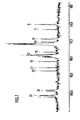
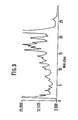
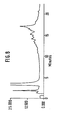
- the elution profile in exchange for ions of the hexasaccharide fraction is shown in FIG. 3 where the retention time is indicated on the abscissa and the quantities of products in the eluate are shown on the ordinate.
- a Mono-Q® column sold by Pharmacia with a NaCl gradient of 0.5 to 1.5 M is used, the flow rate being 1 ml / min. Detection is carried out by absorption at 214 nm. Examination of this elution profile shows the heterogeneity of the fraction.
- the anionic FGF is prepared from beef brains according to the technique of Roy R. Lobb and James W. Fett, Biochemistry vol.23, N * 26, 1984 pp. 6295-6299.
- FGF-Sepharose® The 30 ml of FGF-Sepharose® thus obtained are placed in a column (2.5 cm ⁇ 6.5 cm), and equilibrated in 0.01M tris-HCl buffer pH 7.4, 0.2M NaCl (hereinafter called after buffer I).
- Example 2 The procedure is similar to Example 1, using another batch of injectable heparin.
- 1.5 g of the hexasaccharide fraction 3 are deposited on a Q Sepharoe® anion exchanger column (170 ml, 2.5 cm x 35 cm) equilibrated with 0.4M NaCl buffer.
- the column is rinsed with 0.6 M buffer until there is no oligosaccharide substances in the effluent (rinsing volume 3.5 liters).
- the oligosaccharides which are not absorbed, recovered during the rinsing, correspond to the product devoid of affinity for the anionic FGF called hereinafter P38EXH13.
- the solution is left to stand at 25 ° C in the dark for 48 hours.
- the pH is brought to 7 using 5N sodium hydroxide, and 300 ml of pure ethanol are added.
- the precipitate formed is recovered, ground, washed with ethanol and acetone, then finally dried under vacuum at 60 ° C.
- the precipitate formed is centrifuged, ground, washed with ethanol and acetone and dried under vacuum at 60 ° C.
- Heparinase or heparatinase are extracted from Flavobacterium Heparinum and purified according to the technique described by P. HOVINGH and A. LINKER, J. Biol. Chem. flight. 245 no . 22, 1970, pp. 6170-6175.
- the solution is placed in a water bath at 30 ° C. and 2.5 mg of pure heparinase are added.
- the precipitate formed is recovered by centrifugation, washed with ethanol and dried under vacuum at 60 ° C.
- the solution is placed in a water bath at 40 ° C. and 5 mg of pure heparitinase are added. Incubate at 40 ° C for 10 hours, then add 3 mg of pure heparitinase. Incubate again 6 hours and again add 3 mg of heparitinase. 10 hours after this last addition, the reaction products are precipitated by the addition of 1200 ml of ethanol.
- the precipitate formed is collected by centrifugation, washed with ethanol and dried under vacuum at 60 ° C.
- the chromatography column is prepared as described in Example 1 D.
- the chromatography column is prepared as described in Example 1 D.
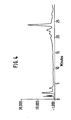
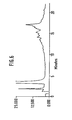
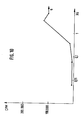
- the 26 ml of eluate containing oligosaccharide substances are collected by adding 160 ml of pure ethanol. 0.38 mg of a mixture of decasaccharides having the elution profile in exchange for ions shown in FIG. 8 is thus recovered.
- the affinity chromatography on FGF-Sepharose® is then carried out on a mixture containing the di-, tetra-, hexa-, octa-, deca-, dodeca- and tetradecasaccharides in the table on page 21.
- This chromatography operation allows to isolate those of the chains of the mixture which have an affinity for FGF.
- hexasaccharide 120 mg are dissolved in 100 ml of 0.5 M NaCl. 50 ml of Aminoethyl Sepharose (containing approximately 8 ⁇ moles of aminoethyl group per ml of decanted matrix) and 50 mg of sodium cyanoborohydride are added. The whole is brought to pH 11 using 5N sodium hydroxide and maintained under moderate stirring, at room temperature, for 10 days.
- the matrix is then filtered through a Buchner filter, washed with 1 liter of 0.5 M NaCl solution pH 7, then with 1 liter of 10 N hydrochloric acid, then with 500 ml of 1 M NaCl pH 10.0, then finally with 1 liter of distilled water.
- the column is equilibrated with 0.02 M tris-HCl buffer pH 7.0, 0.3 M NaCl (buffer 1).
- the column is then eluted by a gradient linear obtained by the progressive mixing of 200 ml of buffer I and 200 ml of 0.02 M tris-HCl buffer pH 7.0,
- the peak of anionic FGF emerges from the column at an ionic strength of about 0.7 M, and is recovered with a yield of 95%.
- Sepharose® matrix is then filtered through a Buchner filter, washed with 100 ml of 0.5 M NaCl solution pH 7, then with 100 ml of 10 -3 N hydrochloric acid, then with 100 ml of 2 M NaCl and finally with 200 ml. distilled water.
- 10 g of injectable heparin from proc mucus, in the form of the sodium salt, titrating 157 uI / mg in the Codex assay and 155 u / mg in the anti-factor Xa assay of Yin et al; are dissolved in 250 ml of demineralized water at 4 ° C.
- the pH of the solution is adjusted to 5.0 with concentrated hydrochloric acid.
- 10 g of sodium metaperiodate (NaI04, MW: 213.89) dissolved in 250 ml of deionized water at 4 ° C are added with moderate stirring.
- the pH of the whole is adjusted to 5.0 with concentrated hydrochloric acid.
- the solution is left 24 hours, in the dark, in a cold room at + 4 ° C.
- reaction solution is then distributed into 3 NOJAX 40® dialysis hoses (porosity from 3 to 4000 Da) and subjected to dialysis for 15 hours against running demineralized water.
- the whole is left to stand for 3 hours, then centrifuged at 2500 rpm for 20 minutes.
- the precipitate is collected, resuspended in 200 ml of pure ethanol, ground with Ultra-Turrax® and finally recovered by filtration on a sintered beaker.
- the mixture of chains obtained is subjected to a filtration gel as described in Example 1.
- IC 1696, 1701 and 1702 were administered to mice for 15 days intravenously and subcutaneously and showed no toxicity. Their LD 50 in both cases is greater than 2 g / kg.
- LE II cells (mouse lung endothelials) are cultured in 24-well plates in the presence of 10% fetal calf serum up to 3/4 of the confluence.
- FGF fibroblast growth factor
- the culture is still maintained for 24 hours and tritiated thymidine is added 4 hours before the end of the experiment.
- the incorporated radioactivity is then counted; each measurement is made in triplicate.
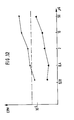
- the stimulation plateau is located at 126,000 cpm for a dose of 5 ng / ml.
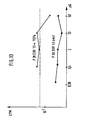
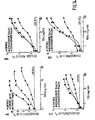
- the maximum stimulation in the presence of anionic FGF alone is represented by the dotted line, the curves ⁇ _ ⁇ representing the results obtained when the glycosaminoglycan is used alone and the curves those obtained when the glycosaminoglycan is used with anionic FGF.
- IC 1696 has a dose-dependent activity of 0.08 to 50 pg / ml of culture medium.
- anionic FGF Associated with anionic FGF, there is an increase compared to the activity of FGF alone, from 10 pg / ml.
- IC 1696 potentiates the activity of anionic FGF.
- Figure 12 dose-response curve in the presence of hexasaccharide IC 1697, alone or with anionic FGF (5 ng / ml).
- IC 1697 used alone shows dose- dependent between 0.04 and 50 pg / ml.
- the fragment used as a reference does not show significant activity when used alone.
- Bovine aortic endothelial cells are seeded at low density (20,000 cells per 35 mm dish) in modified Eagle medium containing 10% fetal calf serum.
- the cells are kept in culture for 4 days and added on day D and D + 2 of 10 ⁇ l of a basic FGF solution at a concentration of 8.6 pg / ⁇ l.
- the cultures are added or not oligosaccharides to be tested at various concentrations. After 4 days, the cells are counted using a Coulter particle counter.
- results are expressed as a percentage inhibition of cell proliferation by comparison with cultures which have not received the products to be tested. For comparison, tests are also carried out with heparin.
- IC 1696 and IC 1701 have substantially the same activity as heparin and IC 1702 is still very strongly active.
- the dotted line represents the basal proliferation for a culture containing 10% of FCS without FGFa and without oligosaccharide; the curve with, _, _, represents the control test in the presence of FGFa alone; the curves and represent the results obtained in the presence of FGFa associated with concentrations of 1 ⁇ g / ml and 5 ⁇ g / ml of heparin, or of 10 ⁇ g / ml and 50 ⁇ g / ml of oligosaccharides respectively.
- FGFa without association with oligosaccharides causes a maximum increase of 230% in the number of cells compared to SVF alone at the concentration of 10%
- the ED 50 is 7 ng / ml.
- the term ED 50 is understood to mean the concentration of FGFa (ng / ml) which has determined 50% of proliferation, relative to the maximum proliferation, obtained with 50-100 ng / ml of FGFa.
- heparin potentiates the effect of FGFa. This potentiating effect begins at a heparin concentration of 200 ng / ml and reaches its maximum at a heparin concentration of 25 pg / ml. A heparin concentration of 1 pg / ml decreases the ED 50 of FGFa by ten times (Fig. 14A). It is found that the oligosaccharides tested have different effects depending on the experimental conditions implemented.
- the test used highlights two effects of oligosaccharides: an inhibitory effect in presence of serum and in the absence of FGFa, and a stimulating effect in the presence of the growth factor for which they have an affinity. This suggests a modulating role for glycosaminoglycans on cell growth.
- the inhibitory effect makes it possible to envisage an antiangiogenesis action in vivo.
- the stimulating effect in association with the growth factor, makes it possible to envisage the use of these products either for the stabilization and potentiation of the growth factor, or to stimulate tissue repair.
- hexasaccharide IC 1696 The activity of hexasaccharide IC 1696 was tested on an angiogenesis model adapted from J. Folkman et al. (Science, 1983, 221, 719), the impregnated polymer implants being replaced by intravenous injections of the product to be tested.
- Rabbits receive daily intravenously two injections of 10 mg / kg of hexasaccharide IC 1696 in solution in isotonic chlorine solution and in combination or not with steroids.
Landscapes
- Chemical & Material Sciences (AREA)
- Health & Medical Sciences (AREA)
- Life Sciences & Earth Sciences (AREA)
- General Health & Medical Sciences (AREA)
- Engineering & Computer Science (AREA)
- Chemical Kinetics & Catalysis (AREA)
- Medicinal Chemistry (AREA)
- Organic Chemistry (AREA)
- Molecular Biology (AREA)
- Biochemistry (AREA)
- Materials Engineering (AREA)
- Polymers & Plastics (AREA)
- Bioinformatics & Cheminformatics (AREA)
- General Chemical & Material Sciences (AREA)
- Nuclear Medicine, Radiotherapy & Molecular Imaging (AREA)
- Pharmacology & Pharmacy (AREA)
- Animal Behavior & Ethology (AREA)
- Public Health (AREA)
- Veterinary Medicine (AREA)
- Polysaccharides And Polysaccharide Derivatives (AREA)
- Pharmaceuticals Containing Other Organic And Inorganic Compounds (AREA)
- Saccharide Compounds (AREA)
- Medicines Containing Material From Animals Or Micro-Organisms (AREA)
- Preparation Of Compounds By Using Micro-Organisms (AREA)
Applications Claiming Priority (2)
| Application Number | Priority Date | Filing Date | Title |
|---|---|---|---|
| FR8605546 | 1986-04-17 | ||
| FR8605546A FR2597484B1 (fr) | 1986-04-17 | 1986-04-17 | Glycosaminoglycanes de type heparine ou heparane-sulfate dotes d'une activite sur la division et la differentiation cellulaires, leur preparation et leurs applications therapeutiques. |
Publications (3)
| Publication Number | Publication Date |
|---|---|
| EP0244298A2 true EP0244298A2 (de) | 1987-11-04 |
| EP0244298A3 EP0244298A3 (en) | 1988-09-21 |
| EP0244298B1 EP0244298B1 (de) | 1994-11-30 |
Family
ID=9334346
Family Applications (1)
| Application Number | Title | Priority Date | Filing Date |
|---|---|---|---|
| EP87400884A Expired - Lifetime EP0244298B1 (de) | 1986-04-17 | 1987-04-16 | Oligosaccharide von Heparin mit einer Affinität für Faktoren von Zellwachstum |
Country Status (8)
| Country | Link |
|---|---|
| US (1) | US5034520A (de) |
| EP (1) | EP0244298B1 (de) |
| JP (1) | JPS6366192A (de) |
| AT (1) | ATE114674T1 (de) |
| CA (1) | CA1339925C (de) |
| DE (1) | DE3750785T2 (de) |
| FR (1) | FR2597484B1 (de) |
| PT (1) | PT84719B (de) |
Cited By (10)
| Publication number | Priority date | Publication date | Assignee | Title |
|---|---|---|---|---|
| EP0394971A1 (de) * | 1989-04-24 | 1990-10-31 | Kabi Pharmacia Ab | Oligosaccharid enthaltende Inhibitoren, die das Wachstum der endothelialen Zellen und die Gefässneubildung hemmen |
| EP0509517A3 (en) * | 1991-04-16 | 1993-09-01 | Seikagaku Kogyo Kabushiki Kaisha | Oligosaccharide having affinity for fibroblast growth factor and process for producing same |
| WO1993019096A1 (en) * | 1992-03-23 | 1993-09-30 | Cancer Research Campaign Technology Limited | Oligosaccharides having growth factor binding affinity |
| GB2266239A (en) * | 1992-03-25 | 1993-10-27 | Jevco Ltd | Wound healing composition |
| FR2691066A1 (fr) * | 1992-05-15 | 1993-11-19 | Sanofi Elf | Utilisation de glycosaminoglycanes exogènes, de leurs analogues ainsi que de leurs fragments, fractions et dérivés, pour la préparation de médicaments destinés au traitement de thrombopénies. |
| US5273900A (en) * | 1987-04-28 | 1993-12-28 | The Regents Of The University Of California | Method and apparatus for preparing composite skin replacement |
| WO1994021689A1 (en) * | 1993-03-25 | 1994-09-29 | Cancer Research Campaign Technology Limited | Heparan sulphate oligosaccharides having hepatocyte growth factor binding affinity |
| WO1999004801A1 (en) * | 1997-07-28 | 1999-02-04 | Rijks Universiteit Leiden | Use of sulfated glycosaminoglycans for treating of retinopathy |
| WO1999021538A3 (de) * | 1997-10-24 | 1999-08-05 | Knoll Ag | Verwendung von glykosaminoglykanen zur herstellung von pharmazeutischen zubereitungen zur behandlung von mit diabetes assoziierten augenkrankheiten |
| WO2010029185A1 (en) * | 2008-09-15 | 2010-03-18 | Endotis Pharma | Oligosaccharide compounds for use in mobilising stem cells |
Families Citing this family (19)
| Publication number | Priority date | Publication date | Assignee | Title |
|---|---|---|---|---|
| US5145956A (en) * | 1991-12-11 | 1992-09-08 | Glycomed Incorporated | Method for separation of anionic oligosaccharides |
| US6750207B1 (en) | 1992-05-01 | 2004-06-15 | Yeda Research And Development Co. Ltd. | Compositions for the regulation of cytokine activity |
| US5861382A (en) * | 1992-05-01 | 1999-01-19 | Yeda Research And Development Co. Ltd. | Methods for regulation of active TNF-α |
| CA2149116A1 (en) * | 1992-11-10 | 1994-05-26 | Irun R. Cohen | Compositions for the regulation of cytokine activity |
| US6127347A (en) * | 1994-01-12 | 2000-10-03 | Univ Michigan | Non-anticoagulant chemically modified heparinoids for treating hypovolemic shock and related shock syndromes |
| US5583121A (en) * | 1994-01-12 | 1996-12-10 | Michigan State University | Non-anticoagulant chemically modified heparinoids for treating hypovolemic shock and related shock syndromes |
| WO1996023003A1 (en) * | 1995-01-27 | 1996-08-01 | Amrad Operations Pty. Ltd. | A therapeutic molecule |
| AU702500B2 (en) * | 1995-04-28 | 1999-02-25 | Australian National University, The | Preparation and use of sulfated oligosaccharides |
| AUPN261895A0 (en) * | 1995-04-28 | 1995-05-18 | Australian National University, The | Preparation and use of sulfated oligosaccharides |
| US5646130A (en) * | 1995-06-30 | 1997-07-08 | Ocean University Of Oingdao | Low molecular weight sulfated polysaccharides and uses thereof |
| JP4633232B2 (ja) * | 2000-06-22 | 2011-02-16 | 生化学工業株式会社 | 成長因子誘導剤 |
| AU2002236477A1 (en) * | 2000-11-21 | 2002-06-03 | The Texas A & M University System | Fgf-affinity chromatography |
| US7285536B2 (en) * | 2001-12-05 | 2007-10-23 | Yeda Research And Development Co., Ltd. | Anti-cancer therapeutic compounds |
| US20040171819A1 (en) | 2002-10-10 | 2004-09-02 | Aventis Pharma S.A. | Mixtures of polysaccharides derived from heparin, their preparation and pharmaceutical compositions containing them |
| WO2005079817A1 (en) * | 2004-02-18 | 2005-09-01 | The Texas A & M University System | Affinity purified heparin/heparan sulfate for controlling the biological activity of the fgf receptor |
| US20060293275A1 (en) * | 2004-03-29 | 2006-12-28 | Toshikazu Nakamura | Hgf production accelerator containing heparin-like oligosaccharide |
| US20060183712A1 (en) * | 2005-02-17 | 2006-08-17 | The Texas A&M University System | Affinity purified heparin/heparan sulfate for controlling the biological activity of the FGF receptor |
| JP2006291028A (ja) * | 2005-04-11 | 2006-10-26 | Q P Corp | 低分子ヘパリンまたはその塩、ならびにその製造方法 |
| FR2949115B1 (fr) * | 2009-08-14 | 2012-11-02 | Sanofi Aventis | OLIGOSACCHARIDES N-SULFATES ACTIVATEURS DES RECEPTEURS DES FGFs, LEUR PREPARATION ET LEUR APPLICATION EN THERAPEUTIQUE |
Family Cites Families (4)
| Publication number | Priority date | Publication date | Assignee | Title |
|---|---|---|---|---|
| IL61201A (en) * | 1979-10-05 | 1984-09-30 | Choay Sa | Oligosaccharides having no more than 8 saccharide moieties,their obtention from heparin and pharmaceutical compositions containing them |
| CA1226816A (en) * | 1982-12-20 | 1987-09-15 | Moses J. Folkman | Inhibition of angiogenesis |
| FR2553287B1 (fr) * | 1983-10-18 | 1986-09-12 | Choay Sa | Compositions a base de mucopolysaccharides ou d'oligosaccharides, notamment a base de fractions ou fragments d'heparine, appropriees au traitement de desordres de la proliferation cellulaire |
| US4847338A (en) * | 1985-03-28 | 1989-07-11 | University Of Iowa Research Foundation | Low molecular weight heparin fragments as inhibitors of complement activation |
-
1986
- 1986-04-17 FR FR8605546A patent/FR2597484B1/fr not_active Expired
-
1987
- 1987-04-16 JP JP62092122A patent/JPS6366192A/ja active Pending
- 1987-04-16 CA CA000535040A patent/CA1339925C/fr not_active Expired - Fee Related
- 1987-04-16 EP EP87400884A patent/EP0244298B1/de not_active Expired - Lifetime
- 1987-04-16 AT AT87400884T patent/ATE114674T1/de active
- 1987-04-16 US US07/039,471 patent/US5034520A/en not_active Expired - Fee Related
- 1987-04-16 DE DE3750785T patent/DE3750785T2/de not_active Expired - Fee Related
- 1987-04-16 PT PT84719A patent/PT84719B/pt not_active IP Right Cessation
Cited By (14)
| Publication number | Priority date | Publication date | Assignee | Title |
|---|---|---|---|---|
| US5273900A (en) * | 1987-04-28 | 1993-12-28 | The Regents Of The University Of California | Method and apparatus for preparing composite skin replacement |
| WO1990012580A1 (en) * | 1989-04-24 | 1990-11-01 | Kabi Pharmacia Ab | Oligosaccharide-containing inhibitors of endothelial cell growth and angiogenesis |
| EP0394971A1 (de) * | 1989-04-24 | 1990-10-31 | Kabi Pharmacia Ab | Oligosaccharid enthaltende Inhibitoren, die das Wachstum der endothelialen Zellen und die Gefässneubildung hemmen |
| AU656953B2 (en) * | 1991-04-16 | 1995-02-23 | Seikagaku Kogyo Kabushiki Kaisha | Oligosaccharide having affinity for fibroblast growth factor and process for producing same |
| EP0509517A3 (en) * | 1991-04-16 | 1993-09-01 | Seikagaku Kogyo Kabushiki Kaisha | Oligosaccharide having affinity for fibroblast growth factor and process for producing same |
| WO1993019096A1 (en) * | 1992-03-23 | 1993-09-30 | Cancer Research Campaign Technology Limited | Oligosaccharides having growth factor binding affinity |
| GB2265905B (en) * | 1992-03-23 | 1995-01-25 | Cancer Res Campaign Tech | Oligosaccharides having growth factor binding affinity |
| GB2266239A (en) * | 1992-03-25 | 1993-10-27 | Jevco Ltd | Wound healing composition |
| GB2266239B (en) * | 1992-03-25 | 1996-03-06 | Jevco Ltd | Wound healing compositions containing chondroitin sulphate oligosaccharides |
| FR2691066A1 (fr) * | 1992-05-15 | 1993-11-19 | Sanofi Elf | Utilisation de glycosaminoglycanes exogènes, de leurs analogues ainsi que de leurs fragments, fractions et dérivés, pour la préparation de médicaments destinés au traitement de thrombopénies. |
| WO1994021689A1 (en) * | 1993-03-25 | 1994-09-29 | Cancer Research Campaign Technology Limited | Heparan sulphate oligosaccharides having hepatocyte growth factor binding affinity |
| WO1999004801A1 (en) * | 1997-07-28 | 1999-02-04 | Rijks Universiteit Leiden | Use of sulfated glycosaminoglycans for treating of retinopathy |
| WO1999021538A3 (de) * | 1997-10-24 | 1999-08-05 | Knoll Ag | Verwendung von glykosaminoglykanen zur herstellung von pharmazeutischen zubereitungen zur behandlung von mit diabetes assoziierten augenkrankheiten |
| WO2010029185A1 (en) * | 2008-09-15 | 2010-03-18 | Endotis Pharma | Oligosaccharide compounds for use in mobilising stem cells |
Also Published As
| Publication number | Publication date |
|---|---|
| FR2597484B1 (fr) | 1988-12-23 |
| PT84719A (fr) | 1987-05-01 |
| EP0244298B1 (de) | 1994-11-30 |
| DE3750785D1 (de) | 1995-01-12 |
| FR2597484A1 (fr) | 1987-10-23 |
| EP0244298A3 (en) | 1988-09-21 |
| ATE114674T1 (de) | 1994-12-15 |
| PT84719B (pt) | 1989-12-29 |
| JPS6366192A (ja) | 1988-03-24 |
| US5034520A (en) | 1991-07-23 |
| DE3750785T2 (de) | 1995-06-22 |
| CA1339925C (fr) | 1998-06-23 |
Similar Documents
| Publication | Publication Date | Title |
|---|---|---|
| EP0244298B1 (de) | Oligosaccharide von Heparin mit einer Affinität für Faktoren von Zellwachstum | |
| EP0287477B1 (de) | Heparine mit niedrigem Molekulargewicht und regelmässiger Struktur, ihre Herstellung und biologische Verwendungen | |
| EP0027089B1 (de) | Oligosaccharidfraktionen und Oligosaccharide mit biologischen Eigenschaften, Verfahren zu ihrer Herstellung und ihre Verwendungen als Arzneimittel | |
| EP0214879B1 (de) | Verfahren zur Sulphatierung von Glykosaminoglykanen, daraus hergestellte Glykosaminoglykane und ihre biologischen Verwendungen | |
| US5039529A (en) | Novel heparin derivatives | |
| US5008253A (en) | Sulfoamino derivatives of chondroitin sulfates of dermatan sulfate and of hyaluronic acid and their pharmacological properties | |
| JP5389140B2 (ja) | ヘパリン誘導多糖類混合物、その製造およびそれを含有する医薬組成物 | |
| EP0125152B1 (de) | Xylansulphate, Verfahren zu deren Herstellung und ihre antithrombotische und hypolipemische Wirkung | |
| EP1226148B1 (de) | Neue oligosaccharide, verfahren zu deren herstellung und diese enthaltende pharmazeutische zusammensetzungen | |
| EP0208623A2 (de) | Verwendung von Poly- und Oligosacchariden zur Gewinnung von Arzneimitteln, aktiv in den Pathologien des Bindegewebes | |
| EP0337327A1 (de) | Verfahren zur Herstellung von neuen Oligosaccharid-Fragmenten durch kontrollierte chemische Depolymerisation von Heparin | |
| EP0140781A2 (de) | Heparinderivathaltige Zusammensetzungen, die besonders zur Behandlung von Störungen durch Zellwucherung geeignet sind | |
| EP0163582B1 (de) | Medikamente welche die freifliessenden Eigenschaften von Blut verbessern und die Verwendung in Therapeutika | |
| EP0165134B1 (de) | Oligosaccharide, ihre Herstellung durch Synthese und ihre biologische Verwendung | |
| EP0064452B1 (de) | Kurzkettige Oligosaccharide mit biologischen Eigenschaften, Verfahren zu ihrer Herstellung und ihre Verwendungen als Arzneimittel | |
| JP5053512B2 (ja) | 非常に大きい硫酸化度を持つk5多糖体のエピマー化誘導体 | |
| US20110178039A1 (en) | Oligosaccharide mixtures derived from heparin, preparation thereof and pharmaceutical compositions containing them | |
| FR2857971A1 (fr) | Melanges d'oligosaccharides derives d'heparine, leur preparation et les compositions pharmaceutiques les contenant | |
| FR2461719A2 (fr) | Composition mucopolysaccharidique ayant une activite regulatrice de la coagulation, medicament la contenant et procede pour l'obtenir | |
| JP2020510104A (ja) | 内因系テンナーゼ複合体を阻害するオリゴ糖、その製造方法と用途 | |
| FR2495935A1 (fr) | Fractions mucopolysaccharidiques possedant des proprietes biologiques, leur procede de preparation et leur application en tant que medicaments | |
| RU2333222C2 (ru) | Эпимеризованные производные полисахарида к5 с высокой степенью сульфатирования | |
| KR101104107B1 (ko) | 헤파린으로부터 유도된 다당류의 혼합물, 이의 제조방법 및이를 함유하는 약제학적 조성물 | |
| FR2572080A1 (fr) | Procede de preparation de compositions de mucopolysaccharides dotees d'une activite antithrombotique elevee, les compositions obtenues et leur application en tant que medicaments |
Legal Events
| Date | Code | Title | Description |
|---|---|---|---|
| PUAI | Public reference made under article 153(3) epc to a published international application that has entered the european phase |
Free format text: ORIGINAL CODE: 0009012 |
|
| AK | Designated contracting states |
Kind code of ref document: A2 Designated state(s): AT BE CH DE ES FR GB GR IT LI LU NL SE |
|
| PUAL | Search report despatched |
Free format text: ORIGINAL CODE: 0009013 |
|
| AK | Designated contracting states |
Kind code of ref document: A3 Designated state(s): AT BE CH DE ES FR GB GR IT LI LU NL SE |
|
| 17P | Request for examination filed |
Effective date: 19890203 |
|
| 17Q | First examination report despatched |
Effective date: 19910617 |
|
| RAP1 | Party data changed (applicant data changed or rights of an application transferred) |
Owner name: ELF SANOFI |
|
| GRAA | (expected) grant |
Free format text: ORIGINAL CODE: 0009210 |
|
| RAP1 | Party data changed (applicant data changed or rights of an application transferred) |
Owner name: SANOFI |
|
| AK | Designated contracting states |
Kind code of ref document: B1 Designated state(s): AT BE CH DE ES FR GB GR IT LI LU NL SE |
|
| PG25 | Lapsed in a contracting state [announced via postgrant information from national office to epo] |
Ref country code: NL Effective date: 19941130 Ref country code: GR Free format text: LAPSE BECAUSE OF FAILURE TO SUBMIT A TRANSLATION OF THE DESCRIPTION OR TO PAY THE FEE WITHIN THE PRESCRIBED TIME-LIMIT Effective date: 19941130 Ref country code: AT Effective date: 19941130 |
|
| REF | Corresponds to: |
Ref document number: 114674 Country of ref document: AT Date of ref document: 19941215 Kind code of ref document: T |
|
| ITF | It: translation for a ep patent filed | ||
| REF | Corresponds to: |
Ref document number: 3750785 Country of ref document: DE Date of ref document: 19950112 |
|
| PG25 | Lapsed in a contracting state [announced via postgrant information from national office to epo] |
Ref country code: SE Effective date: 19950228 |
|
| GBT | Gb: translation of ep patent filed (gb section 77(6)(a)/1977) |
Effective date: 19950130 |
|
| PG25 | Lapsed in a contracting state [announced via postgrant information from national office to epo] |
Ref country code: ES Free format text: LAPSE BECAUSE OF FAILURE TO SUBMIT A TRANSLATION OF THE DESCRIPTION OR TO PAY THE FEE WITHIN THE PRESCRIBED TIME-LIMIT Effective date: 19950313 |
|
| PG25 | Lapsed in a contracting state [announced via postgrant information from national office to epo] |
Ref country code: LU Free format text: LAPSE BECAUSE OF NON-PAYMENT OF DUE FEES Effective date: 19950430 Ref country code: BE Effective date: 19950430 |
|
| NLV1 | Nl: lapsed or annulled due to failure to fulfill the requirements of art. 29p and 29m of the patents act | ||
| PLBE | No opposition filed within time limit |
Free format text: ORIGINAL CODE: 0009261 |
|
| STAA | Information on the status of an ep patent application or granted ep patent |
Free format text: STATUS: NO OPPOSITION FILED WITHIN TIME LIMIT |
|
| BERE | Be: lapsed |
Owner name: SANOFI Effective date: 19950430 |
|
| 26N | No opposition filed | ||
| PGFP | Annual fee paid to national office [announced via postgrant information from national office to epo] |
Ref country code: FR Payment date: 19970425 Year of fee payment: 11 |
|
| PGFP | Annual fee paid to national office [announced via postgrant information from national office to epo] |
Ref country code: CH Payment date: 19980313 Year of fee payment: 12 |
|
| PGFP | Annual fee paid to national office [announced via postgrant information from national office to epo] |
Ref country code: DE Payment date: 19980319 Year of fee payment: 12 |
|
| PGFP | Annual fee paid to national office [announced via postgrant information from national office to epo] |
Ref country code: GB Payment date: 19980409 Year of fee payment: 12 |
|
| PG25 | Lapsed in a contracting state [announced via postgrant information from national office to epo] |
Ref country code: FR Free format text: THE PATENT HAS BEEN ANNULLED BY A DECISION OF A NATIONAL AUTHORITY Effective date: 19980430 |
|
| REG | Reference to a national code |
Ref country code: FR Ref legal event code: ST |
|
| PG25 | Lapsed in a contracting state [announced via postgrant information from national office to epo] |
Ref country code: GB Free format text: LAPSE BECAUSE OF NON-PAYMENT OF DUE FEES Effective date: 19990416 |
|
| PG25 | Lapsed in a contracting state [announced via postgrant information from national office to epo] |
Ref country code: LI Free format text: LAPSE BECAUSE OF NON-PAYMENT OF DUE FEES Effective date: 19990430 Ref country code: CH Free format text: LAPSE BECAUSE OF NON-PAYMENT OF DUE FEES Effective date: 19990430 |
|
| GBPC | Gb: european patent ceased through non-payment of renewal fee |
Effective date: 19990416 |
|
| REG | Reference to a national code |
Ref country code: CH Ref legal event code: PL |
|
| PG25 | Lapsed in a contracting state [announced via postgrant information from national office to epo] |
Ref country code: DE Free format text: LAPSE BECAUSE OF NON-PAYMENT OF DUE FEES Effective date: 20000201 |
|
| PG25 | Lapsed in a contracting state [announced via postgrant information from national office to epo] |
Ref country code: IT Free format text: LAPSE BECAUSE OF NON-PAYMENT OF DUE FEES;WARNING: LAPSES OF ITALIAN PATENTS WITH EFFECTIVE DATE BEFORE 2007 MAY HAVE OCCURRED AT ANY TIME BEFORE 2007. THE CORRECT EFFECTIVE DATE MAY BE DIFFERENT FROM THE ONE RECORDED. Effective date: 20050416 |