EP0228995A1 - Mikrobizide - Google Patents
Mikrobizide Download PDFInfo
- Publication number
- EP0228995A1 EP0228995A1 EP86810588A EP86810588A EP0228995A1 EP 0228995 A1 EP0228995 A1 EP 0228995A1 EP 86810588 A EP86810588 A EP 86810588A EP 86810588 A EP86810588 A EP 86810588A EP 0228995 A1 EP0228995 A1 EP 0228995A1
- Authority
- EP
- European Patent Office
- Prior art keywords
- formula
- fluoro
- triazol
- methyl
- alkyl
- Prior art date
- Legal status (The legal status is an assumption and is not a legal conclusion. Google has not performed a legal analysis and makes no representation as to the accuracy of the status listed.)
- Withdrawn
Links
- 0 C*C(C(C)O*)*(C)[C@](C(C)C)N(C)*(C)=C Chemical compound C*C(C(C)O*)*(C)[C@](C(C)C)N(C)*(C)=C 0.000 description 4
Classifications
-
- C—CHEMISTRY; METALLURGY
- C07—ORGANIC CHEMISTRY
- C07D—HETEROCYCLIC COMPOUNDS
- C07D231/00—Heterocyclic compounds containing 1,2-diazole or hydrogenated 1,2-diazole rings
- C07D231/02—Heterocyclic compounds containing 1,2-diazole or hydrogenated 1,2-diazole rings not condensed with other rings
- C07D231/10—Heterocyclic compounds containing 1,2-diazole or hydrogenated 1,2-diazole rings not condensed with other rings having two or three double bonds between ring members or between ring members and non-ring members
- C07D231/12—Heterocyclic compounds containing 1,2-diazole or hydrogenated 1,2-diazole rings not condensed with other rings having two or three double bonds between ring members or between ring members and non-ring members with only hydrogen atoms, hydrocarbon or substituted hydrocarbon radicals, directly attached to ring carbon atoms
-
- A—HUMAN NECESSITIES
- A01—AGRICULTURE; FORESTRY; ANIMAL HUSBANDRY; HUNTING; TRAPPING; FISHING
- A01N—PRESERVATION OF BODIES OF HUMANS OR ANIMALS OR PLANTS OR PARTS THEREOF; BIOCIDES, e.g. AS DISINFECTANTS, AS PESTICIDES OR AS HERBICIDES; PEST REPELLANTS OR ATTRACTANTS; PLANT GROWTH REGULATORS
- A01N43/00—Biocides, pest repellants or attractants, or plant growth regulators containing heterocyclic compounds
- A01N43/48—Biocides, pest repellants or attractants, or plant growth regulators containing heterocyclic compounds having rings with two nitrogen atoms as the only ring hetero atoms
- A01N43/50—1,3-Diazoles; Hydrogenated 1,3-diazoles
-
- A—HUMAN NECESSITIES
- A01—AGRICULTURE; FORESTRY; ANIMAL HUSBANDRY; HUNTING; TRAPPING; FISHING
- A01N—PRESERVATION OF BODIES OF HUMANS OR ANIMALS OR PLANTS OR PARTS THEREOF; BIOCIDES, e.g. AS DISINFECTANTS, AS PESTICIDES OR AS HERBICIDES; PEST REPELLANTS OR ATTRACTANTS; PLANT GROWTH REGULATORS
- A01N43/00—Biocides, pest repellants or attractants, or plant growth regulators containing heterocyclic compounds
- A01N43/64—Biocides, pest repellants or attractants, or plant growth regulators containing heterocyclic compounds having rings with three nitrogen atoms as the only ring hetero atoms
- A01N43/647—Triazoles; Hydrogenated triazoles
- A01N43/653—1,2,4-Triazoles; Hydrogenated 1,2,4-triazoles
-
- C—CHEMISTRY; METALLURGY
- C07—ORGANIC CHEMISTRY
- C07D—HETEROCYCLIC COMPOUNDS
- C07D233/00—Heterocyclic compounds containing 1,3-diazole or hydrogenated 1,3-diazole rings, not condensed with other rings
- C07D233/54—Heterocyclic compounds containing 1,3-diazole or hydrogenated 1,3-diazole rings, not condensed with other rings having two double bonds between ring members or between ring members and non-ring members
- C07D233/56—Heterocyclic compounds containing 1,3-diazole or hydrogenated 1,3-diazole rings, not condensed with other rings having two double bonds between ring members or between ring members and non-ring members with only hydrogen atoms or radicals containing only hydrogen and carbon atoms, attached to ring carbon atoms
-
- C—CHEMISTRY; METALLURGY
- C07—ORGANIC CHEMISTRY
- C07D—HETEROCYCLIC COMPOUNDS
- C07D249/00—Heterocyclic compounds containing five-membered rings having three nitrogen atoms as the only ring hetero atoms
- C07D249/02—Heterocyclic compounds containing five-membered rings having three nitrogen atoms as the only ring hetero atoms not condensed with other rings
- C07D249/08—1,2,4-Triazoles; Hydrogenated 1,2,4-triazoles
Definitions
- the present invention relates to new substituted aryl-fluorazolyl-alkanols and their ethers of the formula I below and their acid addition salts, quaternary azolium salts and metal salt complexes.
- the invention further relates to the production of these substances and to microbicidal compositions which comprise at least one of these compounds as active ingredient.
- the invention also relates to the production of the agents mentioned and the use of the active compounds or the agents for controlling harmful microorganisms, preferably fungi which damage plants, in particular Piricularia species.
- R1 is hydrogen, halogen, C1-C2 alkyl or CF3; R2 halogen or C1-C2 alkyl; R3 is C1-C5 alkyl or C3-C5 alkenyl; R4 is hydrogen, C1-C4-alkyl, C3-C4-alkenyl or the group in which R5, R6 and R7 independently represent hydrogen, nitro, halogen, cyano, C1-C3-alkyl, C1-C3-alkoxy, C1-C3-haloalkoxy or CF3, and Y represents a nitrogen atom or the CH group, including their acid addition salts, quaternary azolium salts and metal salt complexes.
- R1 is hydrogen, halogen, C1-C2 alkyl or CF3; R2 halogen or C1-C2 alkyl; R3 C1-C4 alkyl; R4 is hydrogen, C1-C4-alkyl, C3-C4-alkenyl or R5, R6 and R7 independently represent hydrogen, nitro, halogen, cyano, C1-C3-alkyl, C1-C3-alkoxy, C1-C3-haloalkoxy or CF3, and Y represents a nitrogen atom or the CH group, represent a narrower scope of preferred connections.
- alkyl includes, for example, methyl, ethyl and the isomers of propyl and butyl, e.g. To understand n-propyl, isopropyl, isobutyl or tert-butyl.
- Alkenyl is e.g. for propenyl- (1), allyl, butenyl- (1), butenyl- (2) or butenyl- (3) and preferably represents allyl.
- Halogen means fluorine, chlorine, bromine or iodine, preferably fluorine, chlorine or bromine.
- the present invention includes both the free compounds of the formula I and their acid addition salts, quaternary azolium salts and metal salt complexes.
- addable acids are inorganic acids: hydrohalic acid such as hydrofluoric acid, hydrochloric acid, hydrobromic acid or hydroiodic acid as well as sulfuric acid, phosphoric acid, phosphorous acid, nitric acid and organic acids such as acetic acid, trifluoroacetic acid, trichloroacetic acid, propionic acid, formic acid, benzenesulfonic acid, maleic acid, methanesulfonic acid, p-toluic acid , Tartaric acid, fumaric acid, salicylic acid, lactic acid or sorbic acid.
- hydrohalic acid such as hydrofluoric acid, hydrochloric acid, hydrobromic acid or hydroiodic acid as well as sulfuric acid, phosphoric acid, phosphorous acid, nitric acid and organic acids such as acetic acid, trifluoroacetic acid, trichloroacetic acid, propionic acid, formic acid, benzenesulfonic acid, maleic acid, me
- the metal salt complexes consist of the underlying free compound of formula I and an inorganic or organic metal salt, for example the halides, nitrates, sulfates, phosphates, acetates, trifluoroacetates, trichloroacetates, propionates, tartrates, sulfonates, salicylates, benzoates etc. of the elements of the third and fourth main group such as aluminum, tin or lead as well as the first to eighth subgroup such as chrome, manganese, iron, cobalt, nickel, zirconium, copper, zinc, silver, mercury etc. etc.
- the subgroup elements of the 4th period are preferred.
- the metals can be present in the various valences that come with them.
- the metal salt complexes of the formula I can be mononuclear or polynuclear, ie they can be one or contain several organic molecule parts as ligands. Complexes with the metals copper, zinc, manganese, tin and zirconium are preferred.
- Alkyl or aralkyl halides, sulfates or sulfonates, such as, for example, methyl iodide, dimethyl, diethyl or monomethyl sulfate, benzyl chloride or bromide, methyl or ethyl p-toluenesulfonate, are preferably used to prepare quaternization products of the compounds of the formula (I) in question.
- the quaternization products of the compounds of formula (I) can be easily prepared using conventional methods, e.g. can be obtained by reacting the reaction components in a suitable solvent such as, for example, acetonitrile or acetone and in a known manner, e.g. by precipitation with a suitable precipitant, e.g. Diethyl ether and suction are isolated and cleaned by washing with an inert organic solvent.
- a suitable solvent such as, for example, acetonitrile or acetone
- a suitable precipitant e.g. Diethyl ether and suction are isolated and cleaned by washing with an inert organic solvent.
- the compounds of the formula I are oils, resins or predominantly solids which are stable at room temperature and are distinguished by very valuable microbicidal properties. They can be used preventively and curatively in the agricultural sector or related fields for combating plant-damaging microorganisms, the triazolylmethyl derivatives in the scope of the formula I being preferred. At low application concentrations, the active compounds of the formula I according to the invention are notable for a very good plant fungicidal action and problem-free use.
- the reaction is usually carried out in the manner of the Grignard reaction (cf. in this regard, Nutzel, Houben-Weyl, vol. 13 / 2a, pages 47-527) in diethyl ether; however, other solvents, for example higher ethers, such as tetrahydrofuran, dioxane, dibutyl ether or anisole, and also ethylene glycol ether or diethylene glycol ether are also suitable. Bases such as pyridine can also be used. Possible reaction temperatures are from -80 ° to 50 ° C, preferably -60 ° to ⁇ 0 ° C.
- ether compounds of the formula Ib in which R3 is a C3-C5 alkenyl, can be hydrogenated in the manner described above to the corresponding alkyl compounds of the formula Ib.
- R1, R2, R3, R4 and Y correspond to the meanings given under formula I
- W represents -OH, -OM or a so-called leaving group
- Z represents the group -OM or a leaving group
- M is an alkali - Or represents an alkaline earth metal atom, with the proviso that with the reactants Ia and III on the one hand and V on the other hand an -OM group with one leaving group or two hydroxyl groups react with one another.
- substituents such as halogen (such as fluorine, chlorine, bromine or iodine, preferably chlorine or bromine) are to be included under a leaving group; Sulfonyloxy groups, preferably -OSO2-R8; Acyloxy groups, preferably -OCO-R8 or isourea residues, preferred are understood, wherein R8, R9 and R10 independently of one another are C1-C3-alkyl, C1-C3-haloalkyl or phenyl optionally substituted by halogen, methyl, nitro, trifluoromethyl and / or methoxy.
- halogen such as fluorine, chlorine, bromine or iodine, preferably chlorine or bromine
- the reaction is carried out in the absence or preferably in the presence of an inert solvent.
- an inert solvent e.g. following solvents: N, N-dimethylformamide, N, N-dimethylacetamide, hexamethylphosphoric triamide, dimethyl sulfoxide, 2-methyl-2-pentanone, etc.
- solvents e.g. with one another or with other customary inert organic solvents, such as e.g. with aromatic hydrocarbons such as benzene, toluene, xylenes, etc.
- water is preferably used as the solvent.
- Suitable strong bases are, for example, alkali and alkaline earth metal hydrides (NaH, KH, CaH2 etc.) and alkali organic compounds such as butyllithium or alkali tert-butoxide.
- water-soluble organic solvents for example dioxane, acetone, N, N-dimethylformamide, as solubilizers or in a two-phase system composed of water and a water-immiscible solvent, for example CH2Cl2, ether, Methyl, ethyl ketone, preferably using water-soluble bases such as KOH, NaOH, Na2CO3 to work.
- phase transfer catalysts e.g. quaternary alkyl ammonium salts.
- Diniederalkylether (diethyl ether, diisopropyl ether, tert-butyl methyl ether, etc.), tetrahydrofuran, dioxane and aromatic hydrocarbons such as benzene, toluene or xylenes.
- aliphatic and aromatic hydrocarbons such as pentane, hexane, cyclohexane, petroleum ether, ligroin, benzene, toluene, xylenes etc., halogenated hydrocarbons such as dichloromethane, chloroform, carbon tetrachloride, ethylene dichloride, 1,2-dichloroethane, tetrachlorethylene etc. or aliphatic ethers such as diethyl ether, diisopropyl ether, t-butyl methyl ether, etc.
- aliphatic and aromatic hydrocarbons such as pentane, hexane, cyclohexane, petroleum ether, ligroin, benzene, toluene, xylenes etc.
- halogenated hydrocarbons such as dichloromethane, chloroform, carbon tetrachloride, ethylene dichloride, 1,2-dichloroe
- phase transfer catalysts examples include: tetraalkylammonium halides, hydrogen sulfates or hydroxides such as tetrabutylammonium chloride, bromide, iodide; Triethylbenzylammonium chloride, bromide; Tetrapropylammonium chloride, bromide, iodide; etc.
- Phosphonium salts can also be used as phase transfer catalysts.
- the reaction temperatures are generally between 30 ° and 130 ° C, or at the boiling point of the solvent or solvent mixture.
- solvents can be used here which are inert towards the reactants and expediently form azeotropes with water.
- Aromatic hydrocarbons such as benzene, toluene, xylenes or halogenated hydrocarbons such as dichloromethane, chloroform, carbon tetrachloride, 1,2-dichloroethane, tetrachlorethylene, chlorobenzene, but also ether-like compounds such as tert-butyl methyl ether, dioxane and others are suitable for this purpose.
- the compound of formula III itself can be used as a solvent.
- This condensation reaction is conveniently carried out in the presence of a strong acid, e.g. para-toluenesulfonic acid and at the boiling point of the azeotropic mixture.
- the exchange of the free hydroxyl group in the compounds of formula Ia for a leaving group Z is preferably carried out in an inert solvent.
- solvents are: Aromatic and aliphatic hydrocarbons such as benzene, toluene, xylenes, petroleum ether, ligroin or cyclohexane; halogenated hydrocarbons such as chlorobenzene, methylene chloride, ethylene chloride, chloroform, carbon tetrachloride or tetrachlorethylene; Ethers and ethereal compounds such as diethyl ether, diisopropyl ether, tert-butyl methyl ether, dimethoxyethane, dioxane, tetrahydrofuran or anisole; Esters such as ethyl acetate, propyl acetate or butyl acetate; Nitriles such as acetonitrile or compounds such as dimethyl sulfoxide, dimethylformamide and
- a weak base such as pyridine or triethylamine.
- azolyl fluoroketones of the formula II used as starting materials are known from the literature (cf. EP-00 27 177). They can be made by known methods by using a) Compounds of formula VII with bromine or chlorine in the presence of an acidic solvent and, if appropriate, in the presence of a hydrogen halide acceptor and in the corresponding azolyl-bromine (chloro) ketones, the bromine (chlorine) is exchanged for fluorine in the usual manner, or b) compounds of the formula VIII with imidazole or 1,2,4-triazole in the presence of an acid binder and in the presence of a solvent, where R1, R2 and Y have the meanings given under formula I.
- Lewis acids for example TiCl4, AlCl3, GaCl3 or InCl3.
- the temperature in this reaction is -10 ° to 150 ° C, preferably 0 ° to 50 ° C.
- one or more inert solvents or diluents may be present in the preparation of all starting, intermediate and end products mentioned herein.
- aliphatic and aromatic hydrocarbons such as benzene, toluene, xylenes, petroleum ether; halogenated hydrocarbons such as chlorobenzene, methylene chloride, ethylene chloride, chloroform, carbon tetrachloride, tetrachlorethylene; Ethers and ethereal compounds such as dialkyl ether (diethyl ether, diisopropyl ether, tert-butylmethyl ether, etc.) anisole, dioxane, tetrahydrofuran; Nitriles such as acetonitrile, propionitrile; N, N-dialkylated amides such as dimethylformamide; Dimethyl sulfoxide; Ketones such as acetone, diethyl ketone, methyl e
- reaction or partial steps of a reaction are carried out under a protective gas atmosphere and / or absolute solvents and / or a reaction catalyst, for example KJ, is added.
- a protective gas atmosphere and / or absolute solvents and / or a reaction catalyst, for example KJ, is added.
- Inert gases such as nitrogen, helium, argon or, in certain cases, carbon dioxide are suitable as protective gases.
- the compounds of the formula I have two centers of asymmetry (*) and therefore form two diastereomeric enantiomer pairs.
- a mixture of the two racemates is formed during production, which can usually be separated or at least enriched by crystallization or chromatography on silica gel. Where two melting points are given in Tables 1 and 2, these relate to the two racemates.
- the two racemates can be separated by the usual methods of enantiomer separation, for example by fractional crystallization of the tartaric salts or by chromatography on. active carriers, break down into the antipodes.
- the compounds of the formula I according to the invention additionally have a particularly pronounced activity against Piricularia species, in particular against Piricularia oryzae (rice blast).
- Piricularia oryzae belongs to the fungi imperfecti and, as fructification organs, only forms conidiospores as asexual Secondary fruit form. It is one of the economically most important harmful factors in rice crops, since it affects the rice plants in all stages of growth (seedlings, leaves, stems, ears, etc.) during the entire growing season.
- the active compounds of the formula I are also active against the phytopathogenic fungi belonging to the following classes: fungi imperfecti (for example botrytis, helminthosporium, fusarium, septoria, cercospora and alternaria); Basidiomycetes (eg the genera Hemileia, Rhizocotonia, Puccinia); Ascomycetes (e.g. Venturia, Podosphaera, Erysiphe, Monilinia, Uncinula).
- the compounds of the formula I have a systemic action. They can also be used as a mordant to treat Seeds (fruits, tubers, grains) and plant cuttings are used to protect against fungal infections and against phytopathogenic fungi occurring in the soil.
- Compounds of the formula I can also be used successfully to protect perishable goods of plant or animal origin. You fight e.g. Molds such as Penicillium, Aspergillus, Rhizopus, Fusarium, Helminthosporium, Nigrospora and Alternaria as well as bacteria such as butyric acid bacteria and yeasts such as Candida.
- Molds such as Penicillium, Aspergillus, Rhizopus, Fusarium, Helminthosporium, Nigrospora and Alternaria
- bacteria such as butyric acid bacteria and yeasts such as Candida.
- the compounds of the formula I can thus be used in the protection of stored products (e.g. for cereals, silages, hay, etc.).
- the compounds of the formula I thus show a microbicide spectrum which is very favorable for practical needs against phytopathogenic fungi and bacteria. In particular, they have very advantageous preventive and additional systemic properties and can be used to protect numerous crop plants, but preferably in rice crops.
- the active ingredients of formula I the microorganisms that occur on plants or parts of plants (fruits, flowers, leaves, stems, tubers, roots) of different crops can be contained or destroyed, which means that parts of plants that grow later are spared from such microorganisms.
- the invention thus also relates to microbicidal agents and to the use of the compounds of the formula I for combating phytopathogenic microorganisms, in particular fungi which damage plants or, in particular, for preventive and systemic prevention of an attack on plants.
- the present invention also includes the production of agrochemicals, which is characterized by the intimate mixing of the active substance with one or more substances or groups of substances described herein. Is included also a process for the treatment of plants, which is distinguished by application of the compounds of the formula I or the new agents.
- target crops for the indication areas disclosed herein within the scope of this invention include, for example, the following plant species: cereals (wheat, barley, rye, oats, sorghum and relatives); Beets (sugar and fodder beets); Pome, stone and berry fruits (apples, pears, plums, peaches, almonds, cherries, strawberries, raspberries and blackberries); Legumes (beans, lentils, peas, soybeans); Oil crops (rapeseed, mustard, poppy seeds, olives, sunflowers, coconut, castor bean, cocoa, peanuts); Cucumber family (pumpkin, cucumber, melon): fiber family (cotton, flax, hemp, jute); Citrus fruits (oranges, lemons, grapefruit, tangerines); Vegetables (spinach, lettuce, asparagus, cabbage, carrots, onions, tomatoes, potatoes, peppers); Laurel plants (avocado, cinnamonum, camphor) or plants such
- Active ingredients of the formula I are usually used in the form of compositions and can be applied simultaneously or in succession to the area or plant to be treated with further active ingredients.
- These other active ingredients can be both fertilizers, trace element mediators or other preparations which influence plant growth.
- it can also be selective herbicides, insecticides, fungicides, bactericides, nematicides, molluscicides or mixtures of several of these preparations, together with any other carriers, surfactants or other application-promoting additives which are customary in formulation technology.
- Suitable carriers and additives can be solid or liquid and correspond to the substances useful in formulation technology, such as natural or regenerated mineral substances, solvents, dispersants, wetting agents, adhesives, thickeners, binders or fertilizers.
- a preferred method for applying an active ingredient of the formula I or an agrochemical composition which contains at least one of these active ingredients is application to the foliage (leaf application).
- the number of applications depends on the infestation pressure for the relevant pathogen (type of fungus) or the type of growth influencing.
- the active ingredients of formula I can also get into the plants via the soil through the root system (systemic effect) by soaking the location of the plants with a liquid preparation or introducing the substances into the soil in solid form, e.g. in the form of granules (floor application).
- the compounds of the formula I can also be applied to seeds (coating) by either impregnating the grains with a liquid preparation of the active ingredient or coating them with a solid preparation.
- other types of application are possible in special cases, e.g. the targeted treatment of plant stems or buds.
- the compounds of the formula I are used in unchanged form or preferably together with the auxiliaries customary in formulation technology and are therefore, for example to emulsion concentrates, spreadable pastes, directly sprayable or dilutable solutions, diluted emulsions, wettable powders, soluble powders, dusts, granules, by encapsulation in e.g. polymeric materials processed in a known manner.
- the application methods such as spraying, atomizing, dusting, scattering, brushing or pouring, are selected in the same way as the type of agent, in accordance with the intended objectives and the prevailing conditions.
- Favorable application rates are generally 10 g to 5 kg of active ingredient (AS) per ha; preferably 100 g to 2 kg ai / ha, in particular at 200 g to 600 g ai / ha.
- the formulations ie the agents, preparations or compositions comprising the active ingredient of the formula I and, if appropriate, a solid or liquid additive, are prepared in a known manner, for example by intimately mixing and / or grinding the Active substances with extenders, such as with solvents, solid carriers, and optionally surface-active substances (surfactants).
- extenders such as with solvents, solid carriers, and optionally surface-active substances (surfactants).
- Aromatic hydrocarbons preferably fractions C8 to C12, such as Xylene mixtures or substituted naphthalenes, phthalic esters such as dibutyl or dioctyl phthalate, aliphatic hydrocarbons such as cyclohexane or paraffins, alcohols and glycols and their ethers and esters such as ethanol, ethylene glycol, ethylene glycol monomethyl or ethyl ether, ketones such as cyclohexanone, strongly polar solvents such as N-methyl 2-pyrrolidone, dimethyl sulfoxide or dimethylformamide, and optionally epoxidized vegetable oils such as epoxidized coconut oil or soybean oil; or water.
- Aromatic hydrocarbons preferably fractions C8 to C12, such as Xylene mixtures or substituted naphthalenes, phthalic esters such as dibutyl or dioctyl phthalate, aliphatic hydrocarbons such as cyclo
- solid carriers e.g. natural dust, such as calcite, talc, kaolin, montmorillonite or attapulgite
- solid carriers e.g. natural dust, such as calcite, talc, kaolin, montmorillonite or attapulgite
- highly disperse silica or highly disperse absorbent polymers can also be added.
- adsorptive granulate carriers come porous types such as Pumice stone, broken brick, sepiolite or bentonite, as non-sorptive carrier materials e.g. Calcite or sand in question.
- a large number of pregranulated materials of inorganic or organic nature such as, in particular, dolomite or comminuted plant residues can be used.
- suitable surface-active compounds are nonionic, cationic and / or anionic surfactants with good emulsifying, dispersing and wetting properties.
- surfactants are also to be understood as mixtures of surfactants.
- Suitable anionic surfactants can be both so-called water-soluble soaps and water-soluble synthetic surface-active compounds.
- soaps are the alkali, alkaline earth or optionally substituted ammonium salts of higher fatty acids (C10-C22), e.g. the Na or K salts of oleic or stearic acid, or of natural fatty acid mixtures, e.g. can be obtained from coconut or tallow oil.
- the fatty acid methyl taurine salts should also be mentioned.
- the fatty sulfonates or sulfates are usually present as alkali, alkaline earth or optionally substituted ammonium salts and have an alkali radical with 8 to 22 carbon atoms, alkyl also including the alkyl part of acyl radicals, e.g. the Na or Ca salt of lignin sulfonic acid, dodecylsulfuric acid ester or a fatty alcohol sulfate mixture made from natural fatty acids.
- This subheading also includes the salts of sulfuric acid esters and sulfonic acids from fatty alcohol-ethylene oxide adducts.
- the sulfonated benzimidazole derivatives preferably contain 2-sulfonic acid groups and a fatty acid residue with 8-22 carbon atoms, alkylarylsulfonates are e.g. the Na, Ca or triethanolamine salts of dodecylbenzenesulfonic acid, dibutylnaphthalenesulfonic acid, or a naphthalenesulfonic acid-formaldehyde condensation product.
- alkylarylsulfonates are e.g. the Na, Ca or triethanolamine salts of dodecylbenzenesulfonic acid, dibutylnaphthalenesulfonic acid, or a naphthalenesulfonic acid-formaldehyde condensation product.
- Corresponding phosphates such as e.g. Salts of the phosphoric acid ester of a p-nonylphenol (4-14) ethylene oxide adduct in question.
- Suitable nonionic surfactants are primarily polyglycol ether derivatives of aliphatic or cycloaliphatic alcohols, saturated or unsaturated fatty acids and alkylphenols, which can contain 3 to 30 glycol ether groups and 8 to 20 carbon atoms in the (aliphatic) hydrocarbon radical and 6 to 18 carbon atoms in the alkyl radical of the alkylphenols.
- nonionic surfactants are the water-soluble 20 to 250 ethylene glycol ether groups and 10 to 100 g propylene glycol ether groups containing polyethylene oxide adducts with polypropylene glycol, ethylenediaminopolypropylene glycol and alkylpolypropylene glycol with 1 to 10 carbon atoms in the alkyl chain.
- the compounds mentioned usually contain 1 to 5 ethylene glycol units per propylene glycol unit.
- nonionic surfactants are nonylphenol polyethoxyethanols, castor oil polyglycol ethers, polypropylene-polyethylene oxide adducts, tributylphenoxypolyethyleneethanol, polyethylene glycol and octylphenoxypolyethoxyethanol.
- Fatty acid esters of polyoxyethylene sorbitan such as polyoxyethylene sorbitan trioleate, are also suitable.
- the cationic surfactants are primarily quaternary ammonium salts which contain at least one alkyl radical having 8 to 22 carbon atoms as N substituents and, as further substituents, have lower, optionally halogenated alkyl, benzyl or lower hydroxyalkyl radicals.
- the salts are preferably in the form of halides, methyl sulfates or ethyl sulfates, e.g. the stearyltrimethylammonium chloride or the benzene di (2-chloroethyl) ethylammonium bromide.
- agents according to the invention which contain the active compounds of the formula I as active components, the surfactants described above can be used together with further auxiliaries in accordance with the methods customary in formulation technology.
- the agrochemical preparations generally contain 0.1 to 99%, in particular 0.1 to 95% active ingredient of the formula I, 99.9 to 1%, in particular 99.8 to 5% of a solid or liquid additive and 0 to 25% , in particular 0.1 to 25% of a surfactant.
- the agents can also contain other additives such as stabilizers, defoamers, viscosity regulators, binders, adhesives and fertilizers or other active ingredients to achieve special effects.
- Such agrochemicals are part of the present invention.
- reaction mixture With stirring, the reaction mixture is warmed to room temperature and left at this temperature for one hour. 100 ml of a saturated solution of ammonium chloride are then added dropwise with gentle cooling.
- the organic phase is separated off, washed neutral with brine, dried over sodium sulfate and evaporated under vacuum.
- the residue consists of 27.0 g of a light oil.
- the oil can be brought to crystallization, the racemate which is present in large amounts crystallizing out and then melting at 149 ° -155 ° C.
- the spectroscopic data are consistent with the expected structure.
- an OH group is clearly visible in the IR spectrum.
- the OH group appears at 6.75 ppm and the CH3 group is visible at 1.90 ppm.
- the two peaks of the H-F coupling are 6.98 and 7.61 ppm.
- HPLC shows that it is practically exclusively a mixture of the two pairs of enantiomers.
- the NMR spectrum shows the two CH3 groups at 2.00 and 3.40 ppm, and the two peaks of the RF coupling at 6.60 and 7.35 ppm.
- the ethyl acetate solution is dried with sodium sulfate and evaporated under vacuum.
- the residue consists of 29.0 g of a dark brown oil. Upon cooling, this can be brought to crystallization.
- 12.0 g (67%) of a product melting at 127 ° -128 ° C. are obtained.
- Example 3 31.6 g of the compound from Example 3 are methylated analogously to that described in Example 2. After working up, 32.5 g of a light oil are obtained. This is subjected to a short path distillation at 140 Pa at 13 Pa.
- Emulsions of any desired concentration can be prepared from such concentrates by dilution with water.
- the solutions are suitable for use in the form of tiny drops.
- the active ingredient is dissolved in methylene chloride, sprayed onto the carrier and the solvent is then evaporated off in vacuo.
- Ready-to-use dusts are obtained by intimately mixing carrier substances with the active ingredient.
- the active ingredient is mixed well with the additives and ground well in a suitable mill.
- Spray powder is obtained which can be diluted with water to form suspensions of any desired concentration.
- Emulsions of any desired concentration can be prepared from this concentrate by dilution with water.
- Ready-to-use dusts are obtained by mixing the active ingredient with the carrier in a suitable mill.
- the active ingredient is mixed with the additives, ground and moistened with water. This mixture is extruded and then dried in an air stream.
- the finely ground active ingredient is applied evenly in a mixer to the kaolin moistened with polyethylene glycol. In this way, dust-free coating granules are obtained.
- the finely ground active ingredient is intimately mixed with the additives. This gives a suspension concentrate from which suspensions of any desired concentration can be prepared by dilution with water.
- Example 1 Action against Piricularia oryzae on rice
- a spray liquor prepared from wettable powder of the active ingredient was poured into two-week rice plants (0.006% of active substance based on the volume of the earth). The pots were then filled with water so that the lowest stem parts of the rice plants were in the water. After 96 hours, the treated rice plants were infected with a conidia suspension of the fungus. After incubation of the infected plants for 5 days at 95-100% relative atmospheric humidity and approx. 24 ° C., the fungal attack was assessed.
- the untreated but infected control plants showed a fungal attack of 100% in both tests a and b.
- Rice plants treated with compounds from the tables showed a reduction in fungal infection to 0 to 25%.
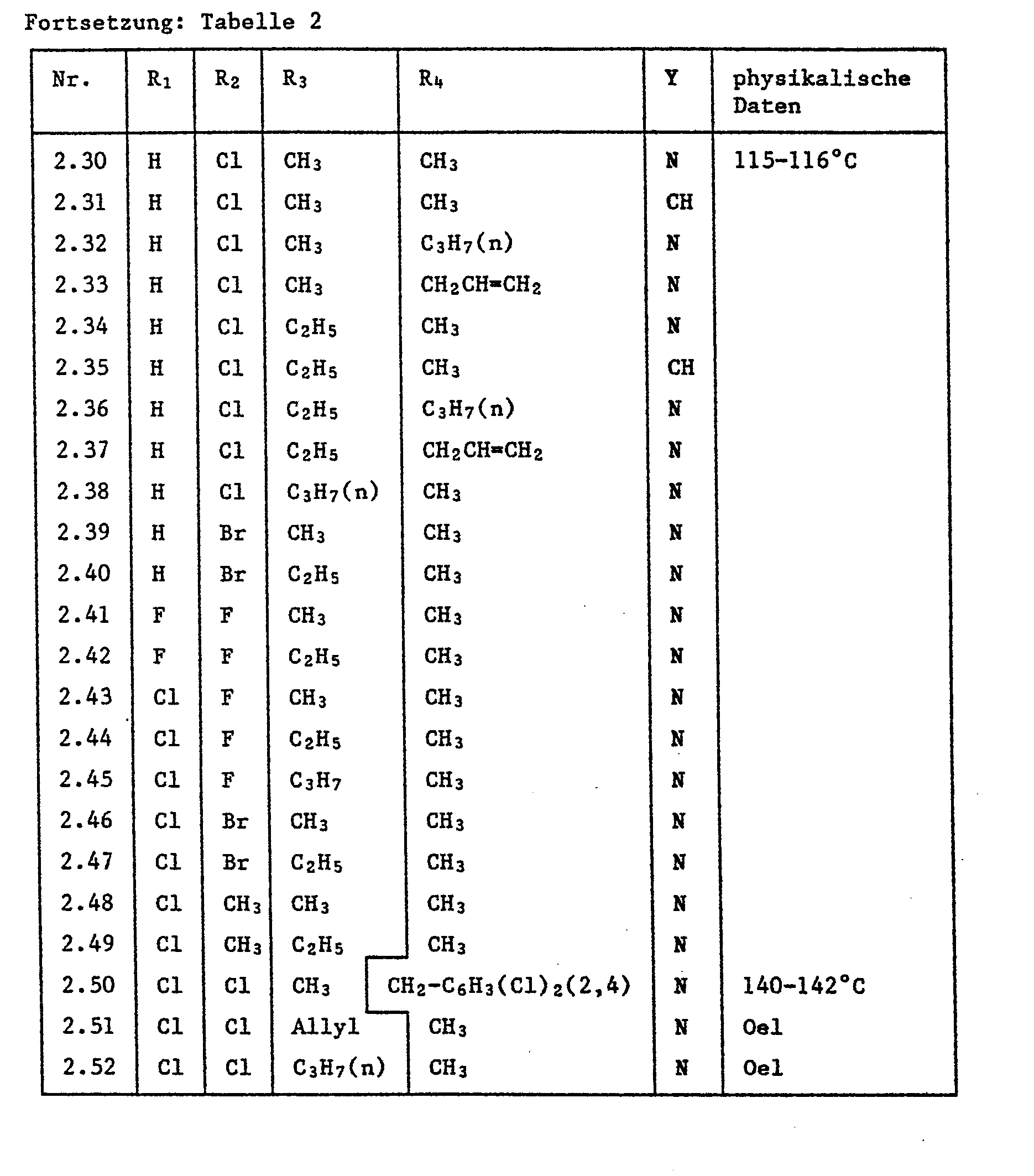
- Compounds No. 1.1, 1.5, 1.6, 1.7, 1.10, 1.11, 1.15, 1.26, 1.33, 1.34-1.36, 2.1, 2.3-2.8, 2.15-2.19, 2.51 and 2.52 completely suppressed the fungal attack (0% infection).
- Wheat plants were sprayed 6 days after sowing with a spray mixture (0.02% active ingredient) prepared from wettable powder of the active ingredient. After 24 hours, the treated plants were infected with an uredospore suspension of the fungus. After incubation for 48 hours at 95-100% relative humidity and approx. 20 ° C, the infected plants were placed in a greenhouse at approx. 22 ° C. The rust pustule development was assessed 12 days after the infection.
- a spray mixture 0.02% active ingredient
- a spray mixture prepared from wettable powder of the active ingredient was poured into wheat plants (0.006% of active substance, based on the volume of the soil). After 72 hours, the treated plants were infected with a uredospore suspension of the fungus. After incubation for 48 hours at 95-100% relative humidity and approx. 20 ° C, the infected plants were placed in a greenhouse at approx. 22 ° C. The rust pustule development was assessed 12 days after infection.
- a spray mixture prepared from a wettable powder of the active ingredient was poured into barley plants about 8 cm high (0.006% active substance based on the volume of the earth). Care was taken to ensure that the spray mixture did not come into contact with the parts of the plant above ground. After 72 hours, the treated plants were dusted with conidia of the fungus. The infected barley plants were placed in a greenhouse at approx. 22 ° C. and the fungal attack was assessed after 10 days.
- Peanut plants 10-15 cm high were sprayed with a spray mixture (0.006% active substance) made from wettable powder of the active substance and infected with a conidia suspension of the fungus 48 hours later.
- the infected plants were incubated for 72 hours at about 21 ° C. and high atmospheric humidity and then placed in a greenhouse until the typical leaf spots appeared.
- the fungicidal activity is assessed 12 days after infection based on the number and size of the spots that appear.
- a spray liquor prepared from wettable powder of the active ingredient was poured into 10-15 cm high peanut plants (0.06% active substance based on the volume of the earth). After 48 hours, the treated plants were infected with a conidia suspension of the fungus and incubated for 72 hours at approx. 21 ° C. and high air humidity. The plants were then placed in the greenhouse and the fungal attack was assessed after 11 days.
- Apple cuttings with 10-20 cm long fresh shoots were sprayed with a spray mixture (0.06% active substance) made from wettable powder of the active ingredient. After 24 hours, the treated plants were infected with a conidia suspension of the fungus. The plants are incubated and placed in a greenhouse at 20-24 ° C. for a further 10 days. Scab infestation was assessed 15 days after infection. Compounds No. 1.1, 1.5, 1.6, 1.7, 1.10, 1.11, 1.15, 1.26, 1.33, 1.34-1.36, 2.1, 2.3-2.8, 2.15-2.19, 2.51 and 2.52 inhibited the disease infestation to less than 10%. Control plants were 100% infected.
Landscapes
- Chemical & Material Sciences (AREA)
- Organic Chemistry (AREA)
- Life Sciences & Earth Sciences (AREA)
- Agronomy & Crop Science (AREA)
- Pest Control & Pesticides (AREA)
- Plant Pathology (AREA)
- Health & Medical Sciences (AREA)
- Engineering & Computer Science (AREA)
- Dentistry (AREA)
- General Health & Medical Sciences (AREA)
- Wood Science & Technology (AREA)
- Zoology (AREA)
- Environmental Sciences (AREA)
- Agricultural Chemicals And Associated Chemicals (AREA)
- Plural Heterocyclic Compounds (AREA)
Abstract

R₁ Wasserstoff, Halogen, C₁-C₂-Alkyl oder CF₃;
R₂ Halogen oder C₁-C₂-Alkyl;
R₃ C₁-C₅ Alkyl oder C₃-C₅-Alkenyl;
R₄ Wasserstoff, C₁-C₄-Alkyl, C₃-C₄-Alkenyl oder

Y ein Stickstoffatom oder die CH-Gruppe bedeuten,
einschliesslich ihrer Säureadditionssalze, quaternärer Azoliumsalze und Metallsalzkomplexe mit mikrobiziden Eigenschaften. Die neuen Wirkstoffe können im Pflanzenschutz zur Verhütung des Befalls von Kulturpflanzen durch phytopathogene Mikroorganismen und zur Bekämpfung schädlicher Mirkoorganismen eingesetzt werden.
Description
- Die vorliegende Erfindung betrifft neue substituierte Aryl-fluorazolyl-alkanole und deren Ether der nachstehenden Formel I sowie deren Säureadditionssalze, quaternäre Azoliumsalze und Metallsalzkomplexe. Die Erfindung betrifft ferner die Herstellung dieser Substanzen sowie mikrobizide Mittel, die als Wirkstoff mindestens eine dieser Verbindungen enthalten. Die Erfindung betrifft ebenso die Herstellung der genannten Mittel sowie die Verwendung der Wirkstoffe oder der Mittel zur Bekämpfung von schädlichen Mikroorganismen, vorzugsweise pflanzenschädigenden Pilzen, insbesondere Piricularia-Arten.
- Die erfindungsgemässen Verbindungen entsprechen der allgemeinen Formel I

R₁ Wasserstoff, Halogen, C₁-C₂-Alkyl oder CF₃;
R₂ Halogen oder C₁-C₂-Alkyl;
R₃ C₁-C₅-Alkyl oder C₃-C₅-Alkenyl;
R₄ Wasserstoff, C₁-C₄-Alkyl, C₃-C₄-Alkenyl oder die Gruppe
R₅, R₆ und R₇ unabhängig voneinander Wasserstoff, Nitro, Halogen, Cyano, C₁-C₃-Alkyl, C₁-C₃-Alkoxy, C₁-C₃-Haloalkoxy oder CF₃ darstellt, und
Y ein Stickstoffatom oder die CH-Gruppe bedeuten,
unter Einschluss ihrer Säureadditionssalze, quaternären Azoliumsalze und Metallsalzkomplexe. - Verbindungen der Formel I, die unter den Umfang der Formel Iʹ fallen,

R₁ Wasserstoff, Halogen, C₁-C₂-Alkyl oder CF₃;
R₂ Halogen oder C₁-C₂-Alkyl;
R₃ C₁-C₄-Alkyl;
R₄ Wasserstoff, C₁-C₄-Alkyl, C₃-C₄-Alkenyl oder
Y ein Stickstoffatom oder die CH-Gruppe bedeuten,
stellen einen engeren Umfang bevorzugter Verbindungen dar. - Unter Alkyl sind je nach Anzahl der angegebenen Kohlenstoffatome beispielsweise Methyl, Ethyl sowie die Isomeren von Propyl und Butyl, wie z.B. n-Propyl, Isopropyl, Isobutyl oder tert.-Butyl zu verstehen. Alkenyl steht z.B. für Propenyl-(1), Allyl, Butenyl-(1), Butenyl-(2) oder Butenyl-(3) und stellt bevorzugt Allyl dar. Halogen bedeutet Fluor, Chlor, Brom oder Jod, vorzugsweise Fluor, Chlor oder Brom.
- Die vorliegende Erfindung umfasst sowohl die freien Verbindungen der Formel I als auch deren Säureadditionssalze, quaternäre Azoliumsalze und Metallsalzkomplexe. Die freien Verbindungen im Umfang der Formel I, insbesondere die 1H-1,2,4-Triazolderivate, sind bevorzugt.
- Beispiele addierbarer Säuren sind anorganische Säuren: Halogenwasserstoffsäure wie Fluorwasserstoffsäure, Chlorwasserstoffsäure, Bromwasserstoffsäure oder Jodwasserstoffsäure sowie Schwefelsäure, Phosphorsäure, phosphorige Säure, Salpetersäure und organische Säuren wie Essigsäure, Trifluoressigsäure, Trichloressigsäure, Propionsäure, Ameisensäure, Benzolsulfonsäure, p-Toluolsulfonsäure, Methansulfonsäure, Maleinsäure, Bernsteinsäure, Weinsäure, Fumarsäure, Salizylsäure, Milchsäure oder Sorbinsäure.
- Die Metallsalzkomplexe bestehen aus der zugrundeliegenden freien Verbindung der Formel I und einem anorganischen oder organischen Metallsalz, beispielsweise den Halogeniden, Nitraten, Sulfaten, Phosphaten, Acetaten, Trifluoracetaten, Trichloracetaten, Propionaten, Tartraten, Sulfonaten, Salicylaten, Benzoaten usw. der Elemente der dritten und vierten Hauptgruppe wie Aluminium, Zinn oder Blei sowie der ersten bis achten Nebengruppe wie Chrom, Mangan, Eisen, Kobalt, Nickel, Zirkonium, Kupfer, Zink, Silver, Quecksilber usw.. Bevorzugt sind die Nebengruppen-Elemente der 4. Periode. Die Metalle können dabei in den verschiedenen ihnen zukommenden Wertigkeiten vorliegen. Die Metallsalzkomplexe der Formel I können ein- oder mehrkernig auftreten, d.h. sie können ein oder mehrere organische Molekülanteile als Liganden enthalten. Komplexe mit den Metallen Kupfer, Zink, Mangan, Zinn und Zirkonium sind bevorzugt.
- Zur Herstellung von Quaternierungsprodukten der Verbindungen der Formel (I) kommen vorzugsweise Alkyl- bzw. Aralkylhalogenide, -sulfate oder -sulfonate, wie beispielsweise Methyljodid, Dimethyl-, Diethyl- oder Monomethylsulfat, Benzylchlorid oder -bromid, Methyl- oder Ethyl-p-toluolsulfonat in Frage.
- Die Quaternierungsprodukte der Verbindungen der Formel (I) können in einfacher Weise nach üblichen Methoden, wie z.B. durch Umsetzen der Reaktionskomponenten in einem geeigneten Lösungsmittel wie beispielsweise Acetonitril oder Aceton erhalten werden und in bekannter Weise, z.B. durch Ausfällen mit einem geeigneten Fällungsmittel, wie z.B. Diethylether und Absaugen isoliert werden und durch Waschen mit einem inerten organischen Lösungsmittel gereinigt werden.
- Die Verbindungen der Formel I sind bei Raumtemperatur stabile Oele, Harze oder überwiegend Feststoffe, die sich durch sehr wertvolle mikrobizide Eigenschaften auszeichnen. Sie lassen sich auf dem Agrarsektor oder verwandten Gebieten präventiv und kurativ zur Bekämpfung von pflanzenschädigenden Mikroorganismen einsetzen, dabei sind die Triazolylmethylderivate im Umfang der Formel I bevorzugt. Die erfindungsgemässen Wirkstoffe der Formel I zeichnen sich bei niedrigen Anwendungskonzentrationen durch eine sehr gute pflanzenfungizide Wirkung und problemlose Anwendung aus.
- Aufgrund ihrer ausgeprägten mikrobiziden, insbesondere pflanzenfungiziden Wirkung sind folgende Substanzgruppen bevorzugt:
- Verbindungen der Formel I, worin bedeuten:
- a) R₁/R₂ 2,4-Cl₂ oder 2,4-(CH₃)₂;
R₃ C₁-C₂-Alkyl;
R₄ Wasserstoff, C₁-C₃-Alkyl, Allyl oder 2,4-Dichlorbenzyl; und
Y ein Stickstoffatom oder die CH-Gruppe. - b) R₁/R₂ 2,4-Cl₂ oder 2,4-(CH₃)₂;
R₃ C₁-C₃-Alkyl oder C₃-C₄-Alkenyl;
R₄ Wasserstoff, C₁-C₃-Alkyl, Allyl oder 2,4-Dichlorbenzyl; und
Y ein Stickstoffatom oder die CH-Gruppe. - c) R₁ Wasserstoff, Chlor oder Methyl;
R₂ Fluor, Chlor oder Methyl;
R₃ C₁-C₄-Alkyl oder Allyl;
R₄ C₁-C₄-Alkyl oder C₃-C₄-Alkenyl; und
Y ein Stickstoff oder die CH-Gruppe. - Davon sind folgende Verbindungen besonders bevorzugt, in welchen darstellen:
- unter a) R₁/R₂ 2,4-Cl₂
R₃ CH₃
R₄ Wasserstoff und
Y ein Stickstoffatom; - unter b) R₁/R₂ 2,4-Cl₂;
R₃ CH₃, n-Propyl oder Allyl
R₄ Wasserstoff oder Methyl; und
Y ein Stickstoffatom; - unter c) R₁ Wasserstoff, Chlor oder Methyl;
R₂ Fluor, Chlor oder Methyl;
R₃ Methyl, n-Propyl, n-Butyl, tert.Butyl oder Allyl;
R₄ Methyl, n-Propyl, n-Butyl, Allyl oder But-2-enyl; und
Y ein Stickstoffatom oder die CH-Gruppe. - In ihrer biologischen Aktivität besonders bevorzugte Verbindungen sind beispielsweise:
1-(2,4-Dichlorphenyl)-1-methyl-2-fluor-2-(1H-1,2,4-triazol-1-yl)-ethanol (Nr. 1.1);
1-(2,4-Dichlorphenyl)-1-n-propyl-2-fluor-2-(1H-1,2,4-triazol-1-yl)-ethanol (Nr. 1.5);
1-(1,2-Dichlorphenyl)-1-n-propyl)-2-fluor-2-(1H-imidazol-1-yl)-ethanol (Nr. 1.6);
1-(2,4-Dimethylphenyl)-1-methyl-2-fluor-2-(1H-1,2,4-triazol-1-yl)-ethanol (Nr. 1.7)
1-(2,4-Dimethylphenyl)-1-n-propyl-2-fluor-2-(1H-1,2,4-triazol-1-yl)-ethanol (Nr. 1.10);
1-(4-fluorphenyl-1-methyl-2-fluor-2-(1H-1,2,4-triazol-1-yl)-ethanol (Nr. 1.11);
1-(4-Chlorphenyl)-1-methyl-2-fluor-2-(1H-1,2,4-triazol-1-yl)-ethanol (Nr. 1.15);
1-(2-Chlor-4-fluorphenyl)-1-n-propyl-2-fluor-2-(1H-1,2,4-triazol-1-yl)-ethanol (Nr. 1.26);
1-(2,4-Dichlorphenyl)-1-n-butyl-2-fluor-2-(1H-1,2,4-triazol-1-yl)-ethanol (Nr. 1.33);
1-(4-Chlorphenyl)-1-t.butyl-2-fluor-2-(1H-1,2,4-triazol-1-yl)-ethanol (Nr. 1.34);
1-(2,4-Dichlorphenyl)-1-allyl-2-fluor-2-(1H-1,2,4-triazol-1-yl)-ethanol (Nr. 1.35);
1-(4-Chlorphenyl)-1-allyl-2-fluor-2-(1H-1,2,4-triazol-1-yl)-ethanol (Nr. 1.36);
1-(2,4-Dichlorphenyl)-1-methyl-1-methoxy-2-fluor-2-(1H-1,2,4-triazol-1-yl)-ethan (Nr. 2.1);
1-(2,4-Dichlorphenyl)-1-methyl-1-n-propoxy-2-fluor-2-(1H-1,2,4-triazol-1-yl)-ethan (Nr. 2.3)
1-(2,4-Dichlorphenyl)-1-methyl-1-n-propoxy-2-(1H-imidazol-1-yl)-ethan (Nr. 2.4)
1-(2,4-Dichlorphenyl)-1-methyl-1-n-butoxy-2-fluor-2-(1H-1,2,4-triazol-1-yl)-ethan (Nr. 2.5);
1-(2,4-Dichlorphenyl)-1-methyl-1-allyloxy-2-fluor-2-(1H-1,2,4-triazol-1-yl)-ethan (Nr. 2.6);
1-(2,4-Dichlorphenyl)-1-methyl-1-allyloxy-2-(1H-imidazol-1-yl)-ethan (Nr. 2.7)
1-(2,4-Dichlorphenyl)-1-methyl-1-but-2-enoxy-2-fluor-2-(1H-1,2,4-triazol-1-yl)-ethan (Nr. 2.8);
1-(2,4-Dichlorphenyl)-1-n-propyl-1-methoxy-2-fluor-2-(1H-1,2,4-triazol-1-yl)-ethan (Nr. 2.15);
1-(2,4-Dichlorphenyl)-1-n-propyl-1-methoxy-2-(1H-imidazol-1-yl)-ethan (Nr. 2.16);
1-(2,4-Dichlorphenyl)-1-n-propyl-1-n-propoxy-2-fluor-2-(1H-1,2,4-triazol-1-yl)-ethan (Nr. 2.17);
1-(2,4-Dichlorphenyl)-1-n-propyl-1-allyloxy-2-fluor-2-(1H-1,2,4-triazol-1-yl)-ethan (Nr. 2.18);
1-(2,4-Dimethylphenyl)-1-methyl-1-methoxy-2-fluor-2-(1H-1,2,4-triazol-1-yl)-ethan (Nr. 2.19);
1-(2,4-Dichlorphenyl)-1-allyl-1-methoxy-2-fluor-2-(1H-1,2,4-triazol-1-yl)-ethan (Nr. 2.51);
1-(2,4-Dichlorphenyl)-1-n-propyl-1-methoxy-2-fluor-2-(1H-1,2,4-triazol-1-yl)-ethan (Nr. 2.52). - Verbindungen der Formel Ia (Alkanolderivate)


R₃MgX (IV)
als Grignard-Reagens in einem inerten Lösungsmittel umsetzt, worin R₁, R₂ und R₃ die unter Formel I angegebenen Bedeutungen haben und X Halogen, insbesondere Brom oder Jod, darstellt. - Die Umsetzung wird nach Art der Grignard-Reaktion (vgl. dazu Nützel, Houben-Weyl Bd. 13/2a, Seiten 47-527) normalerweise in Diethylether durchgeführt; jedoch auch andere Lösungsmittel, z.B. höhere Ether, wie Tetrahydrofuran, Dioxan, Dibutylether oder Anisol sowie ferner Ethylenglykolether oder Diethylenglykolether sind geeignet. Ausserdem können auch Basen wie Pyridin verwendet werden. Als Reaktionstemperaturen kommen solche von -80° bis 50°C, vorzugsweise -60° bis ±0°C in Frage.
- Verbindungen der Formel Ib
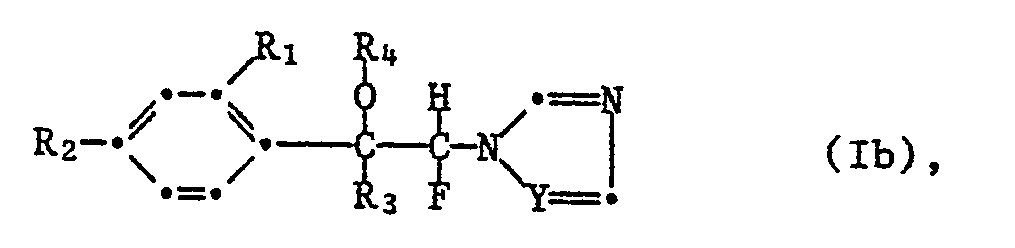


reagieren lässt. - Verbindungen der Formel Ic


R₃ʹ-Si(Alk)₃ (VI)
worin Alk C₁-C₄-Alkyl, vorzugsweise Methyl, bedeutet, in Gegenwart einer Lewis-Säure umsetzt. (Lit. s. Tetrah. Letters (1976) 1295 - 1298). - Verbindungen der Formel Ic können durch Hydrierung in Gegenwart eines Katalysators, z.B. von Palladium/Aktivkohle, in Verbindungen der Formel Id

- Darüber hinaus können auch Ether-Verbindungen der Formel Ib, in welchen R₃ ein C₃-C₅-Alkenyl darstellt, in der oben beschriebenen Weise zu den entsprechenden Alkyl-Verbindungen der Formel Ib hydriert werden.
- In den vorgängig beschriebenen Verfahren entsprechen R₁, R₂, R₃, R₄ und Y den unter Formel I angegebenen Bedeutungen, steht W für -OH, -OM oder eine sogenannte Abgangsgruppe und stellt Z die Gruppe -OM oder eine Abgangsgruppe dar, wobei M ein Alkali- oder Erdalkalimetallatom repräsentiert, mit der Massgabe, dass bei den Reaktanden Ia und III einerseits und V andererseits eine -OM-Gruppe mit einer Abgangsgruppe oder zwei Hydroxy-Gruppen miteinander reagieren.
- Unter einer Abgangsgruppe sollen hier und im folgenden Substituenten wie z.B. Halogen (wie Fluor, Chlor, Brom oder Jod, vorzugsweise Chlor oder Brom); Sulfonyloxygruppen, bevorzugt -OSO₂-R₈; Acyloxygruppen, bevorzugt -OCO-R₈ oder Isoharnstoffreste, bevorzugt

- Bei der Reaktion von Verbindungen der Formel Ia mit Formel V, worin W für eine Abgangsgruppe steht, wird die Umsetzung in Abwesenheit oder bevorzugt in Anwesenheit eines reaktionsinerten Lösungsmittels durchgeführt. Dafür eignen sich z.B. folgende Lösungsmittel: N,N-Dimethylformamid, N,N-Dimethylacetamid, Hexamethylphosphortriamid, Dimethylsulfoxid, 2-Methyl-2-pentanon, usw.. Auch Gemische dieser Lösungsmittel untereinander oder mit anderen üblichen inerten organischen Lösungsmitteln, wie z.B. mit aromatischen Kohlenwasserstoffen wie Benzol, Toluol, Xylolen usw. können verwendet werden. Darüber hinaus wird als Lösungsmittel vorzugsweise Wasser verwendet. In manchen Fällen kann es sich als vorteilhaft erweisen, zur Beschleunigung der Reaktionsgeschwindigkeit in Gegenwart einer Base wie z.B. eines Alkalimetallhydrides, -hydroxides oder -carbonates zu arbeiten. Es kann aber auch von Vorteil sein, dass man das Alkanol der Formel Ia zuerst auf an sich bekannte Weise, z.B. durch Reaktion mit einer starken Base, in ein geeignetes Metallsalz überführt.
- Geeignete starke Basen sind z.B. Alkali- und Erdalkalihydride (NaH, KH, CaH₂ usw.) und alkaliorganische Verbindungen wie z.B. Butyllithium oder Alkali-tert.-Butoxid. Darüber hinaus ist es auch möglich in wässriger Lösung oder Suspension unter Verwendung wasserlöslicher organischer Lösungsmittel, z.B. Dioxan, Aceton, N,N-Dimethylformamid, als Lösungsvermittler oder in einem zweiphasigen System aus Wasser und einem mit Wasser nicht mischbaren Lösungsmittel, z.B. CH₂Cl₂, Ether, Methyl-, Ethylketon, vorzugsweise unter Verwendung von in Wasser lösclichen Basen, wie KOH, NaOH, Na₂CO₃, zu arbeiten.
- Besonders bei der Verwendung zweiphasiger Systeme ist es von Vorteil, Phasentransferkatalysatoren, z.B. quaternäre Alkylammoniumsalze, zuzusetzen.
- In den Fällen, in denen man von einem Alkalialkoholat der Formel III (Z = -OM mit M = Alkalimetall, wie Kalium oder Natrium) ausgeht und dieses mit einer Verbindung der Formel V (worin W für eine Abgangsgruppe steht) umsetzt, arbeitet man vorteilhafterweise in Gegenwart eines Kronenethers. Bei M = K, insbesondere in Gegenwart von 18 Krone-6; bei M = Na, insbesondere in Gegenwart von 15 Krone-5. Dabei wird die Reaktion zweckmässigerweise in einem reaktionsinerten Medium durchgeführt. Als Lösungsmittel eignen sich z.B. Ether und etherartige Verbindungen, z.B. Diniederalkylether (Diethylether, Diisopropylether, tert.-Butylmethylether usw.), Tetrahydrofuran, Dioxan und aromatische Kohlenwasserstoffe wie Benzol, Toluol oder Xylole.
- Für die organische, mit Wasser nicht mischbare Phase kommen dabei z.B. folgende Lösungsmittel in Frage: Aliphatische und aromatische Kohlenwasserstoffe, wie Pentan, Hexan, Cyclohexan, Petrolether, Ligroin, Benzol, Toluol, Xylole usw., halogenierte Kohlenwasserstoffe, wie Dichlormethan, Chloroform, Tetrachlorkohlenstoff, Ethylendichlorid, 1,2-Dichlorethan, Tetrachlorethylen usw. oder aliphatische Ether, wie Diethylether, Diisopropylether, t-Butylmethylether usw..
- Beispiele geeigneter Phasentransfer-Katalysatoren sind: Tetraalkylammoniumhalogenide, -hydrogensulfate oder -hydroxide wie Tetrabutylammoniumchlorid, -bromid, -jodid; Triethylbenzylammoniumchlorid, -bromid; Tetrapropylammoniumchlorid, -bromid, -jodid; usw.. Als Phasentransfer-Katalysatoren kommen auch Phosphonium-Salze in Betracht. Die Reaktionstemperaturen liegen im allgemeinen zwischen 30° und 130°C, bzw. am Siedepunkt des Lösungsmittels oder Lösungsmittelgemisches.
- In den Fällen, in denen Verbindungen der Formel Ia mit solchen der Formel V, worin W eine Hydroxygruppe darstellt, umgesetzt werden, wird vorteilhafterweise eine Kondensationsreaktion durchgeführt. Beide Reaktanten werden in einem geeigneten Lösungsmittel unter Rückfluss erhitzt.
- Hierbei können grundsätzlich Lösungsmittel eingesetzt werden, die sich gegenüber den Reaktionspartnern inert verhalten und zweckmässigerweise mit Wasser Azeotrope bilden. Es eignen sich hierzu beispielsweise aromatische Kohlenwasserstoffe, wie Benzol, Toluol, Xylole oder halogenierte Kohlenwasserstoffe, wie Dichlormethan, Chloroform, Tetrachlorkohlenstoff, 1,2-Dichlorethan, Tetrachlorethylen, Chlorbenzol, aber auch etherartige Verbindungen, wie tert.-Butylmethylether, Dioxan und andere. In manchen Fällen kann die Verbindung der Formel III selbst als Lösungsmittel verwendet werden. Bei dieser Kondensationsreaktion arbeitet man zweckmässigerweise in Gegenwart einer starken Säure, z.B. para-Toluolsulfonsäure und bei Siedetemperaturen der azeotropen Mischung.
- In anderen Fällen, in denen der Substituent Z in Formel III für eine der üblichen Abgangsgruppen und W in Formel V für eine Hydroxygruppe steht, ist es zweckmässig, das Alkanol der Formel Ia zuerst auf an sich bekannte Weise in ein geeignetes Metallsalz zu überführen und dieses dann mit der Verbindung der Formel III, wie bereits beschrieben, umzusetzen.
- Verbindungen der Formel III, worin Z für eine der üblichen, weiter oben definierten Abgangsgruppen steht und die restlichen Substituenten wie unter Formel I definiert sind, können aus den Alkoholen der Formel Ia hergestellt werden, indem man deren freie Hydroxygruppe gegen eine Abgangsgruppe Z austauscht.
- Der Austausch der freien Hydroxylgruppe in den Verbindungen der Formel Ia gegen eine Abgangsgruppe Z wird bevorzugt in einem reaktionsinerten Lösungsmittel durchgeführt. Beispiele solcher Lösungsmittel sind: Aromatische und aliphatische Kohlenwasserstoffe wie Benzol, Toluol, Xylole, Petrolether, Ligroin oder Cyclohexan; halogenierte Kohlenwasserstoffe wie Chlorbenzol, Methylenchlorid, Ethylenchlorid, Chloroform, Tetrachlorkohlenstoff oder Tetrachlorethylen; Ether und etherartige Verbindungen wie Diethylether, Diisopropylether, tert.-Butylmethylether, Dimethoxyethan, Dioxan, Tetrahydrofuran oder Anisol; Ester wie Ethylazetat, Propylazetat oder Butylazetat; Nitrile wie Acetonitril oder Verbindungen wie Dimethylsulfoxid, Dimethylformamid und Gemische solcher Lösungsmittel untereinander.
- Die Einführung der Abgangsgruppe Z erfolgt nach üblichen Methoden. Bedeutet diese Chlor, so wird als Reagenz z.B. Phosphoroxychlorid, Phosphortrichlorid, Phosphorpentachlorid oder vorzugsweise Thionylchlorid eingesetzt. Man arbeitet im allgemeinen bei Temperaturen von 0° bis +120°C. Im Falle von Z = Brom verwendet man bevorzugt Phosphortribromid oder Phosphorpentabromid und führt die Reaktion bei 0° bis +50°C durch. Steht Z für eine der Gruppen -OCO-R₈ oder
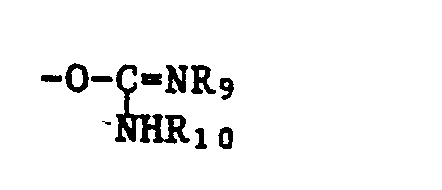
- Die als Ausgangsstoffe verwendeten Azolylfluorketone der Formel II sind teilsweise aus der Literatur bekannt (vgl. EP-00 27 177). Sie können nach bekannten Methoden hergestellt werden, indem man
a) Verbindungen der Formel VII
b) Verbindungen der Formel VIII
- Zur Herstellung der Verbindungen der Formel Ic werden als Lewis-Säuren beispielsweise TiCl₄, AlCl₃, GaCl₃ oder InCl₃ verwendet. Die Temperatur beträgt bei dieser Reaktion -10° bis 150°C, vorzugsweise 0° bis 50°C.
- Die Hydrierung von Verbindungen der Formeln Ic und Verbindungen der Formel Ib (Ether), in welchen R₃ ein C₃-C₅-Alkenyl darstellt, wird bei Temperaturen von 0° bis 100°C, vorzugsweise 10° bis 50°C, durchgeführt. Als Lösungs- oder Verdünnungsmittel finden hydrierungsinerte Medien Anwendung.
- Bei der Herstellung aller hierin genannten Ausgangs-, Zwischen- und Endprodukte können grundsätzlich, sofern nicht ausdrücklich im einzelnen spezifiziert, ein oder mehrere reaktionsinerte Lösungs- oder Verdünnungsmittel anwesend sein. In Frage kommen beispielsweise aliphatische und aromatische Kohlenwasserstoffe wie Benzol, Toluol, Xylole, Petrolether; halogenierte Kohlenwasserstoffe wie Chlorbenzol, Methylenchlorid, Ethylenchlorid, Chloroform, Tetrachlorkohlenstoff, Tetrachlorethylen; Ether und etherartige Verbindungen wie Dialkylether (Diethylether, Diisopropylether, tert.-Butylmethyl ether usw.) Anisol, Dioxan, Tetrahydrofuran; Nitrile wie Acetonitril, Propionitril; N,N-dialkylierte Amide wie Dimethylformamid; Dimethylsulfoxid; Ketone wie Aceton, Diethylketon, Methylethylketon und Gemische solcher Lösungsmittel untereinander. In manchen Fällen kann es auch von Vorteil sein, wenn die Reaktion oder Teilschritte einer Reaktion unter Schutzgasatmosphäre und/oder absoluten Lösungsmitteln durchgeführt werden und/oder ein Reaktionskatalysator z.B. KJ zugesetzt wird. Als Schutzgase eignen sich inerte Gase wie Stickstoff, Helium, Argon oder in gewissen Fällen auch Kohlendioxid.
- Das zur Herstellung der erfindungsgemässen Verbindungen der Formel I beschriebene Verfahren, einschliesslich aller Teilschritte, stellt einen Bestandteil der vorliegenden Erfindung dar.
- Die Verbindungen der Formel I besitzen zwei Asymmetriezentren (*)

- Es wurde nun überraschend gefunden, dass im Gegensatz zu bekannten Fungiziden die erfindungsgemässen Verbindungen der Formel I zusätzlich eine besonders ausgeprägte Aktivität gegen Piricularia-Arten, insbesondere gegen Piricularia oryzae (rice blast) zeigen. Die Pilzspecies Piricularia oryzae gehört zu den Fungi imperfecti und bildet als Fruktifikationsorgane nur Konidiosporen als asexuelle Nebenfruchtform aus. Sie stellt einen der wirtschaftlich wichtigsten Schadfaktoren in Reiskulturen dar, da sie die Reispflanzen in allen Wuchsstadien (Sämlinge, Blätter, Stengel, Aehren usw.) während der ganzen Wachstumsperiode befällt. Je nach Angriffsort des Pilzes und dem Stadium, in dem sich die Reispflanzen bei der Infektion befinden, werden verschiedene englische Bezeichnungen für die Krankheit verwendet: z.B. "Leaf blast" für Blattflecken, die zum Absterben der Blätter und damit zu einem gestörten Wachstum führen können; "Ear blast" für Infektionen an der Rispe oder Teilen der Rispe; "Neckblast" für den Befall der Rispenbasis, wodurch die Rispe abknickt und keine oder nur anormale Körner gebildet werden; "Node blast" für das Abknicken der Halme an den Nodien. Piricularia oryzae verbreitet sich durch Konidiosporen, die bei feuchter Witterung in Massen gebildet werden und vom Wind über weite Strecken transportiert werden. In Gebieten, in denen im Jahresverlauf eine längere Unterbrechung der Reiskultur stattfindet, werden zu Beginn der Anbausaison auf Sämlingen aus infizierten Samen auf Ernterückständen (z.B. auf dem Feld gelagerten Stroh und Gräsern) Konidiosporen gebildet. Wenn das ganze Jahr hindurch Reis angebaut wird, stehen häufig Kulturen verschiedenen Alters nebeneinander, wodurch die Uebertragung der Krankheit durch die sich ständig bildenden Konidien gefördert wird. Der Piriculariabefall hat im allgemeinen sehr hohe Ernteausfälle zur Folge und stellt in Anbetracht der Tatsache, dass Reis nach Weizen und Mais unter den getreideartigen Feldkulturen derzeit weltweit die drittgrösste Anbaufläche beansprucht, einen volkswirtschaftlichen Schaden von grosser Tragweite dar.
- Mit den Wirkstoffen der Formel I kann der Piriculariabefall in allen Wuchsstadien erfolgreich und einfach bekämpft werden. Darüber hinaus sind die Wirkstoffe der Formel I auch gegen die den folgenden Klassen angehörenden phytopathogenen Pilze wirksam: Fungi imperfecti (z.B. Botrytis, Helminthosporium, Fusarium, Septoria, Cercospora und Alternaria); Basidiomyceten (z.B. die Gattungen Hemileia, Rhizocotonia, Puccinia); Ascomyceten (z.B. Venturia, Podosphaera, Erysiphe, Monilinia, Uncinula). Ueberdies wirken die Verbindungen der Formel I systemisch. Sie können ferner als Beizmittel zur Behandlung von Saatgut (Früchte, Knollen, Körner) und Pflanzenstecklingen zum Schutz von Pilzinfektionen sowie gegen im Erdboden auftretende phytopathogene Pilze eingesetzt werden.
- Ferner lassen sich Verbindungen der Formel I erfolgreich zum Schutz verderblicher Waren pflanzlicher oder tierischer Herkunft einsetzen. Sie bekämpfen z.B. Schimmelpilze wie Penicillium, Aspergillus, Rhizopus, Fusarium, Helminthosporium, Nigrospora und Alternaria sowie Bakterien wie Buttersäurebakterien und Hefen wie Candida.
- Die Verbindungen der Formel I können somit im Vorratsschutz (z.B. für Getreide, Silagen, Heu usw.) eingesetzt werden.
- Die Verbindungen der Formel I zeigen somit ein für praktische Bedürfnisse sehr günstiges Mikrobizid-Spektrum gegen phytopathogene Pilze und Bakterien. Sie besitzen insbesondere sehr vorteilhafte präventive und zusätzlich systemische Eigenschaften und lassen sich zum Schutz von zahlreichen Kulturpflanzen, vorzugsweise jedoch in Reiskulturen einsetzen. Mit den Wirkstoffen der Formel I können an Pflanzen oder an Pflanzenteilen (Früchte, Blüten, Laubwerk, Stengel, Knollen, Wurzeln) von unterschiedlichen Nutzkulturen die auftretenden Mikroorganismen eingedämmt oder vernichtet werden, wodurch auch später zuwachsende Pflanzenteile von derartigen Mikroorganismen verschont bleiben.
- Die Erfindung betrifft somit auch mikrobizide Mittel sowie die Verwendung der Verbindungen der Formel I zur Bekämpfung phytopathogener Mikroorganismen, insbesondere pflanzenschädigender Pilze bzw. vor allem zur präventiven und systemischen Verhütung eines Befalls an Pflanzen.
- Darüber hinaus schliesst die vorliegende Erfindung auch die Herstellung agrochemischer Mittel ein, die gekennzeichnet ist durch das innige Vermischen der Aktivsubstanz mit einem oder mehreren hierin beschriebenen Substanzen bzw. Substanzgruppen. Eingeschlossen ist auch ein Verfahren zur Behandlung von Pflanzen, das sich durch Applikation der Verbindungen der Formel I bzw. der neuen Mittel auszeichnet.
- Neben der Hauptkultur Reis, gelten als Zielkulturen für die hierin offenbarten Indikationsgebiete im Rahmen dieser Erfindung beispielsweise folgende Pflanzenarten: Getreide (Weizen, Gerste, Roggen, Hafer, Sorghum und Verwandte); Rüben (Zucker- und Futterrüben); Kern-, Stein- und Beerenobst (Aepfel, Birnen, Pflaumen, Pfirsiche, Mandeln, Kirschen, Erd-, Him- und Brombeeren); Hülsenfrüchte (Bohnen, Linsen, Erbsen, Soja); Oelkulturen (Raps, Senf, Mohn, Oliven, Sonnenblumen, Kokos, Rizinus, Kakao, Erdnüsse); Gurkengewächse (Kürbis, Gurken, Melonen): Fasergewächse (Baumwolle, Flachs, Hanf, Jute); Citrusfrüchte (Orangen, Zitronen, Pampelmusen, Mandarinen); Gemüsesorten (Spinat, Kopfsalat, Spargel, Kohlarten, Möhren, Zwiebeln, Tomaten, Kartoffeln, Paprika); Lorbeergewächse (Avocado, Cinnamonum, Kampfer) oder Pflanzen wie Mais, Tabak, Nüsse, Kaffee, Zuckerrohr, Tee, Weinreben, Hopfen, Bananen- und Naturkautschukgewächse sowie Zierpflanzen (Compositen).
- Wirkstoffe der Formel I werden üblicherweise in Form von Zusammensetzungen verwendet und können gleichzeitig oder nacheinander mit weiteren Wirkstoffen auf die zu behandelnde Fläche oder Pflanze gegeben werden. Diese weiteren Wirkstoffe können sowohl Düngemittel, Spurenelement-Vermittler oder andere das Pflanzenwachstum beeinflussende Präparate sein. Es können aber auch selektive Herbizide, Insektizide, Fungizide, Bakterizide, Nematizide, Molluskizide oder Gemische mehrerer dieser Präparate sein, zusammen mit gegebenenfalls weiteren in der Formulierungstechnik üblichen Trägerstoffen, Tensiden oder anderen applikationsfördernden Zusätzen.
- Geeignete Träger und Zusätze können fest oder flüssig sein und entsprechen den in der Formulierungstechnik zweckdienlichen Stoffen, wie z.B. natürlichen oder regenerierten mineralischen Stoffen, Lösungs-, Dispergier-, Netz-, Haft-, Verdickungs-, Binde- oder Düngemitteln.
- Ein bevorzugtes Verfahren zum Aufbringen eines Wirkstoffes der Formel I bzw. eines agrochemischen Mittels, das mindestens einen dieser Wirkstoffe enthält, ist das Aufbringen auf das Blattwerk (Blattapplikation). Anzahl der Applikationen richten sich dabei nach dem Befallsdruck für den entsprechenden Erreger (Pilzsorte) oder der Art der Wachstumsbeeinflussung. Die Wirkstoffe der Formel I können aber auch über den Erdboden durch das Wurzelwerk in die Pflanzen gelangen (systemische Wirkung), indem man den Standort der Pflanzen mit einer flüssigen Zubereitung tränkt oder die Substanzen in fester Form in den Boden einbringt, z.B. in Form von Granulat (Bodenapplikation). Die Verbindungen der Formel I können aber auch auf Samenkörner aufgebracht werden (Coating), indem man die Körner entweder mit einer flüssigen Zubereitung des Wirkstoffs tränkt oder sie mit einer festen Zubereitung beschichtet. Darüber hinaus sind in besonderen Fällen weitere Applikationsarten möglich, so z.B. die gezielte Behandlung der Pflanzenstengel oder der Knospen.
- Die Verbindungen der Formel I werden dabei in unveränderter Form oder vorzugsweise zusammen mit den in der Formulierungstechnik üblichen Hilfsmitteln eingesetzt und werden daher z.B. zu Emulsionskonzentraten, streichfähigen Pasten, direkt versprühbaren oder verdünnbaren Lösungen, verdünnten Emulsionen, Spritzpulvern, löslichen Pulvern, Stäubemitteln, Granulaten, durch Verkapselungen in z.B. polymeren Stoffen in bekannter Weise verarbeitet. Die Anwendungsverfahren wie Versprühen, Vernebeln, Verstäuben, Verstreuen, Bestreichen oder Giessen werden gleich wie die Art der Mittel den angestrebten Zielen und den gegebenen Verhältnissen entsprechend gewählt. Günstige Aufwandmengen liegen im allgemeinen bei 10 g bis 5 kg Aktivsubstanz (AS) je ha; bevorzugt 100 g bis 2 kg AS/ha, insbesondere bei 200 g bis 600 g AS/ha.
- Die Formulierungen d.h. die den Wirkstoff der Formel I und gegebenenfalls eine festen oder flüssigen Zusatzstoff enthaltenden Mittel, Zubereitungen oder Zusammensetzungen werden in bekannter Weise hergestellt, z.B. durch inniges Vermischen und/oder Vermahlen der Wirkstoffe mit Streckmitteln, wie z.B. mit Lösungsmitteln, festen Trägerstoffen, und gegebenenfalls oberflächenaktiven Stoffen (Tensiden).
- Als Lösungsmittel können in Frage kommen: Aromatische Kohlenwasserstoffe, bevorzugt die Fraktionen C₈ bis C₁₂, wie z.B. Xylolgemische oder substituierte Napththaline, Phthalsäureester wie Dibutyl- oder Dioctylphthalat, aliphatische Kohlenwasserstoffe wie Cyclohexan oder Paraffine, Alkohole und Glykole sowie deren Ether und Ester, wie Ethanol, Ethylenglykol, Ethylenglykolmonomethyl- oder Ethylether, Ketone wie Cyclohexanon, stark polare Lösungsmittel wie N-Methyl-2-pyrrolidon, Dimethylsulfoxid oder Dimethylformamid, sowie gegebenenfalls epoxydierte Pflanzenöle wie epoxydiertes Kokosnussöl oder Sojaöl; oder Wasser.
- Als feste Trägerstoffe, z.B. für Stäubemittel und dispergierbare Pulver, werden in der Regel natürliche Gesteinsmehle verwendet, wie Calcit, Talkum, Kaolin, Montmorillonit oder Attapulgit. Zur Verbesserung der physikalischen Eigenschaften können auch hochdisperse Kieselsäure oder hochdisperse saugfähige Polymerisate zugesetzt werden. Als gekörnte, adsorptive Granulatträger kommen poröse Typen wie z.B. Bimsstein, Ziegelbruch, Sepiolit oder Bentonit, als nicht-sorptive Trägermaterialien z.B. Calcit oder Sand in Frage. Darüber hinaus kann eine Vielzahl von vorgranulierten Materialien anorganischer oder organischer Natur wie insbesondere Dolomit oder zerkleinerte Pflanzenrückstände verwendet werden.
- Als oberflächenaktive Verbindungen kommen je nach Art des zu formulierenden Wirkstoffes der Formel I nichtionogene, kation- und/oder anionaktive Tenside mit guten Emulgier-, Dispergier- und Netzeigenschaften in Betracht. Unter Tensiden sind auch Tensidgemische zu verstehen.
- Geeignete anionische Tenside können sowohl sog. wasserlösliche Seifen, als auch wasserlösliche synthetische oberflächenaktive Verbindungen sein.
- Als Seifen seien die Alkali-, Erdalkali- oder gegebenenfalls substituierten Ammoniumsalze von höheren Fettsäuren (C₁₀-C₂₂), wie z.B. die Na- oder K-Salze der Oel- oder Stearinsäure, oder von natürlichen Fettsäuregemischen, die z.B. aus Kokosnuss- oder Talgöl gewonnen werden können. Ferner sind auch die Fettsäure-methyltaurinsalze zu erwähnen.
- Häufiger werden jedoch sog. synthetische Tenside verwendet, insbesondere Fettsulfonate, Fettsulfate, sulfonierte Benzimidazolderivate oder Alkylsulfonate.
- Die Fettsulfonate oder -sulfate liegen in der Regel als Alkali-, Erdalkali- oder gegebenenfalls substituierte Ammoniumsalze vor und weisen einen Alkalirest mit 8 bis 22 C-Atomen auf, wobei Alkyl auch den Alkylteil von Acylresten einschliesst, z.B. das Na- oder Ca-Salz der Ligninsulfonsäure, des Dodecylschwefelsäureesters oder eines aus natürlichen Fettsäuren hergestellten Fettalkoholsulfatgemisches. Hierher gehören auch die Salze der Schwefelsäureester und Sulfonsäuren von Fettalkohol-Ethylenoxyd-Addukten. Die sulfonierten Benzimidazolderivate enthalten vorzugsweise 2-Sulfonsäuregruppen und einen Fettsäurerest mit 8-22 C-Atomen, Alkylarylsulfonate sind z.B. die Na-, Ca- oder Triethanolaminsalze der Dodecylbenzolsulfonsäure, der Dibutylnaphthalinsulfonsäure, oder eines Naphthalinsulfonsäure-Formaldehydkondensationsproduktes.
- Ferner kommen auch entsprechende Phosphate wie z.B. Salze des Phosphorsäureesters eines p-Nonylphenol-(4-14)-Ethylenoxyd-Adduktes in Frage.
- Als nichtionische Tenside kommen in erster Linie Polyglykoletherderivate von aliphatischen oder cycloaliphatischen Alkoholen, gesättigten oder ungesättigten Fettsäuren und Alkylphenolen in Frage, die 3 bis 30 Glykolethergruppen und 8 bis 20 Kohlenstoffatome im (aliphatischen) Kohlenwasserstoffrest und 6 bis 18 Kohlenstoffatome im Alkylrest der Alkylphenole enthalten können.
- Weitere geeignete nichtionische Tenside sind die wasserlöslichen 20 bis 250 Aethylenglykoläthergruppen und 10 bis 100 g Propylenglykolethergruppen enthaltenden Polyethylenoxidaddukte an Polypropylenglykol, Aethylendiaminopolypropylenglykol und Alkylpolypropylenglykol mit 1 bis 10 Kohlenstoffatomen in der Alkylkette. Die genannten Verbindungen enthalten üblicherweise pro Propylenglykol-Einheit 1 bis 5 Ethylenglykoleinheiten.
- Als Beispiele nichtionischer Tenside seien Nonylphenolpolyethoxyethanole, Ricinusölpolyglykolether, Polypropylen-Polyethylenoxidaddukte, Tributylphenoxypolyethylenethanol, Polyethylenglykol und Octylphenoxypolyethoxyethanol erwähnt.
- Ferner kommen auch Fettsäureester von Polyoxyethylensorbitan wie das Polyoxyethylensorbitan-trioleat in Betracht.
- Bei den kationischen Tensiden handelt es sich vor allem um quartäre Ammoniumsalze, welche als N-Substituenten mindestens einen Alkylrest mit 8 bis 22 C-Atomen enthalten und als weitere Substituenten niedrige, gegebenenfalls halogenierte Alkyl-, Benzyl- oder niedrige Hydroxyalkylreste aufweisen. Die Salze liegen vorzugsweise als Halogenide, Methylsulfate oder Ethylsulfate vor, z.B. das Stearyltrimethylammoniumchlorid oder das Benzoldi(2-chlorethyl)ethylammoniumbromid.
- Zur Herstellung von erfindungsgemässen Mitteln, die als Aktivkomponenten die Wirkstoffe der Formel I enthalten, können die vorstehend beschriebenen Tenside zusammen mit weiteren Hilfsstoffen gemäss den in der Formulierungstechnik üblichen Methoden eingesetzt werden.
- Die agrochemischen Zubereitungen enthalten in der Regel 0,1 bis 99 %, insbesondere 0,1 bis 95 % Wirkstoff der Formel I, 99,9 bis 1 %, insbesondere 99,8 bis 5 % eines festen oder flüssigen Zusatzstoffes und 0 bis 25 %, insbesondere 0,1 bis 25 % eines Tensides.
- Während als Handelsware eher konzentrierte Mittel bevorzugt werden, verwendet der Endverbraucher in der Regel verdünnte Mittel.
- Die Mittel können auch weitere Zusätze wie Stabilisatoren, Entschäumer, Viskositätsregulatoren, Bindemittel, Haftmittel sowie Dünger oder andere Wirkstoffe zur Erzielung spezieller Effekte enthalten.
- Derartige agrochemische Mittel sind ein Bestandteil der vorliegenden Erfindung.
- Die nachfolgenden Beispiele dienen zur näheren Erläuterung der Erfindung, ohne dieselbe einzuschränken.
-
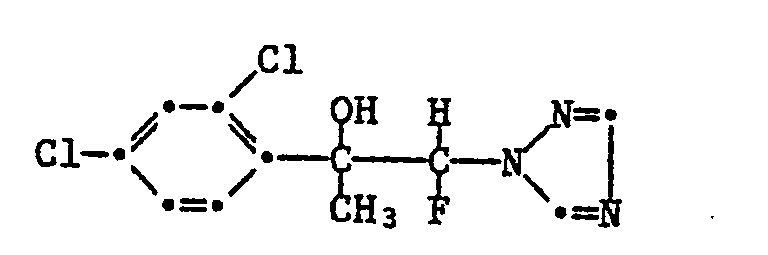
- 27,4 g 2,4-Dichlor-ω-triazolyl-ω-fluor-acetophenon werden in einem Gemisch von 100 ml Diethylether und 100 ml Tetrahydrofuran gelöst und auf -65°C abgekühlt. Dazu wird unter energischem Rühren eine Grignardlösung, die aus 15 g Methyljodid und 24,5 g Magnesium in 200 ml Diethyläther hergestellt wurde, so zugetropft, dass die Temperatur nicht über -60°C steigt.
- Unter Rühren wird das Reaktionsgemisch auf Raumtemperatur erwärmt und bei dieser Temperatur noch eine Stunde belassen. Hierauf werden unter schwachem Kühlen 100 ml einer gesättigten Lösung von Ammoniumchlorid zugetropft.
- Zur Aufarbeitung wird die organische Phase abgetrennt, mit Sole neutral gewaschen, über Natriumsulfat getrocknet und unter Vakuum eingedampft. Der Rückstand besteht aus 27,0 g eines hellen Oels.
- Bei der Hochdruckchromatographie erweist sich dieses Oel als aus zwei Komponenten bestehend mit einem Peakverhältnis von 1:1,3 (zwei Enantiomerenpaare).
- Mit Hilfe von Diisopropylether kann das Oel zur Kristallisation gebracht werden, wobei dasjenige Racemat, das in grösserer Menge vorhanden ist, auskristallisiert und dann bei 149°-155°C schmilzt. Die spektroskopischen Daten stehen mit der erwarteten Struktur in Einklang. Insbesondere ist im IR-Spektrum eine OH-Gruppe deutlich sichtbar. Im Protonen-NMR-Spektrum erscheint die OH-Gruppe bei 6,75 ppm und die CH₃-Gruppe ist bei 1,90 ppm sichtbar. Die beiden Peaks der H-F-Kopplung liegen bei 6,98 und 7,61 ppm.
-
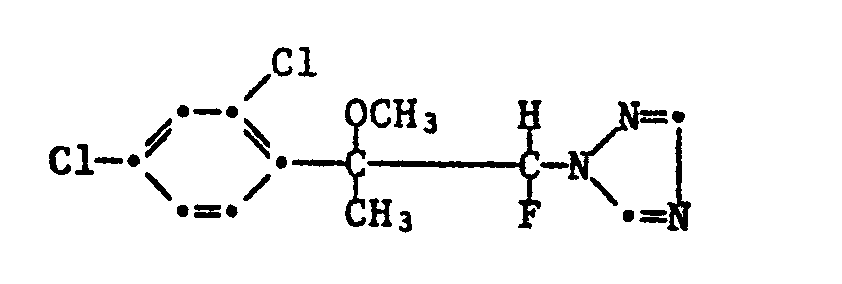
- 29,0 g der Verbindung von Beispiel 1 werden in 500 ml Methylenchlorid gelöst. Zur Lösung werden bei 0°C 1 g tert.-Butylammoniumbromid und 50 ml 50%-ige Kalilauge zugesetzt. Bei einer Temperatur zwischen 0 und +5°C werden 10 ml Methyljodid zugetropft. Beim Rühren bei 0-5°C fällt im Laufe von zwei Stunden das Kaliumbromid vollständig aus. Zur Vervollständigung der Reaktion rührt man noch zwei Stunden bei Raumtemperatur, worauf man die organische Phase abtrennt, mit Wasser neutral wäscht und mit Natriumsulfat trocknet. Man erhält 30,0 g eines hellen Oels. Dieses kann mit Hilfe von Cyclohexan und Di-iso-propylether zur Kristallisation gebracht werden. Das erhaltene Kristallgemisch schmilzt nach Trocknung zwischen 97° und 103°C.
- Die HPLC zeigt, dass es sich praktisch ausschliesslich um ein Gemisch der beiden Enantiomerenpaare handelt.
- Das NMR-Spektrum zeigt die beiden CH₃-Gruppen bei 2,00 bzw. 3,40 ppm, sowie die beiden Peaks der HF-Kopplung bei 6,60 und 7,35 ppm.
-
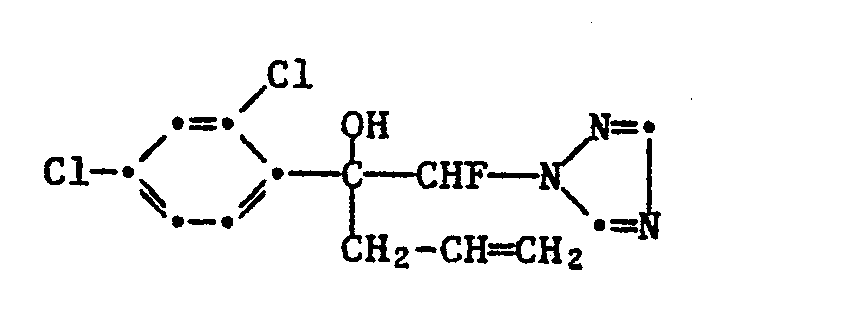
- 27,4 g 2,4-Dichlor-ω-triazolyl-ω-fluor-acetophenon werden in 150 ml Dichlormethan gelöst. Unter Luftausschluss (im Stickstoffstrom) werden bei 20°C 9,5 g Titantetrachlorid zugesetzt. Nach 5 Minuten Rühren setzt man 11,5 g Trimethyl-allylsilan hinzu, wobei die Temperatur innerhalb von 5 Minuten auf ca. 28°C steigt. Nach 5 Min. wird die braun-rote Emulsion auf Eiswasser gegossen, mit Na₂CO₃ vorsichtig alkalisch gestellt und zweimal mit Essigsäureethylester extrahiert.
- Die Essigsäureethylesterlösung wird mit Natriumsulfat getrocknet und unter Vakuum eingedampft. Der Rückstand besteht aus 29,0 g eines dunkelbraunen Oels. Beim Abkühlen kann dieses zur Kristallisation gebracht werden. Durch Umkristallisation aus einem Essigsäureethylester/Diethylether-Gemisch erhält man 12,0 g (67 %) eines bei 127° - 128°C schmelzenden Produkts.
-

- 31,6 g der Verbindung von Beispiel 3 werden mit Hilfe von Pd-Aktivkohle in Essigsäureethylester bei Raumtemperatur und unter Normaldruck hydriert. Nach Filtration und Eindampfen unter Vakuum erhält man 31,8 g eines hellen Oels. Mit Hilfe von Essigsäureethylester lässt es sich zur Kristallisation bringen und nach Umkristallisation aus einem Gemisch von Aether und Essigsäureethylester erhält man 26,5 g Kristalle vom Schmelzpunkt 108°-109°C.
-
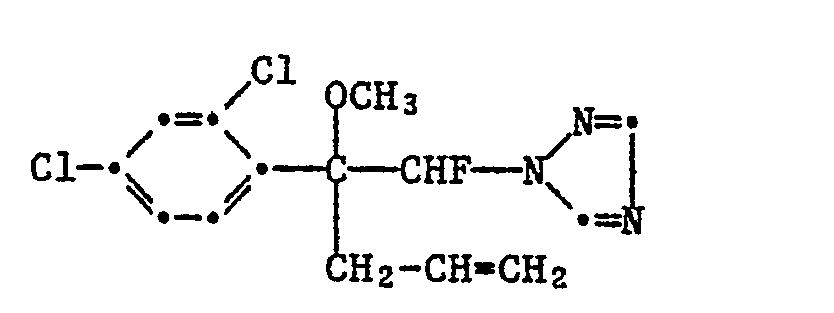
- 31,6 g der Verbindung von Beispiel 3 werden analog wie im Beispiel 2 beschrieben methyliert. Nach Aufarbeitung erhält man 32,5 g eines hellen Oels. Dieses wird bei 13 Pa einer Kurzwegdestillation bei 140°C unterworfen.
- Man erhält 26,2 g farbloses Oel.
- Analog den vorstehend beschriebenen Beispielen können die nachfolgend tabellierten Verbindungen hergestellt werden.



-

- Aus solchen Konzentraten können durch Verdünnen mit Wasser Emulsionen jeder gewünschten Konzentration hergestellt werden.

- Die Lösungen sind zur Anwendung in Form kleinster Tropfen geeignet.

- Der Wirkstoff wird in Methylenchlorid gelöst, auf den Träger aufgesprüht und das Lösungsmittel anschliessend im Vakuum abgedampft.

- Durch inniges Vermischen auf Trägerstoffe mit dem Wirkstoff erhält man gebrauchsfertige Stäubemittel.

- Der Wirkstoff wird mit den Zusatzstoffen gut vermischt und in einer geeigneten Mühle gut vermahlen. Man erhält Spritzpulver, die sich mit Wasser zu Suspensionen jeder gewünschten Konzentration verdünnen lassen.
- Wirkstoff aus den Tabellen 10 %
Octylphenolpolyethylenglykolether (4-5 Mol Ethylenoxid) 3 %
Ca-Dodecylbenzolsulfonat 3 %
Ricinusölpolyglykolether (35 Mol Ethylenoxid) 4 %
Cyclohexanon 30 %
Xylolgemisch 50 % - Aus diesem Konzentrat können durch Verdünnen mit Wasser Emulsionen jeder gewünschten Konzentration hergestellt werden.
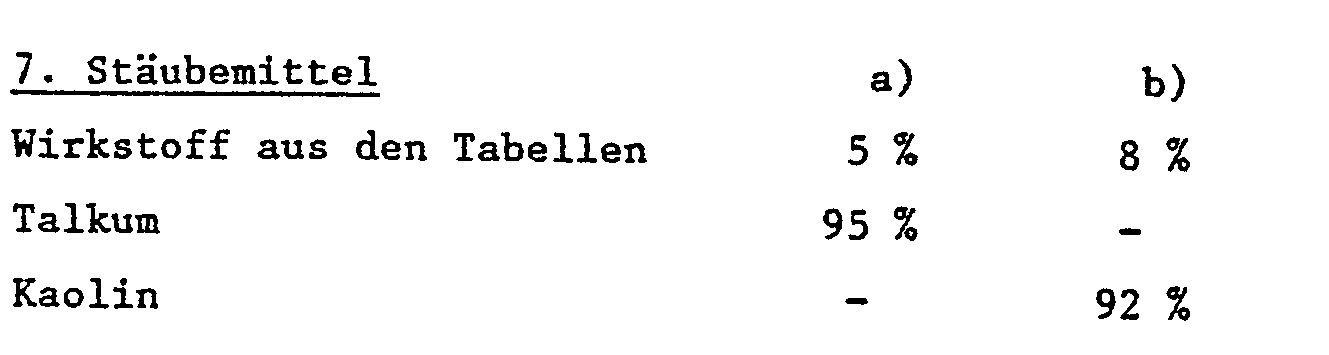
- Man erhält anwendungsfertige Stäubemittel, indem der Wirkstoff mit den Träger vermischt auf einer geeigneten Mühle vermahlen wird.
- Wirkstoff aus den Tabellen 10 %
Na-Ligninsulfonat 2 %
Carboxymethylcellulose 1 %
Kaolin 87 % - Der Wirkstoff wird mit den Zusatzstoffen vermischt, vermahlen und mit Wasser angefeuchtet. Dieses Gemisch wird extrudiert und anschliessend im Luftstrom getrocknet.
- Wirkstoff aus den Tabellen 3 %
Polyethylenglykol (MG 200) 3 %
Kaolin 94 %
(MG = Molekulargewicht) - Der fein gemahlene Wirkstoff wird in einem Mischer auf das mit Polyethylenglykol angefeuchtete Kaolin gleichmässig aufgetragen. Auf diese Weise erhält man staubfreie Umhüllungs-Granulate.
- Wirkstoff aus den Tabellen 40 %
Ethylenglykol 10 %
Nonylphenolpolyethylenglykolether (15 Mol Ethylenoxid) 6 %
N-Ligninsulfonat 10 %
Carboxymethylcellulose 1 %
37%ige wässrige Formaldehyd-Lösung 0,2 %
Silikonöl in Form einer 75%igen wässrigen Emulsion 0,8 %
Wasser 32 % - Der fein gemahlene Wirkstoff wird mit den Zusatzstoffen innig vermischt. Man erhält so ein Suspensions-Konzentrat, aus welchem durch Verdünnen mit Wasser Suspensionen jeder gewünschten Konzentration hergestellt werden können.
- Reispflanzen wurden nach zweiwöchiger Anzucht mit einer aus Spritzpulver des Wirkstoffes hergestellten Spritzbrühe (0,02 % Aktivsubstanz) besprüht. Nach 48 Stunden wurden die behandelten Pflanzen mit einer Konidiensuspension des Pilzes infiziert. Nach 5 Tagen Inkubation bei 95-100 % relativer Luftfeuchtigkeit und 24°C wurde der Pilzbefall beurteilt.
- Zu zweiwöchigen Reispflanzen wurde eine aus Spritzpulver des Wirkstoffes hergestellte Spritzbrühe gegossen (0,006 % Aktivsubstanz bezogen auf das Erdvolumen). Darauf wurden die Töpfe mit Wasser soweit gefüllt, dass die untersten Stengelteile der Reispflanzen im Wasser standen. Nach 96 Stunden wurden die behandelten Reispflanzen mit einer Konidiensuspension des Pilzes infiziert. Nach einer Inkubation der infizierten Pflanzen während 5 Tagen bei 95-100 % relativer Luftfeuchtigkeit und ca. 24°C wurde der Pilzbefall beurteilt.
- Die unbehandelten aber infizierten Kontrollpflanzen wiesen in den beiden Tests a und b einen Pilzbefall von 100 % auf. Reispflanzen, die mit Verbindungen aus den Tabellen behandelt wurden zeigten eine Reduktion des Pilzbefalls auf 0 bis 25 %. Die Verbindungen Nr. 1.1, 1.5, 1.6, 1.7, 1.10, 1.11, 1.15, 1.26, 1.33, 1.34-1.36, 2.1, 2.3-2.8, 2.15-2.19, 2.51 und 2.52 unterdrückten den Pilzbefall vollständig (0 % Befall).
- Weizenpflanzen wurden 6 Tage nach der Aussaat mit einer aus Spritzpulver des Wirkstoffes hergestellten Spritzbrühe (0,02 % Aktivsubstanz) besprüht. Nach 24 Stunden wurden die behandelten Pflanzen mit einer Uredosporensuspension des Pilzes infiziert. Nach einer Inkubation während 48 Stunden bei 95-100 % relativer Luftfeuchtigkeit und ca. 20°C wurden die infizierten Pflanzen in einem Gewächshaus bei ca. 22°C aufgestellt. Die Beurteilung der Rostpustelentwicklung erfolgte 12 Tage nach der Infektion.
- Zu Weizenpflanzen wurden 5 Tage nach Aussaat eine aus Spritzpulver des Wirkstoffes hergestellte Spritzbrühe gegossen (0,006 % Aktivsubstanz bezogen auf das Bodenvolumen). Nach 72 Stunden wurden die behandelten Pflanzen mit einer Uredosporensuspension des Pilzes infiziert. Nach einer Inkubation während 48 Stunden bei 95-100 % relativer Luftfeuchtigkeit und ca. 20°C wurden die infizierten Pflanzen in einem Gewächshaus bei ca. 22°C aufgestellt. Die Beurteilung der Rostpustelnentwicklung erfolgte 12 Tage nach der Infektion.
- Verbindungen aus den Tabellen zeigten gegen Puccinia-Pilze eine sehr gute Wirkung. Unbehandelte aber infizierte Kontrollpflanzen wiesen eine Puccinia-Befall von 100 % auf. Unter anderen hemmten die Verbindungen Nr. 1.1, 1.5, 1.6, 1.7, 1.10, 1.11, 1.15, 1.26, 1.33, 1.34-1.36, 2.1, 2.3-2.8, 2.15-2.19, 2.51 und 2.52 den Puccinia-Befall fast vollständig (0 bis 5 % Befall).
- Ca. 8 cm hohe Gerstenpflanzen wurden mit einer aus Spritzpulver des Wirkstoffes hergestellten Spritzbrühe (0,02 % Aktivsubstanz) besprüht. Nach 24 Stunden wurden die behandelten Pflanzen mit Konidien des Pilzes bestäubt. Die infizierten Gerstenpflanzen wurden in einem Gewächshaus bei ca. 22°C aufgestellt und der Pilzbefall nach 10 Tagen beurteilt.
- Zu ca. 8 cm hohen Gerstenpflanzen wurde eine aus Spritzpulver des Wirkstoffes hergestellte Spritzbrühe gegossen (0,006 % Aktivsubstanz bezogen auf das Erdvolumen). Es wurde dabei darauf geachtet, das die Spritzbrühe nicht mit den oberirdischen Pflanzenteilen in Berührung kam. Nach 72 Stunden wurden die behandelten Pflanzen mit Konidien des Pilzes bestäubt. Die infizierten Gerstenpflanzen wurden in einem Gewächshaus bei ca. 22°C aufgestellt und der Pilzbefall nach 10 Tagen beurteilt.
- Verbindungen der Formel I zeigten gute Wirkung gegen Erysiphe-Pilze. Unbehandelte, aber infizierte Kontrollpflanzen wiesen einen Erysiphe-Befall von 100 % auf. Unter anderen Verbindungen aus den Tabellen hemmten die Verbindungen Nr. 1.1, 1.5, 1.6, 1.7, 1.10, 1.11, 1.15, 1.26, 1.33, 1.34-1.36, 1.34-1.36, 2.1, 2.3-2.8, 2.15-2.19, 2.51 und 2.52 den Pilzbefall bei Gerste auf 0 bis 5 %.
- 10-15 cm hohe Erdnusspflanzen wurden mit einer aus Spritzpulver der Wirksubstanz hergestellten Spritzbrühe (0,006 % Aktivsubstanz) besprüht und 48 Stunden später mit einer Konidiensuspension des Pilzes infiziert. Die infizierten Pflanzen wurden während 72 Stunden bei ca. 21°C und hoher Luftfeuchtigkeit inkubiert und anschliessend bis zum Auftreten der typischen Blattflecken in einem Gewächshaus aufgestellt.
- Die Beurteilung der fungiziden Wirkung erfolgt 12 Tage nach der Infektion basierend auf Anzahl und Grösse der auftretenden Flecken.
- b) Zu 10-15 cm hohen Erdnusspflanzen wurde eine aus Spritzpulver des Wirkstoffes hergestellte Spritzbrühe gegossen (0,06 % Aktivsubstanz bezogen auf das Erdvolumen). Nach 48 Stunden wurden die behandelten Pflanzen mit einer Konidiensuspension des Pilzes infiziert und 72 Stunden bei ca. 21°C und hoher Luftfeuchtigkeit inkubiert. Anschliessend wurden die Pflanzen im Gewächshaus aufgestellt und nach 11 Tagen der Pilzbefall beurteilt.
- Im Vergleich zu unbehandelten, aber infizierten Kontrollpflanzen (Anzahl und Grösse der Flecken = 100 %), zeigten Erdnusspflanzen, die mit Wirkstoffen aus den Tabellen behandelt wurden, einen stark reduzierten Cercospora-Befall. So verhinderten die Verbindungen Nr. 1.1, 1.5, 1.6, 1.7, 1.10, 1.11, 1.15, 1.26, 1.33, 1.34-1.36, 2.1, 2.3-2.8, 2.15-2.19, 2.51 und 2.52 in obigen Versuchen das Auftreten von Flecken fast vollständig (0 bis 10 %).
- Apfelstecklinge mit 10-20 cm langen Frischtrieben wurden mit einer aus Spritzpulver des Wirkstoffes hergestellten Spritzbrühe (0,06 % Aktivsubstanz) besprüht. Nach 24 Stunden wurden die behandelten Pflanzen mit einer Konidiensuspension des Pilzes infiziert. Die Pflanzen inkubiert und während 10 weiteren Tagen in einem Gewächshaus bei 20-24°C aufgestellt. Der Schorfbefall wurde 15 Tage nach der Infektion beurteilt. Verbindungen Nr. 1.1, 1.5, 1.6, 1.7, 1.10, 1.11, 1.15, 1.26, 1.33, 1.34-1.36, 2.1, 2.3-2.8, 2.15-2.19, 2.51 und 2.52 hemmten den Krankheitsbefall auf weniger als 10 %. Kontrollpflanzen waren 100%ig befallen.
Claims (21)

R₁ Wasserstoff, Halogen, C₁-C₂-Alkyl oder CF₃;
R₂ Halogen oder C₁-C₂-Alkyl;
R₃ C₁-C₅-Alkyl oder C₃-C₅-Alkenyl;
R₄ Wasserstoff, C₁-C₄-Alkyl, C₃-C₄-Alkenyl oder die Gruppe
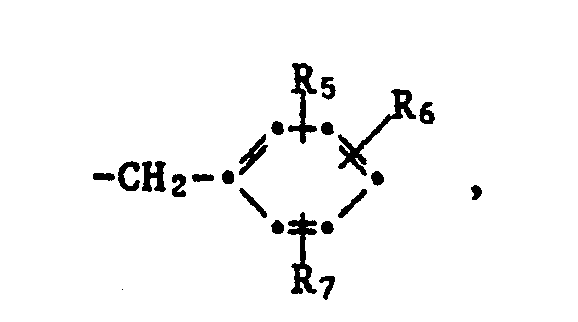
R₅, R₆ und R₇ unabhängig voneinander Wasserstoff, Nitro, Halogen, Cyano, C₁-C₃-Alkyl, C₁-C₃-Alkoxy, C₁-C₃-Haloalkoxy oder CF₃ darstellt, und
Y ein Stickstoffatom oder die CH-Gruppe bedeuten,
unter Einschluss ihrer Säureadditionssalze, quaternären Azoliumsalze und Metallsalzkomplexe.

R₁ Wasserstoff, Halogen, C₁-C₂-Alkyl oder CF₃;
R₂ Halogen oder C₁-C₂-Alkyl;
R₃ C₁-C₄-Alkyl;
R₄ Wasserstoff, C₁-C₄-Alkyl, C₃-C₄-Alkenyl oder die Gruppe

R₅, R₆ und R₇ unabhängig voneinander Wasserstoff, Nitro, Halogen, Cyano, C₁-C₃-Alkyl, C₁-C₃-Alkoxy, C₁-C₃-Haloalkoxy oder CF₃ darstellt, und
Y ein Stickstoffatom oder die CH-Gruppe bedeuten,
unter Einschluss ihrer Säureadditionssalze, quaternären Azoliumsalze und Metallsalzkomplexe.
R₁/R₂ 2,4-Cl₂ oder 2,4-(CH₃)₂;
R₃ C₁-C₂-Alkyl; und
R₄ Wasserstoff, C₁-C₃-Alkyl, Allyl oder 2,4-Dichlorbenzyl
und
Y ein Stickstoffatom oder die CH-Gruppe
bedeuten.
R₁/R₂ 2,4-Cl₂;
R₃ CH₃; und
R₄ Wasserstoff; und
Y ein Stickstoffatom
bedeuten.
R₁/R₂ 2,4-Cl₂ oder 2,4-(CH₃)₂;
R₃ C₁-C₅-Alkyl oder C₃-C₄-Alkenyl;
R₄ Wasserstoff, C₁-C₃-Alkyl, Allyl oder 2,4-Dichlorbenzyl; und
Y ein Stickstoffatom oder die CH-Gruppe
bedeuten.
R₁ Wasserstoff, Chlor oder Methyl;
R₂ Fluor, Chlor oder Methyl;
R₃ C₁-C₄-Alkyl oder Allyl;
R₄ C₁-C₄-Alkyl oder C₃-C₄-Alkenyl; und
Y ein Stickstoff oder die CH-Gruppe
bedeuten.
R₁/R₂ 2,4-Cl₂;
R₃ CH₃; n-Propyl oder Allyl;
R₄ Wasserstoff oder Methyl; und
Y ein Stickstoffatom
bedeuten.
R₁ Wasserstoff, Chlor oder Methyl;
R₂ Fluor, Chlor oder Methyl;
R₃ Methyl, n-Propyl, n-Butyl, tert. Butyl oder Allyl;
R₄ Methyl, n-Propyl, n-Butyl, Allyl oder But-2-enyl; und
Y ein Stickstoffatom oder die CH-Gruppe
bedeuten.
1-(2,4-Dichlorphenyl)-1-methyl-2-fluor-2-(1H-1,2,4-triazol-1-yl)-ethanol;
1-(2,4-Dichlorphenyl)-1-methyl-1-methoxy-2-fluor-2-(1H-1,2,4-triazol-1-yl)-ethan.
1-(2,4-Dichlorphenyl)-1-n-propyl-2-fluor-2-(1H-1,2,4-triazol-1-yl)-ethanol;
1-(1,2-Dichlorphenyl)-1-n-propyl)-2-fluor-2-(1H-imidazol-1-yl)-ethanol;
1-(2,4-Dimethylphenyl)-1-methyl-2-fluor-2-(1H-1,2,4-triazol-1-yl)-ethanol;
1-(2,4-Dimethylphenyl)-1-n-propyl-2-fluor-2-(1H-1,2,4-triazol-1-yl)-ethanol;
1-(4-fluorphenyl-1-methyl-2-fluor-2-(1H-1,2,4-triazol-1-yl)-ethanol;
1-(4-Chlorphenyl)-1-methyl-2-fluor-2-(1H-1,2,4-triazol-1-yl-ethanol;
1-(2-Chlor-4-fluorphenyl)-1-n-propyl-2-fluor-2-(1H-1,2,4-triazol-1-yl)-ethanol;
1-(2,4-Dichlorphenyl)-1-n-butyl-2-fluor-2-(1H-1,2,4-triazol-1-yl)-ethanol;
I-(4-Chlorphenyl)-1-t.butyl-2-fluor-2-(1H-1,2,4-triazol-1-yl)-ethanol;
1-(2,4-Dichlorphenyl)-1-allyl-2-fluor-2-(1H-1,2,4-triazol-1-yl)-ethanol;
1-(4-Chlorphenyl)-1-allyl-2-fluor-2-(1H-1,2,4-triazol-1-yl)-ethanol;
1-(2,4-Dichlorphenyl)-1-methyl-1-methoxy-2-fluor-2-(1H-1,2,4-triazol-1-yl)-ethan;
1-(2,4-Dichlorphenyl)-1-methyl-1-n-propoxy-2-fluor-2-(1H-1,2,4-triazol-1-yl)-ethan;
1-(2,4-Dichlorphenyl)-1-methyl-1-n-propoxy-2-(1H-imidazol-1-yl)-ethan;
1-(2,4-Dichlorphenyl)-1-methyl-1-n-butoxy-2-fluor-2-(1H-1,2,4-triazol-1-yl)-ethan;
1-(2,4-Dichlorphenyl)-1-methyl-1-allyloxy-2-fluor-2-(1H-1,2,4-triazol-1-yl)-ethan;
1-(2,4-Dichlorphenyl)-1-methyl-1-allyloxy-2-(1H-imidazol-1-yl)-ethan;
1-(2,4-Dichlorphenyl)-1-methyl-1-but-2-enoxy-2-fluor-2-(1H-1,2,4-triazol-1-yl)-ethan;
1-(2,4-Dichlorphenyl)-1-n-propyl-1-methoxy-2-fluor-2-(1H-1,2,4-triazol-1-yl)-ethan;
1-(2,4-Dichlorphenyl)-1-n-propyl-1-methoxy-2-(1H-imidazol-1-yl)-ethan;
1-(2,4-Dichlorphenyl)-1-n-propyl-1-n-propoxy-2-fluor-2-(1H-1,2,4-triazol-1-yl)-ethan;
1-(2,4-Dichlorphenyl)-1-n-propyl-1-allyloxy-2-fluor-2-(1H-1,2,4-triazol-1-yl)-ethan;
1-(2,4-Dimethylphenyl)-1-methyl-1-methoxy-2-fluor-2-(1H-1,2,4-triazol-1-yl)-ethan;
1-(2,4-Dichlorphenyl)-1-allyl-1-methoxy-2-fluor-2-(1H-1,2,4-triazol-1-yl)-ethan;
1-(2,4-Dichlorphenyl)-1-n-propyl-1-methoxy-2-fluor-2-(1H-1,2,4-triazol-1-yl)-ethan.

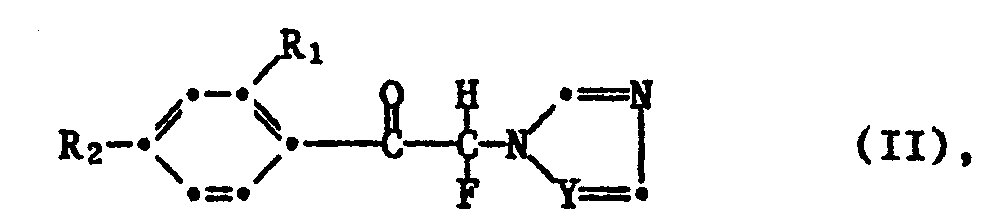
R₃MgX (IV)
als Grignard-Reagens in einem inerten Lösungsmittel umsetzt, und


R₄―W (V)
reagieren lässt,
und


worin Alk C₁-C₄-Alkyl, vorzugsweise Methyl, bedeutet, in Gegenwart einer Lewis-Säure umsetzt, und

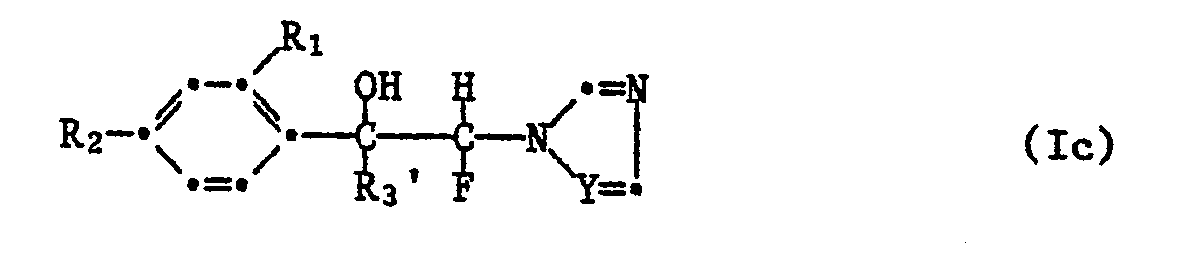
Applications Claiming Priority (4)
| Application Number | Priority Date | Filing Date | Title |
|---|---|---|---|
| CH5450/85 | 1985-12-20 | ||
| CH545085 | 1985-12-20 | ||
| CH465686 | 1986-11-20 | ||
| CH4656/86 | 1986-11-20 |
Publications (1)
| Publication Number | Publication Date |
|---|---|
| EP0228995A1 true EP0228995A1 (de) | 1987-07-15 |
Family
ID=25696002
Family Applications (1)
| Application Number | Title | Priority Date | Filing Date |
|---|---|---|---|
| EP86810588A Withdrawn EP0228995A1 (de) | 1985-12-20 | 1986-12-15 | Mikrobizide |
Country Status (11)
| Country | Link |
|---|---|
| EP (1) | EP0228995A1 (de) |
| KR (1) | KR870006020A (de) |
| CN (1) | CN86108283A (de) |
| AU (1) | AU6676886A (de) |
| BR (1) | BR8606324A (de) |
| DK (1) | DK619386A (de) |
| IL (1) | IL81046A0 (de) |
| PH (1) | PH23605A (de) |
| PL (1) | PL147566B1 (de) |
| PT (1) | PT83959B (de) |
| TR (1) | TR22666A (de) |
Cited By (2)
| Publication number | Priority date | Publication date | Assignee | Title |
|---|---|---|---|---|
| EP0449067A3 (en) * | 1990-03-26 | 1992-08-05 | Basf Aktiengesellschaft | Azolylethane derivatives, fungicides |
| EP0483615A3 (en) * | 1990-10-29 | 1992-11-19 | Basf Aktiengesellschaft | 1-halogen-1-azolylmethan derivatives and fungicides containing them |
Families Citing this family (2)
| Publication number | Priority date | Publication date | Assignee | Title |
|---|---|---|---|---|
| GB8714013D0 (en) * | 1987-06-16 | 1987-07-22 | Ici Plc | (substituted-aralkyl)heterocyclic compounds |
| CN100382801C (zh) * | 2006-03-14 | 2008-04-23 | 北京大学 | α-(2,4-二氯苯基)-1H-咪唑-1-乙醇在制备治疗肝炎的药物中的用途 |
Citations (4)
| Publication number | Priority date | Publication date | Assignee | Title |
|---|---|---|---|---|
| EP0118245A1 (de) * | 1983-02-25 | 1984-09-12 | Pfizer Limited | Fungizide Triazole |
| EP0149426A1 (de) * | 1983-12-20 | 1985-07-24 | Ciba-Geigy Ag | Mikrobizide |
| EP0153803A2 (de) * | 1984-01-24 | 1985-09-04 | Pfizer Limited | Triazole mit antifungaler Wirkung |
| EP0163606A2 (de) * | 1984-05-23 | 1985-12-04 | Ciba-Geigy Ag | Mikrobizide 1-Fluor-1-azolyl-2,2-diarylethanderivate |
-
1986
- 1986-12-15 EP EP86810588A patent/EP0228995A1/de not_active Withdrawn
- 1986-12-18 PH PH34617A patent/PH23605A/en unknown
- 1986-12-18 PT PT83959A patent/PT83959B/pt unknown
- 1986-12-19 PL PL1986263131A patent/PL147566B1/pl unknown
- 1986-12-19 AU AU66768/86A patent/AU6676886A/en not_active Abandoned
- 1986-12-19 DK DK619386A patent/DK619386A/da not_active Application Discontinuation
- 1986-12-19 IL IL81046A patent/IL81046A0/xx unknown
- 1986-12-19 BR BR8606324A patent/BR8606324A/pt unknown
- 1986-12-19 TR TR43362/86A patent/TR22666A/xx unknown
- 1986-12-20 KR KR860010994A patent/KR870006020A/ko not_active Ceased
- 1986-12-20 CN CN198686108283A patent/CN86108283A/zh active Pending
Patent Citations (4)
| Publication number | Priority date | Publication date | Assignee | Title |
|---|---|---|---|---|
| EP0118245A1 (de) * | 1983-02-25 | 1984-09-12 | Pfizer Limited | Fungizide Triazole |
| EP0149426A1 (de) * | 1983-12-20 | 1985-07-24 | Ciba-Geigy Ag | Mikrobizide |
| EP0153803A2 (de) * | 1984-01-24 | 1985-09-04 | Pfizer Limited | Triazole mit antifungaler Wirkung |
| EP0163606A2 (de) * | 1984-05-23 | 1985-12-04 | Ciba-Geigy Ag | Mikrobizide 1-Fluor-1-azolyl-2,2-diarylethanderivate |
Cited By (2)
| Publication number | Priority date | Publication date | Assignee | Title |
|---|---|---|---|---|
| EP0449067A3 (en) * | 1990-03-26 | 1992-08-05 | Basf Aktiengesellschaft | Azolylethane derivatives, fungicides |
| EP0483615A3 (en) * | 1990-10-29 | 1992-11-19 | Basf Aktiengesellschaft | 1-halogen-1-azolylmethan derivatives and fungicides containing them |
Also Published As
| Publication number | Publication date |
|---|---|
| CN86108283A (zh) | 1987-08-12 |
| KR870006020A (ko) | 1987-07-08 |
| PL263131A1 (en) | 1988-02-18 |
| PT83959A (en) | 1987-01-01 |
| PH23605A (en) | 1989-09-11 |
| DK619386A (da) | 1987-06-21 |
| BR8606324A (pt) | 1987-10-06 |
| IL81046A0 (en) | 1987-03-31 |
| AU6676886A (en) | 1987-06-25 |
| DK619386D0 (da) | 1986-12-19 |
| TR22666A (tr) | 1988-02-23 |
| PT83959B (en) | 1988-12-20 |
| PL147566B1 (en) | 1989-06-30 |
Similar Documents
| Publication | Publication Date | Title |
|---|---|---|
| EP0275955B1 (de) | Mikrobizides Mittel | |
| EP0113640B1 (de) | 1-Azolyl-2-aryl-3-fluoralkan-2-ole als Mikrobizide | |
| EP0388838B1 (de) | Schädlingsbekämpfungsmittel | |
| EP0114567B1 (de) | 1-Carbonyl-1-phenyl-2-azolyl-ethanol Derivate als Mikrobizide und Wuchsregulatoren, sowie ihre Zwischenprodukte | |
| DD248274A5 (de) | Mikrobizides mittel | |
| EP0276432A2 (de) | Schädlingsbekämpfungsmittel | |
| DE3801233A1 (de) | Mikrobizides mittel | |
| EP0332579A2 (de) | Mittel zum Schutz von Pflanzen gegen Krankheiten | |
| EP0086173B1 (de) | Fungizid wirkende und den Pflanzenwuchs regulierende Triazolcarbinolderivate | |
| EP0149426B1 (de) | Mikrobizide | |
| EP0082340B1 (de) | Mikrobizide Triazolyl-ethyl-äther | |
| EP0112292B1 (de) | Neue Wuchsregulatoren und Mikrobizide | |
| EP0091398B1 (de) | Mikrobizide und wuchsregulierende Azolylpropan-Derivate | |
| EP0221844A1 (de) | Pyridinderivate mit mikrobizider Wirkung | |
| DD202493A5 (de) | Mikrobizide und wuchsregulierende mittel | |
| EP0163606A2 (de) | Mikrobizide 1-Fluor-1-azolyl-2,2-diarylethanderivate | |
| EP0457726B1 (de) | 2-Anilino-pyrimidin Derivate als Schädlingsbekämpfungsmittel | |
| DE2943631A1 (de) | Azolylketale, verfahren zu ihrer herstellung und ihre verwendung als mikrobizide | |
| EP0079856A1 (de) | Mikrobizide Triazolyl-vinyläther | |
| EP0228995A1 (de) | Mikrobizide | |
| EP0044276A2 (de) | 4-(1H-Azolylmethyl)-1,3-dioxolan-5-on-derivate, Verfahren zu deren Herstellung und deren Verwendung als wachstumsregulierende und/oder mikrobizide Mittel | |
| EP0116262B1 (de) | Fluorazolyl-propanol-Derivate als Mikrobizide und wuchsregulierende Mittel | |
| EP0060962B1 (de) | Mikrobizide Triazolylmethyldioxolane und deren Herstellung | |
| EP0065483A1 (de) | Mikrobizide Acylanilin- und Acylnaphthylamin-Derivate, Verfahren zu deren Herstellung und ihre Verwendung | |
| EP0441747B1 (de) | Mikrobizide |
Legal Events
| Date | Code | Title | Description |
|---|---|---|---|
| PUAI | Public reference made under article 153(3) epc to a published international application that has entered the european phase |
Free format text: ORIGINAL CODE: 0009012 |
|
| AK | Designated contracting states |
Kind code of ref document: A1 Designated state(s): AT BE CH DE ES FR GB GR IT LI LU NL SE |
|
| 17P | Request for examination filed |
Effective date: 19861217 |
|
| 17Q | First examination report despatched |
Effective date: 19900716 |
|
| STAA | Information on the status of an ep patent application or granted ep patent |
Free format text: STATUS: THE APPLICATION IS DEEMED TO BE WITHDRAWN |
|
| 18D | Application deemed to be withdrawn |
Effective date: 19901127 |
|
| RIN1 | Information on inventor provided before grant (corrected) |
Inventor name: NYFELER, ROBERT, DR. Inventor name: MEYER, ALFRED, DR. Inventor name: FRICK, WILLY, DR. |