EP0220573B1 - Heterocyclische Verbindungen - Google Patents
Heterocyclische Verbindungen Download PDFInfo
- Publication number
- EP0220573B1 EP0220573B1 EP86114046A EP86114046A EP0220573B1 EP 0220573 B1 EP0220573 B1 EP 0220573B1 EP 86114046 A EP86114046 A EP 86114046A EP 86114046 A EP86114046 A EP 86114046A EP 0220573 B1 EP0220573 B1 EP 0220573B1
- Authority
- EP
- European Patent Office
- Prior art keywords
- methyl
- methoxy
- chlorophenyl
- oxazolyl
- acid
- Prior art date
- Legal status (The legal status is an assumption and is not a legal conclusion. Google has not performed a legal analysis and makes no representation as to the accuracy of the status listed.)
- Expired - Lifetime
Links
Classifications
-
- C—CHEMISTRY; METALLURGY
- C07—ORGANIC CHEMISTRY
- C07D—HETEROCYCLIC COMPOUNDS
- C07D413/00—Heterocyclic compounds containing two or more hetero rings, at least one ring having nitrogen and oxygen atoms as the only ring hetero atoms
- C07D413/02—Heterocyclic compounds containing two or more hetero rings, at least one ring having nitrogen and oxygen atoms as the only ring hetero atoms containing two hetero rings
- C07D413/04—Heterocyclic compounds containing two or more hetero rings, at least one ring having nitrogen and oxygen atoms as the only ring hetero atoms containing two hetero rings directly linked by a ring-member-to-ring-member bond
-
- C—CHEMISTRY; METALLURGY
- C07—ORGANIC CHEMISTRY
- C07D—HETEROCYCLIC COMPOUNDS
- C07D261/00—Heterocyclic compounds containing 1,2-oxazole or hydrogenated 1,2-oxazole rings
- C07D261/02—Heterocyclic compounds containing 1,2-oxazole or hydrogenated 1,2-oxazole rings not condensed with other rings
- C07D261/06—Heterocyclic compounds containing 1,2-oxazole or hydrogenated 1,2-oxazole rings not condensed with other rings having two or more double bonds between ring members or between ring members and non-ring members
- C07D261/08—Heterocyclic compounds containing 1,2-oxazole or hydrogenated 1,2-oxazole rings not condensed with other rings having two or more double bonds between ring members or between ring members and non-ring members with only hydrogen atoms, hydrocarbon or substituted hydrocarbon radicals, directly attached to ring carbon atoms
-
- C—CHEMISTRY; METALLURGY
- C07—ORGANIC CHEMISTRY
- C07D—HETEROCYCLIC COMPOUNDS
- C07D263/00—Heterocyclic compounds containing 1,3-oxazole or hydrogenated 1,3-oxazole rings
- C07D263/02—Heterocyclic compounds containing 1,3-oxazole or hydrogenated 1,3-oxazole rings not condensed with other rings
- C07D263/30—Heterocyclic compounds containing 1,3-oxazole or hydrogenated 1,3-oxazole rings not condensed with other rings having two or three double bonds between ring members or between ring members and non-ring members
- C07D263/32—Heterocyclic compounds containing 1,3-oxazole or hydrogenated 1,3-oxazole rings not condensed with other rings having two or three double bonds between ring members or between ring members and non-ring members with only hydrogen atoms, hydrocarbon or substituted hydrocarbon radicals, directly attached to ring carbon atoms
Definitions
- the invention further relates to the above compounds as pharmaceutical substances, in particular active against arthritis, a process for the preparation of these compounds, pharmaceutical preparations based on these compounds and the use of these compounds for the production of pharmaceutical preparations, in particular for the prophylaxis and treatment of diseases, like arthritis.
- C 1-6 refers to straight-chain or branched groups with 1-6, preferably 1-4 C atoms.
- Examples of C 1-6 -alkyl, -alkoxy, -alkylene or -alkylthio groups are methyl, ethyl, propyl, isopropyl, butyl, s-butyl, t-butyl, pentyl and hexyl or methoxy, ethoxy, propoxy, isopropoxy, Butoxy and t-butoxy or methylene, 1,1-ethylene, 1,2-ethylene, 1,3-propylene and 1,4-butylene or methylthio and ethylthio.
- groups -NR4R5 are amino, methyl and ethylamino, pyrrolidino, piperazino, morpholino and thiamorpholino.
- Alkyl groups R1 and R2 can be the same or different. If a phenyl or thienyl group R contains two substituents, these can be the same or different.
- the compounds of the formula I contain an asymmetric C atom and can therefore be present as optically active compounds or as racemates. If the compounds contain two asymmetric carbon atoms, they can exist as diastereomers.
- the invention relates not only to the optically active enantiomers but also to the racemates and diastereomers.
- A is preferably methylene, 1,1-ethylene or 1,2-ethylene; Het optionally substituted by C 1-6 alkyl, especially methyl, 2-R-oxazol-5-yl; R monohalophenyl, especially monochlorophenyl, such as 4-chlorophenyl; R1 and R2 are methyl and R3 are hydroxy.
- the 2 - [[2- (4-chlorophenyl) -4-methyl -5-oxazolyl] methoxy] -2-methylpropionic acid and the corresponding sodium propionate are particularly preferred.
- Preferred compounds are also: 2 - [[2- (4-fluorophenyl) -4-methyl-5-oxazolyl] methoxy] -2-methylpropionic acid, 2 - [[2- (4-trifluoromethylphenyl) -4-methyl-5-oxazolyl] methoxy] -2-methylpropionic acid, 2 - [[2- (4-chlorophenyl) -5-oxazolyl] methoxy] -2-methylpropionic acid, 2 - [[5- (4-chlorophenyl) -2-oxazolyl] methoxy] -2-methylpropionic acid, 2 - [[4- (4-chlorophenyl) -2-oxazolyl] methoxy] -2-methylpropionic acid, 2 - [[2- (4-trifluoromethylphenyl) -5-methyl-4-oxazolyl] methoxy] -2-methylpropionic acid, 2 - [[2- (4-trifluor
- Examples of tri- and tetrahalogenated alkanes for process variant a) are bromoform, iodoform, carbon tetrachloride or tetrabromo and in particular chloroform.
- the strong base can e.g. an alkali metal hydroxide such as potassium or sodium hydroxide.
- the base is preferably in solid form, e.g. used as powder.
- the reaction can be carried out in an organic solvent, advantageously in excess ketone of the formula III, at elevated temperature, preferably under reflux.
- the leaving atom or the leaving group X or Y in a compound of formula IV or V in process variant b) can e.g. a halogen such as chlorine or bromine, an alkanesulfonate or an aromatic sulfonate such as methanesulfonate or p-toluenesulfonate.
- the reaction in process variant b) can be carried out in the presence of an inert organic solvent, such as an aromatic, optionally halogenated hydrocarbon, e.g. Carry out benzene, toluene or chlorobenzene, or preferably dimethylformamide (DMF).
- an inert organic solvent such as an aromatic, optionally halogenated hydrocarbon, e.g. Carry out benzene, toluene or chlorobenzene, or preferably dimethylformamide (DMF).
- an alkali metal or an alkali metal hydride such as sodium or potassium, sodium hydride or potassium hydride.
- the reaction in process variant c) can be carried out in an inert organic solvent, such as an aliphatic or cyclic ether, e.g. Carry out diethyl ether, tetrahydrofuran (THF) or dioxane.
- the reaction is conveniently carried out at a low temperature, e.g. between 0 and 10 ° C, preferably at about 5 ° C, performed.
- the hydrolysis according to process variant d) can be carried out in a manner known per se, for example with a base, such as an alkali metal hydroxide, for example sodium or potassium hydroxide, in a solvent, such as an alkanol, for example Methanol or ethanol, and at room temperature.
- a base such as an alkali metal hydroxide, for example sodium or potassium hydroxide
- a solvent such as an alkanol, for example Methanol or ethanol
- the esterification according to process variant e) can be carried out in a manner known per se, e.g. with a diazoalkane such as diazomethane or with an alcohol such as methanol or ethanol in the presence of a strong acid such as a hydrohalic acid e.g. Hydrochloric acid, or a sulfonic acid, e.g. p-Toluenesulfonic acid.
- a compound of formula I, wherein R3 is hydroxy can also be converted in a manner known per se into a reactive derivative thereof, such as an acid halide or acid anhydride, e.g. convert the acid chloride, and react the latter with an alcohol.
- the amidation according to process variant f) can be carried out in a manner known per se, for example by reacting a compound of the formula I in which R3 is C 1-6 alkoxy, or one of the abovementioned reactive derivatives of an acid of the formula I in which R3 Hydroxy is, with a compound of formula HNR4R5, for example with ammonia, a mono- or di (C 1-6 alkyl) amine or a saturated heteromonocyclic amine.
- the acids of formula I can be dissolved in salts, e.g. convert into alkali or alkaline earth metal salts such as sodium, potassium, calcium or magnesium salts, into ammonium salts or into salts with organic amines such as dicyclohexylamine, e.g. by reacting said acid with a base.
- salts e.g. convert into alkali or alkaline earth metal salts such as sodium, potassium, calcium or magnesium salts, into ammonium salts or into salts with organic amines such as dicyclohexylamine, e.g. by reacting said acid with a base.
- a racemate of the formula I can be separated into the optical isomers.
- a racemate of formula I, wherein R3 is hydroxy can be treated with an optically active base such as (+) - or (-) - ephedrine, (+) - or (-) - ⁇ -methylbenzylamine, which are optically active Separate salts, for example by fractional crystallization and, if desired, isolate the optically uniform compounds from these salts in a manner known per se. Alternatively you can Use optically active starting materials.
- the starting materials are known or analogs of known compounds and can be prepared analogously to the latter, as described in the examples.
- the compounds of formula I and the pharmaceutically acceptable salts of the acids of formula I, wherein R3 Hydroxy is, with bases can be used as medicines, for example in the form of pharmaceutical preparations. These can be administered orally, for example in the form of tablets, dragées, hard or soft capsules, solutions, emulsions or suspensions. The administration can also be carried out rectally, for example in the form of suppositories, or parenterally, for example in the form of injections.
- Such medicaments can be prepared in a manner known per se by bringing one or more of the compounds according to the invention and optionally one or more further therapeutically active compounds together with one or more therapeutically inert excipients into a galenical dosage form.
- inert inorganic or organic carriers for tablets, dragées and hard gelatin capsules are lactose, corn starch or derivatives thereof, talc, stearic acid or its salts.
- carriers for soft gelatin capsules are vegetable oils, waxes, fats, semi-solid or liquid polyols. Depending on the nature of the active substance, the carrier is not necessary for soft gelatin capsules.
- carriers for the preparation of solutions and syrups are water, polyols, sucrose, invert sugar or glucose.
- Examples of carriers for injection solutions are water, alcohols, polyols, glycerin or vegetable oils.
- carriers for suppositories are naturally occurring or treated oils, waxes, fats, semi-liquid or liquid polyols.
- the pharmaceutical preparations can also contain preservatives, solubilizers, stabilizers, wetting agents, emulsifiers, sweeteners, colorants, flavoring agents, salts for changing the osmotic pressure, buffers, coating agents or antioxidants.
- the dosage can vary within wide limits and is of course to be adapted to the individual circumstances in each individual case. When administered orally, the daily dose is about 50 to 2500 mg.
- the aqueous phase was acidified to pH 2 with concentrated hydrochloric acid and extracted three times with 50 ml of dichloromethane. The combined dichloromethane extracts were dried, filtered and evaporated. 3.7 g of crude product were obtained and, after recrystallization from ethyl acetate, 3.1 g (32.5%) of 2 - [[2- (4-chlorophenyl) -4-methyl -5-oxazolyl] methoxy] -2-methylpropionic acid, M.p. 166-167 ° C.
- the starting material was produced as follows: 13.8 ml of a 2.42 M solution of n-butyllithium in hexane was added dropwise to a solution of 6 g of 2- (4-chlorophenyl) oxazole in 60 ml of dry THF at -60 ° C. under argon. The suspension was warmed to -40 ° C and then 6.9 g paraformaldehyde in 50 ml dry THF was added. The mixture was warmed to room temperature and stirred for one hour. 10 ml of saturated ammonium chloride solution were added to the mixture and the resulting suspension was distributed between 300 ml of water and 200 ml of dichloromethane.
- the starting material was either analogous to Example 1c) from 2- (4-chlorophenyl) -5-methyl-4-oxazolecarboxylic acid or analogous to Example 7b) and c) from 2- (4-chlorophenyl) -4,5-dimethyloxazole-N-oxide produced.
- the starting material, mp. 153-155 ° C, was analogously to Example 8 starting from 2- (4-fluorophenyl) -5-methyl-4-oxazolecarboxylic acid or by converting the 2- (4-fluorophenyl) -4,5-dimethyloxazole- N-oxides in acetic anhydride followed by aqueous alcoholic alkaline hydrolysis.
- the starting methyl propionate was prepared as follows: 55 g of methyl 2-hydroxy-2-methylpropionate in 400 ml of dry DMF were added dropwise with stirring to 14 g of a dispersion of sodium hydride in 200 ml of dry DMF. After 3 hours at 20 ° C., 62.5 g of propargyl bromide (in the form of an 80% toluene solution) in 200 ml of DMF were added with stirring below 25 ° C. After stirring for 17 hours, the mixture was poured onto ice and extracted with toluene. The toluene phase was evaporated and the residue distilled at 80 ° C / 15 mmHg. 26.8 g (41%) of methyl 2-propynyloxy-2-methylpropionate were obtained.
- the starting material was produced as follows: 5.05 g of triethylamine in 20 ml of diethyl ether were added dropwise at -10 ° C. to a solution of 3.86 g of 3-butyn-1-ol and 9.50 g of 4-chlorobenzene-N-hydroxycarboximidoyl chloride in 200 ml of dry diethyl ether. After 3 hours the reaction mixture was filtered, the filtrate was evaporated and the residue was recrystallized from ethyl acetate / hexane. 6.15 g (55%) of 3- (4-chlorophenyl) -5-isoxazolyl-2-ethanol were obtained, mp. 65.5-67.5 ° C. after crystallization from ethyl acetate.
- This (RS) acid was separated as follows: A mixture of 6.18 g (200 mmol) of the (RS) acid and 3.32 g (200 mmol) (+) - ephedrine was recrystallized from 20 ml of isopropanol. The crystals were recrystallized six times from isopropanol. Pure (-) - ephedric acid salt was obtained. This was between 2N hydrochloric acid and diethyl ether distributed. The ether extract was dried, filtered and evaporated.
- the starting material was prepared analogously to Example 14 from 1.93 g of 3-butyn-2-ol. After recrystallization from methylcyclohexane, 3.82 g (68%) of 3- (4-chlorophenyl) -5-isoxazolyl-1-ethanol were obtained, mp. 63-65 ° C.
- the mixture was heated at 65 ° C for 1 hour and, after cooling, 2 ml of water was added. Most of the solvent was evaporated and the residue was partitioned between 100 ml of diethyl ether and 100 ml of water. The organic phase was separated, washed with 50 ml of water and dried. After filtration, the filtrate was evaporated and the residue was mixed with 25 ml of ethanol, 0.3 g (7.5 mmol) of sodium hydroxide and 10 ml of water. The solution was refluxed for 40 minutes, cooled and most of the solvent was evaporated. The residue was dissolved in 100 ml Dissolved water and extracted twice with 100 ml of diethyl ether.
- the aqueous phase was acidified to pH 2 with concentrated hydrochloric acid and extracted three times with 35 ml of dichloromethane. The combined organic extracts were dried, filtered and evaporated. After recrystallization from ethyl acetate / hexane, 0.6 g (33%) of 2 - [[2- (4-chlorophenyl) -4-methyl-5-oxazolyl] methoxy] -2-ethylbutyric acid, mp. 157 ° C.
- Example 10 Analogously to Example 10 was obtained from 5.2 g (21.5 mmol) of 2- (4-chlorophenyl) -5-chloromethyl-4-methyloxazole [from 2- (4-chloromethyl) -4-methyl-5-oxazolemethanol as prepared described in British Patent No. 1,139,940], 7 g of a mixture of methyl 2 - [[2- (4-chlorophenyl) -4-methyl-5-oxazolyl] methoxy] -2-methylpropionate and 2- (4-chlorophenyl) -5-methoxymethyl-4-methyloxazole in a ratio of about 5: 1.
- Example 10 After hydrolysis of the mixture with an excess of aqueous ethanolic sodium hydroxide was obtained analogously Example 10 4.0 g (60%) 2 - [[2- (4-chlorophenyl) -4-methyl -5-oxazolyl] methoxy] -2-methylpropionic acid, mp. 166-167 ° C that with the product of Example 1 was identical.
- the above mixture was chromatographed on silica gel with 30% by volume ethyl acetate in hexane. After evaporation of the eluate from the homogeneous fractions followed by recrystallization of the residue from hexane, 5.0 g (72%) of methyl 2 - [[2- (4-chlorophenyl) -4-methyl -5-oxazolyl] methoxy] -2 were obtained -methyl propionate, mp. 88-90 ° C.
Landscapes
- Chemical & Material Sciences (AREA)
- Organic Chemistry (AREA)
- Heterocyclic Carbon Compounds Containing A Hetero Ring Having Nitrogen And Oxygen As The Only Ring Hetero Atoms (AREA)
- Pharmaceuticals Containing Other Organic And Inorganic Compounds (AREA)
- Nitrogen And Oxygen Or Sulfur-Condensed Heterocyclic Ring Systems (AREA)
- Steroid Compounds (AREA)
Description
- Die vorliegende Erfindung betrifft heterocyclische Verbindungen der allgemeinen Formel

worin A C1-6-Alkylen, - Het
- gegebenenfalls heterocyclisch C1-6-alkyliertes 2-R-Oxazol-5-yl, 5-R-Oxazol-2-yl, 4-R-Oxazol-2-yl, 2-R-Oxazol-4-yl, 3-R-Isoxazol-5-yl oder 5-R-Isoxazol-3-yl,
- R
- durch Halogen, Trifluormethyl oder C1-6-Alkylthio mono- oder disubstituiertes Phenyl oder Thienyl.
- R¹ und R²
- C1-6-Alkyl,
- R³
- Hydroxy, C1-6-Alkoxy oder -NR⁴R⁵,
- R⁴ und R⁵
- Wasserstoff oder c1-6-Alkyl, oder -NR⁴R⁵ ein Pyrrolidino-, Piperazino-, Morpholino-, oder Thiamorpholino-Ring sind, 3-(4-Chlorphenyl)-5-[[1-methyl-1-(piperidinocarbonyl)äthoxy]methyl]isoxazol
- Anstelle der in der Formel I enthaltenen dialkylierten Gruppierung -OC(R¹ ,R²)- enthält die Formel I in Patents Abstracts of Japan Vol . 10 No. 71 for JP-A-60 20 8971 die monoalkylierte Gruppierung -SCH(R²)-.
- Die Erfindung betrifft ferner die obigen Verbindungen als pharmazeutische, insbesondere gegen Arthritis wirksame Substanzen, ein Verfahren zur Herstellung dieser Verbindungen, pharmazeutische Präparate auf der Basis dieser Verbindungen und die Verwendung dieser Verbindungen zur Herstellung von pharmazeutischen Präparate, insbesondere für die Prophylaxe und Behandlung von Krankheiten, wie Arthritis.
- Im Rahmen der Erfindung bezieht sich der Ausdruck C1-6 auf geradkettige oder verzweigte Gruppen mit 1-6, vorzugsweise 1-4 C-Atome. Beispiele von C1-6-Alkyl, -Alkoxy, -Alkylen bzw. -Alkylthiogruppen sind Methyl, Aethyl, Propyl, Isopropyl, Butyl, s-Butyl, t-Butyl, Pentyl und Hexyl bzw. Methoxy, Aethoxy, Propoxy, Isopropoxy, Butoxy und t-Butoxy bzw. Methylen, 1,1-Aethylen, 1,2-Aethylen, 1,3-Propylen und 1,4-Butylen bzw. Methylthio und Aethylthio. Beispiele von Gruppen -NR⁴R⁵ sind Amino, Methyl- und Aethylamino, Pyrrolidino, Piperazino, Morpholino und Thiamorpholino. Alkylgruppen R¹ und R² können gleich oder verschieden sein. Falls eine Phenyl- oder Thienylgruppe R zwei Substituenten enthält, können diese gleich oder verschieden sein.
- Falls R¹ und R² verschieden sind oder A verzweigtes Alkylen ist, enthalten die Verbindungen der Formel I ein asymmetrisches C-Atom und können daher als optisch aktive Verbindungen oder als Racemate vorliegen. Wenn die Verbindungen zwei asymmetrische C-Atome enthalten, können sie als Diastereomere vorliegen. Die Erfindung bezieht sich nicht nur auf die optisch aktiven Enantiomeren sondern auch auf die Racemate und Diastereomere.
- In der Formel I ist A vorzugsweise Methylen, 1,1-Aethylen oder 1,2-Aethylen; Het gegebenenfalls durch C1-6 -Alkyl, insbesondere Methyl, substituiertes 2-R-Oxazol-5-yl; R Monohalophenyl, insbesondere Monochlorphenyl, wie 4-Chlorphenyl; R¹ und R² Methyl und R³ Hydroxy.
- Im Rahmen der Erfindung sind die 2-[[2-(4-Chlorphenyl)-4-methyl -5-oxazolyl]methoxy]-2-methylpropionsäure und das entsprechende Natriumpropionat besonders bevorzugt.
- Bevorzugte Verbindungen sind ferner:
2-[[2-(4-Fluorphenyl)-4-methyl-5-oxazolyl]methoxy]-2-methylpropionsäure,
2-[[2-(4-Trifluormethylphenyl)-4-methyl-5-oxazolyl]-methoxy]-2-methylpropionsäure,
2-[[2-(4-Chlorphenyl)-5-oxazolyl]methoxy]-2-methylpropionsäure,
2-[[5-(4-Chlorphenyl)-2-oxazolyl]methoxy]-2-methylpropionsäure,
2-[[4-(4-Chlorphenyl)-2-oxazolyl]methoxy]-2-methylpropionsäure,
2-[[2-(4-Trifluormethylphenyl)-5-methyl-4-oxazolyl]-methoxy]-2-methylpropionsäure,
2-[[2-(4-Chlorphenyl)-5-methyl-4-oxazolyl]methoxy]-2-methylpropionsäure,
2-[[2-(4-Fluorphenyl)-5-methyl-4-oxazolyl]methoxy]-2-methylpropionsäure,
2-[[2-(4-Chlorphenyl)-4-oxazolyl]methoxy]-2-methylpropionsäure,
2-[[2-(3,4-Dichlorphenyl)-4-methyl-5-oxazolyl]methoxy]-2-methylpropionsäure,
2-[[2-(3-Chlorphenyl)-4-methyl-5-oxazolyl]methoxy-2-methylpropionsäure,
2-Methyl-2-[[4-methyl-2-[4-(methylthio)phenyl]-5-oxazolyl]methoxy]propionsäure,
2-[[2-(4-Chlorphenyl)-4-methyl-5-oxazolyl]methoxy]-2-methylpropionamid,
Aethyl 2-[[2-(4-chlorphenyl)-4-methyl-5-oxazolyl]methoxyl]-2-methylpropionat,
2-[[2-(4-Chlorphenyl)-4-äthyl-5-oxazolyl]methoxy]-2-methylpropionsäure,
2-[[2-(4-Chlorphenyl)-4-methyl-5-oxazolyl]methoxy]-2-äthylbuttersäure,
2-[2-[2-(4-Chlorphenyl)-4-methyl-5-oxazolyl]äthoxy]-2-methylpropionsäure,
2-[[2-(4-Chlorphenyl)-4-methyl-5-oxazolyl]methoxy]-2-methylbuttersäure und
Methyl 2-[[2-(4-chlorphenyl)-4-methyl-5-oxazolyl]-methoxy]-2-methylpropionat. - Weitere Beispiele von Verbindungen der Formel I sind:
2-[[3-(4-Chlorphenyl)-5-isoxazolyl]methoxy]-2-methylpropionsäure,
2-[[5-(4-Chlorphenyl)-3-isoxazolyl]methoxy]-2-methylpropionsäure,
Methyl 2-[[3-(4-chlorphenyl)-5-isoxazolyl]methoxy]-2-methylpropionat,
2-[2-[3-(4-Chlorphenyl)-5-isoxazolyl]äthoxy]-2-methylpropionsäure,
Methyl 2-[[3-(3,4-dichlorphenyl)-5-isoxazolyl]methoxy]-2-methylpropionat,
2-[[3-(3,4-Dichlorphenyl)-5-isoxazolyl]methoxy]-2-methylpropionsäure,
2-[1-[3-(4-Chlorphenyl)-5-isoxazolyl]äthoxy]-2-methylpropionsäure,
2-[[3-(5-Chlorthien-2-yl)-5-isoxazolyl]methoxy]-2-methylpropionsäure,
2-[[3-(4-Chlorphenyl)-5-isoxazolyl]methoxy]-2-methylpropionamid,
2-[[3-(4-Chlorphenyl)-5-isoxazolyl]methoxy]-N,2-dimethylpropionamid und
3-(4-Chlorphenyl)-5-[[1-methyl-1-(piperidinocarbonyl)-ethoxy]methyl]isoxazol. - Die erfindungsgemässen Verbindungen können dadurch hergestellt werden, dass man
- a) zur Herstellung einer Säure der Formel I, worin R³ Hydroxy ist, einen Alkohol der allgemeinen Formel
Het-A-OH
II
mit einem Keton der allgemeinen Formel
in Gegenwart eines tri- oder tetrahalogenierten Alkans und einer starken Base umsetzt, oder - b) zur Herstellung einer Verbindung der Formel I, worin R³ C1-6-Alkoxy oder -NR⁴R⁵ ist, und R⁴ und R⁵
die obige Bedeutung haben, eine Verbindung der allgemeinen Formel
Her-A-X
IV
mit einer Verbindung der allgemeinen Formel
in Gegenwart einer starken Base umsetzt oder - c) zur Herstellung einer Verbindung der Formel I, worin Het 3-R-Isoxazol-5-yl und R³ C1-6-Alkoxy ist, eine Verbindung der allgemeinen Formel
R-C≡N→O
VI
mit einer Verbindung der allgemeinen Formel
umsetzt oder - d) zur Herstellung einer Säure der Formel I, worin R³ Hydroxy ist, eine Verbindung der Formel I, worin R³ C1-6-Alkoxy ist, hydrolysiert oder
- e) zur Herstellung eines Esters der Formel I, worin R³ C1-6-Alkoxy ist, eine Verbindung der Formel I, worin R³ Hydroxy ist, verestert oder
- f) zur Herstellung eines Amids der Formel I, worin R³ eine Gruppe -NR⁴R⁵ ist, und R⁴ und R⁵ die obige Bedeutung haben, eine Verbindung der Formel I, worin R³ Hydroxy oder C1-6-Alkoxy ist, amidiert und
- g) gewünschtenfalls eine Säure der Formel I, worin R³ Hydroxy ist, in ein pharmazeutisch verwendbares Salz mit einer Base umwandelt.
- Beispiele von tri- und tetrahalogenierten Alkanen für die Verfahrensvariante a) sind Bromoform, Jodoform, Tetrachlor- oder Tetrabromkohlenstoff und insbesondere Chloroform. Die starke Base kann z.B. ein Alkalimetallhydroxid, wie Kalium- oder Natriumhydroxid sein. Die Base wird vorzugsweise in fester Form, z.B. als Pulver verwendet. Die Reaktion kann man in einem organischen Lösungsmittel, zweckmässig in überschüssigem Keton der Formel III, bei erhöhter Temperatur, vorzugsweise unter Rückfluss durchführen.
- Das Abgangsatom oder die Abgangsgruppe X oder Y in einer Verbindung der Formel IV oder V in der Verfahrensvariante b) kann z.B. ein Halogen wie Chlor oder Brom, ein Alkansulfonat oder ein aromatisches Sulfonat, wie Methansulfonat oder p-Toluolsulfonat sein. Die Reaktion in der Verfahrensvariante b) kann man in Gegenwart eines inerten organischen Lösungsmittels, wie einem aromatischen, gegebenenfalls halogenierten Kohlenwasserstoff, z.B. Benzol, Toluol oder Chlorbenzol, oder vorzugsweise Dimethylformamid (DMF)durchführen. Als starke Base kann man z.B. ein Alkalimetall oder ein Alkalimetallhydrid, wie Natrium oder Kalium, Natriumhydrid oder Kaliumhydrid verwenden. Die Reaktion kann man bei einer Temperatur bis zur Rückflusstemperatur des Reaktionsgemisches, zweckmässig bei Raumtemperatur durchführen.
- Die Reaktion in der Verfahrensvariante c) kann man in einem inerten organischen Lösungsmittel, wie einem aliphatischen oder cyclischen Aether, z.B. Diäthyläther, Tetrahydrofuran (THF) oder Dioxan durchführen. Die Reaktion wird zweckmässig bei niedriger Temperatur, z.B. zwischen 0 und 10°C, vorzugsweise bei etwa 5°C, durchgeführt.
- Die Hydrolyse nach Verfahrensvariante d) kann man in an sich bekannter Weise durchführen, z.B. mit einer Base, wie einem Alkalimetallhydroxid, z.B. Natrium- oder Kaliumhydroxid, in einem Lösungsmittel, wie einem Alkanol, z.B. Methanol oder Aethanol, und bei Raumtemperatur.
- Die Veresterung nach der Verfahrensvariante e) kann man in an sich bekannter Weise, z.B. mit einem Diazoalkan, wie Diazomethan, oder mit einem Alkohol, wie Methanol oder Aethanol, in Gegenwart einer starken Säure, wie einer Halogenwasserstoffsäure, z.B. Salzsäure, oder einer Sulfonsäure, z.B. p-Toluolsulfonsäure, durchführen. Man kann auch eine Verbindung der Formel I, worin R³ Hydroxy ist, in an sich bekannter Weise in ein reaktionsfähiges Derivat davon, wie einem Säurehalogenid oder Säureanhydrid, z.B. das Säurechlorrid, umwandeln und letzteres mit einem Alkohol umsetzen.
- Die Amidierung nach der Verfahrensvariante f) kann man in an sich bekannter Weise durchführen, z.B. durch Umsetzung einer Verbindung der Formel I, worin R³ C1-6-Alkoxy ist, oder eines der oben erwähnten reaktionsfähigen Derivate einer Säure der Formel I, worin R³ Hydroxy ist, mit einer Verbindung der Formel HNR⁴R⁵, z.B. mit Ammoniak, einem Mono- oder Di(C1-6-alkyl)amin oder einem gesättigten heteromonocyclischen Amin.
- Nach der Verfahrensvariante g) kann man die Säuren der Formel I in Salze, z.B. in Alkali- oder Erdalkalimetallsalze, wie Natrium-, Kalium-, Calcium- oder Magnesiumsalze, in Ammoniumsalze oder in Salze mit organischen Aminen, wie Dicyclohexylamin, überführen, z.B. durch Umsetzung der besagten Säure mit einer Base.
- Ein Racemat der Formel I kann in die optischen Isomeren aufgetrennt werden. Zum Beispiel kann man ein Racemat der Formel I, worin R³ Hydroxy ist, mit einer optisch aktiven Base wie (+)- oder (-)-Ephedrin, (+)- oder (-)-α-Methylbenzylamin, behandeln, die optisch aktiven Salze, z.B. durch fraktionierte Kristallisation trennen und gewünschtenfalls die optisch einheitlichen Verbindungen in an sich bekannter Weise aus diesen Salzen isolieren. Alternativ kann man optisch aktive Ausgangsmaterialien einsetzen.
- Die Ausgangsmaterialien sind bekannt oder Analoga von bekannten Verbindungen und können in Analogie zu letzteren, wie in den Beispielen beschrieben, hergestellt werden.
- Die Verbinungen der Formel I und die pharmazeutisch verwendbaren Salze der Säuren der Formel I, worin R³ Hydroxy ist, mit Basen haben antiarthritische Wirksamkeit, was wie folgt demonstriert werden kann:
- Weiblichen Ratten, bei denen eine Pfotenentzündung erzeugt worden war, wurde die Testverbindung während 15 Tagen oral verabreicht. Die Aktivität ist in der nachfolgenden Tabelle als mittlerer Unterschied zwischen den Pfotenvolumina während und vor der Verabreichung der Testverbindung angegeben.
Tabelle Produkt des Beispiels Nr. Dosis in mg/kg/Tag Mittlerer Unterschied zwischen den Pfotenvolumina am 11. und am 1. Tag (ml) 1 50 -0.29 ± 0.05 8 100 -0.44 ± 0.11 10 100 -0.47 ± 0.06 Kontrolle - +0.13 ± 0.12 - Die Verbindungen der Formel I und die pharmazeutisch verwendbaren Salze der Säuren der Formel I, worin R³ Hydroxy ist, mit Basen können als Medikamente, z.B. in Form pharmazeutischer Präparate Verwendung finden. Man kann diese oral, z.B. in Form von Tabletten, Dragées, Hart- oder Weichkapseln, Lösungen, Emulsionen oder Suspensionen verabreichen. Die Verabreichung kann auch rektal, z.B. in Form von Suppositorien, oder parenteral, z.B. in Form von Injektionen durchgeführt werden.
- Solche Medikamente können in an sich bekannter Weise hergestellt werden, in dem man eine oder mehrere der erfindungsgemässen Verbindungen und gegebenenfalls ein oder mehrere weitere therapeutisch aktive Verbindungen zusammen mit einem oder mehreren therapeutisch inerten Excipientien in eine galenische Verabreichungsform bringt. Beispiele von inerten anorganischen oder organischen Trägern für Tabletten, Dragées und Hartgelatinekapseln sind Laktose, Maisstärke oder Derivate davon, Talk, Stearinsäure oder ihre Salze. Beispiele von Trägern für Weichgelatinekapseln sind pflanzliche Oele, Wachse, Fette, halbfeste oder flüssige Polyole. Je nach der Natur der Aktivsubstanz erübrigt sich jedoch der Träger bei Weichgelatinekapseln. Beispiele von Trägern für die Herstellung von Lösungen und Sirupen sind Wasser, Polyole, Saccharose, Invertzucker oder Glukose. Beispiele von Trägern für Injektionslösungen sind Wasser, Alkohole, Polyole, Glyzerin oder pflanzliche Oele. Beispiele von Trägern für Suppositorien sind in der Natur vorkommende oder behandelte Oele, Wachse, Fette, halbflüssige oder flüssige Polyole. Die pharmazeutischen Präparate können daneben noch Konservierungsmittel, Lösungsvermittler, Stabilisierungsmittel, Netzmittel, Emulgiermittel, Süssmittel, Färbemittel, Aromatisierungsmittel, Salze zur Veränderung des osmotischen Drukes, Puffer, Ueberzugsmittel oder Antioxidantien enthalten. Die Dosierung kann innerhalb weiter Grenzen variieren und ist natürlich in jedem einzelnen Fall den individuellen Gegebenheiten anzupassen. Bei oraler Verabreichung beträgt die Tagesdosis etwa 50 bis 2500 mg.
- 6,9 g (30,8 mMol) 2-(4-Chlorphenyl)-4-methyl-5-oxazolmethanol wurden mit 6,2 g (155 mMol) pulverförmiges Natriumhydroxid in 45 ml Aceton vermischt und die Suspension wurde unter Rückfluss erhitzt. Dann wurden 4,9 g (41,1 mMol) Chloroform in 10 ml Aceton zugetropft und die Suspension wurde 4 Stunden bei Rückflusstemperatur erhitzt. Das Lösungsmittel wurde abgedampft und der Rückstand zwischen 150 ml Diäthyläther und 400 ml Wasser verteilt. Die organische Phase wurde abgetrennt und die wässrige Phase mit Diäthyläther extrahiert. Die wässrige Phase wurde auf pH 2 mit konzentrierter Salzsäure angesäuert und dreimal mit 50 ml Dichlormethan extrahiert. Die vereinigten Dichlormethanextrakte wurden getrocknet, filtriert und eingedampft. Man erhielt 3,7 g rohes Produkt und nach Umkristallisieren aus Aethylacetat 3,1 g (32,5%) 2-[[2-(4-Chlorphenyl)-4-methyl -5-oxazolyl]methoxy]-2-methylpropionsäure, Smp. 166-167°C.
- Das Ausgangsmaterial wurde wie folgt hergestellt:
- a) Eine Lösung von 15,65 g 4-Chlorbenzoesäure in 20 ml DMF wurde unter Rühren einer Suspension von 5,3 g wasserfreiem Natriumcarbonat in 80 ml DMF zugetropft. Die Suspension wurde eine Stunde bei 80°C erhitzt und eine Lösung von 16,46 g Aethyl-2-chloracetoacetat in 10 ml DMF wurde zugesetzt. Die Suspension wurde 6 Stunden bei 80°C erhitzt und dann über Nacht abkühlen gelassen. Das Lösungsmittel wurde abgedampft und der Rückstand zwischen 400 ml Wasser und 300 ml Diäthyläther verteilt. Die organische Phase wurde abgetrennt und zweimal mit 300 ml Wasser gewaschen. Die organische Phase wurde getrocknet und filtriert und das Lösungsmittel wurde abgedampft, wobei man 26,86 g (94%) Aethyl 2-(4-chlorbenzoyloxy)-3-oxobutyrat erhielt.
- b) 19,6 g konzentrierte Schwefelsäure wurde zu 90 g bei 10°C gehaltenem Formamid getropft. 26,8 g des Produktes von a) wurden zugesetzt und die Lösung wurde unter Rühren 2 Stunden auf 140°C erhitzt. Die abgekühlte Suspension wurde zwischen 400 ml Wasser und 300 ml Diäthyläther verteilt. Die organische Phase wurde zweimal mit 200 ml 1N Salzsäure und einmal mit 200 ml Wasser gewaschen und dann filtriert. Die organische Phase wurde getrocknet, filtriert und eingedampft. Der Rückstand wurde auf Silicagel mit 20 Vol.% Aethylacetat in Hexan chromatographiert. Nach Abdampfen des Eluats erhielt man 13,3 g (50%) Aethyl 2-(4-chlorphenyl)-4-methyl-5-oxazolcarboxylat, Smp. 80-180°C.
- c) 9,3 g des Produktes von b) wurden in 40 ml trockenem THF gelöst und die Lösung wurde zu einer Suspension von 1,75 g LiAlH₄ in 60 ml trockenem THF bei 0°C unter Rühren getropft. Die Suspension wurde eine Stunde bei 0°C und 1,5 Stunden bei Raumtemperatur gerührt. Ueberschüssiges LiAlH₄ wurde durch Zusatz einer gesättigten Natriumsulfatlösung, gefolgt von 100 ml verdünnter Schwefelsäure zerstört. Die wässrige Phase wurde zweimal mit Dichlormethan extrahiert. Die vereinigten Extrakte wurden mit Wasser gewaschen, getrocknet, filtriert und eingedampft. Der Rückstand wurde aus Chlorform/Hexan umkristallisiert und man erhielt 6,44 g (82%) 2-(4-Chlorphenyl)-4-methyl-5-oxazolmethanol, Smp. 135°C.
- Analog Beispiel 1 erhielt man aus 8,5 g (41,1 mMol) 2-(4-Fluorphenyl)-4-methyl-5-oxazolmethanol, Smp. 136°C, nach Umkristallisieren aus Aethylacetat 3,5 g (29%) 2-[[2-(4-Fluorphenyl)-4-methyl-5-oxazoly]methoxy]-2-methylpropionsäure, Smp. 166,5-167,5°C.
- Analog Beispiel 1 erhielt man aus 13,5 g (57,9 mMol) 2-(4-Trifluormethylphenyl)-4-methyl-5-oxazolmethanol, Smp. 141-142°C, nach Umkristallisieren aus Aethylacetat 5,67 g (28,5%) 2-[[2-(4-Trifluormethylphenyl)-4-methyl -5-oxazolyl]methoxy]-2-methylpropionsäure, Smp. 156-157°C.
- Analog Beispiel 1 erhielt man aus 4, 25 g (20,3 mMol) 2-(4-Chlorphenyl)-5-oxazolmethanol nach Umkristallisieren aus Aethylacetat 2,2 g (36,6%) 2-[[2-(4-Chlorphenyl)-5-oxazolyl]methoxy] -2-methylpropionsäure, Smp. 151,5-153°C.
- Das Ausgangsmaterial wurde wie folgt hergestellt:
13,8 ml einer 2,42M Lösung von n-Butyllithium in Hexan wurden zu einer Lösung von 6 g 2-(4-Chlorphenyl)oxazol in 60 ml trockenem THF bei -60°C unter Argon getropft. Die Suspension wurde auf -40°C erwärmt und dann wurden 6,9 g Paraformaldehyd in 50 ml trockenem THF zugesetzt. Das Gemisch wurde auf Raumtemperatur erwärmt und eine Stunde gerührt. Dem Gemisch wurden 10 ml gesättigte Ammoniumchloridlösung zugesetzt und die entstandene Suspension wurde zwischen 300 ml Wasser und 200 ml Dichlormethan verteilt. Die organische Phase wurde abgetrennt und die wässrige Phase zweimal mit 200 ml Dichlormethan extrahiert. Die vereinigten organischen Phasen wurden getrocknet und filtriert und das Lösungsmittel wurde abgedampft. Der Rückstand wurde auf Silicagel mit 70 Vol.% Aethylacetat in Hexan chromatographiert. Das Eluat wurde zu 4,25 g 2-(4-Chlorphenyl)-5-oxazolmethanol, Smp. 115-116°C eingedampft. - Analog Beispiel 1 erhielt man aus 7,2 g (34,4 mMol) 5-(4-Chlorphenyl)-2-oxazolmethanol, nach Umkristallisieren aus Aethylacetat 1,4 g (14%) 2-[[5-(4-Chlorphenyl) -2-oxazolyl]methoxy]-2-methylpropionsäure, Smp. 143-146°C. Das Ausgangsmaterial wurde wie folgt hergestellt:
- a) 12,78 g N-[(4-Chlorbenzoyl)methyl]-2-äthoxyacetamid wurden in 32,5 ml konzentrierter Schwefelsäure unter Rühren und Abkühlen gelöst. Das Gemisch wurde 20 Stunden bei Raumtemperatur gehalten, dann auf 600 ml Eiswasser geschüttet und dreimal mit 150 ml Diäthyläther extrahiert. Die vereinigten Aetherextrakte wurden in 100 ml gesättigter Natriumbicarbonatlösung gewaschen, dann getrocknet, filtriert und zu 10,55 g (89%) 5-(4-Chlorphenyl)-2-äthoxymethyloxazol eingedampft.
- b) 7,5 ml konzentrierte Schwefelsäure wurden einer Suspension von 1,4 g des Produktes von a) in 4,5 ml Wasser unter Abkühlen zugesetzt. Die entstandene Lösung wurde 4 Stunden unter Rühren bei 140°C erhitzt, dann abgekühlt und auf 140 ml Eiswasser geschüttet. Das Gemisch wurde dreimal mit 30 ml Dichlormethan extrahiert. Die vereinigten organischen Extrakte wurden mit 50 ml gesättigter Natriumbicarbonatlösung gewaschen, getrocknet, filtriert und eingedampft. Nach Umkristallisieren aus Toluol erhielt man 0,8 g (64%) 5-(4-Chlorphenyl)-2-oxazolmethanol, Smp. 100-103,5°C.
- Analog Beispiel 1 erhielt man aus 16 g (76 mMol) 4-(4-Chlorphenyl)-2-oxazolmethanol nach Umkristallisieren aus Toluol, 8,85 g (39%) 2-[[4-(4-Chlorphenyl)-2-oxazolyl]-methoxy] -2-methylpropionsäure, Smp. 115,5-118°C.
- Das Ausgangsmaterial wurde wie folgt hergestellt:
- a) 40 g konzentrierte Schwefelsäure wurden unter Rühren zu 150 g bei 10°C gehaltenem Formamid getropft. Nach Zusatz von 50 g (4-Chlorphenyl)methyläthoxyacetat wurde die Lösung 2 Stunden unter Rühren bei 140°C erhitzt. Das Gemisch wurde abgekühlt, auf 2 l Wasser gegossen durch Zusatz von konzentrierter Salzsäure auf pH 1 gestellt und einmal mit 500 ml und zweimal mit 250 ml Toluol extrahiert. Die vereinigten Toluolextrakte wurden mit Wasser gewaschen, getrocknet, filtriert und eingedampft. Der Rückstand wurde mit 700 ml heissem Petroläther (s.p. 60-80°C) extrahiert. Die Lösung wurde zur Trockene eingedampft und der Rückstand in 150 ml heissem Petroläther (s.p. 40-60°C) wieder gelöst. Nach Kühlung in Aceton/CO₂ wurde das Produkt abfiltriert und getrocknet. Man erhielt 21,7 g (47%) 4-(4-Chlorphenyl)-2-äthoxymethyloxazol.
- b) 181 ml einer 1M Lösung von Bortrichlorid in Dichlormethan wurden unter Rühren zu einer Lösung von 21,5 g 4-(4-Chlorphenyl)-2-äthoxymethyloxazol in 100 ml Dichlormethan getropft. Die Temperatur des Gemisches wurde unterhalb von 10°C gehalten. Danach wurde das Gemisch 2 Stunden bei Raumtemperatur gerührt und dann auf 500 ml Eiswasser gegossen. Die organische Phase wurde abgetrennt und die wässrige Phase mit 100 ml Dichlormethan extrahiert. Die vereinigten organischen Extrakte wurden mit gesättigter Natriumbicarbonatlösung gewaschen, getrocknet, filtriert und eingedampft. Nach Umkristallisieren des Rückstandes aus Toluol erhielt man 15,7 g (83%) 4-(4-Chlorphenyl)-2-oxazolmethanol, Smp. 68-170,5°C.
- Analog Beispiel 1 erhielt man aus 23,15 g (90 mMol) 2-(4-Trifluormethylphenyl)-5-methyl-4-oxazolmethanol nach Umkristallisieren aus Toluol 8,0 g (26%) 2-[[2-(4-Trifluormethylphenyl)-5-methyl -4-oxazolyl]methoxy]-2-methylpropionsäure, Smp. 146-147°C.
- Das Ausgangsmaterial wurde wie folgt hergestellt:
- a) 34,8 g 4-Trifluormethylbenzaldehyd und 20,2 g 2,3-Butandionmonoxim wurden in 100 ml Eisessig gelöst und das Gemisch wurde unter Rühren bei Raumtemperatur mit Chlorwasserstoff gesättigt. Das Gemisch wurde über Nacht bei Raumtemperatur gerührt und dann mit einem Ueberschuss an wasserfreiem Diäthyläther behandelt. Der Niederschlag wurde abfiltriert, mit wasserfreiem Diäthyläther gewaschen und getrocknet. Man erhielt 50 g (86%) 2-(4-Trifluormethylphenyl)-4,5-dimethyloxazol -N-oxid-hydrochlorid, Smp. 175-177°C (Zersetzung).
- b) 50 g des Produktes von a) wurden einer Suspension von 14 g wasserfreiem Natriumacetat in 100 ml Essigsäureanhydrid zugesetzt, das Gemisch wurde gerührt und dann 4 Stunden bei 140°C erhitzt. Das Gemisch wurde abgekühlt und der Niederschlag abfiltriert und mit Toluol gewaschen. Die vereinigten organischen Lösungen wurden konzentriert und der Rückstand wurde zwischen Dichlormethan und überschüssigem 2N Natriumcarbonat verteilt. Die organische Phase wurde abgetrennt, zweimal mit Wasser gewaschen, getrocknet, durch Silicagel filtriert und konzentriert. Man erhielt 30 g (60%) 4-Acetoxymethyl-2-(4-trifluormethylphenyl)-5-methyloxazol.
- c) 30 g des obigen Esters wurden in 400 ml Aethanol gelöst und die Lösung wurde mit 300 ml 2N Natriumhydroxid behandelt. Das Gemisch wurde über Nacht bei Raumtemperatur gerührt, dann konzentriert und der Rückstand zwischen Dichlormethan und Wasser verteilt. Die wässrige Phase wurde abgetrennt und zweimal mit Dichlormethan gewaschen. Die vereinigten organischen Phasen wurden mit Wasser gewaschen, getrocknet, filtriert und konzentriert. Man erhielt 23 g (90%) rohes 2-(4-Trifluormethylphenyl)-5-methyl-4-oxazolmethanol, das nach Umkristallisieren aus Cyclohexan in Gegenwart von Aktivkohle bei 98-99°C schmolz.
- Analog Beispiel 1 erhielt man aus 11,2 g (50 mMol) 2-(4-Chlorphenyl)-5-methyl-4-oxazolmethanol, Smp. 130-131°C, nach Umkristallisieren aus Toluol 2,7 g (17,4%) 2-[[2-(4-Chlorphenyl)-5-methyl-4-oxazolyl]methoxy] -2-methylpropionsäure, Smp. 123-124°C.
- Das Ausgangsmaterial wurde entweder analog Beispiel 1c) aus 2-(4-Chlorphenyl)-5-methyl-4-oxazolcarbonsäure oder analog Beispiel 7b) und c) aus 2-(4-Chlorphenyl)-4,5-dimethyloxazol-N-oxid hergestellt.
- Analog Beispiel 1 erhielt man aus 6,5 g (31,4 mMol) 2-(4-Fluorphenyl)-5-methyl-4-oxazolmethanol nach Umkristallisieren aus Toluol 1,5 g (17%) 2-[[2-(4-Fluorphenyl)-5-methyl-4-oxazolyl]methoxy] -2-methylpropionsäure, Smp. 118-120°C.
- Das Ausgangsmaterial, Smp. 153-155°C, wurde analog Beispiel 8 ausgehend von 2-(4-Fluorphenyl)-5-methyl-4-oxazolcarbonsäure oder durch Umwandlung des 2-(4-Fluorphenyl)-4,5-dimethyloxazol-N-oxids in Essigsäureanhydrid gefolgt von wässrig-alkoholischer alkalischer Hydrolyse.
- Eine Lösung von 1,55 g (13,2 mMol) Methyl-2-hydroxy-2-methylpropionat in 4 ml DMF wurde unter Rühren einer Suspension von 0,53 g (13,2 mMol) zu einer Dispersion von 60% NaH in Mineralöl in 8 ml trockenem DMF getropft. Die Lösung wurde eine Stunde bei Raumtemperatur gerührt und dann einer Lösung von 2 g (9,4 mMol) 2-(4-Chlorphenyl)-4-chlormethyloxazol (das wie beschrieben im britischen Patent Nr. 1,139,940 hergestellt wurde) in 4 ml trockenem DMF bei 0°C unter Argon zugesetzt. Das Gemisch wurde über Nacht bei Raumtemperatur gerührt und dann wurden 2 ml gesättigte Ammoniumchloridlösung zugesetzt. Der grösste Teil des Lösungsmittels wurde abgedampft und der Rückstand zwischen 100 ml Diäthyläther und 100 ml Wasser verteilt. Die organische Phase wurde abgetrennt, mit 100 ml Wasser gewaschen und getrocknet. Die organische Lösung wurde filtriert und eingedampft. Man erhielt, 2,7 g Feststoff, das in 100 ml Aethanol gelöst und und mit 0,4 g (10 mMol) Natriumhydroxid in 5 ml Wasser versetzt wurde. Die Lösung wurde unter Rückfluss erhitzt, dann abgekühlt und der grösste Teil des Lösungsmittels wurde abgedampft. Der feste Rückstand wurde in 400 ml Wasser gelöst und zweimal mit 100 ml Diäthyläther extrahiert. Die wässrige Phase wurde mit konzentrierter Salzsäure auf pH 2 angesäuert und dreimal mit 100 ml Dichlormethan extrahiert. Die vereinigten organischen Extrakte wurden getrocknet, filtriert und zu einem Feststoff eingedampft. Dieses wurde aus Aethylacetat umkristallisiert und man erhielt 1,6 g (57%) 2-[[2-(4-Chlorphenyl)-4-oxazolyl]methoxy] -2-methylpropionsäure, Smp. 144,5-145°C.
- 3,57 g (37 mMol) Triäthylamin in 30 ml trockenem DMF wurden unter Rühren und Abkühlen auf 10°C zu einer Lösung von 6,33 g (33,3 mMol) 4-Chlorbenzol-N-hydroxycarboximidoylchlorid in 60 ml trockenem DMF getropft. Nach einer Stunde bei 20°C wurde die erhaltene Lösung von 4-Chlorbenzonitriloxid in Wasser gegossen und abfiltriert. Der feuchte Feststoff wurde in 150 ml Diäthyläther gelöst und zweimal mit 10 g Molekularsieb getrocknet. Die ätherische Lösung wurde filtriert und bei 5°C mit 6,56 g (36,6 mMol) Methyl-2-propynyloxy-2-methylpropionat in 25 ml Diäthyläther versetzt. Nach 24 Stunden wurde der Diäthyläther entfernt und das Produkt wurde auf 220 g Silicagel mit Hexan/Aethylacetat (4:1) und dann Hexan/Aethylacetat (2:1) chromatographiert. Man erhielt 4,67 g Methyl 2-[[3-(4-chlorphenyl)-5-isoxazolyl]methoxy]-2-methylpropionat in Form eines farblosen Oels von 99% Reinheit.
- Das Ausgangsmethylpropionat wurde wie folgt hergestellt:
55 g Methyl 2-hydroxy-2-methylpropionat in 400 ml trockenem DMF wurden unter Rühren zu 14 g einer Dispersion von Natriumhydrid in 200 ml trockenem DMF getropft. Nach 3 Stunden bei 20°C wurden 62,5 g Propargylbromid (in Form einer 80%-igen Toluollösung) in 200 ml DMF unter Rühren unterhalb von 25°C zugesetzt. Nach 17-stündigem Rühren wurde das Gemisch auf Eis gegossen und mit Toluol extrahiert. Die Toluolphase wurde eingedampft und der Rückstand bei 80°C/15 mmHg destilliert. Man erhielt 26,8 g (41%) Methyl-2-propynyloxy-2-methylpropionat. - 1,3 ml 1N Natriumhydroxid wurden 0,31 g (1,0 mMol) Methyl-2-[[3-(4-chlorphenyl)-5-isoxazolyl]methoxy]-2-methylpropionat in 10 ml Methanol zugesetzt. Nach 64 Stunden bei 20°C wurde das Methanol abgedampft und das Produkt durch Ansäuern mit 2N Salzsäure und Extraktion mit Diäthyläther isoliert. Nach Kristallisieren aus Toluol/Hexan erhielt man 0,17 g (58%) 2-[[3-(4-Chlorphenyl)-5-isoxazolyl]methoxy] -2-methylpropionsäure, Smp. 130-134°C.
- Analog Beispiel 1 erhielt man aus 5 g (24 mMol) 5-(4-Chlorphenyl)-3-isoxazolmethanol nach Umkristallisieren aus Toluol/Hexan 1,06 g (15%) 2-[[5-(4-Chlorphenyl)-3-isoxazolyl]methoxy] -2-methylpropionsäure, Smp. 115-118°C.
- Das Ausgangsmaterial wurde wie folgt hergestellt:
- a) 4,75 g Aethyl-5-(4-chlorphenyl)-3-isoxazolcarboxylat, Smp. 124-126°C (hergestellt wie beschrieben in J. Het. Chem., 19, 1982, 557) wurden in 30 ml Diäthyläther unter einer Stickstoffatmosphäre gelöst. Eine Aufschlämmung von 1,05 g Lithiumborhydrid in 5 ml Diäthyläther wurde zugetropft. Das Gemisch wurde 15 Minuten bei 20°C gerührt und dann 3,5 Stunden unter Rückfluss erhitzt. Das Gemisch wurde dann in Eiswasser gegossen und mit Diäthyläther extrahiert. Die vereinigten Aetherextrakte wurden getrocknet, filtriert und eingedampft. Nach Umkristallisieren des Rückstandes aus Toluol erhielt man 2,8 g (71%) 5-(4-Chlorphenyl)-3-isoxazolmethanol, Smp. 93-95°C.
- Analog Beispiel 1 erhielt man aus 5 g (22,4 mMol) 3-(4-Chlorphenyl)-5-isoxazolyl-2-äthanol nach Umkristallisieren aus Aethylacetat/Hexan 0,9 g (13%) 2-[2-[3-(4-Chlorphenyl)-5-isoxazolyl]äthoxy] -2-methylpropionsäure, Smp. 98-100°C.
- Das Ausgangsmaterial wurde wie folgt hergestellt:
5,05 g Triäthylamin in 20 ml Diäthyläther wurden bei -10°C zu einer Lösung von 3,86 g 3-Butyn-1-ol und 9,50 g 4-Chlorbenzol-N-hydroxycarboximidoylchlorid in 200 ml trockenem Diäthylather getropft. Nach 3 Stunden wurde das Reaktionsgemisch filtriert, das Filtrat wurde eingedampft und der Rückstand aus Aethylacetat/Hexan umkristallisiert. Man erhielt 6,15 g (55%) 3-(4-Chlorphenyl)-5-isoxazolyl-2-äthanol, Smp. 65,5-67,5°C nach Kristallisieren aus Aethylacetat. - 2,02 g (0,02 Mol) Triäthylamin in 20 ml Diäthyläther wurden bei -10°C zu einer Lösung von 4,49 g (0,02 Mol) 3,4-Dichlorbenzol-N-hydroxycarboximidoylchlorid in 90 ml trockenem Diäthyläther getropft. Nach 0,5 Stunden bei -5 bis -10°C wurden 4,004 g (0,022 Mol) Methyl-2-propynyloxy-2-methylpropionat zugesetzt und das Gemisch wurde 48 Stunden bei -5°C gehalten. Das Gemisch wurde filtriert, das Filtrat eingedampft und der Rückstand auf 150 g Silicagel mit Hexan/Aethylacetat (4:1) chromatographiert. Man erhielt 6 g (87%) reines Methyl-2-[[3-(3,4-dichlorphenyl)-5-isoxazolyl]methoxy] -2-methylpropionat in Form eines Oels.
- Mikroanalyse für C₁₅H₁₅Cl₂NO₄:
- Berechnet:
- C: 52,34; H: 4,39; N: 4,07%
- Gefunden:
- C: 52,57; H: 4,38; N: 4,15%.
- Analog Beispiel 12 erhielt man aus 1,88 g (5 mMol) Methyl-2-[[2-(3,4-dichlorphenyl) -5-isoxazolyl]methoxy]-2-methylpropionat nach Umkristallisieren aus Aethylacetat 1,11 g (69%) 2-[[3-(3,4-Dichlorphenyl)-5-isoxazolyl]methoxy]-2-methylpropionsäure, Smp. 129-131°C.
- Analog Beispiel 1 erhielt man aus 5 g (22,4 mMol) 3-(4-Chlorphenyl)-5-isoxazolyl-1-äthanol nach Umkristallisieren aus Aethylacetat/Hexan 0,7 g (10%) 2-[1(RS)-[3-(4-Chlorphenyl)-5-isoxazolyl]äthoxy] -2-methylpropionsäure, Smp. 141-143°C.
- Diese (RS)-Säure wurde wie folgt aufgetrennt:
Ein Gemisch von 6,18 g (200 mMol) der (RS)-Säure und 3,32 g (200 mMol) (+)-Ephedrin wurde aus 20 ml Isopropanol umkristallisiert. Die Kristalle wurden sechsmal aus Isopropanol umkristallisiert. Man erhielt reines (-)-Ephedrinsäuresalz. Dieses wurde zwischen 2N Salzsäure und Diäthyläther verteilt. Der Aetherextrakt wurde getrocknet, filtriert und eingedampft. Nach Umkristallisieren aus Aethylacetat/Hexan erhielt man (-)-2-[1-[3-(4-Chlorphenyl)-5-isoxazolyl]äthoxy] -2-methylpropionsäure, Smp. 121-125°C, [α]₅₈₉ = -96,1° (c = 1% in Aethanol). - Analog, jedoch unter Verwendung von (-)-Ephedrin erhielt man (+)-2-[1-[3-(4-Chlorphenyl)-5-isoxazolyl]äthoxy]-2-methylpropionsäure, Smp. 120-124°C, [α]₅₈₉ = +94.7° (c = 1% in Aethanol).
- Das Ausgangsmaterial wurde analog Beispiel 14 aus 1,93 g 3-Butyn-2-ol hergestellt. Nach Umkristallisieren aus Methylcyclohexan erhielt man 3,82 g (68%) 3-(4-Chlorphenyl)-5-isoxazolyl-1-äthanol, Smp. 63-65°C.
- Ein Gemisch von 4,9 g (25 mMol) 5-Chlorthiophen-N-hydroxycarboximidoylchlorid und 4,54 g (27 mMol) Methyl-2-propynyloxy-2-methylpropionat in 180 ml trockenem Diäthyläther wurde mit einer Lösung von 2,53 g (25 mMol) Triäthylamin in 20 ml trockenem Diäthyläther unter Stickstoff unter Rühren behandelt. Nach 3 Tagen bei 20°C wurde das Gemisch filtriert und die Filtrate wurden eingedampft. Man erhielt 6,6 g rohes Methyl-2-[[3-(5-chlorthien-2-yl) -5-isoxazolyl]methoxy]-2-methylpropionat, wovon 6,3 g wie im Beispiel 12 beschrieben hydrolysiert wurden. Man erhielt nach Kristallisieren aus Aethylacetat/Hexan 2,1 g (28%) 2-[[3-(5-Chlorthien-2-yl) -5-isoxazolyl]methoxy]-2-methylpropionsäure, Smp. 128-130°C.
- 1,3 g Oxalylchlorid wurden zu 3 g (100 mMol) 2-[[3-(4-Chlorphenyl)-5-isoxazolyl]methoxy] -2-methylpropionsäure in 100 ml Diäthyläther getropft. Nach 4 Stunden bei 20°C wurde der Diäthyläther abgedampft, das Säurechlorid in 75 ml THF aufgenommen und einer mit Ammoniakgas gesättigten THF-Lösung zugesetzt. Nach 1,5 Stunden wurde der Niederschlag abfiltriert, die Filtrate wurden eingedampft und die erhaltenen 2,46 g (82%) 2-[[3-(4-Chlorphenyl)-5-isoxazolyl]methoxy]-2-methylpropionamid aus Aethanol kristallisiert, Smp. 154-155°C.
- Analog Beispiel 19 erhielt man unter Verwendung von Methylamin in trockenem Diäthyläther 2-[[3-(4-Chlorphenyl)-5-isoxazolyl]methoxy] -N,2-dimethylpropionamid, Smp. 93-94°C nach Kristallisieren aus Aethylacetat.
- Analog Beispiel 19 erhielt man unter Verwendung von Piperidin in trockenem Diäthyläther 3-(4-Chlorphenyl)-5-[[1-methyl-1-(piperidinocarbonyl) äthoxy]methyl]isoxazol, Smp. 239-242°C nach Kristallisieren aus Aethylacetat/Hexan.
- Analog Beispiel 1 erhielt man aus 5,17 g (20 mMol) 2-(3,4-Dichlorphenyl)-4-methyl -5-oxazolmethanol, Smp. 158-159°C, nach Umkristallisieren aus Aethylacetat/Hexan 1,69 g (24,6%) 2-[[2-(3,4-Dichlorphenyl)-4-methyl -5-oxazolyl]methoxy]-2-methylpropionsäure, Smp. 130-131°C.
- Analog Beispiel 1 erhielt man aus 4,6 g (20,6 mMol) 2-(3-Chlorphenyl)-4-methyl-5-oxazolmethanol, Smp. 123°C, nach Umkristallisieren aus Aethylacetat/Hexan 1,2 g (18,8%) 2-[[2-(3-Chlorphenyl)-4-methyl -5-oxazolyl]methoxy]-2-methylpropionsäure, Smp. 117°C.
- Analog Beispiel 1 erhielt man aus 5 g (21,3 mMol) 4-Methyl-2-[4-(methylthio)phenyl]-5-oxazolmethanol, Smp. 130°C, nach Umkristallisieren aus Aethylacetat/Hexan 0,4 g (6%) 2-Methyl-2-[[4-methyl-2-[4-(methylthio)phenyl] -5-oxazolyl]methoxy]propionsäure, Smp. 128°C.
- Einer Lösung von 4,44 g (14,5 mMol) 2-[[2-(4-Chlorphenyl) -4-methyl-5-oxazolyl]methoxy]-2-methylpropionsäure in 40 ml Dichlormethan wurden ein Tropfen DMF und 1,96 g (16 mMol) Thionylchlorid zugesetzt. Das Gemisch wurde 4 Stunden unter Rückfluss erhitzt. Die abgekühlte Lösung des entstandenen Säurechlorids wurde unter Rühren 70 ml einer Ammoniumhydroxidlösung (spezifisches Gewicht 1,880) und Eis zugesetzt. Nach 16 Stunden Rühren wurde die Suspension mit 200 ml Dichlormethan extrahiert. Die organische Phase wurde abgetrennt und zweimal mit 100 ml Wasser gewaschen. Die organische Phase wurde getrocknet und filtriert und das Lösungsmittel abgedampft. Nach Umkristallisieren aus Aethylacetat erhielt man 2,2 g (49%) 2-[[2-(4-Chlorphenyl)-4-methyl-5-oxazolyl]methoxy] -2-methylpropionamid, Smp. 177-178°C.
- Einer Lösung von 4,44 g (14,5 mMol) 2-[[2-(4-Chlorphenyl)-4-methyl-5-oxazolyl]methoxy] -2-methylpropionsäure in 40 ml trockenem Dichlormethan wurden ein Tropfen DMF und 1,9 g (16 mMol) Thionylchlorid zugesetzt. Das Gemisch wurde 4 Stunden unter Rückfluss erhitzt. 70 ml Aethanol wurden unter Rühren der erhaltenen Säurechloridlösung bei 0°C zugesetzt und das Gemisch wurde 18 Stunden gerührt. Das Lösungsmittel wurde abgedampft und der Rückstand auf Silicagel mit 17 Vol.% Aethylacetat in Hexan chromatographiert. Nach Abdampfen des Eluats erhielt man 2,8 g (57,2%) Aethyl 2-[[2-(4-chlorphenyl)-4-methyl-5-oxazolyl]methoxy]-2-methylpropionat, Smp. 75-76°C.
- Analog Beispiel 1 erhielt man aus 2 g (8,4 mMol) 2-(4-Chlorphenyl)-4-äthyl-5-oxazolmethanol, Smp. 135-136°C (hergestellt aus 4-Chlorbenzoesäure und Aethyl-2-chlor-3-oxopentanoat), nach Umkristallisieren aus Aethylacetat/Hexan 1,09 g (40%) 2-[[2-(4-Chlorphenyl)-4-äthyl -5-oxazolyl]methoxy]-2-methylpropionsäure, Smp. 133,5-134,5°C.
- Eine Lösung von 0,8 g (5,5 mMol) Methyl-2-hydroxy-2-äthylbutyrat in 2 ml Dimethoxyäthan wurde unter Rühren zu einer Suspension von 0,24 g (6 mMol) einer Dispersion von 60% Natriumhydrid in Mineralöl in 4 ml trockenem Dimethoxyäthan getropft. Die Lösung wurde 10 Minuten bei Raumtemperatur gerührt und dann wurde eine Lösung von 1,21 g (5 mMol) 2-(4-Chlorphenyl)-4-methyl-5-chlormethyloxazol in 5 ml trockenem Dimethoxyäthan zugesetzt. Ein Kristall Natriumjodid wurde zugesetzt und das Gemisch über Nacht unter einer Argonatmosphäre bei Raumtemperatur gerührt. Das Gemisch wurde 1 Stunde bei 65°C erhitzt und nach Abkühlen wurden 2 ml Wasser zugesetzt. Der grösste Teil des Lösungsmittels wurde abgedampft und der Rückstand zwischen 100 ml Diäthyläther und 100 ml Wasser aufgetrennt. Die organische Phase wurde abgetrennt, mit 50 ml Wasser gewaschen und getrocknet. Nach Filtrieren wurde das Filtrat eingedampft und der Rückstand mit 25 ml Aethanol, 0.3 g (7,5 mMol) Natriumhydroxid und 10 ml Wasser vermischt. Die Lösung wurde 40 Minuten am Rückfluss erhitzt, abgekühlt und der grösste Teil des Lösungsmittels abgedampft. Der Rückstand wurde in 100 ml Wasser gelöst und zweimal mit 100 ml Diäthyläther extrahiert. Die wässrige Phase wurde mit konzentrierter Salzsäure auf pH 2 angesäuert und dreimal mit 35 ml Dichlormethan extrahiert. Die vereinigten organischen Extrakte wurden getrocknet, filtriert und eingedampft. Man erhielt nach Umkristallisieren aus Aethylacetat/Hexan 0,6 g (33%) 2-[[2-(4-Chlorphenyl)-4-methyl-5-oxazolyl]methoxy] -2-äthylbuttersäure, Smp. 157°C.
- Analog Beispiel 1 erhielt man aus 5,5 g (23 mMol) 2-(4-Chlorphenyl)-4-methyl-5-(2-hydroxyäthyl)oxazol (hergestellt wie beschrieben in Acta Pharmaceutica Suecica, 4(S), 1967, 269-280), nach Umkristallisieren aus Aethylacetat/Hexan 0,4 g (5,2%) 2-[2-[2-(4-Chlorphenyl)-4-methyl-5-oxazolyl]äthoxy] -2-methylpropionsäure, Smp. 114-115°C.
- Analog Beispiel 1 erhielt man unter Verwendung von Aethylmethylketon aus 3,5 g (15,6 mMol) 2-(4-Chlorphenyl)-4-methyl-5-oxazolmethanol nach Umkristallisieren aus Toluol 0,47 g (9,27%) 2-[[2-(4-Chlorphenyl)-4-methyl-5-oxazolyl]methoxy] -2-methylbuttersäure, Smp. 143-144°C.
- Analog Beispiel 10 erhielt man aus 5,2 g (21,5 mMol) 2-(4-Chlorphenyl)-5-chlormethyl-4-methyloxazol [aus 2-(4-Chlormethyl) -4-methyl-5-oxazolmethanol hergestellt wie beschrieben im britischen Patent Nr. 1,139,940], 7 g eines Gemisches von Methyl-2-[[2-(4-chlorphenyl)-4-methyl-5-oxazolyl]methoxy] -2-methylpropionat und 2-(4-Chlorphenyl)-5-methoxymethyl-4-methyloxazol in einem Verhältnis von etwa 5:1. Nach Hydrolyse des Gemisches mit einem Ueberschuss an wässrig-äthanolischem Natriumhydroxid erhielt man analog Beispiel 10 4,0 g (60%) 2-[[2-(4-Chlorphenyl)-4-methyl -5-oxazolyl]methoxy]-2-methylpropionsäure, Smp. 166-167°C das mit dem Produkt von Beispiel 1 identisch war.
- In einer Variante wurde das obige Gemisch auf Silicagel mit 30 Vol.% Aethylacetat in Hexan chromatographiert. Nach Abdampfen des Eluats aus den homogenen Fraktionen gefolgt durch Umkristallisieren des Rückstandes aus Hexan erhielt man 5,0 g (72%) Methyl 2-[[2-(4-chlorphenyl)-4-methyl -5-oxazolyl]methoxy]-2-methylpropionat, Smp. 88-90°C.
- Aethyl 2-hydroxy-2-methylpropionat wurde mit 2-(4-Chlorphenyl)-5-chlormethyl-4-methyloxazol analog Beispiel 16 umgesetzt. Das Produkt wurde wie beschrieben im Beispiel 31 (2. Absatz) chromatographiert. Man erhielt nach Umkristallisieren aus Hexan, Aethyl-2-[[2-(4-chlorphenyl)-4-methyl -5-oxazolyl]methoxy]-2-methylpropionat, Smp. 71-73°C das identisch mit dem Produkt von Beispiel 26 war.
- 10,0 ml einer 1M Natriumisopropoxydlösung in Isopropanol wurden einer warmen Lösung von 3,09 g (10 mMol) 2-[[2-(4-Chlorphenyl)-4-methyl-5-oxazolyl]methoxy] -2-methylpropionsäure in 30 ml Isopropanol unter Rühren zugesetzt und das Gemisch wurde abgekühlt. Man erhielt 3,0 g (90%) Natrium-2-[[2-(4-chlorphenyl)-4-methyl-5-oxazolyl]methoxy] -2-methylpropionat, Smp. 277-278°C.
- Die folgenden Beispiele illustrieren pharmazeutische Präparate auf der Basis einer Verbindung der Formel I oder eines pharmazeutisch verwendbaren Salzes davon mit einer Base.
- In an sich bekannter Weise wurden Tabletten folgender Zusammensetzung hergestellt:

- In an sich bekannter Weise wurden Kapseln folgender Zusammensetzung hergestellt:

Claims (14)
- Verbindungen der allgemeinen Formel
 Het gegebenenfalls heterocyclisch C1-6-alkyliertes 2-R-Oxazol-5-yl, 5-R-Oxazol-2-yl, 4-R-Oxazol-2-yl, 2-R-Oxazol-4-yl, 3-R-Isoxazol-5-yl oder 5-R-Isoxazol-3-yl,R durch Halogen, Trifluormethyl oder C1-6-Alkylthio mono- oder disubstituiertes Phenyl oder Thienyl,R¹ und R² C1-6-Alkyl,R³ Hydroxy, C1-6-Alkoxy oder -NR⁴R⁵,R⁴ und R⁵ Wasserstoff oder C1-6-Alkyl, oder -NR⁴R⁵ ein Pyrrolodino-, Piperidino-, Morpholino- oder Thiamorpholino-Ring sind, 3-(4-Chlorphenyl)-5-[[1-methyl-1-(piperidinocarbonyl)äthoxy]methyl]isoxazolund pharmazeutisch verwendbare Salze der Säuren der Formel I, worin R³ Hydroxy ist, mit Basen.
 - Verbindungen nach Anspruch 1, worin A Methylen, R durch Halogen oder Trifluormethyl mono- oder disubstituiertes Phenyl, R³ Hydroxy, C1-6-Alkoxy oder -NR⁴R⁵, und R⁴ und R⁵ Wasserstoff oder C1-6-Alkyl sind.
- Verbindungen nach Anspruch 1, worin A Methylen, 1,1-Aethylen oder 1,2-Aethylen ist.
- Verbindungen nach Anspruch 1, 2 oder 3, worin Het gegebenenfalls C1-6-alkyliertes 2-R-Oxazol-5-yl ist.
- Verbindungen nach einem der Ansprüche 1-4, worin R Monohalophenyl ist.
- Verbindungen nach einem der Ansprüche 1-5, worin R¹ und R² Methyl sind.
- Verbinungen nach einem der Ansprüche 1-6, worin R³ Hydroxy ist.
- 2-[[2-(4-Chlorphenyl)-4-methyl-5-oxazolyl]methoxy]-2methylpropionsäure.
- Eine Verbindung nach Anspruch 1, aus der Gruppe der folgenden
2-[[2-(3,4-Dichlorphenyl)-4-methyl-5-oxazolyl]methoxy]-2-methylpropionsäure,
2-[[2-(3-Chlorphenyl)-4-methyl-5-oxazolyl]methoxy-2-methylpropionsäure,
2-Methyl-2-[[4-methyl-2-[4-(methylthio)phenyl]-5-oxazolyl]methoxy]propionsäure,
2-[[2-(4-Chlorphenyl)-4-methyl-5-oxazolyl]methoxy]-2-methylpropionamid,
Aethyl 2-[[2-(4-chlorphenyl)-4-methyl-5-oxazolyl]methoxy]-2-methylpropionat,
2-[[2-(4-Chlorphenyl)-4-äthyl-5-oxazolyl]methoxy]-2-methylpropionsäure,
2-[[2-(4-Chlorphenyl)-4-methyl-5-oxazolyl]methoxy]-2-äthylbuttersäure,
2-[2-[2-(4-Chlorphenyl)-4-methyl-5-oxazolyl]äthoxy]-2-methylpropionsäure,
2-[[2-(4-Chlorphenyl)-4-methyl-5-oxazolyl]methoxy]-2-methylbuttersäure,
Methyl-2-[[2-(4-chlorphenyl)-4-methyl-5-oxazolyl]methoxy]-2-methylpropionat,
2-[2-[3-(4-Chlorphenyl)-5-isoxazolyl]äthoxy]-2-methylpropionsäure,
Methyl 2-[[3-(3,4-dichlorphenyl)-5-isoxazolyl]methoxy]-2-methylpropionat,
2-[[3-(3,4-Dichlorphenyl)-5-isoxazolyl]methoxy]-2-methylpropionsäure,
2-[1-[3-(4-Chlorphenyl)-5-isoxazolyl]äthoxy]-2-methylpropionsäure,
2-[[3-(5-Chlorthien-2-yl)-5-isoxazolyl]methoxy]-2-methylpropionsäure,
2-[[3-(4-Chlorphenyl)-5-isoxazolyl]methoxy]-2-methylpropionamid,
2-[[3-(4-Chlorphenyl)-5-isoxazolyl]methoxy[-N,2-dimethylpropionamid und
3-(4-Chlorphenyl)-5-[[1-methyl-1-(piperidinocarbonyl)-äthoxy]methyl]isoxazol. - Eine Verbindung nach Anspruch 2, aus der Gruppe der folgenden
2-[[2-(4-Fluorphenyl)-4-methyl-5-oxazolyl]methoxy]-2-methylpropionsäure,
2-[[2-(4-Trifluormethylphenyl)-4-methyl-5-oxazolyl]methoxy]-2-methylpropionsäure,
2-[[2-(4-Chlorphenyl)-5-oxazolyl]methoxy]-2-methylpropionsäure,
2-[[5-(4-Chlorphenyl)-2-oxazolyl]methoxy]-2-methylpropionsäure,
2-[[4-(4-Chlorphenyl)-2-oxazolyl]methoxy]-2-methylpropionsäure,
2-[[2-(4-Trifluormethylphenyl)-5-methyl-4-oxazolyl]methoxy]-2-methylpropionsäure,
2-[[2-(4-Chlorphenyl)-5-methyl-4-oxazolyl]methoxy]-2-methylpropionsäure,
2-[[2-(4-Fluorphenyl)-5-methyl-4-oxazolyl]methoxy]-2-methylpropionsäure,
2-[[2-(4-Chlorphenyl)-4-oxazolyl]methoxy]-2-methylpropionsäure,
2-[[3-(4-Chlorphenyl)-5-isoxazolyl]methoxy]-2-methylpropionsäure,
2-[ [5-(4-Chlorphenyl)-3-isoxazolyl]methoxy]-2-methylpropionsäure und
Methyl 2-[[3-(4-chlorphenyl)-5-isoxazolyl]methoxy]-2-methylpropionat. - Eine Verbindung nach einem der Ansprüche 1-10 als therapeutisch wirksame Substanz.
- Verfahren zur Herstellung der Verbindungen der Formel I nach Anspruch 1 und der pharmazeutisch verwendbaren Salze dieser Verbindungen, worin R³ Hydroxy ist, mit Basen, dadurch gekennzeichnet, dass man
a) zur Herstellung einer Säure der Formel I, worin R³ Hydroxy ist, einen Alkohol der allgemeinen Formel
Het-A-OH II
mit einem Keton der allgemeinen Formel
in Gegenwart eines tri- oder tetrahalogenierten Alkans und einer starken Base umsetzt, oder
b) zur Herstellung einer Verbindung der Formel I, worin R³ C1-6-Alkoxy oder -NR⁴R⁵ ist, und R⁴ und R⁵
die im Anspruch 1 angegebene Bedeutung haben, eine Verbindung der allgemeinen Formel
Het-A-X
IV
mit einer Verbindung der allgemeinen Formel
in Gegenwart einer starken Base umsetzt oderc) zur Herstellung einer Verbindung der Formel I, worin Het 3-R-Isoxazol-5-yl und R³ C1-6-Alkoxy ist, eine Verbindung der allgemeinen Formel
R-C≡N→O VI
mit einer Verbindung der allgemeinen Formel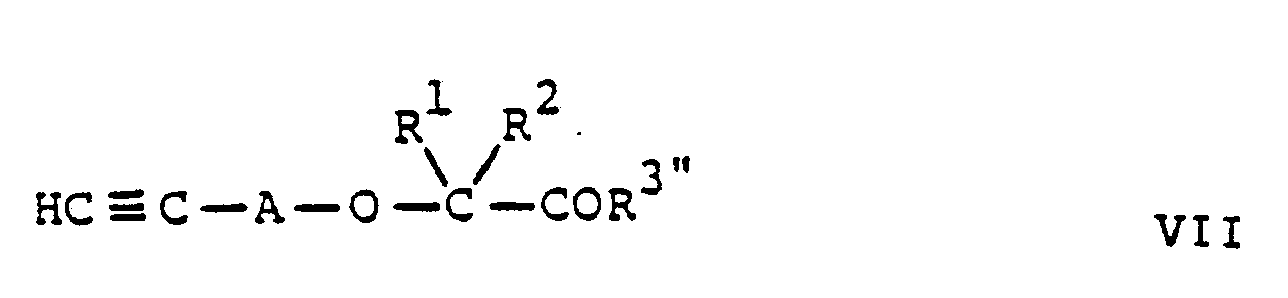
umsetzt oderd) zur Herstellung einer Säure der Formel I, worin R³ Hydroxy ist, eine Verbindung der Formel I, worin R³ C1-6-Alkoxy ist, hydrolysiert odere) zur Herstellung eines Esters der Formel I, worin R³ C1-6-Alkoxy ist, eine Verbindung der Formel I, worin R³ Hydroxy ist, verestert oderf) zur Herstellung eines Amids der Formel I, worin R³ eine Gruppe -NR⁴R⁵ ist, und R⁴ und R⁵ die im Anspruch 1 angegebene Bedeutung haben, eine Verbindung der Formel I, worin R³ Hydroxy oder C1-6-Alkoxy ist, amidiert undg) gewünschtenfalls eine Säure der Formel I, worin R³ Hydroxy ist, in ein pharmazeutisch verwendbares Salz mit einer Base umwandelt. - Pharmazeutisches Präparat auf der Basis einer Verbindung nach einem der Ansprüche 1-10.
- Verwendung einer Verbindung nach einem der Ansprüche 1-10, zur Herstellung eines pharmazeutischen Präparats für die Prophylaxe und Behandlung der Arthritis.
Priority Applications (1)
| Application Number | Priority Date | Filing Date | Title |
|---|---|---|---|
| AT86114046T ATE70270T1 (de) | 1985-10-17 | 1986-10-10 | Heterocyclische verbindungen. |
Applications Claiming Priority (4)
| Application Number | Priority Date | Filing Date | Title |
|---|---|---|---|
| GB858525578A GB8525578D0 (en) | 1985-10-17 | 1985-10-17 | Heterocyclic compounds |
| GB8525578 | 1985-10-17 | ||
| GB868617503A GB8617503D0 (en) | 1985-10-17 | 1986-07-17 | Heterocyclic compounds |
| GB8617503 | 1986-07-17 |
Publications (2)
| Publication Number | Publication Date |
|---|---|
| EP0220573A1 EP0220573A1 (de) | 1987-05-06 |
| EP0220573B1 true EP0220573B1 (de) | 1991-12-11 |
Family
ID=26289895
Family Applications (1)
| Application Number | Title | Priority Date | Filing Date |
|---|---|---|---|
| EP86114046A Expired - Lifetime EP0220573B1 (de) | 1985-10-17 | 1986-10-10 | Heterocyclische Verbindungen |
Country Status (18)
| Country | Link |
|---|---|
| US (1) | US4774253A (de) |
| EP (1) | EP0220573B1 (de) |
| AU (1) | AU594382B2 (de) |
| CA (1) | CA1287058C (de) |
| CS (1) | CS255881B2 (de) |
| DE (1) | DE3682873D1 (de) |
| DK (1) | DK470886A (de) |
| ES (2) | ES2002420A6 (de) |
| FI (1) | FI864052A7 (de) |
| HU (1) | HU195792B (de) |
| IL (1) | IL80290A (de) |
| MC (1) | MC1770A1 (de) |
| NO (1) | NO167284C (de) |
| NZ (1) | NZ217871A (de) |
| PH (1) | PH23022A (de) |
| PT (1) | PT83565B (de) |
| SU (1) | SU1514245A3 (de) |
| ZW (1) | ZW19786A1 (de) |
Families Citing this family (14)
| Publication number | Priority date | Publication date | Assignee | Title |
|---|---|---|---|---|
| US5149820A (en) * | 1987-03-11 | 1992-09-22 | Norsk Hydro A.S. | Deuterated compounds |
| US5239080A (en) * | 1989-02-08 | 1993-08-24 | Takeda Chemical Industries, Ltd. | Oxazole compounds and their use as antidiabetic and bone-reduction inhibitory agents |
| US5114960A (en) * | 1989-07-20 | 1992-05-19 | Hoffmann-La Roche Inc. | Substituted isoxazole derivatives |
| EP0440183A1 (de) * | 1990-02-01 | 1991-08-07 | Takeda Chemical Industries, Ltd. | Oxazol-Verbindungen, ihre Herstellung und Verwendung |
| US5348969A (en) * | 1992-04-03 | 1994-09-20 | Bristol-Myers Squibb Company | Diphenyloxazolyl-oxazoles as platelet aggregation inhibitors |
| FR2699172B1 (fr) * | 1992-12-11 | 1995-01-20 | Adir | Nouveaux dérivés de 4-méthyl-1,3-oxazole, leur procédé de préparation et les compositions pharmaceutiques qui les contiennent. |
| US5380738A (en) * | 1993-05-21 | 1995-01-10 | Monsanto Company | 2-substituted oxazoles further substituted by 4-fluorophenyl and 4-methylsulfonylphenyl as antiinflammatory agents |
| ES2125161B1 (es) * | 1996-03-21 | 1999-11-16 | Grupo Farmaceutico Almirall S | Nuevos derivados de 2-(3h)-oxazolona. |
| ATE431347T1 (de) | 1996-10-14 | 2009-05-15 | Bayer Healthcare Ag | Neue heterocyclylmethyl-substituierte pyrazolderivate und ihre verwendung in der behandlung von herz-kreislauf-erkrankungen |
| CN1781915A (zh) * | 1998-03-30 | 2006-06-07 | 日本烟草产业株式会社 | 噁唑基乙醇衍生物的制备方法 |
| IL152979A0 (en) | 2000-05-26 | 2003-06-24 | Nippon Shinyaku Co Ltd | Heterocyclic compounds |
| CA2503117C (en) * | 2002-11-08 | 2010-12-21 | F. Hoffmann-La Roche Ag | Substituted 4-alkoxyoxazol derivatives as ppar agonists |
| GB0712653D0 (en) | 2007-06-28 | 2007-08-08 | Syngenta Ltd | Novel herbicides |
| WO2013185976A1 (en) * | 2012-05-03 | 2013-12-19 | Dsm Ip Assets B.V. | A new process for preparation of 4-methyloxazole-5-carboxylic ester |
Family Cites Families (6)
| Publication number | Priority date | Publication date | Assignee | Title |
|---|---|---|---|---|
| US3401120A (en) * | 1965-10-23 | 1968-09-10 | Gaf Corp | Corrosion inhibitors |
| GB1164510A (en) * | 1967-06-15 | 1969-09-17 | Ici Ltd | Novel Isoxazole Derivatives, the preparation thereof, and Compositions containing the same |
| GB1180268A (en) * | 1967-09-26 | 1970-02-04 | Ici Ltd | Pharmaceutically Active Phenyl-Heterocyclic-Alkanol Derivatives |
| JPS57188587A (en) * | 1981-05-15 | 1982-11-19 | Tanabe Seiyaku Co Ltd | Thienyloxazolylacetic acid derivative and its preparation |
| JPS58183676A (ja) * | 1982-04-19 | 1983-10-26 | Takeda Chem Ind Ltd | オキサゾ−ル誘導体 |
| US4451476A (en) * | 1982-12-13 | 1984-05-29 | Sterling Drug Inc. | Isoxazoles as antiviral agents |
-
1986
- 1986-09-29 ZW ZW197/86A patent/ZW19786A1/xx unknown
- 1986-10-02 DK DK470886A patent/DK470886A/da not_active Application Discontinuation
- 1986-10-07 CA CA000519957A patent/CA1287058C/en not_active Expired - Lifetime
- 1986-10-07 FI FI864052A patent/FI864052A7/fi not_active Application Discontinuation
- 1986-10-09 NZ NZ217871A patent/NZ217871A/xx unknown
- 1986-10-10 IL IL80290A patent/IL80290A/xx unknown
- 1986-10-10 EP EP86114046A patent/EP0220573B1/de not_active Expired - Lifetime
- 1986-10-10 DE DE8686114046T patent/DE3682873D1/de not_active Expired - Lifetime
- 1986-10-10 US US06/917,566 patent/US4774253A/en not_active Expired - Fee Related
- 1986-10-13 AU AU63838/86A patent/AU594382B2/en not_active Ceased
- 1986-10-14 CS CS867415A patent/CS255881B2/cs unknown
- 1986-10-15 MC MC861852A patent/MC1770A1/fr unknown
- 1986-10-15 HU HU864282A patent/HU195792B/hu not_active IP Right Cessation
- 1986-10-15 PH PH34367A patent/PH23022A/en unknown
- 1986-10-16 SU SU864028303A patent/SU1514245A3/ru active
- 1986-10-16 ES ES8602629A patent/ES2002420A6/es not_active Expired
- 1986-10-16 PT PT83565A patent/PT83565B/pt not_active IP Right Cessation
- 1986-10-16 NO NO864128A patent/NO167284C/no unknown
-
1988
- 1988-04-29 ES ES8801315A patent/ES2010537A6/es not_active Expired
Also Published As
| Publication number | Publication date |
|---|---|
| DK470886D0 (da) | 1986-10-02 |
| NO167284C (no) | 1991-10-23 |
| FI864052A0 (fi) | 1986-10-07 |
| FI864052A7 (fi) | 1987-04-18 |
| MC1770A1 (fr) | 1987-07-17 |
| HUT44245A (en) | 1988-02-29 |
| DE3682873D1 (de) | 1992-01-23 |
| ZW19786A1 (en) | 1988-05-18 |
| PH23022A (en) | 1989-03-03 |
| US4774253A (en) | 1988-09-27 |
| PT83565A (en) | 1986-11-01 |
| AU6383886A (en) | 1987-04-30 |
| NO864128D0 (no) | 1986-10-16 |
| CS741586A2 (en) | 1987-07-16 |
| ES2002420A6 (es) | 1988-08-01 |
| AU594382B2 (en) | 1990-03-08 |
| DK470886A (da) | 1987-04-18 |
| CA1287058C (en) | 1991-07-30 |
| NZ217871A (en) | 1990-03-27 |
| HU195792B (en) | 1988-07-28 |
| IL80290A (en) | 1990-11-29 |
| CS255881B2 (en) | 1988-03-15 |
| NO167284B (no) | 1991-07-15 |
| ES2010537A6 (es) | 1989-11-16 |
| NO864128L (no) | 1987-04-21 |
| PT83565B (pt) | 1989-05-31 |
| IL80290A0 (en) | 1987-01-30 |
| SU1514245A3 (ru) | 1989-10-07 |
| EP0220573A1 (de) | 1987-05-06 |
Similar Documents
| Publication | Publication Date | Title |
|---|---|---|
| DE69431042T2 (de) | Pyrazol oder isoxazol substituierte alkylamide als acat inhibitoren | |
| DE69029626T2 (de) | Benzo[b]thiophen enthaltende lipoxygenaseinhibierende Verbindungen | |
| DE60225316T2 (de) | Cyanoalkylamino-derivate als protease-hemmer | |
| CH624395A5 (de) | ||
| DE69004340T2 (de) | Substituierte 2-Alkinylphenole mit entzündungshemmender Wirkung, Verfahren zu deren Herstellung und pharmazeutische Zusammensetzungen. | |
| EP0220573A1 (de) | Heterocyclische Verbindungen | |
| EP0352581A2 (de) | Aethylendiaminmonoamid-Derivate | |
| DE69432542T2 (de) | Tetraderivate, ihre Herstellung und Verwendung | |
| DE2731678C2 (de) | ||
| DD283603A5 (de) | Verfahren zur herstellung von substituierten hydroxylaminen | |
| DD287495A5 (de) | Verfahren zur herstellung herterozyclischer stickstoffverbindungen | |
| DE69015787T2 (de) | Thiophenderivate, Verfahren zu deren Herstellung und sie enthaltende pharmazeutische Zusammensetzungen. | |
| DE69017511T2 (de) | Butenoinsäure-Derivate. | |
| DE69408674T2 (de) | Phenylpyrrol-derivate und ihre verwendung als dopamin d3 antagonisten | |
| EP0200947B1 (de) | 1,3-Disubstituierte Imidazoliumsalze | |
| DE69402004T2 (de) | Beta-mercapto-propanamidderivate verwendbar zur Behandlung kardiovaskularer Krankheiten oder Erkrankungen | |
| DE69600329T2 (de) | Benzothiazol-Derivate | |
| EP0298921B1 (de) | 1,2-Benzisoxazole und 1,2-Benzisothiazole | |
| DE3786507T2 (de) | Heterocyclische Propenamid-Derivate, Verfahren zu ihrer Herstellung und ihre Verwendung als Arzneimittel. | |
| DE2535147A1 (de) | 2-thiol-4,5-diphenyloxazol-s-derivate, verfahren zu ihrer herstellung und diese verbindungen enthaltende arzneimittel | |
| DE69110217T2 (de) | Derivate der Kaffeinsäure und sie enthaltende pharmazeutische Zusammensetzungen. | |
| DE69526413T2 (de) | Heterocyclische Carboxyalkylderivate | |
| EP0037990A1 (de) | Phenyl-chinolizidine, entsprechende pharmazeutische Präparate, die Herstellung der Wirkstoffe sowie entsprechende Ausgangsverbindungen | |
| JPH01242577A (ja) | 抗関節炎性イソキサゾール―4―カルボキシアミド | |
| EP0109381B1 (de) | Thiophen-2-carbonsäurederivate und Verfahren zu deren Herstellung |
Legal Events
| Date | Code | Title | Description |
|---|---|---|---|
| PUAI | Public reference made under article 153(3) epc to a published international application that has entered the european phase |
Free format text: ORIGINAL CODE: 0009012 |
|
| 17P | Request for examination filed |
Effective date: 19861010 |
|
| AK | Designated contracting states |
Kind code of ref document: A1 Designated state(s): AT BE CH DE FR GB IT LI LU NL SE |
|
| RAP1 | Party data changed (applicant data changed or rights of an application transferred) |
Owner name: F. HOFFMANN-LA ROCHE AG |
|
| 17Q | First examination report despatched |
Effective date: 19900410 |
|
| GRAA | (expected) grant |
Free format text: ORIGINAL CODE: 0009210 |
|
| AK | Designated contracting states |
Kind code of ref document: B1 Designated state(s): AT BE CH DE FR GB IT LI LU NL SE |
|
| PG25 | Lapsed in a contracting state [announced via postgrant information from national office to epo] |
Ref country code: IT Free format text: LAPSE BECAUSE OF FAILURE TO SUBMIT A TRANSLATION OF THE DESCRIPTION OR TO PAY THE FEE WITHIN THE PRE;WARNING: LAPSES OF ITALIAN PATENTS WITH EFFECTIVE DATE BEFORE 2007 MAY HAVE OCCURRED AT ANY TIME BEFORE 2007. THE CORRECT EFFECTIVE DATE MAY BE DIFFERENT FROM THE ONE RECORDED.SCRIBED TIME-LIMIT Effective date: 19911211 Ref country code: FR Effective date: 19911211 Ref country code: GB Effective date: 19911211 Ref country code: BE Effective date: 19911211 Ref country code: NL Effective date: 19911211 Ref country code: SE Effective date: 19911211 |
|
| REF | Corresponds to: |
Ref document number: 70270 Country of ref document: AT Date of ref document: 19911215 Kind code of ref document: T |
|
| REF | Corresponds to: |
Ref document number: 3682873 Country of ref document: DE Date of ref document: 19920123 |
|
| EN | Fr: translation not filed | ||
| NLV1 | Nl: lapsed or annulled due to failure to fulfill the requirements of art. 29p and 29m of the patents act | ||
| GBV | Gb: ep patent (uk) treated as always having been void in accordance with gb section 77(7)/1977 [no translation filed] | ||
| PG25 | Lapsed in a contracting state [announced via postgrant information from national office to epo] |
Ref country code: AT Effective date: 19921010 |
|
| PLBE | No opposition filed within time limit |
Free format text: ORIGINAL CODE: 0009261 |
|
| STAA | Information on the status of an ep patent application or granted ep patent |
Free format text: STATUS: NO OPPOSITION FILED WITHIN TIME LIMIT |
|
| PG25 | Lapsed in a contracting state [announced via postgrant information from national office to epo] |
Ref country code: LU Free format text: LAPSE BECAUSE OF NON-PAYMENT OF DUE FEES Effective date: 19921031 Ref country code: LI Effective date: 19921031 Ref country code: CH Effective date: 19921031 |
|
| 26N | No opposition filed | ||
| REG | Reference to a national code |
Ref country code: CH Ref legal event code: PL |
|
| PG25 | Lapsed in a contracting state [announced via postgrant information from national office to epo] |
Ref country code: DE Effective date: 19930701 |