EP0201778A1 - (Meth)-Acrylsäureester und ihre Verwendung - Google Patents
(Meth)-Acrylsäureester und ihre Verwendung Download PDFInfo
- Publication number
- EP0201778A1 EP0201778A1 EP86105718A EP86105718A EP0201778A1 EP 0201778 A1 EP0201778 A1 EP 0201778A1 EP 86105718 A EP86105718 A EP 86105718A EP 86105718 A EP86105718 A EP 86105718A EP 0201778 A1 EP0201778 A1 EP 0201778A1
- Authority
- EP
- European Patent Office
- Prior art keywords
- meth
- chain
- different
- hydrogen
- represents hydrogen
- Prior art date
- Legal status (The legal status is an assumption and is not a legal conclusion. Google has not performed a legal analysis and makes no representation as to the accuracy of the status listed.)
- Granted
Links
- CERQOIWHTDAKMF-UHFFFAOYSA-N Methacrylic acid Chemical class CC(=C)C(O)=O CERQOIWHTDAKMF-UHFFFAOYSA-N 0.000 title claims description 23
- 239000001257 hydrogen Substances 0.000 claims abstract description 31
- 229910052739 hydrogen Inorganic materials 0.000 claims abstract description 31
- 150000002431 hydrogen Chemical class 0.000 claims abstract description 19
- NIXOWILDQLNWCW-UHFFFAOYSA-M Acrylate Chemical compound [O-]C(=O)C=C NIXOWILDQLNWCW-UHFFFAOYSA-M 0.000 claims abstract description 18
- UFHFLCQGNIYNRP-UHFFFAOYSA-N Hydrogen Chemical compound [H][H] UFHFLCQGNIYNRP-UHFFFAOYSA-N 0.000 claims abstract description 18
- 125000002496 methyl group Chemical group [H]C([H])([H])* 0.000 claims abstract description 17
- 125000001997 phenyl group Chemical group [H]C1=C([H])C([H])=C(*)C([H])=C1[H] 0.000 claims abstract description 16
- 125000004432 carbon atom Chemical group C* 0.000 claims abstract description 15
- 125000000217 alkyl group Chemical group 0.000 claims abstract description 12
- 239000001301 oxygen Substances 0.000 claims abstract description 12
- 229910052760 oxygen Inorganic materials 0.000 claims abstract description 12
- 239000011737 fluorine Substances 0.000 claims abstract description 11
- 229910052731 fluorine Inorganic materials 0.000 claims abstract description 11
- ZAMOUSCENKQFHK-UHFFFAOYSA-N Chlorine atom Chemical compound [Cl] ZAMOUSCENKQFHK-UHFFFAOYSA-N 0.000 claims abstract description 9
- 239000000460 chlorine Substances 0.000 claims abstract description 9
- 229910052801 chlorine Inorganic materials 0.000 claims abstract description 9
- PXGOKWXKJXAPGV-UHFFFAOYSA-N Fluorine Chemical compound FF PXGOKWXKJXAPGV-UHFFFAOYSA-N 0.000 claims abstract 8
- 125000001183 hydrocarbyl group Chemical group 0.000 claims abstract 4
- UUEVFMOUBSLVJW-UHFFFAOYSA-N oxo-[[1-[2-[2-[2-[4-(oxoazaniumylmethylidene)pyridin-1-yl]ethoxy]ethoxy]ethyl]pyridin-4-ylidene]methyl]azanium;dibromide Chemical compound [Br-].[Br-].C1=CC(=C[NH+]=O)C=CN1CCOCCOCCN1C=CC(=C[NH+]=O)C=C1 UUEVFMOUBSLVJW-UHFFFAOYSA-N 0.000 claims abstract 2
- 150000001875 compounds Chemical class 0.000 claims description 15
- 238000011049 filling Methods 0.000 claims description 12
- OKTJSMMVPCPJKN-UHFFFAOYSA-N Carbon Chemical group [C] OKTJSMMVPCPJKN-UHFFFAOYSA-N 0.000 claims description 9
- CERQOIWHTDAKMF-UHFFFAOYSA-M methacrylate group Chemical group C(C(=C)C)(=O)[O-] CERQOIWHTDAKMF-UHFFFAOYSA-M 0.000 claims description 9
- 238000000034 method Methods 0.000 claims description 9
- 238000002360 preparation method Methods 0.000 claims description 9
- 238000000576 coating method Methods 0.000 claims description 7
- 239000003054 catalyst Substances 0.000 claims description 6
- 150000002430 hydrocarbons Chemical class 0.000 claims description 6
- 238000004519 manufacturing process Methods 0.000 claims description 5
- YCUARCJWUKPITA-UHFFFAOYSA-N 1-isocyanato-2-[1,1,2,2-tetrafluoro-2-(2-isocyanatophenyl)ethyl]benzene Chemical compound C=1C=CC=C(N=C=O)C=1C(F)(F)C(F)(F)C1=CC=CC=C1N=C=O YCUARCJWUKPITA-UHFFFAOYSA-N 0.000 claims description 3
- 239000004215 Carbon black (E152) Substances 0.000 claims description 3
- 239000008199 coating composition Substances 0.000 claims description 3
- 229930195733 hydrocarbon Natural products 0.000 claims description 3
- 239000012442 inert solvent Substances 0.000 claims description 3
- 229920000642 polymer Polymers 0.000 claims description 3
- 150000002148 esters Chemical class 0.000 claims description 2
- 239000005548 dental material Substances 0.000 abstract description 4
- NIXOWILDQLNWCW-UHFFFAOYSA-N acrylic acid group Chemical group C(C=C)(=O)O NIXOWILDQLNWCW-UHFFFAOYSA-N 0.000 abstract description 3
- 239000000203 mixture Substances 0.000 description 36
- 239000000178 monomer Substances 0.000 description 24
- -1 methacrylate radicals Chemical class 0.000 description 20
- 239000000243 solution Substances 0.000 description 16
- WEVYAHXRMPXWCK-UHFFFAOYSA-N Acetonitrile Chemical compound CC#N WEVYAHXRMPXWCK-UHFFFAOYSA-N 0.000 description 9
- HEDRZPFGACZZDS-UHFFFAOYSA-N Chloroform Chemical compound ClC(Cl)Cl HEDRZPFGACZZDS-UHFFFAOYSA-N 0.000 description 8
- 239000011248 coating agent Substances 0.000 description 8
- 239000000463 material Substances 0.000 description 8
- 150000002978 peroxides Chemical class 0.000 description 8
- 238000012360 testing method Methods 0.000 description 8
- HWSSEYVMGDIFMH-UHFFFAOYSA-N 2-[2-[2-(2-methylprop-2-enoyloxy)ethoxy]ethoxy]ethyl 2-methylprop-2-enoate Chemical compound CC(=C)C(=O)OCCOCCOCCOC(=O)C(C)=C HWSSEYVMGDIFMH-UHFFFAOYSA-N 0.000 description 7
- VYPSYNLAJGMNEJ-UHFFFAOYSA-N Silicium dioxide Chemical compound O=[Si]=O VYPSYNLAJGMNEJ-UHFFFAOYSA-N 0.000 description 7
- 238000006243 chemical reaction Methods 0.000 description 7
- 239000000945 filler Substances 0.000 description 7
- ATUOYWHBWRKTHZ-UHFFFAOYSA-N Propane Chemical compound CCC ATUOYWHBWRKTHZ-UHFFFAOYSA-N 0.000 description 6
- YXFVVABEGXRONW-UHFFFAOYSA-N Toluene Chemical compound CC1=CC=CC=C1 YXFVVABEGXRONW-UHFFFAOYSA-N 0.000 description 6
- 239000002904 solvent Substances 0.000 description 6
- RGINWTPHNJAHAR-UHFFFAOYSA-N 1-isocyanato-3-[1,1,2,2-tetrafluoro-2-(3-isocyanatophenyl)ethyl]benzene Chemical compound C=1C=CC(N=C=O)=CC=1C(F)(F)C(F)(F)C1=CC=CC(N=C=O)=C1 RGINWTPHNJAHAR-UHFFFAOYSA-N 0.000 description 5
- YGYAWVDWMABLBF-UHFFFAOYSA-N Phosgene Chemical compound ClC(Cl)=O YGYAWVDWMABLBF-UHFFFAOYSA-N 0.000 description 5
- 150000001412 amines Chemical class 0.000 description 5
- 239000007788 liquid Substances 0.000 description 5
- 238000006116 polymerization reaction Methods 0.000 description 5
- 239000000523 sample Substances 0.000 description 5
- OMPJBNCRMGITSC-UHFFFAOYSA-N Benzoylperoxide Chemical compound C=1C=CC=CC=1C(=O)OOC(=O)C1=CC=CC=C1 OMPJBNCRMGITSC-UHFFFAOYSA-N 0.000 description 4
- 0 C[C@@]1(/C=*(\*)/C/C(/*)=C/CC1)N=C=O Chemical compound C[C@@]1(/C=*(\*)/C/C(/*)=C/CC1)N=C=O 0.000 description 4
- WYURNTSHIVDZCO-UHFFFAOYSA-N Tetrahydrofuran Chemical compound C1CCOC1 WYURNTSHIVDZCO-UHFFFAOYSA-N 0.000 description 4
- UKLDJPRMSDWDSL-UHFFFAOYSA-L [dibutyl(dodecanoyloxy)stannyl] dodecanoate Chemical compound CCCCCCCCCCCC(=O)O[Sn](CCCC)(CCCC)OC(=O)CCCCCCCCCCC UKLDJPRMSDWDSL-UHFFFAOYSA-L 0.000 description 4
- 238000005452 bending Methods 0.000 description 4
- MVPPADPHJFYWMZ-UHFFFAOYSA-N chlorobenzene Chemical compound ClC1=CC=CC=C1 MVPPADPHJFYWMZ-UHFFFAOYSA-N 0.000 description 4
- 239000012975 dibutyltin dilaurate Substances 0.000 description 4
- 125000005442 diisocyanate group Chemical group 0.000 description 4
- 239000002241 glass-ceramic Substances 0.000 description 4
- 239000003112 inhibitor Substances 0.000 description 4
- 238000005259 measurement Methods 0.000 description 4
- 239000002245 particle Substances 0.000 description 4
- VNQXSTWCDUXYEZ-UHFFFAOYSA-N 1,7,7-trimethylbicyclo[2.2.1]heptane-2,3-dione Chemical compound C1CC2(C)C(=O)C(=O)C1C2(C)C VNQXSTWCDUXYEZ-UHFFFAOYSA-N 0.000 description 3
- KWVGIHKZDCUPEU-UHFFFAOYSA-N 2,2-dimethoxy-2-phenylacetophenone Chemical compound C=1C=CC=CC=1C(OC)(OC)C(=O)C1=CC=CC=C1 KWVGIHKZDCUPEU-UHFFFAOYSA-N 0.000 description 3
- XDLMVUHYZWKMMD-UHFFFAOYSA-N 3-trimethoxysilylpropyl 2-methylprop-2-enoate Chemical compound CO[Si](OC)(OC)CCCOC(=O)C(C)=C XDLMVUHYZWKMMD-UHFFFAOYSA-N 0.000 description 3
- YMWUJEATGCHHMB-UHFFFAOYSA-N Dichloromethane Chemical compound ClCCl YMWUJEATGCHHMB-UHFFFAOYSA-N 0.000 description 3
- YCKRFDGAMUMZLT-UHFFFAOYSA-N Fluorine atom Chemical compound [F] YCKRFDGAMUMZLT-UHFFFAOYSA-N 0.000 description 3
- 239000004952 Polyamide Substances 0.000 description 3
- DDNSHRUCBRODIL-UHFFFAOYSA-N [1-hydroxy-1-(2-methylprop-2-enoyloxy)propyl] 2-methylprop-2-enoate Chemical compound CC(=C)C(=O)OC(O)(CC)OC(=O)C(C)=C DDNSHRUCBRODIL-UHFFFAOYSA-N 0.000 description 3
- DIOQZVSQGTUSAI-UHFFFAOYSA-N decane Chemical compound CCCCCCCCCC DIOQZVSQGTUSAI-UHFFFAOYSA-N 0.000 description 3
- IQPQWNKOIGAROB-UHFFFAOYSA-N isocyanate group Chemical group [N-]=C=O IQPQWNKOIGAROB-UHFFFAOYSA-N 0.000 description 3
- 229910052751 metal Inorganic materials 0.000 description 3
- 239000002184 metal Substances 0.000 description 3
- 230000035515 penetration Effects 0.000 description 3
- 229920002647 polyamide Polymers 0.000 description 3
- 239000000376 reactant Substances 0.000 description 3
- 239000011541 reaction mixture Substances 0.000 description 3
- 239000007787 solid Substances 0.000 description 3
- 125000001424 substituent group Chemical group 0.000 description 3
- XLYOFNOQVPJJNP-UHFFFAOYSA-N water Substances O XLYOFNOQVPJJNP-UHFFFAOYSA-N 0.000 description 3
- OVEWNBYMFPGNRR-UHFFFAOYSA-N (1,1,2,2-tetrafluoro-2-phenylethyl)benzene Chemical compound C=1C=CC=CC=1C(F)(F)C(F)(F)C1=CC=CC=C1 OVEWNBYMFPGNRR-UHFFFAOYSA-N 0.000 description 2
- XDIIOLIFZDMGHX-UHFFFAOYSA-N 1-(n,3,5-trimethylanilino)propan-2-yl n-methylcarbamate Chemical compound CNC(=O)OC(C)CN(C)C1=CC(C)=CC(C)=C1 XDIIOLIFZDMGHX-UHFFFAOYSA-N 0.000 description 2
- SVEZKNGPPFBYIW-UHFFFAOYSA-N 1-isocyanato-4-[1,1,2,2-tetrafluoro-2-(4-isocyanatophenyl)ethyl]benzene Chemical compound C=1C=C(N=C=O)C=CC=1C(F)(F)C(F)(F)C1=CC=C(N=C=O)C=C1 SVEZKNGPPFBYIW-UHFFFAOYSA-N 0.000 description 2
- AFTBJQDQENGCPC-UHFFFAOYSA-N 2,5-ditert-butyl-4-methylphenol Chemical compound CC1=CC(C(C)(C)C)=C(O)C=C1C(C)(C)C AFTBJQDQENGCPC-UHFFFAOYSA-N 0.000 description 2
- XFCMNSHQOZQILR-UHFFFAOYSA-N 2-[2-(2-methylprop-2-enoyloxy)ethoxy]ethyl 2-methylprop-2-enoate Chemical compound CC(=C)C(=O)OCCOCCOC(=O)C(C)=C XFCMNSHQOZQILR-UHFFFAOYSA-N 0.000 description 2
- VHSHLMUCYSAUQU-UHFFFAOYSA-N 2-hydroxypropyl methacrylate Chemical compound CC(O)COC(=O)C(C)=C VHSHLMUCYSAUQU-UHFFFAOYSA-N 0.000 description 2
- ZJCCRDAZUWHFQH-UHFFFAOYSA-N Trimethylolpropane Chemical compound CCC(CO)(CO)CO ZJCCRDAZUWHFQH-UHFFFAOYSA-N 0.000 description 2
- 238000010521 absorption reaction Methods 0.000 description 2
- 150000001252 acrylic acid derivatives Chemical class 0.000 description 2
- 235000019400 benzoyl peroxide Nutrition 0.000 description 2
- 229930006711 bornane-2,3-dione Natural products 0.000 description 2
- 125000000484 butyl group Chemical group [H]C([*])([H])C([H])([H])C([H])([H])C([H])([H])[H] 0.000 description 2
- 229940126214 compound 3 Drugs 0.000 description 2
- JQZRVMZHTADUSY-UHFFFAOYSA-L di(octanoyloxy)tin Chemical compound [Sn+2].CCCCCCCC([O-])=O.CCCCCCCC([O-])=O JQZRVMZHTADUSY-UHFFFAOYSA-L 0.000 description 2
- 239000003085 diluting agent Substances 0.000 description 2
- 125000001495 ethyl group Chemical group [H]C([H])([H])C([H])([H])* 0.000 description 2
- 230000002349 favourable effect Effects 0.000 description 2
- 125000002887 hydroxy group Chemical group [H]O* 0.000 description 2
- 238000002329 infrared spectrum Methods 0.000 description 2
- 239000003999 initiator Substances 0.000 description 2
- 239000011256 inorganic filler Substances 0.000 description 2
- 229910003475 inorganic filler Inorganic materials 0.000 description 2
- 125000000959 isobutyl group Chemical group [H]C([H])([H])C([H])(C([H])([H])[H])C([H])([H])* 0.000 description 2
- 125000001449 isopropyl group Chemical group [H]C([H])([H])C([H])(*)C([H])([H])[H] 0.000 description 2
- 239000004611 light stabiliser Substances 0.000 description 2
- 238000002844 melting Methods 0.000 description 2
- 230000008018 melting Effects 0.000 description 2
- SYSQUGFVNFXIIT-UHFFFAOYSA-N n-[4-(1,3-benzoxazol-2-yl)phenyl]-4-nitrobenzenesulfonamide Chemical class C1=CC([N+](=O)[O-])=CC=C1S(=O)(=O)NC1=CC=C(C=2OC3=CC=CC=C3N=2)C=C1 SYSQUGFVNFXIIT-UHFFFAOYSA-N 0.000 description 2
- TWNQGVIAIRXVLR-UHFFFAOYSA-N oxo(oxoalumanyloxy)alumane Chemical compound O=[Al]O[Al]=O TWNQGVIAIRXVLR-UHFFFAOYSA-N 0.000 description 2
- 229920003023 plastic Polymers 0.000 description 2
- 239000000047 product Substances 0.000 description 2
- 239000001294 propane Substances 0.000 description 2
- 125000001436 propyl group Chemical group [H]C([*])([H])C([H])([H])C([H])([H])[H] 0.000 description 2
- 150000003254 radicals Chemical class 0.000 description 2
- 230000035484 reaction time Effects 0.000 description 2
- 150000003513 tertiary aromatic amines Chemical class 0.000 description 2
- YLQBMQCUIZJEEH-UHFFFAOYSA-N tetrahydrofuran Natural products C=1C=COC=1 YLQBMQCUIZJEEH-UHFFFAOYSA-N 0.000 description 2
- VNQXSTWCDUXYEZ-LDWIPMOCSA-N (+/-)-Camphorquinone Chemical compound C1C[C@@]2(C)C(=O)C(=O)[C@@H]1C2(C)C VNQXSTWCDUXYEZ-LDWIPMOCSA-N 0.000 description 1
- GGSQMKDPESKTMD-UHFFFAOYSA-N (1,1,1,3,3,3-hexafluoro-2-phenylpropan-2-yl) prop-2-enoate Chemical compound C=CC(=O)OC(C(F)(F)F)(C(F)(F)F)C1=CC=CC=C1 GGSQMKDPESKTMD-UHFFFAOYSA-N 0.000 description 1
- HFDJOYSMHNOMOA-UHFFFAOYSA-N (1-hydroxy-1-prop-2-enoyloxypropyl) 2-methylprop-2-enoate Chemical compound C=CC(=O)OC(O)(CC)OC(=O)C(C)=C HFDJOYSMHNOMOA-UHFFFAOYSA-N 0.000 description 1
- SWFHGTMLYIBPPA-UHFFFAOYSA-N (4-methoxyphenyl)-phenylmethanone Chemical compound C1=CC(OC)=CC=C1C(=O)C1=CC=CC=C1 SWFHGTMLYIBPPA-UHFFFAOYSA-N 0.000 description 1
- AJDIZQLSFPQPEY-UHFFFAOYSA-N 1,1,2-Trichlorotrifluoroethane Chemical compound FC(F)(Cl)C(F)(Cl)Cl AJDIZQLSFPQPEY-UHFFFAOYSA-N 0.000 description 1
- RYHBNJHYFVUHQT-UHFFFAOYSA-N 1,4-Dioxane Chemical compound C1COCCO1 RYHBNJHYFVUHQT-UHFFFAOYSA-N 0.000 description 1
- HYQASEVIBPSPMK-UHFFFAOYSA-N 12-(2-methylprop-2-enoyloxy)dodecyl 2-methylprop-2-enoate Chemical compound CC(=C)C(=O)OCCCCCCCCCCCCOC(=O)C(C)=C HYQASEVIBPSPMK-UHFFFAOYSA-N 0.000 description 1
- 238000005160 1H NMR spectroscopy Methods 0.000 description 1
- SMZOUWXMTYCWNB-UHFFFAOYSA-N 2-(2-methoxy-5-methylphenyl)ethanamine Chemical compound COC1=CC=C(C)C=C1CCN SMZOUWXMTYCWNB-UHFFFAOYSA-N 0.000 description 1
- LTHJXDSHSVNJKG-UHFFFAOYSA-N 2-[2-[2-[2-(2-methylprop-2-enoyloxy)ethoxy]ethoxy]ethoxy]ethyl 2-methylprop-2-enoate Chemical compound CC(=C)C(=O)OCCOCCOCCOCCOC(=O)C(C)=C LTHJXDSHSVNJKG-UHFFFAOYSA-N 0.000 description 1
- TXBCBTDQIULDIA-UHFFFAOYSA-N 2-[[3-hydroxy-2,2-bis(hydroxymethyl)propoxy]methyl]-2-(hydroxymethyl)propane-1,3-diol Chemical compound OCC(CO)(CO)COCC(CO)(CO)CO TXBCBTDQIULDIA-UHFFFAOYSA-N 0.000 description 1
- JWQRYFYKHVZIDQ-UHFFFAOYSA-N 2-[n-(2-hydroxyethyl)-3,5-dimethylanilino]ethanol Chemical compound CC1=CC(C)=CC(N(CCO)CCO)=C1 JWQRYFYKHVZIDQ-UHFFFAOYSA-N 0.000 description 1
- JUVSRZCUMWZBFK-UHFFFAOYSA-N 2-[n-(2-hydroxyethyl)-4-methylanilino]ethanol Chemical compound CC1=CC=C(N(CCO)CCO)C=C1 JUVSRZCUMWZBFK-UHFFFAOYSA-N 0.000 description 1
- WRWYNZAUZUHNGJ-UHFFFAOYSA-N 3-[2-(3-aminophenyl)-1,1,2,2-tetrafluoroethyl]aniline Chemical compound NC1=CC=CC(C(F)(F)C(F)(F)C=2C=C(N)C=CC=2)=C1 WRWYNZAUZUHNGJ-UHFFFAOYSA-N 0.000 description 1
- ZXVONLUNISGICL-UHFFFAOYSA-N 4,6-dinitro-o-cresol Chemical group CC1=CC([N+]([O-])=O)=CC([N+]([O-])=O)=C1O ZXVONLUNISGICL-UHFFFAOYSA-N 0.000 description 1
- BGNGWHSBYQYVRX-UHFFFAOYSA-N 4-(dimethylamino)benzaldehyde Chemical compound CN(C)C1=CC=C(C=O)C=C1 BGNGWHSBYQYVRX-UHFFFAOYSA-N 0.000 description 1
- YYVYAPXYZVYDHN-UHFFFAOYSA-N 9,10-phenanthroquinone Chemical compound C1=CC=C2C(=O)C(=O)C3=CC=CC=C3C2=C1 YYVYAPXYZVYDHN-UHFFFAOYSA-N 0.000 description 1
- PNEYBMLMFCGWSK-UHFFFAOYSA-N Alumina Chemical compound [O-2].[O-2].[O-2].[Al+3].[Al+3] PNEYBMLMFCGWSK-UHFFFAOYSA-N 0.000 description 1
- NLZUEZXRPGMBCV-UHFFFAOYSA-N Butylhydroxytoluene Chemical compound CC1=CC(C(C)(C)C)=C(O)C(C(C)(C)C)=C1 NLZUEZXRPGMBCV-UHFFFAOYSA-N 0.000 description 1
- GAWIXWVDTYZWAW-UHFFFAOYSA-N C[CH]O Chemical group C[CH]O GAWIXWVDTYZWAW-UHFFFAOYSA-N 0.000 description 1
- PEDCQBHIVMGVHV-UHFFFAOYSA-N Glycerine Chemical compound OCC(O)CO PEDCQBHIVMGVHV-UHFFFAOYSA-N 0.000 description 1
- WOBHKFSMXKNTIM-UHFFFAOYSA-N Hydroxyethyl methacrylate Chemical compound CC(=C)C(=O)OCCO WOBHKFSMXKNTIM-UHFFFAOYSA-N 0.000 description 1
- 238000004566 IR spectroscopy Methods 0.000 description 1
- YIVJZNGAASQVEM-UHFFFAOYSA-N Lauroyl peroxide Chemical compound CCCCCCCCCCCC(=O)OOC(=O)CCCCCCCCCCC YIVJZNGAASQVEM-UHFFFAOYSA-N 0.000 description 1
- OKKJLVBELUTLKV-UHFFFAOYSA-N Methanol Chemical class OC OKKJLVBELUTLKV-UHFFFAOYSA-N 0.000 description 1
- 244000028419 Styrax benzoin Species 0.000 description 1
- 235000000126 Styrax benzoin Nutrition 0.000 description 1
- 235000008411 Sumatra benzointree Nutrition 0.000 description 1
- ATJFFYVFTNAWJD-UHFFFAOYSA-N Tin Chemical compound [Sn] ATJFFYVFTNAWJD-UHFFFAOYSA-N 0.000 description 1
- GSEJCLTVZPLZKY-UHFFFAOYSA-N Triethanolamine Chemical compound OCCN(CCO)CCO GSEJCLTVZPLZKY-UHFFFAOYSA-N 0.000 description 1
- 239000002253 acid Substances 0.000 description 1
- 239000002318 adhesion promoter Substances 0.000 description 1
- 239000000853 adhesive Substances 0.000 description 1
- 230000001070 adhesive effect Effects 0.000 description 1
- 239000003463 adsorbent Substances 0.000 description 1
- 125000003277 amino group Chemical group 0.000 description 1
- UHOVQNZJYSORNB-UHFFFAOYSA-N benzene Substances C1=CC=CC=C1 UHOVQNZJYSORNB-UHFFFAOYSA-N 0.000 description 1
- WURBFLDFSFBTLW-UHFFFAOYSA-N benzil Chemical compound C=1C=CC=CC=1C(=O)C(=O)C1=CC=CC=C1 WURBFLDFSFBTLW-UHFFFAOYSA-N 0.000 description 1
- 229960002130 benzoin Drugs 0.000 description 1
- RWCCWEUUXYIKHB-UHFFFAOYSA-N benzophenone Chemical compound C=1C=CC=CC=1C(=O)C1=CC=CC=C1 RWCCWEUUXYIKHB-UHFFFAOYSA-N 0.000 description 1
- 239000012965 benzophenone Substances 0.000 description 1
- GCTPMLUUWLLESL-UHFFFAOYSA-N benzyl prop-2-enoate Chemical class C=CC(=O)OCC1=CC=CC=C1 GCTPMLUUWLLESL-UHFFFAOYSA-N 0.000 description 1
- 238000004061 bleaching Methods 0.000 description 1
- 238000009835 boiling Methods 0.000 description 1
- 235000010354 butylated hydroxytoluene Nutrition 0.000 description 1
- 239000007795 chemical reaction product Substances 0.000 description 1
- 239000003638 chemical reducing agent Substances 0.000 description 1
- 238000004140 cleaning Methods 0.000 description 1
- 229940125782 compound 2 Drugs 0.000 description 1
- 229920006037 cross link polymer Polymers 0.000 description 1
- ISAOCJYIOMOJEB-UHFFFAOYSA-N desyl alcohol Natural products C=1C=CC=CC=1C(O)C(=O)C1=CC=CC=C1 ISAOCJYIOMOJEB-UHFFFAOYSA-N 0.000 description 1
- 150000004985 diamines Chemical class 0.000 description 1
- 239000010432 diamond Substances 0.000 description 1
- 229910003460 diamond Inorganic materials 0.000 description 1
- 238000004821 distillation Methods 0.000 description 1
- 230000007717 exclusion Effects 0.000 description 1
- 239000000706 filtrate Substances 0.000 description 1
- YLQWCDOCJODRMT-UHFFFAOYSA-N fluoren-9-one Chemical compound C1=CC=C2C(=O)C3=CC=CC=C3C2=C1 YLQWCDOCJODRMT-UHFFFAOYSA-N 0.000 description 1
- OMRRUNXAWXNVFW-UHFFFAOYSA-N fluoridochlorine Chemical compound ClF OMRRUNXAWXNVFW-UHFFFAOYSA-N 0.000 description 1
- 239000011888 foil Substances 0.000 description 1
- 235000011187 glycerol Nutrition 0.000 description 1
- 235000019382 gum benzoic Nutrition 0.000 description 1
- 238000010438 heat treatment Methods 0.000 description 1
- XXMIOPMDWAUFGU-UHFFFAOYSA-N hexane-1,6-diol Chemical compound OCCCCCCO XXMIOPMDWAUFGU-UHFFFAOYSA-N 0.000 description 1
- 125000004051 hexyl group Chemical group [H]C([H])([H])C([H])([H])C([H])([H])C([H])([H])C([H])([H])C([H])([H])* 0.000 description 1
- 238000005984 hydrogenation reaction Methods 0.000 description 1
- 230000007062 hydrolysis Effects 0.000 description 1
- 238000006460 hydrolysis reaction Methods 0.000 description 1
- 150000002440 hydroxy compounds Chemical class 0.000 description 1
- 239000012948 isocyanate Substances 0.000 description 1
- 125000004491 isohexyl group Chemical group C(CCC(C)C)* 0.000 description 1
- 125000001972 isopentyl group Chemical group [H]C([H])([H])C([H])(C([H])([H])[H])C([H])([H])C([H])([H])* 0.000 description 1
- 238000004898 kneading Methods 0.000 description 1
- 239000004922 lacquer Substances 0.000 description 1
- 229910052746 lanthanum Inorganic materials 0.000 description 1
- FZLIPJUXYLNCLC-UHFFFAOYSA-N lanthanum atom Chemical compound [La] FZLIPJUXYLNCLC-UHFFFAOYSA-N 0.000 description 1
- 238000012698 light-induced step-growth polymerization Methods 0.000 description 1
- 239000011159 matrix material Substances 0.000 description 1
- 125000005397 methacrylic acid ester group Chemical group 0.000 description 1
- GYVGXEWAOAAJEU-UHFFFAOYSA-N n,n,4-trimethylaniline Chemical compound CN(C)C1=CC=C(C)C=C1 GYVGXEWAOAAJEU-UHFFFAOYSA-N 0.000 description 1
- 150000003961 organosilicon compounds Chemical class 0.000 description 1
- 238000002103 osmometry Methods 0.000 description 1
- WXZMFSXDPGVJKK-UHFFFAOYSA-N pentaerythritol Chemical compound OCC(CO)(CO)CO WXZMFSXDPGVJKK-UHFFFAOYSA-N 0.000 description 1
- 125000001147 pentyl group Chemical group C(CCCC)* 0.000 description 1
- 239000004033 plastic Substances 0.000 description 1
- 229920000193 polymethacrylate Polymers 0.000 description 1
- 230000036316 preload Effects 0.000 description 1
- 238000000425 proton nuclear magnetic resonance spectrum Methods 0.000 description 1
- 239000011044 quartzite Substances 0.000 description 1
- 238000001953 recrystallisation Methods 0.000 description 1
- 238000007717 redox polymerization reaction Methods 0.000 description 1
- 239000011034 rock crystal Substances 0.000 description 1
- 239000000565 sealant Substances 0.000 description 1
- 239000000741 silica gel Substances 0.000 description 1
- 229910002027 silica gel Inorganic materials 0.000 description 1
- HBMJWWWQQXIZIP-UHFFFAOYSA-N silicon carbide Chemical compound [Si+]#[C-] HBMJWWWQQXIZIP-UHFFFAOYSA-N 0.000 description 1
- 229910010271 silicon carbide Inorganic materials 0.000 description 1
- 239000000377 silicon dioxide Substances 0.000 description 1
- 230000006641 stabilisation Effects 0.000 description 1
- 238000011105 stabilization Methods 0.000 description 1
- 238000003756 stirring Methods 0.000 description 1
- 239000000126 substance Substances 0.000 description 1
- 239000000725 suspension Substances 0.000 description 1
- 230000002195 synergetic effect Effects 0.000 description 1
- YRHRIQCWCFGUEQ-UHFFFAOYSA-N thioxanthen-9-one Chemical compound C1=CC=C2C(=O)C3=CC=CC=C3SC2=C1 YRHRIQCWCFGUEQ-UHFFFAOYSA-N 0.000 description 1
- 150000003609 titanium compounds Chemical class 0.000 description 1
- 125000002023 trifluoromethyl group Chemical group FC(F)(F)* 0.000 description 1
- 239000002966 varnish Substances 0.000 description 1
- 238000009736 wetting Methods 0.000 description 1
- 229910052845 zircon Inorganic materials 0.000 description 1
- GFQYVLUOOAAOGM-UHFFFAOYSA-N zirconium(iv) silicate Chemical compound [Zr+4].[O-][Si]([O-])([O-])[O-] GFQYVLUOOAAOGM-UHFFFAOYSA-N 0.000 description 1
Classifications
-
- C—CHEMISTRY; METALLURGY
- C07—ORGANIC CHEMISTRY
- C07C—ACYCLIC OR CARBOCYCLIC COMPOUNDS
- C07C67/00—Preparation of carboxylic acid esters
- C07C67/28—Preparation of carboxylic acid esters by modifying the hydroxylic moiety of the ester, such modification not being an introduction of an ester group
-
- C—CHEMISTRY; METALLURGY
- C08—ORGANIC MACROMOLECULAR COMPOUNDS; THEIR PREPARATION OR CHEMICAL WORKING-UP; COMPOSITIONS BASED THEREON
- C08F—MACROMOLECULAR COMPOUNDS OBTAINED BY REACTIONS ONLY INVOLVING CARBON-TO-CARBON UNSATURATED BONDS
- C08F20/00—Homopolymers and copolymers of compounds having one or more unsaturated aliphatic radicals, each having only one carbon-to-carbon double bond, and only one being terminated by only one carboxyl radical or a salt, anhydride, ester, amide, imide or nitrile thereof
- C08F20/02—Monocarboxylic acids having less than ten carbon atoms, Derivatives thereof
- C08F20/10—Esters
- C08F20/34—Esters containing nitrogen, e.g. N,N-dimethylaminoethyl (meth)acrylate
- C08F20/36—Esters containing nitrogen, e.g. N,N-dimethylaminoethyl (meth)acrylate containing oxygen in addition to the carboxy oxygen, e.g. 2-N-morpholinoethyl (meth)acrylate or 2-isocyanatoethyl (meth)acrylate
-
- A—HUMAN NECESSITIES
- A61—MEDICAL OR VETERINARY SCIENCE; HYGIENE
- A61K—PREPARATIONS FOR MEDICAL, DENTAL OR TOILETRY PURPOSES
- A61K6/00—Preparations for dentistry
- A61K6/80—Preparations for artificial teeth, for filling teeth or for capping teeth
- A61K6/884—Preparations for artificial teeth, for filling teeth or for capping teeth comprising natural or synthetic resins
- A61K6/887—Compounds obtained by reactions only involving carbon-to-carbon unsaturated bonds
-
- C—CHEMISTRY; METALLURGY
- C07—ORGANIC CHEMISTRY
- C07C—ACYCLIC OR CARBOCYCLIC COMPOUNDS
- C07C231/00—Preparation of carboxylic acid amides
- C07C231/12—Preparation of carboxylic acid amides by reactions not involving the formation of carboxamide groups
Definitions
- the invention relates to new fluorine-containing acrylic acid and methacrylic acid esters, hereinafter referred to as (meth) acrylic acid esters, and their preparation.
- the new compounds can be used as monomers for use in the dental field.
- Fluorine-containing phenylcarbinol acrylates such as 1,1,1,3,3,3-hexafluoro-2-phenyl-2-acryloyloxypropane are from Org. Coat. Plastic. Chem. 42, 204-207, (1980).
- Similar (meth) acrylic esters such as 1,3-bis- (2- (meth) acry1-oyl-oxy-1,1,1,3,3,3-hexafluoropropyl-2) -5-perfluoroalkyl-benzene and their Uses in the dental field are described in US 4,356,296.
- the carbinols are acidified by the trifluoromethyl groups and the carbinol esters produced therefrom are distinguished by a reduced resistance to hydrolysis. This limits their usability as dental monomers.
- Monomers of this type provide dental materials with a low level of mechanical properties.
- Alkyl can generally mean a straight-chain or branched hydrocarbon radical with 1 to 4 carbon atoms.
- the following alkyl radicals may be mentioned, for example: methyl, ethyl, propyl, isopropyl, butyl and isobutyl.
- Lower alkyl can mean a straight-chain or branched hydrocarbon radical having 1 to about 6 carbon atoms. Examples include the following lower alkyl radicals: methyl, ethyl, propyl, isopropyl, butyl, isobutyl, pentyl, isopentyl, hexyl and isohexyl.
- Z is generally a straight-chain or branched hydrocarbon chain with 2 to 10 carbon atoms, which is optionally substituted by 1 to 4 methacrylate or acrylate radicals.
- Examples include the following hydrocarbon chains: ethylene, propylene, 2- (meth) acryloyloxy-1,3-propylene, 3- (meth) acryloyloxy-1,2-propylene, 2- (meth) acryloyloxymethyl-2-ethyl-1, 3-propylene and 2,2-bis (meth) acryloyloxymethyl-1,3-propylene.
- the new (meth) -acrylic acid esters are colorless, non-volatile and, after polymerisation, result in transparent plastics.
- the materials obtained in this way are characterized by a surprisingly high resistance to physical and chemical stress.
- the hardness and breaking strength are improved compared to conventional materials used for this purpose.
- the favorable surface properties and low water absorption of the polymers obtained with the new (meth) acrylic acid esters are characterized by a surprisingly high resistance to physical and chemical stress.
- the hardness and breaking strength are improved compared to conventional materials used for this purpose.
- the favorable surface properties and low water absorption of the polymers obtained with the new (meth) acrylic acid esters are the favorable surface properties and low water absorption of the polymers obtained with the new (meth) acrylic acid esters.
- the substituents R 3 and R 4 are preferably in the 3,3'- or 3,4'- or 4,4'-position in the 1,2-diphenyl-tetrafluoroethane. Particularly favorable mechanical values and low monomer viscosities are obtained when mixtures of positional isomers are used. Mixtures with a predominant proportion of 3,3'- or 3,4'-isomers are most suitable.
- the substituents R 3 and R 4 are alkyloxycarbonylamino radicals containing methacrylate groups, which can be obtained, for example, by reacting corresponding isocyanate groups with hydroxyl compounds containing methacrylate groups.
- hydroxyethyl (meth) acrylates, 2-hydroxypropyl (meth) acrylate, trimethylolpropane di (meth) acrylate, propanetriol di (meth) acrylates and pentaerythritol tri (meth) acrylate, dipentaerythritol penta (meth) acrylate are preferred. Hydroxy compounds that contain both acrylate and methacrylate groups are also well suited.
- Particularly preferred hydroxyl compounds are 2-hydroxypropyl methacrylate and propanetriol dimethacrylate (mixture of 1,2- and 1,3-dimethacrylate) and hydroxymethacryloyloxy-acryloyloxypropane (mixture of 1,2- and 1,3-diesters).
- the preparation of the isocyanate compounds of the formula III can be carried out, for example, according to Houben-Weyl, Methods of Organic Chemistry Volume VIII, p. 119 ff (G. Thieme Verlag, Stuttgart, 1952) by reacting the corresponding diamino compounds with phosgene (see also: Zh. Obshch. Khim. 32 (9). 3035-3039 (1962), and 35 (9). 1612-1620 (1965) and RA 168274 (1963)).
- the reaction of the diisocyanates according to formula III to the (meth) acrylic acid esters according to the invention is preferably carried out with the exclusion of water in an inert solvent.
- suitable solvents are: chloroform, tetrahydrofuran, dioxane, methylene chloride, toluene, acetonitrile and Frigene.
- Preferred solvents are chloroform, tetrahydrofuran, Frigen 113 and acetonitrile.
- the reaction is generally carried out in the temperature range from 20 to 100 ° C., preferably 30 to 70 ° C.
- tin-containing catalysts such as dibutyltin dilaurate or tin (II) octoate are preferably used.
- Other suitable catalysts are compounds with tert. Amino groups and titanium compounds.
- the catalyst is used in an amount of 0.01 to 2.5% by weight, preferably 0.1 to 1.5% by weight, based on the total amount of the reactants.
- the (meth) acrylic acid esters of the formula I according to the invention can be mixed with monomers known per se, for example in order to adapt the viscosity to the intended use. Viscosities in the range from 60 to 10,000 mPas are preferred. This can be achieved by optionally adding a comonomer of lower viscosity as reactive diluent to the monomers according to the invention.
- the compounds according to the invention are used in a mixture with comonomers in a proportion of approximately 30 to approximately 90% by weight, a proportion of 50 to 90% by weight being particularly preferred.
- comonomers are preferred which have a boiling point above 100 ° C. at 13 mbar.
- tertiary aromatic amines are N, N-dimethyl-p-toluidine, bis- (2-hydroxyethyl) -p-toluidine, bis (2-hydroxyethyl) -3,5-dimethylaniline and the N described in DE-PS 2759239 -Methyl-N- (2-methyl-carbamoyloxypropyl) -3,5-dimethylaniline called.
- concentrations of the peroxide or of the amine are advantageously chosen such that they are 0.1 to 5% by weight, preferably 0.5 to 3% by weight, based on the monomer mixture.
- the peroxide or amine-containing monomer mixtures are stored separately until use.
- the monomers according to the invention can also be brought to polymerization by irradiation with UV light or visible light (for example in the wavelength range from 230 to 650 nm).
- Suitable initiators for the photo-initiated polymerization are, for example, benzil, benzil dimethyl ketal, benzoin monoalkyl ether, benzophenone, p-methoxybenzophenone, fluorenone, thioxanthone, phenanthrenequinone and 2,3-bornandione (camphorquinone), optionally in the presence of synergistic photoactivators such as N, N-methacrylate , Triethanolamine, 4-N, N-dimethylaminobenzenesulfonic acid bisallylamide.
- the implementation of the photopolymerization process is described for example in DE-PS 3135115.
- light stabilizers and polymerization inhibitors known per se for this purpose can be added to the (meth) acrylic acid esters according to the invention.
- the light stabilizer and the polymerization inhibitor are generally used in an amount of 0.01 to 0.50 parts by weight, based on 100 parts by weight of the monomer mixture.
- the monomer mixtures can be used as coating agents (tooth varnishes) without the addition of fillers.
- fillers When used as tooth filling compounds, fillers are generally added to the monomer mixtures obtained. In order to be able to achieve a high degree of filling, monomer mixtures which have a viscosity in the range from 60 to 10,000 mPas are particularly advantageous.
- the monomer mixtures containing the compounds of the formula I according to the invention can preferably be admixed with inorganic fillers. For example, rock crystal, quartzite, crystallobalite, quartz glass, highly disperse silica, aluminum oxide and glass ceramics, for example glass ceramics containing lanthanum and zircon (DE-OS 23 47 591) may be mentioned.
- the inorganic fillers are preferably pretreated with an adhesion promoter.
- Adhesion can be achieved, for example, by treatment with organosilicon compounds (E.P. Plueddemann, Progress in Organic coatings, 11, 297 to 308 (1983)).
- organosilicon compounds E.P. Plueddemann, Progress in Organic coatings, 11, 297 to 308 (1983)
- 3-Methacryloyloxypropyltrimethoxysilane is preferably used.
- the fillers for the dental filling compositions according to the invention generally have an average particle diameter of 0.01 to 100 ⁇ m, preferably 0.05 to 50 ⁇ m, particularly preferably 0.05 to 5 ⁇ m. It can also be advantageous to use several fillers next to one another which have a different particle diameter.
- the proportion of filler in the dental filling materials is generally 5 to 85% by weight, preferably 50 to 80% by weight.
- the components are processed using commercially available kneading machines.
- the proportion of the (meth) -acrylic acid esters according to the invention in the filling materials is generally 5 to 85% by weight, based on the filling material.
- Phosgene is passed through the solution at 120 ° C. for 90 minutes. Subsequently, the still dissolved phosgene is blown out with C0 2 and then the mixture is worked up by distillation. 355 g of 1,2-bis- (3-isocyanatophenyl) -1,1,2,2-tetrafluoroethane are obtained, bp: 145 to 150 ° C./0.1 mbar, mp: 139 to 140 ° C. (purity 1t. GC 97X).
- the diisocyanate is obtained using the same basic phosgenation process as above, with a content of about 80%. Mp: 128 to 135 ° C.
- a diisocyanate mixture of 1,2-diphenyl-1,1,2,2-tetrafluoroethane with a content of only approx. 45% pure 3,3'-diisocyanate is obtained when the pure mixture of the corresponding dinitro compounds 3,4-compound separated by recrystallization from toluene and the mother liquors thus obtained worked up, hydrogenated and phosgenated as described above.
- the melting range of the distilled diisocyanate mixture is between 117 and 127 ° C.
- part of the solvent is removed in vacuo and the suspension is filtered off.
- the remaining solid (17.5 g; 58.7 X) has the expected structure based on the 1 H-NMR data. Melting point: 160 ° C.
- the molar mass was determined osmometrically at 625 (calc. 624).
- the reaction is complete after a reaction time of 3 hours.
- the reaction mixture is worked up as in Example 3.
- the product is a colorless viscous liquid.
- the liquid hardens when exposed with a dental lamp (exposure time 40 seconds).
- Example 6 is repeated using the monomer from Example 5, but using 32.8 parts by weight of triethylene glycol dimethacrylate.
- the Wallace penetration depth is measured 15 to 45 minutes after the samples have hardened.
- a Vickers pyramid is pressed on for 15 seconds under a preload of 1 g and then for 60 seconds under a main load of 100 g.
- a penetration depth of the diamond under the influence of the main load is registered as a Wallace penetration depth (H w 100/60) in ⁇ m. Five measurements are used to assess one sample.
- Example 6 The coating agent from Example 6 was subjected to the testing of bending strength and bending modulus in accordance with DIN 13922.
- Example 8 was repeated using the coating agent from Example 7.
- Example 8 The measurement results from Example 8 and Example 9 are summarized in Table 2.
- Amine paste 2.0% by weight of N-methyl-N- (2-methylcarbamoyloxypropyl) -3,5-dimethylaniline are dissolved in a mixture of 70 parts by weight of the compound according to the invention from Example 3 and 30 parts by weight of triethylene glycol dimethacrylate. 5 g of this solution are processed into a paste with 15 g of a commercially available glass ceramic with an average particle diameter of 4 ⁇ m, which have been silanized with 3-methacryloyloxypropyltrimethoxysilane.
- Peroxide paste 1.94 parts by weight of dibenzoyl peroxide are dissolved in a mixture of 70 parts by weight of the compound according to the invention from Example 3 and 30 parts by weight of triethylene glycol dimethacrylate. 5 g of this solution are processed into a paste with 15 g of a commercially available glass ceramic with an average particle diameter of 4 ⁇ m, which have been silanized with 3-methacryloyloxypropyltrimethoxysilane.
- a mixture of equal parts of amine paste and peroxide paste hardens within 2 to 3 minutes.
- the curing takes place by exposure with a dental lamp from Kulzer. With an exposure time of 40 seconds, the curing depth is 6 mm.
- Example 10 is repeated using the monomer from Example 5, but using 32.8 parts by weight of triethylene glycol dimethacrylate.
Landscapes
- Chemical & Material Sciences (AREA)
- Health & Medical Sciences (AREA)
- Organic Chemistry (AREA)
- Oral & Maxillofacial Surgery (AREA)
- Chemical Kinetics & Catalysis (AREA)
- Public Health (AREA)
- Medicinal Chemistry (AREA)
- Life Sciences & Earth Sciences (AREA)
- Animal Behavior & Ethology (AREA)
- General Health & Medical Sciences (AREA)
- Plastic & Reconstructive Surgery (AREA)
- Veterinary Medicine (AREA)
- Epidemiology (AREA)
- Polymers & Plastics (AREA)
- Organic Low-Molecular-Weight Compounds And Preparation Thereof (AREA)
- Dental Preparations (AREA)
- Low-Molecular Organic Synthesis Reactions Using Catalysts (AREA)
- Addition Polymer Or Copolymer, Post-Treatments, Or Chemical Modifications (AREA)
- Heat Sensitive Colour Forming Recording (AREA)
- Acyclic And Carbocyclic Compounds In Medicinal Compositions (AREA)
Abstract
Description
- Die Erfindung betrifft neue fluorhaltige Acrylsäure- und Methacrylsäureester, im folgenden (Meth)-Acrylsäureester genannt, und ihre Herstellung. Die neuen Verbindungen können als Monomere für die Anwendung im Dentalbereich eingesetzt werden.
- Fluorhaltige Phenylcarbinol-acrylate wie 1,1,1,3,3,3-Hexafluor-2-Phenyl-2-acryloyloxy-propan sind aus Org. Coat. Plast. Chem. 42, 204-207, (1980) bekannt. Ähnlich aufgebaute (Meth)acrylsäureester, wie 1,3-Bis-(2-(meth)acry1- oyl-oxy-1,1,1,3,3,3-hexafluoropropyl-2)-5-perfluoralkyl- benzol und ihre Verwendung auf dem Dentalgebiet werden in der US 4 356 296 beschrieben. Durch die Trifluormethylgruppen werden die Carbinole acidifiziert und die daraus hergestellten Carbinolester zeichnen sich durch eine verminderte Hydrolysenbeständigkeit aus. Dadurch ist ihre Verwendbarkeit als Dentalmonomere eingeschränkt.
- Weiterhin ist die Verwendung von 1,1,5-Trihydro-octafluoro-pentyl-methacrylat in Zahnfüllmassen in J. Dent. Res. 58, 1181 - 1186 (1979) beschrieben.
- Monomere dieses Typs liefern Dentalmaterialien mit niedrigem mechanischen Eigenschaftsniveau.
- Es wurden neue (Meth)-Acrylsäureester der Formel

- R1 und R2 gleich oder verschieden sind und Wasserstoff, Chlor, Fluor oder einen C1- bis C4-Alkylrest bedeuten und
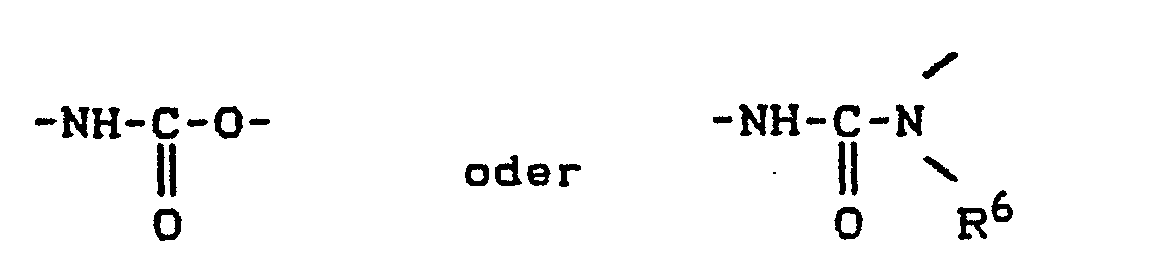
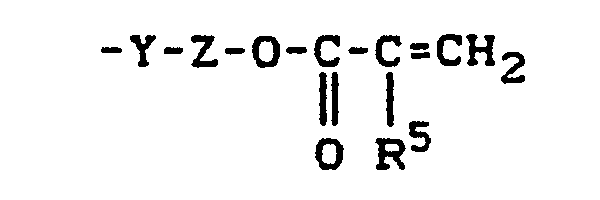
- R3 und R4 gleich oder verschieden sind und für einen der Reste

- R5 für Wasserstoff oder Methyl steht,
- Y ein zweibindiges Brückenglied aus der Gruppe

- R6 für Wasserstoff, Niederalkyl oder Phenyl steht, bedeutet, und
- Z eine geradkettige oder verzweigte Kohlenwasserstoffkette mit 2 bis 10 Kohlenstoffatomen bedeutet, die gegebenenfalls Sauerstoffbrücken enthalten kann und gegebenenfalls durch 1 bis 4 Acrylat- oder Methacrylatreste substituiert ist.
- Im Rahmen der vorliegenden Erfindung können die Substituenten im allgemeinen folgende Bedeutung haben.
- Alkyl kann im allgemeinen einen geradkettigen oder verzweigten Kohlenwasserstoffrest mit 1 bis 4 Kohlenstoff- atomen bedeuten. Beispielsweise seien die folgenden Alkylreste genannt: Methyl, Ethyl, Propyl, Isopropyl, Butyl und Isobutyl.
- Niederalkyl kann einen geradkettigen oder verzweigten Kohlenwasserstoffrest mit 1 bis etwa 6 Kohlenstoffatomen bedeuten. Beispielsweise seien die folgenden Niederalkylreste genannt: Methyl, Ethyl, Propyl, Isopropyl, Butyl, Isobutyl, Pentyl, Isopentyl, Hexyl und Isohexyl.
- Z ist im allgemeinen eine geradkettige oder verzweigte Kohlenwasserstoffkette mit 2 bis 10 Kohlenstoffatomen, die durch gegebenenfalls 1 bis 4 Methacrylat- oder Acrylatreste substituiert ist. Beispielsweise seien die folgenden Kohlenwasserstoffketten genannt: Ethylen, Propylen, 2-(Meth)acryloyloxy-l,3-propylen, 3-(Meth)acryloyloxy-1,2-propylen, 2-(Meth)acryloyloxymethyl-2-ethyl-1,3-propylen und 2,2-Bis(meth)acryloyloxymethyl-l,3-propylen.
- Die neuen (Meth)-Acrylsäureester sind farblos, schwerflüchtig und ergeben nach Polymerisation transparente Kunststoffe.
- Sie lassen sich besonders gut in Abdichtungsmitteln, Klebestoffen und vorzugsweise Dentalmaterialien, wie Zahnfüllmassen und Beschichtungsmitteln, verwenden. Die so erhaltenen Materialien zeichnen sich durch eine überraschend große Widerstandsfähigkeit gegenüber physikalischer und chemischer Beanspruchung aus. In besonderem Maße sind Härte und Bruchfestigkeit gegenüber üblichen, zu diesem Zweck eingesetzten Materialien, verbessert. Besonders hervorzuheben sind die günstigen Oberflächeneigenschaften und geringe Wasseraufnahme der mit den neuen (Meth)-Acrylsäureestern erhaltenen Polymerisate.
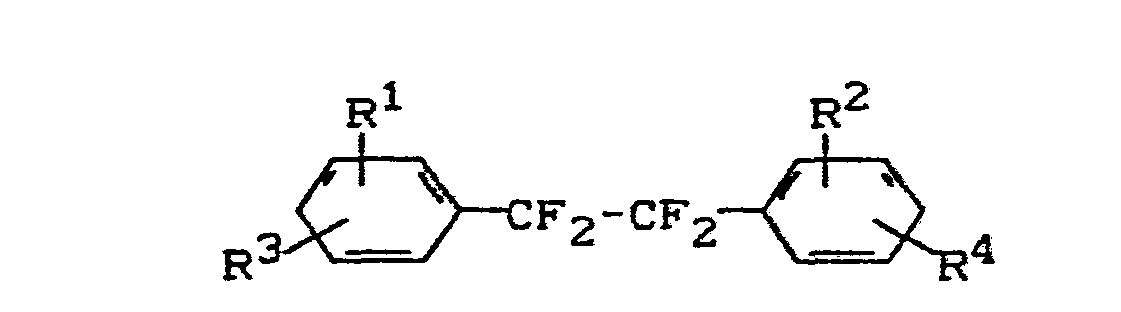
- Bevorzugte (Meth)-Acrylsäureester sind Verbindungen der Formel

- R3 und R4 gleich oder verschieden sind und für einen der Reste

- R5 Wasserstoff oder Methyl bedeutet, und
- Z eine geradkettige oder verzweigte Kohlenwasserstoffkette von 2 bis 10 Kohlenstoff-Atomen bedeutet, die gegebenenfalls Sauerstoffbrücken enthalten kann und gegebenenfalls durch 1 bis 4 Acrylat-oder Methacrylatreste substituiert ist.
- Die Substituenten R3 und R4 stehen vorzugsweise in 3,3'-oder 3,4'- oder 4,4'-Stellung im 1,2-Diphenyl-tetrafluorethan stehen. Besonders günstige mechanische Werte und niedrige Monomerviskositäten werden erhalten, wenn Gemische von Stellungsisomeren eingesetzt werden. Am besten eignen sich Gemische mit überwiegendem Anteil an 3,3'- oder 3,4'-Isomeren.
- Bei den Substituenten R3 und R4 handelt es sich um Methacrylat-Gruppen enthaltende Alkyloxycarbonylaminoreste, die man z.B. durch Umsetzung entsprechender Isocyanatgruppen mit Methacrylat-Gruppen enthaltenden Hydroxylverbindungen erhalten kann. Bevorzugt sind z.B. Hydroxyethyl(meth)acrylate, 2-Hydroxypropyl(meth)acrylat, Tri- methylolpropandi(meth)acrylat, Propantrioldi(meth)-acrylate sowie Pentaerythrittri(meth)acrylat, Dipenta- erythritpenta(meth)acrylat. Auch Hydroxyverbindungen, die sowohl Acrylat- als auch Methacrylatgruppen enthalten, sind gut geeignet. Besonders bevorzugte Hydroxylverbindungen sind 2-Hydroxypropylmethacrylat und Propantrioldimethacrylat (Gemisch von 1,2- und 1,3-Dimethacrylat) und Hydroxy-methacryloyloxy-acryloyloxypropan (Gemisch von 1,2- und 1,3-Diester).
- Beispielsweise seien die folgenden (Methl-1(cryleäureester genannt:


- Es wurde auch ein Verfahren zur Herstellung der erfindungsgemäßen (Meth)-Acrylsäureester gefunden, das dadurch gekennzeichnet ist, daß man ein l,2-Bis-(isocyanatophenyl)-tetrafluorethan der Formel

- Rl und R2 die obengenannte Bedeutung haben,
- mit (Meth)-Acrylsäure-Derivaten der Formel

- Z eine geradkettige oder verzweigte Kohlenwasserstoffkette mit 2 bis 10 Kohlenstoffatomen bedeutet, die gegebenenfalls Sauerstoffbrücken enthalten kann und gegebenenfalls durch 1 bis 4 Acrylat- oder Methacrylatreste substituiert ist,
- R5 Wasserstoff oder Methyl und
- R6 Wasserstoff, Niederalkyl oder Phenyl bedeuten,
- Die Herstellung der Isocyanatverbindungen der Formel III kann beispielsweise gemäß Houben-Weyl, Methoden der Organischen Chemie Band VIII, S. 119 ff (G. Thieme Verlag, Stuttgart, 1952) durch Umsetzung der entsprechenden Diaminoverbindungen mit Phosgen durchgeführt werden (siehe auch: Zh. Obshch. Khim. 32 (9). 3035-3039 (1962), und 35 (9). 1612-1620 (1965) und RA 168274 (1963)).
- Die Umsetzung der Diisocyanate gemäß Formel III zu den erfindungsgemäßen (Meth)acrylsäureestern erfolgt vorzugsweise unter Wasserausschluß in einem inerten Lösungsmittel. Beispiele für geeignete Lösungsmittel sind: Chloroform, Tetrahydrofuran, Dioxan, Methylenchlorid, Toluol, Acetonitril und Frigene. Bevorzugte Lösungsmittel sind Chloroform, Tetrahydrofuran,Frigen 113 und Acetonitril.
- Die Umsetzung wird im allgemeinen im Temperaturbereich von 20 bis 100°C, vorzugsweise 30 bis 70°C durchgeführt.
- Zur Beschleunigung der Umsetzung werden vorzugsweise zinnhaltige Katalysatoren wie Dibutylzinndilaurat oder Zinn-(II)octoat verwendet. Andere geeignete Katalysatoren sind Verbindungen mit tert. Aminogruppen und Titanverbindungen. Im allgemeinen wird der Katalysator in einer Menge von 0,01 bis 2,5 Gew.-X, bevorzugt von 0,1 bis 1,5 Gew.-X, bezogen auf die Gesamtmenge der Reaktanden, eingesetzt.
- Das erfindungsgemäße Verfahren wird im allgemeinen vorteilhaft in Gegenwart von 0,01 bis 0,2 Gew.X eines Polymerisations Inhibitors, bezogen auf die Gesamtmenge der Reaktanden, unter Normaldruck durchgeführt. Es ist aber auch möglich, das erfindungsgemäße Verfahren bei einem Unter-oder Überdruck durchzuführen. Ein geeigneter Inhibitor ist zum Beispiel 2,6-Di-tert.Butyl-4-methylphenol. Geeignet ist auch Luft, die in das Reaktionsgemisch eingeleitet wird. Das erfindungsgemäße Verfahren kann beispielsweise wie folgt durchgeführt werden:
- Die Reaktanden werden in dem Lösungsmittel gelöst und unter Rühren mit dem Katalysator versetzt. Der zeitliche Verlauf der Umsetzung kann beispielsweise durch Messung der IR-Spektren verfolgt werden. Nach vollständiger Umsetzung der Isocyanatgruppen werden die Reaktionsprodukte durch Entfernen des Lösungsmittels isoliert. Eine vorherige Reinigung mit Hilfe von Adsorbentien, beispielsweise Aktivkohle, Bleicherde, Kieselgel oder Aluminiumoxid ist möglich.
- Für die Anwendung als Monomere für polymere Zahnfüllmassen oder Beschichtungsmittel (Zahnlacke) im Dentalbereich können die erfindungsgemäßen (Meth)-Acrylsäureester der Formel I mit an sich bekannten Monomeren gemischt werden, um beispielsweise die Viskosität dem Verwendungszweck anzupassen. Viskositäten im Bereich von 60 bis 10000 mPas sind dabei bevorzugt. Dies ist dadurch erreichbar, daß man den erfindungsgemäßen Monomeren gegebenenfalls ein Comonomer niedrigerer Viskosität als Reaktivverdünner zumischt. Die erfindungsgemäßen Verbindungen werden in der Mischung mit Comonomeren mit einem Anteil von ca. 30 bis ca. 90 Gew.-X eingesetzt, wobei ein Anteil von 50 bis 90 Gew.-X besonders bevorzugt ist.
- Im Rahmen der vorliegenden Erfindung ist es ebenfalls bevorzugt, Mischungen verschiedener erfindungsgemäßer (Meth)-Acrylsäureester einzusetzen.
- Es ist auch möglich, Monomermischungen einzusetzen, die mehrere Comonomere als Reaktivverdünner enthalten.
- Beispielsweise seien die folgenden Comonomere genannt:
- Triethylenglykoldimethacrylat, Tetraethylenglykoldimethacrylat, 1,12-Dodecandioldimethacrylat, 1,6-Hexandioldimethacrylat, Diethylenglykoldimethacrylat, 2,2-Bis(p-(2'-hydroxy-3'-methacryloyloxypropoxy)phenyl] propan, 2,2-Bis[p-(2'-methacryloyloxyethoxy)phenyl]propan, Trimethylolpropan-tri(meth)-acrylat, Bis-(Meth)acryloyloxy- ethoxymethyl)- tricycloC[5.2.1.02.6]decan (gemäß DE-OS 2931925 und 2931926) usw.
- Insbesondere werden Comonomere bevorzugt, die bei 13 mbar einen Siedepunkt über 100°C besitzen.
- Die erfindungsgemäßen (Meth)-Acrylsäureester lassen sich, gegebenenfalls in Mischung mit dem genannten Monomeren, mit an sich bekannten Methoden zu vernetzten Polymerisaten aushärten (G. M. Brauer, H. Argentar, Am. Chem. Soc., Symp. Ser. 212, S 359-371 (1983)1 Für die sogenannte Redoxpolymerisation ist ein System aus einer peroxidischen Verbindung und einem Reduktionsmittel, beispielsweise auf Basis tertiärer aromatischer Amine, geeignet. Beispiele für Peroxide sind:
- Dibenzoylperoxid, Dilauroylperoxid und Di-4-Chlorbenzoylperoxid.
- Als tertiäre aromatische Amine seien beispielsweise N,N-Dimethyl-p-toluidin, Bis-(2-hydroxyethyl)-p-toluidin, Bis(2-hydroxyethyl)-3,5-dimethylanilin und das in der DE-PS 2759239 beschriebene N-Methyl-N-(2-methyl- carbamoyloxypropyl)-3,5-dimethylanilin genannt.
- Die Konzentrationen des Peroxids bzw. des Amins werden vorteilhaft so gewählt, daß sie 0,1 bis 5 Gew.-X, bevorzugt 0,5 bis 3 Gew.-%, bezogen auf die Monomermischung betragen. Die Peroxid- bzw. aminhaltige Monomermischungen werden bis zur Anwendung getrennt gelagert.
- Die erfindungsgemäßen Monomeren können auch durch Bestrahlung mit UV-Licht oder sichtbarem Licht (beispielsweise im Wellenlängenbereich von 230 bis 650 nm) zur Polymerisation gebracht werden. Als Initiatoren für die fotoinitiierte Polymerisation eignen sich beispielsweise Benzil, Benzildimethylketal, Benzoinmonoalkylether, Benzophenon, p-Methoxybenzophenon, Fluorenon, Thioxanthon, Phenanthrenchinon und 2,3-Bornandion (Campherchinon), gegebenenfalls in Gegenwart von synergistisch wirkenden Fotoaktivatoren, wie N,N-Dimethylaminoethylmethacrylat, Triethanolamin, 4-N,N-Dimethylaminobenzolsulfonsäurebisallylamid. Die Durchführung des Photopolymerisationsverfahrens ist beispielsweise in der DE-PS 3135115 beschrieben.
- Neben den oben beschriebenen Initiatoren können den erfindungsgemäßen (Meth)-Acrylsäureestern an sich für diesen Einsatzzweck bekannte Lichtschutzmittel und Polymerisations-Inhibitoren zugesetzt werden.
- Das Lichtschutzmittel und der Polymerisations-Inhibitor werden jeweils im allgemeinen in einer Menge von 0,01 bis 0,50 Gew.-Teilen, bezogen auf 100 Gew.-Teile der Monomermischung eingesetzt. Die Monomermischungen können ohne Zusatz von Füllstoffen als Beschichtungsmittel (Zahnlacke) eingesetzt werden.
- Bei der Verwendung als Zahnfüllmassen setzt man den erhaltenen Monomermischungen im allgemeinen Füllstoffe zu. Um einen hohen Füllgrad erreichen zu können, sind Monomermischungen, die eine Viskosität im Bereich von 60 bis 10000 mPas besitzen, besonders vorteilhaft. Den die erfindungsgemäßen Verbindungen der Formel I enthaltenden Monomermischungen können vorzugsweise anorganische Füllstoffe zugemischt werden. Beispielsweise seien Bergkristall, Quarzit, Kristobalit, Quarzglas, hochdisperse Kieselsäure, Aluminiumoxid und Glaskeramiken, beispielsweise Lanthan und Zirkon enthaltende Glaskeramiken (DE-OS 23 47 591) genannt.
- Die anorganischen Füllstoffe werden zur Verbesserung des Verbundes zur Polymermatrix des Polymethacrylats vorzugsweise mit einem Haftvermittler vorbehandelt. Die Haftvermittlung kann beispielsweise durch eine Behandlung mit Organosiliciumverbindungen erreicht werden (E.P. Plueddemann, Progress in Organic coatings, 11, 297 bis 308 (1983)). Bevorzugt wird 3-Methacryloyloxypropyl-trimethoxysilan eingesetzt.
- Die Füllstoffe für die erfindungsgemäßen Zahnfüllmassen weisen im allgemeinen einen mittleren Teilchendurchmesser von 0,01 bis 100,µm, vorzugsweise von 0,05 bis 50 σm auf, besonders bevorzugt 0,05 bis 5,µm. Es kann auch vorteilhaft sein, mehrere Füllstoffe nebeneinander einzusetzen, die einen voneinander verschiedenen Teilchendurchmesser besitzen.
- Der Füllstoffanteil in den Zahnfüllmassen beträgt im allgemeinen 5 bis 85 Gew.-X, vorzugsweise 50 bis 80 Gew.-X.
- Für die Herstellung der Zahnfüllmassen werden die Komponenten under Verwendung handelsüblicher Knetmaschinen verarbeitet.
- Der Anteil der erfindungsgemäßen (Meth)-Acrylsäureester in den Füllmassen beträgt im allgemeinen 5 bis 85 Gew.-X, bezogen auf die Füllmasse.
- Herstellung von 1,2-Bis-(3-isocyanatophenyl)-1,1,2,2-tetrafluorethan

- Setzt man zur Phosgenierung ein ungereinigtes Diamin ein, wie man es durch Hydrierung der entsprechenden nicht umkristallisierten Dinitroverbindung erhält, so bekommt man nach dem gleichen Verfahren der Basenphosgenierung wie oben das Diisocyanat mit einem Gehalt an von ca. 80 X. Fp: 128 bis 135°C.
- Ein Diisocyanatgemisch des 1,2-Diphenyl-1,1,2,2-tetrafluorethans mit einem Gehalt von nur ca. 45 % reinem 3,3'-Diisocyanat erhält man dann, wenn man aus dem Gemisch der entsprechenden Dinitroverbindungen die reine 3,4-Verbindung durch Umkristallisieren aus Toluol abtrennt und die so erhaltenen Mutterlaugen aufarbeitet, hydriert und wie oben beschrieben phosgeniert.
- Der Schmelzbereich des destillierten Diisocyanatgemisches ist bei 117 bis 127°C.
-

- Zur Aufarbeitung wird ein Teil des Lösungsmittels im Vakuum entfernt und die Suspension abfiltriert.
- Der zurückbleibende Feststoff (17,5 g; 58,7 X) besitzt aufgrund der 1H-NMR-Daten die erwartete Struktur. Schmelzpunkt: 160°C.
-

- Die oben angegebene Struktur wird aufgrund der IR- und 1H-NMR-Spektren bestätigt.
- Die Molmasse wurde osmometrisch mit 625 ermittelt (ber. 624).
- Geht man von einem Gemisch von 1,2-Bis-(3-isocyanatophenyl)-l,l,2,2-tetrafluorethan und 1,2-Bis-(4-isocyanatophenyl)-1,1,2,2-tetrafluorethan aus, entsteht in analoger Weise zu Beispiel 3 das met/para-Isomerengemisch.
- Umsetzung von 1,2-Bis-(Isocyanatophenyl)-1,1,2,2-tetrafluorethan mit Bis-(methacryloxy)-hydroxypropan (Isomerengemisch).
- 67,2 g (200 mMol) eines Isomerengemischs von Bis-(3-isocyanatophenyl)-1,1,2,2-tetrafluorethan und Bis-(4-isocyanatophenyl)-1,1,2,2-tetrafluorethan werden in 200 ml Chloroform suspendiert und 0,4 g Dibutylzinndilaurat sowie 0,063 g 2,5-Di-tert.-butyl-4-methylphenol zugegeben. Die Mischung wird auf 50°C erwärmt. Bei dieser Temperatur werden 91,2 g (400 mMol) Bis-(methacryloxy)-hydroxy-propan zugetropft.
- Nach einer Reaktionszeit von 3 Stunden ist die Umsetzung beendet. Die Reaktionsmischung wird wie in Beispiel 3 aufgearbeitet. Das Produkt ist eine farblose viskose Flüssigkeit.
- Molmasse (Osmometr.) 787.
- Herstellung von Beschichtungs-Lösungen
- In einer Lösung aus des in Beispiel 3 genannten Monomers (70 T.) und Triethylenglykoldimethacrylat (30 T.) werden 1,94 Gew.-% Di-Benzoylperoxid gelöst (entsprechend 0,008 Mol Peroxid pro 100 g Monomermischung).
- In einer zweiten, kein Peroxid enthaltenden, sonst aber gleich zusammengesetzten Mischung werden 2 Gew.-X N-Methyl- N-(2Methylcarbamoyloxy-propyl)-3,5-dimethylanilin (DE-PS 2759239) gelöst.
- Eine Mischung aus gleichen Teilen der beiden zuvor beschriebenen Lösungen härtet in 2 bis 3 Minuten aus.
- Die mechanischen Eigenschaften verschiedener Monomere sind in der Tabelle 2 aufgeführt.
- In einer Monomermischung der unter a) beschriebenen Zusammensetzung (ohne Peroxid) werden 0,5 Gew.-% 4-N,N-Di- methylaminobenzolsulfonsäure-bis-allylamid, 0,125 Gew.-% Benzildimethylketal, 0,2 Gew.-% Bicyclo[2,2,1]-1,7,7-trimethyl-heptan- 2,3-dion (2,3-Bornandion) gelöst.
- Beim Belichten mit einer Dentallampe härtet die Flüssigkeit aus (Belichtungszeit 40 Sekunden).
- Beispiel 6 wird unter Verwendung des Monomers aus Beispiel 5 wiederholt, wobei jedoch 32,8 Gewichtsteile Triethylenglykoldimethacrylat verwendet werden.
- Prüfung der Beschichtungslösungen aus den Beispielen 6 und 7
- Probenherstellung für redoxhärtende Beschichtungslösung:
- Die beiden in Beispiel 6a) beschriebenen jeweils Amin oder Peroxid enthaltenden Lösungen werden im Gewichtsverhältnis 1:1 30 Sekunden lang gemischt und in eine Ringform gegossen, die mit einer Metallplatte (mit Polyamidfolie überzogen) abgedeckt wird. Nach der Aushärtung der Probe wird eine zweite, mit Polyamidfolie bedeckte Metallplatte aufgelegt. Die Metallplatten werden mit Hilfe einer Zwinge zusammengepreßt. Die Form wird 135 Minuten in ein Wasserbad von 37°C gegeben. Danach werden die Probekörper entnommen und beidseitig mit Siliciumcarbidpapier (1000) beschliffen.
- Probenherstellung für lichthärtende Beschichtungslösung:
- Die in Beispiel 6b) beschriebene Lösung wird in eine mit einer Polyamidfolie abgedeckte Ringform gegossen und nach Auflegen einer zweiten Folie durch Bestrahlen (beidseitig 60 Sekunden) mit einer Dentallampe ausgehärtet. Danach wird wie beim redoxgehärteten Probekörper verfahren.
- Die Messung der Wallace-Eindringtiefe erfolgt im Zeitraum von 15 bis 45 Minuten nach Aushärtung der Proben. Eine Vickerspyramide wird dabei 15 Sekunden lang unter einer Vorlast von 1 g und dann 60 Sekunden lang unter einer Hauptlast von 100 g aufgedrückt.
- Eine Eindringtiefe des Diamanten unter Einwirkung der Hauptlast wird als Wallace-Eindringtiefe (Hw 100/60) in um registriert. Es werden für die Beurteilung einer Probe jeweils 5 Messungen herangezogen.
- Das Bechichtungsmittel aus Beispiel 6 wurde gemäß der DIN 13922 der Prüfung von Biegefestigkeit und Biegemodul unterzogen.
- Beispiel 8 wurde unter Verwendung des Beschichtungsmittels aus Beispiel 7 wiederholt.
- Die Meßergebnisse aus Beispiel 8 und Beispiel 9 sind in Tabelle 2 zusammengefaßt.
-

- Herstellung einer redoxhärtenden Zahnfüllmasse
- Aminpaste: In einer Mischung von 70 Gewichtsteilen der erfindungsgemäßen Verbindung aus Beispiel 3 und 30 Gewichtsteilen Triethylenglykoldimethacrylat werden 2,0 Gew.-% N-Methyl-N-(2-Me- thylcarbamoyloxypropyl)-3,5-dimethylanilin gelöst. 5 g dieser Lösung werden mit 15 g einer handelsüblichen Glaskeramik mit einem mittleren Teilchendurchmesser von 4 µm, die mit 3-Methacryloyloxypropyl-trimethoxysilan silanisiert wurden, zu einer Paste verarbeitet.
- Peroxidpaste: In einer Mischung von 70 Gewichtsteilen der erfindungsgemäßen Verbindung aus Beispiel 3 und 30 Gewichtsteilen Triethylenglykoldimethacrylat werden 1,94 Gew.-X Dibenzoylperoxid gelost. 5 g dieser Lösung werden mit 15 g einer handelsüblichen Glaskeramik mit einem mittleren Teilchendurchmesser von 4 µm, die mit 3-Methacryloyloxypropyl-trimethoxysilan silanisiert wurden, zu einer Paste verarbeitet.
- Eine Mischung von gleichen Teilen Aminpaste und Peroxidpaste härtet innerhalb von 2 bis 3 Minuten aus.
- Herstellung eines lichthärtenden Zahnfüllungsmaterials
- In einer Mischung aus 70 Gewichtsteilen Monomer aus Beispiel 3 und 30 Gewichtsteilen Triethylenglykoldimethacrylat werden 0,2 Gew.-X 2,3-Bornandion, 0,125 Gew.-X Benzildimethylketal und 0,5 Gew.-X 4-N,N-Dimethylamino- benzolsulfonsäure-bis-allylamid gelösl.
- 5 g dieser Lösung werden mit 15 g des in Beispiel 9 beschriebenen Füllstoffs zu einer Paste verarbeitet (75 % Füllstoffgehalt).
- Die Aushärtung erfolgt durch Belichtung mit einer Dentallampe der Fa. Kulzer. Bei einer Belichtungszeit von 40 Sekunden beträgt die Aushärtungstiefe 6 mm.
- Beispiel 10 wird unter Verwendung des Monomers aus Beispiel 5 wiederholt wobei jedoch 32,8 Gewichtsteile Triethylenglykoldimethacrylat verwendet werden.
- Prüfung der Dentalmassen aus Beispiel 10 und 11
- Die Prüfung von Biegefestigkeit und Biegemodul wird gemäß der DIN 13922 durchgeführt. Die Ergebnisse sind in Tabelle 3 zusammengefaßt.

- An durch lichtinduzierte Polymerisation ausgehärteten Beschichtungsmitteln der Beispiele 6 und 7 wurden Messungen der Oberflächenspannung durchgeführt. Mittels eines Video- Systems wurde das dynamische Benetzungsverhalten von Flüssigkeiten auf den Festkörperoberflächen bestimmt. Die Oberflächenspannungen wurden aus den Anfangsrandwinkeln von 5 Prüfflüssigkeiten berechnet. Die Ergebnisse sind in der Tabelle 4 zusammengestellt.

in einem inerten Lösungsmittel in Gegenwart eines Katalysators im Temperaturbereich von 20 bis 100°C umsetzt.
Claims (9)
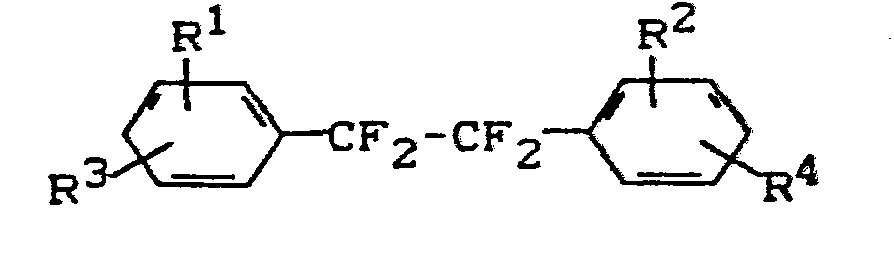




dadurch gekennzeichnet, daß man einen 1,2-Bis-(isocyanatophenyl)-tetrafluorethan der Formel


in einem inerten Lösungsmittel in Gegenwart eines Katalysators im Temperaturbereich von 20 bis 100°C umsetzt.




im Dentalbereich.


bei der Herstellung von Zahnfüllmassen und Zahnbeschichtungsmitteln.


Priority Applications (1)
| Application Number | Priority Date | Filing Date | Title |
|---|---|---|---|
| AT86105718T ATE39480T1 (de) | 1985-05-07 | 1986-04-25 | (meth)-acrylsaeureester und ihre verwendung. |
Applications Claiming Priority (2)
| Application Number | Priority Date | Filing Date | Title |
|---|---|---|---|
| DE19853516257 DE3516257A1 (de) | 1985-05-07 | 1985-05-07 | (meth)-acrylsaeureester und ihre verwendung |
| DE3516257 | 1985-05-07 |
Publications (2)
| Publication Number | Publication Date |
|---|---|
| EP0201778A1 true EP0201778A1 (de) | 1986-11-20 |
| EP0201778B1 EP0201778B1 (de) | 1988-12-28 |
Family
ID=6269958
Family Applications (1)
| Application Number | Title | Priority Date | Filing Date |
|---|---|---|---|
| EP86105718A Expired EP0201778B1 (de) | 1985-05-07 | 1986-04-25 | (Meth)-Acrylsäureester und ihre Verwendung |
Country Status (16)
| Country | Link |
|---|---|
| US (1) | US4752338A (de) |
| EP (1) | EP0201778B1 (de) |
| JP (1) | JPS61257957A (de) |
| KR (1) | KR860008970A (de) |
| CN (2) | CN1004485B (de) |
| AT (1) | ATE39480T1 (de) |
| AU (1) | AU586248B2 (de) |
| DE (2) | DE3516257A1 (de) |
| DK (1) | DK208786A (de) |
| ES (1) | ES8800661A1 (de) |
| FI (1) | FI861863A7 (de) |
| GR (1) | GR861127B (de) |
| HU (1) | HUT42106A (de) |
| IL (1) | IL78685A0 (de) |
| NO (1) | NO861599L (de) |
| ZA (1) | ZA863377B (de) |
Cited By (51)
| Publication number | Priority date | Publication date | Assignee | Title |
|---|---|---|---|---|
| EP0443370A3 (en) * | 1990-02-20 | 1992-05-20 | Bayer Ag | Dental materials |
| WO2005117808A1 (en) | 2004-05-17 | 2005-12-15 | 3M Innovative Properties Company | Acid-reactive dental fillers, compositions, and methods |
| US7026367B2 (en) | 2003-09-26 | 2006-04-11 | 3M Innovative Properties Company | Photoiniators having triarylsulfonium and arylsulfinate ions |
| US7030169B2 (en) | 2003-09-26 | 2006-04-18 | 3M Innovative Properties Company | Arylsulfinate salts in initiator systems for polymeric reactions |
| US7090721B2 (en) | 2004-05-17 | 2006-08-15 | 3M Innovative Properties Company | Use of nanoparticles to adjust refractive index of dental compositions |
| US7156911B2 (en) | 2004-05-17 | 2007-01-02 | 3M Innovative Properties Company | Dental compositions containing nanofillers and related methods |
| WO2007017152A2 (en) | 2005-08-05 | 2007-02-15 | 3M Espe Ag | Dental compositions containing a surface-modified filler |
| US7250452B2 (en) | 2003-09-26 | 2007-07-31 | 3M Innovative Properties Company | Dental compositions and methods with arylsulfinate salts |
| WO2008033911A2 (en) | 2006-09-13 | 2008-03-20 | 3M Innovative Properties Company | Dental compositions including organogelators, products, and methods |
| US7449499B2 (en) | 2003-08-12 | 2008-11-11 | 3M Innovative Properties Company | Self-etching dental compositions and methods |
| WO2009045752A2 (en) | 2007-10-01 | 2009-04-09 | 3M Innovative Properties Company | Orthodontic composition with polymeric fillers |
| US7576144B2 (en) | 2004-07-14 | 2009-08-18 | 3M Innovative Properties Company | Dental compositions containing carbosilane monomers |
| US7649029B2 (en) | 2004-05-17 | 2010-01-19 | 3M Innovative Properties Company | Dental compositions containing nanozirconia fillers |
| EP2239275A1 (de) | 2006-05-31 | 2010-10-13 | 3M Innovative Properties Company | Polymerisierbare Zusammensetzungen enthaltend Salze aus Barbitursäure-Derivaten |
| EP2260828A2 (de) | 2004-11-16 | 2010-12-15 | 3M Innovative Properties Co. | Dentalfüllstoffe, Verfahren, Zusammensetzungen mit einem Caseinat |
| US8071662B2 (en) | 2005-12-29 | 2011-12-06 | 3M Innovative Properties Company | Dental compositions with surface-treated filler for shelf stability |
| US8076389B2 (en) | 2006-12-28 | 2011-12-13 | 3M Innovative Properties Company | Adhesive composition for hard tissue |
| US8084515B2 (en) | 2004-07-14 | 2011-12-27 | 3M Innovative Properties Company | Dental compositions containing carbosilane polymers |
| EP2401997A2 (de) | 2004-11-16 | 2012-01-04 | 3M Innovative Properties Company | Dentale Zusammensetzungen mit Calzium und Phosphor-freisetzendem Glas |
| EP2407142A1 (de) | 2002-12-30 | 2012-01-18 | 3M Innovative Properties Company | Verwendung von polymerisierbare Bisphosphonsäuren zur Behandlung von Zahnoberflächen die nicht mit Phosphorsäure vorbehandelt sind |
| WO2012021438A1 (en) | 2010-08-11 | 2012-02-16 | 3M Innovative Properties Company | Aesthetic and abrasion resistant coated dental articles and methods of making the same |
| WO2012021434A2 (en) | 2010-08-11 | 2012-02-16 | 3M Innovative Properties Company | Polymer coated dental articles and method of making the same |
| WO2012021442A1 (en) | 2010-08-11 | 2012-02-16 | 3M Innovative Properties Company | Coated dental crows and method of making the same |
| US8207238B2 (en) | 2007-11-01 | 2012-06-26 | 3M Innovative Properties Company | Dental compositions and initiator systems with color-stable amine electron donors |
| WO2012091902A1 (en) | 2010-12-30 | 2012-07-05 | 3M Innovative Properties Company | Bondable dental assemblies and methods including a compressible material |
| US8263681B2 (en) | 2006-12-28 | 2012-09-11 | 3M Innovative Properties Company | Dental compositions with natural tooth fluorescence |
| WO2012129143A1 (en) | 2011-03-24 | 2012-09-27 | 3M Innovative Properties Company | Dental adhesive comprising a coated polymeric component |
| WO2014151650A1 (en) | 2013-03-19 | 2014-09-25 | 3M Innovative Properties Company | Free-radical polymerization methods and articles thereby |
| WO2014209680A2 (en) | 2013-06-28 | 2014-12-31 | 3M Innovative Properties Company | Acid-modified nanoparticles, dual part polymerizable compositions, and methods |
| WO2015051095A1 (en) | 2013-10-04 | 2015-04-09 | 3M Innovative Properties Company | Dental mill blank |
| US9205029B2 (en) | 2008-10-15 | 2015-12-08 | 3M Innovative Properties Company | Dental compositions with fluorescent pigment |
| WO2015200007A1 (en) | 2014-06-24 | 2015-12-30 | 3M Innovative Properties Company | Adhesive precursor composition, two-part adhesive kit, and method of making an adhesive composition |
| WO2016014218A1 (en) | 2014-07-22 | 2016-01-28 | 3M Innovative Properties Company | Free-radical polymerization methods and articles thereby |
| WO2016044151A1 (en) | 2014-09-16 | 2016-03-24 | 3M Innovative Properties Company | Free-radical polymerization methods and articles thereby |
| US9339352B2 (en) | 2007-12-13 | 2016-05-17 | 3M Innovative Properties Company | Orthodontic article having partially hardened composition and related method |
| WO2016105993A1 (en) | 2014-12-22 | 2016-06-30 | 3M Innovative Properties Company | Sterically hindered alkyl and oxyalkyl amine light stabilizers |
| WO2016105974A1 (en) | 2014-12-22 | 2016-06-30 | 3M Innovative Properties Company | Sterically hindered amine and oxyalkyl amine light stabilizers |
| WO2016140950A1 (en) | 2015-03-05 | 2016-09-09 | 3M Innovative Properties Company | Composite material having ceramic fibers |
| EP3108848A1 (de) | 2006-10-23 | 2016-12-28 | 3M Innovative Properties Company | Zahnmedizinische artikel, verfahren und kits mit einem komprimierbaren material |
| US9993393B2 (en) | 2005-12-29 | 2018-06-12 | 3M Innovative Properties Company | Dental compositions and initiator systems with polycyclic aromatic component |
| US10137061B2 (en) | 2004-11-16 | 2018-11-27 | 3M Innovative Properties Company | Dental fillers and compositions including phosphate salts |
| US10344169B2 (en) | 2014-09-30 | 2019-07-09 | 3M Innovative Properties Company | Free-radical polymerization methods and articles thereby |
| WO2021191773A1 (en) | 2020-03-25 | 2021-09-30 | 3M Innovative Properties Company | Dental appliance with graphic image |
| WO2022064292A1 (en) | 2020-09-25 | 2022-03-31 | 3M Innovative Properties Company | Photopolymerizable compositions and reaction products thereof |
| WO2022144843A1 (en) | 2020-12-30 | 2022-07-07 | 3M Innovative Properties Company | Bondable orthodontic assemblies and methods for bonding |
| WO2022162488A1 (en) | 2021-01-29 | 2022-08-04 | 3M Innovative Properties Company | Dental appliances from multilayer films having discrete structures covered by an ion permeable release layer |
| WO2022195364A1 (en) | 2021-03-17 | 2022-09-22 | 3M Innovative Properties Company | Polymerizable 4,4'-spirobi[chromane]-2,2'-diones and curable compositions including the same |
| WO2022263987A1 (en) | 2021-06-16 | 2022-12-22 | 3M Innovative Properties Company | Free-radically polymerizable copolymer, free-radically polymerizable composition containing the same, and polymerized reaction product therefrom |
| WO2023031719A1 (en) | 2021-09-01 | 2023-03-09 | 3M Innovative Properties Company | Free-radically polymerizable composition, method of polymerizing the same, and polymerized composition |
| WO2023073444A1 (en) | 2021-10-28 | 2023-05-04 | 3M Innovative Properties Company | Photopolymerizable composition, methods of bonding and sealing, and at least partially polymerized composition |
| WO2023111722A1 (en) | 2021-12-14 | 2023-06-22 | 3M Innovative Properties Company | Curable precursor of an adhesive composition |
Families Citing this family (40)
| Publication number | Priority date | Publication date | Assignee | Title |
|---|---|---|---|---|
| FR2588555B1 (fr) * | 1985-10-16 | 1987-12-11 | Atochem | Monomeres acryliques fluores, polymeres en derivant et leur application au traitement hydrofuge et oleofuge de substrats divers |
| JPH0794364B2 (ja) * | 1988-04-28 | 1995-10-11 | 株式会社ニコン | 歯科用樹脂組成物 |
| JP2517753B2 (ja) * | 1988-12-28 | 1996-07-24 | 株式会社ジーシーデンタルプロダクツ | 人工歯とその製造方法 |
| DE3917320A1 (de) * | 1989-05-27 | 1990-12-20 | Bayer Ag | Harnstoffgruppen enthaltende (meth)-acrylsaeure-derivate von triisocyanaten und ihre verwendung |
| EP0762214A1 (de) | 1995-09-05 | 1997-03-12 | Agfa-Gevaert N.V. | Lichtempfindliches Element, das eine Bildaufbauschicht und eine photopolymerisierbare Schicht enthält |
| JP4485117B2 (ja) * | 2002-06-27 | 2010-06-16 | 日東電工株式会社 | 保護剥離用フィルム |
| US6773261B2 (en) | 2002-06-28 | 2004-08-10 | 3M Innovative Properties Company | Processes for forming dental materials |
| US7134875B2 (en) | 2002-06-28 | 2006-11-14 | 3M Innovative Properties Company | Processes for forming dental materials and device |
| DE10261241A1 (de) * | 2002-12-20 | 2004-07-15 | 3M Espe Ag | Dentalmaterial mit bakteriostatischen und/oder bakteriziden Substanzen |
| US7064152B2 (en) * | 2003-09-26 | 2006-06-20 | 3M Innovative Properties Company | Arylsulfinate salts in photoinitiator systems for polymerization reactions |
| AU2005269869B2 (en) | 2004-07-08 | 2011-12-01 | 3M Innovative Properties Company | Dental methods, compositions, and kits including acid-sensitive dyes |
| AU2005272808B8 (en) | 2004-08-11 | 2011-11-03 | 3M Deutschland Gmbh | Self-adhesive compositions including a plurality of acidic compounds |
| AU2005306869B2 (en) | 2004-11-16 | 2011-11-10 | 3M Innovative Properties Company | Dental fillers including a phosphoruscontaining surface treatment |
| US20060204452A1 (en) * | 2005-03-10 | 2006-09-14 | Velamakanni Bhaskar V | Antimicrobial film-forming dental compositions and methods |
| US20060205838A1 (en) * | 2005-03-10 | 2006-09-14 | Velamakanni Bhaskar V | Hardenable antimicrobial dental compositions and methods |
| AU2006244182B2 (en) | 2005-05-09 | 2012-02-02 | 3M Innovative Properties Company | Dental compositions containing hybrid monomers |
| EP1787627A1 (de) | 2005-11-17 | 2007-05-23 | 3M Innovative Properties Company | Antimikrobielles Zahnabdruckmaterial |
| US8026296B2 (en) | 2005-12-20 | 2011-09-27 | 3M Innovative Properties Company | Dental compositions including a thermally labile component, and the use thereof |
| US7776940B2 (en) * | 2005-12-20 | 2010-08-17 | 3M Innovative Properties Company | Methods for reducing bond strengths, dental compositions, and the use thereof |
| US7896650B2 (en) * | 2005-12-20 | 2011-03-01 | 3M Innovative Properties Company | Dental compositions including radiation-to-heat converters, and the use thereof |
| US20070142498A1 (en) * | 2005-12-20 | 2007-06-21 | Brennan Joan V | Dental compositions including thermally responsive additives, and the use thereof |
| KR20080086524A (ko) * | 2005-12-29 | 2008-09-25 | 쓰리엠 이노베이티브 프로퍼티즈 컴파니 | 수분 제거제를 함유하는 치과용 조성물 |
| US9539065B2 (en) | 2006-10-23 | 2017-01-10 | 3M Innovative Properties Company | Assemblies, methods, and kits including a compressible material |
| KR101148479B1 (ko) * | 2006-11-01 | 2012-05-21 | 후지쯔 가부시끼가이샤 | 무선 통신 시스템 및 이동국 |
| EP2101716A2 (de) | 2006-12-13 | 2009-09-23 | 3M Innovative Properties Company | Verfahren zur verwendung einer dentalen zusammensetzung mit saurer komponente und lichtbleichbarem farbstoff |
| WO2008082881A1 (en) * | 2006-12-28 | 2008-07-10 | 3M Innovative Properties Company | (meth)acryloyl-containing materials, compositions, and methods |
| EP2229130A2 (de) * | 2007-12-13 | 2010-09-22 | 3M Innovative Properties Company | Remineralisierende zusammensetzungen und verfahren |
| EP2133063A1 (de) * | 2008-06-10 | 2009-12-16 | 3M Innovative Properties Company | Initiatorsystem mit Biphenylen-Derivaten, Herstellungsverfahren und Verwendung dafür |
| CN102196799B (zh) * | 2008-09-04 | 2013-02-06 | 3M创新有限公司 | 含有联苯二(甲基)丙烯酸酯单体的牙科用组合物 |
| WO2010039395A2 (en) * | 2008-09-30 | 2010-04-08 | 3M Innovative Properties Company | Orthodontic composition with heat modified minerals |
| EP2370362B1 (de) | 2008-10-15 | 2013-11-27 | 3M Innovative Properties Company | Füllstoffe und verbundwerkstoffe mit zirconiumoxid- und siliciumoxid-nanopartikeln |
| BRPI0914464A2 (pt) * | 2008-10-22 | 2015-10-27 | 3M Innovative Properties Co | "composição dentária endurecível, artigos dentários e monômero bifenil di(met)acrilato" |
| WO2010068359A1 (en) | 2008-12-11 | 2010-06-17 | 3M Innovative Properties Company | Surface-treated calcium phosphate particles suitable for oral care and dental compositions |
| RU2557961C2 (ru) | 2009-12-22 | 2015-07-27 | 3М Инновейтив Пропертиз Компани | Стоматологические композиции, заготовки для стоматологического протезирования и способы |
| US9044292B2 (en) | 2010-08-11 | 2015-06-02 | 3M Innovative Properties Company | Dental articles including a ceramic and microparticle coating and method of making the same |
| CN104870573A (zh) | 2012-12-20 | 2015-08-26 | 3M创新有限公司 | 三有机硼烷-氨基官能化纳米粒子、组合物和方法 |
| EP3237427A1 (de) | 2014-12-22 | 2017-11-01 | 3M Innovative Properties Company | Sterisch gehindertes amin und oxyalkylamin-lichtstabilisatoren |
| US10000626B2 (en) | 2014-12-22 | 2018-06-19 | 3M Innovative Properties Company | Sterically hindered amine and oxyalkyl amine light stabilizers |
| EP3681434A4 (de) * | 2017-09-11 | 2021-04-07 | 3M Innovative Properties Company | Strahlungshärtbare zusammensetzungen und mittels generativer fertigung daraus hergestellte verbundartikel |
| CN112673035B (zh) | 2018-09-14 | 2024-04-19 | 舒万诺知识产权公司 | 包含陶瓷纤维和纳米团簇的复合材料、牙科产品、套件盒及其制备和使用方法 |
Citations (7)
| Publication number | Priority date | Publication date | Assignee | Title |
|---|---|---|---|---|
| US3726886A (en) * | 1970-12-07 | 1973-04-10 | Dow Chemical Co | Adducts of alkenyl isocyanates with hydroxymethylated diphenyl oxide and derivatives thereof |
| GB1321760A (en) * | 1971-11-29 | 1973-06-27 | Grace W R & Co | Method for preparing a polyene |
| US3979426A (en) * | 1971-08-12 | 1976-09-07 | Ppg Industries, Inc. | Radiation-sensitive diacrylates |
| DE3106367A1 (de) * | 1981-02-02 | 1982-09-09 | geb. Filippova Ljudmila Dmitrievna Šidkova | Verfahren zur herstellung von alkenungesaettigten oligourethanen die mit n,n(pfeil hoch)1(pfeil hoch)-substituierten aliphatischen aminen modifiziert sind und 0,5-5 gew.% harnstoffgruppen enthalten |
| US4356296A (en) * | 1981-02-25 | 1982-10-26 | The United States Of America As Represented By The Secretary Of The Navy | Fluorinated diacrylic esters and polymers therefrom |
| US4424395A (en) * | 1982-03-11 | 1984-01-03 | The Dow Chemical Company | Carbamates of biphenyls |
| EP0041145B1 (de) * | 1980-06-02 | 1984-12-19 | BASF Aktiengesellschaft | Aralkylphenylharnstoffe und diese enthaltende Herbizide |
Family Cites Families (5)
| Publication number | Priority date | Publication date | Assignee | Title |
|---|---|---|---|---|
| US3718692A (en) * | 1969-10-06 | 1973-02-27 | Upjohn Co | N-stilbenylacrylamides |
| US4388421A (en) * | 1980-12-20 | 1983-06-14 | Lion Corporation | N-(2-Hydroxy-3-methacryloyloxypropyl)-aminobenzoic acid derivatives and dental adhesive composition containing same |
| DE3345103A1 (de) * | 1983-12-13 | 1985-06-13 | Bayer Ag, 5090 Leverkusen | Neue amine, verfahren zu deren herstellung sowie deren verwendung in radikalisch polymerisierbaren massen |
| US4578508A (en) * | 1985-02-26 | 1986-03-25 | Geo-Centers, Inc. | Fluoroacrylate ester, polymer thereof, and process of making the same |
| DE3516256A1 (de) * | 1985-05-07 | 1986-11-13 | Bayer Ag, 5090 Leverkusen | (meth)-acrylsaeureester und ihre verwendung |
-
1985
- 1985-05-07 DE DE19853516257 patent/DE3516257A1/de not_active Withdrawn
-
1986
- 1986-04-23 NO NO861599A patent/NO861599L/no unknown
- 1986-04-24 CN CN86102967.4A patent/CN1004485B/zh not_active Expired
- 1986-04-25 AT AT86105718T patent/ATE39480T1/de active
- 1986-04-25 DE DE8686105718T patent/DE3661532D1/de not_active Expired
- 1986-04-25 EP EP86105718A patent/EP0201778B1/de not_active Expired
- 1986-04-29 GR GR861127A patent/GR861127B/el unknown
- 1986-05-01 US US06/858,402 patent/US4752338A/en not_active Expired - Fee Related
- 1986-05-01 AU AU57008/86A patent/AU586248B2/en not_active Expired - Fee Related
- 1986-05-02 JP JP61101220A patent/JPS61257957A/ja active Pending
- 1986-05-05 FI FI861863A patent/FI861863A7/fi not_active Application Discontinuation
- 1986-05-05 IL IL78685A patent/IL78685A0/xx unknown
- 1986-05-06 KR KR1019860003499A patent/KR860008970A/ko not_active Abandoned
- 1986-05-06 ES ES554688A patent/ES8800661A1/es not_active Expired
- 1986-05-06 DK DK208786A patent/DK208786A/da not_active Application Discontinuation
- 1986-05-06 ZA ZA863377A patent/ZA863377B/xx unknown
- 1986-05-06 HU HU861863A patent/HUT42106A/hu unknown
-
1988
- 1988-12-23 CN CN88108942A patent/CN1033799A/zh active Pending
Patent Citations (7)
| Publication number | Priority date | Publication date | Assignee | Title |
|---|---|---|---|---|
| US3726886A (en) * | 1970-12-07 | 1973-04-10 | Dow Chemical Co | Adducts of alkenyl isocyanates with hydroxymethylated diphenyl oxide and derivatives thereof |
| US3979426A (en) * | 1971-08-12 | 1976-09-07 | Ppg Industries, Inc. | Radiation-sensitive diacrylates |
| GB1321760A (en) * | 1971-11-29 | 1973-06-27 | Grace W R & Co | Method for preparing a polyene |
| EP0041145B1 (de) * | 1980-06-02 | 1984-12-19 | BASF Aktiengesellschaft | Aralkylphenylharnstoffe und diese enthaltende Herbizide |
| DE3106367A1 (de) * | 1981-02-02 | 1982-09-09 | geb. Filippova Ljudmila Dmitrievna Šidkova | Verfahren zur herstellung von alkenungesaettigten oligourethanen die mit n,n(pfeil hoch)1(pfeil hoch)-substituierten aliphatischen aminen modifiziert sind und 0,5-5 gew.% harnstoffgruppen enthalten |
| US4356296A (en) * | 1981-02-25 | 1982-10-26 | The United States Of America As Represented By The Secretary Of The Navy | Fluorinated diacrylic esters and polymers therefrom |
| US4424395A (en) * | 1982-03-11 | 1984-01-03 | The Dow Chemical Company | Carbamates of biphenyls |
Non-Patent Citations (1)
| Title |
|---|
| ORGANIC COATINGS AND PLASTICS CHEMISTRY, Band 42, 23.-28. Marz 1980, Houston, Texas JAMES R. GRIFFITH et al. "The synthesis of fluorinated acrylics via fluoro tertiary alcohols" Seiten 204-207 * |
Cited By (73)
| Publication number | Priority date | Publication date | Assignee | Title |
|---|---|---|---|---|
| EP0443370A3 (en) * | 1990-02-20 | 1992-05-20 | Bayer Ag | Dental materials |
| US8404144B2 (en) | 2002-12-30 | 2013-03-26 | 3M Innovative Properties Company | Compositions including polymerizable bisphosphonic acids and methods |
| EP2407142A1 (de) | 2002-12-30 | 2012-01-18 | 3M Innovative Properties Company | Verwendung von polymerisierbare Bisphosphonsäuren zur Behandlung von Zahnoberflächen die nicht mit Phosphorsäure vorbehandelt sind |
| US7632098B2 (en) | 2003-08-12 | 2009-12-15 | 3M Innovative Properties Company | Self-adhesive dental compositions and methods |
| US7449499B2 (en) | 2003-08-12 | 2008-11-11 | 3M Innovative Properties Company | Self-etching dental compositions and methods |
| US8029286B2 (en) | 2003-08-12 | 2011-10-04 | 3M Innovative Properties Company | Self-etching dental compositions and methods |
| US7699605B2 (en) | 2003-08-12 | 2010-04-20 | 3M Espe Ag | Self-etching emulsion dental compositions and methods |
| EP2279722A1 (de) | 2003-08-12 | 2011-02-02 | 3M Innovative Properties Company | Selbstätzende dentale Zusammensetzungen und Verfahren |
| US7452924B2 (en) | 2003-08-12 | 2008-11-18 | 3M Espe Ag | Self-etching emulsion dental compositions and methods |
| US7465758B2 (en) | 2003-09-26 | 2008-12-16 | 3M Innovative Properties Company | Dental compositions and methods with arylsulfinate salts |
| US7026367B2 (en) | 2003-09-26 | 2006-04-11 | 3M Innovative Properties Company | Photoiniators having triarylsulfonium and arylsulfinate ions |
| US7250452B2 (en) | 2003-09-26 | 2007-07-31 | 3M Innovative Properties Company | Dental compositions and methods with arylsulfinate salts |
| US7030169B2 (en) | 2003-09-26 | 2006-04-18 | 3M Innovative Properties Company | Arylsulfinate salts in initiator systems for polymeric reactions |
| US7090721B2 (en) | 2004-05-17 | 2006-08-15 | 3M Innovative Properties Company | Use of nanoparticles to adjust refractive index of dental compositions |
| WO2005117808A1 (en) | 2004-05-17 | 2005-12-15 | 3M Innovative Properties Company | Acid-reactive dental fillers, compositions, and methods |
| US7649029B2 (en) | 2004-05-17 | 2010-01-19 | 3M Innovative Properties Company | Dental compositions containing nanozirconia fillers |
| US7156911B2 (en) | 2004-05-17 | 2007-01-02 | 3M Innovative Properties Company | Dental compositions containing nanofillers and related methods |
| US7090722B2 (en) | 2004-05-17 | 2006-08-15 | 3M Innovative Properties Company | Acid-reactive dental fillers, compositions, and methods |
| US7576144B2 (en) | 2004-07-14 | 2009-08-18 | 3M Innovative Properties Company | Dental compositions containing carbosilane monomers |
| US8084515B2 (en) | 2004-07-14 | 2011-12-27 | 3M Innovative Properties Company | Dental compositions containing carbosilane polymers |
| US8278368B2 (en) | 2004-11-16 | 2012-10-02 | 3M Innnovatve Properties Company | Dental fillers, methods, compositions including a caseinate |
| US8957126B2 (en) | 2004-11-16 | 2015-02-17 | 3M Innovative Properties Company | Dental compositions with calcium phosphorus releasing glass |
| EP2401997A2 (de) | 2004-11-16 | 2012-01-04 | 3M Innovative Properties Company | Dentale Zusammensetzungen mit Calzium und Phosphor-freisetzendem Glas |
| EP2260828A2 (de) | 2004-11-16 | 2010-12-15 | 3M Innovative Properties Co. | Dentalfüllstoffe, Verfahren, Zusammensetzungen mit einem Caseinat |
| US10137061B2 (en) | 2004-11-16 | 2018-11-27 | 3M Innovative Properties Company | Dental fillers and compositions including phosphate salts |
| WO2007017152A2 (en) | 2005-08-05 | 2007-02-15 | 3M Espe Ag | Dental compositions containing a surface-modified filler |
| US8071662B2 (en) | 2005-12-29 | 2011-12-06 | 3M Innovative Properties Company | Dental compositions with surface-treated filler for shelf stability |
| US9993393B2 (en) | 2005-12-29 | 2018-06-12 | 3M Innovative Properties Company | Dental compositions and initiator systems with polycyclic aromatic component |
| US8236871B2 (en) | 2006-05-31 | 2012-08-07 | 3M Innovative Properties Company | Polymerizable compositions containing salts of barbituric acid derivatives |
| EP2239275A1 (de) | 2006-05-31 | 2010-10-13 | 3M Innovative Properties Company | Polymerisierbare Zusammensetzungen enthaltend Salze aus Barbitursäure-Derivaten |
| WO2008033911A2 (en) | 2006-09-13 | 2008-03-20 | 3M Innovative Properties Company | Dental compositions including organogelators, products, and methods |
| US8445558B2 (en) | 2006-09-13 | 2013-05-21 | 3M Innovative Properties Company | Dental compositions including organogelators, products, and methods |
| US8552086B2 (en) | 2006-09-13 | 2013-10-08 | 3M Innovative Properties Company | Dental compositions including organogelators, products, and methods |
| EP2377507A2 (de) | 2006-09-13 | 2011-10-19 | 3M Innovative Properties Company | Dentalzusammensetzungen mit organischen Geliermitteln, Produkte und Verfahren |
| EP3669816A1 (de) | 2006-10-23 | 2020-06-24 | 3M Innovative Properties Company | Zahnmedizinische artikel, verfahren und kits mit einem komprimierbaren material |
| EP4056144A2 (de) | 2006-10-23 | 2022-09-14 | 3M Innovative Properties Company | Zahnmedizinische artikel, verfahren und kits mit einem komprimierbaren material |
| EP3108848A1 (de) | 2006-10-23 | 2016-12-28 | 3M Innovative Properties Company | Zahnmedizinische artikel, verfahren und kits mit einem komprimierbaren material |
| US8263681B2 (en) | 2006-12-28 | 2012-09-11 | 3M Innovative Properties Company | Dental compositions with natural tooth fluorescence |
| US8076389B2 (en) | 2006-12-28 | 2011-12-13 | 3M Innovative Properties Company | Adhesive composition for hard tissue |
| WO2009045752A2 (en) | 2007-10-01 | 2009-04-09 | 3M Innovative Properties Company | Orthodontic composition with polymeric fillers |
| US8207238B2 (en) | 2007-11-01 | 2012-06-26 | 3M Innovative Properties Company | Dental compositions and initiator systems with color-stable amine electron donors |
| EP2859876A2 (de) | 2007-11-01 | 2015-04-15 | 3M Innovative Properties Company | Dentale Zusammensetzungen und Initiator-Systeme mit farbstabilen Amin-Elektrondonatoren |
| US9339352B2 (en) | 2007-12-13 | 2016-05-17 | 3M Innovative Properties Company | Orthodontic article having partially hardened composition and related method |
| US9205029B2 (en) | 2008-10-15 | 2015-12-08 | 3M Innovative Properties Company | Dental compositions with fluorescent pigment |
| EP3243499A1 (de) | 2008-10-15 | 2017-11-15 | 3M Innovative Properties Co. | Dentale zusammensetzungen mit fluoreszierendem pigment |
| WO2012021442A1 (en) | 2010-08-11 | 2012-02-16 | 3M Innovative Properties Company | Coated dental crows and method of making the same |
| WO2012021434A2 (en) | 2010-08-11 | 2012-02-16 | 3M Innovative Properties Company | Polymer coated dental articles and method of making the same |
| WO2012021438A1 (en) | 2010-08-11 | 2012-02-16 | 3M Innovative Properties Company | Aesthetic and abrasion resistant coated dental articles and methods of making the same |
| WO2012091902A1 (en) | 2010-12-30 | 2012-07-05 | 3M Innovative Properties Company | Bondable dental assemblies and methods including a compressible material |
| EP3649980A1 (de) | 2010-12-30 | 2020-05-13 | 3M Innovative Properties Co. | Dentale bondingfähige anordnungen mit einem komprimierbaren material |
| WO2012129143A1 (en) | 2011-03-24 | 2012-09-27 | 3M Innovative Properties Company | Dental adhesive comprising a coated polymeric component |
| WO2014151650A1 (en) | 2013-03-19 | 2014-09-25 | 3M Innovative Properties Company | Free-radical polymerization methods and articles thereby |
| WO2014209680A2 (en) | 2013-06-28 | 2014-12-31 | 3M Innovative Properties Company | Acid-modified nanoparticles, dual part polymerizable compositions, and methods |
| WO2015051095A1 (en) | 2013-10-04 | 2015-04-09 | 3M Innovative Properties Company | Dental mill blank |
| WO2015200007A1 (en) | 2014-06-24 | 2015-12-30 | 3M Innovative Properties Company | Adhesive precursor composition, two-part adhesive kit, and method of making an adhesive composition |
| WO2016014218A1 (en) | 2014-07-22 | 2016-01-28 | 3M Innovative Properties Company | Free-radical polymerization methods and articles thereby |
| US10351642B2 (en) | 2014-07-22 | 2019-07-16 | 3M Innovative Properties Company | Free-radical polymerization methods and articles thereby |
| WO2016044151A1 (en) | 2014-09-16 | 2016-03-24 | 3M Innovative Properties Company | Free-radical polymerization methods and articles thereby |
| US10413935B2 (en) | 2014-09-16 | 2019-09-17 | 3M Innovative Properties Company | Free-radical polymerization methods and articles thereby |
| US10344169B2 (en) | 2014-09-30 | 2019-07-09 | 3M Innovative Properties Company | Free-radical polymerization methods and articles thereby |
| WO2016105974A1 (en) | 2014-12-22 | 2016-06-30 | 3M Innovative Properties Company | Sterically hindered amine and oxyalkyl amine light stabilizers |
| WO2016105993A1 (en) | 2014-12-22 | 2016-06-30 | 3M Innovative Properties Company | Sterically hindered alkyl and oxyalkyl amine light stabilizers |
| US10369086B2 (en) | 2015-03-05 | 2019-08-06 | 3M Innovative Properties Company | Composite material having ceramic fibers |
| WO2016140950A1 (en) | 2015-03-05 | 2016-09-09 | 3M Innovative Properties Company | Composite material having ceramic fibers |
| WO2021191773A1 (en) | 2020-03-25 | 2021-09-30 | 3M Innovative Properties Company | Dental appliance with graphic image |
| WO2022064292A1 (en) | 2020-09-25 | 2022-03-31 | 3M Innovative Properties Company | Photopolymerizable compositions and reaction products thereof |
| WO2022144843A1 (en) | 2020-12-30 | 2022-07-07 | 3M Innovative Properties Company | Bondable orthodontic assemblies and methods for bonding |
| WO2022162488A1 (en) | 2021-01-29 | 2022-08-04 | 3M Innovative Properties Company | Dental appliances from multilayer films having discrete structures covered by an ion permeable release layer |
| WO2022195364A1 (en) | 2021-03-17 | 2022-09-22 | 3M Innovative Properties Company | Polymerizable 4,4'-spirobi[chromane]-2,2'-diones and curable compositions including the same |
| WO2022263987A1 (en) | 2021-06-16 | 2022-12-22 | 3M Innovative Properties Company | Free-radically polymerizable copolymer, free-radically polymerizable composition containing the same, and polymerized reaction product therefrom |
| WO2023031719A1 (en) | 2021-09-01 | 2023-03-09 | 3M Innovative Properties Company | Free-radically polymerizable composition, method of polymerizing the same, and polymerized composition |
| WO2023073444A1 (en) | 2021-10-28 | 2023-05-04 | 3M Innovative Properties Company | Photopolymerizable composition, methods of bonding and sealing, and at least partially polymerized composition |
| WO2023111722A1 (en) | 2021-12-14 | 2023-06-22 | 3M Innovative Properties Company | Curable precursor of an adhesive composition |
Also Published As
| Publication number | Publication date |
|---|---|
| CN1004485B (zh) | 1989-06-14 |
| ATE39480T1 (de) | 1989-01-15 |
| FI861863A7 (fi) | 1986-11-08 |
| DK208786A (da) | 1986-11-08 |
| AU586248B2 (en) | 1989-07-06 |
| ES554688A0 (es) | 1987-11-16 |
| US4752338A (en) | 1988-06-21 |
| CN1033799A (zh) | 1989-07-12 |
| JPS61257957A (ja) | 1986-11-15 |
| HUT42106A (en) | 1987-06-29 |
| ES8800661A1 (es) | 1987-11-16 |
| KR860008970A (ko) | 1986-12-19 |
| DK208786D0 (da) | 1986-05-06 |
| EP0201778B1 (de) | 1988-12-28 |
| AU5700886A (en) | 1986-11-13 |
| NO861599L (no) | 1986-11-10 |
| ZA863377B (en) | 1986-12-30 |
| GR861127B (en) | 1986-08-26 |
| CN86102967A (zh) | 1986-12-24 |
| IL78685A0 (en) | 1986-08-31 |
| DE3516257A1 (de) | 1986-11-13 |
| DE3661532D1 (en) | 1989-02-02 |
| FI861863A0 (fi) | 1986-05-05 |
Similar Documents
| Publication | Publication Date | Title |
|---|---|---|
| EP0201778B1 (de) | (Meth)-Acrylsäureester und ihre Verwendung | |
| EP0254185B1 (de) | Urethangruppen enthaltende (Meth)-acrylsäurederivate von Tricyclo [5.2.1.02.6]decanen | |
| EP0201031B1 (de) | (Meth)-Acrylsäureester und ihre Verwendung | |
| EP0209700B1 (de) | (Meth)-acrylsäure-Derivate von Tricyclodecanen und ihre Verwendung | |
| EP0206074B1 (de) | (Meth)-acrylsäureester und ihre Verwendung | |
| EP0264551B1 (de) | Urethangruppen enthaltende (Meth)-acrylsäurederivate | |
| EP0254950B1 (de) | (Meth)-acrylsäureester | |
| EP0779290A1 (de) | Urethan-(Meth)acrylate mit cyclischen Carbonatgruppen und deren Verwendung zur Herstellung von Dentalwerkstoffen oder lithographischen Druckplatten | |
| EP0321841B1 (de) | Ester-Urethan-(Meth)-acrylsäurederivate | |
| EP0693487B1 (de) | Di(meth)acrylate mit cyclischen Carbonatgruppen | |
| EP0400383B1 (de) | Harnstoffgruppen enthaltende (Meth)-Acrylsäure-Derivate von Triisocyanaten und ihre Verwendung | |
| EP0508095B1 (de) | Dentalwerkstoffe auf Basis von (Meth)-Acrylaten | |
| EP0266589B1 (de) | (Meth)-Acrylsäure-Derivate von Triisocyanaten und ihre Verwendung | |
| EP0273245B1 (de) | (Meth)-Acrylsäure-Derivate von Triisocyanaten und ihre Verwendung | |
| EP0443370B1 (de) | Dentalwerkstoffe |
Legal Events
| Date | Code | Title | Description |
|---|---|---|---|
| PUAI | Public reference made under article 153(3) epc to a published international application that has entered the european phase |
Free format text: ORIGINAL CODE: 0009012 |
|
| 17P | Request for examination filed |
Effective date: 19860425 |
|
| AK | Designated contracting states |
Kind code of ref document: A1 Designated state(s): AT BE CH DE FR GB IT LI NL SE |
|
| 17Q | First examination report despatched |
Effective date: 19870731 |
|
| GRAA | (expected) grant |
Free format text: ORIGINAL CODE: 0009210 |
|
| AK | Designated contracting states |
Kind code of ref document: B1 Designated state(s): AT BE CH DE FR GB IT LI NL SE |
|
| REF | Corresponds to: |
Ref document number: 39480 Country of ref document: AT Date of ref document: 19890115 Kind code of ref document: T |
|
| ITF | It: translation for a ep patent filed | ||
| REF | Corresponds to: |
Ref document number: 3661532 Country of ref document: DE Date of ref document: 19890202 |
|
| GBT | Gb: translation of ep patent filed (gb section 77(6)(a)/1977) | ||
| ET | Fr: translation filed | ||
| PLBE | No opposition filed within time limit |
Free format text: ORIGINAL CODE: 0009261 |
|
| STAA | Information on the status of an ep patent application or granted ep patent |
Free format text: STATUS: NO OPPOSITION FILED WITHIN TIME LIMIT |
|
| 26N | No opposition filed | ||
| PGFP | Annual fee paid to national office [announced via postgrant information from national office to epo] |
Ref country code: AT Payment date: 19910325 Year of fee payment: 6 |
|
| PGFP | Annual fee paid to national office [announced via postgrant information from national office to epo] |
Ref country code: CH Payment date: 19910416 Year of fee payment: 6 |
|
| PGFP | Annual fee paid to national office [announced via postgrant information from national office to epo] |
Ref country code: SE Payment date: 19910419 Year of fee payment: 6 |
|
| ITTA | It: last paid annual fee | ||
| PGFP | Annual fee paid to national office [announced via postgrant information from national office to epo] |
Ref country code: NL Payment date: 19910430 Year of fee payment: 6 |
|
| PGFP | Annual fee paid to national office [announced via postgrant information from national office to epo] |
Ref country code: DE Payment date: 19920325 Year of fee payment: 7 |
|
| PGFP | Annual fee paid to national office [announced via postgrant information from national office to epo] |
Ref country code: FR Payment date: 19920327 Year of fee payment: 7 |
|
| PGFP | Annual fee paid to national office [announced via postgrant information from national office to epo] |
Ref country code: GB Payment date: 19920415 Year of fee payment: 7 |
|
| PGFP | Annual fee paid to national office [announced via postgrant information from national office to epo] |
Ref country code: BE Payment date: 19920416 Year of fee payment: 7 |
|
| PG25 | Lapsed in a contracting state [announced via postgrant information from national office to epo] |
Ref country code: AT Effective date: 19920425 |
|
| PG25 | Lapsed in a contracting state [announced via postgrant information from national office to epo] |
Ref country code: SE Effective date: 19920426 |
|
| PG25 | Lapsed in a contracting state [announced via postgrant information from national office to epo] |
Ref country code: LI Effective date: 19920430 Ref country code: CH Effective date: 19920430 |
|
| PG25 | Lapsed in a contracting state [announced via postgrant information from national office to epo] |
Ref country code: NL Effective date: 19921101 |
|
| NLV4 | Nl: lapsed or anulled due to non-payment of the annual fee | ||
| REG | Reference to a national code |
Ref country code: CH Ref legal event code: PL |
|
| PG25 | Lapsed in a contracting state [announced via postgrant information from national office to epo] |
Ref country code: GB Effective date: 19930425 |
|
| PG25 | Lapsed in a contracting state [announced via postgrant information from national office to epo] |
Ref country code: BE Effective date: 19930430 |
|
| BERE | Be: lapsed |
Owner name: BAYER A.G. Effective date: 19930430 |
|
| GBPC | Gb: european patent ceased through non-payment of renewal fee |
Effective date: 19930425 |
|
| PG25 | Lapsed in a contracting state [announced via postgrant information from national office to epo] |
Ref country code: FR Effective date: 19931229 |
|
| PG25 | Lapsed in a contracting state [announced via postgrant information from national office to epo] |
Ref country code: DE Effective date: 19940101 |
|
| REG | Reference to a national code |
Ref country code: FR Ref legal event code: ST |
|
| EUG | Se: european patent has lapsed |
Ref document number: 86105718.0 Effective date: 19921108 |
|
| PG25 | Lapsed in a contracting state [announced via postgrant information from national office to epo] |
Ref country code: IT Free format text: LAPSE BECAUSE OF NON-PAYMENT OF DUE FEES Effective date: 20050425 |