EP0197455A2 - Verfahren zur Herstellung und Verwendung von cerierten Wolframelektroden - Google Patents
Verfahren zur Herstellung und Verwendung von cerierten Wolframelektroden Download PDFInfo
- Publication number
- EP0197455A2 EP0197455A2 EP86104274A EP86104274A EP0197455A2 EP 0197455 A2 EP0197455 A2 EP 0197455A2 EP 86104274 A EP86104274 A EP 86104274A EP 86104274 A EP86104274 A EP 86104274A EP 0197455 A2 EP0197455 A2 EP 0197455A2
- Authority
- EP
- European Patent Office
- Prior art keywords
- tungsten
- cerium
- bar
- furnace
- electrode
- Prior art date
- Legal status (The legal status is an assumption and is not a legal conclusion. Google has not performed a legal analysis and makes no representation as to the accuracy of the status listed.)
- Granted
Links
Images

Classifications
-
- B—PERFORMING OPERATIONS; TRANSPORTING
- B23—MACHINE TOOLS; METAL-WORKING NOT OTHERWISE PROVIDED FOR
- B23K—SOLDERING OR UNSOLDERING; WELDING; CLADDING OR PLATING BY SOLDERING OR WELDING; CUTTING BY APPLYING HEAT LOCALLY, e.g. FLAME CUTTING; WORKING BY LASER BEAM
- B23K35/00—Rods, electrodes, materials, or media, for use in soldering, welding, or cutting
- B23K35/22—Rods, electrodes, materials, or media, for use in soldering, welding, or cutting characterised by the composition or nature of the material
- B23K35/222—Non-consumable electrodes
-
- B—PERFORMING OPERATIONS; TRANSPORTING
- B23—MACHINE TOOLS; METAL-WORKING NOT OTHERWISE PROVIDED FOR
- B23K—SOLDERING OR UNSOLDERING; WELDING; CLADDING OR PLATING BY SOLDERING OR WELDING; CUTTING BY APPLYING HEAT LOCALLY, e.g. FLAME CUTTING; WORKING BY LASER BEAM
- B23K35/00—Rods, electrodes, materials, or media, for use in soldering, welding, or cutting
- B23K35/40—Making wire or rods for soldering or welding
- B23K35/402—Non-consumable electrodes; C-electrodes
-
- Y—GENERAL TAGGING OF NEW TECHNOLOGICAL DEVELOPMENTS; GENERAL TAGGING OF CROSS-SECTIONAL TECHNOLOGIES SPANNING OVER SEVERAL SECTIONS OF THE IPC; TECHNICAL SUBJECTS COVERED BY FORMER USPC CROSS-REFERENCE ART COLLECTIONS [XRACs] AND DIGESTS
- Y10—TECHNICAL SUBJECTS COVERED BY FORMER USPC
- Y10T—TECHNICAL SUBJECTS COVERED BY FORMER US CLASSIFICATION
- Y10T428/00—Stock material or miscellaneous articles
- Y10T428/12—All metal or with adjacent metals
- Y10T428/12014—All metal or with adjacent metals having metal particles
- Y10T428/12028—Composite; i.e., plural, adjacent, spatially distinct metal components [e.g., layers, etc.]
- Y10T428/12063—Nonparticulate metal component
- Y10T428/12104—Particles discontinuous
- Y10T428/12111—Separated by nonmetal matrix or binder [e.g., welding electrode, etc.]
Definitions
- This invention proposes a fabricating process for a special kind of non-consumable electrode material and its use.
- the tungsten electrode material used in the inert gas shield arc welding contained - (1-2%) thorium oxide as an additive.
- the addition of the thorium improved its contamination and its loss.
- the welding performance of arc inducing voltage and arc starting loss was much better than that of pure tungsten electrode material.
- the lifetime of the elctrode was comparatively prolonged. Nevertheless, the disadvantage was that of production of radioactive contamination surrounding the welding area, caused by the existence of the accompanied thorium and thorium oxide, which is harmful to human health.
- U.S. Patent 2,144,183 a kind of inert gas shield arc welding electrode material for "Inert Gas Shield Arc Welding" was proposed.
- Its main composition was tungsten containing 2-10% several kinds of additives, i.e. it contained at least 2 kinds of oxides selected from any of the barium oxide, calcium oxide, cerium oxide and ytterbium oxide.
- 2,825,703 headed "Tungsten Arc Bec- trode” is proposed a kind of non-consumable inert gas shield arc welding electrode.
- the known electrode is composed mainly of tungsten with a small amount of about 0.01 -0.30% cerium oxide as an additive. It was also pointed out that not too much of the additive should be added, for otherwise the material would become too brittle to be rotary forged.
- the present inventor had provided an opinion, and had it handed over by the Chinese Representative to ISO in 1980.
- the inventor by then, had proposed a ceriated tungsten material, composed of weight proportion of ⁇ 2% ceric oxide, and had suggested it to be listed into the ISO/TC Standard of "The Tungsten Electrodes For Inert Gas Welding and Plasma Welding and Cutting". And that was passed as a draft DP 6848 (no prior publication).
- the object of this invention is to propose a special kind of tungsten electrode material doted with cerium, its fabricating process and use, in order to solve the above mentioned technical problems; namely:
- the kind of non-consumable electrode material is a tungsten based tungsten material, doted with cerium with 2 -4.5% cerium oxide.
- the heating emitting power of the new material is comparatively better than that of the thoriated tungsten material.
- the advantageous result will be far outstanding when the cerium oxide content is 3.0 - 4.5%.
- this invention proposes a powder metallurgy process for obtaining the ceriated tungsten material containing cerium oxide in a weight proportion of 1.0 -4.5%; in this way the brittleness existing in forging the material can be overcome.
- the details of the process according to the invention are:
- the heating temperature in the gas fired furnace for under 0 3.0 mm wire drawing ranges from 1300°C to 700°C, and it may be reduced as the wire diameter is getting smaller.
- This invention proposes various applicable scope of the ceriated tungsten material containing 1.0 -4.5% cerium oxide and the technical performances obtained by the said material are all far superior to that of the thoriated tungsten material.
- the practicable experimental results have indicated that when the ceriated tungsten material was used in inert gas shield arc welding, hydrogen atomic welding, argon arc deposit welding and pulse argon arc welding, etc., the purity of the inert gas required would be lower than that of the thoriated tungsten material.
- the ceriated tungsten electrode When it was used in the inert gas shield arc welding, plasma welding, cutting, spray coating, smelting and all other applicable scope of plasma arc, the ceriated tungsten electrode would possess higher arc compression, arc stability, higher reliability in repeated arc inducing and allowable current density. It would also possess the property of lowering the inducing arc current required and enlarging the cutting off gap; moreover, the service life will be increased many times. Under the work condition of plasma arc welding, the end part of the electrode would possess "Natural Tapering" special feature; the welding passes would be narrower and more smooth; and the fusion pool would be deeper. Especially it is most suitable in the case of thin metal plate and long continuous welding.
- the cutting path In the plasma cutting, the cutting path would be narrower and more vertical, and smaller lag amount.
- the smoothness of the spray-coated surface When it was used in the plasma spray coating, the smoothness of the spray-coated surface would be enhanced and in the plasma smelting the continuous smelting time would be improved; when it was used for the laser transmitting light sources of pulse xenon lamp, high capacity pulse xenon lamp, high power pulse xenon lamp, high repeated frequency xenon lamp, low repeated frequency xenon lamp and short pulse krypton lamp, there would be no leaking flash occurence, and their service lifetime would be increased many times over.
- Fig. 1 shows the comparison of compression degree of electrode arc zones set by the ceriated tungsten electrode material and thoriated tungsten electrode material.
- the right fig. arc zone is set by the ceriated tungsten electrode, while the left fig. arc zone is set by the thoriated tungsten electrode.
- 1 is electrode
- 2 is bright zone. From the figure it can be seen clearly that the ceriated tungsten has a narrower bright zone.
- the workpiece used in testing was 16 mm thick stainless plate (1Cr18Ni9Ti), and the diameter of the testing electrode was 5.2 mm.
- the idling voltage was 250V and cutting current was 250A.
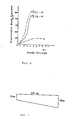
- FIG. 4 The shapes of electrodes before and after cutting was shown in Fig. 4, wherein (a) indicated the shape before cutting, (b) indicated the shape of Th-W electrode after cutting 16 mm thick 1 Cr18Ni9Ti plate 3 meters long, (c) indicated the shape of 3% Ce-W electrode after cutting 16 mm thick 1 Cr18Ni9Ti plate, 42 meters long and cutting 8 mm thick aluminium plate, 20 meters long; it was clearly shown that the end part of the electrode still possesses the feature of "Natural Tapering", thus it could be put into use again.
- the cutting path of the Ce-W electrode was narrower than that of the Th-W electrode, and the cutting edges were more vertical as shown in Fig. 5, wherein (a) shows the welding zone of Th-W electrode, (b) shows the welding zone using Ce-W electrode.
- the tests had been carried out with ⁇ 5 mm electrode, the end part of which was made taper-pointed 35° and its tip point was made 0 1.0 flat.
- the diameter of the nozzle was 0 3.5 mm.
- the length of electrode protruded out of fixture was 45 mm, and the distance between the nozzle and workpiece was 7 mm.
- the nitrogen supply maintained at 2.9 m 3 /h, and the test piece was 30 mm thick low carbon steel.
- the uprising speed of testing current and cutting speed were as follows:
- the cutting depth listed herein is the cutting depth which is not cut-off penetrated through the workpiece.
- Test conditions lampe tube ⁇ 8 x 80 mm - (seal jointed by transient glass), electrode ⁇ 7 x 50 mm (water-cooled by hollow jacket), input energy 90 Joule (voltage 1350V, capacitance 100 ⁇ f), working frequency 40 cycles/sec., peak current 2150 A, pre-igniting current 100 - 150 Mu.
- the droping speed of- xenon lamp efficiency has been judged by using the overall light efficiency under continuous igniting in the laser transmitting device. Test results:
- the test results have indicated that the output energy of the laser transmitting device decreased many times over (due to the electrode spattering) after the 2%Th-W electrode had been used over 300,000 times; while the same device, made by 2%Ce-W electrode only dropped 4 -12 % after 10,000,000 times of usage, so the limit of service lifetime was much higher than that of the Th-W electrode, and moreover its light efficiency increased by 10 -15 %.
- Test condition lamp tube ⁇ 32 x 27 x 51 mm, electrode ⁇ 2.0 mm, output energy 12 Joule, using repeated frequency.
- the test results have indicated that the 4%Ce-W electrode used for the lamp was much superior under high gas pressure.
- the additive is prepared according to the content of cerium oxide in the cerium nitrate.
- the cerium oxide, contained in the said solution, is chemically analyzed as 5.55 % weight proportion concentration. Calculate the solution weight required to add into 50 kg of tungsten trioxide.
- Reducing is accomplished in 2 steps in a reducing furnace with the hydrogen passing through it.
- the reduction is carried out in a furnace by putting the powder into a nickel boat which is pushed into the furnace in a contra current of the hydrogen flow.
- the maximum temperature for the 1st step should be 630°C.
- the maximum temperature for the 2nd step should be 880°C.
- the cerium oxide content in the powder should be 2.12 %.
- the powder is pressed in a hydraulic press, under 2 opposite directional pressing into a bar form.
- the pressing pressure is 2.1 ton/cm 2 .
- the pressed bar is then put onto a nickel boat.
- the boat is covered with lid piece and put into a hydrogen protected, molybdenum wired furnace for presintering.
- the temperature should not pass over 1200°C and should be kept for 30 minutes.
- This process is carried out by putting the bar into an hydrogen protected bell-jar sintering furnace with water cooled jacket.
- the maximum holding temperature current is 2700 A.
- the cerium oxide content of the finished bar should be 2.05 % when correctly chemically analyzed.
- the rotary forging, from a square form ingot into ⁇ 6.0 mm bar is heated in a molybdenum wired furnace.
- the tube of the furnace is subjected to suitable coating treatment to prevent its brittleness.
- annealing should be implemented in the bell-jar sintering furnace once.
- the rotary forging from 0 6.0 mm down to 0 2.75 mm should be heated in a gas fired furnace.
- the rotary forging temperature in the furnace should begin from 1700°C gradually down to finishing forging process temperature of 1300°C. The gradual decrease of temperature, of course, follows the stepwise reduction of the bar diameter during rotary forging.
- the process of wire drawing from o 2.75 mm down to, say, 0 1.00 mm is carried out in a heated gas fired furnace, beginning at a temperature of from 1300°C gradually down to 1100°C as the wire drawn to smaller diameter. Tests have shown that the wire may be drawn down to 0 0.4 mm or below.
Landscapes
- Engineering & Computer Science (AREA)
- Mechanical Engineering (AREA)
- Powder Metallurgy (AREA)
- Electrical Discharge Machining, Electrochemical Machining, And Combined Machining (AREA)
- Chemical Vapour Deposition (AREA)
- Discharge Lamp (AREA)
- Compounds Of Alkaline-Earth Elements, Aluminum Or Rare-Earth Metals (AREA)
- Arc Welding In General (AREA)
Priority Applications (1)
| Application Number | Priority Date | Filing Date | Title |
|---|---|---|---|
| AT86104274T ATE78741T1 (de) | 1985-04-01 | 1986-03-27 | Verfahren zur herstellung und verwendung von cerierten wolframelektroden. |
Applications Claiming Priority (2)
| Application Number | Priority Date | Filing Date | Title |
|---|---|---|---|
| CN85100484 | 1985-04-01 | ||
| CN85100484.9A CN1005732B (zh) | 1985-04-01 | 1985-04-01 | 钨铈电极材料及其制备工艺和用途 |
Publications (3)
| Publication Number | Publication Date |
|---|---|
| EP0197455A2 true EP0197455A2 (de) | 1986-10-15 |
| EP0197455A3 EP0197455A3 (en) | 1988-08-31 |
| EP0197455B1 EP0197455B1 (de) | 1992-07-29 |
Family
ID=4791197
Family Applications (1)
| Application Number | Title | Priority Date | Filing Date |
|---|---|---|---|
| EP86104274A Expired - Lifetime EP0197455B1 (de) | 1985-04-01 | 1986-03-27 | Verfahren zur Herstellung und Verwendung von cerierten Wolframelektroden |
Country Status (6)
| Country | Link |
|---|---|
| US (1) | US4678718A (de) |
| EP (1) | EP0197455B1 (de) |
| JP (1) | JPS61288044A (de) |
| CN (1) | CN1005732B (de) |
| AT (1) | ATE78741T1 (de) |
| DE (1) | DE3686190T2 (de) |
Cited By (2)
| Publication number | Priority date | Publication date | Assignee | Title |
|---|---|---|---|---|
| EP0606491A4 (de) * | 1992-07-31 | 1994-05-20 | Toho Kinzoku Kk | Wolframelektrodenmaterial. |
| EP0734039A1 (de) * | 1995-03-24 | 1996-09-25 | Siemens Aktiengesellschaft | Emissionselektrode, bestehend aus einem Trägerkörper, der eine die Elektronenemission begünstigende, schmelzgesinterte Masse trägt |
Families Citing this family (18)
| Publication number | Priority date | Publication date | Assignee | Title |
|---|---|---|---|---|
| DE3884653T2 (de) * | 1987-04-03 | 1994-02-03 | Fujitsu Ltd | Verfahren und Vorrichtung zur Gasphasenabscheidung von Diamant. |
| US5194218A (en) * | 1988-08-18 | 1993-03-16 | The United States Of America As Represented By The United States Department Of Energy | Tungsten-yttria carbide coating for conveying copper |
| US4859239A (en) * | 1988-12-20 | 1989-08-22 | Gte Products Corporation | Tungsten electrode and method of producing same |
| US5096663A (en) * | 1990-05-29 | 1992-03-17 | Auburn University | Method of optimizing composite preparation for electrical properties: maximum capacitance electrodes |
| US5159174A (en) * | 1990-11-01 | 1992-10-27 | Westinghouse Electric Corp. | Nonconsumable electrode for stainless steel welding and method of welding |
| US5123868A (en) * | 1991-04-17 | 1992-06-23 | John F. Waymouth Intellectual Property And Education Trust | Electromagnetic radiators and process of making electromagnetic radiators |
| US5284614A (en) * | 1992-06-01 | 1994-02-08 | General Electric Company | Method of forming fine dispersion of ceria in tungsten |
| JPH06297190A (ja) * | 1993-04-14 | 1994-10-25 | Toho Kinzoku Kk | タングステン電極材料 |
| DE4442161C1 (de) * | 1994-11-27 | 1996-03-07 | Bayerische Metallwerke Gmbh | Verfahren zur Herstellung eines Formteils |
| US8420974B2 (en) * | 1997-03-20 | 2013-04-16 | Tadahiro Ohmi | Long life welding electrode and its fixing structure, welding head, and welding method |
| US20050155680A1 (en) * | 2004-01-16 | 2005-07-21 | Gyorgy Nagy | High ductility, high hot tensile strength tungsten wire and method of manufacture |
| JP4916264B2 (ja) * | 2006-09-20 | 2012-04-11 | 日本タングステン株式会社 | ヒュージング溶接用電極 |
| JP2007223036A (ja) * | 2007-03-26 | 2007-09-06 | Allied Material Corp | Cu−Wパイプとその製造方法及びそれを用いた放電加工用パイプ電極とその製造方法 |
| CN103378534A (zh) * | 2012-04-18 | 2013-10-30 | 靖江市神久机械制造有限公司 | 一种二氧化碳激光器放电装置 |
| US9646729B2 (en) * | 2013-01-18 | 2017-05-09 | Westinghouse Electric Company Llc | Laser sintering systems and methods for remote manufacture of high density pellets containing highly radioactive elements |
| CN105695833A (zh) * | 2016-04-12 | 2016-06-22 | 唐岁寒 | 一种电缆支持架 |
| CN106848333B (zh) * | 2017-02-22 | 2019-07-02 | 长沙理工大学 | 一种氧化铈负载三维镍铜合金多孔复合阴极的制备方法 |
| CN117888013B (zh) * | 2023-12-26 | 2025-07-08 | 厦门虹鹭钨钼工业有限公司 | 一种钨合金线材及其制备方法和应用 |
Family Cites Families (12)
| Publication number | Priority date | Publication date | Assignee | Title |
|---|---|---|---|---|
| US2744183A (en) * | 1952-11-13 | 1956-05-01 | Union Carbide & Carbon Corp | Inert gas-shielded arc welding |
| US2825703A (en) * | 1955-12-06 | 1958-03-04 | Union Carbide Corp | Tungsten arc electrode |
| US3169861A (en) * | 1961-08-16 | 1965-02-16 | Westinghouse Electric Corp | Method for making welding electrodes |
| US3434830A (en) * | 1965-10-22 | 1969-03-25 | Nicholas J Grant | Dispersion strengthening of metals and alloys |
| US3475159A (en) * | 1967-01-16 | 1969-10-28 | Dow Chemical Co | Method for preparing tungsten powders doped with refractory metal oxides |
| JPS551962B2 (de) * | 1973-07-27 | 1980-01-17 | ||
| JPS5315449A (en) * | 1976-07-29 | 1978-02-13 | Daiichi Tanpaku Kk | Bread composition |
| GB1446507A (en) * | 1978-09-15 | 1976-08-18 | V N I Pk I T I Elektrosvarochn | Electrode for plasma arc working of conductive materials |
| US4213027A (en) * | 1979-03-06 | 1980-07-15 | Vsesojuzny Nauchno-Issledovatelsky Proektno-Konstruktorsky i Teknologichesky Institut Elektrosvarochnogo Oborudovania | Method of treating electrodes intended for operation in argon as cathodes of an electric arc |
| JPS5741336A (en) * | 1980-08-27 | 1982-03-08 | Hitachi Ltd | Manufacture of thorium-tungsten |
| JPS59143041A (ja) * | 1983-02-04 | 1984-08-16 | Nippon Tungsten Co Ltd | タングステン電極材料 |
| JPS59170206A (ja) * | 1983-03-14 | 1984-09-26 | Nippon Tungsten Co Ltd | タングステン−酸化セリウム粉末の製造法 |
-
1985
- 1985-04-01 CN CN85100484.9A patent/CN1005732B/zh not_active Expired
- 1985-09-03 US US06/771,743 patent/US4678718A/en not_active Expired - Fee Related
-
1986
- 1986-03-27 DE DE8686104274T patent/DE3686190T2/de not_active Expired - Fee Related
- 1986-03-27 AT AT86104274T patent/ATE78741T1/de not_active IP Right Cessation
- 1986-03-27 JP JP61069716A patent/JPS61288044A/ja active Pending
- 1986-03-27 EP EP86104274A patent/EP0197455B1/de not_active Expired - Lifetime
Cited By (2)
| Publication number | Priority date | Publication date | Assignee | Title |
|---|---|---|---|---|
| EP0606491A4 (de) * | 1992-07-31 | 1994-05-20 | Toho Kinzoku Kk | Wolframelektrodenmaterial. |
| EP0734039A1 (de) * | 1995-03-24 | 1996-09-25 | Siemens Aktiengesellschaft | Emissionselektrode, bestehend aus einem Trägerkörper, der eine die Elektronenemission begünstigende, schmelzgesinterte Masse trägt |
Also Published As
| Publication number | Publication date |
|---|---|
| CN1005732B (zh) | 1989-11-08 |
| EP0197455B1 (de) | 1992-07-29 |
| CN85100484A (zh) | 1986-08-13 |
| DE3686190D1 (de) | 1992-09-03 |
| ATE78741T1 (de) | 1992-08-15 |
| DE3686190T2 (de) | 1993-03-04 |
| US4678718A (en) | 1987-07-07 |
| EP0197455A3 (en) | 1988-08-31 |
| JPS61288044A (ja) | 1986-12-18 |
Similar Documents
| Publication | Publication Date | Title |
|---|---|---|
| EP0197455A2 (de) | Verfahren zur Herstellung und Verwendung von cerierten Wolframelektroden | |
| US3930139A (en) | Nonconsumable electrode for oxygen arc working | |
| EP1481418B1 (de) | Kurzbogen-hochdruckentladungslampe | |
| JPH01127228A (ja) | 放電加工電極の製造法および放電加工電極 | |
| US5774780A (en) | Process for production of a shaped part | |
| DE69604362T2 (de) | Elektrodenlose niederdruckentladungslampe | |
| DE1806856B2 (de) | Verfahren zum umhuellen einer elektrodenspitze | |
| US4229873A (en) | Method of producing nonconsumable electrode for use in arc techniques | |
| EP0907960B1 (de) | Kalte elektrode für gasentladungen | |
| US5028756A (en) | Electrode wire for electric spark cutting | |
| EP1481417A1 (de) | Quecksilber-kurzbogenlampe mit lanthanoxid-haltiger kathode | |
| US4392047A (en) | Non-consumable electrode | |
| JP2577887B2 (ja) | タングステン電極材料 | |
| US4039883A (en) | Soldered joint | |
| US5512240A (en) | Tungsten electrode material | |
| RU93044502A (ru) | Способ получения сферических ультрадисперсных порошков оксидов активных металлов | |
| US2695945A (en) | Refractory metal electrode for inert gas-shielded arc welding | |
| JPH11273618A (ja) | 放電電極材料及びその製造方法 | |
| CN100446898C (zh) | 多元复合稀土钨电子发射体的烧结方法 | |
| JPH06297190A (ja) | タングステン電極材料 | |
| US5124528A (en) | Gas tungsten and plasma arc welding electrode having a carbide emitter end | |
| JPWO2004096468A1 (ja) | 複合棒およびその製造方法ならびに該複合棒よりなるアーク溶接用コンタクトチップおよび抵抗溶接用電極 | |
| DE233930C (de) | ||
| US2695946A (en) | Inert gas-shielded arc welding electrode | |
| DE3817145C2 (de) | Elektrode für gepulste Gas-Laser und ihre Verwendung |
Legal Events
| Date | Code | Title | Description |
|---|---|---|---|
| PUAI | Public reference made under article 153(3) epc to a published international application that has entered the european phase |
Free format text: ORIGINAL CODE: 0009012 |
|
| AK | Designated contracting states |
Kind code of ref document: A2 Designated state(s): AT CH DE FR GB IT LI SE |
|
| 17P | Request for examination filed |
Effective date: 19870114 |
|
| PUAL | Search report despatched |
Free format text: ORIGINAL CODE: 0009013 |
|
| AK | Designated contracting states |
Kind code of ref document: A3 Designated state(s): AT CH DE FR GB IT LI SE |
|
| 17Q | First examination report despatched |
Effective date: 19900709 |
|
| ITF | It: translation for a ep patent filed | ||
| GRAA | (expected) grant |
Free format text: ORIGINAL CODE: 0009210 |
|
| AK | Designated contracting states |
Kind code of ref document: B1 Designated state(s): AT CH DE FR GB IT LI SE |
|
| REF | Corresponds to: |
Ref document number: 78741 Country of ref document: AT Date of ref document: 19920815 Kind code of ref document: T |
|
| REF | Corresponds to: |
Ref document number: 3686190 Country of ref document: DE Date of ref document: 19920903 |
|
| ET | Fr: translation filed | ||
| PLBE | No opposition filed within time limit |
Free format text: ORIGINAL CODE: 0009261 |
|
| STAA | Information on the status of an ep patent application or granted ep patent |
Free format text: STATUS: NO OPPOSITION FILED WITHIN TIME LIMIT |
|
| 26N | No opposition filed | ||
| EAL | Se: european patent in force in sweden |
Ref document number: 86104274.5 |
|
| PGFP | Annual fee paid to national office [announced via postgrant information from national office to epo] |
Ref country code: GB Payment date: 19950327 Year of fee payment: 10 |
|
| PGFP | Annual fee paid to national office [announced via postgrant information from national office to epo] |
Ref country code: SE Payment date: 19950328 Year of fee payment: 10 |
|
| PGFP | Annual fee paid to national office [announced via postgrant information from national office to epo] |
Ref country code: FR Payment date: 19950331 Year of fee payment: 10 Ref country code: AT Payment date: 19950331 Year of fee payment: 10 |
|
| PGFP | Annual fee paid to national office [announced via postgrant information from national office to epo] |
Ref country code: CH Payment date: 19950403 Year of fee payment: 10 |
|
| PGFP | Annual fee paid to national office [announced via postgrant information from national office to epo] |
Ref country code: DE Payment date: 19950530 Year of fee payment: 10 |
|
| PG25 | Lapsed in a contracting state [announced via postgrant information from national office to epo] |
Ref country code: GB Effective date: 19960327 Ref country code: AT Effective date: 19960327 |
|
| PG25 | Lapsed in a contracting state [announced via postgrant information from national office to epo] |
Ref country code: SE Effective date: 19960328 |
|
| PG25 | Lapsed in a contracting state [announced via postgrant information from national office to epo] |
Ref country code: LI Effective date: 19960331 Ref country code: CH Effective date: 19960331 |
|
| REG | Reference to a national code |
Ref country code: CH Ref legal event code: PL |
|
| GBPC | Gb: european patent ceased through non-payment of renewal fee |
Effective date: 19960327 |
|
| PG25 | Lapsed in a contracting state [announced via postgrant information from national office to epo] |
Ref country code: FR Effective date: 19961129 |
|
| PG25 | Lapsed in a contracting state [announced via postgrant information from national office to epo] |
Ref country code: DE Effective date: 19961203 |
|
| EUG | Se: european patent has lapsed |
Ref document number: 86104274.5 |
|
| REG | Reference to a national code |
Ref country code: FR Ref legal event code: ST |
|
| PG25 | Lapsed in a contracting state [announced via postgrant information from national office to epo] |
Ref country code: IT Free format text: LAPSE BECAUSE OF NON-PAYMENT OF DUE FEES;WARNING: LAPSES OF ITALIAN PATENTS WITH EFFECTIVE DATE BEFORE 2007 MAY HAVE OCCURRED AT ANY TIME BEFORE 2007. THE CORRECT EFFECTIVE DATE MAY BE DIFFERENT FROM THE ONE RECORDED. Effective date: 20050327 |