EP0170146A2 - Intaktes Gen und Verfahren zu dessen Ausschnitt und Klonierung - Google Patents
Intaktes Gen und Verfahren zu dessen Ausschnitt und Klonierung Download PDFInfo
- Publication number
- EP0170146A2 EP0170146A2 EP85108829A EP85108829A EP0170146A2 EP 0170146 A2 EP0170146 A2 EP 0170146A2 EP 85108829 A EP85108829 A EP 85108829A EP 85108829 A EP85108829 A EP 85108829A EP 0170146 A2 EP0170146 A2 EP 0170146A2
- Authority
- EP
- European Patent Office
- Prior art keywords
- gene
- dna
- nuclease
- formamide
- source
- Prior art date
- Legal status (The legal status is an assumption and is not a legal conclusion. Google has not performed a legal analysis and makes no representation as to the accuracy of the status listed.)
- Granted
Links
- 108090000623 proteins and genes Proteins 0.000 title claims abstract description 128
- 238000000034 method Methods 0.000 title claims abstract description 40
- 238000010367 cloning Methods 0.000 title claims abstract description 19
- 101710163270 Nuclease Proteins 0.000 claims abstract description 16
- 108090000765 processed proteins & peptides Proteins 0.000 claims abstract description 8
- 102000004196 processed proteins & peptides Human genes 0.000 claims abstract description 5
- 229920001184 polypeptide Polymers 0.000 claims abstract 3
- 108020004414 DNA Proteins 0.000 claims description 83
- ZHNUHDYFZUAESO-UHFFFAOYSA-N Formamide Chemical group NC=O ZHNUHDYFZUAESO-UHFFFAOYSA-N 0.000 claims description 76
- 239000012634 fragment Substances 0.000 claims description 43
- 108010086093 Mung Bean Nuclease Proteins 0.000 claims description 24
- 238000006243 chemical reaction Methods 0.000 claims description 17
- 239000003795 chemical substances by application Substances 0.000 claims description 7
- 239000011541 reaction mixture Substances 0.000 claims description 7
- 239000013604 expression vector Substances 0.000 claims description 5
- 239000007853 buffer solution Substances 0.000 claims description 3
- 229920002477 rna polymer Polymers 0.000 claims description 3
- 210000003705 ribosome Anatomy 0.000 claims description 2
- 238000012546 transfer Methods 0.000 claims description 2
- 102000053602 DNA Human genes 0.000 claims 4
- 238000005215 recombination Methods 0.000 abstract 1
- 230000006798 recombination Effects 0.000 abstract 1
- 239000000047 product Substances 0.000 description 23
- 235000018102 proteins Nutrition 0.000 description 19
- 102000004169 proteins and genes Human genes 0.000 description 19
- 238000003776 cleavage reaction Methods 0.000 description 18
- 230000007017 scission Effects 0.000 description 18
- 239000000523 sample Substances 0.000 description 14
- 238000002105 Southern blotting Methods 0.000 description 12
- 108020004635 Complementary DNA Proteins 0.000 description 10
- 241000223960 Plasmodium falciparum Species 0.000 description 9
- 238000010804 cDNA synthesis Methods 0.000 description 9
- 239000002299 complementary DNA Substances 0.000 description 9
- 241000224016 Plasmodium Species 0.000 description 8
- 108020004999 messenger RNA Proteins 0.000 description 8
- 239000013612 plasmid Substances 0.000 description 7
- 101710117490 Circumsporozoite protein Proteins 0.000 description 6
- 102000004190 Enzymes Human genes 0.000 description 6
- 108090000790 Enzymes Proteins 0.000 description 6
- 241000223801 Plasmodium knowlesi Species 0.000 description 6
- 241000223806 Plasmodium lophurae Species 0.000 description 6
- 230000008901 benefit Effects 0.000 description 6
- 230000029087 digestion Effects 0.000 description 6
- LFQSCWFLJHTTHZ-UHFFFAOYSA-N Ethanol Chemical compound CCO LFQSCWFLJHTTHZ-UHFFFAOYSA-N 0.000 description 5
- 108090000704 Tubulin Proteins 0.000 description 5
- 210000004027 cell Anatomy 0.000 description 5
- 108091008146 restriction endonucleases Proteins 0.000 description 5
- 101710169678 Histidine-rich protein Proteins 0.000 description 4
- 102000004243 Tubulin Human genes 0.000 description 4
- 240000004922 Vigna radiata Species 0.000 description 4
- 235000010721 Vigna radiata var radiata Nutrition 0.000 description 4
- 235000011469 Vigna radiata var sublobata Nutrition 0.000 description 4
- 108020004565 5.8S Ribosomal RNA Proteins 0.000 description 3
- 102000007469 Actins Human genes 0.000 description 3
- 108010085238 Actins Proteins 0.000 description 3
- 108091026890 Coding region Proteins 0.000 description 3
- KCXVZYZYPLLWCC-UHFFFAOYSA-N EDTA Chemical compound OC(=O)CN(CC(O)=O)CCN(CC(O)=O)CC(O)=O KCXVZYZYPLLWCC-UHFFFAOYSA-N 0.000 description 3
- ZMXDDKWLCZADIW-UHFFFAOYSA-N N,N-Dimethylformamide Chemical compound CN(C)C=O ZMXDDKWLCZADIW-UHFFFAOYSA-N 0.000 description 3
- 108091034117 Oligonucleotide Proteins 0.000 description 3
- 241000224017 Plasmodium berghei Species 0.000 description 3
- 108020001027 Ribosomal DNA Proteins 0.000 description 3
- FAPWRFPIFSIZLT-UHFFFAOYSA-M Sodium chloride Chemical compound [Na+].[Cl-] FAPWRFPIFSIZLT-UHFFFAOYSA-M 0.000 description 3
- 238000004458 analytical method Methods 0.000 description 3
- 239000007795 chemical reaction product Substances 0.000 description 3
- 229940071106 ethylenediaminetetraacetate Drugs 0.000 description 3
- 229920000936 Agarose Polymers 0.000 description 2
- 241000195585 Chlamydomonas Species 0.000 description 2
- IAZDPXIOMUYVGZ-UHFFFAOYSA-N Dimethylsulphoxide Chemical compound CS(C)=O IAZDPXIOMUYVGZ-UHFFFAOYSA-N 0.000 description 2
- WSFSSNUMVMOOMR-UHFFFAOYSA-N Formaldehyde Chemical compound O=C WSFSSNUMVMOOMR-UHFFFAOYSA-N 0.000 description 2
- 241000287828 Gallus gallus Species 0.000 description 2
- 108091028043 Nucleic acid sequence Proteins 0.000 description 2
- 108010076039 Polyproteins Proteins 0.000 description 2
- 125000003178 carboxy group Chemical group [H]OC(*)=O 0.000 description 2
- 238000005520 cutting process Methods 0.000 description 2
- 238000001962 electrophoresis Methods 0.000 description 2
- 229920002521 macromolecule Polymers 0.000 description 2
- 238000004519 manufacturing process Methods 0.000 description 2
- 239000000203 mixture Substances 0.000 description 2
- 230000003071 parasitic effect Effects 0.000 description 2
- 108020004418 ribosomal RNA Proteins 0.000 description 2
- 238000013518 transcription Methods 0.000 description 2
- 230000035897 transcription Effects 0.000 description 2
- 238000013519 translation Methods 0.000 description 2
- 229910000368 zinc sulfate Inorganic materials 0.000 description 2
- CSCPPACGZOOCGX-UHFFFAOYSA-N Acetone Natural products CC(C)=O CSCPPACGZOOCGX-UHFFFAOYSA-N 0.000 description 1
- 102000012410 DNA Ligases Human genes 0.000 description 1
- 108010061982 DNA Ligases Proteins 0.000 description 1
- 102000004594 DNA Polymerase I Human genes 0.000 description 1
- 108010017826 DNA Polymerase I Proteins 0.000 description 1
- 108020003215 DNA Probes Proteins 0.000 description 1
- 239000003298 DNA probe Substances 0.000 description 1
- 101710181478 Envelope glycoprotein GP350 Proteins 0.000 description 1
- 241000588724 Escherichia coli Species 0.000 description 1
- 241000701959 Escherichia virus Lambda Species 0.000 description 1
- 239000006142 Luria-Bertani Agar Substances 0.000 description 1
- 241000282560 Macaca mulatta Species 0.000 description 1
- 108091061960 Naked DNA Proteins 0.000 description 1
- 239000000020 Nitrocellulose Substances 0.000 description 1
- 108020005187 Oligonucleotide Probes Proteins 0.000 description 1
- ISWSIDIOOBJBQZ-UHFFFAOYSA-N Phenol Chemical compound OC1=CC=CC=C1 ISWSIDIOOBJBQZ-UHFFFAOYSA-N 0.000 description 1
- 240000004808 Saccharomyces cerevisiae Species 0.000 description 1
- 241000242680 Schistosoma mansoni Species 0.000 description 1
- 229920002684 Sepharose Polymers 0.000 description 1
- 238000012300 Sequence Analysis Methods 0.000 description 1
- 241000869417 Trematodes Species 0.000 description 1
- 241000607626 Vibrio cholerae Species 0.000 description 1
- JLCPHMBAVCMARE-UHFFFAOYSA-N [3-[[3-[[3-[[3-[[3-[[3-[[3-[[3-[[3-[[3-[[3-[[5-(2-amino-6-oxo-1H-purin-9-yl)-3-[[3-[[3-[[3-[[3-[[3-[[5-(2-amino-6-oxo-1H-purin-9-yl)-3-[[5-(2-amino-6-oxo-1H-purin-9-yl)-3-hydroxyoxolan-2-yl]methoxy-hydroxyphosphoryl]oxyoxolan-2-yl]methoxy-hydroxyphosphoryl]oxy-5-(5-methyl-2,4-dioxopyrimidin-1-yl)oxolan-2-yl]methoxy-hydroxyphosphoryl]oxy-5-(6-aminopurin-9-yl)oxolan-2-yl]methoxy-hydroxyphosphoryl]oxy-5-(6-aminopurin-9-yl)oxolan-2-yl]methoxy-hydroxyphosphoryl]oxy-5-(6-aminopurin-9-yl)oxolan-2-yl]methoxy-hydroxyphosphoryl]oxy-5-(6-aminopurin-9-yl)oxolan-2-yl]methoxy-hydroxyphosphoryl]oxyoxolan-2-yl]methoxy-hydroxyphosphoryl]oxy-5-(5-methyl-2,4-dioxopyrimidin-1-yl)oxolan-2-yl]methoxy-hydroxyphosphoryl]oxy-5-(4-amino-2-oxopyrimidin-1-yl)oxolan-2-yl]methoxy-hydroxyphosphoryl]oxy-5-(5-methyl-2,4-dioxopyrimidin-1-yl)oxolan-2-yl]methoxy-hydroxyphosphoryl]oxy-5-(5-methyl-2,4-dioxopyrimidin-1-yl)oxolan-2-yl]methoxy-hydroxyphosphoryl]oxy-5-(6-aminopurin-9-yl)oxolan-2-yl]methoxy-hydroxyphosphoryl]oxy-5-(6-aminopurin-9-yl)oxolan-2-yl]methoxy-hydroxyphosphoryl]oxy-5-(4-amino-2-oxopyrimidin-1-yl)oxolan-2-yl]methoxy-hydroxyphosphoryl]oxy-5-(4-amino-2-oxopyrimidin-1-yl)oxolan-2-yl]methoxy-hydroxyphosphoryl]oxy-5-(4-amino-2-oxopyrimidin-1-yl)oxolan-2-yl]methoxy-hydroxyphosphoryl]oxy-5-(6-aminopurin-9-yl)oxolan-2-yl]methoxy-hydroxyphosphoryl]oxy-5-(4-amino-2-oxopyrimidin-1-yl)oxolan-2-yl]methyl [5-(6-aminopurin-9-yl)-2-(hydroxymethyl)oxolan-3-yl] hydrogen phosphate Polymers Cc1cn(C2CC(OP(O)(=O)OCC3OC(CC3OP(O)(=O)OCC3OC(CC3O)n3cnc4c3nc(N)[nH]c4=O)n3cnc4c3nc(N)[nH]c4=O)C(COP(O)(=O)OC3CC(OC3COP(O)(=O)OC3CC(OC3COP(O)(=O)OC3CC(OC3COP(O)(=O)OC3CC(OC3COP(O)(=O)OC3CC(OC3COP(O)(=O)OC3CC(OC3COP(O)(=O)OC3CC(OC3COP(O)(=O)OC3CC(OC3COP(O)(=O)OC3CC(OC3COP(O)(=O)OC3CC(OC3COP(O)(=O)OC3CC(OC3COP(O)(=O)OC3CC(OC3COP(O)(=O)OC3CC(OC3COP(O)(=O)OC3CC(OC3COP(O)(=O)OC3CC(OC3COP(O)(=O)OC3CC(OC3COP(O)(=O)OC3CC(OC3CO)n3cnc4c(N)ncnc34)n3ccc(N)nc3=O)n3cnc4c(N)ncnc34)n3ccc(N)nc3=O)n3ccc(N)nc3=O)n3ccc(N)nc3=O)n3cnc4c(N)ncnc34)n3cnc4c(N)ncnc34)n3cc(C)c(=O)[nH]c3=O)n3cc(C)c(=O)[nH]c3=O)n3ccc(N)nc3=O)n3cc(C)c(=O)[nH]c3=O)n3cnc4c3nc(N)[nH]c4=O)n3cnc4c(N)ncnc34)n3cnc4c(N)ncnc34)n3cnc4c(N)ncnc34)n3cnc4c(N)ncnc34)O2)c(=O)[nH]c1=O JLCPHMBAVCMARE-UHFFFAOYSA-N 0.000 description 1
- 239000002253 acid Substances 0.000 description 1
- 150000001408 amides Chemical class 0.000 description 1
- 235000001014 amino acid Nutrition 0.000 description 1
- 150000001413 amino acids Chemical class 0.000 description 1
- 238000010420 art technique Methods 0.000 description 1
- 239000012472 biological sample Substances 0.000 description 1
- 239000000872 buffer Substances 0.000 description 1
- 239000013599 cloning vector Substances 0.000 description 1
- 230000001419 dependent effect Effects 0.000 description 1
- 238000001514 detection method Methods 0.000 description 1
- 238000005516 engineering process Methods 0.000 description 1
- ZMMJGEGLRURXTF-UHFFFAOYSA-N ethidium bromide Chemical compound [Br-].C12=CC(N)=CC=C2C2=CC=C(N)C=C2[N+](CC)=C1C1=CC=CC=C1 ZMMJGEGLRURXTF-UHFFFAOYSA-N 0.000 description 1
- 229960005542 ethidium bromide Drugs 0.000 description 1
- HNDVDQJCIGZPNO-UHFFFAOYSA-N histidine Natural products OC(=O)C(N)CC1=CN=CN1 HNDVDQJCIGZPNO-UHFFFAOYSA-N 0.000 description 1
- 238000009396 hybridization Methods 0.000 description 1
- 230000001900 immune effect Effects 0.000 description 1
- 210000000987 immune system Anatomy 0.000 description 1
- 238000000338 in vitro Methods 0.000 description 1
- 238000011534 incubation Methods 0.000 description 1
- 208000015181 infectious disease Diseases 0.000 description 1
- 230000002458 infectious effect Effects 0.000 description 1
- 238000011835 investigation Methods 0.000 description 1
- 238000002955 isolation Methods 0.000 description 1
- BPHPUYQFMNQIOC-NXRLNHOXSA-N isopropyl beta-D-thiogalactopyranoside Chemical compound CC(C)S[C@@H]1O[C@H](CO)[C@H](O)[C@H](O)[C@H]1O BPHPUYQFMNQIOC-NXRLNHOXSA-N 0.000 description 1
- 239000000463 material Substances 0.000 description 1
- 230000000813 microbial effect Effects 0.000 description 1
- 238000012986 modification Methods 0.000 description 1
- 230000004048 modification Effects 0.000 description 1
- 229920001220 nitrocellulos Polymers 0.000 description 1
- 239000002773 nucleotide Substances 0.000 description 1
- 125000003729 nucleotide group Chemical class 0.000 description 1
- 239000002751 oligonucleotide probe Substances 0.000 description 1
- 238000004806 packaging method and process Methods 0.000 description 1
- 239000013600 plasmid vector Substances 0.000 description 1
- 239000002244 precipitate Substances 0.000 description 1
- 230000001376 precipitating effect Effects 0.000 description 1
- 238000002360 preparation method Methods 0.000 description 1
- 125000002924 primary amino group Chemical group [H]N([H])* 0.000 description 1
- 238000011896 sensitive detection Methods 0.000 description 1
- 238000012163 sequencing technique Methods 0.000 description 1
- 238000010008 shearing Methods 0.000 description 1
- 239000011780 sodium chloride Substances 0.000 description 1
- 239000000243 solution Substances 0.000 description 1
- 241000894007 species Species 0.000 description 1
- 238000010186 staining Methods 0.000 description 1
- 238000010561 standard procedure Methods 0.000 description 1
- 239000006228 supernatant Substances 0.000 description 1
- 101150065190 term gene Proteins 0.000 description 1
- 238000012360 testing method Methods 0.000 description 1
- 210000001519 tissue Anatomy 0.000 description 1
- 241001515965 unidentified phage Species 0.000 description 1
- 239000013598 vector Substances 0.000 description 1
- 229940118696 vibrio cholerae Drugs 0.000 description 1
- 239000013603 viral vector Substances 0.000 description 1
- 230000003612 virological effect Effects 0.000 description 1
Images
Classifications
-
- C—CHEMISTRY; METALLURGY
- C12—BIOCHEMISTRY; BEER; SPIRITS; WINE; VINEGAR; MICROBIOLOGY; ENZYMOLOGY; MUTATION OR GENETIC ENGINEERING
- C12N—MICROORGANISMS OR ENZYMES; COMPOSITIONS THEREOF; PROPAGATING, PRESERVING, OR MAINTAINING MICROORGANISMS; MUTATION OR GENETIC ENGINEERING; CULTURE MEDIA
- C12N15/00—Mutation or genetic engineering; DNA or RNA concerning genetic engineering, vectors, e.g. plasmids, or their isolation, preparation or purification; Use of hosts therefor
- C12N15/09—Recombinant DNA-technology
- C12N15/10—Processes for the isolation, preparation or purification of DNA or RNA
-
- C—CHEMISTRY; METALLURGY
- C07—ORGANIC CHEMISTRY
- C07K—PEPTIDES
- C07K14/00—Peptides having more than 20 amino acids; Gastrins; Somatostatins; Melanotropins; Derivatives thereof
- C07K14/435—Peptides having more than 20 amino acids; Gastrins; Somatostatins; Melanotropins; Derivatives thereof from animals; from humans
- C07K14/44—Peptides having more than 20 amino acids; Gastrins; Somatostatins; Melanotropins; Derivatives thereof from animals; from humans from protozoa
- C07K14/445—Plasmodium
Definitions
- the present invention is related to obtaining a functionally intact whole gene directly from a genome, said gene being suitable for expression of gene products.
- the present invention further relates to a method of excising a complete gene from a genome in a single step and cloning the gene thus obtained.
- Applicants are the first to develop a novel method of obtaining a complete functionally intact gene in a single step, as disclosed herein infra.
- current protocols for cloning genes utilizes one of three methods to prepare DNA for cloning: (1) The preparation of complementary DNA (cDNA) from messenger RNA (i.e., copying the mRNA into DNA); (2) shearing of genomic DNA into randomly broken fragments; and (3) cutting of genomic DNA into reproducible fragments with restriction endonucleases.
- cDNA complementary DNA
- DNA fragments Once DNA fragments have been prepared, they are ligated into viral or plasmid vectors where they are reproduced. If the DNA contains a gene which codes for a protein product (most often this is the commercial reason to clone the DNA in the first place), the expression (production) of that protein or some part of it by the clone of interest is used to detect the gene- containing clone. A commonly used method to detect these protein products is binding of antibodies specific for the protein product.
- the cDNA techniques which is most commonly used for preparing DNA for cloning, has the following limitations: (1) In almost every case only part of the gene is cloned; (2) The piece of the cloned gene is usually biased toward the part which codes for the carboxyl terminal end of the protein; (3) The technique depends on a ready supply of mRNA which is only made, in most cases, in certain tissues or life cycle stages which may be difficult to obtain.
- the present invention obviates the problems of the cDNA technique by cloning the complete gene in a single step. This reduces the time needed to get the complete gene, which of course, can also be obtained after cDNA cloning, but by going on to the restriction endonuclease method of preparing DNA for cloning and repeating the cloning process. Since the method of detection of a clone may be biased away from the structures displayed in the protein at the carboxyl terminal end, the technique of the present invention, which clones the complete gene, would not be subject to that problem. This could be exemplified by a cell- surface membrane antigen where the immune system only produced antibodies against amino terminal portions of the protein.
- the technique of the present invention prepares DNA fragments containing the genes in direct proportion to the number of copies of that gene in the genome rather than to the relative amount of mRNA present in the biological sample available.
- This advantage overcomes the problem of cloning a gene for a protein which is present in only limited quantity or which is produced in only tiny amounts by a cell sample and which can be detected only be sensitive detection methods. This is so because the mRNA to make the cDNA for the gene of interest is normally present only in cells where the protein is made.
- the other two commonly used techniques may not have the disadvantages of the cDNA technique, but in turn have disadvantages of their own.
- the random shear method does not suffer from the lack of mRNA, but like the cDNA technique most often results in the cloning of only a portion of the gene. Also due to the small sizes of the pieces of DNA used in this method a larger number of clones must be examined to find the gene.
- restriction endonuclease method of preparing DNA for cloning is usually a required second step for the cDNA and for random shear techniques to eventually clone the entire gene. It also may be used to clone genes directly, but has the disadvantage that numerous restriction enzymes must be tried to find just one (of - 100) enzyme, which will cut the DNA in the right position to yield the gene or a portion of it in a form which the cloning vector can allow to be expressed. The reason for this is that a restriction enzyme inherently recognizes a specific 4 or 6 base pair sequence of the DNA and cuts the genomic DNA everywhere the recognition sequence is present. Since the DNA base sequence is stable, the position of these sites is fixed. For many genes it may be difficult or impossible to find the appropriate enzyme to cut the gene containing DNA fragment in a form allowing the gene product to be expressed.
- the present invention provides advantages over the prior art techniques by first cutting the DNA at specific sites, less than 100 bases from the front and the rear of the coding area of the gene. It does not cut randomly within the gene. This results in DNA pieces containing the whole gene as opposed to fragments or small portions of a gene.
- the frequency of the appropriate DNA fragment in the clone mixture is dependent on gene copy number and the size of the DNA of the genome rather than the amount of mRNA available.
- the close proximity of the cut site to the start of the gene makes the DNA suitable for expression of the gene product in many expression vectors.
- the cut is not specific for a certain base sequence, rather it recognizes a structure in the DNA and cuts somewhat randomly within a certain base stretch overcoming the problem present in many expression vectors of the DNA being in the right reading frame to allow the gene product to be expressed.
- the present invention is useful both for prokaryotic as well as eukaryotic genomes, hence is of general applicability.
- Another object of the present invention is to provide a method of obtaining intact whole gene in a single step process of treating the genomic DNA with a mixture comprising a nuclease and denaturing agent.
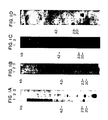
- Genomic DNA (5 ⁇ g) was digested with mung bean nuclease in 40% (lane 3) or 45% (lane 4) formamide. The products were compared by Southern blot analysis using a radiolabelled plasmid (pPbSL5.6) probe which contains ony the gene for the small rRNA subunit. The band at 6.7 kb in lane 1 results from hybridization of the probe to a pBr322 derived sequence on the blot.
- pPbSL5.6 radiolabelled plasmid
- the present invention comprises an isolated, functionally intact whole gene and a method of isolating a functionally intact whole gene comprising treating a source of said gene with an amount of a single strand nuclease and a denaturing agent sufficient for releasing said gene from said source.
- Genomes or genomic DNA are examples of the source material from which said intact genes can be obtained.
- DNA from which intact genes can be obtained may either be from prokaryotic or eukaryotic organisms, native or recombinant, natural or synthetic or of any other type so long as it has intact genes present therein.
- Suitable nuclease which can be employed is single strand nuclease such as mung bean nuclease which is commercially available, for example from Pharmacia P-L Biochemicals, Piscataway, New Jersey.
- the enzyme is used in an amount sufficient to excise the DNA, for example 1 unit of enzyme per 1 pg of DNA. But the amount may vary from 0.5 unit to 2 units or the like depending on the reaction conditions.
- the enzyme unit is that as defined by the supplier, e.g. Pharmacia P-L Biochemicals.
- nucleases which could be used are those described in "Nucleases” Ed. Linn & Roberts, Cold Spring Harbor, N.Y. 1982, which is incorporated herein by reference, of particular interest being an article therein entitled “Single Strand Specific Nucleases” by Shishido and Ando at page 167 et seq.
- Suitable denaturing agents which could be employed in the practice of the present invention are preferably amides, particularly formamide in a concentrating range of about 5% to 65% (v/v) of formamide in the reaction mixture.
- Examples of other denaturing agents are dimethyl sulfoxide, dimethyl formamide and formaldehyde in an amount up to 50%, 30% and 2%, respectively.
- a description of suitable denaturing agents can be found in Wells et al., Prog. Nucl. Acid Res. Mol. Biol. 24, 167, 1980 which is incorporated herein by reference.
- the reaction mixture is a buffer solution having a pH of about 4.2-4.8.
- a preferred buffer solution comprises about 0.2M Nacl, 1mM ZnS0 4 and 30mM Na-acetate, pH 4.6.
- gene or expression product includes such entities as messenger, transfer, soluble and ribosomal ribonucleic acids, peptide, poly-peptide or proteins and antibodies made against said peptide or protein.
- mung bean nuclease reaction is carried out in a volume of 100 ⁇ l with 1 unit of enzyme per 1 ⁇ g of genomic DNA at about 50°C in varying concentrations of formamide, preferably about 20%-50% (v/v) for about 20-40 minutes in 0.2M NaCl, 1 mM ZnS0 4 and 30mM Na-acetate, pH 4.6.
- the incubation is carried out for a sufficient time, usually about 30 minutes in the above reaction mixture.
- the solution is diluted 4-fold with about 0.01M ethylenediamine tetraacetate (EDTA) and extracted with phenol as is well known in the art.
- EDTA ethylenediamine tetraacetate
- DNA fragments containing the desired intact whole genes are then isolated from this reaction mixture by precipitating said DNA fragments with 2 volumes of absolute ethanol.
- the precipitate is left overnight at -20°C, then centrifuged at about 10,000 rpm (12,000g) for about 30 minutes in a refrigerated centrifuge.
- the residue comprising the isolated intact gene(s) is rinsed with 80% ethanol in H 2 0, the supernatant poured off, the residue re- centrifrized if necessary and then dried in vacuum.
- the dried DNA representing the intact whole (complete) gene can then either be stored at -20°C or dissolved in a suitable buffer, e.g.
- lOmM tris-HC1, pH 7.5 containing 1mM NaEDTA used for subsequent steps e.g., cloning, transcription, translation, electrophoresis and the like or for obtaining other gene products or macromolecules (proteins, antibodies, and the like) or stored frozen for later use as desired.
- Cloning of isolated whole gene can be accomplished by any suitable technique, such as described by Young and Davis in Proc. Natl. Acad. Sci., USA, 80:1194, 1983 and Science, 222:778, 1983, both of which publications are incorporated herein by reference.
- Any suitable cloning vehicle e.g. a microbial or yeast plasmid or a bacteriophage and the like can be employed to clone the whole gene.
- a preferred cloning vehicle is X gtll.
- the gene is artificially introduced into an expression vector, preferably a unicellular organism capable of expressing said gene usually in the form of a peptide or protein.
- the poly- peptide or protein thus expressed is usually identified by standard techniques such as immunological procedures, electrophoresis, aminoacid sequencing and the like.
- the expression product can be further used to produce antibodies (mono or poly-clonal) or the like, all of which are envisaged within the scope of the present invention.
- the term 'functionally intact' means the gene is capable of encoding, controlling or directing all those functions which are inherent in a gene, e.g. transcription, translation and the like.
- genomic DNA was cleaved with mung bean nuclease under a series of controlled conditions and the gene products analyzed by Southern blot analysis. Cloned genes isolated form Plasmodium and other organisms or synthetic oligonucleotides were used as probes.
- HRP histidine-rich protein
- the circumsporozoite protein gene was investigated using clone pmPf5 as a probe, which contains the complete coding area of the gene as described by Dame et al in Science, August 10, 1984, which publication in its entirety is incorporated herein by reference.
- Southern blots only one hand at 2.3 kb was seen in the 35% formamide reaction.
- One major band of 1.3 kb and one minor species of slightly larger size were seen in the 40% formamide reaction. All these three fragments were then cloned. Sequence data on these have been described, infra and in Dame et al, supra.
- fragments generated by mung bean nuclease digestion were cloned and sequenced. This was accomplished by combining equal aliquots of DNA from 35% and 40% formamide mung bean nuclease reactions shown in Fig. 1D and ligating them into the expression vector, ⁇ gtll. Two hundred thousand inserts containing clones were immunologically screened with monocolonal antibodies specific for the circumsporozoite protein of P. falciparum (Dame et al, supra). Seven of thirty- five positive clones were analyzed in detail. The fragments detected by Southern blot analysis in Fig. 1D were all found in this group.
- Three clones contained a 2.3 kb fragment (35% formamide reaction, lane 1). Three contained a 1.3 kb fragment and one contained a 1.35 kb fragment (40% formamide reaction, lane 2).
- the DNA sequence of the 2.3 kb fragment was then determined (Dame et al, supra).
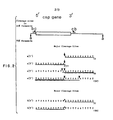
- the 2.3 kb fragment from the 35% formamide reaction has a site about 80 bp 5' to the start of the gene and a site approximately one thousand bp 3' to the gene. Both the 5' and 3' termini of other clones were sequenced and compared to the sequence of the 2.3 kb fragment (Fig. 2).
- the three 1.3 kb fragments have sites either 10 or 11 bp from the start of the gene and sites either 27 or 35 bp from the 3' end of the gene.
- One clone has been sequenced which contains a minor fragment 1.35 kb from the 40% formamide reaction. This fragment is cut 52 bp in front of the gene and 60 bp after it. Sequences at the termini of these clones represent sequences spared by the nuclease (Fig. 2). There is no apparent sequence homology either 5' or 3' to cuts. Although the cut sites are dA.dT rich, they have no more dA.dT then surrounding areas both in an outside the gene that are not cut. Further, the 5' to a given site is no more dA.dT rich than the sequence 3' to a site.
- cleavage depends on the structure of the naked DNA.
- a cloned DNA sequence synthesized in and isolated from E. coli yields the same cleavage products as genomic DNA from Plasmodium.
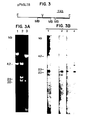
- Mung bean nuclease cleavage of cloned P lasmodium rirosmal genes in formamide yields fragments of defined size which correspond to the coding areas for the small ribosomal RNA, the 5.8S RNA and the large ribosomal RNA.
- Fig. 3 shows a map of a cloned plasmid, pPbSL7.8, which contains an EcoRl DNA fragment from P.
- Fig. 3A show the products of cleavage of the cloned restriction fragment with either a restriction nuclease or mung bean nuclease. Mung bean nuclease cleavage products of cloned ribosomal genes are directly compared with those from total genopmic DNA in Figure 3B.
- the major Plasmodium derived fragments are all the same size.
- Isolated intact genes in accordance with the present invention can, of course, be preserved as a gene-bank or library.
- An exemplary ⁇ gtll library is constructed as follows. Plasmodium DNA (5-10 ⁇ g) is digested with mung bean nuclease as described herein in 30%, 35%, 40% or 45% formamide. The reaction product from each of the four reactions is diluted four-fold with 0.01M EDTA, phenolized and precipitated in 2.5 volumes of ethanol. An aliquot of each DNA is analyzed by Southern blot analysis using a DNA probe homologous to either actin or tubulin.
- the DNA from the reactions containing 'gene sized' fragments homologous to the probe are combined and used as a source of fragments to ligate into Xgtll. 35% and 40% formamide reaction products for P. falciparum libraries are combined. In this case the DNA was treated with Klenow fragment but in the production of other libraries, this step can be eliminated.
- EcoRl linkers (BRL) are blunt-end ligated to the treated fragments. After digestion with EcoRl, free linkers are separated from larger fragments using a 1.5 x 20 cm Sepharose 4B column. ⁇ gt11 is self- ligated and digested with EcoRl. The P.
- falciparum fragments are ligated to the prepared ⁇ gtll DNA overnight at 12°C with T4 DNA ligase (BRL) under the conditions recommendedby the supplier.
- the ligation reaction products are packaged into infectious phage in vitro (Promega Biotec). From an initial 3 pg of starting genomic DNA, 4 x 10 5 packaging events are scored by detectable interruption of the B-galactosidase gene of agtll on RY1090 growing on LB agar supplemented with Xgal and IPTG.
- a DNA library of P. knowlesi has also been made in this fashion except that the products of mung bean nuclease cleavage in 40% and 45% formamide are used.
- One of the benefits of the present invention is the recombinant libraries can be produced containing mostly complete gene fragments.
- the presentation of any gene in the library then relates directly to its copy number in the genome. This is of special importance with regard those conditions where proteins of importance are not easily available because such proteins are produced during a particular stage in the life cycle of an organism or are not available in sufficient quantity.
Landscapes
- Health & Medical Sciences (AREA)
- Chemical & Material Sciences (AREA)
- Life Sciences & Earth Sciences (AREA)
- Organic Chemistry (AREA)
- Genetics & Genomics (AREA)
- Zoology (AREA)
- Engineering & Computer Science (AREA)
- Biotechnology (AREA)
- Biophysics (AREA)
- General Engineering & Computer Science (AREA)
- Biomedical Technology (AREA)
- Molecular Biology (AREA)
- Biochemistry (AREA)
- Bioinformatics & Cheminformatics (AREA)
- General Health & Medical Sciences (AREA)
- Wood Science & Technology (AREA)
- Microbiology (AREA)
- Plant Pathology (AREA)
- Physics & Mathematics (AREA)
- Crystallography & Structural Chemistry (AREA)
- Tropical Medicine & Parasitology (AREA)
- Toxicology (AREA)
- Gastroenterology & Hepatology (AREA)
- Medicinal Chemistry (AREA)
- Proteomics, Peptides & Aminoacids (AREA)
- Preparation Of Compounds By Using Micro-Organisms (AREA)
- Enzymes And Modification Thereof (AREA)
- Investigating Or Analysing Biological Materials (AREA)
- Measuring Or Testing Involving Enzymes Or Micro-Organisms (AREA)
Applications Claiming Priority (2)
| Application Number | Priority Date | Filing Date | Title |
|---|---|---|---|
| US636261 | 1984-07-31 | ||
| US06/636,261 US4707445A (en) | 1984-07-31 | 1984-07-31 | Intact gene and method of excising and cloning same |
Publications (3)
| Publication Number | Publication Date |
|---|---|
| EP0170146A2 true EP0170146A2 (de) | 1986-02-05 |
| EP0170146A3 EP0170146A3 (en) | 1987-10-07 |
| EP0170146B1 EP0170146B1 (de) | 1991-08-14 |
Family
ID=24551143
Family Applications (1)
| Application Number | Title | Priority Date | Filing Date |
|---|---|---|---|
| EP85108829A Expired - Lifetime EP0170146B1 (de) | 1984-07-31 | 1985-07-15 | Intaktes Gen und Verfahren zu dessen Ausschnitt und Klonierung |
Country Status (8)
| Country | Link |
|---|---|
| US (1) | US4707445A (de) |
| EP (1) | EP0170146B1 (de) |
| JP (1) | JPH0773496B2 (de) |
| AU (1) | AU597231B2 (de) |
| CA (1) | CA1247540A (de) |
| DE (1) | DE3583775D1 (de) |
| DK (1) | DK175350B1 (de) |
| ZA (1) | ZA855023B (de) |
Families Citing this family (5)
| Publication number | Priority date | Publication date | Assignee | Title |
|---|---|---|---|---|
| US5130416A (en) * | 1986-08-13 | 1992-07-14 | The United States Of America As Represented By The Department Of Health And Human Services | Recombinant DNA clone containing a genomic fragment of PfHRP-II gene from plasmodium falciparum |
| AU1588092A (en) | 1991-02-22 | 1992-09-15 | United States of America, as represented by the Secretary, U.S. Department of Commerce, The | Transmission blocking vaccine against malaria |
| US5527700A (en) * | 1992-07-10 | 1996-06-18 | The United States Of America As Represented By The Department Of Health And Human Services | Target antigens of transmission blocking antibodies for malaria parasites |
| AU6163094A (en) * | 1993-01-29 | 1994-08-15 | Government Of The United States Of America, As Represented By The Secretary Of The Department Of Health And Human Services, The | Cloning and expression of plasmodium falciparum transmission-blocking target antigen, pfs230 |
| WO1998035057A1 (en) * | 1997-02-06 | 1998-08-13 | The National University Of Singapore | Diagnosis of plasmodium infection by analysis of extrachromosomal genetic material |
Family Cites Families (8)
| Publication number | Priority date | Publication date | Assignee | Title |
|---|---|---|---|---|
| US4237224A (en) * | 1974-11-04 | 1980-12-02 | Board Of Trustees Of The Leland Stanford Jr. University | Process for producing biologically functional molecular chimeras |
| US4399216A (en) * | 1980-02-25 | 1983-08-16 | The Trustees Of Columbia University | Processes for inserting DNA into eucaryotic cells and for producing proteinaceous materials |
| JPS57130998A (en) * | 1981-02-04 | 1982-08-13 | Japan Found Cancer | Human interferon-beta-gene |
| WO1982002715A1 (fr) * | 1981-02-04 | 1982-08-19 | Sugano Haruo | Gene d'interferon (beta)humain |
| JPS5810599A (ja) * | 1981-07-11 | 1983-01-21 | Japan Found Cancer | ヒトインタ−フエロン−β遺伝子 |
| IL63327A (en) * | 1981-07-16 | 1985-11-29 | Yeda Res & Dev | Production of interferon beta1 and alpha-phage recombinants for its production in host bacteria |
| ZA837173B (en) * | 1982-11-08 | 1984-05-30 | Univ Case Western Reserve | Genomic bovine growth hormone |
| US4554250A (en) * | 1983-06-30 | 1985-11-19 | E. R. Squibb & Sons, Inc. | Method of increased production of penicillin acylase and plasmid employed therein |
-
1984
- 1984-07-31 US US06/636,261 patent/US4707445A/en not_active Expired - Lifetime
-
1985
- 1985-06-28 CA CA000486049A patent/CA1247540A/en not_active Expired
- 1985-07-03 ZA ZA855023A patent/ZA855023B/xx unknown
- 1985-07-09 DK DK198503133A patent/DK175350B1/da not_active IP Right Cessation
- 1985-07-15 EP EP85108829A patent/EP0170146B1/de not_active Expired - Lifetime
- 1985-07-15 DE DE8585108829T patent/DE3583775D1/de not_active Expired - Lifetime
- 1985-07-16 AU AU45038/85A patent/AU597231B2/en not_active Expired
- 1985-07-31 JP JP60169642A patent/JPH0773496B2/ja not_active Expired - Lifetime
Non-Patent Citations (1)
| Title |
|---|
| None |
Also Published As
| Publication number | Publication date |
|---|---|
| AU597231B2 (en) | 1990-05-31 |
| DK175350B1 (da) | 2004-09-06 |
| EP0170146B1 (de) | 1991-08-14 |
| AU4503885A (en) | 1986-02-06 |
| DE3583775D1 (de) | 1991-09-19 |
| JPH0773496B2 (ja) | 1995-08-09 |
| DK313385D0 (da) | 1985-07-09 |
| US4707445A (en) | 1987-11-17 |
| ZA855023B (en) | 1986-07-30 |
| DK313385A (da) | 1986-02-01 |
| EP0170146A3 (en) | 1987-10-07 |
| CA1247540A (en) | 1988-12-28 |
| JPS61158791A (ja) | 1986-07-18 |
Similar Documents
| Publication | Publication Date | Title |
|---|---|---|
| Konecki et al. | Hypoxanthine-guanine phosphoribosyltransferase genes of mouse and Chinese hamster: construction and sequence analysis of cDNA recombinants | |
| Snyder et al. | [7] λgt 11: Gene isolation with antibody probes and other applications | |
| Riley et al. | A novel, rapid method for the isolation of terminal sequences from yeast artificial chromosome (YAC) clones | |
| McStay et al. | A termination site for Xenopus RNA polymerase I also acts as an element of an adjacent promoter | |
| Ozkaynak et al. | The yeast ubiquitin genes: a family of natural gene fusions. | |
| Snyder et al. | Bent DNA at a yeast autonomously replicating sequence | |
| Oldenburg et al. | Mitochondrial DNA from the liverwort Marchantia polymorpha: circularly permuted linear molecules, head-to-tail concatemers, and a 5′ protein | |
| Newman et al. | Molecular consequences of specific intron mutations on yeast mRNA splicing in vivo and in vitro | |
| Chinault et al. | Overlap hybridization screening: isolation and characterization of overlapping DNA fragments surrounding the leu2 gene on yeast chromosome III | |
| Quax-Jeuken et al. | Primary and secondary structure of hamster vimentin predicted from the nucleotide sequence. | |
| Auer et al. | Organization and structure of the Methanococcus transcriptional unit homologous to the Escherichia coli “spectinomycin operon”: Implications for the evolutionary relationship of 70 S and 80 S ribosomes | |
| JPH0434559B2 (de) | ||
| WO2003078582B1 (en) | Integrated system for high throughput capture of genetic diversity | |
| CA1340787C (en) | Cdnas coding for members of the carcinoembryonic antigen family | |
| Hanas et al. | Binding of Xenopus transcription factor A to 5S RNA and to single stranded DNA | |
| Najarian et al. | DNA sequence and transcript mapping of MOD5: features of the 5′ region which suggest two translational starts | |
| Gerlach et al. | TFIIIB placement on a yeast U6 RNA gene in vivo is directed primarily by TFIIIC rather than by sequence-specific DNA contacts | |
| Snustad et al. | Maize glutamine synthetase cDNAs: isolation by direct genetic selection in Escherichia coli. | |
| Wallis et al. | Yeast histone H2B containing large amino terminus deletions can function in vivo | |
| EP0331961A2 (de) | Verfahren zur Herstellung von Proteinen durch Verwendung von CKS-Fusionsproteinen | |
| EP0316018A2 (de) | Modifikation von DNS-Sequenzen | |
| Kalinyak et al. | Rat glutathione S-transferase. Cloning of double-stranded cDNA and induction of its mRNA. | |
| Munasinghe et al. | Serial analysis of gene expression (SAGE) in Plasmodium falciparum: application of the technique to A–T rich genomes | |
| Young et al. | Bacteriophage T4 gene transcription studied by hybridization to cloned restriction fragments | |
| Shirakawa et al. | Primary structure of non-histone chromosomal protein HMG2 revealed by the nucleotide sequence |
Legal Events
| Date | Code | Title | Description |
|---|---|---|---|
| PUAI | Public reference made under article 153(3) epc to a published international application that has entered the european phase |
Free format text: ORIGINAL CODE: 0009012 |
|
| AK | Designated contracting states |
Kind code of ref document: A2 Designated state(s): BE CH DE FR GB IT LI NL SE |
|
| PUAL | Search report despatched |
Free format text: ORIGINAL CODE: 0009013 |
|
| AK | Designated contracting states |
Kind code of ref document: A3 Designated state(s): BE CH DE FR GB IT LI NL SE |
|
| 17P | Request for examination filed |
Effective date: 19880214 |
|
| 17Q | First examination report despatched |
Effective date: 19900313 |
|
| GRAA | (expected) grant |
Free format text: ORIGINAL CODE: 0009210 |
|
| AK | Designated contracting states |
Kind code of ref document: B1 Designated state(s): BE CH DE FR GB IT LI NL SE |
|
| ITF | It: translation for a ep patent filed | ||
| REF | Corresponds to: |
Ref document number: 3583775 Country of ref document: DE Date of ref document: 19910919 |
|
| ET | Fr: translation filed | ||
| PLBE | No opposition filed within time limit |
Free format text: ORIGINAL CODE: 0009261 |
|
| STAA | Information on the status of an ep patent application or granted ep patent |
Free format text: STATUS: NO OPPOSITION FILED WITHIN TIME LIMIT |
|
| 26N | No opposition filed | ||
| EAL | Se: european patent in force in sweden |
Ref document number: 85108829.4 |
|
| REG | Reference to a national code |
Ref country code: GB Ref legal event code: IF02 |
|
| PGFP | Annual fee paid to national office [announced via postgrant information from national office to epo] |
Ref country code: NL Payment date: 20040616 Year of fee payment: 20 |
|
| PGFP | Annual fee paid to national office [announced via postgrant information from national office to epo] |
Ref country code: GB Payment date: 20040707 Year of fee payment: 20 |
|
| PGFP | Annual fee paid to national office [announced via postgrant information from national office to epo] |
Ref country code: FR Payment date: 20040720 Year of fee payment: 20 |
|
| PGFP | Annual fee paid to national office [announced via postgrant information from national office to epo] |
Ref country code: SE Payment date: 20040721 Year of fee payment: 20 |
|
| PGFP | Annual fee paid to national office [announced via postgrant information from national office to epo] |
Ref country code: CH Payment date: 20040722 Year of fee payment: 20 |
|
| PGFP | Annual fee paid to national office [announced via postgrant information from national office to epo] |
Ref country code: BE Payment date: 20040819 Year of fee payment: 20 |
|
| PGFP | Annual fee paid to national office [announced via postgrant information from national office to epo] |
Ref country code: DE Payment date: 20040831 Year of fee payment: 20 |
|
| PG25 | Lapsed in a contracting state [announced via postgrant information from national office to epo] |
Ref country code: GB Free format text: LAPSE BECAUSE OF EXPIRATION OF PROTECTION Effective date: 20050714 |
|
| PG25 | Lapsed in a contracting state [announced via postgrant information from national office to epo] |
Ref country code: NL Free format text: LAPSE BECAUSE OF EXPIRATION OF PROTECTION Effective date: 20050715 |
|
| BE20 | Be: patent expired |
Owner name: THE *UNITED STATES OF AMERICA AS REPRESENTED BY TH Effective date: 20050715 |
|
| REG | Reference to a national code |
Ref country code: GB Ref legal event code: PE20 |
|
| REG | Reference to a national code |
Ref country code: CH Ref legal event code: PL |
|
| EUG | Se: european patent has lapsed | ||
| NLV7 | Nl: ceased due to reaching the maximum lifetime of a patent |
Effective date: 20050715 |
|
| BE20 | Be: patent expired |
Owner name: THE *UNITED STATES OF AMERICA AS REPRESENTED BY TH Effective date: 20050715 |