EP0169361B1 - Verfahren und Anlage zur Pasteurisierung - Google Patents
Verfahren und Anlage zur Pasteurisierung Download PDFInfo
- Publication number
- EP0169361B1 EP0169361B1 EP85107293A EP85107293A EP0169361B1 EP 0169361 B1 EP0169361 B1 EP 0169361B1 EP 85107293 A EP85107293 A EP 85107293A EP 85107293 A EP85107293 A EP 85107293A EP 0169361 B1 EP0169361 B1 EP 0169361B1
- Authority
- EP
- European Patent Office
- Prior art keywords
- temperature
- packages
- beer
- spray
- water
- Prior art date
- Legal status (The legal status is an assumption and is not a legal conclusion. Google has not performed a legal analysis and makes no representation as to the accuracy of the status listed.)
- Expired
Links
- 238000009928 pasteurization Methods 0.000 title claims description 29
- 238000000034 method Methods 0.000 title claims description 17
- 239000007921 spray Substances 0.000 claims description 78
- 235000013405 beer Nutrition 0.000 claims description 51
- XLYOFNOQVPJJNP-UHFFFAOYSA-N water Substances O XLYOFNOQVPJJNP-UHFFFAOYSA-N 0.000 claims description 43
- 238000010438 heat treatment Methods 0.000 claims description 30
- 238000001816 cooling Methods 0.000 claims description 17
- 239000000498 cooling water Substances 0.000 claims description 4
- 230000001172 regenerating effect Effects 0.000 claims description 4
- 230000003247 decreasing effect Effects 0.000 claims description 2
- 239000008236 heating water Substances 0.000 claims description 2
- 238000005507 spraying Methods 0.000 claims description 2
- 238000012546 transfer Methods 0.000 description 13
- 231100000225 lethality Toxicity 0.000 description 6
- 235000019640 taste Nutrition 0.000 description 6
- 238000009825 accumulation Methods 0.000 description 2
- 238000010276 construction Methods 0.000 description 2
- 238000013461 design Methods 0.000 description 2
- 230000000694 effects Effects 0.000 description 2
- 239000011521 glass Substances 0.000 description 2
- 239000002184 metal Substances 0.000 description 2
- 238000013021 overheating Methods 0.000 description 2
- 241000894006 Bacteria Species 0.000 description 1
- 241000186660 Lactobacillus Species 0.000 description 1
- 240000001929 Lactobacillus brevis Species 0.000 description 1
- 235000013957 Lactobacillus brevis Nutrition 0.000 description 1
- 241000192001 Pediococcus Species 0.000 description 1
- 240000004808 Saccharomyces cerevisiae Species 0.000 description 1
- CDBYLPFSWZWCQE-UHFFFAOYSA-L Sodium Carbonate Chemical compound [Na+].[Na+].[O-]C([O-])=O CDBYLPFSWZWCQE-UHFFFAOYSA-L 0.000 description 1
- 238000004140 cleaning Methods 0.000 description 1
- 229940086226 cold spot Drugs 0.000 description 1
- 230000001419 dependent effect Effects 0.000 description 1
- 238000010586 diagram Methods 0.000 description 1
- 239000000796 flavoring agent Substances 0.000 description 1
- 235000019634 flavors Nutrition 0.000 description 1
- 235000015203 fruit juice Nutrition 0.000 description 1
- 229940039696 lactobacillus Drugs 0.000 description 1
- 238000012423 maintenance Methods 0.000 description 1
- 238000005259 measurement Methods 0.000 description 1
- 230000007246 mechanism Effects 0.000 description 1
- 244000005700 microbiome Species 0.000 description 1
- 239000008267 milk Substances 0.000 description 1
- 210000004080 milk Anatomy 0.000 description 1
- 235000013336 milk Nutrition 0.000 description 1
- 238000002156 mixing Methods 0.000 description 1
- 244000052769 pathogen Species 0.000 description 1
- 230000001575 pathological effect Effects 0.000 description 1
- 239000006223 plastic coating Substances 0.000 description 1
- 238000012545 processing Methods 0.000 description 1
- 230000008929 regeneration Effects 0.000 description 1
- 238000011069 regeneration method Methods 0.000 description 1
- 238000004062 sedimentation Methods 0.000 description 1
- 235000014214 soft drink Nutrition 0.000 description 1
- 230000002277 temperature effect Effects 0.000 description 1
- 238000012360 testing method Methods 0.000 description 1
- 239000003643 water by type Substances 0.000 description 1
- 238000009736 wetting Methods 0.000 description 1
Images


Classifications
-
- C—CHEMISTRY; METALLURGY
- C12—BIOCHEMISTRY; BEER; SPIRITS; WINE; VINEGAR; MICROBIOLOGY; ENZYMOLOGY; MUTATION OR GENETIC ENGINEERING
- C12H—PASTEURISATION, STERILISATION, PRESERVATION, PURIFICATION, CLARIFICATION OR AGEING OF ALCOHOLIC BEVERAGES; METHODS FOR ALTERING THE ALCOHOL CONTENT OF FERMENTED SOLUTIONS OR ALCOHOLIC BEVERAGES
- C12H1/00—Pasteurisation, sterilisation, preservation, purification, clarification, or ageing of alcoholic beverages
- C12H1/12—Pasteurisation, sterilisation, preservation, purification, clarification, or ageing of alcoholic beverages without precipitation
- C12H1/16—Pasteurisation, sterilisation, preservation, purification, clarification, or ageing of alcoholic beverages without precipitation by physical means, e.g. irradiation
- C12H1/18—Pasteurisation, sterilisation, preservation, purification, clarification, or ageing of alcoholic beverages without precipitation by physical means, e.g. irradiation by heating
-
- A—HUMAN NECESSITIES
- A23—FOODS OR FOODSTUFFS; TREATMENT THEREOF, NOT COVERED BY OTHER CLASSES
- A23B—PRESERVATION OF FOODS, FOODSTUFFS OR NON-ALCOHOLIC BEVERAGES; CHEMICAL RIPENING OF FRUIT OR VEGETABLES
- A23B2/00—Preservation of foods or foodstuffs, in general
- A23B2/003—Control or safety devices for sterilisation or pasteurisation systems
-
- A—HUMAN NECESSITIES
- A23—FOODS OR FOODSTUFFS; TREATMENT THEREOF, NOT COVERED BY OTHER CLASSES
- A23B—PRESERVATION OF FOODS, FOODSTUFFS OR NON-ALCOHOLIC BEVERAGES; CHEMICAL RIPENING OF FRUIT OR VEGETABLES
- A23B2/00—Preservation of foods or foodstuffs, in general
- A23B2/20—Preservation of foods or foodstuffs, in general by heating materials in packages which are progressively transported, continuously or stepwise, through the apparatus
- A23B2/22—Preservation of foods or foodstuffs, in general by heating materials in packages which are progressively transported, continuously or stepwise, through the apparatus with packages on endless chain or band conveyors
Definitions
- This application relates to a pasteurization process and apparatus.
- Pasteurization has been used in the wine and brewing industry for many years having been developed around 1865 by Louis Pasteur.
- Pasteurization is the reduction of micro-organisms by heating to a limited temperature and holding at that temperature such that there will be minimum effect on physical stability and flavor and a maximum extension of biological stability, thereby increasing shelf life.
- the present application describes the invention with reference to the pasteurization of beer, the invention also is applicable to all products which are pasteurized in a package, including soda and other soft drinks, fruit juices and drinks, and milk.
- the specific P.U. inputs and temperature and time will vary according to the product being treated.
- pasteurization tastes can occur in the beer. These are undesirable and have been defined as “bready”, “biscuity”, “burnt-type tastes”, “papery” or “cardboardy”. Also, insufficient pasteurization can result in turbidity of the beer or sedimentation.
- the organisms which cause the most difficulty in the brewing industry today are lactobacillus, pediococcus and wild yeast. These are not pathogenic organisms but can cause turbidity and poor taste in beer.
- the temperature of the beer at the so-called "cold spot" which is 0.635 cm. (1/4 inch) from the bottom of the center of the can or bottle must reach at least 60°C (140°F) for a period of time to produce a specified number of pasteurization units (P.U.). It also is desired to pasteurize at the lowest possible peak cold spot temperature (above 60°C.) (140°F) to avoid overheating the rest of the package contents, because the temperature of the package gets higher as one goes from the cold spot to the top of the package.
- the P.U. is a measure of accumulated lethality.
- One P.U. for beer is one minute at 60°C. (140°F.).
- Lethality (P.U. per minute) is a rate term which is exponential with temperature. Lethality begins to become significant only when the beer temperature is 55.55°C to 57.22°C (132°F to 135°F) and is most significant at 59.44°C (139°F) and above, although P.U. accumulation begins at 48.88°C (120°F).
- standard deviation means that the P.U. input to all packages varies by only the stated amount.
- a standard deviation of P.U. input of two or less indicates that the P.U. input to any package in the line varies by only ⁇ 2 P.U. at the most. This is not the same meaning the term standard deviation has when used in the fields of statistics, probability, etc.
- the theory of transfer of heat from the water spray to the contents of the container is that the film resistance to transfer is greatest at the inside wall of the container and mixing in the container occurs through thermal conduction and convection currents generated as the contents are heated and circulated.
- the circulatory motion across the heat transfer surfaces reduces the internal surface film resistance and tends to bring the container contents to an equilibrium temperature.
- the so-called "cold-spot" in the container is stated to be 0.635 cm. (1/4 inch) above the center of the bottom wall and is the last point to come to equilibrium temperature through these conduction and convection currents. It is necessary to raise the temperature of the cold spot to above 60°C (140°F), but is desirable to hold it as close to 60°C (140°F) as possible to minimize taste changes caused by excess heating of the remainder of the container.
- the object of the present invention is to provide a pasteurization process in which there is very little deviation in P.U. applied to each package and in which heat transfer efficiency is maximized by applying a uniform amount of water to each package with increased intensity of water.
- the present invention provides an improved method for tunnel pasteurization of product in packages wherein water spray is applied to the tops of the packages to control P.U. input and wherein the P.U. input to each package is at a predetermined P.U. input level in a predetermined P.U. range characterized by
- the present invention provides the lowest practical product out temperature for the product leaving the pasteurizer.
- the present invention also provides an improved tunnel pasteurizer capable of pasteurizing beer in packages with a high degree of P.U. input control to each package and a low maximum cold spot beer temperature above 60 C o comprising a tunnel having top, bottom, end and side walls and a deck along which filled sealed packages of beer are moved; spray nozzles positioned above said deck for applying heating and cooling water to said packages; said deck characterized in that the length is divided into heating, holding and cooling zones; reservoir means beneath the deck for collecting water which has passed over the package; and pump, conduit, heating and cooling means interposed between the reservoir means and the spray means for reusing the water in the reservoir and for adding heat and cold to the said water at appropriate locations in the system; characterized by the spray heads being positioned in a predetermined pattern such that they are on about 22.86 to about 30.48 cm.
- nozzles at the ends of the transverse rows are positioned about 7.62 cm. from a side wall of the tunnel; said nozzles constructed and arranged to deliver water in a spray density of above 244.45 L/min/aq.m. to the deck in a conical pattern.
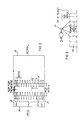
- Figure 1 shows a schematic arrangement of the pasteurizer apparatus which is typical of the type of pasteurizer construction to which this invention is directed. Directly below the pasteurizer apparatus are curves showing the spray temperature and beer temperatures on the top deck and the lower deck.
- the dashed line indicates the upper deck cold spot beer temperature
- the solid line indicates the average beer temperature for the upper deck
- the dotted line indicates the lower deck cold spot temperature. The relationship among the upper deck and lower deck temperature, the spray temperatures and the times at each spray temperature will be discussed in greater detail hereinafter.
- the mechanical details of the operation of the pasteurizer can be varied according to the type of construction favored by any particular pasteurizer manufacturer.
- the pasteurizer 20 comprises a series of heating, holding and cooling zones identified by the numerals 1 through 10. There can be more than or fewer than 10 zones according to various limits of design parameters.
- top and bottom deck conveyor mechanisms 21 and 24 of any preferred conventional type, such as that known as a "walking beam", on which the unpasteurized packages 22 to be pasteurized are placed in contacting arrangement.
- the packages in the beer pasteurizing operation are typically filled glass bottles or metal cans.
- a series of spray nozzles 23 Positioned above the top surfaces of the packages a distance of about 15.24 to 35.56cm (6 inches to 14 inches) is a series of spray nozzles 23 which are connected by a header and a dedicated spray pump (not shown) associated with each zone.
- the illustrated pasteurizer 20 is shown as having a lower deck 24 packed with articles to be pasteurized, which deck 24 is positioned beneath the upper deck 21 and above the reservoir 25 at the bottom of each zone.
- This type pasteurizer is known as a tunnel pasteurizer and has an enclosed top 26, a bottom 27, side walls 28, and end walls 29 with an opening in the ends 29 through which the containers 22 pass into and out of the pasteurizing zones.
- the top 26 of the pasteurizer 20 is provided with suitable openings with covers to provide access to the interior of the pasteurizer 20 for maintenance, cleaning, testing of temperatures, etc.
- the lower deck 24 is optional and the pasteurizer is functional with only one deck. For many pasteurizers which are currently in use and which will be rebuilt to incorporate the features of this invention, only one deck is in place, and it is not practical to add a second deck.
- the lower deck 24 does double capacity with little, if any, increased operating cost and only a small increase in capital cost.
- Figure 2 shows schematically the arrangement of the nozzles 23 in the pasteurizer 20.
- the nozzles 23 are positioned on headers 23a which are positioned on 45.72 cm. to 60.96 cm. (18 inch to 24 inch) centers running the length of the pasteurizer 20 from the infeed end to the outfeed end.
- the nozzles 23 extend in perpendicular arrangement from the headers "H" along the length of the pasteurizer 20.
- the nozzles 23 on any one header "H” are spaced 22.86 to 30.48cm. (9 inches to 12 inches) longitudinally.
- the nozzles 23 are ofset on 15.24cm. (6 inch) transverse or lateral centers along the headers "H".
- the distance between longitudinally aligned nozzles 23 is between 22.86 to 30.48cm. (9 inches to 12 inches).
- the nozzles are on 7.62cm. (3 inch) transverse centers and are paired opposite each other along the headers. "H" for 22.86cm. (9 inches) or three sets of nozzles 23. These areas are indicated by the numeral 23b in Fig. 2. The remaining nozzles indicated by the numeral 23a are located at 7.62cm. (3 inch) intervals on alternate sides of the headers "H".
- the lateral spacing of the nozzles 23 at the pasteurizer sides 28 is closer, but the relative distance between nozzles 23 extending in the same longitudinal direction from the headers "H" is the same distance as the spacing of the nozzles in the center area 23a.
- this arrangement of nozzles 23 provides a uniform coverage of spray water to all of the packages 22 in the tunnel including those adjacent to the side walls 28, where previous pasteurizers using different nozzle arrangements and water flow often failed to reach.
- Figure 3 shows a drawing of the preferred nozzle 23 of the present invention which provides a circular hollow cone pattern and has a 0.952cm. (3/8 inch) orifice opening.
- the pressure to the nozzles 23 is about 0.352 to 0.422 kg/cm2 (5 to 6 psig) and the spray density is above about 244.45 L./min./m2 (6 gal./min./ft.2) of tunnel surface area so as to provide uniform water coverage to all of the containers.
- the spray density is above 285.19 L./min./m2 (7 gal./min./ft.2) and at certain locations in the tunnel is as much as about 366.68 l./min./m2 (9 gal./min./ft.2).
- the spray pattern cones are substantially (on the order of 80%) transparent. This permits the simultaneous wetting of a package by the sprays from many nozzles, without the droplets hitting each other.
- deflectors "D" which keep the spray waters from one zone from carrying over to the next adjacent zone. These are conventional items attached to the spray heads 23.
- a cold spot which is located 0.635cm. (1/4 inch) above the bottom of the container at the center of the container.
- the temperature gradient of the contents of the container grows progressively hotter as one goes from the cold spot to the top of the container.
- the temperature of the cold spot reach 60°C. (140°F).
- the peak cold spot temperature be as close to 60°C (140°F) (but above it) as possible.
- the input of pasteurization units (P.U.) to the contents of each package is between 5.6 and 20 and preferably more than 10.
- P.U. pasteurization units
- the minimum P.U. needed to insure adequate pasteurization but arbitrarily we have selected a standard of at least 10 as our preferred minimum.
- the standard deviation of P.U. input be no greater than about 2 and preferably less. It has been found in present pasteurizers that there is a standard deviation of P.U. input on the order of 4-8 and sometimes even greater.
- standard deviation as used in the beer industry and in this application means that all of the beer packages that go through the pasteurizer in a given run have P.U. input of ⁇ 2 P.U. units of each other.
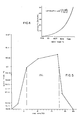
- Figure 4 shows a graph of lethality (P.U. input per/min.) versus beer temperature, which is a logarithmic relationship and clearly shows that while accumulation starts at 48.88°C. (120°F.), P.U. input does not become significant until the beer temperature has reached the high 50's to low 60's.
- Table I shows in graph form the temperature v. lethality relationship.
- the longer holding time and the greater and more uniform spray water flows allows the P.U. input to a lower deck to nearly equal the P.U. input to the upper deck without overheating the upper deck because of the length of the second heating and holding zones.
- the function of the second heating zone is to bring the cold spot temperature to 60°C. to 60.55°C. (140°F to 141°F) without using extremely hot spray water temperatures, i.e., not above about 65.55°C. (150°F). It is important that the spray water temperature to the second heating zone and the holding zone be controlled carefully to predetermined levels to keep the hot spot temperature of the package on the upper deck (or the single deck as the case may be) as low as possible to hold down internal container pressure. The maximum hot spot temperature closely approximates the spray temperature of the zone.
- the length of the second heating zone is determined such that the ratio of the initial to final temperature differences or thermal driving forces is equal to approximately 4.8-5.0.
- these driving forces are defined as the differences between the spray temperature in the zone and the average product temperature on entering and on leaving the zone.
- the cold spot temperature is approximately 60.55°C. (141°F) on the upper deck or on the single deck of a one deck pasteurizer. Since the first and second heating zones are calculated to contribute only about 3 P.U., the majority of the P.U. input occurs in the holding zone, where the cold spot temperatures of both decks are practically equal on entering the zone and are equal on leaving the zone.
- the mentioned high value of the ratio of the initial to the final temperature differences in the second heating zone and the resulting length of the second heating zone is a key factor in achieving uniformity in P.U. input to the packages on a single deck pasteurizer.
- Another significant factor is the longer holding zone which permits the spray temperature of the lower deck to come to equilibrium with the spray temperature of the top deck at a level close to the desired product temperature and where the P.U. input rate is high.
- Another key factor is the regenerative effect of the first precool (zone 6) and the first heat zone (zone 3) in a double deck machine (See Figure 1).
- This P.U. difference is caused by the lower deck spray temperature being less than the upper deck spray temperature entering the holding zone (zone 5). Accummulated P.U. is therefore less on the lower deck at this point. However, the packages on the lower deck pick up a significant part of the P.U. difference as they pass through the first precool zone (zone 6) due to the increased spray water temperature effect previously described for the first precool zone.
- the hot spot temperature is reduced from about 64.44°C. to 67.77°C. (148°F to 154°F) (or more) to about 62.77°C (145°F) or less. This is important because the internal pressure of the package is dependent on the hot spot temperature. With continued trends toward "light weighting" or thinner walled containers, reduced internal pressure becomes an important factor in container design.
- Figure 5 shows that a typical curve of beer temperature versus time in a pasteurizer in which the total P.U. input will fall between 10 and 17 P.U.
- the P.U. is the area beneath the curve and it is clear that the majority of accumulated P.U. is added when the beer temperature is above 60°C. (140°F) as shown by the area between the broken lines.
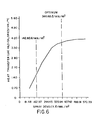
- Figure 6 is a graph showing the relationship between spray density and heat transfer in kilo-calories/hr. per °C (BTU/hr. per F°), which indicates that the optimum spray density is about 366.68 L./min./m2 (9 gal./min./ft.2) and that further increases in spray density do not significantly increase the heat transfer rate and consequently do not significantly increase the P.U. input.
- Figure 7 shows a spray pattern diagram at spray pressure of 0.352 to 0.422 kg/cm2 (5-6 psig) and 366.68-476.68 L./min./m2 (9-11.7 GPM/ft.2) spray density.
- the overlapping of the spray patterns onto the package is shown by the shaded and hatched areas which indicate the spray densities at specific locations on the deck.
- the preferred regenerative tying of the 10 zones is shown schematically.
- the regeneration is between zones 3 and 6, 2 and 7 and 1 and 8.
- the reservoir at precool zone 6 is used to heat the spray to the first heating zone 3.
- This effect has already been considered in detail previously in connection with the discussion of equalization of P.U. input in a double deck pasteurizer.
- the heat transfer to the cooling water in precool zones 8 and 7 from the hot containers is transferred to preheating zones 1 and 2 respectively so as to reduce energy requirements.
- preheat is defined as a zone where spray water temperature is below about 60 o C. (140 o F), and a heating zone has spray water temperature above about 60 o C. (140 o F.).
- zone spray density, spray temperature and average produce temperature is for all packages.
- Table II refers to the sketch and graph of Figure 1. External heaters are provided for zones 4-8 while the cooling water at zones 9 and 10 is 10°C. (50°F) from an external chilled water system.
Landscapes
- Engineering & Computer Science (AREA)
- Life Sciences & Earth Sciences (AREA)
- Chemical & Material Sciences (AREA)
- Wood Science & Technology (AREA)
- Zoology (AREA)
- Food Science & Technology (AREA)
- Organic Chemistry (AREA)
- Polymers & Plastics (AREA)
- Health & Medical Sciences (AREA)
- Toxicology (AREA)
- Bioinformatics & Cheminformatics (AREA)
- General Engineering & Computer Science (AREA)
- General Health & Medical Sciences (AREA)
- Genetics & Genomics (AREA)
- Biochemistry (AREA)
- Food Preservation Except Freezing, Refrigeration, And Drying (AREA)
- Apparatus For Disinfection Or Sterilisation (AREA)
Claims (16)
- Verbessertes Verfahren zur Tunnelpasteurisierung von Produkten in Packungen, wo auf den oberen Teil der Packungen Wasser gesprüht wird, um die Energiezufuhr zu steuern, und wo die Energiezufuhr zu jeder Packung auf einem vorbestimmten Energiezufuhrpegel in einem vorbestimmten Energiezufuhrbereich erfolgt, gekennzeichnet durcha) Besprühen des oberen Teils der Packungen mit Wasser aus Sprühdüsen, die oberhalb der Packungen auf Längs- und Querspitzen in einem vorbestimmten Muster so angeordnet sind, daß die Düsen so ausgelegt und angeordnet sind, daß sie Wasser in einer Sprühdichte von über 244,45 l/min/m² zuführen,b) Steuern der Energiezufuhr zu allen Packungen des Produkts mit einer Standardabweichung von weniger als 2 Energieeinheiten für jede Packung über einem vorbestimmten Mindestpegel, indem die Packungen durch eine Reihe von Vorheiz-, Heiz-, Halte-, Vorkühl- und Kühlzonen geleitet werden, die jeweils einen vorbestimmten Temperaturbereich und eine vorbestimmte Haltezeit aufweisen,c) Erreichen einer Kaltpunkt-Produkttemperatur in jeder Packung zwischen einer Mindestpasteurisierungstemperatur und einer vorbestimmten maximalen Temperatur durch schrittweises Erhöhen der Temperatur in jeder Vorheiz- oder Heizzone, bis die Mindestpasteurisierungstemperatur am Kaltpunkt erreicht ist,d) Halten der Kaltpunkt-Produkttemperatur in jeder Packung zwischen einer Mindestpasteurisierungstemperatur und einer vorbestimmten maximalen Temperatur für eine vorbestimmte Zeit in einer Haltezone, unde) Erreichen einer Temperatur des herausgenommenen Produkts auf einem vorbestimmten Pegel, durch schrittweises Absenken der Temperatur in jeder Vorkühl- oder Kühlzone, bis die vorbestimmte Temperatur des herausgenommenen Produkts erreicht ist.
- Verfahren nach Anspruch 1, dadurch gekennzeichnet, daß die Sprühdüsen auf etwa 22,86 bis etwa 30,48 cm langen Längsspitzen und auf etwa 7,62 bis etwa 15,24 cm langen Querspitzen angeordnet sind, wobei die Düsen an den Enden der Querreihen im Abstand von etwa 7,62 cm von einer Seitenwand des Tunnels angeordnet sind, und das Wasser dem oberen Teil der Packungen in einem konischen Muster zugeführt wird.
- Verbessertes Verfahren zur Tunnelpasteurisierung von Bier in Packungen, bei dem Wasser auf den oberen Teil der Bierpackungen gesprüht wird, um die Energiezufuhr zu steuern, und wo die Energiezufuhr zu jeder Bierpackung auf einem vorbestimmten Pegel zwischen 5,6 und 20 erfolgt, gekennzeichnet durcha) Steuern der Energiezufuhr zu allen Bierpackungen mit einer Standardabweichung von weniger als 2 Energieeinheiten für jede Packung, wobei die Energiezufuhr zu jeder Packung mit einem vorbestimmten Mindestpegel von 5,6 erfolgt,b) Halten der Kaltpunkt-Biertemperatur in jeder Packung zwischen 60°C und etwa 61,67°C, undc) Halten der Temperatur des herausgenommenen Biers zwischen etwa 21,11°C und etwa 29,44°C.
- Verfahren nach Anspruch 3, dadurch gekennzeichnet, daß die Temperatur des herausgenommenen Biers innerhalb von ± 0,55°C einer vorbestimmten Temperatur des herausgenommenen Biers gehalten wird.
- Verfahren nach Anspruch 3 oder 4, dadurch gekennzeichnet, daß die Sprühdichte 285,19 bis 366,68 l/min/m² beträgt.
- Verfahren nach einem der Ansprüche 3 bis 5, dadurch gekennzeichnet, daß die Energiezufuhr zu allen Packungen mindestens 10 Einheiten beträgt.
- Verbessertes Verfahren zur Tunnelpasteurisierung von Bier in Packungen mit einer Energiezufuhr im Bereich von 5,6 bis 20, gekennzeichet durcha) Bewegen der mit Bier gefüllten Packungen durch einen Pasteurisiertunnel, der vom Eingang bis zum Ausgang in Vorheiz-, Heiz-, Halte- und Kühlzonen unterteilt ist,b) Sprühen von Wasser auf die Packungen von oben, um diese zu erhitzen und abzukühlen,c) Halten einer Sprühdichte von über 244,45 l/min/m², undd) Halten einer Spitzen-Kaltpunkttemperatur des Biers in jeder Bierpackung zwischen 60°C und etwa 61,67°C.
- Verfahren nach Anspruch 7, dadurch gekennzeichnet, daß die Abweichung der Energiezufuhr weniger als 2 Energieeinheiten beträgt.
- Verfahren nach Anspruch 7, dadurch gekennzeichnet, daß die Temperatur des herausgenommenen Biers auf einem Wert innerhalb ± 0,55°C der vorbestimmten Temperatur des herausgenommenen Biers gehalten wird.
- Verfahren nach Anspruch 7, dadurch gekennzeichnet, daß die Sprühdichte über 285,19 l/min/m² liegt.
- Verfahren nach einem der Ansprüche 7 bis 10, dadurch gekennzeichnet, daß die Energiezufuhr zu allen Packungen mindestens 10 Einheiten beträgt.
- Verbesserte Tunnelpasteurisiervorrichtung, die geeignet ist, Bier in Packungen mit einem hohen Grad der Steuerung der Energiezufuhr zu jeder Packung und mit einer niedrigen maximalen Kaltpunkttemperatur des Biers über 60°C zu pasteurisieren, umfassend einen Tunnel mit oberen, unteren, Stirn- und Seitenwänden und einem Rost, über den die gefüllten verschlossenen Bierpackungen bewegt werden; Sprühdüsen, die oberhalb des Rostes angeordnet sind, um Heiz- und Kühlwasser auf die Packungen aufzusprühen; wobei der Rost dadurch gekennzeichnet ist, daß er in Heiz-, Halte- und Kühlzonen unterteilt ist; einen Sammelbehälter unter dem Rost zum Sammeln des Wassers, das über die Packung gelaufen ist; und Pump-, Leitungs-, Heiz- und Kühleinrichtungen, die zwischen dem Sammelbehälter und der Sprüheinrichtung angebracht sind, um das Wasser in dem Sammelbehälter wiederzuverwenden, und um dem Wasser an geeigneten Stellen in der Anlage Wärme und Kälte zuzuführen; dadurch gekennzeichnet, daß die Sprühköpfe in einem vorbestimmten Muster so angeordnet sind, daß sie auf etwa 22,86 bis etwa 30,48 cm langen Längsspitzen und etwa 7,62 bis etwa 15,24 cm langen Querspitzen angeordnet sind, daß die Düsen an den Enden der Querreihen im Abstand von etwa 7,62 cm von einer Seitenwand des Tunnels angeordnet sind; wobei die Düsen so ausgelegt und angeordnet sind, daß sie Wasser in einer Sprühdichte von über 244,45 l/min/m² dem Rost in einem konischen Muster zuführen.
- Pasteurisiervorrichtung nach Anspruch 12, dadurch gekennzeichnet, daß ein unterer Rost unterhalb des oberen Rostes angeordnet ist, so daß die Packungen darauf das überfließende Sprühwasser direkt von dem oberen Rost erhalten, und der Zwischenraum zwischen den Rosten ist frei von Sprühdüsen.
- Pasteurisiervorrichtung nach Anspruch 12 oder 13, dadurch gekennzeichnet, daß die erste Zone, in der die Behälter einer Kühlung unterzogen werden, rückgekoppelt ist mit der ersten Zone, in der die Temperatur des Sprühwassers mehr als 60°C beträgt.
- Pasteurisiervorrichtung nach Anspruch 12 oder 13, dadurch gekennzeichnet, daß der gesamte Rost in 10 Zonen unterteilt ist; wobei die Zonen 1 - 4 Heizzonen sind, Zone 5 eine Haltezone ist, und die Zonen 6 - 10 Kühlzonen sind, so daß die ersten drei Zonen und die ersten drei Kühlzonen umgekehrt miteinander rückgekoppelt sind.
- Pasteurisiervorrichtung nach Anspruch 12 oder 13, dadurch gekennzeichnet, daß die Temperatur des Sprühwassers in der Haltezone unter der Temperatur der Heizzonen liegt.
Applications Claiming Priority (4)
| Application Number | Priority Date | Filing Date | Title |
|---|---|---|---|
| US62047184A | 1984-06-14 | 1984-06-14 | |
| US06/737,871 US4693902A (en) | 1984-06-14 | 1985-05-28 | Pasteurization process |
| US737871 | 1985-05-28 | ||
| US620471 | 1996-03-22 |
Publications (3)
| Publication Number | Publication Date |
|---|---|
| EP0169361A2 EP0169361A2 (de) | 1986-01-29 |
| EP0169361A3 EP0169361A3 (en) | 1988-07-27 |
| EP0169361B1 true EP0169361B1 (de) | 1992-03-25 |
Family
ID=27088723
Family Applications (1)
| Application Number | Title | Priority Date | Filing Date |
|---|---|---|---|
| EP85107293A Expired EP0169361B1 (de) | 1984-06-14 | 1985-06-13 | Verfahren und Anlage zur Pasteurisierung |
Country Status (6)
| Country | Link |
|---|---|
| US (1) | US4693902A (de) |
| EP (1) | EP0169361B1 (de) |
| AU (1) | AU584902B2 (de) |
| CA (1) | CA1252407A (de) |
| DE (2) | DE169361T1 (de) |
| DK (1) | DK171696B1 (de) |
Cited By (1)
| Publication number | Priority date | Publication date | Assignee | Title |
|---|---|---|---|---|
| EP4477090A1 (de) | 2023-06-13 | 2024-12-18 | Solenis Technologies Cayman, L.P. | Verfahren zur kontrolle des mikrobiologischen wachstums in sterilisator- und pasteurisierungsanwendungen unter verwendung von monochloramin |
Families Citing this family (21)
| Publication number | Priority date | Publication date | Assignee | Title |
|---|---|---|---|---|
| FR2589332B1 (fr) * | 1985-11-05 | 1989-12-01 | Baele Gangloff Ste Nouvelle | Procede et dispositif de pasteurisation de produits alimentaires contenus dans des recipients |
| GB2183592B (en) * | 1985-11-29 | 1989-10-04 | Guinness Son & Co Ltd A | A beverage package and a method of packaging a beverage containing gas in solution |
| FR2603777B1 (fr) * | 1986-09-11 | 1990-06-01 | Baele Gangloff Ste Nouvelle | Dispositif de mesure d'unites de pasteurisation et installation de pasteurisation utilisant ce dispositif |
| US4801466A (en) * | 1986-10-31 | 1989-01-31 | Anheuser-Busch, Incorporated | Pasteurization monitoring process |
| US4841457A (en) * | 1987-07-08 | 1989-06-20 | Anheuser-Busch, Incorporated | Pasteurization monitoring process |
| US5242701A (en) * | 1988-10-24 | 1993-09-07 | Fbi Brands Ltd. | Method for shelf stable packaging of liquid food in hermetically sealed easy-to-open gable top cartons |
| US5424087A (en) * | 1993-10-05 | 1995-06-13 | China Technical Consultants, Inc. | Method of sterilizing canned food in sterilizing kettle |
| DK86294A (da) * | 1994-07-20 | 1996-01-21 | Sander Hansen A S | Fremgangsmåde og apparat til at pasteurisere en fortløbende række af produkter |
| IT1299674B1 (it) * | 1998-05-29 | 2000-03-24 | Sasib Beverage S P A Ora Sasib | Sistema di controllo del trattamento termico di pastorizzazione, in particolare di prodotti alimentari confezionati, in pastorizzatori a |
| JP2001333753A (ja) * | 2000-05-25 | 2001-12-04 | Coca-Cola West Japan Co Ltd | パストライザ冷却装置 |
| IT1314425B1 (it) * | 2000-08-09 | 2002-12-13 | Sasib Spa | Apparato di riscaldamento e di controllo della temperatura di processo in un pastorizzatore a tunnel. |
| DE102005028195A1 (de) * | 2005-06-17 | 2006-12-21 | Sander Hansen A/S | Tunnelpasteur |
| US7464559B2 (en) * | 2005-10-07 | 2008-12-16 | Stokely-Van Camp, Inc. | Bottle cooler and method |
| US9877500B2 (en) * | 2007-03-14 | 2018-01-30 | Concentrate Manufacturing Company Of Ireland | Natural beverage products |
| US8029846B2 (en) | 2007-03-14 | 2011-10-04 | The Concentrate Manufacturing Company Of Ireland | Beverage products |
| US8512783B2 (en) * | 2007-04-05 | 2013-08-20 | Graham Packaging Company Lp | Reduced pressure loss pasteurizable container and method of making the same |
| DK2488428T3 (da) | 2009-10-14 | 2022-01-24 | Laitram Llc | Anvendelse af et transportbånd i en fremgangsmåde til overvågning af temperaturen af produkter |
| CN101774522B (zh) * | 2010-02-09 | 2013-04-17 | 广州达意隆包装机械股份有限公司 | 瓶装饮料喷淋冷瓶机喷淋方法 |
| DE102010020429B4 (de) | 2010-05-12 | 2024-02-22 | Khs Gmbh | Pasteur mit geregelter Spritzmenge |
| DE102012212873A1 (de) * | 2012-07-23 | 2014-02-06 | Krones Ag | Tunnelpasteur und Pasteurisierungsverfahren für Getränkegebinde |
| WO2015065489A1 (en) | 2013-11-04 | 2015-05-07 | Hill's Pet Nutrition, Inc. | Post-packaging pasteurization |
Family Cites Families (7)
| Publication number | Priority date | Publication date | Assignee | Title |
|---|---|---|---|---|
| US2732788A (en) * | 1956-01-31 | meyer | ||
| DE1093185B (de) * | 1958-05-27 | 1960-11-17 | Hans Doehle | Verfahren und Vorrichtung zum Pasteurisieren von in geschlossenen Flaschen befindlichen fluessigen alkoholhaltigen oder alkoholfreien Lebensmitteln, wie Bier oder Fruchtsaft |
| US4179986A (en) * | 1976-12-16 | 1979-12-25 | Fmc Corporation | Low liquid volume retort system |
| US4263254A (en) * | 1979-08-01 | 1981-04-21 | Barry-Wehmiller Company | Apparatus for and method of conserving energy in pasteurizers |
| US4279858A (en) * | 1979-11-26 | 1981-07-21 | Barry-Wehmiller Company | Energy conservation for pasteurizer apparatus |
| US4331629A (en) * | 1980-09-15 | 1982-05-25 | Barry-Wehmiller Company | Steam and water conservation system for pasteurizers |
| US4441406A (en) * | 1982-06-14 | 1984-04-10 | Miller Brewing Company | Pasteurization apparatus |
-
1985
- 1985-05-28 US US06/737,871 patent/US4693902A/en not_active Expired - Fee Related
- 1985-06-11 CA CA000483649A patent/CA1252407A/en not_active Expired
- 1985-06-13 DK DK266185A patent/DK171696B1/da not_active IP Right Cessation
- 1985-06-13 DE DE198585107293T patent/DE169361T1/de active Pending
- 1985-06-13 EP EP85107293A patent/EP0169361B1/de not_active Expired
- 1985-06-13 AU AU43663/85A patent/AU584902B2/en not_active Ceased
- 1985-06-13 DE DE8585107293T patent/DE3585707D1/de not_active Expired - Fee Related
Cited By (1)
| Publication number | Priority date | Publication date | Assignee | Title |
|---|---|---|---|---|
| EP4477090A1 (de) | 2023-06-13 | 2024-12-18 | Solenis Technologies Cayman, L.P. | Verfahren zur kontrolle des mikrobiologischen wachstums in sterilisator- und pasteurisierungsanwendungen unter verwendung von monochloramin |
Also Published As
| Publication number | Publication date |
|---|---|
| AU4366385A (en) | 1985-12-19 |
| EP0169361A2 (de) | 1986-01-29 |
| US4693902A (en) | 1987-09-15 |
| DK266185D0 (da) | 1985-06-13 |
| EP0169361A3 (en) | 1988-07-27 |
| DK266185A (da) | 1985-12-15 |
| DE3585707D1 (de) | 1992-04-30 |
| DE169361T1 (de) | 1986-08-14 |
| CA1252407A (en) | 1989-04-11 |
| AU584902B2 (en) | 1989-06-08 |
| DK171696B1 (da) | 1997-03-17 |
Similar Documents
| Publication | Publication Date | Title |
|---|---|---|
| US4693902A (en) | Pasteurization process | |
| US4727800A (en) | Pasteurization apparatus | |
| CA1166066A (en) | Method and apparatus for treating fluent materials | |
| US4419301A (en) | Method and apparatus for treating fluent materials | |
| US4591463A (en) | Method and apparatus for treating liquid materials | |
| USRE32695E (en) | Method and apparatus for treating fluent materials | |
| US5310566A (en) | Method of ensuring constant product quality and safety when tailback conditions occur in pasteurizers | |
| RU2379984C2 (ru) | Способ пастеризации продуктов в емкостях и установка для его осуществления | |
| JPS58160228A (ja) | 閉じた容器内の流体の温度を急速に変える方法及び装置 | |
| EP0498972B1 (de) | Blanchierverfahren oder teilweises Kochverfahren für pflanzliche Produkte | |
| US8096138B2 (en) | Bottle pasteurizer and method | |
| US3469988A (en) | Continuous process for cooking food contained in hermetically sealed glass containers | |
| US2569645A (en) | Process for sterilizing canned foods | |
| US5101713A (en) | Apparatus and method for aseptically reconstituting beverages | |
| EP1255446B1 (de) | Dampf-erhitzer | |
| EP1079695A1 (de) | Vorrichtung sowie verfahren zum behandeln von fliessenden lebensmittelprodukten | |
| JPH0527378B2 (de) | ||
| AU2001237800A1 (en) | Steam heater | |
| US2262030A (en) | Pasteurizer | |
| US1186944A (en) | Pasteurizing apparatus. | |
| US7464559B2 (en) | Bottle cooler and method | |
| WO1996002626A1 (en) | Method and apparatus for the pasteurization of a continuous line of products | |
| WO1996002626A9 (en) | Method and apparatus for the pasteurization of a continuous line of products | |
| JPH0819386A (ja) | 容器内容物の殺菌方法及びその装置 | |
| US1005854A (en) | Process of pasteurizing bottle beverages. |
Legal Events
| Date | Code | Title | Description |
|---|---|---|---|
| PUAI | Public reference made under article 153(3) epc to a published international application that has entered the european phase |
Free format text: ORIGINAL CODE: 0009012 |
|
| AK | Designated contracting states |
Designated state(s): DE FR GB IT NL |
|
| ITCL | It: translation for ep claims filed |
Representative=s name: SOCIETA' ITALIANA BREVETTI S.P.A. |
|
| TCNL | Nl: translation of patent claims filed | ||
| EL | Fr: translation of claims filed | ||
| DET | De: translation of patent claims | ||
| PUAL | Search report despatched |
Free format text: ORIGINAL CODE: 0009013 |
|
| AK | Designated contracting states |
Kind code of ref document: A3 Designated state(s): DE FR GB IT NL |
|
| 17P | Request for examination filed |
Effective date: 19890102 |
|
| 17Q | First examination report despatched |
Effective date: 19900508 |
|
| GRAA | (expected) grant |
Free format text: ORIGINAL CODE: 0009210 |
|
| AK | Designated contracting states |
Kind code of ref document: B1 Designated state(s): DE FR GB IT NL |
|
| REF | Corresponds to: |
Ref document number: 3585707 Country of ref document: DE Date of ref document: 19920430 |
|
| ET | Fr: translation filed | ||
| ITF | It: translation for a ep patent filed | ||
| PLBE | No opposition filed within time limit |
Free format text: ORIGINAL CODE: 0009261 |
|
| STAA | Information on the status of an ep patent application or granted ep patent |
Free format text: STATUS: NO OPPOSITION FILED WITHIN TIME LIMIT |
|
| 26N | No opposition filed | ||
| PGFP | Annual fee paid to national office [announced via postgrant information from national office to epo] |
Ref country code: FR Payment date: 19961108 Year of fee payment: 12 |
|
| PGFP | Annual fee paid to national office [announced via postgrant information from national office to epo] |
Ref country code: DE Payment date: 19961118 Year of fee payment: 12 |
|
| PGFP | Annual fee paid to national office [announced via postgrant information from national office to epo] |
Ref country code: NL Payment date: 19961120 Year of fee payment: 12 |
|
| PGFP | Annual fee paid to national office [announced via postgrant information from national office to epo] |
Ref country code: GB Payment date: 19961121 Year of fee payment: 12 |
|
| PG25 | Lapsed in a contracting state [announced via postgrant information from national office to epo] |
Ref country code: GB Free format text: LAPSE BECAUSE OF NON-PAYMENT OF DUE FEES Effective date: 19970613 |
|
| PG25 | Lapsed in a contracting state [announced via postgrant information from national office to epo] |
Ref country code: NL Effective date: 19980101 |
|
| GBPC | Gb: european patent ceased through non-payment of renewal fee |
Effective date: 19970613 |
|
| PG25 | Lapsed in a contracting state [announced via postgrant information from national office to epo] |
Ref country code: FR Free format text: LAPSE BECAUSE OF NON-PAYMENT OF DUE FEES Effective date: 19980227 |
|
| NLV4 | Nl: lapsed or anulled due to non-payment of the annual fee |
Effective date: 19980101 |
|
| PG25 | Lapsed in a contracting state [announced via postgrant information from national office to epo] |
Ref country code: DE Free format text: LAPSE BECAUSE OF NON-PAYMENT OF DUE FEES Effective date: 19980303 |
|
| REG | Reference to a national code |
Ref country code: FR Ref legal event code: ST |
|
| REG | Reference to a national code |
Ref country code: FR Ref legal event code: ST |