EP0166356B1 - 2-Substituierte Aminomethyl-1,4-benzodiazepine, Verfahren zu ihrer Herstellung und sie enthaltende pharmazeutische Zusammensetzungen - Google Patents
2-Substituierte Aminomethyl-1,4-benzodiazepine, Verfahren zu ihrer Herstellung und sie enthaltende pharmazeutische Zusammensetzungen Download PDFInfo
- Publication number
- EP0166356B1 EP0166356B1 EP85107501A EP85107501A EP0166356B1 EP 0166356 B1 EP0166356 B1 EP 0166356B1 EP 85107501 A EP85107501 A EP 85107501A EP 85107501 A EP85107501 A EP 85107501A EP 0166356 B1 EP0166356 B1 EP 0166356B1
- Authority
- EP
- European Patent Office
- Prior art keywords
- formula
- benzodiazepine
- methyl
- group
- aminomethyl
- Prior art date
- Legal status (The legal status is an assumption and is not a legal conclusion. Google has not performed a legal analysis and makes no representation as to the accuracy of the status listed.)
- Expired - Lifetime
Links
Classifications
-
- C—CHEMISTRY; METALLURGY
- C07—ORGANIC CHEMISTRY
- C07D—HETEROCYCLIC COMPOUNDS
- C07D403/00—Heterocyclic compounds containing two or more hetero rings, having nitrogen atoms as the only ring hetero atoms, not provided for by group C07D401/00
- C07D403/02—Heterocyclic compounds containing two or more hetero rings, having nitrogen atoms as the only ring hetero atoms, not provided for by group C07D401/00 containing two hetero rings
- C07D403/12—Heterocyclic compounds containing two or more hetero rings, having nitrogen atoms as the only ring hetero atoms, not provided for by group C07D401/00 containing two hetero rings linked by a chain containing hetero atoms as chain links
-
- A—HUMAN NECESSITIES
- A61—MEDICAL OR VETERINARY SCIENCE; HYGIENE
- A61P—SPECIFIC THERAPEUTIC ACTIVITY OF CHEMICAL COMPOUNDS OR MEDICINAL PREPARATIONS
- A61P1/00—Drugs for disorders of the alimentary tract or the digestive system
-
- A—HUMAN NECESSITIES
- A61—MEDICAL OR VETERINARY SCIENCE; HYGIENE
- A61P—SPECIFIC THERAPEUTIC ACTIVITY OF CHEMICAL COMPOUNDS OR MEDICINAL PREPARATIONS
- A61P1/00—Drugs for disorders of the alimentary tract or the digestive system
- A61P1/14—Prodigestives, e.g. acids, enzymes, appetite stimulants, antidyspeptics, tonics, antiflatulents
-
- C—CHEMISTRY; METALLURGY
- C07—ORGANIC CHEMISTRY
- C07D—HETEROCYCLIC COMPOUNDS
- C07D243/00—Heterocyclic compounds containing seven-membered rings having two nitrogen atoms as the only ring hetero atoms
- C07D243/06—Heterocyclic compounds containing seven-membered rings having two nitrogen atoms as the only ring hetero atoms having the nitrogen atoms in positions 1 and 4
- C07D243/10—Heterocyclic compounds containing seven-membered rings having two nitrogen atoms as the only ring hetero atoms having the nitrogen atoms in positions 1 and 4 condensed with carbocyclic rings or ring systems
- C07D243/14—1,4-Benzodiazepines; Hydrogenated 1,4-benzodiazepines
- C07D243/16—1,4-Benzodiazepines; Hydrogenated 1,4-benzodiazepines substituted in position 5 by aryl radicals
-
- C—CHEMISTRY; METALLURGY
- C07—ORGANIC CHEMISTRY
- C07D—HETEROCYCLIC COMPOUNDS
- C07D409/00—Heterocyclic compounds containing two or more hetero rings, at least one ring having sulfur atoms as the only ring hetero atoms
- C07D409/02—Heterocyclic compounds containing two or more hetero rings, at least one ring having sulfur atoms as the only ring hetero atoms containing two hetero rings
- C07D409/12—Heterocyclic compounds containing two or more hetero rings, at least one ring having sulfur atoms as the only ring hetero atoms containing two hetero rings linked by a chain containing hetero atoms as chain links
Definitions
- the present invention is directed to novel 2-substituted-aminomethyl-1,4-benzodiazepines which have been found to be antagonists of the function of cholecystokinins (CCK), to the preparation of these compounds, and to pharmaceutical compositions containing these compounds as active ingredient for antagonizing the function of CCK, which antagonism is useful, e.g., for the treatment and prevention of disorders of the gastrointestinal, central nervous and appetite regulatory systems of mammals, especially of humans.
- CCK cholecystokinins
- Cholecystokinins are neuropeptides [see Mutt and Jorpes, Biochem. J. , 125 , 678 (1971)] which exist in both gastrointestinal tissue and the central nervous system (V. Mutt, Gastrointestinal Hormones , G. B. J. Glass, ed., Raven Press, N.Y., 1980, p. 169), and include e.g., CCK-33, a neuropeptide of thirty-three aminoacids and its carboxylterminal octapeptide, CCK-8. These molecules are believed to be physiological satiety hormones and, therefore, may play an important role in appetite regulation (G. P. Smith, Eating and Its Disorders , A. J. Stunkard and E. Stellar, Eds., Raven Press, New York, 1984, p. 67).
- CCK's stimulate colonic motility, gall bladder contraction; and pancreatic enzyme secretion, and inhibit gastric emptying.
- CCK's reportedly also co-exist with dopamine in certain mid-brain neurons, and thus may additionally play a role in the functioning of dopaminergic systems in the brain, as well as serve as neurotransmitters in their own right. See: A. J. Prange et al ., "Peptides in the Central Nervous System", Ann. Repts. Med. Chem. , 17 , 31, 33 (1982), and references cited therein; J. A. Williams, Biomed. Res. , 3 , 107 (1982); and J. E. Morley, Life Sci. , 30 , 479 (1982).
- Antagonists of CCK are useful for preventing or treating CCK-related disorders of the gastrointestinal, central nervous and appetite regulatory systems of mammals, specially of humans.
- the first class comprises derivatives of cyclic nucleotides, of which dibutyryl cyclic GMP has been shown to be the most potent by detailed structure-funcion studies (see N. Barlos et al ., Am. J. Physio., 242, G161 (1982) and P. Robberecht et al ., Mol. Pharmacol., 17, 268 (1980)).
- the second class comprises peptide antagonists which are C-terminal fragments and analogs of CCK, of which both shorter (Boc-Met-Asp-Phe-NH2, Met-Asp-Phe-NH2) and longer (Cbz-Tyr(SO3H)-Met-Gly-Trp-Met-Asp-NH2) C-terminal fragments of CCK can function as CCK antagonists, according to recent structure-function studies (see R.T. Jensen et al ., Biochim. Biophys. Acta ., 757 , 250 (2983), and M. Spanarkel et al ., J. Biol. Chem. , 258 , 6746 (1983)).
- the third class of CCK receptor antagonists comprises the amino acid derivatives: proglumide, a derivative of glutamaric acid, and the N-acyl tryptophans, including para-chlorobenzoyl- L -tryptophan (benzotript), (see W.F. Hahne et al ., Proc. Natl. Acad.Sci. U.S.A. , 78 , 6304 (1981) and R.T. Jensen et al ., Biochim. Biophys. Acta , 761 . 269 (1983).
- the third tested compound which is named diazepam differs from the compounds of formula A in that to the carbon atom in the position 3 of the seven-membered ring there are bonded two hydrogen atoms and no hydroxy group and in said compound the radical R is methyl and the benzene nucleus bonded to the carbon atom in the position 5 is unsubstituted.
- the carbon atom in the position 2 is a carbonyl group and the carbon atom in the position 3 is a group of formula H-C-OH or -CH2-.
- BZD benzodiazepine
- CNS central nervous system
- Said compounds having totally three condensed rings are stated to have the pharmaceutical activity of anticonvulsants, musclerelaxants, anxiolytic and sedative agents and also corresponding compounds which result from a cleaving of the seven-membered ring between the carbon atom in the position 5 and the nitrogen atom in the position 4 are stated to have a pharmacological activity (see column 7).
- Structurally related to the benzodiazepine compounds of the above stated formula B are those starting materials having the formulae V and VI disclosed in columns 9 and 10 of said U.S. patent in which to the carbon atom in the position 2 of the seven-membered ring there is bonded a methyl group which is substituted with an amino group NH2 or a corresponding amino group which is acylated with an aliphatic carboxylic acid or a carboxylic acid in which the group COOH is bonded to an optionally substituted phenyl or pyridyl nucleus.
- the corresponding compounds are stated to have an anticonvulsant, tranquilizing, sedatic and musclerelaxant activity (see page 2, lines 10 - 16).
- One object of the present invention are 2-substituted-aminomethyl-1,4-benzodiazepines which have the formulae I, II or V in which formulae
- Preferred inventive compounds of formulae I or II are those in which
- Particularly preferred compounds of formula I are the following substances: 1-methyl-2-(2'-indolecarbonyl)aminomethyl-5-(2'-fluorophenyl)-2,3-dihydro-1H-1,4-benzodiazepine, 1-methyl-2-(4-thianaphthenemethylcarbonyl)aminomethyl-5-(2'-fluorophenyl)-2,3-dihydro-1H-1,4-benzodiazepine, 1-methyl-1-(2-L-hydroxy-2-phenylacetyl)aminomethyl-5-(2'-fluorophenyl)-2,3-dihydro-1H-1,4-benzodiazepine, 1-methyl-2-(1H-indol-3-yl)methylcarbonylaminomethyl-5-(2'-fluorophenyl)-2,3-dihydro-1H-1,4-benzodiazepine, 1-methyl-2-[1-(S)-1-methoxycarbonyl-2-phen
- Particularly preferred compounds of formula II include 1-methyl-2-(2'-indolecarbonyl)aminomethyl-5-(2'-fluorophettyl)-2,3,4,5-tetrahydro-1H-1,4-benzodiazepine, 1-methyl-2-(4-thianaphthenemethylcarbonyl)aminomethyl-5-(2'-fluorophenyl)-2,3,4,5-tetrahydro-1H-1,4-benzodiazepine, 1-methyl-2-(2-L-hydroxy-2-phenylacetyl)aminomethyl-5-(2'-fluorophenyl)-2,3,4,5-tetrahydro-1H-1,4-benzodiazepine, 1-methyl-2-(1H-indol-3-yl)methylcarbonylaminomethyl-5-(2'-fluorophenyl)-2,3,4,5-tetrahydro-1H-1,4-benzodiazepine,
- the pharmaceutically-acceptable salts of the compounds of the instant invention include the conventional non-toxic salts or the quaternary ammonium salts of the compounds of this invention formed, for example, from non-toxic inorganic or organic acids.
- such conventional non-toxic salts include those derived from inorganic acids, such as hydrochloric, hydrobromic, sulfuric, sulfamic, phosphoric or nitric acid; and the salts prepared from organic acids such as acetic, propionic, succinic, glycolic, stearic, lactic, malic, tartaric, citric, ascorbic, pamoic, maleic, hydroxymaleic, phenylacetic, glutamic, benzoic, salicylic, sulfanilic, 2-acetoxybenzoic, fumaric, toluenesulfonic, theophylline, 8-chlorotheophylline, p-aminobenzoic, p-acetamidobenzoic, methane
- a further object of the present invention is a process for preparing 2-substituted aminomethyl-1,4-benzodiazepines having the formula I wherein X, Y, q, r, R, R1 and R2 are as defined in connection with the compounds of formulae I and II.
- Said process is characterized in that a compound of formula III or an acid addition salt of the compound of formula III, in which formula III X, Y, q, r and R are as defined in formula I, is acylated with a carboxylic acid having the formula R5-COOH, wherein
- the compounds of formula I are prepared by reacting a compound of formula IV wherein X, Y, q, r and R are as defined in formula I, with an amine of formula wherein R1 and R2 are as defined in formula I, at temperatures of from 0°C to the boiling point of the amine in the presence of an acid-binding agent, or from 0°C to the boiling point of the solvent in the presence of an inert, aprotic solvent, yielding a compound of formula I.
- the reaction is preferably carried out in the presence of an acid-binding agent, such as a tertiary amine, for example, triethylamine, pyridine or 4-dimethylaminopyridine , or an alkali metal hydroxide or alkali metal carbonate, for example, sodium hydroxide, potassium carbonate, and the like.
- an acid-binding agent such as a tertiary amine, for example, triethylamine, pyridine or 4-dimethylaminopyridine
- an alkali metal hydroxide or alkali metal carbonate for example, sodium hydroxide, potassium carbonate, and the like.
- suitable inert solvents include N,N-dimethylformamide, chloroform, methylene chloride, tetrahydrofuran, dioxane, toluene and chlorobenzene.
- the compounds of formula I may also be prepared by reacting a compound of formula III with a carbonic acid, R5-CO2H, in an inert solvent at temperatures of from -30°C to the boiling point of the solvent, preferably at room temperature, in the presence of a suitable coupling reagent, such as dicyclohexylcarbodiimide, 1-ethyl-3-(3-dimethylaminopropyl)carbodiimide hydrochloride or carbonyldiimidazole.
- a suitable coupling reagent such as dicyclohexylcarbodiimide, 1-ethyl-3-(3-dimethylaminopropyl)carbodiimide hydrochloride or carbonyldiimidazole.
- Compounds of formula I, wherein R1 represents hydrogen may subsequently be converted into the corresponding N-alkyl compounds by alkylation in the conventional manner.
- alkylations may be effected by reacting compounds of formula I, wherein R1 is hydrogen, with a metallating agent, such as sodium or potassium hydride, or alkyl lithium reagent, in an inert solvent at temperatures of -78°C to the boiling point of the solvent.
- the metallated compound is then subsequently reacted with an alkyl halogenide, alkylsulfate or alkylsulfonic ester.
- the compounds of formula I may alternatively be prepared by reacting a 2-halomethyl-1,4-benzodiazepine derivative of formula IV (prepared according to procedures in Eur. J. Med. Chem. , 11, 501 (1976) and U.S. Patent 4,325,957) with an amine of the formula, HNR2R1, in an inert solvent at temperatures of 0°C to the boiling point of the solvent, or without solvent, at temperatures of 0°C to the boiling point of the amine, HNR2R1, in the presence of an acid-binding agent, such as an alkali metal hydroxide or alkali metal carbonate, as defined above.
- an acid-binding agent such as an alkali metal hydroxide or alkali metal carbonate
- a further object of the present invention is a process for preparing compounds of formula II wherein X, Y, q, r, R, R1 and R2 are as defined before.
- a compound of formula I is dissolved in a suitable solvent, the solution is cooled to a temperature in the range of -30°C to + 15°C and the mixture treated with a reducing agent and stirred until the reduction reaction is completed and the resulting mixture poured into water and the compound of formula II extracted and washed. Thereafter the free amino compound of formula II or a salt thereof is isolated or the free amino compound of formula II is optionally converted into a quaternary ammonium salt.
- 2-substituted-aminomethyl-1,4-benzodiazepine derivatives of formula II are prepared by dissolving a compound of formula V (prepared analogously to the preparation of compounds of formula III) in a suitable solvent, such as glacial acetic acid, methanol or ethanol, and cooling the solution is to -30° to + 15°C and treating it with a suitable reducing agent, such as sodium cyanoborohydride, sodium borohydride, or lithium borohydride. The reaction mixture is stirred until completion of the reaction (approximately 5 minutes to 5 hours) and poured into water.
- a suitable solvent such as glacial acetic acid, methanol or ethanol
- the resulting reaction mixture is extracted with an organic solvent, such as ethyl acetate, chloroform or methylene chloride, and the combined organic extracts are washed with sodium bicarbonate solution and brine. Concentration affords the crude product which may be further purified by chromatography or recrystallization.
- organic solvent such as ethyl acetate, chloroform or methylene chloride
- the pharmaceutically-acceptable salts of the present invention may be synthesized from the compounds according to the instant invention which contain a basic or acidic moiety by conventional chemical methods. Generally, the salts are prepared by reacting the free base or free acid with stoichiometric amounts of or with an excess of the desired salt-forming inorganic or organic acid or base in a suitable solvent or in various combinations of solvents.
- the pharmaceutically-acceptable salts of the acids according to this invention are also readily prepared by conventional procedures such as treating an acid of this invention with an appropriate amount of a base, such as an alkali or alkaline earth metal hydroxide, e.g., sodium, potassium, lithium, calcium, or magnesium, or an organic base such as an amine, e.g., dibenzylethylenediamine, triethylamine, piperidine, pyrrolidine or benzylamine.
- a base such as an alkali or alkaline earth metal hydroxide, e.g., sodium, potassium, lithium, calcium, or magnesium
- an organic base such as an amine, e.g., dibenzylethylenediamine, triethylamine, piperidine, pyrrolidine or benzylamine.
- the present invention also includes the optically-active forms of these compounds which may be obtained from the racemic mixtures in a conventional manner by formation of the salts using suitable optically-active acids, such as tartaric acid, O,O'-dibenzoyl tartaric acid, mandelic acid or di-O-isopropylidene-2-oxo-L-gulonic acid, and fractionated crystallization of the optically active antipodes of the resulting salts (see, S. W. Willen et al ., Tetrahedron , 33 , 2725-2736 (1977)).
- suitable optically-active acids such as tartaric acid, O,O'-dibenzoyl tartaric acid, mandelic acid or di-O-isopropylidene-2-oxo-L-gulonic acid
- the salts may be transformed into free bases which may be further transformed into the pharmacologically-acceptable salts, and the racemic mixtures, optically-active isomers and acid-addition salts may be purified by recrystallization from solvents, such as lower alkyl alcohols or ethers.
- solvents such as lower alkyl alcohols or ethers.
- a further object of the present invention is a pharmaceutical composition which is an antagonist of the function of cholecystokinins in mammals and it is characterized in that it comprises as active ingredient a pharmaceutically effective amount of one or more 2-substituted-aminomethyl-1,4-benzodiazepine derivatives of formulae I or II, optical isomers of such derivatives, or pharmaceutically-acceptable salts or quaternary ammonium salts of said compounds and optionally a pharmaceutically acceptable carrier.
- compositions further comprise an adjuvant.
- the preferred active ingredients of said pharmaceutical compositions are the preferred compounds of formulae I and II defined before.
- compositions can be used to antagonize the function of cholecystokinins in the brain and in the gut. Therefore said compositions can be used for preventing or treating corresponding disorders of the gastrointestinal, central nervous and appetite regulatory systems of mammals, specially humans.
- the screening of the inventive compounds of formulae I and II to determine their biological activity and obtain an IC50 value for them, in order to identify significant CCK-antagonism, may be accomplished using an 125-I-CCK receptor binding assay and in vitro isolated tissue preparations. These tests involve the following:
- CCK-33 was radiolabeled with 125I-Bolton Hunter reagent (2000 Ci/mmole), as described by Sankara et al. ( J. Biol. Chem. , 254 , 9349-9351, 1979). Receptor binding was performed according to Innis and Snyder ( Proc. Natl. Acad. Sci. , 77 , 6917-6921, 1980), with the minor modification of adding the additional protease inhibitors, phenyl-methane sulfonyl fluoride and o-phenanthroline, which have no effect on the 125I-CCK receptor binding assay.
- pancreas of a male Sprague-Dawley rat 200-350 g
- the homogenates were centrifuged at 48,000 g for 10 minutes, then the resulting pellets were resuspended in Tris Buffer, centrifuged as above, and resuspended in 200 volumes of binding assay buffer (50 mM Tris HCl, pH 7.7 at 25°C, 5 mM dithiothreitol, 0.1 mM bacitracin, 1.2 mM phenylmethane sulfonyl fluoride and 0.5 mN o-phenanthroline).
- binding assay buffer 50 mM Tris HCl, pH 7.7 at 25°C, 5 mM dithiothreitol, 0.1 mM bacitracin, 1.2 mM phenylmethane sulfonyl fluoride and 0.5 mN o-phenanthroline).
- the binding assay 25 ⁇ l of buffer (for total binding), or unlabeled CCK-8 sulfate sufficient to give a final concentration of 1 ⁇ M of CCK-8 (for nonspecific binding), or the compounds of the formula of the compounds according to the instant invention (for determination of antagonism to 125I-CCK binding) and 25 ⁇ l of 125I-CCK-33 (30,000-40,000 cpm), were added to 450 ⁇ l of the membrane suspensions in microfuge tubes. All assays were run in duplicate or triplicate, and the reaction mixtures were incubated at 37°C for 30 minutes and centrifuged in a Beckman Microfuge (4 minutes) immediately after adding 1 ml of ice-cold incubation buffer.
- 125I-CCK-33 was progressively diluted with increasing concentrations of CCK-33.
- CCK-33 was radiolabeled and the binding was performed according to the description for the pancreas method, with modifications according to Saito et al ., J. Neurochem. , 37 , 483-490, 1981.
- Tris HCl Trizma-7.4 [pH 7.4 at 25°C].
- the cerebral cortex was dissected and used as a receptor source and each gram of fresh guinea pig brain tissue was homogenized in 10 ml of Tris/Trizma buffer with a Brinkmann polytron PT-10.
- binding assay buffer 10 mM N-2-hydroxy-ethyl-piperazine-N'-2-ethanesulfonic acid (HEPES), 5 mM MgCl2, 1 mM ethylene glycol-bis- ⁇ -amino-ethyl-ether-N,N'-tetraacetic acid (EGTA), 0.4% BSA and 0.25 mg/ml bacitracin, pH 6.5).
- the remainder of the binding assay method was as described for the pancreas method, except that the reaction mixtures were incubated at 25°C for 2 hours before centrifugation.
- the compounds of the instant invention inhibited specific 125I-CCK-33 binding in a concentration-dependent manner, generally with an IC50 less than or equal to 100 ⁇ M.
- the two halves of the gall bladders, free of adjacent tissue, of male Hartley guinea pigs (400-600g), which had been sacrificed by decapitation, are suspended under 1g tension along the axis of the bile duct in 5 ml organ bath, containing a Kreb's bicarbonate solution of 118 mM NaCl, 4.75 mM KCl, 2.54 CaCl2, 1.19 mM KH2PO4, 1.2 mM MgSO4, 25 mM NaHCO3 and 11 mM dextrose, which is maintained at 32°C and bubbled with a mixture of 95% O2 and 5% CO2.
- the tissues are washed every 10 minutes for 1 hour to obtain equilibrium prior to the beginning of the study and the isometric contractions of the strips are recorded using Statham (60g:0.12 mm) strain gauges and a Hewlett-Packard 77588 recorder.
- CCK-8 is added cumulatively to the baths and EC50's are determined using regression analysis. After washout (every 10 minutes for 1 hour), the compound to be tested is added at least 5 minutes before the addition of CCK-8 and the EC50 of CCK-8 in the presence of compound to be tested is similarly determined.
- CCK chronic myelogenous kinase
- gastrointestinal disorders especially such as irritable bowel syndrome or ulcers, excess pancreatic or gastric secretion, acute pancreatis, or motility disorders
- central nervous system disorders caused by CCK interactions with dopamine, such as neuroleptic disorders tardive dyskinesia, Parkinson's disease, psychosis or Gilles de la Tourette Syndrome
- disorders of appetite regulatory systems include gastrointestinal disorders, especially such as irritable bowel syndrome or ulcers, excess pancreatic or gastric secretion, acute pancreatis, or motility disorders; central nervous system disorders, caused by CCK interactions with dopamine, such as neuroleptic disorders tardive dyskinesia, Parkinson's disease, psychosis or Gilles de la Tourette Syndrome; and disorders of appetite regulatory systems.
- the compounds of the instant invention or pharmaceutically-acceptable salts thereof may be administered to a human subject either alone or, preferably, in combination with pharmaceutically-acceptable carriers or diluents, in a pharmaceutical composition, according to standard pharmaceutical practice.
- the compounds can be administered orally or parenterally, including intravenous, intramuscular, intraperitoneal, subcutaneous and topical administration.
- the selected compounds may be administered, for example, in the form of tablets or capsules, or as an aqueous solution or suspension.
- carriers which are commonly used include lactose and corn starch, and lubricating agents, such as magnesium stearate also, are commonly added.
- useful diluents include lactose and dried corn starch.
- aqueous suspensions are required for oral use, the active ingredient is combined with emulsifying and suspending agents. If desired, certain sweetening and/or flavoring agents may be added.
- sterile solutions of the active ingredient are usually prepared, and the pH of the solutions should be suitably adjusted and buffered.
- the total concentration of solutes should be controlled in order to render the preparation isotonic.
- the daily dosage will normally be determined by the prescribing physician. Moreover, the dosage will vary according to the age, weight, and response of the individual patient, as well as the severity of the patient's symptoms. However, in most instances, an effective daily dosage will be in the range of from about 0.05 mg/kg to about 100 mg/kg, and preferably, of from 0.5 mg/kg to about 20 mg/kg, administered in single or divided doses. In some cases, however, it may be necessary to use dosages outside these limits.
- Example 1 1-methyl-2-aminomethyl-5-(2'-fluorophenyl)-2,3-dihydro-1H-1,4-benzodiazepine (250 mg, 0.88 mmole) and 4-thianaphthene acetic acid (170 mg, 0.88 mmole) were combined with 4 ml of dry methylene chloride, and 1-ethyl-3-(3-dimethylaminopropyl)carbodiimide hydrochloride (169 mg, 0.88 mmole) was added to this mixture.
- Example 1 1-methyl-2-aminomethyl-5-(2'-fluorophenyl)-2,3-dihydro-1H-1,4-benzodiazepine (250 mg, 0.88 mmole) and benzylsuccinic acid (185 mg, 0.88 mmole) were combined with 5 ml of dry methylene chloride, and 1-ethyl-3-(3-dimethylaminopropyl)carbodiimide hydrochloride (169 mg, 0.88 mmole) was added to the mixture.
- the IC50 values (the concentrations required to cause inhibition of 50% of the 125I-CCK binding) in the pancreas demonstrate the compounds of the present invention are from about 10 times to about 1000 times more potent than previously known compounds, and thus demonstrate significantly improved antagonism to the function of CCK.
Landscapes
- Organic Chemistry (AREA)
- Chemical & Material Sciences (AREA)
- Health & Medical Sciences (AREA)
- Nuclear Medicine, Radiotherapy & Molecular Imaging (AREA)
- Life Sciences & Earth Sciences (AREA)
- Chemical Kinetics & Catalysis (AREA)
- General Chemical & Material Sciences (AREA)
- Medicinal Chemistry (AREA)
- Engineering & Computer Science (AREA)
- Pharmacology & Pharmacy (AREA)
- Bioinformatics & Cheminformatics (AREA)
- Animal Behavior & Ethology (AREA)
- General Health & Medical Sciences (AREA)
- Public Health (AREA)
- Veterinary Medicine (AREA)
- Nutrition Science (AREA)
- Pharmaceuticals Containing Other Organic And Inorganic Compounds (AREA)
- Plural Heterocyclic Compounds (AREA)
Claims (16)
- 2-substituierte Aminomethyl-1,4-benzodiazepine mit den Formeln I, II oder V
 X Fluor, Chlor, Brom, Alkyl mit 1-4 Kohlenstoffatomen, Alkoxy mit 1-4 Kohlenstoffatomen, Alkylthio mit 1-4 Kohlenstoffatomen, Hydroxy, Nitro, Cyano, Amino oder Trifluormethyl bedeutet und die entsprechenden Substituenten X in 7- und/oder in 8-Stellung befestigt sind;q Null, 1 oder 2 ist,y dieselbe Bedeutung wie X hat und der entsprechende Substituent in einer der Stellungen von 2-6 am aromatischen Ring befestigt sein kannr 1 oder 2 istR Wasserstoff, Alkyl mit 1-4 Kohlenstoffatomen, Alkenyl mit bis zu 4 Kohlenstoffatomen, Cycloalkyl mit 3-5 Kohlenstoffatomen oder Acetyl ist,R¹ Wasserstoff, Alkyl mit 1-4 Kohlenstoffatomen oder Cycloalkyl mit 3-5 Kohlenstoffatomen ist,R² entweder eine substituierte Alkylgruppe der Formel
 R³ eine Gruppe mit den Formeln- (CH₂)n-C₁-C₄-alkyl,- (CH₂)n-2-indol,- (CH₂)n-3-indol oder- (CH₂)n-phenyl,in denen n 0-4 ist und
das Phenyl mit den Substituenten X, die die oben gegebene Definition besitzen, unsubstituiert oder monosubstituiert oder disubstituiert ist undR⁴ Wasserstoff oder Alkyl mit 1-4 Kohlenstoffatomen ist oder der RestR² eine Acylgruppe der Formel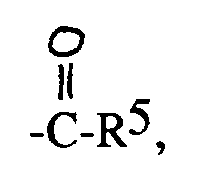 R⁵ eine der folgenden Gruppen ist:a)
 R⁶ (CH₂)n-2-indol oder
(CH₂)n-3-indol ist, wobei in der Gruppe n 0-4 bedeutet undR⁷ Wasserstoff oder eine Gruppe der Formeln
COOR⁸ oder R⁸ eine Alkygruppe mit 1-4 Kohlenstoffatomen ist, ist,b) -(CH₂)mSCH₂NHCOCH₃worinm 1-4 istc)
 Z O, S oder NR,
worin
R die oben gegebene Definition besitzt,
ist,
die Gruppe -(CH₂)n- in 2- oder 3-Stellung befestigt ist,n 0-4 ist undX die oben gegebene Definition besitzt,d)
die Gruppe -(CH₂)n- in 4- oder 5-Stellung befestigt ist undZ und n die in (c) oben gegebene Definition besitzen;und optische Isomere der Verbindungen der Formel I und Salze oder quaternäre Ammoniumsalze der Verbindungen der Formeln I oder II, sein können.e) (CH₂)mCO₂CH₂phenylworin m 1-4 istf) -(CHOH)C₆H₅;g) h) Pyrazin, das unsubstituiert oder monosubstituiert ist, worin die Substituenten Cl, COOR⁸, CN oder NO₂, worin R⁸ die in a) gegebene Definition besitzt, sein können;
 - Verbindungen der Formeln I oder II nach Anspruch 1, wobei in den FormelnX Fluor oder Chlor ist,Y dieselbe Bedeutung wie X hatq und r die in Anspruch 1 oben gegebene Definition besitzen,R Wasserstoff oder Alkyl mit 1-4 Kohlenstoffatomen ist,R¹ Wasserstoff ist,R² entweder eine substituierte Alkylgruppe der Formel
 R³ eine Gruppe mit den Formeln- (CH₂)n-2-indol,- (CH₂)n-3-indol oder- (CH₂)n-phenyl,in denen
n 1 ist und
das Phenyl unsubstituiert oder mit den Substituenten X, die die oben gegebene Definition besitzen, mono- oder disubstituiert ist undR⁴ Alkyl mit 1-4 Kohlenstoffatomen ist, oder
der Rest
eine Acylgruppe der Formel R⁵ eine der folgenden Gruppen ist:a)
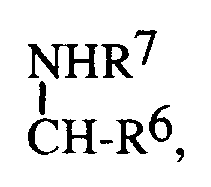 R⁶ ein (CH₂)n-2-indol oder ein (CH₂)n-3-indol ist undR⁷ die in Anspruch 1 gegebene Definition besitzt,c)
 d)
d) Z die in (c) gegebene Definition besitzt und die Gruppe -CH₂- in der 4- oder 5-Stellung befestigt ist oderf) -CHOHC₆H₅ ist, ist.
 - Verbindungen der Formeln I oder II nach Anspruch 1, die eine der fogenden Substanzen sind:
1-Methyl-2-(2'-indolcarbonyl)-aminomethyl-5-(2-'fluorphenyl)-2,3-dihydro-1H-1,4-benzodiazepin,
1-Methyl-2-(4-thianaphthenmethylcarbonyl)-aminomethyl-5-(2'-fluorphenyl)-2,3-dihydro-1H-1,4-benzodiazepin,
1-Methyl-2-(2-L-hydroxy-2-phenylacetyl)-aminomethyl-5-(2'-fluorphenyl)-2, 3-dihydro-1H-1,4-benzodiazepin,
1-Methyl-2-(1H-indol-3-yl)-methylcarbonylaminomethyl-5-(2'-fluorphenyl)-2,3-dihydro-1H-1,4-benzodiazepin,
1-Methyl-2-[1-(S)-1-methoxycarbonyl-2-phenylethylamino]-methyl-5-(2'-fluorphenyl)-2,3-dihydro-1H-1,4-benzodiazepin,
1-Methyl-2-[2-((1,1-dimethylethoxy)carbonyl)-amino-3-(1H-indol-3-yl)-propanoyl]aminomethyl-5-(2'-fluorphenyl)-2,3-dihydro-1H-1,4-benzodiazepin,
1-Methyl-2-[2-amino-3-(1H-indol-3-yl)-propanoyl]-aminomethyl-5-(2'-fluorphenyl)-2,3-dihydro-1H-1,4-benzodiazepin,
1-Methyl-2-[2-methoxy-2-trifluormethyl-2-phenylacetyl-)-aminomethyl-5-(2'-fluorphenyl)-2,3-dihydro-1H-1,4-benzodiazepin,
1-Methyl-2-[2-(S)-((1,1-dimethylethoxy)-carbonyl)-amino-3-acetamidomethylmercaptpropanoyl]aminomethyl-β-(2'-fluorphenyl)-2,3-dihydro-1H-1,4-benzodiazepin,
1-Methyl-2-[benzylsuccinoylaminomethyl-5-(2'-fluorphenyl-2,3-dihydro-1H-1,4-benzodiazepin,
1-Methyl-2-(acetamidoaminomethylmercaptoacetyl)-amionmethyl-5-(2-fluorphenyl-2,3-dihydro-1H-1,4-benzodiazepin,
1-Methyl-2-(4-thianaphthenmethylcarbonyl)-amionmethyl-5-(2-'-fluorphenyl)-2,3,4,5-tetrahydrohydro-1H-1,4-benzodiazepin,
1-Methyl-2-(2-L-hydroxy-2-phenylacetyl)-aminomethyl-5-(2-'-fluorphenyl)-2,3,4,5-tetrahydrohydro-1H-1,4-benzodiazepin oder
1-Methyl-2-(1H-indol-3-yl)-methylcarbonylaminomethyl-5-(2-'-fluorphenyl)-2,3,4,5-tetrahydrohydro-1H-1,4-benzodiazepin. - Verfahren zur Herstellung 2-substituierter Aminomethyl-1,4-benzodiazepine mit der Formel

worin
x, Y, q,r, R, R¹ und R² die in Anspruch 1 gegebene Definition besitzten, worin eine Verbindung der Formel III
mit einem Carbonsäuresalz der Formel R⁵-COOH,
worin
R⁵ die in Formel I gegebene Definition besitzt,
oder ein Derivat der genannten Carbonsäure ist,acyliert ist um eine Verbindung der Formel Ia
wobei die Verbindungen der Formel Ia gegebenfalls durch Substitution des an das Stickstoffatom der Säureamidgruppe gebundene Wasserstoffatoms durch eine Alkylgruppe mit 1-4 Kohlenstoffatomen oder eine Cycloalkylgruppe mit 3-5 Kohlenstoffatomen,alkyliert werden,
oder
eine Verbindung der Formel IV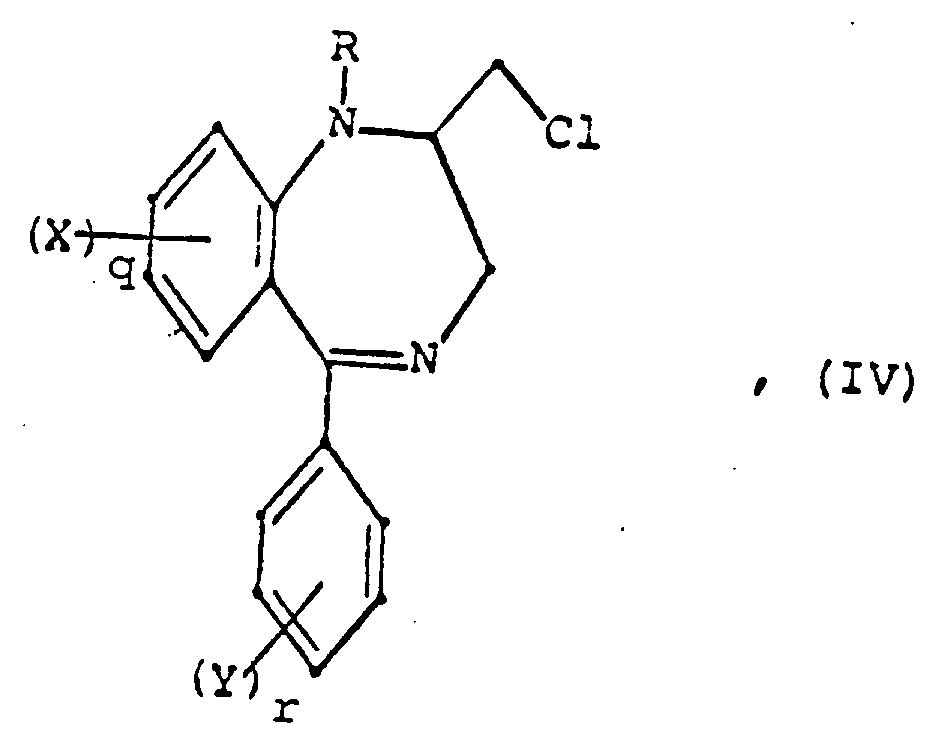
X, Y, q, r und R die bei Formel I gegebene Definition besitzen, mit einem Amin der Formel
R¹ und R² die bei Formel I gegebene Definition besitzen,
bei Temperaturen von 0° C bis zum Siedepunkt des Amins in Gegenwart eines Säurebindenden Mittels, oder von 0° C bis zum Siedepunkt des Lösungsmittels in Gegenwart eines inerten, aprotischen Lösungsmittels umgesetzt wird, wobei eine Verbindung der Formel I erhalten wird, und so, daß die Amino-Verbindungen der Forineln Ia oder I oder die sauren Additionssalze davon isoliert werden, oder daß gegebenfalls die Verbindungen der Formeln Ia oder I in quaternäre Amlnoniumsalze übergeführt werden. - Verfahren nach Anspruch 4, dadurch gekennzeichnet, daß die Acylierungsreaktion in einem aprotischen Lösungsmittel, das aus der Gruppe bestehend aus N,N-Dimethylformamid, Chloroform, Methylenchlorid, Tetrahydrofuran, Dioxan, Toluol und Chlorbenzol, bei einer Temperatur von -30° C bis zum Siedepunkt des Lösungsmittels, gegebenfalls in Gegenwart eines geeigneten Kupplungsreagens, das aus der Gruppe bestehend aus Dicyclohexylcarbodiimid, 1-Ethyl-3-(3-dimethylaminopropyl)carbodiimidhydrochlorid und Carbodiimidazol ausgewählt wird, durchgeführt wird.
- Verfahren nach Anspruch 5, bei dein bei der Acylierung ein Carbonsäurehalogenid oder Carbonsäureanhydrid eingesetzt wird und die Acylierung zusätzlich in Gegenwart eines säurebindenden Mittels durchgeführt wird.
- Verfahren nach Anspruch 6, bei dein das säurebindende Mittel aus der Gruppe bestehend aus einem tertiären Amin, einem Alkalimetallhydroxid und einem AIkalimetallcarbonat ausgewählt wird.
- Verfahren nach Anspruch 7, bei dem das säurebindende Mittel aus der Gruppe bestehend aus Triethylamin, Pyridin, 4-Dimethylaminopyridin, Natriumhydroxid und Kaliumcarbonat ausgewählt wird.
- Verfahren zur Herstellung von Verbindungen der Formel II

worin
X, Y, q, r, R, R¹ und R² die in Anspruch 1 gegebene Definition besitzen, wobei eine Verbindung der Formel I
- Verfahren nach Anspruch 9, bei dem das bei der Reduktionsreaktion verwendete Lösungsmittel Eisessig, Methanol oder Ethanol ist und das Reduktionsmittel Natriumcyanoborhydrid, Natriumborhydrid oder Lithiumborhydrid ist.
- Pharmazeutisches Präparat, das ein Antagonist der Funktion der Cholecystokinine in Säugern ist, dadurch charakterisiert, daß es als aktiven Inhaltsstoff eine pharmazeutisch wirksame Menge eines oder mehrerer 2-substituierter Aminomethyl-1,4-benzodiazepin-Derivate nach Anspruch 1, optische Isomere solcher Derivate oder pharmazeutisch annehmbare Salze oder quaternäre Ammoniumsalze der genannten Verbindungen und gegebenfalls einen pharmazeutisch annehmbaren Trägerstoff enthält.
- Pharmazeutisches Präparat nach Anspruch 11, das außerdem ein Adjuvans enthält.
- Pharmazeutisches Präparat nach einem der Ansprüche 11 oder 12, das als aktiven Inhaltsstoff eine Verbindung nach Anspruch 3 oder ein pharmazeutisch annehmbares Salz der genannten Verbindung enthält.
- Pharmazeutisches Präparat nach einem der Ansprüche 11-13, dadurch charakterisiert, daß es die Verbindungen nach Anspruch 1 in einer solchen Menge enthält, daß das Präparat zur Verabreichung von 0,05 mg der genannten Verbindung pro kg Körpergewicht bis 100 mg der genannten Substanz pro kg Körpergewicht in einer Einzeldosis oder in aufgeteileten Dosen verwendet werden kann.
- Pharmazeutisches Präparat nach Anspruch 14, dadurch charakterisiert, daß es die pharmazeutisch wirksame Verbindung in einer solchen Menge enthält, daß die genannte Verbindung in einer Menge von 0,5 mg/kg Körpergewicht bis 20 mg/kg Körpergewicht verabreicht werden kann.
- Pharmazeutisches Präparat nach einem der Ansprüche 11-15, dadurch charakterisiert, daß es ein pharmazeutisches Präparat zur Behandlung von Menschen ist.
Applications Claiming Priority (2)
| Application Number | Priority Date | Filing Date | Title |
|---|---|---|---|
| US06/624,842 US4724237A (en) | 1984-06-26 | 1984-06-26 | 2-substituted-aminomethyl-1,4-benzodiazepines |
| US624842 | 1990-12-10 |
Publications (3)
| Publication Number | Publication Date |
|---|---|
| EP0166356A2 EP0166356A2 (de) | 1986-01-02 |
| EP0166356A3 EP0166356A3 (en) | 1986-11-12 |
| EP0166356B1 true EP0166356B1 (de) | 1993-09-01 |
Family
ID=24503538
Family Applications (1)
| Application Number | Title | Priority Date | Filing Date |
|---|---|---|---|
| EP85107501A Expired - Lifetime EP0166356B1 (de) | 1984-06-26 | 1985-06-18 | 2-Substituierte Aminomethyl-1,4-benzodiazepine, Verfahren zu ihrer Herstellung und sie enthaltende pharmazeutische Zusammensetzungen |
Country Status (4)
| Country | Link |
|---|---|
| US (1) | US4724237A (de) |
| EP (1) | EP0166356B1 (de) |
| JP (1) | JPS6183169A (de) |
| DE (1) | DE3587556T2 (de) |
Families Citing this family (8)
| Publication number | Priority date | Publication date | Assignee | Title |
|---|---|---|---|---|
| US4755508A (en) * | 1984-06-26 | 1988-07-05 | Merck & Co., Inc. | Benzodiazepine analogs and use as antogonists of gastrin and cholecystokinin |
| US5206238A (en) * | 1990-11-13 | 1993-04-27 | Merck & Co., Inc. | Cholecystokinin antagonists |
| CA2055094A1 (en) * | 1990-11-13 | 1992-05-14 | Mark G. Bock | Cholecystokinin antagonist |
| US7160880B1 (en) | 1999-05-14 | 2007-01-09 | Cenes Limited | Short-acting benzodiazepines |
| KR20170091770A (ko) | 2006-07-10 | 2017-08-09 | 파이온 유케이 리미티드 | 속효형 벤조디아제핀 염 및 이의 중합체 형태 |
| GB0613693D0 (en) | 2006-07-10 | 2006-08-16 | Cenes Ltd | Benzodiazepine salts (3) |
| EP2450039A1 (de) | 2010-11-08 | 2012-05-09 | PAION UK Ltd. | Dosierschema zur Sedierung mit CNS 7056 (Remimazolam) |
| AR094963A1 (es) | 2013-03-04 | 2015-09-09 | Ono Pharmaceutical Co | Reacción de oxidación excelente en el índice de conversión |
Family Cites Families (6)
| Publication number | Priority date | Publication date | Assignee | Title |
|---|---|---|---|---|
| DE2265371C3 (de) * | 1972-05-03 | 1980-12-11 | Kali-Chemie Ag, 3000 Hannover | N-(3-Benzoylaminopropyl)-aniline |
| DE2353187A1 (de) * | 1973-05-02 | 1974-11-14 | Kali Chemie Ag | Neue benzodiazepinderivate |
| US4307237A (en) * | 1974-09-11 | 1981-12-22 | Hoffmann-La Roche Inc. | Imidazoles |
| DE2952279A1 (de) * | 1979-12-24 | 1981-06-25 | Kali-Chemie Pharma Gmbh, 3000 Hannover | Neue 2-acylaminomethyl-1,4-benzodiazepine und deren salze sowie verfahren zu ihrer herstellung und diese verbindungen enthaltende arzneimittel |
| DE3048264A1 (de) * | 1980-12-20 | 1982-09-09 | Kali-Chemie Pharma Gmbh, 3000 Hannover | 2-acylaminomethyl-1,4-benzodiazepine und deren salze sowie verfahren zu ihrer herstellung und diese verbindungen enthaltende arzneimittel |
| DE3124013A1 (de) * | 1981-06-19 | 1982-12-30 | Kali-Chemie Pharma Gmbh, 3000 Hannover | 2-acylaminomethyl-1,4-benzodiazepin-verbindungen sowie verfahren und zwischenprodukte zu ihrer herstellung und diese verbindungen enthaltende arzneimittel |
-
1984
- 1984-06-26 US US06/624,842 patent/US4724237A/en not_active Expired - Fee Related
-
1985
- 1985-06-18 DE DE85107501T patent/DE3587556T2/de not_active Expired - Fee Related
- 1985-06-18 EP EP85107501A patent/EP0166356B1/de not_active Expired - Lifetime
- 1985-06-26 JP JP60138059A patent/JPS6183169A/ja active Granted
Also Published As
| Publication number | Publication date |
|---|---|
| JPH0533701B2 (de) | 1993-05-20 |
| US4724237A (en) | 1988-02-09 |
| DE3587556D1 (de) | 1993-10-07 |
| JPS6183169A (ja) | 1986-04-26 |
| DE3587556T2 (de) | 1994-02-10 |
| EP0166356A2 (de) | 1986-01-02 |
| EP0166356A3 (en) | 1986-11-12 |
Similar Documents
| Publication | Publication Date | Title |
|---|---|---|
| US4663321A (en) | Triazolobenzodiazepines and pharmaceutical use | |
| US5977100A (en) | Substituted guanidine derivatives, process for production thereof, and pharmaceutical uses thereof | |
| US5589476A (en) | Imidazol-4-ylpiperidine derivatives, their preparation and their application in therapeutics | |
| US5166151A (en) | 2-Benzazepines with 5- and 6-membered heterocyclic rings, compositions and medical methods of use thereof | |
| HUP0002843A2 (hu) | Új béta-karbolin-származékok, eljárás előállításukra és az ezeket tartalmazó gyógyszerkészítmények | |
| US4755508A (en) | Benzodiazepine analogs and use as antogonists of gastrin and cholecystokinin | |
| EP0434369A1 (de) | Neue Benzodiazepin-Analoga | |
| EA001593B1 (ru) | Диазепино-индоловые ингибиторы фосфодиэстераз iv | |
| EP0623621A1 (de) | Oxazabicycloderivate und ihre Verwendung als 5-HT4 Rezeptor-Agonisten | |
| US4847248A (en) | 1,4-Benzodiazepines with 5- and 6-membered heterocyclic rings and their use as cholecystokinins and gastrin antagonists | |
| US5185331A (en) | Triazolobenzodiazepines | |
| JP3010558B2 (ja) | 新規の1,7‐融合1h‐インドール‐2‐カルボン酸‐n‐(1,4‐ベンゾジアゼピン‐3‐イル)‐アミド、その製法及びこれを含有するコレシストキニン拮抗作用薬剤 | |
| JPH09505597A (ja) | 3−アシルアミノベンゾアゼピン類 | |
| EP0166356B1 (de) | 2-Substituierte Aminomethyl-1,4-benzodiazepine, Verfahren zu ihrer Herstellung und sie enthaltende pharmazeutische Zusammensetzungen | |
| US4554272A (en) | Substituted quinazolino-1,4-benzodiazepin-6,9-diones and their preparation | |
| NZ294642A (en) | 1-Phenyl-4-oxo-3,4,6,7-tetrahydro-[1,4]-diazepinoindoles; medicaments for inhibiting phosphodiesterase IV | |
| CZ290011B6 (cs) | Deriváty 4-oxo-3,5dihydro-4H-pyridazino[4,5-b]indol-1-acetamidu a farmaceutický prostředek, který je obsahuje | |
| EP0508799A1 (de) | Cholecystokinin-Antagonisten | |
| HK1006570B (en) | 1,7-fused 1h-indole-2-carboxylic n-(1,4-benzodiazepin-3-yl)-amides | |
| CA2065703A1 (en) | Cholecystokinin antagonists | |
| EP0189803B1 (de) | Indol-3-yl-chinazolin-1,4-benzodiazepin-5,13-dione, Verfahren zu ihrer Herstellung und diese enthaltende pharmazeutische Zubereitungen | |
| US4735941A (en) | 1,4-benzodiazepines with 5- and 6-membered heterocyclic rings, useful as gastrointestinal and CNS agents | |
| EP0273697A2 (de) | 2-Benzazepine mit 5- und 6-gliedrigen heterozyklischen Ringen | |
| US4563451A (en) | Quinazolino-1,4-benzodiazepin-5,13-diones | |
| KR100470692B1 (ko) | 시아노-인돌 세로토닌 재흡수 억제 화합물, 이의 제조방법 및 이를 함유하는 약제 조성물 |
Legal Events
| Date | Code | Title | Description |
|---|---|---|---|
| PUAI | Public reference made under article 153(3) epc to a published international application that has entered the european phase |
Free format text: ORIGINAL CODE: 0009012 |
|
| AK | Designated contracting states |
Designated state(s): CH DE FR GB IT LI NL |
|
| ITCL | It: translation for ep claims filed |
Representative=s name: SOCIETA' ITALIANA BREVETTI S.P.A. |
|
| PUAL | Search report despatched |
Free format text: ORIGINAL CODE: 0009013 |
|
| AK | Designated contracting states |
Kind code of ref document: A3 Designated state(s): CH DE FR GB IT LI NL |
|
| 17P | Request for examination filed |
Effective date: 19870505 |
|
| 17Q | First examination report despatched |
Effective date: 19890120 |
|
| ITF | It: translation for a ep patent filed | ||
| GRAA | (expected) grant |
Free format text: ORIGINAL CODE: 0009210 |
|
| AK | Designated contracting states |
Kind code of ref document: B1 Designated state(s): CH DE FR GB IT LI NL |
|
| REF | Corresponds to: |
Ref document number: 3587556 Country of ref document: DE Date of ref document: 19931007 |
|
| ET | Fr: translation filed | ||
| ITTA | It: last paid annual fee | ||
| PLBE | No opposition filed within time limit |
Free format text: ORIGINAL CODE: 0009261 |
|
| STAA | Information on the status of an ep patent application or granted ep patent |
Free format text: STATUS: NO OPPOSITION FILED WITHIN TIME LIMIT |
|
| 26N | No opposition filed | ||
| PGFP | Annual fee paid to national office [announced via postgrant information from national office to epo] |
Ref country code: NL Payment date: 19960630 Year of fee payment: 12 |
|
| PGFP | Annual fee paid to national office [announced via postgrant information from national office to epo] |
Ref country code: FR Payment date: 19970326 Year of fee payment: 13 |
|
| PGFP | Annual fee paid to national office [announced via postgrant information from national office to epo] |
Ref country code: GB Payment date: 19970404 Year of fee payment: 13 |
|
| PGFP | Annual fee paid to national office [announced via postgrant information from national office to epo] |
Ref country code: CH Payment date: 19970421 Year of fee payment: 13 |
|
| PGFP | Annual fee paid to national office [announced via postgrant information from national office to epo] |
Ref country code: DE Payment date: 19970523 Year of fee payment: 13 |
|
| PG25 | Lapsed in a contracting state [announced via postgrant information from national office to epo] |
Ref country code: NL Effective date: 19980101 |
|
| NLV4 | Nl: lapsed or anulled due to non-payment of the annual fee |
Effective date: 19980101 |
|
| PG25 | Lapsed in a contracting state [announced via postgrant information from national office to epo] |
Ref country code: GB Free format text: LAPSE BECAUSE OF NON-PAYMENT OF DUE FEES Effective date: 19980618 |
|
| PG25 | Lapsed in a contracting state [announced via postgrant information from national office to epo] |
Ref country code: LI Free format text: LAPSE BECAUSE OF NON-PAYMENT OF DUE FEES Effective date: 19980630 Ref country code: CH Free format text: LAPSE BECAUSE OF NON-PAYMENT OF DUE FEES Effective date: 19980630 |
|
| GBPC | Gb: european patent ceased through non-payment of renewal fee |
Effective date: 19980618 |
|
| REG | Reference to a national code |
Ref country code: CH Ref legal event code: PL |
|
| PG25 | Lapsed in a contracting state [announced via postgrant information from national office to epo] |
Ref country code: FR Free format text: LAPSE BECAUSE OF NON-PAYMENT OF DUE FEES Effective date: 19990226 |
|
| PG25 | Lapsed in a contracting state [announced via postgrant information from national office to epo] |
Ref country code: DE Free format text: LAPSE BECAUSE OF NON-PAYMENT OF DUE FEES Effective date: 19990401 |
|
| REG | Reference to a national code |
Ref country code: FR Ref legal event code: ST |