EP0154601A2 - Use of an austenitic stainless alloy in weldable high-performance structural elements - Google Patents
Use of an austenitic stainless alloy in weldable high-performance structural elements Download PDFInfo
- Publication number
- EP0154601A2 EP0154601A2 EP85730010A EP85730010A EP0154601A2 EP 0154601 A2 EP0154601 A2 EP 0154601A2 EP 85730010 A EP85730010 A EP 85730010A EP 85730010 A EP85730010 A EP 85730010A EP 0154601 A2 EP0154601 A2 EP 0154601A2
- Authority
- EP
- European Patent Office
- Prior art keywords
- nitrogen
- steels
- limits
- alloy
- welding
- Prior art date
- Legal status (The legal status is an assumption and is not a legal conclusion. Google has not performed a legal analysis and makes no representation as to the accuracy of the status listed.)
- Withdrawn
Links
Images
Classifications
-
- C—CHEMISTRY; METALLURGY
- C22—METALLURGY; FERROUS OR NON-FERROUS ALLOYS; TREATMENT OF ALLOYS OR NON-FERROUS METALS
- C22C—ALLOYS
- C22C38/00—Ferrous alloys, e.g. steel alloys
- C22C38/001—Ferrous alloys, e.g. steel alloys containing N
-
- C—CHEMISTRY; METALLURGY
- C21—METALLURGY OF IRON
- C21D—MODIFYING THE PHYSICAL STRUCTURE OF FERROUS METALS; GENERAL DEVICES FOR HEAT TREATMENT OF FERROUS OR NON-FERROUS METALS OR ALLOYS; MAKING METAL MALLEABLE, e.g. BY DECARBURISATION OR TEMPERING
- C21D6/00—Heat treatment of ferrous alloys
- C21D6/004—Heat treatment of ferrous alloys containing Cr and Ni
-
- C—CHEMISTRY; METALLURGY
- C21—METALLURGY OF IRON
- C21D—MODIFYING THE PHYSICAL STRUCTURE OF FERROUS METALS; GENERAL DEVICES FOR HEAT TREATMENT OF FERROUS OR NON-FERROUS METALS OR ALLOYS; MAKING METAL MALLEABLE, e.g. BY DECARBURISATION OR TEMPERING
- C21D8/00—Modifying the physical properties of ferrous metals or ferrous alloys by deformation combined with, or followed by, heat treatment
-
- Y—GENERAL TAGGING OF NEW TECHNOLOGICAL DEVELOPMENTS; GENERAL TAGGING OF CROSS-SECTIONAL TECHNOLOGIES SPANNING OVER SEVERAL SECTIONS OF THE IPC; TECHNICAL SUBJECTS COVERED BY FORMER USPC CROSS-REFERENCE ART COLLECTIONS [XRACs] AND DIGESTS
- Y10—TECHNICAL SUBJECTS COVERED BY FORMER USPC
- Y10T—TECHNICAL SUBJECTS COVERED BY FORMER US CLASSIFICATION
- Y10T428/00—Stock material or miscellaneous articles
- Y10T428/12—All metal or with adjacent metals
- Y10T428/12493—Composite; i.e., plural, adjacent, spatially distinct metal components [e.g., layers, joint, etc.]
- Y10T428/12771—Transition metal-base component
- Y10T428/12861—Group VIII or IB metal-base component
- Y10T428/12951—Fe-base component
- Y10T428/12958—Next to Fe-base component
- Y10T428/12965—Both containing 0.01-1.7% carbon [i.e., steel]
Definitions
- the invention relates to the use of a corrosion-resistant austenitic iron-chromium-nickel-nitrogen alloy as a material for mechanically highly stressed components with good weldability.
- austenitic steels In contrast to ferritic steels, austenitic steels generally have more favorable corrosion properties and are much more weldable, ductile and tough. Since nickel stabilizes the austenitic structure, such steels have at least 7% nickel according to "StahlKey", 13th edition, 1983, Verlag StahlKey Wegst, GmbH, Marbach, pp. 323/324 ff. They also contain more than 16% chromium to achieve sufficient passivity. To avoid intergranular corrosion The carbon content of steels not stabilized with titanium or niobium is limited to a maximum of 0.08%. A further improvement in the corrosion properties is achieved by adding up to 6% Mo, 4% Cu and 3% Si. Increased nickel content of approx. 50% improve the resistance to stress corrosion cracking (see Berg- und Wegtenmännchen Monthly Bulletin 108, 1963, pp. 1/8 and 4 ff.).
- the low guaranteed 0.2 limits of austenitic steels which according to DIN 17 440, December 1972 edition, for example for a steel with 18 to 19% Cr and about 9% Ni 185 N / mm 2 , can be determined by mixed crystal hardness. or by alloying with up to 0.30% N to 343 N / mm 2 (see Japanese Industrial Standard JIS G 4304, 1981, pp. 1301/1304 ff., steel SUS 304 N2).
- Such strength increases have not yet met all requirements.
- austenitic steels Like the nitrogen-alloyed, austenitic steels already listed, they are weldable using the same filler materials. Their pure weld metal has guaranteed 0.2 limits of at least 510 N / mm 2 . The disadvantage, however, is that the high chrome and stick The content of these steels makes hot formability more difficult. Furthermore, even at temperatures as high as 1000'C, they still separate intermetallic phases that lead to low strains of approx. 30% and can cause embrittlement after welding, hot straightening or bending. Since chromium promotes ferrite formation in steels, while nickel suppresses it and at the same time delays the elimination of intermetallic phases, the alloys listed have high nickel contents, which make the material more expensive.
- Another method of improving the strength properties of steels is grain refinement. Cold forming followed by recrystallizing annealing on an austenitic steel with approx. 18% Cr and 10% Ni with an ultra-fine microstructure of Size No. granules. 11.5 to 13.5 according to ASTM (6-3 p m) generated (see ASTM Special Technical Publication No. 369, 1965, pp 175/179 ). This increased compared to that coarse-grained initial state the 0.2 limit by approx. 150 N / mm 2 . Since the steel was not alloyed with nitrogen, its 0.2 limit was only 380 N / mm2 overall. The problem of the extent to which such extremely fine-grained, non-convertible steels are suitable for welding has not been addressed.
- the alloy element niobium is of particular importance. Its effect is based on the precipitation of a complex nitride of the type Nb 2 Cr 2 N 2 , called the Z phase. As a result, grain refinement is achieved even in hot-formed, solution-annealed steels, but this only leads to grain sizes of No. 10 according to ASTM (approx. 10 ⁇ m) (see Berg- und Wegtenmännchen Monthly Bulletin 124, 1979, p. 513 ff.). In addition, nitride precipitation hardening is also found, which can assume values of up to 90 N / mm 2 (see Thyssenaba 1, 1969, p. 14 ff.).
- these steels In order to avoid the precipitation of too much nitride, which would remove nitrogen from the mixed crystal for hardening, these steels have a niobium content which is considerably lower than their sevenfold amount of N, the stoichiometric ratio in the compound NbN.
- the hot yield strengths of austenitic steels are also raised by nitrogen mixed crystal hardening and grain refinement.
- the increase in the 0.2 limit due to nitrogen decreases with increasing temperature and is, for example, only about half as large at 400 ° C as at room temperature (see Berg- und Wegtenmännchen Monthly Bulletin 113, 1968, pp. 386/387 ff. ).
- the increase in the 0.2 limit due to grain refinement decreases significantly less with the test temperature (see Metal Science 11, 1977, p. 209 ff.). At even higher temperatures, at which the warm no longer yield point, but the lower creep rupture strength is decisive for the calculation of constructions, this favorable fine grain effect no longer exists.
- a certain compensation can be achieved by alloying with boron up to a content of 0.015%, since this measure increases the creep resistance of austenitic chromium-nickel-molybdenum steels at temperatures of, for example, 650 ° C (see Rev. Mêtallurgie 59, 1962, p. 651 / 660). This beneficial effect also appears to be seen in such steels which additionally contain nitrogen (see Arch. Eisenblinnwes. 39, 1968, p. 146 ff. And VDI-Reports 428, 1981, p. 89 ff.). As a result, the area of application in which the hot stretching limit can still be used for the calculation is expanded or shifted to higher temperatures. Due to the susceptibility of austenitic steels to hot cracking when welding with boron, its content is usually limited to 60 to 80 ppm.
- the austenitic steels listed in DIN 17 440, December 1972 edition with up to 0.22% N alloyed steels are equated with steels without nitrogen. They are all suitable for welding if the carbon content is limited to ⁇ 0.07% for wall thicknesses smaller than 6 mm and to ⁇ 0.03% for thicknesses over 6 mm. According to AD leaflet HP 7/3, April 1975 edition, only parts over 50 mm thick in pressure vessel construction are to be annealed after welding.
- the delivery condition of the corrosion-resistant austenitic steels is determined, among other things, by a heat treatment which is referred to as "quenching". It is an annealing at at least 1000 ° C with rapid cooling. This ensures that all chrome carbides, -Nitrides and intermetallic phases are solved. Another purpose of this measure is to largely reduce the dislocations brought about by deformation as a result of recrystallization and recovery, so that a state of optimum corrosion resistance and toughness which is poor in internal stresses is finally obtained.
- a heat treatment which is referred to as "quenching”. It is an annealing at at least 1000 ° C with rapid cooling. This ensures that all chrome carbides, -Nitrides and intermetallic phases are solved.
- Another purpose of this measure is to largely reduce the dislocations brought about by deformation as a result of recrystallization and recovery, so that a state of optimum corrosion resistance and toughness which is poor in internal stresses is finally obtained.
- the joint welding of austenitic steels is assessed with the help of weld joint samples.
- weld joint samples These are flat tensile specimens according to DIN 50 120, September 1975 edition, with a continuous transverse seam in the middle. This ensures during the tensile test that the weld metal, seam transition and base material are subjected to the same stress since they are arranged one behind the other in the direction of the tensile force.
- the sample is suitable for determining the tensile strength and fracture position. It is disadvantageous that it can only be used to determine the yield strengths imprecisely because weld metal, material in the transition area and unaffected base material deform plastically to varying extents within the measuring length or expand permanently.
- the unaffected base material G and the weld seam S come into consideration as the fracture position, while in the transition region U the seam to the base material normally does not break occur.
- the strength properties would not be found in these transition areas because they are too narrow. If the seam breaks, the strength of the weld metal is decisive.
- the weld metal is more or less mixed with the base material, the tensile strength of the pure weld metal is determined on longitudinal samples of specially prepared seams, for which reproducibility does not occur, for reasons of reproducibility. Their manufacture is described in DIN 32 525, Part 1, December 1981 edition.
- the degree of melting or the mixing ratio is mainly dependent on the welding current, which determines the penetration depth, the number of layers and the welding process.
- the object of the invention is now to raise the low minimum values of the 0.2 limits of the usual nitrogen-alloyed, corrosion-resistant austenitic steels to a level of approximately 500 N / mm 2 without reducing their good weldability, with an increase in the alloy contents being excluded.
- This object is achieved in that a corrosion-resistant austenitic alloy with the known chemical composition specified in claim 1 is used as a material for corrosive and mechanically highly stressed components of good weldability in such a way that after cold forming and recrystallizing annealing high 0, 2 limits can be reached due to the formation of an ultra-fine-grained structure with average grain diameters of less than 10 ⁇ m (greater than No.
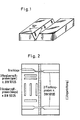
- connection samples were taken from test pieces which had been obtained by welding two sheets in the tub position. Your seam preparation can be seen in Figure 1.
- the 10 mm sheets were provided with a Y-seam (web height 2 mm), the thinner ones with a V-seam (without web).
- the welds were carried out in multiple layers with the opposite side after the root had been ground beforehand. After each pull caterpillar was laid, the work temperature was below 150 ° C. Elevations in the seams were processed at the sheet metal level. Welding was carried out at the positive pole at a voltage U of 23 V using the rutile-based, coated electrode Thermanit 20/16/510, which is commercially available.
- the pull-out ratio (bead length / length of molten rod) was 0.7 to 0.8 or 0.8 to 0.9 for the 2.5 or 3.25 mm electrode.
- the welding tests were carried out in such a way that fractures could only occur in the base material of the flat tensile connection samples.
- the 0.2 limit of the weld metal may be used as a basis in such an expert opinion for the load-bearing capacity of components if the tensile strength of the connection sample torn in the seam was sufficiently high.
- a niobium-containing welding filler material with 0.38% N, 25% Cr, 21.5% Ni, 5 was adapted to the high 0.2 limits of the ultra-fine-grained base material % Mn, 3.6% Mo u. 0.035% C used. It.
- Table 2 shows an exemplary embodiment of three steel alloys to be used according to the invention, which were joined by the welding process specified.
- the 0.2 limits were determined on test pieces, the seams of which had been prepared as already described and shown in Figure 1.
- Image 2 shows the position of these samples and their division in the test piece.
- Table 2 shows the advantages of the steel alloys to be used according to the invention: High 0.2 limits between 504 and 553 N / mm 2 , which were mainly achieved by superimposing nitrogen mixed crystal and ultra-fine grain hardening, since the steels approx. Contained 0.2% N and had grain sizes between 2.8 and 4.5 pm. Furthermore, the weldability according to the invention is good, since the weld connection samples did not break in the seam transition, but in the unaffected base material.
- the cold-forming of the steels or alloys to be used according to the invention is generally carried out for flat products using the Sendzimir or quarto rolling method, for pipes using cold crawls from hot-pressed blanks.
Landscapes
- Chemical & Material Sciences (AREA)
- Engineering & Computer Science (AREA)
- Mechanical Engineering (AREA)
- Materials Engineering (AREA)
- Metallurgy (AREA)
- Organic Chemistry (AREA)
- Physics & Mathematics (AREA)
- Thermal Sciences (AREA)
- Crystallography & Structural Chemistry (AREA)
- Arc Welding In General (AREA)
- Organic Low-Molecular-Weight Compounds And Preparation Thereof (AREA)
Abstract
Dehngrenzen stetlen die meßgebliche Größe für die Berechnung mechanisch beanspruchter Bauteile dar. Austenkleche Stahllegierungen sind zwar korrosionsbeständig und schweißgeeignet, besitzen aber den Nachteil niedriger 0,2-Grenzen. Im chemischen Apparatebau beispielsweise werden jedoch häufig austenitische Stähle mit hohen Dehngrenzen verlangt.Yield strengths are the decisive factor for the calculation of mechanically stressed components. Although austenlick steel alloys are corrosion-resistant and weldable, they have the disadvantage of lower 0.2-limits. In chemical apparatus engineering, for example, austenitic steels with high yield strengths are often required.
Durch Mischkristallhärtung bzw. Legieren mit Stickstoff leasen sich die garantierten Mindestwerte der 0,2-Grenzen austenitiacher Stähle von etwa 200 auf ,300 N/mm2 anheben. Diese Steigerung jedoch entsprach in vielen Fällen immer noch nicht allen Anforderungen. Eine weitere bekannte Methode, die Festigkeit zu erhöhen, ist die Kornverfeinerung. Durch Kaltwalzen und rekristallisierendes Glühen gelang es, erfindungsgemäß zu verwendende, stickstoffiegierte, austenitische Stähle herzustellen, die einen ultrafeinen Gefügezustand mit mittleren Korngrößen von 3,5 µm aufwiesen. Diese Stähle besaßen infolge Überlagerung von Stickstoff-Mischkristall- und Ultrafeinkomhärtung Mindestwerte der 0.2-Grenzen von 480 N/mm2. Lichtbogenhandschweißungen mit einem hochfesten, stickstoffiegierten, korrosionsbeständigen Zusatzwerkstoff ergaben überraschenderweise, daß die so geschaffenen Schweißverbindungen nicht durch Komvergröberung im Nahtübergangsbereich, sondern im uftrefeinkörnigen, hochfesten Grundwerkstoff brachen.Through mixed crystal hardening or alloying with nitrogen, the guaranteed minimum values of the 0.2 limits of austenitic steels are raised from around 200 to 300 N / mm 2 . In many cases, however, this increase still did not meet all requirements. Another known method of increasing strength is grain refinement. Cold rolling and recrystallizing annealing made it possible to produce nitrogen-alloyed, austenitic steels to be used according to the invention, which had an ultra-fine structural state with average grain sizes of 3.5 μm. Due to the superimposition of nitrogen mixed crystal and ultra-fine hardening, these steels had minimum values of the 0.2 limits of 480 N / mm 2 . Manual arc welding with a high-strength, nitrogen-alloyed, corrosion-resistant filler material surprisingly showed that the welded joints created in this way did not break due to coarsening in the seam transition area, but in the ufrefeingra ?ne, high-strength base material.
Description
Die Erfindung betrifft die Verwendung einer korrosionsbeständigen austenitischen Eisen-Chrom-Nickel-Stickstoff-Legierung als Werkstoff für mechanisch hoch beanspruchte Bauteile guter Schweißbarkeit.The invention relates to the use of a corrosion-resistant austenitic iron-chromium-nickel-nitrogen alloy as a material for mechanically highly stressed components with good weldability.
In der chemischen Industrie, z.B. im Apparate- oder Druckbehälterbau, und in Anlagen zur Erzeugung von Energie, werden Stähle bzw. Legierungen verlangt, die neben ausreichender Korrosionsbeständigkeit gute Schweißeignung und den hohen mechanischen Beanspruchungen entsprechende Festigkeiten besitzen sollen. Dehngrenzen wie die 0,2-Grenzen stellen die maßgebliche Größe für die Berechnung dar. Aus diesem Grunde wird der Konstrukteur Werkstoffe mit möglichst hohen 0,2%-Dehngrenzen bevorzugen, um größte Belastbarkeit der Bauteile zu erreichen oder wegen der Rohstoff- und Gewichtsersparnis sowie,der besseren Verarbeitbarkeit und Schweißbarkeit dünnere Werkstücke verwenden zu können. Bei der Entwicklung solcher Stähle oder Legierungen besteht das schwierige Problem, die Schweißeignung des Werkstoffs trotz erhöhter Festigkeit zu erhalten.In the chemical industry, e.g. In the construction of apparatus or pressure vessels, and in plants for the generation of energy, steels or alloys are required which, in addition to having sufficient corrosion resistance, are said to be suitable for welding and have high mechanical strengths. Yield strengths such as the 0.2 limits represent the decisive size for the calculation. For this reason, the designer will prefer materials with the highest possible 0.2% proof limits in order to achieve maximum load capacity of the components or because of the raw material and weight savings as well to be able to use thinner workpieces for better workability and weldability. When developing such steels or alloys, there is the difficult problem of maintaining the weldability of the material despite increased strength.
Austenitische Stähle haben im Gegensatz zu ferritischen im allgemeinen günstigere Korrosionseigenschaften und sind wesentlich schweißgeeigneter, duktiler sowie zäher. Da Nickel das austenitische Gefüge stabilisiert, besitzen solche Stähle nach "Stahlschlüssel", 13. Auflage, 1983, Verlag Stahlschlüssel Wegst, GmbH, Marbach, S. 323/324 ff., mindestens 7 % Nickel. Ferner enthalten sie zur Erzielung ausreichender Passivität mehr als 16 % Chrom. Zur Vermeidung der interkristallinen Korrosion sind die Kohlenstoffgehalte der nicht mit Titan oder Niob stabilisierten Stähle auf höchstens 0,08 % begrenzt. Eine weitere Verbesserung der Korrosionseigenschaften wird durch Zusätze bis zu 6 % Mo, 4 % Cu und 3 % Si erreicht. Erhöhte Nickelgehalte von rd. 50 % verbessern die Spannungsrißkorrosionsbeständigkeit (siehe Berg- und Hüttenmännische Monatshefte 108, 1963, S. 1/8 und 4 ff.).In contrast to ferritic steels, austenitic steels generally have more favorable corrosion properties and are much more weldable, ductile and tough. Since nickel stabilizes the austenitic structure, such steels have at least 7% nickel according to "StahlKey", 13th edition, 1983, Verlag StahlKey Wegst, GmbH, Marbach, pp. 323/324 ff. They also contain more than 16% chromium to achieve sufficient passivity. To avoid intergranular corrosion The carbon content of steels not stabilized with titanium or niobium is limited to a maximum of 0.08%. A further improvement in the corrosion properties is achieved by adding up to 6% Mo, 4% Cu and 3% Si. Increased nickel content of approx. 50% improve the resistance to stress corrosion cracking (see Berg- und Hüttenmännchen Monthly Bulletin 108, 1963, pp. 1/8 and 4 ff.).
Die niedrigen garantierten 0,2-Grenzen der austenitischen Stähle, die nach DIN 17 440, Ausgabe Dezember 1972, z.B. für einen Stahl mit 18 bis 19 % Cr und etwa 9 % Ni 185 N/mm2 betragen, lassen sich durch Mischkristallhär-. tung bzw. durch Legieren mit bis zu 0,30 % N auf 343 N/mm2 anheben (siehe Japanese Industrial Standard JIS G 4304, 1981, S. 1301/1304 ff., Stahl SUS 304 N2). Solche Festigkeitssteigerungen wurden jedoch auch noch nicht allen Anforderungen gerecht. Um eine weitere Erhöhung der 0,2-Grenzen zu erzielen, war es erforderlich, in den Stahl noch mehr Stickstoff bis zu der bei etwa 0,55 % liegenden Löslichkeitsgrenze einzubringen. Da bei solchen Mengen Stickstoffblasen bei der Erstarrung entstehen bzw. die Gußblöcke "treiben" und Poren beim Schweißen auftreten, mußten gleichzeitig auch die Chrom- und Mangangehalte angehoben werden. So sind Sonderstähle mit 22,5 bis 25,5 % Cr, 4 bis 7 % Mn, 2 bis 4 % Mo und 13 bis 17 % Ni bekannt, die aufgrund ihres Gehaltes von 0,35 bis 0,50 % N und von geringen Niobzusätzen garantierte Mindestwerte der 0,2-Grenzen von 500 bis 540 N/mm2 besitzen (siehe ASM Technical Report, 1970, No. C 70-24.2., DEW-Technische Berichte 13, 1973, S. 94/100 und Proceedings "Molybdenum 1973", Noranda Symp. 4, 1973, S. 43/48)-. Sie sind wie die bereits aufgeführten stickstofflegierten, austenitischen Stähle unter Verwendung artgleicher Zusatzwerkstoffe schweißgeeignet. Ihre reinen Schweißgüter weisen garantierte 0,2-Grenzen von mind. 510 N/mm2 auf. Nachteilig ist jedoch, daß die hohen Chrom- und Stickstoffgehalte dieser Stähle die Warmumformbarkeit erschweren. Ferner scheiden sie selbst bei so hohen Temperaturen wie 1000'C noch intermetallische Phasen aus, die zu niedrigen Dehnungen von rd. 30 % führen und nach dem Schweißen, Warmrichten oder -biegen Versprödungen hervorrufen können. Da Chrom in Stählen die Ferritbildung begünstigt, während Nickel diese unterdrückt und gleichzeitig auch die Ausscheidung intermetallischer Phasen verzögert, besitzen die aufgeführten Legierungen hohe Nickelgehalte, die den Werkstoff verteuern. Im chemischen Apparatebau sind jedoch häufig relativ niedrig legierte Stähle mit nur rd. 18 % Cr, 12 % Ni und 2 % Mo gefragt, da deren Korrosionsbeständigkeit meistens ausreicht. Man nimmt in diesen Fällen sogar die geringen 0,2-Grenzen dieser Stähle von etwa 200 N/mm2 in Kauf und verzichtet auf den Stickstoffzusatz, der bei einer etwas erschwerteren Verarbeitbarkeit nur zu einer Anhebung der Streckgrenzen auf 280 N/mm2 geführt hätte (vergleiche Stahl 1.4435 mit 1.4406 in DIN 17 440). Eine breite Anwendung haben somit die gewöhnlichen stickstofflegierten, austenitischen Stähle mit Tochstwerten der Streckgrenzen von nur 280 bis 343 N/mm2 noch nicht gefunden. Auch für die höher legierten, austenitischen Sonderstähle mit Stickstoffgehalten über 0,35 % und Mindestwerten der 0,2-Grenze von 500 N/mm2 gilt diese Feststellung, da deren Verwendung sich naturgemäß mehr auf spezielle Fälle beschränkt.The low guaranteed 0.2 limits of austenitic steels, which according to DIN 17 440, December 1972 edition, for example for a steel with 18 to 19% Cr and about 9% Ni 185 N / mm 2 , can be determined by mixed crystal hardness. or by alloying with up to 0.30% N to 343 N / mm 2 (see Japanese Industrial Standard JIS G 4304, 1981, pp. 1301/1304 ff., steel SUS 304 N2). However, such strength increases have not yet met all requirements. In order to achieve a further increase in the 0.2 limits, it was necessary to introduce more nitrogen into the steel up to the solubility limit of approximately 0.55%. Since such quantities of nitrogen bubbles form during solidification or the casting blocks "float" and pores occur during welding, the chromium and manganese contents also had to be increased at the same time. Special steels with 22.5 to 25.5% Cr, 4 to 7% Mn, 2 to 4% Mo and 13 to 17% Ni are known, because of their content of 0.35 to 0.50% N and of low Niobium additives have guaranteed minimum values of the 0.2 limits of 500 to 540 N / mm 2 (see ASM Technical Report, 1970, No. C 70-24.2., DEW Technical Reports 13, 1973, p. 94/100 and Proceedings " Molybdenum 1973 ", Noranda Symp. 4, 1973, pp. 43/48) -. Like the nitrogen-alloyed, austenitic steels already listed, they are weldable using the same filler materials. Their pure weld metal has guaranteed 0.2 limits of at least 510 N / mm 2 . The disadvantage, however, is that the high chrome and stick The content of these steels makes hot formability more difficult. Furthermore, even at temperatures as high as 1000'C, they still separate intermetallic phases that lead to low strains of approx. 30% and can cause embrittlement after welding, hot straightening or bending. Since chromium promotes ferrite formation in steels, while nickel suppresses it and at the same time delays the elimination of intermetallic phases, the alloys listed have high nickel contents, which make the material more expensive. In chemical apparatus engineering, however, relatively low-alloy steels with only approx. 18% Cr, 12% Ni and 2% Mo are in demand because their corrosion resistance is usually sufficient. In these cases, the low 0.2 limits of these steels of around 200 N / mm 2 are accepted and the addition of nitrogen is dispensed with, which would have only increased the yield strengths to 280 N / mm 2 if processing had been somewhat more difficult (compare steel 1.4435 with 1.4406 in DIN 17 440). The usual nitrogen-alloyed, austenitic steels with maximum yield strength values of only 280 to 343 N / mm 2 have not yet been widely used. This statement also applies to the higher alloyed, austenitic special steels with nitrogen contents over 0.35% and minimum values of the 0.2 limit of 500 N / mm 2 , since their use is naturally more restricted to special cases.
Eine weitere Methode, die Festigkeitseigenschaften von Stählen zu verbessern, ist die Kornverfeinerung. So wurde durch Kaltverformung und anschließendes rekristallisierendes Glühen bei einem austenitischen Stahl mit rd. 18 % Cr und 10 % Ni ein ultrafeines Gefüge mit Körnern der Größe Nr. 11,5 bis 13,5 nach ASTM (6 bis 3 pm) erzeugt (siehe ASTM Special Technical Publication No. 369, 1965, S. 175/179). Dadurch erhöhte sich gegenüber dem grobkörnigen Ausgangszustand die 0,2-Grenze um rd. 150 N/mm2. Da der Stahl nicht mit Stickstoff legiert war, lag seine 0,2-Grenze jedoch insgesamt nur bei 380 N/mm2. Das Problem, inwieweit solche äußerst feinkörnigen, nicht umwandlungsfähigen Stähle zum Schweißen geeignet sind, wurde nicht behandelt.Another method of improving the strength properties of steels is grain refinement. Cold forming followed by recrystallizing annealing on an austenitic steel with approx. 18% Cr and 10% Ni with an ultra-fine microstructure of Size No. granules. 11.5 to 13.5 according to ASTM (6-3 p m) generated (see ASTM Special Technical Publication No. 369, 1965, pp 175/179 ). This increased compared to that coarse-grained initial state the 0.2 limit by approx. 150 N / mm 2 . Since the steel was not alloyed with nitrogen, its 0.2 limit was only 380 N / mm2 overall. The problem of the extent to which such extremely fine-grained, non-convertible steels are suitable for welding has not been addressed.
Bei den erörterten stickstofflegierten, austenitischen Stählen kommt eine besondere Bedeutung dem Legierungselement Niob zu. Seine Wirkung beruht auf der Ausscheidung eines komplexen Nitrids der Art Nb2Cr2N2, genannt Z-Phase. Dadurch wird sogar in warmverformten, lösungsgeglühten Stählen eine Kornverfeinerung erzielt, die jedoch nur bis zu Korngrößen der Nr. 10 nach ASTM ,(rd. 10 µm) führt (siehe Berg- und Hüttenmännische Monatshefte 124, 1979, S. 513 ff.). Daneben wird zusätzlich eine Nitrid-Ausscheidungshärtung festgestellt, die Werte bis zu 90 N/mm2 annehmen kann (siehe Thyssenforschung 1, 1969, S. 14 ff.). Um die Ausscheidung von zu viel Nitrid, das dem Mischkristall Stickstoff für die Härtung entziehen würde, zu vermeiden, besitzen diese Stähle einen wesentlich geringeren Niobgehalt als ihrer siebenfachen Menge an N, dem stöchiometrischen Verhältnis in der Verbindung NbN, entspricht.In the nitrogen-alloyed, austenitic steels discussed, the alloy element niobium is of particular importance. Its effect is based on the precipitation of a complex nitride of the type Nb 2 Cr 2 N 2 , called the Z phase. As a result, grain refinement is achieved even in hot-formed, solution-annealed steels, but this only leads to grain sizes of No. 10 according to ASTM (approx. 10 µm) (see Berg- und Hüttenmännchen Monthly Bulletin 124, 1979, p. 513 ff.). In addition, nitride precipitation hardening is also found, which can assume values of up to 90 N / mm 2 (see Thyssenforschung 1, 1969, p. 14 ff.). In order to avoid the precipitation of too much nitride, which would remove nitrogen from the mixed crystal for hardening, these steels have a niobium content which is considerably lower than their sevenfold amount of N, the stoichiometric ratio in the compound NbN.
Die Warmstreckgrenzen der austenitischen Stähle werden durch Stickstoff-Mischkristallhärtung und Kornverfeinerung ebenfalls angehoben. Allerdings wird die Steigerung der 0,2-Grenze durch Stickstoff mit zunehmender Temperatur geringer und ist z.B. bei 400°C nur noch etwa halb so groß wie bei Raumtemperatur (siehe Berg- und Hüttenmännische Monatshefte 113. 1968, S. 386/387 ff.). Demgegenüber nimmt der durch Kornverfeinerung bedingte Anstieg der 0,2-Grenze mit der Prüftemperatur wesentlich weniger ab (siehe Metal Science 11, 1977, S. 209 ff.). Bei noch höheren Temperaturen, bei denen nicht mehr die Warmstreckgrenze, sondern die niedrigere Zeitstandfestigkeit für die Berechnung von Konstruktionen maßgebend ist, besteht dieser günstige Feinkorneffekt nicht mehr. Ein gewisser Ausgleich läßt sich durch Legieren mit Bor bis zu Gehalten von 0,015 % schaffen, da mit dieser Maßnahme die Kriechfestigkeit austenitischer Chrom-Nickel-MolybdänStähle bei Temperaturen von beispielsweise 650°C erhöht wird (siehe Rev. Mêtallurgie 59, 1962, S. 651/660). Auch bei solchen Stählen, die zusätzlich Stickstoff enthalten, scheint sich diese vorteilhafte Wirkung zu zeigen (siehe Arch. Eisenhüttenwes. 39, 1968, S. 146 ff. und VDI-Berichte 428, 1981, S. 89 ff.). Dadurch wird der Verwendungsbereich, in dem noch die Warmstreckgrenze für die Berechnung zugrunde gelegt werden kann, erweitert bzw. zu höheren Temperaturen.verschoben. Infolge der Anfälligkeit austenitischer Stähle zur Heißrissigkeit beim Schweißen durch Bor wird sein Gehalt üblicherweise auf 60 bis 80 ppm begrenzt.The hot yield strengths of austenitic steels are also raised by nitrogen mixed crystal hardening and grain refinement. However, the increase in the 0.2 limit due to nitrogen decreases with increasing temperature and is, for example, only about half as large at 400 ° C as at room temperature (see Berg- und Hüttenmännchen Monthly Bulletin 113, 1968, pp. 386/387 ff. ). In contrast, the increase in the 0.2 limit due to grain refinement decreases significantly less with the test temperature (see Metal Science 11, 1977, p. 209 ff.). At even higher temperatures, at which the warm no longer yield point, but the lower creep rupture strength is decisive for the calculation of constructions, this favorable fine grain effect no longer exists. A certain compensation can be achieved by alloying with boron up to a content of 0.015%, since this measure increases the creep resistance of austenitic chromium-nickel-molybdenum steels at temperatures of, for example, 650 ° C (see Rev. Mêtallurgie 59, 1962, p. 651 / 660). This beneficial effect also appears to be seen in such steels which additionally contain nitrogen (see Arch. Eisenhüttenwes. 39, 1968, p. 146 ff. And VDI-Reports 428, 1981, p. 89 ff.). As a result, the area of application in which the hot stretching limit can still be used for the calculation is expanded or shifted to higher temperatures. Due to the susceptibility of austenitic steels to hot cracking when welding with boron, its content is usually limited to 60 to 80 ppm.
Im Korrosionsverhalten, insbesondere in der Beständigkeit gegenüber interkristalliner Korrosion nach dem Schweißen, sind die in DIN 17 440, Ausgabe Dezember 1972, aufgeführten, mit bis zu 0,22 % N legierten, austenitischen Stähle den Stählen ohne Stickstoff gleichgestellt. Sie alle eignen sich zum Schweißen, wenn bei Wanddicken, die kleiner 6 mm sind, die Kohlenstoffgehalte auf <0,07 % und bei Dicken über 6 mm auf <0,03 % begrenzt werden. Nur über etwa 50 mm dicke Teile im Druckbehälterbau sind gemäß AD-Merkblatt HP 7/3, Ausgabe April 1975, nach dem Schweißen zu glühen.In terms of corrosion behavior, in particular the resistance to intergranular corrosion after welding, the austenitic steels listed in DIN 17 440, December 1972 edition, with up to 0.22% N alloyed steels are equated with steels without nitrogen. They are all suitable for welding if the carbon content is limited to <0.07% for wall thicknesses smaller than 6 mm and to <0.03% for thicknesses over 6 mm. According to AD leaflet HP 7/3, April 1975 edition, only parts over 50 mm thick in pressure vessel construction are to be annealed after welding.
Der Lieferzustand der korrosionsbeständigen austenitischen Stähle ist u.a. durch eine Wärmebehandlung festgelegt, die als "Abschrecken" bezeichnet wird. Es handelt sich um ein Glühen bei mindestens 1000°C mit rascher Abkühlung. Dadurch wird erreicht, daß alle Chromkarbide, -nitride und intermetallischen Phasen gelöst sind. Weiter bezweckt diese Maßnahme, die bei der Verarbeitung infolge von Verformungen eingebrachten Versetzungen durch Rekristallisation und Erholung weitgehend abzubauen, so daß schließlich ein an inneren Spannungen armer Zustand optimaler Korrosionsbeständigkeit und Zähigkeit erhalten wird. Berücksichtigt man jedoch, daß in austenitischen Chrom-Nickel-Stählen etwa 0,2 % N und rd. 0,03 % C bereits bei 900°C gelöst sind, so ist ein Glühen auch bei einer solchen niedrigen Temperatur nach den dargelegten Ausführungen statthaft, wenn dafür gesorgt wird, daß z.B. kaltverformte Stähle bei derartigen Temperaturen voll- . ständig rekristallisieren können und vor und nach dieser Wärmebehandlung keine intermetallischen Phasen vorhanden sind. Dementsprechend ist im Druckbehälterbau gemäß AD-Merkblatt HP 7/3, Ausgabe April 1975, nach Kaltumformungen von stickstofflegierten, austenitischen Stählen anstelle des "Abschreckens" ein Glühen bei 900°C zulässig.The delivery condition of the corrosion-resistant austenitic steels is determined, among other things, by a heat treatment which is referred to as "quenching". It is an annealing at at least 1000 ° C with rapid cooling. This ensures that all chrome carbides, -Nitrides and intermetallic phases are solved. Another purpose of this measure is to largely reduce the dislocations brought about by deformation as a result of recrystallization and recovery, so that a state of optimum corrosion resistance and toughness which is poor in internal stresses is finally obtained. However, one takes into account that in austenitic chromium-nickel steels about 0.2% N and approx. 0.03% C are already dissolved at 900 ° C, so annealing is permissible even at such a low temperature according to the explanations given, if care is taken to ensure that, for example, cold-formed steels are fully charged at such temperatures. can constantly recrystallize and before and after this heat treatment there are no intermetallic phases. Accordingly, in pressure vessel construction according to AD leaflet HP 7/3, April 1975 edition, after cold forming of nitrogen-alloyed austenitic steels, annealing at 900 ° C is permissible instead of "quenching".
Die Begutachtung von Verbindungsschweißungen austenitischer Stähle erfolgt mit Hilfe von Schweißverbindungsproben. Es handelt sich um Flachzugproben nach DIN 50 120, Ausgabe September 1975, mit in der Mitte liegender, durchgehender Quernaht. Dadurch ist beim Zerreißversuch gewährleistet, daß Schweißgut, Nahtübergang und Grundwerkstoff gleich beansprucht werden, da sie hintereinander in Richtung der Zugkraft angeordnet sind. Die Probe eignet sich zur Bestimmung der Zugfestigkeit und Bruchlage. Nachteilig ist, daß mit ihr Dehngrenzen nur ungenau zu ermitteln sind, da Schweißgut, Werkstoff im Übergangsbereich und unbeeinflußter Grundwerkstoff sich innerhalb der Meßlänge unterschiedlich stark plastisch verformen bzw. bleibend dehnen. Als Bruchlage kommen bei austenitischen Stählen der unbeeinflußte Grundwerkstoff G und die Schweißnaht S in Betracht, während im Übergangsbereich Ü der Naht zum Grundwerkstoff normalerweise keine Brüche auftreten. Die Festigkeitseigenschaften würden sich in diesen Übergangsbereichen nicht feststellen lassen, da sie zu schmal sind. Erfolgt der Bruch in der Naht, so ist die Festigkeit des Schweißgutes maßgebend. Da die Schweißgüter jedoch mehr oder weniger mit dem Grundwerkstoff aufgemischt sind, wird aus Gründen der Reproduzierbarkeit die Zugfestigkeit des reinen'Schweißgutes an Längsproben von besonders vorbereiteten Nähten, bei denen keine Aufmischungen erfolgen, bestimmt. Ihre Herstellung beschreibt DIN 32 525, Teil 1, Ausgabe Dezember 1981. Der Aufschmelzgrad bzw. das Aufmischungsverhältnis ist hauptsächlich von der Schweißstromstärke, die die Einbrandtiefe bestimmt, von der Lagenzahl und dem Schweißverfahren abhängig. Weiter sind alle Maßnahmen zur Verringerung des Wärmeeinbringens wie schnelles Schweißen in Zugraupen, niedrige Arbeitstemperaturen und Vermeiden eines Vorwärmens vorteilhaft. Beim einlagigen Schweißen mit üblichen Stromstärken beträgt die Aufmischung des Schweißgutes durch den Grundwerkstoff beim WIG(Wolfram-Inertgas)-, E(Lichtbogenhand)-, MAGM(Metall-Schutzgas)- und UP(Unter- pulverver)-Schweißen etwa 20, 30, 40 und 55 %. Beim Mehrlagenschweißen dicker Querschnitte erfolgt eine wesentliche Herabsetzung dieser Aufmischung. Demgegenüber ist sie beim Schweißen dünner Werkstücke ohne Zusatz natürlich 100 %.The joint welding of austenitic steels is assessed with the help of weld joint samples. These are flat tensile specimens according to DIN 50 120, September 1975 edition, with a continuous transverse seam in the middle. This ensures during the tensile test that the weld metal, seam transition and base material are subjected to the same stress since they are arranged one behind the other in the direction of the tensile force. The sample is suitable for determining the tensile strength and fracture position. It is disadvantageous that it can only be used to determine the yield strengths imprecisely because weld metal, material in the transition area and unaffected base material deform plastically to varying extents within the measuring length or expand permanently. In the case of austenitic steels, the unaffected base material G and the weld seam S come into consideration as the fracture position, while in the transition region U the seam to the base material normally does not break occur. The strength properties would not be found in these transition areas because they are too narrow. If the seam breaks, the strength of the weld metal is decisive. However, since the weld metal is more or less mixed with the base material, the tensile strength of the pure weld metal is determined on longitudinal samples of specially prepared seams, for which reproducibility does not occur, for reasons of reproducibility. Their manufacture is described in DIN 32 525, Part 1, December 1981 edition. The degree of melting or the mixing ratio is mainly dependent on the welding current, which determines the penetration depth, the number of layers and the welding process. Furthermore, all measures to reduce the heat input, such as rapid welding in train tracks, low working temperatures and avoiding preheating, are advantageous. In single-layer welding with the usual amperages, the mix of the weld metal through the base material for TIG (tungsten inert gas), E (electric arc hand), MAGM (metal shielding gas) and UP (submerged powder) welding is approximately 20, 30, 40 and 55%. When multi-layer welding of thick cross-sections, this mixture is significantly reduced. In contrast, it is of course 100% when welding thin workpieces without additives.
In den technischen Regelwerken ist die Schweißeignung neuer Stähle grundsätzlich im Rahmem sogenannter Verfahrensprüfungen nachzuweisen. Als maßgebliches Beispiel ist in diesem Zusammenhange für austenitische Stähle das AD-Merkblatt HP 2/1, Ausgabe Februar 1977, mit dem Titel "Verfahrensprüfung für Schweißverbindungen" zu nennen. Diese Vorschrift behandelt hauptsächlich die Herstellung von Prüfstücken aus Blechen durch Schweißen im Stumpfstoß unter Fertigungsbedingungen, so daß u.a. Werkstoff, Schweißverfahren, -position, -zusatz und -hilfsstoffe festgelegt sind. Aus den Prüfblechen sind Flachzugproben nach DIN 50 120 quer zur Naht zu entnehmen und Zugfestigkeit und Bruchlage zu ermitteln. Schweißeignung ist in der Hauptsache dann gegeben, wenn in dieser Verbindungsprobe die Mindestwerte der Zugfestigkeit für den Grund-oder Zusatzwerkstoff, bezogen auf sein reines Schweißgut, erreicht werden.In the technical regulations, the suitability of new steels for welding is to be proven as part of so-called process tests. A key example in this context for austenitic steels is
Der Erfindung liegt nun die Aufgabe zugrunde, die niedrigen Mindestwerte der 0,2-Grenzen der gewöhnlichen stickstofflegierten, korrosionsbeständigen austenitischen Stähle ohne Verminderung ihrer guten Schweißeignung auf ein Niveau von etwa 500 N/mm2 anzuheben, wobei eine Erhöhung der Legierungsgehalte ausgeschlossen bleiben soll. Diese Aufgabe wird erfindungsgemäß dadurch gelöst, daß eine korrosionsbeständige austenitische Legierung mit deran sich bekannten, in Anspruch 1 angegebenen chemischen Zusammensetzung als Werkstoff für korrosiv und mechanisch hoch beanspruchte Bauteile guter Schweißbarkeit in einer solchen Art verwendet wird, daß nach Kaltumformen und rekristallisierendem Glühen hohe 0,2-Grenzen auf Grund der Bildung eines ultrafeinkörnigen Gefüges mit mittleren Korndurchmessern unter 10 um (größer als Nr. 10 nach ASTM) erreicht werden und unter Verwendung von Zusatzwerkstoffen aus hochfesten, stickstoffhaltigen, korrosionsbeständigen Stahl- oder Nickellegierungen Schweißeignung vorhanden ist, was in der Eigenschaft des Grundwerkstoffes, d.h. der Legierung, begründet liegt, - trotz des sehr feinen Korns - nach dem Verbinden durch Schweißen nicht im Nahtübergangsbereich zu brechen. In weiteren Ansprüchen werden Ausgestaltungen der Erfindung, die den Kaltwalzgrad, die Rekristallisationstemperatur, die garantierten Mindestwerte der 0,2-Grenzen und die Verwendungszwecke der erfindungsgemäß zu verwendenden Stähle und Legierungen betreffen, angegeben.The object of the invention is now to raise the low minimum values of the 0.2 limits of the usual nitrogen-alloyed, corrosion-resistant austenitic steels to a level of approximately 500 N / mm 2 without reducing their good weldability, with an increase in the alloy contents being excluded. This object is achieved in that a corrosion-resistant austenitic alloy with the known chemical composition specified in claim 1 is used as a material for corrosive and mechanically highly stressed components of good weldability in such a way that after cold forming and recrystallizing annealing high 0, 2 limits can be reached due to the formation of an ultra-fine-grained structure with average grain diameters of less than 10 µm (greater than No. 10 according to ASTM) and the use of fillers made of high-strength, nitrogen-containing, corrosion-resistant steel or nickel alloys, which means that welding is possible, which is a property of the base material, ie the alloy, is justified - despite the very fine grain - after joining by welding not to break in the seam transition area. In further claims, embodiments of the invention are given which relate to the degree of cold rolling, the recrystallization temperature, the guaranteed minimum values of the 0.2 limits and the uses of the steels and alloys to be used according to the invention.
Der größte Vorteil der erfindungsgemäß zu verwendenden Stähle ist in ihren hohen 0,2-Grenzen zu sehen, ohne daß durch das ultrafeine Korn die Schweißeignung herabgesetzt wäre. Nach allem Wissen über das Verhalten metallischer Werkstoffe wäre zu erwarten gewesen, daß Schweißverbindungen aus solchen extrem feinkörnigen, nicht umwandlungsfähigen Stählen durch Kornvergröberung im Nahtübergangsbereich mit relativ niedriger Festigkeit brechen würden. Der wesentliche Vorteil der Erfindung ginge dadurch verloren. Voruntersuchungen gemäß Tabelle 1 ergaben jedoch überraschenderweise, daß die nach DIN 50 120 mit quer liegender Naht hergestellten Schweißverbindungsproben nicht im Übergang, sondern in dem durch die Schweißwärme unbeeinflußten Grundwerkstoff rissen, wenn die Verfestigung durch Stickstoff-Mischkristallhärtung und Kornverfeinerung eine bestimmte Höhe nicht überschritt. Dieser Grenzwert lag für Stähle mit rd. 0,2 % N bei einer Zugfestigkeit von etwa 825 N/mm2.The greatest advantage of the steels to be used according to the invention can be seen in their high 0.2 limits, without the weldability being reduced by the ultrafine grain. To the best of our knowledge of the behavior of metallic materials, it would have been expected that welded joints made from such extremely fine-grained, non-convertible steels would break due to grain coarsening in the seam transition area with relatively low strength. The essential advantage of the invention would be lost. Preliminary examinations according to Table 1 surprisingly showed that the welded joint specimens produced according to DIN 50 120 with transverse seams did not break in the transition but in the base material unaffected by the heat of welding if the solidification by nitrogen mixed crystal hardening and grain refinement did not exceed a certain level. This limit was for steels with approx. 0.2% N with a tensile strength of about 825 N / mm 2 .
Die Verbindungsproben wurden Prüfstücken entnommen, welche durch Verschweißen zweier Bleche in Wannenposition erhalten worden waren. Ihre Nahtvorbereitung ist in Bild 1 zu sehen. Die 10-mm-Bleche wurden mit einer Y-Naht (Steghöhe 2 mm), die dünneren mit einer V-Naht (ohne Steg) versehen. Die Schweißungen.erfolgten mehrlagig mit Gegenlage, nachdem vorher die Wurzel ausgeschliffen worden war. Nach jeder gelegten Zugraupe wurde gewartet, bis die Arbeitstemperatur unter 150°C lag. Nahtüberhöhungen wurden auf Blechebene abgearbeitet. Geschweißt wurde am Pluspol bei einer Spannung U von 23 V mit der rutilbasisch-umhüllten Stabelektrode Thermanit 20/16/510, die im Handel geführt wird. Das Ausziehverhältnis (Raupenlänge/Länge abgeschmolzener Stab) lag bei 0,7 bis 0,8 bzw. bei 0,8 bis 0,9 für die 2,5- oder 3,25-mm-Elektrode. Die übrigen Schweißparameter wie Gleichstrom I, Geschwindigkeit v und die daraus errechnete Streckenenergie


Die Kaltformgebung der erfindungsgemäß zu verwendenden Stähle oder Legierungen erfolgt in der Regel für Flachprodukte nach dem Sendzimir- oder Quarto-Walzverfahren, für Rohre mittels Kaltpilgern von warmgepreßten Luppen. Dadurch ergeben sich gegenüber den zumindest bei größeren Wanddicken üblicherweise nur warmverformten Stählen weitere Vorteile wie bessere Oberflächenbeschaffenheit, präzisere Maße bzw. durch Einengung der Toleranzen Einsparungen an Material von 5 bis 10 %.The cold-forming of the steels or alloys to be used according to the invention is generally carried out for flat products using the Sendzimir or quarto rolling method, for pipes using cold pilgrims from hot-pressed blanks. This results in further advantages, such as better surface properties, more precise dimensions or, by narrowing the tolerances, material savings of 5 to 10% compared to the usually only thermoformed steels, at least for larger wall thicknesses.
Claims (4)
Applications Claiming Priority (2)
| Application Number | Priority Date | Filing Date | Title |
|---|---|---|---|
| DE3407305 | 1984-02-24 | ||
| DE19843407305 DE3407305A1 (en) | 1984-02-24 | 1984-02-24 | USE OF A CORROSION-RESISTANT AUSTENITIC ALLOY FOR MECHANICALLY STRESSED, WELDABLE COMPONENTS |
Publications (2)
| Publication Number | Publication Date |
|---|---|
| EP0154601A2 true EP0154601A2 (en) | 1985-09-11 |
| EP0154601A3 EP0154601A3 (en) | 1987-04-29 |
Family
ID=6229115
Family Applications (1)
| Application Number | Title | Priority Date | Filing Date |
|---|---|---|---|
| EP85730010A Withdrawn EP0154601A3 (en) | 1984-02-24 | 1985-01-28 | Use of an austenitic stainless alloy in weldable high-performance structural elements |
Country Status (5)
| Country | Link |
|---|---|
| US (1) | US4584031A (en) |
| EP (1) | EP0154601A3 (en) |
| JP (1) | JPS60204870A (en) |
| CA (1) | CA1232516A (en) |
| DE (1) | DE3407305A1 (en) |
Cited By (4)
| Publication number | Priority date | Publication date | Assignee | Title |
|---|---|---|---|---|
| EP0241553A4 (en) * | 1985-10-15 | 1989-01-18 | Aichi Steel Works Ltd | HIGH STRENGTH STAINLESS STEEL AND MANUFACTURING METHOD THEREOF. |
| EP0264357A3 (en) * | 1986-09-08 | 1989-04-26 | Bohler Gesellschaft M.B.H. | Heat-resistant austenitic alloy, and process for its manufacture |
| FR2626893A1 (en) * | 1988-02-10 | 1989-08-11 | Haynes Int Inc | NITROGEN-CONSOLIDATED FE-NI-CR ALLOY |
| US4981647A (en) * | 1988-02-10 | 1991-01-01 | Haynes International, Inc. | Nitrogen strengthened FE-NI-CR alloy |
Families Citing this family (7)
| Publication number | Priority date | Publication date | Assignee | Title |
|---|---|---|---|---|
| US4736684A (en) * | 1984-02-10 | 1988-04-12 | Thiokol Corporation | Delayed quick cure rocket motor liner |
| JPS60208459A (en) * | 1984-03-30 | 1985-10-21 | Aichi Steel Works Ltd | High strength stainless steel and its manufacture |
| FR2596066B1 (en) * | 1986-03-18 | 1994-04-08 | Electricite De France | AUSTENITIQUE NICKEL-CHROME-FER ALLOY |
| JPH08337853A (en) * | 1995-06-09 | 1996-12-24 | Hitachi Ltd | High corrosion resistance and high strength austenitic sintered steel, its manufacturing method and its application |
| US8220697B2 (en) * | 2005-01-18 | 2012-07-17 | Siemens Energy, Inc. | Weldability of alloys with directionally-solidified grain structure |
| US10994361B2 (en) | 2014-01-24 | 2021-05-04 | Electric Power Research Institute, Inc. | Stepped design weld joint preparation |
| DE102014110902A1 (en) * | 2014-07-31 | 2016-02-04 | Sandvik Materials Technology Deutschland Gmbh | Method for producing a stainless steel tube and stainless steel tube |
Family Cites Families (18)
| Publication number | Priority date | Publication date | Assignee | Title |
|---|---|---|---|---|
| US3129120A (en) * | 1962-02-05 | 1964-04-14 | United States Steel Corp | Stainless steel resistant to nitric acid corrosion |
| US3284250A (en) * | 1964-01-09 | 1966-11-08 | Int Nickel Co | Austenitic stainless steel and process therefor |
| DE1483041A1 (en) * | 1964-07-08 | 1969-01-30 | Atomic Energy Authority Uk | Process for the treatment of metals, in particular of metals suitable for the production of nuclear reactor fuel sleeves |
| GB1124287A (en) * | 1964-12-03 | 1968-08-21 | Atomic Energy Authority Uk | Improvements in the treatment of stainless steel tubes |
| FR91375E (en) * | 1966-01-13 | 1968-05-31 | Electro Chimie Soc D | Improved steels |
| US3723193A (en) * | 1970-10-27 | 1973-03-27 | Atomic Energy Commission | Process for producing a fine-grained 316 stainless steel tubing containing a uniformly distributed intragranular carbide phase |
| SE411130C (en) * | 1976-02-02 | 1985-09-09 | Avesta Jernverks Ab | AUSTENITIC STAINLESS STEEL WITH HIGH MO CONTENT |
| US4168190A (en) * | 1976-04-27 | 1979-09-18 | Daiichi Koshuha Kogyo Kabushiki Kaisha | Method for locally solution-treating stainless material |
| JPS54149316A (en) * | 1978-05-13 | 1979-11-22 | Fagersta Ab | Austenitic stainless steel |
| JPS558404A (en) * | 1978-06-30 | 1980-01-22 | Nippon Steel Corp | Manufacture of austenitic stainless steel used in atmosphere of high-temperature and high-pressure water |
| JPS56158851A (en) * | 1980-05-14 | 1981-12-07 | Aichi Steel Works Ltd | High-strength austenite stainless steel |
| JPS5929106B2 (en) * | 1980-05-14 | 1984-07-18 | 愛知製鋼株式会社 | High strength austenitic stainless steel |
| DE3037954C2 (en) * | 1980-10-08 | 1983-12-01 | ARBED Saarstahl GmbH, 6620 Völklingen | Use of an austenitic steel in the work-hardened state for extreme corrosion loads |
| JPS5940901B2 (en) * | 1981-03-24 | 1984-10-03 | 日本ステンレス株式会社 | Corrosion-resistant austenitic stainless steel |
| JPS57171651A (en) * | 1981-04-15 | 1982-10-22 | Nisshin Steel Co Ltd | Perfect austenite stainless steel with superior corrosion resistance at weld zone |
| JPS5858257A (en) * | 1981-09-30 | 1983-04-06 | Nippon Steel Corp | High-strength structural stainless steel |
| JPS59136464A (en) * | 1983-01-26 | 1984-08-06 | Hitachi Ltd | Boiler tube |
| JPS59185763A (en) * | 1983-04-04 | 1984-10-22 | Nippon Stainless Steel Co Ltd | Austenitic stainless steel having superior corrosion resistance in environment containing neutral salt |
-
1984
- 1984-02-24 DE DE19843407305 patent/DE3407305A1/en active Granted
-
1985
- 1985-01-28 EP EP85730010A patent/EP0154601A3/en not_active Withdrawn
- 1985-02-22 US US06/704,205 patent/US4584031A/en not_active Expired - Fee Related
- 1985-02-22 CA CA000474916A patent/CA1232516A/en not_active Expired
- 1985-02-25 JP JP60036252A patent/JPS60204870A/en active Pending
Cited By (5)
| Publication number | Priority date | Publication date | Assignee | Title |
|---|---|---|---|---|
| EP0241553A4 (en) * | 1985-10-15 | 1989-01-18 | Aichi Steel Works Ltd | HIGH STRENGTH STAINLESS STEEL AND MANUFACTURING METHOD THEREOF. |
| EP0264357A3 (en) * | 1986-09-08 | 1989-04-26 | Bohler Gesellschaft M.B.H. | Heat-resistant austenitic alloy, and process for its manufacture |
| FR2626893A1 (en) * | 1988-02-10 | 1989-08-11 | Haynes Int Inc | NITROGEN-CONSOLIDATED FE-NI-CR ALLOY |
| GB2215737A (en) * | 1988-02-10 | 1989-09-27 | Haynes Int Inc | Corrosion resistant alloy |
| US4981647A (en) * | 1988-02-10 | 1991-01-01 | Haynes International, Inc. | Nitrogen strengthened FE-NI-CR alloy |
Also Published As
| Publication number | Publication date |
|---|---|
| DE3407305C2 (en) | 1987-11-26 |
| EP0154601A3 (en) | 1987-04-29 |
| JPS60204870A (en) | 1985-10-16 |
| CA1232516A (en) | 1988-02-09 |
| DE3407305A1 (en) | 1985-08-29 |
| US4584031A (en) | 1986-04-22 |
Similar Documents
| Publication | Publication Date | Title |
|---|---|---|
| DE69124478T2 (en) | Process for producing a clad steel plate with good low-temperature toughness | |
| DE69226946T2 (en) | AUSTENITIC MANGANIC STEEL SHEET WITH HIGH DEFORMABILITY, STRENGTH AND WELDABILITY AND METHOD | |
| DE69013630T2 (en) | Process for connecting corrosion-resistant materials by diffusion. | |
| DE69805896T2 (en) | Welded high-strength steel structures and processes for their production | |
| DE69834932T2 (en) | ULTRA-HIGH-RESISTANT, WELDABLE STEEL WITH EXCELLENT ULTRATED TEMPERATURE TOOLNESS | |
| DE60301588T2 (en) | High-strength steel sheet and high-strength steel pipe with very good ductility and process for its production | |
| DE60110861T2 (en) | Heat resistant steel | |
| DE60003501T2 (en) | Low alloy, high strength, heat resistant steel | |
| DE60124227T2 (en) | DUPLEX STAINLESS STEEL | |
| DE3883051T2 (en) | Process for the production of steel sheets with good toughness at low temperatures. | |
| DE69515023T2 (en) | HIGH-HEAT-RESISTANT FERRITIC STEEL AND METHOD FOR THE PRODUCTION THEREOF | |
| DE60203865T2 (en) | FERRITIC HEAT-RESISTANT STEEL | |
| DE60024761T2 (en) | Welding filler material and method for producing a welded joint | |
| DE69508876T2 (en) | Temperature-resistant ferritic steel with a high chromium content | |
| DE69520488T2 (en) | MARTENSITIC STAINLESS STEEL WITH HIGH CORRISION RESISTANCE AND EXCELLENT WELDABILITY AND PRODUCTION METHOD THEREOF | |
| DE60318277T2 (en) | Steel tube with a low yield strength / tensile strength ratio | |
| DE69905333T2 (en) | Welding electrode made of a nickel-based alloy and this alloy | |
| DE3780589T2 (en) | HIGH-STRENGTH, ELECTRO-RESISTANCE-WELDED STEEL TUBES WITH GOOD RESISTANCE TO ACID. | |
| DE3528537A1 (en) | METHOD FOR PRODUCING STEEL OF HIGH STRENGTH AND TOUGHNESS FOR PRESSURE TANKS | |
| DE3407305C2 (en) | ||
| DE69204123T2 (en) | Heat-resistant ferritic steel with a high chromium content and with higher resistance to embrittlement due to intergranular precipitation of copper. | |
| DE69629552T2 (en) | METHOD FOR PRODUCING STEEL TUBES OF LARGE DIAMETER WITH HIGH STRENGTH AND HIGH DURABILITY | |
| EP2009120A2 (en) | Use of an extremely resistant steel alloy for producing steel pipes with high resistance and good plasticity | |
| DE3012139A1 (en) | High tensile, hot rolled steel plate - with very high notch toughness at sub-zero temps. in rolled state, and suitable for welding | |
| DE3146950C2 (en) |
Legal Events
| Date | Code | Title | Description |
|---|---|---|---|
| PUAI | Public reference made under article 153(3) epc to a published international application that has entered the european phase |
Free format text: ORIGINAL CODE: 0009012 |
|
| AK | Designated contracting states |
Designated state(s): AT FR GB IT NL SE |
|
| 17P | Request for examination filed |
Effective date: 19850907 |
|
| PUAL | Search report despatched |
Free format text: ORIGINAL CODE: 0009013 |
|
| AK | Designated contracting states |
Kind code of ref document: A3 Designated state(s): AT FR GB IT NL SE |
|
| 17Q | First examination report despatched |
Effective date: 19880623 |
|
| STAA | Information on the status of an ep patent application or granted ep patent |
Free format text: STATUS: THE APPLICATION IS DEEMED TO BE WITHDRAWN |
|
| 18D | Application deemed to be withdrawn |
Effective date: 19891030 |
|
| RIN1 | Information on inventor provided before grant (corrected) |
Inventor name: GRUETZNER, GUENTER, DR.-ING. |