EP0153292B1 - Purification of crude sorbic acid - Google Patents
Purification of crude sorbic acid Download PDFInfo
- Publication number
- EP0153292B1 EP0153292B1 EP19850870027 EP85870027A EP0153292B1 EP 0153292 B1 EP0153292 B1 EP 0153292B1 EP 19850870027 EP19850870027 EP 19850870027 EP 85870027 A EP85870027 A EP 85870027A EP 0153292 B1 EP0153292 B1 EP 0153292B1
- Authority
- EP
- European Patent Office
- Prior art keywords
- sorbic acid
- solvent
- pbw
- crude
- mother liquor
- Prior art date
- Legal status (The legal status is an assumption and is not a legal conclusion. Google has not performed a legal analysis and makes no representation as to the accuracy of the status listed.)
- Expired
Links
Images

Classifications
-
- C—CHEMISTRY; METALLURGY
- C07—ORGANIC CHEMISTRY
- C07C—ACYCLIC OR CARBOCYCLIC COMPOUNDS
- C07C51/00—Preparation of carboxylic acids or their salts, halides or anhydrides
- C07C51/42—Separation; Purification; Stabilisation; Use of additives
- C07C51/47—Separation; Purification; Stabilisation; Use of additives by solid-liquid treatment; by chemisorption
Definitions
- This invention relates to the manufacture of sorbic acid and sorbic acid derivatives and more particularly to an improved process for producing sorbic acid and sorbic acid salts of high purity.
- sorbic acid may be produced by splitting a polyester that has been prepared by reaction of ketene and crotonaldehyde in an organic solvent in the presence of a zinc salt of a fatty acid.
- a variety of organic solvents may be used as the reaction medium in the formation of the polyester. Splitting of the polyester is accomplished by heating in the presence of an alkali. This causes the polymer to depolymerize and the free sorbic acid to be distilled out of the depolymerization reaction mass.
- the polyester formed upon condensation of ketene and crotonaldehyde may be split in a reaction catalyzed by a mineral acid such as hydrochloric acid, sorbic acid precipitating from the hydrolysis reaction mixture.
- the crude sorbic acid product is contaminated with impurities or "tars" formed in the condensation and/or depolymerization reaction. Certain of these tars are water-soluble while others are insoluble.
- the crude sorbic acid product may be purified by recrystallization from water. Water-soluble impurities are concentrated in the aqueous phase and insoluble impurities may be removed by centrifugation after the sorbic acid product is dissolved in water. Impurities may also be removed in part by carbon treatment of a crude sorbic acid in solution.
- alkali metal sorbates such as potassium sorbate.
- alkali metal sorbates are produced by caustic neutralization of the product obtained by subjecting crude sorbic acid to redissolution in water, carbon treatment and recrystallization.
- the energy requirements and the load placed on the carbon treatment facilities are high for the preparation of alkali metal sorbates as well.
- Fernholz et al., patent 3,021,365 and Fernholz patent 3,499,029 both describe preparation of crude sorbic acid by thermal depolymerization, the process of the '029 patent accomplishing this by destructive distillation.
- the '365 patent describes conducting the thermal depolymerization in the presence of a high boiling diluent and a catalytic amount of an alkaline material. Acid catalyzed depolymerization of the polyester is disclosed as an alternative technique for producing crude sorbic. Also disclosed in the '365 patent is co-distillation of the depolymerization product in the presence of a solvent such as glycol or a monoalkylglycol ether.
- the reference further discloses the use of volatile solvents such as carbon tetrachloride, petroleum ether or cyclohexane, either as an aid in removing the high boiling diluent from the crude sorbic acid product or in washing distilled sorbic acid.
- volatile solvents such as carbon tetrachloride, petroleum ether or cyclohexane
- an improved process for producing a purified sorbic acid the provision of such a process in which the crude sorbic acid product is produced by an acid catalyzed depolymerization of a polyester that is obtained by condensation of ketene and crotonaldehyde; the provision of such a process in which a portion of the free sorbic acid may be converted to an alkali or alkaline earth metal sorbate; the provision of such a process whose energy requirements for the production of alkali metal or alkaline earth sorbates are relatively low; and the provision of such a process in which the energy requirements for recovery of free sorbic acid may also be relatively low.
- the present invention is directed to processes for the preparation of sorbic acid in which crotonaldehyde is reacted with ketene in the presence of a catalyst for the preparation of a polyester of 3-hydroxy-4-hexenoic acid and the polyester is depolymerized with an aqueous mineral acid to produce a crude crystalline sorbic acid precipitate.
- the sorbic acid precipitate is separated from a supernatant aqueous phase.
- This process is characterised by contacting the crude crystalline sorbic acid with an organic solvent that comprises (i) a water-immiscible solvent selected from low molecular weight dihaloalkanes, low molecular weight trihaloalkanes, lower alkyl esters of low molecular weight alkanoic acids, low molecular weight ketones, and low molecular weight ethers, or (ii) a water-miscible solvent selected from lower molecular weight alcohols, lower molecular weight carboxylic acids, y-butyrolactone, acetone and acetonitrile, said organic solvent being used in an amount which is effective for dissolving impurities formed in the preparation of the crude sorbic acid but under conditions such that no more than a minor proportion of said sorbic acid is dissolved, thereby producing a substantially purified crystalline sorbic acid and an organic liquor comprising said solvent and containing
- a modified process of the invention is characterised by mixing an organic solvent that comprises a water-immiscible solvent selected from low molecular weight dihaloalkanes, low molecular weight trihaloalkanes, lower alkyl esters of low molecular weight alkanoic acids, low molecular weight ketones, and low molecular weight ethers, with an aqueous phase comprising the acidified aqueous phase of a depolymerization reaction mixture and containing crude crystalline sorbic acid, to contact said crude sorbic acid with said solvent which is effective for dissolving impurities formed in the preparation of the crude sorbic acid and which will dissolve no more than a minor proportion of said sorbic acid thereby producing a slurry containing sorbic acid, said aqueous phase, and a mother liquor, said mother liquor comprising said solvent and containing impurities removed from said crude sorbic acid, and separating a substantially purified crystalline sorbic acid.
- a water-immiscible solvent
- crude sorbic acid is preferably produced by splitting, i.e., depolymerization, of the polyester obtained from condensation of ketene and crotonaldehyde, and the resultant sorbic acid precipitate is contacted with an organic solvent for removal of impurities.
- splitting of the polyester is carried out using an aqueous mineral acid as the depolymerization reagent. It has been discovered that contacting the solid phase crude sorbic acid precipitate with the solvent is effective for removing a very high proportion of the impurities, thereby substantially reducing the burden on the downstream steps (e.g., carbon treatment and recrystallization) used in producing a purified sorbic acid product.
- the impurities and most particularly the water-insoluble impurities, have been found to concentrate on the surface of the crystalline precipitate obtained in the acid catalyzed splitting of poly(3-hydroxy-4-hexanoate), so that they are accessible for removal by contacting the precipitate with the organic solvent.
- Such topical application of solvent to the solid crude crystalline product has been found to remove a very substantial proportion of the impurities from the crude.
- this technique not only facilitates the production of a high purity product with minimal burden on subsequent purification procedures, but also provides opportunities for substantial reductions in energy requirements, particularly where a significant portion of the sorbic acid is converted to an alkali or alkaline earth metal sorbate.
- contacting the crude crystalline sorbic acid with the organic solvent produces a substantially purified crystalline sorbic acid and an organic liquor containing impurities removed from the crude sorbic acid.
- the crude sorbic acid is mixed with a slurry medium comprised of the organic solvent to produce a slurry comprised of the crystalline sorbic acid and a mother liquor, the mother liquor comprising the solvent and a substantial portion of the impurities removed from the crude sorbic.
- Sorbic acid crystals are separated from the mother liquor, preferably by mechanical means such as filtration, centrifugation or sedimentation, and the separated crystals preferably washed with further amounts of solvent.
- the crude sorbic acid may be slurried in water and separated from the aqueous slurry to provide a cake which is washed with the solvent.
- Contact of the crude sorbic with an organic wash solvent produces a wash liquor that is then separated from the cake.
- crotonaldehyde is reacted with ketene in the presence of a catalyst such as a zinc carboxylate, for example, a zinc fatty acid salt to produce the poly(3-hydroxy-4-hexenoate) intermediate polyester.
- a catalyst such as a zinc carboxylate, for example, a zinc fatty acid salt
- Various catalysts useful in preparing such polymers of crotonaldehyde and ketene are disclosed in M. A. Ikrina and V. D. Simonov, "Sorbic Acid and its Derivatives", published by KHIMIYA, Moscow, Nov. 1970, the pertinent portions of which are incorporated herein by reference.
- the polyester is then treated with an aqueous mineral acid, for example, concentrated hydrochloric acid, at moderately elevated temperature to produce a sorbic acid precipitate that is slurried in the aqueous reaction medium.
- an aqueous mineral acid for example, concentrated hydrochloric acid
- the crude sorbic acid may be separated from this aqueous slurry by filtration or centrifugation.
- water-miscible solvents which may be used in the process of the invention are acetone, acetonitrile, various lower alcohols such as methanol, ethanol, or isopropanol, and solutions of acetone, acetonitrile, or lower alcohols in water.
- a water-immiscible solvent is employed.
- dihaloalkanes such as dichloromethane, dibromomethane, 1,1 - dichloroethane, 1,2 - dichloroethane, 1,1 - dibromoethane, or 1,1 - dichloropropane
- trihaloalkanes such as chloroform, 1,1,1 - trichloroethane or 1,1,2 trichloroethane
- lower alkyl (C, to C s ) esters of lower alkanoic acids such as ethyl acetate, ethyl propionate, or butyl formate
- lower molecular weight ketones C, to C,o
- aromatic hydrocarbons such as toluene and xylene
- halogenated aromatic hydrocarbons such as toluene and xylene
- halogenated aromatic hydrocarbons such as toluene and xylene
- halogenated aromatic hydrocarbons such as toluene and x
- the solvent used should be effective for dissolving impurities, yield and/or productivity may suffer if the solubility of sorbic acid is appreciably greater than the solubility of the impurities.
- Dihaloalkane and trihaloalkane solvents are particularly preferred because of the relatively high solubility of impurities and low solubility of sorbic acid therein.
- the solubility or sorbic acid in water-miscible solvents is generally greater than in water-immiscible solvents, the former are suitable for applications such as that illustrated in Fig. 2 where sorbic acid/solvent contact time is limited. But even in that case, no more than a minor portion of the sorbic acid should be dissolved in the solvent under the solvent treatment conditions.
- the solvent either have a volatility greater than that of water or from an azeotrope having a greater volatility than water and containing a substantial mole fraction of solvent.
- Dichloromethane which has a greater volatility than water and a specific gravity which differs substantially from that of water, is particularly preferred.
- Other particularly suitable solvents include ethyl acetate, methyl isobutyl ketone and 1,1,1-trichloroethane.
- the crude sorbic acid be subjected to a two-stage essentially countercurrent solvent treatment operation in which fresh solvent is used in the second stage, while recycle solvent contaminated with some level of impurities is used in the first stage.
- the organic liquor obtained in the first stage is referred to as a mother liquor
- the organic liquor obtained from the second stage is referred to as a spent wash liquor.
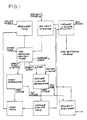
- Fig. 1 illustrates a preferred flow sheet for implementation of the improved process of the invention using a water-immiscible solvent having a higher volatility than water (or which forms an azeotrope having a higher volatility than water).
- Crude sorbic is separated from the polyester depolymerization reaction slurry and mixed with a solvent in a reslurry tank.
- the slurry which comprises crystalline sorbic acid and a mother liquor comprising the solvent and containing a substantial fraction of the impurities removed from the crude acid, is then delivered to a tar removal centrifuge. Mother liquor discharged from the centrifuge is directed to a mother liquor separator for separation of any residual aqueous phase.
- the centrifuge cake Prior to discharge of solids from the centrifuge, the centrifuge cake is washed, first with solvent and then with water.
- the secondary spent wash liquor obtained from the solvent wash is directed to a wash separator, while the spent water wash can be directed to either separator.
- the aqueous layer from the mother liquor separator is passed over to the wash separator and the organic phase delivered to a mother liquor hold tank.
- the organic layer from the wash liquor separator is recycled via a wash tank to the reslurry tank, while the aqueous phase is transferred to a stripper for recovery of residual solvent.
- Mother liquor from the mother liquor hold tank is divided.
- the major fraction is transferred to the wash tank and combined with the secondary spent wash liquor for recycle to the reslurry tank, while the remaining fraction of mother liquor is sent to a distillation pot. Distillation of mother liquor leaves a residue which can be purged from the process. Solvent stripped from the aqueous phase in the solvent recovery stripper and that separated from the impurities in the mother liquor still are returned to fresh solvent storage for use in the solvent wash of the centrifugation cake. Solvent is added to the storage tank to make up for losses.
- the solvent is preferably mixed with the crude sorbic acid at a temperature which is generally not critical but is preferably governed by solvency and volatility characteristics of the particular solvent used.
- the temperature should be maintained below that at which significant vapor losses are incurred and within a range where solubility of tars is relatively high while solubility of sorbic acid is not excessive.
- the slurry temperature is preferably not greater than 30°C, more preferably not greater than 25°C.
- a somewhat higher temperature is preferred in order to maximize solubility of tarry impurities.
- crude sorbic acid precipitate and solvent are mixed in such proportions as to provide a slurry having a solids content up to about 50%, preferably between about 20% by weight and about 40% by weight. Higher or lower concentrations may be used, with the optimum being a function of the absolute and relative solubilities of the impurities and sorbic acid.
- the relative amount of solvent should be sufficient to dissolve a high proportion of the impurities but not so great as to readily dissolve more than a minor portion of the sorbic acid crystals. Under steady-state conditions, where a significant portion of mother liquor is recycled, the sorbic acid content of the slurry medium tends to approach saturation, thereby inhibiting dissolution of any significant portion of the sorbic acid.
- the crystalline sorbic acid may be separated from the slurry by filtration or any other solid/liquid separation technique, this step is preferably carried out by centrifugation.
- a peeler-type centrifuge is particularly advantageous for this purpose but other centrifuges, including variable speed basket centrifuges, continuous screen bowl, pusher, and solid bowl machines, can also be used.
- a peeler-type centrifuge is rotated at an angular velocity sufficient to provide a radial acceleration of at least about 100 times the acceleration of gravity at the periphery of the basket or bowl.
- the acceleration should be low enough to ensure that a uniform cake is formed over the basket surface.
- the cake After removal of the mother liquor containing the impurities, the cake is washed, first with fresh solvent and then with water. Conveniently, the cake may be sprayed with the wash liquids. In both cases the wash liquid should be delivered at such rate as to assure an effective displacement wash.
- the water wash is important in order to displace as much residual solvent as possible from the cake. Volumes of solvent and water wash may vary substantially with the type of centrifuge employed and the flow characteristics of the liquids through the cake. However, for a given system, the optimum volumes may be readily arrived at by those skilled in the art.
- the mother liquor from the centrifuge is divided at the mother liquor hold tank, with the larger fraction being recycled and the smaller fraction diverted to provide a purge of impurities from the system.
- the solvent used is more volatile than water, or forms an azeotrope more volatile than water
- fresh solvent is readily recovered, and an aqueous purge stream provided, by distilling the mother liquor in the presence of water. Fresh solvent is distilled over and a bottom fraction is provided comprising water and the impurities.
- fresh solvent may be recovered from the mother liquor by distillation.
- an aqueous bottom fraction can be produced even from a high boiling mother liquor by use of steam distillation, energy consumption may be very high if volatility of the solvent is significantly lower than that of water.
- the solvent is less volatile than water, it may not be feasible to recover residual solvent from the aqueous effluent, though at least partial recovery may be feasible where the solvent and water form a low boiling azeotrope.
- a water-immiscible solvent is preferably used when wet crude sorbic is processed according to the flowsheet of Fig. 1, a water-miscible solvent can be used advantageously in a comparable processing scheme if the crude sorbic is first dried or substantially dewatered.
- solubility losses of sorbic acid in a water-miscible solvent may be minimized by applying the solvent directly to the centrifuge or filter cake obtained in the separation of the precipitate from the polyester depolymerization reaction mixture.
- treatment of the crude sorbic with a water-miscible solvent is preferably carried out in accordance with the flow sheet illustrated in Fig. 2.
- the sorbic acid precipitate is first separated from the aqueous phase of the depolymerization reaction mixture, for example, by filtration, the precipitate reslurried in fresh water, and the crude sorbic acid separated from the fresh water slurry by centrifugation. The centrifuge cake is then washed with the water-miscible solvent. Slurry concentrations and other conditions for the process of Fig. 2 are generally comparable to those for the process of Fig. 1.
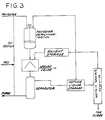
- Fig. 3 Illustrated in Fig. 3 is a further alternative embodiment of the invention which is implemented using a water-immiscible solvent.
- the crude sorbic acid Prior to separation of the aqueous phase from the depolymerization reaction mixture, the crude sorbic acid is contacted with solvent by mixing the solvent with the reaction mixture in the depolymerization reactor. Sorbic acid is separated from the resulting slurry by centrifugation, or other liquid/solid separation means, the separated crystals washed with fresh solvent and water, and the two-phase filtrate directed to a separator from which part of the aqueous phase is recycled to the reactor and the organic liquor directed to a mother liquor hold tank.
- a major fraction of the mother liquor is recycled to the depolymerization reactor while the remainder is forwarded to a mother liquor still for recovery of solvent and purging of tarry impurities.
- Solvent recovered by distillation of the mother liquor is recycled to a solvent storage tank for use in washing the centrifuge cake.
- the amount of organic solvent and/or mother liquor used is sufficient to produce a sorbic acid slurry having a solids content of 20% to 40% by weight.
- the partially purified sorbic is preferably recrystallized from water and/or an organic solvent.
- the solvent treated sorbic acid precipitate is dissolved in the recrystallization solvent, it is preferably treated with carbon for adsorption of residual impurities. Prior removal of most of the impurities by solvent treatment greatly reduces the impurity load on subsequent purification procedures.
- the sorbic acid When the sorbic acid is recrystallized from water, it may be desirable to conduct a further recrystallization, for example, from aqueous methanol.
- the solvent-treated sorbic acid can be contacted with a basic alkali or alkaline earth metal compound in an aqueous medium to produce an aqueous solution of an alkali of alkaline earth metal sorbate.
- This solution may then be treated with carbon, after which the sorbate salt is recovered by conventional techniques.
- the solvent treated sorbic acid is slurried in water, and a basic aqueous solution of an alkaline earth or alkali metal compound, typically a hydroxide, is added to the slurry.
- the strength of the slurry and the basic solution are preferably controlled to provide sorbate salt solution strength of between about 30% and about 50% by weight after addition of base is complete.
- the amount of base added is preferably in substantial stoichiometric equivalence to the sorbic acid.
- the rate of neutralization should be controlled and/or the salt sorbate reaction mixture cooled to maintain its temperature below about 60°C, preferably below about 50°C, to prevent thermal degradation.
- the sorbate salt solution may be carbon-treated for further removal of impurities.
- various forms of activated carbon and contacting techniques can be utilized for carbon treatment, with the most appropriate system for a particular application being determinable by routine laboratory or plant experimentation.
- the sorbate salt may be recovered from the aqueous solution by conventional crystallization techniques.
- the following examples illustrate the invention.
- the legend "pbw” indicates “parts by weight”.
- the crude sorbic acid was produced by depolymerizing a ketene/crotonaldehyde polyester using 34-37% hydrochloric acid at 60-90°C.
- the partially purified sorbic acid product had an assay of at least 99.3% sorbic acid, except where otherwise indicated.
- a portion (200 pbw) of the dry crude sorbic acid was wetted with water (40 pbw) and slurried in methyl isobutyl ketone (300 pbw). Sorbic acid crystals were separated from the resultant mother liquor by centrifugation and the centrifuge cake spray washed with water-saturated methyl isobutyl ketone (75 pbw) followed by water (75 pbw). This procedure was carried out four times with recycling of mother liquor in order to reach a steady state condition at which the mother liquor composition stabilized.
- a portion of the mother liquor (173 pbw) was concentrated to 72.6 pbw by distilling off methyl isobutyl ketone at 90 mm to 100 mm Hg absolute pressure.
- the residue was cooled to 30°C and centrifuged.
- the centrifuge cake was washed with fresh methyl isobutyl ketone (15 pbw) and the resulting residue wash liquor obtained maintained separate from the concentrated mother liquor (i.e., the filtrate from the centrifugation). Both concentrated mother liquor and residue wash liquor were evaporated to dryness.
- the dry centrifuge cake was found to weigh 9.9 pbw and contain 99% by weight sorbic acid; the residue from evaporating the concentrated mother liquor to dryness was found to weigh 22.8 pbw and to contain 15.5% sorbic acid; and the residue obtained by evaporating the spent wash liquor to dryness was found to weigh 7.4 pbw and to contain 33.2% sorbic acid.
- a total of 15.8 pbw sorbic acid was accounted for, which represented 98.3% of the sorbic acid content of the process mother liquor as determined by loss on drying.
- Distillation was conducted in a jacketed still pot provided with a mechanical stirrer, addition funnel, thermometer, ice water trap, and a temperature controlled hot oil supply to the jacket.
- a vapor line from the still pot was connected to a condenser and the condenser vented through an icetrap to a vacuum source.
- the organic phase from the first batch weighed 176.3 pbw and from the second batch 178.2 pbw, while the aqueous layers weighed 31.8 pbw and 34 pbw, respectively.
- a total of 0.8 pbw of organic phase and 2.4 pbw or aqueous phase were recovered from the ice trap.
- Dry crude sorbic acid (200 pbw dry basis plus 40 pbw added water) was slurried in fresh ethyl acetate (300 pbw) and the sorbic acid crystals separated from the slurry by centrifugation. The centrifuge cake was washed first with water-saturated ethyl acetate (80 pbw) and then with water (80 pbw).
- Mother liquor (300 pbw) obtained as the filtrate in the first batch centrifugation was used for slurrying an additional portion of sorbic acid (200 pbw dry basis plus 40 pbw water) and the resulting slurry centrifuged and the cake washed in the same manner as the first batch.
- Crude sorbic acid was separated from the acid catalyzed depolymerization mixture by vacuum filtration.
- the filter cake was washed with methyl ethyl ketone, thus cleaning off tarry impurities and yielding a sandy-colored washed filter cake.
- Crude sorbic acid was subjected to two-stage countercurrent solvent treatment using 95% ethanol as the solvent.
- a portion of wet crude sorbic acid (200 g) was placed on a Buchner funnel. Water was added to reslurry the sorbic and distribute the cake over the filter paper. A portion of 95% ethanol/water solution (100 ml) was applied over the top of the cake in the form of a fine spray over a period of 30 seconds, while vacuum was applied to a receiving flask placed under the funnel. The cake on the funnel was thereafter washed for 30 seconds by spraying thereover a portion of fresh solvent (100 ml).
- a further portion of wet crude sorbic acid (200 g) was slurried with water on a Buchner funnel as described above to provide a uniform cake, and then washed with a portion of the mother liquor that had been obtained in the two prior cake washing operations. Washing with mother liquor was carried out by spraying it over the cake. However, because of a somewhat retarded drain rate, the spray was interrupted for five seconds at ten-second intervals to provide an effective displacement wash.
- the cake was sprayed with recycled enthanol/tar (mother liquor) solution (100 ml) obtained from the prior cake washing operation. Washing was carried out on the following cycle: ten seconds spray; ten seconds rest; ten seconds spray; ten seconds rest; ten seconds spray; 30 seconds drainage. During the entire time, the receiving flask was maintained under vacuum to draw liquid through the cake.
- the cake was transferred to a third flask where it was sprayed with fresh 95% ethanol/water solution (100 ml) according to the same interrupted spray schedule used in the mother liquor cake wash.
- Mother liquor filtrates from the first stage wash were combined, analyzed, and found to contain approximately 24.4% by weight solids.
- a sample of the combined secondary spent wash liquor emanating from the second stage wash (third funnel) was analyzed and determined to contain 3.16% by weight solids.
- a sample of dry crude sorbic acid (dry basis weight 365 g, 93% sorbic acid) was divided into three portions. The first portion (100 pbw) was wetted with water (200 pbw) then slurried in 1,1,2-trichloroethane (200 pbw). Sorbic acid crystals were separated from the slurry mother liquor by filtration and the filter cake spray washed with a further aliquot of 1,1,2-trichloroethane (50 pbw).
- the mother liquor and spent spray wash liquor obtained from solvent treatment of the first portion of wet crude were used to slurry a second portion of crude (dry basis weight 115 pbw). After separation of sorbic acid crystals from the second slurry by filtration, a second filter cake was obtained which was spray washed with another aliquot of 1,1,2-trichloroethane (50 pbw).
- the mother liquor filtrate and spent spray wash liquor obtained from washing the second portion of crude sorbic acid were combined and used to slurry a third portion of sorbic acid (dry basis weight 150 pbw). Crystals of the third slurry were separated by filtration yielding a third filter cake which was spray washed with still another aliquot of fresh 1,1,2-trichloroethane (50 pbw).
- the filter cakes obtained from washing each of the three portions of wet crude sorbic acid were weighed.
- the first filter cake weighed 82 pbw, the second 102 pbw, and the third 140 pbw, a total of 324 pbw.
- the total recovery of sorbic acid in this example was 95%.
- the first portion (100 pbw dry basis) was wetted with water (50 pbw), then slurried in methyl isobutyl ketone (200 pbw), after which the crystalline sorbic acid was separated from the mother liquor by filtration.
- the filter cake was then washed by spraying it with additional methyl isobutyl ketone (50 pbw). In this instance, the spent spray wash liquor was maintained separate from the mother liquor which had constituted the slurry medium.
- the second portion of dry crude sorbic acid (100 pbw) was slurried in the mother liquor filtrate obtained in the separation of sorbic acid crystals from the first slurry.
- the sorbic acid crystals of the second slurry were then recovered by filtration and spray washed with an additional aliquot of methyl isobutyl ketone (50 pbw), which was again kept separate from the second mother liquor.
- the third portion of wet crude sorbic acid (dry basis weight 100 pbw) was slurried in the mother liquor obtained in the separation of sorbic acid from the second slurry. This mother liquor contained some solids. After separation of crystalline sorbic acid from the third slurry by filtration, the filter cake was spray washed with methyl isobutyl ketone (50 pbw).
- Each filter cake was weighed. That obtained from solvent treatment of the first portion of crude sorbic acid was found to weigh 65.4 pbw, that obtained from treating the second portion of sorbic acid was found to weigh 86.0 pbw, and that obtained from treating the third portion was found to weigh 94.3 pbw, for a total weight of recovered sorbic acid of 245.0 pbw. This represented a recovery of 88%.
- a methyl n-propyl ketone mother liquor (27.7% solids) was obtained by slurrying samples of crude sorbic acid with methyl n-propyl ketone and separating the mother liquor from the sorbic acid crystals by filtration.
- a spent wash liquor was obtained by spray washing the filter cake with fresh methyl n-propyl ketone.
- the sorbic acid subjected to the solvent treatment operations had been produced by acid catalyzed depolymerization of a polyester produced by condensation of ketene and crotonaldehyde.
- a further 200 pbw portion of the dry crude sorbic acid was slurried in a slurry medium comprised of the mother liquor (235 pbw) obtained from the preceding batch, water, and recycle spent wash liquor. Separation by filtration, washing with fresh methyl n-propyl ketone, and washing with fresh water were repeated in the above sequence.
- Dry crude sorbic acid (100 pbw, 93% sorbic acid) was wetted with water (20 pbw) and then slurried in 1,1,1-trichloroethane (300 pbw). The slurry was stirred for ten minutes and separated by centrifugation. The centrifuge cake was washed with fresh 1,1,1-trichloroethane (100 pbw) and the spent wash liquor maintained separate from the slurry medium mother liquor. Weight of the dry centrifuge cake was 84.3 pbw. After separation of an aqueous layer, the weight of the slurry medium mother liquor was 275.5 pbw and the weight of the spent wash liquor was 53.0 pbw.
- the 275.5 pbw of mother liquor was mixed with a portion of the spent wash liquor sufficient to provide a recycle 1,1,1-trichloroethane slurry medium having a total weight of 300 pbw.
- a further portion of crude sorbic acid (100 pbw) was mixed with water (20 pbw) and the recycle slurry medium to provide a second slurry. This second slurry was again separated by centrifugation and the cake washed with fresh 1,1,1-trichloroethane (100 pbw).
- Mother liquor (271.0 pbw) and spent wash liquor (61.5 pbw) from the second batch were collected seaprately. The dry weight of the cake was 90.1 pbw.
- Mother liquor from the second batch (271.0 pbw) was augmented with sufficient spent wash liquor from the second washing operation to provide a total of 300 pbw of recycle slurry medium for a third batch.
- a fourth solvent treatment operation was carried out on a fourth 100 pbw portion of crude sorbic acid.
- a portion of the combined washed filter cake of batches four, five, and six (239 pbw) was mixed with water (296 pbw) and 45% by weight potassium hydroxide solution (approximately 265 pbw).
- the resulting solution had a pH of approximately 10.3.
- a 200 pbw portion of this solution was treated with activated carbon (1.6. pbw) and filtered.
- a 100 pbw portion of the filtered solution was treated with a further portion of 0.8 pbw carbon and filtered.
- the doubly treated solution was tested for transparency by measuring its transmittance of 400 nanometer wavelength light, using a Bausch & Lomb Spectronic 20 spectrophotometer. The measured transmittance was 89% as compared to a deionized water standard.
- Dry crude sorbic acid (200 pbw) was slurried with water (40 pbw) and ethyl acetate (300 pbw). Sorbic acid crystals were separated from the slurry by centrifugation, and the cake was washed with a 97:3 w/w ethyl acetate/water mixture (80 pbw) and then with water (80 pbw).
- the mother liquor obtained by separating the crude sorbic acid from the slurry was combined with a portion of spent ethyl acetate cake wash liquor and recycled for use in slurrying an additional 200 pbw portion of dry crude sorbic acid.
- This slurry was also separated by centrifugation and the cake washed in the above manner.
- the process streams were brought into a steady state balance, with the slurry medium for each batch comprising a combination of recycled mother liquor (225 pbw) and spent was liquor (75 pbw) from the previous batch. Mother liquor in excess of that used in the recycle slurry medium was effectively purged from the system after each batch by allowing the excess to accumulate in a large mother liquor reservoir.
- the cake from the third batch was dissolved in a potassium hydroxide solution in the manner described in Example 13, and the resulting solution of potassium sorbate subjected to two-stage carbon treatment in the manner described in Example 13.
- the filtrate obtained after the first carbon treatment was determined to have a transmittance of 80% for 400 nanometer light, and the filtrate from the second carbon treatment was observed to have a transmittance of 86%.
- a second batch of plant crude sorbic acid (200 pbw) was wetted with water (40 pbw) and slurried in mother liquor (300 pbw) obtained from the first batch. Again, the cake was washed with methyl isobutyl ketone (80 pbw) and water (80 pbw).
- An additional six batches (batches 3 through 8) of sorbic acid (200 pbw dry basis each batch) were subjected to solvent treatment by first slurrying the crude sorbic acid in a slurry medium comprising water (40 pbw), mother liquor obtained from the previous batch (225 pbw) and spent methyl isobutyl ketone wash liquor (75 pbw) from the previous batch. After each batch, mother liquor in excess of 225 pbw was purged from the system. The filter cake in each batch was washed with methyl isobutyl ketone (80 pbw; water saturated) and water (80 pbw
- Centrifuge cake from the first three batches was combined and determined to have a weight of 454.5 pbw, a yield of 81.5%.
- Cake from the fourth batch was determined to have a weight of 160.9 pbw, a yield of 86.5%.
- Filter cake from batches 5 through 8 was combined and determined to have a weight of 700 pbw, a sorbic acid recovery of 94%.
- the mother liquor used had been obtained from a multiple recycle slurry and cake wash centrifugation operation.
- the mother liquor feed had been obtained from a single slurry and centrifugation batch.
- the pot temperature was measured periodically and found to range typically from about 45°C, once a substantial pool had been formed by delivery of feed to the pot, to 75°C to 80°C near the completion of the run.
- the material balance was determined for each run.
- the results of the runs of this example are set forth in Table XI.
Landscapes
- Chemical & Material Sciences (AREA)
- Organic Chemistry (AREA)
- Engineering & Computer Science (AREA)
- Oil, Petroleum & Natural Gas (AREA)
- Organic Low-Molecular-Weight Compounds And Preparation Thereof (AREA)
Applications Claiming Priority (2)
| Application Number | Priority Date | Filing Date | Title |
|---|---|---|---|
| US58099484A | 1984-02-16 | 1984-02-16 | |
| US580994 | 1984-02-16 |
Publications (3)
| Publication Number | Publication Date |
|---|---|
| EP0153292A2 EP0153292A2 (en) | 1985-08-28 |
| EP0153292A3 EP0153292A3 (en) | 1986-08-06 |
| EP0153292B1 true EP0153292B1 (en) | 1989-03-22 |
Family
ID=24323464
Family Applications (1)
| Application Number | Title | Priority Date | Filing Date |
|---|---|---|---|
| EP19850870027 Expired EP0153292B1 (en) | 1984-02-16 | 1985-02-15 | Purification of crude sorbic acid |
Country Status (5)
| Country | Link |
|---|---|
| EP (1) | EP0153292B1 (da) |
| JP (1) | JPS60188346A (da) |
| CA (1) | CA1276176C (da) |
| DE (1) | DE3568976D1 (da) |
| DK (1) | DK71085A (da) |
Families Citing this family (4)
| Publication number | Priority date | Publication date | Assignee | Title |
|---|---|---|---|---|
| JPH11199541A (ja) * | 1997-11-14 | 1999-07-27 | Daicel Chem Ind Ltd | ソルビン酸の回収装置および回収方法 |
| JP2000095728A (ja) * | 1998-09-24 | 2000-04-04 | Daicel Chem Ind Ltd | ソルビン酸の製造法 |
| JP2000103759A (ja) * | 1998-09-29 | 2000-04-11 | Daicel Chem Ind Ltd | ソルビン酸又はその塩の製造法 |
| FR2826362B1 (fr) * | 2001-06-22 | 2005-02-11 | Solvay | Procede pour le traitement des sous-produits d'une reaction de production de composes organiques |
Family Cites Families (1)
| Publication number | Priority date | Publication date | Assignee | Title |
|---|---|---|---|---|
| DE1618357B2 (de) * | 1967-02-01 | 1976-05-06 | Hoechst Ag, 6000 Frankfurt | Verfahren zur herstellung reiner sorbinsaeure |
-
1984
- 1984-12-07 CA CA000469610A patent/CA1276176C/en not_active Expired - Lifetime
-
1985
- 1985-02-15 EP EP19850870027 patent/EP0153292B1/en not_active Expired
- 1985-02-15 DE DE8585870027T patent/DE3568976D1/de not_active Expired
- 1985-02-15 DK DK71085A patent/DK71085A/da not_active Application Discontinuation
- 1985-02-15 JP JP2816985A patent/JPS60188346A/ja active Pending
Also Published As
| Publication number | Publication date |
|---|---|
| EP0153292A2 (en) | 1985-08-28 |
| DK71085A (da) | 1985-08-17 |
| DK71085D0 (da) | 1985-02-15 |
| JPS60188346A (ja) | 1985-09-25 |
| EP0153292A3 (en) | 1986-08-06 |
| DE3568976D1 (en) | 1989-04-27 |
| CA1276176C (en) | 1990-11-13 |
Similar Documents
| Publication | Publication Date | Title |
|---|---|---|
| RU2114098C1 (ru) | Способ получения сырой ароматической поликарбоновой кислоты | |
| US4954621A (en) | Process for producing sucrose fatty acid polyester | |
| SK697A3 (en) | Method for preparing 4-acetoxy-2'alpha'-benzoyloxy-5'beta',20- -epoxy-1,7'beta',10'beta'-trihydroxy-9-oxo-tax-11-en-13'alpha'- -yl(2r,3s)-3-tert-butoxycarbonylamino-2-hydroxy-3- -phenylpropionate trihydrate | |
| US5557009A (en) | Process for preparing an aqueous slurry of terephthalic acid | |
| JPH0656773A (ja) | N−フェニルマレイミドの製造方法 | |
| KR950003116B1 (ko) | 비스페놀 a의 재결정화 방법 | |
| EP0153292A2 (en) | Purification of crude sorbic acid | |
| US2952679A (en) | Cyanuricacro preparation | |
| FR2467185A1 (fr) | Procedes de separation et de purification du resorcinol et de l'hydroquinone | |
| US4935555A (en) | Purification of neopentyl glycol | |
| US2948716A (en) | Purification of sugar esters | |
| EP1104396B1 (en) | Method for recovering methyl acetate and residual acetic acid in the production of pure terephthalic acid | |
| US4294998A (en) | Preparation of high purity 1,4-butanediol | |
| CN1056614C (zh) | N-乙酰基氨基硫代磷酸o,s-二甲酯的提纯方法 | |
| US4775448A (en) | Isolation process | |
| US5874614A (en) | Sodium (S)-2-(6-methoxy-2-naphthyl)propionate monohydrate | |
| JPS6191144A (ja) | ネオペンチルグリコ−ルの製造法 | |
| EP0093511A1 (en) | Method for producing and optically active 2,2-dimethylcyclopropanecarboxylic acid | |
| EP1313688B1 (de) | Tmp/dampfdruckfiltration | |
| US3696143A (en) | Detergent active materials | |
| JP3157724B2 (ja) | インドールの精製方法 | |
| US3179704A (en) | Process for the recovery of pentaerythritol from crude mother liquors | |
| US3933929A (en) | Process for the purification of p-nitrophenol | |
| US20160251296A1 (en) | Process to prepare levulinic acid | |
| CH654558A5 (fr) | Procede pour la production d'oxyfluorure de niobium. |
Legal Events
| Date | Code | Title | Description |
|---|---|---|---|
| PUAI | Public reference made under article 153(3) epc to a published international application that has entered the european phase |
Free format text: ORIGINAL CODE: 0009012 |
|
| AK | Designated contracting states |
Designated state(s): BE DE GB |
|
| PUAL | Search report despatched |
Free format text: ORIGINAL CODE: 0009013 |
|
| AK | Designated contracting states |
Kind code of ref document: A3 Designated state(s): BE DE GB |
|
| 17P | Request for examination filed |
Effective date: 19870128 |
|
| 17Q | First examination report despatched |
Effective date: 19870901 |
|
| GRAA | (expected) grant |
Free format text: ORIGINAL CODE: 0009210 |
|
| AK | Designated contracting states |
Kind code of ref document: B1 Designated state(s): BE DE GB |
|
| REF | Corresponds to: |
Ref document number: 3568976 Country of ref document: DE Date of ref document: 19890427 |
|
| PLBE | No opposition filed within time limit |
Free format text: ORIGINAL CODE: 0009261 |
|
| STAA | Information on the status of an ep patent application or granted ep patent |
Free format text: STATUS: NO OPPOSITION FILED WITHIN TIME LIMIT |
|
| 26N | No opposition filed | ||
| REG | Reference to a national code |
Ref country code: GB Ref legal event code: 732 |
|
| REG | Reference to a national code |
Ref country code: GB Ref legal event code: 732E |
|
| PGFP | Annual fee paid to national office [announced via postgrant information from national office to epo] |
Ref country code: BE Payment date: 19990312 Year of fee payment: 15 |
|
| PGFP | Annual fee paid to national office [announced via postgrant information from national office to epo] |
Ref country code: GB Payment date: 19991224 Year of fee payment: 16 |
|
| PGFP | Annual fee paid to national office [announced via postgrant information from national office to epo] |
Ref country code: DE Payment date: 19991229 Year of fee payment: 16 |
|
| PG25 | Lapsed in a contracting state [announced via postgrant information from national office to epo] |
Ref country code: BE Free format text: LAPSE BECAUSE OF NON-PAYMENT OF DUE FEES Effective date: 20000228 |
|
| BERE | Be: lapsed |
Owner name: EASTMAN CHEMICAL CY Effective date: 20000228 |
|
| PG25 | Lapsed in a contracting state [announced via postgrant information from national office to epo] |
Ref country code: GB Free format text: LAPSE BECAUSE OF NON-PAYMENT OF DUE FEES Effective date: 20010215 |
|
| GBPC | Gb: european patent ceased through non-payment of renewal fee |
Effective date: 20010215 |
|
| PG25 | Lapsed in a contracting state [announced via postgrant information from national office to epo] |
Ref country code: DE Free format text: LAPSE BECAUSE OF NON-PAYMENT OF DUE FEES Effective date: 20011201 |