EP0118928B1 - Verfahren zur enzymatischen Umwandlung eines wasserunlöslichen oder wesentlich wasserunlöslichen organischen Substrats - Google Patents
Verfahren zur enzymatischen Umwandlung eines wasserunlöslichen oder wesentlich wasserunlöslichen organischen Substrats Download PDFInfo
- Publication number
- EP0118928B1 EP0118928B1 EP84200011A EP84200011A EP0118928B1 EP 0118928 B1 EP0118928 B1 EP 0118928B1 EP 84200011 A EP84200011 A EP 84200011A EP 84200011 A EP84200011 A EP 84200011A EP 0118928 B1 EP0118928 B1 EP 0118928B1
- Authority
- EP
- European Patent Office
- Prior art keywords
- water
- organic solvent
- insoluble
- substrate
- cofactor
- Prior art date
- Legal status (The legal status is an assumption and is not a legal conclusion. Google has not performed a legal analysis and makes no representation as to the accuracy of the status listed.)
- Expired
Links
- 238000006243 chemical reaction Methods 0.000 title claims abstract description 30
- 239000000758 substrate Substances 0.000 title claims abstract description 30
- 238000000034 method Methods 0.000 title claims abstract description 25
- 230000002255 enzymatic effect Effects 0.000 title description 17
- 102000004190 Enzymes Human genes 0.000 claims abstract description 29
- 108090000790 Enzymes Proteins 0.000 claims abstract description 29
- 239000003960 organic solvent Substances 0.000 claims abstract description 28
- 239000000693 micelle Substances 0.000 claims abstract description 25
- 239000004094 surface-active agent Substances 0.000 claims abstract description 18
- 238000011065 in-situ storage Methods 0.000 claims abstract description 6
- 239000004064 cosurfactant Substances 0.000 claims description 23
- 239000000203 mixture Substances 0.000 claims description 15
- 239000002904 solvent Substances 0.000 claims description 13
- 125000004432 carbon atom Chemical group C* 0.000 claims description 8
- 239000012074 organic phase Substances 0.000 claims description 6
- 239000012071 phase Substances 0.000 claims description 6
- 239000002563 ionic surfactant Substances 0.000 claims description 4
- UHOVQNZJYSORNB-UHFFFAOYSA-N monobenzene Natural products C1=CC=CC=C1 UHOVQNZJYSORNB-UHFFFAOYSA-N 0.000 claims description 4
- 238000005192 partition Methods 0.000 claims description 4
- 125000000217 alkyl group Chemical group 0.000 claims description 3
- 150000008282 halocarbons Chemical class 0.000 claims description 3
- 150000001338 aliphatic hydrocarbons Chemical class 0.000 claims description 2
- 125000001309 chloro group Chemical group Cl* 0.000 claims description 2
- 150000001983 dialkylethers Chemical class 0.000 claims description 2
- 125000001997 phenyl group Chemical group [H]C1=C([H])C([H])=C(*)C([H])=C1[H] 0.000 claims description 2
- 150000001335 aliphatic alkanes Chemical class 0.000 claims 1
- ZSIAUFGUXNUGDI-UHFFFAOYSA-N hexan-1-ol Chemical compound CCCCCCO ZSIAUFGUXNUGDI-UHFFFAOYSA-N 0.000 description 28
- RJKFOVLPORLFTN-LEKSSAKUSA-N Progesterone Chemical compound C1CC2=CC(=O)CC[C@]2(C)[C@@H]2[C@@H]1[C@@H]1CC[C@H](C(=O)C)[C@@]1(C)CC2 RJKFOVLPORLFTN-LEKSSAKUSA-N 0.000 description 26
- 238000006722 reduction reaction Methods 0.000 description 18
- 230000009467 reduction Effects 0.000 description 13
- AMQJEAYHLZJPGS-UHFFFAOYSA-N N-Pentanol Chemical compound CCCCCO AMQJEAYHLZJPGS-UHFFFAOYSA-N 0.000 description 12
- 229960003387 progesterone Drugs 0.000 description 12
- 239000000186 progesterone Substances 0.000 description 12
- LZZYPRNAOMGNLH-UHFFFAOYSA-M Cetrimonium bromide Chemical compound [Br-].CCCCCCCCCCCCCCCC[N+](C)(C)C LZZYPRNAOMGNLH-UHFFFAOYSA-M 0.000 description 11
- 238000007254 oxidation reaction Methods 0.000 description 11
- 239000000243 solution Substances 0.000 description 9
- XKRFYHLGVUSROY-UHFFFAOYSA-N Argon Chemical compound [Ar] XKRFYHLGVUSROY-UHFFFAOYSA-N 0.000 description 8
- LUAZZOXZPVVGSO-UHFFFAOYSA-N Benzyl viologen Chemical compound C=1C=C(C=2C=C[N+](CC=3C=CC=CC=3)=CC=2)C=C[N+]=1CC1=CC=CC=C1 LUAZZOXZPVVGSO-UHFFFAOYSA-N 0.000 description 8
- LRHPLDYGYMQRHN-UHFFFAOYSA-N N-Butanol Chemical compound CCCCO LRHPLDYGYMQRHN-UHFFFAOYSA-N 0.000 description 8
- MUMGGOZAMZWBJJ-DYKIIFRCSA-N Testostosterone Chemical compound O=C1CC[C@]2(C)[C@H]3CC[C@](C)([C@H](CC4)O)[C@@H]4[C@@H]3CCC2=C1 MUMGGOZAMZWBJJ-DYKIIFRCSA-N 0.000 description 8
- 230000008929 regeneration Effects 0.000 description 8
- 238000011069 regeneration method Methods 0.000 description 8
- BAWFJGJZGIEFAR-NNYOXOHSSA-O NAD(+) Chemical compound NC(=O)C1=CC=C[N+]([C@H]2[C@@H]([C@H](O)[C@@H](COP(O)(=O)OP(O)(=O)OC[C@@H]3[C@H]([C@@H](O)[C@@H](O3)N3C4=NC=NC(N)=C4N=C3)O)O2)O)=C1 BAWFJGJZGIEFAR-NNYOXOHSSA-O 0.000 description 7
- 229930027945 nicotinamide-adenine dinucleotide Natural products 0.000 description 7
- TVMXDCGIABBOFY-UHFFFAOYSA-N octane Chemical compound CCCCCCCC TVMXDCGIABBOFY-UHFFFAOYSA-N 0.000 description 7
- WEVYAHXRMPXWCK-UHFFFAOYSA-N Acetonitrile Chemical compound CC#N WEVYAHXRMPXWCK-UHFFFAOYSA-N 0.000 description 6
- YXFVVABEGXRONW-UHFFFAOYSA-N Toluene Chemical compound CC1=CC=CC=C1 YXFVVABEGXRONW-UHFFFAOYSA-N 0.000 description 6
- 239000004615 ingredient Substances 0.000 description 6
- 230000016507 interphase Effects 0.000 description 6
- 230000003647 oxidation Effects 0.000 description 6
- 239000000126 substance Substances 0.000 description 6
- JKMHFZQWWAIEOD-UHFFFAOYSA-N 2-[4-(2-hydroxyethyl)piperazin-1-yl]ethanesulfonic acid Chemical compound OCC[NH+]1CCN(CCS([O-])(=O)=O)CC1 JKMHFZQWWAIEOD-UHFFFAOYSA-N 0.000 description 5
- 101710088194 Dehydrogenase Proteins 0.000 description 5
- 239000007995 HEPES buffer Substances 0.000 description 5
- XJLXINKUBYWONI-DQQFMEOOSA-N [[(2r,3r,4r,5r)-5-(6-aminopurin-9-yl)-3-hydroxy-4-phosphonooxyoxolan-2-yl]methoxy-hydroxyphosphoryl] [(2s,3r,4s,5s)-5-(3-carbamoylpyridin-1-ium-1-yl)-3,4-dihydroxyoxolan-2-yl]methyl phosphate Chemical compound NC(=O)C1=CC=C[N+]([C@@H]2[C@H]([C@@H](O)[C@H](COP([O-])(=O)OP(O)(=O)OC[C@@H]3[C@H]([C@@H](OP(O)(O)=O)[C@@H](O3)N3C4=NC=NC(N)=C4N=C3)O)O2)O)=C1 XJLXINKUBYWONI-DQQFMEOOSA-N 0.000 description 5
- LFQSCWFLJHTTHZ-UHFFFAOYSA-N Ethanol Chemical compound CCO LFQSCWFLJHTTHZ-UHFFFAOYSA-N 0.000 description 4
- -1 alkali metal salts Chemical class 0.000 description 4
- 229910052786 argon Inorganic materials 0.000 description 4
- 230000002051 biphasic effect Effects 0.000 description 4
- KSMVZQYAVGTKIV-UHFFFAOYSA-N decanal Chemical compound CCCCCCCCCC=O KSMVZQYAVGTKIV-UHFFFAOYSA-N 0.000 description 4
- BOPGDPNILDQYTO-NNYOXOHSSA-N nicotinamide-adenine dinucleotide Chemical compound C1=CCC(C(=O)N)=CN1[C@H]1[C@H](O)[C@H](O)[C@@H](COP(O)(=O)OP(O)(=O)OC[C@@H]2[C@H]([C@@H](O)[C@@H](O2)N2C3=NC=NC(N)=C3N=C2)O)O1 BOPGDPNILDQYTO-NNYOXOHSSA-N 0.000 description 4
- 229960003604 testosterone Drugs 0.000 description 4
- XLYOFNOQVPJJNP-UHFFFAOYSA-N water Substances O XLYOFNOQVPJJNP-UHFFFAOYSA-N 0.000 description 4
- KJZHLKZXRSCVKH-UHFFFAOYSA-N 1-methyl-4-(1-methyl-4h-pyridin-4-yl)-4h-pyridine Chemical compound C1=CN(C)C=CC1C1C=CN(C)C=C1 KJZHLKZXRSCVKH-UHFFFAOYSA-N 0.000 description 3
- 108010021809 Alcohol dehydrogenase Proteins 0.000 description 3
- 102000007698 Alcohol dehydrogenase Human genes 0.000 description 3
- YMWUJEATGCHHMB-UHFFFAOYSA-N Dichloromethane Chemical compound ClCCl YMWUJEATGCHHMB-UHFFFAOYSA-N 0.000 description 3
- 102000028526 Dihydrolipoamide Dehydrogenase Human genes 0.000 description 3
- 108010028127 Dihydrolipoamide Dehydrogenase Proteins 0.000 description 3
- UFHFLCQGNIYNRP-UHFFFAOYSA-N Hydrogen Chemical compound [H][H] UFHFLCQGNIYNRP-UHFFFAOYSA-N 0.000 description 3
- 108010020056 Hydrogenase Proteins 0.000 description 3
- HEMHJVSKTPXQMS-UHFFFAOYSA-M Sodium hydroxide Chemical compound [OH-].[Na+] HEMHJVSKTPXQMS-UHFFFAOYSA-M 0.000 description 3
- QVGXLLKOCUKJST-UHFFFAOYSA-N atomic oxygen Chemical compound [O] QVGXLLKOCUKJST-UHFFFAOYSA-N 0.000 description 3
- 238000002474 experimental method Methods 0.000 description 3
- 239000001301 oxygen Substances 0.000 description 3
- 229910052760 oxygen Inorganic materials 0.000 description 3
- FIKAKWIAUPDISJ-UHFFFAOYSA-L paraquat dichloride Chemical compound [Cl-].[Cl-].C1=C[N+](C)=CC=C1C1=CC=[N+](C)C=C1 FIKAKWIAUPDISJ-UHFFFAOYSA-L 0.000 description 3
- 238000001556 precipitation Methods 0.000 description 3
- 239000000047 product Substances 0.000 description 3
- 239000011541 reaction mixture Substances 0.000 description 3
- KBPLFHHGFOOTCA-UHFFFAOYSA-N 1-Octanol Chemical compound CCCCCCCCO KBPLFHHGFOOTCA-UHFFFAOYSA-N 0.000 description 2
- 102100038794 17-beta-hydroxysteroid dehydrogenase type 6 Human genes 0.000 description 2
- 239000004215 Carbon black (E152) Substances 0.000 description 2
- HEDRZPFGACZZDS-UHFFFAOYSA-N Chloroform Chemical compound ClC(Cl)Cl HEDRZPFGACZZDS-UHFFFAOYSA-N 0.000 description 2
- IMNFDUFMRHMDMM-UHFFFAOYSA-N N-Heptane Chemical compound CCCCCCC IMNFDUFMRHMDMM-UHFFFAOYSA-N 0.000 description 2
- ORNBQBCIOKFOEO-YQUGOWONSA-N Pregnenolone Natural products O=C(C)[C@@H]1[C@@]2(C)[C@H]([C@H]3[C@@H]([C@]4(C)C(=CC3)C[C@@H](O)CC4)CC2)CC1 ORNBQBCIOKFOEO-YQUGOWONSA-N 0.000 description 2
- 125000003172 aldehyde group Chemical group 0.000 description 2
- 125000001931 aliphatic group Chemical group 0.000 description 2
- AEMFNILZOJDQLW-QAGGRKNESA-N androst-4-ene-3,17-dione Chemical compound O=C1CC[C@]2(C)[C@H]3CC[C@](C)(C(CC4)=O)[C@@H]4[C@@H]3CCC2=C1 AEMFNILZOJDQLW-QAGGRKNESA-N 0.000 description 2
- 229960005471 androstenedione Drugs 0.000 description 2
- AEMFNILZOJDQLW-UHFFFAOYSA-N androstenedione Natural products O=C1CCC2(C)C3CCC(C)(C(CC4)=O)C4C3CCC2=C1 AEMFNILZOJDQLW-UHFFFAOYSA-N 0.000 description 2
- 239000007853 buffer solution Substances 0.000 description 2
- MVPPADPHJFYWMZ-UHFFFAOYSA-N chlorobenzene Chemical compound ClC1=CC=CC=C1 MVPPADPHJFYWMZ-UHFFFAOYSA-N 0.000 description 2
- QVAZSFSQBKLKMP-UHFFFAOYSA-N dodecylazanium;propanoate Chemical compound CCC([O-])=O.CCCCCCCCCCCC[NH3+] QVAZSFSQBKLKMP-UHFFFAOYSA-N 0.000 description 2
- 238000006911 enzymatic reaction Methods 0.000 description 2
- 238000000605 extraction Methods 0.000 description 2
- 238000001914 filtration Methods 0.000 description 2
- 238000004128 high performance liquid chromatography Methods 0.000 description 2
- 229930195733 hydrocarbon Natural products 0.000 description 2
- 150000002430 hydrocarbons Chemical class 0.000 description 2
- 239000001257 hydrogen Substances 0.000 description 2
- 229910052739 hydrogen Inorganic materials 0.000 description 2
- 238000010952 in-situ formation Methods 0.000 description 2
- 238000002955 isolation Methods 0.000 description 2
- 125000000468 ketone group Chemical group 0.000 description 2
- 150000002576 ketones Chemical group 0.000 description 2
- 210000004185 liver Anatomy 0.000 description 2
- 125000002496 methyl group Chemical group [H]C([H])([H])* 0.000 description 2
- 150000002894 organic compounds Chemical class 0.000 description 2
- XOFYZVNMUHMLCC-ZPOLXVRWSA-N prednisone Chemical compound O=C1C=C[C@]2(C)[C@H]3C(=O)C[C@](C)([C@@](CC4)(O)C(=O)CO)[C@@H]4[C@@H]3CCC2=C1 XOFYZVNMUHMLCC-ZPOLXVRWSA-N 0.000 description 2
- 229960004618 prednisone Drugs 0.000 description 2
- 229960000249 pregnenolone Drugs 0.000 description 2
- OZZAYJQNMKMUSD-DMISRAGPSA-N pregnenolone succinate Chemical compound C1C=C2C[C@@H](OC(=O)CCC(O)=O)CC[C@]2(C)[C@@H]2[C@@H]1[C@@H]1CC[C@H](C(=O)C)[C@@]1(C)CC2 OZZAYJQNMKMUSD-DMISRAGPSA-N 0.000 description 2
- 150000003242 quaternary ammonium salts Chemical class 0.000 description 2
- 230000001172 regenerating effect Effects 0.000 description 2
- APSBXTVYXVQYAB-UHFFFAOYSA-M sodium docusate Chemical compound [Na+].CCCCC(CC)COC(=O)CC(S([O-])(=O)=O)C(=O)OCC(CC)CCCC APSBXTVYXVQYAB-UHFFFAOYSA-M 0.000 description 2
- 150000003431 steroids Chemical class 0.000 description 2
- 238000003756 stirring Methods 0.000 description 2
- VZGDMQKNWNREIO-UHFFFAOYSA-N tetrachloromethane Chemical compound ClC(Cl)(Cl)Cl VZGDMQKNWNREIO-UHFFFAOYSA-N 0.000 description 2
- DNIAPMSPPWPWGF-GSVOUGTGSA-N (R)-(-)-Propylene glycol Chemical compound C[C@@H](O)CO DNIAPMSPPWPWGF-GSVOUGTGSA-N 0.000 description 1
- UOCLXMDMGBRAIB-UHFFFAOYSA-N 1,1,1-trichloroethane Chemical compound CC(Cl)(Cl)Cl UOCLXMDMGBRAIB-UHFFFAOYSA-N 0.000 description 1
- FUFLCEKSBBHCMO-UHFFFAOYSA-N 11-dehydrocorticosterone Natural products O=C1CCC2(C)C3C(=O)CC(C)(C(CC4)C(=O)CO)C4C3CCC2=C1 FUFLCEKSBBHCMO-UHFFFAOYSA-N 0.000 description 1
- WFCSWCVEJLETKA-UHFFFAOYSA-N 2-piperazin-1-ylethanol Chemical compound OCCN1CCNCC1 WFCSWCVEJLETKA-UHFFFAOYSA-N 0.000 description 1
- RXGJTUSBYWCRBK-UHFFFAOYSA-M 5-methylphenazinium methyl sulfate Chemical compound COS([O-])(=O)=O.C1=CC=C2[N+](C)=C(C=CC=C3)C3=NC2=C1 RXGJTUSBYWCRBK-UHFFFAOYSA-M 0.000 description 1
- QGXBDMJGAMFCBF-HLUDHZFRSA-N 5α-Androsterone Chemical compound C1[C@H](O)CC[C@]2(C)[C@H]3CC[C@](C)(C(CC4)=O)[C@@H]4[C@@H]3CC[C@H]21 QGXBDMJGAMFCBF-HLUDHZFRSA-N 0.000 description 1
- 102100021973 Carbonyl reductase [NADPH] 1 Human genes 0.000 description 1
- 102100035882 Catalase Human genes 0.000 description 1
- 108010053835 Catalase Proteins 0.000 description 1
- MFYSYFVPBJMHGN-ZPOLXVRWSA-N Cortisone Chemical compound O=C1CC[C@]2(C)[C@H]3C(=O)C[C@](C)([C@@](CC4)(O)C(=O)CO)[C@@H]4[C@@H]3CCC2=C1 MFYSYFVPBJMHGN-ZPOLXVRWSA-N 0.000 description 1
- MFYSYFVPBJMHGN-UHFFFAOYSA-N Cortisone Natural products O=C1CCC2(C)C3C(=O)CC(C)(C(CC4)(O)C(=O)CO)C4C3CCC2=C1 MFYSYFVPBJMHGN-UHFFFAOYSA-N 0.000 description 1
- 108010002154 Cortisone Reductase Proteins 0.000 description 1
- 241000605716 Desulfovibrio Species 0.000 description 1
- 241000605762 Desulfovibrio vulgaris Species 0.000 description 1
- 239000001836 Dioctyl sodium sulphosuccinate Substances 0.000 description 1
- MYMOFIZGZYHOMD-UHFFFAOYSA-N Dioxygen Chemical compound O=O MYMOFIZGZYHOMD-UHFFFAOYSA-N 0.000 description 1
- QGXBDMJGAMFCBF-UHFFFAOYSA-N Etiocholanolone Natural products C1C(O)CCC2(C)C3CCC(C)(C(CC4)=O)C4C3CCC21 QGXBDMJGAMFCBF-UHFFFAOYSA-N 0.000 description 1
- 108010062875 Hydroxysteroid Dehydrogenases Proteins 0.000 description 1
- 102000011145 Hydroxysteroid Dehydrogenases Human genes 0.000 description 1
- 102000004722 NADPH Oxidases Human genes 0.000 description 1
- 108010002998 NADPH Oxidases Proteins 0.000 description 1
- 108090000854 Oxidoreductases Proteins 0.000 description 1
- 102000019197 Superoxide Dismutase Human genes 0.000 description 1
- 108010012715 Superoxide dismutase Proteins 0.000 description 1
- 125000000641 acridinyl group Chemical class C1(=CC=CC2=NC3=CC=CC=C3C=C12)* 0.000 description 1
- 230000002411 adverse Effects 0.000 description 1
- 125000003158 alcohol group Chemical group 0.000 description 1
- 150000001298 alcohols Chemical class 0.000 description 1
- 150000001299 aldehydes Chemical class 0.000 description 1
- 229910052783 alkali metal Inorganic materials 0.000 description 1
- 150000001412 amines Chemical class 0.000 description 1
- 150000003863 ammonium salts Chemical class 0.000 description 1
- 238000004458 analytical method Methods 0.000 description 1
- 229940061641 androsterone Drugs 0.000 description 1
- 239000012736 aqueous medium Substances 0.000 description 1
- 239000007864 aqueous solution Substances 0.000 description 1
- 229950005499 carbon tetrachloride Drugs 0.000 description 1
- 150000001732 carboxylic acid derivatives Chemical class 0.000 description 1
- 150000001735 carboxylic acids Chemical class 0.000 description 1
- 238000005119 centrifugation Methods 0.000 description 1
- 238000004587 chromatography analysis Methods 0.000 description 1
- 239000005515 coenzyme Substances 0.000 description 1
- 238000004440 column chromatography Methods 0.000 description 1
- 229960004544 cortisone Drugs 0.000 description 1
- 125000004122 cyclic group Chemical group 0.000 description 1
- 150000001924 cycloalkanes Chemical class 0.000 description 1
- HPXRVTGHNJAIIH-UHFFFAOYSA-N cyclohexanol Chemical compound OC1CCCCC1 HPXRVTGHNJAIIH-UHFFFAOYSA-N 0.000 description 1
- 238000000502 dialysis Methods 0.000 description 1
- 235000014113 dietary fatty acids Nutrition 0.000 description 1
- 235000019329 dioctyl sodium sulphosuccinate Nutrition 0.000 description 1
- 229910001882 dioxygen Inorganic materials 0.000 description 1
- 238000004821 distillation Methods 0.000 description 1
- 229930195729 fatty acid Natural products 0.000 description 1
- 239000000194 fatty acid Substances 0.000 description 1
- 150000004665 fatty acids Chemical class 0.000 description 1
- 239000012467 final product Substances 0.000 description 1
- 238000001030 gas--liquid chromatography Methods 0.000 description 1
- 230000036571 hydration Effects 0.000 description 1
- 238000006703 hydration reaction Methods 0.000 description 1
- 238000005805 hydroxylation reaction Methods 0.000 description 1
- 239000012528 membrane Substances 0.000 description 1
- CXKWCBBOMKCUKX-UHFFFAOYSA-M methylene blue Chemical compound [Cl-].C1=CC(N(C)C)=CC2=[S+]C3=CC(N(C)C)=CC=C3N=C21 CXKWCBBOMKCUKX-UHFFFAOYSA-M 0.000 description 1
- 229960000907 methylthioninium chloride Drugs 0.000 description 1
- 230000001590 oxidative effect Effects 0.000 description 1
- 150000002988 phenazines Chemical class 0.000 description 1
- RJKFOVLPORLFTN-UHFFFAOYSA-N progesterone acetate Natural products C1CC2=CC(=O)CCC2(C)C2C1C1CCC(C(=O)C)C1(C)CC2 RJKFOVLPORLFTN-UHFFFAOYSA-N 0.000 description 1
- BDERNNFJNOPAEC-UHFFFAOYSA-N propan-1-ol Chemical compound CCCO BDERNNFJNOPAEC-UHFFFAOYSA-N 0.000 description 1
- 239000012429 reaction media Substances 0.000 description 1
- 230000035484 reaction time Effects 0.000 description 1
- 238000001953 recrystallisation Methods 0.000 description 1
- 230000035945 sensitivity Effects 0.000 description 1
- ADZWSOLPGZMUMY-UHFFFAOYSA-M silver bromide Chemical compound [Ag]Br ADZWSOLPGZMUMY-UHFFFAOYSA-M 0.000 description 1
- 239000007790 solid phase Substances 0.000 description 1
- 239000007858 starting material Substances 0.000 description 1
- YQIVQBMEBZGFBY-UHFFFAOYSA-M tetraheptylazanium;bromide Chemical compound [Br-].CCCCCCC[N+](CCCCCCC)(CCCCCCC)CCCCCCC YQIVQBMEBZGFBY-UHFFFAOYSA-M 0.000 description 1
- 238000004809 thin layer chromatography Methods 0.000 description 1
- 238000011282 treatment Methods 0.000 description 1
- 238000000870 ultraviolet spectroscopy Methods 0.000 description 1
- 239000008096 xylene Substances 0.000 description 1
- 150000003738 xylenes Chemical class 0.000 description 1
Images
Classifications
-
- C—CHEMISTRY; METALLURGY
- C12—BIOCHEMISTRY; BEER; SPIRITS; WINE; VINEGAR; MICROBIOLOGY; ENZYMOLOGY; MUTATION OR GENETIC ENGINEERING
- C12P—FERMENTATION OR ENZYME-USING PROCESSES TO SYNTHESISE A DESIRED CHEMICAL COMPOUND OR COMPOSITION OR TO SEPARATE OPTICAL ISOMERS FROM A RACEMIC MIXTURE
- C12P33/00—Preparation of steroids
- C12P33/06—Hydroxylating
-
- C—CHEMISTRY; METALLURGY
- C12—BIOCHEMISTRY; BEER; SPIRITS; WINE; VINEGAR; MICROBIOLOGY; ENZYMOLOGY; MUTATION OR GENETIC ENGINEERING
- C12P—FERMENTATION OR ENZYME-USING PROCESSES TO SYNTHESISE A DESIRED CHEMICAL COMPOUND OR COMPOSITION OR TO SEPARATE OPTICAL ISOMERS FROM A RACEMIC MIXTURE
- C12P1/00—Preparation of compounds or compositions, not provided for in groups C12P3/00 - C12P39/00, by using microorganisms or enzymes
-
- C—CHEMISTRY; METALLURGY
- C12—BIOCHEMISTRY; BEER; SPIRITS; WINE; VINEGAR; MICROBIOLOGY; ENZYMOLOGY; MUTATION OR GENETIC ENGINEERING
- C12P—FERMENTATION OR ENZYME-USING PROCESSES TO SYNTHESISE A DESIRED CHEMICAL COMPOUND OR COMPOSITION OR TO SEPARATE OPTICAL ISOMERS FROM A RACEMIC MIXTURE
- C12P33/00—Preparation of steroids
- C12P33/12—Acting on D ring
- C12P33/16—Acting at 17 position
Definitions
- the invention relates to a method of converting a water-insoluble or substantially water-insoluble organic substrate under the influence of a water-soluble enzyme requiring a cofactor, by performing the conversion in a micellar system, comprising an organic solvent which is not or substantially not water-miscible and in which the enzyme is solubilized via reversed micelles, which are stabilized by one or more surfactants.
- Water-insoluble or substantially water-insoluble is to be understood to mean herein a solubility of at most approximately 3 g per litre of water at room temperature.
- An organic substrate is to be understood to mean herein an organic compound which can be converted specifically or aspecifically by the enzyme.
- micellar system The total system of enzyme, micellar phase and organic solvent is termed micellar system. Most enzymes are not soluble in organic solvents and are moreover easily denaturated by the solvent. Therefore, such a system of reversed micelles is often necessary to enable an enzymatic process in an organic solvent.
- Meier and Luisi have described an enzymatic reduction of decanal which is catalysed by the enzyme liver alcohol dehydrogenase with NADH as a cofactor.
- the enzyme described by said authors like many other enzymes, requires a cofactor for its enzymatic activity.
- Cofactors also termed coenzymes, for example NADH and NADPH for reduction reactions and NAD * and NADP * for oxidation reactions, however, are very expensive organic compounds and, in solution, are often unstable (see, for example, Wong and Whitesides, J. Am. Chem. Soc. 103, 1981, 4890-99). If such an enzymatic process should be economically feasible it is hence necessary to regenerate the cofactor.
- this object is achieved in that the cofactor is regenerated in situ by means of one or more second enzymes, which are also solubilized via reversed micelles in the organic solvent.
- micellar system used in the invention is described in more detail hereafter.
- the reversed micelles which preferably consist of tiny waterpools, approx. 2 to 200 nm in diameter and stabilised by one or more surfactants, are present in the organic solvent.
- Ionic surfactants are to be preferred, for example, ammonium salts or alkali metal salts of carboxylic acids, or quaternary ammonium salts; the carboxylic acid and the quaternary ammonium salt must comprise at least one aliphatic chain having at least 8 carbon atoms.
- suitable ionic surfactants are dodecyl ammonium propionate (DAP), cetyl trimethyl ammonium bromide (CTAB) and dioctyl sodium sulphosuccinate (AOT).
- micellar system in addition comprises a so-called cosurfactant, wherein the substrate is well soluble.
- a cosurfactant is to be understood to mean herein a substance which can influence the micellar system in such a manner that the desired enzymatic conversion is promoted.
- a substance having a large dipole moment for example, an aliphatic or cycloaliphatic alcohol having 3 to 10 carbon atoms, such as a butanol, pentanol, hexanol or cyclohexanol, is preferably used as a cosurfactant; other suitable cosurfactants are amines, fatty acids or derivatives thereof, or other non-ionized amphiphilic substances.
- the cosurfactant should be inert in the system in which the desired conversion is carried out, unless, as will be explained hereinafter, the cosurfactant is used as a substrate.
- the choice of the cosurfactant depends on the substrate to be converted, in the sense that the cosurfactant should be a good solvent for the substrate.
- the cosurfactant concentration to be used depends considerably on the concentration and nature of the other ingredients of the micellar system. Generally, however, the cosurfactant is used in a quantity of 5-40% v/v, calculated with respect to the amount of organic solvent present in the system.
- the cosurfactant molecules serve to reduce the partition coefficient of the substrate, i.e. the ratio of the concentrations of the substrate, i.e.
- each reversed micelle is stabilised by surfactant molecules in the interface.
- the molecular ratio between cosurfactant and surfactant in the interphase of the reversed micelles should therefore generally be 0.1 to 20, preferably 1-6.
- Suitable solvents for the conversion according to the invention are halogenated or non-halogenated hydrocarbons or mixtures thereof, preferably benzene substituted optionally with one or more chlorine atoms or alkyl groups, for example, chlorobenzene, toluene or xylenes, a chlorinated aliphatic hydrocarbon having 1-14 carbon atoms, for example, chloroform, carbontetrachloride or trichloroethane, a dialkyl ether the alkyl groups of which each have 4-6 carbon atoms, a cyclic or non-cyclic alkane having at least 4, preferably 6-12 carbon atoms, for example straight or branched heptane or octane, or a mixture of two or more of these solvents.
- the temperature at which the enzymatic conversion according to the invention is carried out has an upper limit imposed by the temperature sensitivity of the enzymes used and a lower limit imposed by the stability of the micellar system.
- the process is preferably carried out at room temperature or a slightly elevated temperature.
- the ratio of the quantity of water and the other ingredients of the micellar system is rather critical and depends on the nature and the properties of these ingredients. In general it holds that optimum results can be achieved with approximately that quantity of water, that gives maximal hydration of all the hydrophilic head-groups of the surfactant or surfactants.
- a system of reversed micelles is an extremely subtle reaction medium in which small changes in the composition may have a dramatic influence on the stability of the system, and may hence empede or prevent the conversion of the substrate.
- prime requirements for a successfully occurring conversion are both the stability of the micellar system and the accessibility of the substrate in the organic solvent for the enzymes in the reversed micelles. It is therefore an achievement of the invention that one has succeeded to satisfactorily perform the enzymatic regeneration of the cofactor in this subtle micellar system without adversely influencing the desired enzymatic conversion, namely due to a correct choice of the nature and the composition of the ingredients of the micellar system.
- NAD + or NADP * is preferably used as a cofactor which is also solubilized via reversed micelles in the organic solvent.
- an electron acceptor is usually present in the micellar system. If the reaction is not carried out while excluding air, the air oxygen may serve as an electron acceptor.
- an artificial electron acceptor preferably a viologen, a phenazine derivative or an acridine derivative, such as methyl viologen, benzyl viologen, methylene blue or phenazine methosulphate
- an artificial electron acceptor usually in the presence of molecular oxygen, or to introduce oxygen into the system.
- the artificial electron acceptor may be oxidised electrochemically, so by using an oxidative voltage source.
- Suitable second enzymes for such an oxidation reaction are catalase in the presence of superoxide dismutase, NAD(P)H-oxidase and NAD(P)H-dehydrogenase. These enzymes can efficaciously catalyse the regeneration of the above cofactors.
- NADH or NADPH which, like the enzymes, is solubilised via reversed micelles in the organic solvent, is preferably used as a cofactor.
- an electron donor should preferably be present in the system.
- An electron donor suitable for this purpose is a reduced viologen, preferably reduced methyl viologen (MV + ) or benzyl viologen.
- Reduced methyl viologen (MV') or benzyl viologen is preferably obtained by subjecting methyl viologen (MV 2 , ) or benzyl viologen in situ, hence in the system itself, to an electrochemical reduction, a photochemical reduction or a reduction with hydrogen gas under the influence of the enzyme hydrogenase. Methyl or benzyl viologen then is reduced efficiently.
- the active enzyme hydrogenase which is isolated from Desulfovibrio vul aris according to the method described in Netherlands Patent Application published as No 7801517 has proved suitable for the enzymatic reduction of methyl or benzyl viologen.
- Enzymes suitable for the above-mentioned oxidation and reduction reactions and requiring a cofactor are alcohol dehydrogenases and hydroxysteroid dehydrogenases, for example, liver alcohol dehydrogenase, a-hydroxysteroid dehydrogenase, ⁇ -hydroxysteroid dehydrogenase, and 3a-20 ⁇ -hydroxysteroid dehydrogenase.
- oxidation and reduction reactions described above are particularly suitable for the oxidation of a substrate comprising one or more aldehyde-, ketone- or alcohol groups, or for the reduction of a substrate comprising one or more aldehyde- or ketone groups.
- suitable substrates of the oxidation reaction are testosterone, androsterone, pregnenolone and (substantially) water-insoluble aliphatic aldehydes and alcohols
- for the reduction reaction progesterone, cortisone, prednisone, pregnenolone, and (substantially) water-insoluble aliphatic aldehydes and ketones.
- the substrate may also serve as a cosurfactant, hence may form an integral part of the micellar system.
- the alcohol concentration in the organic phase should be between 5 and 50% v/v.
- Substrates suitable for this purpose are aliphatic alcohols having 3 to 10 carbon atoms, for example, a butanol, a pentanol or a hexanol.
- the resulting product is isolated from the reaction mixture in a manner known perse.
- the enzymes are first recovered, for example, by extracting the micellar system with water or an aqueous solution.
- the surfactant or surfactants is or are then removed from the micellar system, preferably by precipitation with a suitable organic solvent, succeeded by filtration or centrifugation.
- the resulting product is finally isolated from the system, for example, by filtration over one or more micropore filters or by extraction with an organic solvent or mixture of solvents suitable for this purpose, for example dichloromethane, acetonitrile, or a mixture of one of these solvents with another organic solvent.
- the precipitation of the surfactant or surfactants is preferably carried out simultaneously with the extraction of the product by means of a carefully chosen solvent or mixture of solvents.
- the above-mentioned organic solvents or mixtures of solvents are well suitable for this double function.
- the resulting final product may, if so desired, be isolated in the pure state by means of methods known for this purpose, for example, distillation or recrystallization, or by means of column chromatography.
- the progress of the conversion may be followed by methods likewise known for this purpose, for example, by means of a chromatographic method, for example, gas-liquid chromatography or thin-layer chromatography, or by means of IR- or UV-spectrophotometry.
- a chromatographic method for example, gas-liquid chromatography or thin-layer chromatography, or by means of IR- or UV-spectrophotometry.
- a steroid namely progesterone (pregn-4- ene-3,20- dione) was reduced as follows.
- CTAB cetyl trimethyl ammonium bromide
- a buffer solution of 50 mM of N-2-hydroxyethylpiperazine N'-2-ethane sulphonic acid (HEPES) in dilute sodium hydroxide solution (HEPES-buffer) with a pH of 7.6 was mixed, while stirring intensively, with 60 ⁇ l of a buffer solution of 50 mM of N-2-hydroxyethylpiperazine N'-2-ethane sulphonic acid (HEPES) in dilute sodium hydroxide solution (HEPES-buffer) with a pH of 7.6.
- a 1 M solution is to be understood to mean herein a 1 molar solution which is a solution of 1 grammole- cule of substance in 1 litre of solvent.
- the buffer solution comprised 1.0 mM of NAD + , 25 mM of methyl viologen, 5 ⁇ g of lipoamide dehydrogenase (EC 1.6.4.3) and 19 ⁇ g of 20 ⁇ -hydroxysteroid dehydrogenase (EC 1.1.1.53).
- the micellar system thus obtained was made oxygen-free with argon, after which the argon was replaced by hydrogen. In all the subsequent treatments the system was then kept under hydrogen.
- the in situ formation of reduced methyl viologen may also take place photochemically or electrochemically instead of enzymatically.
- the photochemical reduction was carried out as described in an article by Hilhorst et al. in Proc. Natl. Acad. Sci. USA, 79 (1982), 3927-3930.
- the electrochemical reduction was carried out as described in Example II
- progesterone according to Example I was repeated with various cosurfactants. Under the same reaction conditions as described in Example I 1 mM of progesterone was reduced to 20p-hydroxypregn-4-ene-3-one in the presence of 180 ⁇ l of propanol, 220 ⁇ l of butanol, 250 ⁇ l of pentanol, 300 ⁇ l of hexanol and 375 ⁇ l of octanol, respectively as cosurfactants. In each of these experiments the organic phase was supplied with octane up to a total volume of 1.5 ml.
- Oxidation of testosterone to androstenedione electrochemical in situ formation of benzyl viologen.
- micellar system thus obtained was added 5 emotes of testosterone. This mixture was introduced into the anodic part of an electrochemical cell.
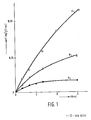
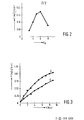
- the ratio hexanol/CTAB in the interphase of the reversed micelles was 2.5.
- the ratio hexanol/CTAB in the interphase of the reversed micelles was in this case greater than 2.5, but the partition coefficient of the substrate was increased relative to the value in graph A due to the presence of more hexanol in the organic phase.
Landscapes
- Organic Chemistry (AREA)
- Chemical & Material Sciences (AREA)
- Life Sciences & Earth Sciences (AREA)
- Zoology (AREA)
- Engineering & Computer Science (AREA)
- Wood Science & Technology (AREA)
- Chemical Kinetics & Catalysis (AREA)
- General Health & Medical Sciences (AREA)
- General Chemical & Material Sciences (AREA)
- Biotechnology (AREA)
- Genetics & Genomics (AREA)
- Health & Medical Sciences (AREA)
- Biochemistry (AREA)
- Bioinformatics & Cheminformatics (AREA)
- General Engineering & Computer Science (AREA)
- Microbiology (AREA)
- Mycology (AREA)
- Preparation Of Compounds By Using Micro-Organisms (AREA)
- Immobilizing And Processing Of Enzymes And Microorganisms (AREA)
- Measuring Or Testing Involving Enzymes Or Micro-Organisms (AREA)
- Enzymes And Modification Thereof (AREA)
- Polysaccharides And Polysaccharide Derivatives (AREA)
- Processing Of Solid Wastes (AREA)
Claims (4)
Priority Applications (1)
| Application Number | Priority Date | Filing Date | Title |
|---|---|---|---|
| AT84200011T ATE23191T1 (de) | 1983-02-03 | 1984-01-06 | Verfahren zur enzymatischen umwandlung eines wasserunloeslichen oder wesentlich wasserunloeslichen organischen substrats. |
Applications Claiming Priority (2)
| Application Number | Priority Date | Filing Date | Title |
|---|---|---|---|
| NL8300393 | 1983-02-03 | ||
| NL8300393 | 1983-02-03 |
Publications (2)
| Publication Number | Publication Date |
|---|---|
| EP0118928A1 EP0118928A1 (de) | 1984-09-19 |
| EP0118928B1 true EP0118928B1 (de) | 1986-10-29 |
Family
ID=19841337
Family Applications (1)
| Application Number | Title | Priority Date | Filing Date |
|---|---|---|---|
| EP84200011A Expired EP0118928B1 (de) | 1983-02-03 | 1984-01-06 | Verfahren zur enzymatischen Umwandlung eines wasserunlöslichen oder wesentlich wasserunlöslichen organischen Substrats |
Country Status (10)
| Country | Link |
|---|---|
| EP (1) | EP0118928B1 (de) |
| JP (1) | JPS602190A (de) |
| AT (1) | ATE23191T1 (de) |
| AU (1) | AU566136B2 (de) |
| CA (1) | CA1208585A (de) |
| DE (1) | DE3461105D1 (de) |
| DK (1) | DK43184A (de) |
| ES (1) | ES8500329A1 (de) |
| IL (1) | IL70833A (de) |
| ZA (1) | ZA84729B (de) |
Families Citing this family (7)
| Publication number | Priority date | Publication date | Assignee | Title |
|---|---|---|---|---|
| DE3600274A1 (de) * | 1986-01-08 | 1987-07-09 | Basf Ag | Verfahren zur selektiven regenerierung von mediatoren und katalysator dafuer |
| FR2596415B1 (fr) * | 1986-03-26 | 1988-07-01 | Elf Aquitaine | Procede pour l'execution de reactions enzymatiques au sein d'un solvant organique |
| FR2601384B1 (fr) * | 1986-07-09 | 1988-12-09 | Bioeurope Sa | Utilisation d'un nouveau type de solvant pour la mise en oeuvre des reactions de transformation des matieres grasses |
| JPS63133989A (ja) * | 1986-11-26 | 1988-06-06 | Agency Of Ind Science & Technol | 酵素反応方法 |
| DD282822A7 (de) * | 1988-05-06 | 1990-09-26 | Univ Halle Wittenberg | Verfahren zur biokatalytischen umsetzung schlecht wasserloeslicher substanzen |
| DD278478A3 (de) * | 1988-06-23 | 1990-05-09 | Univ Halle Wittenberg | Verfahren zur biokatalytischen herstellung schlecht wasserloeslicher substanzen mit integrierter extraktiver aufarbeitung |
| AT503486B1 (de) * | 2006-04-11 | 2008-05-15 | Iep Gmbh | Verfahren zur enantioselektiven reduktion von steroiden |
Family Cites Families (3)
| Publication number | Priority date | Publication date | Assignee | Title |
|---|---|---|---|---|
| IT978495B (it) * | 1973-01-26 | 1974-09-20 | Antonimi E | Procedimento per condurre reazio ni enzimatiche mediante l uso di sistemi bifasici acquoso organici |
| WO1982001563A1 (en) * | 1980-10-23 | 1982-05-13 | Bo Mattiasson | Biological and chemical conversion processes in liquid phase-system |
| NL8103168A (nl) * | 1981-07-01 | 1983-02-01 | Tno | Werkwijze voor het uitvoeren van een enzymatische reaktie. |
-
1984
- 1984-01-06 EP EP84200011A patent/EP0118928B1/de not_active Expired
- 1984-01-06 AT AT84200011T patent/ATE23191T1/de not_active IP Right Cessation
- 1984-01-06 DE DE8484200011T patent/DE3461105D1/de not_active Expired
- 1984-01-31 IL IL70833A patent/IL70833A/xx unknown
- 1984-01-31 DK DK43184A patent/DK43184A/da not_active Application Discontinuation
- 1984-01-31 AU AU23910/84A patent/AU566136B2/en not_active Ceased
- 1984-01-31 ES ES529329A patent/ES8500329A1/es not_active Expired
- 1984-01-31 CA CA000446477A patent/CA1208585A/en not_active Expired
- 1984-01-31 ZA ZA84729A patent/ZA84729B/xx unknown
- 1984-02-03 JP JP59017221A patent/JPS602190A/ja active Pending
Non-Patent Citations (1)
| Title |
|---|
| EUR. J. BIOCHEM 144 459-466 (1984) * |
Also Published As
| Publication number | Publication date |
|---|---|
| JPS602190A (ja) | 1985-01-08 |
| AU566136B2 (en) | 1987-10-08 |
| CA1208585A (en) | 1986-07-29 |
| EP0118928A1 (de) | 1984-09-19 |
| IL70833A (en) | 1987-07-31 |
| DE3461105D1 (en) | 1986-12-04 |
| AU2391084A (en) | 1984-08-09 |
| IL70833A0 (en) | 1984-04-30 |
| DK43184D0 (da) | 1984-01-31 |
| ES529329A0 (es) | 1984-10-01 |
| ES8500329A1 (es) | 1984-10-01 |
| DK43184A (da) | 1984-08-04 |
| ZA84729B (en) | 1984-09-26 |
| ATE23191T1 (de) | 1986-11-15 |
Similar Documents
| Publication | Publication Date | Title |
|---|---|---|
| Hilhorst et al. | Enzymatic conversion of apolar compounds in organic media using an NADH-regenerating system and dihydrogen as reductant | |
| US4526661A (en) | Electrochemical hydrogenation of nicotinamide adenine dinucleotide | |
| RU2426791C2 (ru) | Способ получения стероидных производных восстановлением оксостероидных соединений или окислением гидроксистероидных соединений с использованием гидроксистероидной дегидрогеназы | |
| JP3709202B2 (ja) | ピルビン酸の製造方法 | |
| EP0118928B1 (de) | Verfahren zur enzymatischen Umwandlung eines wasserunlöslichen oder wesentlich wasserunlöslichen organischen Substrats | |
| Fukui et al. | Bioconversion of lipophilic compounds in non-aqueous solvent. Effect of gel hydrophobicity on diverse conversions of testosterone by gel-entrapped Nocardia rhodocrous cells | |
| Cremonesi et al. | Enzymatic dehydrogenation of testosterone coupled to pyruvate reduction in a two‐phase system | |
| Riva | Enzymatic modification of steroids | |
| CN104350157B (zh) | 在双相系统中选择性还原胆汁酸,它们的盐或衍生物的方法 | |
| US4749670A (en) | Selective regeneration of mediators in the presence of a catalyst and surfactant | |
| Carrea et al. | Preparation of 12-ketochenodeoxycholic acid from cholic acid using coimmobilized 12α-hydroxysteroid dehydrogenase and glutamate dehydrogenase with NADP+ cycling at high efficiency | |
| JPH0614874B2 (ja) | ステロイド転化プロセス | |
| EP0127294B1 (de) | Steroid-Dehydrierung | |
| Bovara et al. | A new enzymatic route to the synthesis of 12-ketoursodeoxycholic acid | |
| Drueckhammer et al. | FMN reductase catalyzed regeneration of NAD (P) for use in enzymic synthesis | |
| US4270994A (en) | Electrochemical dehydrogenation of steroidal Δ3,5 enol ethers under basic conditions to provide steroidal Δ4,6 dienones | |
| Carrea et al. | [14] Enzyme-catalyzed steroid transformations in water-organic solvent two-phase systems | |
| Petersen et al. | Continuous indirect electrochemical regeneration of galactose oxidase | |
| HUT64598A (en) | Production of glyoxylic acid by enzymatic oxidation of glycolic acid | |
| Watanabe et al. | The effects of linoleate hydroperoxide on respiration and oxidative phosphorylation of rat liver mitochondria | |
| US6911328B2 (en) | Method for producing 2,3-dimethyl-2,3-dinitrobutane and product thereby | |
| PL226816B1 (pl) | Sposób otrzymywania 25-hydroksylowanych pochodnych sterolowych, wtym 25-hydroksy-7-dehydrocholesterolu | |
| JP3241712B2 (ja) | コレステロールオキシダーゼ | |
| EP4223882A1 (de) | Verfahren zur herstellung von aldonsäuren | |
| EP1375671A1 (de) | Selektieve Funktionalisierung von Kohlenwasserstoffen mit isolierten Oxygenasen und Regeneration mittels eines Mediators |
Legal Events
| Date | Code | Title | Description |
|---|---|---|---|
| PUAI | Public reference made under article 153(3) epc to a published international application that has entered the european phase |
Free format text: ORIGINAL CODE: 0009012 |
|
| AK | Designated contracting states |
Designated state(s): AT BE CH DE FR GB IT LI LU NL SE |
|
| 17P | Request for examination filed |
Effective date: 19841224 |
|
| GRAA | (expected) grant |
Free format text: ORIGINAL CODE: 0009210 |
|
| AK | Designated contracting states |
Kind code of ref document: B1 Designated state(s): AT BE CH DE FR GB IT LI LU NL SE |
|
| REF | Corresponds to: |
Ref document number: 23191 Country of ref document: AT Date of ref document: 19861115 Kind code of ref document: T |
|
| ITF | It: translation for a ep patent filed | ||
| REF | Corresponds to: |
Ref document number: 3461105 Country of ref document: DE Date of ref document: 19861204 |
|
| ET | Fr: translation filed | ||
| PLBE | No opposition filed within time limit |
Free format text: ORIGINAL CODE: 0009261 |
|
| STAA | Information on the status of an ep patent application or granted ep patent |
Free format text: STATUS: NO OPPOSITION FILED WITHIN TIME LIMIT |
|
| 26N | No opposition filed | ||
| ITTA | It: last paid annual fee | ||
| PGFP | Annual fee paid to national office [announced via postgrant information from national office to epo] |
Ref country code: LU Payment date: 19921209 Year of fee payment: 10 |
|
| PGFP | Annual fee paid to national office [announced via postgrant information from national office to epo] |
Ref country code: SE Payment date: 19930105 Year of fee payment: 10 |
|
| PGFP | Annual fee paid to national office [announced via postgrant information from national office to epo] |
Ref country code: FR Payment date: 19930109 Year of fee payment: 10 |
|
| PGFP | Annual fee paid to national office [announced via postgrant information from national office to epo] |
Ref country code: AT Payment date: 19930127 Year of fee payment: 10 |
|
| PGFP | Annual fee paid to national office [announced via postgrant information from national office to epo] |
Ref country code: BE Payment date: 19930128 Year of fee payment: 10 |
|
| PGFP | Annual fee paid to national office [announced via postgrant information from national office to epo] |
Ref country code: NL Payment date: 19930131 Year of fee payment: 10 |
|
| PGFP | Annual fee paid to national office [announced via postgrant information from national office to epo] |
Ref country code: GB Payment date: 19930201 Year of fee payment: 10 |
|
| PGFP | Annual fee paid to national office [announced via postgrant information from national office to epo] |
Ref country code: DE Payment date: 19930203 Year of fee payment: 10 |
|
| PGFP | Annual fee paid to national office [announced via postgrant information from national office to epo] |
Ref country code: CH Payment date: 19930304 Year of fee payment: 10 |
|
| EPTA | Lu: last paid annual fee | ||
| PG25 | Lapsed in a contracting state [announced via postgrant information from national office to epo] |
Ref country code: LU Free format text: LAPSE BECAUSE OF NON-PAYMENT OF DUE FEES Effective date: 19940106 Ref country code: GB Effective date: 19940106 Ref country code: AT Effective date: 19940106 |
|
| PG25 | Lapsed in a contracting state [announced via postgrant information from national office to epo] |
Ref country code: SE Effective date: 19940107 |
|
| PG25 | Lapsed in a contracting state [announced via postgrant information from national office to epo] |
Ref country code: LI Effective date: 19940131 Ref country code: CH Effective date: 19940131 Ref country code: BE Effective date: 19940131 |
|
| BERE | Be: lapsed |
Owner name: DUPHAR INTERNATIONAL RESEARCH B.V Effective date: 19940131 |
|
| PG25 | Lapsed in a contracting state [announced via postgrant information from national office to epo] |
Ref country code: NL Effective date: 19940801 |
|
| GBPC | Gb: european patent ceased through non-payment of renewal fee |
Effective date: 19940106 |
|
| NLV4 | Nl: lapsed or anulled due to non-payment of the annual fee | ||
| PG25 | Lapsed in a contracting state [announced via postgrant information from national office to epo] |
Ref country code: FR Effective date: 19940930 |
|
| REG | Reference to a national code |
Ref country code: CH Ref legal event code: PL |
|
| PG25 | Lapsed in a contracting state [announced via postgrant information from national office to epo] |
Ref country code: DE Effective date: 19941001 |
|
| REG | Reference to a national code |
Ref country code: FR Ref legal event code: ST |
|
| EUG | Se: european patent has lapsed |
Ref document number: 84200011.9 Effective date: 19940810 |