EP0103643B1 - Automatisiertes unterrichts-, spiel- und datenwiederauffindungssystem - Google Patents
Automatisiertes unterrichts-, spiel- und datenwiederauffindungssystem Download PDFInfo
- Publication number
- EP0103643B1 EP0103643B1 EP83902320A EP83902320A EP0103643B1 EP 0103643 B1 EP0103643 B1 EP 0103643B1 EP 83902320 A EP83902320 A EP 83902320A EP 83902320 A EP83902320 A EP 83902320A EP 0103643 B1 EP0103643 B1 EP 0103643B1
- Authority
- EP
- European Patent Office
- Prior art keywords
- videodisc
- user
- system defined
- record
- unit
- Prior art date
- Legal status (The legal status is an assumption and is not a legal conclusion. Google has not performed a legal analysis and makes no representation as to the accuracy of the status listed.)
- Expired - Lifetime
Links
- 230000006870 function Effects 0.000 claims abstract description 37
- 230000004044 response Effects 0.000 claims abstract description 36
- 238000002372 labelling Methods 0.000 claims abstract description 11
- 230000003287 optical effect Effects 0.000 claims abstract description 9
- 230000002452 interceptive effect Effects 0.000 claims abstract description 7
- 239000000872 buffer Substances 0.000 claims description 7
- 230000000007 visual effect Effects 0.000 claims description 5
- 239000004973 liquid crystal related substance Substances 0.000 claims description 3
- 238000010586 diagram Methods 0.000 description 10
- 230000002093 peripheral effect Effects 0.000 description 6
- 230000009471 action Effects 0.000 description 5
- 230000008859 change Effects 0.000 description 5
- 238000000034 method Methods 0.000 description 5
- 238000013519 translation Methods 0.000 description 5
- 230000014616 translation Effects 0.000 description 5
- 230000003993 interaction Effects 0.000 description 4
- 238000012163 sequencing technique Methods 0.000 description 4
- 238000004891 communication Methods 0.000 description 3
- 230000008569 process Effects 0.000 description 3
- 230000001953 sensory effect Effects 0.000 description 3
- 230000008901 benefit Effects 0.000 description 2
- 239000013256 coordination polymer Substances 0.000 description 2
- 230000001419 dependent effect Effects 0.000 description 2
- 239000000463 material Substances 0.000 description 2
- 238000004886 process control Methods 0.000 description 2
- 230000005236 sound signal Effects 0.000 description 2
- 238000012549 training Methods 0.000 description 2
- 208000010496 Heart Arrest Diseases 0.000 description 1
- 230000004888 barrier function Effects 0.000 description 1
- 238000002680 cardiopulmonary resuscitation Methods 0.000 description 1
- 239000012141 concentrate Substances 0.000 description 1
- 230000008878 coupling Effects 0.000 description 1
- 238000010168 coupling process Methods 0.000 description 1
- 238000005859 coupling reaction Methods 0.000 description 1
- 230000003247 decreasing effect Effects 0.000 description 1
- 230000007812 deficiency Effects 0.000 description 1
- 238000013461 design Methods 0.000 description 1
- 230000000694 effects Effects 0.000 description 1
- 238000005516 engineering process Methods 0.000 description 1
- 239000000284 extract Substances 0.000 description 1
- 230000000977 initiatory effect Effects 0.000 description 1
- 238000012423 maintenance Methods 0.000 description 1
- 230000007246 mechanism Effects 0.000 description 1
- 230000003340 mental effect Effects 0.000 description 1
- JTJMJGYZQZDUJJ-UHFFFAOYSA-N phencyclidine Chemical compound C1CCCCN1C1(C=2C=CC=CC=2)CCCCC1 JTJMJGYZQZDUJJ-UHFFFAOYSA-N 0.000 description 1
- 230000036314 physical performance Effects 0.000 description 1
- 238000012545 processing Methods 0.000 description 1
- 238000005070 sampling Methods 0.000 description 1
- 238000004088 simulation Methods 0.000 description 1
- 239000007787 solid Substances 0.000 description 1
Images


Classifications
-
- A—HUMAN NECESSITIES
- A63—SPORTS; GAMES; AMUSEMENTS
- A63F—CARD, BOARD, OR ROULETTE GAMES; INDOOR GAMES USING SMALL MOVING PLAYING BODIES; VIDEO GAMES; GAMES NOT OTHERWISE PROVIDED FOR
- A63F13/00—Video games, i.e. games using an electronically generated display having two or more dimensions
- A63F13/20—Input arrangements for video game devices
- A63F13/22—Setup operations, e.g. calibration, key configuration or button assignment
-
- A—HUMAN NECESSITIES
- A63—SPORTS; GAMES; AMUSEMENTS
- A63F—CARD, BOARD, OR ROULETTE GAMES; INDOOR GAMES USING SMALL MOVING PLAYING BODIES; VIDEO GAMES; GAMES NOT OTHERWISE PROVIDED FOR
- A63F13/00—Video games, i.e. games using an electronically generated display having two or more dimensions
-
- A—HUMAN NECESSITIES
- A63—SPORTS; GAMES; AMUSEMENTS
- A63F—CARD, BOARD, OR ROULETTE GAMES; INDOOR GAMES USING SMALL MOVING PLAYING BODIES; VIDEO GAMES; GAMES NOT OTHERWISE PROVIDED FOR
- A63F13/00—Video games, i.e. games using an electronically generated display having two or more dimensions
- A63F13/40—Processing input control signals of video game devices, e.g. signals generated by the player or derived from the environment
- A63F13/42—Processing input control signals of video game devices, e.g. signals generated by the player or derived from the environment by mapping the input signals into game commands, e.g. mapping the displacement of a stylus on a touch screen to the steering angle of a virtual vehicle
-
- G—PHYSICS
- G09—EDUCATION; CRYPTOGRAPHY; DISPLAY; ADVERTISING; SEALS
- G09B—EDUCATIONAL OR DEMONSTRATION APPLIANCES; APPLIANCES FOR TEACHING, OR COMMUNICATING WITH, THE BLIND, DEAF OR MUTE; MODELS; PLANETARIA; GLOBES; MAPS; DIAGRAMS
- G09B5/00—Electrically-operated educational appliances
- G09B5/06—Electrically-operated educational appliances with both visual and audible presentation of the material to be studied
- G09B5/065—Combinations of audio and video presentations, e.g. videotapes, videodiscs, television systems
-
- G—PHYSICS
- G11—INFORMATION STORAGE
- G11B—INFORMATION STORAGE BASED ON RELATIVE MOVEMENT BETWEEN RECORD CARRIER AND TRANSDUCER
- G11B17/00—Guiding record carriers not specifically of filamentary or web form, or of supports therefor
- G11B17/005—Programmed access to indexed parts of tracks of operating discs, by guiding the disc
-
- G—PHYSICS
- G11—INFORMATION STORAGE
- G11B—INFORMATION STORAGE BASED ON RELATIVE MOVEMENT BETWEEN RECORD CARRIER AND TRANSDUCER
- G11B19/00—Driving, starting, stopping record carriers not specifically of filamentary or web form, or of supports therefor; Control thereof; Control of operating function ; Driving both disc and head
- G11B19/02—Control of operating function, e.g. switching from recording to reproducing
- G11B19/022—Control panels
-
- G—PHYSICS
- G11—INFORMATION STORAGE
- G11B—INFORMATION STORAGE BASED ON RELATIVE MOVEMENT BETWEEN RECORD CARRIER AND TRANSDUCER
- G11B27/00—Editing; Indexing; Addressing; Timing or synchronising; Monitoring; Measuring tape travel
- G11B27/10—Indexing; Addressing; Timing or synchronising; Measuring tape travel
- G11B27/102—Programmed access in sequence to addressed parts of tracks of operating record carriers
- G11B27/105—Programmed access in sequence to addressed parts of tracks of operating record carriers of operating discs
-
- G—PHYSICS
- G11—INFORMATION STORAGE
- G11B—INFORMATION STORAGE BASED ON RELATIVE MOVEMENT BETWEEN RECORD CARRIER AND TRANSDUCER
- G11B2220/00—Record carriers by type
- G11B2220/20—Disc-shaped record carriers
Definitions
- This invention relates to automated instruction, game, and data retrieval systems, and, more specifically to such systems incorporating optical laser videodisc-type storage of both data and program materials.
- the invention herein provides greater versatility and flexibility than current simple remote control systems at a cost considerably less than computer-linked systems serving similar purposes. Also, it achieves a high order of man-machine interface, providing the transparency necessary for a more direct user contact with the system and its program content than other systems provide.
- transparency is meant the ability of the user to perceive directly at the control the desired function rather than having to translate mentally from the control indication to the desired function to be performed.
- Prior art operating systems for human interaction with a videodisc fall into three general categories.
- the first category are those systems which incorporate essentially direct remote control units, usually hand-held by the user.
- the second category are systems using a programmable micro or minicomputer offering a much higher order, and correspondingly more expensive, program control.
- a third category of systems and possibly the most advanced of the prior art combines the videodisc-programmable computer elements with a number of interactive peripherals including visual, aural and sensory elements to provide a plurality of communication avenues between the user and the system.
- US-A-4305131 discloses a video amusement system comprising a video disc player unit having a pickup head and mechanical and electrical control elements to position and actuate the pickup head in response to received control signals; a video display unit including a screen for the visual display of still and moving graphic and pictorial information supplied to said display unit in electrical signal form; a user command/ response unit comprising a plurality of switch elements operable by a system user to produce selected manual input of user determined command and response signals, selected ones of said elements having associated therewith variable labelling means for conveying directly to the user the function represented by the associated element at that time, and a video disc record means having recorded thereon a plurality of segmented groups of graphic and pictorial video information data and a plurality of segmented groups of system control and programming data.
- the system also includes control processor means for controlling the units in response to signals from the videodisc record and signals from the command/response unit.
- the basic automated instructional, entertainment and data retrieval or reference system of the present invention as claimed comprises the following elements: (1) a videodisc with data and program storage, (2) a videodisc player, (3) a video display which may take the form of a standard home television set, (4) a low-cost control processor having limited Random Access Memory capability, and (5) a user command/ response unit.
- the processor element is distinguished from the microcomputer of the prior art in that it is of more limited capability since it does not include program management, programming functions for user entry, or high order decision- making. It consequently is much less expensive.
- the command/response unit has hardwired functions that may be reconfigured in infinite variety by incoming data from the videodisc.
- I/O peripherals can be added and managed through a combination of the control processor, the command/response unit, and the videodisc stored programs. Compressed digital audio from the videodisc may also be incorporated in the system.
- Yet another object of this invention is to provide a low cost automated instructional, educational, and reference system which can be adapted for widespread, interactive multiple-user operations within broadcast, narrowcast, land line, or cable-television systems.
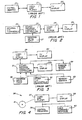
- Figure 1 illustrates a typical optical laser videodisc player system currently available commercially.
- the system includes player unit 21 with self-contained mechanical and electrical operating elements, a TV display unit 22, which may be a standard commercial television set and a user control unit 23 which may be physically connected to the player unit 21 or a separate remote unit.
- the user operates the control unit to input commands to initiate the simple system functions of searching, frame by frame stepping, high speed scanning, still frame display, and standard pictorial display in standard, fast or slow motion.
- the user control unit 23 is hard-wired with the controls each dedicated and labeled for a single function. Certain functions may require a sequential operation of controls by the user to input a code designating the function and thus demanding from the user the steps of abstraction and mental translation.
- control 23 may have a small memory capability, which allows key programming of sequences of still frame or motion, to be called up by hard-wired command.
- remote controller can receive synchronizing or indexing data from the audio channel of the videodisc to effect that simple sequencing.
- the system of Figure 2 also includes a videodisc player 24, a TV display 25 which also may be a standard commercial television set, a controller 26 in the form of a full capability stored program computer and a program media input 27. As indicated, the system of Figure 2 is equipped to handle a number of other I/O peripherals 28. With the full capability stored program computer 26 controlling the videodisc, rather than a simple hard-wired controller, logic decisions can be made based on user input, usually on a keyboard, but occasionally by a more direct peripheral I/0 device 28 which increases the transparency of the software to the end user by allowing him direct input rather than translated input, as in Figure 1.
- the full operational program for a given function of the system is ordinarily input to the storage of the computer-controller 26 through the program media input unit 27 from a magnetic tape or other record media dedicated solely to programming data.
- the programming data is stored in the computer memory in order to enhance the randomness of its accessibility over its recorded form. Alternately the required random accessibility can be achieved through use of other types of program record media.
- Figure 3 shows a prior art system of highly complex configuration which is being considered for teaching cardiopulmonary resuscitation, a prime life saving skill which sustains life after cardiac arrest.
- the system of Figure 3 comprises a videodisc player 29, a first TV display 30 receiving video from the player 29, a full capability stored program computer 31 including keyboard for program and data input, a program media diskette input 32, a second TV display 30a receiving computer generated graphics, a sensory manikin 33 providing both quantitative and qualitative input from the user, a random access audio unit 34 and additional optional I/0 peripherals 35.
- the system of Figure 3 which is more fully described in Videodisc News, Vol. 2, No. 2, Feb. 1981, p. 2, concentrates on the high transparency needed when large numbers of lay users are to be trained in psychomotor skills.
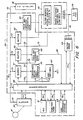
- the preferred embodiment of the system of the present invention designated generally as 36 is shown in the block diagram of Figure 4. It comprises a videodisc player unit 37, a TV display unit 38, a central processor 39 and a user command/ response unit 40, together with a prerecorded videodisc 41 suitable for playing on player 37.
- the videodisc player unit 37 is of the standard commercially available optical laser type with self-contained mechanical and electrical operating elements.
- the Model LDP-1000 Optical Laser Videodisc player manufactured by Sony Corporation of Tokyo, Japan, has been found suitable for use as the videodisc player of the present invention.
- the TV display unit 38 may comprise any of the numerous commercially available standard television receivers for home or other user use.
- the display unit 38 need not be a dedicated unit sold as a part of and useful only with full system of this invention but may be any television receiver acquired separately and already in use for entertainment purposes by the system owner.
- the use of the receiver in connection with the system of this invention will not in the least interfere with its continued use as a TV broadcast receiver for entertainment or other programming.
- Command/response (C/R) unit 40 comprises a number of hardwired switch and analog control devices for manipulation by the user to input commands or responses to the system. Some of the switch controls are dedicated and permanently labeled as to their function or input such as, the switch controls for "on”, “off”, “yes”, and “no” and the "keyboard” switches for alpha- numeric inputs.
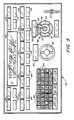
- FIG. 5 illustrates a convenient front panel configuration for a user command/ response unit 40.
- the front panel designated generally as 42 may have permanently labeled switch controls such as, "on/ off” switch 43, a set 44 of momentary contact switches with letter, numeral and "yes", “no” designations arranged more or less as a keyboard.
- a message display window 45 used to communicate written instructions, questions or information to the user.
- Message window 45 may take the form of a liquid crystal display or light emitting diode display or other controllable alpha- numeric display devices suitable for the purpose.
- variable label display 47 may be an LCD, LED or other alpha-numeric display controllable by program instructions from the videodisc on player 37.
- Other variable or set displays or labels may be provided to assist the user in connection with analog control 46.
- a second analog input 48 which is operated/controlled by the user through a "joystick" mechanism 49 of the type well known in the art.
- analog input 48 There may be included an analog input 48, a proportional control 50 and a "fire” button 52.
- analog input 48 Associated with analog input 48 are one or more variable label displays 53.
- the labels 53 also may be LCD, LED, or other suitable electronically controllable alpha-numeric display devices.
- a plurality of additional digital or switch inputs 54, each with its own variable label 55 are provided on panel 42.
- Each of the variable labels 47, 53 and 55 is controlled by program inputs from the videodisc on player 37 to display for the user the current function represented by its associated input 46, 48 or 54 respectively.
- variable labels for the control inputs provided on panel 42 will be more fully explained subsequently.
- the switch devices provided on panel 42 need not be separate devices but may comprise unitary devices providing both functions. Devices of this type are well known.
- control processor 39 of the system 36 comprises hardwired electronic circuitry functions, and a minimal amount of buffer and program segment storage capability.
- control processor 39 includes the distributor 56, buffers 57, 58 and 59, a text and graphic generator ROM 60, a small arithmetic logic unit 61, function ROMS 62, disc reference storage unit 63, a program segment storage RAM 64, an electronic switch array 65 and, when needed, a compressed digital audio converter 66 and amplifier switcher 67. All of the elements of the control processor 39 may be circuits of standard types well known to those skilled in the art and, in accordance with current solid state technology, may all be incorporated into a simple integrated circuit chip including the interconnections between elements.
- Distributor 56 is little more than an electronic switching network which, under direction of signals from the videodisc of player 37, directs the data and program information signals to and from the player 37 and the user command/ response unit 40 and ultimately to the input of the TV display unit 38.
- program and control signals flow between the distributor 56 and disc player 37 on lines 71.
- Information signals also are received by the control processor 39 from the player unit 37 on lines 72 and routed to distributor 56, the buffers 57, 58 and 59 and the input of TV display unit 38.
- Distributor 56 delivers program and/or information data signals on line 73 to buffer elements 57, 58 and 59, converter 66 and switcher 67, RAM 64, generator 60 and user displays 45 and 55 of unit 40.
- Signals also flow on lines 74, 75 and 76 respectively between distributor 56 and the ALU 61 for minor processing, the ROM 62 for call up of often used functions, and the reference storage unit 63 for subsequent use.
- signals flow on lines 77 between the distributor 56 and switch array 65 which in turn is receiving input signals on line 78 from the user activated switches of unit 40 and other optional I/ O ports 79.
- Videodisc program signals are also received by the distributor over line 80 from the program segment storage of RAM 64. It will be recognized that the system is unique in that essentially all of the programming and control data for any application is contained in the vast reservoir of data resident in the videodisc.
- the specific applications of any program in the disc will include segments to direct the elements of process controller 39, the label configuration of user input displays 45, 47, 53 and 55 of the command/response unit 40 and the compressed digital audio signals for use with still frames.
- the program data is so arranged on the videodisc that it is concomitant with the informational material it accompanies, in other words it is for the large part self-searching.
- Part of the usual deficiency of using digital program data from a video format has been low reliability, but in the present system so little data is needed in relation to the immense amount of storage available on the disc, that high redundancy can cover any possible bit errors of playout.
- a second form of data is generated by the videodisc player 37 independent of its data on the videodisc itself. This data will concern player indexing and synchronizing functions including exact frame locations. This player data moves directly back and forth between the player 37 and control processor 39 to give player information to and receive commands from the processor.
- control/processor 39 are relatively simple and of small capacity. This is possible because the structuring of the system puts by far the greater part of the programming and control functions in the data configuration on the videodisc 41 itself. Such structuring of the system allows the design goals of low cost, simplicity and reliability to be met. It will be obvious then that the processor 39 is no more than a multiplexing selector and distributor of information as opposed to a full capability stored program computer as that term is usually defined and understood.
- the processor may receive a short simple set of sequencing instructions buffered into the program segment storage RAM 64 from the videodisc 41 on player 37.
- the distributor 56 instructed by RAM 64 consults the disc reference memory 63, if necessary, draws upon the function ROM 62 for generic information and routes prompting instructions from videodisc 41 to display 45.
- the distributor 56 may, if appropriate, apply signals from the videodisc 41 to activate the text and graphics generator ROM 60 to deliver graphic data to the input line 72 of TV display 38, receive a status indication from switch array 65, feed ALU 61 for any simple arithmetic required, operate converter 66 and switcher 67 when appropriate and then again sample RAM 64 to determine if any change has occurred.
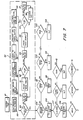
- Figure 7 is a diagrammatic representation of an illustrative portion of the disc-programmed operation of the system for the "catalog" function.
- the initial segment load function (SLF) data is automatically selected from the videodisc record 41 and fed to the control processor 39.
- the initial SLF 82 loads a short program segment 83, which may be about eight thousand bytes or less, from the videodisc 41 through buffer 58 into RAM 64.
- the user displays 45, 47, 53 and 55 are appropriately labeled (84)
- the user controls 46, 48 and 54 are configured (85)
- video signals are applied to video unit 38 (86) and the digital audio if present on the videodisc is converted (87) and supplied to the audio output.
- the "user input scan" ROM of 62 is activated (88).
- the scan function 88 checks all of the user inputs to determine if the user has indicated a selection (89). If not, scanning continues for fifteen seconds (90) after which the prompter display window 45 and, if desired, the audio output are activated to ask the user if more time is needed (91). If a scan (92) indicates the user has pushed the "yes" control 44, the fifteen second delay 90 is repeated and the user again asks if more time is needed (91). If scan 92 indicates a "no" answer a check is made (89) to determine any selection. If no selection has been made the "no" is treated as "no answer” and the prompter window and audio, after a further fifteen second delay (93) ask "May I shut down?" (94).
- scan 95 indicates a user "yes” input
- the system shuts off (96).
- a "no” input recycles to determine if a selection has been made. If no selection is made within fifteen seconds, shut down is again requested at 94. If scan 95 indicates "no answer” in the fifteen second delay (97), the system is shut off (96).
- SLF segment load function
- Selection of "Index H-M" places SLF 101 in operation; selection of a specific page number at 102 activates SLF 103 which may produce a pictorial video display, either still or moving, of the merchandise in actual use or being modeled and control labeling appropriate to determine the user's choice of color, model, etc., whether he desires to purchase and the ⁇ pe of purchase, "charge” or "cash".
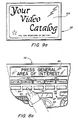
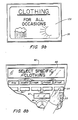
- FIG. 8a illustrates a portion of panel 42 on C/R unit 40 as configured by SLF 105.
- the variable label displays 55 provide direct literal indication of the specific choices offered the user by operation of the associated switches 54 such as "Clothing”, “Household Goods”, “Toys”, “Automotive”, etc. Choices of other modes of search such as "Index” or "New Section” are also offered.
- Prompter display window 45 has been activated to display an appropriate message or instruction.
- the screen 106 of video display unit 38 is activated to supply information to the user in graphic and pictorial form as illustrated in Figure 9a.
- Shown in Figure 10 is a diagram of a small portion of the program and system operation sequence with the system operating in the "Instruction" mode for a language lesson.
- the sequence of Figure 10 begins after the user has turned the system "on". Through a series of selections similar to those outlined above in connection with Figure 7, the user has chosen a language lesson in "Spanish II" to be carried out as a conversational dialog. These selections have moved the videodisc pickup to SLF 108.
- Segment load function 108 initiates a display of a segment of video information from the videodisc 41 on the screen 106 of display unit 38 and reconfiguration and labeling of the controls and displays of C/R unit 40.
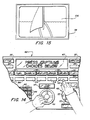
- the information displayed may be "motion" video and audio segment 109 depicting on screen 106 as in Figure 12, store owner waiting on the user and asking an audible question in the language of study.
- Segment 109 ends in a "freeze frame" in which the store owner awaits response from the user.
- the program segment 110 scans the user inputs which are now labeled as in Figure 11.
- Prompter window 45 may also display instructions for how the user is to respond.
- the user's response input selects the branch of the program to be continued. Any of the several appropriate and inappropriate responses offered the user when input by him will select a new segment of data from the videodisc. The new data segment selected will then show the store owner to the screen 106 of TV display 38 taking a next logical action in response to the user input. For instance, if the user inputs an inappropriate response "dinero", the program branches at 111 to a new SLF 112. In the video and audio of the new segment 113 the store owner may frown and say that he doesn't understand the user's answer and repeat the question to him. If the user inputs "dulces" the program branches at 114 to SLF 115. Program segment 116 video is then sent to display unit 38.
- the store owner may respond with a smile and "Que clase?" Likewise a "nada" response by the user would branch the program at 117 to SLF 118 to produce video at 119 wherein the store owner smiles and moves away to another customer.
- the language lesson would then continue through a dialogue between the store owner and the user with the store owner's actions and responses being called from the videodisc 41 depending on the branches of the program of Figure 10 or of subsequent programs which are activated by the user's response inputs.
- the screen 106 creates a learning context, and then the student is given the chance to interact, first seeing his choices in the label displays 55 and then pressing the switch key 54 associated with the display showing his choice. If he is not immediately sure of what he should do at this juncture, the prompter display 45 will keep him oriented.
- the prompter display 45 may also prompt or give instructions for using outside I/O ports 79 of Figure 5. An example being a request to the user to speak his response into a voice input.
- Figures 13, 14 and 15 illustrate another example of the versatility and transparency of the present invention.
- the system may be used solely for entertainment purposes or may be used for instructional or training purposes by providing "actual condition" simulation.
- FIG. 13 A portion of the program and sequence operation of the system for "yacht racing” is diagrammed in Figure 13.
- the full side of the videodisc 41 may be devoted to such a function.
- the first segment load function 121 is automatically fed from the videodisc 41 into control processor 39.
- the TV display unit 38 displays the course over which the race is to be run and informs the user of the "set” race conditions and other race parameters as at 122.
- the user may be asked to provide some information input such as his sailing competency and experience or he may be allowed to select at 123 or initiate random selection by the system of other race conditions such as wind speed and direction, the race course to be run, the hazards, the type of boat, and whether the race is to be run against time or in "head to head” competition.
- a "begin race” SLF is selected from the videodisc 41.
- the particular "begin race” SLF selected is dependent upon the particular choices registered by the user; if the user registers no conditions, option SLF 132 is initiated.
- a race in a two knot wind 125 with a three man crew will begin with SLF 133.
- SLF 134 begins the race since the user has chosen a two knot wind and a single man crew 130.
- the controls of the C/R unit 40 are labeled by data from the videodisc to present the boat's "cockpit" panel to the user.
- controls to carry out certain commands, such as "come about” are appropriately labeled as are other controls to call up displays on the screen 106 of TV display unit 38 of certain instruments such as the compass or anemometer or of the estimated chart position.
- the 360° analog input 46 is labeled by display 47 immediately above it as the boat “wheel” or tiller.
- the TV display 38 provides a helmsman's view of the "bow" scene from the boat as in Figure 15 or, at the user's selection, of the port or starboard quarter or of beam scenes or of others stored on the videodisc.
- the scenes and other indications change to simulate the action of the race according to user and programmed inputs and the race parameters.
- the CP 39 operates in a multiplex mode between the control of, and feedback from, the videodisc player 37, the analog input 46 representing a sailboat's tiller, and checks off the user's requests and choices input to the controls during the race.
- the movement of the wheel 46 will cause the selection of sequences of videodisc frames which adjust the boat's keel on screen in relation to the horizon, and its azimuth to other objects.
- the "captain” may request checks or actions by using the labeled inputs 54 and may cause the control program to select from the videodisc a close-up video frame or select a sequence of motion frames which result from an action choice made by the user.
- SLF 134 extracts from videodisc 41, motion video information which is sent to TV display 38 to provide the helmsman's view (135) on screen 106. Also, there is begun a scan 136 to detect analog input changes ("wheel” changes). The amount and direction of change is detected (137) and appropriate video information is selected from the disc 41 to change the video horizon 138 (helmsman's view) according to the "wheel” change input.
- digital scan (139) is conducted to detect "commands" from the "Captain” (user).
- a request by the "Captain” for “waterline check” (141) will produce motion video (142) of the boat waterline on the screen 106 for a short time and then a return to the helmsman's view.
- a request to check wind direction 143 will produce (144) a short period of display of the wind streamer. (This and some other displays may advantageously be produced by a "still frame" of video).
- a "come about” command 145 initiates a new SLF for "Come about” 140 which in turn produces at 146 presentation on screen 106 of video of the changing scenes as the boat changes.
- Setting of the new course initiates the appropriate "new course” SLF 147 and new video 148 of the new course.
- the operation of the system continues in a similar manner to the end of the race. The user then has his choice at 149 to "race again” or "end”.
- the system of the present invention is easily adaptable for multiple user applications.
- a multihead videodisc player at a single location such as a central library or main catalog store
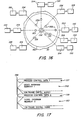
- FIG 16 schematically illustrates such a multihead pickup arrangement for a player.
- the videodisc 150 is mounted on turntable 151 to rotate in normal fashion about the central axis 152.
- a plurality of pickup heads 153 are mounted along various radii at spaced intervals about the turntable 151. The intervals need not be equal.
- Each of the player heads has associated with it the same mechanical and electrical operating and control elements 154 as are found associated with the single pickup head of a standard videodisc player.
- the heads 153 may be operated entirely independently of each other.
- each head independently serves and can be controlled by a different remote user station 155 comprising a CP unit, a TV display and C/R unit.
- a remote user station 155 comprising a CP unit, a TV display and C/R unit.
- the system of the present invention is adaptable to other remote user systems such as any of the several types of two way communication cable TV systems now in operation.
- a feature of the present system is the inclusion in the material recorded on the videodisc of essentially all of the operational programming data as well as pictorial and indexing data and its placement in segments on the disc in reasonable close proximity to the informational and pictorial data segments with or for which it is to be used.
- a segment of a videodisc record track is represented at 156. Recorded on the track is a first segment 157 of process control data which may include approximately eight thousand bytes or fewer of program data.
- On the next segment 158 is recorded a segment of video program or information. Segment 158 may contain approximately 420 frames of video information. Also included in this data segment of the record may be "on frame" digital compressed audio data related to the video data.
- the data of video segment 158 will have some relationship to the program data preceding segment 157 and the next succeeding segment of program data 159.
- a further segment of video and audio data is recorded at 160.
- Alternating segments of control program and video pictorial data are recorded on the tracks of the disc. It has been found that the various segments of the same type of data need not be of the same length but may be of varied lengths as may be convenient.
Landscapes
- Engineering & Computer Science (AREA)
- Multimedia (AREA)
- Human Computer Interaction (AREA)
- Business, Economics & Management (AREA)
- Physics & Mathematics (AREA)
- Educational Administration (AREA)
- Educational Technology (AREA)
- General Physics & Mathematics (AREA)
- Theoretical Computer Science (AREA)
- Indexing, Searching, Synchronizing, And The Amount Of Synchronization Travel Of Record Carriers (AREA)
- Processing Or Creating Images (AREA)
- Numerical Control (AREA)
Claims (20)
Applications Claiming Priority (1)
| Application Number | Priority Date | Filing Date | Title |
|---|---|---|---|
| US34897482A | 1982-02-16 | 1982-02-16 |
Publications (3)
| Publication Number | Publication Date |
|---|---|
| EP0103643A1 EP0103643A1 (de) | 1984-03-28 |
| EP0103643A4 EP0103643A4 (de) | 1987-05-13 |
| EP0103643B1 true EP0103643B1 (de) | 1991-01-16 |
Family
ID=23370363
Family Applications (1)
| Application Number | Title | Priority Date | Filing Date |
|---|---|---|---|
| EP83902320A Expired - Lifetime EP0103643B1 (de) | 1982-02-16 | 1983-02-07 | Automatisiertes unterrichts-, spiel- und datenwiederauffindungssystem |
Country Status (6)
| Country | Link |
|---|---|
| US (1) | US4490810A (de) |
| EP (1) | EP0103643B1 (de) |
| AT (1) | ATE60151T1 (de) |
| AU (1) | AU1332883A (de) |
| DE (1) | DE3382119D1 (de) |
| WO (1) | WO1983002839A1 (de) |
Families Citing this family (126)
| Publication number | Priority date | Publication date | Assignee | Title |
|---|---|---|---|---|
| US4609358A (en) * | 1981-06-26 | 1986-09-02 | Sangster Bruce F | Video training system for simulataneously training a plurality of students |
| JPS59140666A (ja) * | 1983-01-31 | 1984-08-13 | Victor Co Of Japan Ltd | 回転記録媒体再生装置 |
| GB2141907A (en) * | 1983-06-02 | 1985-01-03 | Michael Gilmore | Video games with advertising facility |
| USRE33662E (en) * | 1983-08-25 | 1991-08-13 | TV animation interactively controlled by the viewer | |
| US4910670A (en) * | 1984-01-20 | 1990-03-20 | Apple Computer, Inc. | Sound generation and disk speed control apparatus for use with computer systems |
| US4684349A (en) * | 1984-02-15 | 1987-08-04 | Frank Ferguson | Audio-visual teaching system and method |
| US4766581A (en) * | 1984-08-07 | 1988-08-23 | Justin Korn | Information retrieval system and method using independent user stations |
| US4766541A (en) * | 1984-10-24 | 1988-08-23 | Williams Electronics Games, Inc. | Apparatus for generating interactive video game playfield environments |
| DE3447824C2 (de) * | 1984-12-29 | 1986-12-11 | Heinz Georg Hünibach Thun Baus | Einrichtung mit einem ersten Speicher für Informationen |
| US4931929A (en) * | 1985-01-22 | 1990-06-05 | Search & Source, Incorporated | Design component selection computer with specification of product characteristics and of color by machine readable device |
| GB8515323D0 (en) * | 1985-06-17 | 1985-07-17 | Coats Viyella Plc | Retail trading systems |
| US4671772A (en) * | 1985-10-22 | 1987-06-09 | Keilty, Goldsmith & Boone | Performance appraisal and training system and method of utilizing same |
| US4752068A (en) * | 1985-11-07 | 1988-06-21 | Namco Ltd. | Video game machine for business use |
| US4796099A (en) * | 1986-04-24 | 1989-01-03 | Eastman Kodak Company | Video still player with internal capability for executing externally-generated viewing programs |
| JP2556682B2 (ja) * | 1986-07-03 | 1996-11-20 | パイオニア株式会社 | 光デイスク装置 |
| US4775935A (en) * | 1986-09-22 | 1988-10-04 | Westinghouse Electric Corp. | Video merchandising system with variable and adoptive product sequence presentation order |
| US4846693A (en) * | 1987-01-08 | 1989-07-11 | Smith Engineering | Video based instructional and entertainment system using animated figure |
| WO1988006775A1 (en) * | 1987-02-27 | 1988-09-07 | Logicblend Limited | Improvements in interactive video systems |
| US4749354A (en) * | 1987-06-03 | 1988-06-07 | Edward Kerman | Interactive audio teaching aid |
| US4847784A (en) * | 1987-07-13 | 1989-07-11 | Teknowledge, Inc. | Knowledge based tutor |
| JP2638815B2 (ja) * | 1987-07-28 | 1997-08-06 | ソニー株式会社 | ディスク再生装置 |
| US4860123A (en) * | 1987-10-22 | 1989-08-22 | Telaction Corporation | Electronic store |
| US4855725A (en) | 1987-11-24 | 1989-08-08 | Fernandez Emilio A | Microprocessor based simulated book |
| US5016113A (en) * | 1988-04-04 | 1991-05-14 | Pioneer Electronic Corporation | Apparatus for reproducing and processing picture information including graphic codes from a recording medium |
| JP2683021B2 (ja) * | 1988-04-04 | 1997-11-26 | パイオニア株式会社 | 画像情報再生処理装置 |
| DE68924161T2 (de) * | 1988-05-04 | 1996-02-01 | Vogel Peter S | Fernsteuerung. |
| US5106097A (en) * | 1988-07-12 | 1992-04-21 | Rykodisc | Audio quiz game |
| CA1325478C (en) * | 1988-07-12 | 1993-12-21 | Barry Levine | Audio quiz game |
| KR920006304B1 (ko) * | 1988-09-14 | 1992-08-03 | 마쓰시다 덴끼 산교오 가부시기가이샤 | 광디스크재생장치와 광디스크재생방법과 복합기록매체 |
| US5049079A (en) * | 1988-12-19 | 1991-09-17 | John H. Peterson | Closed loop ski simulation and instructional system |
| US4968257A (en) * | 1989-02-27 | 1990-11-06 | Yalen William J | Computer-based teaching apparatus |
| US4932880A (en) * | 1989-04-07 | 1990-06-12 | The United States Of America As Represented By The Secretary Of The Navy | Low-cost sound related trainer |
| JP2773898B2 (ja) * | 1989-05-23 | 1998-07-09 | オリンパス光学工業株式会社 | 光学式情報記録/再生装置 |
| US5161034A (en) * | 1989-07-18 | 1992-11-03 | Wnm Ventures Inc. | Branching table for interactive video display |
| US5084768A (en) * | 1989-09-29 | 1992-01-28 | Stern Michael R | Method and apparatus for previewing recorded information |
| JP2822525B2 (ja) * | 1990-01-12 | 1998-11-11 | ソニー株式会社 | 記録媒体の再生装置及び再生方法並びに検索方法 |
| DE69122632T2 (de) * | 1990-01-21 | 1997-03-13 | Sony Corp | Aufzeichnungs- und Wiedergabegerät |
| US5963916A (en) * | 1990-09-13 | 1999-10-05 | Intouch Group, Inc. | Network apparatus and method for preview of music products and compilation of market data |
| FR2677471A1 (fr) * | 1991-06-06 | 1992-12-11 | Ruault Jean Paul | Dispositifs et procede pour permettre un pilotage programme interactif entre un peripherique audio-visuel et un systeme telematique. |
| JPH053968A (ja) * | 1991-06-25 | 1993-01-14 | Pioneer Electron Corp | 映像表示、及びその表示に連動する運動装置 |
| US5437464A (en) * | 1991-08-30 | 1995-08-01 | Kabushiki Kaisha Sega Enterprises | Data reading and image processing system for CD-ROM |
| WO1993009490A1 (en) * | 1991-11-04 | 1993-05-13 | Vpr Systems Ltd. | Lap-top computer for retrieving and displaying text and graphic information encoded on personal library cd-rom |
| US5734823A (en) * | 1991-11-04 | 1998-03-31 | Microtome, Inc. | Systems and apparatus for electronic communication and storage of information |
| USH1452H (en) * | 1992-08-25 | 1995-06-06 | Duncan Kennedy | Interactive information delivery system and method of training |
| US20030185356A1 (en) | 1993-03-12 | 2003-10-02 | Telebuyer, Llc | Commercial product telephonic routing system with mobile wireless and video vending capability |
| US6323894B1 (en) | 1993-03-12 | 2001-11-27 | Telebuyer, Llc | Commercial product routing system with video vending capability |
| US5495284A (en) | 1993-03-12 | 1996-02-27 | Katz; Ronald A. | Scheduling and processing system for telephone video communication |
| US5422809A (en) * | 1993-08-25 | 1995-06-06 | Touch Screen Media, Inc. | Method and apparatus for providing travel destination information and making travel reservations |
| EP0677843B1 (de) * | 1993-10-29 | 1998-04-15 | Kabushiki Kaisha Toshiba | Aufzeichnungsmedium, das verschiedene sprachen verarbeiten kann und wiedergabevorrichtung |
| US5440479A (en) * | 1994-03-22 | 1995-08-08 | Hutton; Glenn W. | Apparatus and method for purchasing floral arrangements |
| CN1093771C (zh) * | 1994-07-28 | 2002-11-06 | 亨利·C·尤恩 | 控制电视机的教学和娱乐使用的设备和方法 |
| US5592378A (en) * | 1994-08-19 | 1997-01-07 | Andersen Consulting Llp | Computerized order entry system and method |
| US5576844A (en) * | 1994-09-06 | 1996-11-19 | Unilearn, Inc. | Computer controlled video interactive learning system |
| US5513991A (en) * | 1994-12-02 | 1996-05-07 | Vamp, Inc. | Method of simulating personal individual art instruction |
| CN1086498C (zh) * | 1995-02-22 | 2002-06-19 | 株式会社东芝 | 信息记录方法,信息重放方法以及信息重放装置 |
| CA2173929C (en) * | 1995-04-14 | 2001-04-03 | Kazuhiko Taira | Method, apparatus and recording medium for reproducing information |
| US6009234A (en) | 1995-04-14 | 1999-12-28 | Kabushiki Kaisha Toshiba | Method of reproducing information |
| US5903647A (en) * | 1995-06-07 | 1999-05-11 | Digital River, Inc. | Self-launching encrypted digital information distribution system |
| US5870543A (en) * | 1995-06-07 | 1999-02-09 | Digital River, Inc. | System for preventing unauthorized copying of active software |
| US5887060A (en) * | 1995-06-07 | 1999-03-23 | Digital River, Inc. | Central database system for automatic software program sales |
| US5883955A (en) * | 1995-06-07 | 1999-03-16 | Digital River, Inc. | On-line try before you buy software distribution system |
| US5883954A (en) * | 1995-06-07 | 1999-03-16 | Digital River, Inc. | Self-launching encrypted try before you buy software distribution system |
| WO1996041449A1 (en) * | 1995-06-07 | 1996-12-19 | Digital River, Inc. | Try-before-you-buy software distribution and marketing system |
| US5732398A (en) * | 1995-11-09 | 1998-03-24 | Keyosk Corp. | Self-service system for selling travel-related services or products |
| US6028593A (en) | 1995-12-01 | 2000-02-22 | Immersion Corporation | Method and apparatus for providing simulated physical interactions within computer generated environments |
| AU1348597A (en) * | 1995-12-29 | 1997-07-28 | Michael J. Alton | Human activity simulator |
| JP3570813B2 (ja) * | 1996-03-07 | 2004-09-29 | 株式会社ナムコ | ゲーム装置 |
| IL126331A (en) | 1996-03-27 | 2003-02-12 | Michael Hersh | Application of multi-media technology to psychological and educational assessment tools |
| US7207804B2 (en) * | 1996-03-27 | 2007-04-24 | Michael Hersh | Application of multi-media technology to computer administered vocational personnel assessment |
| US5791992A (en) * | 1996-07-31 | 1998-08-11 | International Business Machines Corporation | Video game system with internet cartridge |
| US5762555A (en) * | 1996-07-31 | 1998-06-09 | International Business Machines Corporation | Two cartridge video game system with text based internet access |
| US5956034A (en) * | 1996-08-13 | 1999-09-21 | Softbook Press, Inc. | Method and apparatus for viewing electronic reading materials |
| AU4249597A (en) * | 1996-09-04 | 1998-03-26 | Ht Medical Systems, Inc. | Interventional radiology interface apparatus and method |
| US6929481B1 (en) | 1996-09-04 | 2005-08-16 | Immersion Medical, Inc. | Interface device and method for interfacing instruments to medical procedure simulation systems |
| US7815436B2 (en) | 1996-09-04 | 2010-10-19 | Immersion Corporation | Surgical simulation interface device and method |
| US7917643B2 (en) | 1996-09-12 | 2011-03-29 | Audible, Inc. | Digital information library and delivery system |
| US5926624A (en) | 1996-09-12 | 1999-07-20 | Audible, Inc. | Digital information library and delivery system with logic for generating files targeted to the playback device |
| US5885084A (en) * | 1997-03-12 | 1999-03-23 | Cpr Prompt, L.L.C. | Cardiopulmonary resuscitation manikin |
| EP1002274B1 (de) * | 1997-08-08 | 2014-04-02 | Thomson Licensing | Digitales zweigstellen-system |
| US6553404B2 (en) | 1997-08-08 | 2003-04-22 | Prn Corporation | Digital system |
| DE69832379T2 (de) * | 1997-12-19 | 2006-08-31 | Konami Co., Ltd., Kobe | Verfahren zur kontrolle von videospielen, videospielgerät und programm zum aufnehmen von videospielen |
| AU2242099A (en) | 1998-01-28 | 1999-08-16 | Ht Medical Systems, Inc. | Interface device and method for interfacing instruments to medical procedure simulation system |
| GB2349731B (en) | 1998-01-28 | 2003-06-04 | Ht Medical Systems Inc | Interface device and method for interfacing instruments to vascular access simulation systems |
| US6253237B1 (en) | 1998-05-20 | 2001-06-26 | Audible, Inc. | Personalized time-shifted programming |
| US6309301B1 (en) * | 1998-08-10 | 2001-10-30 | Namco Ltd. | Game communication with synchronization of soundtrack system |
| US6780017B2 (en) | 1998-09-21 | 2004-08-24 | Cardiac Science, Inc. | Cardiopulmonary resuscitation manikin with replaceable lung bag and installation tool |
| US6363418B1 (en) | 1998-10-16 | 2002-03-26 | Softbook Press, Inc. | On-line image caching control for efficient image display |
| US6195667B1 (en) | 1998-10-16 | 2001-02-27 | Softbook Press, Inc. | On-line menu updating for an electronic book |
| US6314474B1 (en) | 1998-10-16 | 2001-11-06 | Softbook Press, Inc. | Efficient information exchange between an electronic book and a cartridge |
| US6351750B1 (en) | 1998-10-16 | 2002-02-26 | Softbook Press, Inc. | Dynamic conversion of byte ordering for use on different processor platforms |
| US6275934B1 (en) | 1998-10-16 | 2001-08-14 | Soft Book Press, Inc. | Authentication for information exchange over a communication network |
| US7058597B1 (en) | 1998-12-04 | 2006-06-06 | Digital River, Inc. | Apparatus and method for adaptive fraud screening for electronic commerce transactions |
| US20030195974A1 (en) | 1998-12-04 | 2003-10-16 | Ronning Joel A. | Apparatus and method for scheduling of search for updates or downloads of a file |
| US7617124B1 (en) * | 1998-12-04 | 2009-11-10 | Digital River, Inc. | Apparatus and method for secure downloading of files |
| US8175977B2 (en) | 1998-12-28 | 2012-05-08 | Audible | License management for digital content |
| US6480961B2 (en) | 1999-03-02 | 2002-11-12 | Audible, Inc. | Secure streaming of digital audio/visual content |
| US7437318B2 (en) | 2001-03-30 | 2008-10-14 | Gemstar Ebook Group Limited | Systems and methods for electronic off-line catalog |
| US20020188466A1 (en) * | 2001-04-18 | 2002-12-12 | Barrette Pierre Philip | Secure digital medical intellectual property (IP) distribution, market applications, and mobile devices |
| EP1386237A4 (de) * | 2001-04-20 | 2007-10-17 | American Express Travel Relate | System und verfahren zur verwaltung und optimierung von reiseorganisationsverträgen |
| US7979914B2 (en) | 2001-06-25 | 2011-07-12 | Audible, Inc. | Time-based digital content authorization |
| US7856359B2 (en) * | 2001-07-02 | 2010-12-21 | American Express Travel Related Services Company, Inc. | System and method for airline purchasing program management |
| US7539620B2 (en) | 2002-07-02 | 2009-05-26 | American Express Travel Related Services Company, Inc. | System and method for facilitating transactions among consumers and providers of travel services |
| US7499864B2 (en) * | 2002-01-25 | 2009-03-03 | American Express Travel Related Services Company, Inc. | Integrated travel industry system |
| US20050288974A1 (en) * | 2001-08-23 | 2005-12-29 | American Express Travel Related Services Company, Inc. | Travel service broker system and method |
| US7805323B2 (en) * | 2002-01-25 | 2010-09-28 | American Express Travel Related Services Company, Inc. | System and method for processing trip requests |
| JP2003330494A (ja) * | 2002-05-10 | 2003-11-19 | Olympus Optical Co Ltd | 音声記録再生装置 |
| JP2004013571A (ja) * | 2002-06-07 | 2004-01-15 | Pioneer Electronic Corp | 操作説明装置、操作説明方法並びに操作説明用プログラムおよび操作説明用プログラムが記録された情報記録媒体 |
| EP1603648A4 (de) * | 2003-03-12 | 2006-05-24 | Mattel Inc | Interaktives dvd-spielsystem |
| CN100468477C (zh) * | 2004-02-02 | 2009-03-11 | 思构普赛文公司 | 用于电子媒体的简化控制系统 |
| WO2006042318A2 (en) * | 2004-10-12 | 2006-04-20 | Scope Seven Inc. | Remote control system with satellite control devices |
| US20060111184A1 (en) * | 2004-11-03 | 2006-05-25 | Peter Maclver | Gaming system |
| US8382567B2 (en) * | 2004-11-03 | 2013-02-26 | Mattel, Inc. | Interactive DVD gaming systems |
| US8277297B2 (en) * | 2004-11-03 | 2012-10-02 | Mattel, Inc. | Gaming system |
| US7331857B2 (en) | 2004-11-03 | 2008-02-19 | Mattel, Inc. | Gaming system |
| US20060111183A1 (en) * | 2004-11-03 | 2006-05-25 | Peter Maclver | Remote control |
| US7489979B2 (en) | 2005-01-27 | 2009-02-10 | Outland Research, Llc | System, method and computer program product for rejecting or deferring the playing of a media file retrieved by an automated process |
| US7562117B2 (en) | 2005-09-09 | 2009-07-14 | Outland Research, Llc | System, method and computer program product for collaborative broadcast media |
| US20070189544A1 (en) | 2005-01-15 | 2007-08-16 | Outland Research, Llc | Ambient sound responsive media player |
| US7542816B2 (en) | 2005-01-27 | 2009-06-02 | Outland Research, Llc | System, method and computer program product for automatically selecting, suggesting and playing music media files |
| US7519537B2 (en) | 2005-07-19 | 2009-04-14 | Outland Research, Llc | Method and apparatus for a verbo-manual gesture interface |
| US8176101B2 (en) | 2006-02-07 | 2012-05-08 | Google Inc. | Collaborative rejection of media for physical establishments |
| US7917148B2 (en) | 2005-09-23 | 2011-03-29 | Outland Research, Llc | Social musical media rating system and method for localized establishments |
| US7577522B2 (en) | 2005-12-05 | 2009-08-18 | Outland Research, Llc | Spatially associated personal reminder system and method |
| US7586032B2 (en) | 2005-10-07 | 2009-09-08 | Outland Research, Llc | Shake responsive portable media player |
| US20070103437A1 (en) * | 2005-10-26 | 2007-05-10 | Outland Research, Llc | Haptic metering for minimally invasive medical procedures |
| US9245428B2 (en) | 2012-08-02 | 2016-01-26 | Immersion Corporation | Systems and methods for haptic remote control gaming |
Family Cites Families (23)
| Publication number | Priority date | Publication date | Assignee | Title |
|---|---|---|---|---|
| US3934226A (en) * | 1971-11-17 | 1976-01-20 | International Health Systems, Inc. | Automated audio health history acquisition system |
| US3924339A (en) * | 1972-10-02 | 1975-12-09 | Polaroid Corp | Interactive teaching system |
| US3942268A (en) * | 1972-10-02 | 1976-03-09 | Polaroid Corporation | Methods and apparatus for interactive communications |
| US3996671A (en) * | 1974-03-19 | 1976-12-14 | Foster Richard W | Instruction machine |
| US4091550A (en) * | 1974-09-25 | 1978-05-30 | Honeywell Inc. | Automated instructional apparatus and method |
| US4026555A (en) * | 1975-03-12 | 1977-05-31 | Alpex Computer Corporation | Television display control apparatus |
| AU503614B2 (en) * | 1975-04-08 | 1979-09-13 | Sony Corporation | Audiovisual teaching system |
| US4000510A (en) * | 1975-06-02 | 1976-12-28 | Ampex Corporation | System for storage and retrieval of video information on a cyclical storage device |
| US4107784A (en) * | 1975-12-22 | 1978-08-15 | Bemmelen Henri M Van | Management control terminal method and apparatus |
| US4081184A (en) * | 1976-06-01 | 1978-03-28 | Brooks Shirley R | Amusement apparatus |
| US4060915A (en) * | 1976-08-02 | 1977-12-06 | Conway Malcolm J | Mental image enhancement apparatus utilizing computer systems |
| US4332022A (en) * | 1978-03-27 | 1982-05-25 | Discovision Associates | Tracking system and method for video disc player |
| US4259668A (en) * | 1978-05-15 | 1981-03-31 | Sharp Kabushiki Kaisha | Television set/calculator interface including exchangeable keyboard panel and program memory cartridge |
| US4305131A (en) * | 1979-02-05 | 1981-12-08 | Best Robert M | Dialog between TV movies and human viewers |
| US4333152A (en) * | 1979-02-05 | 1982-06-01 | Best Robert M | TV Movies that talk back |
| JPS55120072A (en) * | 1979-03-09 | 1980-09-16 | Sharp Kk | Image signal processor |
| US4258385A (en) * | 1979-05-15 | 1981-03-24 | Combined Logic Company | Interactive video production system and method |
| US4422105A (en) * | 1979-10-11 | 1983-12-20 | Video Education, Inc. | Interactive system and method for the control of video playback devices |
| US4308557A (en) * | 1979-10-12 | 1981-12-29 | Rca Corporation | Video disc system |
| US4321673A (en) * | 1980-01-22 | 1982-03-23 | Ebrahim Hawwass | Electronic game |
| US4360345A (en) * | 1980-07-14 | 1982-11-23 | American Heart Association, Inc. | Health education system |
| US4386375A (en) * | 1980-09-24 | 1983-05-31 | Rca Corporation | Video disc player with multiple signal recovery transducers |
| US4361849A (en) * | 1980-11-06 | 1982-11-30 | Rca Corporation | Video disc vari-speed playback system |
-
1982
- 1982-02-16 US US06/348,794 patent/US4490810A/en not_active Expired - Lifetime
-
1983
- 1983-02-07 DE DE8383902320T patent/DE3382119D1/de not_active Expired - Lifetime
- 1983-02-07 AU AU13328/83A patent/AU1332883A/en not_active Abandoned
- 1983-02-07 WO PCT/US1983/000162 patent/WO1983002839A1/en not_active Ceased
- 1983-02-07 AT AT83902320T patent/ATE60151T1/de not_active IP Right Cessation
- 1983-02-07 EP EP83902320A patent/EP0103643B1/de not_active Expired - Lifetime
Also Published As
| Publication number | Publication date |
|---|---|
| AU1332883A (en) | 1983-08-25 |
| DE3382119D1 (de) | 1991-02-21 |
| EP0103643A1 (de) | 1984-03-28 |
| EP0103643A4 (de) | 1987-05-13 |
| ATE60151T1 (de) | 1991-02-15 |
| US4490810A (en) | 1984-12-25 |
| WO1983002839A1 (en) | 1983-08-18 |
Similar Documents
| Publication | Publication Date | Title |
|---|---|---|
| EP0103643B1 (de) | Automatisiertes unterrichts-, spiel- und datenwiederauffindungssystem | |
| US5174759A (en) | TV animation interactively controlled by the viewer through input above a book page | |
| US5519809A (en) | System and method for displaying geographical information | |
| US4449198A (en) | Device for interactive video playback | |
| US5526480A (en) | Time domain scroll bar for multimedia presentations in a data processing system | |
| US4855725A (en) | Microprocessor based simulated book | |
| CA1257386A (en) | Method of and system for controlling video tape recorder with computer | |
| CN107705640A (zh) | 基于音频的互动教学方法、终端和计算机存储介质 | |
| CN110046290B (zh) | 一种个性化自主教学课程系统 | |
| MXPA03009381A (es) | Sistema y metodo de simulacion del tipo de cubierta de monitor para estudiar con base en internet. | |
| Fabris | Using multimedia in the multicultural classroom | |
| Barker | Programming a video disc | |
| Allen | The video-computer nexus: towards an agenda for instructional development | |
| JPH064448Y2 (ja) | 情報選択再生装置 | |
| Woolley | Video Technology Work Effectively | |
| Allan | Preparing for interactive video | |
| WO1989007817A1 (en) | Interactive audiovisual tutorial system | |
| JPH0269870A (ja) | 図書館の図書情報の検索装置 | |
| KR20020068750A (ko) | 인터넷상에서의 문자 및 동영상을 이용한 암기학습 방법 | |
| Backer | Structures and interactivity of media--a prototype for the electronic book | |
| JPH0667597A (ja) | Caiシステム | |
| Bryant et al. | A computer-based multimedia prototype for night vision goggles | |
| Howarth | Visual Elements and Container Metaphors for Multi‐Media | |
| JPS62197977A (ja) | 情報選択再生装置 | |
| JPS63213883A (ja) | プラネタリウムの自動演出装置 |
Legal Events
| Date | Code | Title | Description |
|---|---|---|---|
| PUAI | Public reference made under article 153(3) epc to a published international application that has entered the european phase |
Free format text: ORIGINAL CODE: 0009012 |
|
| AK | Designated contracting states |
Designated state(s): AT BE CH DE FR GB LI LU NL SE |
|
| 17P | Request for examination filed |
Effective date: 19840127 |
|
| A4 | Supplementary search report drawn up and despatched |
Effective date: 19870513 |
|
| 17Q | First examination report despatched |
Effective date: 19880719 |
|
| GRAA | (expected) grant |
Free format text: ORIGINAL CODE: 0009210 |
|
| AK | Designated contracting states |
Kind code of ref document: B1 Designated state(s): AT BE CH DE FR GB LI LU NL SE |
|
| PG25 | Lapsed in a contracting state [announced via postgrant information from national office to epo] |
Ref country code: SE Effective date: 19910116 Ref country code: NL Effective date: 19910116 Ref country code: LI Effective date: 19910116 Ref country code: FR Effective date: 19910116 Ref country code: CH Effective date: 19910116 Ref country code: BE Effective date: 19910116 Ref country code: AT Effective date: 19910116 |
|
| REF | Corresponds to: |
Ref document number: 60151 Country of ref document: AT Date of ref document: 19910215 Kind code of ref document: T |
|
| REF | Corresponds to: |
Ref document number: 3382119 Country of ref document: DE Date of ref document: 19910221 |
|
| PG25 | Lapsed in a contracting state [announced via postgrant information from national office to epo] |
Ref country code: LU Free format text: LAPSE BECAUSE OF NON-PAYMENT OF DUE FEES Effective date: 19910228 |
|
| REG | Reference to a national code |
Ref country code: CH Ref legal event code: PL |
|
| EN | Fr: translation not filed | ||
| NLV1 | Nl: lapsed or annulled due to failure to fulfill the requirements of art. 29p and 29m of the patents act | ||
| PLBE | No opposition filed within time limit |
Free format text: ORIGINAL CODE: 0009261 |
|
| STAA | Information on the status of an ep patent application or granted ep patent |
Free format text: STATUS: NO OPPOSITION FILED WITHIN TIME LIMIT |
|
| 26N | No opposition filed | ||
| PGFP | Annual fee paid to national office [announced via postgrant information from national office to epo] |
Ref country code: DE Payment date: 19970214 Year of fee payment: 15 |
|
| PGFP | Annual fee paid to national office [announced via postgrant information from national office to epo] |
Ref country code: GB Payment date: 19980129 Year of fee payment: 16 |
|
| PG25 | Lapsed in a contracting state [announced via postgrant information from national office to epo] |
Ref country code: DE Free format text: LAPSE BECAUSE OF NON-PAYMENT OF DUE FEES Effective date: 19981103 |
|
| PG25 | Lapsed in a contracting state [announced via postgrant information from national office to epo] |
Ref country code: GB Free format text: LAPSE BECAUSE OF NON-PAYMENT OF DUE FEES Effective date: 19990207 |
|
| GBPC | Gb: european patent ceased through non-payment of renewal fee |
Effective date: 19990207 |