EP0103383B1 - Verfahren zur Reinignung von Selen - Google Patents
Verfahren zur Reinignung von Selen Download PDFInfo
- Publication number
- EP0103383B1 EP0103383B1 EP83304388A EP83304388A EP0103383B1 EP 0103383 B1 EP0103383 B1 EP 0103383B1 EP 83304388 A EP83304388 A EP 83304388A EP 83304388 A EP83304388 A EP 83304388A EP 0103383 B1 EP0103383 B1 EP 0103383B1
- Authority
- EP
- European Patent Office
- Prior art keywords
- selenium
- accordance
- acid
- resulting
- ester
- Prior art date
- Legal status (The legal status is an assumption and is not a legal conclusion. Google has not performed a legal analysis and makes no representation as to the accuracy of the status listed.)
- Expired
Links
- 229910052711 selenium Inorganic materials 0.000 title claims description 120
- 239000011669 selenium Substances 0.000 title claims description 120
- BUGBHKTXTAQXES-UHFFFAOYSA-N Selenium Chemical compound [Se] BUGBHKTXTAQXES-UHFFFAOYSA-N 0.000 title claims description 104
- 238000000034 method Methods 0.000 title claims description 69
- 238000000746 purification Methods 0.000 title claims description 4
- OAKJQQAXSVQMHS-UHFFFAOYSA-N hydrazine group Chemical group NN OAKJQQAXSVQMHS-UHFFFAOYSA-N 0.000 claims description 32
- LFQSCWFLJHTTHZ-UHFFFAOYSA-N Ethanol Chemical compound CCO LFQSCWFLJHTTHZ-UHFFFAOYSA-N 0.000 claims description 30
- 239000000203 mixture Substances 0.000 claims description 25
- -1 selenium ester Chemical class 0.000 claims description 23
- RAHZWNYVWXNFOC-UHFFFAOYSA-N Sulphur dioxide Chemical compound O=S=O RAHZWNYVWXNFOC-UHFFFAOYSA-N 0.000 claims description 20
- 238000006722 reduction reaction Methods 0.000 claims description 18
- 229940000207 selenious acid Drugs 0.000 claims description 17
- MCAHWIHFGHIESP-UHFFFAOYSA-N selenous acid Chemical compound O[Se](O)=O MCAHWIHFGHIESP-UHFFFAOYSA-N 0.000 claims description 17
- GRYLNZFGIOXLOG-UHFFFAOYSA-N Nitric acid Chemical compound O[N+]([O-])=O GRYLNZFGIOXLOG-UHFFFAOYSA-N 0.000 claims description 16
- 238000006243 chemical reaction Methods 0.000 claims description 16
- 238000004821 distillation Methods 0.000 claims description 16
- 229910017604 nitric acid Inorganic materials 0.000 claims description 16
- OKKJLVBELUTLKV-UHFFFAOYSA-N Methanol Chemical compound OC OKKJLVBELUTLKV-UHFFFAOYSA-N 0.000 claims description 15
- 239000002253 acid Substances 0.000 claims description 15
- 239000003638 chemical reducing agent Substances 0.000 claims description 10
- 150000002009 diols Chemical class 0.000 claims description 10
- 238000002360 preparation method Methods 0.000 claims description 9
- ZIJTYIRGFVHPHZ-UHFFFAOYSA-N selenium oxide(seo) Chemical class [Se]=O ZIJTYIRGFVHPHZ-UHFFFAOYSA-N 0.000 claims description 9
- 125000004432 carbon atom Chemical group C* 0.000 claims description 8
- 125000000217 alkyl group Chemical group 0.000 claims description 7
- 239000001257 hydrogen Substances 0.000 claims description 7
- 229910052739 hydrogen Inorganic materials 0.000 claims description 7
- LYCAIKOWRPUZTN-UHFFFAOYSA-N Ethylene glycol Chemical compound OCCO LYCAIKOWRPUZTN-UHFFFAOYSA-N 0.000 claims description 6
- DNIAPMSPPWPWGF-UHFFFAOYSA-N Propylene glycol Chemical compound CC(O)CO DNIAPMSPPWPWGF-UHFFFAOYSA-N 0.000 claims description 6
- 125000003158 alcohol group Chemical group 0.000 claims description 5
- 150000002148 esters Chemical class 0.000 claims description 5
- CIWBSHSKHKDKBQ-JLAZNSOCSA-N Ascorbic acid Chemical compound OC[C@H](O)[C@H]1OC(=O)C(O)=C1O CIWBSHSKHKDKBQ-JLAZNSOCSA-N 0.000 claims description 4
- UFHFLCQGNIYNRP-UHFFFAOYSA-N Hydrogen Chemical class [H][H] UFHFLCQGNIYNRP-UHFFFAOYSA-N 0.000 claims description 4
- LEQAOMBKQFMDFZ-UHFFFAOYSA-N glyoxal Chemical compound O=CC=O LEQAOMBKQFMDFZ-UHFFFAOYSA-N 0.000 claims description 4
- 125000001495 ethyl group Chemical group [H]C([H])([H])C([H])([H])* 0.000 claims description 3
- 125000002496 methyl group Chemical group [H]C([H])([H])* 0.000 claims description 3
- AVXURJPOCDRRFD-UHFFFAOYSA-N Hydroxylamine Chemical compound ON AVXURJPOCDRRFD-UHFFFAOYSA-N 0.000 claims description 2
- 229910019142 PO4 Inorganic materials 0.000 claims description 2
- 125000002947 alkylene group Chemical group 0.000 claims description 2
- 235000010323 ascorbic acid Nutrition 0.000 claims description 2
- 229960005070 ascorbic acid Drugs 0.000 claims description 2
- 239000011668 ascorbic acid Substances 0.000 claims description 2
- 229940015043 glyoxal Drugs 0.000 claims description 2
- 125000000687 hydroquinonyl group Chemical class C1(O)=C(C=C(O)C=C1)* 0.000 claims description 2
- 235000021317 phosphate Nutrition 0.000 claims description 2
- AQSJGOWTSHOLKH-UHFFFAOYSA-N phosphite(3-) Chemical class [O-]P([O-])[O-] AQSJGOWTSHOLKH-UHFFFAOYSA-N 0.000 claims description 2
- 150000003013 phosphoric acid derivatives Chemical class 0.000 claims description 2
- 150000003233 pyrroles Chemical class 0.000 claims description 2
- UMGDCJDMYOKAJW-UHFFFAOYSA-N thiourea Chemical compound NC(N)=S UMGDCJDMYOKAJW-UHFFFAOYSA-N 0.000 claims 2
- XSQUKJJJFZCRTK-UHFFFAOYSA-N Urea Natural products NC(N)=O XSQUKJJJFZCRTK-UHFFFAOYSA-N 0.000 claims 1
- 238000002425 crystallisation Methods 0.000 claims 1
- 230000008025 crystallization Effects 0.000 claims 1
- 235000010269 sulphur dioxide Nutrition 0.000 claims 1
- 239000004291 sulphur dioxide Substances 0.000 claims 1
- UHOVQNZJYSORNB-UHFFFAOYSA-N Benzene Chemical compound C1=CC=CC=C1 UHOVQNZJYSORNB-UHFFFAOYSA-N 0.000 description 24
- XLYOFNOQVPJJNP-UHFFFAOYSA-N water Substances O XLYOFNOQVPJJNP-UHFFFAOYSA-N 0.000 description 16
- 238000003384 imaging method Methods 0.000 description 14
- UEJBTVZPRCSFBM-UHFFFAOYSA-N diethyl selenite Chemical compound CCO[Se](=O)OCC UEJBTVZPRCSFBM-UHFFFAOYSA-N 0.000 description 12
- 239000000047 product Substances 0.000 description 12
- JPJALAQPGMAKDF-UHFFFAOYSA-N selenium dioxide Chemical compound O=[Se]=O JPJALAQPGMAKDF-UHFFFAOYSA-N 0.000 description 12
- QAOWNCQODCNURD-UHFFFAOYSA-N Sulfuric acid Chemical compound OS(O)(=O)=O QAOWNCQODCNURD-UHFFFAOYSA-N 0.000 description 11
- 239000000463 material Substances 0.000 description 10
- 239000002244 precipitate Substances 0.000 description 10
- ZNQVEEAIQZEUHB-UHFFFAOYSA-N 2-ethoxyethanol Chemical compound CCOCCO ZNQVEEAIQZEUHB-UHFFFAOYSA-N 0.000 description 9
- 238000005481 NMR spectroscopy Methods 0.000 description 9
- DNIAPMSPPWPWGF-GSVOUGTGSA-N (R)-(-)-Propylene glycol Chemical compound C[C@@H](O)CO DNIAPMSPPWPWGF-GSVOUGTGSA-N 0.000 description 8
- 230000015572 biosynthetic process Effects 0.000 description 8
- 239000011541 reaction mixture Substances 0.000 description 7
- 229940082569 selenite Drugs 0.000 description 7
- XEEYBQQBJWHFJM-UHFFFAOYSA-N Iron Chemical compound [Fe] XEEYBQQBJWHFJM-UHFFFAOYSA-N 0.000 description 6
- 229910001370 Se alloy Inorganic materials 0.000 description 6
- 238000010533 azeotropic distillation Methods 0.000 description 6
- 239000000758 substrate Substances 0.000 description 6
- 229910052716 thallium Inorganic materials 0.000 description 6
- BKVIYDNLLOSFOA-UHFFFAOYSA-N thallium Chemical compound [Tl] BKVIYDNLLOSFOA-UHFFFAOYSA-N 0.000 description 6
- OKTJSMMVPCPJKN-UHFFFAOYSA-N Carbon Chemical compound [C] OKTJSMMVPCPJKN-UHFFFAOYSA-N 0.000 description 5
- QVGXLLKOCUKJST-UHFFFAOYSA-N atomic oxygen Chemical compound [O] QVGXLLKOCUKJST-UHFFFAOYSA-N 0.000 description 5
- 229910052799 carbon Inorganic materials 0.000 description 5
- 238000011109 contamination Methods 0.000 description 5
- 238000000921 elemental analysis Methods 0.000 description 5
- 239000011777 magnesium Substances 0.000 description 5
- QSHDDOUJBYECFT-UHFFFAOYSA-N mercury Chemical compound [Hg] QSHDDOUJBYECFT-UHFFFAOYSA-N 0.000 description 5
- 229910052753 mercury Inorganic materials 0.000 description 5
- 229910052760 oxygen Inorganic materials 0.000 description 5
- 239000001301 oxygen Substances 0.000 description 5
- 238000010183 spectrum analysis Methods 0.000 description 5
- 238000003756 stirring Methods 0.000 description 5
- 229910052714 tellurium Inorganic materials 0.000 description 5
- HEDRZPFGACZZDS-UHFFFAOYSA-N Chloroform Chemical compound ClC(Cl)Cl HEDRZPFGACZZDS-UHFFFAOYSA-N 0.000 description 4
- OFBQJSOFQDEBGM-UHFFFAOYSA-N Pentane Chemical compound CCCCC OFBQJSOFQDEBGM-UHFFFAOYSA-N 0.000 description 4
- 238000004993 emission spectroscopy Methods 0.000 description 4
- 238000001914 filtration Methods 0.000 description 4
- 239000007788 liquid Substances 0.000 description 4
- PORWMNRCUJJQNO-UHFFFAOYSA-N tellurium atom Chemical compound [Te] PORWMNRCUJJQNO-UHFFFAOYSA-N 0.000 description 4
- 238000011282 treatment Methods 0.000 description 4
- YXFVVABEGXRONW-UHFFFAOYSA-N Toluene Chemical compound CC1=CC=CC=C1 YXFVVABEGXRONW-UHFFFAOYSA-N 0.000 description 3
- 150000007513 acids Chemical class 0.000 description 3
- 229910052782 aluminium Inorganic materials 0.000 description 3
- XAGFODPZIPBFFR-UHFFFAOYSA-N aluminium Chemical compound [Al] XAGFODPZIPBFFR-UHFFFAOYSA-N 0.000 description 3
- 229910052785 arsenic Inorganic materials 0.000 description 3
- 239000003153 chemical reaction reagent Substances 0.000 description 3
- 230000001419 dependent effect Effects 0.000 description 3
- 238000000151 deposition Methods 0.000 description 3
- NTEFHFJOCXLHIX-UHFFFAOYSA-N dimethyl selenite Chemical compound CO[Se](=O)OC NTEFHFJOCXLHIX-UHFFFAOYSA-N 0.000 description 3
- 150000002431 hydrogen Chemical class 0.000 description 3
- 239000012535 impurity Substances 0.000 description 3
- 238000004949 mass spectrometry Methods 0.000 description 3
- 239000000376 reactant Substances 0.000 description 3
- MCAHWIHFGHIESP-UHFFFAOYSA-L selenite(2-) Chemical class [O-][Se]([O-])=O MCAHWIHFGHIESP-UHFFFAOYSA-L 0.000 description 3
- 239000002904 solvent Substances 0.000 description 3
- 239000000126 substance Substances 0.000 description 3
- XKRFYHLGVUSROY-UHFFFAOYSA-N Argon Chemical compound [Ar] XKRFYHLGVUSROY-UHFFFAOYSA-N 0.000 description 2
- MHAJPDPJQMAIIY-UHFFFAOYSA-N Hydrogen peroxide Chemical compound OO MHAJPDPJQMAIIY-UHFFFAOYSA-N 0.000 description 2
- PXHVJJICTQNCMI-UHFFFAOYSA-N Nickel Chemical compound [Ni] PXHVJJICTQNCMI-UHFFFAOYSA-N 0.000 description 2
- 230000002411 adverse Effects 0.000 description 2
- 150000001298 alcohols Chemical class 0.000 description 2
- 229910045601 alloy Inorganic materials 0.000 description 2
- 239000000956 alloy Substances 0.000 description 2
- 229910052787 antimony Inorganic materials 0.000 description 2
- WATWJIUSRGPENY-UHFFFAOYSA-N antimony atom Chemical compound [Sb] WATWJIUSRGPENY-UHFFFAOYSA-N 0.000 description 2
- RQNWIZPPADIBDY-UHFFFAOYSA-N arsenic atom Chemical compound [As] RQNWIZPPADIBDY-UHFFFAOYSA-N 0.000 description 2
- 239000011230 binding agent Substances 0.000 description 2
- 229910052797 bismuth Inorganic materials 0.000 description 2
- JCXGWMGPZLAOME-UHFFFAOYSA-N bismuth atom Chemical compound [Bi] JCXGWMGPZLAOME-UHFFFAOYSA-N 0.000 description 2
- 230000005587 bubbling Effects 0.000 description 2
- 150000004985 diamines Chemical class 0.000 description 2
- 238000004090 dissolution Methods 0.000 description 2
- 230000005670 electromagnetic radiation Effects 0.000 description 2
- 239000007789 gas Substances 0.000 description 2
- 238000005342 ion exchange Methods 0.000 description 2
- 239000011133 lead Substances 0.000 description 2
- 239000002609 medium Substances 0.000 description 2
- 239000002245 particle Substances 0.000 description 2
- 239000000843 powder Substances 0.000 description 2
- 238000010992 reflux Methods 0.000 description 2
- 238000009877 rendering Methods 0.000 description 2
- 238000000926 separation method Methods 0.000 description 2
- 239000000725 suspension Substances 0.000 description 2
- JOXIMZWYDAKGHI-UHFFFAOYSA-N toluene-4-sulfonic acid Chemical compound CC1=CC=C(S(O)(=O)=O)C=C1 JOXIMZWYDAKGHI-UHFFFAOYSA-N 0.000 description 2
- 238000005292 vacuum distillation Methods 0.000 description 2
- 238000005406 washing Methods 0.000 description 2
- CYJRNFFLTBEQSQ-UHFFFAOYSA-N 8-(3-methyl-1-benzothiophen-5-yl)-N-(4-methylsulfonylpyridin-3-yl)quinoxalin-6-amine Chemical compound CS(=O)(=O)C1=C(C=NC=C1)NC=1C=C2N=CC=NC2=C(C=1)C=1C=CC2=C(C(=CS2)C)C=1 CYJRNFFLTBEQSQ-UHFFFAOYSA-N 0.000 description 1
- ZOXJGFHDIHLPTG-UHFFFAOYSA-N Boron Chemical compound [B] ZOXJGFHDIHLPTG-UHFFFAOYSA-N 0.000 description 1
- VYZAMTAEIAYCRO-UHFFFAOYSA-N Chromium Chemical compound [Cr] VYZAMTAEIAYCRO-UHFFFAOYSA-N 0.000 description 1
- MYMOFIZGZYHOMD-UHFFFAOYSA-N Dioxygen Chemical compound O=O MYMOFIZGZYHOMD-UHFFFAOYSA-N 0.000 description 1
- 229910003597 H2SeO3 Inorganic materials 0.000 description 1
- DGAQECJNVWCQMB-PUAWFVPOSA-M Ilexoside XXIX Chemical compound C[C@@H]1CC[C@@]2(CC[C@@]3(C(=CC[C@H]4[C@]3(CC[C@@H]5[C@@]4(CC[C@@H](C5(C)C)OS(=O)(=O)[O-])C)C)[C@@H]2[C@]1(C)O)C)C(=O)O[C@H]6[C@@H]([C@H]([C@@H]([C@H](O6)CO)O)O)O.[Na+] DGAQECJNVWCQMB-PUAWFVPOSA-M 0.000 description 1
- FYYHWMGAXLPEAU-UHFFFAOYSA-N Magnesium Chemical compound [Mg] FYYHWMGAXLPEAU-UHFFFAOYSA-N 0.000 description 1
- XUIMIQQOPSSXEZ-UHFFFAOYSA-N Silicon Chemical compound [Si] XUIMIQQOPSSXEZ-UHFFFAOYSA-N 0.000 description 1
- 229920006362 Teflon® Polymers 0.000 description 1
- ATJFFYVFTNAWJD-UHFFFAOYSA-N Tin Chemical compound [Sn] ATJFFYVFTNAWJD-UHFFFAOYSA-N 0.000 description 1
- RTAQQCXQSZGOHL-UHFFFAOYSA-N Titanium Chemical compound [Ti] RTAQQCXQSZGOHL-UHFFFAOYSA-N 0.000 description 1
- HCHKCACWOHOZIP-UHFFFAOYSA-N Zinc Chemical compound [Zn] HCHKCACWOHOZIP-UHFFFAOYSA-N 0.000 description 1
- 230000003213 activating effect Effects 0.000 description 1
- 150000001338 aliphatic hydrocarbons Chemical class 0.000 description 1
- 238000004458 analytical method Methods 0.000 description 1
- 239000012736 aqueous medium Substances 0.000 description 1
- 229910052786 argon Inorganic materials 0.000 description 1
- 150000004945 aromatic hydrocarbons Chemical class 0.000 description 1
- 239000012298 atmosphere Substances 0.000 description 1
- 229910052788 barium Inorganic materials 0.000 description 1
- DSAJWYNOEDNPEQ-UHFFFAOYSA-N barium atom Chemical compound [Ba] DSAJWYNOEDNPEQ-UHFFFAOYSA-N 0.000 description 1
- 238000009835 boiling Methods 0.000 description 1
- 229910052796 boron Inorganic materials 0.000 description 1
- 125000000484 butyl group Chemical group [H]C([*])([H])C([H])([H])C([H])([H])C([H])([H])[H] 0.000 description 1
- 229910052793 cadmium Inorganic materials 0.000 description 1
- BDOSMKKIYDKNTQ-UHFFFAOYSA-N cadmium atom Chemical compound [Cd] BDOSMKKIYDKNTQ-UHFFFAOYSA-N 0.000 description 1
- 238000001311 chemical methods and process Methods 0.000 description 1
- 239000003795 chemical substances by application Substances 0.000 description 1
- 229910052804 chromium Inorganic materials 0.000 description 1
- 239000011651 chromium Substances 0.000 description 1
- 238000006482 condensation reaction Methods 0.000 description 1
- 239000013058 crude material Substances 0.000 description 1
- 239000008367 deionised water Substances 0.000 description 1
- 229910021641 deionized water Inorganic materials 0.000 description 1
- 238000010586 diagram Methods 0.000 description 1
- 229910001882 dioxygen Inorganic materials 0.000 description 1
- 230000008034 disappearance Effects 0.000 description 1
- 230000000694 effects Effects 0.000 description 1
- 238000002848 electrochemical method Methods 0.000 description 1
- 239000003792 electrolyte Substances 0.000 description 1
- 230000007613 environmental effect Effects 0.000 description 1
- ALCDAWARCQFJBA-UHFFFAOYSA-N ethylselanylethane Chemical compound CC[Se]CC ALCDAWARCQFJBA-UHFFFAOYSA-N 0.000 description 1
- 239000000706 filtrate Substances 0.000 description 1
- 238000007710 freezing Methods 0.000 description 1
- 230000008014 freezing Effects 0.000 description 1
- 239000011521 glass Substances 0.000 description 1
- 231100001261 hazardous Toxicity 0.000 description 1
- 239000000383 hazardous chemical Substances 0.000 description 1
- 125000004051 hexyl group Chemical group [H]C([H])([H])C([H])([H])C([H])([H])C([H])([H])C([H])([H])C([H])([H])* 0.000 description 1
- 229930195733 hydrocarbon Natural products 0.000 description 1
- 150000002430 hydrocarbons Chemical class 0.000 description 1
- 238000010348 incorporation Methods 0.000 description 1
- 150000002500 ions Chemical class 0.000 description 1
- 229910052742 iron Inorganic materials 0.000 description 1
- 229910052749 magnesium Inorganic materials 0.000 description 1
- 238000004519 manufacturing process Methods 0.000 description 1
- 230000007935 neutral effect Effects 0.000 description 1
- 229910052759 nickel Inorganic materials 0.000 description 1
- 239000003960 organic solvent Substances 0.000 description 1
- 230000001590 oxidative effect Effects 0.000 description 1
- YRZZLAGRKZIJJI-UHFFFAOYSA-N oxyvanadium phthalocyanine Chemical compound [V+2]=O.C12=CC=CC=C2C(N=C2[N-]C(C3=CC=CC=C32)=N2)=NC1=NC([C]1C=CC=CC1=1)=NC=1N=C1[C]3C=CC=CC3=C2[N-]1 YRZZLAGRKZIJJI-UHFFFAOYSA-N 0.000 description 1
- 125000001147 pentyl group Chemical group C(CCCC)* 0.000 description 1
- 108091008695 photoreceptors Proteins 0.000 description 1
- 230000001376 precipitating effect Effects 0.000 description 1
- 238000001556 precipitation Methods 0.000 description 1
- BDERNNFJNOPAEC-UHFFFAOYSA-N propan-1-ol Chemical compound CCCO BDERNNFJNOPAEC-UHFFFAOYSA-N 0.000 description 1
- 125000001436 propyl group Chemical group [H]C([*])([H])C([H])([H])C([H])([H])[H] 0.000 description 1
- 238000004064 recycling Methods 0.000 description 1
- 150000003342 selenium Chemical class 0.000 description 1
- 230000001235 sensitizing effect Effects 0.000 description 1
- 229910052710 silicon Inorganic materials 0.000 description 1
- 239000010703 silicon Substances 0.000 description 1
- 239000011734 sodium Substances 0.000 description 1
- 229910052708 sodium Inorganic materials 0.000 description 1
- 239000007787 solid Substances 0.000 description 1
- 238000004611 spectroscopical analysis Methods 0.000 description 1
- 150000003585 thioureas Chemical class 0.000 description 1
- 229910052718 tin Inorganic materials 0.000 description 1
- 239000011135 tin Substances 0.000 description 1
- 229910052719 titanium Inorganic materials 0.000 description 1
- 239000010936 titanium Substances 0.000 description 1
- 238000010792 warming Methods 0.000 description 1
- 239000002699 waste material Substances 0.000 description 1
- 229910052725 zinc Inorganic materials 0.000 description 1
- 239000011701 zinc Substances 0.000 description 1
Images
Classifications
-
- C—CHEMISTRY; METALLURGY
- C01—INORGANIC CHEMISTRY
- C01B—NON-METALLIC ELEMENTS; COMPOUNDS THEREOF; METALLOIDS OR COMPOUNDS THEREOF NOT COVERED BY SUBCLASS C01C
- C01B19/00—Selenium; Tellurium; Compounds thereof
- C01B19/02—Elemental selenium or tellurium
-
- C—CHEMISTRY; METALLURGY
- C22—METALLURGY; FERROUS OR NON-FERROUS ALLOYS; TREATMENT OF ALLOYS OR NON-FERROUS METALS
- C22B—PRODUCTION AND REFINING OF METALS; PRETREATMENT OF RAW MATERIALS
- C22B3/00—Extraction of metal compounds from ores or concentrates by wet processes
- C22B3/20—Treatment or purification of solutions, e.g. obtained by leaching
- C22B3/26—Treatment or purification of solutions, e.g. obtained by leaching by liquid-liquid extraction using organic compounds
- C22B3/262—Treatment or purification of solutions, e.g. obtained by leaching by liquid-liquid extraction using organic compounds using alcohols or phenols
-
- C—CHEMISTRY; METALLURGY
- C07—ORGANIC CHEMISTRY
- C07C—ACYCLIC OR CARBOCYCLIC COMPOUNDS
- C07C391/00—Compounds containing selenium
-
- C—CHEMISTRY; METALLURGY
- C01—INORGANIC CHEMISTRY
- C01P—INDEXING SCHEME RELATING TO STRUCTURAL AND PHYSICAL ASPECTS OF SOLID INORGANIC COMPOUNDS
- C01P2002/00—Crystal-structural characteristics
- C01P2002/70—Crystal-structural characteristics defined by measured X-ray, neutron or electron diffraction data
-
- C—CHEMISTRY; METALLURGY
- C01—INORGANIC CHEMISTRY
- C01P—INDEXING SCHEME RELATING TO STRUCTURAL AND PHYSICAL ASPECTS OF SOLID INORGANIC COMPOUNDS
- C01P2002/00—Crystal-structural characteristics
- C01P2002/80—Crystal-structural characteristics defined by measured data other than those specified in group C01P2002/70
- C01P2002/86—Crystal-structural characteristics defined by measured data other than those specified in group C01P2002/70 by NMR- or ESR-data
-
- C—CHEMISTRY; METALLURGY
- C01—INORGANIC CHEMISTRY
- C01P—INDEXING SCHEME RELATING TO STRUCTURAL AND PHYSICAL ASPECTS OF SOLID INORGANIC COMPOUNDS
- C01P2006/00—Physical properties of inorganic compounds
- C01P2006/80—Compositional purity
-
- Y—GENERAL TAGGING OF NEW TECHNOLOGICAL DEVELOPMENTS; GENERAL TAGGING OF CROSS-SECTIONAL TECHNOLOGIES SPANNING OVER SEVERAL SECTIONS OF THE IPC; TECHNICAL SUBJECTS COVERED BY FORMER USPC CROSS-REFERENCE ART COLLECTIONS [XRACs] AND DIGESTS
- Y02—TECHNOLOGIES OR APPLICATIONS FOR MITIGATION OR ADAPTATION AGAINST CLIMATE CHANGE
- Y02P—CLIMATE CHANGE MITIGATION TECHNOLOGIES IN THE PRODUCTION OR PROCESSING OF GOODS
- Y02P10/00—Technologies related to metal processing
- Y02P10/20—Recycling
-
- Y—GENERAL TAGGING OF NEW TECHNOLOGICAL DEVELOPMENTS; GENERAL TAGGING OF CROSS-SECTIONAL TECHNOLOGIES SPANNING OVER SEVERAL SECTIONS OF THE IPC; TECHNICAL SUBJECTS COVERED BY FORMER USPC CROSS-REFERENCE ART COLLECTIONS [XRACs] AND DIGESTS
- Y02—TECHNOLOGIES OR APPLICATIONS FOR MITIGATION OR ADAPTATION AGAINST CLIMATE CHANGE
- Y02P—CLIMATE CHANGE MITIGATION TECHNOLOGIES IN THE PRODUCTION OR PROCESSING OF GOODS
- Y02P20/00—Technologies relating to chemical industry
- Y02P20/50—Improvements relating to the production of bulk chemicals
- Y02P20/582—Recycling of unreacted starting or intermediate materials
Definitions
- This invention is generally directed to processes for the preparation of selenium, and more specifically, the present invention is directed to an improved process for preparing high purity selenium by subjecting a selenium ester to a reduction reaction.
- selenium of high purity 99.999 percent
- an alcohol a solvent for reacting selenious acid, selenium oxides, or mixtures thereof with an alcohol, followed by subjecting the resulting separated selenium ester to a reduction reaction.
- Selenium prepared from such a process can be used for a number of purposes wherein high purity materials are required, including, for example as a photoconductive imaging member in a xerographic imaging system.
- the high purity selenium prepared in accordance with the process of the present invention can be alloyed with other elements, such as arsenic, tellurium, thallium, antimony, bismuth and the like, and the alloy can be incorporated into a xerographic imaging member.
- selenium or selenium alloys into xerographic imaging members is well known in the art. These members can be subjected to a uniform electrostatic charge for the purpose of sensitizing the surface of the photoconductive layer, followed by exposure of an image to activating electromagnetic radiation such as light, which selectively dissipates the charge in the illuminated areas of the photoconductive insulating member, and wherein a latent electrostatic image is formed in the non- illuminated areas. The resulting image may then be developed and rendered visible by depositing thereon toner particles.
- One such photoresponsive member is comprised of a substrate, a photogenerating layer containing vanadyl phthalocyanine or trigonal selenium, and a transport layer containing a diamine dispersed in a resinous binder, reference, for example, US-A-4,265,990.
- Selenium, or an alloy containing selenium selected for photoconductive imaging members must be of high purity, that is a purity of 99.999 percent or greater, since the presence of impurities has a tendency to affect adversely the imaging properties of the photoconductive member including the electrical properties thereof, causing the copy quality obtained from such devices to be relatively poor in comparison to devices wherein selenium of a high purity is used. While processes are presently available for obtaining selenium of high purity, they involve a number of chemical and physical processing steps, and generally high temperature distillations. Accordingly, many of the prior art processes for preparing selenium and selenium alloys of high purity are complex, economically unattractive, and cause environmental contaminations.
- One present common commercial method utilized for the preparation of high purity selenium involves the formation of selenious acid H Z Se0 3 , from crude selenium, followed by purification, and a complicated and repeated ion-exchange process.
- the selenium precipitate is then further purified, melted, and subjected to distillation at relatively high temperatures, ranging from 600 to 700°C followed by vacuum distillation.
- the distillation requires very complex and costly equipment, and further, any pollution products such as vaporous oxides and mercury must be safely eliminated, as indicated hereinbefore.
- this prior art process involves a number of complex steps, and any undesirable waste materials produced must be discarded.
- process for the preparation of selenium of high purity which comprises reacting selenious acid, selenium oxides, or mixtures thereof, with an alcohol, followed by subjecting the resulting isolated selenium ester to a reduction reaction.
- the selenious acid, selenium oxides, or mixtures thereof are obtained from the reaction of crude selenium with a strong acid, such as nitric acid, sulfuric acid or mixtures thereof.
- a strong acid such as nitric acid, sulfuric acid or mixtures thereof.
- an improved process for the preparation of selenium in a purity of 99.999 percent wherein selenious acid is reacted with an aliphatic alcohol, thereby resulting in the formation of a liquid dialkyl selenite ester, of the formula (RO) 2 SeO, wherein R is an alkyl group as defined herein.
- This selenite ester subsequent to separation from the reaction mixture is further purified by distillation and then subjected to a reduction reaction wherein selenium of high purity, and in high yield is obtained.
- the selenious acid, selenium oxides, and mixtures thereof are obtained by dissolving crude selenium, in strong acids such as nitric acid, sulfuric acid, and mixtures thereof.
- the aliphatic alcohol selected for the process of the present invention is generally of the formula ROH, wherein R is an alkyl group containing from 1 to 30 carbon atoms, and preferably from 1 to 6 carbon atoms.
- R is an alkyl group containing from 1 to 30 carbon atoms, and preferably from 1 to 6 carbon atoms.
- Illustrative examples of preferred R groupings for the aliphatic alcohol, and the selenite ester include methyl, ethyl, propyl, butyl, pentyl, and hexyl, with methyl and ethyl being preferred.
- Specific preferred alcohols selected for the process of the present invention include methanol, ethanol and propanol.
- the ester in another important variation of the process of the present invention there can be selected for formation of the ester a diol instead of an aliphatic alcohol.
- the diol selected is generally of the formula HO(CR l R 2 ),OH wherein R 1 and R 2 are hydrogen, or alkyl groups containing from 1 to 30 carbon atoms, and n is a number ranging from 1 to 10.
- Examples of preferred diols that may be selected include ethylene glycol, and propylene glycol.
- the selenium esters resulting from the diol reaction are of the general formula: wherein R 3 is an alkylene group such as ethylene, methylene, propylene, and the like.
- a crude selenium material available from Fisher Scientific Company is oxidized to its corresponding oxides by dissolving this material in a strong acid, such as nitric acid.
- strong acids there is selected for the process of the present invention commercially available concentrated nitric acid, commercially available concentrated sulfuric acid, and mixtures thereof.
- mixtures of acids generally from 20 percent of sulfuric acid and 80 percent of nitric acid are employed. However percentage mixtures can range from between 5 percent sulfuric acid to 95 percent nitric acid, and preferably from 10 percent sulfuric acid to 90 percent nitric acid.
- the preferred acid is nitric acid, primarily since it is a stronger oxidizing acid for selenium.
- the crude material is about 98 percent pure, and contains a number of impurities, such as arsenic, bismuth, cadmium, chromium, iron, sodium, magnesium, lead, antimony, tin, silicon, titanium, nickel, lead, thallium, boron, barium, mercury, zinc, other metallic and non-metallic impurities, and the like.
- impurities such as arsenic, bismuth, cadmium, chromium, iron, sodium, magnesium, lead, antimony, tin, silicon, titanium, nickel, lead, thallium, boron, barium, mercury, zinc, other metallic and non-metallic impurities, and the like.
- the amount of crude selenium to be dissolved can vary depending for example, on the amount of high purity product desired. Normally from 450 to 675 g of crude selenium are dissolved, and preferably from 450 to 500 grams are dissolved. However, substantially any amount of crude selenium can be dissolved if desired.
- the acid used for dissolving the crude selenium product is added thereto in an amount of from 600 to 1,200 milliliters, for each 450 g of selenium being dissolved, and preferably from 800 to 900 milliliters.
- the resulting suspension of selenium and acid is stirred at a sufficient temperature to cause complete dissolution of the crude selenium.
- the suspension is continuously stirred at a temperature of between 65 to 85 degrees Centigrade for a sufficient period of time to cause complete dissolution of the crude selenium, as noted by the formation of a clear solution.
- This solution is usually formed in 1 to 3 hours.
- the time can vary significantly depending on the process parameters selected. Thus, for example, very extensive stirring at higher temperatures will result in complete dissolving of the crude selenium in an hour or less, while low temperatures, less than 30 degrees Centigrade, and slow stirring, will not cause the crude selenium to be dissolved until 3 hours or longer.
- the concentrated acid mixture is separated from the resulting clear solution by a number of known methods including distillation at the appropriate temperature, for example 110 degrees Centigrade when nitric acid is being separated.
- the resulting separated acid can be collected in a suitable container, such as distillation receiver, and subsequently recycled and repeatedly used for dissolving the crude selenium product.
- Water formed subsequent to the addition of the aliphatic alcohol or diol can be removed if desired by an azeotropic distillation process. This is accomplished by boiling the mixture with various azeotropic substances, such as aliphatic and aromatic hydrocarbons including toluene, benzene and pentane.
- azeotropic distillation processes can be effected at temperatures at which the azeotropic agent begins to boil, thus when pentane is used this temperature ranges from 30 to 35 degrees Centigrade.
- the complete removal of water and thus total conversion to the selenium ester is generally accomplished in a period of from 8 to 10 hours.
- the pure, isolated dialkyl selenite ester can then be directly reduced to pure selenium by a reduction reaction, or as a optional step prior to reduction, the pure ester can be dissolved in water or an organic solvent, such as cellosolve, ethanol, and the like, resulting in a solution containing from 25 to 60 percent, and preferably from 40 to 50 percent, of the pure selenium ester.
- an organic solvent such as cellosolve, ethanol, and the like
- the reduction reaction can be accomplished at various suitable temperatures, dependent on, for example, the reducing agent selected, and the solvent system used. Generally, the reduction reaction is accomplished at relatively low temperatures not exceeding 100 degrees Centigrade. Specifically, the reduction reaction temperature can range from 25 to 100 degrees Centigrade, depending for example on the reducing agent being employed.
- reducing agents include those well known in the art such as hydrazine, sulfur dioxide, hydroxylamine, hydroquinones, thioureas, glyoxal, ascorbic acid, pyrroles, phosphates, phosphites, and the like.
- the preferred reducing agents are hydrazine and sulfur dioxide.
- the amount of reducing agent needed is dependent on a number of factors, such as its chemical composition, the manner in which it is used, reaction temperatures, concentrations of reactants employed, and the like.
- the hydrazine is usually added in an equimolar quantity until completion of the reduction reaction, while the sulfur dioxide is generally bubbled through the solution of dialkyl selenite ester in water for a period of time sufficient to cause complete precipitation of the selenium. Generally, this bubbling is continued for a period of 1 to 5 hours, and preferably from 2 to 3 hours, although times outside these ranges can be selected, providing the objectives of the present invention are achieved.
- a selenium precipitate of a certain color Upon completion of the reduction reaction there results a selenium precipitate of a certain color, the specific color produced being dependent on, for example, the reducing agent selected, and the reaction temperature.
- hydrazine is the reducing agent
- sulfur dioxide is selected as the reducing agent
- a red precipitate of amorphous selenium is produced.
- the desired high purity selenium can then be separated from the reaction mixture by a number of suitable known methods including filtration.
- the separated selenium can be washed with suitable solvents such as water and cellosolve, followed by allowing the selenium to dry in air. Normally about 500 milliliters or more of washing solvent is selected for each 450 g of precipitated selenium.
- the purity of the selenium obtained in accordance with the process of the present invention was determined by emission spectroscopy, while the identity and purity of the selenium ester was determined by infrared, (NMR), ultraviolet (UV), mass spectral analysis, and elemental analysis for carbon, oxygen and hydrogen. Results obtained with the process of the present invention, wherein purity is determined by emission spectroscopy are illustrated in Table I that follows:
- the letter designations A, B, C, D, and E signify that the following selenium sources were selected for treatment.
- trigonal selenium is generally obtained rather than the amorphous, such trigonal selenium being of 99.999 percent purity.
- the selenium product is also obtained in high yields, that is yields ranging from 85 to 95 percent, and usually from 90 to 95 percent. Accordingly, not only is the selenium product obtained in exceptional purity, namely 99.999 percent, rendering it highly useful as an electrostatic imaging member in xerographic imaging systems, but such a product is obtained in high yields, rendering the process of the present invention economically attractive, and very feasible.
- the high purity selenium prepared in accordance with the process of the present invention can be utilized as an imaging member in a xerographic imaging system.
- a member is generally designated as an inorganic photoresponsive device, or a layered organic photoresponsive device.
- an inorganic photoresponsive device the prepared selenium is deposited on an aluminum substrate and the resulting member is subjected to a uniform electrostatic charge, followed by exposing the resulting sensitized surface to an image pattern by electromagnetic radiation such as light. The light impingement on the device results in a selective dissipation of the initially applied charge, resulting in a positive electrostatic image, which is then developed in accordance with known methods by applying oppositely charged toner particles to the member.
- the resulting developed image can then be transferred to a suitable substrate such as paper, and permanently affixed thereto.
- Examples of layered organic photoresponsive devices containing the high purity selenium prepared in accordance with the process of the present invention include those devices comprised of generating and transport layers as described in US ⁇ A ⁇ 4,265,990. As examples of generating layers for such devices there is selected trigonal selenium, while examples of the transport layer disclosed in this patent include various diamines dispersed in an active resinous binder mixture.
- the selenium source material selected include crude selenium, commercial grade selenious acid and selenium dioxide. The purity of the reclaimed selenium was determined by emission spectroscopy.
- This example describes the preparation of diethyl selenide from a crude selenium source material, by first converting the crude selenium to selenious acid by treatment with nitric acid, followed by a condensation reaction with an alcohol wherein there results a dialkyl selenite as identified by infrared, nuclear magnetic resonance (NMR), mass spectroscopy, and elemental analysis for hydrogen, oxygen, and carbon.
- NMR nuclear magnetic resonance
- This example describes the reduction of the pure diethyl selenite prepared in accordance with Example I with sulfur dioxide in an aqueous medium.
- This example describes the reduction of the diethyl selenite prepared in accordance with the process of Example I, with hydrazine in an organic medium.
- a solution of diethyl selenite (400 grams) in cellosolve (500 ml) was charged to a 3 liter 3-necked round bottom (RB) flask equipped with a reflux condenser, graduated addition funnel and Teflon@ paddle stirrer.
- a solution of 85 grams of hydrazine in 100 milliliters of cellosolve was added dropwise through the addition funnel to the stirring solution of the selenite. This addition consumed approximately 1 hour.
- the resulting black precipitate was collected by filtration with a sintered glass filter, washed with 200 milliliters (4 x 50 ml) of cellosolve, dried and weighed.
- This example describes the conversion of commercial grade selenious acid (94 percent) into diethyl selenite.
- the grey solid residue was again dissolved in a mixture of ethanol (100 ml) and benzene (150 ml). The water was removed azeotropically, and after removing excess ethanol and benzene the residue was fractionally distilled. The fraction distilling at 68 degrees Centigrade/5 mm was collected, and identified as pure diethyl selenite, by infrared, nuclear magnetic resonance (NMR), and confirmed by elemental analysis for carbon, oxygen, and hydrogen. The amount of this fraction was 33 grams, thereby increasing the overall yield of diethyl selenite to 122 grams (91 percent).
- This example describes the reduction of diethyl selenite obtained, from commercial grade selenious acid, with hydrazine in an organic medium.
- This example describes the conversion of selenium dioxide into dimethyl selenite.
- a solution of 156 grams of dimethyl selenite, prepared in accordance with Example VI, in 500 ml of cellosolve was charged to a 1 liter Erlenmeyer flask. The mixture was stirred at room temperature for 2 minutes on a magnetic stirrer. A solution of 20 milliliters of hydrazine in 50 milliliters of cellosolve was then added dropwise to the above stirring reaction mixture. The addition consumed approximately 1 hour. The reaction was exothermic and N 2 gas was evolved. The resulting black precipitate was collected by filtration, washed and dried as described in Example III. A total of 75 grams (95 percent) of crystalline selenium was collected.
- the high purity selenium product prepared in accordance with the process of Examples I-VII were then formulated into a xerographic imaging member by vacuum depositing this material on an aluminum substrate.
- the aluminum substrate had a thickness of 2,000 to 3,000 pm, and the selenium is deposited thereon in a thickness of 50 to 60 um.
- imaging devices are then incorporated as a photoconductive imaging member in a xerographic imaging system, and subsequent to development, there resulted high quality images of excellent resolution.
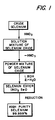
- Figure 1 a flow diagram for an embodiment of the process of the present invention, wherein crude selenium is treated with nitric acid resulting in the formation of a solution of a mixture of selenium oxides. Any excess nitric acid is then removed by distillation and there results a powdered mixture of selenium oxides. To this powdered mixture is added an alcohol, ROH, followed by the azeotropic removal of water. Subsequent to distillation there results a pure selenium ester. This selenium ester is then subjected to a reduction reaction, with hydrazine or sulfur dioxide, for example, resulting in a high purity selenium product, 99.999 percent as determined by emission spectroscopy.
- the pure selenium ester can be obtained from the reaction of crude selenium dioxide, commercially available, or the acid of selenium, H 2 Se0 3 , also commercially available, with an alcohol, ROH, followed by the azeotropic removal of water. Identification, and purity of the selenium ester was determined by infrared analysis, nuclear magnetic resonance, (NMR), mass spectroscopy, ultraviolet, and elemental analysis for carbon, hydrogen, and oxygen.
Landscapes
- Chemical & Material Sciences (AREA)
- Organic Chemistry (AREA)
- Engineering & Computer Science (AREA)
- Manufacturing & Machinery (AREA)
- Geology (AREA)
- Geochemistry & Mineralogy (AREA)
- Life Sciences & Earth Sciences (AREA)
- General Life Sciences & Earth Sciences (AREA)
- Materials Engineering (AREA)
- Mechanical Engineering (AREA)
- Metallurgy (AREA)
- Environmental & Geological Engineering (AREA)
- Inorganic Chemistry (AREA)
- Organic Low-Molecular-Weight Compounds And Preparation Thereof (AREA)
Claims (13)

Applications Claiming Priority (2)
| Application Number | Priority Date | Filing Date | Title |
|---|---|---|---|
| US404259 | 1982-08-02 | ||
| US06/404,259 US4548800A (en) | 1982-08-02 | 1982-08-02 | Process for selenium purification |
Publications (2)
| Publication Number | Publication Date |
|---|---|
| EP0103383A1 EP0103383A1 (de) | 1984-03-21 |
| EP0103383B1 true EP0103383B1 (de) | 1986-09-24 |
Family
ID=23598862
Family Applications (1)
| Application Number | Title | Priority Date | Filing Date |
|---|---|---|---|
| EP83304388A Expired EP0103383B1 (de) | 1982-08-02 | 1983-07-29 | Verfahren zur Reinignung von Selen |
Country Status (5)
| Country | Link |
|---|---|
| US (1) | US4548800A (de) |
| EP (1) | EP0103383B1 (de) |
| JP (1) | JPS5935007A (de) |
| CA (1) | CA1178027A (de) |
| DE (1) | DE3366462D1 (de) |
Families Citing this family (18)
| Publication number | Priority date | Publication date | Assignee | Title |
|---|---|---|---|---|
| US4530718A (en) * | 1984-03-29 | 1985-07-23 | Xerox Corporation | Process for reclamation of high purity selenium from scrap alloys |
| US4645619A (en) * | 1985-05-28 | 1987-02-24 | Xerox Corporation | Process for the preparation of colloidal dispersions of chalcogens and chalcogenide alloys |
| JPH0623074B2 (ja) * | 1986-04-18 | 1994-03-30 | 日本板硝子株式会社 | カルコゲナイドガラス用原料の精製方法 |
| WO1989012700A1 (en) * | 1988-06-17 | 1989-12-28 | Fmc Technologies Limited | Recovery of high purity selenium from ores, scrubber sludges, anode slime deposits and scrap |
| JPH05216260A (ja) * | 1992-02-05 | 1993-08-27 | Fuji Xerox Co Ltd | 電子写真感光体 |
| US6090290A (en) * | 1994-01-25 | 2000-07-18 | Xerox Corporation | Selenium removal methods |
| IL129718A0 (en) * | 1999-05-02 | 2000-02-29 | Yeda Res & Dev | Synthesis of nanotubes of transition metal chalcogenides |
| CN100389058C (zh) * | 2005-04-19 | 2008-05-21 | 北京天天硒旺纳米生物技术有限公司 | 负载型纳米硒及其制备方法 |
| DE102005046908A1 (de) * | 2005-09-30 | 2007-04-05 | Merck Patent Gmbh | Elektrochemische Abscheidung von Selen in ionischen Flüssigkeiten |
| EP1780800A3 (de) * | 2005-11-01 | 2007-07-11 | Fujifilm Corporation | Strahlungsbildtafel bildende Fotoleiterschicht und Strahlungsbildtafel |
| CN100411975C (zh) * | 2006-09-29 | 2008-08-20 | 先导(清远)稀有金属化工有限公司 | 高纯硒的生产设备及生产工艺 |
| US20100329970A1 (en) * | 2009-03-04 | 2010-12-30 | Solar Applied Materials Technology Corp. | Method for recovery of copper, indium, gallium, and selenium |
| CN102296178A (zh) * | 2010-06-25 | 2011-12-28 | 光洋应用材料科技股份有限公司 | 铜铟镓硒的回收方法 |
| KR101350293B1 (ko) * | 2011-11-23 | 2014-01-13 | 한라비스테온공조 주식회사 | 차량용 공조장치 |
| CN103199148B (zh) * | 2012-01-09 | 2015-10-21 | 格林美股份有限公司 | 从废旧薄膜太阳能电池中回收镓、铟、锗的方法 |
| CN109231175A (zh) * | 2018-11-14 | 2019-01-18 | 昆明理工大学 | 一种用无水乙醇提纯粗硒的方法 |
| CN112914109B (zh) * | 2021-02-05 | 2022-12-20 | 陈玉祥 | 一种肽纳米硒的制备方法及应用 |
| CN113460975A (zh) * | 2021-08-06 | 2021-10-01 | 江西中晶新材料有限公司 | 一种5n硒的生产方法 |
Family Cites Families (14)
| Publication number | Priority date | Publication date | Assignee | Title |
|---|---|---|---|---|
| NL63032C (de) * | 1944-04-06 | 1900-01-01 | ||
| US2481739A (en) * | 1946-02-23 | 1949-09-13 | Radio Receptor Company Inc | Rectifiers |
| US2860954A (en) * | 1953-08-18 | 1958-11-18 | Vickers Inc | Method of producing purified selenium from selenious acid solution containing impurities |
| US2875103A (en) * | 1956-06-07 | 1959-02-24 | Westinghouse Brake And Sigual | Method of manufacturing selenium rectifiers |
| DE1948694C3 (de) * | 1969-09-26 | 1979-06-21 | Licentia Patent-Verwaltungs-Gmbh | Verfahren zur Reinigung von Selen |
| JPS4930329B1 (de) * | 1970-09-19 | 1974-08-12 | ||
| DE2263407A1 (de) * | 1972-12-21 | 1974-06-27 | Siemens Ag | Verfahren zum reinigen von selen |
| US4175959A (en) * | 1974-06-21 | 1979-11-27 | Xerox Corporation | Precipitation of particulate trigonal selenium for use in electrophotography |
| US3954951A (en) * | 1974-08-06 | 1976-05-04 | Xerox Corporation | Preparation of red amorphous selenium |
| US4009249A (en) * | 1974-08-06 | 1977-02-22 | Xerox Corporation | Preparation of red amorphous selenium |
| US4007255A (en) * | 1974-08-06 | 1977-02-08 | Xerox Corporation | Preparation of red amorphous selenium |
| US4015029A (en) * | 1975-06-27 | 1977-03-29 | Xerox Corporation | Selenium and selenium alloy evaporation technique |
| US4122030A (en) * | 1977-09-19 | 1978-10-24 | Xerox Corporation | Formation of colloidal dispersions of selenium by the locus control method |
| US4121981A (en) * | 1977-09-23 | 1978-10-24 | Xerox Corporation | Electrochemical method for forming a selenium-tellurium layer in a photoreceptor |
-
1982
- 1982-08-02 US US06/404,259 patent/US4548800A/en not_active Expired - Fee Related
-
1983
- 1983-07-11 CA CA000432207A patent/CA1178027A/en not_active Expired
- 1983-07-25 JP JP58135658A patent/JPS5935007A/ja active Granted
- 1983-07-29 DE DE8383304388T patent/DE3366462D1/de not_active Expired
- 1983-07-29 EP EP83304388A patent/EP0103383B1/de not_active Expired
Also Published As
| Publication number | Publication date |
|---|---|
| DE3366462D1 (en) | 1986-10-30 |
| JPH0422845B2 (de) | 1992-04-20 |
| JPS5935007A (ja) | 1984-02-25 |
| US4548800A (en) | 1985-10-22 |
| EP0103383A1 (de) | 1984-03-21 |
| CA1178027A (en) | 1984-11-20 |
Similar Documents
| Publication | Publication Date | Title |
|---|---|---|
| EP0103383B1 (de) | Verfahren zur Reinignung von Selen | |
| EP0102753B1 (de) | Verfahren zur Herstellung von hochreinem Tellur | |
| EP0102754B1 (de) | Verfahren zur Rückgewinnung von hochreinem Selen, Tellur und Arsen aus Abfall-Legierungen | |
| US4484945A (en) | Process for preparation of chalcogenide alloys by solution coreduction of a mixture of oxides | |
| CN117693513A (zh) | 二有机锡二卤化物的制备 | |
| EP0101238B1 (de) | Verfahren zur Herstellung von Chalcogenidlegierungen durch Koreduktion von Esters | |
| US4576634A (en) | Process for the preparation of chalcogenide alloys | |
| EP0130661B1 (de) | Herstellung von Chalcogenlegierungen durch elektrochemische Coreduktion von Estern | |
| EP0157514B1 (de) | Verfahren zur Rückgewinnung von sehr reinem Selen | |
| US4557922A (en) | Process for preparation of chalcogens and chalcogenide alloys of controlled average crystallite size | |
| US4448646A (en) | Process for preparation of high purity metals by the electrochemical reduction of chalcogenide esters | |
| US4645619A (en) | Process for the preparation of colloidal dispersions of chalcogens and chalcogenide alloys | |
| US4863508A (en) | Process for the preparation of chalcogenide alloys by the solution oxidation of alkaline selenium and alkaline tellurium compounds | |
| US4624701A (en) | Coreduction process for incorporation of halogens into chalcogens and chalcogenide alloys | |
| US4520010A (en) | Process for modifying the electrical properties of selenium, and selenium alloys | |
| US4097273A (en) | Arsenic/selenium recovery | |
| JPH11286492A (ja) | 塩素不含のテトラアルコキシシランの連続的製造法 | |
| JPS56118024A (en) | Preparation of high-purity alkylene glycol | |
| JPS638747A (ja) | 長波長光用電子写真感光体の製造方法 |
Legal Events
| Date | Code | Title | Description |
|---|---|---|---|
| PUAI | Public reference made under article 153(3) epc to a published international application that has entered the european phase |
Free format text: ORIGINAL CODE: 0009012 |
|
| AK | Designated contracting states |
Designated state(s): BE DE FR GB NL |
|
| 17P | Request for examination filed |
Effective date: 19840710 |
|
| GRAA | (expected) grant |
Free format text: ORIGINAL CODE: 0009210 |
|
| AK | Designated contracting states |
Kind code of ref document: B1 Designated state(s): BE DE FR GB NL |
|
| REF | Corresponds to: |
Ref document number: 3366462 Country of ref document: DE Date of ref document: 19861030 |
|
| ET | Fr: translation filed | ||
| PLBE | No opposition filed within time limit |
Free format text: ORIGINAL CODE: 0009261 |
|
| STAA | Information on the status of an ep patent application or granted ep patent |
Free format text: STATUS: NO OPPOSITION FILED WITHIN TIME LIMIT |
|
| 26N | No opposition filed | ||
| PGFP | Annual fee paid to national office [announced via postgrant information from national office to epo] |
Ref country code: BE Payment date: 19910524 Year of fee payment: 9 |
|
| PGFP | Annual fee paid to national office [announced via postgrant information from national office to epo] |
Ref country code: GB Payment date: 19910604 Year of fee payment: 9 |
|
| PGFP | Annual fee paid to national office [announced via postgrant information from national office to epo] |
Ref country code: FR Payment date: 19910619 Year of fee payment: 9 |
|
| PGFP | Annual fee paid to national office [announced via postgrant information from national office to epo] |
Ref country code: NL Payment date: 19910731 Year of fee payment: 9 |
|
| PGFP | Annual fee paid to national office [announced via postgrant information from national office to epo] |
Ref country code: DE Payment date: 19910830 Year of fee payment: 9 |
|
| PG25 | Lapsed in a contracting state [announced via postgrant information from national office to epo] |
Ref country code: GB Effective date: 19920729 |
|
| PG25 | Lapsed in a contracting state [announced via postgrant information from national office to epo] |
Ref country code: BE Effective date: 19920731 |
|
| BERE | Be: lapsed |
Owner name: XEROX CORP. Effective date: 19920731 |
|
| PG25 | Lapsed in a contracting state [announced via postgrant information from national office to epo] |
Ref country code: NL Effective date: 19930201 |
|
| NLV4 | Nl: lapsed or anulled due to non-payment of the annual fee | ||
| GBPC | Gb: european patent ceased through non-payment of renewal fee |
Effective date: 19920729 |
|
| PG25 | Lapsed in a contracting state [announced via postgrant information from national office to epo] |
Ref country code: FR Effective date: 19930331 |
|
| PG25 | Lapsed in a contracting state [announced via postgrant information from national office to epo] |
Ref country code: DE Effective date: 19930401 |
|
| REG | Reference to a national code |
Ref country code: FR Ref legal event code: ST |