EP0091024A1 - Verfahren zum Verfestigen von radioaktiven Abfallstoffen - Google Patents
Verfahren zum Verfestigen von radioaktiven Abfallstoffen Download PDFInfo
- Publication number
- EP0091024A1 EP0091024A1 EP83102936A EP83102936A EP0091024A1 EP 0091024 A1 EP0091024 A1 EP 0091024A1 EP 83102936 A EP83102936 A EP 83102936A EP 83102936 A EP83102936 A EP 83102936A EP 0091024 A1 EP0091024 A1 EP 0091024A1
- Authority
- EP
- European Patent Office
- Prior art keywords
- container
- radioactive waste
- alkali silicate
- silicate
- process according
- Prior art date
- Legal status (The legal status is an assumption and is not a legal conclusion. Google has not performed a legal analysis and makes no representation as to the accuracy of the status listed.)
- Granted
Links
- 239000002901 radioactive waste Substances 0.000 title claims abstract description 42
- 238000000034 method Methods 0.000 title claims abstract description 32
- 239000003795 chemical substances by application Substances 0.000 claims abstract description 52
- BPQQTUXANYXVAA-UHFFFAOYSA-N Orthosilicate Chemical compound [O-][Si]([O-])([O-])[O-] BPQQTUXANYXVAA-UHFFFAOYSA-N 0.000 claims abstract description 46
- VYPSYNLAJGMNEJ-UHFFFAOYSA-N Silicium dioxide Chemical compound O=[Si]=O VYPSYNLAJGMNEJ-UHFFFAOYSA-N 0.000 claims abstract description 40
- 229910052910 alkali metal silicate Inorganic materials 0.000 claims abstract description 27
- 239000002253 acid Substances 0.000 claims abstract description 26
- 239000000203 mixture Substances 0.000 claims abstract description 20
- 239000000377 silicon dioxide Substances 0.000 claims abstract description 20
- 238000010306 acid treatment Methods 0.000 claims abstract description 8
- 229910010272 inorganic material Inorganic materials 0.000 claims description 19
- 239000011147 inorganic material Substances 0.000 claims description 19
- 239000004927 clay Substances 0.000 claims description 10
- 239000008188 pellet Substances 0.000 claims description 9
- 238000007711 solidification Methods 0.000 claims description 9
- 230000008023 solidification Effects 0.000 claims description 9
- HEMHJVSKTPXQMS-UHFFFAOYSA-M Sodium hydroxide Chemical compound [OH-].[Na+] HEMHJVSKTPXQMS-UHFFFAOYSA-M 0.000 claims description 6
- 239000000843 powder Substances 0.000 claims description 6
- 239000011247 coating layer Substances 0.000 claims description 4
- 238000004090 dissolution Methods 0.000 claims description 4
- 239000004567 concrete Substances 0.000 claims description 3
- 229920000642 polymer Polymers 0.000 claims description 3
- XLUBVTJUEUUZMR-UHFFFAOYSA-B silicon(4+);tetraphosphate Chemical group [Si+4].[Si+4].[Si+4].[O-]P([O-])([O-])=O.[O-]P([O-])([O-])=O.[O-]P([O-])([O-])=O.[O-]P([O-])([O-])=O XLUBVTJUEUUZMR-UHFFFAOYSA-B 0.000 claims description 3
- 239000004115 Sodium Silicate Substances 0.000 claims description 2
- 238000012856 packing Methods 0.000 claims description 2
- 229910052911 sodium silicate Inorganic materials 0.000 claims description 2
- NTHWMYGWWRZVTN-UHFFFAOYSA-N sodium silicate Chemical group [Na+].[Na+].[O-][Si]([O-])=O NTHWMYGWWRZVTN-UHFFFAOYSA-N 0.000 claims description 2
- 230000002194 synthesizing effect Effects 0.000 claims description 2
- 238000004898 kneading Methods 0.000 claims 1
- 238000002386 leaching Methods 0.000 description 16
- XLYOFNOQVPJJNP-UHFFFAOYSA-N water Substances O XLYOFNOQVPJJNP-UHFFFAOYSA-N 0.000 description 16
- 239000004568 cement Substances 0.000 description 10
- 238000011049 filling Methods 0.000 description 10
- 239000010410 layer Substances 0.000 description 10
- 239000002699 waste material Substances 0.000 description 9
- 239000002734 clay mineral Substances 0.000 description 8
- 150000002500 ions Chemical class 0.000 description 6
- 239000012857 radioactive material Substances 0.000 description 6
- 239000011398 Portland cement Substances 0.000 description 4
- 238000004519 manufacturing process Methods 0.000 description 4
- 238000005453 pelletization Methods 0.000 description 4
- XEEYBQQBJWHFJM-UHFFFAOYSA-N Iron Chemical group [Fe] XEEYBQQBJWHFJM-UHFFFAOYSA-N 0.000 description 3
- KWYUFKZDYYNOTN-UHFFFAOYSA-M Potassium hydroxide Chemical compound [OH-].[K+] KWYUFKZDYYNOTN-UHFFFAOYSA-M 0.000 description 3
- 229910001417 caesium ion Inorganic materials 0.000 description 3
- 238000010586 diagram Methods 0.000 description 3
- 229910001679 gibbsite Inorganic materials 0.000 description 3
- 239000004033 plastic Substances 0.000 description 3
- 229920003023 plastic Polymers 0.000 description 3
- 238000010298 pulverizing process Methods 0.000 description 3
- 239000011734 sodium Substances 0.000 description 3
- 238000012360 testing method Methods 0.000 description 3
- DGAQECJNVWCQMB-PUAWFVPOSA-M Ilexoside XXIX Chemical compound C[C@@H]1CC[C@@]2(CC[C@@]3(C(=CC[C@H]4[C@]3(CC[C@@H]5[C@@]4(CC[C@@H](C5(C)C)OS(=O)(=O)[O-])C)C)[C@@H]2[C@]1(C)O)C)C(=O)O[C@H]6[C@@H]([C@H]([C@@H]([C@H](O6)CO)O)O)O.[Na+] DGAQECJNVWCQMB-PUAWFVPOSA-M 0.000 description 2
- FYYHWMGAXLPEAU-UHFFFAOYSA-N Magnesium Chemical compound [Mg] FYYHWMGAXLPEAU-UHFFFAOYSA-N 0.000 description 2
- AZDRQVAHHNSJOQ-UHFFFAOYSA-N alumane Chemical group [AlH3] AZDRQVAHHNSJOQ-UHFFFAOYSA-N 0.000 description 2
- 229910052782 aluminium Inorganic materials 0.000 description 2
- XAGFODPZIPBFFR-UHFFFAOYSA-N aluminium Chemical compound [Al] XAGFODPZIPBFFR-UHFFFAOYSA-N 0.000 description 2
- 229910052916 barium silicate Inorganic materials 0.000 description 2
- HMOQPOVBDRFNIU-UHFFFAOYSA-N barium(2+);dioxido(oxo)silane Chemical compound [Ba+2].[O-][Si]([O-])=O HMOQPOVBDRFNIU-UHFFFAOYSA-N 0.000 description 2
- 239000011230 binding agent Substances 0.000 description 2
- GUJOJGAPFQRJSV-UHFFFAOYSA-N dialuminum;dioxosilane;oxygen(2-);hydrate Chemical group O.[O-2].[O-2].[O-2].[Al+3].[Al+3].O=[Si]=O.O=[Si]=O.O=[Si]=O.O=[Si]=O GUJOJGAPFQRJSV-UHFFFAOYSA-N 0.000 description 2
- 238000001035 drying Methods 0.000 description 2
- 239000010419 fine particle Substances 0.000 description 2
- 229910052500 inorganic mineral Inorganic materials 0.000 description 2
- 239000011777 magnesium Substances 0.000 description 2
- 229910052749 magnesium Inorganic materials 0.000 description 2
- 239000000463 material Substances 0.000 description 2
- 239000011707 mineral Substances 0.000 description 2
- 239000000178 monomer Substances 0.000 description 2
- 239000003208 petroleum Substances 0.000 description 2
- 239000002994 raw material Substances 0.000 description 2
- 150000003839 salts Chemical class 0.000 description 2
- 229910052708 sodium Inorganic materials 0.000 description 2
- 239000002689 soil Substances 0.000 description 2
- 230000008961 swelling Effects 0.000 description 2
- NWUYHJFMYQTDRP-UHFFFAOYSA-N 1,2-bis(ethenyl)benzene;1-ethenyl-2-ethylbenzene;styrene Chemical compound C=CC1=CC=CC=C1.CCC1=CC=CC=C1C=C.C=CC1=CC=CC=C1C=C NWUYHJFMYQTDRP-UHFFFAOYSA-N 0.000 description 1
- 239000005995 Aluminium silicate Substances 0.000 description 1
- XUIMIQQOPSSXEZ-UHFFFAOYSA-N Silicon Chemical group [Si] XUIMIQQOPSSXEZ-UHFFFAOYSA-N 0.000 description 1
- 238000010521 absorption reaction Methods 0.000 description 1
- 239000003463 adsorbent Substances 0.000 description 1
- 238000004220 aggregation Methods 0.000 description 1
- 230000002776 aggregation Effects 0.000 description 1
- 150000001447 alkali salts Chemical class 0.000 description 1
- PNEYBMLMFCGWSK-UHFFFAOYSA-N aluminium oxide Inorganic materials [O-2].[O-2].[O-2].[Al+3].[Al+3] PNEYBMLMFCGWSK-UHFFFAOYSA-N 0.000 description 1
- 235000012211 aluminium silicate Nutrition 0.000 description 1
- 239000011449 brick Substances 0.000 description 1
- WUKWITHWXAAZEY-UHFFFAOYSA-L calcium difluoride Chemical compound [F-].[F-].[Ca+2] WUKWITHWXAAZEY-UHFFFAOYSA-L 0.000 description 1
- 239000000084 colloidal system Substances 0.000 description 1
- 239000002131 composite material Substances 0.000 description 1
- 238000000748 compression moulding Methods 0.000 description 1
- 238000007796 conventional method Methods 0.000 description 1
- 229910002026 crystalline silica Inorganic materials 0.000 description 1
- 230000006866 deterioration Effects 0.000 description 1
- 239000012153 distilled water Substances 0.000 description 1
- 230000000694 effects Effects 0.000 description 1
- 239000003925 fat Substances 0.000 description 1
- 230000036571 hydration Effects 0.000 description 1
- 238000006703 hydration reaction Methods 0.000 description 1
- 238000007654 immersion Methods 0.000 description 1
- 239000003456 ion exchange resin Substances 0.000 description 1
- 229920003303 ion-exchange polymer Polymers 0.000 description 1
- 229910052742 iron Inorganic materials 0.000 description 1
- NLYAJNPCOHFWQQ-UHFFFAOYSA-N kaolin Chemical compound O.O.O=[Al]O[Si](=O)O[Si](=O)O[Al]=O NLYAJNPCOHFWQQ-UHFFFAOYSA-N 0.000 description 1
- 238000005259 measurement Methods 0.000 description 1
- 229910052751 metal Inorganic materials 0.000 description 1
- 239000002184 metal Substances 0.000 description 1
- 238000005065 mining Methods 0.000 description 1
- 238000002156 mixing Methods 0.000 description 1
- 229910052901 montmorillonite Inorganic materials 0.000 description 1
- 239000003921 oil Substances 0.000 description 1
- 239000011368 organic material Substances 0.000 description 1
- 239000002245 particle Substances 0.000 description 1
- 238000006116 polymerization reaction Methods 0.000 description 1
- 238000000746 purification Methods 0.000 description 1
- 230000002285 radioactive effect Effects 0.000 description 1
- 239000012779 reinforcing material Substances 0.000 description 1
- 235000012239 silicon dioxide Nutrition 0.000 description 1
- 239000002002 slurry Substances 0.000 description 1
- 229910021647 smectite Inorganic materials 0.000 description 1
- 238000005476 soldering Methods 0.000 description 1
- 239000007787 solid Substances 0.000 description 1
- 239000002900 solid radioactive waste Substances 0.000 description 1
- 238000001179 sorption measurement Methods 0.000 description 1
- 239000011882 ultra-fine particle Substances 0.000 description 1
Images
Classifications
-
- G—PHYSICS
- G21—NUCLEAR PHYSICS; NUCLEAR ENGINEERING
- G21F—PROTECTION AGAINST X-RADIATION, GAMMA RADIATION, CORPUSCULAR RADIATION OR PARTICLE BOMBARDMENT; TREATING RADIOACTIVELY CONTAMINATED MATERIAL; DECONTAMINATION ARRANGEMENTS THEREFOR
- G21F9/00—Treating radioactively contaminated material; Decontamination arrangements therefor
- G21F9/008—Apparatus specially adapted for mixing or disposing radioactively contamined material
-
- G—PHYSICS
- G21—NUCLEAR PHYSICS; NUCLEAR ENGINEERING
- G21F—PROTECTION AGAINST X-RADIATION, GAMMA RADIATION, CORPUSCULAR RADIATION OR PARTICLE BOMBARDMENT; TREATING RADIOACTIVELY CONTAMINATED MATERIAL; DECONTAMINATION ARRANGEMENTS THEREFOR
- G21F9/00—Treating radioactively contaminated material; Decontamination arrangements therefor
- G21F9/28—Treating solids
- G21F9/30—Processing
- G21F9/301—Processing by fixation in stable solid media
- G21F9/302—Processing by fixation in stable solid media in an inorganic matrix
Definitions
- This invention relates to a process for solidifying a radioactive waste.
- Radioactive waste solidified by using cement is good in stability due to the use of inorganic material. But in the case of using cement, since cement is porous, the leaching amount of radioactive material from the solidified body becomes large when a large amount of radioactive waste is solidified at one time. Therefore, it is necessary to use only a small amount of the waste at one time for solidification, which results in increasing undesirably the number of solidified waste remarkably. Or. the other hand, according to a process for solidifying radioactive wastes by using plastics disclosed in, e.g., Japanese Patent Appln Kokai (Laid-Open) No. 44700/73, the waste can be solidified in larger amount at one time than the case of using cement. But there are another problems in deterioration with the lapse of time, residual stress at the time of solidification, and the like due to the use of organic material. Further, plastics are expensive materials since they are produced from petroleum.
- This invention provides a process for solidifying a radioactive waste which comprises conducting solidification of a radioactive waste using as solidifying agent an alkali silicate composition comprising an alkali silicate and a curing agent in a container, said alkali silicate being obtained by acid treating acid earth to remove basic components by dissolution to give activated clay, acid treating the activated clay to completely remove the basic components to give amorphous reactive silica and synthesizing the alkali silicate using said silica as silicate source.
- radioactive waste there can be used solid ones obtained, for example, by drying and pulverizing a radioactive waste (major component: Na 2 S0 4 ) generated in an atomic power plant, etc. by a conventional method, or by drying and pulverizing a slurry of spent ion exchange resin by a dryer.
- a radioactive waste major component: Na 2 S0 4
- a slurry of spent ion exchange resin by a dryer.
- These solid radioactive wastes can be used in the form of powder obtained by using a conventional process, preferably in the form of pellets obtained by granulating a powdered waste and pelletizing the granulated waste by using a conventional process.
- silicate solidifying agent used in this invention will be explained in detail below.
- Activated clay which is obtained by removing basic components by dissolution from acid earth belonging to clay minerals by acid treatment, is used as mineral adsorbent and decolorizing agent.
- silicate solidifying agent obtained by using as silicate source such an activated clay having ion adsorbing properties and solidifying a radioactive waste
- the resulting solidified product is surprisingly able to control the leaching of the radioactive material at very low level and excellent in resistance to weathering for a long period of time due to the use of inorganic material, and is low in production cost due to the use of inexpensive clay minerals.
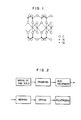
- Acid earth belongs to montmorillonite group, which is smectite series clay minerals and has a fundamental structure as shown in Fig. 1, wherein a gibbsite layer of aluminum is sandwiched between two silica layers to form a silica-alumina-silica three-layer structure as a unit body. Layers of the unit body are bonded loosely along the c axis by water. Usually, some of aluminum atoms in the central gibbsite layer are replaced by magnesium and/or iron atoms and some of silicon atoms in the both silica layers are often replaced by aluminum atoms.
- the basic components such as aluminum, iron, magnesium, etc. contained in acid earth are extremely easily released by an acid. This is quite different in properties from other clays such as kaolin clays, etc.
- acid earth having the above-mentioned three-layer structure seems to be obtained by denaturing liparite and siliceous tuff by mainly alkaline hot spring, coordinating water to form clay, and subjecting to surface weathering.
- raw soils of acid earth in natural occurrence contains about 40 to 45% by weight of water, consists of very fine particles and has properties as colloid. Further, when such very fine particles are sufficiently swelled in water and suspended and dispersed, these particles show properties not precipitated nor separated easily.
- Activated clay When acid earth is acid treated by a conventional process to remove the basic components contained therein by dissolution, it becomes porous and active in electrochemical properties to give so-called "activated clay” having remarkably strengthened adsorption.
- Activated clay is usually used as a mineral adsorbing agent or decolorizing agent in decolorizing and purification of petroleum, fats and oils, etc.
- the alumina in the central gibbsite layer of three-layer structure of montmorillonite is remove to give amorphous reactive silica having a residual skelton based on the layer structure.
- the thus obtained silica has a gel structure, -OH groups and a specific surface area per unit weight of 50 to 500 m 2 /g.
- Such a specific surface area of 50 to 500 m 2 /g is extremely large compared with that of silica obtained by pulverizing crystalline silica, i.e., 1 m 2 /g or less.
- such a silica consists of an aggregation of colloidal ultra-fine particles having a very large specific surface area and has a hydration ability for retaining water, which properties are typical ones for general clays.
- an alkali silicate is synthesized by reacting the silica with an alkali salt such as sodium hydroxide, potassium hydroxide, by a conventional process.
- the silicate solidifying agent (or the alkali silicate composition) can be prepared by mixing such an alkali silicate with a curing agent such as silicon phosphate.
- the silicate solidifying agent may further contain a curing aid such as sodium silicofluoride, an improver for composition such as barium silicate, an aggregate such as cement, etc.
- a preferred silicate solidifying composition is 40- 65 parts by weight of an alkali silicate, 25 - 35. parts by weight of a curing aid, 1 - 10 parts by weight of a curing agent, 10-20 parts by weight of improver and 5-15 parts by weight of aggregate, a total being 100 parts by weight.
- a more preferable composition comprises 44% of alikali silicate, 29% of sodium silicofluoride, 4% of silicon phosphate, 16% of barium silicate and 7% of cement, all percents being by weight.
- the silicate solidifying agent is produced by using inexpensive clay as raw material, the production cost is low. Further the alkali silicate has ion adsorbing properties which are common to general clay minerals, so that when it is used as solidifying agent for radioactive wastes, it adsorbs radioactive ions and can control the leaching rate of radioactive materials from the solidified radioactive wastes at a very low level.
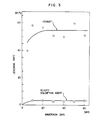
- Fig. 3 shows the results of measurements of leaching rates by a cold test using Cs salt.
- Test pieces having a size of 35 mm in diameter and 36 mm long and containing about 0.14 g of a Cs salt are prepared by using portland cement or the silicate solidifying agent and the leaching rate of Cs ions is measured by immersing the test pieces in about 50 ml of distilled water for predetermined days.
- the concentration of Cs ions released into the water is measured by an atomic absorption method and the leaching rate is determined.
- the leaching rate in the case of using the silicate solidifying agent is about 1/17 time as small as that in the case of using portland cement, and thus the silicate solidifying agent is excellent in resistance to leaching.
- the silicate solidifying agent (or the alkali silicate composition) is a proper solidifying agent for radioactive wastes from the economical point of view and from the viewpoint of properties such as having ion adsorbing function inherently and excellent resistance to weathering for a long period of time because of inorganic material.
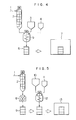
- a radioactive waste supplied from a supplying line 1 is dried in a dryer 2.
- the resulting dried radioactive waste powder obtained from the dryer 2, a silicate solidifying agent from a solidifying tank 3 and water from an additional water tank 4 are mixed uniformly (water content 15-25% by weight) in a mixer 5.
- the resulting mixture is filled in a container 6 (a drum), and then transferred to a solidified body-curing chamber 7 and cured at room temperature (20°C) for about 4 hours, followed by complete curing therein within 2 to 4 days.
- the silicate solidifying agent there is used an alkali silicate composition containing sodium silicate obtained from acid earth by acid treatment.
- the curing time can be reduced to 1/4- 1/7 of the case using a conventional cement (portland cement).
- Fig. 5 shows another example of the process of this invention wherein radioactive waste pellets obtained by granulating and pelletizing dried powdered radioactive waste are used.
- a radioactive waste taken out of a drier 2 is granulated by a granulator 8, followed by pelletization.
- the resulting waste pellets are packed in a container 9 in a predetermined amount.
- a silicate solidifying agent from a solidifying tank 10 and water from an additional water tank 11 are mixed in a mixer 12 to give a paste containing 15 to 25% by weight of water.
- the paste is then poured into the container 9 to fill spaces formed by the pellets, followed by complete curing in a solidified body-curing chamber 13 as mentioned as to Fig. 4.
- Other portions are the same as explained in Fig. 4.
- the radioactive wastes are solidified by the alkali silicate composition (the silicate solidifying agent) prepared by using as silicate source the special silica obtained from acid earth which is clay minerals.
- the silicate solidifying agent has ion adsorbing properties which are common to general clay minerals and the ion adsorbing properties make it possible to control the leaching of radioactive materials from the solidified radioactive waste at a very low level (the leaching rate being about 1/17 compared with the case of using portland cement) showing high safety.
- the silicate solidifying agent can be produced with a low cost, the production cost being about 1/3 or less compared with the case of using plastics now studied as solidifying agent.
- the major component of the silicate solidifying agent is made from inorganic materials and can give excellent weather resistance for a long period of time, the silicate solidifying agent is a very excellent material for solidifying radioactive wastes.
- the above-mentioned examples show processes for solidifying radioactive wastes to give solidified bodies excellent in weather resistance for a long period of time and resistance to leaching, with a low cost by using the alkali silicate composition containing an alkali silicate prepared by using as silicate source the special silica obtained from clay minerals of acid earth.
- Such processes can be improved remarkably by the processes mentioned below giving solidified bodies more excellent in the weather resistance and the resistance to leaching with a low cost than the above-mentioned case.
- Containers made from inorganic materials are inexpensive and excellent in weather resistance.
- the containers made from inorganic materials there can be used PIC (polymer impregnated concrete) containers.
- the PIC container is a container made from a composite material obtained by forming a container by using cement, impregnating the cement-made container with a polymerizable monomer, and conducting the polymerization of the monomer.
- the PIC container has particularly excellent weather resistance and water resistance (resistance to leaching, resistance to swelling).
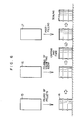
- Fig. 6 is a flow diagram showing the whole process of one embodiment of such improved processes according to this invention.
- Numeral 14 is a drum having a thin PIC container therein tightly adhered to the inside walls of the drum.
- the inside of the thin PIC container is previously coated with the silicate solidifying agent.
- Radioactive waste pellets obtained by compression molding powdered radioactive waste are supplied from a pelletizing apparatus for waste 15 to the drum 14.
- the silicate solidifying agent containing an alkali silicate prepared by using as silicate source the special silica obtained from acid earth is poured from a solidifying agent pouring apparatus 16 into spaces among the pellets.
- the container is capped with a cap having two or more openings for post-filling and bonded by using an inorganic binder.
- the container is allowed to stand for cure under predetermined conditions. After cured for a predetermined time, the container is transported to a post-filling area, where the same solidifying agent as used previously is poured from a post-filling apparatus 17 through two or more openings in the cap into the vacant space formed in the upper portion of the container to post-fill and remove the vacant space. Finally, the openings are sealed by using stoppers and the like.
- the post-filling is not always necessary and thus the post-filling step can be omitted.
- the process as shown in Fig. 6 can also be applied to the case of solidifying uniformly a kneaded mixture of a radioactive waste powder and the silicate solidifying agent.
- the shape and size of the inorganic material container can be determined optionally depending on the needs.
- the thickness of the PIC container can be reduced as small as possible.
- the cost of PIC container and the filling effect of PIC container can be improved while retaining excellent properties such as weather resistance and water resistance of the PIC container as they are.
- the post-filling of the silicate solidifying agent to the vacant space in the upper portion of the PIC container having solidified body therein can be conducted as follows.
- As the lid for the PIC container there can be used one having 2 or more (usually up to 5) openings, one of which is used as a vent for removal of air and the rest of which are used for pouring the silicate solidifying agent.
- the silicate solidifying agent reaches the under portion of the air vent, the pouring of the silicate solidifying agent is stopped and individual openings are sealed by stoppers using an inorganic binder.
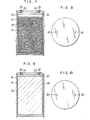
- Fig. 7 is a cross-sectional view of a solidified body obtained according to this invention wherein a thin PIC container 19 is formed inside of a 200-liter drum 18 and the inside of the PIC container is covered by a silicate solidifying agent coating layer 20, and radioactive waste pellets 21 are solidified by using the silicate solidifying agent without voids.
- the solidifying agent is poured from an inlet 23 and filled through a post-filling portion 22 in the vacant space of the upper portion of the container, while removing the air from a vent 24.
- the silicate solidifying agent reaches the under portion of the vent 24, the pouring of the solidifying agent is stopped and the openings are sealed by stoppers 25.
- Fig. 8 is a plan view of the solidified body of Fig. 7 seen from the above.
- Fig. 9 is a cross-sectional view of a uniformly solidified body obtained according to this invention, wherein a uniformly kneaded mixture 26 of a radioactive waste powder and the silicate solidifying agent is solidified, the rest of numerals being the same as in Fig. 7.
- Fig. 10 is a plan view of the solidified body of Fig. 9 seen from the above.
- a drum reinforced with a PIC container is used, but it is possible to use the PIC container alone. Further, it is also possible to use any inorganic material containers other than the PIC container alone or as reinforcing material for a drum or the like metal container.
- a thin inorganic material container such as a thin PIC container can be used for solidifying radioactive wastes and various strength required for finally obtained solidified bodies are satisfied by using such a thin inorganic material container, there can be obtained solidified bodies of radioactive waste with low cost and with high filling rate of the wastes compared with the case of using a thick PIC container; since the silicate soldering agent does not shrink after cured and has good adhesion to an inorganic material (cement, brick, etc.), the strength of a container can be improved without producing vacant spaces due to shrinkage; since the inorganic material container is used, good weather resistance of the solidified bodies can be maintained for a long period of time sufficient for decaying the radioactivity of the wastes in the solidified bodies; since the coating layer of the silicate solidifying agent is formed inside of the inorganic material container, water
Landscapes
- Physics & Mathematics (AREA)
- Engineering & Computer Science (AREA)
- General Engineering & Computer Science (AREA)
- High Energy & Nuclear Physics (AREA)
- Chemical & Material Sciences (AREA)
- Inorganic Chemistry (AREA)
- Processing Of Solid Wastes (AREA)
Applications Claiming Priority (4)
| Application Number | Priority Date | Filing Date | Title |
|---|---|---|---|
| JP4865182A JPS58165099A (ja) | 1982-03-25 | 1982-03-25 | 放射性廃棄物の固化処理方法 |
| JP48652/82 | 1982-03-25 | ||
| JP48651/82 | 1982-03-25 | ||
| JP4865282A JPS58165100A (ja) | 1982-03-25 | 1982-03-25 | 放射性廃棄物の固化処理方法 |
Publications (2)
| Publication Number | Publication Date |
|---|---|
| EP0091024A1 true EP0091024A1 (de) | 1983-10-12 |
| EP0091024B1 EP0091024B1 (de) | 1986-12-10 |
Family
ID=26388950
Family Applications (1)
| Application Number | Title | Priority Date | Filing Date |
|---|---|---|---|
| EP83102936A Expired EP0091024B1 (de) | 1982-03-25 | 1983-03-24 | Verfahren zum Verfestigen von radioaktiven Abfallstoffen |
Country Status (3)
| Country | Link |
|---|---|
| US (1) | US4622175A (de) |
| EP (1) | EP0091024B1 (de) |
| DE (1) | DE3368339D1 (de) |
Families Citing this family (10)
| Publication number | Priority date | Publication date | Assignee | Title |
|---|---|---|---|---|
| US5434333A (en) * | 1992-09-18 | 1995-07-18 | The United States Of America As Represented By The United States Department Of Energy | Method for treating materials for solidification |
| US5678238A (en) * | 1995-09-13 | 1997-10-14 | Richard Billings | Micro encapsulation of hydrocarbons and chemicals |
| PL207400B1 (pl) * | 2001-06-06 | 2010-12-31 | Ammono Społka Z Ograniczoną Odpowiedzialnością | Sposób i urządzenie do otrzymywania objętościowego monokryształu azotku zawierającego gal |
| US7855313B2 (en) * | 2005-02-28 | 2010-12-21 | Energysolutions, Inc. | Low-temperature solidification of radioactive and hazardous wastes |
| US20080004477A1 (en) * | 2006-07-03 | 2008-01-03 | Brunsell Dennis A | Method and device for evaporate/reverse osmosis concentrate and other liquid solidification |
| US8114004B2 (en) * | 2006-12-30 | 2012-02-14 | Brunsell Dennis A | Method and device for evaporate/reverse osmosis concentrate and other liquid solidification |
| CN111056789B (zh) * | 2019-12-11 | 2021-10-22 | 南华大学 | 一种放射性废渣的固化方法 |
| CN114694874A (zh) * | 2020-12-29 | 2022-07-01 | 中广核研究院有限公司 | 核电站中低放废液水泥固化方法 |
| CN114566303B (zh) * | 2022-03-01 | 2024-06-11 | 西南科技大学 | 一种包容含钼放射性废物的改性透辉石玻璃固化体的制备方法 |
| CN114664471B (zh) * | 2022-03-17 | 2023-11-10 | 中国原子能科学研究院 | 一种放射性固体废物水泥固化的方法 |
Citations (3)
| Publication number | Priority date | Publication date | Assignee | Title |
|---|---|---|---|---|
| DE563123C (de) * | 1928-09-14 | 1932-11-04 | I G Farbenindustrie Akt Ges | Verfahren zur Herstellung von Wasserglas |
| BE812192A (en) * | 1974-03-12 | 1974-07-01 | Radioactive or hazardous liquid wastes treatment - to produce solid masses suitable for storage using a silicate carrier soln. | |
| DE2929294A1 (de) * | 1978-07-19 | 1980-01-31 | Hitachi Ltd | Verfahren und vorrichtung zur behandlung radioaktiver abfaelle |
Family Cites Families (12)
| Publication number | Priority date | Publication date | Assignee | Title |
|---|---|---|---|---|
| US2616847A (en) * | 1951-04-27 | 1952-11-04 | William S Ginell | Disposal of radioactive cations |
| CA965966A (en) * | 1970-01-08 | 1975-04-15 | Jesse R. Conner | Land improvement with waste materials |
| US4036655A (en) * | 1973-09-14 | 1977-07-19 | Sumitomo Chemical Company, Limited | Inorganic composition |
| US3959172A (en) * | 1973-09-26 | 1976-05-25 | The United States Of America As Represented By The United States Energy Research And Development Administration | Process for encapsulating radionuclides |
| US4018616A (en) * | 1974-09-13 | 1977-04-19 | Mizusawa Kagaku Kogyo Kabushiki Kaisha | Water glass composition |
| US3988258A (en) * | 1975-01-17 | 1976-10-26 | United Nuclear Industries, Inc. | Radwaste disposal by incorporation in matrix |
| US4056937A (en) * | 1976-01-08 | 1977-11-08 | Kyokado Engineering Co. Ltd. | Method of consolidating soils |
| DE2603116C2 (de) * | 1976-01-28 | 1983-01-27 | Nukem Gmbh, 6450 Hanau | Verfahren zur Verfestigung von radioaktiven borathaltigen wäßrigen Lösungen und Suspensionen |
| US4173546A (en) * | 1976-07-26 | 1979-11-06 | Hayes John F | Method of treating waste material containing radioactive cesium isotopes |
| JPS53140811A (en) * | 1977-05-16 | 1978-12-08 | Kyokado Eng Co | Method and device for injection into ground |
| US4314909A (en) * | 1980-06-30 | 1982-02-09 | Corning Glass Works | Highly refractory glass-ceramics suitable for incorporating radioactive wastes |
| US4328033A (en) * | 1981-05-04 | 1982-05-04 | Ppg Industries, Inc. | Curable silicate composition containing metal condensed phosphate hardener coated with reaction product from a metal aluminate and/or a metal borate |
-
1983
- 1983-03-24 EP EP83102936A patent/EP0091024B1/de not_active Expired
- 1983-03-24 DE DE8383102936T patent/DE3368339D1/de not_active Expired
- 1983-03-25 US US06/478,994 patent/US4622175A/en not_active Expired - Fee Related
Patent Citations (3)
| Publication number | Priority date | Publication date | Assignee | Title |
|---|---|---|---|---|
| DE563123C (de) * | 1928-09-14 | 1932-11-04 | I G Farbenindustrie Akt Ges | Verfahren zur Herstellung von Wasserglas |
| BE812192A (en) * | 1974-03-12 | 1974-07-01 | Radioactive or hazardous liquid wastes treatment - to produce solid masses suitable for storage using a silicate carrier soln. | |
| DE2929294A1 (de) * | 1978-07-19 | 1980-01-31 | Hitachi Ltd | Verfahren und vorrichtung zur behandlung radioaktiver abfaelle |
Also Published As
| Publication number | Publication date |
|---|---|
| EP0091024B1 (de) | 1986-12-10 |
| DE3368339D1 (en) | 1987-01-22 |
| US4622175A (en) | 1986-11-11 |
Similar Documents
| Publication | Publication Date | Title |
|---|---|---|
| US5169566A (en) | Engineered cementitious contaminant barriers and their method of manufacture | |
| EP0091024B1 (de) | Verfahren zum Verfestigen von radioaktiven Abfallstoffen | |
| JPS6233560B2 (de) | ||
| Cantarel et al. | Geopolymers and their potential applications in the nuclear waste management field-a bibliographical study | |
| CN85103176A (zh) | 放射性废物固化的工艺过程和装置 | |
| US4174293A (en) | Process for disposal of aqueous solutions containing radioactive isotopes | |
| RU2116682C1 (ru) | Способ переработки жидких радиоактивных отходов | |
| JPH0664194B2 (ja) | 使用済イオン交換樹脂のセメント固化処理方法 | |
| KR930004695B1 (ko) | 유기액체 폐기물의 고화방법 | |
| EP0555238B1 (de) | Vorbearbeitete zementverunreinigungssperren und verfahren zu ihrer herstellung | |
| JP2525790B2 (ja) | 放射性廃棄物の固化処理方法 | |
| GB2046499A (en) | Encapsulation of radioactive waste | |
| US5481061A (en) | Method for solidifying radioactive waste | |
| JPS61178698A (ja) | 放射性廃棄物処理用水ガラスの硬化方法 | |
| JPH0460712B2 (de) | ||
| RU2062520C1 (ru) | Способ упаковки радиоактивных отходов и пропиточный состав для обработки поверхности контейнера | |
| US5180542A (en) | Container | |
| JPH032280B2 (de) | ||
| JPH03150499A (ja) | 放射性廃棄物の固化処理方法 | |
| KR20090080713A (ko) | 방사성 폐기물 과립화 방법 및 처리장치 | |
| JP7126580B2 (ja) | ホウ酸塩廃液の処理方法 | |
| KR890005297B1 (ko) | 방사성 폐수의 고화 처리법 | |
| JP7506859B2 (ja) | 廃棄体 | |
| EP0305541A1 (de) | Verfahren zur verfestigung industriellen abfalles und so verfestigter abfall | |
| JPH0522200B2 (de) |
Legal Events
| Date | Code | Title | Description |
|---|---|---|---|
| PUAI | Public reference made under article 153(3) epc to a published international application that has entered the european phase |
Free format text: ORIGINAL CODE: 0009012 |
|
| AK | Designated contracting states |
Designated state(s): CH DE FR GB IT LI NL SE |
|
| 17P | Request for examination filed |
Effective date: 19840227 |
|
| GRAA | (expected) grant |
Free format text: ORIGINAL CODE: 0009210 |
|
| AK | Designated contracting states |
Kind code of ref document: B1 Designated state(s): DE FR GB SE |
|
| REF | Corresponds to: |
Ref document number: 3368339 Country of ref document: DE Date of ref document: 19870122 |
|
| ET | Fr: translation filed | ||
| PLBE | No opposition filed within time limit |
Free format text: ORIGINAL CODE: 0009261 |
|
| STAA | Information on the status of an ep patent application or granted ep patent |
Free format text: STATUS: NO OPPOSITION FILED WITHIN TIME LIMIT |
|
| 26N | No opposition filed | ||
| EAL | Se: european patent in force in sweden |
Ref document number: 83102936.8 |
|
| PGFP | Annual fee paid to national office [announced via postgrant information from national office to epo] |
Ref country code: FR Payment date: 19961218 Year of fee payment: 15 |
|
| PGFP | Annual fee paid to national office [announced via postgrant information from national office to epo] |
Ref country code: SE Payment date: 19961227 Year of fee payment: 15 |
|
| PGFP | Annual fee paid to national office [announced via postgrant information from national office to epo] |
Ref country code: GB Payment date: 19970102 Year of fee payment: 15 |
|
| PGFP | Annual fee paid to national office [announced via postgrant information from national office to epo] |
Ref country code: DE Payment date: 19970327 Year of fee payment: 15 |
|
| PG25 | Lapsed in a contracting state [announced via postgrant information from national office to epo] |
Ref country code: GB Free format text: LAPSE BECAUSE OF NON-PAYMENT OF DUE FEES Effective date: 19980324 |
|
| PG25 | Lapsed in a contracting state [announced via postgrant information from national office to epo] |
Ref country code: SE Free format text: LAPSE BECAUSE OF NON-PAYMENT OF DUE FEES Effective date: 19980325 |
|
| PG25 | Lapsed in a contracting state [announced via postgrant information from national office to epo] |
Ref country code: FR Free format text: THE PATENT HAS BEEN ANNULLED BY A DECISION OF A NATIONAL AUTHORITY Effective date: 19980331 |
|
| GBPC | Gb: european patent ceased through non-payment of renewal fee |
Effective date: 19980324 |
|
| PG25 | Lapsed in a contracting state [announced via postgrant information from national office to epo] |
Ref country code: DE Free format text: LAPSE BECAUSE OF NON-PAYMENT OF DUE FEES Effective date: 19981201 |
|
| EUG | Se: european patent has lapsed |
Ref document number: 83102936.8 |
|
| REG | Reference to a national code |
Ref country code: FR Ref legal event code: ST |