EP0089413B1 - Concentrated emetic herbicidal composition and method for the preparation thereof - Google Patents
Concentrated emetic herbicidal composition and method for the preparation thereof Download PDFInfo
- Publication number
- EP0089413B1 EP0089413B1 EP82111562A EP82111562A EP0089413B1 EP 0089413 B1 EP0089413 B1 EP 0089413B1 EP 82111562 A EP82111562 A EP 82111562A EP 82111562 A EP82111562 A EP 82111562A EP 0089413 B1 EP0089413 B1 EP 0089413B1
- Authority
- EP
- European Patent Office
- Prior art keywords
- emetic
- sodium tripolyphosphate
- pyridine
- dimethyl
- emesis
- Prior art date
- Legal status (The legal status is an assumption and is not a legal conclusion. Google has not performed a legal analysis and makes no representation as to the accuracy of the status listed.)
- Expired
Links
Images
Classifications
-
- A—HUMAN NECESSITIES
- A01—AGRICULTURE; FORESTRY; ANIMAL HUSBANDRY; HUNTING; TRAPPING; FISHING
- A01N—PRESERVATION OF BODIES OF HUMANS OR ANIMALS OR PLANTS OR PARTS THEREOF; BIOCIDES, e.g. AS DISINFECTANTS, AS PESTICIDES OR AS HERBICIDES; PEST REPELLANTS OR ATTRACTANTS; PLANT GROWTH REGULATORS
- A01N25/00—Biocides, pest repellants or attractants, or plant growth regulators, characterised by their forms, or by their non-active ingredients or by their methods of application, e.g. seed treatment or sequential application; Substances for reducing the noxious effect of the active ingredients to organisms other than pests
- A01N25/32—Ingredients for reducing the noxious effect of the active substances to organisms other than pests, e.g. toxicity reducing compositions, self-destructing compositions
-
- A—HUMAN NECESSITIES
- A01—AGRICULTURE; FORESTRY; ANIMAL HUSBANDRY; HUNTING; TRAPPING; FISHING
- A01N—PRESERVATION OF BODIES OF HUMANS OR ANIMALS OR PLANTS OR PARTS THEREOF; BIOCIDES, e.g. AS DISINFECTANTS, AS PESTICIDES OR AS HERBICIDES; PEST REPELLANTS OR ATTRACTANTS; PLANT GROWTH REGULATORS
- A01N43/00—Biocides, pest repellants or attractants, or plant growth regulators containing heterocyclic compounds
- A01N43/34—Biocides, pest repellants or attractants, or plant growth regulators containing heterocyclic compounds having rings with one nitrogen atom as the only ring hetero atom
- A01N43/40—Biocides, pest repellants or attractants, or plant growth regulators containing heterocyclic compounds having rings with one nitrogen atom as the only ring hetero atom six-membered rings
Definitions
- the invention herein described relates to a concentrated herbicidal composition containing a bipyridinium quaternary cation. This compound is notably toxic to warm-blooded animals.
- the composition of the invention promptly induces emesis thereby disgorging the ingested composition.
- the bipyridinium quaternary cation utilized in the composition of the present invention is disclosed as a highly effective herbicidal agent useful for the control of undesirable vegetation in United Kingdom Patent No. 813,531 (1959). This herbicidal agent is commonly referred to as paraquat.
- This compound rapidly destroys green plant tissue primarily by a contact mechanism but with some translocation. Since paraquat is a fast-acting, highly effective herbicidal agent and is rapidly inactivated when in contact with soil, this compound has been accepted by the agricultural industry and used extensively throughout the world for a variety of weed control problems including: control of undesirable weeds in plantation crops, inter-row weed control in vegetable crops, and clearing of weeds from pasture lands.
- Paraquat is generally sold commercially as a 20% aqueous solution of the cation.
- the toxic dose for man has been estimated at 10-15 ml, equivalent to 2400 mg, or 40 mg/kg (60 kg basis).
- the toxic dose for man has been estimated at 10-15 ml, equivalent to 2400 mg, or 40 mg/kg (60 kg basis).
- Up to 20% of the administered dose is absorbed through the mucosa of the stomach and intestines, reaches a maximum blood concentration within about two hours following ingestion, and is then rapidly excreted in the urine. Excretion usually occurs within 48 hours.
- emesis is a reflex act stimulated by afferent neurologic pathways from receptors in the pharynx, stomach, duodenum, heart, kidney, bladder, brain, and semicircular canals to the vomiting center in the medulla, which triggers efferent pathways to the involved muscles of the diaphragm, abdomen, thoracic cage, and the pharyngeal region.
- the reflex is similar in man, dog, swine, and cat, but it is absent in most rodents.
- Emetics may act peripherally by activating receptors in the gastric mucosa, which stimulate the vomiting center, or they may act centrally by stimulating an "emetic chemoreceptor trigger zone" which then stimulates the vomiting center.
- emetics acting peripherally sodium tripolyphosphate and tetrapotassium pyrophosphate.
- Arecotine and apomorphine are typical central-acting emetics, as demonstrated by a blocking of the emetic action by chlorpromazine (Weaver and Griffith, 1969).
- Copper sulfate is an example of an emetic having both a peripheral and a central mode of action.
- Peripheral activity is an important characteristic of an effective emetic since rapid action is necessary and effective dosages are independent of body weight. Thus, a potential emetic need only exceed the threshold dose to trigger the gastric mucosal receptors.
- emetic agents act upon the chemoreceptor trigger zone in the medulla while other agents affect the receptors in the mucosa of the gastrointestinal tract. Still other agents act upon both trigger zones.
- the emetic included in these compositions must be compatible with all of the chemical components of the composition, including the toxicant, surfactant (i.e., wetting agent, detergent, dispersant, or emulsifier), defoamer or pH adjusting agent. It should not adversely affect the biological activity or physical characteristics of the composition to which it is added, nor should it be inactivated by the chemical composition to which it is added. Given these limitations, the finding of a compatible emetic for a given pesticide composition can be a rather complicated and difficult undertaking.
- an object of this invention is to provide an improved emetic herbicidal composition containing a salt of a herbicidal bipyridinium quaternary cation, which following ingestion by humans or animals promptly induces emesis for a limited period of time sufficient to disgorge the ingested toxicant composition.
- a further object of this invention is to provide a concentrated herbicidal composition
- a concentrated herbicidal composition comprising an aqueous solution of a salt of a herbicidal bipyridinium quaternary cation, a surfactant, a synergist for a peripherally-acting emetic, and an emetically-effective amount of a peripherally-acting emetic which activates for a limited time period the receptors in the gastric mucosa of the human or animal that ingests the herbicidal composition.
- a concentrated emetic herbicidal composition comprising an aqueous solution of 100 to 250 mg/ml of a salt of a herbicidal bipyridinium quaternary cation of the structural formula: wherein R is a C l -C 4 alkyl radical and X is an anion; 10 to 20 mg/ml of the peripherally-acting emetic, sodium tripolyphosphate or tetra-potassium pyrophosphate; 5 to 10 mg/ml of the malodorous synergist, pyridine; and 45 to 67.5 mg/ml of a nonionic surfactant.
- R may be selected from methyl, ethyl, n-propyl, n-butyl, i-butyl, sec-butyl, or t-butyl;
- X may be an anion selected from chloride, bromide, sulfate, methyl sulfate, phosphate, acetate, benzoate, p-toluenesulfonate and propionate.
- the preferred compound for use in the compositions of this invention is 1,1'-dimethyl-4,4'-bipyridinium dichloride.
- the compound 1,1'-ethylene-2,2'-bipyridylium dibromide may be substituted for 1,1'-dimethyl-4,4'-bipyridinium dichloride in the compositions of the invention with similar reduction in the health hazards of herbicidal compositions thereof.
- nonionic surfactants which may be employed in the compositions of this invention are: polyoxyethylene ethers of octyl and nonylphenols, polyethylene glycol dioleates; polyoxyalkylene laurates; polyoxyethylene ether of fatty alcohols, polyoxyethylene sorbitan monolaurate and other similar compounds.
- peripherally-acting emetics useful in the present invention are sodium tripolyphosphate and tetrapotassium pyrophosphate.
- Sodium tripolyphosphate is preferred.
- the synergist for the emetic is pyridine.
- the aqueous emetic herbicidal concentrates of the present invention contain water; 100 to 250 mg/ml (preferably 200 to 250 mg/ml) of the bipyridinium quaternary cation; 10 to 20 mg/ml (preferably 10 to 15 mg/ml) of the peripherally-acting emetic; 45 to 67.5 mg/ml of the nonionic surfactant; and 5 to 10 mg/ml (preferably about 5 mg/ml) of pyridine.
- a defoaming agent such as silicone can also be included in the composition in an amount equivalent to 0.5 to 0.75 mg/ml (preferably about 0.5 mg/ml).
- compositions of the invention promptly induce emesis in warm-blooded animals following ingestion.
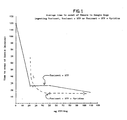
- ingestion of the compositions by a warm-blooded animal in an amount sufficient to provide the animal with 6 to 13 mg of the peripherally-acting emetic and 3 to 4 mg of pyridine per kg of animal body weight, reduces the time to onset of emesis in the animal about 44% when contrasted to animals ingesting a similar composition which provides each animal with only 3 to 4 mg per kg of the peripherally-acting emetic and 1 to 2 mg of pyridine per kg of body weight.
- compositions of the invention animals ingesting these compositions vomit only about one or two times in the first 15 minutes following ingestion; whereas, animals ingesting the same herbicide in a composition containing a centrally-acting emetic show repeated vomiting, i.e., up to ten times in the first two hours following ingestion. In some instances, these latter animals bring up bile from the stomach and faecal matter from the intestinal tract.
- Emetic Dose 99 ED 99
- beagle dogs dosed with 5 ml of a 1.0%, 3.0%, 5.0% or7.5% solution of sodium tripolyphosate.
- sodium tripolyphosphate test solutions were prepared by dissolving appropriate amounts of sodium tripolyphosphate (WN) in tap water.
- All dogs in group A received 5 ml of the 1.0% STP (sodium tripotyphosphate) solution.
- Dogs in group B received 5 ml of the 3.0% STP solution; dogs in Group C received 5 ml of the 5% STP solution, and those in group D received 5 ml of the 7.5% STP solution.
- STP sodium tripotyphosphate
- the dogs were dosed by means of a syringe and metal canula.
- the test solutions were placed at the base of the tongue so that the dogs could swallow the test solutions.
- the total number of emetic responses at each dose level was recorded and subjected to probit analysis to determine the Emetic Dose 99 (ED 99 ).
- test procedures employed including: animal feed, drinking water, housing conditions, dosing technique and observation criteria, were the same as described in Example 1 above, excepting that 5 ml of the test solution described below was administered to the test animals.
- Example 2 The procedure of Example 2 was repeated using four beagle dogs eight to 16 months of age and Neighing 8.0 to 10.8 kg for males and 8.5 to 8.6 kg for females.
- the toxicant formulation administered to the animals had the following composition:
- Example 2 The procedure of Example 2 was repeated using three beagle dogs eight to 16 months of age and weighing 9.6 kg for the male and 6.3 to 7.4 kg for the females.
- the toxicant formulation administered to the animals had the following composition:
- Example 2 The procedure of Example 2 was repeated using beagle dogs 12 to 24 months of age and weighing 8.2 to 12.7 kg for the males and 7.2 to 8.5 kg for the females.
- the toxicant formulations administered to the animals had the following compositions:
- Example 2 The procedure of Example 2 was repeated using beagle dogs eight to 16 months of age and weighing 7.3 to 9.5 kg for males and 7.8 kg for females.
- the toxicant formulation administered to the animals had the following composition.
- One ml of the above formulation provides each animal with 21.8 mg STP, no pyridine, no silicone defoamer, 177.2 mg of the toxicant 1,1'-dimethyl-4,4'-bipyridinium dichloride and 48.90 mg of the surfactant nonylphenol condensed with 20 moles of ethylene oxide.
- the toxicant formulation administered to the animals had the following composition.
- 2.5 ml of the above formulation provides each animal with 25 mg STP, 12.5 mg pyridine, 1.25 mg silicone defoamer, 443 mg (cation) of the toxicant 1,1'-dimethyl-4,4'-bipyridinium dichloride and 168.75 mg of the surfactant nonylphenol condensed with 20 moles of ethylene oxide.
- Example 2 Eight to 16 month old beagle dogs weighing 10.6 kg to 10.8 kg for males and 6.5 kg to 10.5 kg for females are administered 5 ml of an aqueous solution containing 18.07% WN of 1,1'-dimethyl-4,4'-bipyridinium dichloride, 1 % WN of sodium tripolyphosphate, no pyridine, and no silicone defoamer.
- the solution administered to said dogs had the following composition.
- Example 2 Eight to 16 month old beagle dogs weighing 7.4 to 7.6 kg for males and 6.8 kg to 7.3 kg for females were administered 5 ml of an aqueous solution containing 9.07% WN (cation) of 1,1'-dimethyl-4,4'-bipyridinium dichloride, 0.50% WN of sodium tripolyphosphate, 0.25% WN of sodium tripolyphosphate, 3.375% WN of nonylphenol condensed with 20 moles of ethylene oxide and 0.025% WN of silicone defoamer.
- the solution administered to said dogs had the following composition.
- Example 2 The procedure of Example 2 was repeated using 10 beagle dogs eight to 16 months of age and weighing 7.7 to 8.7 kg for males and 5.5 to 7.5 for females.
- the toxicant formulation administered to the animals had the following composition:
- the animals were dosed with 1.8 ml of the test solution which provides the animal with 27 mg of STP, 9 mg of pyridine, 0.9 mg of silicone defoamer, 341.3 mg (cation) of the toxicant 1,1'-dimethyl-4,4'-bipyridinium dichloride and 121.50 mg of the surfactant nonylphenol condensed with 20 moles of ethylene oxide.
- Example 2 Eightto 16 month old beagle dogs weighing 7.2 to 8.2 kg for males and 7.7 to 8.3 kg for females were acclimatized to laboratory conditions for at least two weeks prior to testing. Thereafter, each dog was dosed, as described in Example 1, with 5 ml of an aqueous test solution described below:
- compositions evaluated in Examples 1-11 above, and the results obtained are compared in Tables XII-XV below. From the results, it can be seen that the addition of from 21.8 mg to 50 mg (1 % to 2% WN) of STP to an aqueous solution containing a nominal 20% WN of the toxicant 1,1'-dimethyl-4,4'-bipyridinium dichloride unexpectedly causes emesis in dogs in about 1 / 5 of the time taken by dogs ingesting an aqueous solution containing a nominal 20% WN of the toxicant alone.
Landscapes
- Life Sciences & Earth Sciences (AREA)
- General Health & Medical Sciences (AREA)
- Health & Medical Sciences (AREA)
- Wood Science & Technology (AREA)
- Pest Control & Pesticides (AREA)
- Plant Pathology (AREA)
- Engineering & Computer Science (AREA)
- Dentistry (AREA)
- Agronomy & Crop Science (AREA)
- Zoology (AREA)
- Environmental Sciences (AREA)
- Toxicology (AREA)
- Agricultural Chemicals And Associated Chemicals (AREA)
- Pharmaceuticals Containing Other Organic And Inorganic Compounds (AREA)
Applications Claiming Priority (2)
| Application Number | Priority Date | Filing Date | Title |
|---|---|---|---|
| US06/360,545 US4432787A (en) | 1982-03-22 | 1982-03-22 | Concentrated emetic herbicidal composition and method for the preparation thereof |
| US360545 | 1982-03-22 |
Publications (2)
| Publication Number | Publication Date |
|---|---|
| EP0089413A1 EP0089413A1 (en) | 1983-09-28 |
| EP0089413B1 true EP0089413B1 (en) | 1986-10-15 |
Family
ID=23418439
Family Applications (1)
| Application Number | Title | Priority Date | Filing Date |
|---|---|---|---|
| EP82111562A Expired EP0089413B1 (en) | 1982-03-22 | 1982-12-13 | Concentrated emetic herbicidal composition and method for the preparation thereof |
Country Status (17)
| Country | Link |
|---|---|
| US (1) | US4432787A (OSRAM) |
| EP (1) | EP0089413B1 (OSRAM) |
| JP (1) | JPS58172305A (OSRAM) |
| AU (1) | AU561546B2 (OSRAM) |
| CA (1) | CA1198604A (OSRAM) |
| CY (1) | CY1435A (OSRAM) |
| DE (1) | DE3273713D1 (OSRAM) |
| DK (1) | DK158871C (OSRAM) |
| ES (1) | ES520782A0 (OSRAM) |
| FI (1) | FI74583C (OSRAM) |
| GB (1) | GB2116844B (OSRAM) |
| GR (1) | GR77904B (OSRAM) |
| HK (1) | HK90788A (OSRAM) |
| IN (1) | IN154435B (OSRAM) |
| KE (1) | KE3806A (OSRAM) |
| NZ (1) | NZ203580A (OSRAM) |
| ZA (1) | ZA831966B (OSRAM) |
Families Citing this family (4)
| Publication number | Priority date | Publication date | Assignee | Title |
|---|---|---|---|---|
| US4764206A (en) * | 1985-10-10 | 1988-08-16 | S D S Bioteck K.K. | Contradeglutitious solid herbicidal composition |
| AU588009B2 (en) * | 1985-11-12 | 1989-09-07 | Sds Biotech K.K. | Contradeglutitious solid herbicidal composition |
| EP1660048A4 (en) * | 2003-08-12 | 2009-07-08 | Endo Pharmaceuticals Inc | PROCESS FOR PREVENTING OPIOID ABUSE BY COMBINING WITH NON-RELEASABLE EMETIC FORMULATION |
| US20080027579A1 (en) * | 2006-07-31 | 2008-01-31 | Van Der Hoop Roland Gerritsen | Dosage limiting medication dispensing method and apparatus |
Family Cites Families (6)
| Publication number | Priority date | Publication date | Assignee | Title |
|---|---|---|---|---|
| GB1406881A (en) * | 1972-04-13 | 1975-09-17 | Ici Ltd | Herbicidal compositions |
| GB1570981A (en) * | 1976-01-20 | 1980-07-09 | Ici Ltd | Herbicidal compositions |
| US4046552A (en) * | 1976-04-15 | 1977-09-06 | Imperial Chemical Industries Limited | Herbicidal compositions of bipyridylium quaternary salts and emetic amounts of s-triazolo pyrimidine derivatives |
| US4046558A (en) * | 1976-11-22 | 1977-09-06 | Aluminum Company Of America | Method for the production of aluminum-silicon alloys |
| DE2965026D1 (en) * | 1978-06-02 | 1983-04-21 | Ici Plc | Substituted benzoylimidates, their preparation and compositions comprising them for insecticidal use |
| JPS5661301A (en) * | 1979-10-26 | 1981-05-26 | Asahi Chem Ind Co Ltd | Composition of repellent for noxious living creature containing drug for vomit |
-
1982
- 1982-03-22 US US06/360,545 patent/US4432787A/en not_active Expired - Lifetime
- 1982-04-14 GB GB08210879A patent/GB2116844B/en not_active Expired
- 1982-12-13 EP EP82111562A patent/EP0089413B1/en not_active Expired
- 1982-12-13 DE DE8282111562T patent/DE3273713D1/de not_active Expired
- 1982-12-22 IN IN1477/CAL/82A patent/IN154435B/en unknown
-
1983
- 1983-03-15 GR GR70791A patent/GR77904B/el unknown
- 1983-03-15 NZ NZ203580A patent/NZ203580A/en unknown
- 1983-03-18 ES ES520782A patent/ES520782A0/es active Granted
- 1983-03-18 CA CA000424000A patent/CA1198604A/en not_active Expired
- 1983-03-21 ZA ZA831966A patent/ZA831966B/xx unknown
- 1983-03-21 FI FI830936A patent/FI74583C/fi not_active IP Right Cessation
- 1983-03-21 AU AU12642/83A patent/AU561546B2/en not_active Expired
- 1983-03-21 DK DK127783A patent/DK158871C/da not_active IP Right Cessation
- 1983-03-22 JP JP58046083A patent/JPS58172305A/ja active Granted
-
1988
- 1988-04-06 KE KE3806A patent/KE3806A/xx unknown
- 1988-11-10 HK HK907/88A patent/HK90788A/xx not_active IP Right Cessation
-
1989
- 1989-03-10 CY CY1435A patent/CY1435A/en unknown
Non-Patent Citations (1)
| Title |
|---|
| CHEMICAL ABSTRACTS, vol. 70, no. 17, 28th April 1969, page 170, no. 76064w, Columbus Ohio (USA); J. E. WEAVER et al.: "Induction of emesis by detergent ingredients and formulations" & TOXICOL. APPL. PHARMACOL. 1969, 14(2), 214-20 * |
Also Published As
| Publication number | Publication date |
|---|---|
| ES8600858A1 (es) | 1985-11-01 |
| IN154435B (OSRAM) | 1984-10-27 |
| GB2116844B (en) | 1986-06-04 |
| AU1264283A (en) | 1983-09-29 |
| CY1435A (en) | 1989-03-10 |
| ES520782A0 (es) | 1985-11-01 |
| FI830936A0 (fi) | 1983-03-21 |
| DE3273713D1 (en) | 1986-11-20 |
| FI74583B (fi) | 1987-11-30 |
| KE3806A (en) | 1988-06-03 |
| JPS6338321B2 (OSRAM) | 1988-07-29 |
| DK127783D0 (da) | 1983-03-21 |
| GB2116844A (en) | 1983-10-05 |
| GR77904B (OSRAM) | 1984-09-25 |
| EP0089413A1 (en) | 1983-09-28 |
| DK127783A (da) | 1983-09-23 |
| NZ203580A (en) | 1986-02-21 |
| FI74583C (fi) | 1988-03-10 |
| DK158871C (da) | 1990-12-31 |
| AU561546B2 (en) | 1987-05-14 |
| HK90788A (en) | 1988-11-18 |
| US4432787A (en) | 1984-02-21 |
| JPS58172305A (ja) | 1983-10-11 |
| CA1198604A (en) | 1985-12-31 |
| ZA831966B (en) | 1983-11-30 |
| DK158871B (da) | 1990-07-30 |
| FI830936L (fi) | 1983-09-23 |
Similar Documents
| Publication | Publication Date | Title |
|---|---|---|
| US8287919B2 (en) | Low environmental impact pesticide made from “gras” ingredients for use against coqui frogs and other species | |
| CN102550601A (zh) | 一种碘伏消毒液及其制备方法 | |
| EP1791431B1 (en) | Glyphosate formulations with early burndown symptoms | |
| ES2536648T3 (es) | Composiciones de agentes auxiliares agroquímicos | |
| EP0089413B1 (en) | Concentrated emetic herbicidal composition and method for the preparation thereof | |
| EP0616494B1 (de) | 1- n-(halo-3-pyridylmethyl)]-n-methylamino-1-alkylamino-2-nitroethylen-derivate zur bekämpfung von flöhen bei haustieren | |
| CN110200008B (zh) | 一种除草剂増效助剂及制备方法和应用 | |
| ES2239361T3 (es) | Procedimiento y composicion para el tratamiento antiparasitario del entorno de animales. | |
| Crabtree | Review of current vertebrate pesticides | |
| JP4853697B2 (ja) | 除草剤組成物および除草方法 | |
| Monies | Arsenic poisoning in cattle | |
| GB2275194A (en) | Plant Extract Disinfectant | |
| PL184992B1 (pl) | Kompozycja do traktowania ściółki dla drobiu i sposób traktowania ściółki dla drobiu | |
| KR102784106B1 (ko) | 매실성분을 활용하여 천연살충제를 제조하는 방법 | |
| Stair et al. | Lead arsenate poisoning in a herd of beef cattle | |
| JPS6254282B2 (OSRAM) | ||
| Ataxia | Arsenic poisoning in cattle BOB MONIES | |
| Northall et al. | Pesticide poisoning: herbicides | |
| EP0104677B1 (en) | Chemical sterilisation of insects with salicyl anilides | |
| US2892752A (en) | Method of treating worms in ruminants | |
| Smith | Biodegradation of polyacrylamide and its potential neurotoxicity | |
| Marrs | Toxicology of herbicides | |
| Pesticides et al. | Final Review Report and Regulatory Decision | |
| District | RazoRooter II and Sanafoam Vaporooter II | |
| WO2004043450A1 (de) | Sorbinsäure als antiinfektionsmittel gegen kokzidien |
Legal Events
| Date | Code | Title | Description |
|---|---|---|---|
| PUAI | Public reference made under article 153(3) epc to a published international application that has entered the european phase |
Free format text: ORIGINAL CODE: 0009012 |
|
| AK | Designated contracting states |
Designated state(s): CH DE FR IT LI SE |
|
| 17P | Request for examination filed |
Effective date: 19840320 |
|
| RAP1 | Party data changed (applicant data changed or rights of an application transferred) |
Owner name: IMPERIAL CHEMICAL INDUSTRIES PLC |
|
| GRAA | (expected) grant |
Free format text: ORIGINAL CODE: 0009210 |
|
| AK | Designated contracting states |
Kind code of ref document: B1 Designated state(s): CH DE FR IT LI SE |
|
| ITF | It: translation for a ep patent filed | ||
| REF | Corresponds to: |
Ref document number: 3273713 Country of ref document: DE Date of ref document: 19861120 |
|
| ET | Fr: translation filed | ||
| PLBE | No opposition filed within time limit |
Free format text: ORIGINAL CODE: 0009261 |
|
| STAA | Information on the status of an ep patent application or granted ep patent |
Free format text: STATUS: NO OPPOSITION FILED WITHIN TIME LIMIT |
|
| 26N | No opposition filed | ||
| ITTA | It: last paid annual fee | ||
| REG | Reference to a national code |
Ref country code: CH Ref legal event code: PUE Owner name: ZENECA LIMITED |
|
| ITPR | It: changes in ownership of a european patent |
Owner name: CESSIONE;ZENECA LIMITED |
|
| REG | Reference to a national code |
Ref country code: FR Ref legal event code: TP |
|
| EAL | Se: european patent in force in sweden |
Ref document number: 82111562.3 |
|
| PGFP | Annual fee paid to national office [announced via postgrant information from national office to epo] |
Ref country code: SE Payment date: 20011206 Year of fee payment: 20 |
|
| PGFP | Annual fee paid to national office [announced via postgrant information from national office to epo] |
Ref country code: FR Payment date: 20011212 Year of fee payment: 20 |
|
| PGFP | Annual fee paid to national office [announced via postgrant information from national office to epo] |
Ref country code: CH Payment date: 20020104 Year of fee payment: 20 |
|
| PGFP | Annual fee paid to national office [announced via postgrant information from national office to epo] |
Ref country code: DE Payment date: 20020109 Year of fee payment: 20 |
|
| PG25 | Lapsed in a contracting state [announced via postgrant information from national office to epo] |
Ref country code: LI Free format text: LAPSE BECAUSE OF EXPIRATION OF PROTECTION Effective date: 20021212 Ref country code: CH Free format text: LAPSE BECAUSE OF EXPIRATION OF PROTECTION Effective date: 20021212 |
|
| REG | Reference to a national code |
Ref country code: CH Ref legal event code: PL |
|
| EUG | Se: european patent has lapsed |