EP0082020A2 - Mit vernetztem Acrylkautschuk verstärkte Polyamidzusammensetzungen - Google Patents
Mit vernetztem Acrylkautschuk verstärkte Polyamidzusammensetzungen Download PDFInfo
- Publication number
- EP0082020A2 EP0082020A2 EP82306698A EP82306698A EP0082020A2 EP 0082020 A2 EP0082020 A2 EP 0082020A2 EP 82306698 A EP82306698 A EP 82306698A EP 82306698 A EP82306698 A EP 82306698A EP 0082020 A2 EP0082020 A2 EP 0082020A2
- Authority
- EP
- European Patent Office
- Prior art keywords
- weight percent
- polyamide
- alkyl acrylate
- composition
- acrylic rubber
- Prior art date
- Legal status (The legal status is an assumption and is not a legal conclusion. Google has not performed a legal analysis and makes no representation as to the accuracy of the status listed.)
- Granted
Links
Images
Classifications
-
- C—CHEMISTRY; METALLURGY
- C08—ORGANIC MACROMOLECULAR COMPOUNDS; THEIR PREPARATION OR CHEMICAL WORKING-UP; COMPOSITIONS BASED THEREON
- C08L—COMPOSITIONS OF MACROMOLECULAR COMPOUNDS
- C08L77/00—Compositions of polyamides obtained by reactions forming a carboxylic amide link in the main chain; Compositions of derivatives of such polymers
Definitions
- the subject invention relates to emulsion polymerized crosslinked acrylic rubbers and their use as tougheners for polyamide resins.
- Additives useful as polyamide tougheners are well known in the art.
- U.S. 4,174,358 issued on the application of Epstein discloses adding, to the polyamide, 1 to 40 weight percent of at least one polymer having a particle size of 0.01 to 3.0 microns, and a tensile modulus of 1.0 to 20,000 psi, said polymer being either a branched or straight chained polymer, i.e., noncrosslinked.
- the subject invention is an emulsion polymerized crosslinked acrylic rubber useful for toughening a polyamide matrix wherein the outermost layer of the toughener is non-rigid, i.e., has a glass transition temperature of less than about 20°C.
- the toughness of the polyamide increases up to about eight fold over such resin filled with rigid outer layered acrylic rubber tougheners of the prior art.
- the subject invention is an emulsion polymerized crosslinked acrylic rubber comprising 0 to 99.0 weight percent of an inner phase of a crosslinked alkyl acrylate having 1 to 15 carbon atoms and at least 1.0 weight percent of an outer phase having a glass transition temperature of less than about 20°C, said outer phase comprising an alkyl acrylate having 1 to 15 carbon atoms, optionally crosslinked, and 0.1 to 15 weight percent of a polyamide graft-linking monomer.
- the subject invention also includes polyamide resin toughened with this acrylic rubber.
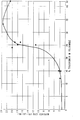
- the Figure is a graphical representation of the effect of the acrylic rubber of the subject invention on the toughness of a polyamide matrix.
- the critical aspect of the acrylic rubber of the subject invention is the existence of an outer layer having a glass transition temperature of less than about 20°C, this outer layer comprising an optionally crosslinked alkyl acrylate wherein the alkyl group contains 1 to 15 carbon atoms, and 0.1 to 15 weight percent of a polyamide graft linking monomer.
- this outer layer comprising an optionally crosslinked alkyl acrylate wherein the alkyl group contains 1 to 15 carbon atoms, and 0.1 to 15 weight percent of a polyamide graft linking monomer.
- acrylic monomers include aralkyl esters of acrylic acid wherein the cyclic portion contains 5, 6 or 7 carbon atoms with or without an additional alkyl bridge, the alkyl portion of the aralkyl group containing up to 15 carbon atoms; substituted acrylates or methacrylates including alkylthioalkyl acrylates such as ethyl thioethyl acrylate; alkoxyalkyl acrylates such as methoxyethyl acrylate; hydroxy alkyl, haloalkyl, cyanoalkyl, nitroalkyl; acrylates and methacrylates; acrylamide, methacrylamide and alkyl acrylamides and methacrylamides.
- Preferred polyamide graft linking monomers of the subject invention responsible for binding the acrylic rubber outer phase to the polyamide during the blending of the two as described below, also as detailed in '300, are those carboxylic acids such as acrylic, methacrylic, itaconic, fumaric, maleic, citraconico, ⁇ -methylene glutaric, aconitic, methylene malonic, mesaconic acids and substituted acrylic acids such aso6-hydroxymethyl- or ⁇ -halomethyl acrylic acids as well as acids such as methacryloxypropionic acid, acryloxy- or methacryloxyisopropyl acid phthalate, acryloxy- or methacryloxy-ethyl or isopropyl acid oxalate, maleate, succinate and glutrate.
- carboxylic acids such as acrylic, methacrylic, itaconic, fumaric, maleic, citraconico, ⁇ -methylene glutaric, aconitic, methylene malonic, mesaconic
- the alkyl acrylate may be copolymerized with an ethylenically unsaturated comonomer present in an amount less than about 50 weight percent based on the alkyl acrylate, examples of such comonomers being ethylene, styrene, ⁇ - ⁇ ' methylstyrene, vinyl and vinylidene halides, vinyl ethers, amides and esters, so long as this outer phase retains a glass transition temperature of less than 20°C.
- crosslinking of this outer phase is desired, this can be achieved by inclusion in the polymerization described below up to 5.0 weight percent of a polyethylenically unsaturated crosslinking monomer such as polyacrylic and polymethacrylic esters of polyols such as butylene diacrylate and dimethacrylate, trimethylolpropane trimethacrylate, di- and trivinyl benzene, vinyl acrylate and methacrylate and other crosslinking monomers.
- a polyethylenically unsaturated crosslinking monomer such as polyacrylic and polymethacrylic esters of polyols such as butylene diacrylate and dimethacrylate, trimethylolpropane trimethacrylate, di- and trivinyl benzene, vinyl acrylate and methacrylate and other crosslinking monomers.
- the entire acrylic rubber particle is made up of the composition as described above, in which case the above detailed crosslinking is necessary.
- an inner phase of 10 to 99.0 weight percent of the particle can be made up of simply a crosslinked alkyl acrylate having 1 to 15 carbon atoms, the crosslinking carried out by including in the polymerization described below a crosslinking monomer as described above.
- the outer phase present in an amount equal to 1.0 to 90.0 weight percent of the composition, need not be crosslinked.
- a graftlinking monomer to assist in the linking of the inner phase to the outer phase.
- those compounds generally useful in this regard include allyl methacrylate, allyl acrylate, allyl, methallyl, and crotyl esters of acrylic acid, methacrylic acid, maleic acid (mono- and di- esters); fumaric acid (mono- and di- esters) and itaconic acid (mono- and di-esters); allyl, methallyl and crotyl vinyl ether; allyl, methallyl, and crotyl vinyl thioether; N-allyl, ethallyl or crotyl maleimide; vinyl esters of 3-butenoic and 4-pentenoic acids; triallyl cyanurate; o-allyl, methallyl or crotyl, O-allkyl, aryl alkaryl or aral
- the inner phase may also contain any of the copolymerizable ethylenically unsaturated comonomers described above as being candidates for inclusion in the outer phase.
- the acrylic rubbers of the subject invention are prepared by emulsion polymerization well known in the art.
- the monomers to be polymerized are mixed with initiators, soaps/emulsifiers, and/or chain transfer agents.
- the polymerization reactions can be initiated by either thermal or redox-type initiator systems.
- thermal initiators include the organo peroxides, such as benzoyl peroxide, substituted benzoyl peroxides, acetyl peroxide, lauryl peroxide, t-butyl hydroperoxide, di-t-butyl peroxide, peresters, such as t-butyl peroxypivalate; azo-type initiators, such as azo-bis-isobutyronitrile; persulfates, such as sodium, potassium, or ammonium persulfate; and peroxyphosphates, such as sodium, potassium, or ammonium peroxyphospate.
- organo peroxides such as benzoyl peroxide, substituted benzoyl peroxides, acetyl peroxide, lauryl peroxide, t-butyl hydroperoxide, di-t-butyl peroxide, peresters, such as
- Redox initiators include, for example, a combination of a hydroperoxide, such as hydrogen peroxide, t-butyl hydroperoxide, cumene hydroperoxide, diisopropyl benzene hydroperoxide, and a reducing agent, such as sodium, potassium or ammonium bisulfite, metabisulfite, or hydrosulfite, sulfur dioxide, hydrazine, ferrous salts, isoascorbic acid and sodium formaldehyde sulfoxalate.
- a hydroperoxide such as hydrogen peroxide, t-butyl hydroperoxide, cumene hydroperoxide, diisopropyl benzene hydroperoxide
- a reducing agent such as sodium, potassium or ammonium bisulfite, metabisulfite, or hydrosulfite, sulfur dioxide, hydrazine, ferrous salts, isoascorbic acid and sodium formaldehyde sulfoxalate.
- Examples of emulsifiers or soaps suited to the polymerization processes of the present invention include alkali metal and ammonium salts of alkyl, aryl, alkaryl, and aralkyl sulfonates, sulfates, and polyether sulfates, fatty acids, ethoxylated fatty acids, esters, alcohols, amines, amides, alkyl phenols, complex organo-phosphoric acids and their alkali metal and ammonium salts.
- Chain transfer agents including mercaptans, polymercaptans, and polyhalogen compounds are often desirable in the polymerization mix.
- the polyamide matrix resin to be toughened using compositions of this invention is well known in the art and embraces those semi-crystalline and amorphous resins having a molecular weight of at least 5000 and commonly referred to as nylons.
- Suitable polyamides include those described in U.S. Pat. Nos. 2,071,250; 2,071,251; 2,130,523; 2,130,948; 2,241,322; 2,312,966; 2,512,606; and 3,393,210.
- the polyamide resin can be produced by condensation of equimolar amounts of a dicarboxylic acid containing from 4 to 12 carbon atoms with a diamine, in which the diamine contains from 4 to 14 carbon atoms.
- Excess diamine can be employed to provide an excess of amine end groups over carboxyl end groups in the polyamide.
- polyamides include polyhexamethylene adipamide (66 nylon), polyhexamethylene azelaamide (69 nylon), polyhexamethylene sebacamide (610 nylon), and polyhexamethylene dodecanoamide (612 nylon), poly-bis(paraaminocyclohexylmethane) dodecanoamide, the polyamides produced by ring opening of lactams, i.e., polycaprolactam (6 nylon), polylauric lactam, polyundecanolactam (11 nylon).
- polyamides prepared by the copolymerization of two of the above polymers or terpolymerization of the above polymers or their components, e.g., for example, an adipic, isophthalic acid hexamethylene diamine copolymer.
- the polyamides are linear with a melting point in excess of 200°C..
- the acrylic rubber toughener of the subject invention and the polyamide can be blended in any conventional manner, as described in '300.
- the composition can be melt blended into a uniform mixture in a multi-screw extruder such as a Werner Pfleider extruder, as seen in the Example below, or in a conventional plasticating device such as a Brabender, Banbury mill or the like.
- the components can be dry mixed together and melt fabricated by extrusion.
- the inner phase monomers were emulsified in a polymerization reactor at 80-86°C using 0.6 weight percent sodium dioctyl sulfosuccinate surfactant, and 0.3 weight percent potassium or ammonium persulfate initiator was added to polymerize a seed. The remainder of the inner phase monomers containing 0.6 weight percent of surfactant were then fed to the reactor over a period of 90 minutes. After an additional 20 minutes, the polymerization of the inner phase was completed. Feeding of outer phase monomer was then carried out over a period of about 40 minutes. Additional initiator totalling 0.03 weight percent based on total monomer was added incrementally throughout the polymerization reaction. Further, the itaconic acid, dissolved in hot water, was added in two or three increments during the feeding of the outer phase monomers. In each case, the outer phase of the acrylic rubber had a glass transition temperature of less than 20°C.
- the acrylic rubber of the subject invention as an aqueous dispersion, and the polyamide were blended in a 28 mm Werner & Pfleider twin-screw extruder wherein the melt temperature was 302°C and the extruder screw speed was 249 RPM, such blending being well known in the art as described in '300. Accordingly, after melting the polyamide in the extruder, the aqueous acrylic rubber dispersion was injected into the melt. The extruder barrel was less than 100% full so that the pressure therein was less than one atmosphere, allowing excess water to be vented out of the mixture. The melt was then forced out of the extruder through a die.
- the extruded strands were quenched in water, cut into pellets and dried overnight in a vacuum oven. Finally, the dried pellets were injection molded into test bars using a 6 ounce Van Dorn reciprocating screw molding machine using a fast ram speed, barrel temperature of 270-280°C and a mold temperature of 90°C.
Landscapes
- Chemical & Material Sciences (AREA)
- Health & Medical Sciences (AREA)
- Chemical Kinetics & Catalysis (AREA)
- Medicinal Chemistry (AREA)
- Polymers & Plastics (AREA)
- Organic Chemistry (AREA)
- Compositions Of Macromolecular Compounds (AREA)
Applications Claiming Priority (2)
| Application Number | Priority Date | Filing Date | Title |
|---|---|---|---|
| US06/331,228 US4474927A (en) | 1981-12-16 | 1981-12-16 | Polyamide compositions toughened with crosslinked acrylic rubber |
| US331228 | 1981-12-16 |
Publications (3)
| Publication Number | Publication Date |
|---|---|
| EP0082020A2 true EP0082020A2 (de) | 1983-06-22 |
| EP0082020A3 EP0082020A3 (en) | 1985-04-17 |
| EP0082020B1 EP0082020B1 (de) | 1990-02-28 |
Family
ID=23293108
Family Applications (1)
| Application Number | Title | Priority Date | Filing Date |
|---|---|---|---|
| EP82306698A Expired - Lifetime EP0082020B1 (de) | 1981-12-16 | 1982-12-15 | Mit vernetztem Acrylkautschuk verstärkte Polyamidzusammensetzungen |
Country Status (5)
| Country | Link |
|---|---|
| US (1) | US4474927A (de) |
| EP (1) | EP0082020B1 (de) |
| JP (1) | JPS58104938A (de) |
| CA (1) | CA1202445A (de) |
| DE (1) | DE3280115D1 (de) |
Cited By (2)
| Publication number | Priority date | Publication date | Assignee | Title |
|---|---|---|---|---|
| EP0622383A1 (de) * | 1993-04-27 | 1994-11-02 | Röhm GmbH | Pfropfpolymerisate zur Behandlung flexibler Flächengebilde |
| US8545097B2 (en) | 2010-11-04 | 2013-10-01 | Heraeus Sensor Technology Gmbh | Turbocharger overheating protection device and method of its manufacture |
Families Citing this family (31)
| Publication number | Priority date | Publication date | Assignee | Title |
|---|---|---|---|---|
| DE3403576A1 (de) * | 1984-02-02 | 1985-08-08 | Basf Ag, 6700 Ludwigshafen | Elastomere thermoplastische formmassen und deren herstellung |
| US5719233A (en) * | 1984-05-21 | 1998-02-17 | General Electric Company | Modified polyphenylene ether-polyamide compositions and process |
| US4798874A (en) * | 1985-12-23 | 1989-01-17 | General Electric Company | Thermoplastic blends comprising polycarbonate resin and amorphous polyamide |
| CA1332992C (en) * | 1986-08-27 | 1994-11-08 | Susan Marie Liwak | Impact-strength modifiers for thermoplastic polymers |
| JPH0784541B2 (ja) * | 1987-08-24 | 1995-09-13 | 日本ゼオン株式会社 | 熱可塑性エラストマ−状組成物 |
| DE3743486A1 (de) * | 1987-12-22 | 1989-07-13 | Bayer Ag | Weiche, thermoplastisch verarbeitbare, polyamid enthaltende polymerlegierungen |
| US5591798A (en) * | 1988-04-11 | 1997-01-07 | Advanced Elastomer Systems, L.P. | High temperature stable, low solvent swelling thermoplastic elastomer compositions |
| US5177149A (en) * | 1988-11-23 | 1993-01-05 | General Electric Company | Thermoplastic blends of amorphous polyamides and poly(alkenyl aromatic) resins |
| ZA899630B (en) * | 1988-12-22 | 1990-11-28 | Ferro Corp | Toughened polyamide compositions |
| US5625001A (en) * | 1992-08-18 | 1997-04-29 | Rohm And Haas Company | Toughened polar thermoplastics |
| EP0719834A3 (de) | 1994-12-30 | 1997-01-02 | Gen Electric | Hitzebeständige Zusammensetzungen, die Polyphenylenether Homopolymere mit hoher Glasübergangstemperatur enthalten |
| EP0771843A1 (de) | 1995-11-01 | 1997-05-07 | General Electric Company | Flammgeschützte Polymerzusammensetzungen |
| US5777029A (en) * | 1996-07-26 | 1998-07-07 | Advanced Elastomer Systems, L.P. | Co-cured rubber-thermoplastic elastomer compositions |
| US5777033A (en) * | 1996-07-26 | 1998-07-07 | Advanced Elastomer Systems, L.P. | Co-cured rubber-thermoplastic elastomer compositions |
| US6437054B1 (en) | 1999-02-17 | 2002-08-20 | General Electric Company | Composition of polyester sulfonate salt ionomer, polyamide and polyepoxide |
| US6365677B1 (en) | 2000-03-01 | 2002-04-02 | General Electric | Reduction of carbonized particles |
| US6482879B2 (en) | 2000-04-17 | 2002-11-19 | General Electric Company | Composition for laser marking |
| US7022776B2 (en) * | 2001-11-07 | 2006-04-04 | General Electric | Conductive polyphenylene ether-polyamide composition, method of manufacture thereof, and article derived therefrom |
| US6858671B2 (en) * | 2001-12-04 | 2005-02-22 | General Electric Company | Method of manufacture of polyester molding compositions and articles produced therefrom |
| US6776929B2 (en) | 2002-03-15 | 2004-08-17 | General Electric Company | Method of forming a conductive thermoplastic composition |
| US6887940B2 (en) * | 2002-11-27 | 2005-05-03 | Basell Poliolefine Italia S.P.A. | Compatibilizing agent for engineering thermoplastic/polyolefin blend |
| US7241403B2 (en) * | 2003-05-29 | 2007-07-10 | General Electric Company | Method for making a conductive thermoplastic composition |
| US7803856B2 (en) * | 2004-05-04 | 2010-09-28 | Sabic Innovative Plastics Ip B.V. | Halogen-free flame retardant polyamide composition with improved electrical and flammability properties |
| US7230066B2 (en) * | 2004-12-16 | 2007-06-12 | General Electric Company | Polycarbonate—ultem block copolymers |
| US20070135586A1 (en) * | 2005-12-09 | 2007-06-14 | Shreyas Chakravarti | Polyamide blend compositions formed article and process thereof |
| US7423080B2 (en) | 2006-03-03 | 2008-09-09 | Sabic Innovative Plastics Ip B.V. | Radiation crosslinking of halogen-free flame retardant polymer |
| US20090134370A1 (en) * | 2007-07-20 | 2009-05-28 | Herve Cartier | Conductive halogen free flame retardant thermoplastic composition |
| US20090030141A1 (en) * | 2007-07-23 | 2009-01-29 | Kim Gene Balfour | Poly(arylene ether) composition, method, and article |
| US20110024433A1 (en) | 2009-07-30 | 2011-02-03 | E.I. Du Pont De Nemours And Company | Thermal insulation unit |
| WO2013175452A1 (en) | 2012-05-24 | 2013-11-28 | Sabic Innovative Plastics Ip B.V. | Improved flame retardant polymer compositions |
| US20140206800A1 (en) | 2013-01-22 | 2014-07-24 | Sabic Innovative Plastics Ip B.V. | Thermoplastic Compositions Containing Nanoscale-Sized Particle Additives For Laser Direct Structuring And Methods For The Manufacture And Use Thereof |
Family Cites Families (14)
| Publication number | Priority date | Publication date | Assignee | Title |
|---|---|---|---|---|
| JPS476284Y1 (de) * | 1969-10-31 | 1972-03-04 | ||
| US3668274A (en) * | 1970-09-10 | 1972-06-06 | Rohm & Haas | Acrylic modifiers for polycarbonamides |
| US4174358A (en) * | 1975-05-23 | 1979-11-13 | E. I. Du Pont De Nemours And Company | Tough thermoplastic nylon compositions |
| US3985703A (en) * | 1975-06-24 | 1976-10-12 | Rohm And Haas Company | Process for manufacture of acrylic core/shell polymers |
| US4107120A (en) * | 1976-06-17 | 1978-08-15 | Rohm And Haas Company | Heteropolymer acrylic latices and textiles treated therewith |
| EP0001245B1 (de) * | 1977-09-20 | 1982-01-27 | Bayer Ag | Schlagzähe Polyamidmasse und deren Verwendung in Formkörpern |
| US4167505A (en) * | 1978-01-12 | 1979-09-11 | Rohm And Haas Company | Impact modified high melt flow polycarbonamide |
| US4277384A (en) * | 1978-09-25 | 1981-07-07 | Rohm And Haas Company | Heteropolymer acrylic latices and textiles treated therewith |
| JPS5649262A (en) * | 1979-09-28 | 1981-05-02 | Nitto Electric Ind Co | Manufacture of surface protective sheet |
| JPS5655414A (en) * | 1979-10-11 | 1981-05-16 | Japan Synthetic Rubber Co Ltd | Polymer particle |
| US4385152A (en) * | 1979-11-06 | 1983-05-24 | Boyack Robert M | Acrylic polymer emulsion |
| US4315085A (en) * | 1980-07-25 | 1982-02-09 | Gaf Corporation | Core-shell composite polymers having high amounts of carboxylic acid units in the shell |
| US4310638A (en) * | 1980-08-20 | 1982-01-12 | Monsanto Company | Nylon modified acrylic copolymer rubber |
| US4306040A (en) * | 1980-11-03 | 1981-12-15 | Monsanto Company | Multiphase core//shell polymers |
-
1981
- 1981-12-16 US US06/331,228 patent/US4474927A/en not_active Expired - Lifetime
-
1982
- 1982-12-13 JP JP57217123A patent/JPS58104938A/ja active Granted
- 1982-12-14 CA CA000417700A patent/CA1202445A/en not_active Expired
- 1982-12-15 DE DE8282306698T patent/DE3280115D1/de not_active Expired - Lifetime
- 1982-12-15 EP EP82306698A patent/EP0082020B1/de not_active Expired - Lifetime
Cited By (3)
| Publication number | Priority date | Publication date | Assignee | Title |
|---|---|---|---|---|
| EP0622383A1 (de) * | 1993-04-27 | 1994-11-02 | Röhm GmbH | Pfropfpolymerisate zur Behandlung flexibler Flächengebilde |
| US5442013A (en) * | 1993-04-27 | 1995-08-15 | Rohm Gmbh | Graft copolymer for treating surface structures |
| US8545097B2 (en) | 2010-11-04 | 2013-10-01 | Heraeus Sensor Technology Gmbh | Turbocharger overheating protection device and method of its manufacture |
Also Published As
| Publication number | Publication date |
|---|---|
| JPH0337584B2 (de) | 1991-06-06 |
| CA1202445A (en) | 1986-03-25 |
| US4474927A (en) | 1984-10-02 |
| EP0082020B1 (de) | 1990-02-28 |
| EP0082020A3 (en) | 1985-04-17 |
| JPS58104938A (ja) | 1983-06-22 |
| DE3280115D1 (de) | 1990-04-05 |
Similar Documents
| Publication | Publication Date | Title |
|---|---|---|
| US4474927A (en) | Polyamide compositions toughened with crosslinked acrylic rubber | |
| US3808180A (en) | Composite interpolymer and low haze impact resistant thermoplastic compositions thereof | |
| US4148846A (en) | Acrylic modifiers for polycarbonamides | |
| US3984497A (en) | Acrylic modifiers for polycarbonamides | |
| US6841627B2 (en) | Graft copolymers of methylene lactones and process for emulsion polymerization of methylene lactones | |
| US4320213A (en) | High-impact polyamide molding resin compositions | |
| CA1242827A (en) | Thermoplastic resin composition | |
| EP0482352B1 (de) | Kern-Schale-Polymer und dessen Anwendung | |
| US4247665A (en) | Thermoplastics polymer compositions | |
| SU553937A3 (ru) | Термопластична композици | |
| JPS6221804B2 (de) | ||
| IE57710B1 (en) | Impact modifier and thermoplastic resin composition using the same | |
| US4595728A (en) | Impact-resistant methacrylic resin composition | |
| JPS6377963A (ja) | 熱可塑性樹脂組成物 | |
| US5360865A (en) | Grafted impact modifiers of C6 -C10 alkylrylate rubber for polycarbonate | |
| JPH09286890A (ja) | メタクリル樹脂組成物 | |
| JPH06212064A (ja) | 炭素繊維強化熱可塑性樹脂組成物 | |
| EP0253624A2 (de) | Durch N-Arylmaleimid modifiziertes Akrylcopolymer enthaltende Formmasse | |
| JPH11279366A (ja) | 耐衝撃性に優れたメタクリレート系樹脂板 | |
| JPH06192535A (ja) | 熱可塑性樹脂組成物 | |
| JPS6153350A (ja) | 耐溶剤性メタクリル樹脂組成物 | |
| JPH0273841A (ja) | 強化熱可塑性樹脂組成物 | |
| JPS6065053A (ja) | 耐衝撃性改質剤 | |
| JPS63135440A (ja) | 耐衝撃性メタクリル樹脂組成物 | |
| JPS61130365A (ja) | 耐熱性および耐衝撃性にすぐれた熱可塑性樹脂組成物 |
Legal Events
| Date | Code | Title | Description |
|---|---|---|---|
| PUAI | Public reference made under article 153(3) epc to a published international application that has entered the european phase |
Free format text: ORIGINAL CODE: 0009012 |
|
| AK | Designated contracting states |
Designated state(s): CH DE FR GB IT LI NL |
|
| PUAL | Search report despatched |
Free format text: ORIGINAL CODE: 0009013 |
|
| AK | Designated contracting states |
Designated state(s): CH DE FR GB IT LI NL |
|
| 17P | Request for examination filed |
Effective date: 19850930 |
|
| 17Q | First examination report despatched |
Effective date: 19861125 |
|
| GRAA | (expected) grant |
Free format text: ORIGINAL CODE: 0009210 |
|
| AK | Designated contracting states |
Kind code of ref document: B1 Designated state(s): CH DE FR GB IT LI NL |
|
| ITF | It: translation for a ep patent filed | ||
| REF | Corresponds to: |
Ref document number: 3280115 Country of ref document: DE Date of ref document: 19900405 |
|
| ET | Fr: translation filed | ||
| PLBE | No opposition filed within time limit |
Free format text: ORIGINAL CODE: 0009261 |
|
| STAA | Information on the status of an ep patent application or granted ep patent |
Free format text: STATUS: NO OPPOSITION FILED WITHIN TIME LIMIT |
|
| 26N | No opposition filed | ||
| ITTA | It: last paid annual fee | ||
| PGFP | Annual fee paid to national office [announced via postgrant information from national office to epo] |
Ref country code: NL Payment date: 19911231 Year of fee payment: 10 |
|
| PG25 | Lapsed in a contracting state [announced via postgrant information from national office to epo] |
Ref country code: NL Effective date: 19930701 |
|
| NLV4 | Nl: lapsed or anulled due to non-payment of the annual fee | ||
| PGFP | Annual fee paid to national office [announced via postgrant information from national office to epo] |
Ref country code: FR Payment date: 19980915 Year of fee payment: 17 |
|
| PGFP | Annual fee paid to national office [announced via postgrant information from national office to epo] |
Ref country code: GB Payment date: 19980917 Year of fee payment: 17 Ref country code: DE Payment date: 19980917 Year of fee payment: 17 |
|
| PGFP | Annual fee paid to national office [announced via postgrant information from national office to epo] |
Ref country code: CH Payment date: 19981019 Year of fee payment: 17 |
|
| PG25 | Lapsed in a contracting state [announced via postgrant information from national office to epo] |
Ref country code: GB Free format text: LAPSE BECAUSE OF NON-PAYMENT OF DUE FEES Effective date: 19991215 |
|
| PG25 | Lapsed in a contracting state [announced via postgrant information from national office to epo] |
Ref country code: LI Free format text: LAPSE BECAUSE OF NON-PAYMENT OF DUE FEES Effective date: 19991231 Ref country code: CH Free format text: LAPSE BECAUSE OF NON-PAYMENT OF DUE FEES Effective date: 19991231 |
|
| GBPC | Gb: european patent ceased through non-payment of renewal fee |
Effective date: 19991215 |
|
| PG25 | Lapsed in a contracting state [announced via postgrant information from national office to epo] |
Ref country code: FR Free format text: LAPSE BECAUSE OF NON-PAYMENT OF DUE FEES Effective date: 20000831 |
|
| PG25 | Lapsed in a contracting state [announced via postgrant information from national office to epo] |
Ref country code: DE Free format text: LAPSE BECAUSE OF NON-PAYMENT OF DUE FEES Effective date: 20001003 |
|
| REG | Reference to a national code |
Ref country code: FR Ref legal event code: ST |