EP0067501B1 - Legierung, geeignet zur Verwendung in einer Umgebung mit radioaktiver Strahlung und daraus hergestellte Reaktorkernbauteile - Google Patents
Legierung, geeignet zur Verwendung in einer Umgebung mit radioaktiver Strahlung und daraus hergestellte Reaktorkernbauteile Download PDFInfo
- Publication number
- EP0067501B1 EP0067501B1 EP82301404A EP82301404A EP0067501B1 EP 0067501 B1 EP0067501 B1 EP 0067501B1 EP 82301404 A EP82301404 A EP 82301404A EP 82301404 A EP82301404 A EP 82301404A EP 0067501 B1 EP0067501 B1 EP 0067501B1
- Authority
- EP
- European Patent Office
- Prior art keywords
- steel
- nitrogen
- radiation
- neutron
- austenite
- Prior art date
- Legal status (The legal status is an assumption and is not a legal conclusion. Google has not performed a legal analysis and makes no representation as to the accuracy of the status listed.)
- Expired
Links
Images


Classifications
-
- C—CHEMISTRY; METALLURGY
- C22—METALLURGY; FERROUS OR NON-FERROUS ALLOYS; TREATMENT OF ALLOYS OR NON-FERROUS METALS
- C22C—ALLOYS
- C22C38/00—Ferrous alloys, e.g. steel alloys
- C22C38/001—Ferrous alloys, e.g. steel alloys containing N
-
- C—CHEMISTRY; METALLURGY
- C22—METALLURGY; FERROUS OR NON-FERROUS ALLOYS; TREATMENT OF ALLOYS OR NON-FERROUS METALS
- C22C—ALLOYS
- C22C38/00—Ferrous alloys, e.g. steel alloys
- C22C38/18—Ferrous alloys, e.g. steel alloys containing chromium
- C22C38/40—Ferrous alloys, e.g. steel alloys containing chromium with nickel
-
- Y—GENERAL TAGGING OF NEW TECHNOLOGICAL DEVELOPMENTS; GENERAL TAGGING OF CROSS-SECTIONAL TECHNOLOGIES SPANNING OVER SEVERAL SECTIONS OF THE IPC; TECHNICAL SUBJECTS COVERED BY FORMER USPC CROSS-REFERENCE ART COLLECTIONS [XRACs] AND DIGESTS
- Y10—TECHNICAL SUBJECTS COVERED BY FORMER USPC
- Y10S—TECHNICAL SUBJECTS COVERED BY FORMER USPC CROSS-REFERENCE ART COLLECTIONS [XRACs] AND DIGESTS
- Y10S376/00—Induced nuclear reactions: processes, systems, and elements
- Y10S376/90—Particular material or material shapes for fission reactors
Definitions
- This invention relates to the use of a Ni-Cn-austenite alloy in an environment exposed to, neutron radiation, and more specifically to the use of a Ni-Cr-austenite steel in a nuclear reactor and to reactor core components formed at least partly from the steel.
- Reactor core members such as core sup- portors, the core shroud, control rods etc. disposed inside a nuclear reactor are exposed to neutron radiation during use. This causes damage to the materials, which can markedly change their characteristics. Deterioration of the material characteristics is critical to the safety and reliability of the reactor. Therefore, the reactor core member material must be selected with this difficulty in mind.
- the neutron radiation of such high energy as to be incomparable with that in fission reactors would take place.
- the first wall material encompassing the plasma is exposed to severe radiation damage. Damage due to gas atoms (hydrogen and helium atoms) generated by the nuclear conversion process is an extremely critical problem, in addition to the above-mentioned swelling phenomenon.
- US-A-3,856,517 discloses a stainless steel alloy said to be particularly suited for use in fast neutron reactors and containing inter alia 0.04 to 0.8% C and 0.04 to 0.06% N. It is stated that larger amounts of nitrogen are undesirable.
- DE-B-1,533,158 discloses reactor core components of a steel which may contain inter alia 0.02 to 0.04% C and 0.02 to 0.08% N.
- An object of the invention is to make possible the use of a Ni-Cr-austenite alloy in an environment exposed to radioactive radiation.
- the present invention proposes that the Ni-Cr-austenite alloy, which is used in an environment exposed to neutron-containing radiation of at least 10 2 ° nvt, contains nitrogen in an amount of at least 0.06% by weight and not more than 0.03% by weight of carbon, the total amount of carbon and nitrogen being at least 0.09% by weight.
- the method of achieving the desired nitrogen content is preferably to use a base alloy which contains large quantities of nitrogen or to add an alloy which contains a large amount of nitrogen to the base alloy.
- the amount of nitrogen is at least 0.06 wt% and preferably in such an amount that the formation of a nitride in the alloy is substantially not permitted.
- nitrogen exists in the alloy substantially in solid solution.
- nvt used herein has the same meaning as “n/cm 2 ", being the product of
- the alloy preferably primarily consists of Cr-Ni austenite steel containing nitrogen in an amount of at least 0.06 wt% and having an austenite structure.
- this steel comprises Fe, contains not more than 0.03 wt% C, not more than 1 wt% Si, not more than 2 wt% Mn, 15 to 25 wt% Cr, 8 to 35 wt% Ni and up to 0.2 wt% N and has primarily an austenite structure.
- an austenite steel having a full austenite structure.
- the inventors of the present invention have examined in detail the effects of nitrogen on the radiation damage, using an ultrahigh voltage electron microscope, and have found that, on the contrary, the nitrogen atoms tend to reduce the damage due to the atoms introduced into the lattice by the radiation and to the interaction between crystal defects such as the void points and the nitrogen atoms.
- austenite steel exhibits higher radiation resistance.
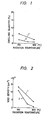
- stainless steel when irradiated with neutrons in doses of at least 10 23 n/m 2 (0.1 MeV), stainless steel (SUS 304) stretches less than when it is not irradiated with neutrons.
- SUS 304 stretches less than when it is not irradiated with neutrons.
- the inventors have discovered that stainless steels are made brittle by neutron radiation chiefly due to dislocation loops formed in the steel by the radiation, and they have thus attempted to control the dislocation loops that are formed by the neutron radiation by using an austenite stainless steel containing not more than 0.03% carbon and 0.06 to 0.15 wt% nitrogen.
- the carbon content is preferably low so as to prevent precipitation of carbide.
- the carbon content is preferably also such that it does not permit precipitation of carbide.
- the carbon content is therefore not more than 0.03%, preferably not more than 0.01% and especially preferably from 0.003 to 0.01%.
- the N content is at least 0.06%. If the N content is increased, the beneficial effect is also increased but a large N content tends to permit formation of a nitride. Precipitation of the nitride reduces the solid solution N content in the matrix and forms a Cr nitride, thus having an adverse effect upon SCC resistance. For these reasons, it is preferred that the N content is not more than 0.2% and more preferably is from 0.06 to 0.15%. To make up for the decrease in strength due to the decrease in the C content by the addition of N, the total amount of C and N is at least 0.09%.
- impurity elements such as P, S and the like may also be present.
- Austenite stainless steel containing 1 to 3% Mo is especially suitable. Besides C and N contents as described above, the preferred ranges for this steel are Cr: 15-20%, Ni: 10-15%, Mo: 2-3%.
- the material of the present invention may be used in the form having a full austenite structure after solid solution treatment, but it may also be used after cold working subsequent to the solid solution treatment.
- the alloy of the invention preferably comprises at least a Ni base alloy containing nitrogen in an amount of at least 0.06% and Cr in such an amount as not to permit the formation of a substantial a phase.
- the nitrogen content is from 0.06 to 0.15% and the Cr content from 15 to 25%.
- the Ni base alloy may contain considerable amounts of elements such as Mo, W, Al, Ti, Nb, Zr and the like.
- the austenite stainless steel serves as a material for forming reactor core components including machine parts, that receive neutron irradiation in reactor cores. All of the core components subject to neutron radiation need not be made of the austenite stainless steel. Only those core members disposed in regions which receive particularly intense neutron irradiation should be made of the austenite stainless steel.
- SUS 304 stretches less when it is irradiated with neutrons in doses of at least 10 23 n/m 2 (0.1 MeV), compared with when it is not irradiated with neutrons. Therefore, core members disposed in the places irradiated with neutrons in doses of at least 10 23 n/m 2 (0.1 MeV), such as control rods, neutron counter tubes, core supporters, core shrouds, neutron source pipes etc. should be made of the austenite stainless steel of the invention.
- Sample 1 is a comparative material and sample 2 is a material of the present inventiori.-The carbon content is substantially the same in the two samples, but their nitrogen contents are remarkably different.
- the two steels have an austenite structure.
- Specimens having the same contents as above were subjected to solution treatment at 1050°C for 15 minutes, and then irradiated with electrons in an ultrahigh-voltage electron microscope (acceleration voltage 1 MV).
- Figs. 3(A) and 3(B) show the formation of dislocation loops when these specimens 2 and 1 respectively, are irradiated at a rate of 4.8x10 23 e/sec (2.2x10- 3 dpa/sec) which corresponds to a neutron radia-.
- dpa is a unit of damage and stands for displacement per atom.
- Figs. 4 and 5 show that in specimen 2, the growth of dislocation loops is restrained even when it is irradiated at these temperatures.
- the core members made of the austenite-type stainless steel can be prevented from being embrittled by neutron irradiation.
- the material of the present invention can be expected to show excellent radiation resistance to neutron radiation from comparison with the degree of damage of conventional materials.
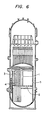
- Fig. 6 shows the core of a BWR-type reactor, having neutron source pipes 1, a core support member 2, neutron counter tubes 3, control rods 4 and a core shroud 5.
- These core members are subjected to intense neutron radiation, and hence are, according to the invention, made of austenite stainless steel which contains not more than 0.03% by weight of carbon and at least 0.06%, preferably less than 0.15%, by weight of nitrogen. It is, of course, allowable to make other fine parts using this austenite stainless steel, in addition to the core members 1 to 5.
- materials of the invention can be used for, for example, the core shroud, core supporters, control rods etc. of a PWR-type reactor core, and the fuel pins, wrapper tubes etc. of a FBR-type reactor core.
- the prevention or reduction of embrittlement by neutron radiation can increase the reliability of the reactor core, and can lengthen the life of the core components and internal instruments and appliances.
Landscapes
- Chemical & Material Sciences (AREA)
- Engineering & Computer Science (AREA)
- Materials Engineering (AREA)
- Mechanical Engineering (AREA)
- Metallurgy (AREA)
- Organic Chemistry (AREA)
- Monitoring And Testing Of Nuclear Reactors (AREA)
- Solid-Phase Diffusion Into Metallic Material Surfaces (AREA)
- Glass Compositions (AREA)
Claims (7)
Applications Claiming Priority (4)
| Application Number | Priority Date | Filing Date | Title |
|---|---|---|---|
| JP40666/81 | 1981-03-20 | ||
| JP56040666A JPS6046177B2 (ja) | 1981-03-20 | 1981-03-20 | 原子炉炉内機器の部材 |
| JP56141034A JPS5845358A (ja) | 1981-09-09 | 1981-09-09 | 軽水炉用炉心の部材 |
| JP141034/81 | 1981-09-09 |
Publications (3)
| Publication Number | Publication Date |
|---|---|
| EP0067501A1 EP0067501A1 (de) | 1982-12-22 |
| EP0067501B1 true EP0067501B1 (de) | 1986-08-06 |
| EP0067501B2 EP0067501B2 (de) | 1993-10-20 |
Family
ID=26380155
Family Applications (1)
| Application Number | Title | Priority Date | Filing Date |
|---|---|---|---|
| EP82301404A Expired - Lifetime EP0067501B2 (de) | 1981-03-20 | 1982-03-18 | Legierung, geeignet zur Verwendung in einer Umgebung mit radioaktiver Strahlung und daraus hergestellte Reaktorkernbauteile |
Country Status (4)
| Country | Link |
|---|---|
| US (1) | US4560407A (de) |
| EP (1) | EP0067501B2 (de) |
| CA (1) | CA1194711A (de) |
| DE (1) | DE3272417D1 (de) |
Families Citing this family (4)
| Publication number | Priority date | Publication date | Assignee | Title |
|---|---|---|---|---|
| US4927468A (en) * | 1988-11-30 | 1990-05-22 | The United States Of America As Represented By The United States Department Of Energy | Process for making a martensitic steel alloy fuel cladding product |
| JP2574917B2 (ja) * | 1990-03-14 | 1997-01-22 | 株式会社日立製作所 | 耐応力腐食割れ性に優れたオーステナイト鋼及びその用途 |
| JPH0559494A (ja) * | 1991-09-03 | 1993-03-09 | Hitachi Ltd | 耐照射誘起偏析に優れたオーステナイトステンレス鋼 |
| JP2004124173A (ja) * | 2002-10-02 | 2004-04-22 | Nippon Chuzo Kk | 非磁性オーステナイトステンレス鋳鋼およびその製造方法 |
Family Cites Families (6)
| Publication number | Priority date | Publication date | Assignee | Title |
|---|---|---|---|---|
| US2602737A (en) * | 1949-05-10 | 1952-07-08 | Union Carbide & Carbon Corp | Corrosion resisting steels |
| GB1080886A (en) * | 1965-06-22 | 1967-08-23 | Avesta Jernverks Ab | Rollable and weldable stainless steel |
| US3563728A (en) * | 1968-03-12 | 1971-02-16 | Westinghouse Electric Corp | Austenitic stainless steels for use in nuclear reactors |
| JPS508967B1 (de) * | 1970-12-14 | 1975-04-09 | ||
| US3856517A (en) * | 1973-11-26 | 1974-12-24 | Atomic Energy Commission | Irradiation swelling resistant alloy for use in fast neutron reactors |
| JPS5489916A (en) * | 1977-12-27 | 1979-07-17 | Sumitomo Electric Ind Ltd | Non-magnetic stainless steel |
-
1982
- 1982-03-15 US US06/358,211 patent/US4560407A/en not_active Expired - Lifetime
- 1982-03-18 EP EP82301404A patent/EP0067501B2/de not_active Expired - Lifetime
- 1982-03-18 DE DE8282301404T patent/DE3272417D1/de not_active Expired
- 1982-03-19 CA CA000398877A patent/CA1194711A/en not_active Expired
Also Published As
| Publication number | Publication date |
|---|---|
| DE3272417D1 (en) | 1986-09-11 |
| EP0067501A1 (de) | 1982-12-22 |
| CA1194711A (en) | 1985-10-08 |
| EP0067501B2 (de) | 1993-10-20 |
| US4560407A (en) | 1985-12-24 |
Similar Documents
| Publication | Publication Date | Title |
|---|---|---|
| McCoy Jr | Status of materials development for molten salt reactors | |
| Diercks et al. | Alloying and impurity effects in vanadium-base alloys | |
| US4818485A (en) | Radiation resistant austenitic stainless steel alloys | |
| KR0147082B1 (ko) | 중성자조사에 대한 내취성이 우수한 오스테나이트강 및 이 강으로 구성된 부재 | |
| EP0106426B1 (de) | Austenitische Legierung und deren Verwendung als Reaktorbauteil | |
| Wiffen | Tensile properties of fast-reactor neutron-irradiated bcc metals and alloys | |
| US5278881A (en) | Fe-Cr-Mn Alloy | |
| Lee et al. | A mechanism of swelling suppression in phosphorous-modified Fe-Ni-Cr alloys | |
| Powell et al. | Swelling of several commercial alloys following high fluence neutron irradiation | |
| EP0076110B1 (de) | Martensitaushärtbare Superlegierungen und Verfahren zu ihrer Wärmebehandlung | |
| US5316597A (en) | A nuclear reactor comprising a reactor vessel and structural members made of an austenitic stainless steel having superior resistance to irradiation-induced segregation | |
| EP0067501B1 (de) | Legierung, geeignet zur Verwendung in einer Umgebung mit radioaktiver Strahlung und daraus hergestellte Reaktorkernbauteile | |
| EP0964072B1 (de) | Austenitischer rostfreier stahl mit widerstand gegen schädigung durch neutronenstrahlung | |
| Wille et al. | Hydrogen in titanium alloys | |
| RU2124065C1 (ru) | Аустенитный железохромоникелевый сплав для пружинных элементов атомных реакторов | |
| US4622067A (en) | Low activation ferritic alloys | |
| Braski¹ | Tensile Properties and Microstructure of Several Vanadium Alloys | |
| JPH05171359A (ja) | 窒素とホウ素の含有量を極めて低くしたオーステナイト系ステンレス鋼 | |
| Wakai et al. | Microstructural study of irradiated isotopically tailored F82H steel | |
| Tanaka et al. | Effects of implanted helium on the mechanical properties of vanadium-based binary alloys | |
| Mandiang et al. | Effect of phosphorus on stability of cold worked structure in 316Ti austenitic stainless steel | |
| Grossbeck et al. | Tensile properties of 20% cold-worked titanium-modified type 316 stainless steel irradiated in HFIR | |
| US4530727A (en) | Method for fabricating wrought components for high-temperature gas-cooled reactors and product | |
| Hasson et al. | Radiation anneal hardening in molybdenum | |
| Chen et al. | Cracking behavior and microstructure of austenitic stainless steels and alloy 690 irradiated in BOR-60 reactor, phase I. |
Legal Events
| Date | Code | Title | Description |
|---|---|---|---|
| PUAI | Public reference made under article 153(3) epc to a published international application that has entered the european phase |
Free format text: ORIGINAL CODE: 0009012 |
|
| 17P | Request for examination filed |
Effective date: 19820503 |
|
| AK | Designated contracting states |
Designated state(s): DE FR GB SE |
|
| GRAA | (expected) grant |
Free format text: ORIGINAL CODE: 0009210 |
|
| AK | Designated contracting states |
Kind code of ref document: B1 Designated state(s): DE FR GB SE |
|
| REF | Corresponds to: |
Ref document number: 3272417 Country of ref document: DE Date of ref document: 19860911 |
|
| ET | Fr: translation filed | ||
| PLBI | Opposition filed |
Free format text: ORIGINAL CODE: 0009260 |
|
| PLBI | Opposition filed |
Free format text: ORIGINAL CODE: 0009260 |
|
| 26 | Opposition filed |
Opponent name: UNITED KINGDOM ATOMIC ENERGY AUTHORITY Effective date: 19870427 Opponent name: CREUSOT-LOIRE INDUSTRIE Effective date: 19870427 |
|
| 26 | Opposition filed |
Opponent name: INTERATOM GMBH Effective date: 19870505 |
|
| PLAB | Opposition data, opponent's data or that of the opponent's representative modified |
Free format text: ORIGINAL CODE: 0009299OPPO |
|
| R26 | Opposition filed (corrected) |
Opponent name: CREUSOT-LOIRE INDUSTRIE * 870427 UNITED KINGDOM AT Effective date: 19870427 |
|
| PLAB | Opposition data, opponent's data or that of the opponent's representative modified |
Free format text: ORIGINAL CODE: 0009299OPPO |
|
| R26 | Opposition filed (corrected) |
Opponent name: CREUSOT-LOIRE INDUSTRIE * 870427 UNITED KINGDOM AT Effective date: 19870427 |
|
| PLAB | Opposition data, opponent's data or that of the opponent's representative modified |
Free format text: ORIGINAL CODE: 0009299OPPO |
|
| PLAB | Opposition data, opponent's data or that of the opponent's representative modified |
Free format text: ORIGINAL CODE: 0009299OPPO |
|
| R26 | Opposition filed (corrected) |
Opponent name: CREUSOT-LOIRE INDUSTRIE * 870427 UNITED KINGDOM AT Effective date: 19870427 |
|
| R26 | Opposition filed (corrected) |
Opponent name: CREUSOT-LOIRE INDUSTRIE * 870427 UNITED KINGDOM AT Effective date: 19870427 |
|
| PLAB | Opposition data, opponent's data or that of the opponent's representative modified |
Free format text: ORIGINAL CODE: 0009299OPPO |
|
| R26 | Opposition filed (corrected) |
Opponent name: CREUSOT-LOIRE INDUSTRIE * 870427 UNITED KINGDOM AT Effective date: 19870427 |
|
| PUAH | Patent maintained in amended form |
Free format text: ORIGINAL CODE: 0009272 |
|
| STAA | Information on the status of an ep patent application or granted ep patent |
Free format text: STATUS: PATENT MAINTAINED AS AMENDED |
|
| 27A | Patent maintained in amended form |
Effective date: 19931020 |
|
| AK | Designated contracting states |
Kind code of ref document: B2 Designated state(s): DE FR GB SE |
|
| ET3 | Fr: translation filed ** decision concerning opposition | ||
| EAL | Se: european patent in force in sweden |
Ref document number: 82301404.8 |
|
| PGFP | Annual fee paid to national office [announced via postgrant information from national office to epo] |
Ref country code: FR Payment date: 19961218 Year of fee payment: 16 |
|
| PGFP | Annual fee paid to national office [announced via postgrant information from national office to epo] |
Ref country code: SE Payment date: 19961227 Year of fee payment: 16 |
|
| PGFP | Annual fee paid to national office [announced via postgrant information from national office to epo] |
Ref country code: GB Payment date: 19970102 Year of fee payment: 16 |
|
| PGFP | Annual fee paid to national office [announced via postgrant information from national office to epo] |
Ref country code: DE Payment date: 19970327 Year of fee payment: 16 |
|
| PG25 | Lapsed in a contracting state [announced via postgrant information from national office to epo] |
Ref country code: GB Free format text: LAPSE BECAUSE OF NON-PAYMENT OF DUE FEES Effective date: 19980318 |
|
| PG25 | Lapsed in a contracting state [announced via postgrant information from national office to epo] |
Ref country code: SE Free format text: LAPSE BECAUSE OF NON-PAYMENT OF DUE FEES Effective date: 19980319 |
|
| GBPC | Gb: european patent ceased through non-payment of renewal fee |
Effective date: 19980318 |
|
| PG25 | Lapsed in a contracting state [announced via postgrant information from national office to epo] |
Ref country code: FR Free format text: THE PATENT HAS BEEN ANNULLED BY A DECISION OF A NATIONAL AUTHORITY Effective date: 19981130 |
|
| PG25 | Lapsed in a contracting state [announced via postgrant information from national office to epo] |
Ref country code: DE Free format text: LAPSE BECAUSE OF NON-PAYMENT OF DUE FEES Effective date: 19981201 |
|
| EUG | Se: european patent has lapsed |
Ref document number: 82301404.8 |
|
| REG | Reference to a national code |
Ref country code: FR Ref legal event code: ST |
|
| APAH | Appeal reference modified |
Free format text: ORIGINAL CODE: EPIDOSCREFNO |