EP0054953B1 - Gleitmittelzusammensetzungen zum Ausrüsten synthetischer Fasern - Google Patents
Gleitmittelzusammensetzungen zum Ausrüsten synthetischer Fasern Download PDFInfo
- Publication number
- EP0054953B1 EP0054953B1 EP81110657A EP81110657A EP0054953B1 EP 0054953 B1 EP0054953 B1 EP 0054953B1 EP 81110657 A EP81110657 A EP 81110657A EP 81110657 A EP81110657 A EP 81110657A EP 0054953 B1 EP0054953 B1 EP 0054953B1
- Authority
- EP
- European Patent Office
- Prior art keywords
- carbons
- spin finish
- fatty acids
- surfactant
- esters
- Prior art date
- Legal status (The legal status is an assumption and is not a legal conclusion. Google has not performed a legal analysis and makes no representation as to the accuracy of the status listed.)
- Expired
Links
Classifications
-
- D—TEXTILES; PAPER
- D06—TREATMENT OF TEXTILES OR THE LIKE; LAUNDERING; FLEXIBLE MATERIALS NOT OTHERWISE PROVIDED FOR
- D06M—TREATMENT, NOT PROVIDED FOR ELSEWHERE IN CLASS D06, OF FIBRES, THREADS, YARNS, FABRICS, FEATHERS OR FIBROUS GOODS MADE FROM SUCH MATERIALS
- D06M13/00—Treating fibres, threads, yarns, fabrics or fibrous goods made from such materials, with non-macromolecular organic compounds; Such treatment combined with mechanical treatment
- D06M13/10—Treating fibres, threads, yarns, fabrics or fibrous goods made from such materials, with non-macromolecular organic compounds; Such treatment combined with mechanical treatment with compounds containing oxygen
- D06M13/224—Esters of carboxylic acids; Esters of carbonic acid
-
- D—TEXTILES; PAPER
- D06—TREATMENT OF TEXTILES OR THE LIKE; LAUNDERING; FLEXIBLE MATERIALS NOT OTHERWISE PROVIDED FOR
- D06M—TREATMENT, NOT PROVIDED FOR ELSEWHERE IN CLASS D06, OF FIBRES, THREADS, YARNS, FABRICS, FEATHERS OR FIBROUS GOODS MADE FROM SUCH MATERIALS
- D06M13/00—Treating fibres, threads, yarns, fabrics or fibrous goods made from such materials, with non-macromolecular organic compounds; Such treatment combined with mechanical treatment
- D06M13/10—Treating fibres, threads, yarns, fabrics or fibrous goods made from such materials, with non-macromolecular organic compounds; Such treatment combined with mechanical treatment with compounds containing oxygen
- D06M13/165—Ethers
-
- D—TEXTILES; PAPER
- D06—TREATMENT OF TEXTILES OR THE LIKE; LAUNDERING; FLEXIBLE MATERIALS NOT OTHERWISE PROVIDED FOR
- D06M—TREATMENT, NOT PROVIDED FOR ELSEWHERE IN CLASS D06, OF FIBRES, THREADS, YARNS, FABRICS, FEATHERS OR FIBROUS GOODS MADE FROM SUCH MATERIALS
- D06M7/00—Treating fibres, threads, yarns, fabrics, or fibrous goods made of other substances with subsequent freeing of the treated goods from the treating medium, e.g. swelling, e.g. polyolefins
-
- D—TEXTILES; PAPER
- D06—TREATMENT OF TEXTILES OR THE LIKE; LAUNDERING; FLEXIBLE MATERIALS NOT OTHERWISE PROVIDED FOR
- D06M—TREATMENT, NOT PROVIDED FOR ELSEWHERE IN CLASS D06, OF FIBRES, THREADS, YARNS, FABRICS, FEATHERS OR FIBROUS GOODS MADE FROM SUCH MATERIALS
- D06M2200/00—Functionality of the treatment composition and/or properties imparted to the textile material
- D06M2200/40—Reduced friction resistance, lubricant properties; Sizing compositions
Definitions
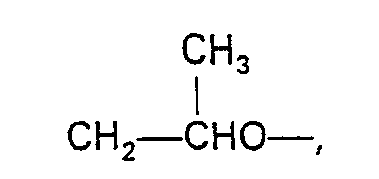
- This invention pertains to lubricant compositions for finishing synthetic fibers and more particularly to such compositions containing propylene oxide/ethylene oxide block co-polymer adducts of aliphatic monohydr ' c alcohols having 6 to 14 carbon atoms as emulsifiers.
- a lubricating composition usually in the form of an aqueous emulsion.
- Such compositions normally contain a lubricant, such as, fatty acid esters, hydrocarbon oils, and/or vegetable ciis, an anti-static agent, an anti-oxidant and an emulsifier system to render the lubricant composition water emulsifiable.
- the complete lubricant composition should serve the processing and manufacturing needs of the fiber producer as well as the user of the synthetic yarn.
- the lubricant composition provides controlled lubricity (frictional properties) during yarn processing by high-speed machinery, provides proper yarn intra-frictional properties, and protects the yarn from damage during manufacturing and processing handling requirements.
- the :ubricant composition For high-speed and high-temperature yarn processing, such as, hot-stretching, bulking, crimping and texturizing, the :ubricant composition must function adequately at both ambient and high temperatures.
- the lubricating compositions must exhibit special qualities for high-temperature processing, that is, the composition should be sufficiently stable so as not to smoke or fume nor result in the formation of varnishes or resins upon deposition onto machinery- heated surfaces.
- each component of lubricating composition should possess the necessary thermal stability. However, in actual practice only some of the components fulfill the thermal prerequisites.
- some emulsifier systems fail to meet the thermal stability standards because of the chemical make-up of the emulsifier or emulsifiers which is designed to produce stable aqueous emulsions of lubricant composition.
- High fuming or smoking and/or varnish formation upon exposure to high temperature also are normally encountered with conventional surfectant used to formulate the emulsification system.
- the necessity of employing more than one surfactant to achieve stable aqueous emulsions complicates the situation.
- surfactants such as alkylphenol ethoxylates, sorbitan ethoxylate esters, (hydrolyzed) vegetable oil ethoxylates, alkyl alcohol ethoxylates, fatty acid ethoxylates, and the like, do not meet all the requirements of an emulsifier in a lubricant composition for synthetic yarn.
- the sorbitan ethoxylate esters and the (hydrolyzed) vegetable oil ethoxylates although good emulsifiers, produce high amounts of thermo-oxidation varnishes and are high-viscosity components, a factor which is undesirable due to the direct relationship between viscosity and friction.
- the alkyl alcohol ethoxylates produce large amounts of smoke and require complicated combinations of surfactants to yield stable lubricant composition emulsions.
- the alkylphenol ethoxylates are good low- fuming emulsifiers, but create unacceptable varnishes.
- the aikylphenol ethoxylates display the best overall properties as lubricant components for synthetic yarn.
- a thermally stable lubricant selected from the group consisting of (1)
- a still further object of this invention is to provide surfactants which produce microemulsions with conventional high-temperature process lubricants.
- An indication of the fuming tendencies of a substance is obtained by the measurement of the smoke point.
- the lubricants used in this invention are all commercially available.
- the esters of fatty acids are exemplified by such esters as tridecyl stearate, hexadecyl stearate, dodecyl oleate, and octyl linoleate.
- Representative triglycerides include natural triglycerides, such as coconut oil, tallow oil, palm kernel oil, and castor oil.
- Preferred esters of a polyhydric alcohol and an alkanoic acid include trimethylolpropane tripelargonate, trimethylolethane trioctanoate, and pentaerythritol tetrapelargonate.
- the surfactants of this invention can be made by the reaction of propylene oxide and ethylene oxide wihh known aliphatic monohydric alcohols having 6 to 14, and preferably 8 to 12, carbon atoms.
- Alcohols which may be employed are those primary straight-and branched-chain aliphatic monohydric alcohols which contain 6 to 14, and preferably 8 to 12, carbon atoms in the chain. Mixtures of the alcohols may also be used.
- Exemplary suitable alcohols are 2-ethylhexanol; n-heptanol; 2,6-dimethyl-1-heptanol; n-nonanol; n-decanol; n-undecanol; 2,4,4-trimethyl-1-pentanol; n-dodecanol and mixtures thereof.
- a typical aliphatic monohydric alcohol having 6 to 14, and preferably 8 to 12, carbon atoms is converted to an alkoxide with potassium hydroxide followed by the addition first of propylene oxide to prepare a block of oxypropylene repeating units at a temperature of 100 to 150°C and a pressure of 0-6.9 N/cm 2 (1 to 100 psig) followed by the addition of ethylene oxide to incorporate oxyethylene blocks at a temperature of 100 to 150°C at a pressure of 1.38-6.9 N/cm z (20 to 100 psig).
- the moles of ethylene oxide per mole of alcohol can vary from 5 to 10, and preferably from 6 to about 9, the number of moles of ethylene oxide used depends on the balance and combination of properties that are desired. It is preferred that the ratio of ethylene oxide to propylene oxide in the surfactant should not be greater than about 2.5 or less than about 0.3.
- Preferred surfactants are liquids at ambient temperatures having a melting point of about 1 5°C or less and viscosities at 25°C of 150. 10- 6 m 2 /s (150 centistokes) or less.
- the range of lubricant in the spin finish can be 50 to 90 weight percent of the total, it is preferred to use a range of 60 to 80 percent.
- the surfactant can range between 10 and 50 percent of the total finish it is preferred to use 20 to 40 percent.
- the mole ratio of lubricant to surfactant can vary from 9 to 1 to 1 to 1.
- the spin finish For practical application of the spin finish to synthetic fibers they are used as aqueous compositions containing 10 to 20 percent of the spin finish emulsified in water.
- the starter alkoxide was charged to a 5.8 I (1.5 gal.) stirred stainless steel reactor in a nitrogen atmosphere. After closing the system, 0.345 bar (5 psig) of nitrogen was put on the reactor and the contents heated to 100°C. The pressure was then adjusted to 0.69 bar (10 psig) and propylene oxide, which was previously added to the weighed feed tank, was fed to the reactor using a pump. This pump was designed to recycle liquid back into the pump feed line if the reactor did not need oxide for any reason. Propylene oxide, 2080 grams (35.9 moles), was fed at 1 10°C and the pressure was allowed to increase to 4.14 bar (60 psig) with manual control of the system.
- the reactor was pressurized with nitrogen to 1.035 bar (15 psig) and heated to 110°C. The pressure was adjusted to 1.38 bar (20 psig) and ethylene oxide, taken from the weighed feed tank, was fed carefully to the systems, EO was fed at 110°C and 4.14 bar (60 psig) to the reactor until the product had a cloud point of 25°C. The ethylene oxide was cooked out for 2 hours after addition was complete, and the product was cooled and discharged from the reactor in a nitrogen atmosphere to a container containing glacial acetic acid. 1 ml of glacial acetic acid is used for every gram of potassium hydroxide initially added.
- the alkoxylate product was neutralized in the laboratory in the same apparatus used to prepare the starter alcohol with additional glacial acetic acid under a nitrogen atmosphere to a pH of 6.8 to 6.5; pH paper in the range of 6 to 8 was used for the measurement.
- the product was then stripped at 100°C and a pressure of 1.33 mbar (1 mm Hg) for one hour to remove any unreacted oxides. Normally, less than 0.5 weight percent was removed.
- a clear, colorless product was obtained as kettle residue having a molecular weight of 1235 which was evaluated as a high-temperature surfactant in heat-stable finishes for texturizing polyester yarn.
- Viscosity was determined with a Cannon-Fenske viscometer, Smoke point was determined by placing 30 ml of product in a 50 ml glass beaker and heating the beaker on a hot plate at a rate of 15°C/min. Using a thermometer immersed in the product and a black background, the smoke point is recorded at the temperature when the first smoke becomes visible. Volatility tests were carried out in a forced-air oven at 200°C for 5 hours using a 10 g sample in a Pyrex@ dish having an area of 20 cm 2 .
- Residue tests were carried out on a hot plate at 220°C for 24 hours using an 0.2 g sample on a 347 stainless steel disc having an area of 12.5 cm 2.
- Dodecanol (558 grams, 3.0 moles) was mixed with potassium hydroxide (4.4 grams) as described in Example 1. After water removal, propylene oxide (847 grams, 14.6 moles) was added to the reactor. After the reaction period was complete, ethylene oxide was added to the system as described in Example 1 to a cloud point of 38°C. Product workup gave a colorless liquid having a molecular weight of 803.
- Butanol (222 grams, 3.0 moles) was mixed with potassium hydroxide (11.4 grams) as described in Example 1. After water removal, propylene oxide (2610 grams, 45 moles) was added to the reactor. After the reaction period was complete, ethylene oxide was added to the system as described in Example 1 to a cloud point of 23°C. Product work-up gave a colorless liquid having a molecular weight of 1229 with excellent heat-stability but poor emulsification properties.
- Epal 16 ⁇ 18® purchased from Ethyl Corp., which is a mixture of C 16 ⁇ C 18 alcohols (536 grams, 2.0 moles) was mixed with potassium hydroxide (5.0 grams) as described in Example 1. After water removal, propylene oxide (472 grams, 8 moles) was added to the reactor. After the reaction period was complete, ethylene oxide was added to the system as described in Example 1 to give a product having a cloud point of 38°C. Product work-up gave a colorless liquid having a molecular weight of 913 that exhibited marginal heat-stability and poor emulsification properties.
Landscapes
- Engineering & Computer Science (AREA)
- Textile Engineering (AREA)
- Treatments For Attaching Organic Compounds To Fibrous Goods (AREA)
- Lubricants (AREA)
Claims (6)

Applications Claiming Priority (2)
| Application Number | Priority Date | Filing Date | Title |
|---|---|---|---|
| US219217 | 1980-12-22 | ||
| US06/219,217 US4343616A (en) | 1980-12-22 | 1980-12-22 | Lubricant compositions for finishing synthetic fibers |
Publications (2)
| Publication Number | Publication Date |
|---|---|
| EP0054953A1 EP0054953A1 (de) | 1982-06-30 |
| EP0054953B1 true EP0054953B1 (de) | 1984-10-10 |
Family
ID=22818360
Family Applications (1)
| Application Number | Title | Priority Date | Filing Date |
|---|---|---|---|
| EP81110657A Expired EP0054953B1 (de) | 1980-12-22 | 1981-12-21 | Gleitmittelzusammensetzungen zum Ausrüsten synthetischer Fasern |
Country Status (5)
| Country | Link |
|---|---|
| US (1) | US4343616A (de) |
| EP (1) | EP0054953B1 (de) |
| JP (1) | JPS57121668A (de) |
| CA (1) | CA1169206A (de) |
| DE (1) | DE3166647D1 (de) |
Families Citing this family (28)
| Publication number | Priority date | Publication date | Assignee | Title |
|---|---|---|---|---|
| US4426301A (en) | 1981-10-15 | 1984-01-17 | Basf Wyandotte Corporation | Polyoxyalkylenes containing alkaline catalyst residues chelated with benzoic acid derivatives |
| US4426300A (en) | 1981-10-26 | 1984-01-17 | Basf Wyandotte Corporation | Oxidation stable polyoxyalkylenes containing salts of benzoic acid derivatives |
| US4442249A (en) * | 1982-10-07 | 1984-04-10 | Fiber Industries, Inc. | Partially oriented polyester yarn finish |
| US4725371A (en) * | 1985-01-29 | 1988-02-16 | Celanese Corporation | Partially oriented polyester yarn emulsion finish with elevated pH |
| US4624299A (en) * | 1985-06-28 | 1986-11-25 | Union Carbide Corporation | Method of indirect liquid-phase heat transfer |
| GB2190098B (en) * | 1986-05-05 | 1990-08-15 | Celanese Corp | Viscosity regulators for water-based spin finishes |
| IN169084B (de) * | 1986-09-26 | 1991-08-31 | Du Pont | |
| DE3724522A1 (de) * | 1987-07-24 | 1989-02-02 | Henkel Kgaa | Ringgeoeffnete fettepoxide als gleitmittel |
| JP2669559B2 (ja) * | 1989-09-07 | 1997-10-29 | 花王株式会社 | アクリル繊維用紡績油剤 |
| US5358648A (en) * | 1993-11-10 | 1994-10-25 | Bridgestone/Firestone, Inc. | Spin finish composition and method of using a spin finish composition |
| BRPI0012602B1 (pt) | 1999-07-22 | 2015-09-01 | Diversey Inc | Processo para lubrificar uma correia transportadora |
| US7384895B2 (en) * | 1999-08-16 | 2008-06-10 | Ecolab Inc. | Conveyor lubricant, passivation of a thermoplastic container to stress cracking and thermoplastic stress crack inhibitor |
| US6495494B1 (en) * | 2000-06-16 | 2002-12-17 | Ecolab Inc. | Conveyor lubricant and method for transporting articles on a conveyor system |
| KR100351236B1 (ko) * | 1999-12-15 | 2002-09-09 | 주식회사 아이씨켐 | 합성섬유 처리용 유제 조성물 |
| US6509302B2 (en) | 2000-12-20 | 2003-01-21 | Ecolab Inc. | Stable dispersion of liquid hydrophilic and oleophilic phases in a conveyor lubricant |
| SE524844C2 (sv) * | 2002-07-04 | 2004-10-12 | Akzo Nobel Nv | En alkoxilatblandning av 2-etylhexanol, metod för framställning därav och dess användning som ett rengöringsmedel för hårda ytor |
| US7741257B2 (en) | 2005-03-15 | 2010-06-22 | Ecolab Inc. | Dry lubricant for conveying containers |
| US7745381B2 (en) | 2005-03-15 | 2010-06-29 | Ecolab Inc. | Lubricant for conveying containers |
| US7915206B2 (en) * | 2005-09-22 | 2011-03-29 | Ecolab | Silicone lubricant with good wetting on PET surfaces |
| US7727941B2 (en) * | 2005-09-22 | 2010-06-01 | Ecolab Inc. | Silicone conveyor lubricant with stoichiometric amount of an acid |
| US7741255B2 (en) * | 2006-06-23 | 2010-06-22 | Ecolab Inc. | Aqueous compositions useful in filling and conveying of beverage bottles wherein the compositions comprise hardness ions and have improved compatibility with pet |
| MX2009007475A (es) * | 2007-01-11 | 2009-08-13 | Dow Global Technologies Inc | Surfactantes de mezcla de alcoxilatos. |
| CA2728411A1 (en) * | 2008-06-18 | 2009-12-23 | Dow Global Technologies Inc. | Cleaning compositions containing mid-range alkoxylates |
| PL2169110T3 (pl) * | 2008-09-25 | 2013-11-29 | Trevira Gmbh | Lumenizowane włókna niepodtrzymujące palenia, z apreturą nadającą miękki chwyt nie zawierającą silikonów obejmującą polieter i produkt kondensacji kwasów tłuszczowych |
| JP5937511B2 (ja) * | 2009-09-15 | 2016-06-22 | ユニオン カーバイド ケミカルズ アンド プラスティックス テクノロジー エルエルシー | パーソナルケア組成物のためのシリコーン置換 |
| BR112013006087B1 (pt) | 2010-09-24 | 2019-05-14 | Ecolab Usa Inc. | Métodos para lubrificar a passagem de um recipiente ao longo de um transportador. |
| AU2014249350B2 (en) | 2013-03-11 | 2017-11-30 | Ecolab Usa Inc. | Lubrication of transfer plates using an oil or oil in water emulsions |
| JP6480052B1 (ja) * | 2018-03-13 | 2019-03-06 | 竹本油脂株式会社 | 合成繊維用処理剤の希釈液及び合成繊維の製造方法 |
Family Cites Families (19)
| Publication number | Priority date | Publication date | Assignee | Title |
|---|---|---|---|---|
| USRE25663E (en) * | 1964-10-13 | Coffee making machine | ||
| US2174761A (en) * | 1935-04-13 | 1939-10-03 | Ig Farbenindustrie Ag | Condensation products derived from hydroxy compounds and method of producing them |
| NL128245C (de) * | 1951-05-31 | |||
| NL249022A (nl) * | 1960-06-09 | 1964-04-10 | Chemistrand Corp | Werkwijze voor de bereiding van esteremulsies |
| US3338830A (en) * | 1964-10-12 | 1967-08-29 | Du Pont | Textile product |
| US3306850A (en) * | 1964-12-17 | 1967-02-28 | Du Pont | Composition |
| FR1526096A (fr) * | 1967-03-31 | 1968-05-24 | Ugine Kuhlmann | Nouveaux colorants au soufre et procédé pour leur préparation |
| US3926816A (en) * | 1970-05-22 | 1975-12-16 | Goulston Co George A | Textile fiber lubricants |
| US3704225A (en) * | 1970-12-08 | 1972-11-28 | Ici America Inc | Nonswelling texturing spin finish |
| US3963628A (en) * | 1974-06-07 | 1976-06-15 | Union Carbide Corporation | Fiber lubricant composition |
| US3940544A (en) * | 1974-06-28 | 1976-02-24 | Allied Chemical Corporation | Production of polyester yarn |
| US3919097A (en) * | 1974-09-06 | 1975-11-11 | Union Carbide Corp | Lubricant composition |
| US4069160A (en) * | 1975-01-20 | 1978-01-17 | Hoechst Fibers Industries, Division Of American Hoechst Corporation | Texturing finish for synthetic filaments |
| US4019990A (en) * | 1975-07-23 | 1977-04-26 | Allied Chemical Corporation | Production of polyester tire yarn polyglycol ether spin finish composition |
| US4111818A (en) * | 1976-04-28 | 1978-09-05 | Dow Badische Company | Processability of melt spun yarns |
| US4179543A (en) * | 1976-08-19 | 1979-12-18 | Hoechst Fibers Industries, Division Of American Hoechst Corporation | Staple fiber, finish therefor and process for use of same |
| US4169062A (en) * | 1977-05-12 | 1979-09-25 | Southern Sizing Co. | Random copolymers of polyoxyethylene polyoxypropylene glycol monoester, process of making the same and textile fiber containing the same |
| US4134841A (en) * | 1978-03-10 | 1979-01-16 | Union Carbide Corporation | Fiber lubricants |
| US4252528A (en) * | 1979-03-30 | 1981-02-24 | Union Carbide Corporation | Lubricant compositions for finishing synthetic fibers |
-
1980
- 1980-12-22 US US06/219,217 patent/US4343616A/en not_active Expired - Fee Related
-
1981
- 1981-11-25 CA CA000390845A patent/CA1169206A/en not_active Expired
- 1981-12-17 JP JP56202614A patent/JPS57121668A/ja active Pending
- 1981-12-21 DE DE8181110657T patent/DE3166647D1/de not_active Expired
- 1981-12-21 EP EP81110657A patent/EP0054953B1/de not_active Expired
Also Published As
| Publication number | Publication date |
|---|---|
| JPS57121668A (en) | 1982-07-29 |
| DE3166647D1 (en) | 1984-11-15 |
| EP0054953A1 (de) | 1982-06-30 |
| US4343616A (en) | 1982-08-10 |
| CA1169206A (en) | 1984-06-19 |
Similar Documents
| Publication | Publication Date | Title |
|---|---|---|
| EP0054953B1 (de) | Gleitmittelzusammensetzungen zum Ausrüsten synthetischer Fasern | |
| US4252528A (en) | Lubricant compositions for finishing synthetic fibers | |
| US3893931A (en) | Ester lubricants suitable for use in aqueous systems | |
| CN114687212A (zh) | 一种耐高温耐磨纺丝油剂及其制备方法 | |
| US3912642A (en) | Ester lubricants suitable for use in aqueous systems | |
| US4110227A (en) | Oxidation stable polyoxyalkylene fiber lubricants | |
| EP0547846B1 (de) | Veredlungsmittel für Textilfasern | |
| US4165405A (en) | Fiber lubricants based upon fatty esters of heteric polyoxyalkylated alcohols | |
| US4066558A (en) | Low viscosity spin finish systems for neat finish application | |
| US4064057A (en) | Textile fiber finishes | |
| US4094797A (en) | Oxidation stable fiber lubricant | |
| CA1110807A (en) | Fiber lubricants derived from polyethoxylated and polyoxyalkylated reaction products of an alpha-olefin epoxide and a fatty alcohol | |
| WO1996006824A1 (en) | Novel polyol esters of ether carboxylic acids and fiber finishing methods | |
| EP0628101B1 (de) | Verfahren zur Ausrüstung von Fasern | |
| US3959187A (en) | Mixed synthetic ester lubricants as useful polymeric fiber lubricants | |
| US4957648A (en) | Spin fiber lubricant compositions | |
| US4241224A (en) | Fiber lubricants derived from the oxyalkylation of a glycerol-1,3-dialkylether | |
| CA2130463A1 (en) | Neat oil finish with lubricant content | |
| US4261839A (en) | Tertiary butyl ethers as fiber preparation agents | |
| US5288416A (en) | Finish for textile fibers containing silahydrocarbon lubricants and nonionic emulsifiers having a plurality of hydrocarbon chains | |
| US3761405A (en) | Anti oxidants | |
| US5683612A (en) | Spin finishes for synthetic filament fibers | |
| EP0127293A2 (de) | Schmierölzusammensetzungen für das Spulen | |
| US4217390A (en) | Fiber lubricants derived from the oxyalkylation of a glycerol-1,3-dialkylether | |
| JPH10298577A (ja) | 潤滑剤組成物 |
Legal Events
| Date | Code | Title | Description |
|---|---|---|---|
| PUAI | Public reference made under article 153(3) epc to a published international application that has entered the european phase |
Free format text: ORIGINAL CODE: 0009012 |
|
| AK | Designated contracting states |
Designated state(s): BE DE FR GB IT NL SE |
|
| 17P | Request for examination filed |
Effective date: 19820709 |
|
| ITF | It: translation for a ep patent filed | ||
| GRAA | (expected) grant |
Free format text: ORIGINAL CODE: 0009210 |
|
| PGFP | Annual fee paid to national office [announced via postgrant information from national office to epo] |
Ref country code: FR Payment date: 19840924 Year of fee payment: 4 |
|
| AK | Designated contracting states |
Designated state(s): BE DE FR GB IT NL SE |
|
| REF | Corresponds to: |
Ref document number: 3166647 Country of ref document: DE Date of ref document: 19841115 |
|
| ET | Fr: translation filed | ||
| PGFP | Annual fee paid to national office [announced via postgrant information from national office to epo] |
Ref country code: DE Payment date: 19841221 Year of fee payment: 4 |
|
| PGFP | Annual fee paid to national office [announced via postgrant information from national office to epo] |
Ref country code: SE Payment date: 19841231 Year of fee payment: 4 Ref country code: BE Payment date: 19841231 Year of fee payment: 4 |
|
| PLBI | Opposition filed |
Free format text: ORIGINAL CODE: 0009260 |
|
| 26 | Opposition filed |
Opponent name: HENKEL KOMMANDITGESELLSCHAFT AUF AKTIEN, DUESSELDO Effective date: 19850701 |
|
| PGFP | Annual fee paid to national office [announced via postgrant information from national office to epo] |
Ref country code: NL Payment date: 19851231 Year of fee payment: 5 |
|
| NLR1 | Nl: opposition has been filed with the epo |
Opponent name: HENKEL KOMMANDITGESELLSCHAFT AUF AKTIEN |
|
| RDAG | Patent revoked |
Free format text: ORIGINAL CODE: 0009271 |
|
| STAA | Information on the status of an ep patent application or granted ep patent |
Free format text: STATUS: PATENT REVOKED |
|
| 27W | Patent revoked |
Effective date: 19860321 |
|
| NLR2 | Nl: decision of opposition | ||
| BERE | Be: lapsed |
Owner name: UNION CARBIDE CORP. Effective date: 19861231 |
|
| GBPR | Gb: patent revoked under art. 102 of the ep convention designating the uk as contracting state | ||
| REG | Reference to a national code |
Ref country code: FR Ref legal event code: ST |
|
| EUG | Se: european patent has lapsed |
Ref document number: 81110657.4 Effective date: 19880913 |