EP0033919A2 - Substituierte Phosphin- und Phosphonsäuren, Verfahren und Zwischenprodukte zu ihrer Herstellung, diese enthaltende Arzneimittel und deren therapeutische Verwendung - Google Patents
Substituierte Phosphin- und Phosphonsäuren, Verfahren und Zwischenprodukte zu ihrer Herstellung, diese enthaltende Arzneimittel und deren therapeutische Verwendung Download PDFInfo
- Publication number
- EP0033919A2 EP0033919A2 EP81100692A EP81100692A EP0033919A2 EP 0033919 A2 EP0033919 A2 EP 0033919A2 EP 81100692 A EP81100692 A EP 81100692A EP 81100692 A EP81100692 A EP 81100692A EP 0033919 A2 EP0033919 A2 EP 0033919A2
- Authority
- EP
- European Patent Office
- Prior art keywords
- compound
- general formula
- acid
- lower alkyl
- formula
- Prior art date
- Legal status (The legal status is an assumption and is not a legal conclusion. Google has not performed a legal analysis and makes no representation as to the accuracy of the status listed.)
- Granted
Links
- 0 CC(*)(NC)SC Chemical compound CC(*)(NC)SC 0.000 description 2
Classifications
-
- C—CHEMISTRY; METALLURGY
- C07—ORGANIC CHEMISTRY
- C07F—ACYCLIC, CARBOCYCLIC OR HETEROCYCLIC COMPOUNDS CONTAINING ELEMENTS OTHER THAN CARBON, HYDROGEN, HALOGEN, OXYGEN, NITROGEN, SULFUR, SELENIUM OR TELLURIUM
- C07F9/00—Compounds containing elements of Groups 5 or 15 of the Periodic Table
- C07F9/02—Phosphorus compounds
- C07F9/547—Heterocyclic compounds, e.g. containing phosphorus as a ring hetero atom
- C07F9/6536—Heterocyclic compounds, e.g. containing phosphorus as a ring hetero atom having nitrogen and sulfur atoms with or without oxygen atoms, as the only ring hetero atoms
- C07F9/6539—Five-membered rings
-
- C—CHEMISTRY; METALLURGY
- C07—ORGANIC CHEMISTRY
- C07D—HETEROCYCLIC COMPOUNDS
- C07D277/00—Heterocyclic compounds containing 1,3-thiazole or hydrogenated 1,3-thiazole rings
- C07D277/02—Heterocyclic compounds containing 1,3-thiazole or hydrogenated 1,3-thiazole rings not condensed with other rings
- C07D277/08—Heterocyclic compounds containing 1,3-thiazole or hydrogenated 1,3-thiazole rings not condensed with other rings having one double bond between ring members or between a ring member and a non-ring member
- C07D277/12—Heterocyclic compounds containing 1,3-thiazole or hydrogenated 1,3-thiazole rings not condensed with other rings having one double bond between ring members or between a ring member and a non-ring member with hetero atoms or with carbon atoms having three bonds to hetero atoms with at the most one bond to halogen, e.g. ester or nitrile radicals, directly attached to ring carbon atoms
- C07D277/16—Sulfur atoms
-
- C—CHEMISTRY; METALLURGY
- C07—ORGANIC CHEMISTRY
- C07F—ACYCLIC, CARBOCYCLIC OR HETEROCYCLIC COMPOUNDS CONTAINING ELEMENTS OTHER THAN CARBON, HYDROGEN, HALOGEN, OXYGEN, NITROGEN, SULFUR, SELENIUM OR TELLURIUM
- C07F9/00—Compounds containing elements of Groups 5 or 15 of the Periodic Table
- C07F9/02—Phosphorus compounds
- C07F9/28—Phosphorus compounds with one or more P—C bonds
- C07F9/30—Phosphinic acids [R2P(=O)(OH)]; Thiophosphinic acids ; [R2P(=X1)(X2H) (X1, X2 are each independently O, S or Se)]
- C07F9/301—Acyclic saturated acids which can have further substituents on alkyl
-
- C—CHEMISTRY; METALLURGY
- C07—ORGANIC CHEMISTRY
- C07F—ACYCLIC, CARBOCYCLIC OR HETEROCYCLIC COMPOUNDS CONTAINING ELEMENTS OTHER THAN CARBON, HYDROGEN, HALOGEN, OXYGEN, NITROGEN, SULFUR, SELENIUM OR TELLURIUM
- C07F9/00—Compounds containing elements of Groups 5 or 15 of the Periodic Table
- C07F9/02—Phosphorus compounds
- C07F9/28—Phosphorus compounds with one or more P—C bonds
- C07F9/38—Phosphonic acids [RP(=O)(OH)2]; Thiophosphonic acids ; [RP(=X1)(X2H)2(X1, X2 are each independently O, S or Se)]
- C07F9/3804—Phosphonic acids [RP(=O)(OH)2]; Thiophosphonic acids ; [RP(=X1)(X2H)2(X1, X2 are each independently O, S or Se)] not used, see subgroups
- C07F9/3808—Acyclic saturated acids which can have further substituents on alkyl
-
- C—CHEMISTRY; METALLURGY
- C07—ORGANIC CHEMISTRY
- C07F—ACYCLIC, CARBOCYCLIC OR HETEROCYCLIC COMPOUNDS CONTAINING ELEMENTS OTHER THAN CARBON, HYDROGEN, HALOGEN, OXYGEN, NITROGEN, SULFUR, SELENIUM OR TELLURIUM
- C07F9/00—Compounds containing elements of Groups 5 or 15 of the Periodic Table
- C07F9/02—Phosphorus compounds
- C07F9/28—Phosphorus compounds with one or more P—C bonds
- C07F9/48—Phosphonous acids [RP(OH)2] including [RHP(=O)(OH)]; Thiophosphonous acids including [RP(SH)2], [RHP(=S)(SH)]; Derivatives thereof
- C07F9/4808—Phosphonous acids [RP(OH)2] including [RHP(=O)(OH)]; Thiophosphonous acids including [RP(SH)2], [RHP(=S)(SH)]; Derivatives thereof the acid moiety containing a substituent or structure which is considered as characteristic
- C07F9/4816—Acyclic saturated acids or derivatices which can have further substituents on alkyl
Definitions
- the present invention relates to substituted phosphinic and phosphonic acids.
- it relates to substituted phosphinic and phosphonic acids, a process for their preparation, pharmaceutical preparations containing these compounds and the use of these compounds.
- the substituted phosphinic and phosphonic acids according to the invention are compounds of the general formula wherein either R is lower alkyl and R 1 is hydrogen or lower alkyl, or R and R 1 together with the connecting carbon atom are a 3- to 6-membered cycloalkane ring, and either R 2 is mercapto and R 3 is amino, or R 2 and R are together the group mean, R 4 and R 5 each represent lower alkyl and X represents hydrogen, hydroxy, lower alkyl or aryl, and salts thereof.
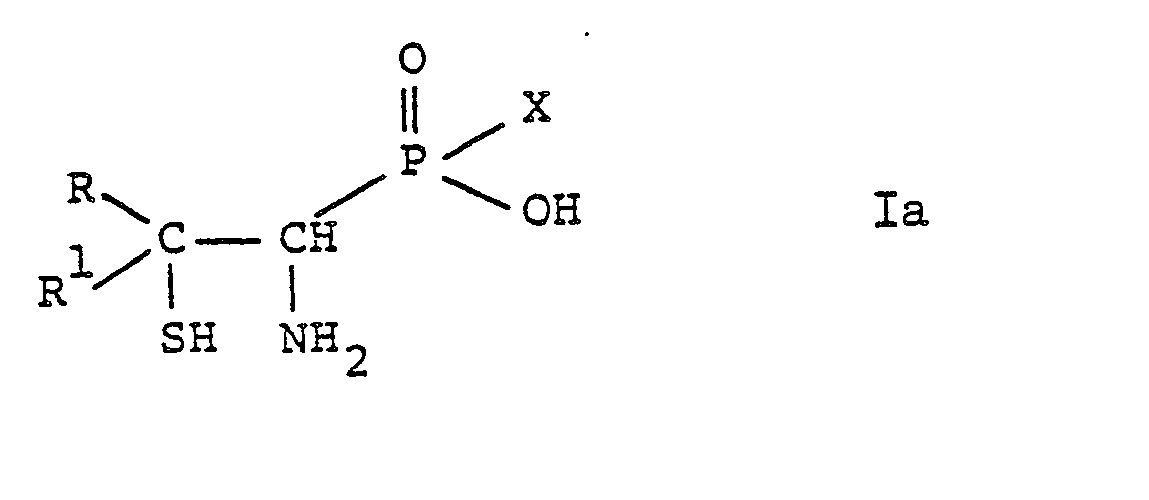
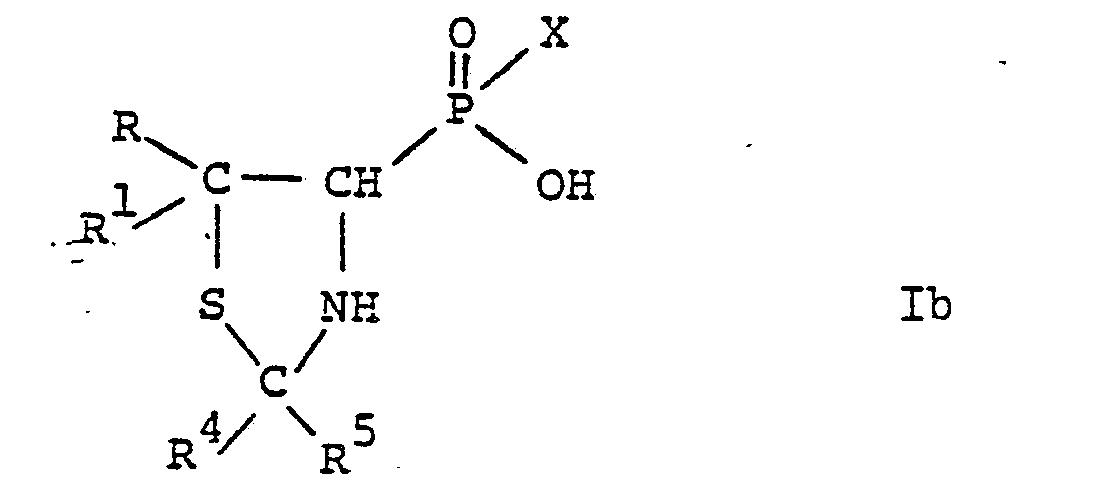
- the general formula I accordingly comprises compounds of the general formula wherein R, R 1 and X have the above meaning, and compounds of the general formula wherein R, R 1 , R 4 , R 5 and X have the above meaning.
- lower alkyl used in this specification denotes straight-chain or branched alkyl groups, which preferably contain 1 to 6 carbon atoms, such as methyl, ethyl, propyl, isopropyl, butyl, isobutyl, t-butyl, pentyl, hexyl, etc. Methyl is the preferred Possibility of meaning for lower alkyl. Phenyl is an example of aryl.
- the compounds of the general formula I and their salts can be prepared by that he
- an acid addition salt of a compound of the general formula Ib can be obtained by reacting an acid addition salt of a compound of the general formula II with an acid of the general formula III.
- an acid addition salt of a compound of the formula II with a hydrogen halide, in particular with hydrogen chloride is preferably used.
- the reaction can be carried out in the presence or absence of a solvent. In the absence of a solvent, the reactants can be heated, for example in the form of a melt. On the other hand, the reaction can also be carried out in a suitable solvent, for example in an alcohol, such as ethanol, at elevated temperature; e.g. at or slightly below the boiling point of the mixture.
- the cleavage of the thiazolidine ring according to variant b) of the process according to the invention can be carried out by generally known methods. If a compound of the formula Ib or an acid addition salt thereof is used, 30 it is expedient to carry out the cleavage by heating a solution or a suspension of this compound or a salt thereof in water, if desired in the presence of a concentrated hydrohalic acid, preferably concentrated hydrochloric acid. In this case, the reaction mixture is preferably heated to the boiling point.
- a compound of formula IV or an acid addition salt thereof is used, the cleavage is expediently carried out by heating this compound or a salt thereof in the presence of water and a water-immiscible, inert organic solvent with a carbonyl binder (a carbonyl binder is a compound which is able to trap the aldehyde released during the reaction).
- carbonyl binder is a compound which is able to trap the aldehyde released during the reaction.
- Examples of such carbonyl binders are the following: hydrazine, phenylhydrazine, 2,4-dinitrophenylhydrazine, semicarbazide and thiosemicarbazide.
- a particularly preferred carbonyl binding agent is hydroxylamine or a salt thereof, very particularly preferred is hydroxylamine hydrochloride.
- water-immiscible organic solvents which can be used are the following: Aromatic hydrocarbons such as benzene, toluene and the like, or preferably halogenated hydrocarbons such as chloroform, chlorobenzene and the like.
- a base such as an alkali metal hydroxide (for example sodium hydroxide) and at the boiling point of the reaction mixture.
- the desired product can now be isolated from the aqueous phase in a manner known per se; the reaction product of the carbonyl binder and the aldehyde remains in the organic phase.
- the reaction of a compound of the formula Ia with a ketone of the formula V according to variant c) of the process according to the invention to give a compound of the formula Ib can be carried out in a manner known per se.
- ketones of formula V which can be used in this process include the following: acetone, ethyl methyl ketone, diethyl ketone and the like.
- the preferred ketone is acetone.
- the compounds of the formula I have an asymmetric center and can therefore be present in racemic or in optically active form.
- Compounds of formula I which have more than one asymmetric center can exist in various diastereoisomeric forms.
- the present invention relates to all possible stereoisomers of the compound of the formula I, all possible diastereoisomeric mixtures and racemates, and the separation of diastereoisomeric mixtures and the cleavage of racemates, which can be carried out by methods known per se.
- the compounds of formula I form salts with acids and bases.
- acid addition salts are the hydrochlorides, hydrobromides, sulfates, nitrates, phosphates, methanesulfonates, ethanesulfonates, toluenesulfonates, acetates, oxalates, succinates, fumarates, maleates, malates, citrates and the like.
- salts with bases are the sodium, potassium, lithium, calcium, ammonium and substituted ammonium salts, and salts with suitable heterocyclic bases.
- the pharmaceutically acceptable salts are preferred.
- the conversion of a compound of formula I into a salt can be carried out in a conventional manner.
- the conversion of a salt of a compound of formula I into a compound of Fc.mel I can also be carried out by conventional methods.
- the compounds of the formula II are known or can be prepared analogously to the known representatives of this class of substances.
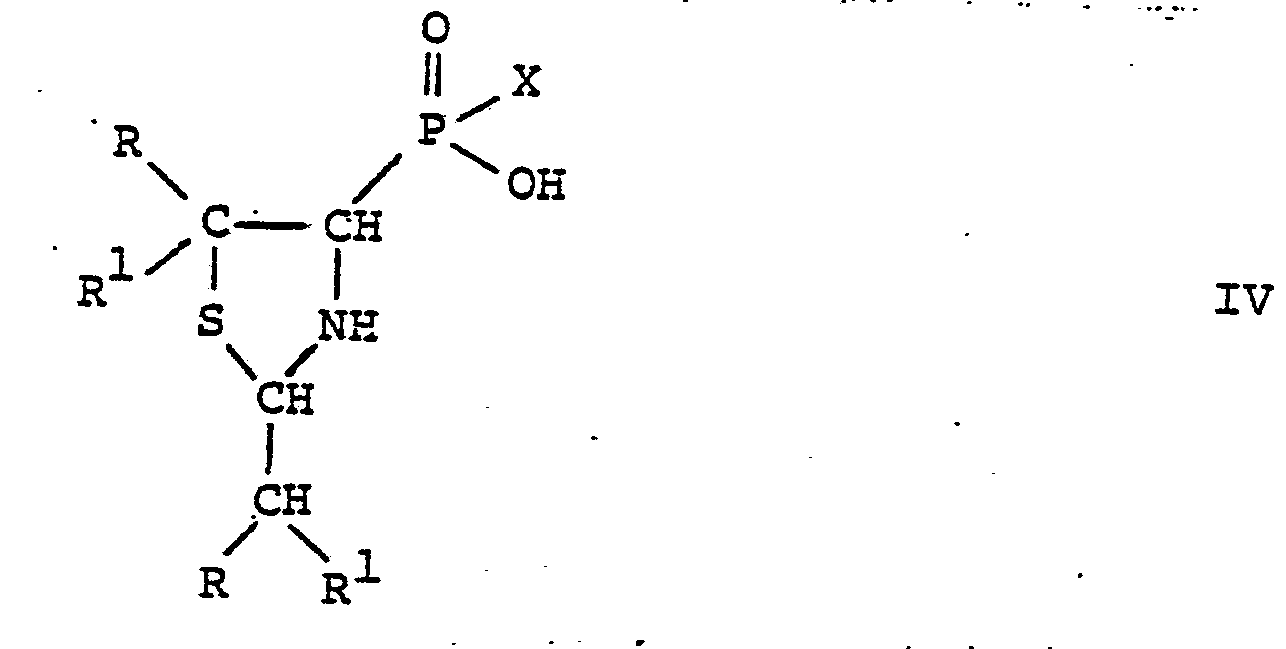
- the compounds of formula IV and their acid addition salts are new; they are also the subject of the present invention. They can be prepared by using a compound of the general formula wherein R and R have the above meaning, reacted with an acid of the formula III, in analogy to process variant a), and if desired converting the acid addition salt obtained from a compound of the formula IV into a compound of the formula IV.
- the compounds of formula I and their pharmaceutically acceptable salts have valuable therapeutic properties. They can be used in particular in the treatment of inflammation, degenerative joint diseases, e.g. rheumatoid arthritis and osteoarthritis, and Wilson's disease.
- the compounds of formula I and their pharmaceutically acceptable salts can be used as medicaments, in the form of pharmaceutical preparations. which contain these compounds in combination with a compatible pharmaceutical carrier material.
- carrier materials can be organic or inorganic carrier materials suitable for enteral (for example oral) or parenteral administration, such as water, gelatin, talc, magnesium stearate, gum arabic, lactose, starch, vegetable oils, polyalkylene glycols, petroleum jelly and the like.
- the pharmaceutical preparations can be in solid forms, for example as tablets, dragées, suppositories or capsules, or in liquid forms, for example as solutions, suspensions or emulsions.
- the pharmaceutical preparations can be subjected to conventional pharmaceutical treatments such as sterilization and / or can contain conventional pharmaceutical auxiliaries such as preservatives, stabilizing agents, emulsifying agents, wetting agents, flavoring agents, sweeteners, coloring agents, salts to vary the bsmotic pressure, buffers and the like .
- conventional pharmaceutical auxiliaries such as preservatives, stabilizing agents, emulsifying agents, wetting agents, flavoring agents, sweeteners, coloring agents, salts to vary the bsmotic pressure, buffers and the like .
- the pharmaceutical preparations can also contain other therapeutically valuable substances.
- the compounds of formula I and their pharmaceutically acceptable salts can be administered to humans in a daily dosage of from about 250 mg to about 2000 mg. Administration can be in a single dose or, preferably, in multiple doses.
- the above dosage range is given as an example only and can be varied up or down by the attending physician depending on the type and severity of the disease to be treated and the specific compound to be administered.
- a solution of 36.0 g of 2,2,5,5-tetramethyl-A -thiazoline hydrochloride in ethanol is mixed with 13.0 g (1 equivalent) of hypophosphorous acid.
- the solution is heated to 70 ° for 3 hours and then filtered.
- the filtrate is cooled to room temperature, adjusted to pH 5 with propylene oxide and cooled to 0 ° for 4 hours.
- the solid is filtered off, washed with ethanol / diethyl ether and dried.
- 34.0 g of DL- (2,2,5,5-tetramethyl-4-thiazolidinyl) phosphinic acid with a melting point of 191 ° (decomposition) are obtained.
- DL- (2,2,5,5-tetramethyl-4-thiazolidinyl) phosphonic acid prepared as described in Example 1 are dissolved in boiling water. The solution obtained is concentrated until crystallization begins. The mixture is then cooled to 0 °. The white crystals are filtered off. 0.6 g of DL- (1-amino-2-mercapto-2-methylpropyl) phosphonic acid with a melting point of 242-244 ° (decomposition) is obtained.
- DL- (2,2,5,5-tetramethyl-4-thiazolidinyl) phosphinic acid prepared as described in Example 2 are dissolved in boiling water. The solution obtained is concentrated and cooled to 0 °. After filtering off the white, crystalline solid, 0.15 g of DL- (1-amino-2-mercapto-2-methylpropyl) phosphinic acid with a melting point of 205-207 ° (decomposition) is obtained.
- DL- (2,2,5,5-tetramethyl-4-thiazolidinyl) methylphosphinic acid prepared as described in Example 3 are dissolved in boiling water. The solution is heated to boiling for 30 minutes and then concentrated. The solution is then filtered and isopropanol is added. After filtering off the crystalline product, washing with isopropanol / diethyl ether and drying, 0.7 g of DL- (1-amino-2-mercapto-2-methylpropyl) methylphosphinic acid are obtained as a white solid with a melting point of 221 °.
- 0.54 g of 2,2,5,5-tetramethyl-A -thiazoline hydrochloride and 0.42 g of phenylphosphinic acid are heated together with 10 ml of ethanol at 70 ° for 2 hours. The mixture is cooled to room temperature and filtered. The residue is washed with ethanol and diethyl ether and then dried. 0.65 g of DL- (2,2,5,5-tetramethyl-4-thiazolidinyl) phenylphosphinic acid hydrochloride of melting point 215-217 ° (decomposition) is obtained.
- DL- (2,2,5,5-tetramethyl-4-thiazolidinyl) phenylphosphinic acid hydrochloride (prepared as described in Example 7) is suspended in boiling water. Concentrated hydrochloric acid is added until a solution is formed. The solution is filtered and evaporated to dryness under reduced pressure. The solid residue is recrystallized from 3N hydrochloric acid and gives DL- (1-amino-2-mercapto-2-methylpropyl) phenylphosphinic acid hydrochloride with a melting point of 190-192 ° (decomposition).
- a solution of 19.4 g of 2-isopropyl-5,5-dimethyl-A-thiazoline hydrochloride and 16.0 g of hypophosphorous acid in 75 ml of ethanol is heated to 70 ° for 1 hour. After cooling to room temperature and filtering, the solution obtained is treated with 7 ml of propylene oxide. And cooled to 0-5 ° for 3 hours. The solid obtained is filtered off, washed with ethanol and diethyl ether and dried. 18 ', 4 g of racemic (2-isopropyl-5,5-dimethyl-4-thiazolidinyl) phosphinic acid with a melting point of 200 ° (decomposition) are obtained.
- Tablets can contain the following ingredients:
- Tablets can contain the following ingredients:
Landscapes
- Chemical & Material Sciences (AREA)
- Organic Chemistry (AREA)
- Health & Medical Sciences (AREA)
- Life Sciences & Earth Sciences (AREA)
- Biochemistry (AREA)
- General Health & Medical Sciences (AREA)
- Molecular Biology (AREA)
- Pharmaceuticals Containing Other Organic And Inorganic Compounds (AREA)
Abstract


Description
- Die vorliegende Erfindung betrifft substituierte Phosphin- und Phosphonsäuren. Im speziellen betrifft sie substituierte Phosphin- und Phosphonsäuren, ein Verfahren zu deren Herstellung, pharmazeutische Präparate, enthaltend diese Verbindungen, sowie die Verwendung dieser Verbindungen.
- Die erfindungsgemässen, substituierten Phosphin- und Phosphonsäuren sind Verbindungen der allgemeinen Formel


- Die allgemeine Formel I umfasst demnach Verbindungen der allgemeinen Formel


- Der in dieser Beschreibung verwendete Ausdruck "niederes Alkyl" bezeichnet geradkettige oder verzweigte Alkylgruppen, welche vorzugsweise 1 bis 6 Kohlenstoffatome enthalten, wie Methyl, Aethyl, Propyl, Isopropyl, Butyl, Isobutyl, t-Butyl, Pentyl, Hexyl usw. Methyl ist die bevorzugte Bedeutungsmöglichkeit für niederes Alkyl. Phenyl sei als Beispiel für Aryl genannt.
- Im Rahmen der vorliegenden Erfindung bevorzugte Verbindungen sind solche, worin R und R je niederes Alkyl bedeuten.
- Ganz besonders bevorzugte Verbindungen der allgemeinen Formel Ia sind:
- DL-(1-Amino-2-mercapto-2-methylpropyl)phosphinsäure, DL-(1-Amino-2-mercapto-2-methylpropyl)phosphonsäure und DL-(1-Amino-2-mercapto-2-methylpropyl)methylphosphinsäure.
- Weitere bevorzugte Verbindungen der allgemeinen Formel Ia sind:
- DL-(1-Amino-2-mercapto-2-methylpropyl)phenylphosphinsäure, DL-(1-Amino-2-mercapto-2-methylpropyl)butylphosphinsäure, (-)-(1-Amino-2-mercapto-2-methylpropyl)phosphinsäure und (+)-(1-Amino-2-mercapto-2-methylpropyl)phosphinsäure.
- Ganz besonders bevorzugte Verbindungen der allgemeinen Formel Ib sind:
- DL-(2,2,5,5-Tetramethyl-4-thiazolidinyl)phosphinsäure, DL-(2,2,5,5-Tetramethyl-4-thiazolidinyl)phosphonsäure und
- DL-(2,2,5,5-Tetramethyl-4-thiazolidinyl)methylphosphinsäure.
- Weitere bevorzugte Verbindungen der allgemeinen Formel Ib sind:
- DL-(2,2,5,5-Tetramethyl-4-thiazolidinyl)phenylphosphinsäure und DL-(2,2,5,5-Tetramethyl-4-thiazolidinyl)butylphosphinsäure.
- Die Verbindungen der allgemeinen Formel I und ihre Salze können erfindungsgemäss dadurch hergestellt werden, dass man
- zur Herstellung eines Säureadditionssalzes einer Ver-bindung der allgemeinen Formel Ib, ein Säureadditionssalz einer Verbindung der allgemeinen Formel


- b) zur Herstellung einer Verbindung der allgemeinen Formel Ia oder eines Säureadditionssalzes davon, in einer Verbindung der obigen allgemeinen Formel Ib oder in einer Verbindung der allgemeinen Formel
- c) zur Herstellung einer Verbindung der allgemeinen Formel Ib, eine Verbindung der allgemeinen Formel Ia mit einem Keton der allgemeinen Formel

- d) erwünschtenfalls ein erhaltenes Diastereoisomerengemisch in die diastereoisomeren Racemate auftrennt, und/oder
- e) erwünschtenfalls ein erhaltenes Racemat in die optischen Antipoden spaltet, und/oder
- f) erwünschtenfalls eine Verbindung der allgemeinen Formel I in ein Salz überführt, oder ein Salz einer Verbindung der allgemeinen Formel I in eine Verbindung der allgemeinen Formel I überführt.
- Gemäss Variante a) des erfindungsgemässen Verfahrens kann ein Säureadditionssalz einer Verbindung der allgemeinen Formel Ib dadurch erhalten werden, dass man ein Säureadditionssalz einer Verbindung der allgemeinen Formel II mit einer Säure der allgemeinen Formel III umsetzt. In diesem Verfahren verwendet man vorzugsweise ein Säureadditionssalz einer Verbindung der Formel II mit einem Halogenwasserstoff, insbesondere mit Chlorwasserstoff. Die Reaktion kann in An- oder Abwesenheit eines Lösungsmittels durchgeführt werden. In Abwesenheit eines Lösungsmittels können die Reaktionspartner beispielsweise in Form einer Schmelze erhitzt werden. Andererseits kann die Reaktion auch in einem geeigneten Lösungsmittel durchgeführt werden, und zwar beispielsweise in einem Alkohol, wie Aethanol, bei erhöhter Temperatur; z.B. beim Siedepunkt der Mischung oder wenig darunter.
- Die Spaltung des Thiazolidinringes gemäss Variante b) des erfindungsgemässen Verfahrens kann nach allgemein bekannten Methoden durchgeführt werden. Setzt man eine Verbindung der Formel Ib oder ein Säureadditionssalz davon ein, 30 ist es zweckmässig die Spaltung durch Erhitzen einer Lösung oder einer Suspension dieser Verbindung oder eines Salzes davon in Wasser, erwünschtenfalls in Gegenwart einer konzentrierten Halogenwasserstoffsäure, vorzugsweise konzentrierter Salzsäure, durchzuführen. In diesem Fall erhitzt man vorzugsweise auf den Siedepunkt der Reaktionsmischung. Setzt man eine Verbindung der Formel IV oder ein Säureadditionssalz davon ein, so wird die Spaltung zweckmässigerweise durch Erhitzen dieser Verbindung oder eines Salzes davon in Gegenwart von Wasser und eines mit Wasser nicht mischbaren, inerten organischen Lösungsmittels mit einem Carbonylbindungsmittel durchführt (ein Carbonylbindungsmittel ist eine Verbindung, welche im Stande ist, den während der Reaktion freigesetzten Aldehyd abzufangen). Als Beispiele solcher Carbonylbindungsmittel seien die folgenden genannt: Hydrazin, Phenylhydrazin, 2,4-Dinitrophenylhydrazin, Semicarbazid und Thiosemicarbazid. Ein besonders bevorzugtes Carbonylbindungsmittel ist Hydroxylamin oder ein Salz davon, ganz besonders bevorzugt ist Hydroxylamin-hydrochlorid. Beispiele für mit Wasser nicht mischbare organische Lösungsmittel, welche verwendet werden können, sind die folgenden: Aromatische Kohlenwasserstoffe, wie z.B. Benzol, Toluol und dergleichen, oder vorzugsweise halogenierte Kohlenwasserstoffe, wie z.B. Chloroform, Chlorbenzol und dergleichen. Die Durchführung dieser Spaltungsmethode erfolgt vorteilhafterweise in Gegenwart einer Base, wie eines Alkalimetallhydroxides (z.B. Natriumhydroxid) und beim Siedepunkt der Reaktionsmischung. Das gewünschte Produkt kann nun in an sich bekannter Weise aus der wässrigen Phase isoliert werden; das Reaktionsprodukt aus dem Carbonylbindungsmittel und dem Aldehyd verbleibt in der organischen Phase.
- Die Reaktion einer Verbindung der Formel Ia mit einem Keton der Formel V nach Variante c) des erfindungsgemässen Verfahrens zu einer Verbindung der Formel Ib kann in an sich bekannter Weise durchgeführt werden. Als Beispiele für Ketone der Formel V, welche in diesem Verfahren verwendet werden können, seien die folgenden genannt: Aceton, Aethylmethylketon, Diäthylketon und dergleichen. Das bevorzugte Keton ist Aceton.
- Die Verbindungen der Formel I besitzen ein asymmetrisches Zentrum und können deshalb in racemischer oder in optisch aktiver Form vorliegen. Verbindungen der Formel I, welche mehr als ein asymmetrisches Zentrum besitzen, können in verschiedenen diastereoisomeren Formen vorliegen. Gegenstand der vorliegenden Erfindung sind alle möglichen Stereoisomeren der Verbindung der Formel I, alle möglichen diastereoisomeren Mischungen und Racemate, sowie die Auftrennung von diastereoisomeren Mischungen und die Spaltung von Racematen, welche nach an sich bekannten Methoden durchgeführt werden können.
- Die Verbindungen der Formel I bilden Salze mit Säuren und Basen. Als Beispiele für Säureadditionssalze seien die Hydrochloride, Hydrobromide, Sulfate, Nitrate, Phosphate, Methansulfonate, Aethansulfonate, Toluolsulfonate, Acetate, Oxalate, Succinate, Fumarate, Maleate, Malate, Zitrate und dergleichen genannt. Als Beispiele für Salze mit Basen seien die Natrium-, Kalium-, Lithium-, Calcium-, Ammonium-und substituierte Ammoniumsalze, sowie Salze mit geeigneten heterocyclischen Basen genannt. Bevorzugt werden die pharmazeutisch annehmbaren Salze. Die Ueberführung einer Verbindung der Formel I in ein Salz kann in herkömmlicher Weise durchgeführt werden. Die Ueberführung eines Salzes einer Verbindung der Formel I in eine Verbindung der Fc.mel I kann ebenfalls nach herkömmlichen Methoden durchgeführt werden.
- Die Verbindungen der Formel II sind bekannt oder können in Analogie zu den bekannten Vertretern dieser Stoffklasse hergestellt werden.
- Die Verbindungen der Formel IV und ihre Säureadditionssalze sind neu; sie sind ebenfalls Gegenstand der vorliegenden Erfindung. Sie können dadurch hergestellt werden, dass man eine Verbindung der allgemeinen Formel

- Die Verbindungen der Formel I und ihre pharmazeutisch annehmbaren Salze besitzen wertvolle therapeutische Eigenschaften. Sie können insbesondere bei der Behandlung von Entzündungen, degenerativen Gelenkkrankheiten, wie z.B. rheumatoide Arthritis und Osteoarthritis, und der Wilson-Krankheit verwendet werden.
- Die Verbindungen der Formel I und ihre pharmazeutisch annehmbaren Salze können als Arzneimittel verwendet werden, und zwar in Form von pharmazeutischen Präparaten, . welche diese Verbindungen in Kombination mit einem verträglichen pharmazeutischen Trägermaterial enthalten. Diese Trägermaterialien können für die enterale (z.B. orale) oder parenterale Verabreichung geeignete organische oder anorganische Trägermaterialien sein, wie Wasser, Gelatine, Talk, Magnesiumstearat, Gummi arabicum, Lactose, Stärke, pflanzliche Oele, Polyalkylenglykole, Vaselin und dergleichen. Die pharmazeutischen Präparate können als feste Formen vorliegen, z.B. als Tabletten, Dragees, Suppositorien oder Kapseln, oder in flüssigen Formen, z.B. als Lösungen, Suspensionen oder Emulsionen. Die pharmazeutischen Präparate können herkömmlichen pharmazeutischen Behandlungen, wie Sterilisation, unterzogen werden und/oder können herkömmliche pharmazeutische Hilfsmittel, wie Konservierungsmittel, Stabilisierungsmittel, Emulgiermittel, Netzmittel, Aromatisierungsmittel, Süssmittel, Färbemittel, Salze, um den bsmotischen Druck zu variieren, Puffer und dergleichen, enthalten. Die pharmazeutischen Präparate können zusätzlich zu den Verbindungen der allgemeinen Formel I oder ihrer pharmazeutisch annehmbaren Salze auch noch andere therapeutisch wertvolle Substanzen enthalten.
- Die Verbindungen der Formel I und ihre pharmazeutisch annehmbaren Salze können Menschen in einer täglichen Dosierung von etwa 250 mg bis etwa 2000 mg verabreicht werden. Die Verabreichung kann in einer einzigen Dosis oder, vorzugsweise in mehreren Dosen erfolgen. Der obige Dosierungsbereich ist nur als Beispiel angegeben und kann durch den behandelnden Arzt nach unten oder nach oben variiert werden, je nach Art und Stärke der zu behandelnden Krankheit und der spezifischen zu verabreichenden Verbindung.
- Die nachfolgenden Beispiele dienen der Erläuterung der Erfindung. Alle Temperaturen sind in Celsiusgraden angegeben.
- Eine Mischung aus 6,45 g 2,2,5,5-Tetramethyl-A - hiazolin-hydrochlorid und 2,95 g (1 Aequivalent) phosphorige Säure wird auf 100-110° erhitzt, wobei eine exotherme Reaktion einsetzt, und die Schmelze langsam fest wird. Nach 30 Minuten wird die erhaltene Mischung auf Raumtemperatur abgekühlt und mit Aethanol versetzt. Der pH der erhaltenen Suspension wird mit Propylenoxid auf 5-6 eingestellt. Der Niederschlag wird abfiltriert, mit Aethanol und Diäthyläther gewaschen und getrocknet. Man erhält 6,0 g DL-(2,2,5,5-Tetramethyl-4-thiazolidinyl)phosphonsäure als weissen Festkörper vom Schmelzpunkt 235-237° (Zersetzung).
- Das als Ausgangsmaterial verwendete 2,2,5,5-Tetramethyl-Δ3-thiazolin-hydrochlorid kann wie folgt hergestellt werden:
- Eine in einem Eisbad abgekühlte Lösung von 5,2 g 2,2,5,5-Tetramethyl-A -thiazolin in trockenem Diäthyläther wird bis zur Vervollständigung des Niederschlages mit trockenem Chlorwasserstoff behandelt. Der Niederschlag wird abfiltriert, mit Diäthyläther gewaschen und im Vakuumexsikkator getrocknet.
- Eine Lösung von 36,0 g 2,2,5,5-Tetramethyl-A -thiazolin-hydrochlorid in Aethanol wird mit 13,0 g (1 Aequivalent) hypophosphorige Säure versetzt. Die Lösung wird während 3 Stunden auf 70° erwärmt und anschliessend filtriert. Das Filtrat wird auf Raumtemperatur abgekühlt, mit Propylenoxid auf pH 5 gestellt und während 4 Stunden auf 0° abgekühlt. Der Festkörper wird abfiltriert, mit Aethanol/Diäthyläther gewaschen und getrocknet. Man erhält 34,0 g DL-(2,2,5,5-Tetramethyl-4-thiazolidinyl)phosphinsäure vom Schmelzpunkt 191° (Zersetzung).
- 7,2 g 2,2,5,5-Tetramethyl-A -thiazolin-hydrochlorid und 3,25 g (1 Aequivalent) Methylphosphinsäure werden gründlich vermischt. Die Mischung wird anschliessend unter Rühren auf 105-110° erhitzt. Es bildet sich eine Schmelze, wobei ein saures Gas entsteht. Die Schmelze wird langsam fest und man erhitzt noch während 10-15 Minuten. Der Rückstand wird mit 3,0 g Propylenoxid in Aethanol behandelt, anschliessend lässt man die Lösung noch während 12 Stunden stehen. Der Festkörper wird abfiltriert, mit kaltem Isopropanol/Diäthyläther gewaschen und getrocknet. Nach Umkristallisieren aus Isopropanol erhält man 2,1 g DL-(2,2,-5,5-Tetramethyl-4-thiazolidinyl)methylphosphinsäure als weissen Festkörper vom Schmelzpunkt 193-194°.
- 2,0 g DL-(2,2,5,5-Tetramethyl-4-thiazolidinyl)phosphonsäure (hergestellt, wie in Beispiel 1 beschrieben) werden in siedendem Wasser aufgelöst. Die erhaltene Lösung wird bis zur beginnenden Kristallisation eingeengt. Die Mischung wird anschliessend auf 0° abgekühlt. Die weissen Kristalle werden abfiltriert. Man erhält 0,6 g DL-(1-Amino-2-mercapto-2-methylpropyl)phosphonsäure vom Schmelzpunkt 242-244° (Zersetzung).
- 0,5 g DL-(2,2,5,5-Tetramethyl-4-thiazolidinyl)phos- phinsäure (hergestellt, wie in Beispiel 2 beschrieben) werden in siedendem Wasser aufgelöst. Die erhaltene Lösung wird eingeengt und auf 0° abgekühlt. Nach Abfiltrieren des weissen, kristallinen Festkörpers erhält man 0,15 g DL-(1-Amino-2-mercapto-2-methylpropyl)phosphinsäure vom Schmelzpunkt 205-207° (Zersetzung).
- 1,0 g DL-(2,2,5,5-Tetramethyl-4-thiazolidinyl)methylphosphinsäure (hergestellt, wie in Beispiel 3 beschrieben) erden in siedendem Wasser gelöst. Die Lösung wird während 30 Minuten zum Sieden erhitzt und anschliessend eingeengt. Die Lösung wird anschliessend filtriert und mit Isopropanol versetzt. Nach Abfiltrieren des kristallinen Produktes, Waschen mit Isopropanol/Diäthyläther und Trocknen erhält man 0,7 g DL-(1-Amino-2-mercapto-2-methylpropyl)methylphosphinsäure als weissen Festkörper vom Schmelzpunkt 221°.
- 0,54 g 2,2,5,5-Tetramethyl-A -thiazolin-hydrochlorid und 0,42 g Phenylphosphinsäure werden zusammen mit 10 ml Aethanol während 2 Stunden auf 70° erhitzt. Die Mischung wird auf Raumtemperatur abgekühlt und filtriert. Der Rückstand wird mit Aethanol und Diäthyläther gewaschen und anschliessend getrocknet. Man erhält 0,65 g DL-(2,2,5,5-Tetramethyl-4-thiazolidinyl)phenylphosphinsäure-hydrochlorid vom Schmelzpunkt 215-217° (Zersetzung).
- 7,73 g 2,2,5,5-Tetramethyl-A -thiazolin-hydrochlorid und 5,27 g Butylphosphinsäure werden zusammen vermischt und langsam auf 100° erwärmt. Nach Einsetzen der Reaktion steigt die Temperatur auf 130°; man erhitzt noch während 0,5 Stunden. Das erhaltene feste Gemisch wird mit Methanol behandelt. Der Festkörper wird abfiltriert, mit Methanol gewaschen und aus Methanol umkristallisiert. Man erhält 5,66 g DL-(2,2,5,5-Tetramethyl-4-thiazolidinyl)butylphosphinsäure-hydrochlorid vom Schmelzpunkt 204° (Zersetzung).
- 0,3 g DL-(2,2,5,5-Tetramethyl-4-thiazolidinyl)phenylphosphinsäure-hydrochlorid (hergestellt, wie in Beispiel 7 beschrieben) wird in siedendem Wasser suspendiert. Man versetzt mit konzentrierter Salzsäure bis eine Lösung entsteht. Die Lösung wird filtriert und unter vermindertem Druck zur Trockne eingedampft. Der feste Rückstand wird aus 3N Salzsäure umkristallisiert und liefert DL-(1-Amino-2-mercapto-2-methylpropyl)phenylphosphinsäure-hydrochlorid vom Schmelzpunkt 190-192° (Zersetzung).
- .7,7 g DL-(2,2,5,5-Tetramethyl-4-thiazolidinyl)butylphosphinsäure (hergestellt, wie in Beispiel 8 beschrieben) werden in 25 ml Wasser, das 5 ml konzentrierte Salzsäure enthält, suspendiert. Die Mischung wird während 1 Stunde unter Rückfluss zum Sieden erhitzt. Nach Eindampfen zur Trockne versetzt man einmal mit Aethanol und dampft ein. Der feste Rückstand wird aus einer Mischung von 20 ml Aethanol und 75 ml Diäthyläther umkristallisiert. Das kristalline Produkt wird abfiltriert, wobei man 4,1 g DL-(1-Amino-2-mercapto-2-methylpropyl)butylphosphinsäure- hydrochlorid vom Schmelzpunkt 159-160° (Zersetzung) erhält.
- 2,23 g racemische (2-Isopropyl-5,5-dimethyl-4-thia- zolidinyl)phosphinsäure und 0,77 g Hydroxylamin-hydrochlorid werden in 15 ml sauerstofffreiem Wasser, das 0,48 g Natriumhydroxid enthält, aufgelöst. Nach Zugabe von 15 ml Chloroform wird die Mischung während 1 Stunde unter Rückfluß zum Sieden erhitzt, auf Raumtemperatur abgekühlt und mit 3 ml konzentrierter Salzsäure versetzt. Nach Abtrennen der Chloroformphase wird die wässrige Phase zweimal mit je 15 ml Chloroform ausgeschüttelt. Die wässrige Phase wird filtriert und zur Trockene eingedampft. Den erhaltenen Rückstand versetzt man zweimal mit Aethanol und dampft jeweils wieder ein. Der Rückstand wird in 15 ml Aethanol suspen-diert und mit 10 ml Aceton behandelt. Die Mischung wird während 0,5 Stunden unter Rückfluss zum Sieden erhitzt, auf Raumtemperatur abgekühlt und filtriert. Das Filtrat wird mit 1,5 ml Propylenoxid behandelt und anschliessend während 2 Stunden auf 0-5° abgekühlt. Der erhaltene Festkörper wird abfiltriert, mit Isopropanol gewaschen und getrocknet. Man erhält 1,5 g DL-(2,2,5,5-Tetramethyl-4-thiazolidinyl)phosphinsäure vom Schmelzpunkt 190° (Zersetzung).
- . Die als Ausgangsmaterial verwendete racemische (2-Isopropyl-5,5-dimethyl-4-thiazolidinyl)phosphinsäure kann wie folgt hergestellt werden:
- Eine Lösung von 31,6 g 2-Isopropyl-5,5-dimethyl-A - thiazolin in 300 ml trockenem Diäthyläther wird in einem Eisbad abgekühlt und bis nichts mehr ausfällt mit trockenem Chlorwasserstoff behandelt. Der Festkörper wird abfiltriert, mit trockenem Diäthyläther gewaschen und getrocknet. Man erhält 35 g 2-Isopropyl-5,5-dimethyl-A -thiazolin-hydrochlorid.
- Eine Lösung von 19,4 g 2-Isopropyl-5,5-dimethyl-A - thiazolin-hydrochlorid und 16,0 g hypophosphorige Säure in 75 ml Aethanol wird während 1 Stunde auf 70° erwärmt. Nach Abkühlen auf Raumtemperatur und Filtrieren wird die erhaltene Lösung mit 7 ml Propylenoxid behandelt.und während 3 Stunden auf 0-5° abgekühlt. Der erhaltene Festkörper wird abfiltriert, mit Aethanol und Diäthyläther gewaschen und getrocknet. Man erhält 18',4 g racemische (2-Isopropyl-5,5-dimethyl-4-thiazolidinyl)phosphinsäure vom Schmelzpunkt 200° (Zersetzung).
- 1,5 g DL-(2,2,5,5-Tetramethyl-4-thiazolidinyl)phcs- phinsäure werden in 10 ml siedendem Wasser aufgelöst. Die erhaltene Lösung wird während 0,25 Stunden bei Siedetemperatur eingeengt, auf Raumtemperatur abgekühlt und mit 25 ml Isopropanol verdünnt. Die erhaltene Mischung wird über Nacht bei 0° gehalten. Der entstandene Festkörper wird abfiltriert, mit Isopropanol gewaschen und getrocknet. Man erhält 0,85 g DL-(1-Amino-2-mercapto-2-methylpropyl)-phosphinsäure vom Schmelzpunkt 211° (Zersetzung;.
-
- a) 1,7 g DL-(l-Amino-2-mercapto-2-methylpropyl)phosphin- säure werden in 50 ml sauerstofffreiem Wasser, das 1,7 g Natriumbicarbonat enthält, aufgelöst. Die Lösung wird unter einer Argonatmosphäre bei 0° gehalten. Man versetzt mit 1,7 ml Benzylchloroformat und rührt die Mischung während 2 Stunden, wobei man die Temperatur während dieser Zeit langsam auf Raumtemperatur steigen lässt. Nach Extrahieren mit 20 ml Diäthyläther wird die wässrige Phase abgetrennt, auf 0° abgekühlt und mit 2N Salzsäure auf pH 1 angesäuert. Das Oel, das sich langsam abscheidet, verfestigt sich und wird aus Essigester/Petroläther umkristallisiert. Man erhält DL-(1-Benzyloxycarbonylamino-2-mercapto-2-methylpropyl)phosphinsäure vom Schmelzpunkt 114-120°.
- b) Eine heisse Lösung von 6,36 g DL-(l-Benzyloxycarbonyl- amino-2-mercapto-2-methylpropyl)phosphinsäure in 20 ml Aethanol wird mit einer Lösung von 2,52 g (-)-a-Methylbenzylamin in 5 ml Aethanol behandelt. Man lässt die Lösung langsam abkühlen und filtriert das erhaltene kristalline Produkt ab. Man erhält 1,60 g des (-)-a-Methylbenzylamin- salzes der (+)-(1-Benzyloxycarbonylamino-2-mercapto-2-methylpropyl)phosphinsäure vom Schmelzpunkt 185-189°;


- c) Die nach den Umkristallisationen des (-)-a-Methyl- benzylaminsalzes in Absatz b) erhaltenen Mutterlaugen werden eingedampft. Der feste Rückstand wird in Wasser suspendiert und mit 2N Salzsäure auf pH 1 angesäuert. Die Mischung wird zweimal mit je 25 ml Diäthyläther extrahiert. Die vereinigten Auszüge werden über Magnesiumsulfat getrocknet, filtriert und eingedampft. Der erhaltene Stoff wird mit (+)-a-Methylbenzylamin behandelt, und zwar wie in Absatz b) beschrieben. Man erhält das kristaline (+)-a-Methylbenzylaminsalz der (-)-(1-Benzyloxycarbonylamino-2-mercapto-2-methylpropyl)phosphinsäure, das bis zur konstanten Drehung aus Aethanol umkristallisiert wird. Man erhält Produkt vom Schmelzpunkt 187-189° und

- d) Das (+)-a-Methylbenzylaminsalz der (-)-(1-Benzyloxy- carbonylamino-2-mercapto-2-methylpropyl)phosphinsäure [Absatz c)1 wird in Wasser suspendiert. Die Suspension wird mit 2N Salzsäure auf pH 1 angesäuert und zweimal mit 25 ml Diäthyläther ausgeschüttelt. Die vereinigten ätherischen Auszüge werden über Magnesiumsulfat getrocknet und eingedampft. Das erhaltene Oel wird in 2 ml Eisessig aufgelöst und mit 5 ml 45-proz. Bromwasserstoff in Essigsäure behandelt. Man lässt die erhaltene Lösung über Nacht bei Raumtemperatur stehen, versetzt anschliessend mit 200 ml Diäthyläther und lässt die trübe Suspension während 2 Stunden bei 0° stehen. Die ätherische Phase wird abdekantiert, und der Rückstand in 15 ml Methanol aufgelöst. Nach Zugabe von 10 ml Aceton wird die Lösung während 1 Stunde unter Rückfluss zum Sieden erhitzt, abgekühlt und filtriert. Das Filtrat wird durch Zugabe von Propylenoxid auf pH 5 eingestellt. Das Acetonaddukt kristallisiert bei 0° aus und wird abfiltriert. Das Acetonaddukt, das einen Schmelzpunkt von 183-185° besitzt, wird in 5 ml siedendem Wasser aufgelöst. Die Lösung wird filtriert und durch Abdampfen von überschüssigem Wasser auf 3 ml eingedampft, mit 15 ml Isopropanol versetzt und langsam auf Raumtemperatur abgekühlt. Anschliessend wird die Mischung während 16 Stunden bei 0° gehalten. Der erhaltene kristalline Festkörper wird abfiltriert und getrocknet, wobei man (-)-(1-Amino-2-mercapto-2-methylpropyl)phosphinsäure vom Schmelzpunkt

- e) Das (-)-a-Methylbenzylaminsalz der (+)-(l-Benzyloxy- carbonylamino-2-mercapto-2-methylpropyl)phosphinsäure [Absatz b)] wird in Analogie zu den Angaben in Absatz d) behandelt. Man erhält (+)-(1-Amino-2-mercapto-2-methylpropyl)phosphinsäure vom Schmelzpunkt 215° (Zersetzung) und

- Die folgenden Beispiele beschreiben pharmazeutische Präparate, enthaltend eine Verbindung der Formel I als Wirkstoff:
- Tabletten können die folgenden Bestandteile enthalten:

- Tabletten können die folgenden Bestandteile enthalten:

Claims (34)


Priority Applications (1)
| Application Number | Priority Date | Filing Date | Title |
|---|---|---|---|
| AT81100692T ATE3553T1 (de) | 1980-02-01 | 1981-01-30 | Substituierte phosphin- und phosphonsaeuren, verfahren und zwischenprodukte zu ihrer herstellung, diese enthaltende arzneimittel und deren therapeutische verwendung. |
Applications Claiming Priority (4)
| Application Number | Priority Date | Filing Date | Title |
|---|---|---|---|
| GB8003420 | 1980-02-01 | ||
| GB8003420 | 1980-02-01 | ||
| GB8038795 | 1980-12-03 | ||
| GB8038795 | 1980-12-03 |
Publications (3)
| Publication Number | Publication Date |
|---|---|
| EP0033919A2 true EP0033919A2 (de) | 1981-08-19 |
| EP0033919A3 EP0033919A3 (en) | 1981-10-28 |
| EP0033919B1 EP0033919B1 (de) | 1983-05-25 |
Family
ID=26274365
Family Applications (1)
| Application Number | Title | Priority Date | Filing Date |
|---|---|---|---|
| EP81100692A Expired EP0033919B1 (de) | 1980-02-01 | 1981-01-30 | Substituierte Phosphin- und Phosphonsäuren, Verfahren und Zwischenprodukte zu ihrer Herstellung, diese enthaltende Arzneimittel und deren therapeutische Verwendung |
Country Status (6)
| Country | Link |
|---|---|
| US (1) | US4469686A (de) |
| EP (1) | EP0033919B1 (de) |
| AU (1) | AU6677381A (de) |
| DE (1) | DE3160330D1 (de) |
| DK (1) | DK44281A (de) |
| IL (1) | IL61985A0 (de) |
Cited By (2)
| Publication number | Priority date | Publication date | Assignee | Title |
|---|---|---|---|---|
| EP0113429A1 (de) * | 1982-12-11 | 1984-07-18 | Degussa Aktiengesellschaft | Verfahren zur Herstellung substituierter Phosphon- und Phosphinsäuren |
| WO2010014943A3 (en) * | 2008-08-01 | 2011-01-13 | Bioxiness Pharmaceutics, Inc. | Methionine analogs and methods of using same |
Families Citing this family (3)
| Publication number | Priority date | Publication date | Assignee | Title |
|---|---|---|---|---|
| SE455259B (sv) * | 1984-01-30 | 1988-07-04 | Kenogard Ab | Anvendning av vissa aminoalkanfosfonsyror for bekempning av svampsjukdomar hos vexter |
| IL86951A (en) * | 1987-07-06 | 1996-07-23 | Procter & Gamble Pharma | Methylene phosphonoalkylphosphinates and pharmaceutical preparations containing them |
| US4963681A (en) * | 1987-07-06 | 1990-10-16 | Norwich Eaton Pharmaceuticals, Inc. | Process for synthesis of aminomethylene phosphonoalkylphosphinates |
Family Cites Families (1)
| Publication number | Priority date | Publication date | Assignee | Title |
|---|---|---|---|---|
| GB1542938A (en) * | 1976-05-21 | 1979-03-28 | Ciba Geigy Ag | Aminophosphonous acids and processes for their preparation |
-
1981
- 1981-01-26 IL IL61985A patent/IL61985A0/xx unknown
- 1981-01-30 US US06/229,912 patent/US4469686A/en not_active Expired - Fee Related
- 1981-01-30 DK DK44281A patent/DK44281A/da unknown
- 1981-01-30 DE DE8181100692T patent/DE3160330D1/de not_active Expired
- 1981-01-30 EP EP81100692A patent/EP0033919B1/de not_active Expired
- 1981-01-30 AU AU66773/81A patent/AU6677381A/en not_active Abandoned
Cited By (5)
| Publication number | Priority date | Publication date | Assignee | Title |
|---|---|---|---|---|
| EP0113429A1 (de) * | 1982-12-11 | 1984-07-18 | Degussa Aktiengesellschaft | Verfahren zur Herstellung substituierter Phosphon- und Phosphinsäuren |
| US4524211A (en) * | 1982-12-11 | 1985-06-18 | Degussa Aktiengesellschaft | Process for the production of substituted phosphonic and phosphinic acids and thiazolidinyl phosphonic and phosphinic acid ester intermediates |
| WO2010014943A3 (en) * | 2008-08-01 | 2011-01-13 | Bioxiness Pharmaceutics, Inc. | Methionine analogs and methods of using same |
| US8580859B2 (en) | 2008-08-01 | 2013-11-12 | Bioxiness Pharmaceuticals, Inc. | Methionine analogs and methods of using same |
| US9695119B2 (en) | 2008-08-01 | 2017-07-04 | Bioxiness Pharmaceuticals, Inc. | Methionine analogs and methods of using same |
Also Published As
| Publication number | Publication date |
|---|---|
| US4469686A (en) | 1984-09-04 |
| DK44281A (da) | 1981-08-02 |
| DE3160330D1 (en) | 1983-07-07 |
| EP0033919A3 (en) | 1981-10-28 |
| AU6677381A (en) | 1981-08-06 |
| IL61985A0 (en) | 1981-02-27 |
| EP0033919B1 (de) | 1983-05-25 |
Similar Documents
| Publication | Publication Date | Title |
|---|---|---|
| DE2901181C2 (de) | N-(1-Alkyl- bzw. Allyl-2-pyrrolidinylmethyl)-2-methoxy-4-amino-5-alkylsulfonylbenzamide, deren Salze, Verfahren zu ihrer Herstellung und diese enthaltende Arzneimittel | |
| DE1695093A1 (de) | Neue Imidazolderivate | |
| DE3047142A1 (de) | Basische 1,7,7-trimethylbicyclo(2,2,1)heptylaether, verfahren zur herstellung derselben und diese enthaltende arzneimittel | |
| DE2164919A1 (de) | Hypolipidaemisch wirksame imidazolyl-(2)carbinole und verfahren zu ihrer herstellung | |
| EP0041215B1 (de) | Imidazoazolalkensäureamide, neue Zwischenprodukte zu ihrer Herstellung, ihre Herstellung und ihre Verwendung in Arzneimitteln | |
| EP0271795A2 (de) | Octahydro-10-oxo-6H-pyridazo [1,2-a] [1,2] diazepin-Derivate, Zwischenprodukte und Verfahren zu deren Herstellung sowie diese enthaltende Arzneimittel | |
| EP0146080A2 (de) | Verfahren zur Racematspaltung bicyclischer Imino-alpha-carbonsäureester | |
| EP0028765A1 (de) | Alkylharnstoffderivate zur Behandlung von Erkrankungen des Fettstoffwechsels; Verfahren zu deren Herstellung, deren Verwendung in Arzneimitteln zur Behandlung von Fettstoffwechselstörungen, diese enthaltende Arzneimittel, Verfahren zur Herstellung der Arzneimittel sowie einige Alkylharnstoffverbindungen | |
| EP0016371A1 (de) | Neue Harnstoffderivate, Verfahren und Zwischenprodukte zu deren Herstellung und Arzneimittel enthaltend ein solches Harnstoffderivat sowie die Verwendung eines solchen Harnstoffderivates bei der Bekämpfung von Krankheiten | |
| DE69414264T2 (de) | 1-arylcycloalkyl sulfide, sulfoxide und sulfone zur behandlung von depression, angst und morbus parkinson | |
| EP0033919B1 (de) | Substituierte Phosphin- und Phosphonsäuren, Verfahren und Zwischenprodukte zu ihrer Herstellung, diese enthaltende Arzneimittel und deren therapeutische Verwendung | |
| EP0283857B1 (de) | Benzylidenamino-, benzylamino- und benzoylamino-imidazolderivate | |
| DE3872213T2 (de) | 5-substituierte ornithin-derivate. | |
| DE2726820A1 (de) | Imidazothiazine | |
| EP0103142B1 (de) | Thieno(2,3-e)-1,2-thiazin-Derivate | |
| DE3426533C2 (de) | ||
| EP0008652A1 (de) | Neue Zwischenprodukte und deren Verwendung zur Herstellung von neuen Oxadiazolopyrimidinderivaten | |
| DE3038593A1 (de) | Neue entzuendungshemmende und immunregulatorische pyridine und pyrimidine | |
| DE2722657A1 (de) | Essigsaeurederivate, verfahren zu ihrer herstellung und diese verbindungen enthaltende pharmazeutische zusammensetzungen | |
| EP0025941A1 (de) | Pyridazopyridazinderivate, Verfahren zu deren Herstellung und Arzneimittel enthaltend solche Pyridazopyridazinderivate | |
| EP0012801A1 (de) | 2-(1-Phenyl-2,5-cyclohexadienyl)-äthylaminderivate, Verfahren zu deren Herstellung, deren Verwendung als pharmazeutische Wirkstoffe sowie diese enthaltende Arzneimittel | |
| DE2412388A1 (de) | Dibenzothiophenderivate, verfahren zu deren herstellung und sie enthaltende arzneimittel | |
| EP0005192B1 (de) | Alkylaminopropanolderivate von 3-Alkyl-5-(2-hydroxystyryl)-isoxazolen, Verfahren zu ihrer Herstellung und diese enthaltende therapeutische Mittel | |
| DE2641129A1 (de) | Derivate des 5-aminomethylthiazols, ihr herstellungsverfahren und pharmazeutische zusammensetzungen | |
| DE3432307A1 (de) | Aminosaeurederivate, verfahren zu ihrer herstellung und pharmazeutische zusammensetzungen |
Legal Events
| Date | Code | Title | Description |
|---|---|---|---|
| PUAI | Public reference made under article 153(3) epc to a published international application that has entered the european phase |
Free format text: ORIGINAL CODE: 0009012 |
|
| 17P | Request for examination filed |
Effective date: 19810130 |
|
| AK | Designated contracting states |
Designated state(s): AT BE CH DE FR GB IT LU NL SE |
|
| PUAL | Search report despatched |
Free format text: ORIGINAL CODE: 0009013 |
|
| AK | Designated contracting states |
Designated state(s): AT BE CH DE FR GB IT LU NL SE |
|
| ITF | It: translation for a ep patent filed | ||
| GRAA | (expected) grant |
Free format text: ORIGINAL CODE: 0009210 |
|
| AK | Designated contracting states |
Designated state(s): AT BE CH DE FR GB IT LI LU NL SE |
|
| PG25 | Lapsed in a contracting state [announced via postgrant information from national office to epo] |
Ref country code: NL Effective date: 19830525 Ref country code: FR Free format text: THE PATENT HAS BEEN ANNULLED BY A DECISION OF A NATIONAL AUTHORITY Effective date: 19830525 Ref country code: BE Effective date: 19830525 |
|
| REF | Corresponds to: |
Ref document number: 3553 Country of ref document: AT Date of ref document: 19830615 Kind code of ref document: T |
|
| REF | Corresponds to: |
Ref document number: 3160330 Country of ref document: DE Date of ref document: 19830707 |
|
| NLV1 | Nl: lapsed or annulled due to failure to fulfill the requirements of art. 29p and 29m of the patents act | ||
| PG25 | Lapsed in a contracting state [announced via postgrant information from national office to epo] |
Ref country code: AT Effective date: 19840130 |
|
| PG25 | Lapsed in a contracting state [announced via postgrant information from national office to epo] |
Ref country code: SE Effective date: 19840131 Ref country code: LU Free format text: LAPSE BECAUSE OF NON-PAYMENT OF DUE FEES Effective date: 19840131 Ref country code: LI Effective date: 19840131 Ref country code: CH Effective date: 19840131 |
|
| EN | Fr: translation not filed | ||
| PLBE | No opposition filed within time limit |
Free format text: ORIGINAL CODE: 0009261 |
|
| STAA | Information on the status of an ep patent application or granted ep patent |
Free format text: STATUS: NO OPPOSITION FILED WITHIN TIME LIMIT |
|
| 26N | No opposition filed | ||
| REG | Reference to a national code |
Ref country code: CH Ref legal event code: PL |
|
| PG25 | Lapsed in a contracting state [announced via postgrant information from national office to epo] |
Ref country code: DE Effective date: 19841002 |
|
| GBPC | Gb: european patent ceased through non-payment of renewal fee | ||
| PG25 | Lapsed in a contracting state [announced via postgrant information from national office to epo] |
Ref country code: GB Effective date: 19881118 |
|
| EUG | Se: european patent has lapsed |
Ref document number: 81100692.3 Effective date: 19850604 |