EP0027644A2 - Modifizierter Schwefelzement und -beton und Verfahren zu ihrer Herstellung - Google Patents
Modifizierter Schwefelzement und -beton und Verfahren zu ihrer Herstellung Download PDFInfo
- Publication number
- EP0027644A2 EP0027644A2 EP80106317A EP80106317A EP0027644A2 EP 0027644 A2 EP0027644 A2 EP 0027644A2 EP 80106317 A EP80106317 A EP 80106317A EP 80106317 A EP80106317 A EP 80106317A EP 0027644 A2 EP0027644 A2 EP 0027644A2
- Authority
- EP
- European Patent Office
- Prior art keywords
- sulfur
- cement
- oligomer
- concrete
- modifier
- Prior art date
- Legal status (The legal status is an assumption and is not a legal conclusion. Google has not performed a legal analysis and makes no representation as to the accuracy of the status listed.)
- Granted
Links
- 239000004568 cement Substances 0.000 title claims abstract description 79
- 150000003463 sulfur Chemical class 0.000 title claims abstract description 45
- 239000004567 concrete Substances 0.000 title claims description 65
- 238000000034 method Methods 0.000 title claims description 16
- 238000002360 preparation method Methods 0.000 title description 10
- NINIDFKCEFEMDL-UHFFFAOYSA-N Sulfur Chemical compound [S] NINIDFKCEFEMDL-UHFFFAOYSA-N 0.000 claims abstract description 105
- 239000011593 sulfur Substances 0.000 claims abstract description 103
- 229910052717 sulfur Inorganic materials 0.000 claims abstract description 103
- 239000000203 mixture Substances 0.000 claims abstract description 93
- 238000009472 formulation Methods 0.000 claims abstract description 59
- ZSWFCLXCOIISFI-UHFFFAOYSA-N cyclopentadiene Chemical compound C1C=CC=C1 ZSWFCLXCOIISFI-UHFFFAOYSA-N 0.000 claims abstract description 53
- 239000003607 modifier Substances 0.000 claims abstract description 45
- 239000007795 chemical reaction product Substances 0.000 claims abstract 3
- HECLRDQVFMWTQS-RGOKHQFPSA-N 1755-01-7 Chemical compound C1[C@H]2[C@@H]3CC=C[C@@H]3[C@@H]1C=C2 HECLRDQVFMWTQS-RGOKHQFPSA-N 0.000 claims description 50
- 239000000463 material Substances 0.000 claims description 32
- 239000000047 product Substances 0.000 claims description 29
- VYPSYNLAJGMNEJ-UHFFFAOYSA-N silicon dioxide Inorganic materials O=[Si]=O VYPSYNLAJGMNEJ-UHFFFAOYSA-N 0.000 claims description 12
- 238000005266 casting Methods 0.000 claims description 7
- 238000002156 mixing Methods 0.000 claims description 7
- 239000010453 quartz Substances 0.000 claims description 6
- 235000019738 Limestone Nutrition 0.000 claims description 4
- 238000010438 heat treatment Methods 0.000 claims description 4
- 239000006028 limestone Substances 0.000 claims description 4
- 239000010438 granite Substances 0.000 claims description 2
- 238000006243 chemical reaction Methods 0.000 description 41
- 238000012360 testing method Methods 0.000 description 12
- 239000011230 binding agent Substances 0.000 description 11
- QAOWNCQODCNURD-UHFFFAOYSA-N Sulfuric acid Chemical compound OS(O)(=O)=O QAOWNCQODCNURD-UHFFFAOYSA-N 0.000 description 7
- 239000007788 liquid Substances 0.000 description 7
- PPBRXRYQALVLMV-UHFFFAOYSA-N Styrene Chemical compound C=CC1=CC=CC=C1 PPBRXRYQALVLMV-UHFFFAOYSA-N 0.000 description 6
- 239000000539 dimer Substances 0.000 description 6
- 239000004570 mortar (masonry) Substances 0.000 description 6
- 239000011368 organic material Substances 0.000 description 6
- 239000000243 solution Substances 0.000 description 6
- FAPWRFPIFSIZLT-UHFFFAOYSA-M Sodium chloride Chemical compound [Na+].[Cl-] FAPWRFPIFSIZLT-UHFFFAOYSA-M 0.000 description 5
- 239000000945 filler Substances 0.000 description 5
- 238000004519 manufacturing process Methods 0.000 description 5
- YBYIRNPNPLQARY-UHFFFAOYSA-N 1H-indene Chemical compound C1=CC=C2CC=CC2=C1 YBYIRNPNPLQARY-UHFFFAOYSA-N 0.000 description 4
- ATUOYWHBWRKTHZ-UHFFFAOYSA-N Propane Chemical compound CCC ATUOYWHBWRKTHZ-UHFFFAOYSA-N 0.000 description 4
- 239000010426 asphalt Substances 0.000 description 4
- 230000007797 corrosion Effects 0.000 description 4
- 238000005260 corrosion Methods 0.000 description 4
- 229920000642 polymer Polymers 0.000 description 4
- 229920001021 polysulfide Polymers 0.000 description 4
- 239000005077 polysulfide Substances 0.000 description 4
- 150000008117 polysulfides Polymers 0.000 description 4
- 229920002554 vinyl polymer Polymers 0.000 description 4
- 239000004215 Carbon black (E152) Substances 0.000 description 3
- HECLRDQVFMWTQS-UHFFFAOYSA-N Dicyclopentadiene Chemical compound C1C2C3CC=CC3C1C=C2 HECLRDQVFMWTQS-UHFFFAOYSA-N 0.000 description 3
- 239000002253 acid Substances 0.000 description 3
- 238000000576 coating method Methods 0.000 description 3
- 150000001875 compounds Chemical class 0.000 description 3
- 239000004035 construction material Substances 0.000 description 3
- 229930195733 hydrocarbon Natural products 0.000 description 3
- 150000002430 hydrocarbons Chemical class 0.000 description 3
- 239000004615 ingredient Substances 0.000 description 3
- 239000011780 sodium chloride Substances 0.000 description 3
- 238000005507 spraying Methods 0.000 description 3
- 239000000126 substance Substances 0.000 description 3
- -1 vinyl aromatic compounds Chemical class 0.000 description 3
- 239000011398 Portland cement Substances 0.000 description 2
- 239000005864 Sulphur Substances 0.000 description 2
- XYLMUPLGERFSHI-UHFFFAOYSA-N alpha-Methylstyrene Chemical compound CC(=C)C1=CC=CC=C1 XYLMUPLGERFSHI-UHFFFAOYSA-N 0.000 description 2
- 230000015572 biosynthetic process Effects 0.000 description 2
- 239000012267 brine Substances 0.000 description 2
- 230000000052 comparative effect Effects 0.000 description 2
- 229920001577 copolymer Polymers 0.000 description 2
- 235000013312 flour Nutrition 0.000 description 2
- 238000005755 formation reaction Methods 0.000 description 2
- 238000011835 investigation Methods 0.000 description 2
- XMGQYMWWDOXHJM-UHFFFAOYSA-N limonene Chemical compound CC(=C)C1CCC(C)=CC1 XMGQYMWWDOXHJM-UHFFFAOYSA-N 0.000 description 2
- 239000010445 mica Substances 0.000 description 2
- 229910052618 mica group Inorganic materials 0.000 description 2
- 238000012986 modification Methods 0.000 description 2
- 230000004048 modification Effects 0.000 description 2
- 239000000178 monomer Substances 0.000 description 2
- 239000003921 oil Substances 0.000 description 2
- 230000000704 physical effect Effects 0.000 description 2
- 239000002861 polymer material Substances 0.000 description 2
- 238000006116 polymerization reaction Methods 0.000 description 2
- 238000012545 processing Methods 0.000 description 2
- HJWLCRVIBGQPNF-UHFFFAOYSA-N prop-2-enylbenzene Chemical compound C=CCC1=CC=CC=C1 HJWLCRVIBGQPNF-UHFFFAOYSA-N 0.000 description 2
- 239000001294 propane Substances 0.000 description 2
- 239000011347 resin Substances 0.000 description 2
- 229920005989 resin Polymers 0.000 description 2
- 239000004576 sand Substances 0.000 description 2
- 239000000377 silicon dioxide Substances 0.000 description 2
- HPALAKNZSZLMCH-UHFFFAOYSA-M sodium;chloride;hydrate Chemical compound O.[Na+].[Cl-] HPALAKNZSZLMCH-UHFFFAOYSA-M 0.000 description 2
- 239000002904 solvent Substances 0.000 description 2
- 239000000454 talc Substances 0.000 description 2
- 229910052623 talc Inorganic materials 0.000 description 2
- 229920001169 thermoplastic Polymers 0.000 description 2
- 239000004416 thermosoftening plastic Substances 0.000 description 2
- 230000008719 thickening Effects 0.000 description 2
- 239000013638 trimer Substances 0.000 description 2
- PJUGXHKLGVPTPJ-UHFFFAOYSA-N C1=CC=CC1.[S] Chemical compound C1=CC=CC1.[S] PJUGXHKLGVPTPJ-UHFFFAOYSA-N 0.000 description 1
- UXVMQQNJUSDDNG-UHFFFAOYSA-L Calcium chloride Chemical compound [Cl-].[Cl-].[Ca+2] UXVMQQNJUSDDNG-UHFFFAOYSA-L 0.000 description 1
- RYGMFSIKBFXOCR-UHFFFAOYSA-N Copper Chemical compound [Cu] RYGMFSIKBFXOCR-UHFFFAOYSA-N 0.000 description 1
- VEXZGXHMUGYJMC-UHFFFAOYSA-N Hydrochloric acid Chemical compound Cl VEXZGXHMUGYJMC-UHFFFAOYSA-N 0.000 description 1
- 229910021578 Iron(III) chloride Inorganic materials 0.000 description 1
- UCKMPCXJQFINFW-UHFFFAOYSA-N Sulphide Chemical compound [S-2] UCKMPCXJQFINFW-UHFFFAOYSA-N 0.000 description 1
- HCHKCACWOHOZIP-UHFFFAOYSA-N Zinc Chemical compound [Zn] HCHKCACWOHOZIP-UHFFFAOYSA-N 0.000 description 1
- 230000002378 acidificating effect Effects 0.000 description 1
- 239000012615 aggregate Substances 0.000 description 1
- 239000010425 asbestos Substances 0.000 description 1
- 230000001680 brushing effect Effects 0.000 description 1
- 239000001110 calcium chloride Substances 0.000 description 1
- 235000011148 calcium chloride Nutrition 0.000 description 1
- 229910001628 calcium chloride Inorganic materials 0.000 description 1
- 239000011248 coating agent Substances 0.000 description 1
- 239000008199 coating composition Substances 0.000 description 1
- 239000000470 constituent Substances 0.000 description 1
- 238000007334 copolymerization reaction Methods 0.000 description 1
- 229910052802 copper Inorganic materials 0.000 description 1
- 239000010949 copper Substances 0.000 description 1
- 238000005336 cracking Methods 0.000 description 1
- 238000000354 decomposition reaction Methods 0.000 description 1
- 238000012691 depolymerization reaction Methods 0.000 description 1
- 238000011161 development Methods 0.000 description 1
- WZISDKTXHMETKG-UHFFFAOYSA-H dimagnesium;dipotassium;trisulfate Chemical compound [Mg+2].[Mg+2].[K+].[K+].[O-]S([O-])(=O)=O.[O-]S([O-])(=O)=O.[O-]S([O-])(=O)=O WZISDKTXHMETKG-UHFFFAOYSA-H 0.000 description 1
- 239000011152 fibreglass Substances 0.000 description 1
- 239000000446 fuel Substances 0.000 description 1
- 239000003365 glass fiber Substances 0.000 description 1
- 239000012943 hotmelt Substances 0.000 description 1
- 235000011167 hydrochloric acid Nutrition 0.000 description 1
- 238000007654 immersion Methods 0.000 description 1
- 230000000977 initiatory effect Effects 0.000 description 1
- RBTARNINKXHZNM-UHFFFAOYSA-K iron trichloride Chemical compound Cl[Fe](Cl)Cl RBTARNINKXHZNM-UHFFFAOYSA-K 0.000 description 1
- 230000007246 mechanism Effects 0.000 description 1
- 238000002844 melting Methods 0.000 description 1
- 230000008018 melting Effects 0.000 description 1
- NFWSQSCIDYBUOU-UHFFFAOYSA-N methylcyclopentadiene Chemical compound CC1=CC=CC1 NFWSQSCIDYBUOU-UHFFFAOYSA-N 0.000 description 1
- 239000010811 mineral waste Substances 0.000 description 1
- 239000002994 raw material Substances 0.000 description 1
- 239000000376 reactant Substances 0.000 description 1
- 239000011541 reaction mixture Substances 0.000 description 1
- 238000010992 reflux Methods 0.000 description 1
- 238000012827 research and development Methods 0.000 description 1
- 229910052895 riebeckite Inorganic materials 0.000 description 1
- 239000011435 rock Substances 0.000 description 1
- 238000005096 rolling process Methods 0.000 description 1
- 238000007711 solidification Methods 0.000 description 1
- 230000008023 solidification Effects 0.000 description 1
- 239000003381 stabilizer Substances 0.000 description 1
- 239000007858 starting material Substances 0.000 description 1
- 238000010257 thawing Methods 0.000 description 1
- 238000005382 thermal cycling Methods 0.000 description 1
- 231100000331 toxic Toxicity 0.000 description 1
- 230000002588 toxic effect Effects 0.000 description 1
- 230000009466 transformation Effects 0.000 description 1
- 229930195735 unsaturated hydrocarbon Natural products 0.000 description 1
- 230000000007 visual effect Effects 0.000 description 1
- 239000011701 zinc Substances 0.000 description 1
- 229910052725 zinc Inorganic materials 0.000 description 1
Images

Classifications
-
- C—CHEMISTRY; METALLURGY
- C04—CEMENTS; CONCRETE; ARTIFICIAL STONE; CERAMICS; REFRACTORIES
- C04B—LIME, MAGNESIA; SLAG; CEMENTS; COMPOSITIONS THEREOF, e.g. MORTARS, CONCRETE OR LIKE BUILDING MATERIALS; ARTIFICIAL STONE; CERAMICS; REFRACTORIES; TREATMENT OF NATURAL STONE
- C04B28/00—Compositions of mortars, concrete or artificial stone, containing inorganic binders or the reaction product of an inorganic and an organic binder, e.g. polycarboxylate cements
- C04B28/36—Compositions of mortars, concrete or artificial stone, containing inorganic binders or the reaction product of an inorganic and an organic binder, e.g. polycarboxylate cements containing sulfur, sulfides or selenium
-
- C—CHEMISTRY; METALLURGY
- C08—ORGANIC MACROMOLECULAR COMPOUNDS; THEIR PREPARATION OR CHEMICAL WORKING-UP; COMPOSITIONS BASED THEREON
- C08G—MACROMOLECULAR COMPOUNDS OBTAINED OTHERWISE THAN BY REACTIONS ONLY INVOLVING UNSATURATED CARBON-TO-CARBON BONDS
- C08G75/00—Macromolecular compounds obtained by reactions forming a linkage containing sulfur with or without nitrogen, oxygen, or carbon in the main chain of the macromolecule
-
- C—CHEMISTRY; METALLURGY
- C08—ORGANIC MACROMOLECULAR COMPOUNDS; THEIR PREPARATION OR CHEMICAL WORKING-UP; COMPOSITIONS BASED THEREON
- C08G—MACROMOLECULAR COMPOUNDS OBTAINED OTHERWISE THAN BY REACTIONS ONLY INVOLVING UNSATURATED CARBON-TO-CARBON BONDS
- C08G75/00—Macromolecular compounds obtained by reactions forming a linkage containing sulfur with or without nitrogen, oxygen, or carbon in the main chain of the macromolecule
- C08G75/14—Polysulfides
Definitions
- the present invention relates to sulfur containing cement compositions. More particularly, the invention relates to a cement composition based upon compounds of sulfur with cyclopentadiene.
- dicyclopentadiene as a modifier is that its reaction with sulfur is exothermic and causes a rapid increase in binder viscosity to unworkable levels. Because of this fact very careful preparation of the modifier is necessary which causes considerable operational difficulties on a commercial scale.
- one object of the present invention is to provide a modified sulfur cement which possesses excellent strength and freeze-thaw stability characteristics.
- Another object of the present invention is to provide a modified sulfur cement of improved workability.
- a modified sulfur cement formulation comprising a mixture of sulfur with a cyclopentadiene oligomer - dicyclopentadiene containing modifier in which the cyclopentadiene oligomer content of said modifier is at least 37 wt %.
- a concrete formulation can be prepared by blending an aggregate material with the modified sulfur cement.
- Sulfur cement formulations are known as discussed above based upon the combination of sulfur with dicyclopentadiene as a modifier. In order to produce a hardened cement product the formulation is heated and allowed to set.
- the improved cement formulation of the present invention is based upon the discovery that the presence of cyclopentadiene oligomer in admixture with dicyclopentadiene (DCPD) modifies the reaction between sulfur and dicyclopentadiene to the extent that a hardened product of significantly improved strength characteristics is obtained.
- DCPD dicyclopentadiene
- the sulfur-DCPD mixture during reaction exhibits very stable viscosity characteristics over extended periods of time thus substantially improving the processing and handling characteristics of the modified sulfur cement formulation during use.
- Reaction (2) between cyclopentadiene dimer and the polysulfide-cyclopentadiene product is significantly less exothermic than reaction (1).
- reaction (1) it is still difficult to control.
- the combined exothermicity of reactions (1) and (2) poses significant control problems, because if control of the reactions is not maintained, extensive apparatus damage will occur and an undesirable, highly viscous rubber-like polymer is formed.
- control of the reaction is maintained, as it is in the present invention by the procedure described below, the reaction results in the formation of linear polymeric polysulfides which are the essential components of the durable cement of the present invention.
- the desired control of the above exothermic reactions is achieved by conducting the reaction between sulfur and dicyclopentadiene in the presence of a quantity of cyclopentadiene oligomer sufficient to achieve the desired linear polysulfide polymeric products and sufficient to maintain a workable cement formulation.
- oligomer is used in its art recognized meaning of being a partially polymerized product of more than two up to a limited number of cyclopentadiene units. More specifically, the term oligomer embraces a product mixture of trimers, tetramers, pentamers and the like of cyclopentadiene in varying amounts.
- the term oligomer exludes dicyclopentadiene.
- the amount of oligomer present in the organic modifier containing dicyclopentadiene must be a minimum of about 37 wt %, preferably about 45 wt %, and can range up to very high levels as long as the organic material contains a sufficient amount of dicyclopentadiene to initiate the reaction with the sulfur. That is, a sufficient amount of cyclopentadiene monomer derived from the decomposition of dimer should be present to initiate the reaction.
- the modifier contains up to 70 wt % oligomeric cyclopentadiene adduct and the reaction can be illustrated as follows:
- the reaction between the sulfur-cyclopentadiene adduct and the oligomer exhibits very low exothermicity because the oligomer breaks down very slowly to the final state of dicyclopentadiene. This is why the reaction is virtually non-exothermic and why the oligomer is used in the present reaction to moderate the polymerization of sulfur with cyclopentadiene.
- the amount of sulfur mixed with the dicyclopentadiene-oligomer modifier generally ranges from 99 to 55 wt % sulfur to 1 to 45 wt % modifier, preferably 70-97 wt % sulfur to 3 to 30 wt % modifier.
- the reaction between sulfur and the modifier is generally conducted without the presence of a solvent, however, if desired such hydrocarbon materials as vinyltoluene, styrene, indene and a-methylstyrene can be used as a solvent.
- cyclopentadiene-oligomer In the reaction between sulfur and cyclopentadiene virtually any source of cyclopentadiene-oligomer can be used. These sources range from virtually pure cyclopentadiene oligomer mixtures to oligomer sources contaminated with other olefinic materials. Normally, cyclopentadiene oligomer is obtained from the production of dicyclopentadiene resin as steam sparge oils. These oils are the generally undesirable low molecular weight components of the system which are commonly disposed of as a fuel.
- dicyclopentadiene resins In the manufacture of dicyclopentadiene resins, generally a crude form of dicyclopentadiene liquid is used as a feedstock for the reaction and is blended with crude vinyl aromatic streams rich in styrene, indene and a-methylstyrene, as well as vinyltoluene with about a 30-40% pure liquid dicyclopentadiene before polymerization.
- the actual sulfur containing polymer material obtained in the present invention by the use of such crude oligomer sources besides consisting of low molecular weight polymers of dicyclopentadiene, will also consist of dicyclopentadiene copolymers of vinyl aromatic compounds and some mixed vinyl aromatic polymers.
- a typical oligomer starting material is one which contains the following constituents: 5% cyclopentadiene, 10% each of dimer and trimer, 20% tetramer, 45% pentamer and 10% traces of higher polymers such as alkyl naphthalenes, vinyl dicyclopentadiene aromatic copolymers.
- oligomer materials as well as dicyclopentadiene materials are used which are not purely oligomer and dicyclopentadiene respectively
- the content of cyclopentadiene and dimer in the oligomer source used should be known within reasonable limits, as well as the content of any oligomers in the source of dicyclopentadiene used in order to arrive at the correct combination of ingredients to meet the limitations with respect to the minimum amount of oligomer needed in the modifier to formulate a cement mixture within the scope of the present invention.
- the temperature utilized should range from 115°C to 160°C over a time period ranging from one to fifteen hours.
- the reaction between sulfur and modifier can be conducted in any type of conventional reaction vessel although a sealed reactor is preferable, but not essential.
- the product of the reaction is liquid above about 115°C and therefore can be handled in liquid form at or about this temperature.
- the product cement is thermoplastic and solidifies below 115°C. Generally, temperatures above about 180°C are unnecessary.
- the sulfur-modifier cement formulation of the present invention can be employed in a wide variety of applications similar to the uses of Portland and asphaltic cements.
- the modifier sulfur cement formulation of the invention can be blended with any suitable conventional aggregate to prepare a sulfur based concrete.
- the aggregate can simply be blended with the sulfur-modifier combination and the mixture is heated at a temperature above that at which the cement becomes liquid. Normally a temperature of 125°C to 150°C, preferably 130°C to 150°C is employed during blending.
- Suitable modified sulfur concrete formul-ations can be prepared by blending 7 to 80% by wt. modified sulfur cement formulation with 93% to 20% by wt. aggregate.
- Suitable aggregates for concrete formulation include particulate granite, quartz, limestone, volcanic material and the like.
- from 40 to 50% by wt. of the sulfur-modifier combination is mixed with from 50% to 60% by wt. of a finely divided aggregate.
- Suitable common aggregates for mortar preparation include sand, mica, fiberglas, asbestos, silica flour, talc and the like. These same aggregates or fillers can be employed to form sulfur coating materials which can be applied on suitable surfaces by conventional application techniques such as by brushing, spraying, rolling or the like.
- the aggregate selected is heated to a temperature as high as 230°C.
- the hot aggregate supplies the heat for the melting flake-like, modified sulfur cement component and for heating any filler material added such as silica flour in the concrete mixer, whereby a sulfur concrete product is obtained at a temperature of 125°C to 160°C ready for use.
- Concrete formulations prepared for super-heated aggregate can be prepard by this technique using the present modified cement component because of the thermostability of the cement.
- sulfur cements modified with dicyclopentadiene alone cannot be used to prepare concretes by this technique because DCPD cements are not thermostable. Rather, the DCPD cements further react and form unusable products if exposed to heated aggregates at a temperature exceeding 180°C.
- any modified sulfur cement formulation can be used based upon the combination of from about 15 wt % - 90 wt. % cyclopentadiene and/or dicyclopentadiene to 85 wt. % - 10 wt. % oligomer.
- the modified sulfur cement formulation blended with the aggregate is one which contains at least 37 wt. % oligomer in the modifier component with sufficient cyclopentadiene and/or dicyclopentadiene to initiate the reaction.
- the ratio of modifier to sulfur in the modified sulfur cement formulation can be as described above.
- the modified sulfur cement formulation of the present invention can be used to prepare compositions suitable for use as spray coatings containing from 80% to 95% by wt. sulfur cement in combination with 5 to 20% by wt. finely divided aggregate.
- modified sulfur concrete materials were prepared by employing the amounts of ingredients shown in Table 1 below.
- Modified sulfur cements were prepared by reacting the amounts of sulfur, oligomer and dicyclopentadiene shown at 130°C for 24 hours. The modified sulfur cements were then blended with the aggregates shown in the table at 140°C. The physical properties of the resulting cements are also shown in Table 1.
- a series of limestone based, sulfur cements were prepared in the same manner as described in Example 1 above employing the quantities of raw materials shown in Table 2 below.
- the sulfur concrete materials were employed in a series of freeze-thaw durability tests under prescribed test conditions (ASTM method C 666-73, Procedure A).
- FIGURE 1 shows that concrete samples 7 to 9 withstood 300 freeze-thaw cycles (the maximum number of cycles prescribed in the standard test.) while maintaining 90% of the original dynamic modulus values.
- the data in Table 2 show the initial and final modulus of rupture values of the various formations as well as the residual strength values of the formulations.
- the available data show that the modified sulfur concretes prepared from the reaction between sulfur and oligomer-dicyclopentadiene exhibit degrees of durability and residual strength superior to the concretes prepared from sulfur cements unmodified with cyclopentadiene based materials or modified only with dicyclopentadiene.
- a modified sulfur cement formulation was prepared by reacting 95 wt. % dicyclopentadiene and 1.75 wt. % cyclopentadiene oligomer at 130°C for 24 hours. An amount of 23 wt. % of the modified sulfur cement was mixed with 77 wt. % of quartz aggregate at 135°C (275°F). The freshly prepared concrete was then cast in molds to form the desired concrete slabs. Two of the prepared slabs (slabs 3 and 4 in Table 3 below each 4 ft. x 4 ft.
- x 4 in. having the indicated strength properties are currently being tested in the corrosive floor environments of a muriatic acid plant and a langbeinite plant respectively where their resistance to corrosion characteristics and physical properties are being determined for comparative purposes with other sulfur based and Portland cement based concrete slabs.
- Two other prepared slabs designated as slab nos. 35 and 36 (2 ft. x 2 ft. x 2 1/2 in.) in Table 3 below were installed for test purposes in the corrosive environment of a zinc refinery plant.
- One slab (#35) was installed in an oxide plant while the other was installed in a sulfide plant. Each slab is being monitored for its resistance to saline and acidic liquors along with other conventional sulfur and P ortland cement based slabs.
- slab nos. 25 and 26 in Table 3 were installed in a copper refinery along with other types of concrete slabs for corrosive test purposes in highly corrosive areas of the refinery.
- the initial strength characteristics of all prepared slabs are also shown in Table 3.
- a series of modified sulfur cement based spray coating compositions were formulated from the quantities of ingredients specified in Table 4 below.
- the various modified sulfur cement formulations were prepared by reacting sulfur and oligomer-dicyclopentadiene mixtures in the quantities described in the footnotes of the table at 130°C for 24 hours. Samples of the modified sulfur cements were then mixed with fiberglass or mica in the amounts indicated in the table at 140°C. The various formulations were then sprayed upon concrete blocks each 1 ft. square by 1 in. thick to yield coated products wherein the sprayed coatings had the strength properties shown in the table.
- Flexible sulfur paving materials can be formulated by increasing the modifier in the range of >10% by wt. of the sulfur. As shown in Table 5 below several paving compositions were prepared by reacting 80%, 70% and 60% sulfur with 20%, 30% and 40% of a DCPD oligomer mixture (80% oligomer - 20% DCPD) at a temperature of 130C for a time ranging from 1 hr. to 24 hrs. A typical conventional asphalt material, i.e. AR 4000 West Coast Asphalt, is also shown for comparative purposes. Highly flexible binder materials with characteristics quite similar to asphalt were formulated with the properties shown in the table below. By using plasticized binder with graded aggregate, pavement values listed in Table 6 were obtained.
- the modifier sulfur cement formulations above containing 30% and 40% DCPD-oligomer mixture were blended in amounts of 6% with 94% of quartz aggregate. Limestone and volcanic aggregate function equally as well. As indicated the material characteristics are quite similar to asphaltic materials and offer the possibility of a total replacement for asphaltic concrete pavements. The materials are also highly corrosion resistant and show great potential as construction materials for use in many corrosive industrial applications. In highway paving applications the materials should be valuable as corrosion resistance bridge decking.
- Table 7 shows the types of commercial grade oligomer material and dicyclopentadiene used in the preparation of various modified cement formulations within the scope of the present invention.
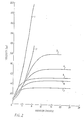
- a series of modified cement formulations in 500 lb. batches based on the combination of 95 wt. % sulfur with 5 wt. % organic material were prepared from different combinations of DCPD with oligomer as shown below in Table 8 and heated at a temperature of 135°C for 24 hours. The viscosity of each formulation was measured over this period and the results are shown in FIGURE 2.
- the plots in FIGURE 2 show that for formulations based on organic material blends 1 and 2 (at low oligomer levels) the reaction between sulfur and organic material was continuously occurring after 8 hours, and the material had to be removed from the reactor to prevent setting up in the reactor.
- the heated cement formulations based on modifier organic material blends 3-7 gave controlled reactions with a stable product being obtained within about 6 hours after initiation of the reaction.
- FIGURE 10a shows the viscosity of a specific sulfur-DCPD melt at several different temperatures as a function of time. The piost show that at no temperature does the viscosity stabilize indicating a stable hot product for any significant period of time.
- FIGURE 10b shows the viscosity of four different sulfur-DCPD formulations at a reaction temperature of 140°C. The results obtained also show no stable product for any period of time over the reaction period investigated.
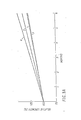
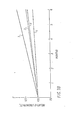
- FIGURES 3a and 3b show tests on concrete samples formed by blending quartz with a modifier sulfur based on a 65-35% blend of commercial DCPD and commercial oligomer and a 50-50% blend of commercial DCPD and commercial oligomer respectively.
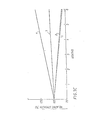
- FIGURE 3c shows the results obtained for a concrete product based on an unmodified sulfur concrete.
- the symbols 1, 2, 3 and 4 represent sulfuric acid solutions at 10%, 20%, 60% and 93%, respectively.
- the initial strengths of the concrete products were 6,640 psi for the concrete of FIGURE 3a, 7,600 psi for the concrete of FIGURE 3b, nd 6,200 psi for the concrete of FIGURE 6c.
- the acid tests were conducted over a period of 6 months. The results show that sulfur concretes prepared with modified sulfur cements were not attacked by H 2 SO 4 solutions and in general gained in compressive strengths over the test period. Without modified sulfur, some loss of strength was noted in 10 and 20 pct H 2 S0 4 solutions. Also, no visual attack or loss in weight was found on the sulfur concretes prepared with the modified sulfur cements. Similar results were found on immersion of sulfur concrete samples in five pct solutions of NaCl, CaCl2, KC1, and Na2So4. No loss of strength or attack on the samples was found.
- a hot concentrated brine solution of FeCl 3 , NaCl, and HC1 was held in a 400 gallon tank cast of modified sulfur concrete at a temperature of 90°C for a period of 16 months. No attack on the tank was found on circulating the brine solution in the tank over the test period.
Landscapes
- Chemical & Material Sciences (AREA)
- Chemical Kinetics & Catalysis (AREA)
- Organic Chemistry (AREA)
- Ceramic Engineering (AREA)
- Medicinal Chemistry (AREA)
- Polymers & Plastics (AREA)
- Health & Medical Sciences (AREA)
- Engineering & Computer Science (AREA)
- Inorganic Chemistry (AREA)
- Materials Engineering (AREA)
- Structural Engineering (AREA)
- Compositions Of Macromolecular Compounds (AREA)
- Addition Polymer Or Copolymer, Post-Treatments, Or Chemical Modifications (AREA)
- Curing Cements, Concrete, And Artificial Stone (AREA)
Priority Applications (1)
| Application Number | Priority Date | Filing Date | Title |
|---|---|---|---|
| AT80106317T ATE5811T1 (de) | 1979-10-16 | 1980-10-16 | Modifizierter schwefelzement und -beton und verfahren zu ihrer herstellung. |
Applications Claiming Priority (4)
| Application Number | Priority Date | Filing Date | Title |
|---|---|---|---|
| US85450 | 1979-10-16 | ||
| US06/085,450 US4311826A (en) | 1979-10-16 | 1979-10-16 | Modified sulfur cement |
| US196172 | 1980-10-14 | ||
| US06/196,172 US4348313A (en) | 1979-10-16 | 1980-10-14 | Concrete formulation comprising polymeric reaction product of sulfur/cyclopentadiene oligomer/dicyclopentadiene |
Publications (3)
| Publication Number | Publication Date |
|---|---|
| EP0027644A2 true EP0027644A2 (de) | 1981-04-29 |
| EP0027644A3 EP0027644A3 (en) | 1981-05-27 |
| EP0027644B1 EP0027644B1 (de) | 1984-01-11 |
Family
ID=26772739
Family Applications (1)
| Application Number | Title | Priority Date | Filing Date |
|---|---|---|---|
| EP80106317A Expired EP0027644B1 (de) | 1979-10-16 | 1980-10-16 | Modifizierter Schwefelzement und -beton und Verfahren zu ihrer Herstellung |
Country Status (10)
| Country | Link |
|---|---|
| US (1) | US4348313A (de) |
| EP (1) | EP0027644B1 (de) |
| JP (1) | JPH0228529B2 (de) |
| AU (1) | AU542510B2 (de) |
| BR (1) | BR8008886A (de) |
| CA (1) | CA1186448A (de) |
| DE (1) | DE3066102D1 (de) |
| EG (1) | EG17410A (de) |
| MX (1) | MX154840A (de) |
| WO (1) | WO1981001147A1 (de) |
Cited By (4)
| Publication number | Priority date | Publication date | Assignee | Title |
|---|---|---|---|---|
| GB2139202A (en) * | 1983-04-26 | 1984-11-07 | Seaton Chemical Developments L | Sulphur cements, sulphur concretes, their preparation and use |
| WO2002070430A1 (fr) * | 2001-03-01 | 2002-09-12 | Nippon Oil Corporation | Procede pour produire un materiau contenant du soufre modifie |
| WO2004011384A1 (ja) * | 2002-07-31 | 2004-02-05 | Nippon Oil Corporation | 耐酸性硫黄資材及び耐酸性硫黄資材の施工方法 |
| GB2480686A (en) * | 2010-05-28 | 2011-11-30 | Philip Sutton | Construction products made from sulfur polymer cement |
Families Citing this family (19)
| Publication number | Priority date | Publication date | Assignee | Title |
|---|---|---|---|---|
| US4428700A (en) | 1981-08-03 | 1984-01-31 | E. R. Johnson Associates, Inc. | Method for disposing of waste materials |
| US4414385A (en) * | 1982-03-11 | 1983-11-08 | Gha Lock Joint, Inc. | Concrete comprising sulfur, cyclopentadiene oligomers, aggregate and glass fibers |
| US4564670A (en) * | 1985-03-28 | 1986-01-14 | Stauffer Chemical Company | Dispersible sulfur product and its process of manufacture |
| US4740559A (en) * | 1985-09-30 | 1988-04-26 | Morton Thiokol, Inc. | Rubber vulcanizing agents comprising reaction products of sulfur and unsaturated hydrocarbons |
| DK160709C (da) * | 1989-03-10 | 1991-09-16 | Kkkk As | Fremgangsmaade til fremstilling af syrefaste svovlbetonroer. |
| US5004799A (en) * | 1989-09-20 | 1991-04-02 | Reece Construction Company, Inc. | Pelletized sulfur concrete and method of preparing same |
| US5678234A (en) * | 1991-05-13 | 1997-10-14 | Associated Universities, Inc. | Process for the encapsulation and stabilization of radioactive, hazardous and mixed wastes |
| US6416691B1 (en) | 1998-01-28 | 2002-07-09 | Mikhail Pildysh | Synthetic aggregate and process for the production thereof |
| JP2002060491A (ja) * | 2000-08-16 | 2002-02-26 | Nippon Mitsubishi Oil Corp | 硫黄結合材の製造方法、硫黄結合材及び硫黄組成物の製造方法 |
| GB2459508B (en) | 2008-04-25 | 2012-12-05 | Univ United Arab Emirates | Surfactant for use in the production of modified sulphur |
| US8043426B2 (en) * | 2008-05-13 | 2011-10-25 | Abdel-Mohsen Onsy Mohamed | Method for treating cement kiln dust |
| CN102216235B (zh) * | 2008-10-15 | 2014-03-05 | 韩美E&C(株) | 改性硫粘合剂及其制备方法、含有该改性硫粘合剂的水硬性改性硫材料组合物及其制备方法或者可燃性改性硫材料组合物及其制备方法 |
| EA018572B1 (ru) | 2009-01-14 | 2013-08-30 | Мысловский, Влодзимеж | Способ производства строительного полимерного вяжущего и строительное полимерное вяжущее |
| EA021182B1 (ru) * | 2009-11-25 | 2015-04-30 | Влодзимеж Мысловский | Способ получения серного полимера и гранулированное полимербитумное вяжущее, содержащее указанный полимер, для покрытия дороги |
| RU2448925C2 (ru) * | 2010-05-06 | 2012-04-27 | Общество с ограниченной ответственностью "Изомер-С" | Способ модификации и грануляции серы |
| PL215185B1 (pl) | 2010-05-28 | 2013-11-29 | Andrzej Janiczek | Sposób wytwarzania polimerycznego materialu budowlanego na bazie siarki odpadowej i odpadów flotacyjnych z flotacji rudy miedzi |
| RU2430053C1 (ru) * | 2010-06-17 | 2011-09-27 | Алексей Павлович Мырзин | Серобетонная смесь и способ ее получения |
| US9133307B1 (en) | 2014-09-19 | 2015-09-15 | Kairat Mirzasalimovich Beketov | Method for producing modified polymeric sulfur |
| WO2022139779A1 (ru) | 2020-12-21 | 2022-06-30 | Юрий Евгеньевич АНДРОСЮК | Способ и установка для получения серополимерного «нано-вяжущего» |
Family Cites Families (13)
| Publication number | Priority date | Publication date | Assignee | Title |
|---|---|---|---|---|
| US2380149A (en) * | 1940-12-14 | 1945-07-10 | United Gas Improvement Co | Liquid coating compositions, coated objects, and processes for making same |
| US2806843A (en) * | 1953-04-01 | 1957-09-17 | Carter Bell Mfg Company | Cyclodiene sulfo-resin and process of preparing the same |
| BE614644A (de) * | 1957-07-17 | |||
| US3070570A (en) * | 1959-08-03 | 1962-12-25 | Exxon Research Engineering Co | Paving composition comprising aggregate plus steam cracked petroleum resin |
| US3299180A (en) * | 1961-12-18 | 1967-01-17 | Velsicol Chemical Corp | Polyvinyl chloride-polymerized cyclopentadiene composition and electrical conductor coated with same |
| FR1480194A (fr) * | 1966-03-11 | 1967-05-12 | Aquitaine Petrole | Soufre plastifié à propriétés adhésives contenant un polymère d'oléfine |
| US3849355A (en) * | 1970-08-06 | 1974-11-19 | Nippon Zeon Co | Aggregate composition containing synthetic thermoplastic resin pellets or fragments |
| CA1054310A (en) * | 1974-12-24 | 1979-05-15 | Lothar Diehl | Manufacture of sulfur concrete |
| US4058500A (en) * | 1975-05-29 | 1977-11-15 | Vroom Alan H | Sulphur cements, process for making same and sulphur concretes made therefrom |
| US4197225A (en) * | 1976-05-19 | 1980-04-08 | Rohm And Haas Company | Polymer concrete compositions and cured products thereof |
| US4190460A (en) * | 1978-04-03 | 1980-02-26 | Suntech, Inc. | Sulfur plasticization with olefins |
| US4155771A (en) * | 1978-04-03 | 1979-05-22 | Suntech, Inc. | Plasticized sulfur with improved stability |
| US4290816A (en) * | 1979-01-29 | 1981-09-22 | Southwest Research Institute | Sulfur compounds and method of making same |
-
1980
- 1980-10-14 US US06/196,172 patent/US4348313A/en not_active Expired - Lifetime
- 1980-10-15 JP JP56500002A patent/JPH0228529B2/ja not_active Expired - Lifetime
- 1980-10-15 AU AU64880/80A patent/AU542510B2/en not_active Ceased
- 1980-10-15 WO PCT/US1980/001357 patent/WO1981001147A1/en not_active Ceased
- 1980-10-15 BR BR8008886A patent/BR8008886A/pt not_active IP Right Cessation
- 1980-10-16 DE DE8080106317T patent/DE3066102D1/de not_active Expired
- 1980-10-16 EP EP80106317A patent/EP0027644B1/de not_active Expired
- 1980-10-16 CA CA000362555A patent/CA1186448A/en not_active Expired
- 1980-10-16 MX MX184369A patent/MX154840A/es unknown
- 1980-10-26 EG EG649/80A patent/EG17410A/xx active
Cited By (4)
| Publication number | Priority date | Publication date | Assignee | Title |
|---|---|---|---|---|
| GB2139202A (en) * | 1983-04-26 | 1984-11-07 | Seaton Chemical Developments L | Sulphur cements, sulphur concretes, their preparation and use |
| WO2002070430A1 (fr) * | 2001-03-01 | 2002-09-12 | Nippon Oil Corporation | Procede pour produire un materiau contenant du soufre modifie |
| WO2004011384A1 (ja) * | 2002-07-31 | 2004-02-05 | Nippon Oil Corporation | 耐酸性硫黄資材及び耐酸性硫黄資材の施工方法 |
| GB2480686A (en) * | 2010-05-28 | 2011-11-30 | Philip Sutton | Construction products made from sulfur polymer cement |
Also Published As
| Publication number | Publication date |
|---|---|
| EP0027644B1 (de) | 1984-01-11 |
| CA1186448A (en) | 1985-04-30 |
| MX154840A (es) | 1987-12-17 |
| US4348313A (en) | 1982-09-07 |
| AU542510B2 (en) | 1985-02-21 |
| WO1981001147A1 (en) | 1981-04-30 |
| JPH0228529B2 (de) | 1990-06-25 |
| EG17410A (en) | 1989-09-30 |
| AU6488080A (en) | 1981-05-07 |
| DE3066102D1 (en) | 1984-02-16 |
| JPS56501402A (de) | 1981-10-01 |
| BR8008886A (pt) | 1981-08-25 |
| EP0027644A3 (en) | 1981-05-27 |
Similar Documents
| Publication | Publication Date | Title |
|---|---|---|
| EP0027644B1 (de) | Modifizierter Schwefelzement und -beton und Verfahren zu ihrer Herstellung | |
| US4391969A (en) | Modified sulfur cement | |
| US4311826A (en) | Modified sulfur cement | |
| Scheiner et al. | Investigation of fire and explosion accidents in the chemical, mining, and fuel-related industries: a manual | |
| US4058500A (en) | Sulphur cements, process for making same and sulphur concretes made therefrom | |
| CA1054310A (en) | Manufacture of sulfur concrete | |
| US4026719A (en) | Sulfur composition with mica | |
| US4293463A (en) | Sulphur cements, process for making same and sulphur concretes made therefrom | |
| US4164428A (en) | Plasticized sulfur composition | |
| KR101289314B1 (ko) | 상온에서 액상 형태를 유지하여 혼합 작업이 가능한 개질 유황 결합재 및 그 제조방법과, 이를 함유하는 수경성 개질유황자재 조성물 및 그 제조방법 | |
| JPH0225929B2 (de) | ||
| US4376831A (en) | Phosphoric acid treated sulfur cement-aggregate compositions | |
| KR101321491B1 (ko) | 유황 폴리머 시멘트 및 콘크리트 | |
| KR20050026021A (ko) | 내산성 유황 자재 및 내산성 유황 자재의 시공방법 | |
| US4414385A (en) | Concrete comprising sulfur, cyclopentadiene oligomers, aggregate and glass fibers | |
| KR100632609B1 (ko) | 개질유황결합재 및 이의 제조방법 | |
| US4387167A (en) | Sulfur-based adducts and compositions | |
| RU2220095C2 (ru) | Способ получения серного вяжущего и серное вяжущее | |
| KR20120081957A (ko) | 상온에서 액상 형태를 유지하여 혼합 작업이 가능한 개질 유황 결합재 및 그 제조방법과, 이를 함유하는 수경성 개질유황자재 조성물 및 그 제조방법 | |
| US4129453A (en) | Sulfur composition | |
| CN101198564A (zh) | 改性硫和包括作为粘合剂的改性硫的产品 | |
| US4302255A (en) | Sulfur-based adduct and compositions containing the adduct | |
| BAHRAMI et al. | Preparation of sulfur mortar from modified sulfur | |
| PL132589B1 (en) | Method of manufacture of dicyclopentadiene-modified sulfur cement | |
| KR101395038B1 (ko) | 수경성 유황 폴리머 시멘트 및 콘크리트 |
Legal Events
| Date | Code | Title | Description |
|---|---|---|---|
| PUAI | Public reference made under article 153(3) epc to a published international application that has entered the european phase |
Free format text: ORIGINAL CODE: 0009012 |
|
| PUAL | Search report despatched |
Free format text: ORIGINAL CODE: 0009013 |
|
| AK | Designated contracting states |
Designated state(s): AT BE CH DE FR GB IT LU NL SE |
|
| AK | Designated contracting states |
Designated state(s): AT BE CH DE FR GB IT LU NL SE |
|
| 17P | Request for examination filed |
Effective date: 19811111 |
|
| ITF | It: translation for a ep patent filed | ||
| GRAA | (expected) grant |
Free format text: ORIGINAL CODE: 0009210 |
|
| AK | Designated contracting states |
Designated state(s): AT BE CH DE FR GB IT LI LU NL SE |
|
| PG25 | Lapsed in a contracting state [announced via postgrant information from national office to epo] |
Ref country code: SE Effective date: 19840111 |
|
| REF | Corresponds to: |
Ref document number: 5811 Country of ref document: AT Date of ref document: 19840115 Kind code of ref document: T |
|
| REF | Corresponds to: |
Ref document number: 3066102 Country of ref document: DE Date of ref document: 19840216 |
|
| ET | Fr: translation filed | ||
| PG25 | Lapsed in a contracting state [announced via postgrant information from national office to epo] |
Ref country code: LU Free format text: LAPSE BECAUSE OF NON-PAYMENT OF DUE FEES Effective date: 19841031 |
|
| PLBE | No opposition filed within time limit |
Free format text: ORIGINAL CODE: 0009261 |
|
| STAA | Information on the status of an ep patent application or granted ep patent |
Free format text: STATUS: NO OPPOSITION FILED WITHIN TIME LIMIT |
|
| 26N | No opposition filed | ||
| ITTA | It: last paid annual fee | ||
| PGFP | Annual fee paid to national office [announced via postgrant information from national office to epo] |
Ref country code: NL Payment date: 19950913 Year of fee payment: 16 Ref country code: FR Payment date: 19950913 Year of fee payment: 16 Ref country code: CH Payment date: 19950913 Year of fee payment: 16 |
|
| PGFP | Annual fee paid to national office [announced via postgrant information from national office to epo] |
Ref country code: AT Payment date: 19950915 Year of fee payment: 16 |
|
| PGFP | Annual fee paid to national office [announced via postgrant information from national office to epo] |
Ref country code: DE Payment date: 19950925 Year of fee payment: 16 Ref country code: BE Payment date: 19950925 Year of fee payment: 16 |
|
| PGFP | Annual fee paid to national office [announced via postgrant information from national office to epo] |
Ref country code: GB Payment date: 19950927 Year of fee payment: 16 |
|
| PG25 | Lapsed in a contracting state [announced via postgrant information from national office to epo] |
Ref country code: GB Effective date: 19961016 Ref country code: AT Effective date: 19961016 |
|
| PG25 | Lapsed in a contracting state [announced via postgrant information from national office to epo] |
Ref country code: LI Effective date: 19961031 Ref country code: CH Effective date: 19961031 Ref country code: BE Effective date: 19961031 |
|
| BERE | Be: lapsed |
Owner name: THE UNITED STATES OF AMERICA REPRESENTED BY THE S Effective date: 19961031 |
|
| PG25 | Lapsed in a contracting state [announced via postgrant information from national office to epo] |
Ref country code: NL Effective date: 19970501 |
|
| GBPC | Gb: european patent ceased through non-payment of renewal fee |
Effective date: 19961016 |
|
| REG | Reference to a national code |
Ref country code: CH Ref legal event code: PL |
|
| PG25 | Lapsed in a contracting state [announced via postgrant information from national office to epo] |
Ref country code: FR Effective date: 19970630 |
|
| NLV4 | Nl: lapsed or anulled due to non-payment of the annual fee |
Effective date: 19970501 |
|
| PG25 | Lapsed in a contracting state [announced via postgrant information from national office to epo] |
Ref country code: DE Effective date: 19970701 |
|
| REG | Reference to a national code |
Ref country code: FR Ref legal event code: ST |