EP0012240A2 - Verfahren zur Herstellung von gegebenenfalls substituierten Benzaldehyd-dialkylacetalen - Google Patents
Verfahren zur Herstellung von gegebenenfalls substituierten Benzaldehyd-dialkylacetalen Download PDFInfo
- Publication number
- EP0012240A2 EP0012240A2 EP79104561A EP79104561A EP0012240A2 EP 0012240 A2 EP0012240 A2 EP 0012240A2 EP 79104561 A EP79104561 A EP 79104561A EP 79104561 A EP79104561 A EP 79104561A EP 0012240 A2 EP0012240 A2 EP 0012240A2
- Authority
- EP
- European Patent Office
- Prior art keywords
- optionally substituted
- alkyl
- electrochemical oxidation
- products
- hydrogen
- Prior art date
- Legal status (The legal status is an assumption and is not a legal conclusion. Google has not performed a legal analysis and makes no representation as to the accuracy of the status listed.)
- Granted
Links
Classifications
-
- C—CHEMISTRY; METALLURGY
- C25—ELECTROLYTIC OR ELECTROPHORETIC PROCESSES; APPARATUS THEREFOR
- C25B—ELECTROLYTIC OR ELECTROPHORETIC PROCESSES FOR THE PRODUCTION OF COMPOUNDS OR NON-METALS; APPARATUS THEREFOR
- C25B3/00—Electrolytic production of organic compounds
- C25B3/20—Processes
- C25B3/23—Oxidation
-
- Y—GENERAL TAGGING OF NEW TECHNOLOGICAL DEVELOPMENTS; GENERAL TAGGING OF CROSS-SECTIONAL TECHNOLOGIES SPANNING OVER SEVERAL SECTIONS OF THE IPC; TECHNICAL SUBJECTS COVERED BY FORMER USPC CROSS-REFERENCE ART COLLECTIONS [XRACs] AND DIGESTS
- Y02—TECHNOLOGIES OR APPLICATIONS FOR MITIGATION OR ADAPTATION AGAINST CLIMATE CHANGE
- Y02P—CLIMATE CHANGE MITIGATION TECHNOLOGIES IN THE PRODUCTION OR PROCESSING OF GOODS
- Y02P20/00—Technologies relating to chemical industry
- Y02P20/50—Improvements relating to the production of bulk chemicals
- Y02P20/582—Recycling of unreacted starting or intermediate materials
Definitions
- the invention relates to a process for the preparation of optionally substituted benzaldehyde dialkylacetals.
- alkyl are, for example, straight-chain or comparable g te two hydrocarbon radicals having 1 to 4 carbon atoms may be mentioned such as methyl, ethyl, propyl, isopropyl, butyl or isobutyl.
- the preferred alkyl is methyl.
- Aryl for example, aromatic hydrocarbon radicals having 6 to 14 carbon atoms, such as phenyl, naphthyl or anthryl.
- the preferred aryl is phenyl.
- Examples of aralkyl which may be mentioned are hydrocarbon radicals having 1 or 2 carbon atoms in the aliphatic part and 6 to 14 carbon atoms in the aromatic part, such as benzyl, 2-phenylethyl, naphthylmethyl, 2-naphthylethyl, anthrylmethyl or 2-anthrylethyl.
- Preferred aralkyl is benzyl.
- alkoxy radicals which are derived from a straight-chain or branched alcohol having 1 to 4 carbon atoms, such as methoxy, propoxy, isopropyloxy, butoxy or isobutyloxy.
- Preferred alkoxy is methoxy.
- Aryloxy may be, for example, radicals which are derived from an aromatic hydroxy compound having 6 to 14 carbon atoms, such as phenoxy, naphthyloxy or anthryloxy.
- Preferred aryloxy is phenoxy.
- Aralkoxy may, for example, be radicals derived from an araliphatic alcohol having 1 or 2 carbon atoms in the aliphatic part and 6 to 14 carbon atoms in the aromatic part, such as benzyloxy, 1-phenyl-ethyloxy, 2-phenyl-ethyloxy, naphthyl-methoxy, Naphthyl-ethoxy, anthryl-methoxy or anthryl-ethoxy.
- Preferred aralkoxy is benzyloxy.
- alcohols of the formula (II) are: methanol, ethanol, propanol, isopropanol, butanol or isobutanol, preferably methanol.
- the cation Y of the conducting salt, or the cations in the case of polyvalent acids can be, for example, an alkali metal, the unsubstituted ammonium or an ammonium which is partially or completely substituted by alkyl or benzyl.
- alkali metals for example lithium, sodium, potassium, rubidium or cesium may be mentioned.
- Preferred Al Potash metal is sodium or potassium.
- Preferred cations for the conducting salt (III) are the tetraalkylammonium cations.
- the group A of the formula (III) can be for -S0 2 - or stand.
- the conducting salt of the process according to the invention can therefore be derived from an acid of 6-valent sulfur or 5-valent phosphorus.
- acids which can be derived from hexavalent sulfur are sulfuric acid, an alkyl, aralkyl or arylsulfonic acid or a sulfuric acid monoester, the ester group being derived from an aliphatic or araliphatic alcohol or a phenol.
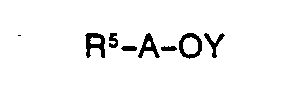
- the formula (III) therefore includes conductive salts of the formula in the R 5 and Y have the meaning given above and A 'represents -SO 2 -.
- the conductive salt which is derived from an acid of hexavalent sulfur
- the hydrogen sulfate the sulfate already neutralized by a cation of the type mentioned, the methyl sulfonate, ethyl sulfonate, propyl sulfonate, butyl sulfonate, benzyl sulfonate, benzenesulfonate, p-toluenesulfonate, o-chlorine -p-toluenesulfonate, 2,4-dichlorobenzenesulfonate, 2-bromo-4-methyl-benzenesulfonate, naphthyl-1-sulfonate, naphthyl-2-sulfonate, the methyl ester sulfate, ethyl ester sulfate, propyl ester sulfate, butyl este
- Preferred anions of acids of hexavalent sulfur are methyl sulfonate, ethyl sulfonate, benzenesulfonate, p-toluenesulfonate, 2,4-xylene sulfonate, o-chlorobenzenesulfonate, m-chlorobenzenesulfonate, p-chlorobenzenesulfonate, 2,4-dichlorobenzenesulfonate, ethyl ester sulfonate, methyl ester sulfate.
- Particularly preferred anions of acids of hexavalent sulfur are benzenesulfonate, p-toluenesulfonate, p-chlorobenzenesulfonate, methyl ester sulfate.
- acids which can be derived from pentavalent phosphorus are phosphoric acid, an alkyl-, aralkyl- or arylphosphonic acid, a phosphoric acid monoester or diester or a phosphonic acid monoester, the ester groups being derived from an aliphatic or araliphatic alcohol or from a phenol deduce.
- the anion for the conductive salt which is derived from an acid of the 5-valent phosphorus, is, for example, the phosphate, the hydrogen phosphate, the dihydrogen phosphate, the methyl phosphonate, ethyl phosphonate, propyl phosphonate, butyl phosphonate, phenyl phosphonate, benzyl phosphonate, p-chlorobenzene phosphonate methyl phosphonate, methyl phosphonate, methyl ester Diphenyl ester phosphate, dibenzyl ester phosphate, phenyl methyl ester phosphate, di (p-toluyl) ester phosphate, di (p-chlorobenzene) ester phosphate.
- the preferred anions of an acid of the 5-valent phosphorus are derived from the double-esterified phosphoric acid or the single-esterified phosphonic acid, for example diphenyl ester phosphate, di- (p-toluyl) -ester phosphate, di- (p-chlorobenzolester) phosphate, dimethyl ester phosphate, Diethyl ester phosphate, methyl phosphonate methyl ester, methyl phosphonate ethyl ester, ethyl phosphonate ethyl ester, phenyl phosphonate methyl ester, p-chlorophenylphosphonate methyl ester.
- Examples of preferred conductive salts are: tetramethylammonium-benzenesulfonate, tetraethylammonium-p-toluenesulfonate, tetrabutylammonium-p-toluenesulfonate, trimethyl-butyl-ammonium-o-chlorobenzenesulfonate, tetraethylammonium-2,4-dichlorobenzene-sulfonate-ammonium-ammonium-sulfonate, dimethyl -2,4-dichlorobenzenesulfonate, tetramethylammonium methyl ester sulfate, tetraethylammonium ethyl ester sulfate.
- Tetramethylammonium dimethyl phosphate Tetraethyl ammonium diethyl phosphate, triethyl methyl ammonium dimethyl phosphate, tetramethyl ammonium methyl phosphonate methyl ester, tetramethyl ammonium ethyl phosphonate methyl ester.
- the concentration of the conductive salt in the process according to the invention is, for example, 0.01 to 2 mol per liter, preferably 0.55 to 0.5 mol per liter.
- the concentration of the substituted toluene in the alcoholic solution can be, for example, 1 to 50% by weight, preferably 10 to 30% by weight, in the process according to the invention.
- the process according to the invention can be carried out in the temperature range from -2o to + 60 ° C, preferably from + 10 to +4 0 ° C.
- oxidation-stable anodes for example on anodes made of graphite, lead dioxide, a metal from the platinum group, an alloy of metals from the platinum group or metals which are coated from a Wear platinum metal.
- Anodes made of graphite, platinum or platinum-coated titanium are preferred.
- the process according to the invention forms pure hydrogen as the electrolysis waste gas, so that, apart from flushing the apparatus with inert gas before starting up, no additional measures to protect against detonating gas formation are necessary.
- collidine or 2,6-lutidine may be mentioned in an amount of 0.01 to 2% by weight, preferably 0.05 to 1% by weight, based on the total amount of the electrolyte.
- the current densities in the process according to the invention can be chosen, for example, from 0.1 to 50 A / dm 2 , preferably from 1 to 20 A / dm 2 .
- the cell voltage depends on the composition of the electrolyte, the temperature and the geometry of the individual cell. For example, it can assume values from 4 to 12 V per individual cell.
- Optionally substituted benzaldehyde dialkylacetals of the formula can be used in the process according to the invention in the R 1 to R 4 have the meaning given above, be prepared, for example p-methoxy-benzaldehyde dimethyl acetal, p-methoxy-benzaldehyde diethylacetal, p-methoxy-benzaldehyde dipropylacetal, p-methoxy-benzaldehyde dibutylacetal, p-ethoxy-benzaldehyde dimethylacetal, p-ethoxy-benzaldehyde diethyl acetal, p-propoxy-benzaldehyde dimethyl acetal, p-butoxy benzaldehyde dimethyl acetal, p-phenoxy benzaldehyde dimethyl acetal, p-phenoxy benzaldehyde diisopropyl acetal, p-benzyloxy benzaldehyde dimethyl
- By-products occur in the process according to the invention which impair the yield of the desired main product.
- These by-products can be isolated from the electrochemical oxidation reaction mixture, for example by distillation. According to the invention, these by-products are returned to the starting product for the electrochemical oxidation. This can be done in such a way that when the reaction mixture is separated, the starting product which may still be present, the by-products and the desired process product are collected separately. The by-products and the starting product can then be returned to the electrochemical oxidation.
- reaction mixture is separated, for example by distillation, to collect only a single fraction in addition to the desired process product, which contains the by-products, the unchanged starting product and some end product, and this fraction without further purification and without further separation into the Individual components attributed to the starting material for the electrochemical oxidation.
- This latter process variant is preferred.
- the by-products mentioned may contain fractions which, if they are merely returned to the starting material for the electrochemical oxidation without further treatment, do not contribute to an increase in the yield, but do so if the pretreatment is suitable cause an increase in yield in addition to the above-mentioned by-products before being returned to the starting material.
- Such proportions can arise, for example, if toluenes of the formula (I) are used in which the substituent R is hydrogen, alkyl, aralkyl or aryl and if a conductive salt is used which is derived from an acid of the 5-valent phosphorus.
- a suitable treatment of these fractions of the by-products is, for example, treatment with catalytically excited hydrogen.
- the hydrogenating treatment of the by-products is carried out according to the invention by treatment with hydrogen in the presence of a Hydrogenation catalyst, carried out in an alcohol as a solvent at a temperature of about 0 ° C to the boiling point of the alcohol at normal pressure or elevated pressure.
- Suitable hydrogenation catalysts are conventional hydrogenation catalysts known to the person skilled in the art. Examples include:
- Precious metal catalysts such as finely divided platinum or palladium; Precious metal oxide catalysts that are only reduced in the hydrogenation mixture by the hydrogenation hydrogen; Raney catalysts, such as Raney nickel, Raney nickel iron, Raney nickel copper, Raney nickel cobalt, oxide or sulfide catalysts, such as copper chromium oxide, zinc chromium oxide, molybdenum sulfide or tungsten sulfide.
- the catalysts can be used with or without a carrier.
- suitable carrier substances are coal, silicon dioxide, aluminum oxide, alkaline earth metal sulfates, alkaline earth metal oxides and alkaline earth metal carbonates.
- noble metal catalysts for example platinum or palladium, optionally on a support material, as hydrogenation catalysts.
- Palladium on magnesium oxide / diatomaceous earth is particularly preferred as the hydrogenation catalyst.
- the hydrogenation of the by-products according to the invention is carried out in the solution of a lower alcohol, such as methanol, ethanol, propanol or butanol.
- a lower alcohol such as methanol, ethanol, propanol or butanol.
- the by-products treated by hydrogenation can then be separated from the alcohol used in the hydrogenation, for example by distillation.
- the same alcohol R 4 OH of formula (II) is preferably used for the hydrogenation as that for carrying out the electrochemical oxidation of the invention according to the procedure.
- the by-products treated by hydrogenation can then preferably be returned to the electrochemical oxidation in the form of their solution in the alcohol R 4 OH (II).
- the temperature for carrying out the hydrogenation is from about 0 ° C. to the boiling point of the alcohol used as solvent. A temperature of about 15 to 40 ° C. is preferred.
- the hydrogenation of the by-products according to the invention can be carried out at normal pressure or at elevated pressure.
- a pressure of up to 200 bar may be mentioned as the increased pressure.
- the hydrogen which is obtained during the electrolysis is used for the hydrogenation of the by-products.
- working under normal pressure is preferred.
- the electrochemical oxidation process according to the invention can be carried out either batchwise or continuously.
- the entire reaction mixture leaving the electrolysis apparatus can be worked up continuously, the fraction which contains the by-products, optionally after treatment with catalytically excited hydrogen, being returned to the starting material for the electrochemical reaction.
- the electrolysis mixture can also be circulated through the electrolysis apparatus, only a part of the reaction mixture being removed and worked up behind the electrolysis apparatus, and the fraction which contains the by-products, optionally after treatment with catalytically excited hydrogen, before the electrolysis apparatus is returned to the starting material used there for the electrochemical oxidation.
- the starting material consists of the by-products from the optionally substituted toluene in accordance with its consumption, from the alcohol used as solvent and the conducting salt.
- the alcohol and the conductive salt can, at least in part, be the alcohol and the primary salt which are obtained when working up part of the her
- the method according to the invention can also be carried out in cascade fashion in electrolysis cells connected in series.
- the selectivity of the process according to the invention can be increased by lowering the current density at the electrodes.
- To time space yield to unite none a high current density and the high selectivity of a low current density, to the current density may therefore decrease in the course of the electrochemical oxidation in a further variant of ER findun g szelen method.
- the current density can be highest in the first electrolysis cell and somewhat reduced in the following cell.
- the process according to the invention can be used, for example, to convert p-methoxytoluene (p-methylanisole) in methanolic solution to p-methoxybenzaldehyde dimethylacetal (Anisaldehyde dimethyl acetal) can be explained by the following equation:
- the method according to the invention can be carried out, for example, as follows:
- the electrolyte is produced by dissolving the optionally substituted toluene and the conducting salt in the desired alcohol. If appropriate, it may be expedient to protect the acid-sensitive acetals by the known addition of an oxidation-stable base, for example collidine or lutidine.
- the electrolyte is electrolyzed up to the desired degree of conversion, for example 60 to 90% of the theoretical degree of conversion, possibly with a lowering of the current density in the course of the electrochemical reaction. After the electrolysis, the excess alcohol is distilled off and the crystalline conductive salt is filtered off.
- the optionally substituted benzaldehyde dialkylacetal can then be obtained from the reaction mixture by customary work-up methods, for example by distillation.
- the by-products of the electrochemical oxidation are generally kept ahead of the end product when the desired end product is removed using a distillative separation.
- This preliminary run which contains the unreacted starting product, the by-products and some end product, is then preferably returned to the starting material for the electrochemical reaction without further separation, if appropriate after hydrogenating pretreatment.
- the electrolyte is pumped through the electrolysis apparatus. After leaving the electrolysis apparatus, the reaction mixture is wholly or partly separated by distillation into a forerun and into the benzaldehvd-dialkylacetal formed. The forerun is then returned to the starting material for the electrochemical oxidation, with a hydrogenating treatment possibly being carried out beforehand.
- the toluene of the formula (I) as the starting product is supplemented in the electrolyte in accordance with its consumption.
- reaction mixture is circulated and supplemented by the flow or the flow which is subjected to a hydrogenation treatment and which contains the by-products, and by toluene as the starting compound in accordance with its consumption .
- Benzaldehyde dialkylacetals of the formula (IX) are valuable intermediates and can, for example, be hydrolyzed to the corresponding benzaldehydes in the presence of dilute acids.
- Substituted benzaldehydes are, for example, valuable fragrance components (Ullmann's Encyclopedia of Industrial Chemistry, 3rd edition, volume 14, page 738, Urban and Schwarzenberg, Kunststoff-Berlin, 1968).
- the electrolyte can optionally also be worked up by isolating not the substituted benzaldehyde dialkylacetal but the free substituted benzaldehyde, which can be obtained in a known manner by acid hydrolysis .
- the procedure is such that the electrolyte is checked for its content of substituted benzaldehyde dialkylacetal after the oxidation has ended and the equivalent amount of water is added to it.
- an acidic ion exchanger or by adding an acid, for example p-toluenesulfonic acid the associated aldehyde is then released from the benzaldehyde dialkylacetal by hydrolysis.
- the hydrolysis mixture is then filtered off from the acid catalyst or the acid added is neutralized, and the mixture is worked up in such a way that the methanol is distilled off, the precipitated conductive salt is filtered off and the remaining mixture is worked up, for example by distillation, to give the desired benzaldehyde.
- the benzaldehyde dialkylacetals of the formula (IX) can be prepared in a technically progressive manner by a single-stage electrochemical oxidation with high selectivity and in high purity.
- Dialkylacetals can be oxidized before, since the known, significantly higher half-wool potential of the last-mentioned compounds compared to compounds which have an ether group in the para position to the methyl group led to a strong occurrence of side reactions, for example the electrochemical oxidation of the alkanol used .
- Sc is, for example, the half-wave potential of the toluene 1.9 volts compared to that. of p-methoxy-toluene with 1.2 full (Tetrahedron Letters, 1978, page 3725).
- a solution of 29.6 g (0.2 mol) of p- (t-butyl) toluene in an electrolyte consisting of 75 ml of methanol, 3 g of tetraethylammonium p-methylbenzenesulfonate and 2 ml of collidine is added to a graphite anode a current density of 8 A / dm 2 and a temperature of 25 ° C to consumption of 0.6 F oxidized.
- the methanol is distilled off, the precipitated conductive salt is filtered off with suction and 30.5 g of product mixture are isolated by distillation and are separated by fractional distillation.
- 5 g of precipitated conductive salt are filtered off with suction and 33.3 g of filtrate are obtained, which is separated by distillation.
- a forerun is obtained, which is returned to the electrolysis without further treatment with further starting material, and 16 g of p- (t-butyl) benzaldehyde dimethyl acetal, bp 0.1 : 65 ° C. Taking into account the return flow, the material yield is 63% of the theoretical yield.
- a solution of 740 g (5 mol) of p- (t-butyl) toluene in an electrolyte consisting of 2000 g of methanol and 130 g of tetramethylammonium dimethyl phosphate is in an electrolysis cell with bipolar graphite electrodes at a current density of 8 A / dm 2 and a temperature of 25 ° C until consumption of 16 F electrolyzed.
- the methanol is distilled off, filtered off from the precipitated conductive salt and isolated 581 g of preliminary flow and 271 g (1.3 mol) of p- (t-butyl) benzaldehyde dimethyl acetal with a bp 0.1 mbar: 65 ° C. A residue of 47 g remains.
- the forerun is hydrogenated on a Pd catalyst in 30% methanolic solution at normal pressure and room temperature and added to the starting material in a subsequent electrolysis. Taking into account the recirculation of the feed, the yield is 92% of the theoretical yield of p- (t-butyl) benzaldehyde dimethyl acetal.
- a forerun of 237 g and 597 g of anisaldehyde dimethyl acetal (K P15 mbar : 123 ° C.) is obtained.
- the lead is added to the starting material for the next electrolysis. Taking this recycling into account, a yield of 95% anisaldehyde dimethyl acetal is calculated.
Landscapes
- Chemical & Material Sciences (AREA)
- Organic Chemistry (AREA)
- Engineering & Computer Science (AREA)
- Chemical Kinetics & Catalysis (AREA)
- Electrochemistry (AREA)
- Materials Engineering (AREA)
- Metallurgy (AREA)
- Organic Low-Molecular-Weight Compounds And Preparation Thereof (AREA)
- Electrolytic Production Of Non-Metals, Compounds, Apparatuses Therefor (AREA)
Abstract
- Y ein Alkalimetall oder gegebenenfalls substituiertes Ammonium bedeutet,
- A für -SO2- oder
- R5 für Hydroxyl, OY, Alkyl, Aralkyl, Aryl, Alkoxy, Aralkoxy oder Aryloxy steht,
unter Rückführung der entstehenden Nebenprodukte in das Ausgangsmaterial der elektrochemischen Oxidation.
Description
- Die Erfindung betrifft ein Verfahren zur Herstellung von gegebenenfalls substituierten Benzaldehyd-dialkylacetalen.
- Es ist bekannt, p-Methoxy-toluol mit anorganischen Oxidationsmitteln, wie Permanganat oder Dichromat, zu Anisaldehyd zu oxidieren (Ullmanns Enzyklopädie der technischen Chemie, 3. Auflage, Band 14, Seite 738, Urban und Schwarzenberg, München-Berlin 1963).
- Dieses Verfahren weist einige Nachteile auf: es kann mit teilweiser Weiteroxidation zur Anissäure gerechnet werden, und durch den Zwangsanfall wäßriger Metallsalzlösungen ist das Verfahren eine Belastung für die Umwelt.
- Es ist bekannt, Toluol in Methylenchlorid als Lösungsmittel und in Gegenwart von Methanol, einem Leitsalz und Schwefelsäure elektrochemisch zu Anisaldehyd mit 20 % der theoretischen Ausbeute zu oxidieren (Tetrahedron Letters 1978, Seite 3723).
- Es ist weiterhin bekannt, p-Methoxy-toluol in Methanol als Lösungsmittel und in Gegenwart von Natrium-methylat elektrochemisch zu Anisaldehyd-dimethylacetal zu oxidieren (J. Chem. Soc., Perkin trans. act. I, 1978, Seite 708). Bei dieser Arbeitsweise wird eine Methoxylierung sowohl in der Seitenkette als auch im aromatischen Kern des Ausgangsmaterials beobachtet (ibid. Seite 709).
- Weiterhin ist die elektrochemische Oxidation von Hydrochinon-dimethyläther in Methanol als Lösungsmittel und in Gegenwart von Kaliumhydroxid zu Benzochinon-tetramethylketal bekannt (J. Am. Chem. Soc. 85, 2525 (1963)), wobei ebenfalls eine Methylierung im aromatischen Kern des Hydrochinon-dimethyläthers beobachtet wird.
- Es wurde ein Verfahren zur Herstellung von gegebenenfalls substituierten Benzaldehyd-dialkylacetalen gefunden, das dadurch gekennzeichnet ist, daß man gegebenenfalls substituierte Toluole der Formel

- R1 Wasserstoff, Alkyl, Aryl, Aralkyl, Alkoxy, Aryloxy oder Aralkoxy bedeutet und
- R2 und R3 gleich oder verschieden sind und für Wasserstoff, Alkyl, Aryl oder Aralkyl stehen,
gelöst in einem Alkohol der Formel
- R 4 Alkyl bedeutet,
und in Gegenwart eines Leitsalzes der Formel
- Y ein Alkalimetall, nicht substituiertes Ammonium oder teilweise oder vollständig durch Alkyl oder Benzyl substituiertes Ammonium bedeutet,
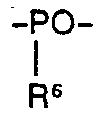
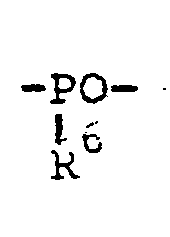
- A für -S02- oder

- R 5 für Hydroxyl, OY oder gegebenenfalls durch Alkyl und/oder Halogen substituiertes Alkyl, Aralkyl, Aryl, Alkoxy, Aralkoxy oder Aryloxy steht und
- R 6 für Alkoxy, Aralkoxy, Aryloxy, Hydroxyl oder OY steht,
- Als Alkyl seien beispielsweise geradkettige oder ver- zweigte Kohlenwasserstoffreste mit 1 bis 4 Kohlenstoffatomen genannt, wie Methyl, Äthyl, Propyl, Isopropyl, Butyl oder Isobutyl. Bevorzugtes Alkyl ist Methyl.
- Als Aryl seien beispielsweise aromatische Kohlenwasserstoffreste mit 6 bis 14 Kohlenstoffatomen genannt, wie Phenyl, Naphthyl oder Anthryl. Bevorzugtes Aryl ist Phenyl. Als Aralkyl seien beispielsweise Kohlenwasserstoffreste mit 1 oder 2 Kohlenstoffatomen im aliphatischen Teil und 6 bis 14 Kohlenstoffatomen im aromatischen Teil genannt, wie Benzyl, 2-Phenyl-äthyl, Naphthylmethyl, 2-Naphthyl- äthyl, Anthrylmethyl oder 2-Anthryl-äthyl. Bevorzugtes Aralkyl ist Benzyl.
- Als Alkoxy seien Reste genannt, die sich von einem geradkettigen oder verzweigten Alkohol mit 1 bis 4 Kohlenstoffatomen ableiten, wie Methoxy, Propoxy, Isopropyloxy, Butoxy oder Isobutyloxy. Bevorzugtes Alkoxy ist Methoxy.
- Als Aryloxy seien beispielsweise Reste genannt, die sich von einer aromatischen Hydroxyverbindungen mit 6 bis 14 Kohlenstoffatomen ableiten, wie Phenoxy, Naphthyloxy oder Anthryloxy. Bevorzugtes Aryloxy ist Phenoxy.
- Als Aralkoxy seien beispielsweise Reste genannt, die sich von einem araliphatischen Alkohol mit 1 oder 2 Kohlenstoffatomen im aliphatischen Teil und 6 bis 14 Kohlenstoffatomen im aromatischen Teil ableiten, wie Benzyloxy, 1-Phenyl-äthyloxy, 2-Phenyl-äthyloxy, Naphthyl-methoxy, Naphthyl-äthoxy, Anthryl-methoxy oder Anthryl-äthoxy. Bevorzugtes Aralkoxy ist Benzyloxy.
- Die genannten Reste, bevorzugt die gegebenenfalls enthaltenen aromatischen Kerne, können ihrerseits durch Alkyl und/oder Halogen substituiert sein. Als Alkyl-Substituent sei beispielsweise Methyl, Ethyl, Propyl, Isoprqpyl, Butyl oder Isobutyl, bevorzugt Methyl genannt. Als Halogen-Substituent sei beispielsweise Fluor, Chlor oder Brom, bevorzugt Chlor, genannt. Als gegebenenfalls substituierte Toluole, die im erfindungsgemäßen Verfahren eingesetzt werden können, seien beispielsweise genannt:
- Toluol, o-, m- und p-Xylol, Mesitylen, 1-Methyl-4-ethylbenzol, 1-Methyl-4-propyl-benzol, 1-Methyl-4-isopropylbenzol, 1-Methyl-4-butyl-benzol, 1-Methyl-4-isobutyl- benzol, 1,2-Dimethyl-4-ethyl-benzol, 2-Methyl-, 3-Methyl- und 4-Methyl-diphenylmethan, 2-Methyl-, 3-Methyl-und 4-Methyl-diphenyl, p-Methoxy-toluol, p-Äthoxy-toluol, p-Propoxy-toluol, p-Isopropyloxy-toluol, p-Butoxy-toluol, p-Isobutyloxy-toluol, p-Phenoxy-toluol, p-Benzyloxy-toluol, 2-Methyl-4-methoxy-toluol, 3-Methyl-4-methoxy-toluol, 2,3-Dimethyl-3-methoxy-toluol, 2,5-Dimethyl-4-methoxy-toluol, 2,6-Dimethyl-4-methoxy-toluol, 2-Phenyl-4-methoxy-toluol, 3-Phenyl-4-methoxy-toluol, 2-Benzyl-4-methoxy-toluol, 3-Benzyl-4-methoxy-toluol, 2-Phenyl-3-methyl-4-methoxy- toluol, 2-Methyl-3-phenyl-4-methoxy-toluol, 2-Äthyl-3-benzyl-4-phenoxy-toluol, 2-Benzyl-4-benzyloxy-5-isopropyl-toluol, 2.6-Dibutyl-4-benzyloxy-toluol, 1-Methyl-4-(t-butyl)-benzol.
- Als Alkohole der Formel (II) seien beispielsweise genannt: Methanol, Ethanol, Propanol, Isopropanol, Butanol oder Isobutanol, bevorzugt Methanol.
- Das Kation Y des Leitsalzes,bei mehrwertigen Säuren die Kationen, können beispielsweise ein Alkalimetall, das nichtsubstituiertes Ammonium oder ein teilweise oder vollständig durch Alkyl oder Benzyl substituiertes Ammonium sein.
- Als Alkalimetalle seien beispielsweise Lithium, Natrium, Kalium, Rubidium oder Cäsium genannt. Bevorzugtes Alkalimetall ist Natrium oder Kalium.
- Als teilweise oder vollständig durch Alkyl oder Benzyl substituiertes Ammonium sei beispielsweise genannt: " Methylammonium, Dimethylammonium, Trimethylammonium, Teträmethylammonium, Ethylammonium, Diethylammonium, Triethylammonium, Tetraethylammonium, Dimethylethylammonium, Propylammonium, Dipropylammonium, Tripropylammonium, Tetrapropylammonium, Butylammonium, Dibutylammonium, Tributylammonium, Tetrabutylammonium, Dimethylbutylammonium, Dimethyldibutylammonium, Benzylammonium, Dibenzylammonium, Dimethylbenzylammonium, Diethylbenzylammonium, Dibutylbenzylammonium, Dimethyldibenzylammonium, Diethyldibenzylammonium.
- Bevorzugte Kationen für das Leitsalz (III) sind die Tetraalkylammonium-Kationen.
- Die Gruppe A der Formel (III) kann für -S02- oder

- Als Säure, die sich vom 6-wertigen Schwefel ableitet, sei beispielsweise die Schwefelsäure, eine Alkyl-, Aralkyl-oder Arylsulfonsäure oder ein Schwefelsäure-monoester genannt, wobei die Estergruppe sich von einem aliphatischen oder araliphatischen Alkohol oder einem Phenol ableitet.
- Unter die Formel (III) fallen demzufolge Leitsalze der Formel

R5 und Y die oben angegebene Bedeutung haben und A' für -SO2- steht. - Als Anion für das Leitsalz. das sich von einer Säure des 6-wertigen Schwefels ableitet, sei beispielsweise genannt: das Hydrogensulfat, das bereits durch ein Kation der genannten Art neutralisierte Sulfat, das Methylsulfonat, Ethylsulfonat, Propylsulfonat, Butylsulfonat, Benzylsulfonat, Benzolsulfonat, p-Toluolsulfonat, o-Chlor-p-toluolsulfonat, 2,4-Dichlorbenzolsulfonat, 2-Brom-4-methyl-benzolsulfonat, Naphthyl-1-sulfonat, Naphthyl-2-sulfonat, das Methylestersulfat, Ethylestersulfat, Propylestersulfat, Butylestersulfat, Benzylestersulfat, Phenylestersulfat, p-Tolylestersulfat, p-Chlorphenylestersulfat. Bevorzugte Anionen von Säuren des 6-wertigen Schwefels sind Methylsulfonat, Ethylsulfonat, Benzolsulfonat, p-Toluolsulfonat, 2,4-Xylolsulfonat, o-Chlorbenzolsulfonat, m-Chlorbenzolsulfonat, p-Chlorbenzolsulfonat, 2,4-Dichlorbenzolsulfonat, Methylestersulfat, Ethylestersulfat. Besonders bevorzugte Anionen von Säuren des 6-wertigen Schwefels sind Benzolsulfonat, p-Toluolsulfonat, p-Chlorbenzolsulfonat, Methylestersulfat.
- Als Säure, die sich vom 5-wertigen Phosphor ableitet, sei beispielsweise die Phosphorsäure, eine Alkyl-, Aralkyl-oder Arylphosphonsäure, ein Phosphorsäuremonoester oder -diester oder ein Phosphonsäuremonoester genannt, wobei die Estergruppen sich von einem aliphatischen oder araliphatischen Alkohol oder von einem Phenol ableiten.
- Unter die Formel (III) fallen demzufolge auch Leitsalze der Formel

- A'' für

- R 5, R 6 und Y die angegebene Bedeutung haben.
- Als Anion für das Leitsalz, das sich von einer Säure des 5- wertigen Phosphors ableitet, sei beispielsweise das Phosphat, das Hydrogenphosphat, das Dihydrogenphosphat, das Methyl- phosphonat, Ethylphosphonat, Propylphosphonat, Butylphosphonat, Phenylphosphonat, Benzylphosphonat, p-Chlorbenzolphosphonat, Methyl-phosphonat-methylester, Methyl-phosphonatethylester, Ethyl-phosphonatethylester, Propyl-phosphonatmethylester, Phenylphosphonatmethylester, Benzyl-phosphonatmethylester, Benzyl-phosphonatmethylester, p-Chlorbenzol-phosphonatmethylester, Methylesterphosphat, Ethylesterphosphat, Propylesterphosphat, Phenylesterphosphat, Benzylesterphosphat, Dimethylesterphosphat, Diethylesterphosphat, Methylethylesterphosphat, Dipropylesterphosphat, Diphenylesterphosphat, Dibenzylesterphosphat, Phenylmethylesterphosphat, Di-(p-Toluyl)-esterphosphat, Di(p-Chlorbenzol)-esterphosphat.
- Die bevorzugten Anionen von einer Säure des 5-wertigen Phosphors leiten sich von der zweifach veresterten Phosphorsäure oder der einfach veresterten Phosphonsäure ab, beispielsweise Diphenylesterphosphat, Di-(p-Toluyl)-esterphosphat, Di-(p-Chlorbenzolester)-phosphat, Dimethylesterphosphat, Diethylesterphosphat, Methylphosphonat-methylester, Methyl- phosphonat-ethylester, Ethylphosphonat-ethylester, Phenylphosphonat-methylester, p-Chlorphenylphosphonat-methylester.
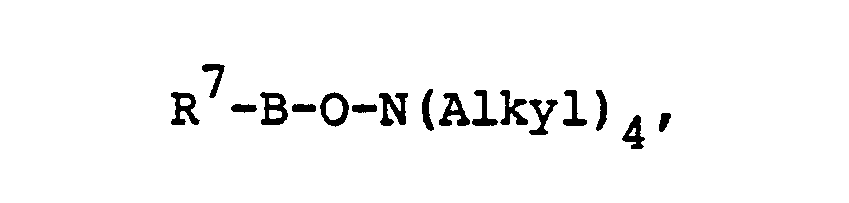
- Bevorzugte Leitsalze für das erfindungsgemäße Verfahren sind Tetraalkylammonium-Salze der Formel

- B für -SO2- oder

- R7 Methyl, Ethyl, Methoxy, Ethoxy oder gegebenenfalls durch Alkyl und/oder Halogen substituiertes Phenyl bedeutet und
- R8 für Methoxy oder Ethoxy steht.
- Unter die Formel (VI) fallen Leitsalze der Formel

- R7 die angegebene Bedeutung hat und
- B' für -S02- steht.
- Unter die Formel (VI) fallen weiterhin Leitsalze der Formel

- B" für

- R 7 und R8 die angegebene Bedeutung haben.
- Als bevorzugte Leitsalze seien beispielsweise genannt: Tetramethylammonium-benzolsulfonat, Tetraethylammonium-p-toluolsulfonat, Tetrabutylammonium-p-toluolsulfonat, Trimethyl-butyl-ammonium-o-chlorbenzolsulfonat, Tetraethylammonium-2,4-dichlorbenzolsulfonat, Dimethyl-dipropylammonium-p-chlorbenzolsulfonat, Tetramethylammonium-2,4-dichlorbenzolsulfonat, Tetramethylammoniummethylestersulfat, Tetraethylammonium-ethylestersulfat. Tetramethylammonium-dimethylphosphat, Tetraethylammoniumdiethylphosphat, Triethylmethylammonium-dimethylphosphat, Tetramethylammonium-methylphosphonatmethylester, Tetramethylammonium-ethylphosphonatmethylester.
- Die Konzentration des Leitsalzes im erfindungsgemäßen Verfahren beträgt beispielsweise 0,01 bis 2 Mol pro Liter, bevorzugt o,o5 bis o,5 Mol pro Liter.
- Die Konzentration des substituierten Toluols in der alkoholischen Lösung kann im erfindungsgemäßen Verfahren beispielsweise 1 bis 50 Gew.-%, bevorzugt 1o bis 3o Gew.-%, betragen.
- Das erfindungsgemäße Verfahren kann im Temperaturbereich von -2o bis +60°C, bevorzugt von +1O bis +40°C, durchgeführt werden.
- Das erfindungsgemäße Verfahren kann in einer üblichen und dem Fachmann bekannten Elektrolyse-Apparatur an oxidationsstabilen Anoden durchgeführt werden, beispielsweise an Anoden aus Graphit, Bleidioxid, einem Metall der Platingruppe, einer Legierung aus Metallen der Platingruppe oder an Metallen die einen Überzug aus einem Platinmetalh tragen. Bevorzugt sind Anoden aus Graphit, Platin oder platimertem Titan.
- Als katoderm belspielsweise Kupfer, Nickel, Staill, Platin oder Graphit., in bevorzugter Weise Stahl, genannt.
- erfindungsgemäßen Verfahren wird als Elektrolyseabgas reiner Wasserstoff gebildet, so daß außer einer Spülung der Apparatur mit Inertgas vor Inbetriebnahme keine zusätzlichen Maßnahmen zum Schutz vor einer Knallgasbildung notwendig sind.
- Gegebenenfalls kann es zweckmäßig sein, eine schwer oxidierbare Base im erfindungsgemäßen Verfahren einzusetzen, um ein Absinken des pH-Wertes auf Werte kleiner als 7 zu verhindern. Hierfür seien beispielsweise Collidin oder 2,6-Lutidin in einer Menge von 0,01 bis 2 Gew.-%, bevorzugt 0,05 bis 1 Gew.-%, bezogen auf die Gesamtmenge des Elektrolyten, genannt.
- Die Stromdichten im erfindungsgemäßen Verfahren können beispielsweise von 0,1 bis 50 A/dm2, bevorzugt von 1 bis 20 A/dm2 gewählt werden.
- Die Zellenspannung stellt sich in Abhängigkeit von der Zusammensetzung des Elektrolyten, der Temperatur und der Geometrie der Einzelzelle ein. Sie kann beispielsweise Werte von 4 bis 12 V pro Einzelzelle annehmen.
- Im erfindungsgemäßen Verfahren können gegebenenfalls substituierte Benzaldehyd-dialkylacetale der Formel

R1 bis R4 die obengenannte Bedeutung haben,
hergestellt werden, beispielsweise p-Methoxy-benzaldehyd-dimethylacetal, p-Methoxy-benzaldehyd-diethylacetal, p-Methoxy-benzaldehyd-dipropylacetal, p-Methoxy-benzaldehyd-dibutylacetal, p-Ethoxy-benzaldehyd-dimethylacetal, p-Ethoxy-benzaldehyd-diethylacetal, p-Propoxy-benzaldehyd-dimethylacetal, p-Butoxy-benzaldehyd-dimethylacetal, p-Phenoxy-benzaldehyd-dimethylacetal, p-Phenoxy-benzaldehyd-diisopropylacetal, p-Benzyloxy-benzaldehyd-dimethylacetal, p-Benzyloxy-benzaldehyd-diisobutylacetal, 2-Methyl-4-methoxy-benzaldehyd-dimethylacetal, 3-Methyl-4-methoxy-benzaldehyd-diethylacetal, 2,5-Dimethyl-4-methoxy-benzaldehyd-dimethylacetal, 2,6-Dimethyl-4-phenoxy-benzaldehyd-dimethylacetal, 2-Methyl-4-methoxy-5-phenyl-benzaldehyd-dimethylacetal, 2-Benzyl-4-phenoxy-5-isopropyl-benzaldehyd-diethylacetal, 2-Ethyl-3-benzyl-4-methoxy-benzaldehyd-dimethylacetal, Benzaldehyd-dimethylacetal, 2-Methylbenzaldehyd-dimethylacetal, 3-Methylbenzaldehyd-dimethylacetal, 4-Methylbenzaldehyd-dimethylacetal, 3,5-Dimethyl-benzaldehyd-dimethylacetal, 4-Ethylbenzaldehyd-dimethylacetal, 4-(n-Propyl)-benzaldehyd-dimethylacetal, 4-(i-Propyl)-benzaldehyd-dimethylacetal, 4-(n-Butyl)-benzaldehyd-dimethylacetal, 4-(i-Butyl)-benzaldehyd-dimethylacetal, 4-(t-Butyl)-benzaldehyd-dimethylacetal, 4-Phenyl-benzaldehyd-dimethylacetal, 4-(4'-Methyl)-biphenylaldehyd-dimethylacetal, 4-(4'-Methoxy)-biphenylaldehyd-dimethylacetal, 4-Benzylbenzaldehyd-dimethylacetal. - Ir erfindungsgemäßen Verfahren treten Nebenprodukte auf, die ä=e Ausbeute an dem gewünschten Hauptprodukt beeinträchtigen. Diese Nebenprodukte können aus dem Reaktionsgemisch der elektrochemischen Oxidation, beispielsweise durch Destillation, isoliert werden. Diese Nebenprodukte werden erfindungsgemäß in das Ausgangsprodukt für die elektrochemische Oxidation zurückgeführt. Hierbei kann so vorgegangen werden, daß bei der Auftrennung des Reaktionsgemisches das gegebenenfalls noch vorhandene Ausgangsprodukt, die Nebenprodukte, sowie das gewünschte Verfahrensprodukt getrennt aufgefangen werden. Sodann können die Nebenprodukte, sowie das Ausgangsprodukt in die elektrochemische Oxidation zurückgeführt werden. Es ist jedoch auch möglich, bei der Auftrennung des Reaktionsgemisches, beispielsweise durch Destillation, neben dem gewünschten Verfahrensprodukt nur eine einzige Fraktion aufzufangen, die die Nebenprodukte, das unveränderte Ausgangsprodukt sowie etwas Endprodukt enthält, und diese Fraktion ohne weitere Reinigung und ohne weitere Auftrennung in die Einzelkomponenten in das Ausgangsmaterial für die elektrochemische Oxidation zurückzuführen. Diese letztere Verfahrensvariante ist bevorzugt.
- Die genannten Nebenprodukte können Anteile enthalten, die bei einer bloßen Rückführung in das Ausgangsmaterial für die elektrochemische Oxidation ohne weitere Behandlung nicht zu einer Erhöhung der Ausbeute beitragen, die aber bei einer geeigneten Vorbehandlung vor der Rückführung in das Ausgangsmaterial zusätzlich zu den obengenannten Nebenprodukten ebenfalls eine Ausbeutesteigerung hervorrufen. Solche Anteile können beispielsweise entstehen, wenn Toluole der Formel (I) eingesetzt werden, in denen der Substituent R Wasserstoff, Alkyl, Aralkyl oder Aryl bedeutet und wenn ein Leitsalz verwendet wird, das sich von einer Säure des 5-wertigen Phosphors ableitet. Als geeignete Behandlung dieser Anteile der Nebenprodukte sei beispielsweise eine Behandlung mit katalytisch angeregtem Wasserstoff genannt.
- Beim Auftreten solcher Nebenprodukt-Anteile, die eine Behandlung vor der Rückführung erfordern, können beispielsweise folgende Varianten des erfindungsgemäßen Verfahrens angewandt werden:
- a) Falls der Anteil an Nebenprodukten, die nach einer Behandlung durch Hydrierung zur Ausbeutesteigerung beitragen, sehr klein ist im Verhältnis zu den bereits oben beschriebenen Nebenprodukten, kann auf eine Hydrierung verzichtet werden, und die Gesamtmenge der Nebenprodukte unmittelbar in das Ausgangsmaterial für die elektrochemische Oxidation zurückgeführt werden. Zur Vermeidung einer Anreichung an Nebenprodukt-Anteilen, die eine Hydrierung erforderlich machen würden, kann es günstig sein, einen Teil des Nebenprodukt-Gemisches vor der Zurückführung in das Ausgangsmaterial auszuschleusen und in geeigneter Weise zu vernichten.
- b) In einer weiteren Verfahrensvariante kann so vorgegangen werden, daß das Nebenprodukt-Gemisch in seine Bestandteile aufgetrennt wird, beispielsweise durch Destillation, und die einzelnen Bestandteile des Nebenprudukt-Gemisches getrennt in das Ausgangsmaterial zurückgefuhrt werden. Hierbei können die Nebenprodukt-Anteile, bei dener festgestellt wurde, daß sie ohne hydrierende Behandlung zu einer Ausbeutesteigerung beitragen, direkt in das Ausgangsgemisch zurückgeführt werden, während jene Nebenprodukt-Anteile, bei denen festgestellt wurde, daß sie erst nach hydrierender Vorbehandlung zu einer Ausbeutesteigerung beitragen, dieser hydrierenden Vorbehandlung unterworfen werden.
- c) In einer weiteren Variante des erfindungsgemäßen Verfahrens wird bei der Auftrennung des Reaktionsgemisches, beispielsweise bei der destillativen Auftrennung des Reaktionsgemisches wie oben beschrieben, aus der elektrochemischen Reaktion nur ein einziger Vorlauf vor dem gewünschten Hauptprodukt abgenommen. Dieser Vorlauf enthält sodann etwas von dem nicht umgesetzten Ausgangsmaterial, alle Nebenprodukt-Anteile sowie gegebenenfalls etwas von dem gewünschten Hauptprodukt. Der gesamte Vorlauf wird sodann der hydrierenden Behandlung unterworfen und danach in das Ausgangsmaterial für die elektrochemische Oxidation zurückgeführt. Überraschenderweise werden alle Komponenten des genannten Vorlaufs, die keine hydrierende Vorbehandlung vor der Rückführung in das Ausgangsmaterial für die elektrochemische Reaktion brauchen, durch durch hydrierende Vorbehandlung nicht verändert. Wegen der Einfachheit ist diese letzte Variante bevorzugt.
- Die hydrierende Behandlung der Nebenprodukte, sowohl einzeln als auch im Gemisch mit etwas Ausgangsprodukt und etwas Hauptprodukt, wie beschrieben, wird erfindungsgemäß durch Behandlung mit Wasserstoff in Gegenwart eines Hydrierkatalysators, in einem Alkohol als Lösungsmittel bei einer Temperatur von etwa O°C bis zum Siedepunkt des Alkohols bei Normaldruck oder erhöhtem Druck durchgeführt.
- Als Hydrier-Katalysatoren kommen übliche und dem Fachmann bekannte Hydrier-Katalysatoren in Frage. Als solche seien beispielsweise genannt:
- Edelmetallkatalysatoren, wie feinverteiltes Platin oder Palladium; Edelmetalloxidkatalysatoren, die erst im Hydriergemisch durch den Hydrierwasserstoff reduziert werden; Raney-Katalysatoren, wie Raney-Nickel, Raney-Nickel-Eisen, Raney-Nickel-Kupfer, Raney-Nickel-Kobalt, Oxid- oder Sulfid-Katalysatoren, wie Kupferchromoxid, Zinkchromoxid, Molybdänsulfid oder Wolframsulfid. Die Katalysatoren können mit oder ohne Trägersubstanz angewendet werden. Als Trägersubstanz seien beispielsweise Kohle, Siliciumdioxid, Aluminiumoxid, Erdalkalisulfate, Erdalkalioxide und Erdalkalicarbonate genannt.
- Als Hydrier-Katalysatoren seien besonders die EdelmetallKatalysatoren, beispielsweise Platin oder Palladium, gegebenenfalls auf einem Trägermaterial, genannt. Besonders bevorzugt als Hydrier-Katalysator ist Palladium auf Magnesiumoxid/Kieselgur.
- Die erfindungsgemäße Hydrierung der Nebenprodukte wird in der Lösung eines niederen Alkohols, wie Methanol, Ethanol, propanol oder Butanol, durchgeführt. Die durch Hydrierung behandelten Nebenprodukte können dann beispielsweise durch Destillation von dem bei der Hydrierung angewandten Alkohol getrennt werden. Bevorzugt wird jedoch der gleiche Alkohol R4OH der Formel (II) zur Hydrierung verwendet, wie der zur Durchführung der elektrochemischen Oxidation des erfindungsgemäßen Verfahrens. Die durch Hydrierung behandelten Nebenprodukte können sodann in bevorzugter Weise in Form ihrer Lösung in dem Alkohol R 4 OH (II) in die elektrochemische Oxidation zurückgeführt werden.
- Als Temperatur für die Durchführung der Hydrierung sei eine solche von etwa 0°C bis zum Siedepunkt des als Lösungsmittel eingesetzten Alkohols genannt. Bevorzugt ist eine Temperatur von etwa 15 bis 40°C.
- Die erfindungsgemäße Hydrierung der Nebenprodukte kann bei Normaldruck oder bei erhöhtem Druck ausgeführt werden. Als erhöhter Druck sei ein Druck von bis zu 200 bar genannt. In einer bevorzugten Variante wird der bei der Elektrolyse katodisch anfallende Wasserstoff für die Hydrierung der Nebenprodukte benutzt. Bei dieser bevorzugten Variante ist das Arbeiten unter Normaldruck bevorzugt.
- Das erfindungsgemäße Verfahren der elektrochemischen Oxidation kann sowohl diskontinuierlich als auch kontinuierlich durchgeführt werden. Bei Anwendung der kontinuierlichen Arbeitsweise kann beispielsweise das gesamte Reaktionsgemisch, das die Elektrolyseapparatur verläßt, kontinuierlich aufgearbeitet werden, wobei man die,Fraktion, die die Nebenprodukte enthält, gegebenenfalls nach Behandlung mit katalytisch-angeregtem Wasserstoff, in das Ausgangsmaterial für die elektrochemische Reaktion zurückführt. Bei kontinuierlicher Arbeitsweise kann jedoch auch das Elektrolysegemisch im Kreislauf durch die Elektrolyseapparatur geführt werden, wobei hinter der Elektrolyseapparatur nur ein Teil des Reaktionsgemisches entnommen und aufgearbeitet wird und wobei die Fraktion, die die Nebenprodukte enthält, gegebenenfalls nach Behandlung mit katalytisch angeregtem Wasserstoff, vor der Elektrolyseapparatur in das dort eingesetzte Ausgangsmaterial für die elektrochemische Oxidation zurückgeführt wird. Das .Ausangsmaterial besteht hierbei außer der erfindungsgemäß zurückgeführten Fraktion mit den Nebenprodukten aus dem gegebenenfalls substituierten Toluol nach Maßgabe seines Verbrauchs, aus dem als Lösungsmittel einge setzten Alkohcl und dem Leitsalz. Der Alkohol und das Leit salz können, zumindest teilweise, der Alkohol und das iest-salz sein, die bei der Aufarbeitung eines Teils des heraktionsgemisches anfallen.
- Das erfindungsgemäße Verfahren kann auch in hintereinander geschalteten Elektrolysezellen nach Art einer Kaskade durchgefünrt werden.
- Es wurde weiterhin gefunden, daß durch eine Erniedrigung der Stromdichte an den Elektroden die Selektivität des erfindungsgemäßen Verfahrens gesteigert werden kann. Um die none Raum-Zeit-Ausbeute einer hohen Stromdichte und die hohe Selektivität einer niedrigen Stromdichte zu vereinen, kann man daher in einer weiteren Variante des er- findungsgemäßen Verfahrens die Stromdichte im Verlaufe der elektrochemischen Oxidation erniedrigen. Bei der Kaskadenschaltung mehrerer Elektrolysezellen kann beispielsweise die Stromdichte in der ersten Elektrolysezelle am höchsten sein und in der jeweils folgenden Zelle etwas erniedrigt werden.
- Das erfindungsgemäße Verfahren kann am Beispiel der Umsetzung von p-Methoxytoluol (p-Methyl-anisol) in methanolischer Lösung zu p-Methoxy-benzaldehyd-dimethylacetal (Anisaldehyd-dimethylacetal) durch die folgende Gleichung erläutert werden:

- Das erfindungsgemäße Verfahren kann beispielsweise wie folgt durchgeführt werden:
- Der Elektrolyt wird durch Auflösen des gegebenenfalls substituierten Toluols und des Leitsalzes in dem gewünschten Alkohol hergestellt. Gegebenenfalls kann es günstig sein, die säureempfindlichen Acetale durch den an sich bekannten Zusatz einer oxidationsstabilen Base, beispielsweise Collidin oder Lutidin, zu schützen. Der Elektrolyt wird bis zu dem gewünschten Umsetzungsgrad, beispielsweise 60 bis 90 % des theoretischen Umsetzungsgrades, gegebenenfalls unter Absenkung der Stromdichte im Verlaufe der elektrochemischen Reaktion, elektrolysiert. Nach der Elektrolyse wird der überschüssige Alkohol abdestilliert und das kristallin ausgefallene Leitsalz abfiltriert. Das gegebenenfalls substituierte Benzaldehyd-dialkylacetal kann dann durch übliche Aufarbeitungsmethoden, beispielsweise durch Destillation, aus dem Reaktionsgemisch erhalten werden. Die Nebenprodukte der elektrochemischen Oxidation werden bei der Abtrennung des gewünschten Endproduktes bei Anwendung einer destillativen Trennung im allgemeinen im Vorlauf vor dem Endprodukt gehalten. Dieser Vorlauf, der nicht umgesetztes Ausgangsprodukt, die Nebenprodukte, sowie etwas Endprodukt enthält, wird dann in bevorzugter Weise ohne weitere Auftrennung, gegebenenfalls nach hydrierender Vorbehandlung in das Ausgangsmaterial für die elektrochemische Reaktion zurückgeführt.
- Bei kontinuierlicher Durchführung des erfindungsgemäßen Verfahrens wird der Elektrolyt durch die Elektrolyseapparatur gepumpt. Nach Verlassen der Elektrolyseapparatur wird das Reaktionsgemisch ganz oder teilweise durch Destillatichin einen Vorlauf und in das gebildete Benzaldehvd-dialkylacetal aufgetrennt. Der Vorlauf wird sodann in das Ausgangsmaterial für die elektrochemische Oxidation zurückgaführt, wobei gegebenenfalls vorher eine hydrierende Behandlung vorgenommen wird. Das Toluol der Formel (I) als Ausgangsprodukt wird im Elektrolyten nach Maßgabe seinem Verbrauchs ergänzt. Falls bei kontinuierlicher Reaktionsführung nur ein Teil des Reaktionsgemisches nach Verlassen der Elektrolyseapparatur entnommen wird, wird das restliche Reaktionsgemisch im Kreise geführt und durch den Vorlauf oder dem einer hydrierenden Behandlung unterworfenen Vorlauf, der die Nebenprodukte enthält, sowie durch Toluol als Ausgangsverbindung nach Maßgabe seines Verbrauchs ergänzt.
- Benzaldehyd-dialkylacetale der Formel (IX) sind wertvolle Zwischenprodukte und können beispielsweise in Gegenwart verdünnter Säuren zu den entsprechenden Benzaldehyden hydrolisiert werden. Substituierte Benzaldehyde sind beispielsweise wertvolle Riechstoffkomponenten (Ullmann's Enzyklopädie der technischen Chemie, 3. Auflage, Band 14, Seite 738, Urban und Schwarzenberg, München-Berlin, 1968). Unter Berücksichtigung der Weiterverarbeitung der Benzaldehyd-dialkylacetale zu gegebenenfalls substituierten Benzaldehyden kann die Aufarbeitung des Elektrolyten gegebenenfalls auch in der Art erfolgen, daß nicht das substituierte Benzaldehyd-dialkylacetal, sondern die freie substituierte Benzaldehyd isoliert wird, der in bekannter Weise durch saure Hydrolyse erhalten werden kann.
- Man geht hierzu zweckmäßigerweise so vor, daß der Elektrolyt nach Beendigung der Oxidation auf seinen Gehalt an substituiertem Benzaldehyd-dialkylacetal geprüft wird und die diesem äquivalente Menge Wasser zugefügt wird. An einem sauren Ionanaustauscher oder durch Zufügen einer Säure, beispielsweise p-Toluolsulfonsäure, wird dann aus dem Benzaldehyd-dialkylacetal der zugehörige Aldehyd durch Hydrolyse freigesetzt. Man filtriert das Hydrolysegemisch sodann vom sauren Katalysator ab bzw. neutralisiert die zugefügte Säure und arbeitet in der Weise auf, daß das Methanol abdestilliert wird, vom ausgefallenen Leitsalz abfiltriert wird und das verbleibende Gemisch, beispielsweise durch Destillation, zu dem gewünschten Benzaldehyd aufgearbeitet wird.
- Im erfindungsgemäßen Verfahren können die Benzaldehyd-dialkylacetale der Formel (IX) in technisch fortschrittlicher Weise durch eine einstufige elektrochemische Oxidation mit hoher Selektrivität und in hoher Reinheit hergestellt werden. Durch die erfindungsgemäße Rückführung der Nebenprodukte, gegebenenfalls nach hydrierender Behandlung, werden hohe Material- und Stromausbeuten erreicht.
- Es ist außerordentlich überraschend, daß unter den Bedingungen des erfindungsgemäßen Verfahrens keine Substitution des aromatischen Kerns der eingesetzten Toluole durch"die Alkoxygruppe des verwendeten Alkohols eintritt und daß eine Weiteroxidation zum substituierten Benzoesäureorthoester nicht beobachtet wird, wie dies nach dem Stand der Technik zu erwarten war (J. Am. Chem. Soc. 85, 252 (1963). Weiterhin ist es überraschend, daß die speziell bei Graphit-Anoden beobachtete oxidative Dimerisierung von Seitenketten enthaltender, Aromaten (Fritz Beck, Elektroorganische Chemie, Seite 242 und 249, Verlag Chemie, Weinheim 1974) fast vollig unterdrückt wird. Überrasche ist ebenfalls, daß neben gegebenenfalls substituierten Toluolen, die in para-Stellung zur Methylgruppe eine Ethergruppe haben, auch solche, die in para-Stellung zur Methylgruppe ein Wasserstoffatom oder eine Alkyl-, Aryl- oder Aralkylgruppe tragen, elektrochemisch zu den zugehörigen Benzaldehyd-dialkylacetalen oxidiert vor-den können, da das bekannte, wesentlich höhere Halbwolle-Potential der zuletzt genannten Verbindungen gegenuben Verbindungen, die in para-Stellung zur Methylgruppe eine Ethergruppe tragen, ein starkes Auftreten von Nebenreaktionen, beispielsweise der elektrochemischen Oxidation des eingesetzten Alkonols, erwarten ließ. Sc beträgt beispielsweise das Halbwellen-potential des Toluole 1,9 Volt gegenüber der. des p-Methoxy-toluols mit 1,2 Voll (Tetrahedron Letters, 1978, Seite 3725).
- 20 g (164 mmol) p-Methoxytoluol, gelöst in 70 ml Methanol, das 1 ml Collidin und 5 g Tetraäthylammonium-p-toluolsulfonat gelöst enthält, werden an einer Graphitanode bei einer Stromdichte von 10 A/dm2 und einer Temperatur von 25°C bis zum Verbrauch von 0,6 F elektrolysiert. Man engt den Elektrolyten im Wasserstrahlvakuum ein, destilliert den Rückstand und erhält 23 g Rohprodukt mit einem Siedebereich von 70-120oC, das nach gaschromatographischer Analyse 81,5 % = 18,7 g = 103 mmol Anisaldehyddimethylacetal sowie etwas Ausgangs- und Nebenprodukt, die in die elektrochemische Oxidation zurückgeführt werden, enthält. Daraus errechnet sich eine Stoffausbeute von 67 % und eine Stromausbeute von 71 %, bezogen auf die theoretischen Ausbeuten.
- Eine Lösung von 29,6 g (0,2 Mol) p-(t-Butyl)-toluol in einem Elektrolyten, bestehend aus 75 ml Methanol, 3 g Tetraethylammonium-p-methylbenzolsulfonat und 2 ml Collidin wird an einer Graphit-Anode bei einer Stromdichte von 8 A/dm2 und einer Temperatur von 25°C bis zum Verbrauch von 0,6 F oxidiert. Man destilliert das Methanol ab, saugt vom ausgefallenen Leitsalz ab und isoliert durch Destillation 30,5 g Produktgemisch, das durch fraktionierte Destillation aufgetrennt wird. Man erhält hierbei einen Vorlauf, der Collidin, Ausgangsprodukt und die Nebenprodukte enthält, vor dem p-(t-Butyl)-benzaldehyd-dimethylacetal. Der Vorlauf wird in die elektrochemische Oxidation zurückgeführt. Hieraus ergibt sich eine Ausbeute von 55 % der theoretischen Ausbeute an p-(t-Butyl)-benzaldehyd-dimethylacetal, Kp. 0,1 : 65°C.
- 21,2 g (0,2 Mol) p-Xylol, gelöst in einem Elektrolyten aus 70 ml Methanol, 5 g Tetraethylammonium-p-Methylbenzolsulfonat und 0,5 ml Collidin werden an einer Graphit- Anode bei einer Temperatur von 25°C und einer Stromdichte von 10 A/dm2 bis zum Verbrauch von 0,7 F elektrolysiert. Man destilliert das Methanol ab, saugt vom ausgefallenen Leitsalz ab, isoliert durch Destillation 24 g Produktgemisch vom Kp. 0,1:34 bis 44°C, das entsprechend Beispiel 2 durch Destillation aufgetrennt wird. Der Vorlauf dieser Destillation wird in die elektrochemische Oxidation zurückgeführt. Hieraus ergibt sich eine Ausbeute von 64 % der theoretischen Ausbeute an p-Methylbenzaldehyd-dimethylacetal vom Kp. 20:94°C.
- 29,6 g p-(t-Butyl)toluol, gelöst in einem Elektrolyten aus 75 ml Methanol und 5 g Tetraethylammoniummethylsulfat und 1 ml Collidin, werden bei 25°C und einer Stromdichte von 1o A/dm2 an einer Graphit-Anode bis zum Verbrauch von 0,67 F elektrolysiert. Nach dem Abdestillieren des Methanols werden 5 g ausgefallenes Leitsalz abgesaugt und 33,3 g Filtrat erhalten, das destillativ aufgetrennt wird. Man erhält einen Vorlauf, der ohne weitere Behandlung mit weiterem Ausgangsmaterial in die Elektrolyse zurückgeführt wird, und 16 g p-(t-Butyl)-benzaldehyd-dimethylacetal, Kp. 0,1:65°C. Unter Berücksichtigung der Rückführung des Vorlaufs ergibt sich eine Stoffausbeute von 63 % der theoretischen Ausbeute.
- Eine Lösung von 740 g (5 Mol) p-(t-Butyl)-toluol in einem Elektrolyten, bestehend aus 2000 g Methanol und 130 g Tetramethylammoniumdimethylphosphat, wird in einer Elektrolysezelle mit bipolar geschalteten Graphit-Elektroden bei einer Stromdichte von 8 A/dm2 und einer Temperatur von 25°C bis zum Verbrauch von 16 F elektrolysiert.
- Man destilliert das Methanol ab, saugt vom ausgefallenen Leitsalz ab und isoliert 581 g Vorlauf und 271 g (1,3 Mol) p-(t-Butyl)-benzaldehyddimethylacetal mit einem Kp0,1 mbar: 65°C. Es bleibt ein Rückstand von 47 g.
- Der Vorlauf wird an einem Pd-Katalysator in 30 %iger methanolischer Lösung bei Normaldruck und Raumtemperatur hydriert und dem Ausgangsmaterial einer folgenden Elektrolyse zugefügt. Es ergibt sich unter Berücksichtigung der Rückführung des Vorlaufs eine Ausbeute von 92 % der theoretischen Ausbeute an p-(t-Butyl)-benzaldehyddimethylacetal.
- Eine Lösung von 610 g (5 Mol) p-Methoxytoluol, gelöst in 1800 g Methanol, das 100 g Tetramethylammonium- dimethylphosphat enthält, wird wie in Beispiel 5 bis zum Verbrauch von 16 F elektrolysiert. Man erhält einen Vorlauf von 237 g und 597 g Anisaldehyddimethylacetal (KP15 mbar : 123°C). Der Vorlauf wird dem Ausgangs material der nächsten Elektrolyse zugefügt. Man errechnet unter Berücksichtigung dieser Rückführung eine Ausbeute von 95 % Anisaldehyddimethylacetal.
bei einer Stromdichte von 0,1 bis 50 A/dm2 elektrochemisch oxidiert und die entstehenden Nebenprodukte in das Ausgangsmaterial für die elektrochemische Oxidation zurückführt, wobei man die Nebenprodukte vor der Rückführung gegebenenfalls mit katalytisch angeregtem Wasserstoff behandelt.
Claims (9)

gelöst in einem Alkohol der Formel

und in Gegenwart eines Leitsalzes der Formel

bei einer Stromdichte von 0,1 bis 50 A/dm2 an oxidationsstabilen Anoden elektrochemisch oxidiert und die entstehenden Nebenprodukte in das Ausgangsmaterial für die elektrochemische Oxidation zurückführt, wobei man die Nebenprodukte vor der Rückführung gegebenenfalls mit katalytisch angeregtem Wasserstoff behandelt.

einsetzt.
Applications Claiming Priority (6)
| Application Number | Priority Date | Filing Date | Title |
|---|---|---|---|
| DE19782851732 DE2851732A1 (de) | 1978-11-30 | 1978-11-30 | Verfahren zur herstellung von substituierten benzaldehyd-dialkylacetalen |
| DE2851732 | 1978-11-30 | ||
| DE19792923531 DE2923531A1 (de) | 1979-06-09 | 1979-06-09 | Verfahren zur herstellung von gegebenenfalls substituierten benzaldehyd- dialkylacetalen |
| DE2923531 | 1979-06-09 | ||
| DE2930480 | 1979-07-27 | ||
| DE19792930480 DE2930480A1 (de) | 1979-07-27 | 1979-07-27 | Verfahren zur herstellung von substituierten benzaldehyd-dialkylacetalen |
Publications (3)
| Publication Number | Publication Date |
|---|---|
| EP0012240A2 true EP0012240A2 (de) | 1980-06-25 |
| EP0012240A3 EP0012240A3 (en) | 1980-08-06 |
| EP0012240B1 EP0012240B1 (de) | 1982-01-20 |
Family
ID=27187766
Family Applications (1)
| Application Number | Title | Priority Date | Filing Date |
|---|---|---|---|
| EP79104561A Expired EP0012240B1 (de) | 1978-11-30 | 1979-11-19 | Verfahren zur Herstellung von gegebenenfalls substituierten Benzaldehyd-dialkylacetalen |
Country Status (3)
| Country | Link |
|---|---|
| US (1) | US4318783A (de) |
| EP (1) | EP0012240B1 (de) |
| DE (1) | DE2961906D1 (de) |
Cited By (11)
| Publication number | Priority date | Publication date | Assignee | Title |
|---|---|---|---|---|
| FR2486968A1 (fr) * | 1980-07-15 | 1982-01-22 | Anic Spa | Procede electrochimique pour la synthese de composes organiques |
| EP0054698A1 (de) * | 1980-12-24 | 1982-06-30 | Hoechst Aktiengesellschaft | 4,4'-Diphenylether-dialdehyd-bis-dimethylacetal und ein Verfahren zu seiner Herstellung |
| US4539081A (en) * | 1983-06-22 | 1985-09-03 | Basf Aktiengesellschaft | Preparation of benzaldehyde dialkyl acetals |
| EP0164705A3 (en) * | 1984-06-14 | 1986-04-23 | Basf Aktiengesellschaft | Process for manufacturing phthalaldehydacetals |
| US5078838A (en) * | 1989-04-21 | 1992-01-07 | Basf Aktiengesellschaft | Preparation of benzaldehyde dialkyl acetals and novel benzaldehyde dialkyl acetals and benzyl esters |
| EP0502372A1 (de) * | 1991-03-02 | 1992-09-09 | BASF Aktiengesellschaft | 4-tert-Alkyl-2-Methylbenzaldehyddialkylacetale |
| EP0522312A1 (de) * | 1991-07-05 | 1993-01-13 | BASF Aktiengesellschaft | o-Phthaldialdehydtetraalkylacetale, ihre Herstellung und ihre Verwendung als Depotverbindung |
| EP0554564A1 (de) * | 1992-01-22 | 1993-08-11 | BASF Aktiengesellschaft | Verfahren zur Herstellung von Benzaldehydacetalen |
| EP0581181A1 (de) * | 1992-07-29 | 1994-02-02 | BASF Aktiengesellschaft | Verfahren zur Herstellung von 4-Dialkoxymethylpyrazolen |
| EP0638665A1 (de) * | 1993-08-14 | 1995-02-15 | BASF Aktiengesellschaft | Verfahren zur Herstellung von Bezaldehyddialkylacetalen |
| WO2012034930A1 (de) | 2010-09-16 | 2012-03-22 | Basf Se | Verfahren zur herstellung von 2-methyl-3-(4-tert-butylphenyl)-propanal mit hoher para-isomerenreinheit |
Families Citing this family (9)
| Publication number | Priority date | Publication date | Assignee | Title |
|---|---|---|---|---|
| US4387007A (en) * | 1980-11-17 | 1983-06-07 | Hoffmann-La Roche Inc. | Process for the manufacture of an aldehyde |
| US4402804A (en) * | 1982-05-17 | 1983-09-06 | Ppg Industries, Inc. | Electrolytic synthesis of aryl alcohols, aryl aldehydes, and aryl acids |
| US5176668A (en) * | 1984-04-13 | 1993-01-05 | Kimberly-Clark Corporation | Absorbent structure designed for absorbing body fluids |
| DE3713732A1 (de) * | 1987-04-24 | 1988-11-17 | Basf Ag | Neue benzaldehyddialkylacetale, ihre herstellung und verwendung |
| DE3814180A1 (de) * | 1988-04-27 | 1989-11-09 | Basf Ag | Verfahren zur herstellung von tetralinderivaten und neue tetralinderivate |
| DE59105416D1 (de) * | 1990-05-31 | 1995-06-14 | Basf Ag | Verfahren zur Herstellung von alpha-Hydroxymethyl-ketalen. |
| DE19944990A1 (de) | 1999-09-20 | 2001-03-22 | Basf Ag | Verfahren zur elektrolytischen Umwandlung von organischen Verbindungen |
| EP2411564B1 (de) * | 2009-03-27 | 2017-05-10 | Basf Se | Elektrochemisches verfahern zur herstellung von 3-tert.-butylbenzaldehyd-dimethylacetal |
| CN118756173B (zh) * | 2024-09-05 | 2024-11-26 | 万华化学集团股份有限公司 | 一种对甲基苯甲醚电解制备二缩醛的装置和方法 |
Family Cites Families (6)
| Publication number | Priority date | Publication date | Assignee | Title |
|---|---|---|---|---|
| US3257298A (en) * | 1963-09-23 | 1966-06-21 | Monsanto Co | Method for the preparation of acetals |
| DE2022654C3 (de) * | 1969-05-08 | 1975-03-06 | Asahi Kasei Kogyo K.K., Osaka (Japan) | Verfahren zur Gewinnung von Adipinsäuredinitril |
| DE2460754C2 (de) * | 1974-12-21 | 1982-07-15 | Hoechst Ag, 6000 Frankfurt | Verfahren zur Herstellung von p-Benzochinondiketalen |
| DE2547383A1 (de) * | 1975-10-23 | 1977-04-28 | Hoechst Ag | Verfahren zur herstellung von p-benzochinondiketalen |
| DE2547463A1 (de) * | 1975-10-23 | 1977-04-28 | Hoechst Ag | Verfahren zur herstellung von p-benzochinondiketalen |
| DE2739316A1 (de) * | 1977-09-01 | 1979-03-15 | Hoechst Ag | Verfahren zur herstellung von p-benzochinondiketalen |
-
1979
- 1979-11-14 US US06/094,132 patent/US4318783A/en not_active Expired - Lifetime
- 1979-11-19 DE DE7979104561T patent/DE2961906D1/de not_active Expired
- 1979-11-19 EP EP79104561A patent/EP0012240B1/de not_active Expired
Cited By (16)
| Publication number | Priority date | Publication date | Assignee | Title |
|---|---|---|---|---|
| FR2486968A1 (fr) * | 1980-07-15 | 1982-01-22 | Anic Spa | Procede electrochimique pour la synthese de composes organiques |
| EP0054698A1 (de) * | 1980-12-24 | 1982-06-30 | Hoechst Aktiengesellschaft | 4,4'-Diphenylether-dialdehyd-bis-dimethylacetal und ein Verfahren zu seiner Herstellung |
| US4539081A (en) * | 1983-06-22 | 1985-09-03 | Basf Aktiengesellschaft | Preparation of benzaldehyde dialkyl acetals |
| EP0164705A3 (en) * | 1984-06-14 | 1986-04-23 | Basf Aktiengesellschaft | Process for manufacturing phthalaldehydacetals |
| US5078838A (en) * | 1989-04-21 | 1992-01-07 | Basf Aktiengesellschaft | Preparation of benzaldehyde dialkyl acetals and novel benzaldehyde dialkyl acetals and benzyl esters |
| EP0502372A1 (de) * | 1991-03-02 | 1992-09-09 | BASF Aktiengesellschaft | 4-tert-Alkyl-2-Methylbenzaldehyddialkylacetale |
| US5208384A (en) * | 1991-03-02 | 1993-05-04 | Basf Aktiengesellschaft | 2-methylbenzaldehyde dialkyl acetals |
| US5326438A (en) * | 1991-07-05 | 1994-07-05 | Basf Aktiengesellschaft | Phthaladehyde tetraalkyl acetals, the preparation thereof and the use thereof as storage compounds |
| EP0522312A1 (de) * | 1991-07-05 | 1993-01-13 | BASF Aktiengesellschaft | o-Phthaldialdehydtetraalkylacetale, ihre Herstellung und ihre Verwendung als Depotverbindung |
| EP0554564A1 (de) * | 1992-01-22 | 1993-08-11 | BASF Aktiengesellschaft | Verfahren zur Herstellung von Benzaldehydacetalen |
| EP0581181A1 (de) * | 1992-07-29 | 1994-02-02 | BASF Aktiengesellschaft | Verfahren zur Herstellung von 4-Dialkoxymethylpyrazolen |
| US5464508A (en) * | 1992-07-29 | 1995-11-07 | Basf Aktiengesellschaft | Preparation of 4-dialkoxymethylpyrazoles |
| EP0638665A1 (de) * | 1993-08-14 | 1995-02-15 | BASF Aktiengesellschaft | Verfahren zur Herstellung von Bezaldehyddialkylacetalen |
| US5507922A (en) * | 1993-08-14 | 1996-04-16 | Basf Aktiengesellschaft | Preparation of benzaldehyde dialkyl acetals |
| WO2012034930A1 (de) | 2010-09-16 | 2012-03-22 | Basf Se | Verfahren zur herstellung von 2-methyl-3-(4-tert-butylphenyl)-propanal mit hoher para-isomerenreinheit |
| US8614358B2 (en) | 2010-09-16 | 2013-12-24 | Basf Se | Process for preparing 2-methyl-3-(4-tert-butylphenyl)propanal with high para-isomer purity |
Also Published As
| Publication number | Publication date |
|---|---|
| EP0012240A3 (en) | 1980-08-06 |
| DE2961906D1 (en) | 1982-03-04 |
| US4318783A (en) | 1982-03-09 |
| EP0012240B1 (de) | 1982-01-20 |
Similar Documents
| Publication | Publication Date | Title |
|---|---|---|
| EP0012240B1 (de) | Verfahren zur Herstellung von gegebenenfalls substituierten Benzaldehyd-dialkylacetalen | |
| DE2343054C2 (de) | Verfahren zur elektrochemischen Herstellung von Pinacolen | |
| EP0011712B1 (de) | Verfahren zur Herstellung von in 4-Stellung substituierten Benzaldehyddialkylacetalen | |
| EP1348043A2 (de) | Verfahren zur herstellung von alkoxylierten carbonylverbindungen durch ein anodisches oxidationsverfahren unter nutzung der kathodischen koppelreaktion zur organischen synthese | |
| EP2411564B1 (de) | Elektrochemisches verfahern zur herstellung von 3-tert.-butylbenzaldehyd-dimethylacetal | |
| EP0129795B1 (de) | Verfahren zur Herstellung von Benzaldehyddialkylacetalen | |
| EP0287954B1 (de) | Neue Benzaldehyddialkylacetale, ihre Herstellung und Verwendung | |
| EP0275489B1 (de) | Neue Benzaldehydderivate, ihre Herstellung und Verwendung | |
| EP1206590B1 (de) | Verfahren zur herstellung von in alpha-stellung oxidierten carbonylverbindungen | |
| EP1619273B1 (de) | Verfahren zur Herstellung von 2-Alkin-1-acetalen | |
| DE2855508A1 (de) | Verfahren zur herstellung von benzaldehyden | |
| EP1362022B1 (de) | Verfahren zur herstellung von orthocarbonsäuretrialkylestern | |
| EP0502372B1 (de) | 4-tert-Alkyl-2-Methylbenzaldehyddialkylacetale | |
| DE4327361A1 (de) | Verfahren zur Herstellung von Benzaldehyddialkylacetalen | |
| DE2912058A1 (de) | Verfahren zur herstellung von gegebenenfalls substituierten benzaldehyd- dialkylacetalen | |
| EP2534281B1 (de) | Verfahren zur herstellung von 4-isopropylcyclohexylmethanol | |
| EP0152801B1 (de) | Verfahren zur Herstellung von Benzaldehyddialkylacetalen | |
| EP0053261B1 (de) | Verfahren zur Herstellung eines Gemisches von Ketalen des Trimethyl-p-benzochinons | |
| EP0393668B1 (de) | Verfahren zur Herstellung von Benzaldehyddialkylacetalen und neue Benzaldehyddialkylacetale | |
| DE2930480A1 (de) | Verfahren zur herstellung von substituierten benzaldehyd-dialkylacetalen | |
| DE2851732A1 (de) | Verfahren zur herstellung von substituierten benzaldehyd-dialkylacetalen | |
| DE2923531A1 (de) | Verfahren zur herstellung von gegebenenfalls substituierten benzaldehyd- dialkylacetalen | |
| EP0179377B1 (de) | Verfahren zur Herstellung von 1-Alkoxyisochromanen und neue 1-Alkoxy-alkylisochromane | |
| EP0554564A1 (de) | Verfahren zur Herstellung von Benzaldehydacetalen | |
| DE4407986A1 (de) | Verfahren zur Herstellung von o-Phthalaldehydtetraalkylacetalen |
Legal Events
| Date | Code | Title | Description |
|---|---|---|---|
| PUAI | Public reference made under article 153(3) epc to a published international application that has entered the european phase |
Free format text: ORIGINAL CODE: 0009012 |
|
| PUAL | Search report despatched |
Free format text: ORIGINAL CODE: 0009013 |
|
| 17P | Request for examination filed | ||
| AK | Designated contracting states |
Designated state(s): CH DE FR GB |
|
| AK | Designated contracting states |
Designated state(s): CH DE FR GB |
|
| GRAA | (expected) grant |
Free format text: ORIGINAL CODE: 0009210 |
|
| AK | Designated contracting states |
Designated state(s): CH DE FR GB |
|
| REF | Corresponds to: |
Ref document number: 2961906 Country of ref document: DE Date of ref document: 19820304 |
|
| PGFP | Annual fee paid to national office [announced via postgrant information from national office to epo] |
Ref country code: CH Payment date: 19831124 Year of fee payment: 5 |
|
| PGFP | Annual fee paid to national office [announced via postgrant information from national office to epo] |
Ref country code: FR Payment date: 19841106 Year of fee payment: 6 Ref country code: DE Payment date: 19841106 Year of fee payment: 6 |
|
| PG25 | Lapsed in a contracting state [announced via postgrant information from national office to epo] |
Ref country code: CH Effective date: 19851130 |
|
| GBPC | Gb: european patent ceased through non-payment of renewal fee | ||
| PG25 | Lapsed in a contracting state [announced via postgrant information from national office to epo] |
Ref country code: FR Free format text: LAPSE BECAUSE OF NON-PAYMENT OF DUE FEES Effective date: 19860731 |
|
| REG | Reference to a national code |
Ref country code: CH Ref legal event code: PL |
|
| REG | Reference to a national code |
Ref country code: FR Ref legal event code: ST |
|
| PG25 | Lapsed in a contracting state [announced via postgrant information from national office to epo] |
Ref country code: DE Effective date: 19880802 |
|
| PG25 | Lapsed in a contracting state [announced via postgrant information from national office to epo] |
Ref country code: GB Effective date: 19881118 |
|
| PLBE | No opposition filed within time limit |
Free format text: ORIGINAL CODE: 0009261 |
|
| STAA | Information on the status of an ep patent application or granted ep patent |
Free format text: STATUS: NO OPPOSITION FILED WITHIN TIME LIMIT |