Protection system for electric vehicle with driver position detection function
Technical Field
The invention mainly relates to the field of safe driving, in particular to a protection system for an electric vehicle with a driver position detection function.
Background
The electric vehicle has become one of the main choices of people for daily travel by the flexible control mode and the price of the parent. The electric motor car utilizes the battery power supply, and motor drive wheel rotates, when riding, only needs to rotate the electric door on the handlebar can accomplish the circular telegram and ride, and the operation is promptly simple. However, due to the convenience of operation and control, the electric switch is easy to touch by mistake when people get off and push people, so that safety accidents occur. And the electric door of the electric vehicle is also easily touched by children by mistake, and safety accidents can be caused.
Disclosure of Invention
In order to solve the defects of the prior art, the invention provides a protection system for an electric vehicle with a driver position detection function, which can detect whether a driver is seated or not, prevent safety accidents caused by the fact that a vehicle is electrified and moves forwards due to mistaken touch of a switch in the pushing process, and simultaneously prevent safety accidents caused by the fact that a child of a small age mistakenly touches the switch to ride the vehicle.
In order to achieve the purpose, the invention is realized by the following technical scheme:
the utility model provides a protection system for electric motor car with driver position detection function, includes the automobile body, the saddle has on the automobile body, set up controller and relay on the automobile body, the relay is used for controlling the break-make of automobile body motor circuit, the saddle bottom sets up the sensor, relay, sensor all are connected with the controller electricity.
The sensor is a touch sensor.
The sensor is a weighing sensor.
When the weighing sensor detects that the weight exceeds 30kg, the controller controls the relay to switch on a motor circuit of the vehicle body.
The saddle includes seat face, support, mounting panel and sleeve, the support is fixed to be set up in the seat face bottom, set up a plurality of sliding shafts on the support, set up a plurality of slide cartridges with the sliding shaft one-to-one on the mounting panel, sliding shaft and slide cartridge sliding fit, the spring is established to the cover on the sliding shaft, the spring both ends are fixed with support and mounting panel respectively, the support bottom sets up the contact arch, the sensor is fixed to be set up promptly on the top surface of mounting panel, the contact arch suits with the sensor, the sleeve sets up in the mounting panel bottom.
Compared with the prior art, the invention has the beneficial effects that:
according to the invention, the sensor is arranged below the seat of the electric vehicle, whether a driver sits on the electric vehicle can be detected through the sensor, and only when the driver is arranged on the seat of the electric vehicle, the controller can control the relay to be connected with a circuit of the motor of the electric vehicle, so that the electric vehicle can be normally driven. With this design, it is possible to prevent a traffic accident from occurring due to a door being touched by mistake when no driver is seated.
Furthermore, the weight of a driver can be detected through the weighing sensor, and the sensor can be triggered to electrify the electric vehicle only by the driver with the weight above a certain limit, so that safety accidents caused by the fact that children with small weight drive the electric vehicle privately are effectively avoided.
Drawings
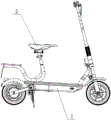
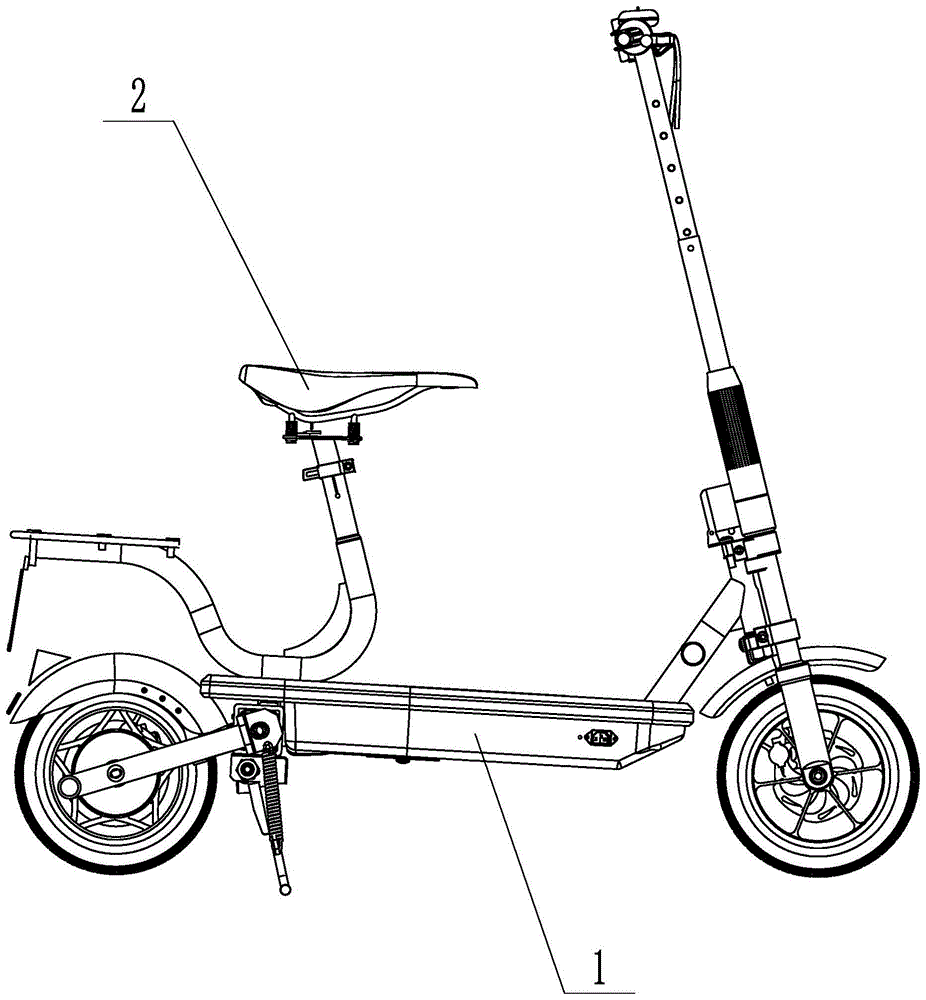
FIG. 1 is a schematic structural diagram of embodiment 3 of the present invention;
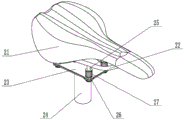
FIG. 2 is a schematic perspective view of a saddle according to embodiment 3 of the present invention;
FIG. 3 is a right side view schematic view of a saddle in accordance with embodiment 3 of the present invention;
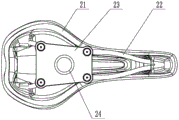
FIG. 4 is a schematic view of the bottom view of the seat in accordance with embodiment 3 of the present invention;
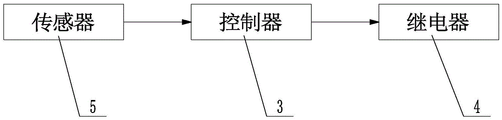
FIG. 5 is a control block diagram of the present invention;
FIG. 6 is a schematic structural diagram of embodiment 4 of the present invention.
Reference numerals shown in the drawings: 1. a vehicle body; 2. a vehicle seat; 3. a controller; 4. a relay; 5. a sensor; 21. a seat surface; 22. a support; 23. mounting a plate; 24. a sleeve; 25. a sliding shaft; 26. a slide cylinder; 27. a spring; 28. and (4) protruding.
Detailed Description
The invention is further described with reference to the accompanying drawings and specific embodiments. It should be understood that these examples are for illustrative purposes only and are not intended to limit the scope of the present invention. Further, it should be understood that various changes or modifications of the present invention may be made by those skilled in the art after reading the teaching of the present invention, and these equivalents also fall within the scope of the present application.
Example 1:
as shown in fig. 1 to 6, the present embodiment provides a protection system for an electric vehicle with a driver's position detection function, which includes a vehicle body 1, where the vehicle body 1 is a normal electric vehicle, and the vehicle body 1 has a seat 2, where the seat 2 in the present embodiment is the most important modified component. The automobile body 1 is provided with a controller 3 and a relay 4, the controller 3 is a 51 single-chip microcomputer controller, and the controller 3 and the relay 4 are arranged at the position of a vehicle head. And the relay 4 is used for controlling the connection and disconnection between the motor of the vehicle body 1 and a power supply wiring circuit. The sensor 5 is arranged at the bottom of the seat 2, and the sensor 5 is used for detecting whether a driver sits on the seat of the electric vehicle. In this embodiment, the relay 4 and the sensor 5 are both electrically connected to the controller 3, that is, the controller 3 is configured to receive an electrical signal from the sensor 5 and control the action of the relay 4 to control the rotation of the motor. Preferably, the sensor 5 is a touch sensor. After a driver sits down, the saddle 2 deforms under the weight of the driver, so that triggering of the contact sensor is achieved, the contact sensor transmits a signal of sitting of the driver to the controller 3, the controller 3 controls the relay 4 to be connected with a circuit, and the motor is powered by the storage battery to move forwards. When a driver is not seated on the seat 2, the sensor 5 cannot be triggered, i.e., cannot transmit a signal to the controller, and the relay 4 controls the motor line to be in an open state.
Example 2:
for embodiment 1, the sensor 5 in this embodiment is a load cell. When the weighing sensor detects that the weight exceeds 30kg, the controller 3 controls the relay 4 to switch on the motor circuit of the vehicle body 1. By setting the controller 3, only when the weighing sensor detects that the weight of the driver exceeds 30kg, the relay 4 can be controlled to switch on the motor circuit of the electric vehicle, so that the safety accident of the electric vehicle driven by a light child can be prevented.
Example 3:
in the embodiment 2, a new electric vehicle seat to which the system is applied is designed. The seat 2 comprises a seat surface 21, a support 22, an installation plate 23 and a sleeve 24, wherein the seat surface 21 is made of soft materials, and the bottom surface of the seat surface 21 is made of injection molding materials. The bracket 22 is fixedly mounted at the bottom of the seat surface 21 through bolts. A plurality of sliding shafts 25 are welded on the support 22, a plurality of sliding barrels 26 corresponding to the sliding shafts 25 one to one are mounted on the mounting plate 23, the sliding shafts 25 are in corresponding matching sliding connection with the sliding barrels 26, the limiting heads are fixed at the bottoms of the sliding shafts 25 through bolts, the diameters of the limiting heads are larger than those of the sliding barrels 26, and the support 22 can be prevented from being loosened in the sliding barrels 26. The sliding shaft 25 is sleeved with a spring 27, the top of the spring 27 is fixedly connected with the bottom surface of the support 22, and the bottom of the spring 27 is fixedly connected with the top surface of the mounting plate 23. The bottom of the support 22 is welded with a contact bulge 28, the sensor 5 is fixed on the top surface of the mounting plate 23 through bolts, the contact bulge 28 corresponds to the sensor 5, and the sleeve 24 is welded at the bottom of the mounting plate 23. When a driver is seated on the seat, the driver presses the seat surface 21, the seat surface 21 slightly sinks through the cooperation of the sliding shaft 25 and the sliding barrel 26, the bracket 22 presses the spring 27, the contact protrusion 28 is contacted with the load cell along with the pressing of the seat surface 21, and the weight of the driver is measured through the load cell. The weighing sensor transmits a signal to the controller 3, the controller 3 can judge the weighing weight, and the controller 3 controls the relay 4 to be electrified after the weighing weight reaches a set rated value. This saddle 2 stable in structure triggers high-efficiently, can guarantee effectively whether the judgement to driver's position, driver weight.
Example 4:
for embodiment 2, in this embodiment, the device is applied to an electric vehicle with an integrated seat, and the load cell is disposed under the leather surface of the seat and just above the load cell after the driver sits on the seat. The weight of the driver is weighed by a weighing sensor, and when the weighing sensor detects that the weight exceeds 30kg, the controller 3 controls the relay 4 to switch on the motor line of the vehicle body 1. By setting the controller 3, only when the weighing sensor detects that the weight of the driver exceeds 30kg, the relay 4 can be controlled to switch on the motor circuit of the electric vehicle, so that the safety accident of the electric vehicle driven by a light child can be prevented.
Example 5:
with respect to any of embodiments 1 to 4, the system in this embodiment can be applied to any three-wheeled or four-wheeled electric vehicle.
Example 6:
according to any one of embodiments 1-5, an audible and visual alarm can be added on one side of a controller of the electric vehicle, the audible and visual alarm is connected with the controller, when the vehicle stops, a driver leaves a seat, the weighing sensor detects that the driver leaves, if the vehicle is not powered off at the moment, the controller controls the audible and visual alarm to give out audible and visual alarm, or words such as 'please turn off the power supply' recorded in advance are played, so that the electric energy waste caused by the fact that the vehicle is not powered off after the driver leaves or the vehicle is stolen and ridden by others is prevented.