BRPI0415744B1 - using a lipid preparation containing omega-3 and omega-6 fatty acids, this preparation, use of glycerophospholipids, nutraceutical composition and functional food article - Google Patents
using a lipid preparation containing omega-3 and omega-6 fatty acids, this preparation, use of glycerophospholipids, nutraceutical composition and functional food article Download PDFInfo
- Publication number
- BRPI0415744B1 BRPI0415744B1 BRPI0415744-3A BRPI0415744A BRPI0415744B1 BR PI0415744 B1 BRPI0415744 B1 BR PI0415744B1 BR PI0415744 A BRPI0415744 A BR PI0415744A BR PI0415744 B1 BRPI0415744 B1 BR PI0415744B1
- Authority
- BR
- Brazil
- Prior art keywords
- preparation
- fact
- omega
- glycerophospholipid
- dha
- Prior art date
Links
Classifications
-
- A—HUMAN NECESSITIES
- A61—MEDICAL OR VETERINARY SCIENCE; HYGIENE
- A61K—PREPARATIONS FOR MEDICAL, DENTAL OR TOILETRY PURPOSES
- A61K31/00—Medicinal preparations containing organic active ingredients
- A61K31/66—Phosphorus compounds
- A61K31/683—Diesters of a phosphorus acid with two hydroxy compounds, e.g. phosphatidylinositols
- A61K31/685—Diesters of a phosphorus acid with two hydroxy compounds, e.g. phosphatidylinositols one of the hydroxy compounds having nitrogen atoms, e.g. phosphatidylserine, lecithin
-
- A—HUMAN NECESSITIES
- A23—FOODS OR FOODSTUFFS; TREATMENT THEREOF, NOT COVERED BY OTHER CLASSES
- A23L—FOODS, FOODSTUFFS OR NON-ALCOHOLIC BEVERAGES, NOT OTHERWISE PROVIDED FOR; PREPARATION OR TREATMENT THEREOF
- A23L33/00—Modifying nutritive qualities of foods; Dietetic products; Preparation or treatment thereof
-
- A—HUMAN NECESSITIES
- A61—MEDICAL OR VETERINARY SCIENCE; HYGIENE
- A61K—PREPARATIONS FOR MEDICAL, DENTAL OR TOILETRY PURPOSES
- A61K31/00—Medicinal preparations containing organic active ingredients
- A61K31/66—Phosphorus compounds
- A61K31/683—Diesters of a phosphorus acid with two hydroxy compounds, e.g. phosphatidylinositols
-
- A—HUMAN NECESSITIES
- A61—MEDICAL OR VETERINARY SCIENCE; HYGIENE
- A61P—SPECIFIC THERAPEUTIC ACTIVITY OF CHEMICAL COMPOUNDS OR MEDICINAL PREPARATIONS
- A61P1/00—Drugs for disorders of the alimentary tract or the digestive system
-
- A—HUMAN NECESSITIES
- A61—MEDICAL OR VETERINARY SCIENCE; HYGIENE
- A61P—SPECIFIC THERAPEUTIC ACTIVITY OF CHEMICAL COMPOUNDS OR MEDICINAL PREPARATIONS
- A61P1/00—Drugs for disorders of the alimentary tract or the digestive system
- A61P1/16—Drugs for disorders of the alimentary tract or the digestive system for liver or gallbladder disorders, e.g. hepatoprotective agents, cholagogues, litholytics
-
- A—HUMAN NECESSITIES
- A61—MEDICAL OR VETERINARY SCIENCE; HYGIENE
- A61P—SPECIFIC THERAPEUTIC ACTIVITY OF CHEMICAL COMPOUNDS OR MEDICINAL PREPARATIONS
- A61P13/00—Drugs for disorders of the urinary system
- A61P13/12—Drugs for disorders of the urinary system of the kidneys
-
- A—HUMAN NECESSITIES
- A61—MEDICAL OR VETERINARY SCIENCE; HYGIENE
- A61P—SPECIFIC THERAPEUTIC ACTIVITY OF CHEMICAL COMPOUNDS OR MEDICINAL PREPARATIONS
- A61P15/00—Drugs for genital or sexual disorders; Contraceptives
- A61P15/12—Drugs for genital or sexual disorders; Contraceptives for climacteric disorders
-
- A—HUMAN NECESSITIES
- A61—MEDICAL OR VETERINARY SCIENCE; HYGIENE
- A61P—SPECIFIC THERAPEUTIC ACTIVITY OF CHEMICAL COMPOUNDS OR MEDICINAL PREPARATIONS
- A61P17/00—Drugs for dermatological disorders
-
- A—HUMAN NECESSITIES
- A61—MEDICAL OR VETERINARY SCIENCE; HYGIENE
- A61P—SPECIFIC THERAPEUTIC ACTIVITY OF CHEMICAL COMPOUNDS OR MEDICINAL PREPARATIONS
- A61P25/00—Drugs for disorders of the nervous system
-
- A—HUMAN NECESSITIES
- A61—MEDICAL OR VETERINARY SCIENCE; HYGIENE
- A61P—SPECIFIC THERAPEUTIC ACTIVITY OF CHEMICAL COMPOUNDS OR MEDICINAL PREPARATIONS
- A61P25/00—Drugs for disorders of the nervous system
- A61P25/14—Drugs for disorders of the nervous system for treating abnormal movements, e.g. chorea, dyskinesia
-
- A—HUMAN NECESSITIES
- A61—MEDICAL OR VETERINARY SCIENCE; HYGIENE
- A61P—SPECIFIC THERAPEUTIC ACTIVITY OF CHEMICAL COMPOUNDS OR MEDICINAL PREPARATIONS
- A61P25/00—Drugs for disorders of the nervous system
- A61P25/14—Drugs for disorders of the nervous system for treating abnormal movements, e.g. chorea, dyskinesia
- A61P25/16—Anti-Parkinson drugs
-
- A—HUMAN NECESSITIES
- A61—MEDICAL OR VETERINARY SCIENCE; HYGIENE
- A61P—SPECIFIC THERAPEUTIC ACTIVITY OF CHEMICAL COMPOUNDS OR MEDICINAL PREPARATIONS
- A61P25/00—Drugs for disorders of the nervous system
- A61P25/18—Antipsychotics, i.e. neuroleptics; Drugs for mania or schizophrenia
-
- A—HUMAN NECESSITIES
- A61—MEDICAL OR VETERINARY SCIENCE; HYGIENE
- A61P—SPECIFIC THERAPEUTIC ACTIVITY OF CHEMICAL COMPOUNDS OR MEDICINAL PREPARATIONS
- A61P25/00—Drugs for disorders of the nervous system
- A61P25/22—Anxiolytics
-
- A—HUMAN NECESSITIES
- A61—MEDICAL OR VETERINARY SCIENCE; HYGIENE
- A61P—SPECIFIC THERAPEUTIC ACTIVITY OF CHEMICAL COMPOUNDS OR MEDICINAL PREPARATIONS
- A61P25/00—Drugs for disorders of the nervous system
- A61P25/24—Antidepressants
-
- A—HUMAN NECESSITIES
- A61—MEDICAL OR VETERINARY SCIENCE; HYGIENE
- A61P—SPECIFIC THERAPEUTIC ACTIVITY OF CHEMICAL COMPOUNDS OR MEDICINAL PREPARATIONS
- A61P25/00—Drugs for disorders of the nervous system
- A61P25/28—Drugs for disorders of the nervous system for treating neurodegenerative disorders of the central nervous system, e.g. nootropic agents, cognition enhancers, drugs for treating Alzheimer's disease or other forms of dementia
-
- A—HUMAN NECESSITIES
- A61—MEDICAL OR VETERINARY SCIENCE; HYGIENE
- A61P—SPECIFIC THERAPEUTIC ACTIVITY OF CHEMICAL COMPOUNDS OR MEDICINAL PREPARATIONS
- A61P27/00—Drugs for disorders of the senses
- A61P27/02—Ophthalmic agents
-
- A—HUMAN NECESSITIES
- A61—MEDICAL OR VETERINARY SCIENCE; HYGIENE
- A61P—SPECIFIC THERAPEUTIC ACTIVITY OF CHEMICAL COMPOUNDS OR MEDICINAL PREPARATIONS
- A61P29/00—Non-central analgesic, antipyretic or antiinflammatory agents, e.g. antirheumatic agents; Non-steroidal antiinflammatory drugs [NSAID]
-
- A—HUMAN NECESSITIES
- A61—MEDICAL OR VETERINARY SCIENCE; HYGIENE
- A61P—SPECIFIC THERAPEUTIC ACTIVITY OF CHEMICAL COMPOUNDS OR MEDICINAL PREPARATIONS
- A61P3/00—Drugs for disorders of the metabolism
- A61P3/06—Antihyperlipidemics
-
- A—HUMAN NECESSITIES
- A61—MEDICAL OR VETERINARY SCIENCE; HYGIENE
- A61P—SPECIFIC THERAPEUTIC ACTIVITY OF CHEMICAL COMPOUNDS OR MEDICINAL PREPARATIONS
- A61P3/00—Drugs for disorders of the metabolism
- A61P3/08—Drugs for disorders of the metabolism for glucose homeostasis
- A61P3/10—Drugs for disorders of the metabolism for glucose homeostasis for hyperglycaemia, e.g. antidiabetics
-
- A—HUMAN NECESSITIES
- A61—MEDICAL OR VETERINARY SCIENCE; HYGIENE
- A61P—SPECIFIC THERAPEUTIC ACTIVITY OF CHEMICAL COMPOUNDS OR MEDICINAL PREPARATIONS
- A61P35/00—Antineoplastic agents
-
- A—HUMAN NECESSITIES
- A61—MEDICAL OR VETERINARY SCIENCE; HYGIENE
- A61P—SPECIFIC THERAPEUTIC ACTIVITY OF CHEMICAL COMPOUNDS OR MEDICINAL PREPARATIONS
- A61P37/00—Drugs for immunological or allergic disorders
-
- A—HUMAN NECESSITIES
- A61—MEDICAL OR VETERINARY SCIENCE; HYGIENE
- A61P—SPECIFIC THERAPEUTIC ACTIVITY OF CHEMICAL COMPOUNDS OR MEDICINAL PREPARATIONS
- A61P37/00—Drugs for immunological or allergic disorders
- A61P37/02—Immunomodulators
-
- A—HUMAN NECESSITIES
- A61—MEDICAL OR VETERINARY SCIENCE; HYGIENE
- A61P—SPECIFIC THERAPEUTIC ACTIVITY OF CHEMICAL COMPOUNDS OR MEDICINAL PREPARATIONS
- A61P37/00—Drugs for immunological or allergic disorders
- A61P37/08—Antiallergic agents
-
- A—HUMAN NECESSITIES
- A61—MEDICAL OR VETERINARY SCIENCE; HYGIENE
- A61P—SPECIFIC THERAPEUTIC ACTIVITY OF CHEMICAL COMPOUNDS OR MEDICINAL PREPARATIONS
- A61P39/00—General protective or antinoxious agents
- A61P39/06—Free radical scavengers or antioxidants
-
- A—HUMAN NECESSITIES
- A61—MEDICAL OR VETERINARY SCIENCE; HYGIENE
- A61P—SPECIFIC THERAPEUTIC ACTIVITY OF CHEMICAL COMPOUNDS OR MEDICINAL PREPARATIONS
- A61P7/00—Drugs for disorders of the blood or the extracellular fluid
- A61P7/10—Antioedematous agents; Diuretics
-
- A—HUMAN NECESSITIES
- A61—MEDICAL OR VETERINARY SCIENCE; HYGIENE
- A61P—SPECIFIC THERAPEUTIC ACTIVITY OF CHEMICAL COMPOUNDS OR MEDICINAL PREPARATIONS
- A61P9/00—Drugs for disorders of the cardiovascular system
- A61P9/08—Vasodilators for multiple indications
-
- A—HUMAN NECESSITIES
- A61—MEDICAL OR VETERINARY SCIENCE; HYGIENE
- A61P—SPECIFIC THERAPEUTIC ACTIVITY OF CHEMICAL COMPOUNDS OR MEDICINAL PREPARATIONS
- A61P9/00—Drugs for disorders of the cardiovascular system
- A61P9/10—Drugs for disorders of the cardiovascular system for treating ischaemic or atherosclerotic diseases, e.g. antianginal drugs, coronary vasodilators, drugs for myocardial infarction, retinopathy, cerebrovascula insufficiency, renal arteriosclerosis
-
- A—HUMAN NECESSITIES
- A61—MEDICAL OR VETERINARY SCIENCE; HYGIENE
- A61P—SPECIFIC THERAPEUTIC ACTIVITY OF CHEMICAL COMPOUNDS OR MEDICINAL PREPARATIONS
- A61P9/00—Drugs for disorders of the cardiovascular system
- A61P9/12—Antihypertensives
Landscapes
- Health & Medical Sciences (AREA)
- Life Sciences & Earth Sciences (AREA)
- Chemical & Material Sciences (AREA)
- Pharmacology & Pharmacy (AREA)
- Veterinary Medicine (AREA)
- Public Health (AREA)
- General Health & Medical Sciences (AREA)
- Medicinal Chemistry (AREA)
- Animal Behavior & Ethology (AREA)
- Engineering & Computer Science (AREA)
- Bioinformatics & Cheminformatics (AREA)
- General Chemical & Material Sciences (AREA)
- Nuclear Medicine, Radiotherapy & Molecular Imaging (AREA)
- Chemical Kinetics & Catalysis (AREA)
- Organic Chemistry (AREA)
- Biomedical Technology (AREA)
- Neurology (AREA)
- Neurosurgery (AREA)
- Diabetes (AREA)
- Immunology (AREA)
- Hematology (AREA)
- Psychiatry (AREA)
- Cardiology (AREA)
- Heart & Thoracic Surgery (AREA)
- Epidemiology (AREA)
- Urology & Nephrology (AREA)
- Psychology (AREA)
- Endocrinology (AREA)
- Pain & Pain Management (AREA)
- Obesity (AREA)
- Biochemistry (AREA)
- Reproductive Health (AREA)
- Emergency Medicine (AREA)
- Toxicology (AREA)
- Vascular Medicine (AREA)
- Hospice & Palliative Care (AREA)
- Ophthalmology & Optometry (AREA)
- Gastroenterology & Hepatology (AREA)
- Dermatology (AREA)
- Rheumatology (AREA)
Abstract
"lipídios contendo ácidos graxos ômega-3 e ômega-6". apresenta-se uma preparação lipídica compreendendo um glicerofosfolipídio ou seu sal, conjugado ou derivado, particularmente fosfaditilserina (ps), fosfatidilcolina (pc), fosfatidiletanolamina (pe), fosfatidilinositol (pi), fosfatidilglicerol (pg) e ácido fosfatídico (pa) e grupos acila de ácido graxo poliinsaturado (pufa), particularmente grupos acila de ácido graxo poliinsaturado de cadeia longa (lc-pufa), como grupos acila ômega-3 e/ou ômega-6, em que o dito pufa está covalentemente ligado ao dito glicerofosfolipídio. as preparações apresentadas possuem uma melhor bioatividade e são utilizáveis no tratamento de vários estados e distúrbios cognitivos e mentais e para a manutenção das funções normais de sistemas e processos relacionados ao cérebro."lipids containing omega-3 and omega-6 fatty acids". a lipid preparation comprising a glycerophospholipid or its conjugated or derived salt, particularly phosphatidylserine (ps), phosphatidylcholine (bp), phosphatidylethanolamine (bp), phosphatidylinositol (bp) and phosphatidic acid (bp) and groups polyunsaturated fatty acid (pufa) acyl, particularly long chain polyunsaturated fatty acid (lc-pufa) groups, such as omega-3 and / or omega-6 acyl groups, wherein said pufa is covalently linked to said glycerophospholipid. The preparations presented have a better bioactivity and are useful for treating various cognitive and mental states and disorders and for maintaining the normal functions of brain-related systems and processes.
Description
(54) Título: USO DE UMA PREPARAÇÃO LIPÍDICA CONTENDO ÁCIDOS GRAXOS ÔMEGA-3 E ÔMEGA-6, ESTA PREPARAÇÃO, USO DE GLICEROFOSFOLIPÍDIOS, COMPOSIÇÃO NUTRACÊUTICA E ARTIGO ALIMENTAR FUNCIONAL (51) Int.CI.: A61K 31/683; A61K 31/685; A61P 3/10; A61P 9/10; A61P 15/12; A61P 25/00; A61P 25/16; A61P 25/22; A61P 25/28; A61P 35/00; A61P 29/00; A61P 37/00 (30) Prioridade Unionista: 22/10/2003 IL 158552 (73) Titular(es): ENZYMOTEC LTD.(54) Title: USE OF A LIPID PREPARATION CONTAINING OMEGA-3 AND OMEGA-6 FATTY ACIDS, THIS PREPARATION, USE OF GLYCEROPHOSPHOLIPIDES, NUTRACEUTICAL COMPOSITION AND FUNCTIONAL FOOD ITEM (51) Int.CI .: A61K 31/683; A61K 31/685; A61P 3/10; A61P 9/10; A61P 15/12; A61P 25/00; A61P 25/16; A61P 25/22; A61P 25/28; A61P 35/00; A61P 29/00; A61P 37/00 (30) Unionist Priority: 10/22/2003 IL 158552 (73) Holder (s): ENZYMOTEC LTD.
(72) Inventor(es): GAI BEN DROR; DORIT PLATT; ORLY FARKASH; RASSAN ZUABI; ZOHAR BARON; AVIDOR SHULMAN; DORI PELLED(72) Inventor (s): GAI BEN DROR; DORIT PLATT; ORLY FARKASH; RASSAN ZUABI; ZOHAR BARON; SHULMAN AVIDOR; DORI PELLED
Relatório Descritivo da Patente de Invenção para USO DE UMA PREPARAÇÃO LIPÍDICA CONTENDO ÁCIDOS GRAXOS ÔMEGA-3 E ÔMEGA-6, ESTA PREPARAÇÃO, USO DE GLICEROFOSFOLIPÍDIOS, COMPOSIÇÃO NUTRACÊUTICA E ARTIGO ALIMENTAR FUNCIONAL.Descriptive Report of the Invention Patent for USE OF A LIPID PREPARATION CONTAINING OMEGA-3 AND OMEGA-6 FATTY ACIDS, THIS PREPARATION, USE OF Glycerophospholipids, NUTRACEUTICAL COMPOSITION AND FUNCTIONAL FOOD ITEM.
Campo da InvençãoField of the Invention
A presente invenção se refere a preparações de fosfolipídios e de lipídios polares que são enriquecidas com ácidos graxos ômega-3 e/ou ômega-6 covalentemente ligados à estrutura principal lipídica. As preparações de fosfolipídios da invenção são particularmente úteis como nutracêuti10 cos, aditivos alimentares e/ou agentes farmacêuticos para o tratamento de vários estados, em particular aqueles relacionados a funções cognitivas. Antecedentes da InvençãoThe present invention relates to preparations of phospholipids and polar lipids that are enriched with omega-3 and / or omega-6 fatty acids covalently attached to the main lipid structure. The phospholipid preparations of the invention are particularly useful as nutraceuticals, food additives and / or pharmaceutical agents for the treatment of various conditions, in particular those related to cognitive functions. Background of the Invention
Lipídios, e particularmente lipídios polares, lipídios contendo nitrogênio e lipídios contendo carboidratos (fosfolipídios, esfingosinas, glicoli15 pídios, ceramidas, esfingomielinas), são os principais blocos construtores de membranas celulares, tecidos e outros. Além disso, desempenham importantes papéis em processos de transdução de sinais e em várias vias bioquímicas e biossintéticas.Lipids, and particularly polar lipids, nitrogen-containing lipids and carbohydrate-containing lipids (phospholipids, sphingosines, glycoli15 podids, ceramides, sphingomyelin), are the main building blocks of cell membranes, tissues and others. In addition, they play important roles in signal transduction processes and in various biochemical and biosynthetic pathways.
Glicerofosfolipídios, lipídios à base de uma estrutural principal de glicerol e contendo um grupo terminal fosfato, são os principais blocos construtores de membranas celulares. Como a maioria dos, se não todos os, processos bioquímicos envolvem membranas celulares, as propriedades estruturais e físicas de membranas em diferentes tecidos são cruciais para um funcionamento normal e eficiente de membranas em todos os processos bioquímicos.Glycerophospholipids, lipids based on a main glycerol structure and containing a phosphate terminal group, are the main building blocks of cell membranes. Like most, if not all, biochemical processes involve cell membranes, the structural and physical properties of membranes in different tissues are crucial for the normal and efficient functioning of membranes in all biochemical processes.
À luz da emergente categoria de alimentos funcionais na área de lipídios dietéticos, muitos benefícios para a saúde foram atribuídos ao consumo de certos ácidos graxos. Por exemplo, relatou-se em muitos estudos de pesquisa que ácidos graxos poliinsaturados (PUFA) do tipo ômega-3 e ômega-6 têm vários benefícios para a saúde em doença cardiovascular, distúrbios imunes e inflamação, distúrbios renais, alergias, diabetes e câncer. Esses tipos de ácidos graxos são de ocorrência natural principalmente emIn light of the emerging category of functional foods in the area of dietary lipids, many health benefits have been attributed to the consumption of certain fatty acids. For example, it has been reported in many research studies that polyunsaturated fatty acids (PUFA) of the omega-3 and omega-6 types have several health benefits in cardiovascular disease, immune disorders and inflammation, kidney disorders, allergies, diabetes and cancer . These types of fatty acids are naturally occurring mainly in
Petição 870180037014, de 04/05/2018, pág. 12/21 n-*’W peixes e algas, onde estão aleatoriamente distribuídos nas posições sn-1, sn-2 e sn-3 da estrutura principal glicerol dos triglicerídeos.Petition 870180037014, of 05/04/2018, p. 12/21 n - * ’W fish and algae, where they are randomly distributed in positions sn-1, sn-2 and sn-3 of the main glycerol structure of triglycerides.
A literatura profissional enfatiza a importância de uma dieta adequada contendo ácidos graxos ômega-3. Amplos estudos clínicos que inves5 tigaram a importância do ácido docosaexaenóico (DHA), um dos ácidos graxos ômega-3 mais importantes, no cérebro, descobriram que baixos níveis de DHA estão associados à depressão, perda de memória, demência e problemas visuais. Todos os estudos mostraram uma melhora dramática na função cerebral de idosos, quando os níveis sanguíneos de DHA aumenta10 ram.The professional literature emphasizes the importance of an adequate diet containing omega-3 fatty acids. Extensive clinical studies that have investigated the importance of docosahexaenoic acid (DHA), one of the most important omega-3 fatty acids in the brain, have found that low levels of DHA are associated with depression, memory loss, dementia and visual problems. All studies showed a dramatic improvement in brain function in the elderly when blood levels of DHA increased10 ram.
Outros benefícios conhecidos do DHA incluem: menor risco de arritmias, redução no risco de morte cardíaca súbita, menores níveis de triglicerídeos plasmáticos e tendência reduzida à coagulação sanguínea. Além disso, o DHA pode ter importância no campo da melhora da função cerebral, fortificação de fórmulas para bebês, diabetes e câncer. Estudos nutricionais que investigaram a importância do DHA no cérebro descobriram que baixos níveis de DHA estão associados à depressão, perda de memória, disfunção cognitiva, demência e problemas visuais.Other known benefits of DHA include: lower risk of arrhythmias, reduced risk of sudden cardiac death, lower levels of plasma triglycerides and reduced tendency to blood clotting. In addition, DHA may be important in the field of improving brain function, fortifying baby formulas, diabetes and cancer. Nutritional studies that have investigated the importance of DHA in the brain have found that low levels of DHA are associated with depression, memory loss, cognitive impairment, dementia and visual problems.
O corpo humano não sintetiza adequadamente DHA. Conse20 qüentemente, é necessário obtê-lo da dieta. Os seres humanos obtêm DHA de suas dietas, inicialmente através da placenta, então, do leite materno e, posteriormente, através de fontes dietéticas, como peixe, carnes vermelhas, carnes de órgãos de animais e ovos. Peixes populares, como o atum, salmão e sardinhas, são fontes ricas. Até recentemente, a principal fonte de suplementos díetéticos de DHA eram óleos de peixe. A capacidade de enzimas de produzirem a família de produtos ômega-6 e ômega-3 de ácido linoléico e alfa-linolênico declina com a idade. Como a síntese de DHA declina com a idade, ao se ficar mais velho, a necessidade de adquirir DHA diretamente da dieta ou de suplementos aumenta. De fato, várias publicações re30 centes sugeriram que o DHA fosse considerado como um ácido graxo essencial (por exemplo, Muskiet, F. et al. (2004) J. Nutr. 134(1):183-6).The human body does not adequately synthesize DHA. Consequently, it is necessary to obtain it from the diet. Humans obtain DHA from their diets, initially through the placenta, then through breast milk and, later, through dietary sources such as fish, red meat, meat from animal organs and eggs. Popular fish, such as tuna, salmon and sardines, are rich sources. Until recently, the main source of dietary DHA supplements was fish oils. The ability of enzymes to produce the omega-6 and omega-3 family of linoleic and alpha-linolenic acid declines with age. As the synthesis of DHA declines with age, as you get older, the need to acquire DHA directly from your diet or supplements increases. In fact, several recent publications have suggested that DHA should be considered as an essential fatty acid (for example, Muskiet, F. et al. (2004) J. Nutr. 134 (1): 183-6).
Como o DHA é importante para a transmissão de sinais no cérebro, olhos e sistema nervoso, muitos consumidores preocupados com a manutenção da atividade mental estão buscando uma maneira pura e segura de suplementar seus níveis de DHA.Because DHA is important for the transmission of signals in the brain, eyes and nervous system, many consumers concerned about maintaining mental activity are looking for a pure and safe way to supplement their DHA levels.
Demonstrou-se que ácidos poliinsaturados, em particular de cadeia longa, como ômega-3 e 6, conferem muitos benefícios valiosos para a saúde na população. O mercado global de PUFAs de cadeia longa, incluindo o segmento alimentar, está crescendo rapidamente.Polyunsaturated acids, in particular long-chain acids, such as omega-3 and 6, have been shown to confer many valuable health benefits to the population. The global market for long-chain PUFAs, including the food segment, is growing rapidly.
A maioria dos esforços na indústria é, entretanto, investida no aperfeiçoamento de técnicas de processamento de PUFA e na criação de qualidades de maior concentração de derivados de PUFA para acomodar suplementos dietéticos e necessidades alimentares funcionais.The majority of efforts in the industry, however, are invested in improving PUFA processing techniques and creating higher concentration qualities of PUFA derivatives to accommodate dietary supplements and functional food needs.
As comunidades acadêmica e industrial estão menos preocupadas com relação à avaliação de diferentes abordagens de distribuição de PUFA para aumentar sua biodisponibilidade e sua eficácia em termos de sua variedade conhecida de benefícios para a saúde. Esses benefícios variam da prevenção e tratamento de DCV, diabetes, distúrbios e/ou declínio cognitivo, distúrbios visuais, problemas cutâneos, distúrbios de aprendizagem e outros. Além disso, demonstrou-se que PUFAs auxiliam no desenvolvimento cognitivo e visual de crianças.The academic and industrial communities are less concerned about evaluating different PUFA distribution approaches to increase their bioavailability and effectiveness in terms of their known range of health benefits. These benefits range from the prevention and treatment of CVD, diabetes, disorders and / or cognitive decline, visual disorders, skin problems, learning disorders and others. In addition, PUFAs have been shown to aid children's cognitive and visual development.
Lipídios PUFAPUFA lipids
PS-PUFAPS-PUFA
Fosfatidilserina, também conhecida como PS, é um fosfolipídio natural com biofuncionalidade que se tornou um dos suplementos dietéticos mais promissores no campo da nutrição cerebral. A PS e seus benefícios para a saúde são conhecidos das comunidades científica e de nutrição desde a década de 70. Inúmeros estudos foram conduzidos para estabelecer essa eficácia em várias funções cognitivas e mentais. Esses estudos demonstraram que a PS pode melhorar a memória, combater a demência, combater os estágios precoces da doença de Alzheimer, reduzir o estresse e a tensão, melhorar o lapso de atenção, estimular o humor e combater a depressão, para nomear algumas.Phosphatidylserine, also known as PS, is a natural phospholipid with biofunctionality that has become one of the most promising dietary supplements in the field of brain nutrition. PS and its health benefits have been known to the scientific and nutrition communities since the 1970s. Numerous studies have been conducted to establish this effectiveness in various cognitive and mental functions. These studies have shown that PS can improve memory, fight dementia, fight early stages of Alzheimer's disease, reduce stress and tension, improve attention span, stimulate mood and fight depression, to name a few.
A PS é um dos blocos construtores mais importantes das mem4 u <PS is one of the most important building blocks of mem4 u <
branas celulares no cérebro. Portanto, o nível de PS em membranas celulares no cérebro assegura a fluidez e estrutura dessas membranas. O nível normal assegura processos de transdução de sinais normais e eficientes, consumo eficiente de glicose e outras vias biológicas que resultem em fun* 5 ções cognitivas e mentais normais.white cells in the brain. Therefore, the level of PS in cell membranes in the brain ensures the fluidity and structure of these membranes. The normal level ensures normal and efficient signal transduction processes, efficient glucose consumption and other biological pathways that result in normal cognitive and mental functions.
Como a PS não é abundante na nutrição humana e como em muitas pessoas, particularmente em idosos, as vias biossintéticas responsáveis pela produção de PS funcionam mal, os níveis de PS no corpo e no cérebro são baixos. Isso resulta em vários distúrbios cognitivos e mentais, co10 mo depressão, perda de memória, curto lapso de atenção, dificuldades de aprendizagem e outros.As PS is not abundant in human nutrition and as in many people, particularly in the elderly, the biosynthetic pathways responsible for PS production malfunction, PS levels in the body and brain are low. This results in various cognitive and mental disorders, such as depression, memory loss, short attention span, learning difficulties and others.
A suplementação de PS nas dietas de pessoas idosas com esses distúrbios resultou, em muitos casos, em melhoras dramáticas desses distúrbios. Em anos recentes, estudos demonstraram que mesmo pessoas mais jovens podem se beneficiar da suplementação dietétíca de PS. Demonstrou-se que a PS melhora as capacidades de aprendizagem de estudantes, melhora a memória e o lapso de atenção e outros.Supplementing PS in the diets of elderly people with these disorders has resulted, in many cases, in dramatic improvements in these disorders. In recent years, studies have shown that even younger people can benefit from dietary supplementation of PS. PS has been shown to improve students' learning abilities, improve memory and attention span and others.
Conseqüentemente, é um objetivo da presente invenção apresentar preparações especiais de PS para uso principalmente como nutracêu20 ticos e como aditivos alimentares funcionais.Consequently, it is an objective of the present invention to present special PS preparations for use mainly as nutraceuticals and as functional food additives.
PC-PUFAPC-PUFA
Conforme acima mencionado, fosfolipídios são componentes essenciais de todas as membranas celulares e subcelulares. A fosfatidilcolina e fosfatidiletanolamina predominam quantitativamente, constituindo subs25 tancialmente a configuração típica em bicamada. Fosfolipídios pertencem às moléculas antipáticas com um componente solúvel em água e um solúvel em gordura. Na configuração em bicamada, os grupos hidrofílicos ficam dispostos nos lados externo e interno da membrana, na direção do meio circundante; os grupos lipofílicos, em contraste, ficam voltados um para o outro no lado interno da configuração em bicamada.As mentioned above, phospholipids are essential components of all cell and subcellular membranes. Phosphatidylcholine and phosphatidylethanolamine are quantitatively predominant, substantially constituting the typical bilayer configuration. Phospholipids belong to antipathetic molecules with a water-soluble and a fat-soluble component. In the bilayer configuration, the hydrophilic groups are arranged on the outer and inner sides of the membrane, in the direction of the surrounding environment; the lipophilic groups, in contrast, face each other on the inner side of the bilayer configuration.
Outros importantes constituintes de membranas biológicas são o colesterol, glicolipídios e proteínas periféricas e integradas. A estrutura básica de membranas biológicas é, portanto, uma série de unidades recorrentes de complexos de lipídio-proteína. A membrana é assimétrica. A função dos sistemas de membrana externa (celular) e interna (subcelular) depende de sua composição e da integridade de sua estrutura fosfolipídica. Além de sua „ 5 presença em membranas celulares, os fosfolipídios constituem elementos estruturais e funcionais das monocamadas superficiais de lipoproteínas e de tensoativos.Other important constituents of biological membranes are cholesterol, glycolipids and peripheral and integrated proteins. The basic structure of biological membranes is, therefore, a series of recurring units of lipid-protein complexes. The membrane is asymmetric. The function of the outer (cellular) and inner (subcellular) membrane systems depends on their composition and the integrity of their phospholipid structure. In addition to their „5 presence in cell membranes, phospholipids are structural and functional elements of the surface monolayers of lipoproteins and surfactants.
Da máxima importância para a função de membranas biológicas é sua fluidez, que é decisivamente influenciada por fosfolipídios. Além do teor de coíesterol e proteínas e da natureza e carga dos grupos terminais polares de fosfolipídios no sistema, a fluidez da membrana depende do comprimento das cadeias de resíduos de ácidos graxos na molécula de fosfolipídio, assim como do número e tipo de pareamento de suas duplas ligações.Of the utmost importance for the function of biological membranes is their fluidity, which is decisively influenced by phospholipids. In addition to the content of cholesterol and proteins and the nature and charge of the polar terminal groups of phospholipids in the system, the fluidity of the membrane depends on the length of the fatty acid residue chains in the phospholipid molecule, as well as the number and type of matching of their double bonds.
Fosfolipídios contendo ácidos graxos poliinsaturados suprem o organismo com importantes blocos construtores que melhoram a fluidez da membrana.Phospholipids containing polyunsaturated fatty acids supply the body with important building blocks that improve the fluidity of the membrane.
Estudos conduzidos com fosfolipídios contendo PUFA demonstraram o seguinte:Studies conducted with phospholipids containing PUFA have shown the following:
1. São elementos de alta energia, básicos, estruturais e funcionais de todas as membranas biológicas, como células, corpúsculos sangüíneos, lipoproteínas e tensoativos.1. They are high-energy, basic, structural and functional elements of all biological membranes, such as cells, blood corpuscles, lipoproteins and surfactants.
2. São indispensáveis para a diferenciação, proliferação e regeneração celulares.2. They are indispensable for cell differentiation, proliferation and regeneration.
3. Mantêm e promovem a atividade biológica de muitas proteínas e receptores ligados a membranas.3. Maintain and promote the biological activity of many membrane-bound proteins and receptors.
4. Desempenham um papel decisivo na atividade e ativação de inúmeras enzimas localizadas em membranas, como a sódio-potássioATPase, adenilato ciclase e lipoproteína lipase.4. Play a decisive role in the activity and activation of numerous enzymes located in membranes, such as sodium-potassium ATPase, adenylate cyclase and lipoprotein lipase.
5. São importantes para o transporte de moléculas através de membranas.5. They are important for the transport of molecules across membranes.
6. Controlam processos metabólicos dependentes de membranas entre o espaço intracelular e intercelular.6. Control membrane-dependent metabolic processes between the intracellular and intercellular space.
7. Os ácidos graxos poliinsaturados contidos neles, como ácido linoléico, são precursores das prostaglandinas citoprotetoras e outros eicosanóides.7. The polyunsaturated fatty acids contained in them, such as linoleic acid, are precursors to cytoprotective prostaglandins and other eicosanoids.
, 5 8, Como doadores de colina e de ácidos graxos, têm uma influência em certos processos neurológicos., 5 8, As choline and fatty acid donors, they have an influence on certain neurological processes.
9. Emulsificam gorduras no trato gastrointestinal.9. Emulsify fats in the gastrointestinal tract.
10. São importantes emulsificadores na bile.10. Emulsifiers are important in bile.
11. Co-determinam a agregação de eritrócitos e plaquetas.11. Co-determine the aggregation of erythrocytes and platelets.
12. Influenciam reações imunológicas no nível celular.12. Influence immunological reactions at the cellular level.
Fosfolipídios contendo PUFA são teoricamente de importância em todas as doenças em que estruturas de membrana lesadas, níveis reduzidos de fosfolipídios e/ou fluidez diminuída da membrana estão presentes. Essa hipótese é sustentada por investigações experimentais e clínicas de vários distúrbios e doenças associadas a membranas.Phospholipids containing PUFA are theoretically of importance in all diseases in which damaged membrane structures, reduced levels of phospholipids and / or decreased membrane fluidity are present. This hypothesis is supported by experimental and clinical investigations of various disorders and diseases associated with membranes.
Há estudos do princípio ativo, assim como ensaios farmacológicos e clínicos, disponíveis sobre vários distúrbios e doenças relacionadas a lesões de membranas. Por exemplo, em doenças hepáticas, as estruturas dos hepatócitos são lesadas por, por exemplo, vírus, solventes orgânicos, álcool, medicamentos, fármacos ou comida gordurosa. Como consequência, a fluidez e a permeabilidade da membrana podem estar perturbadas, e processos metabólicos dependentes de membranas, assim como atividades de enzimas associadas a membranas podem estar prejudicadas. Isso inibe consideravelmente o metabolismo do fígado.There are studies of the active principle, as well as pharmacological and clinical trials, available on various disorders and diseases related to membrane injuries. For example, in liver disease, the structures of hepatocytes are damaged by, for example, viruses, organic solvents, alcohol, medication, drugs or fatty food. As a consequence, the fluidity and permeability of the membrane may be disturbed, and membrane-dependent metabolic processes, as well as membrane-associated enzyme activities, may be impaired. This considerably inhibits the metabolism of the liver.
Outros exemplos incluem hiperlipoproteinemia, com ou sem aterosclerose, distúrbios hemorreológicos com uma razão colesterol/fosfolipídio elevada nas membranas de plaquetas e hemácias, doenças neurológicas, inflamações gastrointestinais, doenças renais e em vários sintomas de envelhecimento.Other examples include hyperlipoproteinemia, with or without atherosclerosis, hemorheological disorders with a high cholesterol / phospholipid ratio in the membranes of platelets and red blood cells, neurological diseases, gastrointestinal inflammations, kidney diseases and various symptoms of aging.
Todas essas doenças muito diferentes têm em comum distúrbios de membrana comparáveis. Com moléculas de fosfatidilcolina poliinsaturadas, esses distúrbios podem ser positivamente influenciados, eliminados ou mesmo melhorados além do normal, devido ao elevado teor de ácidos graxos polünsaturados. A seguir, apresentam-se alguns exemplos de mecanismos que medeiam esse fenômeno:All of these very different diseases have comparable membrane disorders in common. With polyunsaturated phosphatidylcholine molecules, these disorders can be positively influenced, eliminated or even improved beyond normal, due to the high content of polyunsaturated fatty acids. The following are some examples of mechanisms that mediate this phenomenon:
1. Partículas de HDL enriquecidas com fosfatidilcolina contendo Λ 5 PUFA são capazes de captar mais colesterol de lipoproteínas de baixa densidade (LDL) e tecidos. Mais colesterol pode ser transportado de volta ao fígado. Essa ação sobre o transporte reverso de colesterol é única. Todos os outros agentes redutores de lipídios reduzem a absorção de colesterol no organismo ou a síntese de colesterol no fígado e sua distribuição para a peri10 feria. Essas substâncias, entretanto, não mobilizam fisiologicamente o colesterol já presente na periferia.1. HDL particles enriched with phosphatidylcholine containing Λ 5 PUFA are able to capture more cholesterol from low density lipoproteins (LDL) and tissues. More cholesterol can be transported back to the liver. This action on reverse cholesterol transport is unique. All other lipid-lowering agents reduce the absorption of cholesterol in the body or the synthesis of cholesterol in the liver and its distribution to the period. These substances, however, do not physiologically mobilize cholesterol already present in the periphery.
2. A razão colesterol/fosfolipídio em membranas, plaquetas e hemácias diminui e a função da membrana é melhorada até a normalização.2. The cholesterol / phospholipid ratio in membranes, platelets and red cells decreases and the function of the membrane is improved until normalization.
3. Reações peroxidativas são reduzidas, estruturas de membra15 na de hepatócitos danificadas restauradas, a fluidez e função da membrana estabilizada, a imunomodulação e proteção celular mehorada e as funções hepáticas associadas a membranas intensificadas.3. Peroxidative reactions are reduced, membrane structures of damaged hepatocytes restored, membrane fluidity and function stabilized, immunomodulation and improved cell protection and liver functions associated with enhanced membranes.
4. Com a normalização da razão colesterol/fosfolipídio, a bile também é estabilizada.4. With the normalization of the cholesterol / phospholipid ratio, bile is also stabilized.
5. Devido à sua propriedade específica como emulsificador ativo na superfície, a fosfatidilcolina contendo PUFA solubiliza gorduras e é usada na redução dos riscos e tratamento de embolismo gorduroso.5. Due to its specific property as an active emulsifier on the surface, phosphatidylcholine containing PUFA solubilizes fats and is used to reduce risks and treat fat embolism.
6. A substituição com ácidos graxos polünsaturados e colina pode ter um efeito citoprotetor no cérebro e ativar processos neuronais.6. Substitution with polyunsaturated fatty acids and choline can have a cytoprotective effect on the brain and activate neuronal processes.
7. Lipossomas com moléculas de fosfatidilcolina poliinsaturadas podem agir como veículos para medicamentos, como vitamina E.7. Liposomes with polyunsaturated phosphatidylcholine molecules can act as vehicles for drugs, such as vitamin E.
Doença HepáticaLiver disease
Resultados experimentais e clínicos sustentam a hipótese de que a aplicação terapêutica de fosfatidilcolina contendo PUFA tem efeitos protetores e mesmo curativos e regenerativos sobre membranas biológicas de células endoteliais sinusais e hepatócitos. O efeito citoprotetor de fosfatidilcolina contendo PUFA foi corroborado em 7 experimentos in vitro e em 55 * ·* in vivo, em que se usaram 20 modelos diferentes com cinco diferentes espécies de animais. Os tipos de intoxicação que reconhecidamente desempenham um papel na etiologia de doença hepática foram na maioria aplicados: substâncias químicas, medicamentos, álcool, colestase, fenômenos imuno5 lógicos, exposição à radiação e assim por diante.Experimental and clinical results support the hypothesis that the therapeutic application of phosphatidylcholine containing PUFA has protective and even curative and regenerative effects on biological membranes of sinus endothelial cells and hepatocytes. The cytoprotective effect of phosphatidylcholine containing PUFA was corroborated in 7 experiments in vitro and 55 * · * in vivo, in which 20 different models were used with five different species of animals. The types of intoxication that are known to play a role in the etiology of liver disease were mostly applied: chemicals, drugs, alcohol, cholestasis, immune phenomena, radiation exposure, and so on.
Os efeitos hepato-protetores de fosfatidilcolina contendo PUFA foram confirmados e foram mais pronunciados quanto mais cedo a fosfatidilcolina contendo PUFA foi administrada:The hepato-protective effects of phosphatidylcholine containing PUFA were confirmed and were more pronounced the sooner the phosphatidylcholine containing PUFA was administered:
1. As estruturas de membranas estavam normais ou grandemen10 te normalizadas.1. The membrane structures were normal or largely normalized.
2. Infiltrações gordurosas e necrose de hepatócitos podiam ser diminuídas ou mesmo eliminadas.2. Fatty infiltrations and hepatocyte necrosis could be reduced or even eliminated.
3. Dados correspondentes foram encontrados para a peroxidação de lipídios, atividade de transaminase e colinesterase e para lipídios sé15 ricos; o metabolismo das células hepáticas aumentou.3. Corresponding data were found for lipid peroxidation, transaminase and cholinesterase activity and for serum lipids; the metabolism of liver cells increased.
4. O aumento da síntese de RNA e de proteínas e do teor de glicogênio em células hepáticas indicou uma estimulação das células hepáticas.4. Increased RNA and protein synthesis and glycogen content in liver cells indicated stimulation of liver cells.
5. A produção de colágeno reduzida, a razão colágeno/DNA e o 20 teor de hidroxiprolina hepática indicaram uma formação reduzida de tecido conjuntivo.5. Reduced collagen production, collagen / DNA ratio and hepatic hydroxyproline content indicated reduced connective tissue formation.
A dosagem de fosfatidilcolina contendo PUFA variou de 525 a 2.700 mg/dia, quando administrada por via oral, e de 500 a 3.000 mg/dia em aplicações intravenosas. A duração do tratamentou durou de poucas sema25 nas a 30 meses. As principais indicações hepáticas foram hepatite aguda, hepatite crônica, esteatose hepática, lesão hepática tóxica, cirrose hepática e coma hepático.The dosage of phosphatidylcholine containing PUFA varied from 525 to 2,700 mg / day, when administered orally, and from 500 to 3,000 mg / day in intravenous applications. The duration of treatment lasted from a few weeks25 to 30 months. The main hepatic indications were acute hepatitis, chronic hepatitis, hepatic steatosis, toxic liver damage, liver cirrhosis and liver coma.
Os achados clínicos, mostrando a eficácia da fosfatidilcolina contendo PUFA, podem ser genericamente resumidos da seguinte maneira:The clinical findings, showing the efficacy of phosphatidylcholine containing PUFA, can be generally summarized as follows:
1. Melhora ou normalização acelerada de queixas subjetivas, de achados clínicos e de vários valores bioquímicos.1. Improvement or accelerated normalization of subjective complaints, clinical findings and various biochemical values.
2. Melhores resultados histológicos, em comparação com os grupos de controle.2. Better histological results, compared to control groups.
3. Menor duração de hospitalização.3. Shorter hospital stay.
Resultados promissores também foram obtidos em distúrbios renais, diálise peritoneal ambulatorial crônica, hiperlipoproteinemia/aterosclerose, inflamação gastrointestinal, psoríase e outros.Promising results have also been obtained in kidney disorders, chronic outpatient peritoneal dialysis, hyperlipoproteinemia / atherosclerosis, gastrointestinal inflammation, psoriasis and others.
Recentes estudos de pesquisa mostraram que fosfolipídios enriquecidos com PUFA, isolados de embriões de truta arco-íris, possuem novos benefícios para a saúde. Alguns desses benefícios incluem o tratamento de células tumorais, inibição da atividade da 5-lipoxigenase, redução dos níveis de gorduras neutras (como o colesterol).Recent research studies have shown that phospholipids enriched with PUFA, isolated from rainbow trout embryos, have new health benefits. Some of these benefits include the treatment of tumor cells, inhibition of 5-lipoxygenase activity, reduced levels of neutral fats (such as cholesterol).
Há provas de que, em uma pessoa que receba fosfolipídios enriquecidos nutricionalmente, esses fosfolipídios cruzem a barreira intestinal e a barreira hemato-encefálica, atingindo, assim, o cérebro. Recentemente, investigadores do Ponroy Laboratories descreveram um experimento em que camundongos desprovidos de ácidos graxos essenciais, isto é, ácido linoléico (18:2 n-6) e ácido a-linolênico (18:3 n-3), que servem como as únicas fontes de LC-PUFA, foram alimentados com fosfolipídios cerebrais, e a quantidade de fosfolipídios em cada parte do cérebro medida. Esses fosfolipídios foram encontrados no citoplasma, nas sinapses e em outras partes do cérebro (Carrie et al., (2000) J. Lipid Res. 41, 465-472).There is evidence that, in a person receiving nutritionally enriched phospholipids, these phospholipids cross the intestinal barrier and the blood-brain barrier, thus reaching the brain. Recently, researchers at Ponroy Laboratories described an experiment in which mice lacking essential fatty acids, that is, linoleic acid (18: 2 n-6) and α-linolenic acid (18: 3 n-3), which serve as the only sources of LC-PUFA, were fed brain phospholipids, and the amount of phospholipids in each part of the brain measured. These phospholipids have been found in the cytoplasm, synapses and other parts of the brain (Carrie et al., (2000) J. Lipid Res. 41, 465-472).
A utilização de fosfolipídios enriquecidos com PUFA apresenta muitas vantagens em potencial do ponto de vista clínico. O fosfolipídío pode distribuir o ácido graxo essencial a órgãos específicos ou partes do corpo, como o cérebro, e auxiliar na incorporação desses ácidos graxos em membranas. Outras vantagens podem surgir do fato de que fosfolipídios enriquecidos com PUFA não terão problemas de odor, como os encontrados nas principais fontes nutracêuticas atuais, os óleos de peixe. Além disso, alguns estudos clínicos preliminares demonstraram que PUFA incorporado em fosfolipídios possui eficácia superior ao PUFA transportado por triglicerídeos (Song etal. (2001) Atherosclerosis, 155, 9-18).The use of phospholipids enriched with PUFA has many potential advantages from a clinical point of view. Phospholipid can distribute essential fatty acid to specific organs or parts of the body, such as the brain, and assist in the incorporation of these fatty acids into membranes. Other advantages may arise from the fact that phospholipids enriched with PUFA will not have odor problems, such as those found in the main current nutraceutical sources, fish oils. In addition, some preliminary clinical studies have shown that PUFA incorporated into phospholipids is more effective than PUFA carried by triglycerides (Song etal. (2001) Atherosclerosis, 155, 9-18).
Estudos adicionais demonstraram que a atividade de fosfolipídios ricos em DHA era diferente da de triacilglicerol rico em DHA em ratos espontaneamente hipertensos (Irukayama-Tomobe et al. (2001) Journal of Oleo Science, 50(12), 945-950). Ratos espontaneamente hipertensos (SHR) foram alimentados com dietas lipídicas de teste durante seis semanas, que continham 30% de ácido docosaexanóico (DHA) fosfolipídio (DHA-PL) extra, 5 ído de ovas de peixe ou 30% de DHA de óleo de peixe (DHA-TG). A dieta de controle continha óleo de milho na presença de lipídios de teste. Após a alimentação, a pressão sangüínea nos grupos de dieta DHA-TG e DHA-PL se mostrou significativamente menor em comparação com o controle. O teor de ácidos graxos séricos de ácido dihomo-linoléico (DHLnA) e ácido araquidô10 mico (AA) no grupo da dieta DHA-PL era significativamente menor que no grupo de controle ou de dieta DHA-TG. Os triacilglicerol, fosfolipídio e colesterol total séricos nos grupos de dietas DHA-TG e DHA-PL eram significativamente menores que no controle. O colesterol total hepático no DHA-PL era o dobro do grupo de dieta DHA-TG e do controle. O mecanismo de re15 moção de colesterol do sangue pelo DH-PL parece, portanto, ser diferente do do DHA-TG. O peróxido lipídico sérico (LPO) nos grupos de dietas DHATG e DHA-PL estava essencialmente igual ao do controle.Additional studies have shown that the activity of DHA-rich phospholipids was different from that of DHA-rich triacylglycerol in spontaneously hypertensive rats (Irukayama-Tomobe et al. (2001) Journal of Oleo Science, 50 (12), 945-950). Spontaneously hypertensive rats (SHR) were fed test lipid diets for six weeks, which contained 30% extra docosahexanoic acid (DHA) phospholipid (DHA-PL), 5 fish roe or 30% fish oil DHA (DHA-TG). The control diet contained corn oil in the presence of test lipids. After feeding, blood pressure in the DHA-TG and DHA-PL diet groups was significantly lower compared to the control. The serum fatty acid content of dihomo-linoleic acid (DHLnA) and arachidonic acid (AA) in the DHA-PL diet group was significantly lower than in the control or DHA-TG diet group. The serum triacylglycerol, phospholipid and total cholesterol in the DHA-TG and DHA-PL diet groups were significantly lower than in the control group. Total liver cholesterol in DHA-PL was twice that of the DHA-TG diet group and the control group. The mechanism of blood cholesterol removal by DH-PL therefore appears to be different from that of DHA-TG. The serum lipid peroxide (OLP) in the DHATG and DHA-PL diet groups was essentially the same as in the control group.
Muitos agentes contendo PUFA apresentam estabilidade e problemas de qualidade devido ao alto grau de oxidação dos ácidos graxos poli20 insaturados. Esses problemas requerem a incorporação de antioxidantes, assim como a utilização de medidas especiais que tentam reduzir essa oxidação. A utilização de fosfolipídios como veículos de PUFA pode resultar em maior estabilidade desses produtos devido às propriedades antioxidantes dos fosfolipídios.Many PUFA-containing agents have stability and quality problems due to the high degree of oxidation of unsaturated poly20 fatty acids. These problems require the incorporation of antioxidants, as well as the use of special measures that try to reduce this oxidation. The use of phospholipids as PUFA vehicles can result in greater stability of these products due to the antioxidant properties of phospholipids.
Parece que um dos mecanismos de transporte mais eficazes para esses ácidos graxos essenciais é a fixação desses grupos a moléculas de fosfolipídios. Demonstrou-se que os fosfolipídios atravessam a barreira hemato-encefálica e transportam o DHA para onde é necessário. Preocupações organolépticasIt appears that one of the most effective transport mechanisms for these essential fatty acids is the attachment of these groups to phospholipid molecules. Phospholipids have been shown to cross the blood-brain barrier and transport DHA to where it is needed. Organoleptic concerns
PUFAs são tradicionalmente extraídos de peixes de águas frias.PUFAs are traditionally extracted from cold water fish.
A despeito da imagem saudável, um dos problemas de aceitação pelos consumidores é o forte sabor de peixe resultante. Para resolver isso, formas microencapsuladas de ômega-3 foram introduzidas nos últimos 15 anos. Uma etapa adicional foi o desenvolvimento de produtos contendo ovo, como maionese e massas enriquecidas com DHA. Iogurtes enriquecidos com DHA, artigos cozidos e grelhados também foram considerados.Despite the healthy image, one of the problems with consumer acceptance is the resulting strong fish flavor. To address this, microencapsulated forms of omega-3 have been introduced in the past 15 years. An additional step was the development of products containing egg, such as mayonnaise and pasta enriched with DHA. DHA-enriched yogurts, baked and grilled items were also considered.
Não há nenhum outro produto ou ingrediente nutricional que seja considerado como um agente de distribuição de PUFA. Todos os produtos comerciais atuais se baseiam nos próprios ácidos graxos em uma forma encapsulada ou em alimentos enriquecidos com PUFA mediante uma alimentação especial de animais/colheitas.There is no other product or nutritional ingredient that is considered to be a PUFA distribution agent. All current commercial products are based on the fatty acids themselves in an encapsulated form or on foods enriched with PUFA through special animal / crop feeding.
Conseqüentemente, é um objetivo da presente invenção apresentar preparações lipídicas enriquecidas com ácidos graxos ômega-3 ou ômega-6 para uso principalmente como nutracêuticos e como aditivos alimentares funcionais. A composição da dita preparação é tal que confere à preparação a propriedade de aumentar a biodisponibilidade de PUFAs. As15 sim, com seu consumo, de preferência na forma de nutracêuticos, aditivos alimentares ou composições farmacêuticas, o organismo pode, da maneira mais eficiente, gozar dos benefícios proporcionados pela dita preparação, conforme será descrito em detalhes abaixo.Consequently, it is an objective of the present invention to present lipid preparations enriched with omega-3 or omega-6 fatty acids for use primarily as nutraceuticals and as functional food additives. The composition of said preparation is such that it gives the preparation the property of increasing the bioavailability of PUFAs. As15 yes, with its consumption, preferably in the form of nutraceuticals, food additives or pharmaceutical compositions, the organism can, in the most efficient way, enjoy the benefits provided by said preparation, as will be described in detail below.
Este e outros objetivos da invenção ficarão claros no decorrer da descrição.This and other objectives of the invention will become clear in the course of the description.
Sumário da InvençãoSummary of the Invention
Em um primeiro aspecto, a presente invenção apresenta uma preparação lipídica em que o dito lipídio é selecionado em glicerofosfolipídios e seus sais, conjugados e derivados e qualquer mistura desses, e gru25 pos acila de ácidos graxos poliinsaturados (PUFA), particularmente grupos acila de ácidos graxos poliinsaturados de cadeia longa (LC-PUFA), de preferência grupos acila ômega-3 e/ou ômega-6, a uma concentração de pelo menos 5% (p/p) de teor de ácidos graxos totais da dita preparação, de preferência de mais de 10% (p/p), mais preferivelmente de 20 - 50% (p/p), em que o dito PUFA está covalentemente ligado ao dito lipídio.In a first aspect, the present invention features a lipid preparation in which said lipid is selected from glycerophospholipids and their salts, conjugates and derivatives and any mixture thereof, and acyl groups of polyunsaturated fatty acids (PUFA), particularly acyl groups of acids long-chain polyunsaturated fatty acids (LC-PUFA), preferably omega-3 and / or omega-6 acyl groups, at a concentration of at least 5% (w / w) of the total fatty acid content of said preparation, preferably more than 10% (w / w), more preferably 20 - 50% (w / w), wherein said PUFA is covalently linked to said lipid.
O dito lipídio pode ser um lipídio de ocorrência natural ou um lipídio sintético, De preferência, o dito lipídio é um glicerofosfolipídio em que pelo menos alguns dos grupos sn-1 ou sn-2 da estrutura principal glicerol estejam substituídos com os ditos grupos acila de ácido graxo poliinsaturado (PUFA).Said lipid can be a naturally occurring lipid or a synthetic lipid. Preferably, said lipid is a glycerophospholipid in which at least some of the sn-1 or sn-2 groups of the main glycerol structure are replaced with said acyl groups of polyunsaturated fatty acid (PUFA).
Em uma modalidade particular, o dito lipídio é um glicerofosfoli5 pídio de fórmula I:In a particular embodiment, said lipid is a glycerophospholipid formula I:
-“O-R “O-R’- "O-R" O-R ’
L„0-y-O“R θ Fórmula (I) em que R” representa uma fração selecionada deserina (PS), colina (PC), etanolamina (PE), inositol (PI), glicerol (PG) e hidrogênio (ácido fosfatídico - PA), e R e R’, que podem ser iguais ou diferentes, representam independentemente hidrogênio ou um grupo acila, em que o dito grupo acila é selecionado de grupos acila saturados, monoinsaturados ou poliinsaturados (PUFA), particularmente ácidos graxos poliinsaturados de cadeia longa (LC-PUFA), mais preferivelmente grupos acila ômega-3 e/ou ômega-6, e seus sais, contanto que R e R’ não possam representar simultaneamente hidrogênio, e em que os ditos grupos acila poliinsaturados compreendem pelo menos 5% (p/p) de ácidos graxos de lipídios totais, de preferência mais de 10% (p/p), e particularmente 20 - 50% (p/p).L „0-yO“ R θ Formula (I) where R ”represents a selected fraction of deserine (PS), choline (PC), ethanolamine (PE), inositol (PI), glycerol (PG) and hydrogen (phosphatidic acid - PA), and R and R ', which can be the same or different, independently represent hydrogen or an acyl group, wherein said acyl group is selected from saturated, monounsaturated or polyunsaturated (PUFA) acyl groups, particularly chain polyunsaturated fatty acids (LC-PUFA), more preferably acyl omega-3 and / or omega-6 groups, and their salts, provided that R and R 'cannot simultaneously represent hydrogen, and in which said polyunsaturated acyl groups comprise at least 5% (w / w) of total lipid fatty acids, preferably more than 10% (w / w), and particularly 20 - 50% (w / w).
Em uma modalidade mais particular da dita preparação, R representa hidrogênio, e R’ representa um grupo acila. Alternativamente, R’ representa hidrogênio, e R representa um grupo acila.In a more particular embodiment of said preparation, R represents hydrogen, and R 'represents an acyl group. Alternatively, R 'represents hydrogen, and R represents an acyl group.
Considerando-se essas últimas modalidades, quando o dito grupo acila é, de preferência, um grupo acila ômega-3, pode ser um grupo eicosapentaenoíla (EPA), docosaexaenoíia (DHA) ou um grupo ômega-3 linolênico. E, quando o dito grupo acila é, de preferência, um grupo acila ômega-6, pode ser um grupo araquidonoíla (ARA) ou um grupo ômega-6 linoléico.Considering these last modalities, when the said acyl group is, preferably, an omega-3 acyl group, it can be an eicosapentaenoyl group (EPA), docosahexaenoia (DHA) or a linolenic omega-3 group. And, when said acyl group is preferably an omega-6 acyl group, it can be an arachidonoyl group (ARA) or a linoleic omega-6 group.
Uma possibilidade adicional é que o dito grupo acila possa ser um grupo linolenoíla (18:3).An additional possibility is that said acyl group may be a linolenic group (18: 3).
Em ainda outra modalidade da preparação da invenção, R” pode ser qualquer um dentre serina, colina, etanolamina, inositol ou glicerol.In yet another embodiment of the preparation of the invention, R ”can be any one of serine, choline, ethanolamine, inositol or glycerol.
Em uma modalidade particular adicional, a identidade e o teor de R e R’ são predeterminados.In a further particular embodiment, the identity and the content of R and R 'are predetermined.
A preparação da invenção que compreende o composto de fórmula l, em que R” é serina, imita a composição da PS cerebral humana.The preparation of the invention comprising the compound of formula 1, wherein R ”is serine, mimics the composition of human brain PS.
Todavia, a invenção também se refere a preparações compreendendo o composto de fórmula I, em que R” é serina, que sejam diferentes da PS cerebral humana, mas que ainda tenham melhor bioatividade, particularmente em comparação com PS de soja. Essa melhor bioatividade resulta em efeitos benéficos tanto sobre a aprendizagem, quanto sobre a memória funcional na população idosa, particularmente em estados com deficiência colinérgica, como a doença de Alzheimer.However, the invention also relates to preparations comprising the compound of formula I, in which R ”is serine, which are different from human brain PS, but which still have better bioactivity, particularly in comparison with soy PS. This better bioactivity results in beneficial effects both on learning and on functional memory in the elderly population, particularly in states with cholinergic deficiency, such as Alzheimer's disease.
A invenção também se refere a uma preparação de PS que imita a PS cerebral humana e é eficaz a uma dosagem mais baixa (2 - 3 vezes), em comparação com a PS de soja, possuindo, ao mesmo tempo, uma bioatividade similar ou melhor em comparação com a PS de soja.The invention also relates to a PS preparation that mimics human brain PS and is effective at a lower dosage (2-3 times) compared to soybean PS, while having similar or better bioactivity compared to soybean PS.
A PS pode ser de fonte vegetal, animal ou de microorganismos e é enriquecida com PS de fórmula I, em que R” representa uma fração serina.PS can be from plant, animal or microorganism sources and is enriched with PS of formula I, where R ”represents a serine fraction.
A preparação da invenção pode ser adicionalmente enriquecida com PS de fórmula I, caracterizada por ter efeitos organolépticos relacionados a peixe reduzidos ou ausentes. Essa preparação pode ser particularmente adequada para incorporação em artigos alimentares contendo chocolate ou à base de laticínios (incluindo leite concentrado).The preparation of the invention can be further enriched with PS of formula I, characterized by having reduced or absent fish-related organoleptic effects. This preparation may be particularly suitable for incorporation into food articles containing chocolate or dairy products (including concentrated milk).
A preparação da invenção pode ser usada na melhora e tratamento de estados e distúrbios cognitivos e mentais, assim como na manutenção de funções normais de sistemas e processos relacionados ao cérebro, de preferência ADHD, envelhecimento, doença de Alzheimer, doença de Parkinson, esclerose múltipla (MS), díslexia, depressão, capacidades de aprendizagem, intensidade das ondas cerebrais, estresse, ansiedade, distúrbios mentais e psiquiátricos, concentração e atenção, humor, utilização de glicose pelo cérebro, bem-estar cognitivo e mental geral, distúrbios neurológicos e distúrbios hormonais.The preparation of the invention can be used in the improvement and treatment of cognitive and mental conditions and disorders, as well as in maintaining normal functions of brain-related systems and processes, preferably ADHD, aging, Alzheimer's disease, Parkinson's disease, multiple sclerosis (MS), dyslexia, depression, learning abilities, brain wave intensity, stress, anxiety, mental and psychiatric disorders, concentration and attention, mood, use of glucose by the brain, general cognitive and mental well-being, neurological disorders and disorders hormonal.
A preparação da invenção é particularmente útil para aumentar a biodisponíbilidade de ácidos graxos ômega-3 e ômega-6.The preparation of the invention is particularly useful for increasing the bioavailability of omega-3 and omega-6 fatty acids.
A preparação da invenção pode ser usada na melhora combinada de funções cognitivas e mentais, juntamente com a melhora de distúrbios ou estados de saúde adicionais. Esses distúrbios ou estados de saúde adicionais podem ser pelo menos níveis elevados de colesterol sangüíneo, níveis elevados de triglicerídeos, níveis elevados de fibrinogênio sangüíneo, razão HDL7LDL, diabetes, síndrome metabólica, estados de menopausa e pós-menopausa, distúrbios relacionados a hormônios, distúrbios de visão, distúrbios inflamatórios, distúrbios imunes, doenças hepáticas, hepatite crônica, esteatose, deficiência de fosfolipídios, peroxidação de lipídios, disritmia da regeneração celular, desestabilização de membranas celulares, doença da artéria coronariana, pressão sangüínea elevada, câncer, hipertensão, envelhecimento, doença renal, doenças cutâneas, edema, doenças gastrointestinais, doenças do sistema vascular periférico, alergias, doenças neurodegenerativas e psiquiátricas.The preparation of the invention can be used in the combined improvement of cognitive and mental functions, together with the improvement of additional disorders or health conditions. These additional disorders or health conditions can be at least elevated blood cholesterol levels, elevated triglyceride levels, elevated blood fibrinogen levels, HDL7LDL ratio, diabetes, metabolic syndrome, menopausal and postmenopausal states, hormone-related disorders, disorders vision disorders, inflammatory disorders, immune disorders, liver disease, chronic hepatitis, steatosis, phospholipid deficiency, lipid peroxidation, cell regeneration dysrhythmia, cell membrane destabilization, coronary artery disease, high blood pressure, cancer, hypertension, aging, kidney disease, skin diseases, edema, gastrointestinal diseases, diseases of the peripheral vascular system, allergies, neurodegenerative and psychiatric diseases.
A preparação da invenção também pode ser usada na redução e/ou prevenção do estresse oxidativo sé rico que leva à ate roscle rose, distúrbios cardiovasculares e/ou doença cardíaca coronariana.The preparation of the invention can also be used to reduce and / or prevent serious oxidative stress that leads to roscle rose, cardiovascular disorders and / or coronary heart disease.
A invenção também se refere a composições nutracêuticas compreendendo uma preparação lipídica de acordo com a invenção. A composição nutracêutica pode estar na forma de cápsulas de gel macio, comprimidos, xaropes ou qualquer outro sistema de distribuição de suplementos dietéticos comum.The invention also relates to nutraceutical compositions comprising a lipid preparation according to the invention. The nutraceutical composition can be in the form of soft gel capsules, tablets, syrups or any other common dietary supplement delivery system.
Além disso, a invenção se refere a um artigo alimentar funcional compreendendo a preparação lipídica da invenção. Esse artigo alimentar funcional pode ser selecionado de produtos laticínios, bebidas lácteas, sorvetes, produtos de padaria, produtos de confeitaria, biscoitos, produtos de soja, massas e pães, molhos, condimentos, óleos e gorduras, margarinas, pastas, cereais, drinques e batidas, óleos e gorduras, fórmulas para bebês, alimentos para bebês (biscoitos, legumes e frutas moídas, cereais), barras, aperitivos, doces e produtos de chocolate.In addition, the invention relates to a functional food item comprising the lipid preparation of the invention. This functional food item can be selected from dairy products, dairy drinks, ice cream, bakery products, confectionery, cookies, soy products, pasta and bread, sauces, condiments, oils and fats, margarines, pastes, cereals, drinks and shakes, oils and fats, baby formulas, baby food (cookies, vegetables and ground fruits, cereals), bars, snacks, sweets and chocolate products.
Em ainda outro aspecto, a invenção se refere a composições farmacêuticas compreendendo a preparação lipídica da invenção e, opcíonalmente, também compreendendo pelo menos um aditivo, diluente ou excipiente farmaceuticamente aceitável. A composição farmacêutica da invenção , 5 também pode conter opcionalmente pelo menos um agente farmaceuticamente ativo.In yet another aspect, the invention relates to pharmaceutical compositions comprising the lipid preparation of the invention and, optionally, also comprising at least one pharmaceutically acceptable additive, diluent or excipient. The pharmaceutical composition of the invention, 5 can also optionally contain at least one pharmaceutically active agent.
Breve Descrição das FigurasBrief Description of the Figures
Figuras 1A - D: Desempenho de ratos na aquisição de tarefas no labirinto espacial de MorrisFigures 1A - D: Performance of mice in task acquisition in the Morris space maze
O tempo de latência até a plataforma nos três dias de aquisição (2 sessões por dia) de ratos idosos suplementados durante três meses com vários suplementos conforme detalhados abaixo foi analisado usando-se uma câmera de vídeo, com (quadrados abertos) ou sem (circuitos fechados) pré-tratamento de 1 mg/kg de escopolamina.The latency time to the platform in the three days of acquisition (2 sessions per day) of elderly rats supplemented for three months with various supplements as detailed below was analyzed using a video camera, with (open squares) or without (circuits) pre-treatment of 1 mg / kg scopolamine.
Fig. 1A: Ratos suplementados com MCT, P < 0,007.Fig. 1A: Rats supplemented with MCT, P <0.007.
Fig. 1B: Ratos suplementados com PS-uj3, P < 0,07.Fig. 1B: Rats supplemented with PS-uj3, P <0.07.
Fig. 1C: Ratos suplementados com SB-PS, P < 0,02.Fig. 1C: Rats supplemented with SB-PS, P <0.02.
Fig. 1D: Ratos suplementados com LC-PUFA, P < 0,03.Fig. 1D: Rats supplemented with LC-PUFA, P <0.03.
Os valores representam a média ± E.P.M. para quatro a cinco ratos por suplemento.Values represent the mean ± E.P.M. for four to five rats per supplement.
Abreviações: Lat. T.: tempo de latência; seg.: segundos.Abbreviations: Lat. T .: latency time; sec: seconds.
Figura 2. Desempenho de ratos tratados com escopolamina em tarefas em labirinto de água de Morris no teste de sonda espacial.Figure 2. Performance of scopolamine-treated rats in Morris water maze tasks in the space probe test.
Esse gráfico representa a percentagem de tempo (T.) que ratos idosos, suplementados durante três meses com MCT (barras abertas), PS-uj3 (barras sólidas), SB-PS (barras tracejadas) ou LC-PUFA (barras listradas), gastaram em diferentes áreas após a plataforma ter sido removida, foi analisado usando-se uma câmera de vídeo, após pré-tratamento com 1 mg/kg de escopolamina. Os valores representam a média ± E.P.M. de quatro a cinco ratos por suplemento. Significância comparada ao grupo de controle (MCT): * P < 0,02 e ** P < 0,08.This graph represents the percentage of time (T.) that aged rats, supplemented for three months with MCT (open bars), PS-uj3 (solid bars), SB-PS (dashed bars) or LC-PUFA (striped bars), spent in different areas after the platform was removed, it was analyzed using a video camera, after pre-treatment with 1 mg / kg scopolamine. Values represent the mean ± E.P.M. four to five rats per supplement. Significance compared to the control group (MCT): * P <0.02 and ** P <0.08.
Figuras 3A - D: Desempenho de ratos induzidos com escopola16 mina na localização da plataforma após sua reposição.Figures 3A - D: Performance of rats induced with scopole16 mine in the location of the platform after its replacement.
O tempo de latência até a plataforma no quinto dia do teste de labirinto de água, em que a plataforma foi reposicionada entre as sessões, em ratos idosos suplementados durante três meses com diferentes suple„ 5 mentos, conforme especificado abaixo, foi analisado usando-se uma câmera de vídeo, com (quadrados abertos) ou sem (circuitos fechados) prétratamento com 1 mg/kg de escopolamina.The latency time to the platform on the fifth day of the water maze test, in which the platform was repositioned between sessions, in elderly rats supplemented for three months with different supplements, as specified below, was analyzed using a video camera, with (open squares) or without (closed circuits) pre-treatment with 1 mg / kg scopolamine.
Fig. 3A: Ratos suplementados com MCT.Fig. 3A: Rats supplemented with MCT.
Fig. 3B: Ratos suplementados com PS-w3.Fig. 3B: Rats supplemented with PS-w3.
Fig. 3C: Ratos suplementados com SB-PS.Fig. 3C: Rats supplemented with SB-PS.
Fig. 3D: Ratos suplementados com LC-PUFA.Fig. 3D: Rats supplemented with LC-PUFA.
Os valores representam a média ± E.P.M. de quatro a cinco ratos por suplemento.Values represent the mean ± E.P.M. four to five rats per supplement.
Abreviações: Lat. T.: tempo de latência; seg.: segundos; tr.: ten15 tativas.Abbreviations: Lat. T .: latency time; sec: seconds; tr .: ten15 tactics.
Figuras 4A - B: Níveis de fosfolipídios em tecidos de ratos conforme medidos usando-se 31P-NMR.Figures 4A - B: Levels of phospholipids in rat tissues as measured using 31 P-NMR.
Os lipídios foram extraídos de tecidos de ratos idosos que foram suplementados durante três meses com MCT (barras abertas), PS-w3 (bar20 ras sólidas), SB-PS (barras tracejadas) ou LC-PUFA (barras listradas). Os níveis de fosfolipídios foram analisados usando-se uma máquina de 31PNMR, e os níveis relativos de fosfatidilcolina dos diferentes tratamentos são representados.The lipids were extracted from tissues of elderly rats that were supplemented for three months with MCT (open bars), PS-w3 (solid bar20), SB-PS (dashed bars) or LC-PUFA (striped bars). Phospholipid levels were analyzed using a 31 PNMR machine, and the relative levels of phosphatidylcholine from the different treatments are represented.
Fig. 4A: Análise de lipídios extraídos do fígado.Fig. 4A: Analysis of lipids extracted from the liver.
Fig. 4B: Análise de lipídios extraídos do cérebro (região do córtex).Fig. 4B: Analysis of lipids extracted from the brain (cortex region).
Os valores representam a média ± D.P. de quatro a cinco tecidos de ratos por suplemento. Significância comparada ao grupo de controle (MCT): *P < 0,05 e ** P < 0,1.Values represent the mean ± SD of four to five rat tissues per supplement. Significance compared to the control group (MCT): * P <0.05 and ** P <0.1.
Abreviações: Tot. Pl.: fosfolipídios totais.Abbreviations: Tot. Pl .: total phospholipids.
Figura 5: Contagens pelos pais de crianças com ADHD de acordo com escalas de classificação comportamental.Figure 5: Counts by parents of children with ADHD according to behavioral rating scales.
O gráfico representa a percentagem de crianças com ADHD que demonstraram melhora ou falta de melhora do ponto de vista dos pais após dois meses de suplementação com óleo de canola (barras abertas), DHA (barras sólidas) ou PS-w3 (barras hachuradas). A classificação inclui observações referentes a tendências comportamentais em casa, na escola, com irmãos ou colegas e feedback de professores. Os valores representam a percentagem de vinte a vinte e cinco contagens de crianças com ADHD por suplemento. Deve-se notar que doze pais se recusaram a responder ao questionário, e que seis crianças não completaram o período de suplementação devido ao sabor ruim ou graves problemas de disciplina (a maioria no grupo de controle).The graph represents the percentage of children with ADHD who showed improvement or lack of improvement from the parents' point of view after two months of supplementation with canola oil (open bars), DHA (solid bars) or PS-w3 (hatched bars). The classification includes observations regarding behavioral trends at home, at school, with siblings or colleagues and feedback from teachers. The values represent the percentage of twenty to twenty-five counts of children with ADHD per supplement. It should be noted that twelve parents refused to answer the questionnaire, and that six children did not complete the supplementation period due to bad taste or serious discipline problems (the majority in the control group).
Abreviações: Improv.: melhora; Marg. Improve.: melhora marginal; n.c.: nenhuma alteração; Deter.: deterioração.Abbreviations: Improv .: improvement; Marg. Improve .: marginal improvement; n.c .: no changes; Deter .: deterioration.
Figura 6: Efeito do PC-DHA sobre o estresse oxidativo sérico.Figure 6: Effect of PC-DHA on serum oxidative stress.
Camundongos Apo E° foram alimentados durante 10 semanas com placebo (barras abertas) ou PC-DHA (barras sólidas). Os níveis de peróxido lipídico sérico (Ser. per.) foram medidos usando-se um ensaio espectrofotométrico. Os valores representam a média ± D.P. de 5 camundongos por tratamento.Apo E ° mice were fed for 10 weeks with placebo (open bars) or PC-DHA (solid bars). The levels of serum lipid peroxide (Ser. Per.) Were measured using a spectrophotometric assay. The values represent the mean ± SD of 5 mice per treatment.
Descrição Detalhada da InvençãoDetailed Description of the Invention
Em um primeiro aspecto, a presente invenção apresenta uma preparação lipídica, em que o dito lipídio é um glicerofosfolipídio, seu sal, conjugado e derivado, e qualquer mistura desses, e grupos acila de ácido graxo poliinsaturado (PUFA), particularmente grupos acila de ácido graxo poliinsaturado de cadeia longa (LC-PUFA), de preferência grupos acila ômega-3 e/ou ômega-6, a uma concentração de pelo menos 5% (p/p) de teor de ácidos graxos totais da dita preparação, de preferência de mais de 10% (p/p), mais preferivelmente 20 - 50% (p/p), em que o dito PUFA está covalentemente ligado ao dito glicerofosfolipídio.In a first aspect, the present invention features a lipid preparation, wherein said lipid is a glycerophospholipid, its salt, conjugate and derivative, and any mixture thereof, and acyl groups of polyunsaturated fatty acid (PUFA), particularly acyl groups of acid long-chain polyunsaturated fatty acid (LC-PUFA), preferably omega-3 and / or omega-6 acyl groups, at a concentration of at least 5% (w / w) of the total fatty acid content of said preparation, preferably more than 10% (w / w), more preferably 20 - 50% (w / w), wherein said PUFA is covalently linked to said glycerophospholipid.
O dito lipídio pode ser um lipídio de ocorrência natural ou um lipídio sintético.Said lipid can be a naturally occurring lipid or a synthetic lipid.
De preferência, o dito lipídio é um glicerofosfolipídio em que pelo menos alguns dos grupos sn-1 ou sn-2 da estrutura principal glicerol estejam substituídos com os ditos grupos acila de ácido graxo poliinsaturado (PUFA).Preferably, said lipid is a glycerophospholipid in which at least some of the sn-1 or sn-2 groups of the main glycerol structure are replaced with said polyunsaturated fatty acid (PUFA) acyl groups.
Em uma modalidade particular, o dito lipídio é um glicerofosfolipídio de fórmula I:In a particular embodiment, said lipid is a glycerophospholipid of formula I:
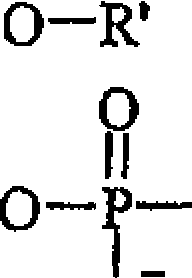
OO
Fórmula (I) em que R” representa uma fração selecionada de serina (PS), colina (PC), etanolamina (PE), inositoi (PI), glicerol (PG) e hidrogênio (ácido fosfatídico PA), e R e R’, que podem ser iguais ou diferentes, representam independentemente hidrogênio ou um grupo acila, em que o dito grupo acila é selecionado de grupos acila saturados, monoinsaturados ou poliinsaturados (PUFA), particularmente ácidos graxos poliinsaturados de cadeia longa (LCPUFA), mais preferivelmente grupos acila ômega-3 e/ou ômega-6, e seus sais, contanto que R e R’ não possam representar simultaneamente hidrogênio, e em que os ditos grupos acila poliinsaturados compreendem pelo menos 5% (p/p) de ácidos graxos de lipídios totais, de preferência mais de 10% (p/p), e partícularmente 20 - 50% (p/p).Formula (I) where R ”represents a selected fraction of serine (PS), choline (PC), ethanolamine (PE), inositoi (PI), glycerol (PG) and hydrogen (phosphatidic acid PA), and R and R ' , which may be the same or different, independently represent hydrogen or an acyl group, wherein said acyl group is selected from saturated, monounsaturated or polyunsaturated (PUFA) acyl groups, particularly long-chain polyunsaturated fatty acids (LCPUFA), more preferably groups acyl omega-3 and / or omega-6, and their salts, provided that R and R 'cannot simultaneously represent hydrogen, and in which said polyunsaturated acyl groups comprise at least 5% (w / w) of lipid fatty acids total, preferably more than 10% (w / w), and in particular 20 - 50% (w / w).
Em uma modalidade mais particular da dita preparação, R representa hidrogênio, e R’ representa um grupo acila. Alternativamente, R’ representa hidrogênio, e R representa um grupo acila.In a more particular embodiment of said preparation, R represents hydrogen, and R 'represents an acyl group. Alternatively, R 'represents hydrogen, and R represents an acyl group.
Considerando-se essas últimas modalidades, quando o dito grupo acila é, de preferência, um grupo acila ômega-3, pode ser um grupo eicosapentaenoíla (EPA), docosaexaenoíla (DHA) ou um grupo ômega-3 linolênico. E, quando o dito grupo acila é, de preferência, um grupo acila ômega-6, pode ser um grupo araquidonotla (ARA) ou um grupo ômega-6 linoléico. Uma possibilidade adicional é que o dito grupo acila possa ser um grupo linolenoíla (18:3).Considering these last modalities, when the said acyl group is preferably an omega-3 acyl group, it can be an eicosapentaenoyl group (EPA), docosahexaenoyl group (DHA) or a linolenic omega-3 group. And, when said acyl group is preferably an omega-6 acyl group, it can be an arachidonotl group (ARA) or a linoleic omega-6 group. An additional possibility is that said acyl group may be a linolenic group (18: 3).
Em ainda outra modalidade da preparação da invenção, R” pode ser qualquer um dentre serina, colina, etanolamina, inosito! ou glicerol.In yet another embodiment of the invention, R ”can be any of serine, choline, ethanolamine, inosite! or glycerol.
Em uma modalidade particular adicional, a identidade e o teor de R e R’ são predeterminados.In a further particular embodiment, the identity and the content of R and R 'are predetermined.
A preparação da invenção que compreende o composto de fórmula I, em que R” é serina, imita a composição da PS cerebral humana.The preparation of the invention comprising the compound of formula I, wherein R ”is serine, mimics the composition of human brain PS.
Todavia, a invenção também se refere a preparações compreendendo o composto de fórmula I, em que R” é serina, que sejam diferentes da PS cerebral humana, mas que ainda tenham melhor bioatividade, particularmente em comparação com PS de soja.However, the invention also relates to preparations comprising the compound of formula I, in which R ”is serine, which are different from human brain PS, but which still have better bioactivity, particularly in comparison with soy PS.
Tradicionalmente, ingredientes ativos de PS usados como suplementos dietéticos eram produzidos pela extração de cérebros de animais, particularmente cérebros bovinos. A PS extraída de tecidos cerebrais de animais, da mesma forma que a PS cerebral humana, tem uma composição de ácidos graxos que se caracteriza por níveis relativamente mais elevados de frações ômega-3, em comparação com os níveis de ômega-3 encontrados em fosfolipídios de plantas.Traditionally, active ingredients of PS used as dietary supplements were produced by extracting the brains of animals, particularly bovine brains. PS extracted from animal brain tissues, like human brain PS, has a fatty acid composition that is characterized by relatively higher levels of omega-3 fractions, compared to the levels of omega-3 found in phospholipids. of plants.
A PS tem a seguinte estrutura:The PS has the following structure:
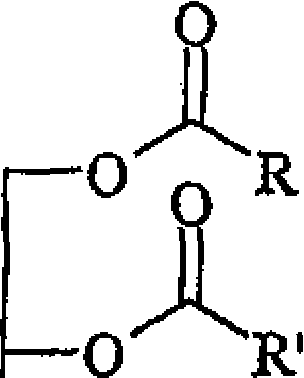
*—o-y-o γ* —O-y-o γ
COO'COO '
Formula ΠFormula Π
A PS cerebral humana se caracteriza por mais de 20 - 30% de PS contendo acilas graxas ômega-3, de preferência na posição sn-2 da fração glicerol, e principalmente DHA e EPA. Conforme acima mencionado, fosfolipídios, e PS em particular, são responsáveis pela estrutura e propriedades físicas da membrana. Uma das principais propriedades físicas governadas por fosfolipídios é a fluidez dessas membranas. Ácidos graxos ômega-3, DHA e EPA em particular, também têm um papel crucial na fluidez da membrana à luz de sua estrutura 3D única. Conseqüentemente, PS com frações acila graxa ômega-3, DHA e EPA em particular, tem uma biofuncio20 nalidade única, que não pode provir apenas do esqueleto fosfolipídico básico desse fosfolipídio.Human cerebral PS is characterized by more than 20 - 30% of PS containing omega-3 fatty acylates, preferably in the sn-2 position of the glycerol fraction, and mainly DHA and EPA. As mentioned above, phospholipids, and PS in particular, are responsible for the structure and physical properties of the membrane. One of the main physical properties governed by phospholipids is the fluidity of these membranes. Omega-3 fatty acids, DHA and EPA in particular, also play a crucial role in the fluidity of the membrane in light of its unique 3D structure. Consequently, PS with fractions of acyl omega-3 grease, DHA and EPA in particular, has a unique biofunctionality, which cannot come only from the basic phospholipid skeleton of this phospholipid.
Considerando-se os riscos envolvidos com doenças de príons, particularmente a encefalopatia espongiforme bovina (BSE), assim como . 5 outras desvantagens associadas a ingredientes obtidos de fontes animais, suplementos de PS normalmente são preparados usando-se PS originada de lecitina de soja. Essa lecitina é enriquecida, normalmente por via enzimática, com PS. Esse método de produção resulta em PS com um perfil de ácidos graxos de fosfolipídios de soja, que se caracteriza por um baixo nível de ácidos graxos ômega-3, e quase nenhum DHA e EPA. Esse ingrediente ativo de PS também é conhecido como PS de soja.Considering the risks involved with prion diseases, particularly bovine spongiform encephalopathy (BSE), as well as. 5 other disadvantages associated with ingredients obtained from animal sources, PS supplements are usually prepared using PS originated from soy lecithin. This lecithin is enriched, normally enzymatically, with PS. This production method results in PS with a fatty acid profile of soy phospholipids, which is characterized by a low level of omega-3 fatty acids, and almost no DHA and EPA. This active ingredient in PS is also known as soybean PS.
Embora se tenha demonstrado que a biofuncionalidade da PS de soja na melhora da função cognitiva é similar à da PS bovina, ainda é diferente da PS cerebral humana. É um objetivo da presente invenção apre15 sentar um ingrediente de PS com uma composição de ácidos graxos predeterminada que imite a composição de ácidos graxos da PS cerebral humana.Although it has been shown that the biofunctionality of soybean PS in improving cognitive function is similar to that of bovine PS, it is still different from human brain PS. It is an object of the present invention to present a PS ingredient with a predetermined fatty acid composition that mimics the fatty acid composition of human brain PS.
É um objetivo adicional da presente invenção apresentar um ingrediente de PS que, embora não idêntico à PS cerebral de ocorrência natural, se caracterize por melhor funcionalidade, particularmente em compara20 ção com PS de soja. Esse ingrediente de PS aperfeiçoado tem uma composição de ácidos graxos predeterminada.It is an additional object of the present invention to present an PS ingredient which, although not identical to naturally occurring cerebral PS, is characterized by better functionality, particularly in comparison with soy PS. This improved PS ingredient has a predetermined fatty acid composition.
O ingrediente de PS da presente invenção é enriquecido com acilas graxas ômega-3, de preferência DHA, EPA ou ômega-3 linolénico. Além disso, a PS desta invenção é enriquecida com acilas graxas ômega-3 covalentemente ligadas a uma ou a ambas as posições sn-1 ou sn-2 da fração glicerol na estrutura principal da PS.The PS ingredient of the present invention is enriched with omega-3 fatty acyls, preferably DHA, EPA or linolenic omega-3. In addition, the PS of this invention is enriched with omega-3 fatty acyls covalently attached to one or both of the sn-1 or sn-2 positions of the glycerol fraction in the main structure of the PS.
A presente invenção também se refere a e descreve outros fosfolipídios, como fosfatidilcolina (PC), fosfatidiletanolamina (PE), fosfatidifinositol (PI), fosfatidilglicerol (PG) e ácido fosfatídico (PA), enriquecidos com ácidos graxos ômega-3, de preferência DHA, EPA ou ácido linolénico, que estejam ligados a uma ou a ambas as posições sn-1 ou sn-2 da fração glicerol do fosfolipídio. Alternativamente, os fosfolipídios da invenção são enri21 quecidos com ácidos graxos ômega-6.The present invention also relates to and describes other phospholipids, such as phosphatidylcholine (PC), phosphatidylethanolamine (PE), phosphatidifinositol (PI), phosphatidylglycerol (PG) and phosphatidic acid (PA), enriched with omega-3 fatty acids, preferably DHA, EPA or linolenic acid, which are attached to one or both of the sn-1 or sn-2 positions of the glycerol fraction of the phospholipid. Alternatively, the phospholipids of the invention are enriched with omega-6 fatty acids.
Quando se faz referência a PS na presente descrição, deve-se também significar qualquer outro lipídio, como, mas não limitados a, os lipídios polares acima relacionados.When referring to PS in the present description, it should also mean any other lipid, such as, but not limited to, the polar lipids listed above.
. 5 Em uma modalidade preferida, a quantidade de ácidos graxos ômega-3 (particularmente EPA, DHA ou ácido linolênico) ou ômega-6 (particularmente ARA e ácido linoléico) no ingrediente de PS da invenção é maior que 10% em uma ou em ambas as posições sn-1 ou sn-2, de preferência na posição sn-2, de preferência maior que 20% e, o mais preferivelmente, maior que 40%.. In a preferred embodiment, the amount of omega-3 fatty acids (particularly EPA, DHA or linolenic acid) or omega-6 (particularly ARA and linoleic acid) in the PS ingredient of the invention is greater than 10% in one or both the sn-1 or sn-2 positions, preferably in the sn-2 position, preferably greater than 20% and, most preferably, greater than 40%.
Conforme mencionado, as acilas graxas ômega-3/ômega-6 desejadas podem estar ligadas a ambas ou a apenas uma das posições sn-1 e sn-2.As mentioned, the desired omega-3 / omega-6 fatty acylates can be attached to both or to only one of the sn-1 and sn-2 positions.
A composição de ácidos graxos da preparação de PS desta in15 venção pode ter uma composição de ácidos graxos predeterminada similar à ou diferente da composição de ácidos graxos encontrada em cérebro humano saudável normal, contanto que tenha maior atividade, particularmente em comparação com a atividade da PS de planta, por exemplo, PS de soja.The fatty acid composition of the PS preparation of this invention may have a predetermined fatty acid composition similar to or different from the fatty acid composition found in normal healthy human brain, as long as it has greater activity, particularly in comparison with the activity of PS plant, for example, soybean PS.
A preparação da preparação de PS enriquecida com ômega20 3/ômega-6 desta invenção pode ser enzimática, química ou por métodos de biologia molecular. Resumidamente, a PS pode ser enriquecida com frações ômega-3 ou ômega-6 por processos enzimáticos, por exemplo, enriquecimento de um fosfolipídio/lecitina natural com ácidos graxos ômega-3 por transesterificação/esterificação enzimática, seguida por transformação do grupo terminal em serina (usando enzimas PLD) para obter um conjugado PS-ômega-3/ômega-6. Outra via enzimática é a obtenção de uma fonte de lecitina ou fosfolipídio que seja naturalmente rica em ácidos ômega-3, como fosfolipídios de krill, e transformar seus grupos terminas em serina. Deve-se notar que a composição de ácidos graxos da PS obtida por esse método tem uma composição de ômega-3 que seja predeterminada pela fonte de escolha (peixes, krill, algas e outras). Esses métodos foram descritos completamente no pedido PCT co-pendente da requerente que reivindica a prioridade do IL158553.The preparation of the PS preparation enriched with omega20 3 / omega-6 of this invention can be enzymatic, chemical or by molecular biology methods. Briefly, PS can be enriched with omega-3 or omega-6 fractions by enzymatic processes, for example, enrichment of a natural phospholipid / lecithin with omega-3 fatty acids by transesterification / esterification, followed by transformation of the terminal group into serine (using PLD enzymes) to obtain a PS-omega-3 / omega-6 conjugate. Another enzymatic pathway is to obtain a source of lecithin or phospholipid that is naturally rich in omega-3 acids, such as krill phospholipids, and to transform your end groups into serine. It should be noted that the PS fatty acid composition obtained by this method has an omega-3 composition that is predetermined by the source of choice (fish, krill, algae and others). These methods have been fully described in the applicant's co-pending PCT application claiming the priority of IL158553.
O ingrediente de PS-ômega-3/ômega-6 da presente invenção também pode ser preparado por métodos de transesterificação/esterificação química que enriqueçam as posições sn-1 e 2 com resíduos acila ômega-3 „ 5 ou ômega-6.The PS-omega-3 / omega-6 ingredient of the present invention can also be prepared by chemical transesterification / esterification methods that enrich the sn-1 and 2 positions with acyl omega-3 „5 or omega-6 residues.
Esses métodos de preparação de PS-ômega-3 e PS-ômega-6 foram descritos no Pedido PCT co-pendente da requerente que reivindica a prioridade do IL158553.These methods of preparing PS-omega-3 and PS-omega-6 have been described in the applicant's co-pending PCT Application claiming the priority of IL158553.
Alternativamente, o ingrediente de PS da presente invenção po10 de ser preparado por GMO (organismos geneticamente modificados)/métodos biotecnológicos, por exemplo, fornecendo organismos produtores de fosfolipídios como ácidos graxos ômega-3 ou ômega-6, para obter fosfolipídios enriquecidos com PS ômega-3 ou ômega-6. Pode ser preferível usar plantas ou microorganismos geneticamente engenheirados, para evitar o uso de fontes animais.Alternatively, the PS ingredient of the present invention may be prepared by GMO (genetically modified organisms) / biotechnological methods, for example, by providing phospholipid-producing organisms such as omega-3 or omega-6 fatty acids, to obtain phospholipids enriched with omega PS -3 or omega-6. It may be preferable to use genetically engineered plants or microorganisms to avoid using animal sources.
A PS desta invenção pode ter uma composição de ácidos graxos ômega-3 ou ômega-6 de uma matéria-prima de lecitina específica, relativamente rica em ácidos graxos ômega-3 ou ômega-6, enriquecida com PS para fornecer um ingrediente de PS com níveis elevados de ácidos graxos ô20 mega-3 ou ômega-6, em comparação com a PS de soja. Esse é o caso, por exemplo, quando se usam fosfolipídios de krill como material de partida, conforme acima descrito.The PS of this invention may have an omega-3 or omega-6 fatty acid composition of a specific lecithin raw material, relatively rich in omega-3 or omega-6 fatty acids, enriched with PS to provide a PS ingredient with high levels of ô20 mega-3 or omega-6 fatty acids compared to soybean PS. This is the case, for example, when using krill phospholipids as a starting material, as described above.
Em uma modalidade preferida, a PS enriquecida com ômega-3 ou ômega-6 pode ser PS de soja ou qualquer outra PS de fonte vegetal, a25 nimal, por exemplo, krill, ou de microorganismos. Em uma modalidade preferida adicional, o enriquecimento com ômega-3 ou ômega-6 pode ser realizado em uma lecitiina, que, por sua vez, é enriquecida com PS por transfosfatidilação.In a preferred embodiment, the PS enriched with omega-3 or omega-6 can be soybean PS or any other vegetable-based PS, for example, krill, or microorganisms. In an additional preferred embodiment, enrichment with omega-3 or omega-6 can be carried out on a lecithin, which, in turn, is enriched with PS by transfosphatidylation.
É um objetivo desta invenção apresentar um novo ingrediente deIt is an objective of this invention to present a new ingredient of
PS, enriquecido com ácidos graxos ômega-3, que resulte em um ingrediente com melhor eficácia em comparação com ingredientes contendo PS natural ou simplesmente enriquecida.PS, enriched with omega-3 fatty acids, which results in an ingredient with better efficiency compared to ingredients containing natural PS or simply enriched.
A preparação de PS aperfeiçoada desta invenção exibe maior atividade na melhora e tratamento de estados e distúrbios cognitivos e mentais, assim como na manutenção das funções normais de sistemas e processos relacionados ao cérebro. Esses incluem, mas não se limitam a, A* 5 DHD, esclerose múltipla (MS), dislexia, depressão, capacidades de aprendizagem, intensidade das ondas cerebrais, estresse, distúrbios mentais e psiquiátricos, distúrbios neurológicos, distúrbios hormonais, concentração e atenção, humor, utilização de glicose pelo cérebro e bem-estar cognitivo e mental geral.The improved PS preparation of this invention exhibits greater activity in improving and treating cognitive and mental conditions and disorders, as well as in maintaining the normal functions of brain-related systems and processes. These include, but are not limited to, A * 5 DHD, multiple sclerosis (MS), dyslexia, depression, learning abilities, brain wave intensity, stress, mental and psychiatric disorders, neurological disorders, hormonal disorders, concentration and attention, mood, use of glucose by the brain and general cognitive and mental well-being.
A nova preparação lipídica desta invenção exibe maior atividade na melhora de funções cognitivas, conforme detalhado abaixo, do que lipídios ômega-3 ou ômega-6 isoladamente ou PS de soja. Além disso, sob certas condições, ou para todos os distúrbios ou específicos, a preparação lipídica da invenção é eficaz a uma dosagem de menos de 100 mg/dia. Isso é menos do que a dosagem diária recomendada atual de PS de soja (100 300 mg/dia) ou lípídios ômega-3 (aprox. 1 - 2 g/dia ou mais) atualmente disponíveis no mercado. Todavia, dosagens de 100 - 600 mg/dia são preferidas para maior eficácia da preparação lipídica da invenção.The new lipid preparation of this invention exhibits greater activity in improving cognitive functions, as detailed below, than omega-3 or omega-6 lipids alone or soybean PS. In addition, under certain conditions, or for all disorders or specifics, the lipid preparation of the invention is effective at a dosage of less than 100 mg / day. This is less than the current recommended daily dosage of soybean PS (100 300 mg / day) or omega-3 lipids (approx. 1 - 2 g / day or more) currently available on the market. However, dosages of 100 - 600 mg / day are preferred for greater effectiveness of the lipid preparation of the invention.
Uma importante vantagem da preparação de PS da invenção é que exibe atividade multifuncional. Essa multifuncionalidade é exibida pela melhora nas funções cognitivas e mentais, juntamente com uma melhora de outros distúrbios ou estados de saúde.An important advantage of the PS preparation of the invention is that it exhibits multifunctional activity. This multifunctionality is exhibited by the improvement in cognitive and mental functions, together with an improvement in other disorders or health conditions.
A maior atividade desse ingrediente de PS, assim como sua multifuncionalidade, pode decorrer da estrutura única desse ingrediente e de sua influência sobre as propriedades físicas e químicas de membranas celulares em tecidos cerebrais, assim como outros órgãos e tecidos.The greater activity of this PS ingredient, as well as its multifunctionality, may arise from the unique structure of this ingredient and its influence on the physical and chemical properties of cell membranes in brain tissues, as well as other organs and tissues.
A maior atividade desse ingrediente de PS, assim como sua multifuncionalidade, também pode ser atribuída à maior biodisponibilidade dos ácidos graxos ômega-3, devido à sua incorporação no esqueleto da PS. As30 sim, os ácidos graxos ômega-3 podem ser distribuídos ao cérebro através da barreira hemato-encefálica, sendo parte da molécula de PS, que passa prontamente por essa barreira. A PS funciona como uma plataforma de distribui24 ção para os ácidos graxos ligados a ela, para vários órgãos e tecidos, aumentando, dessa forma, sua biodisponibilidade.The greater activity of this PS ingredient, as well as its multifunctionality, can also be attributed to the greater bioavailability of omega-3 fatty acids, due to its incorporation in the PS skeleton. As 30 yes, omega-3 fatty acids can be distributed to the brain through the blood-brain barrier, being part of the PS molecule, which readily passes through that barrier. PS acts as a distribution platform24 for fatty acids linked to it, to various organs and tissues, thereby increasing its bioavailability.
Os distúrbios ou estados de saúde adicionais que são afetados pela preparação de PS multifuncional da invenção incluem, mas não se limi„ 5 tam a, níveis elevados de colesterol sanguíneo, níveis elevados de triglicerídeos, níveis elevados de fibrinogênio sangüíneo, razão HDL7LDL, diabetes, síndrome metabólica, estados da menopausa e pós-menopausa, distúrbios relacionados a hormônios, distúrbios da visão, distúrbios inflamatórios, distúrbios imunes, doenças hepáticas, hepatite crônica, esteatose, deficiência de fosfolipídios, peroxidação de lipídios, disritmia da regeneração celular, desestabilização de membranas celulares, doença da artéria coronária, pressão sangüínea elevada, câncer, hipertensão, envelhecimento, doença renal, doenças cutâneas, edema, doenças gastrointestinais, doenças do sistema vascular periférico, alergias, doenças das vias aéreas, doenças neuro15 degenerativas e psiquiátricas.Additional disorders or health conditions that are affected by the multifunctional PS preparation of the invention include, but are not limited to, elevated blood cholesterol levels, elevated triglyceride levels, elevated blood fibrinogen levels, HDL7LDL ratio, diabetes, metabolic syndrome, menopausal and postmenopausal states, hormone-related disorders, vision disorders, inflammatory disorders, immune disorders, liver disease, chronic hepatitis, steatosis, phospholipid deficiency, lipid peroxidation, cell regeneration dysrhythmia, membrane destabilization cell phones, coronary artery disease, high blood pressure, cancer, hypertension, aging, kidney disease, skin diseases, edema, gastrointestinal diseases, diseases of the peripheral vascular system, allergies, airway diseases, degenerative and psychiatric neuro15 diseases.
Os novos ingredientes da invenção podem ser distribuídos e utilizados em vários produtos. Esses produtos incluem suplementos dietéticos, alimentos funcionais, sistemas de distribuição farmacêutica e outros.The new ingredients of the invention can be distributed and used in various products. These products include dietary supplements, functional foods, pharmaceutical distribution systems and others.
A preparação de composições farmacêuticas é bem-conhecida na técnica e foi descrita em muitos artigos e livros-texto, vide, por exemplo, Gennaro A. R. ed. (1990) Remingtoris Pharmaceutical Sciences, Mack Publishing Company, Easton, Pensilvânia, e particularmente as páginas 1521 1712.The preparation of pharmaceutical compositions is well known in the art and has been described in many articles and textbooks, see, for example, Gennaro A. R. ed. (1990) Remingtoris Pharmaceutical Sciences, Mack Publishing Company, Easton, Pennsylvania, and particularly pages 1521 to 1712.
Como suplementos dietéticos, as preparações da invenção po25 dem ser usadas na forma de cápsulas de gel macio, comprimidos, xaropes e outros sistemas de distribuição de suplementos dietéticos comuns.As dietary supplements, the preparations of the invention can be used in the form of soft gel capsules, tablets, syrups and other delivery systems for common dietary supplements.
Como alimentos funcionais, as preparações da invenção podem ser incorporadas e usadas em vários alimentos, como produtos laticínios, sorvetes, biscoitos, produtos de soja, massas e pães, molhos, condimentos, óleos e gorduras, margarinas, pastas, cereais, drinques e batidas, fórmulas para bebês, alimentos para bebês (biscoitos, legumes e frutas moídas, cereais), barras, aperitivos, doces, produtos de chocolate.As functional foods, the preparations of the invention can be incorporated and used in various foods, such as dairy products, ice cream, cookies, soy products, pasta and bread, sauces, condiments, oils and fats, margarines, pastes, cereals, drinks and smoothies , baby formulas, baby food (cookies, ground vegetables and fruits, cereals), bars, snacks, sweets, chocolate products.
Como produtos farmacêuticos, as preparações da invenção podem ser distribuídas por via oral, intravenosa ou por qualquer outra via de administração convencional ou especial.As pharmaceutical products, the preparations of the invention can be delivered orally, intravenously or by any other route of conventional or special administration.
As novas preparações da invenção podem estar na forma de * 5 óleo fluido, pó, grânulos, cera, pasta, emulsão em óleo ou aquosa, e qualquer outra forma que permita seu uso nas aplicações alvo.The new preparations of the invention can be in the form of * 5 fluid oil, powder, granules, wax, paste, oil or aqueous emulsion, and any other form that allows its use in the target applications.
Formulações farmacêuticas ou nutracêuticas compreendendo a preparação de PS da invenção podem incluir agentes de escoamento livre fisiologicamente aceitáveis, outros aditivos, excipientes, dessecantes e dilu10 entes, corantes, ingredientes de aroma e sabor, e quaisquer ingredientes que controlem propriedades físicas, organolépticas e outras, assim como ingredientes ativos adicionais, por exemplo, minerais, vitaminas, outros aditivos nutricionais.Pharmaceutical or nutraceutical formulations comprising the PS preparation of the invention may include physiologically acceptable free-flowing agents, other additives, excipients, desiccants and diluents, colorants, flavor and flavor ingredients, and any ingredients that control physical, organoleptic and other properties, as well as additional active ingredients, for example, minerals, vitamins, other nutritional additives.
A utilização de lipídios ômega-3 em uma variedade de aplica15 ções, e particularmente como ingrediente de alimentos funcionais, é prejudicada devido a seu odor de peixe distinto. Assim, outra vantagem dos ingredientes de fosfolipídios enriquecidos com ômega-3 da invenção é que têm reduzido odor ou sabor de frações acila ômega-3, devido à ligação covalente desses grupos à estrutura principal da PS. Isso aumenta a pressão de vapor desses materiais, reduzindo, portanto, seu aroma distinto. Assim, a ligação covalente de ácidos graxos ômega-3 à estrutura principal do fosfolipídio, particularmente PS, altera e melhora suas propriedades de sabor. Além disso, o ingrediente de PS da invenção também oferece maior estabilidade aos ácidos graxos ômega-3 sensíveis à oxidação. Sabe-se que fosfolipídios em ge25 ral, e PS em particular, agem como antioxidantes e estabilizadores.The use of omega-3 lipids in a variety of applications, and particularly as an ingredient in functional foods, is impaired due to its distinct fishy odor. Thus, another advantage of the omega-3 enriched phospholipid ingredients of the invention is that they have reduced odor or taste of omega-3 acyl fractions, due to the covalent attachment of these groups to the main structure of PS. This increases the vapor pressure of these materials, thus reducing their distinctive aroma. Thus, the covalent attachment of omega-3 fatty acids to the main structure of the phospholipid, particularly PS, alters and improves its flavor properties. In addition, the PS ingredient of the invention also offers greater stability to oxidation-sensitive omega-3 fatty acids. Phospholipids in general, and PS in particular, are known to act as antioxidants and stabilizers.
Esses benefícios tomam a preparação lipídica da invenção altamente benéfica e importante em várias aplicações e partícula rmente em alimentos funcionais, em que estabilidade, aroma e sabor são exigências fundamentais.These benefits make the lipid preparation of the invention highly beneficial and important in various applications and particularly in functional foods, where stability, aroma and taste are fundamental requirements.
Além disso, esses novos ingredientes podem ser formulados com lipídios adicionais para uma biofuncionalidade e eficácia ainda maiores.In addition, these new ingredients can be formulated with additional lipids for even greater biofunctionality and effectiveness.
Os derivados com lipídios polares de PUFA, como os derivados de PS-PUFA, exibiram alta estabilidade como uma preparação e, além disso, em várias aplicações alimentares, usados nos ensaios clínicos da presente invenção. A estabilidade desses compostos sensíveis decorre da combinação covalente de fosfolipídios, conhecidos no passado para uso „ 5 como conservantes, e frações PUFA instáveis.Derivatives with polar PUFA lipids, such as PS-PUFA derivatives, exhibited high stability as a preparation and, moreover, in various food applications, used in the clinical trials of the present invention. The stability of these sensitive compounds results from the covalent combination of phospholipids, known in the past for use „5 as preservatives, and unstable PUFA fractions.
Os novos ingredientes da invenção podem ser distribuídos e utilizados em uma variedade de produtos. Esses produtos incluem suplementos dietéticos, alimentos funcionais, sistemas de distribuição farmacêutica e outros.The new ingredients of the invention can be distributed and used in a variety of products. These products include dietary supplements, functional foods, pharmaceutical distribution systems and others.
Exposta e descrita, deve-se compreender que esta invenção não se limita aos exemplos, etapas de processo e materiais particulares aqui expostos, pois essas etapas de processo e materiais podem variar. Também se deve compreender que a terminologia aqui usada é usada apenas para fins de descrição de modalidades particulares e não se destina a ser limitati15 va, pois o âmbito da presente invenção será limitado apenas pelas reivindicações anexas e seus equivalentes.Exposed and described, it should be understood that this invention is not limited to the examples, process steps and particular materials exposed here, as these process steps and materials may vary. It should also be understood that the terminology used here is used only for the purpose of describing particular modalities and is not intended to be limiting, since the scope of the present invention will be limited only by the appended claims and their equivalents.
Deve-se notar que, conforme usado neste relatório e nas reivindicações anexas, as formas singulares “um”, “uma”, “o” e “a” incluem os plurais referentes, a menos que o conteúdo determine claramente de outra for20 ma.It should be noted that, as used in this report and the appended claims, the singular forms "one", "one", "o" and "a" include the referring plurals, unless the content clearly determines otherwise.
Em todo este relatório e nas reivindicações que se seguem, a menos que o contexto requeira de outra forma, a palavra “compreende”, e variações como “compreendem” e “compreendendo”, deve ser entendida como implicando a inclusão de um inteiro ou etapa declarado ou grupo de inteiros ou etapas, mas não a exclusão de qualquer outro inteiro ou etapa ou grupo de inteiros ou etapas.Throughout this report and in the claims that follow, unless the context requires otherwise, the word "understands", and variations such as "understand" and "understanding", must be understood as implying the inclusion of an integer or step declared or group of integers or steps, but not excluding any other integer or step or group of integers or steps.
Os Exemplos a seguir são representativos de técnicas empregadas pelos inventores na realização de aspectos da presente invenção. Devese notar que, embora essas técnicas sejam exemplificativas de modalidades preferidas para a prática da invenção, aqueles versados na técnica, à luz da presente descrição, reconhecerão que inúmeras modificações podem ser feitas, sem sair do espírito e âmbito desejado da invenção.The following Examples are representative of techniques employed by the inventors in carrying out aspects of the present invention. It should be noted that, although these techniques are exemplary of preferred modalities for practicing the invention, those skilled in the art, in the light of the present description, will recognize that numerous modifications can be made, without departing from the desired spirit and scope of the invention.
Exemlos Exemplo 1Examples Example 1
Métodos:Methods:
Animais e dieta . 5 Ratos machos Wistar originados das mesmas colônias foram obtidas na Harlen. Cinqüenta ratos foram aleatoriamente divididos em cinco grupos com suplementos dietéticos, além de sua dieta normal: (i) um grupo alimentado com 0,1 g de triglicerídeos de cadeia média (MCT)/1 mL de matriz de suplemento (grupo MCT); (ii) um grupo alimentado com 0,1 g de trigli10 cerídeos de DHA/EPA (20/30% de composição de ácidos graxos totais, diluído com MCT para gerar 30% (p/p) de composto de LC-PUFA)/1 mL de matriz de suplemento (grupo LC-PUFA); (iii) um grupo alimentado com 0,1 g de PS derivada de lecitina de soja (20% de SB-PS p/p)/1 mL de matriz de suplemento (grupo SB-PS); e (iv) um grupo alimentado com 0,1 g de PS-w3 (20% de PS p/p e composição de LC-PUFA total de 30%)/1 mL de matriz de suplemento (grupo PS). As matrizes de suplemento foram armazenadas a 20eC, e porções frescas foram alimentadas aos ratos todos os dias. Todos os suplementos foram manipulados para minizar a oxidação dos ácidos graxos. Os ratos consumiram a dieta e água à vontade. Todos os ratos foram alojados em um ambiente padrão, em que a temperatura foi mantida a 24 ± 0,5-C, e a umidade relativa foi mantida a 65 ± 5%, com períodos de 12 h de luz e escuridão. O peso corporal foi medido no início e no término do período de tratamento.Animals and diet. 5 Male Wistar rats from the same colonies were obtained from Harlen. Fifty rats were randomly divided into five groups with dietary supplements, in addition to their normal diet: (i) a group fed 0.1 g of medium chain triglycerides (MCT) / 1 mL of supplement matrix (MCT group); (ii) a group fed with 0.1 g of trigli10 cerides of DHA / EPA (20/30% total fatty acid composition, diluted with MCT to generate 30% (w / w) of LC-PUFA compound) / 1 mL of supplement matrix (LC-PUFA group); (iii) a group fed with 0.1 g of PS derived from soy lecithin (20% SB-PS w / w) / 1 mL of supplement matrix (SB-PS group); and (iv) a group fed with 0.1 g PS-w3 (20% PS w / w and 30% total LC-PUFA composition) / 1 ml supplement matrix (PS group). The supplement matrices were stored at 20 and C, and fresh portions were fed to the rats every day. All supplements were manipulated to minimize the oxidation of fatty acids. The rats consumed the diet and water at will. All rats were housed in a standard environment, in which the temperature was maintained at 24 ± 0.5-C, and the relative humidity was maintained at 65 ± 5%, with periods of 12 h of light and darkness. Body weight was measured at the beginning and at the end of the treatment period.
O composto PS-w3 usado neste estudo imita a composição de ácidos graxos da PS cerebral de mamíferos, com relação a seu teor de DHA (20%). Genericamente, em células animais, a composição de ácidos graxos de PS varia de tecido para tecido, mas não parece se assemelhar aos fosfolipídios precursores, por causa da utilização seletiva de espécies moleculares específicas para biossíntese ou por causa da remodelagem do lipídio mediante reações de desacilação-reacilação. No plasma humano, as espécies 1-estearoil-2-oleoíla e 1-estearoil-2-araquidonoíla predominam, mas, no cérebro e em muitos outros tecidos relacionados, as espécies 1-estearoil-228 docosaexaenoíla são muito abundantes (O’Brien et al. (1964) J. Lipid Res. 5(3):329-38). Um trabalho inicial de Yabuuchi et al. (Yabuuchi et al. (1968) J. Lipid Res. 9(1):65-7) estabeleceu que o teor de DHA na massa cinzenta bovina é de até 30% da composição de ácidos graxos totais; a maior parte da „ 5 quantidade total de DHA estava localizada na posição sn-2 (60%). Foi a PS cerebral bovina que Toffano e Bruni relataram no início da década de 80 como um composto farmacologicamente ativo, que neutraliza alterações relacionadas à idade no sistema nervoso central (Toffano et al. (1980) Pharmacol. Res. Commun. 12:829-845).The compound PS-w3 used in this study mimics the fatty acid composition of mammalian cerebral PS, with respect to its DHA content (20%). Generically, in animal cells, the composition of PS fatty acids varies from tissue to tissue, but does not seem to resemble the precursor phospholipids, either because of the selective use of specific molecular species for biosynthesis or because of the lipid remodeling through deacylation reactions -reaction. In human plasma, the species 1-stearoyl-2-oleoyl and 1-stearoyl-2-arachidonoil predominate, but in the brain and in many other related tissues, the species 1-stearoyl-228 docosahexyl are very abundant (O'Brien et (1964) J. Lipid Res. 5 (3): 329-38). An initial study by Yabuuchi et al. (Yabuuchi et al. (1968) J. Lipid Res. 9 (1): 65-7) established that the DHA content in bovine gray matter is up to 30% of the total fatty acid composition; most of the „5 total amount of DHA was located at the sn-2 position (60%). It was bovine cerebral PS that Toffano and Bruni reported in the early 1980s as a pharmacologically active compound, which neutralizes age-related changes in the central nervous system (Toffano et al. (1980) Pharmacol. Res. Commun. 12: 829- 845).
Testes comportamentaisBehavioral tests
O teste de labirinto de água, que foi desenvolvido por Morris (Stewart, C, A. e Morris R. G. (1993) The water maze. In: Behavioural Neuroscience: A Practical Approach. Vol. 1 (Saghal, A., ed.), pp. 107-122. Oxford University Press, Nova Iorque, NY), usa um tanque circular (137 cm de diâ15 metro, 35 cm de profundidade) construído de plástico branco opaco. É enchido com água (21 - 22-C) a uma profundidade de 28 cm, e a água é tornada opaca pela adição de tinta de látex branca não tóxica solúvel. Na versão de localização do labirinto, o rato desenvolve um mapa espacial de indicações extra-labirinto, que é, então, usado para localizar a plataforma. Assim, a distância nadada até a plataforma e o tempo levado fazendo isso devem diminuir com as sessões de testes (dias), quando o rato aprende a localização da plataforma. Além disso, espera-se que, se o rato tiver aprendido a localização da plataforma com relação às indicações extra-labirinto, sua resposta inicial no ensaio de sondagem será a de nadar diretamente para o quadrante em que espera encontrar a plataforma. Assim, a distância nadada (e o tempo gasto) no quadrante alvo deve ser maior que nos outros dois quadrantes (excluindo o quadrante de partida). A distância nadada até a plataforma, assim como a latência para atingir a plataforma foram monitorizadas usando-se um sistema de vigilância à base de vídeo. O teste comporta30 mental foi conduzido durante o ciclo escuro, quando os ratos estavam normalmente mais ativos.The water maze test, which was developed by Morris (Stewart, C, A. and Morris RG (1993) The water maze. In: Behavioral Neuroscience: A Practical Approach. Vol. 1 (Saghal, A., ed.) , pp. 107-122. Oxford University Press, New York, NY), uses a circular tank (137 cm in diameter, 35 cm deep) constructed of opaque white plastic. It is filled with water (21 - 22-C) at a depth of 28 cm, and the water is rendered opaque by the addition of soluble non-toxic white latex paint. In the labyrinth location version, the mouse develops a spatial map of extra-labyrinth indications, which is then used to locate the platform. Thus, the distance swam to the platform and the time taken to do so should decrease with the testing sessions (days), when the mouse learns the location of the platform. In addition, it is expected that, if the rat has learned the location of the platform in relation to the extra-labyrinth indications, its initial response in the probe test will be to swim directly to the quadrant in which it expects to find the platform. Thus, the distance swam (and the time spent) in the target quadrant must be greater than in the other two quadrants (excluding the starting quadrant). The distance swam to the platform, as well as the latency to reach the platform were monitored using a video-based surveillance system. The mental behavior test was conducted during the dark cycle, when the rats were normally most active.
A piscina estava localizada em uma sala de teste, em que havia muitas indicações espaciais extra-labirinto. Nos três primeiros dias, exigiu-se que os ratos localizassem a plataforma escondida (15,5 cm x 15,5 cm) situada 1 cm abaixo da superfície da água. Houve duas sessões de teste de aquisição por dia, com quatro ensaios por sessão. Em cada ensaio, o rato era < 5 colocado, voltado para a parede, em um dos quatro quadrantes no tanque e deixado nadar durante um máximo de 60 segundos. Uma vez que o rato encontrasse a plataforma, permanecia lá durante 5 segundos antes de ser devolvido à gaiola, que foi mantida quente sobre uma almofada aquecedora. Se o rato falhasse em encontrar a plataforma dessa vez, era colocado nela durante 5 segundos antes de ser devolvido à gaiola. Cada um dos oito ensaios conduzidos a cada dia foi iniciado de um quadrante diferente, com a ordem determinada pseudo-aleatoriamente (não duas vezes do mesmo quadrante) e variando-se a cada dia. O intervalo entre ensaios (ITI) foi de 120 segundos, contado do término de um ensaio até o início do seguinte. No quarto dia, seguido por uma sessão conforme acima mencionada, a plataforma foi removida do tanque, e se conduziu um ensaio de sondagem colocando-se o rato no quadrante oposto ao da plataforma e, então, deixando-se que nadasse durante 60 segundos. No dia seguinte ao ensaio de sondagem, os ratos foram testados com uma sessão em que o labirinto foi preparado conforme anteriormente descrito, seguido por uma sessão em que a plataforma foi reposicionada no centro do quadrante oposto. A latência para encontrar a plataforma em cada ensaio foi registrada. Escopolamina (1 mg/kg) foi administrada por via intraperitoneal (i.p.) 30 minutos antes dos ensaios indicados.The pool was located in a test room, where there were many extra-labyrinth space indications. In the first three days, the rats were required to locate the hidden platform (15.5 cm x 15.5 cm) located 1 cm below the water surface. There were two acquisition test sessions per day, with four trials per session. In each trial, the rat was placed <5, facing the wall, in one of the four quadrants in the tank and allowed to swim for a maximum of 60 seconds. Once the rat found the platform, it remained there for 5 seconds before being returned to the cage, which was kept warm on a heating pad. If the mouse failed to find the platform this time, it was placed on it for 5 seconds before being returned to the cage. Each of the eight trials conducted each day was started from a different quadrant, with the order determined pseudo-randomly (not twice from the same quadrant) and varying each day. The interval between tests (ITI) was 120 seconds, counted from the end of one test until the beginning of the next. On the fourth day, followed by a session as mentioned above, the platform was removed from the tank, and a sounding test was conducted by placing the rat in the quadrant opposite the platform and then allowing it to swim for 60 seconds. The day after the probing test, the rats were tested with a session in which the labyrinth was prepared as previously described, followed by a session in which the platform was repositioned in the center of the opposite quadrant. The latency to find the platform in each trial was recorded. Scopolamine (1 mg / kg) was administered intraperitoneally (i.p.) 30 minutes before the indicated tests.
Extração de lipídios e análises de NMRLipid extraction and NMR analysis
Ao término dos testes comportamentais, os ratos foram anestesiados com Halotano e, então, decapitados. Tecidos hepáticos e cerebrais foram rapidamente removidos e armazenados (a -802C). A fração lipídica dos tecidos de rato foi extraída usando-se uma versão modificada da técnica descrita por Bligh e Dyer 1959 (Bligh e Dyer (1959) Can. J. Biochem. Physiol. 37, 911-917). Resumidamente, 500 - 700 mg e 300 - 1.200 mg de tecidos hepático e cerebral, respectivamente, foram homogeneizados em uma solu30 ção de CDCI3, metanol e CS-EDTA (1:2:2 v:v:v). Os homogenatos foram adicionalmente agitados usando-se um banho ultra-sônico (10 min, 80QC), seguido por agitação vigorosa adicional (20 min). A razão relativa dos fosfolipídios nos homogenatos foi medida usando-se 31P-NMR de alta resolução a „ 5 121 MHz com um espectrômetro 7.06 Tesla General Electric.At the end of the behavioral tests, the rats were anesthetized with Halothane and then beheaded. Liver and brain tissues were quickly removed and stored (at -80 2 C). The lipid fraction of rat tissues was extracted using a modified version of the technique described by Bligh and Dyer 1959 (Bligh and Dyer (1959) Can. J. Biochem. Physiol. 37, 911-917). Briefly, 500 - 700 mg and 300 - 1,200 mg of liver and brain tissues, respectively, were homogenized in a solution of CDCI3, methanol and CS-EDTA (1: 2: 2 v: v: v). The homogenates were further agitated using an ultrasonic bath (10 min, 80 C Q), followed by additional vigorous shaking (20 min). The relative ratio of phospholipids to homogenates was measured using 31 P-NMR high resolution at „5 121 MHz with a 7.06 Tesla General Electric spectrometer.
Esses homogenatos foram adicionalmente analisados quanto à sua distribuição de ácidos graxos. Em primeiro lugar, os lipídios extraídos foram dessalinizados por cromatografia de fase reversa usando-se uma coluan RP-18 (Williams et al. (1980) J. Neurochem., 35, 266-269); adicionou-se dieptadecanoil fosfatidilcolina como um padrão interno antes de se carregar a coluna. Os fosfolipídios foram separados de lipídios neutros, como colesterol, em placas de gel de sílica-gel (Merck 60) reveladas em isoexano: éter: ácido fórmico 80:20:2 (v:v:v). O ponto de fosfolipídios foi visualizado por pulverização de solução de primulina e comparado com padrões de fosfolipídios autênticos. Adicionou-se éster henicasonóico metílico (C21:0) como um 2Q padrão interno, e os fosfolipídios foram convertidos em ésteres metílicos por hidrólise ácida suave com H2SO4 metanólico a 1% durante uma noite a 50-C. O perfil de ácidos graxos das diferentes amostras foi determinado por cromatografia de gás-líquido.These homogenates were further analyzed for their distribution of fatty acids. First, the extracted lipids were desalted by reverse phase chromatography using a coluan RP-18 (Williams et al. (1980) J. Neurochem., 35, 266-269); dieptadecanoyl phosphatidylcholine was added as an internal standard before loading the column. The phospholipids were separated from neutral lipids, such as cholesterol, on silica gel plates (Merck 60) developed in isohexane: ether: formic acid 80: 20: 2 (v: v: v). The phospholipid point was visualized by spraying primulin solution and compared to authentic phospholipid patterns. Henicasonic methyl ester (C21: 0) was added as an internal standard 2 Q , and the phospholipids were converted to methyl esters by mild acid hydrolysis with 1% methanolic H 2 SO 4 overnight at 50 ° C. The fatty acid profile of the different samples was determined by gas-liquid chromatography.
ResultadosResults
Efeitos antidemência de PS derivada de córtex cerebral bovino (BC-PS) foram demonstrados por vários estudos duplo cegos e controlados com placebo, vide a revisão de (Kidd P. (1996) Alt. Med. Rev. 1(2):70-84). Na década passada, demonstrou-se que tanto BC-PS, quanto PS transfosfa25 tidilada com lecitina de soja (SB-PS) recuperam a amnésia induzida por escopolamina em roedores, embora a composição de ácidos graxos seja consideravelmente diferente entre esses compostos (Zanotti A. et al. (1986) Psychopharmacology (Berl). 90(2):274-5; Claro F. et al. (1999) Physiol. Behav. 67(4):551-4; Sakai M. (1996) Nutr. Sei. Vitaminol. (Tóquio) 42(1):47-54;Anti-dementia effects of PS derived from bovine cerebral cortex (BC-PS) have been demonstrated by several double blind and placebo-controlled studies, see the review by (Kidd P. (1996) Alt. Med. Rev. 1 (2): 70- 84). In the past decade, both BC-PS and PS transfosfa25 tidylated with soy lecithin (SB-PS) have been shown to recover scopolamine-induced amnesia in rodents, although the composition of fatty acids is considerably different between these compounds (Zanotti A . et al. (1986) Psychopharmacology (Berl). 90 (2): 274-5; Claro F. et al. (1999) Physiol. Behav. 67 (4): 551-4; Sakai M. (1996) Nutr I know, Vitaminol. (Tokyo) 42 (1): 47-54;
Furushiro M. et al. (1997) Jpn. J. Pharmacol. 75(4):447-50). Os meios de administração de PS nesses estudos foram predominantemente intravenosos ou intraperitoneais, embora Furushiro et al. descrevessem também a administração oral de SB-PS que antagonizava os efeitos amnésicos da escopolamina. Entretanto, no último estudo, o investigador usou uma dose consideravelmente elevada de SB-PS, variando entre 60 e 240 mg/kg.Furushiro M. et al. (1997) Jpn. J. Pharmacol. 75 (4): 447-50). The means of administering PS in these studies were predominantly intravenous or intraperitoneal, although Furushiro et al. also describe the oral administration of SB-PS that antagonized the amnesic effects of scopolamine. However, in the latest study, the investigator used a considerably high dose of SB-PS, ranging from 60 to 240 mg / kg.
No estudo apresentado, a dieta dos ratos foi suplementada com . 5 os tratamentos acima mencionados (dietas i, ii, iii, iv e v) durante três meses antes de se realizar o teste de labirinto. No estágio de aquisição (Figuras 1A - 1 D), há um aumento esperado e acentuado no tempo de latência para encontrar a plataforma após a administração de escopolamina (1 mg/kg) de todos os grupos. Embora as curvas de latência dos grupos de MCT e PS-w3 sejam similares, há uma diferença estatisticamente menor na mudança da latência induzida pela escopolamina no grupo de PS-to3 com relação à latência apresentada pelo grupo de MCT (valor P < 0,07 versus valor P < 0,0007, respectivamente). Da mesma forma, os grupos tratados com SB-PS ou LC-PUFA demonstraram um efeito reduzido da escopolamina em suas curvas de aprendizagem com relação ao grupo de MCT (veja Figuras 1A 1D). Tendo todos os grupos aprendido a tarefa a uma taxa similar, os dados se assemelham aos apresentados por Blokland et al. (Blokland et al. (1999) Nutrition 15(10):778-83), que não mostrou nenhuma diferença entre PS obtida de diferentes fontes e veículo vazio em um teste de labirinto de água.In the study presented, the rats' diet was supplemented with. 5 the treatments mentioned above (diets i, ii, iii, iv and v) for three months before performing the labyrinth test. In the acquisition stage (Figures 1A - 1 D), there is an expected and marked increase in the latency time to find the platform after the administration of scopolamine (1 mg / kg) for all groups. Although the latency curves of the MCT and PS-w3 groups are similar, there is a statistically smaller difference in the change in latency induced by scopolamine in the PS-to3 group in relation to the latency presented by the MCT group (P value <0.07 versus P-value <0.0007, respectively). Likewise, groups treated with SB-PS or LC-PUFA demonstrated a reduced effect of scopolamine on their learning curves compared to the MCT group (see Figures 1A 1D). All groups having learned the task at a similar rate, the data are similar to those presented by Blokland et al. (Blokland et al. (1999) Nutrition 15 (10): 778-83), which showed no difference between PS obtained from different sources and empty vehicle in a water maze test.
O que é particular ao presente ensaio é a taxa acelerada de aprendizagem da tarefa sob a sedação com escopolamina. Isso não havia sido anteriormente demonstrado (Furushiro et ai. (1997) id ibid.\ Suzuki et al. (2000) Jpn. J. Pharmacol. 84, 86-8). Deve-se notar que, nesses estudos, o roedor enfrentava uma tarefa diferente (evitação passiva). Em Suzuki et al.What is particular about this essay is the accelerated rate of learning the task under sedation with scopolamine. This had not previously been demonstrated (Furushiro et al. (1997) id ibid. \ Suzuki et al. (2000) Jpn. J. Pharmacol. 84, 86-8). It should be noted that, in these studies, the rodent faced a different task (passive avoidance). In Suzuki et al.
2001 (J. Nutr. 131:2951-6), os investigadores utilizaram ratos consideravelmente mais velhos (24 - 25 meses de idade) do que os testados no presente ensaio. O tempo de latência na etapa de aquisição foi consideravelmente mais longo para ratos idosos em comparação com os jovens que foram testados (oito semanas). De maneira interessante, embora o tempo de latência no presente ensaio de ratos não-sedados seja ligeiramente comparável aos ratos mais jovens testados por Suzuki et al. (Suzuki et al. (2001) id ibid.), o tempo de latência da amnésia induzida por escopolamina no grupo de MCT se assemelha ao obtido no estudo descrito para ratos mais velhos. Em conclusão, a escopolamina induziu um tempo de latência longo comparável no grupo de controle (MCT). Esse efeito foi aumentado a um grau diferente pelo tratamento a longo prazo dos ratos com PS ou LC-PUFA.2001 (J. Nutr. 131: 2951-6), the researchers used considerably older rats (24 - 25 months of age) than those tested in the present trial. The latency time at the acquisition stage was considerably longer for elderly rats compared to the young ones that were tested (eight weeks). Interestingly, although the latency time in the present trial of non-sedated rats is slightly comparable to the younger rats tested by Suzuki et al. (Suzuki et al. (2001) id ibid.), The latency time for scopolamine-induced amnesia in the MCT group is similar to that obtained in the study described for older rats. In conclusion, scopolamine induced a comparable long latency time in the control group (MCT). This effect was increased to a different degree by the long-term treatment of rats with PS or LC-PUFA.
. 5 No ensaio de sondagem, os ratos tratados com PS-u)3 mostraram uma tendência distintamente maior do que os tratados com MCT (P < 0,085) de estarem presentes na zona em que a plataforma estava localizada durante a aquisição da tarefa (Figura 2), indicando que os ratos haviam aprendido a localização espacial da plataforma. Além disso, ratos tratados com PS-w3 apresentaram uma tendência reduzida (P < 0,08) a nadarem na zona periférica, mas, ao invés, fizeram-no na zona central. Essas últimas indicações, apresentadas pelo grupo de PS-tú3, estão relacionadas a uma característica mais aventureira e poderíam estar ligeriamente correlacionadas com o ensaio de comportamento em campo aberto. De maneira interes15 sante, em Blokland et al. (Blokland et al. (1999) ib ibid.) camundongos tratados com BC-PS demonstraram uma tendência não significativa, mas clara, a serem menos aventureiros no ensaio de comportamento em campo aberto, gastando menos tempo na área central. Com relação às notáveis capacidades de aprendizagem demonstradas pelos ratos que foram tratados com PS20 ω3, é interessante comparar seu desempenho na tarefa em labirinto de água de Morris no teste de sondagem espacial com o obtido pelos animais tratados com SB-PS por Suzuki et al. (Suzuki et al. (2001) ib ibid.). Embora a percentagem de tempo gasto no quadrante em que a plataforma estava localizada fosse similar (-45%), é notável que a dosagem no presente estudo fosse apenas um terço dos níveis de administração de Suzuki et al. 2001 (20 mg/kg versus 60 mg/kg, respectivamente). De fato, no presente estudo não houve nenhuma alteração significativa no tempo que os ratos tratados com SB-PS (20 mg/kg) gastaram no quadrante, quando comparados com os valores obtidos pelo grupo tratado com MCT (Fig. 1C e Fig. 1 A, respectivamen30 te). Em resumo, as capacidades de aprendizagem do grupo tratado com PSω3 foram acentuadamente mais altas do que no controle, em um nível consideravelmente baixo de administração de PS. Além disso, os ratos tratados com PS-w3 eram menos conservadores e mais aventureiros no estudo do labirinto na ausência da plataforma.. 5 In the probing assay, rats treated with PS-u) 3 showed a distinctly greater tendency than those treated with MCT (P <0.085) to be present in the area where the platform was located during task acquisition (Figure 2 ), indicating that the rats had learned the spatial location of the platform. In addition, rats treated with PS-w3 showed a reduced tendency (P <0.08) to swim in the peripheral zone, but instead did so in the central zone. These last indications, presented by the PS-tú3 group, are related to a more adventurous characteristic and could be slightly correlated with the behavior test in the open field. Interestingly, in Blokland et al. (Blokland et al. (1999) ib ibid.) Mice treated with BC-PS showed a non-significant, but clear, tendency to be less adventurous in testing behavior in the open field, spending less time in the central area. Regarding the remarkable learning abilities demonstrated by the rats that were treated with PS20 ω3, it is interesting to compare their performance in the Morris water maze task in the spatial sounding test with that obtained by the animals treated with SB-PS by Suzuki et al. (Suzuki et al. (2001) ib ibid.). Although the percentage of time spent in the quadrant on which the platform was located was similar (-45%), it is notable that the dosage in the present study was only one third of the levels of administration by Suzuki et al. 2001 (20 mg / kg versus 60 mg / kg, respectively). In fact, in the present study there was no significant change in the time that the rats treated with SB-PS (20 mg / kg) spent in the quadrant, when compared with the values obtained by the group treated with MCT (Fig. 1C and Fig. 1 A, respectively). In summary, the learning abilities of the PSω3-treated group were markedly higher than in the control group, at a considerably low level of PS administration. In addition, PS-w3-treated mice were less conservative and more adventurous in studying the labyrinth in the absence of the platform.
Finalmente, os dados mais proeminentes e notáveis obtidos no presente estudo foram a resposta ao reposicionamento da plataforma. Todos . 5 os grupos apresentaram uma latência mais curta para encontrar a plataforma na primeira sessão, quando comparados à obtida pelo grupo tratado com MCT, sob sedação com escopolamina (Figuras 3A - 3D). Esses dados sugerem que o LC-PUFA, e mais potentemente PS, pode atenuar a amnésia induzida por escopolamina, conforme anteriormente exposto por outros estu10 dos (vide referências selecionadas acima).Finally, the most prominent and notable data obtained in the present study was the response to the repositioning of the platform. All . 5 the groups had a shorter latency to find the platform in the first session, when compared to that obtained by the group treated with MCT, under sedation with scopolamine (Figures 3A - 3D). These data suggest that LC-PUFA, and more potently PS, can mitigate scopolamine-induced amnesia, as previously exposed by other studies (see references selected above).
Surpreendentemente, na segunda sessão, não houve diferenças entre a latência para encontrar a plataforma após seu reposicionamento em todos os grupos, exceto o grupo tratado com PS-w3. De fato, parece que, em todos os tratamentos, exceto PS-w3, não houve processo de aprendiza15 gem da posição da plataforma. O grupo de PS-co3 apresentou um comportamento notavelmente diferente; parecia não haver nenhum retardamento na aprendizagem da plataforma reposicionada nos ratos tratados com esse fármaco antimuscarínico. A capacidade do grupo tratado com PS-u)3 de localizar a plataforma após ter sido reposicionada parecia ser contraditória com o resultado obtido anteriormente no teste de sondagem espacial (Fig. 2), em que esses ratos mostraram preferência pelo terceiro quadrante. Pearce e colegas (Pearce et al. (1998) Nature 396: 75-77) tentaram resolver essa discrepância descrevendo dois meios de memorização de uma localização espacial específica. Um é usar um mapa cognitivo que codifica informações a cerca da relação geométrica entre o objeto e vários marcos (o método do mapa cognitivo), e o outro é o uso de vetores de direção que especificam a direção e a distância a partir de um único marco até o objeto (o método do vetor de direção). No presente teste, os ratos podiam localizar a plataforma a partir das indicações acima mencionadas e/ou a partir da distância e direção com relação às paredes. No teste de aquisição e de sondagem espacial, ambos os métodos contribuiram para a contagem de vezes em que a plataforma foi achada. Entretanto, no teste de reposicionamento, as capacidades cognitivas que estão relacionadas com o método de vetor de direção e a memória de curto prazo (memória funcional) fizeram a diferença. O método de vetor de direção, porque a distância da parede não foi afetada pelo reposicionamento (apenas o quadrante), e a memória funcional, devido aos be„ 5 nefícios da memorização das áreas já exploradas que permitam uma busca eficaz na piscina.Surprisingly, in the second session, there were no differences between the latency to find the platform after its repositioning in all groups, except the group treated with PS-w3. In fact, it seems that in all treatments, except PS-w3, there was no learning process for the platform position. The PS-co3 group showed a remarkably different behavior; there seemed to be no delay in learning the repositioned platform in rats treated with this antimuscarinic drug. The ability of the group treated with PS-u) 3 to locate the platform after having been repositioned seemed to be contradictory with the result obtained previously in the space probe test (Fig. 2), in which these rats showed preference for the third quadrant. Pearce and colleagues (Pearce et al. (1998) Nature 396: 75-77) attempted to resolve this discrepancy by describing two ways of memorizing a specific spatial location. One is to use a cognitive map that encodes information about the geometric relationship between the object and several landmarks (the cognitive map method), and the other is the use of direction vectors that specify the direction and distance from a single mark to the object (the direction vector method). In the present test, the rats could locate the platform from the above mentioned indications and / or from the distance and direction in relation to the walls. In the acquisition and spatial probing test, both methods contributed to the count of times the platform was found. However, in the repositioning test, the cognitive abilities that are related to the direction vector method and short-term memory (functional memory) made the difference. The direction vector method, because the distance from the wall was not affected by the repositioning (only the quadrant), and the functional memory, due to the benefits of memorizing the areas already explored that allow an efficient search in the pool.
Relatou-se anteriormente que o mecanismo pelo qual PS atenua o efeito da escopolamina poderia ser atribuído não apenas a um efeito benéfico sobre o circuito colinérgico, mas também que a PS poderia ter um efeito sobre o sistema neuronal serotonérgico (Furushíro et al. (1997) id ibid.). Parece que os dados apresentados poderíam ser o resultado da alteração de mais de um sistema neuronal, possivelmente o dopaminérgico. Em um estudo anterior (Drago et al. (1981) Neurobiol. Aging 2(3):209-13), sugeriu-se que a alteração nas mudanças comportamentias obtidas entre ratos idosos tratados com BC-PS e seus controles poderia ser atibuída não apenas a modificações na transmissão colinérgica e serotonérgica, conforme acima descrito, mas também por afetar o sistema catecolaminérgico (como a dopamina). Nesse estudo, a aquisição facilitada do comportamento de evitação ativa, conforme estudada em situações de teste de caixa de lançamento e saltar sobre um poste, e a retenção de respostas de evitação ativa e passiva eram melhores nos ratos tratados com PS. Tsakiris (Tsakiris, S. (1984) Z. Naturforsch. (C), 39(11-12):1196-8) relatou um efeito indireto da PS sobre a adenilil ciclase relacionada à dopamina, mediante mecanismo de fluidez da membrana. De maneira interessante, também foi relatado (Chalon et al.It was previously reported that the mechanism by which PS attenuates the effect of scopolamine could be attributed not only to a beneficial effect on the cholinergic circuit, but also that PS could have an effect on the serotonergic neuronal system (Furushíro et al. (1997 ) id ibid.). It appears that the data presented could be the result of the alteration of more than one neuronal system, possibly the dopaminergic one. In a previous study (Drago et al. (1981) Neurobiol. Aging 2 (3): 209-13), it was suggested that the change in behavioral changes obtained among elderly rats treated with BC-PS and its controls could not be attributed only to changes in cholinergic and serotonergic transmission, as described above, but also because it affects the catecholaminergic system (such as dopamine). In this study, the facilitated acquisition of active avoidance behavior, as studied in launch box test situations and jumping over a pole, and the retention of active and passive avoidance responses were better in rats treated with PS. Tsakiris (Tsakiris, S. (1984) Z. Naturforsch. (C), 39 (11-12): 1196-8) reported an indirect effect of PS on dopamine-related adenylyl cyclase, through a membrane fluidity mechanism. Interestingly, it was also reported (Chalon et al.
(1998) J. Nutr.; 128(12):2512-9) que uma dieta enriquecida com um alto nível de (n-3)PUFA podia resultar em um efeito sobre a função dopamínérgica cortical. Pode-se considerar que a existência de LC-PUFA na estrutura principal dos fosfolipídios fosse altamente benéfica em termos desse mecanismo de multineurotransmissores.(1998) J. Nutr .; 128 (12): 2512-9) that a diet enriched with a high level of (n-3) PUFA could result in an effect on cortical dopaminergic function. It can be considered that the existence of LC-PUFA in the main structure of the phospholipids was highly beneficial in terms of this multi-neurotransmitter mechanism.
As análises bioquímicas dos presentes resultados em tecidos hepáticos (Fig. 4A) mostram que, em ratos suplementados com PS durante três meses (SB-PS e PS-w3), havia um aumento notável nos níveis dos fos35 folipídios precursores, isto é, fosfatidilcolina (PC). Esses dados são consistentes com observações anteriores referentes ao fígado e seu importante papel na captação de fosfolipídios e no metabolismo primário da maioria dos ácidos graxos. Wijendran e colegas (Wijendran et al. (2002) Pediatr. Res.Biochemical analyzes of the present results in hepatic tissues (Fig. 4A) show that, in rats supplemented with PS for three months (SB-PS and PS-w3), there was a notable increase in the levels of precursor folipids, ie, phosphatidylcholine (PRAÇA). These data are consistent with previous observations regarding the liver and its important role in phospholipid uptake and in the primary metabolism of most fatty acids. Wijendran and colleagues (Wijendran et al. (2002) Pediatr. Res.
» 5 51:265-272) descreveram um estudo em que babuínos eram alimentados com LC-PUFA marcado na estrutura principal da PC e triglicerídeos, e demonstraram que os níveis de incorporação de LC-PUFA em uma estrutura principal de fosfolipídios no fígado era mais elevado do que o grau de incorporação de LC-PUFA na estrutura principal de triglicerídeos. Além disso, os níveis de PS de ratos alimentados com PS-w3 estavam elevados em análises de tecidos corticais da distribuição de fosfolipídios (Figura 4B), em comparação com MCT. De maneira interessante, o perfil de ácidos graxos dos fosfolipídios desses córtices (Tabela 1) demonstra uma elevação acentuada no teor de DHA dos ratos alimentados com PS-u>3 (P = 0,007). Uma eleva15 ção similar foi observada para ratos alimentados com LC-PUFA, entretanto, em grau reduzido em comparação com o tratamento com PS-qj3 (14,6 versus 17,5, respectivamente, P = 0,03) e MCT (14,6 versus 12,3, respectivamente, P = 0,02). Essa diferença nos níveis de DHA entre os dois grupos de ômega-3 poderia sugerir uma maior biodisponibilidade de DHA quando é esterificado na estrutura principal de fosfolipídios, em vez de triglicerídeos. Conclusões similares foram tiradas por Lemaitre-Delaunay e colegas (Lemaitre-Delaunay et al. (1999) J. Lipid Res.; 40:1867-1874), quando estudaram a cinética e o destino metabólico de DHA marcado em triglicerídeos versus seu enriquecimento em lisofosfatidilcolina, e por Wijendran et al. (Wijendran et al. (2002) id íbid.) no estudo acima mencionado com babuínos.»5 51: 265-272) described a study in which baboons were fed with LC-PUFA labeled on the main structure of the PC and triglycerides, and demonstrated that the levels of incorporation of LC-PUFA in a main structure of phospholipids in the liver was more higher than the degree of incorporation of LC-PUFA into the main triglyceride structure. In addition, the PS levels of rats fed with PS-w3 were high in cortical tissue analyzes of the phospholipid distribution (Figure 4B), compared to MCT. Interestingly, the fatty acid profile of the phospholipids in these cortices (Table 1) demonstrates a marked increase in the DHA content of rats fed with PS-u> 3 (P = 0.007). A similar rise was observed for rats fed with LC-PUFA, however, to a lesser extent compared to treatment with PS-qj3 (14.6 versus 17.5, respectively, P = 0.03) and MCT (14, 6 versus 12.3, respectively, P = 0.02). This difference in the levels of DHA between the two groups of omega-3 could suggest a greater bioavailability of DHA when it is esterified in the main structure of phospholipids, instead of triglycerides. Similar conclusions were drawn by Lemaitre-Delaunay and colleagues (Lemaitre-Delaunay et al. (1999) J. Lipid Res .; 40: 1867-1874), when they studied the kinetics and metabolic fate of DHA marked in triglycerides versus its enrichment in lysophosphatidylcholine, and by Wijendran et al. (Wijendran et al. (2002) id ibid.) In the aforementioned study with baboons.
De maneira interessante, esse aumento no teor de DHA nos córtices tanto de ratos alimentados com PS-w3, quanto com LC-PUFA é acompanhado por uma diminuição estatisticamente significativa nos níveis de ácidos oléicos e, em grau ligeiramente menor, de ácido linoléico (Tabela 1) na fração de fosfolipídios. Alterações similares nas razões do perfil de ácidos graxos foram demonstradas por outros, por alimentação de roedores com gorduras dietéticas enriquecidas com LC-PUFA (por exemplo, Yamamoto et al. (1987) J. Lipid Res. 28:144-151). O grupo de SB-PS mostrou um perfil muito semelhante ao grupo de MCT.Interestingly, this increase in the DHA content in the cortices of both rats fed with PS-w3 and LC-PUFA is accompanied by a statistically significant decrease in the levels of oleic acids and, to a slightly lesser extent, of linoleic acid (Table 1) in the phospholipid fraction. Similar changes in the fatty acid profile ratios have been demonstrated by others, by feeding rodents with dietary fats enriched with LC-PUFA (for example, Yamamoto et al. (1987) J. Lipid Res. 28: 144-151). The SB-PS group showed a profile very similar to the MCT group.
Em resumo, o melhor desempenho no teste de labirinto de água de Morris dos ratos tratados com PS-ωδ sob sedação com escopolamina sustenta fortemente a potência da PS-w3 como um agente antidemência e antiefeitos de perda de memória associados à idade. Essa melhora cognitiva também é sustentada pela evidência bioquímica dos níveis elevados de fosfolipídios nos tecidos hepático e cerebral (Figs. 4A - 4B) e com os níveis elevados de DHA fixado aos fosfolipídios do córtex de ratos alimentados comIn summary, the best performance in the Morris water maze test of rats treated with PS-ωδ under scopolamine sedation strongly supports the potency of PS-w3 as an anti-dementia agent and age-associated memory loss effects. This cognitive improvement is also supported by biochemical evidence of elevated levels of phospholipids in the liver and brain tissues (Figs. 4A - 4B) and with elevated levels of DHA attached to the phospholipids in the cortex of rats fed with
PS-u)3.PS-u) 3.
A Tabela 1 resume o efeito do LC-PUFA dietético de diferentes fontes sobre o perfil de ácidos graxos em fosfolipídios cerebrais de ratos Wistar idosos. Os ácidos graxos da fração de fosfolipídios purificada foram analisados por cromatografia de gás-líquido. Os principais ácidos graxos são expressos como % dos ácidos graxos totais nos fosfolipídios. Os valores representam média ± DP de quatro ratos diferentes por tratamento. A significância estatística entre diferentes suplementos e o grupo de MCT é apresentada a seguir: * P < 0,05; ** P < 0,01.Table 1 summarizes the effect of dietary LC-PUFA from different sources on the fatty acid profile in brain phospholipids in elderly Wistar rats. The fatty acids from the purified phospholipid fraction were analyzed by gas-liquid chromatography. The main fatty acids are expressed as% of total fatty acids in phospholipids. Values represent mean ± SD of four different rats per treatment. The statistical significance between different supplements and the MCT group is shown below: * P <0.05; ** P <0.01.
Tabela 1Table 1
Exemplo 2 - PS-ômega-3 no tratamento de crianças com ADHD O distúrbio de déficit de atenção/hiperatividade (ADHD) engloba uma ampla constelação de problemas comportamentais e de aprendizagem, e sua definição e diagnóstico permanecem controvertidos (Kamper (2001) J. Pediatr. 139:173-4; Richardson et al. (2000) Prostaglandins Leukot. Essent. Fatty Acids, 63(1-2):79-87). A etiologia do ADHD é reconhecida tanto como complexa, quanto multifatorial. Tradicionalmente, ADHD é o diagnóstico usado para descrever crianças que são desatentas, impulsivas e/ou hiperativas. Aproximadamente 20 - 25% das crianças com ADHD mostram uma ou mais incapacidades de aprendizagem em matemática, leitura ou soletrar (Barkley R. A. (1990) Attention-deficit hyperactivity disorder: a handbook for diagnosis and treatment. Nova Iorque, Guilford Press). Crianças com ADHD frequentemente têm problemas de desempenho acadêmico e prestar atenção e podem ser desorganizadas, ter autodisciplina ruim e ter baixa autoestima. Uma estimativa conservadora é de que 3 - 5% da população em idade escolar tenham ADHD (American Psychiatric Association. Diagnostic and statistical manual of mental disorders, 4- ed. (DSM-IV) Washington, DC: American Psychiatric Association, 1994). Os tratamentos para ADHD incluem terapia comportamental e medicamentos, principalmente metilfenidato (Ritalin®). Medicamentos psicoestimulantes e antidepressivos são frequentemente usados para acalmar crianças com ADHD, com uma taxa de eficácia de -75% (Swanson et al. Except. Child 1993; 60:154-61). As vantagens do uso desses medicamentos incluem rápida resposta, facilidade de uso, eficácia e relativa segurança. As desvantagens incluem possíveis efeitos colaterais, incluindo apetite e crescimento diminuídos, insônia, maior irritabilidade e hiperatividade de rechaço quando o medicamento perde o efeito (Ahmann et al. (1993) Pediatrics; 91:1101-6). Além disso, esses medicamentos não resolvem as causas subjacentes de ADHD. Assim, estudos para elucidar os contribuintes em potencial para os problemas comportamentais em ADHD podem levar a estratégias de tratamento mais eficazes para algumas crianças.Example 2 - PS-omega-3 in the treatment of children with ADHD Attention deficit / hyperactivity disorder (ADHD) encompasses a wide range of behavioral and learning problems, and its definition and diagnosis remain controversial (Kamper (2001) J. Pediatr. 139: 173-4; Richardson et al. (2000) Prostaglandins Leukot. Essent. Fatty Acids, 63 (1-2): 79-87). The etiology of ADHD is recognized as both complex and multifactorial. Traditionally, ADHD is the diagnosis used to describe children who are inattentive, impulsive and / or hyperactive. Approximately 20-25% of children with ADHD show one or more learning disabilities in mathematics, reading or spelling (Barkley R. A. (1990) Attention-deficit hyperactivity disorder: a handbook for diagnosis and treatment. New York, Guilford Press). Children with ADHD often have problems with academic performance and paying attention and can be disorganized, have poor self-discipline and have low self-esteem. A conservative estimate is that 3 - 5% of the school-age population have ADHD (American Psychiatric Association. Diagnostic and statistical manual of mental disorders, 4- ed. (DSM-IV) Washington, DC: American Psychiatric Association, 1994). Treatments for ADHD include behavioral therapy and medication, mainly methylphenidate (Ritalin®). Psychostimulant and antidepressant medications are often used to calm children with ADHD, with an effectiveness rate of -75% (Swanson et al. Except. Child 1993; 60: 154-61). The advantages of using these drugs include quick response, ease of use, effectiveness and relative safety. Disadvantages include possible side effects, including decreased appetite and growth, insomnia, increased irritability and hyperactivity of rejection when the drug loses its effect (Ahmann et al. (1993) Pediatrics; 91: 1101-6). In addition, these medications do not address the underlying causes of ADHD. Thus, studies to elucidate potential contributors to behavioral problems in ADHD may lead to more effective treatment strategies for some children.
Ácidos graxos ômega-3 estão especificamente implicados na manutenção da função do sistema nervoso central. Uma deficiência em ácidos graxos n-3 em ratos e macacos foi associada à disfunção comportamen38 tal, sensorial e neurológica (Yehuda et al. (1993) Proc. Natl. Acad. Sci. USA; 90:10345-9; Reisbick et al. (1994) Physiol. Behav. 55:231-9; Enslen et al. (1991) Lipids; 26:203-8). Vários estudos focalizaram o metabolismo de ácidos graxos essenciais em crianças com ADHD (Colquhoun et al. (1981) . 5 Med. Hypotheses; 7:673-679). Relatou-se que crianças com hiperatividade têm mais sede que crianças normais e têm sintomas de eczema, asma e outras alergias (Mitchell et al. (1987) Clin. Pediatr.; 26:406-11). Por exemplo, em um estudo transversal em meninos de 6 a 12 anos de idade de Indiana central, demonstrou-se que 53 indivíduos com ADHD tinham proporções significativamente mais baixas de ácidos graxos chave nos lipídios polares plasmáticos (ácido araquidônico (AA; 20:4n-6), ácido eicosapentaenóico (EPA; 20:5n-3) e ácido docosaexaenóico (DHA; 22:6n-3)) e nos lipídios totais de hemácias (20:4n-6 e 22:4n-6) do que 43 indivíduos de controle (Stevens et al. (1995) Am. J. Clin. Nutr.; 62:761-8). Entretanto, publicações recentes (Hirayama et al. (2004) Eur. J. Clin. Nutr.; 58(3):467-73; Voigt et al. (2001) J. Pediatr.; 139(2):189-96) que investigaram se a suplementação com DHA resultaria em melhora dos sintomas de crianças com ADHD sugeriram que se deve prestar uma atenção cuidadosa a qual(ais) ácido(s) graxo(s) é(são) usado(s). Nesses estudos, a suplementação com DHA demonstrou apenas efeitos benéficos marginais, se o fez.Omega-3 fatty acids are specifically involved in maintaining central nervous system function. A deficiency in n-3 fatty acids in rats and monkeys has been associated with behavioral, sensory and neurological dysfunction (Yehuda et al. (1993) Proc. Natl. Acad. Sci. USA; 90: 10345-9; Reisbick et al. (1994) Physiol. Behav. 55: 231-9; Enslen et al. (1991) Lipids; 26: 203-8). Several studies have focused on essential fatty acid metabolism in children with ADHD (Colquhoun et al. (1981). 5 Med. Hypotheses; 7: 673-679). Children with hyperactivity have been reported to be more thirsty than normal children and have symptoms of eczema, asthma and other allergies (Mitchell et al. (1987) Clin. Pediatr .; 26: 406-11). For example, in a cross-sectional study of 6 to 12 year old boys from central Indiana, it was shown that 53 individuals with ADHD had significantly lower proportions of key fatty acids in plasma polar lipids (arachidonic acid (AA; 20: 4n -6), eicosapentaenoic acid (EPA; 20: 5n-3) and docosahexaenoic acid (DHA; 22: 6n-3)) and total red cell lipids (20: 4n-6 and 22: 4n-6) than 43 control individuals (Stevens et al. (1995) Am. J. Clin. Nutr .; 62: 761-8). However, recent publications (Hirayama et al. (2004) Eur. J. Clin. Nutr .; 58 (3): 467-73; Voigt et al. (2001) J. Pediatr .; 139 (2): 189-96 ) who investigated whether DHA supplementation would result in an improvement in the symptoms of children with ADHD suggested that careful attention should be paid to which fatty acid (s) is (are) used. In those studies, DHA supplementation showed only marginal beneficial effects, if at all.
Recentemente, sugeriu-se que uma das possíveis soluções para as deficiências de nutrientes que são comuns em ADHD podería ser a suplementação com PS (Kidd (2000) Altern. Med. Rev.; 5(5):402-28).Recently, it was suggested that one of the possible solutions to the nutrient deficiencies that are common in ADHD could be PS supplementation (Kidd (2000) Altern. Med. Rev. 5 (5): 402-28).
MétodoMethod
Sujeitos e dietaSubjects and diet
Noventa crianças de 8 a 13 anos de idade, diagnosticadas de acordo com o DSM-IV como ADHD, foram aleatoriamente designadas, de maneira duplo cego, para receber PS-w3 (300 mg/d; contendo um total de 450 mg/d de DHA/EPA), 450 mg/d de DHA/EPA ou óleo de canola (30 por grupo) durante dois meses, não tomando, ao mesmo tempo, medicação estimulante ou outros suplementos. A caracterização dos sujeitos como ADHD incluiu uma contagem menor que -1,8 no Teste de Variáveis de Atenção.Ninety children aged 8 to 13 years old, diagnosed according to DSM-IV as ADHD, were randomly assigned, in a double blind manner, to receive PS-w3 (300 mg / d; containing a total of 450 mg / d of DHA / EPA), 450 mg / d of DHA / EPA or canola oil (30 per group) for two months, without taking stimulant medication or other supplements at the same time. The characterization of the subjects as ADHD included a count of less than -1.8 in the Attention Variables Test.
Análise dos DadosData analysis
Ao término do ensaio, as crianças com ADHD foram avaliadas de acordo com escalas de classificação comportamental pelos pais (escala de classificação de Connor).At the end of the trial, children with ADHD were assessed according to parents' behavioral rating scales (Connor's rating scale).
. 5 Resultados e Discussão. 5 Results and Discussion
O uso de terapias complementares é particularmente comum entre pacientes com estados crônicos, incuráveis ou freqüentemente recorrentes. Por exemplo, o uso de terapias médicas complementares ou alternativas (CAM) é comum em crianças com câncer, asma e fibrose cística. Os pais ou sujeitos que procuram CAM tipicamente o fazem porque essas terapias são mais consistentes com seus valores, dão mais confiança e são percebidas como mais naturais e menos arriscadas do que tratamentos convencionais. A maioria desses pacientes não abandona terapias oficiais, mas usa ervas e outras formas de CAM como tratamentos adjuvantes. Apenas uma minoria (< 40%) fala com seus pediatras a cerca do uso de CAM. Por causa do estigma e efeitos colaterais que acompanham o uso de medicamentos estimulantes, muitas famílias se voltam para CAM para tratar ADHD. Tipicamente, apenas 70% das crianças respondem a estimulantes como Rita lin®, e daquelas que o fazem, aproximadamente metade relata efeitos cola20 terais de suas medicações. Em um levantamento australiano em 290 famílias vistas em um centro de referência multidisciplinar para ADHD, 64% haviam tentado pelo menos uma “outra terapia”, mais comumente restrição dietética, suplementação multivitamínica e terapia ocupacional (Stubberfield et al. (1999) J. Paediatr. Child Health; 35:450-3).The use of complementary therapies is particularly common among patients with chronic, incurable or frequently recurrent conditions. For example, the use of complementary or alternative medical therapies (CAM) is common in children with cancer, asthma and cystic fibrosis. Parents or subjects who seek CAM typically do so because these therapies are more consistent with their values, give more confidence and are perceived as more natural and less risky than conventional treatments. Most of these patients do not abandon official therapies, but use herbs and other forms of CAM as adjuvant treatments. Only a minority (<40%) speak to their pediatricians about the use of CAM. Because of the stigma and side effects that accompany the use of stimulant drugs, many families turn to CAM to treat ADHD. Typically, only 70% of children respond to stimulants like Rita lin®, and of those who do, approximately half report side effects of their medications. In an Australian survey of 290 families seen at a multidisciplinary referral center for ADHD, 64% had attempted at least one “other therapy”, most commonly dietary restriction, multivitamin supplementation and occupational therapy (Stubberfield et al. (1999) J. Paediatr Child Health; 35: 450-3).
No estudo apresentado, a suplementação diferente foi formulada em uma pasta de chocolate popular (ide abaixo). O uso dessa matriz permite que os pais administrem os tratamentos em uma forma não-convencional a suas crianças e proporciona uma reduzida característica de efeito organoléptico dos compostos de origem marinha (vide abaixo).In the study presented, the different supplementation was formulated in a popular chocolate paste (go below). The use of this matrix allows parents to administer treatments in an unconventional way to their children and provides a reduced organoleptic effect characteristic of compounds of marine origin (see below).
O levantamento de classificação pelos pais ao término do período de tratamento, mediu o déficit de atenção, hiperatividade e impulsividade das crianças, assim como a agressão, conforme avaliada pelos pais, profes40 sores, irmãos e colegas. Os resultados indicam um efeito placebo distintamente grande. Esse efeito é ligeiramente reduzido se as crianças com ADHD tratadas com placebo que não tiverem completado o estudo devido a uma grave deterioração comportamental forem levadas em consideração.The classification survey by the parents at the end of the treatment period, measured the attention deficit, hyperactivity and impulsivity of the children, as well as the aggression, as assessed by parents, teachers, siblings and colleagues. The results indicate a distinctly large placebo effect. This effect is slightly reduced if placebo-treated children with ADHD who have not completed the study due to severe behavioral deterioration are taken into account.
„ 5 Parece que a maioria dessas crianças insistiram para que voltasse a administração de Ritalin®. Entretanto, os dados atuais também demonstram claramente que o PS-to3 é um agente potente. No total, -70% dos pais das crianças com ADHD tratadas com PS-co3 indicaram alguma melhora na contagem comportamental de suas crianças, ao passo que 50% desses pais ΒΙΟ presentaram indicações claras de múltiplos efeitos benéficos do suplemento sobre o comportamento de suas crianças. Esse efeito proeminente é 2,2 vezes maior que a melhora obtida com placebo (-30%). A comparação da contagem pelos pais de LC-PUFA sobre o comportamento de crianças com ADHD com a classificação paralela que seguiu três meses de administração de PS-w3 indica que este último apresenta uma contagem mais alta. Embora ambos os compostos demonstrassem um grau similar de melhora marginal, PS-uü3 tinha uma taxa acentuadamente mais elevada de melhora substancial (47% versus 35%, respectivamente) com a menor taxa de ausência ou efeitos deteriorantes (21% e 11% versus 26% e 17%, respectivamente).„5 It seems that most of these children insisted that Ritalin® should be given again. However, current data also clearly demonstrates that PS-to3 is a potent agent. In total, -70% of parents of children with ADHD treated with PS-co3 indicated some improvement in their children's behavioral counts, while 50% of these parents claras had clear indications of multiple beneficial effects of the supplement on their children's behavior . This prominent effect is 2.2 times greater than the improvement achieved with placebo (-30%). The comparison of the LC-PUFA parents' score on the behavior of children with ADHD with the parallel classification that followed three months of PS-w3 administration indicates that the latter has a higher score. Although both compounds showed a similar degree of marginal improvement, PS-uü3 had a markedly higher rate of substantial improvement (47% versus 35%, respectively) with the lowest rate of absence or deteriorating effects (21% and 11% versus 26 % and 17%, respectively).
Esses efeitos da suplementação com PS-w3 poderiam ser atribuídos tanto a uma maior biodisponibilidade de ácidos graxos ômega-3, quanto aos efeitos bem documentados da PS sobre o humor, estresse e ansiedade.These effects of PS-w3 supplementation could be attributed both to a greater bioavailability of omega-3 fatty acids, and to the well-documented effects of PS on mood, stress and anxiety.
Exemplo 3 - Efeito do consumo de PC-DHA em camundongos ApoE2 MétodosExample 3 - Effect of PC-DHA consumption in ApoE mice 2 Methods
Dieta do AnimalAnimal Diet
Camundongos deficientes em apolipoproteína E (ApoE2) (Hayek T. et al. (1994) Biochem. Biophys. Res. Commun. 201:1567-1574) de 8 semanas de idade foram aleatoriamente distribuídos (5 camundongos cada) em lecitina enriquecida com LC-PUFA (30% de ômega-3 de composição de ácidos graxos totais; grupos de PC-DHA) ou placebo. Os camundongos foram alimentados, além da dieta de ração regular, uma vez a cada três dias com 25 pL de PC-DHA ou PBS, por gavage oral, durante 10 semanas.Mice deficient in apolipoprotein E (ApoE 2 ) (Hayek T. et al. (1994) Biochem. Biophys. Res. Commun. 201: 1567-1574) were randomly distributed (5 mice each) in lecithin enriched with LC-PUFA (30% omega-3 total fatty acid composition; PC-DHA groups) or placebo. The mice were fed, in addition to the regular diet, once every three days with 25 pL of PC-DHA or PBS, by gavage, for 10 weeks.
Cada camundongo consumiu aproximadamente 5 mL de água/dia e 5 g de ração/dia.Each mouse consumed approximately 5 mL of water / day and 5 g of feed / day.
Peroxidação de lipídios séricosPeroxidation of serum lipids
O soro foi diluído a 1:4 em PBS. A suscetibilidade do soro à oxtdação foi determinada por incubação da amostra de soro com 100 mM do composto gerador de radicais livres cloridrato de 2’,2’-azobis 2’-amidinopropano (AAPH), que é um composto azo solúvel aquoso que se decompõe termicamente produzindo radicais peroxila a uma taxa constante. A formação de substâncias reativas tiobarbitúricas (TBARS) e de peróxidos de lipídios foi medida e comparada a soro que havia sido incubado sob condições similares, mas sem AAPH.The serum was diluted 1: 4 in PBS. The susceptibility of the serum to oxtdation was determined by incubating the serum sample with 100 mM of the free radical generator compound 2 ', 2'-azobis 2'-amidinopropane (AAPH), which is a water soluble azo compound that decomposes thermally producing peroxyl radicals at a constant rate. The formation of reactive thiobarbituric substances (TBARS) and lipid peroxides was measured and compared to serum that had been incubated under similar conditions, but without AAPH.
Resultados e DiscussãoResults and discussion
Camundongos ApoEQ são amplamente usados como um modelo animal para aterosclerose, pois desenvolvem hipercolesterolemia grave e lesões ateroscleróticas com uma dieta de ração. Além disso, a aterosclerose acelerada está associada a uma peroxidação de lipídios aumentada das lipoproteínas plasmáticas e células arteriais nesses camundongos (Hayek T. et al. (1994) ib ibid.; KeidarS. (1998) Life Sci. 63:1-11).ApoE Q mice are widely used as an animal model for atherosclerosis, as they develop severe hypercholesterolemia and atherosclerotic lesions with a feed diet. In addition, accelerated atherosclerosis is associated with increased lipid peroxidation of plasma lipoproteins and arterial cells in these mice (Hayek T. et al. (1994) ib ibid .; KeidarS. (1998) Life Sci. 63: 1-11) .
A Figura 6 mostra como o consumo prolongado de PC-DHA por camundongos ApoEe resultou em uma clara tendência (P < 0,10) à redução da suscetibilidade sérica à oxidação induzida por AAPH em 16% (em comparação com o placebo).Figure 6 shows how prolonged consumption of PC-DHA and ApoE mice resulted in a clear tendency (P <0.10) reduction of serum susceptibility to AAPH-induced oxidation by 16% (compared to placebo).
Questões orqanolépticasOrqanolépticas issues
A utilização de lipídios ômega-3 em uma variedade de aplicações, e particularmente como ingrediente de alimentos funcionais, é prejudicada devido a seu odor de peixe distinto. Assim, outra vantagem dos ingredientes de fosfolipídios enriquecidos com ômega-3 da invenção é que têm odor ou sabor de frações acila ômega-3 reduzido, devido à ligação covalente desses grupos à estrutura principal de PS. Isso aumenta a pressão de vapor desses materiais, reduzindo, portanto, seu aroma distinto. Assim, a ligação covalente dos ácidos graxos ômega-3 à estrutura principal do fosfolipídio, particularmente PS, altera e melhora suas propriedades de sabor. Além dis42 so, o ingrediente de PS da invenção também oferece maior estabilidade à oxidação de ácidos graxos ômega-3 sensíveis. Sabe-se que fosfolipídios em geral, e PS em particular, agem como antioxidantes e estabilizadores.The use of omega-3 lipids in a variety of applications, and particularly as an ingredient in functional foods, is hampered due to its distinct fishy odor. Thus, another advantage of the omega-3 enriched phospholipid ingredients of the invention is that they have reduced odor or taste of reduced omega-3 acyl fractions, due to the covalent attachment of these groups to the main PS structure. This increases the vapor pressure of these materials, thus reducing their distinctive aroma. Thus, the covalent attachment of omega-3 fatty acids to the main structure of phospholipid, particularly PS, alters and improves its flavor properties. In addition, the PS ingredient of the invention also offers greater oxidation stability of sensitive omega-3 fatty acids. Phospholipids in general, and PS in particular, are known to act as antioxidants and stabilizers.
Esses benefícios tornam essa nova preparação de fosfolipídios „ 5 da invenção aftamente benéfica e importante em uma variedade de aplicações, e particularmente em alimentos funcionais, em que a estabilidade, aroma e sabor são exigências fundamentais.These benefits make this new phospholipid preparation „5 of the invention both beneficial and important in a variety of applications, and particularly in functional foods, where stability, aroma and taste are fundamental requirements.
Além disso, esses novos ingredientes podem ser formulados com lipídios adicionais para uma biofuncionalidade e eficácia ainda maiores.In addition, these new ingredients can be formulated with additional lipids for even greater biofunctionality and effectiveness.
O composto de partida usado para o ensaio clínico aciima mencionado em pacientes com ADHD foi PS enriquecida com LC-PUFA misturada com óleo de peixe. Originalmente, esse produto e o óleo de peixe de controle foram formulados em produtos alimentares como barras energéticas; entretanto, as respostas de painéis de especialistas foram categoricamente devastadoras, indicando graves problemas organolépticos. Para superar essa barreira de sabor, o produto de PS-w3 da invenção foi desoleizado. O produto final desse processo era uma pasta que, quando reformulada com gorduras saturadas organolépticas inertes ou dominantes, podia ser facilmente formulada em barras de chocolate, pastas de chocolate, flocos de milho revestidos de chocolate, produtos laticínios de baixa gordura ou leite concentrado. Cada uma dessas formulações tinha uma objeção organoléptica evidentemente reduzida tanto por painéis de especialistas, quanto por voluntários do ensaio.The starting compound used for the aforementioned clinical trial in ADHD patients was PS enriched with LC-PUFA mixed with fish oil. This product and control fish oil were originally formulated into food products as energy bars; however, responses from expert panels were categorically devastating, indicating serious organoleptic problems. To overcome this taste barrier, the PS-w3 product of the invention has been desolized. The end product of this process was a paste that, when reformulated with inert or dominant saturated fats, could be easily formulated into chocolate bars, chocolate pastes, chocolate coated corn flakes, low fat dairy products or concentrated milk. Each of these formulations had an organoleptic objection evidently reduced by both expert panels and trial volunteers.
Os lipídios polares derivados de PUFA, como os derivados dePolar lipids derived from PUFA, such as those derived from
PS-PUFA, exibiram alta estabilidade como uma preparação e, além disso, em várias aplicações alimentares usadas nos ensaios clínicos desta invenção. Essa estabilidade desses compostos sensíveis decorre da combinação covalente de fosfolipídios, conhecidos no passado para uso como conservantes e frações de PUFA instável.PS-PUFA, exhibited high stability as a preparation and, moreover, in various food applications used in the clinical trials of this invention. This stability of these sensitive compounds results from the covalent combination of phospholipids, known in the past for use as preservatives and fractions of unstable PUFA.
A estabilidade de um óleo de peixe comercialmente preparado (ácido graxo ômega-3) para a dieta de roedores de laboratório (Lytle et al. (1992) Nutr. Câncer; 17(2):187-94) ou como um enriquecimento em gorduras em pasta (Kolanowski et al. (2001) Int. J. Food Sei. Nutr.; 52(6):469-76) foi abordada por vários estudos, pois aumentou a atenção do público quanto aos efeitos benéficos de LC-PUFA. Um grande esforço foi despendido na manutenção da estabilidade oxidativa do óleo de peixe, pois esses ácidos graxos estão sujeitos a uma rápida e/ou ampla oxidação e outras alterações químicas por exposição ao ar, luz ou calor durante o processamento ou quando armazenados durante vários períodos de tempo. A solução comum apresentada nesses estudos foi a suplementação da matriz de óleo de peixe com antioxidantes como hidroxitolueno butilado, hidroxiquinona butilada e alfa-tocoferol, ou, alternativamente, diluição do óleo de peixe concentrado até um limite de 1% em uma matriz de gorduras saturadas. Entretanto, Song e colegas (Song et al. (1997) Biosci Biotechnol. Biochem.; 61(12):2085-8) já haviam avaliado a estabilidade peroxidativa de óleos contendo DHA na forma de fosfolipídios, triglicerídeos e ésteres etílicos no escuro a 25QC, em uma fase a granel, durante 10 semanas de armazenamento. Eles demonstraram que óleo contendo DHA na forma de fosfolipídios era mais resistente à degradação oxidativa do DHA do que na forma de triglicerídeos ou ésteres etílicos em uma fase a granel.The stability of a commercially prepared fish oil (omega-3 fatty acid) for the laboratory rodent diet (Lytle et al. (1992) Nutr. Cancer; 17 (2): 187-94) or as an enrichment in fats in paste (Kolanowski et al. (2001) Int. J. Food Sei. Nutr .; 52 (6): 469-76) has been addressed by several studies as it has increased public attention to the beneficial effects of LC-PUFA. A great deal of effort has been expended in maintaining the oxidative stability of fish oil, as these fatty acids are subject to rapid and / or extensive oxidation and other chemical changes by exposure to air, light or heat during processing or when stored for various periods of time. The common solution presented in these studies was to supplement the fish oil matrix with antioxidants such as butylated hydroxytoluene, butylated hydroxyquinone and alpha-tocopherol, or alternatively, dilute the concentrated fish oil to a limit of 1% in a saturated fat matrix. . However, Song and colleagues (Song et al. (1997) Biosci Biotechnol. Biochem .; 61 (12): 2085-8) had already evaluated the peroxidative stability of oils containing DHA in the form of phospholipids, triglycerides and ethyl esters in the dark a 25 Q C, in a bulk phase, during 10 weeks of storage. They demonstrated that oil containing DHA in the form of phospholipids was more resistant to oxidative degradation of DHA than in the form of triglycerides or ethyl esters in a bulk phase.
Os produtos contendo PS-w3 acima mencionados utilizados para os estudos clínicos foram testados quanto a seu prazo de validade e estabilidade à temperatura ambiente. O PS-tu3 enriquecido formulado em leite condensado (1 g de produto por 10 mL de leite) foi analisado por 31P-NMR quanto à estabilidade em ciclos de congelamento-descongelamento durante uma semana, e se descobriu que era estável. Na segunda fase, PS-w3 em uma matriz de pasta de chocolate (0,75 g de produto por 20 g de pasta de chocolate) foi testada quanto à estabilidade após duas semanas de armazenamento à temperatura ambiente. Essa formulação também apresentou uma percentagem estável de PS na análise por 31P-NMR. Em conclusão, foi possível de estabelecer que fosfolipídios contendo ω3 são altamente estáveis à temperatura ambiente, assim como em ciclos de congelamento-descongelamento, em oposição a triglicerídeos contendo ω3, que se sabe que rapidamente decaem após o consumo do antioxidante.The aforementioned PS-w3 products used for clinical studies have been tested for shelf life and stability at room temperature. The enriched PS-tu3 formulated in condensed milk (1 g of product per 10 ml of milk) was analyzed by 31 P-NMR for stability in freeze-thaw cycles for one week, and was found to be stable. In the second phase, PS-w3 in a chocolate paste matrix (0.75 g of product per 20 g of chocolate paste) was tested for stability after two weeks of storage at room temperature. This formulation also showed a stable percentage of PS in the analysis by 31 P-NMR. In conclusion, it was possible to establish that phospholipids containing ω3 are highly stable at room temperature, as well as in freeze-thaw cycles, as opposed to triglycerides containing ω3, which are known to rapidly decay after consumption of the antioxidant.
Claims (20)
Applications Claiming Priority (3)
| Application Number | Priority Date | Filing Date | Title |
|---|---|---|---|
| IL158552 | 2003-10-22 | ||
| IL15855203A IL158552A0 (en) | 2003-10-22 | 2003-10-22 | Lipids containing omega-3 fatty acids |
| PCT/IL2004/000957 WO2005037848A2 (en) | 2003-10-22 | 2004-10-21 | Glycerophospholipids containing omega-3 and omega-6 fatty acids |
Publications (3)
| Publication Number | Publication Date |
|---|---|
| BRPI0415744A BRPI0415744A (en) | 2006-12-19 |
| BRPI0415744B1 true BRPI0415744B1 (en) | 2018-07-17 |
| BRPI0415744B8 BRPI0415744B8 (en) | 2021-05-25 |
Family
ID=34044222
Family Applications (1)
| Application Number | Title | Priority Date | Filing Date |
|---|---|---|---|
| BRPI0415744A BRPI0415744B8 (en) | 2003-10-22 | 2004-10-21 | use of a lipid preparation containing omega-3 and omega-6 fatty acids, this preparation, use of glycerophospholipids, nutraceutical composition and functional food item |
Country Status (10)
| Country | Link |
|---|---|
| EP (2) | EP1689413A2 (en) |
| JP (2) | JP2007509131A (en) |
| KR (2) | KR101331658B1 (en) |
| CN (2) | CN1897955A (en) |
| AU (1) | AU2004282006C1 (en) |
| BR (1) | BRPI0415744B8 (en) |
| CA (1) | CA2542504C (en) |
| IL (3) | IL158552A0 (en) |
| RU (1) | RU2362566C2 (en) |
| WO (1) | WO2005037848A2 (en) |
Families Citing this family (60)
| Publication number | Priority date | Publication date | Assignee | Title |
|---|---|---|---|---|
| JP2003048831A (en) | 2001-08-02 | 2003-02-21 | Suntory Ltd | Composition having preventing and ameliorating action on symptom or disease caused by decrease in brain function |
| US7935365B2 (en) * | 2003-10-22 | 2011-05-03 | Enzymotec, Ltd. | Glycerophospholipids for the improvement of cognitive functions |
| IL158552A0 (en) * | 2003-10-22 | 2004-05-12 | Enzymotec Ltd | Lipids containing omega-3 fatty acids |
| IL158553A0 (en) * | 2003-10-22 | 2004-05-12 | Enzymotec Ltd | Method for preparing phosphatidylserine containing omega-3 acid moieties |
| JP4993852B2 (en) | 2004-09-17 | 2012-08-08 | サントリーホールディングス株式会社 | Composition having a preventive or ameliorating effect on symptoms or diseases accompanied by behavioral abnormalities caused by stress |
| JP5697293B2 (en) * | 2005-06-30 | 2015-04-08 | サントリーホールディングス株式会社 | Composition having an improving effect on lowering of higher brain function due to organic brain injury |
| JP5967855B2 (en) | 2005-06-30 | 2016-08-10 | サントリーホールディングス株式会社 | Composition having an activity of reducing daytime activity and / or depressive symptoms |
| BRPI0708365A2 (en) * | 2006-02-28 | 2011-04-26 | Bristol - Myers Squibb Company | use of dha and ara in the preparation of a composition for regulating gene expression |
| JP2008260743A (en) * | 2006-08-03 | 2008-10-30 | Nagase Chemtex Corp | Nqo1 expression promoter |
| WO2008081989A1 (en) | 2006-12-28 | 2008-07-10 | Suntory Holdings Limited | Nerve regeneration agent |
| EP2144618B2 (en) | 2007-03-28 | 2024-11-20 | Aker Biomarine Antarctic As | Bioeffective krill oil compositions |
| US8697138B2 (en) | 2007-03-28 | 2014-04-15 | Aker Biomarine As | Methods of using krill oil to treat risk factors for cardiovascular, metabolic, and inflammatory disorders |
| MX2010004820A (en) * | 2007-11-01 | 2010-08-10 | Enzymotec Ltd | Lipid mixture for infant nutrition. |
| US9085527B2 (en) | 2008-07-08 | 2015-07-21 | Catabasis Pharmaceuticals, Inc. | Fatty acid acylated salicylates and their uses |
| US8372812B2 (en) | 2009-02-26 | 2013-02-12 | Aker Biomarine Asa | Phospholipid and protein tablets |
| US20130295171A1 (en) | 2009-07-23 | 2013-11-07 | U.S NUTRACEUTICALS, LLC d/b/a Valensa International | Krill oil and reacted astaxanthin composition and associated method |
| NO2493478T3 (en) | 2009-10-29 | 2018-07-21 | ||
| AU2010313249B2 (en) | 2009-10-30 | 2016-05-19 | Biojiva Llc | Alleviating oxidative stress disorders with PUFA derivatives |
| AU2011214344A1 (en) * | 2010-02-11 | 2012-08-16 | KATHOLIEKE UNIVERSITEIT LEUVEN, KULeuven R&D | Phospholipid profiling and cancer |
| US8663704B2 (en) | 2010-04-30 | 2014-03-04 | U.S. Nutraceuticals, LLC | Composition and method to improve blood lipid profiles and optionally reduce low density lipoprotein (LDL) per-oxidation in humans |
| US9763897B2 (en) | 2010-04-30 | 2017-09-19 | U.S. Nutraceuticals, LLC | Therapeutic astaxanthin and phospholipid composition and associated method |
| WO2011137160A2 (en) * | 2010-04-30 | 2011-11-03 | U.S. Nutraceuticals, Llc D/B/A Valensa International | Composition and method to improve blood lipid profiles and optionally reduce low density lipoprotein (ldl) per-oxidation in humans |
| RU2467334C2 (en) * | 2010-08-24 | 2012-11-20 | Федеральное государственное бюджетное учреждение "Дальневосточный научный центр физиологии и патологии дыхания" Сибирского отделения РАМН | Method for assessing erythrocyte membrane microviscosity by calculating pyrene eximerisation coefficient cex in pregnant women suffered aggravated herpes viral infection in third trimester of pregnancy with regard to evaluation of percentage of oleic acid in erythrocyte membranes |
| GB201016139D0 (en) * | 2010-09-24 | 2010-11-10 | Univ Leuven Kath | Cancer phosholipidome |
| KR102020579B1 (en) | 2011-04-26 | 2019-09-10 | 레트로토프 인코포레이티드 | Impaired energy processing disorders and mitochondrial deficiency |
| KR102020611B1 (en) | 2011-04-26 | 2019-09-10 | 레트로토프 인코포레이티드 | Neurodegenerative disorders and muscle diseases implicating pufas |
| JP6145087B2 (en) | 2011-04-26 | 2017-06-07 | レトロトップ、 インコーポレイテッドRetrotope, Inc. | Disorders involving PUFA oxidation |
| KR102110200B1 (en) | 2011-04-26 | 2020-05-13 | 레트로토프 인코포레이티드 | Oxidative retinal diseases |
| US8846604B2 (en) | 2011-09-02 | 2014-09-30 | Artic Nutrition AS | Lipid compositions with high DHA content |
| CA2864945A1 (en) | 2012-02-29 | 2013-09-06 | B. Braun Melsungen Ag | Hormone containing emulsion comprising krill phospholipids |
| CN104144691A (en) * | 2012-03-02 | 2014-11-12 | N·V·努特里奇亚 | Methods to improve functional synaptic connectivity |
| EP2825057B8 (en) | 2012-03-12 | 2020-06-24 | Innolipid As | Oxidixable fatty acid composition delivery form |
| WO2014045127A2 (en) | 2012-09-19 | 2014-03-27 | Aker Biomarine As | Omega-3 phospholipid supplements for females |
| AU2014229540A1 (en) | 2013-03-14 | 2015-10-08 | Aker Biomarine Antarctic As | Omega- 3 phospholipid supplements for improved brain maturity |
| CN103242407A (en) * | 2013-05-15 | 2013-08-14 | 张雅茹 | Polyunsaturated fatty acyl group-containing phosphatidyl sterol and/or phosphatidyl stanol, and preparation method and application of same |
| AU2014203179C1 (en) | 2013-06-14 | 2017-05-04 | Aker Biomarine Antarctic As | Lipid extraction processes |
| CN103609752B (en) * | 2013-12-02 | 2016-05-25 | 内蒙古伊利实业集团股份有限公司 | A kind of composition and method of making the same and application that improves brain cognitive function |
| JP6291058B2 (en) * | 2013-12-05 | 2018-03-14 | エンザイモテック リミティド | Serine glycerophospholipid preparation and seizure treatment method |
| GB201400431D0 (en) | 2014-01-10 | 2014-02-26 | Aker Biomarine As | Phospholipid compositions and their preparation |
| CN106535650A (en) | 2014-04-30 | 2017-03-22 | 恩兹莫特克有限公司 | Krill oil preparations and their uses |
| AU2015348010B2 (en) * | 2014-11-20 | 2020-02-27 | Frutarom Limited | Phospholipid preparations for the improvement of communication skills |
| PT3256003T (en) | 2015-02-11 | 2023-02-15 | Aker Biomarine Antarctic As | Lipid extraction processes |
| CN114304375A (en) | 2015-02-11 | 2022-04-12 | 阿克海洋生物南极股份公司 | Lipid composition |
| US10894056B2 (en) * | 2015-07-13 | 2021-01-19 | Enzymotec Ltd | Phospholipid preparations for the improvement of sleep |
| CN108698987B (en) | 2015-11-23 | 2021-07-13 | 乐巢拓普有限公司 | Site-specific isotopic labeling of 1,4-diene systems |
| KR101744203B1 (en) * | 2016-01-12 | 2017-06-20 | (주)노터스생명과학 | Pharmaceutical composition comprising phosphatidylcholine as an active ingredient for treatment or prevention of renal disease |
| EP3426259A4 (en) | 2016-03-10 | 2019-10-09 | Enzymotec Ltd. | PHOSPHOLIPID PREPARATIONS FOR ENHANCING NEUROPLASTICITY |
| ES2663392B2 (en) * | 2016-05-17 | 2018-09-24 | Universidad De La Laguna | Nutritional supplement for the protection of neurons against the risk of Alzheimer's and Parkinson's in women combining isoflavones and docosahexaenoic acid. |
| CN109689041A (en) * | 2016-09-29 | 2019-04-26 | 雀巢产品技术援助有限公司 | Omega-3 fatty acid and choline as the neuroprotective agent for being not suffering from dementia patients |
| CN109793802A (en) * | 2017-11-16 | 2019-05-24 | 西双版纳华坤生物科技有限责任公司 | A kind of substance and preparation method and purposes for preventing and treating parkinsonism |
| JP6671706B2 (en) * | 2018-01-31 | 2020-03-25 | 金印株式会社 | Recognition function improver |
| US11679091B2 (en) | 2018-02-09 | 2023-06-20 | Nippon Suisan Kaisha, Ltd. | Lymphatic circulation improving agents |
| CN108721269A (en) * | 2018-07-10 | 2018-11-02 | 广东海洋大学 | A kind of application of EPA with DHA intermixtures in terms of prevention anxiety and anhedonia |
| KR20260018193A (en) | 2020-02-21 | 2026-02-06 | 레트로토프 인코포레이티드 | Processes for isotopic modification of polyunsaturated fatty acids and derivatives thereof |
| JP7539076B2 (en) * | 2020-02-29 | 2024-08-23 | 国立大学法人九州大学 | α-Glucosidase Inhibitors |
| WO2022050355A1 (en) * | 2020-09-04 | 2022-03-10 | 国立大学法人千葉大学 | Prophylactic/therapeutic agent for mental disorders involving seretonin transporters, said agent including docosahexaenoic acid, docosahexaenoyl group-containing phosphatidic acid or derivative thereof |
| US12109194B2 (en) | 2021-02-05 | 2024-10-08 | Biojiva Llc | Synergistic combination therapy for treating ALS |
| KR20230152686A (en) * | 2021-03-05 | 2023-11-03 | 아사히 구루푸 쇼쿠힌 가부시키가이샤 | Composition containing yeast cell wall decomposition product, method for producing the same, and use thereof |
| CN113749255B (en) * | 2021-09-15 | 2022-11-29 | 江南大学 | Application of phospholipid composition in repairing muscle injury |
| GR20220100576A (en) * | 2022-07-13 | 2024-02-09 | Σταυρουλα Κωνσταντινου Μπασακιδου | Edible oils enriched with nutrients to boost brain function |
Family Cites Families (16)
| Publication number | Priority date | Publication date | Assignee | Title |
|---|---|---|---|---|
| JPS54117034A (en) * | 1978-02-28 | 1979-09-11 | Nippon Shoji Kk | Treating agent for consciousness and perception motion disorder |
| JP2524217B2 (en) * | 1988-04-18 | 1996-08-14 | マルハ株式会社 | Brain function improving composition, learning ability enhancing agent, memory enhancing agent, dementia preventive agent or dementia therapeutic agent |
| JPH0279311A (en) * | 1988-09-14 | 1990-03-19 | Ngk Insulators Ltd | Electric field relaxing structure for fore end of grounding layer at high voltage terminal of electric equipment and manufacture thereof |
| JPH03188088A (en) * | 1989-12-15 | 1991-08-16 | Ajinomoto Co Inc | Novel lysophosphatidylserine |
| JPH0717855A (en) * | 1992-09-02 | 1995-01-20 | Maruha Corp | Brain function improving composition, learning ability enhancer, memory enhancing agent, dementia preventive agent, dementia therapeutic agent, or functional food having a brain function improving effect |
| GB9301629D0 (en) * | 1993-01-27 | 1993-03-17 | Scotia Holdings Plc | Formulations containing unsaturated fatty acids |
| JP3467794B2 (en) * | 1993-03-09 | 2003-11-17 | 日本油脂株式会社 | Learning ability improver |
| JPH06279311A (en) * | 1993-03-26 | 1994-10-04 | Sagami Chem Res Center | Activation agent for protein kinase c isozyme |
| US5925669A (en) * | 1994-03-22 | 1999-07-20 | Molecular/Structural Bio Technologies, Inc. | Carrier compositions for anti-neoplastic drugs |
| US5716614A (en) * | 1994-08-05 | 1998-02-10 | Molecular/Structural Biotechnologies, Inc. | Method for delivering active agents to mammalian brains in a complex with eicosapentaenoic acid or docosahexaenoic acid-conjugated polycationic carrier |
| WO1997039759A2 (en) * | 1996-04-24 | 1997-10-30 | Brigham And Women's Hospital | Omega-3 fatty acids and omega-3 phosphatidylcholine in the treatment of bipolar disorder |
| US6344482B1 (en) * | 1997-04-23 | 2002-02-05 | Andrew L. Stoll | Omega-3 fatty acids in the treatment of bipolar disorder |
| FR2762993B1 (en) * | 1997-05-06 | 1999-08-13 | Inst Rech Biolog Sa | NEW USE OF PHOSPHOLIPIDS OF ANIMAL ORIGIN IN THERAPEUTICS AND / OR DIETETICS |
| ES2211184T3 (en) * | 1998-08-06 | 2004-07-01 | Wolfgang Stremmel | PHOSFATIDILCOLINE AS A MEDICINAL PRODUCT WITH MUCOSE PROTECTIVE EFFECT. |
| WO2004049907A2 (en) * | 2002-11-27 | 2004-06-17 | University Of Louisville Research Foundation | Compositions and methods for treating transplants |
| IL158552A0 (en) * | 2003-10-22 | 2004-05-12 | Enzymotec Ltd | Lipids containing omega-3 fatty acids |
-
2003
- 2003-10-22 IL IL15855203A patent/IL158552A0/en unknown
-
2004
- 2004-10-21 CA CA2542504A patent/CA2542504C/en not_active Expired - Fee Related
- 2004-10-21 RU RU2006116267/15A patent/RU2362566C2/en active
- 2004-10-21 KR KR1020067007683A patent/KR101331658B1/en not_active Expired - Lifetime
- 2004-10-21 WO PCT/IL2004/000957 patent/WO2005037848A2/en not_active Ceased
- 2004-10-21 JP JP2006536258A patent/JP2007509131A/en active Pending
- 2004-10-21 CN CNA200480038107XA patent/CN1897955A/en active Pending
- 2004-10-21 EP EP04791827A patent/EP1689413A2/en not_active Withdrawn
- 2004-10-21 AU AU2004282006A patent/AU2004282006C1/en not_active Expired
- 2004-10-21 CN CN2013102535938A patent/CN103381172A/en active Pending
- 2004-10-21 KR KR1020127022875A patent/KR20120115419A/en not_active Ceased
- 2004-10-21 BR BRPI0415744A patent/BRPI0415744B8/en not_active IP Right Cessation
- 2004-10-21 EP EP10180547.1A patent/EP2258377B1/en not_active Expired - Lifetime
-
2006
- 2006-04-11 IL IL174925A patent/IL174925A/en active IP Right Grant
-
2012
- 2012-06-06 JP JP2012141384A patent/JP5835671B2/en not_active Expired - Lifetime
-
2013
- 2013-02-28 IL IL224977A patent/IL224977A/en active IP Right Grant
Also Published As
| Publication number | Publication date |
|---|---|
| JP2007509131A (en) | 2007-04-12 |
| KR20060094526A (en) | 2006-08-29 |
| JP2012211168A (en) | 2012-11-01 |
| BRPI0415744A (en) | 2006-12-19 |
| RU2006116267A (en) | 2007-12-10 |
| CN1897955A (en) | 2007-01-17 |
| JP5835671B2 (en) | 2015-12-24 |
| RU2362566C2 (en) | 2009-07-27 |
| AU2004282006A1 (en) | 2005-04-28 |
| AU2004282006B2 (en) | 2010-04-15 |
| EP2258377A2 (en) | 2010-12-08 |
| CA2542504C (en) | 2014-01-07 |
| IL174925A0 (en) | 2008-02-09 |
| WO2005037848A3 (en) | 2005-05-26 |
| EP1689413A2 (en) | 2006-08-16 |
| IL158552A0 (en) | 2004-05-12 |
| CA2542504A1 (en) | 2005-04-28 |
| WO2005037848A2 (en) | 2005-04-28 |
| EP2258377B1 (en) | 2019-08-28 |
| IL224977A (en) | 2014-09-30 |
| KR20120115419A (en) | 2012-10-17 |
| BRPI0415744B8 (en) | 2021-05-25 |
| CN103381172A (en) | 2013-11-06 |
| IL174925A (en) | 2014-01-30 |
| KR101331658B1 (en) | 2013-11-20 |
| AU2004282006C1 (en) | 2010-10-21 |
| EP2258377A3 (en) | 2011-10-05 |
Similar Documents
| Publication | Publication Date | Title |
|---|---|---|
| KR101331658B1 (en) | Glycerophospholipids containing omega-3 and omega-6 fatty acids | |
| US7968112B2 (en) | Lipids containing omega-3 and omega-6 fatty acids | |
| US8052992B2 (en) | Glycerophospholipids containing omega-3 and omega-6 fatty acids and their use in the treatment and improvement of cognitive functions | |
| US7935365B2 (en) | Glycerophospholipids for the improvement of cognitive functions | |
| Sugasini et al. | Enrichment of brain docosahexaenoic acid (DHA) is highly dependent upon the molecular carrier of dietary DHA: Lysophosphatidylcholine is more efficient than either phosphatidylcholine or triacylglycerol | |
| Küllenberg et al. | Health effects of dietary phospholipids | |
| ES2660416T3 (en) | Blend of lipids for baby nutrition | |
| Sato et al. | Effects of dietary nucleotides on lipid metabolism and learning ability of rats | |
| CN104666290A (en) | Composition for ameliorating a reduced higher brain function resulting from organic brain lesions | |
| Luque-Uría et al. | Milk fat globule membrane and its polar lipids: reviewing preclinical and clinical trials on cognition | |
| Tamargo et al. | Pharmacokinetics and safety profile of omega-3 polyunsaturated fatty acids | |
| JP2941787B2 (en) | Pharmaceutical composition and health food containing polyunsaturated fatty acid | |
| Orthoefer et al. | Phospholipids/lecithin: a class of nutraceutical lipids | |
| Han et al. | Biotechnological Uses of Phospholipids | |
| Røyneberg | The impact of different dietary sources of marine polyunsaturated fatty acids on the fatty acid composition of rat brain, liver and red blood cells. |
Legal Events
| Date | Code | Title | Description |
|---|---|---|---|
| B06F | Objections, documents and/or translations needed after an examination request according [chapter 6.6 patent gazette] | ||
| B07D | Technical examination (opinion) related to article 229 of industrial property law [chapter 7.4 patent gazette] | ||
| B07E | Notification of approval relating to section 229 industrial property law [chapter 7.5 patent gazette] | ||
| B07A | Application suspended after technical examination (opinion) [chapter 7.1 patent gazette] | ||
| B09A | Decision: intention to grant [chapter 9.1 patent gazette] | ||
| B16A | Patent or certificate of addition of invention granted [chapter 16.1 patent gazette] | ||
| B16C | Correction of notification of the grant [chapter 16.3 patent gazette] |
Free format text: PRAZO DE VALIDADE: 20 (VINTE) ANOS CONTADOS A PARTIR DE 21/10/2004 OBSERVADAS AS CONDICOES LEGAIS. PATENTE CONCEDIDA CONFORME ADI 5.529/DF |
|
| B21F | Lapse acc. art. 78, item iv - on non-payment of the annual fees in time |
Free format text: REFERENTE A 21A ANUIDADE. |
|
| B24J | Lapse because of non-payment of annual fees (definitively: art 78 iv lpi, resolution 113/2013 art. 12) |
Free format text: EM VIRTUDE DA EXTINCAO PUBLICADA NA RPI 2854 DE 16-09-2025 E CONSIDERANDO AUSENCIA DE MANIFESTACAO DENTRO DOS PRAZOS LEGAIS, INFORMO QUE CABE SER MANTIDA A EXTINCAO DA PATENTE E SEUS CERTIFICADOS, CONFORME O DISPOSTO NO ARTIGO 12, DA RESOLUCAO 113/2013. |