WO2025142173A1 - ポリブチレンテレフタレート樹脂組成物及びインサート成形品 - Google Patents
ポリブチレンテレフタレート樹脂組成物及びインサート成形品 Download PDFInfo
- Publication number
- WO2025142173A1 WO2025142173A1 PCT/JP2024/040325 JP2024040325W WO2025142173A1 WO 2025142173 A1 WO2025142173 A1 WO 2025142173A1 JP 2024040325 W JP2024040325 W JP 2024040325W WO 2025142173 A1 WO2025142173 A1 WO 2025142173A1
- Authority
- WO
- WIPO (PCT)
- Prior art keywords
- polybutylene terephthalate
- resin composition
- mass
- terephthalate resin
- oil
- Prior art date
- Legal status (The legal status is an assumption and is not a legal conclusion. Google has not performed a legal analysis and makes no representation as to the accuracy of the status listed.)
- Pending
Links
Classifications
-
- C—CHEMISTRY; METALLURGY
- C08—ORGANIC MACROMOLECULAR COMPOUNDS; THEIR PREPARATION OR CHEMICAL WORKING-UP; COMPOSITIONS BASED THEREON
- C08K—Use of inorganic or non-macromolecular organic substances as compounding ingredients
- C08K7/00—Use of ingredients characterised by shape
- C08K7/02—Fibres or whiskers
- C08K7/04—Fibres or whiskers inorganic
- C08K7/14—Glass
-
- C—CHEMISTRY; METALLURGY
- C08—ORGANIC MACROMOLECULAR COMPOUNDS; THEIR PREPARATION OR CHEMICAL WORKING-UP; COMPOSITIONS BASED THEREON
- C08K—Use of inorganic or non-macromolecular organic substances as compounding ingredients
- C08K9/00—Use of pretreated ingredients
- C08K9/04—Ingredients treated with organic substances
-
- C—CHEMISTRY; METALLURGY
- C08—ORGANIC MACROMOLECULAR COMPOUNDS; THEIR PREPARATION OR CHEMICAL WORKING-UP; COMPOSITIONS BASED THEREON
- C08L—COMPOSITIONS OF MACROMOLECULAR COMPOUNDS
- C08L23/00—Compositions of homopolymers or copolymers of unsaturated aliphatic hydrocarbons having only one carbon-to-carbon double bond; Compositions of derivatives of such polymers
-
- C—CHEMISTRY; METALLURGY
- C08—ORGANIC MACROMOLECULAR COMPOUNDS; THEIR PREPARATION OR CHEMICAL WORKING-UP; COMPOSITIONS BASED THEREON
- C08L—COMPOSITIONS OF MACROMOLECULAR COMPOUNDS
- C08L51/00—Compositions of graft polymers in which the grafted component is obtained by reactions only involving carbon-to-carbon unsaturated bonds; Compositions of derivatives of such polymers
- C08L51/04—Compositions of graft polymers in which the grafted component is obtained by reactions only involving carbon-to-carbon unsaturated bonds; Compositions of derivatives of such polymers grafted on to rubbers
-
- C—CHEMISTRY; METALLURGY
- C08—ORGANIC MACROMOLECULAR COMPOUNDS; THEIR PREPARATION OR CHEMICAL WORKING-UP; COMPOSITIONS BASED THEREON
- C08L—COMPOSITIONS OF MACROMOLECULAR COMPOUNDS
- C08L63/00—Compositions of epoxy resins; Compositions of derivatives of epoxy resins
-
- C—CHEMISTRY; METALLURGY
- C08—ORGANIC MACROMOLECULAR COMPOUNDS; THEIR PREPARATION OR CHEMICAL WORKING-UP; COMPOSITIONS BASED THEREON
- C08L—COMPOSITIONS OF MACROMOLECULAR COMPOUNDS
- C08L67/00—Compositions of polyesters obtained by reactions forming a carboxylic ester link in the main chain; Compositions of derivatives of such polymers
- C08L67/02—Polyesters derived from dicarboxylic acids and dihydroxy compounds
Definitions
- Embodiments of the present invention relate to polybutylene terephthalate resin compositions and insert molded articles.
- Polybutylene terephthalate resin (hereinafter referred to as "PBT resin”) has excellent mechanical properties, electrical properties, heat resistance, and moldability.
- PBT resin Polybutylene terephthalate resin
- the addition of glass fiber improves mechanical properties and heat resistance, and therefore it is widely used in a variety of fields, including automobile parts, parts for electrical and electronic equipment, and parts for precision equipment.
- Such parts are often produced by injection molding, and a glass fiber-reinforced PBT resin composition is used, which is made by kneading PBT resin molten in an extruder, chopped strand glass fiber, and various additives, and processing them into pellets.
- PBT resin has ester groups in its molecules, it is prone to hydrolysis in hot and humid environments, and improved hydrolysis resistance is always desired for automotive parts, which are subject to large environmental changes.
- PBT resin reinforced with glass fiber is used in the housings of sensors and ECUs that control safety and automatic driving in automotive parts, and because it is compounded with metal parts such as terminals and collars, it can crack due to heat shock.
- PBT resin is hydrolyzed, accelerating cracking.
- Patent Document 1 shows that for a resin composition consisting of PBT resin with a terminal carboxyl group amount of 30 meq/kg or less, a carbodiimide compound, a fibrous filler, and an elastomer, when the terminal carboxyl group amount of the PBT resin is taken as 1, adding 0.3 to 1.5 equivalents of carbodiimide functional groups improves heat shock resistance and hydrolysis resistance.
- Patent Document 2 shows that hydrolysis resistance is improved by blending an epoxy compound with a PBT resin having a terminal carboxyl group concentration of 0.1 ⁇ eq/g or more and less than 6 ⁇ eq/g and an intrinsic viscosity of 0.75 to 1 dL/g.
- Patent Documents 3 and 4 show the use of glass fibers that have been surface-treated with a bundling agent whose essential components are an unsaturated carboxylic acid and/or a copolymer of an anhydride of an unsaturated carboxylic acid and an unsaturated monomer, and an epoxy resin.
- Patent Document 4 shows that surface-treated glass fibers containing novolac-type epoxy resin have excellent long-term heat resistance.
- Patent Document 5 shows that by blending a thermoplastic polyester resin with an epoxidized natural oil, a non-crystalline resin, and a fibrous reinforcing material, the resin has excellent hydrolysis resistance and can suppress leaching in a humid and hot environment.
- the objective of the present invention is to provide a glass fiber reinforced PBT resin composition and an insert molded article that have improved hydrolysis resistance and heat shock resistance compared to conventional products.
- An embodiment of the present invention relates to a polybutylene terephthalate resin composition
- a polybutylene terephthalate resin composition comprising polybutylene terephthalate resin (A), glass fiber (B) surface-treated with a bundling agent containing a polymer containing structural units derived from a carboxylic acid and/or a carboxylic acid anhydride and an epoxy resin, an elastomer (C), and an epoxidized natural oil (D), the content of the epoxidized natural oil being 2.0 to 8.0 parts by mass per 100 parts by mass of the polybutylene terephthalate resin (A).
- Another embodiment of the present invention relates to an insert molded article having the polybutylene terephthalate resin composition and an insert member.
- the PBT resin composition of the present embodiment includes a PBT resin (A), glass fibers (B) surface-treated with a sizing agent containing a polymer including structural units derived from a carboxylic acid and/or a carboxylic acid anhydride and an epoxy resin, an elastomer (C), and an epoxidized natural oil (D).
- the content of the epoxidized natural oil is 2.0 to 8.0 parts by mass per 100 parts by mass of the polybutylene terephthalate resin (A).
- the PBT resin composition of this embodiment contains PBT resin (A), a polymer containing structural units derived from carboxylic acid or the like, glass fiber (B) surface-treated with a bundling agent containing epoxy resin, elastomer (C), and epoxidized natural oil (D), and these components work together to significantly improve hydrolysis resistance and heat shock resistance.
- the PBT resin (A) is a PBT-based resin obtained by polycondensation of a dicarboxylic acid component containing at least terephthalic acid or an ester-forming derivative thereof (C1-6 alkyl ester, acid halide, etc.) and a glycol component containing an alkylene glycol having at least 4 carbon atoms (1,4-butanediol) or an ester-forming derivative thereof (acetylated product, etc.).
- a dicarboxylic acid component containing at least terephthalic acid or an ester-forming derivative thereof (C1-6 alkyl ester, acid halide, etc.)
- a glycol component containing an alkylene glycol having at least 4 carbon atoms (1,4-butanediol) or an ester-forming derivative thereof acetylated product, etc.
- the PBT resin (A) is not limited to a homopolybutylene terephthalate resin, and may be a copolymer containing 60 mol % or more (particularly 75 mol % or more and 95 mol % or less) of butylene terephthalate units.
- the raw materials for PBT resin, 1,4-butanediol butanediol and terephthalic acid or terephthalic acid alkyl ester may be derived from either fossil resources or biomass resources.
- the amount of carboxylic acid end groups in the PBT resin (A) is preferably 5 meq/kg or more and 30 meq/kg or less, and more preferably 5 meq/kg or more and 20 meq/kg or less.
- the resulting PBT resin composition is less susceptible to strength reduction due to hydrolysis in a humid and hot environment.
- the intrinsic viscosity (IV) of the PBT resin (A) is preferably 0.70 dL/g or more and 1.10 dL/g or less, more preferably 0.80 dL/g or more and 1.00 dL/g or less, and even more preferably 0.83 dL/g or more and 0.90 dL/g or less.
- the resulting PBT resin composition has excellent hydrolysis resistance and moldability.
- the intrinsic viscosity can be adjusted by blending PBT resins having different intrinsic viscosities.
- a PBT resin having an intrinsic viscosity of 0.85 dL/g can be prepared by blending a PBT resin having an intrinsic viscosity of 1.0 dL/g with a PBT resin having an intrinsic viscosity of 0.8 dL/g.
- the intrinsic viscosity (IV) of the PBT resin (A) can be measured, for example, in o-chlorophenol at a temperature of 35°C.
- C8-12 aromatic dicarboxylic acids such as isophthalic acid
- C6-12 alkanedicarboxylic acids such as adipic acid, azelaic acid, and sebacic acid are more preferred.
- glycol components (comonomer components) other than 1,4-butanediol include C2-10 alkylene glycols such as ethylene glycol, propylene glycol, trimethylene glycol, 1,3-butylene glycol, hexamethylene glycol, neopentyl glycol, and 1,3-octanediol; polyoxyalkylene glycols such as diethylene glycol, triethylene glycol, and dipropylene glycol; alicyclic diols such as cyclohexanedimethanol and hydrogenated bisphenol A; aromatic diols such as bisphenol A and 4,4'-dihydroxybiphenyl; C2-4 alkylene oxide adducts of bisphenol A, such as 2-mol ethylene oxide adduct of bisphenol A and 3-mol propylene oxide adduct of bisphenol A; or ester-forming derivatives of these glycols (acetylated products, etc.).
- These glycol components can be
- C2-6 alkylene glycols such as ethylene glycol and trimethylene glycol
- polyoxyalkylene glycols such as diethylene glycol
- alicyclic diols such as cyclohexanedimethanol are more preferred.
- comonomer components that can be used in addition to the dicarboxylic acid component and the glycol component include aromatic hydroxycarboxylic acids such as 4-hydroxybenzoic acid, 3-hydroxybenzoic acid, 6-hydroxy-2-naphthoic acid, and 4-carboxy-4'-hydroxybiphenyl; aliphatic hydroxycarboxylic acids such as glycolic acid and hydroxycaproic acid; C3-12 lactones such as propiolactone, butyrolactone, valerolactone, and caprolactone ( ⁇ -caprolactone, etc.); and ester-forming derivatives of these comonomer components (C1-6 alkyl ester derivatives, acid halides, acetylated products, etc.).
- aromatic hydroxycarboxylic acids such as 4-hydroxybenzoic acid, 3-hydroxybenzoic acid, 6-hydroxy-2-naphthoic acid, and 4-carboxy-4'-hydroxybiphenyl
- aliphatic hydroxycarboxylic acids such as
- any of the polybutylene terephthalate copolymers obtained by copolymerizing the comonomer components described above can be suitably used as the PBT resin (A).
- a combination of a homopolybutylene terephthalate polymer and a polybutylene terephthalate copolymer may be used as the PBT resin (A).
- PBT resin (A) can be made from market-recovered products (material recycling).
- PBT resin waste can be broken down into 1,4-butanediol, terephthalic acid, and other components down to the monomer level (chemical recycling), and PBT resin produced by polycondensation of the resulting raw materials can also be used.
- E-glass or corrosion-resistant glass containing zirconium in its composition is preferably used.
- the average fiber diameter of the glass fiber (B) is preferably 3 to 50 ⁇ m, more preferably 6 to 15 ⁇ m, from the viewpoints of mechanical properties and prevention of gate clogging during injection molding.
- the average fiber length of the glass fiber (B) is not particularly limited and can be, for example, 0.1 to 20 mm.
- the average fiber diameter and average fiber length of the glass fiber (B) are values calculated by analyzing images taken with a CCD camera of the glass fiber after it has been blended into the resin composition and calculating the weighted average. For example, the calculations can be performed using a dynamic image analysis method/particle (state) analyzer PITA-3 manufactured by Seishin Enterprise Co., Ltd.
- the blended glass fiber (B) can be obtained by treating it in a thermostatic bath at 600°C for about 2 to 3 hours.
- the glass fiber (B) either those having a circular cross section or those having a noncircular cross section can be used.
- noncircular cross sections include oval, elliptical, and cocoon shapes.
- the irregularity ratio (major axis diameter:minor axis diameter) of the noncircular cross section is not particularly limited, but is preferably 1.5:1 to 6:1, more preferably 2:1 to 5:1, and even more preferably 2.5:1 to 4:1. When the irregularity ratio is in the range of 1.5:1 to 6:1, it is easy to obtain effects such as dimensional stability and reduced warping due to the flattening of the cross section, and it is also easy to suppress the decrease in strength caused by the excessive flatness that makes the fiber more susceptible to cracking.
- the glass fiber (B) may be used alone or in combination of two or more types.
- glass fiber (B) and a non-fibrous inorganic filler may be used in combination.
- glass fiber (B) and a non-fibrous inorganic filler in combination, it is possible to achieve both low warpage and mechanical properties such as tensile strength.
- the ratio of glass fiber (B) and non-fibrous inorganic filler is not particularly limited, but glass fiber (B)/non-fibrous inorganic filler (mass ratio) is preferably 80/20 to 45/55, more preferably 75/25 to 55/45, and even more preferably 70/30 to 60/40.
- non-fibrous inorganic filler When the content of non-fibrous inorganic filler is 20 mass% or more of glass fiber, better low warpage is easily obtained, and when it is 55 mass% or less, better tensile strength is easily obtained.
- the combination of glass fiber (B) and non-fibrous inorganic filler is not particularly limited, but examples thereof include combinations of glass fiber (B) and non-fibrous inorganic filler such as glass flakes, mica, and talc.
- the carboxylic acid may be an unsaturated carboxylic acid such as acrylic acid, methacrylic acid, fumaric acid, maleic acid, succinic acid, cinnamic acid, itaconic acid, mesaconic acid, citraconic acid, etc. These may have a substituent. Among them, acrylic acid, methacrylic acid, and maleic acid are preferable.
- carboxylic acid anhydride may be an anhydride of an unsaturated carboxylic acid such as maleic anhydride, itaconic anhydride, succinic anhydride, phthalic anhydride, glutaric anhydride, dodecenylsuccinic anhydride, or chlorendic anhydride.
- unsaturated carboxylic acid such as maleic anhydride, itaconic anhydride, succinic anhydride, phthalic anhydride, glutaric anhydride, dodecenylsuccinic anhydride, or chlorendic anhydride.
- epoxy resins examples include glycidyl ether type epoxy resins, glycidyl ester type epoxy resins (diglycidyl phthalate, diglycidyl tetrahydrophthalate, diglycidyl hexahydrophthalate, dimethylglycidyl phthalate, dimethylglycidyl hexahydrophthalate, dimer acid glycidyl ester, aromatic diglycidyl ester, cycloaliphatic diglycidyl ester, etc.), glycidyl amine type epoxy resins (tetraglycidyldiaminodiphenylmethane, triglycidyl-paraaminophenol, triglycidyl-methamine, etc.), and the like.
- nonphenol diglycidyl toluidine, tetraglycidyl metaxylylenediamine, diglycidyl tribromoaniline, tetraglycidyl bisaminomethylcyclohexane, etc.
- heterocyclic epoxy resins triglycidyl isocyanurate (TGIC), hydantoin type epoxy resins, etc.
- cyclic aliphatic epoxy resins vinylcyclohexene dioxide, dicyclopentadiene oxide, alicyclic diepoxy acetal, alicyclic diepoxy adipate, alicyclic diepoxy carboxylate, etc.
- epoxidized polybutadiene etc.
- Glycidyl ether type epoxy resins include glycidyl ethers of polyhydroxy compounds [glycidyl ethers of aromatic polyhydroxy compounds such as bisphenol type epoxy resins (e.g., bisphenol A type, bisphenol AD type, or bisphenol F type epoxy resins), resorcinol type epoxy resins, etc.; aliphatic epoxy resins (glycidyl ethers of alkylene glycols and polyoxyalkylene glycols, etc.)], novolac type epoxy resins (phenol novolac type, cresol novolac type epoxy resins, etc.), etc.].
- bisphenol type epoxy resins e.g., bisphenol A type, bisphenol AD type, or bisphenol F type epoxy resins
- resorcinol type epoxy resins resorcinol type epoxy resins
- aliphatic epoxy resins glycidyl ethers of alkylene glycols and polyoxyalkylene glycols, etc.
- novolac type epoxy resins
- epoxy resins aromatic epoxy resins (such as bisphenol-type epoxy resins, resorcinol-type epoxy resins, and phenol novolac-type epoxy resins) and cyclic aliphatic epoxy resins are preferred.
- aromatic epoxy resins such as bisphenol-type epoxy resins, resorcinol-type epoxy resins, and phenol novolac-type epoxy resins
- cyclic aliphatic epoxy resins are preferred.
- glycidyl ether-type aromatic epoxy resins such as bisphenol-type epoxy resins and phenol novolac-type epoxy resins, are preferred.
- the epoxy equivalent of the epoxy resin may be, for example, about 100 to 1600 g/eq, preferably about 100 to 800 g/eq, and more preferably about 150 to 500 g/eq.
- the number average molecular weight of the epoxy resin may be, for example, about 200 to 50,000, preferably about 300 to 10,000, and more preferably about 400 to 6,000.
- the mass ratio (X/Y) of the polymer (X) to the epoxy resin (Y) in the binder is preferably 0.001 to 1.500 from the viewpoint of improving the mechanical strength of the molded product.
- the content of the sizing agent is preferably 0.1 to 3.0 parts by mass, and more preferably 0.3 to 2.5 parts by mass, per 100 parts by mass of the glass fiber (B).
- the content of the sizing agent be 0.1 to 3.0 parts by mass per 100 parts by mass of the glass fiber (B), it is possible to improve hydrolysis resistance and heat shock resistance.
- the bundling agent may contain other components such as urethane resin, silane coupling agent, lubricant, nonionic surfactant, and antistatic agent, and the mixing ratio of each component may be determined as necessary.
- Urethane resin contributes to the bundling and dispersibility of glass fibers, and is obtained from polyisocyanate and polyol.
- silane coupling agents include aminosilane, epoxysilane, chlorosilane, mercaptosilane, vinylsilane, and acrylicsilane.
- lubricants include fatty acid amides and quaternary ammonium salts.
- nonionic surfactants that can be used include synthetic alcohols, natural alcohols, and fatty acid esters.
- the content of glass fiber (B) is preferably 10 to 100 parts by mass, and more preferably 20 to 80 parts by mass, per 100 parts by mass of PBT resin (A).
- the elastomer (C) used in this embodiment is added in order to improve the heat shock resistance, which is required when a molded article made of a PBT resin composition is used in an environment where heating and cooling are repeated.
- the elastomer (C) can absorb distortions that occur in the molded product by imparting toughness to the PBT resin composition, and is preferably a resin that has a low shrinkage rate and/or linear expansion coefficient during molding or heat treatment, as well as good compatibility with the PBT resin (A).
- elastomers (C) include olefin-based elastomers, diene-based elastomers, core-shell elastomers, styrene-based elastomers, silicone-based elastomers, and combinations of these. Among these, olefin-based elastomers and core-shell elastomers are preferred because they provide excellent heat shock resistance.
- known compatibilizers may be used in combination to improve the affinity between these elastomers (C) and the PBT resin (A).
- olefin-based elastomers examples include ethylene-propylene copolymers (EP copolymers), ethylene-butene copolymers, ethylene-octene copolymers, ethylene-propylene-diene copolymers (EPD copolymers), ethylene-propylene-butene copolymers, ethylene-vinyl acetate copolymers, copolymers containing at least one unit selected from EP copolymers and EPD copolymers, and copolymers of olefins and (meth)acrylic monomers (ethylene-ethyl acrylate copolymers, ethylene-glycidyl methacrylate copolymers, etc.).
- Preferred olefin-based elastomers include EP copolymers, EPD copolymers, and copolymers of olefins and (meth)acrylic monomers, with ethylene-ethyl acrylate being particularly preferred. These olefin-based elastomers can be used alone or in combination of two or more.
- a core-shell elastomer is a polymer in which the core layer is made of a rubber component (soft component) and the shell layer is made of a hard component, and the rubber component of the core layer is an acrylic rubber or the like.
- the rubber component used in the core layer preferably has a glass transition temperature (Tg) of less than 0°C (e.g., -10°C or less), more preferably -20°C or less (e.g., -180°C or more and -25°C or less), and particularly preferably -30°C or less (e.g., -150°C or more and -40°C or less).
- a polymer obtained by polymerizing an acrylic monomer such as alkyl acrylate as the main component is preferred.
- the alkyl acrylate used as the monomer for the acrylic rubber is preferably a C1-C12 alkyl ester of acrylic acid such as butyl acrylate, and more preferably a C2-C6 alkyl ester of acrylic acid.
- the acrylic rubber may be a homopolymer of an acrylic monomer or a copolymer.
- the acrylic rubber may be a copolymer of two acrylic monomers or a copolymer of an acrylic monomer and another monomer containing an unsaturated bond.
- the acrylic rubber when it is a copolymer, it may be a copolymer of a crosslinkable monomer.
- a vinyl polymer is preferably used for the shell layer.
- the vinyl polymer is obtained by polymerizing or copolymerizing at least one monomer selected from, for example, an aromatic vinyl monomer, a vinyl cyanide monomer, a methacrylic acid ester monomer, and an acrylic acid ester monomer.
- the core layer and the shell layer of such a core-shell elastomer may be bonded by graft copolymerization. This graft copolymerization is obtained by adding a graft crossing agent that reacts with the shell layer during polymerization of the core layer, if necessary, and forming the shell layer after providing a reactive group to the core layer.
- an organosiloxane having a vinyl bond or an organosiloxane having a thiol is used, and preferably acryloxysiloxane, methacryloxysiloxane, or vinylsiloxane is used.
- the molecular weight of the natural oil (unsaturated fatty acid ester) that is the raw material of the epoxidized natural oil (D) is preferably about 500 to 1500, and more preferably about 600 to 1100.
- linseed oil or soybean oil is a mixture of fatty acid triglycerides, and in this case, a large amount of C18-carboxylic acid is present.
- Natural oils include esters of saturated or unsaturated aliphatic carboxylic acids having 10 to 40 carbon atoms, preferably 16 to 22 carbon atoms, and saturated aliphatic alcohols having 2 to 40 carbon atoms, preferably 2 to 6 carbon atoms.
- epoxy groups By reacting these natural oils with an epoxidizing agent, such as a peracid such as peracetic acid, epoxy groups can be introduced to produce epoxidized natural oils.
- an epoxidizing agent such as a peracid such as peracetic acid
- the epoxidized natural oil (D) is a compound in which the unsaturated bonds of unsaturated fatty acid esters such as olive oil, almond oil, peanut oil, coconut oil, camellia oil, corn oil, cottonseed oil, sesame oil, mustard oil, rapeseed oil, linseed oil, soybean oil, tung oil, poppy seed oil, shiso oil, walnut oil, perilla oil, safflower oil, sunflower oil, cod liver oil, sardine oil, herring oil, beef tallow, mutton tallow, and butter have been epoxidized.
- unsaturated fatty acid esters such as olive oil, almond oil, peanut oil, coconut oil, camellia oil, corn oil, cottonseed oil, sesame oil, mustard oil, rapeseed oil, linseed oil, soybean oil, tung oil, poppy seed oil, shiso oil, walnut oil, perilla oil, safflower oil, sunflower oil, cod liver oil, sardine oil
- epoxidized natural oil (D) examples include epoxidized sesame oil, epoxidized mustard oil, epoxidized rapeseed oil, epoxidized linseed oil, epoxidized soybean oil, epoxidized tung oil, epoxidized poppy seed oil, epoxidized shiso oil, epoxidized walnut oil, epoxidized perilla oil, epoxidized cod liver oil, epoxidized sardine oil, and epoxidized herring oil.
- the epoxidized natural oil is preferably an epoxidized natural oil having an epoxy equivalent of 100 to 400 g/eq, preferably 125 to 375 g/eq, more preferably 150 to 250 g/eq according to DIN EN ISO 3001 (1999-11). Also, epoxidized compounds in which the epoxy groups are not attached at the terminals (i.e., epoxy groups present "internally" in the hydrocarbon chain) are preferred.
- the epoxy group content is preferably 1 to 20% by mass, more preferably 4 to 15% by mass, and even more preferably 6 to 12% by mass, based on the natural oil.
- the epoxidized natural oil (D) may be used alone or in combination of two or more.
- Particularly preferred epoxidized natural oils (D) are available under the trade names Adeka Cizer (registered trademark) O-130P and Adeka Cizer (registered trademark) O-180A from ADEKA CORPORATION, New Cizer (registered trademark) 510R from NOF Corporation, and Sanso Cizer E-9000H and Sanso Cizer E-2000H from New Japan Chemical Co., Ltd.
- the amount of epoxidized natural oil (D) is 2.0 to 8.0 parts by mass per 100 parts by mass of PBT resin (A). If the amount of epoxidized natural oil (D) is less than 2.0 parts by mass, hydrolysis resistance decreases. The amount is preferably 3.0 parts by mass or more, and more preferably 3.5 parts by mass or more. On the other hand, if the amount of epoxidized natural oil (D) exceeds 8.0 parts by mass, unreacted epoxidized natural oil will seep out and contaminate the molded product. The amount is preferably 7.0 parts by mass or less, and more preferably 6.0 parts by mass or less.
- the PBT resin composition of the present embodiment may contain other components as necessary, such as, but not limited to, inorganic fillers other than the glass fiber (B), antioxidants, weather stabilizers, molecular weight regulators, ultraviolet absorbers, antistatic agents, dyes, pigments, lubricants, crystallization accelerators, crystal nucleating agents, near-infrared absorbers, flame retardants, flame retardant assistants, organic fillers, and colorants.
- inorganic fillers other than the glass fiber (B) antioxidants, weather stabilizers, molecular weight regulators, ultraviolet absorbers, antistatic agents, dyes, pigments, lubricants, crystallization accelerators, crystal nucleating agents, near-infrared absorbers, flame retardants, flame retardant assistants, organic fillers, and colorants.
- the method for producing the PBT resin composition of the present embodiment is not particularly limited, and any known equipment and method for preparing a resin composition can be used.
- the necessary components are mixed and kneaded using a single-screw or twin-screw extruder or other melt kneading device to prepare pellets for molding.
- the insert molding of the present embodiment includes the PBT resin composition of the present embodiment and an insert member described above. Therefore, similar to the PBT resin composition of the present embodiment, the insert molding has the effect of significantly improving hydrolysis resistance and heat shock resistance compared to conventional products.
- the insert molded product of this embodiment is a composite molded product in which an insert member such as a metal is attached to a molding die in advance, and the PBT resin composition is filled on the outside of the insert member.
- Injection molding is a common molding method for filling a die with resin.
- the insert member inserted into the PBT resin composition is used to take advantage of the resin's characteristics and compensate for its shortcomings, so one that does not change shape or melt when it comes into contact with the PBT resin composition during molding is used. For this reason, metals such as aluminum, magnesium, copper, iron, brass, and alloys of these metals, or inorganic solids such as glass and ceramics that have been molded into rods, pins, screws, etc. can be used.
- the method for producing an insert molded product using the PBT resin composition of this embodiment is not particularly limited, and any known method can be used.
- the PBT resin composition of this embodiment can be fed into an extruder, melt-kneaded and pelletized, and the pellets and the insert member can be fed into an injection molding machine equipped with a specified mold and injection molded to produce the product.
- a polybutylene terephthalate resin A
- Glass fibers B
- a sizing agent containing a polymer containing a structural unit derived from a carboxylic acid and/or a carboxylic acid anhydride and an epoxy resin
- An elastomer C
- epoxidized natural oil D
- the polybutylene terephthalate resin composition has a content of the epoxidized natural oil of 2.0 to 8.0 parts by mass per 100 parts by mass of the polybutylene terephthalate resin (A).
- glass fiber (B) Glass fiber (B-1): E-glass glass fiber, average fiber diameter 13 ⁇ m (bundling agent: phenol novolac resin 0.5% by mass, copolymer of maleic anhydride, methyl methacrylate and methyl acrylate (0.2% by mass)
- Glass fiber (B-3) E-glass glass fiber, average fiber diameter 13 ⁇ m (bundling agent: copolymer of maleic anhydride, methyl methacrylate and methyl acrylate (0.2% by mass)
- the components of the sizing agent used in the surface treatment of glass fibers (B-1) to (B-3) are shown in Table 1.
- the values in Table 1 indicate the content (mass%) of each component relative to the total glass fiber.
- the content of the sizing agent relative to 100 parts by mass of glass fiber is 0.7 parts by mass for glass fiber (B-1), 0.5 parts by mass for glass fiber (B-2), and 0.2 parts by mass for glass fiber (B-3).
- Elastomer (C) Elastomer (C-1): Ethylene ethyl acrylate copolymer NUC-6570, manufactured by ENEOS NUC Corporation
- Elastomer (C-2) Core-shell elastomer, Paraloid EXL-2314, manufactured by Dow Chemical
- Epoxy compounds/epoxidized natural oil (D-1): Adeka Corporation, Adeka Cizer O-180A, epoxy equivalent 188g/eq.
- Epoxy resin (D-2): Mitsubishi Chemical Corporation, Epicoat 1004, epoxy equivalent 875-975g/eq.
- Antioxidant "Irganox 1010" manufactured by BASF Japan Ltd.
- Comparative Examples 1 and 2 which differ from Example 2 only in that glass fiber (B-2) surface-treated with a sizing agent of a phenol novolac resin and glass fiber (B-3) surface-treated with a sizing agent containing only a copolymer of a copolymer of maleic anhydride, methyl methacrylate, and methyl acrylate were used, were inferior in hydrolysis resistance.
- Comparative Example 5 in which the amount of epoxidized natural oil added was smaller than those of Examples 1 and 2, was also inferior in hydrolysis resistance and heat shock resistance.
Landscapes
- Chemical & Material Sciences (AREA)
- Health & Medical Sciences (AREA)
- Chemical Kinetics & Catalysis (AREA)
- Medicinal Chemistry (AREA)
- Polymers & Plastics (AREA)
- Organic Chemistry (AREA)
- Compositions Of Macromolecular Compounds (AREA)
Abstract
ポリブチレンテレフタレート樹脂(A)と、カルボン酸及び/又はカルボン酸無水物を由来とする構成単位を含む重合物とエポキシ樹脂とを含有する集束剤で表面処理されたガラス繊維(B)と、エラストマー(C)と、エポキシ化天然油(D)とを含み、エポキシ化天然油の含有量がポリブチレンテレフタレート樹脂(A)100質量部に対し、2.0~8.0質量部である、ポリブチレンテレフタレート樹脂組成物が開示される。
Description
本発明の実施形態は、ポリブチレンテレフタレート樹脂組成物及びインサート成形品に関する。
ポリブチレンテレフタレート樹脂(以下、「PBT樹脂」とも呼ぶ。)は、機械特性、電気特性、耐熱性、成形性に優れている。特に、ガラス繊維を加えることで機械特性や耐熱性が向上することから、自動車用部品、電気電子機器用部品、精密機器用部品等、様々な分野に幅広く使用されている。そのような部品は射出成形により生産されることが多く、押出機で溶融したPBT樹脂、チョップドストランド状のガラス繊維及び各種添加剤を混練し、ペレット状に加工したガラス繊維強化PBT樹脂組成物が使用される。
一方、PBT樹脂は、分子中にエステル基を有しているため、高温多湿な環境下では加水分解が起こりやすく、環境変化の大きい自動車用部品においては、常に耐加水分解性の向上が望まれている。例えば、自動車用部品では安全性や自動運転などを制御するセンサーやECU等の筐体にガラス繊維等で強化されたPBT樹脂が使用されており、端子やカラー等の金属部品と複合されるためヒートショックによる割れを生じる場合がある。特に湿熱環境下ではPBT樹脂が加水分解されることで、割れが促進される。
PBT樹脂自体の耐加水分解性を向上させるに当たり、末端カルボキシル基量を低減するためにエポキシ樹脂又はカルボジイミド化合物を添加することが一般的に知られている(特許文献1~2参照)。
特許文献1には、末端カルボキシル基量が30meq/kg以下であるPBT樹脂とカルボジイミド化合物、繊維状充填剤、エラストマーからなる樹脂組成物についてPBT樹脂の末端カルボキシル基量を1とした場合、カルボジイミド官能基量が0.3~1.5当量を配合することで耐ヒートショック性及び耐加水分解性が改善されることが示されている。
特許文献2には、末端カルボキシル基濃度が0.1μeq/g以上6μeq/g未満、固有粘度が0.75~1dL/gのPBT樹脂にエポキシ化合物を配合することで耐加水分解性が改善されることが示されている。
また、ガラス繊維自体も集束剤にエポキシ樹脂を用いることで耐加水分解性を改善できることが知られている(特許文献3~4参照)。特許文献3には、不飽和カルボン酸及び/又は不飽和カルボン酸の無水物と不飽和単量体との共重合物及びエポキシ樹脂を必須成分とする集束剤で表面処理されたガラス繊維を用いることが示されている。また特許文献4には、ノボラック型エポキシ樹脂を含有する表面処理ガラス繊維が長期耐熱性に優れることが示されている。
さらに、特許文献5には、熱可塑性ポリエステル樹脂にエポキシ化天然油と非創生樹脂非晶性樹脂と繊維状強化材を配合することで、耐加水分解性に優れ、湿熱環境下での溶出を抑制できることが示されている。
上記の通り、PBT樹脂の耐加水分解性及び耐ヒートショック性を改善するための提案がなされているものの、未だ十分ではなく更なる向上が期待されている。
本発明の実施形態は、耐加水分解性及び耐ヒートショック性が従来よりも向上した、ガラス繊維で強化されたPBT樹脂組成物及びインサート成形品を提供することを課題とする。
本発明者らは、前記課題を解決するために鋭意検討した結果、PBT樹脂と、カルボン酸等を由来とする構成単位を含む重合物とエポキシ樹脂とを含有する集束剤により表面処理されたガラス繊維と、エラストマーと、エポキシ化天然油とを配合することで従来に比べ、耐加水分解性及び耐ヒートショック性が大幅に向上することを見出し、本発明を完成するに至った。
本発明の実施形態は、ポリブチレンテレフタレート樹脂(A)と、カルボン酸及び/又はカルボン酸無水物を由来とする構成単位を含む重合物とエポキシ樹脂とを含有する集束剤で表面処理されたガラス繊維(B)と、エラストマー(C)と、エポキシ化天然油(D)と、を含み、前記エポキシ化天然油の含有量が前記ポリブチレンテレフタレート樹脂(A)100質量部に対し、2.0~8.0質量部である、ポリブチレンテレフタレート樹脂組成物に関する。
本発明の他の実施形態は、前記ポリブチレンテレフタレート樹脂組成物とインサート部材とを有する、インサート成形品に関する。
本発明の実施形態によれば、耐加水分解性と耐ヒートショック性が従来よりも向上したガラス繊維強化ポリブチレンテレフタレート樹脂組成物及びインサート成形品を提供することができる。
<PBT樹脂組成物>
本実施形態のPBT樹脂組成物は、PBT樹脂(A)と、カルボン酸及び/又はカルボン酸無水物を由来とする構成単位を含む重合物とエポキシ樹脂とを含有する集束剤で表面処理されたガラス繊維(B)と、エラストマー(C)と、エポキシ化天然油(D)とを含む。そして、エポキシ化天然油の含有量がポリブチレンテレフタレート樹脂(A)100質量部に対し、2.0~8.0質量部である。
本実施形態のPBT樹脂組成物は、PBT樹脂(A)と、カルボン酸及び/又はカルボン酸無水物を由来とする構成単位を含む重合物とエポキシ樹脂とを含有する集束剤で表面処理されたガラス繊維(B)と、エラストマー(C)と、エポキシ化天然油(D)とを含む。そして、エポキシ化天然油の含有量がポリブチレンテレフタレート樹脂(A)100質量部に対し、2.0~8.0質量部である。
本実施形態のPBT樹脂組成物においては、PBT樹脂(A)と、カルボン酸等を由来とする構成単位を含む重合物と、エポキシ樹脂とを含有する集束剤により表面処理されたガラス繊維(B)と、エラストマー(C)と、エポキシ化天然油(D)とを含有し、それらの成分が相まって、耐加水分解性及び耐ヒートショック性を大幅に向上させることができる。
以下に、本実施形態のPBT樹脂組成物の各成分について説明する。
[ポリブチレンテレフタレート樹脂(A)]
PBT樹脂(A)は、少なくともテレフタル酸又はそのエステル形成性誘導体(C1-6のアルキルエステルや酸ハロゲン化物等)を含むジカルボン酸成分と、少なくとも炭素原子数4のアルキレングリコール(1,4-ブタンジオール)又はそのエステル形成性誘導体(アセチル化物等)を含むグリコール成分とを重縮合して得られるPBT系樹脂である。PBT樹脂(A)はホモポリブチレンテレフタレート樹脂に限らず、ブチレンテレフタレート単位を60モル%以上(特に75モル%以上95モル%以下)含有する共重合体であってもよい。
PBT樹脂(A)は、少なくともテレフタル酸又はそのエステル形成性誘導体(C1-6のアルキルエステルや酸ハロゲン化物等)を含むジカルボン酸成分と、少なくとも炭素原子数4のアルキレングリコール(1,4-ブタンジオール)又はそのエステル形成性誘導体(アセチル化物等)を含むグリコール成分とを重縮合して得られるPBT系樹脂である。PBT樹脂(A)はホモポリブチレンテレフタレート樹脂に限らず、ブチレンテレフタレート単位を60モル%以上(特に75モル%以上95モル%以下)含有する共重合体であってもよい。
また、本実施形態において、PBT樹脂の原料である1,4-ブタンジオールブタンジオール及びテレフタル酸又はテレフタル酸アルキルエステルは化石資源由来又はバイオマス資源由来のいずれでもよい。
PBT樹脂(A)のカルボン酸末端基量は、5meq/kg以上30meq/kg以下が好ましく、5meq/kg以上20meq/kg以下がより好ましい。かかる範囲の末端カルボキシル基量のPBT樹脂を用いることで、得られるPBT樹脂組成物が湿熱環境下での加水分解による強度低下を受けにくくなる。
PBT樹脂(A)の固有粘度(IV)は0.70dL/g以上1.10dL/g以下であることが好ましく、より好ましくは0.80dL/g以上1.00dL/g以下であり、さらに好ましくは0.83dL/g以上0.90dL/g以下である。かかる範囲の固有粘度のPBT樹脂を用いる場合には、得られるPBT樹脂組成物の耐加水分解性と成形性に優れたものとなる。また、異なる固有粘度を有するPBT樹脂をブレンドして、固有粘度を調整することもできる。例えば、固有粘度1.0dL/gのPBT樹脂と固有粘度0.8dL/gのPBT樹脂とをブレンドすることにより、固有粘度0.85dL/gのPBT樹脂を調製することができる。PBT樹脂(A)の固有粘度(IV)は、例えば、o-クロロフェノール中で温度35℃の条件で測定することができる。
PBT樹脂(A)において、テレフタル酸及びそのエステル形成性誘導体以外のジカルボン酸成分(コモノマー成分)としては、例えば、イソフタル酸、フタル酸、2,6-ナフタレンジカルボン酸、4,4’-ジカルボキシジフェニルエーテル等のC8-14の芳香族ジカルボン酸;コハク酸、アジピン酸、アゼライン酸、セバシン酸等のC4-16のアルカンジカルボン酸;シクロヘキサンジカルボン酸等のC5-10のシクロアルカンジカルボン酸;これらのジカルボン酸成分のエステル形成性誘導体(C1-6のアルキルエステル誘導体や酸ハロゲン化物等)が挙げられる。これらのジカルボン酸成分は、単独で又は2種以上を組み合わせて使用できる。
これらのジカルボン酸成分の中では、イソフタル酸等のC8-12の芳香族ジカルボン酸、及び、アジピン酸、アゼライン酸、セバシン酸等のC6-12のアルカンジカルボン酸がより好ましい。
PBT樹脂(A)において、1,4-ブタンジオール以外のグリコール成分(コモノマー成分)としては、例えば、エチレングリコール、プロピレングリコール、トリメチレングリコール、1,3-ブチレングリコール、ヘキサメチレングリコール、ネオペンチルグリコール、1,3-オクタンジオール等のC2-10のアルキレングリコール;ジエチレングリコール、トリエチレングリコール、ジプロピレングリコール等のポリオキシアルキレングリコール;シクロヘキサンジメタノール、水素化ビスフェノールA等の脂環式ジオール;ビスフェノールA、4,4’-ジヒドロキシビフェニル等の芳香族ジオール;ビスフェノールAのエチレンオキサイド2モル付加体、ビスフェノールAのプロピレンオキサイド3モル付加体等の、ビスフェノールAのC2-4のアルキレンオキサイド付加体;又はこれらのグリコールのエステル形成性誘導体(アセチル化物等)が挙げられる。これらのグリコール成分は、単独で又は2種以上を組み合わせて使用できる。
これらのグリコール成分の中では、エチレングリコール、トリメチレングリコール等のC2-6のアルキレングリコール、ジエチレングリコール等のポリオキシアルキレングリコール、又は、シクロヘキサンジメタノール等の脂環式ジオール等がより好ましい。ジカルボン酸成分及びグリコール成分の他に使用できるコモノマー成分としては、例えば、4-ヒドロキシ安息香酸、3-ヒドロキシ安息香酸、6-ヒドロキシ-2-ナフトエ酸、4-カルボキシ-4’-ヒドロキシビフェニル等の芳香族ヒドロキシカルボン酸;グリコール酸、ヒドロキシカプロン酸等の脂肪族ヒドロキシカルボン酸;プロピオラクトン、ブチロラクトン、バレロラクトン、カプロラクトン(ε-カプロラクトン等)等のC3-12ラクトン;これらのコモノマー成分のエステル形成性誘導体(C1-6のアルキルエステル誘導体、酸ハロゲン化物、アセチル化物等)が挙げられる。
以上説明したコモノマー成分を共重合したポリブチレンテレフタレート共重合体は、いずれもPBT樹脂(A)として好適に使用できる。また、PBT樹脂(A)として、ホモポリブチレンテレフタレート重合体とポリブチレンテレフタレート共重合体とを組み合わせて使用してもよい。
PBT樹脂(A)は市場回収品を使用することができる(マテリアルリサイクル)。また、PBT樹脂廃棄物から1,4-ブタンジオールやテレフタル酸などをモノマーレベルまで分解し(ケミカルリサイクル)、得られた原料を重縮合して製造されたPBT樹脂も使用することができる。
[ガラス繊維(B)]
本実施形態のPBT樹脂組成物においては、ガラス繊維(B)は、カルボン酸及び/又はカルボン酸無水物を由来とする構成単位を含む重合物とエポキシ樹脂とを含有する集束剤で表面処理されている。ガラス繊維(B)を含有することにより、成形品の機械強度の向上の効果が得られ、更に、所定の集束剤による表面処理により耐加水分解性に優れる。
本実施形態のPBT樹脂組成物においては、ガラス繊維(B)は、カルボン酸及び/又はカルボン酸無水物を由来とする構成単位を含む重合物とエポキシ樹脂とを含有する集束剤で表面処理されている。ガラス繊維(B)を含有することにより、成形品の機械強度の向上の効果が得られ、更に、所定の集束剤による表面処理により耐加水分解性に優れる。
ガラス繊維(B)の原料となるガラスの種類は特に限定されないが、品質上、Eガラスや、組成中にジルコニウム元素を含む耐腐食ガラスが好ましく用いられる。
ガラス繊維(B)の平均繊維径は、機械特性と射出成形時のゲート詰まり防止等の観点から、3~50μmであることが好ましく、6~15μmであることがより好ましい。ガラス繊維(B)の平均繊維長は特に制限されず、例えば0.1~20mmとすることができる。なお、ガラス繊維(B)の平均繊維径及び平均繊維長とは、樹脂組成物に配合後のガラス繊維について、CCDカメラで撮影した画像を解析し、加重平均により算出した値である。例えば、株式会社セイシン企業製、動的画像解析法/粒子(状態)分析計PITA-3等を用いて算出することができる。配合後のガラス繊維(B)は例えば恒温槽600℃で2~3時間程度処理することで得ることができる。
ガラス繊維(B)としては、円形断面を有するもの及び非円形断面を有するもののいずれも用いることができる。非円形断面としては、長円形、楕円形、繭形等が挙げられる。非円形断面の異形比(長軸径:短軸径)は、特に限定されないが、1.5:1~6:1であることが好ましく、2:1~5:1であることがより好ましく、2.5:1~4:1であることが更に好ましい。異形比が1.5:1~6:1の範囲であると、断面を扁平にしたことによる寸法安定性、反り低減等の効果が得られ易く、また、扁平になり過ぎ割れやすくなることによる強度の低下も抑制し易い。
ガラス繊維(B)は1種を単独で用いてもよいし、2種以上を組み合わせて用いてもよい。
また、ガラス繊維(B)と非繊維状無機充填材とを組み合わせて用いてもよい。ガラス繊維(B)と非繊維状無機充填材とを組み合わせて用いることにより、低反り性と、引張り強度等の機械的特性とを両立させることができる。ガラス繊維(B)と非繊維状無機充填材との比率は特に限定されるものではないが、ガラス繊維(B)/非繊維状無機充填材(質量比)=80/20~45/55であることが好ましく、75/25~55/45であることがより好ましく、70/30~60/40であることが更に好ましい。非繊維状無機充填材の含有量がガラス繊維の20質量%以上であるとより優れた低反り性が得られ易く、55質量%以下であるとより優れた引張り強度が得られ易い。ガラス繊維(B)と非繊維状無機充填材の組み合わせとしては、特に限定されるものではないが、ガラス繊維(B)と、ガラスフレーク、マイカ、タルク等の非繊維状無機充填材との組み合わせが挙げられる。
次いで、ガラス繊維(B)において、表面処理に用いられる集束剤に含まれる、カルボン酸及び/又はカルボン酸無水物を由来とする構成単位を有する重合物及びエポキシ樹脂について以下に説明する。
(カルボン酸及び/又はカルボン酸無水物を由来とする構成単位を有する重合物)
カルボン酸及び/又はカルボン酸無水物を由来とする構成単位を有する重合物(以下、単に「重合物」とも呼ぶ。)において、カルボン酸としては、アクリル酸、メタクリル酸、フマル酸、マレイン酸、コハク酸、ケイ皮酸、イタコン酸、メサコン酸、シトラコン酸、等の不飽和カルボン酸等が挙げられる。これらは置換基を有してもよい。中でも、アクリル酸、メタクリル酸、マレイン酸、が好ましい。また、カルボン酸無水物としては、無水マレイン酸、無水イタコン酸、無水コハク酸、無水フタル酸、無水グルタル酸、無水ドデセニルコハク酸、無水クロレンディック酸等の不飽和カルボン酸の無水物が挙げられる。
カルボン酸及び/又はカルボン酸無水物を由来とする構成単位を有する重合物(以下、単に「重合物」とも呼ぶ。)において、カルボン酸としては、アクリル酸、メタクリル酸、フマル酸、マレイン酸、コハク酸、ケイ皮酸、イタコン酸、メサコン酸、シトラコン酸、等の不飽和カルボン酸等が挙げられる。これらは置換基を有してもよい。中でも、アクリル酸、メタクリル酸、マレイン酸、が好ましい。また、カルボン酸無水物としては、無水マレイン酸、無水イタコン酸、無水コハク酸、無水フタル酸、無水グルタル酸、無水ドデセニルコハク酸、無水クロレンディック酸等の不飽和カルボン酸の無水物が挙げられる。
以上の重合物は、それぞれのカルボン酸又はカルボン酸無水物が単独で重合した単独重合体でもよいし、2以上のカルボン酸又はカルボン酸無水物が共重合した共重合体でもよい。
本実施形態において、以上の重合物の重量平均分子量は特に限定はないが、10,000~1,000,000が特に好ましい。当該重量平均分子量が10,000~1,000,000の範囲内であると、十分な耐加水分解性が得られるとともに、ガラス繊維の表面への付着が十分となる。
(エポキシ樹脂)
エポキシ樹脂としては、例えば、グリシジルエーテル型エポキシ樹脂、グリシジルエステル型エポキシ樹脂(ジグリシジルフタレート、ジグリシジルテトラヒドロフタレート、ジグリシジルヘキサヒドロフタレート、ジメチルグリシジルフタレート、ジメチルグリシジルヘキサヒドロフタレート、ダイマー酸グリシジルエステル、アロマティックジグリシジルエステル、シクロアリファティックジグリシジルエステルなど)、グリシジルアミン型エポキシ樹脂(テトラグリシジルジアミノジフェニルメタン、トリグリシジル-パラアミノフェノール、トリグリシジル-メタアミノフェノール、ジグリシジルトルイジン、テトラグリシジルメタキシリレンジアミン、ジグリシジルトリブロムアニリン、テトラグリシジルビスアミノメチルシクロヘキサンなど)、複素環式エポキシ樹脂(トリグリシジルイソシアヌレート(TGIC)、ヒダントイン型エポキシ樹脂など)、環式脂肪族エポキシ樹脂(ビニルシクロヘキセンジオキシド、ジシクロペンタジエンオキシド、アリサイクリックジエポキシアセタール、アリサイクリックジエポキシアジペート、アリサイクリックジエポキシカルボキシレートなど)、エポキシ化ポリブタジエンなどが挙げられる。
エポキシ樹脂としては、例えば、グリシジルエーテル型エポキシ樹脂、グリシジルエステル型エポキシ樹脂(ジグリシジルフタレート、ジグリシジルテトラヒドロフタレート、ジグリシジルヘキサヒドロフタレート、ジメチルグリシジルフタレート、ジメチルグリシジルヘキサヒドロフタレート、ダイマー酸グリシジルエステル、アロマティックジグリシジルエステル、シクロアリファティックジグリシジルエステルなど)、グリシジルアミン型エポキシ樹脂(テトラグリシジルジアミノジフェニルメタン、トリグリシジル-パラアミノフェノール、トリグリシジル-メタアミノフェノール、ジグリシジルトルイジン、テトラグリシジルメタキシリレンジアミン、ジグリシジルトリブロムアニリン、テトラグリシジルビスアミノメチルシクロヘキサンなど)、複素環式エポキシ樹脂(トリグリシジルイソシアヌレート(TGIC)、ヒダントイン型エポキシ樹脂など)、環式脂肪族エポキシ樹脂(ビニルシクロヘキセンジオキシド、ジシクロペンタジエンオキシド、アリサイクリックジエポキシアセタール、アリサイクリックジエポキシアジペート、アリサイクリックジエポキシカルボキシレートなど)、エポキシ化ポリブタジエンなどが挙げられる。
グリシジルエーテル型エポキシ樹脂には、ポリヒドロキシ化合物のグリシジルエーテル[ビスフェノール型エポキシ樹脂(例えば、ビスフェノールA型、ビスフェノールAD型、又はビスフェノールF型エポキシ樹脂など)、レゾルシン型エポキシ樹脂などの芳香族ポリヒドロキシ化合物のグリシジルエーテル;脂肪族エポキシ樹脂(アルキレングリコールやポリオキシアルキレングリコールのグリシジルエーテルなど)など]、ノボラック型エポキシ樹脂(フェノールノボラック型、クレゾールノボラック型エポキシ樹脂など)などが含まれる。
エポキシ樹脂のうち、芳香族エポキシ樹脂(ビスフェノール型エポキシ樹脂、レゾルシン型エポキシ樹脂、フェノールノボラック型エポキシ樹脂など)、環式脂肪族エポキシ樹脂が好ましい。中でも、グリシジルエーテル型芳香族エポキシ樹脂、例えば、ビスフェノール型エポキシ樹脂、フェノールノボラック型エポキシ樹脂などが好ましい。
エポキシ樹脂のエポキシ当量は、例えば、100~1600g/eq、好ましくは100~800g/eq、更に好ましくは150~500g/eq程度であってもよい。
エポキシ樹脂の数平均分子量は、例えば、200~50,000、好ましくは300~10,000、更に好ましくは400~6,000程度であってもよい。
本実施形態において、集束剤中の重合物(X)とエポキシ樹脂(Y)との質量比率(X/Y)は、成形品の機械強度の向上の観点から、0.001~1.500とすることが好ましい。
集束剤の含有量は、ガラス繊維(B)100質量部に対して0.1~3.0質量部であることが好ましく、0.3~2.5質量部であることがより好ましい。当該集束剤の含有量がガラス繊維(B)100質量部に対して0.1~3.0質量部であることで、耐加水分解性及び耐ヒートショック性の向上を図ることができる。
また、集束剤中には、上記成分以外に、ウレタン樹脂、シランカップリング剤、潤滑剤、ノニオン系の界面活性剤、帯電防止剤等の各成分を含むことができ、それぞれの成分の配合比は、必要に応じて決定すればよい。ウレタン樹脂はガラス繊維の結束性や分散性に寄与し、ポリイソシアネートとポリオールなどより得られる。シランカップリング剤としては、アミノシラン、エポキシシラン、クロルシラン、メルカプトシラン、ビニルシラン、アクリルシランなどが使用できる。潤滑剤としては、脂肪酸アミド、第4級アンモニウム塩などが使用できる。また、ノニオン系の界面活性剤としては、合成アルコール系、天然アルコール系、脂肪酸エステル系などが使用できる。
本実施形態のPBT樹脂組成物において、ガラス繊維(B)の含有量は、PBT樹脂(A)100質量部に対して、10~100質量部であることが好ましく、20~80質量部であることがより好ましい。
[エラストマー(C)]
本実施形態に使用するエラストマー(C)は、PBT樹脂組成物を用いてなる成形品が、加熱冷却が繰り返される環境で使用される場合において要求される、耐ヒートショック性を向上させるために添加される。
本実施形態に使用するエラストマー(C)は、PBT樹脂組成物を用いてなる成形品が、加熱冷却が繰り返される環境で使用される場合において要求される、耐ヒートショック性を向上させるために添加される。
エラストマー(C)はPBT樹脂組成物に靭性を付与することで、成形品に発生する歪を吸収でき、成形時や熱処理時の収縮率及び/又は線膨張係数が小さいのみならず、PBT樹脂(A)との相溶性の良い樹脂を好ましく用いることができる。このようなエラストマー(C)の例としては、オレフィン系エラストマー、ジエン系エラストマー、コアシェル系エラストマー、スチレン系エラストマー、シリコーン系エラストマー及びこれらの組み合わせを挙げることができる。中でも、オレフィン系エラストマー、コアシェル系エラストマーは優れた耐ヒートショック性が得られるため好ましい。なお、これらのエラストマー(C)とPBT樹脂(A)との親和性を向上させるために、公知の相溶化剤を併用してもよい。
オレフィン系エラストマーとしては、例えば、エチレン-プロピレン共重合体(EP共重合体)、エチレン-ブテン共重合体、エチレン-オクテン共重合体、エチレン-プロピレン-ジエン共重合体(EPD共重合体)、エチレン-プロピレン-ブテン共重合体、エチレン-酢酸ビニル共重合体、EP共重合体及びEPD共重合体から選択された少なくとも一種の単位を含む共重合体、オレフィンと(メタ)アクリル系単量体との共重合体(エチレン-エチルアクリレート共重合体、エチレン-グリシジルメタクリレート共重合体等)などが含まれる。好ましいオレフィン系エラストマーには、EP共重合体、EPD共重合体、オレフィンと(メタ)アクリル系単量体との共重合体が含まれ、特にエチレンエチルアクリレートが好ましい。これらのオレフィン系エラストマーは単独で又は二種以上組み合わせて使用することができる。
コアシェル系エラストマーは、コア層がゴム成分(軟質成分)、シェル層が硬質成分で構成されるポリマーであり、コア層のゴム成分としてはアクリル系ゴム等を用いるものである。コア層に用いるゴム成分は、ガラス転移温度(Tg)が0℃未満(例えば-10℃以下)であるのが好ましく、-20℃以下(例えば-180℃以上-25℃以下)であるのがより好ましく、-30℃以下(例えば-150℃以上-40℃以下)であるのが特に好ましい。
ゴム成分としてアクリル系ゴムを用いる場合、アルキルアクリレート等のアクリル系モノマーを主成分として重合して得られる重合体が好ましい。アクリル系ゴムのモノマーとして用いるアルキルアクリレートは、ブチルアクリレート等のアクリル酸のC1~C12のアルキルエステルが好ましく、アクリル酸のC2~C6のアルキルエステルがより好ましい。
アクリル系ゴムは、アクリル系モノマーの単独重合体でもよく、共重合体でもよい。アクリル系ゴムがアクリル系モノマーの共重合体である場合、アクリル系モノマー同士の共重合体でも、アクリル系モノマーと他の不飽和結合含有モノマーとの共重合体であってもよい。アクリル系ゴムが共重合体である場合、アクリル系ゴムは架橋性モノマーを共重合したものであってもよい。
シェル層には、ビニル系重合体が好ましく用いられる。ビニル系重合体は、例えば、芳香族ビニル単量体、シアン化ビニル単量体、メタクリル酸エステル系単量体、及びアクリル酸エステル単量体の中から選ばれた少なくとも一種の単量体を重合あるいは共重合させて得られる。かかるコアシェル系エラストマーのコア層とシェル層は、グラフト共重合によって結合されていてもよい。このグラフト共重合化は、必要な場合には、コア層の重合時にシェル層と反応するグラフト交差剤を添加し、コア層に反応基を与えた後、シェル層を形成させることによって得られる。グラフト交差剤として、シリコーン系ゴムを使用する場合は、ビニル結合を有したオルガノシロキサンあるいはチオールを有したオルガノシロキサンが用いられ、好ましくはアクロキシシロキサン、メタクリロキシシロキサン、ビニルシロキサンが使用される。
[エポキシ化天然油(D)]
本実施形態における、エポキシ化天然油(D)の原料である天然油(不飽和脂肪酸エステル)の分子量は、好ましくは500~1500、より好ましくは600~1100程度である。例えば亜麻仁油又は大豆油は、脂肪酸トリグリセリドの混合物であり、その際、C18-カルボン酸分が多く存在する。
本実施形態における、エポキシ化天然油(D)の原料である天然油(不飽和脂肪酸エステル)の分子量は、好ましくは500~1500、より好ましくは600~1100程度である。例えば亜麻仁油又は大豆油は、脂肪酸トリグリセリドの混合物であり、その際、C18-カルボン酸分が多く存在する。
天然油は、炭素原子10~40個、好ましくは16~22個を有する飽和若しくは不飽和脂肪族カルボン酸と、炭素原子2~40個、好ましくは2~6個を有する脂肪族飽和アルコールとのエステルなどが挙げられる。
これら天然油にエポキシ化剤、例えば過酢酸といった過酸と反応させることでエポキシ基を導入してエポキシ化天然油を製造することができる。
本実施形態において、エポキシ化天然油(D)としては、オリーブ油、扁桃油、落花生油、椰子油、椿油、コーン油、綿実油、ゴマ油、カラシ油、菜種油、亜麻仁油、大豆油、桐油、芥子油、紫蘇油、胡桃油、荏油、紅花油、向日葵油、タラ肝油、イワシ油、ニシン油、牛脂、羊脂、バターなどの不飽和脂肪酸エステルの不飽和結合をエポキシ化した化合物である。エポキシ化天然油(D)としては、具体的には、エポキシ化ゴマ油、エポキシ化カラシ油、エポキシ化菜種油、エポキシ化亜麻仁油、エポキシ化大豆油、エポキシ化桐油、エポキシ化芥子油、エポキシ化紫蘇油、エポキシ化胡桃油、エポキシ化荏油、エポキシ化タラ肝油、エポキシ化イワシ油、エポキシ化ニシン油などが挙げられる。
本実施形態におけるエポキシ化天然油は、DIN EN ISO 3001(1999-11)に準拠した、100~400g/eq、好ましくは125~375g/eq、より好ましくは150~250g/eqのエポキシ当量を有するエポキシ化天然油が好ましい。また、そのエポキシ基が末端で結合されていない(いわゆる“内部で”炭化水素鎖中に存在するエポキシ基)エポキシ化された化合物が好ましい。
エポキシ基の含有率は、好ましくは、天然油を基準として1~20質量%、より好ましくは4~15質量%、更に好ましくは6~12質量%である。エポキシ基の含有率が多い(1質量%以上)ほど耐加水分解性への効果が高く、エポキシ基の含有率が少ない(20質量%以下)とPBT樹脂組成物の増粘が低く、射出成形時の流動性が良好となる。
これらエポキシ化天然油(D)の中でも入手性と、高い耐加水分解性と耐ヒートショック性とを高いレベルで両立できることからエポキシ化亜麻仁油、エポキシ化大豆油が好ましい。
エポキシ化天然油(D)は、一種を単独で使用することもできるし、二種以上を組み合わせて使用することもできる。特に好ましいエポキシ化天然油(D)は、株式会社ADEKAからアデカサイザー(登録商標)O-130P、アデカサイザー(登録商標)O-180A、日油株式会社からニューサイザー(登録商標)510R、新日本理化株式会社からサンソサイザー E-9000H、サンソサイザー E-2000Hという商品名で入手できる。
エポキシ化天然油(D)の配合量は、PBT樹脂(A)100質量部に対し、2.0~8.0質量部である。エポキシ化天然油(D)の配合量が2.0質量部未満の場合、耐加水分解性が低下する。当該配合量は、好ましくは3.0質量部以上であり、より好ましくは3.5質量部以上である。一方、エポキシ化天然油(D)の配合量が8.0質量部を超えると、未反応のエポキシ化天然油が染み出し、成形品が汚染される。当該配合量は、好ましくは7.0質量部以下であり、より好ましくは6.0質量部以下である。
[他の成分]
本実施形態のPBT樹脂組成物は、必要に応じて、その他の成分を含有することができる。その他の成分としては、例えば、ガラス繊維(B)以外の無機充填材、酸化防止剤、耐候安定剤、分子量調整剤、紫外線吸収剤、帯電防止剤、染料、顔料、滑剤、結晶化促進剤、結晶核剤、近赤外線吸収剤、難燃剤、難燃助剤、有機充填剤、着色剤等が挙げられるがこれらに限定されない。
本実施形態のPBT樹脂組成物は、必要に応じて、その他の成分を含有することができる。その他の成分としては、例えば、ガラス繊維(B)以外の無機充填材、酸化防止剤、耐候安定剤、分子量調整剤、紫外線吸収剤、帯電防止剤、染料、顔料、滑剤、結晶化促進剤、結晶核剤、近赤外線吸収剤、難燃剤、難燃助剤、有機充填剤、着色剤等が挙げられるがこれらに限定されない。
<ポリブチレンテレフタレート樹脂組成物の製造方法>
本実施形態のPBT樹脂組成物の製造方法は特に限定されるものではなく、一般に樹脂組成物の調製法として公知の設備と方法を用いることができる。例えば、必要な成分を混合し、1軸又は2軸の押出機又はその他の溶融混練装置を使用して混練し、成形用ペレットとして調製することができる。
本実施形態のPBT樹脂組成物の製造方法は特に限定されるものではなく、一般に樹脂組成物の調製法として公知の設備と方法を用いることができる。例えば、必要な成分を混合し、1軸又は2軸の押出機又はその他の溶融混練装置を使用して混練し、成形用ペレットとして調製することができる。
<インサート成形品>
本実施形態のインサート成形品は、以上説明した本実施形態のPBT樹脂組成物とインサート部材とを有する。従って、本実施形態のPBT樹脂組成物と同様に、耐加水分解性と耐ヒートショック性が従来よりも大幅に向上するという効果を奏する。
本実施形態のインサート成形品は、以上説明した本実施形態のPBT樹脂組成物とインサート部材とを有する。従って、本実施形態のPBT樹脂組成物と同様に、耐加水分解性と耐ヒートショック性が従来よりも大幅に向上するという効果を奏する。
本実施形態のインサート成形品とは、成形用金型に金属等のインサート部材をあらかじめ装着し、その外側に上記PBT樹脂組成物を充填して複合成形品としたものである。樹脂を金型に充填するための成形法としては射出成形法が一般的である。また、PBT樹脂組成物にインサートするインサート部材は、その特性を生かし且つ樹脂の欠点を補う目的で使用されるため、成形時にPBT樹脂組成物と接触したとき、形が変化したり、溶融したりしないものが使用される。このため、主としてアルミニウム、マグネシウム、銅、鉄、真鍮及びそれらの合金などの金属類やガラス、セラミックスのような無機固体類であらかじめ棒、ピン、ネジ等に成形されているものが使用できる。
本実施形態のPBT樹脂組成物を用いてインサート成形品を作製する方法としては特に限定はなく、公知の方法を採用することができる。例えば、本実施形態のPBT樹脂組成物を押出機に投入して溶融混練してペレット化し、このペレットとインサート部材を所定の金型を装備した射出成形機に投入し、射出成形することで作製することができる。
本実施形態のインサート成形品としては、自動車や電車、航空産業用用途などの高温高湿環境に長期間曝される成形品として好適に用いることができる。このインサート成形品では、十分な高温高湿環境下で長期間使用した場合でも、加水分解による劣化が生じることを防ぐことができ、また、耐ヒートショック性が向上するため車載のエンジンやモーター、電池周辺に設置される電装部品ECUや筐体、センサー等に使用することができる。
本発明の実施形態の例を以下に挙げる。本発明の実施形態は以下の例に限定されない。
(1)ポリブチレンテレフタレート樹脂(A)と、
カルボン酸及び/又はカルボン酸無水物を由来とする構成単位を含む重合物とエポキシ樹脂とを含有する集束剤で表面処理されたガラス繊維(B)と、
エラストマー(C)と、
エポキシ化天然油(D)と、を含み、
前記エポキシ化天然油の含有量が前記ポリブチレンテレフタレート樹脂(A)100質量部に対し、2.0~8.0質量部である、ポリブチレンテレフタレート樹脂組成物。
カルボン酸及び/又はカルボン酸無水物を由来とする構成単位を含む重合物とエポキシ樹脂とを含有する集束剤で表面処理されたガラス繊維(B)と、
エラストマー(C)と、
エポキシ化天然油(D)と、を含み、
前記エポキシ化天然油の含有量が前記ポリブチレンテレフタレート樹脂(A)100質量部に対し、2.0~8.0質量部である、ポリブチレンテレフタレート樹脂組成物。
(2)前記ガラス繊維(B)の平均繊維径が3~50μmであり、前記ガラス繊維(B)100質量部に対する前記集束剤の含有量が0.1~3.0質量部である、前記(1)に記載のポリブチレンテレフタレート樹脂組成物。
(3)前記エポキシ化天然油(D)が、エポキシ化亜麻仁油又はエポキシ化大豆油である、前記(1)又は(2)に記載のポリブチレンテレフタレート樹脂組成物。
(4)前記エラストマー(C)がオレフィン系エラストマー又はコアシェル系エラストマーである、前記(1)~(3)のいずれかに記載のポリブチレンテレフタレート樹脂組成物。
(5)前記(1)~(4)のいずれかに記載のポリブチレンテレフタレート樹脂組成物とインサート部材とを有する、インサート成形品。
本願の開示は、2023年12月26日に出願された特願2023-219541号に記載の主題と関連しており、その全ての開示内容は引用によりここに援用される。
以下に、実施例により本実施形態をさらに具体的に説明するが、本実施形態は以下の実施例に限定されるものではない。
[実施例1~3、比較例1~5]
各実施例・比較例において、(A)~(D)成分及び酸化防止剤を表2に示す比率(質量部)で、30mmφの2軸押出機((株)日本製鋼所製、TEX30C)を用い、原料供給部とダイ先端部をシリンダー温度260℃、その間を220~260℃とし、吐出量15kg/h、スクリュー回転数130rpmで溶融混練して押出し、PBT樹脂組成物からなるペレットを得た。表2に示す各成分の詳細を以下に示す。
各実施例・比較例において、(A)~(D)成分及び酸化防止剤を表2に示す比率(質量部)で、30mmφの2軸押出機((株)日本製鋼所製、TEX30C)を用い、原料供給部とダイ先端部をシリンダー温度260℃、その間を220~260℃とし、吐出量15kg/h、スクリュー回転数130rpmで溶融混練して押出し、PBT樹脂組成物からなるペレットを得た。表2に示す各成分の詳細を以下に示す。
(1)ポリブチレンテレフタレート樹脂;
PBT樹脂(A):ポリプラスチックス(株)製、ポリブチレンテレフタレート樹脂、固有粘度:0.86dL/g、カルボン酸末端基量:12meq/kg
PBT樹脂(A):ポリプラスチックス(株)製、ポリブチレンテレフタレート樹脂、固有粘度:0.86dL/g、カルボン酸末端基量:12meq/kg
(2)ガラス繊維(B);
・ガラス繊維(B-1):Eガラス製ガラス繊維、平均繊維径13μm(集束剤:フェノールノボラック樹脂0.5質量%、無水マレイン酸とメタクリル酸メチルとアクリル酸メチルの共重合物(0.2質量%)
・ガラス繊維(B-2):Eガラス製ガラス繊維 平均繊維径13μm(集束剤:フェノールノボラック樹脂0.5質量%)
・ガラス繊維(B-3):Eガラス製ガラス繊維 平均繊維径13μm(集束剤:無水マレイン酸とメタクリル酸メチルとアクリル酸メチルとの共重合物(0.2質量%)
・ガラス繊維(B-1):Eガラス製ガラス繊維、平均繊維径13μm(集束剤:フェノールノボラック樹脂0.5質量%、無水マレイン酸とメタクリル酸メチルとアクリル酸メチルの共重合物(0.2質量%)
・ガラス繊維(B-2):Eガラス製ガラス繊維 平均繊維径13μm(集束剤:フェノールノボラック樹脂0.5質量%)
・ガラス繊維(B-3):Eガラス製ガラス繊維 平均繊維径13μm(集束剤:無水マレイン酸とメタクリル酸メチルとアクリル酸メチルとの共重合物(0.2質量%)
一方、ガラス繊維(B-1)~(B-3)の表面処理に用いた集束剤の成分を表1に示す。表1における数値は、それぞれのガラス繊維全体に対する各成分の含有量(質量%)である。なお、ガラス繊維100質量部に対する集束剤の含有量は、ガラス繊維(B-1)においては0.7質量部であり、ガラス繊維(B-2)においては0.5質量部であり、ガラス繊維(B-3)においては0.2質量部である。

(3)エラストマー(C)・エラストマー(C-1):(株)ENEOS NUC製、エチレンエチルアクリレート共重合物NUC-6570・エラストマー(C-2):ダウケミカル製、コアシェル系エラストマー、パラロイドEXL-2314
(4)エポキシ化合物・エポキシ化天然油(D-1):株式会社ADEKA製、アデカサイザー O-180A、エポキシ当量 188g/eq・エポキシ樹脂(D-2):三菱ケミカル(株)製、エピコート1004、エポキシ当量875~975g/eq
(5)酸化防止剤・BASFジャパン株式会社製、「Irganox1010」
[評価]
各実施例・比較例で得られたペレットを用い、以下の評価試験を実施した。
各実施例・比較例で得られたペレットを用い、以下の評価試験を実施した。
(1)耐加水分解性
表2の組成で得られた各実施例及び比較例のPBT樹脂組成物ペレットを140℃で3時間乾燥した後、シリンダー温度260℃、金型温度80℃で射出成形して、ISO3167に準拠した1Aタイプの引張試験片を作製した。得られた試験片について、ISO527-1,2に準拠し、引張強さの測定をした。測定結果を表2に示す。次に、PCT処理装置(高加速寿命試験装置)を用い、試験片を121℃、100%RH下に曝露し、湿熱試験後(50時間後、100時間後、150時間後)の引張強さを測定し湿熱処理前後での強度保持率を算出した。算出結果を表2に示す。
表2の組成で得られた各実施例及び比較例のPBT樹脂組成物ペレットを140℃で3時間乾燥した後、シリンダー温度260℃、金型温度80℃で射出成形して、ISO3167に準拠した1Aタイプの引張試験片を作製した。得られた試験片について、ISO527-1,2に準拠し、引張強さの測定をした。測定結果を表2に示す。次に、PCT処理装置(高加速寿命試験装置)を用い、試験片を121℃、100%RH下に曝露し、湿熱試験後(50時間後、100時間後、150時間後)の引張強さを測定し湿熱処理前後での強度保持率を算出した。算出結果を表2に示す。
(2)耐ヒートショック性
表2の組成で得られた各実施例及び比較例のPBT樹脂組成物ペレットを140℃で3時間乾燥した後、樹脂温度260℃、金型温度65℃、射出時間25秒、冷却時間10秒で、試験片成形用金型(縦22mm、横22mm、高さ51mmの角柱内部に縦18mm、横18mm、高さ30mmの鉄芯をインサートする金型)に、一部の樹脂部の最小肉厚が1mmとなるようにインサート射出成形し、インサート成形品を製造した。得られたインサート成形品について、冷熱衝撃試験機を用いて140℃にて1時間30分加熱後、-40℃に降温して1時間30分冷却後、さらに140℃に昇温する過程を1サイクルとする耐ヒートショック試験を行い、成形品にクラックが入るまでのサイクル数を測定し、耐ヒートショック性を評価した。サイクル数の測定結果を表2に示す。
表2の組成で得られた各実施例及び比較例のPBT樹脂組成物ペレットを140℃で3時間乾燥した後、樹脂温度260℃、金型温度65℃、射出時間25秒、冷却時間10秒で、試験片成形用金型(縦22mm、横22mm、高さ51mmの角柱内部に縦18mm、横18mm、高さ30mmの鉄芯をインサートする金型)に、一部の樹脂部の最小肉厚が1mmとなるようにインサート射出成形し、インサート成形品を製造した。得られたインサート成形品について、冷熱衝撃試験機を用いて140℃にて1時間30分加熱後、-40℃に降温して1時間30分冷却後、さらに140℃に昇温する過程を1サイクルとする耐ヒートショック試験を行い、成形品にクラックが入るまでのサイクル数を測定し、耐ヒートショック性を評価した。サイクル数の測定結果を表2に示す。
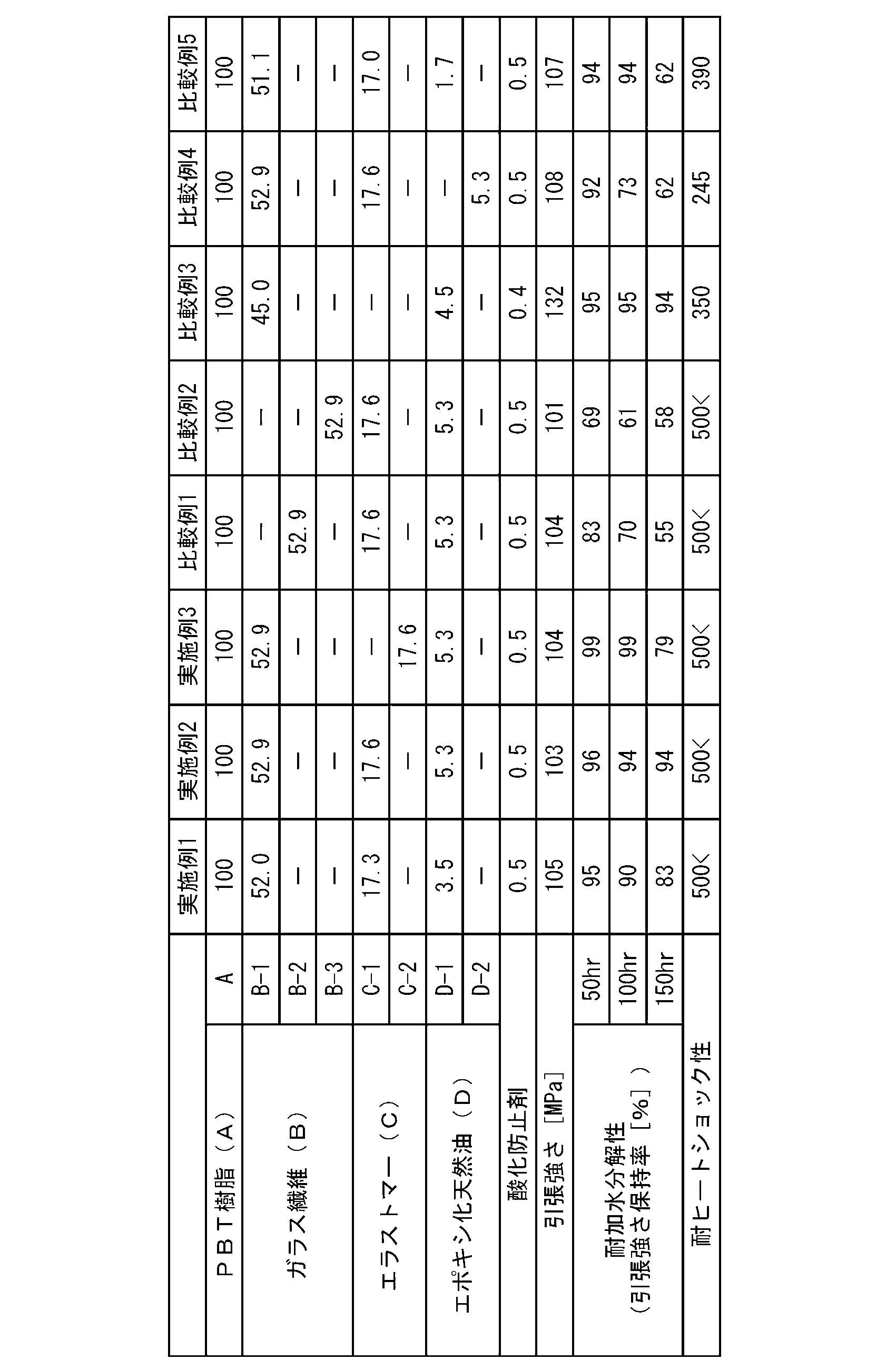
表2より、実施例1~3においては、耐加水分解性及び耐ヒートショック性のいずれも良好な評価結果が得られたことが分かる。
一方、フェノールノボラック樹脂の集束剤で表面処理したガラス繊維(B-2)と、無水マレイン酸とメタクリル酸メチルとアクリル酸メチルの共重合物の共重合物のみを含む集束剤で表面処理したガラス繊維(B-3)を用いたことのみが実施例2と異なる比較例1、2は耐加水分解性に劣っていた。
また、エポキシ化天然油の添加量が実施例1、2に比べて少ない比較例5は耐加水分解性及び耐ヒートショック性に劣っていた。また、エポキシ化天然油の代わりにエポキシ樹脂を用いたことのみが実施例2と異なる比較例4も耐加水分解性及び耐ヒートショック性に劣っていた。さらに、エラストマー(C-1)を含まないことが実施例2と異なる比較例3は、耐ヒートショック性に劣っていた。
一方、フェノールノボラック樹脂の集束剤で表面処理したガラス繊維(B-2)と、無水マレイン酸とメタクリル酸メチルとアクリル酸メチルの共重合物の共重合物のみを含む集束剤で表面処理したガラス繊維(B-3)を用いたことのみが実施例2と異なる比較例1、2は耐加水分解性に劣っていた。
また、エポキシ化天然油の添加量が実施例1、2に比べて少ない比較例5は耐加水分解性及び耐ヒートショック性に劣っていた。また、エポキシ化天然油の代わりにエポキシ樹脂を用いたことのみが実施例2と異なる比較例4も耐加水分解性及び耐ヒートショック性に劣っていた。さらに、エラストマー(C-1)を含まないことが実施例2と異なる比較例3は、耐ヒートショック性に劣っていた。
Claims (5)
- ポリブチレンテレフタレート樹脂(A)と、
カルボン酸及び/又はカルボン酸無水物を由来とする構成単位を含む重合物とエポキシ樹脂とを含有する集束剤で表面処理されたガラス繊維(B)と、
エラストマー(C)と、
エポキシ化天然油(D)と、を含み、
前記エポキシ化天然油の含有量が前記ポリブチレンテレフタレート樹脂(A)100質量部に対し、2.0~8.0質量部である、ポリブチレンテレフタレート樹脂組成物。 - 前記ガラス繊維(B)の平均繊維径が3~50μmであり、前記ガラス繊維(B)100質量部に対する前記集束剤の含有量が0.1~3.0質量部である、請求項1に記載のポリブチレンテレフタレート樹脂組成物。
- 前記エポキシ化天然油(D)が、エポキシ化亜麻仁油又はエポキシ化大豆油である、請求項1又は2に記載のポリブチレンテレフタレート樹脂組成物。
- 前記エラストマー(C)がオレフィン系エラストマー又はコアシェル系エラストマーである、請求項1~3のいずれか1項に記載のポリブチレンテレフタレート樹脂組成物。
- 請求項1~4のいずれか1項に記載のポリブチレンテレフタレート樹脂組成物とインサート部材とを有する、インサート成形品。
Applications Claiming Priority (2)
| Application Number | Priority Date | Filing Date | Title |
|---|---|---|---|
| JP2023219541A JP2025102217A (ja) | 2023-12-26 | 2023-12-26 | ポリブチレンテレフタレート樹脂組成物及びインサート成形品 |
| JP2023-219541 | 2023-12-26 |
Publications (1)
| Publication Number | Publication Date |
|---|---|
| WO2025142173A1 true WO2025142173A1 (ja) | 2025-07-03 |
Family
ID=96218815
Family Applications (1)
| Application Number | Title | Priority Date | Filing Date |
|---|---|---|---|
| PCT/JP2024/040325 Pending WO2025142173A1 (ja) | 2023-12-26 | 2024-11-13 | ポリブチレンテレフタレート樹脂組成物及びインサート成形品 |
Country Status (2)
| Country | Link |
|---|---|
| JP (1) | JP2025102217A (ja) |
| WO (1) | WO2025142173A1 (ja) |
Citations (6)
| Publication number | Priority date | Publication date | Assignee | Title |
|---|---|---|---|---|
| JP2003201671A (ja) * | 2002-01-04 | 2003-07-18 | Nippon Electric Glass Co Ltd | ガラスチョップドストランド及びそれを補強材として用いたガラス繊維強化熱可塑性樹脂 |
| JP2005290176A (ja) * | 2004-03-31 | 2005-10-20 | Mitsubishi Engineering Plastics Corp | ポリブチレンテレフタレート樹脂組成物 |
| WO2011058992A1 (ja) * | 2009-11-10 | 2011-05-19 | ウィンテックポリマー株式会社 | ポリブチレンテレフタレート樹脂組成物 |
| JP2018012209A (ja) * | 2016-07-19 | 2018-01-25 | 東洋紡株式会社 | インサート成形品 |
| JP2019526679A (ja) * | 2016-09-06 | 2019-09-19 | ランクセス・ドイチュランド・ゲーエムベーハー | ポリアルキレンテレフタレート組成物 |
| JP2021014478A (ja) * | 2019-07-10 | 2021-02-12 | 東レ株式会社 | 熱可塑性ポリエステル樹脂組成物および成形品 |
-
2023
- 2023-12-26 JP JP2023219541A patent/JP2025102217A/ja active Pending
-
2024
- 2024-11-13 WO PCT/JP2024/040325 patent/WO2025142173A1/ja active Pending
Patent Citations (6)
| Publication number | Priority date | Publication date | Assignee | Title |
|---|---|---|---|---|
| JP2003201671A (ja) * | 2002-01-04 | 2003-07-18 | Nippon Electric Glass Co Ltd | ガラスチョップドストランド及びそれを補強材として用いたガラス繊維強化熱可塑性樹脂 |
| JP2005290176A (ja) * | 2004-03-31 | 2005-10-20 | Mitsubishi Engineering Plastics Corp | ポリブチレンテレフタレート樹脂組成物 |
| WO2011058992A1 (ja) * | 2009-11-10 | 2011-05-19 | ウィンテックポリマー株式会社 | ポリブチレンテレフタレート樹脂組成物 |
| JP2018012209A (ja) * | 2016-07-19 | 2018-01-25 | 東洋紡株式会社 | インサート成形品 |
| JP2019526679A (ja) * | 2016-09-06 | 2019-09-19 | ランクセス・ドイチュランド・ゲーエムベーハー | ポリアルキレンテレフタレート組成物 |
| JP2021014478A (ja) * | 2019-07-10 | 2021-02-12 | 東レ株式会社 | 熱可塑性ポリエステル樹脂組成物および成形品 |
Also Published As
| Publication number | Publication date |
|---|---|
| JP2025102217A (ja) | 2025-07-08 |
Similar Documents
| Publication | Publication Date | Title |
|---|---|---|
| CN109689782B (zh) | 聚对苯二甲酸丁二醇酯树脂组合物以及成型品 | |
| JP6100983B1 (ja) | ポリブチレンテレフタレート樹脂組成物 | |
| JPWO2009150831A1 (ja) | ポリブチレンテレフタレート樹脂組成物及び成形品 | |
| JP2006104363A (ja) | ポリブチレンテレフタレート樹脂組成物 | |
| CN112513181B (zh) | 热塑性聚酯树脂组合物及其成型品 | |
| JP4657670B2 (ja) | ポリブチレンテレフタレート樹脂組成物 | |
| EP4045262A1 (en) | Polybutylene terephthalate composition and a composite of plastic/metal hybrid | |
| CN114174426A (zh) | 阻燃性聚对苯二甲酸丁二醇酯树脂组合物 | |
| WO2016104083A1 (ja) | インサート成形用樹脂組成物及びインサート成形品 | |
| WO2025142173A1 (ja) | ポリブチレンテレフタレート樹脂組成物及びインサート成形品 | |
| JP7836889B2 (ja) | ポリアルキレンテレフタレート樹脂組成物及び樹脂成形品 | |
| JP5005204B2 (ja) | 電子部品を収容するケース、カバー又はハウジング成形品 | |
| JP7733505B2 (ja) | ポリブチレンテレフタレート樹脂組成物および成形品 | |
| JPWO2014104011A1 (ja) | ポリブチレンテレフタレート樹脂組成物 | |
| JP2024143428A (ja) | ポリブチレンテレフタレート樹脂組成物及びその製造方法、並びに樹脂成形品 | |
| JP2018012209A (ja) | インサート成形品 | |
| KR20190067967A (ko) | 금속-수지 접합 성형품용 폴리에스테르계 수지 조성물, 이의 제조방법 및 이를 포함하는 금속-수지 접합 성형품 | |
| JP2024143339A (ja) | ポリブチレンテレフタレート樹脂組成物及びその製造方法、並びに樹脂成形品 | |
| WO2016052425A1 (ja) | ポリブチレンテレフタレート樹脂組成物の成形に用いる離型性向上剤、及び離型性向上方法 | |
| JP7794629B2 (ja) | ポリブチレンテレフタレート樹脂組成物及び成形品 | |
| JP6144929B2 (ja) | ポリブチレンテレフタレート樹脂組成物の製造方法 | |
| JP2024041735A (ja) | 熱可塑性樹脂組成物の応力緩和温度領域を特定するための方法 | |
| JP2024143418A (ja) | ポリブチレンテレフタレート樹脂組成物及びその製造方法並びに樹脂成形品 | |
| JP2025093428A (ja) | 樹脂組成物及びその成形品 | |
| JP2009191206A (ja) | ポリアルキレンテレフタレート樹脂組成物 |
Legal Events
| Date | Code | Title | Description |
|---|---|---|---|
| 121 | Ep: the epo has been informed by wipo that ep was designated in this application |
Ref document number: 24912066 Country of ref document: EP Kind code of ref document: A1 |