WO2025134822A1 - エンジン自動停止システム - Google Patents
エンジン自動停止システム Download PDFInfo
- Publication number
- WO2025134822A1 WO2025134822A1 PCT/JP2024/043284 JP2024043284W WO2025134822A1 WO 2025134822 A1 WO2025134822 A1 WO 2025134822A1 JP 2024043284 W JP2024043284 W JP 2024043284W WO 2025134822 A1 WO2025134822 A1 WO 2025134822A1
- Authority
- WO
- WIPO (PCT)
- Prior art keywords
- engine
- control device
- vehicle
- automatic
- user
- Prior art date
- Legal status (The legal status is an assumption and is not a legal conclusion. Google has not performed a legal analysis and makes no representation as to the accuracy of the status listed.)
- Pending
Links
Images


Classifications
-
- F—MECHANICAL ENGINEERING; LIGHTING; HEATING; WEAPONS; BLASTING
- F02—COMBUSTION ENGINES; HOT-GAS OR COMBUSTION-PRODUCT ENGINE PLANTS
- F02D—CONTROLLING COMBUSTION ENGINES
- F02D17/00—Controlling engines by cutting out individual cylinders; Rendering engines inoperative or idling
-
- F—MECHANICAL ENGINEERING; LIGHTING; HEATING; WEAPONS; BLASTING
- F02—COMBUSTION ENGINES; HOT-GAS OR COMBUSTION-PRODUCT ENGINE PLANTS
- F02D—CONTROLLING COMBUSTION ENGINES
- F02D29/00—Controlling engines, such controlling being peculiar to the devices driven thereby, the devices being other than parts or accessories essential to engine operation, e.g. controlling of engines by signals external thereto
- F02D29/02—Controlling engines, such controlling being peculiar to the devices driven thereby, the devices being other than parts or accessories essential to engine operation, e.g. controlling of engines by signals external thereto peculiar to engines driving vehicles; peculiar to engines driving variable pitch propellers
Definitions
- This disclosure relates to an automatic engine stop system that automatically stops an engine.
- Patent Document 1 A system that automatically stops the engine installed in a vehicle is known (see, for example, Patent Document 1).
- Patent Document 1 automatically stops the engine when the car is parked indoors, such as in a garage, and the engine is running. By automatically stopping the engine in this way, carbon monoxide is prevented from filling the indoors.
- the objective of this disclosure is to provide an automatic engine stop system that can cancel automatic engine stop.
- the engine automatic stop system includes an engine mounted on a vehicle and a control device that automatically stops the engine.
- the control device has an automatic stop control that automatically stops the engine while the vehicle is parked for a predetermined period of time and the engine is running, obtains an index according to the usage state of the vehicle while parked and for determining whether the engine is being operated intentionally by the user, and changes the operating conditions of the automatic stop control according to the index.
- This automatic engine stop system can use an indicator to switch between executing and canceling automatic stop control.
- FIG. 1 is a system diagram of an automatic engine stop system according to one embodiment of the present disclosure.
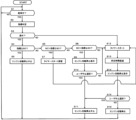
- 4 is a flowchart showing a control procedure executed by a control device according to an embodiment of the present disclosure.
- the automatic engine stop system 1 includes an engine 2, a control device 4, a power supply device 6, a display device 8, a radar 10, and a battery 12.
- the automatic engine stop system 1 is mounted on a vehicle C.
- the vehicle C is, for example, a hybrid vehicle that drives a motor (not shown) using power generated by a generator (not shown) driven by the engine 2 and power from the battery 12.
- the vehicle C is a plug-in hybrid vehicle that can charge the battery 12 with external power via a charger 14.
- the vehicle C of this embodiment is a plug-in hybrid electric vehicle (PHEV) capable of receiving external power.
- the vehicle C can supply power from the battery 12 via the power supply device 6 to external devices such as home appliances and household equipment.
- the vehicle C operates the engine 2, which drives the generator.
- the vehicle C supplies the electric power generated by the generator to the external devices via the power supply device 6.
- Engine 2 is an internal combustion engine that burns fuel. Engine 2 emits exhaust gas from an exhaust pipe. The exhaust gas also contains carbon dioxide and carbon monoxide.
- the control device 4 executes automatic stop control to automatically stop the engine 2.
- the automatic stop control is a control that automatically stops the engine 2 while the vehicle C is parked for a predetermined time and the engine 2 is operating. For example, when the vehicle C is parked indoors, there is a risk that the carbon dioxide and carbon monoxide emitted from the engine 2 will fill the air. For this reason, the control device 4 prevents the air from filling with carbon dioxide and carbon monoxide by automatically stopping the engine 2 when the vehicle C has been parked for a predetermined time.
- the control device 4 changes the operating conditions of the automatic stop control using an index according to the usage state of various devices of the vehicle C. Details will be described later.
- the control device 4 is actually an ECU (Electronic Control Unit) and is composed of a microcomputer including an arithmetic unit, memory, input/output buffers, etc.
- the control device 4 controls the automatic engine stop system 1 so that the engine 2 is in a desired operating state based on signals from the various sensors and devices mounted on the engine 2, as well as maps and programs stored in the memory.
- the various controls are not limited to processing by software, and can also be processed by dedicated hardware (electronic circuits).
- the control device 4 is electrically connected to the engine 2, power supply device 6, display device 8, radar 10, battery 12, and charger 14, and is capable of controlling these devices.
- the power supply device 6 is a device capable of supplying power to external devices.
- the display device 8 displays the execution status of the automatic stop control to the user.
- the display device 8 is, for example, a touch panel type liquid crystal display or an organic EL display.
- the display device 8 may display the speed of the vehicle C, etc., in addition to the execution status of the automatic stop control.
- the radar 10 is a sensor for determining the parking environment of the vehicle C.
- the radar 10 generates, for example, infrared rays or ultrasonic waves.
- the control device 4 can determine whether the vehicle C is parked indoors or not based on the reflection state of the infrared rays or ultrasonic waves generated by the radar 10.
- the battery 12 can drive the motor of the vehicle C and can also supply power to external devices via the power supply device 6.
- control device 4 starts the control procedure when an ignition switch (not shown) is turned on.
- the timing at which the control procedure starts may be changed as appropriate.
- step S1 the control device 4 determines whether or not the vehicle C is parked. For example, the control device 4 may determine that the vehicle C is parked when the shifter (not shown) of the vehicle C is in the parking position and the engine 2 is running. If the control device 4 determines that the vehicle C is parked (step S1 YES), the process proceeds to step S2. If the control device 4 determines that the vehicle C is not parked (step S1 NO), the process of step S1 is repeated.
- step S2 the control device 4 executes an index determination.
- the control device 4 stores a list that defines indexes according to the usage state of various devices of the vehicle C. For example, when power supply is being performed by the power supply device 6, the index is 90. In other words, when home appliances are used outside the home, such as when camping, power supply is often performed. During such power supply, it is highly likely that the engine 2 is operating due to the user's intentional operation of the device.
- the index is 80. Even when remote air conditioning is being performed, there is a high possibility that engine 2 is running due to the user intentionally operating the device.
- the index is 75. If the USB port is used, the user may be charging their smartphone while waiting in the car, or using the Internet using a smartphone or the like to use entertainment functions available on the display device 8, such as the center display. On the other hand, there may be cases where the user simply leaves their smartphone charging and forgets it when they get off the car. Therefore, the index is lower than when power is supplied by the power supply device. If the driver's seat is reclined excessively, that is, if the user has reclined the seat, or if the user is asleep, the user may be taking a nap or resting with the seat reclined. However, it is also possible that the user is unintentionally staying in the car. In this way, the index is lower for the operation (function) of a device that is intentionally operated by the user but is likely to be operated incorrectly by the user.
- Air conditioning use is an indicator of 70.
- the user may be intentionally waiting in vehicle C, but the user may also be unintentionally staying in the vehicle.
- Wireless charging is an indicator of 65
- room lamp use is an indicator of 60.
- the use of these devices may be unintentional, for example, when the user has simply left their smartphone behind or forgotten to turn off the room lamp, in addition to when the user intentionally operates the devices. For this reason, the indicator is lower than for other operations.
- the control device 4 determines the indicator, it proceeds to step S3.
- step S3 the control device 4 determines whether the vehicle C is parked outdoors. For example, the control device 4 may determine that the vehicle C is outdoors if the radar 10 does not detect any obstacles such as a wall X (see FIG. 1) around the vehicle C. The control device 4 may also determine that the vehicle is outdoors if the location determined by GPS is outdoors. If the control device 4 determines that the vehicle is outdoors (step S3 YES), the process proceeds to step S4.
- step S4 the control device 4 determines whether the index is equal to or greater than a first predetermined value.
- the first predetermined value is 90. If the control device 4 determines that the index is equal to or greater than the first predetermined value (YES in step S4), the control device 4 proceeds to step S5. If multiple devices are operating among the operating states of the various devices described above, the control device 4 may select the highest index among the multiple devices.
- step S5 the control device 4 stops the automatic stop control of the engine 2. If the index is 90 or more, there is a very high possibility that the user is intentionally operating the device, and therefore the operation of the engine 2 should not be stopped. For this reason, the control device 4 stops the automatic stop control. After stopping the automatic stop control of the engine 2, the control device 4 proceeds to step S1, and continues to stop the automatic stop control as long as the index is equal to or greater than the first predetermined value outdoors.
- step S6 the control device 4 determines whether the index is less than the first predetermined value and greater than or equal to the second predetermined value. In this embodiment, the second predetermined value is 80. If the control device 4 determines that the index is less than the first predetermined value and greater than or equal to the second predetermined value (step S6 YES), the control device 4 proceeds to step S7.
- step S7 the control device 4 suspends the start of counting the predetermined time (hereinafter referred to as timer start in the specification and drawings) which is the time for automatically stopping the engine 2 in the automatic stop control.
- the control device 4 may suspend the timer start for, for example, about half the predetermined time.
- the control device 4 suspends the timer start for about 15 minutes after the index determination, and then proceeds to step S12 and starts the timer.
- the operating state of the device with an index of 80 or more and less than 90 corresponds to remote air conditioning. In the case of such remote air conditioning, the user gets into the vehicle C after the time has elapsed. Therefore, by suspending the timer start, the automatic stop of the engine 2 is delayed.
- step S6 determines in step S6 that the index is less than the first predetermined value and not greater than the second predetermined value (step S6 NO)
- step S8 the control device 4 determines whether the index is less than the second predetermined value and greater than or equal to a third predetermined value.
- the third predetermined value is 60. If the control device 4 determines that the index is less than the second predetermined value and greater than or equal to the third predetermined value (step S6 YES), the control device 4 proceeds to step S9.
- step S9 the control device 4 generates a screen that allows the user to select whether or not to cancel the automatic stop control of the engine 2, and displays it on the display device 8.
- the screen that allows the user to select whether to cancel the automatic stop control may be, for example, a screen that displays an icon that allows the user to select cancel. After displaying the screen on the display device 8, the control device 4 proceeds to step S10.
- step S10 the control device 4 determines whether or not the user has selected to cancel. For example, if the user has touched an icon, the control device 4 may determine that the user has selected to cancel. If the user has selected to cancel (step S10, YES), the control device 4 advances the process to step S11. On the other hand, if the user has not selected to cancel (step S10, NO), the control device 4 advances the process to step S12 and starts a timer.
- step S11 the control device 4 stops the automatic stop control of the engine 2.
- the control device 4 proceeds to step S1, and continues to stop the automatic stop control as long as the index is less than the second predetermined value and equal to or greater than the third predetermined value outdoors.
- the operation states of the equipment for which the index is less than 80 and equal to or greater than 60 are excessive reclining use, drowsiness detection, USB use, air conditioning use, wireless charging use, and room lamp use. There is a possibility that these functions are being used against the user's intention and the equipment is operating. For this reason, the automatic stop control is stopped by displaying a stop screen for the automatic stop control on the display device 8 and allowing the user to select an option. This makes it clear whether the user intends to continue operating the equipment, and the operation of the engine 2 can be continued based on the user's intention.
- step S12 the control device 4 starts a timer and proceeds to step S13.
- step S13 when a predetermined time (30 minutes in this embodiment) has elapsed, the control device 4 proceeds to step S14.
- step S14 the control device 4 generates a screen that allows the user to select whether or not to cancel the automatic stop control of the engine 2, and displays it on the display device 8.
- the screen that allows the user to select whether to cancel the automatic stop control may be a screen that displays an icon that allows the user to select cancel, as in step S10. After displaying the screen on the display device 8, the control device 4 proceeds to step S15.
- step S15 the control device 4 determines whether the user has selected the stop. For example, when the user touches an icon, the control device 4 may determine that the user has selected the stop. If the user has selected the stop (step S15, YES), the control device 4 advances the process to step S11. On the other hand, if the user has not selected the stop (step S15, NO), the control device 4 advances the process to step S16 and stops the engine 2. Note that in this embodiment, even if the user has selected the automatic stop control in step S15, the automatic stop control of the engine 2 is temporarily stopped (step S11).
- step S8 if the index is less than 60 (step S8, NO), the control device 4 displays a screen (step S14) that allows the user to select whether or not to stop the automatic stop control of the engine 2 every time a predetermined time has elapsed (step S13).
- step S14 the control device 4 displays a screen that allows the user to select whether or not to stop the automatic stop control of the engine 2 every time a predetermined time has elapsed.
- step S3 NO If the control device 4 determines in step S3 that the vehicle C is parked indoors (step S3 NO), the process proceeds to step S12. Therefore, in the engine automatic stop system 1 disclosed herein, when the vehicle C is parked indoors, the engine 2 is stopped unless the user touches the display device 8 to cancel the automatic stop control. This makes it easier to suppress the generation of carbon dioxide and carbon monoxide and ensure the safety of the user of the vehicle C.
- the present disclosure provides an automatic engine stop system 1 that can use an index to change the operating conditions of the automatic stop control, switching between executing and canceling the automatic stop control.
- the indicators in the above embodiment are merely examples, and the present disclosure is not limited thereto.
- the indicators may be changed as appropriate to suit the operating state of each device.
Landscapes
- Engineering & Computer Science (AREA)
- Chemical & Material Sciences (AREA)
- Combustion & Propulsion (AREA)
- Mechanical Engineering (AREA)
- General Engineering & Computer Science (AREA)
- Control Of Vehicle Engines Or Engines For Specific Uses (AREA)
Priority Applications (1)
| Application Number | Priority Date | Filing Date | Title |
|---|---|---|---|
| JP2025565248A JPWO2025134822A1 (https=) | 2023-12-19 | 2024-12-06 |
Applications Claiming Priority (2)
| Application Number | Priority Date | Filing Date | Title |
|---|---|---|---|
| JP2023-213615 | 2023-12-19 | ||
| JP2023213615 | 2023-12-19 |
Publications (1)
| Publication Number | Publication Date |
|---|---|
| WO2025134822A1 true WO2025134822A1 (ja) | 2025-06-26 |
Family
ID=96136872
Family Applications (1)
| Application Number | Title | Priority Date | Filing Date |
|---|---|---|---|
| PCT/JP2024/043284 Pending WO2025134822A1 (ja) | 2023-12-19 | 2024-12-06 | エンジン自動停止システム |
Country Status (2)
| Country | Link |
|---|---|
| JP (1) | JPWO2025134822A1 (https=) |
| WO (1) | WO2025134822A1 (https=) |
Citations (2)
| Publication number | Priority date | Publication date | Assignee | Title |
|---|---|---|---|---|
| JP2012229675A (ja) * | 2011-04-27 | 2012-11-22 | Mitsubishi Electric Corp | 内燃機関のプリイグニッション推定制御装置 |
| JP2022023507A (ja) * | 2020-07-27 | 2022-02-08 | 三菱自動車工業株式会社 | 車両の制御装置 |
-
2024
- 2024-12-06 WO PCT/JP2024/043284 patent/WO2025134822A1/ja active Pending
- 2024-12-06 JP JP2025565248A patent/JPWO2025134822A1/ja active Pending
Patent Citations (2)
| Publication number | Priority date | Publication date | Assignee | Title |
|---|---|---|---|---|
| JP2012229675A (ja) * | 2011-04-27 | 2012-11-22 | Mitsubishi Electric Corp | 内燃機関のプリイグニッション推定制御装置 |
| JP2022023507A (ja) * | 2020-07-27 | 2022-02-08 | 三菱自動車工業株式会社 | 車両の制御装置 |
Also Published As
| Publication number | Publication date |
|---|---|
| JPWO2025134822A1 (https=) | 2025-06-26 |
Similar Documents
| Publication | Publication Date | Title |
|---|---|---|
| JP5983189B2 (ja) | 車両用エンジン自動停止装置 | |
| US8417435B2 (en) | Eco-run system, computer readable medium and eco-run state informing apparatus | |
| JP6079889B2 (ja) | ハイブリッド車両の制御装置及び制御方法 | |
| CN111824014B (zh) | 一种车载12v蓄电池低电量提示方法及其系统、车辆 | |
| CN105128860B (zh) | 一种车辆驾驶模式的智能控制方法及系统 | |
| CN104422075B (zh) | 车辆的空气调节控制装置 | |
| CN103429480B (zh) | 用于禁用停/启技术的司机可选择的低速模式 | |
| JP2001055942A (ja) | エンジン制御装置及びエンジン制御方法 | |
| JP2010209803A (ja) | 車両用の電源制御装置 | |
| US20150283878A1 (en) | System and method for controlling heating modes for hybrid electric vehicle (hev) | |
| BR112013003852B1 (pt) | aparelho montado no veículo, meio legível por computador, metódo de restrição ao uso de programa de aplicação e terminal de informação portátil | |
| CN105383483A (zh) | 辅助电池管理系统和方法 | |
| CN111479739B (zh) | 混合动力车辆的控制方法和混合动力车辆的控制装置 | |
| JP2008100646A (ja) | ハイブリッド車両の制御装置 | |
| US9458924B2 (en) | Electric selector control system and related method | |
| WO2025134822A1 (ja) | エンジン自動停止システム | |
| JP4983614B2 (ja) | 電気加熱式触媒の制御装置及び方法 | |
| JP2014205380A (ja) | ハイブリッド車両 | |
| JP2025097422A (ja) | エンジン自動停止システム | |
| KR101009477B1 (ko) | 차량용 배터리 세이버 시스템 | |
| KR102163681B1 (ko) | 차량 및 그 제어 방법 | |
| JP2011131883A (ja) | エコランシステム、エコラン制御装置 | |
| JP2014501346A (ja) | 掘削機のエンジンアイドリング制御装置及びその方法 | |
| JP4888294B2 (ja) | 車両用制御装置 | |
| JP7538471B2 (ja) | 車両の制御装置 |
Legal Events
| Date | Code | Title | Description |
|---|---|---|---|
| 121 | Ep: the epo has been informed by wipo that ep was designated in this application |
Ref document number: 24907208 Country of ref document: EP Kind code of ref document: A1 |
|
| ENP | Entry into the national phase |
Ref document number: 2025565248 Country of ref document: JP Kind code of ref document: A |