WO2025126424A1 - 仮想空間制御装置及び仮想空間制御方法 - Google Patents
仮想空間制御装置及び仮想空間制御方法 Download PDFInfo
- Publication number
- WO2025126424A1 WO2025126424A1 PCT/JP2023/044861 JP2023044861W WO2025126424A1 WO 2025126424 A1 WO2025126424 A1 WO 2025126424A1 JP 2023044861 W JP2023044861 W JP 2023044861W WO 2025126424 A1 WO2025126424 A1 WO 2025126424A1
- Authority
- WO
- WIPO (PCT)
- Prior art keywords
- virtual space
- information
- decision
- user
- facility
- Prior art date
- Legal status (The legal status is an assumption and is not a legal conclusion. Google has not performed a legal analysis and makes no representation as to the accuracy of the status listed.)
- Pending
Links
Images


Classifications
-
- G—PHYSICS
- G06—COMPUTING OR CALCULATING; COUNTING
- G06T—IMAGE DATA PROCESSING OR GENERATION, IN GENERAL
- G06T19/00—Manipulating three-dimensional [3D] models or images for computer graphics
Definitions
- the present invention relates to a virtual space control device and a virtual space control method.
- One embodiment of the present invention has been made in consideration of the above, and aims to provide a virtual space control device and a virtual space control method that can improve the usability of facilities provided in a virtual space.
- a virtual space control device includes an acquisition unit that acquires decision information, which is information relating to a user who uses the virtual space, and a decision unit that makes decisions regarding the placement of facilities to be provided within the virtual space based on the decision information acquired by the acquisition unit.
- the virtual space control device allows the layout of facilities provided in a virtual space to be tailored to the user. As a result, the usability of the facilities provided in the virtual space can be improved.
- one embodiment of the present invention can be described not only as a virtual space control device invention as described above, but also as a virtual space control method invention as described below. These are essentially the same invention, just in different categories, and have similar functions and effects.
- the virtual space control method includes an acquisition step in which the virtual space control device acquires decision information, which is information about a user who uses the virtual space, and a decision step in which the virtual space control device makes a decision regarding the placement of facilities to be provided in the virtual space based on the decision information acquired in the acquisition step.
- FIG. 1 is a diagram showing a configuration of a virtual space control device according to an embodiment of the present invention.
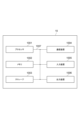
- FIG. 11 is a diagram showing an example of information used by the virtual space control device.
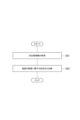
- 4 is a flowchart showing a virtual space control method which is a process executed by the virtual space control device according to the embodiment of the present invention.
- 1 is a diagram illustrating a hardware configuration of a virtual space control device according to an embodiment of the present invention.
- FIG. 1 shows a virtual space control device 10 according to this embodiment.
- the virtual space control device 10 is a device (system) that makes decisions regarding the placement of facilities to be provided within a virtual space.
- the virtual space control device 10 also reflects (controls) the decisions made in the facilities provided within the virtual space.
- the virtual space in which the facilities are provided is realized by a computer prepared by the provider of the virtual space.
- a virtual space is as follows: The virtual space is used by a user. The user accesses the virtual space (a computer that realizes the virtual space) using an information processing device (for example, a smart device such as a smartphone or smart glasses, or a PC (personal computer)). The information processing device outputs in a format that the user can recognize, such as a display corresponding to the virtual space.
- an information processing device for example, a smart device such as a smartphone or smart glasses, or a PC (personal computer)
- the information processing device outputs in a format that the user can recognize, such as a display corresponding to the virtual space.
- a virtual space is something that users can act within.
- a virtual space is a reproduction of an actual city.
- a user can move their own avatar around within the virtual space.
- the facilities provided in the virtual space may be the same as those provided in the real space.
- the facilities are, for example, venues such as concert halls and presentation halls, sports stadiums such as baseball stadiums, museums, banks, stores (shops), and facilities of various institutions (for example, transportation facilities and government offices).
- the facilities may be used for events held in the above-mentioned virtual space, and for buying and selling goods or services.
- the shape of the facility does not have to correspond to the shape of a facility in the real space.
- the facilities provided in the virtual space may be unique to the virtual space and not found in the real space.
- the facility may be an "access point" in the shape of a door that allows you to enter another facility (or warp to another facility) by passing through the door.
- the facility may be a facility that allows you to move to another facility.
- the above virtual space may be, for example, a conventional metaverse.
- the virtual space may be something other than the above, so long as it is available to users and has facilities provided therein.
- the virtual space may be for realizing MR (mixed reality).
- the facilities provided in the virtual space may be those provided in a conventional metaverse.
- the facilities provided in the virtual space may be something other than the above, so long as they can be subject to placement decisions by the virtual space control device 10.
- the virtual space control device 10 is configured by a computer such as a PC or a server device.
- the virtual space control device 10 may be configured by multiple computers.
- the virtual space control device 10 may be capable of transmitting and receiving information to and from other devices via a network in order to obtain information necessary to realize functions.
- the virtual space control device 10 may also be a computer that realizes a virtual space.
- the virtual space control device 10 includes an acquisition unit 11 and a determination unit 12.
- the acquisition unit 11 is a functional unit that acquires decision information, which is information about a user who uses the virtual space.
- the acquisition unit 11 may acquire information about the user's preferences as the decision information.
- the acquisition unit 11 may acquire information about the user's attributes as the decision information.
- the acquisition unit 11 may acquire information about the user's behavior as the decision information.
- the acquisition unit 11 may acquire information about the payment method used when the user makes a payment as the decision information.
- the decision information acquired by the acquisition unit 11 is information used to make decisions regarding the placement of facilities provided within the virtual space.
- the decision information is information about the user who uses the virtual space. Therefore, decisions regarding the placement of facilities provided within the virtual space are made according to the user who uses the virtual space.
- the acquisition unit 11 acquires, for example, information about users who have actually used the virtual space (users who have visited the virtual space) as decision information.
- the acquisition unit 11 may also acquire information about users who have actually used the virtual space during a preset period (season, day of the week, time period).
- the acquisition unit 11 may also acquire information about users other than those mentioned above, so long as the information is about users who use the virtual space.
- the acquisition unit 11 may acquire decision information for one user, or may acquire decision information for multiple users.
- the acquisition unit 11 may also acquire information that aggregates information about multiple users as decision information.
- the decision information is, for example, information about the user's preferences.
- the information about the user's preferences indicates, for example, the genres (e.g., food, drinks, music, movies, travel destinations, or brands) that the user likes.
- the information about the user's preferences may also be information that indicates the user's inclination toward things.
- the user's inclination toward things may be, for example, whether they are luxury-oriented or reasonably priced, whether they prefer expensive or cheap things, whether they prefer large or small sizes, whether they prefer new things, whether they prefer popular things, or whether they prefer things recommended by businesses.
- the information about the user's preferences may be other than the above.
- the decision information may be information about the user's attributes.
- the information about the user's attributes is, for example, information indicating the user's age, generation, sex, or occupation.
- the information about the user's attributes may also indicate the type of user when using the virtual space (for example, whether the user is a business user or a general user).
- the information about the user's attributes may be other than the above.
- the decision information may be information about the user's behavior.
- the user's behavior may be the user's behavior in real space or the user's behavior in virtual space.
- the information about the user's behavior is, for example, the user's past purchase history of goods or services in real space or virtual space.
- the purchase history may be the purchase history of concert tickets.
- the information on user behavior may indicate the user's inclinations (for example, whether the user prefers sale items, campaign items, or PR (public relations) items) inferred from the user's behavior (behavioral history) (this information may also be information about the user's preferences).
- the information on user behavior may be information indicating the locations the user visits in the virtual space. The information on user behavior may be other than the above.
- the decision information may be information about the payment method used when the user makes a payment.
- the information about the payment method used when the user makes a payment is, specifically, for example, information indicating the payment method (e.g., electronic money and credit card) registered by the user when making a payment.
- the above registration may be for payments related to virtual space, or may be for payments other than virtual space.
- the information about the payment method used when the user makes a payment may be information about points linked to the payment method registered by the user when making a payment (e.g., the number of remaining points, or the number of points that will expire).
- the points may be those of a conventional point program. For example, points can be applied to the purchase price or exchanged for goods in a payment after being awarded.
- the information about the payment method used when the user makes a payment may be other than the above.
- the acquisition unit 11 may acquire any one or more of the above information as decision information.
- the above information may also be information about the user during a pre-set period (season, day of the week, time period).
- the information about the user's behavior may be the user's behavior during that period.
- the acquisition unit 11 requests the decision information from a system that holds the decision information (for example, a computer (system) that realizes a virtual space or a system of a sales site on the Internet) and receives and acquires the decision information from the system.
- the acquisition unit 11 may also acquire the decision information by accepting registration of the decision information from a user.
- the acquisition unit 11 may also acquire the decision information by any other method.
- the acquisition unit 11 outputs the acquired decision information to the decision unit 12.
- the determination unit 12 is a functional unit that makes decisions regarding the placement of facilities to be provided in the virtual space based on the decision-making information acquired by the acquisition unit 11.
- the determination unit 12 may determine the size or appearance of the facility to be provided in the virtual space based on the decision-making information acquired by the acquisition unit 11.
- the determination unit 12 may determine the placement location of the facility to be provided in the virtual space based on the decision-making information acquired by the acquisition unit 11.
- the determination unit 12 may determine to place a facility that can be moved to another facility in the virtual space based on the decision-making information acquired by the acquisition unit 11.
- the determination unit 12 makes decisions regarding the placement of facilities to be provided in the virtual space, for example, as follows.
- the decision unit 12 decides on a facility based on the information shown in FIG. 2(a).
- a decision on the layout of facilities is made using decision information for one user, for example, if the information on the user's preferences indicates that the user prefers movies, the decision unit 12 decides on the corresponding movie theater as the facility related to the decision on layout.
- a decision on the layout of facilities is made using decision information for multiple users, for example, if the information on the preferences of a percentage of the multiple users that is equal to or greater than a preset threshold (for example, 30% of the total) indicates that the users prefer movies, the decision unit 12 decides on the corresponding movie theater as the facility related to the decision on layout.
- a preset threshold for example, 30% of the total
- the determination unit 12 may determine (change) the location of the determined facility. When making a decision regarding the location of a facility using the decision information of one user, for example, the determination unit 12 determines (determines) to place the facility in a pre-set location (position) within a pre-set distance (for example, a distance that can be traveled within three minutes at a normal travel speed) from the location where the avatar of that one user is located when that one user logs into the virtual space.
- a pre-set location position
- a pre-set distance for example, a distance that can be traveled within three minutes at a normal travel speed
- the decision unit 12 places (decides to place) the facility in a place (location) where the multiple users gather in large numbers.
- the location where the multiple users gather in large numbers can be determined from information indicating the locations visited by users in the virtual space, which is information regarding the user's behavior. For example, the locations visited by users are counted for each area divided into the virtual space, and the area with the largest number is determined as the location where the multiple users gather in large numbers.
- the users related to the locations visited by users may be only those related to the facility to be placed. For example, when placing a movie theater, information regarding user preferences may be used only for users who indicate that the users like movies. This decision makes it easier for users to visit the facility in the virtual space.
- the location of the facility may be other than the above.
- the layout of facilities provided within a virtual space can be tailored to suit the user.
- the usability of the facilities provided within the virtual space can be improved.
- the facilities can be made more accessible to the user.
- the acquisition unit 11 may acquire information regarding the user's preferences as decision information.
- the layout of facilities provided in the virtual space can be made according to the user's preferences.
- the usability of the facilities provided in the virtual space can be improved.
- the acquisition unit 11 may acquire information on the attributes of the user as decision information.
- the layout of facilities provided in the virtual space can be made according to the attributes of the user.
- the usability of the facilities provided in the virtual space can be improved.
- the acquisition unit 11 may acquire information regarding the user's behavior as decision information.
- the layout of facilities provided in the virtual space can be adapted to the user's behavior.
- the usability of the facilities provided in the virtual space can be improved.
- the acquisition unit 11 may acquire, as the decision information, information relating to the payment method used when the user makes a payment.
- the layout of facilities provided within the virtual space can be made according to the payment method used when the user makes a payment.
- the usability of the facilities provided within the virtual space can be improved.
- the decision information does not necessarily have to be any of the above, and can be any information relating to the user who uses the virtual space.
- the determination unit 12 may determine the location of the facility provided in the virtual space. With this configuration, for example, as described above, it is possible to make it easier for the user to visit the facility in the virtual space. As a result, it is possible to improve the usability of the facility provided in the virtual space.
- the determination unit 12 may determine to place a facility in the virtual space that allows users to move to another facility. With this configuration, for example, as described above, it is possible to make it easier for users to visit facilities in the virtual space. As a result, it is possible to improve the usability of the facilities provided in the virtual space.
- the determination by the determination unit 12 does not necessarily have to be any of the above, and it may be a determination regarding the placement of facilities provided in the virtual space.
- each functional block may be realized using one device that is physically or logically coupled, or may be realized using two or more devices that are physically or logically separated and connected directly or indirectly (for example, using wires, wirelessly, etc.) and these multiple devices.
- the functional blocks may be realized by combining the one device or the multiple devices with software.
- Functions include, but are not limited to, judgement, determination, judgment, calculation, computation, processing, derivation, investigation, search, confirmation, reception, transmission, output, access, resolution, selection, selection, establishment, comparison, assumption, expectation, regarding, broadcasting, notifying, communicating, forwarding, configuring, reconfiguring, allocating, mapping, and assignment.
- a functional block (component) that performs the transmission function is called a transmitting unit or transmitter.
- the virtual space control device 10 in one embodiment of the present disclosure may function as a computer that performs the information processing of the present disclosure.
- FIG. 4 is a diagram showing an example of the hardware configuration of the virtual space control device 10 according to one embodiment of the present disclosure.
- the above-mentioned virtual space control device 10 may be physically configured as a computer device including a processor 1001, memory 1002, storage 1003, communication device 1004, input device 1005, output device 1006, bus 1007, etc.
- the word “apparatus” can be interpreted as a circuit, device, unit, etc.
- the hardware configuration of the virtual space control device 10 may be configured to include one or more of the devices shown in the figure, or may be configured to exclude some of the devices.
- Each function of the virtual space control device 10 is realized by loading a specific software (program) onto hardware such as the processor 1001 and memory 1002, causing the processor 1001 to perform calculations, control communications via the communication device 1004, and control at least one of the reading and writing of data in the memory 1002 and storage 1003.
- a specific software program
- the processor 1001 for example, operates an operating system to control the entire computer.
- the processor 1001 may be configured as a central processing unit (CPU) including an interface with peripheral devices, a control device, an arithmetic unit, registers, etc.
- CPU central processing unit
- each function in the virtual space control device 10 described above may be realized by the processor 1001.
- the processor 1001 also reads out programs (program codes), software modules, data, etc. from at least one of the storage 1003 and the communication device 1004 into the memory 1002, and executes various processes according to these.
- the programs used are those that cause a computer to execute at least some of the operations described in the above-mentioned embodiments.
- each function in the virtual space control device 10 may be realized by a control program stored in the memory 1002 and running on the processor 1001.
- each function in the virtual space control device 10 may be realized by a control program stored in the memory 1002 and running on the processor 1001.
- the processor 1001 may be implemented by one or more chips.
- the programs may be transmitted from a network via a telecommunications line.
- Memory 1002 is a computer-readable recording medium, and may be composed of at least one of, for example, ROM (Read Only Memory), EPROM (Erasable Programmable ROM), EEPROM (Electrically Erasable Programmable ROM), RAM (Random Access Memory), etc.
- Memory 1002 may also be called a register, cache, main memory (primary storage device), etc.
- Memory 1002 can store executable programs (program codes), software modules, etc., for performing information processing related to one embodiment of the present disclosure.
- Storage 1003 is a computer-readable recording medium, and may be composed of at least one of, for example, an optical disk such as a CD-ROM (Compact Disc ROM), a hard disk drive, a flexible disk, a magneto-optical disk (e.g., a compact disk, a digital versatile disk, a Blu-ray (registered trademark) disk), a smart card, a flash memory (e.g., a card, a stick, a key drive), a floppy (registered trademark) disk, a magnetic strip, etc.
- Storage 1003 may also be called an auxiliary storage device.
- the storage medium provided by virtual space control device 10 may be, for example, a database, a server, or other appropriate medium that includes at least one of memory 1002 and storage 1003.
- the communication device 1004 is hardware (transmitting/receiving device) for communicating between computers via at least one of a wired network and a wireless network, and is also called, for example, a network device, a network controller, a network card, a communication module, etc.
- the input device 1005 is an input device (e.g., a keyboard, a mouse, a microphone, a switch, a button, a sensor, etc.) that accepts input from the outside.
- the output device 1006 is an output device (e.g., a display, a speaker, an LED lamp, etc.) that performs output to the outside. Note that the input device 1005 and the output device 1006 may be integrated into one structure (e.g., a touch panel).
- each device such as the processor 1001 and memory 1002 is connected by a bus 1007 for communicating information.
- the bus 1007 may be configured using a single bus, or may be configured using different buses between each device.
- the virtual space control device 10 may also be configured to include hardware such as a microprocessor, a digital signal processor (DSP), an application specific integrated circuit (ASIC), a programmable logic device (PLD), or a field programmable gate array (FPGA), and some or all of the functional blocks may be realized by the hardware.
- the processor 1001 may be implemented using at least one of these pieces of hardware.
- the input and output information may be stored in a specific location (e.g., memory) or may be managed using a management table.
- the input and output information may be overwritten, updated, or added to.
- the output information may be deleted.
- the input information may be sent to another device.
- the virtual space control device and the virtual space control method according to the present disclosure have the following configuration.
- An acquisition unit that acquires decision information which is information about a user who uses a virtual space; a determination unit that determines an arrangement of facilities to be provided in the virtual space based on the decision information acquired by the acquisition unit;
- a virtual space control device comprising: [2] The virtual space control device according to [1], wherein the acquisition unit acquires information regarding the user's preferences as the decision information.
- [3] The virtual space control device according to [1] or [2], wherein the acquisition unit acquires information about attributes of the user as the decision information.
- the virtual space control device according to any one of [1] to [3], wherein the acquisition unit acquires information regarding the user's behavior as the decision information.
Landscapes
- Engineering & Computer Science (AREA)
- Computer Graphics (AREA)
- Computer Hardware Design (AREA)
- General Engineering & Computer Science (AREA)
- Software Systems (AREA)
- Physics & Mathematics (AREA)
- General Physics & Mathematics (AREA)
- Theoretical Computer Science (AREA)
- User Interface Of Digital Computer (AREA)
Priority Applications (2)
| Application Number | Priority Date | Filing Date | Title |
|---|---|---|---|
| JP2025563176A JPWO2025126424A1 (https=) | 2023-12-14 | 2023-12-14 | |
| PCT/JP2023/044861 WO2025126424A1 (ja) | 2023-12-14 | 2023-12-14 | 仮想空間制御装置及び仮想空間制御方法 |
Applications Claiming Priority (1)
| Application Number | Priority Date | Filing Date | Title |
|---|---|---|---|
| PCT/JP2023/044861 WO2025126424A1 (ja) | 2023-12-14 | 2023-12-14 | 仮想空間制御装置及び仮想空間制御方法 |
Publications (1)
| Publication Number | Publication Date |
|---|---|
| WO2025126424A1 true WO2025126424A1 (ja) | 2025-06-19 |
Family
ID=96056892
Family Applications (1)
| Application Number | Title | Priority Date | Filing Date |
|---|---|---|---|
| PCT/JP2023/044861 Pending WO2025126424A1 (ja) | 2023-12-14 | 2023-12-14 | 仮想空間制御装置及び仮想空間制御方法 |
Country Status (2)
| Country | Link |
|---|---|
| JP (1) | JPWO2025126424A1 (https=) |
| WO (1) | WO2025126424A1 (https=) |
Citations (3)
| Publication number | Priority date | Publication date | Assignee | Title |
|---|---|---|---|---|
| JP2004145657A (ja) * | 2002-10-24 | 2004-05-20 | Space Tag Inc | バーチャル博物館システム |
| JP2004145573A (ja) * | 2002-10-23 | 2004-05-20 | Link Cube Kk | インフォメーションシステム |
| WO2021177214A1 (ja) * | 2020-03-02 | 2021-09-10 | 日本電気株式会社 | 決済情報管理装置、精算システム、決済情報管理方法、及びプログラム |
-
2023
- 2023-12-14 JP JP2025563176A patent/JPWO2025126424A1/ja active Pending
- 2023-12-14 WO PCT/JP2023/044861 patent/WO2025126424A1/ja active Pending
Patent Citations (3)
| Publication number | Priority date | Publication date | Assignee | Title |
|---|---|---|---|---|
| JP2004145573A (ja) * | 2002-10-23 | 2004-05-20 | Link Cube Kk | インフォメーションシステム |
| JP2004145657A (ja) * | 2002-10-24 | 2004-05-20 | Space Tag Inc | バーチャル博物館システム |
| WO2021177214A1 (ja) * | 2020-03-02 | 2021-09-10 | 日本電気株式会社 | 決済情報管理装置、精算システム、決済情報管理方法、及びプログラム |
Also Published As
| Publication number | Publication date |
|---|---|
| JPWO2025126424A1 (https=) | 2025-06-19 |
Similar Documents
| Publication | Publication Date | Title |
|---|---|---|
| US12549368B2 (en) | Information processing device and information processing method to provide beneficial information to a user with a non-fungible token (NFT) | |
| KR101640336B1 (ko) | 광고 제공 시스템, 광고 제어 장치 및 광고 제어 프로그램 | |
| CN106779940B (zh) | 一种展示商品的确认方法及装置 | |
| AU2013262848B2 (en) | System and methods to present experience data | |
| JP2021082219A (ja) | 電子棚札及び表示方法 | |
| US10127585B1 (en) | Interactive method and system for ordering and marketing wine and other products | |
| US20250190622A1 (en) | Privacy preserving application personalization | |
| WO2025126424A1 (ja) | 仮想空間制御装置及び仮想空間制御方法 | |
| TW201443806A (zh) | 線上內容之動態定價 | |
| US20240428289A1 (en) | Region value evaluation system | |
| JP7572809B2 (ja) | 情報提供装置 | |
| WO2025094384A1 (ja) | 仮想空間評価システム | |
| JP7678222B2 (ja) | 変更率探索システム | |
| WO2022259895A1 (ja) | 電子商取引におけるインセンティブ付与システム、インセンティブ付与装置及びインセンティブ付与方法 | |
| WO2025126492A1 (ja) | 情報処理装置 | |
| JP7489255B2 (ja) | 情報提供装置 | |
| WO2025177370A1 (ja) | 情報処理装置及び情報処理方法 | |
| WO2025141805A1 (ja) | 情報処理装置及び情報処理方法 | |
| JP7524267B2 (ja) | 表示制御装置、表示制御方法および表示制御プログラム | |
| WO2025177352A1 (ja) | 情報処理装置及び情報処理方法 | |
| KR100771007B1 (ko) | 견적 서비스 제공 방법 및 시스템 | |
| JP7370292B2 (ja) | 提案装置 | |
| WO2025126487A1 (ja) | 情報処理装置 | |
| WO2004063920A2 (en) | Personalised interactive data processing systems | |
| WO2025126488A1 (ja) | 情報処理装置 |
Legal Events
| Date | Code | Title | Description |
|---|---|---|---|
| 121 | Ep: the epo has been informed by wipo that ep was designated in this application |
Ref document number: 23961488 Country of ref document: EP Kind code of ref document: A1 |
|
| ENP | Entry into the national phase |
Ref document number: 2025563176 Country of ref document: JP Kind code of ref document: A |