WO2025079151A1 - 情報処理装置及び操作再現プログラム - Google Patents
情報処理装置及び操作再現プログラム Download PDFInfo
- Publication number
- WO2025079151A1 WO2025079151A1 PCT/JP2023/036793 JP2023036793W WO2025079151A1 WO 2025079151 A1 WO2025079151 A1 WO 2025079151A1 JP 2023036793 W JP2023036793 W JP 2023036793W WO 2025079151 A1 WO2025079151 A1 WO 2025079151A1
- Authority
- WO
- WIPO (PCT)
- Prior art keywords
- information
- unit
- reproduction
- playback
- music
- Prior art date
- Legal status (The legal status is an assumption and is not a legal conclusion. Google has not performed a legal analysis and makes no representation as to the accuracy of the status listed.)
- Pending
Links
Images









Classifications
-
- H—ELECTRICITY
- H04—ELECTRIC COMMUNICATION TECHNIQUE
- H04R—LOUDSPEAKERS, MICROPHONES, GRAMOPHONE PICK-UPS OR LIKE ACOUSTIC ELECTROMECHANICAL TRANSDUCERS; ELECTRIC HEARING AIDS; PUBLIC ADDRESS SYSTEMS
- H04R3/00—Circuits for transducers
Definitions
- the present invention relates to an information processing device and an operation reproduction program.
- a music remix system that allows a DJ to perform a DJ play by operating a DJ play screen to remix and play back a plurality of sound materials (see, for example, Patent Document 1).
- a DJ play screen operated by a user is displayed on a display unit.
- the DJ play screen includes a main power gear that rotates clockwise at a speed according to a master tempo, two gear-shaped placeholders provided on the outer periphery of the main power gear, a plurality of music gears, and a plurality of material gears.
- Each of the plurality of music gears is associated with a different music piece, and each of the plurality of material gears is associated with a different loop material.
- the DJ play screen is provided with a volume slider and a tempo slider.
- the volume slider When the volume slider is operated, the balance between the volume of the sound associated with one of the two placeholders and the volume of the sound associated with the other placeholder is adjusted.
- the tempo slider When the tempo slider is operated, the master tempo is changed, and the rotation speed of the main power gear is also changed according to the changed master tempo.
- DJ play screen When multiple users are performing DJ play together, operations performed by the users on the DJ play screen are sent to the application server via the network, and the application server then sends a DJ play screen reflecting those operations to each user's terminal device. As a result, the same DJ play screen is displayed on each user's terminal device.
- a content server controlled by the application server provides the corresponding audio data to each user's terminal device.
- DJ equipment has become widespread, and the number of users of DJ equipment has increased.
- beginnerers who are unfamiliar with the operation of DJ equipment often try to master the technique by watching videos of advanced DJs using the equipment.
- the DJ equipment is often hidden by parts of the expert's body, making it difficult to understand how the expert is operating the equipment.
- a video containing music or audio whose copyrights are preserved is shared, there is a problem that a problem regarding the rights may arise.
- the information processing device includes a reproduction information acquisition unit that acquires operation reproduction information that records an audio control operation performed on an audio control device having an operator that accepts the audio control operation, an operation reproduction unit that reproduces the audio control operation based on the operation reproduction information acquired by the reproduction information acquisition unit, and an image generation unit that generates an image showing the content of the audio control operation reproduced by the operation reproduction unit.
- the operation reproduction program is an operation reproduction program executed by at least one processor, and causes the at least one processor to execute a reproduction information acquisition step of acquiring operation reproduction information that records an audio control operation for an audio control device having an operator that accepts the audio control operation, an operation reproduction step of reproducing the audio control operation based on the acquired operation reproduction information, and an image generation step of generating an image showing the reproduced audio control operation.
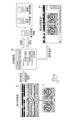
- FIG. 1 is a diagram illustrating a configuration of an operation reproduction system according to an embodiment.
- 1 is a diagram illustrating an overview of functions of an operation reproduction system according to an embodiment.
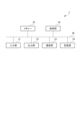
- FIG. 1 is a block diagram showing a configuration of an information processing device according to an embodiment.
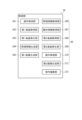
- FIG. 4 is a block diagram showing the functional configuration of a control unit according to an embodiment.
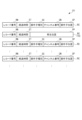
- 11 is a diagram showing a part of operation log information included in operation reproduction information according to an embodiment;
- FIG. 4 is a diagram showing an example of an operation screen according to an embodiment.
- FIG. 13 is a diagram showing an example of an operation reproduction screen according to an embodiment.
- 11A and 11B are diagrams illustrating a discrepancy between a playback position of a song and an elapsed time in operation log information according to an embodiment.
- FIG. 4 is a diagram showing an example of an editing screen according to an embodiment.
- FIG. 11 is a diagram showing an example of an operation state image according to an embodiment.
- FIG. 4 is a diagram showing a first operation state display portion of an operation state image according to an embodiment.
- FIG. 13 is a diagram showing a second operation state display portion of the operation state image according to an embodiment.
- FIGS. 11A and 11B are diagrams showing a crossfader state display portion of an operation state image according to an embodiment.
- 11A and 11B are diagrams showing an effect state display section of an operation state image according to an embodiment.
- FIG. 13 is a diagram showing an example of a mix content image according to an embodiment.
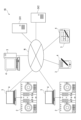
- FIG. 13 is a schematic diagram showing the configuration of an operation reproduction system according to a first application example.
- FIG. 13 is a diagram showing an example of an SNS screen according to the second application example.
- FIG. 1 is a diagram illustrating the configuration of an operation reproduction system 1A according to this embodiment.
- the operation reproduction system 1A includes an operation device 2, an information processing device 3 that inputs operation information corresponding to an input operation to the operation device 2, and a display device 4 connected to the information processing device 3.
- the information processing device 3 is configured to be connectable to a network N such as the Internet, and is capable of communicating with servers SV1 and SV2 connected to the network N.
- the servers SV1 and SV2 are not limited to computers, but include storage that can be used as a file server.
- DJ operations correspond to sound control operations, and include, for example, operations for controlling the playback position of music, tone processing operations, and music volume operations.
- playback position control operations include scratching, variable speed playback, reverse playback, loop playback, and moving the playback position on the controls of the operation device.
- tone processing operations include equalizer (EQ) operations and effect (Fx) operations.
- music volume operations include fader operations such as channel faders and cross faders.
- FIG. 2 is a diagram for explaining an outline of the functions of the operation reproduction system 1A.
- the information processing device 3 records the contents of the DJ operation as operation reproduction information based on the operation information and music identification information input from the operation device 2 in response to the DJ operation of the user US on the operation device 2.
- the information processing device 3 is capable of editing the recorded operation reproduction information and is also capable of uploading the operation reproduction information to the server SV1 shown in FIG.
- the operation reproduction information includes operation log information indicating the content of the DJ operation of the user US on the operators of the operation device 2, and song identification information for identifying a target song that is the subject of the DJ operation.
- the song identified by the song identification information is the song that was the subject of the operation when the operation reproduction information was recorded.
- the song identified by the song identification information is referred to as the target song.
- the information processing device 3 can reproduce the DJ operation of the user US by acquiring prerecorded operation reproduction information or operation reproduction information generated by another information processing device 3.
- reproduction of the DJ operation means reading the operation reproduction information and executing a process similar to the process corresponding to the operation information received from the operation device 2 while the DJ operation is being performed.
- reproduction of the DJ operation means, when an operator is operated after a predetermined time has elapsed since the start of recording of the operation reproduction information, executing a process corresponding to the operation of the operator after the same time has elapsed since the start of the operation reproduction process based on the operation reproduction information.
- the information processing device 3 When reproducing the DJ operation, the information processing device 3 generates an image showing the content of the DJ operation based on the operation log information of the operation reproduction information using a second image generating unit 371 described later, and displays the image on the display device 4. This visualizes the recorded DJ operation of the user. Furthermore, if the information processing device 3 holds a target song identified by the song identification information, the information processing device 3 plays the target song according to the content of the DJ operation based on the operation log information. This reproduces the playback of the target song according to the recorded DJ operation. In this way, the operation reproduction system 1A can be said to be a DJ operation visualization system that visualizes the DJ operations of a user. Hereinafter, each component of the operation reproduction system 1A will be described.
- [Configuration of the operation device] 1 and 2 is a DJ device such as a DJ controller and a DJ mixer, and is an audio control device having operators capable of performing DJ operations.
- the operation device 2 has various operators such as a jog dial, a crossfader, a channel fader, etc., as well as a rotary operator capable of adjusting the volume level of a high frequency band, the volume level of a mid frequency band, the volume level of a low frequency band, the volume level of an input signal, and the application ratio of an effect.
- [Configuration of the display device] 1 is configured with various display panels such as liquid crystal panels, etc.
- the display device 4 displays an image according to an image signal input from the information processing device 3.
- the information processing device 3 is configured as a notebook PC (Personal Computer), and therefore the display device 4 is integrated with the information processing device 3.
- the present invention is not limited to this, and the display device 4 may be a display separate from the information processing device 3.
- FIG. 3 is a block diagram showing the configuration of the information processing device 3.
- the information processing device 3 is configured, for example, by a PC capable of executing music management software.
- the information processing device 3 executes the music management software and plays pre-stored music based on an operation signal input from the operation device 2.
- the information processing device 3 generates and stores operation reproduction information that records the content of the DJ operation of the user US on the operation device 2.
- the information processing device 3 reproduces the DJ operation of the user US based on the operation reproduction information.
- the information processing device 3 includes an input unit 31, an output unit 32, a communication unit 33, a storage unit 34, a memory 35, and a control unit 36, which are electrically connected by a bus line BL.
- the input unit 31 and the output unit 32 have terminals that can be connected to external devices.
- the input unit 31 outputs a signal input from an external device to the control unit 36.
- external devices connected to the input unit 31 include the operation device 2, a pointing device, a keyboard, and an external storage device that stores music data.
- the external storage device is included in the storage unit of the present invention.
- An example of a terminal constituting the input unit 31 is a USB (Universal Serial Bus) terminal.
- the output unit 32 outputs information input from the control unit 36 to an external device.
- Examples of the external device connected to the output unit 32 include the display device 4, a speaker, and a headphone.
- Examples of the terminals constituting the output unit 32 include a USB terminal, a video output terminal, and an audio output terminal.
- the communication unit 33 communicates with external devices such as servers SV1 and SV2 on the network N.
- the communication unit 33 receives operation reproduction information from server SV1 and outputs it to the control unit 36, and also transmits operation reproduction information generated by the control unit 36 to the server SV1.
- the communication unit 33 can also receive music data from a server SV2 that is different from the server SV1.
- the information and data received by the communication unit 33 are stored in the memory unit 34 by the control unit 36.
- music data received from server SV2 is stored in the memory unit 34.
- the storage unit 34 is configured with storage devices such as a hard disk drive (HDD) and a solid state drive (SSD), and stores programs and data for operating the information processing device 3.
- the storage unit 34 stores an operating system (OS) and music management software for controlling the information processing device 3, as well as an operation reproduction program for executing an operation reproduction process described below. That is, the storage unit 34 is a recording medium for storing the operation reproduction program. Also, for example, the storage unit 34 can store a plurality of pieces of music data and operation reproduction information.
- the memory 35 is a work memory for the control unit 36 .
- FIG. 4 is a block diagram showing the functional configuration of the control unit 36.
- the control unit 36 is configured with at least one processor such as a CPU (Central Processing Unit), and controls the operation of the information processing device 3.
- the control unit 36 has a plurality of functional units that are realized by the processor executing a program stored in the storage unit 34. For example, as shown in Fig.
- control unit 36 has an operation acquisition unit 361, a first music acquisition unit 362, a first music playback unit 363, a reproduction information generation unit 364, a first image generation unit 365, a reproduction information acquisition unit 366, an identification information acquisition unit 367, a second music acquisition unit 368, a second music playback unit 369, an operation reproduction unit 370, a second image generation unit 371, and an operation editing unit 372.
- the operation acquisition unit 361 acquires an operation signal from among signals input from an external device connected to the input unit 31. For example, the operation acquisition unit 361 acquires an operation signal input from the operation device 2 connected to the information processing device 3.
- the first music acquisition unit 362 acquires, from the storage unit 34, music data corresponding to the music selected by the user based on the acquired operation signal.
- the first music playback unit 363 plays the music data acquired by the first music acquisition unit 362 based on the operation signal acquired by the operation acquisition unit 361. For example, when an operation signal corresponding to an operation on the jog dial of the operation device 2 is acquired, the first music playback unit 363 changes the playback speed and playback direction of the music based on the acquired operation signal. Also, for example, when an operation signal corresponding to an operation on the channel fader of the first channel on the operation device 2 is acquired, the first music playback unit 363 increases or decreases the volume level of the music being played on the first channel based on the acquired operation signal.
- the reproduction information generating unit 364 generates operation reproduction information that records the contents of the user's DJ operations on the operation device 2. Specifically, the reproduction information generating unit 364 generates operation reproduction information by recording the operation contents corresponding to the operation signals input from the operation device 2 in chronological order from the start of recording. In other words, the reproduction information generating unit 364 generates operation reproduction information by recording the user's DJ operations on the operation device 2 in chronological order from the start of recording. The generated operation reproduction information is stored in the storage unit 34.
- the operation replay information includes operation log information and music identification information, as shown in Fig. 2.
- the operation replay information is a file in a format that can be transmitted to the server SV1 or the like.
- FIG. 5 is a diagram showing a part of the operation log information LG included in the operation reproduction information.
- the operation log information is information that records the operation contents of operators operated by the user among the operators of the operation device 2 for each operator together with the elapsed time from the start of recording of the DJ operation.
- the operation log information includes a plurality of pieces of sound control information that record each of a plurality of sound control operations.
- the operation log information LG is information in which records RC, each of which includes a record number RN, an elapsed time ET from the start of recording, a controller type SC indicating the controller that was operated, a channel number CN of the channel on which the operated controller is located, and a controller position SP which is the position of the controller after it has been operated, are arranged in the order of record number RN, as shown in Fig. 5.
- the controller type SC, channel number CN, and controller position SP correspond to operation content information.
- FIG. 7 is a diagram showing an example of the operation reproduction screen G3.
- the second image generating unit 371 generates an image of the operation reproduction screen G3 shown in Fig. 7. Specifically, the second image generating unit 371 generates an image of the operation reproduction screen G3 showing the content of the DJ operation performed on the operation device 2 and reproduced by the operation reproduction unit 370 based on the operation reproduction information, and displays the generated image on the display device 4. In addition, the second image generating unit 371 generates an operation state image P1 and a mix content image P2, which will be described later. In other words, the second image generating unit 371 generates an image that visualizes the DJ operation reproduced by the operation reproduction unit 370.
- the operation display unit G33 displays a device image G331 in which the operation device 2 is viewed in plan view. Specifically, the operation display unit G33 displays a plurality of operators of the operation device 2 at the same positions as the respective positions of the plurality of operators on the operation device 2.
- the second image generating unit 371 draws the content of the DJ operation on the operation device 2 reproduced by the operation reproducing unit 370, and displays it on the operation display unit G33. That is, the second image generating unit 371 visualizes the DJ operation reproduced by the operation reproducing unit 370 on the operation display unit G33.
- the second image generating unit 371 generates an image in which the position of a partial image indicating an operator of a channel indicated by a channel number CN, among the operators indicated by the operator type SC in the record RC of the operation log information LG corresponding to the elapsed time since the operation reproduction process was started, is moved to an operator position SP.
- the second image generating unit 371 moves the position of a partial image indicating an operator corresponding to the operator type SC and channel number CN, among the operators included in the device image G331, to a position corresponding to the operator position SP according to the elapsed time.
- the second image generation unit 371 generates an operation reproduction screen G3 in which a partial image indicating the operation knob of the channel fader of the second channel is moved to a position corresponding to the operator position SP of the record RC.
- the second image generating unit 371 generates an image showing the movement direction or rotation direction of the operator of the channel indicated by the channel number CN among the operators indicated by the operator type SC of the record RC of the operation log information LG corresponding to the elapsed time since the operation reproduction process was started, using a graphic FG such as an arrow based on the operator position SP.
- the second image generating unit 371 displays a graphic FG such as an arrow indicating the operation direction and rotation direction of the operator near the operator corresponding to the operator type SC and deck number DN among the operators of the device image G331, based on the operator position SP according to the elapsed time.
- the second image generation unit 371 generates an operation reproduction screen G3 based on the operator position SP of the record RC, superimposing a figure FG, which is an arrow indicating the operation direction of the rotation operator, on a partial image indicating the jog dial of the first channel.
- the second image generating unit 371 highlights or shows a graphic such as a circle, among the operators indicated by the operator type SC of the record RC of the operation log information LG corresponding to the elapsed time since the operation reproduction process was started, the operator of the channel indicated by the channel number CN. That is, the second image generating unit 371 superimposes a graphic such as a circle or the like on the operator corresponding to the operator type SC and channel number CN among the operators of the device image G331 according to the elapsed time, thereby indicating the operator in a manner that can be distinguished from other operators.
- the second image generation unit 371 generates an operation reproduction screen G3 in which a partial image indicating the first sampler pad of the second channel is highlighted, or an operation reproduction screen G3 in which a figure FG such as a circle is superimposed on the partial image indicating the first sampler pad.
- Information related to the reproduced DJ operation can also be displayed on the operation display unit G33.
- the second image generating unit 371 displays a speech bubble SB containing information related to the DJ operation on the operation display unit G33.
- information related to the DJ operation can include the amount of operation of the control, the value of a parameter changed by the reproduced operation, information that can identify the DJ device used when the operation reproduction information was recorded, and the settings of the DJ application when the operation reproduction information was recorded.
- the operation amount of a control may be, for example, the movement amount of the control, a numerical value indicating the position of the control, a rotation angle of the control, etc.
- the speech bubble SB indicates the movement amount of the crossfader in the direction of the arrow.
- the parameter value may be the parameter value changed in response to the operation of a control that sets a specific parameter value, if the operation of the control is recorded in the operation log information LG. For example, if pressing of a loop button is recorded in the operation log information LG, the parameter value is the "number of bars of the loop" that was set by pressing the loop button.
- the display including these pieces of information are sequentially set in the operation display section G33 by the second image generating section 371. As a result, the contents of the reproduced DJ operation and information related to the reproduced DJ operation are set in the operation display section G33, and the operation reproduction screen G3 including the operation display section G33 is sequentially displayed.
- the menu button G34 is a button for displaying a menu screen (not shown).
- the menu screen includes, for example, a selection item for selecting a device image G331 of an operation device displayed on the operation display unit G33.
- a device image G331 that imitates the model of the operation device 2 used by the user is displayed, making it easier to understand the DJ operation of the other user. Therefore, the second image generating unit 371 displays the device image G331 selected by the user on the operation display unit G33, and visualizes the operation of the operator included in the device image G331 based on the reproduced DJ operation. This makes it easier for the user to understand the content of the DJ operation by other users.
- the speed adjustment button G35, reproduction start button G36, and reproduction position display bar G37 enable the content of the DJ operation displayed on the operation display section G33 to be operated like a video.
- the speed adjustment button G35 is a button for increasing or decreasing the playback speed of the target music by the second music playback unit 369 and the reproduction speed of the DJ operation by the operation reproduction unit 370 in synchronization with each other.
- the speed adjustment button G35 includes buttons for adjusting the speed to 0.5 times, 0.75 times, normal speed, 1.25 times, and 1.5 times.
- the operation reproduction unit 370 reproduces the DJ operation at a speed corresponding to the input button, and causes the second music playback unit 369 to play the target music at a speed corresponding to the input button.
- the reproduction speed of the DJ operation is increased or decreased by the speed adjustment button G35
- the display update speed of the operation display unit G33 is also increased or decreased in synchronization with the reproduction speed of the DJ operation.
- the operation reproducing unit 370 increases or decreases in sync with the execution speed of the DJ operation reproduced based on the operation reproduction information and the playback speed of the target song reproduced by the second music playback unit 369.
- the reproduction speed of the DJ operation and the playback speed of the target song may be configured to be set by the user to any desired speed.
- the reproduction start button G36 is a button for starting the operation reproduction process of the DJ operation based on the operation reproduction information.
- the reproduction start button G36 is input, the operation reproduction process is started, and the second music reproduction unit 369 starts playing the target music, and the operation reproduction unit 370 starts reproducing the DJ operation based on the operation reproduction information.
- the reproduction start button G36 is input again, the operation reproduction process is paused.
- the reproduction position display bar G37 is provided with a slider G371 that indicates the current reproduction position of the DJ operation based on the operation reproduction information.
- the user can adjust the reproduction position by sliding the slider G371 along the reproduction position display bar G37, and based on the position of the slider G371, the operation reproduction unit 370 changes the reproduction position of the DJ operation and also changes the playback position of the target music by the second music playback unit 369.
- the operation reproduction screen G3 may be provided with a button for moving the reproduction position back a predetermined time from the current reproduction position, or a button for advancing the reproduction position forward a predetermined time from the current reproduction position.
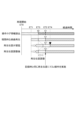
- FIG. 8 is a diagram illustrating a discrepancy between the playback position of a piece of music by the operation reproducing unit 370 and the elapsed time in the operation log information LG.
- the operation reproduction information and the music data are separate files, there is a possibility that the timing of the DJ operation at the time of reproduction based on the elapsed time ET of the operation log information LG may differ from the playback position of the target music corresponding to the timing of the DJ operation at the time of recording.
- the timing of the DJ operation at the time of reproduction based on the elapsed time ET of the operation log information LG may differ from the playback position of the target music corresponding to the timing of the DJ operation at the time of recording.
- the DJ operation based on the operation log information LG will be performed when the elapsed time reaches time ET2.
- the DJ operation will be reproduced according to the time elapsed from time ET0.
- the timing at which DJ operations are performed on the target song will be different between when the DJ operations are recorded and when the DJ operations are reproduced, so even if the DJ operations are reproduced on the target song, the song when the DJ operations are reproduced will be different from the song when the DJ operations were recorded.
- the reproduction clock of the DJ operation based on the operation log information LG is different from the playback clock of the target song, a discrepancy occurs between the execution timing of a certain DJ operation based on the operation log information LG and the playback position of the target song where the DJ operation is supposed to be performed.
- Such a discrepancy accumulates as the playback of the target song progresses. Therefore, as the reproduction process of the DJ operation based on the operation log information LG progresses, the discrepancy becomes larger, and the playback of the song at the time of recording the DJ operation cannot be faithfully reproduced, just as in the case where the playback start position of the target song is shifted.
- the operation reproduction unit 370 aligns the position on the time axis based on the elapsed time ET of the operation log information LG with the playback position of the target song being played by the second music playback unit 369 based on the time adjustment information TA contained in the operation log information LG. Specifically, the operation reproduction unit 370 synchronizes the elapsed time ET of the operation log information LG with the playback position of the target song being played by the second music playback unit 369 so that the playback position PP of the time adjustment information TA matches the playback position of the target song being played by the second music playback unit 369, and then reproduces the DJ operation according to the elapsed time ET and causes the second music playback unit 369 to play the target song.
- the operation reproducing unit 370 implements either a first method of matching the playback position of the target song to the playback position of the time adjustment information TA, or a second method of matching the read position of the operation log information LG including the time adjustment information TA to the playback position of the target song. That is, when the operation reproducing unit 370 reads the time adjustment information TA, if the playback position indicated by the time adjustment information TA does not match the playback position of the target song, the operation reproducing unit 370 uses either the first method or the second method to match the playback position indicated by the time adjustment information TA to the playback position of the target song.
- the playback position indicated by the time adjustment information TA is the playback position during recording, and the playback position of the target song is the current playback position.
- the operation reproducing unit 370 reads the time adjustment information TA at time ET3, it judges whether or not the playback position during recording coincides with the current playback position. If the playback position during recording coincides with the current playback position, the first and second methods for matching the playback position during recording with the current playback position are not performed. On the other hand, if it is determined that the playback position during recording and the current playback position do not match, the operation reproducing unit 370 determines whether or not the current playback position is delayed with respect to the playback position during recording.
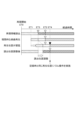
- FIG. 9 and 10 are diagrams for explaining the first method.
- FIG. 9 is a diagram of a case where the current playback position is delayed from the playback position at the time of recording
- FIG. 10 is a diagram of a case where the current playback position is ahead of the playback position at the time of recording.
- the range from time ET0 to time ET3, the range from time ET3 to time ET2, and the range after time ET3 are shown separately in the operation log information.
- the range between the playback position at the time of recording recorded at time ET1 and time ET3 in the target song, the range between the playback position at the time of recording and the timing of the first DJ operation after the playback position at the time of recording, and the range after the timing of the first DJ operation are shown separately.
- the operation reproducing unit 370 calculates the difference between the playback position during recording and the current playback position, as shown in Fig. 9, and advances the current playback position by the calculated difference. In other words, the operation reproducing unit 370 omits a part of the target music from the playback position during recording by the calculated difference. In this way, the operation reproducing unit 370 aligns the playback position during recording with the current playback position.
- the operation reproducing unit 370 calculates the difference between the playback position at the time of recording and the current playback position, as shown in Fig. 10, and delays the current playback position by the calculated difference. For example, the operation reproducing unit 370 delays the current playback position. In this way, the operation reproducing unit 370 aligns the playback position at the time of recording with the current playback position.
- the operation reproduction unit 370 aligns the current playback position of the target song with the playback position at the time of recording, acquires the record RC from the time ET3 onwards when the time adjustment information TA was recorded, and reproduces the DJ operation according to the elapsed time ET.
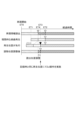
- FIG. 11 and 12 are diagrams for explaining the second method.
- FIG. 11 is a diagram of a case where the current playback position is delayed from the playback position at the time of recording
- FIG. 12 is a diagram of a case where the current playback position is ahead of the playback position at the time of recording.
- the range from time ET0 to time ET3, the range from time ET3 to time ET2, and the range after time ET2 are shown separately in the operation log information.
- the range between the playback position at the time of recording recorded at time ET1 and time ET3 in the target song, the range between the playback position at the time of recording and the timing of the first DJ operation after the playback position at the time of recording, and the range after the timing of the first DJ operation are shown separately.
- the operation reproducing unit 370 calculates the difference between the current playback position and the playback position at the time of recording, waits for the reading of the operation log information LG by the calculated difference, and adjusts the read position of the operation log information LG, as shown in Fig. 11. In this way, the operation reproducing unit 370 aligns the playback position at the time of recording with the current playback position.
- the operation reproducing unit 370 calculates the difference between the playback position at the time of recording and the current playback position as shown in Fig. 12, and advances the read position of the operation log information LG by the calculated difference. That is, the operation reproducing unit 370 moves the read position of the operation log information LG backward from the time ET2 by the calculated difference. In this way, the operation reproducing unit 370 aligns the playback position at the time of recording with the current playback position.
- the operation reproducing unit 370 aligns the read position of the operation log information LG with the current playback position, obtains the records RC following the time adjustment information TA, and reproduces the DJ operations according to the elapsed time ET.
- the operation reproducing unit 370 may combine the first method and the second method. For example, when the music playback position is delayed with respect to the playback position at the time of recording, one of the first method and the second method may be implemented, and when the music playback position is ahead of the playback position at the time of recording, the other of the first method and the second method may be implemented.
- FIG. 13 is a diagram showing an example of an editing screen G4 for editing a scratch operation of a recorded operation.
- the waveform shown in the upper part of Fig. 13 is a waveform showing a recorded scratch operation
- the waveform shown in the lower part of Fig. 13 is a waveform showing a scratch operation edited by the first user.
- a reference line SL indicates a reference position of the jog dial
- an area above the reference line SL indicates a relative position to the reference position when the jog dial is rotated clockwise
- an area below the reference line SL indicates a relative position to the reference position when the jog dial is rotated counterclockwise.
- the vertical lines in Fig. 13 indicate beat positions. 4 edits the operation reproduction information stored in the storage unit 34 based on an operation signal input from the input unit 31.
- the operation editing unit 372 displays an editing screen G4 shown in FIG.
- the waveform generated by the operation editing unit 372 based on the operation log information will have a waveform in which the vertical line indicating the beat position does not match the return position of the scratch operation, as shown in part W11 in the waveform W1 shown in the upper part of Figure 13.
- the scratch operation can be synchronized with the beat by operating the pointer PT included in the editing screen G4 with a pointing device or the like to align the turn-around position in the portion W11 with the vertical line.
- the operation editing unit 372 can also add new DJ operations to the operation reproduction information stored in the storage unit 34 on another editing screen (not shown). Based on the editing contents on the editing screen G4, the operation editing unit 372 updates the operation log information LG of the operation reproduction information stored in the storage unit 34.
- FIG. 14 is a diagram showing an example of an operation status image P1 showing the content of DJ operations based on the operation reproduction information for each operator provided on the DJ device.
- the second image generating unit 371 generates an operation status image P1, an example of which is shown in FIG. 14, as an image indicating the content of the DJ operation read out by the operation reproducing unit 370 from the operation reproduction information.
- the operation status image P1 is an image showing the operation status of each operator on the DJ equipment, the contents of the target song loaded when reproducing the DJ operation, and the connection of the target songs.
- the operation status image P1 is an image showing the operation status of each operator according to the elapsed time from the start of recording of the operation reproduction information.
- the operation status image P1 is one of the images showing the reproduction result of the DJ operation by the operation reproduction unit 370, and is an image showing the operation status of each operator of the DJ equipment and the playback status of the target song.
- the first music information display section P11 displays information about the first music piece being played on the first channel. Specifically, the first music information display section P11 displays the name of the first music piece, the BPM of the first music piece, the playback position of the first music piece, the remaining time of the first music piece, the waveform of the first music piece, and the music structure of the first music piece.
- the second music information display section P12 displays information about the second music piece being played on the second channel.
- the second music information display section P12 displays the name of the second music piece, the BPM of the second music piece, the playback position of the second music piece, the remaining time of the second music piece, the waveform of the second music piece, the music structure of the second music piece, etc.
- the information about songs displayed on each of the song information display sections P11 and P12 is not limited to the above.
- each of the song information display sections P11 and P12 may display at least the name of the song, and may not display at least one of the other pieces of information.
- each of the song information display sections P11 and P12 may display information about the songs other than the above.
- the detail display section P13 displays the operation details of the operators based on the operation log information and the playback status of the music on each channel, with the elapsed time included in the operation log information of the operation reproduction information on the horizontal axis.
- the detail display section P13 is disposed below the first music information display section P11 and the second music information display section P12 in the operation status image P1.
- the detail display section P13 includes a first operation status display section P14, a second operation status display section P15, a crossfader status display section P16, and an effect status display section P17.
- each of the display sections P14 to P17 extends along the horizontal axis indicating the elapsed time.
- FIG. 15 is a diagram showing the first operation state display section P14.
- the first operation status display section P14 displays the playback status of the first music piece and the operation status of each operator provided on the first channel along with the elapsed time in the operation reproduction information.
- the first operation status display section P14 includes a time display section TD indicating the elapsed time included in the operation log information, as well as a first playback status display section P14A, a first fader status display section P14B, and a first equalizer status display section P14C.
- the first playback status display section P14A displays the playback status of the first music piece. As shown in Fig. 15, the first playback status display section P14A displays the playback period of the first channel in a rectangle P141. The timing at which the music piece was loaded is indicated by the elapsed time corresponding to the left end of the rectangle P141 representing the playback period. Characters indicating the track number of the music piece are set in the rectangle P141.
- the first playback status display section P14A displays the timing when the CUE button is pressed with a symbol P142, which is a downward black triangle.
- the first playback status display section P14A also displays the period during which the CUE button is continuously pressed with a symbol P143, which is a line segment connecting the two symbols P142. When the CUE button is pressed while a song is being played, the playback of that song is stopped.
- the first playback status display section P14A displays the timing for pressing the START/PAUSE button with a downward-facing white triangle symbol P144.
- the first fader status display section P14B displays the operation status of the first channel fader. As shown in Fig. 15, the first fader status display section P14B has an effective range set along the vertical direction, with the upper end of the effective range indicating the position of the first channel fader when the volume level of the first channel is maximum, and the lower end of the effective range indicating the position of the first channel fader when the volume level of the first channel is minimum. The first fader status display section P14B then displays the position of the first channel fader according to the elapsed time with a line P146. In the example of Fig.
- the first fader state display section P14B displays that the first channel fader is positioned at the position where the volume level of the first channel is maximum. Also, in the example of Fig. 15, during the period of elapsed time from 3 minutes 25 seconds to 6 minutes 0 seconds, the first fader state display section P14B displays that the first channel fader is positioned at the position where the volume level of the first channel is minimum.
- the first equalizer state display section P14C displays the operation states of the operators for adjusting the volume level of the high frequency band, the operator for adjusting the volume level of the mid frequency band, and the operator for adjusting the volume level of the low frequency band. These operators are, for example, rotary operators such as a rotary volume.
- the first equalizer status display section P14C has an effective range set along the vertical direction, with the upper end of the effective range indicating the position of the operator when the volume level of the corresponding band is maximum, and the lower end of the effective range indicating the position of the operator when the volume level of the corresponding band is minimum.
- the first equalizer status display section P14C then indicates the position of each operator according to the elapsed time with lines P147, P148, and P149.
- the position of the operator for adjusting the volume level of the high frequency band is displayed by a line P147
- the position of the operator for adjusting the volume level of the mid frequency band is displayed by a line P148
- the position of the operator for adjusting the volume level of the low frequency band is displayed by a line P149.
- the colors of the lines P147, P148, and P149 may be different from each other, and the line types of the lines P147, P148, and P149 may be different from each other.
- FIG. 16 is a diagram showing the second operation state display section P15. 14 and 16, the second operation status display section P15 displays the playback status of the second music piece and the operation status of each operator provided on the second channel in chronological order from the start of reading of the operation reproduction information.
- the second operation status display section P15 includes a second playback status display section P15A, a second fader status display section P15B, and a second equalizer status display section P15C in addition to a time display section TD.
- the second playback status display section P15A displays the playback status of the second music piece.
- the configuration of the second playback status display section P15A is the same as that of the first playback status display section P14A.
- the second playback status display section P15A displays the playback period of the second channel by a rectangle P151, the timing when the CUE button is pressed by a symbol P152 similar to the symbol P142, the period during which the CUE button is continuously pressed by a symbol P153 similar to the symbol P143, and the timing when the START/PAUSE button is pressed by a symbol P154 similar to the symbol P144.
- a white rectangle P155 is set in a rectangle P151 indicating the playback period of the second channel.
- the rectangle P155 indicates a period during which the jog dial of the second channel was operated during the playback period of the second music piece.
- the second fader status display section P15B displays the operating status of the second channel fader. Similar to the first fader status display section P14B, the second fader status display section P15B displays the position of the second channel fader according to elapsed time by a line P156.
- the second equalizer status display unit P15C displays the operation status of an operator for adjusting the volume level of the high frequency band, an operator for adjusting the volume level of the mid frequency band, and an operator for adjusting the volume level of the low frequency band.
- the second equalizer status display unit P15C is configured in the same manner as the first equalizer status display unit P14C, with the position of the operator for adjusting the volume level of the high frequency band being displayed by a line P157, the position of the operator for adjusting the volume level of the mid frequency band being displayed by a line P158, and the position of the operator for adjusting the volume level of the low frequency band being displayed by a line P159.
- FIG. 17 is a diagram showing the crossfader state display section P16.
- the crossfader status display section P16 is disposed between the first operation status display section P14 and the second operation status display section P15, and extends along the horizontal axis, as shown in Fig. 14.
- the crossfader status display section P16 includes a time display section TD and a position display section P16A that displays the position of the crossfader.
- the crossfader is configured to be slidable, for example, in one direction. By sliding the crossfader to one end of the sliding range, the proportion of the first song in the volume being played becomes greater than the proportion of the second song.
- the proportion of the first song becomes the greatest.
- the proportion of the second song in the volume being played becomes greater than the proportion of the first song.
- the proportion of the second song becomes the greatest.
- the position display section P16A displays the position of the crossfader based on the operation log information LG by a line P161 in the effective range along the vertical direction, as shown in Fig. 17.
- the position display section P16A indicates that the crossfader is operated toward the one end side of the slide range as it moves toward the upper side where the first operation state display section P14 is located relative to the crossfader state display section P16.
- the position display section P16A also indicates that the crossfader is operated toward the other end side of the slide range as it moves toward the lower side where the second operation state display section P15 is located relative to the position display section P16A.
- the volume ratio between the first and second songs is adjusted using the first and second channel faders, so the position of the crossfader remains set to the midpoint of the effective range in the position display area P16A and does not change.
- the position display unit P16A and having the position display unit P16A display the position of the crossfader as described above, it becomes easy to understand whether the crossfader is being operated towards the first channel or the second channel.
- FIG. 18 is a diagram showing the effect state display section P17. 14 and 18, the effect status display section P17 displays the type of effect, the channel to which the effect is applied, the period during which the effect is on, and the application ratio of the effect. As shown in Fig. 18, the effect status display section P17 includes, in addition to a time display section DP, an on status display section P17A, a ratio display section P17B, a type display section P17C, and a target display section P17D.
- the on-state display section P17A indicates the period during which the effect is on by a rectangle P171.
- the ratio display section P17B displays the application ratio, which is generally expressed as "Dry/Wet.”
- the ratio display section P17B displays the effect application ratio in the effective range along the vertical direction by a line P172. As the line P172 is located higher in the effective range, a larger effect application ratio is indicated, and as the line P172 is located lower, a smaller effect application ratio is indicated.
- the type display section P17C displays the type of effect. Specifically, the type display section P17C displays a name indicating the type of effect that has been set within a rectangle P173 indicating the period during which the effect has been set. In the example of Fig. 18, it is shown that "ECHO" has been set for the period from 0 minutes 0 seconds to 6 minutes 20 seconds of the elapsed time indicated by the horizontal axis, and "FLANGER" has been set for the period from 6 minutes 20 seconds onwards.
- the target display section P17D displays the channel for which the effect is to be set. Specifically, the target display section P17D displays the name of the channel to be set within a rectangle P174 indicating the setting period of the setting target. In the example of Fig.
- the first channel was set as the setting target during the period from 0 minutes 0 seconds to 7 minutes 50 seconds of elapsed time indicated by the horizontal axis, and the master was set as the setting target for the period from 7 minutes 50 seconds onwards. Note that "master" indicates the master output.
- Fig. 19 is a diagram showing an example of a mix content image P2 based on operation reproduction information.
- Fig. 19 is an example of a mix content image P2 showing connections between a plurality of target songs based on operation log information LG.
- the second image generating section 371 generates a mix content image P2, an example of which is shown in FIG. 19, as an image showing the content of the DJ operations read out by the operation reproducing section 370 from the operation reproducing information.
- the above-mentioned operation status image P1 displays the operation status of each operator as well as the playback status of music on each channel.
- the mix content image P2 is an image showing the mix content of multiple music pieces based on the operation reproduction information.
- the mix content image P2 is an image showing the mix status of music pieces based on the reproduction result of the DJ operation by the operation reproduction unit 370.
- the mix content image P2 includes a first deck display portion P2A, a second deck display portion P2B, a third deck display portion P2C, and a fourth deck display portion P2D.
- music loaded onto the first and second decks is played on channel 1
- music loaded onto the third and fourth decks is played on channel 2. Therefore, the first deck display unit P2A and the second deck display unit P2B display the playback status of music played on channel 1, and the third deck display unit P2C and the fourth deck display unit P2D display the playback status of music played on channel 2.
- Each deck display unit P2A, P2B, P2C, P2D displays the playback period of the song with a rectangle P21 along the elapsed time.
- each deck display unit P2A, P2B, P2C, P2D displays a rectangle P211 indicating the loop playback period within the rectangle P21, and also displays a loop playback mark P212 within the rectangle P211.
- a rectangle P211 indicating the loop playback period within the rectangle P21
- Each of the deck display sections P2A, P2B, P2C, and P2D displays a waveform P22 of a song loaded on the corresponding deck.
- the waveform P22 of the song is an edited version of the original waveform of the song in accordance with the DJ operation.
- the waveform P22 is an edited version of the original waveform of the song based on the operation log information.
- the waveform P22 is arranged above the rectangle P21.
- the waveform P22 may be arranged below the rectangle P21 or displayed overlapping the rectangle P21. Also, as long as the rectangle P211 and the loop playback mark P212 indicating the loop playback period are displayed visibly, only one of the rectangle P21 and the waveform P22 may be displayed.
- each deck display unit P2A, P2B, P2C, and P2D uses a line P23 to display the position of the channel fader for the channel associated with the deck in accordance with the playback period of the song.
- Each deck display unit P2A, P2B, P2C, and P2D has an effective range set along the vertical direction in the area that overlaps with the waveform P22 on the upper side of the rectangle P21. The upper end of the effective range indicates the position of the channel fader when the volume level of the corresponding channel is at its maximum, and the lower end of the effective range indicates the position of the channel fader when the volume level of the corresponding channel is at its minimum.
- Each deck display unit P2A, P2B, P2C, and P2D uses a line P23 to display the position of the channel fader when the song loaded on the corresponding deck is being played based on the operation reproduction information.
- the operation reproduction system 1A provides the following effects.
- the information processing device 3 includes a reproduction information acquisition unit 366 , an operation reproduction unit 370 , and a second image generation unit 371 .
- the reproduction information acquisition unit 366 acquires operation reproduction information that records DJ operations on the operation device 2 having an operator that accepts DJ operations.
- the DJ operations correspond to sound control operations of the present invention
- the operation device 2 corresponds to a sound control device of the present invention.
- the operation reproducing section 370 reproduces the DJ operation based on the operation reproduction information acquired by the reproduction information acquisition section 366 .
- the second image generating section 371 generates an image showing the content of the DJ operation reproduced by the operation reproducing section 370.
- the second image generating section 371 corresponds to the image generating section of the present invention.
- the operation reproducing unit 370 reproduces the DJ operation on the operator of the operation device 2 based on the acquired operation reproduction information
- the second image generating unit 371 generates an image showing the content of the DJ operation.
- the information processing device 3 includes a storage unit 34 , an identification information acquisition unit 367 , a second music acquisition unit 368 , and a second music playback unit 369 .
- the storage unit 34 stores music data.
- the identification information acquisition section 367 acquires, from the operation replay information acquired by the reproduction information acquisition section 366, song identification information that identifies the target song that is the operation target of the DJ operation.
- the second song acquisition section 368 acquires song data of the target song from the storage section 34.
- the second song acquisition section 368 corresponds to the song acquisition section of the present invention.
- the second music playback unit 369 plays back the music data of the target music acquired by the second music acquisition unit 368.
- the second music playback unit 369 corresponds to the playback unit of the present invention.
- the operation reproducing unit 370 reproduces the DJ operation for the target music piece being reproduced by the second music reproduction unit 369 .
- the operation replay unit 370 reproduces the DJ operation for the target song played by the second song playback unit 369, thereby reproducing the playback state of the target song at the time the operation replay information was recorded.
- the music data of the target music played by the second music playback unit 369 is music data stored in the storage unit 34 of the information processing device 3. Therefore, the music data is not shared by multiple users, and the target music can be played in accordance with the reproduced DJ operation without any problems regarding rights such as copyright for the music data.
- the operation reproducing unit 370 aligns the position on the time axis of the operation reproducing information with the playback position of the target music piece played by the second music piece playback unit 369 .
- the operation reproduction information includes operation log information LG indicating the content of the DJ operation, and the operation log information LG includes an elapsed time ET from the start of recording of the operation log information LG and a playback position PP corresponding to the elapsed time ET of the target song identified by the song identification information.
- the operation reproduction unit 370 adjusts the reading position of the operation log information LG so that the playback position PP included in the operation log information LG coincides with the playback position of the target song played by the second song playback unit 369.
- the operation reproduction information includes operation log information LG indicating the content of the DJ operation, and the operation log information LG includes an elapsed time ET from the start of recording of the operation log information LG and a playback position PP corresponding to the elapsed time ET of the target song identified by the song identification information.
- the operation reproduction unit 370 aligns the playback position of the target song played by the second song playback unit 369 to the playback position PP included in the operation log information LG.
- the operation reproducing unit 370 increases or decreases the execution speed of the DJ operation reproduced based on the operation reproduction information and the playback speed of the target music reproduced by the second music playback unit 369 in synchronization with each other. According to this configuration, the speed at which the reproduced DJ operations are performed can be synchronized with the playback speed of the target music being played back, making it possible to implement speed adjustments such as fast-forwarding and rewinding.
- the second image generating unit 371 generates an image including the content of the DJ operation reproduced by the operation reproducing unit 370 and information related to the DJ operation. With this configuration, by checking the image generated by the second image generating section 371, it is possible to easily understand the content of the DJ operation at the time the operation reproduction information was recorded.
- the second image generating unit 371 generates an operation state image P1 which indicates, for each operator, the operation state of the operator according to the elapsed time from the start of recording of the operation reproduction information. According to this configuration, by checking the generated operation state image P1, it is possible to easily check the operation state of each operator according to the elapsed time.
- the second image generating section 371 generates a mix content image P2 indicating a mixed state of music based on the result of reproducing the DJ operation by the operation reproducing section 370.
- the mix content of the music can be easily checked without listening to the music in which the DJ operations are reproduced.
- the information processing device 3 includes a communication unit 33 capable of communicating with a server SV1 on the network N.
- the server SV1 corresponds to an external device on the network N.
- the reproduction information acquisition unit 366 acquires the operation reproduction information from the server SV1 via the communication unit 33. According to this configuration, the operation reproduction information can be obtained from the server SV1 on the network N, so that DJ operations based on the operation reproduction information recorded by other users can be reproduced and the contents of the DJ operations performed by other users can be understood. Therefore, the convenience of the information processing device 3 can be improved.
- the operation reproducing program stored in the storage unit 34 is executed by the control unit 36 configured by at least one processor.
- the operation reproducing program causes the control unit 36 to execute processing of a reproducing information acquisition unit 366 that acquires operation reproducing information that records DJ operations on the operation device 2 having an operator that accepts DJ operations, processing of an operation reproducing unit 370 that reproduces the DJ operations based on the acquired operation reproducing information, and processing of a second image generating unit that generates an image showing the reproduced DJ operations.
- the DJ operation corresponds to an audio control operation
- the operation device 2 corresponds to an audio control device.
- the process of the reproduction information acquisition unit 366 corresponds to a reproduction information acquisition step
- the process of the operation reproduction unit 370 corresponds to an operation reproduction step
- the process of the second image generation unit 371 corresponds to an image generation step.
- FIG. 20 is a schematic diagram showing the configuration of an operation reproduction system 1B according to a first application example.
- the above-described operation reproduction system 1A includes one operation device 2, one information processing device 3, and one display device 4.
- the operation reproduction system 1A may include a plurality of information processing devices 3 configured to be capable of transmitting and receiving operation reproduction information.
- an operation reproduction system 1B shown in Fig. 20 includes a plurality of information processing devices 3.
- At least one of the plurality of information processing devices 3 may be an information terminal such as a smartphone or a tablet.
- Each information processing device 3 can communicate with a server SV1 on the network N.
- Each information processing device 3 can transmit operation reproduction information to the server SV1 and can receive operation reproduction information from the server SV1. That is, each information processing device 3 can download, from the server SV1, operation reproduction information that has been generated by another information processing device 3 and that records DJ operations of another user.
- the reproduction information acquisition unit 366 of each information processing device 3 acquires operation reproduction information from the server SV1 via the communication unit 33, thereby enabling the operation reproduction unit 370 to reproduce the DJ operations of other users, and the content of the DJ operations of other users can be understood by observing the operation reproduction screen G3 displayed by the second image generation unit 371 on the display device 4. Furthermore, if the information processing device 3 holds song data for a target song identified by the song identification information of the acquired operation reproduction information, or if the song data for the target song can be acquired from the server SV2, not only can the DJ operation based on the operation reproduction information be visualized, but the target song can be played in accordance with the DJ operation.
- FIG. 21 is a diagram showing a screen of an information processing device 3 constituting the operation reproduction system according to the second application example, and is a diagram showing an example of an SNS screen G5 during reproduction of a DJ operation based on operation reproduction information. 21 is displayed on the display device 4 by an information processing device 3 such as a smartphone executing a social application.
- the SNS screen G5 includes a message area G51, an operation display area G52, and an operation area G53.
- the message area G51 has a sender display section G511 that displays the sender of the message, a message display section G512 that displays the message, and a rating number display section G513 that displays the number of likes given to the message.
- the operation display area G52 has the same configuration as the operation display section G33 of the operation reproduction screen G3 shown in FIG. 7. That is, the operation display area G52 displays a device image G331 on which multiple operators are arranged. Based on the content of the DJ operation reproduced by the operation reproduction section 370, as described above, the second image generation section 371 moves the operators included in the device image G331, displays a figure indicating the operation direction of the operator, or displays an indication of the operated operator. Furthermore, although not shown in FIG. 21, the second image generation section 371 displays information related to the DJ operation in the operation display area G52.
- the operation area G53 has the same configuration as the speed adjustment button G35, the reproduction start button G36, and the reproduction position display bar G37 shown in Fig. 7. Specifically, the operation area G53 is provided with a reproduction position display bar G531, a play button G533, a rewind button G534, and a fast forward button G535.
- the reproduction position display bar G531 like the reproduction position display bar G37, has a slider G532, and displays the reproduction position of the DJ operation based on the operation reproduction information depending on the position of the slider G532.
- the slider G532 is operated by the user, and based on the position of the slider G532, the operation reproduction unit 370 changes the reproduction position of the DJ operation and also changes the playback position of the target music by the second music playback unit 369. Note that the display content of the operation display area G52 is also changed by the second image generation unit 371 depending on the reproduction position.
- the play button G533 is a button that starts reproducing the DJ operation by the operation reproducing section 370.
- the play button G533 is pressed again, the reproduction process of the DJ operation is temporarily stopped.
- the rewind button G534 is being pressed, the operation reproducing unit 370 changes the reproduction direction of the DJ operation from the current reproduction position to the reverse direction, and increases the reproduction speed of the DJ operation.
- the fast forward button G535 is being pressed, the operation reproducing section 370 increases the reproduction speed of the DJ operation from the current reproduction position.
- the operation reproduction unit 370 changes the reproduction direction and reproduction speed of the DJ operation, the playback direction and playback speed of the target song by the second music playback unit 369 are also changed, and an image is displayed by the second image generation unit 371 in accordance with the reproduced DJ operation.
- the sender can display the above-mentioned SNS screen G5 on the information processing device 3 used by the recipient of the message or on the information processing device 3 used by an observer such as a follower who follows the sender.
- the reproduction information acquisition section 366 acquires the operation reproduction information
- the identification information acquisition section 367 acquires song identification information from the operation reproduction information
- the second song acquisition section 368 acquires song data of the target song
- the operation display area G52 and the operation area G53 are displayed on the SNS screen G5.
- the second music playback unit 369 plays the target music
- the operation reproduction unit 370 reproduces the DJ operations based on the operation reproduction information
- the second image generation unit 371 visualizes the DJ operations in the operation display area G52. Note that if the second music acquisition unit 368 is unable to acquire music data for the target music, the operation reproduction unit 370 reproduces the DJ operations and the second image generation unit 371 visualizes the DJ operations in the operation display area G52, and the target music is not played.
- the information processing device 3 is provided with a reproduction information generating unit 364 that records operation reproduction information.
- the operation reproduction system 1B according to the first application example is configured to include a plurality of information processing devices 3, and each of the plurality of information processing devices 3 has the reproduction information generating unit 364.
- the information processing device 3 may not have the reproduction information generating unit 364.
- the information processing device 3 constituting the operation reproduction system 1A and at least one of the plurality of information processing devices 3 constituting the operation reproduction system 1B may not have the reproduction information generating unit 364.
- at least one of the plurality of information processing devices 3 may have an operation reproduction processing unit RP, and may not have a functional unit related to the generation of operation reproduction information.
- the information processing device 3 includes a second music acquisition unit 368 that acquires music data of a target music identified by music identification information in the operation reproduction information, and a second music playback unit 369 that plays the target music when reproducing a DJ operation based on the operation reproduction information.
- a second music acquisition unit 368 that acquires music data of a target music identified by music identification information in the operation reproduction information
- a second music playback unit 369 that plays the target music when reproducing a DJ operation based on the operation reproduction information.
- the second music acquisition unit 368 and the second music playback unit 369 may not be required.
- the operation reproduction information may not include music identification information.
- the operation reproducing unit 370 aligns the position on the time axis of the operation reproduction information with the playback position of the target song played by the second music playback unit 369. Specifically, the operation reproducing unit 370 aligns the elapsed time ET included in the operation log information LG with the playback position of the target song played by the second music playback unit 369, or aligns the playback position of the target song with the playback position PP included in the operation log information LG, based on the time adjustment information TA included in the operation log information LG.
- the position indicated by the elapsed time ET included in the operation log information LG and the elapsed time ET corresponding to the playback position PP included in the operation log information LG correspond to the position on the time axis of the operation reproduction information.
- the operation reproducing unit 370 does not necessarily need to adjust the timing of performing the DJ operation based on the playback position of the target song.
- the time adjustment information TA does not need to be included in the operation reproduction information, and the playback time of the target song may be included in the operation reproduction information instead of the elapsed time ET.
- the operation reproducing unit 370 synchronizes the reproduction speed of the DJ operations with the playback speed of the target song when the reproduction speed of the DJ operations is changed by the user.
- this is not limited to the above, and the reproduction speed of the DJ operations does not have to be adjustable.
- the second image generating unit 371 generates an image including the content of the DJ operation reproduced by the operation reproducing unit 370 and information related to the DJ operation.
- this is not limited to the above, and as long as the second image generating unit 371 can generate an image including the operation content of the operator, the image generated by the second image generating unit 371 is not limited to the above. For example, an image that imitates the operation device 2 does not have to be generated.
- the information processing device 3 includes an operation editing unit 372 that edits the operation reproduction information.
- the operation editing unit 372 may not be provided.
- the operation editing unit 372 may be configured not to edit operation reproduction information that records DJ operations of other users.
- the information processing device 3 is configured to be able to transmit and receive operation reproduction information to and from the server SV1 on the network N.
- the operation reproduction information is transmitted and received between a plurality of information processing devices 3 via the server SV1.
- this is not limiting, and the operation reproduction information may be transmitted and received between other information processing devices 3 by other means.
- the operation reproduction program for executing the operation reproduction process is stored in the storage unit 34.
- the operation reproduction program may be recorded on a recording medium readable by a computer.
- the information processing device read and execute the operation reproduction program from such a recording medium, it is possible to achieve the same effects as the information processing device 3 described above.
- Examples of such recording media include tape, disk-type recording media, and semiconductor memory.
- the operation reproduction program may be provided via a network.
- a reproduction information acquisition unit that acquires operation reproduction information that records an audio control operation for an audio control device having an operator that accepts the audio control operation; an operation reproducing unit that reproduces the sound control operation based on the operation reproducing information acquired by the reproducing information acquisition unit; an image generating unit that generates an image showing the content of the sound control operation reproduced by the operation reproducing unit.
- the operation reproducing unit reproduces the sound control operation performed on the operator of the sound control device based on the acquired operation reproduction information, and the image generating unit generates an image showing the content of the sound control operation.
- the image generating unit generates an image showing the content of the sound control operation.
- the multiple users do not share music data of music operated by DJ operations reproduced based on the operation reproduction information. This allows the users to share operation reproduction information capable of reproducing the DJ operations of other users without causing any problems regarding copyrights or other rights related to music.
- a storage unit for storing music data an identification information acquisition unit that acquires, from the acquired operation reproduction information, music identification information that identifies a target music piece that is an operation target of the audio control operation; a music acquisition unit that acquires music data of the target music from the storage unit based on the music identification information; a playback unit that plays back the music data of the target music pieces acquired by the music acquisition unit,
- the information processing device characterized in that the operation reproducing unit reproduces the sound control operation for the target music piece reproduced by the reproduction unit. According to this configuration, the music that is the operation target of the sound control operation indicated by the operation replay information can be identified based on the music identification information acquired from the operation replay information acquired by the replay information acquisition unit.
- the operation replay unit reproduces the sound control operation for the target music played by the playback unit, thereby reproducing the playback state of the target music at the time of recording of the operation replay information.
- the music data of the target music played by the playback unit is music data stored in the storage unit of the information processing device, and therefore the music data is not shared by multiple users, and the target music can be played in accordance with the reproduced DJ operation without any problems regarding rights such as copyright for the music data.
- the operation reproducing unit aligns a time axis position of the operation reproducing information with a playback position of the target music piece reproduced by the playback unit.
- the operation reproduction information includes operation log information indicating the content of the sound control operation,
- the operation log information is The elapsed time from the start of recording the operation log information, a playback position in the target song identified by the song identification information, the playback position corresponding to the elapsed time,
- An information processing device characterized in that the operation reproduction unit adjusts the reading position of the operation log information so that the playback position included in the operation log information matches the playback position of the target song played by the playback unit.
- the operation reproduction information includes operation log information indicating the content of the sound control operation,
- the operation log information is The elapsed time from the start of recording the operation log information, a playback position in the target song identified by the song identification information, the playback position corresponding to the elapsed time,
- the information processing device, wherein the operation reproducing unit matches a playback position of the target song played by the playback unit to the playback position included in the operation log information.
- the information processing device characterized in that the operation reproducing unit increases or decreases the speed at which the sound control operation is performed, which is reproduced based on the operation reproducing information, and the playback speed of the target music piece reproduced by the playback unit in sync with each other. According to this configuration, by synchronizing the implementation speed of the reproduced audio control operation with the playback speed of the target music piece being played back, speed adjustments such as fast forward and rewind can be implemented.
- An information processing apparatus comprising: an operation editing unit that edits the operation reproduction information in accordance with an input operation.
- an operation editing unit that edits the operation reproduction information in accordance with an input operation.
- An operation reproduction program executed by at least one processor comprising: The at least one processor, a reproduction information acquisition step of acquiring operation reproduction information that records an audio control operation for an audio control device having an operator that accepts the audio control operation; an operation reproducing step of reproducing the sound control operation based on the acquired operation reproducing information; and an image generating step of generating an image showing the reproduced sound control operation.
Landscapes
- Physics & Mathematics (AREA)
- Engineering & Computer Science (AREA)
- Acoustics & Sound (AREA)
- Signal Processing (AREA)
- Indexing, Searching, Synchronizing, And The Amount Of Synchronization Travel Of Record Carriers (AREA)
Priority Applications (2)
| Application Number | Priority Date | Filing Date | Title |
|---|---|---|---|
| PCT/JP2023/036793 WO2025079151A1 (ja) | 2023-10-10 | 2023-10-10 | 情報処理装置及び操作再現プログラム |
| JP2024559251A JP7763361B2 (ja) | 2023-10-10 | 2023-10-10 | 情報処理装置及び操作再現プログラム |
Applications Claiming Priority (1)
| Application Number | Priority Date | Filing Date | Title |
|---|---|---|---|
| PCT/JP2023/036793 WO2025079151A1 (ja) | 2023-10-10 | 2023-10-10 | 情報処理装置及び操作再現プログラム |
Publications (1)
| Publication Number | Publication Date |
|---|---|
| WO2025079151A1 true WO2025079151A1 (ja) | 2025-04-17 |
Family
ID=95395381
Family Applications (1)
| Application Number | Title | Priority Date | Filing Date |
|---|---|---|---|
| PCT/JP2023/036793 Pending WO2025079151A1 (ja) | 2023-10-10 | 2023-10-10 | 情報処理装置及び操作再現プログラム |
Country Status (2)
| Country | Link |
|---|---|
| JP (1) | JP7763361B2 (https=) |
| WO (1) | WO2025079151A1 (https=) |
Citations (3)
| Publication number | Priority date | Publication date | Assignee | Title |
|---|---|---|---|---|
| JP2008271171A (ja) * | 2007-04-20 | 2008-11-06 | Yamaha Corp | 音響機器 |
| JP2011059232A (ja) * | 2009-09-08 | 2011-03-24 | Yamaha Corp | 電子音楽システムを制御する制御方法を実現するためのプログラム |
| JP2022037104A (ja) * | 2020-02-26 | 2022-03-08 | パイオニア株式会社 | 操作装置、操作装置の制御方法およびプログラム |
-
2023
- 2023-10-10 JP JP2024559251A patent/JP7763361B2/ja active Active
- 2023-10-10 WO PCT/JP2023/036793 patent/WO2025079151A1/ja active Pending
Patent Citations (3)
| Publication number | Priority date | Publication date | Assignee | Title |
|---|---|---|---|---|
| JP2008271171A (ja) * | 2007-04-20 | 2008-11-06 | Yamaha Corp | 音響機器 |
| JP2011059232A (ja) * | 2009-09-08 | 2011-03-24 | Yamaha Corp | 電子音楽システムを制御する制御方法を実現するためのプログラム |
| JP2022037104A (ja) * | 2020-02-26 | 2022-03-08 | パイオニア株式会社 | 操作装置、操作装置の制御方法およびプログラム |
Non-Patent Citations (3)
| Title |
|---|
| BHAROOCHA, HASHIM: "Innovative digital DJ technology that bridges Live and Scratch Live", SOUND & RECORDING MAGAZINE, JP, vol. 30, no. 1, 1 January 2011 (2011-01-01), JP, pages 122 - 123, XP009562668, ISSN: 1344-6398 * |
| ITO, IZUMI ET AL.: "Luminous DJ: DJ Interface Using Projection Mapping", PROCEEDINGS OF IPSJ INTERACTION 2017; MARCH 2-4, 2017, INFORMATION PROCESSING SOCIETY OF JAPAN, 23 February 2017 (2017-02-23) - 4 March 2017 (2017-03-04), pages 170 - 171, XP009562664 * |
| KUNISAKI, SUSUMU ET AL.: "Learn, try, and hone your skills! Basic Terms 88 for Making Music with a DAW", SOUND & RECORDING MAGAZINE, JP, vol. 30, no. 7, 1 July 2011 (2011-07-01), JP, pages 57 - 115, XP009562670, ISSN: 1344-6398 * |
Also Published As
| Publication number | Publication date |
|---|---|
| JP7763361B2 (ja) | 2025-10-31 |
| JPWO2025079151A1 (https=) | 2025-04-17 |
Similar Documents
| Publication | Publication Date | Title |
|---|---|---|
| US7133531B2 (en) | Device using analog controls to mix compressed digital audio data | |
| US11688377B2 (en) | Synthesized percussion pedal and docking station | |
| US20030063066A1 (en) | Computer peripheral device | |
| US20100064219A1 (en) | Network Hosted Media Production Systems and Methods | |
| US20090281908A1 (en) | System for the Creation, Production, and Distribution of Music | |
| US8782176B2 (en) | Synchronized video system | |
| WO2010034063A1 (en) | Video and audio content system | |
| CN102969009A (zh) | 多声道录音机装置 | |
| US12159610B2 (en) | Synthesized percussion pedal and docking station | |
| EP4322028A1 (en) | Data processing apparatuses and methods | |
| JP7763361B2 (ja) | 情報処理装置及び操作再現プログラム | |
| JP2008204560A (ja) | 再生装置、再生方法、プログラム及び記録媒体 | |
| JPH01501663A (ja) | 制御装置 | |
| JP7755082B2 (ja) | 情報処理装置及びプログラム | |
| WO2022204393A1 (en) | Synthesized percussion pedal and docking station | |
| JP7397090B2 (ja) | 音響装置、音響システム、画像生成方法及び画像生成プログラム | |
| Nahmani | Logic Pro X 10.3-Apple Pro Training Series: Professional Music Production | |
| WO2023062722A1 (ja) | 音響装置、音響装置の制御方法およびプログラム | |
| JP7795653B2 (ja) | 楽曲再生装置、楽曲再生方法およびプログラム | |
| JP2010054856A (ja) | 電子楽器 | |
| JP3338420B2 (ja) | 音楽等の編集装置 | |
| Petelin et al. | Cool Edit Pro2 in Use | |
| Nahmani | Logic Pro X 10.4-Apple Pro Training Series: Professional Music Production | |
| Sputnik | DJ Techniques-Vinyl and Digital: Master Class Series | |
| Garrigus | Sound forge power |
Legal Events
| Date | Code | Title | Description |
|---|---|---|---|
| ENP | Entry into the national phase |
Ref document number: 2024559251 Country of ref document: JP Kind code of ref document: A |
|
| WWE | Wipo information: entry into national phase |
Ref document number: 2024559251 Country of ref document: JP |
|
| 121 | Ep: the epo has been informed by wipo that ep was designated in this application |
Ref document number: 23955403 Country of ref document: EP Kind code of ref document: A1 |